Results by title
453 books match the query 'Wisconsin' and 80 start with t
Tamarack River Ghost
A NovelJerry Apps
University of Wisconsin Press, 2012
Josh’s big story is that a corporation that plans to establish an enormous hog farm has bought a lot of land along the Tamarack River in bucolic Ames County. Some of the local residents and officials are excited about the jobs and tax revenues that the big farm will bring, while others worry about truck traffic, porcine aromas, and manure runoff polluting the river. And how would the arrival of a large agribusiness affect life and traditions in this tightly knit rural community of family farmers? Josh strives to provide impartial agricultural reporting, even as his newspaper is replaced by a new Internet-only version owned by a former New York investment banker. And it seems that there may be another force in play: the vengeful ghost of a drowned logger who locals say haunts the valley of the Tamarack River.
Tavern League
Portraits of Wisconsin BarsCarl Corey
Wisconsin Historical Society Press, 2011
In Tavern League, photographer Carl Corey documents a unique and important segment of the Wisconsin community. Our bars are unique micro-communities, offering patrons a sense of belonging. Many of these bars are the only public gathering place in the rural communities they serve. These simple taverns offer the individual the valuable opportunity for face to face conversation and camaraderie, particularly as people become more physically isolated through the accelerated use of the internet’s social networking, mobile texting, gaming, and the rapid-fire of email.
This collection of 60 pictures captures the Wisconsin tavern as it is today. Carl Corey’s view is both familiar and undeniably unique, his pictures resonant with anyone who has set foot in a Wisconsin tavern. As the Milwaukee Journal Sentinel’s Mary Louise Schumacher has written, “Carl Corey’s photographs . . . document iconic American places that are taken for granted. . . . They are comforting images, places we know, but also eerie and remote, presented with a sense of romance and nostalgia that suggests they are already past.”
Tending the Valley
A Prairie Restoration OdysseyAlice D'Alessio
Wisconsin Historical Society Press, 2020
In Tending the Valley, Alice chronicles their efforts to return the land to its natural prairie state and to manage their oak and pine woods. Along the way they joined the land restoration movement, became involved in a number of stewardship groups, and discovered the depths of dedication and toil required to bring their dream to fruition. With hard-earned experience and the evocative language of a poet, D’Alessio shares her personal triumphs and setbacks as a prairie steward, along with a profound love for the land and respect for the natural history of the Driftless.

Tents, Tigers and the Ringling Brothers
Jerry Apps
Wisconsin Historical Society Press, 2007

The Antiquities of Wisconsin, as Surveyed and Described
I. A. Lapham; Foreword by Robert A. Birmingham and Introduction by Robert P. Nurre
University of Wisconsin Press, 2001
First published in 1855 and long out of print, The Antiquities of Wisconsin remains invaluable as a detailed record of Wisconsin’s rich archaeological heritage of mounds and mound groups, many of which were later destroyed by farming and urban growth. Lapham was among the first scientists to produce evidence that the earthworks had been built by the ancestors of modern Native Americans, not some mythical "lost race," as was believed by many white authorities of the time. Modern researchers still use Lapham’s maps and descriptions to locate vestiges of sites that once existed, or to help reconstruct Wisconsin’s ancient cultural landscape. This edition includes a foreword by Wisconsin state archaeologist Robert A. Birmingham and an introduction by Robert P. Nurre, a Lapham scholar.

The Art of the Break
Mary Wimmer
University of Wisconsin Press, 2022
Hyperaware of her own childhood losses and the challenges posed by Rick’s PTSD and heavy drinking, Charlie strives to build a stable home for Lucy. Her degree in biochemistry from the University of Wisconsin gives her a leg up, and the quiet joys of working at the cheese vat provide a deep, healing peace that points the way toward happiness.
But Falls River is too narrow-minded to accept a female business owner, and Charlie is ill-prepared for the pettiness and conventions of small-town life. When debts come due, including a lien against her family’s land, she must quickly figure out who is on her side—and how to keep her dreams alive.
The Bark River Chronicles
Stories from a Wisconsin WatershedMilton J. Bates
Wisconsin Historical Society Press, 2012
The Bark River valley in southeastern Wisconsin is a microcosm of the state's - indeed, of the Great Lakes region's - natural and human history. "The Bark River Chronicles" reports one couple's journey by canoe from the river's headwaters to its confluence with the Rock River and several miles farther downstream to Lake Koshkonong. Along the way, it tells the stories of Ice Age glaciation, the effigy mound builders, the Black Hawk War, early settlement and the development of waterpower sites, and recent efforts to remove old dams and mitigate the damage done by water pollution and invasive species.
Along with these big stories, the book recounts dozens of little stories associated with sites along the river. The winter ice harvest, grain milling technology, a key supreme court decision regarding toxic waste disposal, a small-town circus, a scheme to link the Great Lakes to the Mississippi River by canal, the murder of a Chicago mobster, controversies over race and social class in Waukesha County's lake country, community efforts to clean up the river and restore a marsh, visits to places associated with the work of important Wisconsin writers - these and many other stories belong to the Bark River chronicles.
For the two voyageurs who paddle the length of the Bark, it is a journey of rediscovery and exploration. As they glide through marshes, woods, farmland, and cities, they acquire not only historical and environmental knowledge but also a renewed sense of the place in which they live. Maps and historical photographs help the reader share their experience.
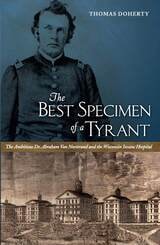
The Best Specimen of a Tyrant
The Ambitious Dr. Abraham Van Norstrand and the Wisconsin Insane HospitalThomas Doherty
University of Iowa Press, 2012

The Bingo Queens of Oneida
How Two Moms Started Tribal Gaming in WisconsinMike Hoeft
Wisconsin Historical Society Press, 2014
While militant Indian activists often dominated national headlines in the 1970s, these church-going Oneida women were the unsung catalysts behind bingo’s rising prominence as a sovereignty issue in the Oneida Nation. The bingo moms were just trying to take care of the kids in the community.
The Bingo Queens of Oneida: How Two Moms Started Tribal Gaming tells the story through the eyes of Sandra Ninham and Alma Webster, the Oneida women who had the idea for a bingo operation run by the tribe to benefit the entire tribe. Bingo became the tribe’s first moneymaker on a reservation where about half the population was living in poverty.
Author Mike Hoeft traces the historical struggles of the Oneida—one of six nations of the Iroquois, or Haudenosaunee, confederacy—from their alliance with America during the Revolutionary War to their journey to Wisconsin. He also details the lives of inspirational tribal members who worked alongside Ninham and Webster, and also those who were positively affected by their efforts.
The women-run bingo hall helped revitalize an indigenous culture on the brink of being lost. The Bingo Queens of Oneida is the story of not only how one game helped revive the Oneida economy but also how one game strengthened the Oneida community.
The Blondes of Wisconsin
Anthony Bukoski
University of Wisconsin Press, 2021
In Bukoski’s interconnected tales, the heart seeks its due despite familial conflict, the challenges of maritime work, and the slow yet inexorable decline of dementia. Beautiful vignettes express transformative moments: tenderness that can turn a cardboard crown into gold and the faint ghosts of memories long forgotten. A tour-de-force, The Blondes of Wisconsin knows what love is—and what it means to lose it.
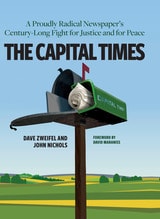
The Capital Times
A Proudly Radical Newspaper’s Century Long Fight for Justice and for PeaceJohn Nichols
Wisconsin Historical Society Press, 2017
As Madison’s Capital Times marks its 100th anniversary in 2017, editors Dave Zweifel and John Nichols recall the remarkable history of a newspaper that served as the tribune of Robert M. La Follette and the progressive movement, earned the praise of Franklin Delano Roosevelt for its stalwart opposition to fascism, battled Joe McCarthy during the "Red Scare," championed civil rights, women’s rights, and LGBTQ rights, opposed the Vietnam War and the invasion of Iraq, and stood with Russ Feingold when he cast the only US Senate vote against the Patriot Act. The Capital Times did not do this from New York or Washington but from the middle of America, with a readership of farmers, factory workers, teachers, and shopkeepers who stood by The Cap Times when the newspaper was boycotted, investigated, and attacked for its determination.
At a point when journalism is under assault, when newspapers struggle to survive, and "old media" struggles to find its way in a digital age, The Capital Times remains unbowed—still living up to the description Lord Francis Williams, the British newspaper editor, wrote 50 years ago: "The vast majority of American papers are as dull as weed-covered ditch-water; vast Saharas of cheap advertising with occasional oases of editorial matter written to bring happiness to the Chamber of Commerce and pain and irritation to none; the bland leading the bland.… Just here and there are a few relics of the old fighting muckraking tradition of American journalism, like The Capital Times of Madison."
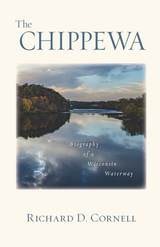
The Chippewa
Biography of a Wisconsin WaterwayRichard D. Cornell
Wisconsin Historical Society Press, 2017
The Civilian Conservation Corps in Wisconsin
Nature’s Army at WorkJerry Apps
Wisconsin Historical Society Press, 2019
The Conditions of Discretion
Joel Handler
Russell Sage Foundation, 1986
The End of the Line
Lost Jobs, New Lives in Postindustrial AmericaKathryn Marie Dudley
University of Chicago Press, 1994
"An excellent study not only of the cultural disruptions caused by the shutdown of Chrysler's operations in Kenosha, Wisconsin, but also of the ideology of progress that abetted the shutdown."—Stephen Amberg, Industrial and Labor Relations Review
"With the eye of an anthropologist, [Dudley] examines the tensions between the 'culture of hands' and the 'culture of mind.' Her account is especially instructive because, by many measures, Kenosha has successfully recovered, yet for many the pain still remains."—Booklist
"Exceptional. . . . Should be widely read."—Douglas Harper, Contemporary Sociology
"Make[s] clear what a tenuous concept economic security is, especially when the rules for achieving security are in flux."—Barbara Presley Noble, New York Times
The Farm on Badger Creek
Memories of a Midwest GirlhoodPeggy Prilaman Marxen
Wisconsin Historical Society Press, 2021
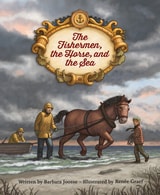
The Fishermen, the Horse, and the Sea
Barbara Joosse
Wisconsin Historical Society Press, 2021
This beautifully illustrated children’s book based on a true story recounts a dramatic rescue on Lake Michigan and introduces young readers to Lester Smith and his family, who founded Port Washington’s long-running and beloved Smith Bros. Fish Shanty. Educational materials including definitions, an illustrated map of Lake Michigan, and short biographies of the story’s featured characters supplement this engaging story for elementary-age readers.

The Flavor of Wisconsin
An Informal History of Food and Eating in the Badger StateHarva Hachten
Wisconsin Historical Society Press, 2023
While in many ways the first edition of The Flavor of Wisconsin has stood the test of time very well, food-related culture and business have changed immensely in the twenty-five years since its publication. Well-known regional food expert and author Terese Allen examines aspects of food, cooking, and eating that have changed or emerged since the first edition, including the explosion of farmers' markets; organic farming and sustainability; the "slow food" movement; artisanal breads, dairy, herb growers, and the like; and how relatively recent immigrants have contributed to Wisconsin's remarkably rich food scene.
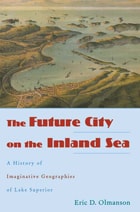
The Future City on the Inland Sea
A History of Imaginative Geographies of Lake SuperiorEric D. Olmanson
Ohio University Press, 2007
Winner of the AAG’s John Brinckerhoff Jackson Prize
Winner of the Great Lakes American Studies Association/Ohio University Press Book Award
Throughout the nineteenth century, the southern shores of Lake Superior held great promise for developers imagining the next great metropolis. These new territories were seen as expanses to be filled, first with romantic visions, then with scientific images, and later with vistas designed to entice settlement and economic development. The Future City on the Inland Sea describes the attempts of explorers under government, commercial, or scientific sponsorship to project their imaginative visions on a region where the future did not happen as planned.
Author Eric D. Olmanson takes a fresh look at the settlements in the vicinity of Chequamegon Bay and the Apostle Islands by analyzing the texts and images left by the missionaries, geologists, ordinance surveyors, newspaper editors, and boosters. The Future City on the Inland Sea shows how new visions of the place absorbed and replaced the old ones, eventually producing what might be called for the first time “a region.”
More than a regional geography, The Future City on the Inland Sea is an appraisal of these early efforts to meld geographies of physical nature with those of human ideals, a demonstration of how thoroughly and paradoxically those two realms are entangled.
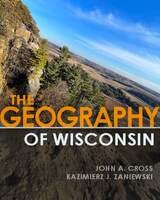
The Geography of Wisconsin
John A. Cross and Kazimierz J. Zaniewski
University of Wisconsin Press, 2022
- physical features: bedrock geology, glaciation, landforms, soils, climate, and vegetation
- cultural landscapes: population density, ethnic populations, demographics, and political affiliations
- economic activity: agriculture, forestry, mining, manufacturing, transportation, recreation, and tourism
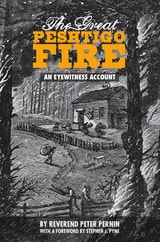
The Great Peshtigo Fire
An Eyewitness AccountPeter Pernin
Wisconsin Historical Society Press, 1999
The Great Peshtigo Fire
Stories and Science from America’s Deadliest FireScott Knickelbine
Wisconsin Historical Society Press, 2012
On the night of October 8, 1871, a whirlwind of fire swept through northeastern Wisconsin, destroying the bustling frontier town of Peshtigo. Trees, buildings, and people burst into flames. Metal melted. Sand turned into glass. People thought the end of the world had come. When the “tornado of fire” was over, 2,500 people were dead, and Peshtigo was nothing but a smoking ruin. It was the deadliest wildfire in U.S. history.
The Great Peshtigo Fire: Stories and Science from America’s Deadliest Firestorm explores the history, science, and legacy of the 1871 Peshtigo Fire at a fourth-grade reading level. Readers will learn about the history of settlement, agriculture, and forestry in 19th-century Wisconsin. This illuminating text covers a diverse range of topics that will enrich the reader’s understanding of the Peshtigo Fire, including the building and land-use practices of the time that made the area ripe for such a fire, the weather patterns that fostered widespread fires throughout the upper Midwest in the summer and fall of 1871, and exciting first-person accounts that vividly bring the `victims’ stories to life. Connections made between the Peshtigo Fire and the history of fire prevention in the United States encourage critical thinking about issues that remain controversial to this day, such as planned burns and housing development restrictions near forested areas. The Great Peshtigo Fire: Stories and Science from America’s Deadliest Firestorm will inform and captivate its readers as it journeys through the horrifying history of the Peshtigo Fire.
The Great Sand Fracas of Ames County
A NovelJerry Apps
University of Wisconsin Press, 2014
Soon the fracas over frac sand attracts some national attention, including that of Stony Field, the pen name of a nationally syndicated columnist. Will the village board vote to solve their budget problems with a cut of the mining profits? Will the mine create real jobs for local folks? Will Stony Field come to the village to lead protests against the mine? And will defenders of the Trail Marker Oak literally draw a battle line in the sand?
The Great War Comes to Wisconsin
Sacrifice, Patriotism, and Free Speech in a Time of CrisisRichard L. Pifer
Wisconsin Historical Society Press, 2017
Instead of a comprehensive history of the battlefield, this book captures the homefront experience: the political debates over war policy, the worry over loved ones fighting overseas, the countless everyday sacrifices, and the impact of a wartime hysteria that drove dissent underground. It also includes the voices of soldiers from Wisconsin’s famed 32nd Division, through extensively quoted letters and newspaper accounts. Immerse yourself in the Wisconsin experience during World War I—a conflict that demonstrated America’s great capacity for sacrifice and generosity, but also for prejudice, intolerance, and injustice.
The Green Hour
A Natural History of HomeAlison Townsend
University of Wisconsin Press, 2021
With sparkling, lyrical prose, The Green Hour undulates effortlessly through time like a red-winged blackbird. Inspired by five beloved settings—eastern Pennsylvania, Vermont, California, western Oregon, and the spot atop the Wisconsin hill where she now resides—Townsend considers the role that place plays in shaping the self. She reveals the ways that a fresh perspective or new experience in any environment can incite wonder, build unexpected connections, and provide solace or salvation.
Mesmerizingly attentive to nature—its beauty, its fragility, and its redeeming powers—she asks what it means to live in community with wilderness and to allow our identities to be shaped by our interactions with it: our story as its story.

The Healthiest City
Milwaukee and the Politics of Health ReformJudith W. Leavitt
University of Wisconsin Press, 1996
Between 1850 and 1900, Milwaukee’s rapid population growth also gave rise to high death rates, infectious diseases, crowded housing, filthy streets, inadequate water supplies, and incredible stench. The Healthiest City shows how a coalition of reform groups brought about community education and municipal action to achieve for Milwaukee the title of “the healthiest city” by the 1930s. This highly praised book reminds us that cutting funds and regulations for preserving public health results in inconvenience, illness, and even death.
“A major work. . . . Leavitt focuses on three illustrative issues—smallpox, garbage, and milk, representing the larger areas of infectious disease, sanitation, and food control.”—Norman Gevitz, Journal of the American Medical Association
“Leavitt’s research provides additional evidence . . . that improvements in sanitation, living conditions, and diet contributed more to the overall decline in mortality rates than advances in medical practice. . . . A solid contribution to the history of urban reform politics and public health.”—Jo Ann Carrigan, Journal of American History
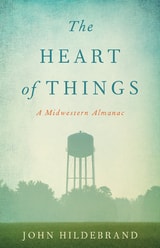
The Heart of Things
A Midwestern AlmanacJohn Hildebrand
Wisconsin Historical Society Press, 2014
In this remarkable book of days, John Hildebrand charts the overlapping rings—home, town, countryside—of life in the Midwest. Like E. B. White, Hildebrand locates the humor and drama in ordinary life: church suppers, Friday night football, outdoor weddings, garden compost, family reunions, roadside memorials, camouflage clothing. In these wry, sharply observed essays, the Midwest isn’t The Land Time Forgot but a more complicated (and vastly more interesting) place where the good life awaits once we figure exactly out what it means. From his home range in northwestern Wisconsin, Hildebrand attempts to do just that by boiling down a calendar year to its rich marrow of weather, animals, family, home—in other words, all the things that matter.
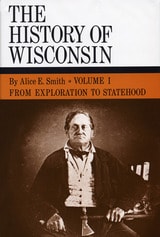
The History of Wisconsin, Volume I
From Exploration to StatehoodAlice E. Smith
Wisconsin Historical Society Press, 1973
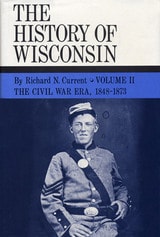
The History of Wisconsin, Volume II
Civil War Era, 1848-1873Richard N. Current
Wisconsin Historical Society Press, 1976
This second volume in the History of Wisconsin series introduces us to the first generation of statehood, from the conversion of prairie and forests into farmland to the development of cities and industry. In addition, this volume presents a synthesis of the Civil War and Reconstruction era in Wisconsin. Scarcely a decade after entering the Union, the state was plunged into the nationwide debate over slavery, the secession crisis, and a war in which 11,000 "Badger Boys in Blue" gave their lives. Wisconsin's role in the Civil War is chronicled, along with the post-war years. Complete with photographs from the Historical Society's collections, as well as many pertinent maps, this book is a must-have for anyone interested in this era of Wisconsin's history.
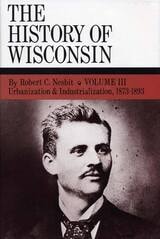
The History of Wisconsin, Volume III
Urbanization & Industrialization 1873-1893Robert C. Nesbit
Wisconsin Historical Society Press, 1985
Although the years from 1873-1893 lacked the well known, dramatic events of the periods before and after, this period presented a major transformation in Wisconsin's economy. The third volume in the History of Wisconsin series presents a balanced, comprehensive, and witty account of these two decades of dynamic growth and change in Wisconsin society, business, and industry. Concentrating on three major areas: the economy, communities, and politics and government, this volume in the History of Wisconsin series adds substantially to our knowledge and understanding of this crucial, but generally little-understood, period.
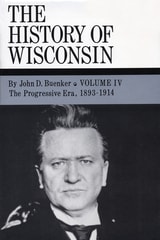
The History of Wisconsin, Volume IV
The Progressive Era, 1893-1914John D. Buenker
Wisconsin Historical Society Press, 1998
Published in Wisconsin's Sesquicentennial year, this fourth volume in The History of Wisconsin series covers the twenty tumultuous years between the World's Columbian Exposition and the First World War when Wisconsin essentially reinvented itself, becoming the nation's "laboratory of democracy."
The period known as the Progressive Era began to emerge in the mid-1890s. A sense of crisis and a widespread clamor for reform arose in reaction to rapid changes in population, technology, work, and society. Wisconsinites responded with action: their advocacy of women's suffrage, labor rights and protections, educational reform, increased social services, and more responsive government led to a veritable flood of reform legislation that established Wisconsin as the most progressive state in the union.
As governor and U.S. Senator from Wisconsin, Robert M. La Follette, Sr., was the most celebrated of the Progressives, but he was surrounded by a host of pragmatic idealists from politics, government, and the state university. Although the Progressives frequently disagreed over priorities and tactics, their values and core beliefs coalesced around broad-based participatory democracy, the application of scientific expertise to governance, and an active concern for the welfare of all members of society-what came to be known as "the Wisconsin Idea."
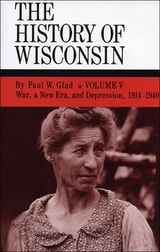
The History of Wisconsin, Volume V
War, a New Era, and Depression, 1914-1940Paul W. Glad
Wisconsin Historical Society Press, 1990
The fifth volume in The History of Wisconsin series covers the years from the outbreak of World War I to the eve of American entry into World War II. In between, the rise of the woman's movement, the advent of universal suffrage, and the "great experiment" of Prohibition are explored, along with the contest between newly emergent labor unions and powerful business and industrial corporations. Author Paul W. Glad also investigates the Great Depression in Wisconsin and its impact on rural and urban families in the state. Photographs and maps further illustrate this volume which tells the story of one of the most exciting and stressful eras in the history of the state.
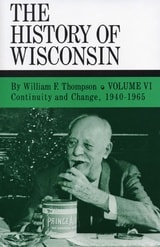
The History of Wisconsin, Volume VI
Continuity and Change, 1940-1965William F. Thompson
Wisconsin Historical Society Press, 1988
The sixth and final volume in the History of Wisconsin series examines the period from 1940-1965, in which state and nation struggled to maintain balance and traditions. Some of the major developments analyzed in this volume include: coping with three wars, racial and societal conflict, technological innovation, population shifts to and from cities and suburbs, and accompanying stress in politics, government, and society as a whole. Using dozens of photographs to visually illustrate this period in the state's history, this volume upholds the high standards set forth in the previous volumes.
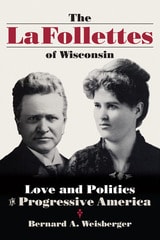
The La Follettes of Wisconsin
Love and Politics in Progressive AmericaBernard A. Weisberger
University of Wisconsin Press, 2013
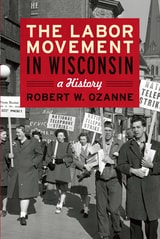
The Labor Movement in Wisconsin
A HistoryRobert W. Ozanne
Wisconsin Historical Society Press, 1984
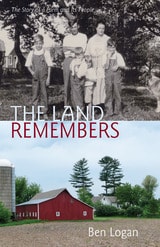
The Land Remembers
The Story of a Farm and Its PeopleBen Logan, with an introduction by Curt Meine
University of Wisconsin Press, 2017

The Land Still Lives
Jerry Apps
Wisconsin Historical Society Press, 2019
Originally published in 1970, The Land Still Lives is the first book by Wisconsin’s greatest rural philosopher, Jerry Apps. Written when he was still a young agriculture professor at the University of Wisconsin, The Land Still Lives was readers’ first introduction to Jerry’s farm in central Wisconsin, called Roshara, and the surrounding community of Skunk’s Hollow. This special 50th-anniversary edition features a new epilogue, in which Jerry revisits his philosophy of caring for the land so it in turn will care for us. This is vintage Apps, essential reading for Jerry’s legions of fans—and for all who, like Jerry, wish “to develop a relationship with nature and all its mystery and wonder.”

The Latino Question
Politics, Laboring Classes and the Next LeftRodolfo D. Torres
Pluto Press, 2018
In a radical alternative to the dominant orthodoxy in Latino political studies, Rodolfo D. Torres, Armando Ibarra, and Alfredo Carlos emphasize the importance of political economy for understanding Latino politics, culture, and social issues. Written in an accessible style, the authors draw from extensive original research and several critical traditions—including Karl Marx, Antonio Gramsci, and Michel Foucault—to make crucial links between socio-economic and culture-based approaches for understanding the politics of race and ethnicity in capitalist society. Notably, they present front-line evidence of how some Mexican communities across America are not only resisting, but also reinventing and transforming the predominant economic ideas. The Latino Question will be essential for anyone hoping to understand the changes in Latino communities in America today.
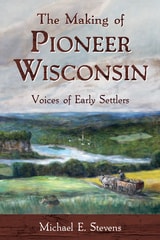
The Making of Pioneer Wisconsin
Voices of Early SettlersMichael E. Stevens
Wisconsin Historical Society Press, 2018
The Making of Pioneer Wisconsin provides a unique and intimate glimpse into the lives of these early settlers, as they describe what it felt like to be a teenager in a wagon heading west or an isolated young wife living far from her friends and family. Woven together with context provided by historian Michael E. Stevens, these first-person accounts form a fascinating narrative that deepens our ability to understand and empathize with Wisconsin’s early pioneers.

The Man Who Painted the Universe
The Story of a Planetarium in the Heart of the North WoodsRon Legro
Wisconsin Historical Society Press, 2015
The Man Who Painted the Universe: The Story of a Planetarium in the Heart of the North Woods introduces readers to the mild-mannered astronomy enthusiast whose creativity, ingenuity, fervor, and endurance realized a dream of galactic proportions. The story of this stargazer from Wisconsin’s North Woods so inspired two newspapermen, authors Ron Legro and Avi Lank, that they sought to document the story of the Kovac Planetarium for a new generation of stargazers and dreamers.
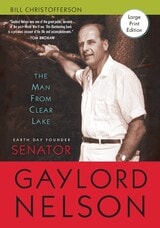
The Man from Clear Lake
Earth Day Founder Senator Gaylord NelsonBill Christofferson
University of Wisconsin Press, 2009
On Earth Day 1970 twenty million Americans displayed their commitment to a clean environment. It was called the largest demonstration in human history, and it permanently changed the nation’s political agenda. By Earth Day 2000 participation had exploded to 500 million people in 167 countries.
The seemingly simple idea—a day set aside to focus on protecting our natural environment—was the brainchild of U.S. Senator Gaylord Nelson of Wisconsin. It accomplished, far beyond his expectations, his lifelong goal of putting the environment onto the nation’s and the world’s political agendas.
A remarkable man, Nelson ranks as one of history’s leading environmentalists. He also played a major role as an early, outspoken opponent of the Vietnam War, and as a senate insider was a key player in civil rights, poverty, civil liberties and consumer protection issues.
The life of Nelson, a small town boy who learned his values and progressive political principles at an early age, is woven through the political history of the twentieth century. Nelson’s story intersects at times with Fighting Bob La Follette, Joe McCarthy, and Bill Proxmire in Wisconsin, and with George McGovern, Lyndon Johnson, Hubert Humphrey, Russell Long, Walter Mondale, John F. Kennedy, and others on the national scene.
Winner, Elizabeth A. Steinberg Prize, University of Wisconsin Press
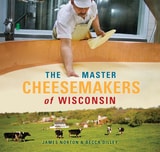
The Master Cheesemakers of Wisconsin
James Norton and Becca Dilley
University of Wisconsin Press, 2009
Certification as a Master Cheesemaker typically takes almost fifteen years. An applicant must hold a cheesemaking license for at least ten years, create one or two chosen varieties of cheese for at least five years, take more than two years of university courses, consent to constant testing of their cheese and evaluation of their plant, and pass grueling oral and written exams to be awarded the prestigious title.
James Norton and Becca Dilley interviewed these dairy artisans, listened to their stories, tasted their cheeses, and explored the plants where they work. They offer here profiles of forty-three active Master Cheesemakers of Wisconsin, as well as a glossary of cheesemaking terms, suggestions of operations that welcome visitors for tours, tasting notes and suggested food pairings, and tasty nuggets (shall we say curds?) of information on everything to do with cheese.

The Memoir of Ednah Shepard Thomas
Ednah Shepard Thomas
University Press of Colorado, 2017
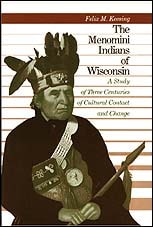
The Menomini Indians of Wisconsin
A Study of Three Centuries of Cultural Contact and ChangeFelix M. Keesing
University of Wisconsin Press, 1987
The Menomini, a peaceful people, lived by farming, hunting, fishing, and gathering wild rice. Perhaps because of their peaceful nature their name was not generally found in the white military annals, and they were largely unknown until 1892, when Walter James Hoffman published a detailed ethnographic account of them.
Felix Keesing's classic 1939 work on the Menomini is one of the most detailed, authoritative, and useful accounts of their history and culture. It superseded Hoffman's earlier work because of Keesing's modern methods of research. This work was among the first monographs on an American Indian people to employ a model of acculturation, and it is also an excellent early example of what is now called ethnohistory. It served as a model of anthropological research for decades after its publication.
Keesing's work, reprinted in this new Wisconsin edition, will continue to serve as a comprehensive introduction for the general reader, a book respected by both anthropologists and historians, and by the Menomini themselves. It is still the most important study of Menomini life up until 1939.
The Misunderstood Mission of Jean Nicolet
Uncovering the Story of the 1634 JourneyPatrick J. Jung
Wisconsin Historical Society Press, 2018
In more recent decades, historians have pieced together a story that is not only more likely but more complicated and interesting. Patrick Jung synthesizes the research about Nicolet and his superior Samuel de Champlain, whose diplomatic goals in the region are crucial to understanding this much misunderstood journey across the Great Lakes. Additionally, historical details about Franco-Indian relations and the search for the Northwest Passage provide a framework for understanding Nicolet’s famed mission.

The Murder of Joe White
Ojibwe Leadership and Colonialism in WisconsinErik M. Redix
Michigan State University Press, 2014
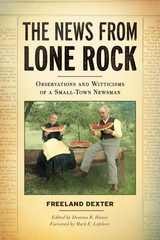
The News from Lone Rock
Observations and Witticisms of a Small-Town NewsmanFreeland Dexter
Wisconsin Historical Society Press, 2016
At the turn of the twentieth century, the bustling railroad town of Lone Rock, Wisconsin, was home to about a thousand residents, and Freeland Dexter seemed to know the business of every single one. Dexter reported all the news from Lone Rock—from the significant to the trivial, the tragic to the comical—for the Weekly Home News of neighboring Spring Green from 1884 to 1912.
This collection of Dexter’s most fascinating, amusing, and poignant stories and observations brings back to life the colorful characters of his time and takes readers on a journey to a world that was both simpler and changing fast. Whether he was reporting who grew the biggest watermelon, teasing the local lovebirds, or taking a side on the ever-controversial question of whether the town should go dry, Dexter wrote with a distinctive wit and an obvious affection for his town and its people. The News from Lone Rock also provides an illuminating window into a time period of rapid technological progress, showing how the introduction of electric light, telephones, and cars changed lives and connected this quaint village more and more to the outside world.

The Norske Nook Book of Pies and Other Recipes
Jerry Bechard and Cindee Borton-Parker
University of Wisconsin Press, 2015
This cookbook features the restaurants’ award-winning baking: Scandinavian specialties, cheesecakes, tortes, cookies, muffins, and more than seventy recipes (and variations) for pie. More than fifty new pie recipes have been created by the Nook bakers since 1990, when Jerry Bechard purchased the Osseo café from founder Helen Myhre. The Norske Nook has won thirty-six blue ribbons at the National Pie Championships in Florida—including three in 2014, for Lemon Cream Cheese, Peaches and Cream, and Jamberry.
Gold Medal Winner, Cookbook, Foreword Reviews IndieFab Book of the Year Awards
Runner-up, Cookbooks/Crafts/Hobbies, Midwest Book Awards
“Outstanding” books for public & secondary school libraries from university presses, American Library Association
“Best of the Best” books for public libraries from university presses, American Library Association
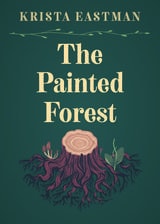
The Painted Forest
Krista Eastman
West Virginia University Press, 2019
Council for Wisconsin Writers, Norbert Blei/August Derleth Nonfiction Book Award winner
In this often-surprising book of essays, Krista Eastman explores the myths we make about who we are and where we’re from. The Painted Forest uncovers strange and little-known “home places”—not only the picturesque hills and valleys of the author’s childhood in rural Wisconsin, but also tourist towns, the “under-imagined and overly caricatured” Midwest, and a far-flung station in Antarctica where the filmmaker Werner Herzog makes an unexpected appearance.
The Painted Forest upends easy narratives of place, embracing tentativeness and erasing boundaries. But it is Eastman’s willingness to play—to follow her curiosity down every odd path, to exude a skeptical wonder—that gives this book depth and distinction. An unlikely array of people, places, and texts meet for close conversation, and tension is diffused with art, imagination, and a strong sense of there being some other way forward. Eastman offers a smart and contemporary take on how we wander and how we belong.
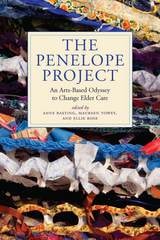
The Penelope Project
An Arts-Based Odyssey to Change Elder CareAnne Basting, Maureen Towey, and Ellie Rose
University of Iowa Press, 2016
At Milwaukee’s Luther Manor, a team of artists from the University of Wisconsin’s theatre department and Sojourn Theatre Company, university students, staff, residents, and volunteers traded their bingo cards for copies of The Odyssey. They embarked on a two-year project to examine this ancient story from the perspective of the hero who never left home: Penelope, wife of Odysseus. Together, the team staged a play that engaged everyone and transcended the limits not just of old age and disability but also youth, institutional regulations, and disciplinary boundaries.
Inviting readers to see through the eyes of residents, students, artists, staff, family members, and experts in the fields of education, long-term care, and civically engaged arts practice, this book underscores the essential role of the arts and humanities in living richly. Waiting, as Penelope waited, need not be a time of loss and neglect. The Penelope Project boldly dreams of how to make late life a time of growth and learning. If you dream of improving people’s lives through creative endeavors, this book provides practical advice.