Results by title
2194 books match the query 'Women's Studies' and 323 start with t

THE ECONOMICS OF FANTASY
RAPE IN TWENTIETH-CENTURY LITERATURESharon Stockton
The Ohio State University Press, 2006
It is important to make clear that the genre of rape story studied here presumes a white masculine subject and a white feminine object. Stockton makes the case that the aestheticized rape narrative reveals particular things about the way white masculinity represents itself. Plotting violent sexual fantasy on the grid of economic concerns locates masculine agency in relation to an explicitly contingent material system of power, value, and order. It is in this way that The Economics of Fantasy discloses the increased desperation with which the body has been made to carry ideology under systems of advanced capitalism.

TV Family Values
Gender, Domestic Labor, and 1980s SitcomsAlice Leppert
Rutgers University Press, 2019
Taking Her Seriously
Penelope and the Plot of Homer's OdysseyRichard Heitman
University of Michigan Press, 2005
---Choice
---Bryn Mawr Classical Review

Taking Leave, Taking Liberties
American Troops on the World War II Home FrontAaron Hiltner
University of Chicago Press, 2020
With unsettling clarity, Aaron Hiltner reveals what American troops really did on the home front. While GIs are imagined to have spent much of the war in Europe or the Pacific, before the run-up to D-Day in the spring of 1944 as many as 75% of soldiers were stationed in US port cities, including more than three million who moved through New York City. In these cities, largely uncontrolled soldiers sought and found alcohol and sex, and the civilians living there—women in particular—were not safe from the violence fomented by these de facto occupying armies. Troops brought their pocketbooks and demand for “dangerous fun” to both red-light districts and city centers, creating a new geography of vice that challenged local police, politicians, and civilians. Military authorities, focused above all else on the war effort, invoked written and unwritten legal codes to grant troops near immunity to civil policing and prosecution.
The dangerous reality of life on the home front was well known at the time—even if it has subsequently been buried beneath nostalgia for the “greatest generation.” Drawing on previously unseen military archival records, Hiltner recovers a mostly forgotten chapter of World War II history, demonstrating that the war’s ill effects were felt all over—including by those supposedly safe back home.
Taking Off the White Gloves
Southern Women and Women HistoriansEdited & Intro by Michele Gillespie & Catherine Clinton
University of Missouri Press, 1998
When southern women remove their gloves, they speak their minds. The ten timely and provocative essays in Taking Off the White Gloves represent the collective wisdom of some of the finest scholars on women's history in the American South. On the eve of the thirtieth anniversary of the Southern Association for Women Historians, this volume brings together some of the outstanding lectures delivered by distinguished members of the association over the past fifteen years.
Spanning four centuries of women's experiences in the South, the topics featured in Taking Off the White Gloves range from Native American sexuality and European conquest to woman suffrage in the South, from black women's protest history to the status of women in the historical profession at the end of the twentieth century.
Despite diverse subject matter, these rich essays share a number of important qualities. They take an integrative approach, combining literary analysis, social history, cultural interpretation, labor history, popular culture, and oral history. Embracing the distinctiveness of the southern past and women's experiences within that past, they also recognize the inextricability of critical categories such as sexuality and gender, race and gender, and women and work. Finally, these essays emphasize the authors' commitment to the belief that the personal is political; they reveal the subtle and not so subtle ways that women transform theory into practice.
Taking Off the White Gloves invites a new understanding of the complexities that surround the history of southern women across race, class, place, and time. A model of innovative and imaginative scholarly historical writing, this book provides fertile ground for young scholars and is sure to inspire new research. This thought- provoking volume has much to offer scholars and students, as well as the general reader.

Taking the Heat
Women Chefs and Gender Inequality in the Professional KitchenHarris, Deborah A
Rutgers University Press, 2015
Click here to access the Taking the Heat teaching guide (https://d3tto5i5w9ogdd.cloudfront.net/wp-content/uploads/2021/09/02142601/Taking-the-Heat-Questions-for-Instructors.docx).
Talking Back
Images of Jewish Women in American Popular CultureEdited by Joyce Antler
Brandeis University Press, 1998
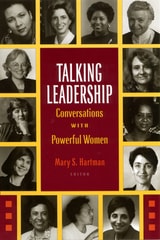
Talking Leadership
Conversations with Powerful WomenHartman, Mary
Rutgers University Press, 1999
Talking Leadership presents a though-provoking look at differences and commonalities in the lives and leadership approaches of some of today's outstanding women in areas ranging from philanthropy to politics, and from business to academia. Regardless of their backgrounds and areas of expertise, these women are committed to social change--change that includes improving women's lives and options.
Well beyond personal details and entertaining anecdotes, these conversations capture a variety of fascinating experiences and insights reflecting what it is like to be a woman and a major leader in America at the close of the twentieth century. Many of these women hold positions in which womanhood sets them apart--not infrequently in uncomfortable ways. Talking Leadership gives testimony not only to how far women have come, but also how far they still have to go to claim their places as leaders.
Talking Leadership
Conversations with Powerful WomenHartman, Mary
Rutgers University Press, 1999
Whether we love it, hate it, or use it just to pass the time, most adults in the United States are watching more television than ever, up to four hours a day by some estimates. Our devotion to commercial television gives it unprecedented power in our lives.
Advertisers and television executives want us to spend as much time as we can in front of our sets, for it is access to our brains that they buy and sell. Yet the most important effect of television may be one that no one intends-accelerated destruction of the natural environment.
Consuming Environments explores how, with its portrayal of a world of simulated abundance, television has nurtured a culture of consumerism and overconsumption. The average person in the US consumers more than twice the grain and ten times the oil of a citizen of Brazil or Indonesia. And people in less industrialized countries suffer while their resources while their resources are commandeered to support comfortable lifestyles in richer nations.
Using detailed examples illustrated with images from actual commercials, news broadcasts, and television shows, and authors demonstrate how ads and programs are put together in complex way s to manipulate viewers, and they offer specific ways to counteract the effects of TV and overconsumption's assault on the environment.

Tapestries of Life
Women's Work, Women's Consciousness, and the Meaning of Daily ExperienceBettina Aptheker
University of Massachusetts Press, 1989

Taxing Women
Edward J. McCaffery
University of Chicago Press, 1997
"Taxing Women is a must-have primer for any woman who wants to understand how our current tax system affects her family's economic condition. In plain English, McCaffery explains how the tax code stacks the deck against women and why it's in women's economic interest to lead the next great tax rebellion."—Patricia Schroeder
"McCaffery is an expert on the interplay between taxes and social policy. . . . Devastating in his analysis. . . . Intriguing."—Harris Collingwood, Working Women
"A wake-up call regarding the inequalities of an archaic system that actually penalizes women for working."—Publishers Weekly

Teaching Fear
How We Learn to Fear Crime and Why It MattersNicole E. Rader
Temple University Press, 2023
Where do lessons of “stranger danger” and safety come from—and do they apply differently for women? A gender-fear paradox shows that although women are less likely to be victims of most crimes (sexual assault aside), their fear of crime is greater. Moreover, girls and women—especially White women—are taught to fear the wrong things and given impossible tools to prevent victimization. In Teaching Fear, Nicole Rader zooms in on the social learning process, tracing the ways that families, schools, and the media have become obsessed with crime myths, especially regarding girls and women.
Based on in-depth research and family studies, Rader reveals the dubious and dangerous origins of many of the most prominent safety guidelines that teach young girls to be more afraid of crime. These guidelines carry over to adulthood, influencing women’s behaviors and the way they order their worlds, with dangerous consequences. As women teach their learned behavior and conditioned fear to others, gendered crime myths are recirculated from generation to generation, making them a staple in our society.
Teaching Fear includes suggestions for taking precautionary measures and crime prevention strategies. Rader also provides guidance for instilling safety values and demonstrating how we can “teach fear better” to break this cycle and truly create greater security.
Teaching Gender with Libraries and Archives
Sara De Jong
Central European University Press, 2014
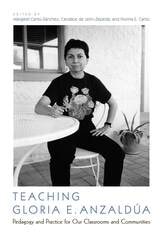
Teaching Gloria E. Anzaldúa
Pedagogy and Practice for Our Classrooms and CommunitiesEdited by Margaret Cantú-Sánchez, Candace de León-Zepeda, Norma E. Cantú
University of Arizona Press, 2020
Gloria Evangelina Anzaldúa—theorist, Chicana, feminist—famously called on scholars to do work that matters. This pronouncement was a rallying call, inspiring scholars across disciplines to become scholar-activists and to channel their intellectual energy and labor toward the betterment of society. Scholars and activists alike have encountered and expanded on these pathbreaking theories and concepts first introduced by Anzaldúa in Borderlands/La frontera and other texts.
Teaching Gloria E. Anzaldúa is a pragmatic and inspiring offering of how to apply Anzaldúa’s ideas to the classroom and in the community rather than simply discussing them as theory. The book gathers nineteen essays by scholars, activists, teachers, and professors who share how their first-hand use of Anzaldúa’s theories in their classrooms and community environments.
The collection is divided into three main parts, according to the ways the text has been used: “Curriculum Design,” “Pedagogy and Praxis,” and “Decolonizing Pedagogies.” As a pedagogical text, Teaching Gloria E. Anzaldúa also offers practical advice in the form of lesson plans, activities, and other suggested resources for the classroom. This volume offers practical and inspiring ways to deploy Anzaldúa’s transformative theories with real and meaningful action.
Contributors
Carolina E. Alonso
Cordelia Barrera
Christina Bleyer
Altheria Caldera
Norma E. Cantú
Margaret Cantú-Sánchez
Freyca Calderon-Berumen
Stephanie Cariaga
Dylan Marie Colvin
Candace de León-Zepeda
Miryam Espinosa-Dulanto
Alma Itzé Flores
Christine Garcia
Patricia M. García
Patricia Pedroza González
María del Socorro Gutiérrez-Magallanes
Leandra H. Hernández
Nina Hoechtl
Rían Lozano
Socorro Morales
Anthony Nuño
Karla O’Donald
Christina Puntasecca
Dagoberto Eli Ramirez
José L. Saldívar
Tanya J. Gaxiola Serrano
Verónica Solís
Alexander V. Stehn
Carlos A. Tarin
Sarah De Los Santos Upton
Carla Wilson
Kelli Zaytoun
Teaching Other Voices
Women and Religion in Early Modern EuropeEdited by Margaret L. King and Albert Rabil Jr.
University of Chicago Press, 2007
Teaching against Violence
The Reassessing ToolboxInez Testoni
Central European University Press, 2014
Technologies of the Gendered Body
Reading Cyborg WomenAnne Balsamo
Duke University Press, 1996
Technologies of the Gendered Body combines close readings of popular texts—such as Margaret Atwood’s novel The Handmaid’s Tale, the movie Pumping Iron II: The Women, cyberpunk magazines, and mass media—with analyses of medical literature, public policy documents, and specific technological practices. Balsamo describes the ways in which certain biotechnologies are ideologically shaped by gender considerations and other beliefs about race, physical abilities, and economic and legal status. She presents a view of the conceptual system that structures individuals’ access to and participation in these technologies, as well as an overview of individuals’ rights and responsibilities in this sometimes baffling area. Examining the ways in which the body is gendered in its interactions with new technologies of corporeality, Technologies of the Gendered Body counters the claim that in our scientific culture the material body has become obsolete. With ample evidence that the techno-body is always gendered and marked by race, this book sets the stage for a renewed feminist engagement with contemporary technological narratives.

Technology Assessment
A Feminist PerspectiveJanine Marie Morgall
Temple University Press, 1993
How well does technology assessment (TA) relate to women's lives? If women are underrepresented in the long-term research and development process that leads to scientific advancements, how can TA understand technology aimed at women? It can't, claims the author of Technology Assessment: A Feminist Perspective.
A relative new field, TA examines the social aspect of technology and provides information critical to decision making, policy development, safety standards, and avoiding litigation. Until gender analysis is introduced into all assessments of new technologies, Janine Marie Morgall argues, TA can't evaluate technology's impact upon women.
Morgall investigates two areas of technology that affect women's lives: productive (clerical work) and reproductive (health care). Case studies of clerical workers and health care recipients illustrate gender-specify effects of technology ranging from word processors to treatments for infertility. These studies convincingly demonstrate that TA encourages innovations without questioning their effects on women. Issues of dominance, control, and conflicting values emerge from Morgall's feminist perspective and support her call for gender analysis of new technologies.
In the series Labor and Social Change, edited by Paula Rayman and Carmen Sirianni.

Teenage Dreams
Girlhood Sexualities in the U.S. Culture WarsCharlie Jeffries
Rutgers University Press, 2022

Television Antiheroines
Women Behaving Badly in Crime and Prison DramaEdited by Milly Buonanno
Intellect Books, 2017
The essays collected in Television Antiheroines are divided into four sections or types of characters: mafia women, drug dealers and aberrant mothers, women in prison, and villainesses. Looking specifically at shows such as Gomorrah, Mafiosa, The Wire, The Sopranos, Sons of Anarchy, Orange is the New Black, and Antimafia Squad, the contributors explore the role of race and sexuality and focus on how many of the characters transgress traditional ideas about femininity and female identity, such as motherhood. They examine the ways in which bad women are portrayed and how these characters undermine gender expectations and reveal the current challenges by women to social and economic norms. Television Antiheroines will be essential reading for anyone with a serious interest in crime and prison drama and the rising prominence of women in nontraditional roles.
Tell This Silence
Asian American Women Writers And The Politics Of SpeechPatti Duncan
University of Iowa Press, 2004
However, as the writers discussed in Tell This Silence suggest, silence too has multiple meanings especially in contexts like the U.S., where speech has never been a guaranteed right for all citizens. Duncan argues that writers such as Maxine Hong Kingston, Mitsuye Yamada, Joy Kogawa, Theresa Hak Kyung Cha, Nora Okja Keller, and Anchee Min deploy silence as a means of resistance. Juxtaposing their “unofficial narratives” against other histories—official U.S. histories that have excluded them and American feminist narratives that have stereotyped them or distorted their participation—they argue for recognition of their cultural participation and offer analyses of the intersections among gender, race, nation, and sexuality.
Tell This Silence offers innovative ways to consider Asian American gender politics, feminism, and issues of immigration and language. This exciting new study will be of interest to literary theorists and scholars in women's, American, and Asian American studies.
Telling Incest
Narratives of Dangerous Remembering from Stein to SapphireJanice Doane and Devon Hodges
University of Michigan Press, 2001
Examining the work of writers from Gertrude Stein to Toni Morrison and Dorothy Allison, Telling Incest argues that an incest story's plausibility depends upon a shifting set of narrative conventions and cultural expectations. As contexts for telling incest stories have changed, so too have the tasks of those who tell and those who listen. The authors analyze both fictional and nonfiction narratives about father-daughter incest, beginning by scrutinizing the shadowy accounts found in nineteenth-century case records, letters, and narratives.
Telling Incest next explores African American stories that shift the blame for incest from the black family to the predations of a paternalistic white culture. Janice Doane and Devon Hodges demonstrate that writers drew upon this reworked incest narrative in the 1970s and early 1980s in order to relate a feminist story about incest, a story that criticizes patriarchal power. This feminist form of the story, increasingly emphasizing trauma and recovery, can be found in such popular books as Alice Walker's The Color Purple and Jane Smiley's A Thousand Acres. Doane and Hodges then examine recent memoirs and novels such as Dorothy Allison's Bastard Out of Carolina and Sapphire's Push, narratives that again rework the incest story in an effort to "tell" about women's complex experiences of subjugation and hope.
Telling Incest will be of particular interest to readers who have enjoyed the popular and culturally significant work of writers such as Alice Walker, Toni Morrison, Jane Smiley, and Dorothy Allison and to students of women's studies, feminist theory, and cultural studies.
Janice Doane is Professor of English, St. Mary's College of California. Devon Hodges is Professor of English, George Mason University. They have also coauthored From Klein to Kristeva: Psychoanalytic Feminism and the Search for the "Good Enough" Mother and Nostalgia and Sexual Difference: The Resistance to Contemporary Feminism.
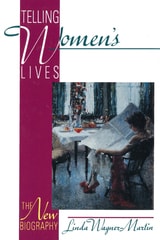
Telling Women's Lives
The New BiographyWagner-Martin, Linda
Rutgers University Press, 1996
Placing herself in the avid reader’s chair, Linda Wagner-Martin writes about women’s biography from George Eliot and Virginia Woolf to Eleanor Roosevelt and Margaret Mead, and even to Cher and Elizabeth Taylor. Along the way, she looks at dozens of other life stories, probing at the differences between biographies of men and women, prevailing stereotypes about women’s lives and roles, questions about what is public and private, and the hazy margins between autobiography, biography, and other genres. In quick paced and wide-ranging discussions, she looks at issues of authorial stance (who controls the narrative? who chooses which story to tell?), voice (is this story told in the traditional objective tone? and if it is, what effect does that telling have on our reading?), and the politics of publishing (why aren’t more books about women’s lives published? and when they are, what happens to their advertising budgets?). She discusses the problems of writing biography of achieving women who were also wives (how does the biographer balance the two?), of daughters who attempt to write about their mothers, and of husbands trying to portray their wives.
Telling Women’s Lives is the first overview of the writing and the history of biographies about women. It is a significant contribution to the reassessment of the work of the hundreds of women writers who have made a difference in our conception of what women’s stories--and women’s lives--have been, and are becoming. The book is a must read for anyone who loves reading biographies, particularly biographies of women.
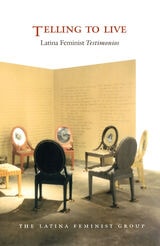
Telling to Live
Latina Feminist TestimoniosLatina Feminist Group
Duke University Press, 2001
The complex and rich tapestry of narratives that comprises this book introduces us to an intergenerational group of Latina women who negotiate their place in U.S. society at the cusp of the twenty-first century. These are the stories of women who struggled to reach the echelons of higher education, often against great odds, and constructed relationships of sustenance and creativity along the way. The stories, poetry, memoirs, and reflections of this diverse group of Puerto Rican, Chicana, Native American, Mexican, Cuban, Dominican, Sephardic, mixed-heritage, and Central American women provide new perspectives on feminist theorizing, perspectives located in the borderlands of Latino cultures.
This often heart wrenching, sometimes playful, yet always insightful collection will interest those who wish to understand the challenges U.S. society poses for women of complex cultural heritages who strive to carve out their own spaces in the ivory tower.
Contributors. Luz del Alba Acevedo, Norma Alarcón, Celia Alvarez, Ruth Behar, Rina Benmayor, Norma E. Cantú, Daisy Cocco De Filippis, Gloria Holguín Cuádraz, Liza Fiol-Matta, Yvette Flores-Ortiz, Inés Hernández-Avila, Aurora Levins Morales, Clara Lomas, Iris Ofelia López, Mirtha N. Quintanales, Eliana Rivero, Caridad Souza, Patricia Zavella

Teresa de Avila, Lettered Woman
Barbara Mujica
Vanderbilt University Press, 2009
Teresa's epistolary writing reveals how she used her political acumen to dodge inquisitors and negotiate the thorny issues of the reform, facing off the authorities--albeit with considerable tact--and reprimanding priests and nuns who failed to follow her orders. Her letters bring to light the different strategies she used--code names, secret routing--in order to communicate with nuns and male allies. They show how she manipulated language, varying her tone and rhetoric according to the recipient or slipping into deliberate vagueness in order to avoid divulging secrets. What emerges from her correspondence is a portrait of extraordinary courage, ability, and shrewdness.
In the sixteenth century, the word letrado (lettered) referred to the learned men of the Church. Teresa treated letrados with great respect and always insisted on her own lack of learning. The irony is that although women could not be letradas, Teresa was, as her correspondence shows, "lettered" in more ways than one.
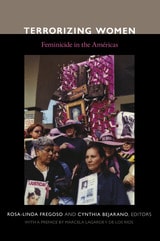
Terrorizing Women
Feminicide in the AmericasRosa-Linda Fregoso and Cynthia L. Bejarano, eds.
Duke University Press, 2010
Terrorizing Women brings together essays by feminist and human rights activists, attorneys, and scholars from Latin America and the United States, as well as testimonios by relatives of women who were disappeared or murdered. In addition to investigating egregious violations of women’s human rights, the contributors consider feminicide in relation to neoliberal economic policies, the violent legacies of military regimes, and the sexual fetishization of women’s bodies. They suggest strategies for confronting feminicide; propose legal, political, and social routes for redressing injustices; and track alternative remedies generated by the communities affected by gender-based violence. In a photo essay portraying the justice movement in Chihuahua, relatives of disappeared and murdered women bear witness to feminicide and demand accountability.
Contributors: Pascha Bueno-Hansen, Adriana Carmona López, Ana Carcedo Cabañas, Jennifer Casey, Lucha Castro Rodríguez , Angélica Cházaro, Rebecca Coplan, Héctor Domínguez-Ruvalcaba, Marta Fontenla, Alma Gomez Caballero, Christina Iturralde, Marcela Lagarde y de los Ríos, Julia Estela Monárrez Fragoso, Hilda Morales Trujillo, Mercedes Olivera, Patricia Ravelo Blancas, Katherine Ruhl, Montserrat Sagot, Rita Laura Segato, Alicia Schmidt Camacho, William Paul Simmons, Deborah M. Weissman, Melissa W. Wright
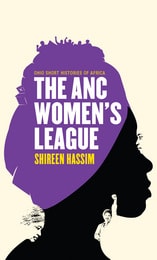
The ANC Women’s League
Sex, Gender and PoliticsShireen Hassim
Ohio University Press, 2015
First formed in the early twentieth century, the ANC Women’s League has grown into a leading organization in the women’s movement in South Africa. The league has been at the forefront of the nation’s century-long transition from an authoritarian state to a democracy that espouses gender equality as a core constitutional value. It has, indeed, always regarded itself as the women’s movement, frequently asserting its primacy as a vanguard organization and as the only legitimate voice of the women of South Africa. But, as this deeply insightful book shows, the history of the league is a more complicated affair—it was neither the only women’s organization in the political field nor an easy ally for South African feminism.

The American Girl Goes to War
Women and National Identity in U.S. Silent FilmLiz Clarke
Rutgers University Press, 2022
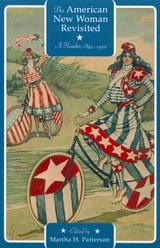
The American New Woman Revisited
A Reader, 1894-1930Patterson, Martha H
Rutgers University Press, 2008
In North America between 1894 and 1930, the rise of the “New Woman” sparked controversy on both sides of the Atlantic and around the world. As she demanded a public voice as well as private fulfillment through work, education, and politics, American journalists debated and defined her. Who was she and where did she come from? Was she to be celebrated as the agent of progress or reviled as a traitor to the traditional family? Over time, the dominant version of the American New Woman became typified as white, educated, and middle class: the suffragist, progressive reformer, and bloomer-wearing bicyclist. By the 1920s, the jazz-dancing flapper epitomized her. Yet she also had many other faces.
Bringing together a diverse range of essays from the periodical press of the late nineteenth and early twentieth centuries, Martha H. Patterson shows how the New Woman differed according to region, class, politics, race, ethnicity, and historical circumstance. In addition to the New Woman’s prevailing incarnations, she appears here as a gun-wielding heroine, imperialist symbol, assimilationist icon, entrepreneur, socialist, anarchist, thief, vamp, and eugenicist. Together, these readings redefine our understanding of the New Woman and her cultural impact.

The Angel in the Marketplace
Adwoman Jean Wade Rindlaub and the Selling of AmericaEllen Wayland-Smith
University of Chicago Press, 2020
The Angel in the Marketplace is the story of one of America’s most accomplished advertising executives. It is also the story of how advertisers like Rindlaub sold a postwar American dream of capitalism and a Christian corporate order. Rindlaub was responsible for award-winning, mega sales-generating advertisements for all things domestic, including Oneida silverware, Betty Crocker cake mix, Campbell’s soup, and Chiquita bananas. Her success largely came from embracing, rather than subverting, the cultural expectations of women. She believed her responsibility as an advertiser was not to spring women from their trap, but to make that trap more comfortable.
Rindlaub wasn’t just selling silverware and cakes; she was selling the virtues of free enterprise. By following the arc of Rindlaub’s career from the 1920s through the 1960s, we witness how a range of cultural narratives—advertising chief among them—worked powerfully to shape women’s emotional and economic behavior in support of the free market system. Alongside Rindlaub’s story, Ellen Wayland-Smith provides a riveting history of how women were repeatedly sold the idea that their role as housewives was more powerful, and more patriotic, than any outside the home. And by buying into the image of morality through an unregulated market, many of these women helped fuel backlash against economic regulation and socialization efforts throughout the twentieth century.
The Angel in the Marketplace is a nuanced portrayal of a complex woman, one who both shaped and reflected the complicated cultural, political, and religious forces defining femininity in America at mid-century. This compelling account of one of advertising’s most fervent believers is a tale of a Mad Woman we haven’t been told.
The Animal Within
Masculinity and the GothicCyndy Hendershot
University of Michigan Press, 1998
The book's keen critical insight, meticulous close readings and cross-cultural comparisons interrogate the historically situated function of masculinity in texts and films that range across the two-hundred year history of the Gothic. Matthew Lewis's The Monk is compared to Philip Kaufman's Invasion of the Body Snatchers to reveal the "hauntedness" of the male body. Hawthorne's short story "The Birthmark" is juxtaposed with J. S. Le Fanu's "Green Tea" to ground the fantastic qualities of the scientific imagination. Conrad's Heart of Darkness converses with Jean Rhys's Wide Sargasso Sea about the nature of imperialism. And Jane Campion's film The Piano is figured as an imaginative foray into new forms of masculinity. Utilizing the insights of Lacanian theory, Hendershot demonstrates how the Gothic realm of ghosts, demons, and hidden passages continues to suggest alternative realities to claustrophobic cultural imaginations.
"Masculinity and the Gothic combines solid literary critical insight and close readings in a detailed and lively survey of various manifestations of the gothic within British and American cultural traditions, and admirably explores the connections between various cultural discourses. It will make a fine complement to the numerous recent publications of issues of femininity in the gothic." --Sharon Willis, University of Rochester
Cyndy Hendershot is Assistant Professor of English, Arkansas State University.
The Apartment Plot
Urban Living in American Film and Popular Culture, 1945 to 1975Pamela Robertson Wojcik
Duke University Press, 2010
The Art of the Jewish Family
A History of Women in Early New York in Five ObjectsLaura Arnold Leibman
Bard Graduate Center, 2020
Each chapter creates a biography of a single woman through an object, offering a new methodology that looks past texts alone to material culture in order to further understand early Jewish American women’s lives and restore their agency as creators of Jewish identity. While much of the available history was written by men, the objects that Leibman studies were made for and by Jewish women. Speaking to American Jewish life, women’s studies, and American history, The Art of the Jewish Family sheds new light on the lives and values of these women, while also revealing the social and religious structures that led to Jewish women being erased from historical archives.
The Art of the Jewish Family was the winner of three 2020 National Jewish Book Awards: the Celebrate 350 Award for American Jewish Studies, the Gerrard and Ella Berman Memorial Award for History, and the Barbara Dobkin Award for Women's Studies.

The Audacity of a Kiss
Love, Art, and LiberationLeslie Cohen
Rutgers University Press, 2021
Rendered in bronze, covered in white lacquer, two women sit together on a park bench in Greenwich Village. One of the women touches the thigh of her partner as they gaze into each other’s eyes. The two women are part of George Segal’s iconic sculpture “Gay Liberation,” but these powerful symbols were modeled on real people: Leslie Cohen and her partner (now wife) Beth Suskin.
In this evocative memoir, Cohen tells the story of a love that has lasted for over fifty years. Transporting the reader to the pivotal time when brave gay women and men carved out spaces where they could live and love freely, she recounts both her personal struggles and the accomplishments she achieved as part of New York’s gay and feminist communities. Foremost among these was her 1976 cofounding of the groundbreaking women’s nightclub Sahara, which played host to such luminaries as Betty Friedan, Gloria Steinem, Pat Benatar, Ntozake Shange, Rita Mae Brown, Adrienne Rich, Patti Smith, Bella Abzug, and Jane Fonda. The Audacity of a Kiss is a moving and inspiring tale of how love, art, and solidarity can overcome oppression.
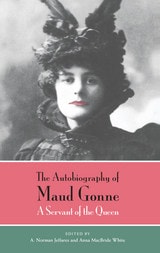
The Autobiography of Maud Gonne
A Servant of the QueenMaud Gonne
University of Chicago Press, 1995

The Aware Saga
Civil Society and Public Morality in SingaporeEdited by Terence Chong
National University of Singapore Press, 2011
In this book, academics and public intellectuals examine the AWARE saga within the context of Singapore's civil society, considering the political and historical background and how the issues it raised relate to contemporary societal trends. In addition to documenting a milestone event for Singapore's civil society, the authors offer provocative interpretations that will interest a broad range of readers.

The Bathers
Jennette Williams
Duke University Press, 2009
To create the images in The Bathers, Williams drew on gestures and poses found in iconic paintings of nude women, including tableaux of bathers by Paul Cézanne and Auguste Renoir, renderings of Venus by Giorgione and Titian, Dominique Ingres’s Odalisque and Slave, and Pablo Picasso’s Les Demoiselles d’Avignon. By alluding to these images and others, Williams sought to reflect the religious and mythological associations of water with birth and rebirth, comfort and healing, purification and blessing. She also used copies of the paintings to communicate with her Hungarian- and Turkish-speaking subjects—homemakers, factory workers, saleswomen, secretaries, managers, teachers, and students. Working in steam-filled environments, Williams created quiet, dignified images that evoke not only canonical representations of female nudes but also early pictorial photography. At the same time, they raise contemporary questions about the gaze, the definition of documentary photography, and the representation and perception of beauty and femininity, particularly as they relate to the aging body. Above all else, her photos are sensuously evocative. They invite the viewer to feel the steam, hear the murmur of conversation, and reflect on the allure of the female form.
A CDS Book
Published by Duke University Press and the Center for Documentary Photography

The Battle of the Sexes in French Cinema, 1930–1956
Noël Burch and Geneviève Sellier
Duke University Press, 2013
Citing more than 300 films and providing many in-depth interpretations, Burch and Sellier argue that films made in France between 1930 and 1956 created a national imaginary that equated masculinity with French identity. They track the changing representations of masculinity, explaining how the strong patriarch who saved fallen or troubled women from themselves in prewar films gave way to the impotent, unworthy, or incapable father figure of the Occupation. After the Liberation, the patriarch reemerged as protector and provider alongside assertive women who figured as threats not only to themselves but to society as a whole.
The Bellwomen
The Story of the Landmark AT&T Sex Discrimation CaseStockford, Marjorie A
Rutgers University Press, 2004
In the early 1970s, David Copus, a young, long-haired lawyer, teamed up with his government colleagues to confront the mature and staid executives of AT&T over the company’s treatment of its female and minority employees. Their disagreement resulted in a $38 million settlement that benefited 15,000 employees, more than 13,000 of them women, and changed our perceptions of women’s and men’s roles in the workplace forever.
Copus, who worked for the Equal Employment Opportunity Commission (EEOC), was charged with representing American citizens who suffered from employment discrimination. Time and again he saw young, black women in the South being turned down for available jobs in local phone companies—usually as telephone operators—often for no valid reason at all. He and the EEOC decided to challenge AT&T’s company-wide sex discrimination practices. Eventually, AT&T’s corporate colleagues, witnessing AT&T’s capitulation, began to hire and promote women into better jobs themselves. At the same time, the EEOC started to more aggressively push corporate America to give women better opportunities.
The Bellwomen recounts the history of this case in a novelistic style, illuminating the motivations, strengths, and weaknesses of all the players, from AT&T corporate leaders, to the lawyers of the EEOC, to the female activists fighting for what they believed. Stockford also profiles three beneficiaries of the case, presenting their ambitions and achievements.
Combined with the power of America’s civil rights laws and the influence of the second wave women’s movement, this case provided a catalyst that drove many more women into the paid workforce in non-traditional jobs. By the late twentieth century, when women could be seen working everywhere, from construction sites to corporate offices, it appeared that they belonged there and always had.

The Best-Kept Secret
Women Corporate Lobbyists, Policy, and Power in the United StatesBenoit, Denise
Rutgers University Press, 2007
From lobbyists such as Jack Abramoff, to corporate executives, like Enron's Kenneth Lay and Jeffrey Skilling, recent scandals dealing with politics and government have focused only on men at the top. But do these high-profile men accurately represent the gendered make up of corporate-government in the United States?
In this first in-depth look at the changing face of corporate lobbying, Denise Benoit shows how women who have historically worked mostly in policy areas relating to "women's issues" such as welfare, family, and health have become increasingly influential as corporate lobbyists, specializing in what used to be considered "masculine" policy, such as taxes and defense. Benoit finds that this new crop of female lobbyists mobilize both masculinity and femininity in ways that create and maintain trusting, open, and strong relations with those in government, and at the same time help corporations to save and earn billions of dollars.
While the media focuses on the dubious behaviors of men at the top of business and government, this book shows that female corporate lobbyists are indeed one of the best kept secrets in Washington.
The Biopolitics of Breast Cancer
Changing Cultures of Disease and ActivismMaren Klawiter
University of Minnesota Press, 2008
For nearly forty years, feminists and patient activists have argued that medicine is a deeply individualizing and depoliticizing institution. According to this view, medical practices are incidental to people’s transformation from patients to patient activists. The Biopolitics of Breast Cancer turns this understanding upside down.
Maren Klawiter analyzes the evolution of the breast cancer movement to show the broad social impact of how diseases come to be medically managed and publicly administered. Examining surgical procedures, adjuvant therapies, early detection campaigns, and the rise in discourses of risk, Klawiter demonstrates that these practices created a change in the social relations-if not the mortality rate-of breast cancer that initially inhibited, but later enabled, collective action. Her research focuses on the emergence and development of new forms of activism that range from grassroots patient empowerment to environmental activism and corporate-funded breast cancer awareness.
The Biopolitics of Breast Cancer opens a window onto a larger set of changes currently transforming medically advanced societies and ultimately challenges our understanding of the origins, politics, and future of the breast cancer movement.
Maren Klawiter holds a PhD in sociology from the University of California, Berkeley. She is currently pursuing a law degree at Yale University.
The Biopolitics of Feeling
Race, Sex, and Science in the Nineteenth CenturyKyla Schuller
Duke University Press, 2018
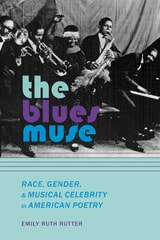
The Blues Muse
Race, Gender, and Musical Celebrity in American PoetryEmily Ruth Rutter
University of Alabama Press, 2018
A critical analysis of the poetic representations and legacies of five landmark blues artists
The Blues Muse: Race, Gender, and Musical Celebrity in American Poetry focuses on five key blues musicians and singers—Gertrude “Ma” Rainey, Bessie Smith, Billie Holiday, Robert Johnson, and Lead Belly—and traces the ways in which these artists and their personas have been invoked and developed throughout American poetry. This study spans nearly one hundred years of literary and musical history, from the New Negro Renaissance to the present.
Emily Ruth Rutter not only examines blues musicians as literary touchstones or poetic devices, but also investigates the relationship between poetic constructions of blues icons and shifting discourses of race and gender. Rutter’s nuanced analysis is clear, compelling, and rich in critical assessments of these writers’ portraits of the musical artists, attending to their strategies and oversights.
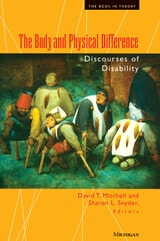
The Body and Physical Difference
Discourses of DisabilityDavid T. Mitchell and Sharon L. Snyder, Editors
University of Michigan Press, 1997
The book provides a provocative range of topics and perspectives: the absence of physical "otherness" in Ancient Greece, the depiction of the female invalid in Victorian literature, the production of tragic innocence in British and American telethons, the reconstruction of Civil War amputees, and disability as the aesthetic basis for definitions of expendable life within the modern eugenics movement. With this new, secure anchoring in the humanities, disability studies now emerges as a significant strain in contemporary theories of identity and social marginality.
Moving beyond the oversimplication that disabled people are marginalized and made invisible by able-ist assumptions and practices, the contributors demonstrate that representation is founded upon the perpetual exhibition of human anomalies. In this sense, all art can be said to migrate toward the "freakish" and the "grotesque." Such a project paradoxically makes disability the exception and the rule of the desire to represent that which has been traditionally out-of-bounds in polite discourse.
The Body and Physical Difference has relevance across a wide range of academic specialties such as cultural studies, the sociology of medicine, history, literature and medicine, the allied health professions, rehabilitation, aesthetics, philosophical discourses of the body, literary and film studies, and narrative theory.
David T. Mitchell is Assistant Professor of English, Northern Michigan University. Sharon L. Snyder teaches film and literature at Northern Michigan University.
The Book of Once-Mormon Women
Katie Stringham, Sue Johnson
Signature Books, 2026
The Book of Once-Mormon Women compiles the compelling voices of thirty women reflecting on their complex transitions away from Mormonism. Each piece is raw, heart-wrenching, and sublime. A compilation of expressive forms and perspectives, this book explores many issues faced by women in Mormonism: gender, race, agency, sexual orientation, faith, authority, and belonging. The authors add complexity—and answers—to the question: Why do people leave the Church of Jesus Christ of Latter-day Saints? The book also examines the myriad paths taken by the writers on their journey out of the faith—and the hope, peace, and restoration they’ve found beyond it.
Contributors: Tia Levings, Julie de Azevedo, Lindsay Hansen Park, Chelsea Homer, Gina Colvin-Ruwhiu, Celeste Davis, Sue Johnson, Alanna Argudo, Sara Bybee Fisk, Katie Stringham, Saane Siale, Samantha Shelley, Wendy Montgomery, Dee-Dee Darby-Duffin, Stephanie Brinkerhoff, Sarah Newcomb, Lili Ribeira, Mariama Nadworna, Jana Spangler, Megan McOmber, Meredith Peterson, Margaret M. Toscano, Sal Osborne, Lena Osborne, Amanda Scott, Ashmae Hoiland, Amy McPhie Allebest, Laurie Lee Hall, Sandra Violet, Claudine Foudray, Natasha Helfer, and Brittney Hartley
The Brotherhood of Freemason Sisters
Gender, Secrecy, and Fraternity in Italian Masonic LodgesLilith Mahmud
University of Chicago Press, 2014
Offering a tantalizing look behind lodge doors, The Brotherhood of Freemason Sisters unveils a complex culture of discretion in which Freemasons simultaneously reveal some truths and hide others. Women—one of Freemasonry’s best-kept secrets—are often upper class and highly educated but paradoxically antifeminist, and their self-cultivation through the Masonic path is an effort to embrace the deeply gendered ideals of fraternity. Mahmud unravels this contradiction at the heart of Freemasonry: how it was at once responsible for many of the egalitarian concepts of the Enlightenment and yet has always been, and in Italy still remains, extremely exclusive. The result is not only a thrilling look at an unfamiliar—and surprisingly influential—world, but a reevaluation altogether of the modern values and ideals that we now take for granted.

The Cancer Within
Reproduction, Cultural Transformation, and Health Care in RomaniaCristina A. Pop
Rutgers University Press, 2022

The Captain’s Best Mate
The Journal of Mary Chipman Lawrence on the Whaler Addison, 1856–1860Mary Chipman. Lawrence
University Press of New England, 1986
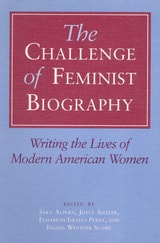
The Challenge of Feminist Biography
Writing the Lives of Modern American WomenEdited by Sara Alpern, Joyce Antler, Elisabeth Israels Perry, and Ingrid Winther Scobie
University of Illinois Press, 1992
This path-breaking anthology illuminates the lives of ten influential twentieth-century American women and looks at the challenges experienced by the women who have written about them. Exploring the frequently complicated dialogue between writer and subject, the contributors discuss tools appropriate to writing women's biography while their riveting accounts reveal how feminist scholarship led them to approach the study of women's lives in unconventional ways.
"This wonderful collection demonstrates the significance of women's biography as a central part of feminist scholarship. The feminist biographer inserts a second life into a biography, her own, giving us yet another layer of depth and insight."--Ann J. Lane, author of To "Herland" and Beyond: The Life and Work of Charlotte Perkins Gilman

The Challenge of Modernity
German Social and Cultural Studies, 1890-1960Adelheid von Saldern
University of Michigan Press, 2002
The essays contained in The Challenge of Modernity cover three distinct subject areas: the history of the Social Democratic labor movement, housing, and popular and mass culture. More specifically, von Saldern addresses the self-modernizing Social Democratic Party; Social Democrats' and Communists' opposing views of modernization; social rationalization in the private sphere (particularly with regard to women and hygiene); sport; the arrival of "trashy" literature, movies, and radio in Germany; and cultural conservatives' attempts to enhance a national and Volks-culture in opposition to mass-culture, Americanization, and the avant-garde. The variety of responses to the modernization process, as well as von Saldern's focus on social agents, makes this book unique.
Required reading for scholars of social, cultural, and gender history, The Challenge of Modernity will also find an audience among urban anthropologists, political scientists, and sociologists. Von Saldern's ability to combine a strong theoretical framework with concrete historical examples will also make this outstanding reading for undergraduate and graduate students seeking to familiarize themselves with the history of German society and culture.
Adelheid von Saldern is Professor of Modern History and Director, Historisches Seminar, Universität Hanover.