Results by title
272 books match the query 'Work' and 45 start with t

TRANS(per)FORMING Nina Arsenault
An Unreasonable Body of WorkEdited by Judith Rudakoff
Intellect Books, 2012
Techniques for Living
Fiction and Theory in the Work of Christine Brooke-RoseKaren R. Lawrence
The Ohio State University Press, 2010
Telling Wonders
Ethnographic and Political Discourse in the Work of HerodotusRosaria Munson
University of Michigan Press, 2001
As he explores the causes of the East-West conflict from its most remote antecedents, Herodotus includes conflicting traditions about different historical periods as well as apparently tangential descriptions of the customs of faraway peoples. What was his aim in combining such diverse material? Rosaria Vignolo Munson argues that Herodotus' aim was two-fold: to use historical narrative to illuminate the present and to describe barbarian customs so that the Greeks might understand themselves.
Herodotus assumes the role of advisor to his audience, acting as a master of metaphor and oracular speech and as an intellectual fully aware of new philosophical and political trends. By comparing, interpreting, and evaluating facts through time and space or simply by pointing them out as objects of "wonder," he teaches that correct political action is linked to an appropriate approach to foreigners and additional "others." Munson relies on traditional scholarship and modern studies in narratology and related critical fields to distinguish between narrative and metanarrative, providing a framework for analyzing the construction of Herodotus' discourse and his presentation of himself through it.
Munson's work will be useful to classicists and ancient historians and will also engage anthropologists interested in cultural interaction and notions of ethnicity and literary critics interested in narrative constructions.
The Bartonellas and Peruvian Medicine
The Work of Alberto Leonardo BartonAlarcón, Graciela S
Rutgers University Press, 2019
The book is the result of intense bibliographic research and of original documents aimed not just at the examination of Barton’s life and work, but also the examination of today’s perspectives and future work in the field of infectious and “neglected” diseases. The authors address current scientific information on the relevant bacteria Bartonella bacilliformis, besides current research and clinical status of the other Bartonellas, making it a useful and practical text for those studying infectious diseases.

The Bible as Christian Scripture
The Work of Brevard S. ChildsChristopher R. Seitz
SBL Press, 2013
The Callendar Effect
The Life and Work of Guy Stewart Callendar (1898-1964)James Rodger Fleming
American Meteorological Society, 2007
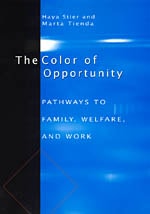
The Color of Opportunity
Pathways to Family, Welfare, and WorkHaya Stier and Marta Tienda
University of Chicago Press, 2000
The culmination of a six-year collaboration analyzing the Urban Poverty and Family Life Survey of Chicago, The Color of Opportunity is the first major work to compare Chicago's inner city minorities with national populations of like race and ethnicity from a life course perspective. The authors find that blacks, whites, Mexicans, and Puerto Ricans living in poor neighborhoods differ in their experiences with early material deprivation and the lifetime disadvantages that accumulate—but they do not differ much from the urban poor in their family formation, welfare participation, or labor force attachment. Stier and Tienda find little evidence for ghetto-specific behavior, but they document the myriad ways color still restricts economic opportunity.
The Color of Opportunity stands as a much-needed corrective to increasingly negative views of poor people of color, especially the poor who live in deprived neighborhoods. It makes a key and lasting contribution to ongoing debates about the origins and nature of urban poverty.
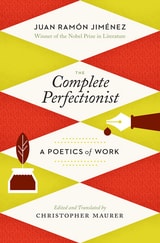
The Complete Perfectionist
A Poetics of WorkJuan Ramón Jiménez
Swan Isle Press, 2011
Few have written more memorably about the work of poetry and the poetics of work than Juan Ramón Jiménez, winner of a Nobel Prize and discerning teacher of an entire generation of Spanish poets. In this series of aphorisms, Jiménez brings together the elements of perfect work, both in writing and in other realms. Among these elements—the wellsprings of any kind of creation—are instinct and inspiration, memory and forgetting, silence and noise, love and regret.
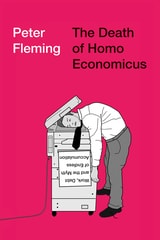
The Death of Homo Economicus
Work, Debt and the Myth of Endless AccumulationPeter Fleming
Pluto Press, 2017
In The Death of Homo Economicus, Fleming presents this controversial claim with the same fierce logic and perception that launched his Guardian column into popularity. Fleming argues that as an invented model of a human being, Homo economicus is, in reality, a tool used by economists and capitalists to manage our social world through the state, business, and even family. As workers, we are barraged with constant reminders that we should always strive toward this ideal persona. It’s implied—and sometimes directly stated—that if we don’t then we are failures. Ironically, the people most often encouraged to emulate this model are those most predisposed to fail due to their socioeconomic circumstances: the poor, the unemployed, students, and prisoners.
Fleming illuminates why a peculiar proactive negativity now marks everyday life in capitalist societies, and he explores how this warped, unattainable model for workers would cause chaos if enacted to the letter. Timely and revelatory, The Death of Homo Economicus offers a sharp, scathing critique of who we are supposed to be in the workplace and beyond.
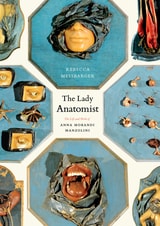
The Lady Anatomist
The Life and Work of Anna Morandi ManzoliniRebecca Messbarger
University of Chicago Press, 2010
Anna Morandi Manzolini (1714-74), a woman artist and scientist, surmounted meager origins and limited formal education to become one of the most acclaimed anatomical sculptors of the Enlightenment. The Lady Anatomist tells the story of her arresting life and times, in light of the intertwined histories of science, gender, and art that complicated her rise to fame in the eighteenth century.
Examining the details of Morandi’s remarkable life, Rebecca Messbarger traces her intellectual trajectory from provincial artist to internationally renowned anatomical wax modeler for the University of Bologna’s famous medical school. Placing Morandi’s work within its cultural and historical context, as well as in line with the Italian tradition of anatomical studies and design, Messbarger uncovers the messages contained within Morandi’s wax inscriptions, part complex theories of the body and part poetry. Widely appealing to those with an interest in the tangled histories of art and the body, and including lavish, full-color reproductions of Morandi’s work, The Lady Anatomist is a sophisticated biography of a true visionary.

The Last Generation
Work and Life in the Textile Mills of Lowell, Massachusetts, 1910-1960Mary H. Blewett
University of Massachusetts Press, 1990
Oral histories of many of the last generation of Lowell, MA, textile mill workers preceded by two introductory sections. The first presents the historic setting of economic development and subsequent decline of the textile industry in Lowell. The second is a brief explanation of the production process wherein the last generation of mill workers expended so many of their skills and so much of their energy.
The Laws of Cool
Knowledge Work and the Culture of InformationAlan Liu
University of Chicago Press, 2004

The Life and Work of Fedor Abramov
David Gillespie
Northwestern University Press, 1997
The Life and Work of Francis Willey Kelsey
Archaeology, Antiquity, and the ArtsJohn Griffiths Pedley
University of Michigan Press, 2011
President of the Archaeological Institute of America, professor at the University of Michigan from 1889 to 1927, and president of the American Philological Association, Francis Kelsey was crucially involved in the founding or growth of major educational institutions. He came to maturity in a period of great technological change in communications, transportation, and manufacturing. Kelsey took full advantage of such innovations in his ceaseless drive to promote education for all, to further the expansion of knowledge, and to champion the benefits of the study of antiquity.
A vigorous traveler around the United States, Europe, and the Mediterranean, Kelsey strongly believed in the value of personally viewing sites ancient and modern and collecting artifacts that could be used by the new museums and universities that were springing up in the United States. This collecting habit put him in touch with major financiers of the day, including Charles Freer, Andrew Carnegie, and J. P. Morgan, as he sought their help for important projects.
Drawing heavily on Kelsey's daily diaries now held at the University of Michigan's Bentley Historical Library, John Griffiths Pedley gives us a biography that records the wide-ranging activities of a gifted and energetic scholar whose achievements mirrored the creative and contributive innovations of his contemporary Americans.
The Many Futures of Work
Rethinking Expectations and Breaking MoldsEdited by Peter A. Creticos, Larry Bennett, Laura Owen, Costas Spirou, and Maxine Morphis-Riesbeck
Temple University Press, 2021
What will work eventually look like? This is the question at the heart of this timely collection. The editors and contributors—a mix of policy experts, academics, and advocates—seek to reframe the typical projections of the “future” of work. They examine the impact of structural racism on work, the loss of family‑sustaining jobs, the new role of gig work, growing economic inequality, barriers to rewarding employment such as age, gender, disability, and immigration status, and the business policies driving these ongoing challenges.
Together the essays present varied and practical insights into both U.S. and global trends, discuss the role of labor activism in furthering economic justice, and examine progressive strategies to improve the experience of work, wages, and the lives of workers. The Many Futures of Work offers a range of viable policies and practices that can promote rewarding employment and steer our course away from low-wage, unstable jobs toward jobs that lead to equitable prosperity and economic inclusion.
The Mythology of Work
How Capitalism Persists Despite ItselfPeter Fleming
Pluto Press, 2015
In The Mythology of Work, Peter Fleming examines how neoliberal society uses the ritual of work—and the threat of its denial—to maintain the late capitalist class order. Work becomes a universal reference point, devoid of any moral or political worth, transforming our society into a factory that never sleeps. Blending critical theory with recent accounts of job-related suicides, office-induced paranoia, fear of relaxation, managerial sadism, and cynical corporate social responsibility campaigns, Fleming paints a bleak picture of a society in which economic and emotional disasters greatly outweigh any professed benefits.
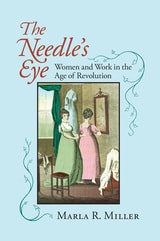
The Needle's Eye
Women and Work in the Age of RevolutionMarla R. Miller
University of Massachusetts Press, 2006
In this book, Marla R. Miller illuminates the significance of women's work in the clothing trades of the early Republic. Drawing on diaries, letters, reminiscences, ledgers, and material culture, she explores the contours of working women's lives in rural New England, offering a nuanced view of their varied ranks and roles—skilled and unskilled, black and white, artisanal and laboring—as producers and consumers, clients and craftswomen, employers and employees. By plumbing hierarchies of power and skill, Miller explains how needlework shaped and reflected the circumstances of real women's lives, at once drawing them together and setting them apart.
The heart of the book brings into focus the entwined experiences of six women who lived in and around Hadley, Massachusetts, a thriving agricultural village nestled in a bend in the Connecticut River about halfway between the Connecticut and Vermont borders. Miller's examination of their distinct yet overlapping worlds reveals the myriad ways that the circumstances of everyday lives positioned women in relationship to one another, enlarging and limiting opportunities and shaping the trajectories of days, years, and lifetimes in ways both large and small. The Needle's Eye reveals not only how these women thought about their work, but how they thought about their world.
The Origins of the Welfare State
Women, Work, and the French RevolutionLisa DiCaprio
University of Illinois Press, 2005
Women workers and the revolutionary origins of the modern welfare state
In May 1790, the French National Assembly created spinning workshops (ateliers de filature) for thousands of unemployed women in Paris. These ateliers disclose new aspects of the process which transformed Old Regime charity into revolutionary welfare initiatives characterized by secularization, centralization, and entitlements based on citizenship. This study is the first to examine women and the welfare state in its formative period at a time when modern concepts of human rights were elaborated.
In The Origins of the Welfare State, Lisa DiCaprio reveals how the women working in the ateliers, municipal welfare officials, and the national government vied to define the meaning of revolutionary welfare throughout the Revolution. Presenting demands for improved wages and working conditions to a wide array of revolutionary officials, the women workers exercised their rights as "passive citizens" capaciously and shaped the meanings of work, welfare, and citizenship. Looking backward to the Old Regime and forward to the nineteenth century, this study explores the interventionist spirit that characterized liberalism in the eighteenth century and serves as a bridge to the history of entitlements in the nineteenth and twentieth centuries.
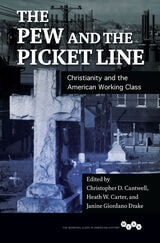
The Pew and the Picket Line
Christianity and the American Working ClassEdited by Christopher D. Cantwell, Heath W. Carter, and Janine Giordano Drake
University of Illinois Press, 2016
The Problem with Work
Feminism, Marxism, Antiwork Politics, and Postwork ImaginariesKathi Weeks
Duke University Press, 2011
The Public Infrastructure of Work and Play
Michael A. Pagano
University of Illinois Press, 2018
The latest volume in the Urban Agenda series looks at pressing infrastructure issues discussed at the 2017 UIC Urban Forum. Topics include: competing notions of the infrastructure ideal; what previous large infrastructure programs can teach the Trump Administration; how infrastructure influences city design; the architecture of the cities of tomorrow; who benefits from infrastructure improvements; and evaluations of projects like the Chicago Riverwalk and grassroots efforts to reclaim neighborhood parks from gangs.
Contributors: Philip Ashton, Beverly S. Bunch, Bill Burton, Charles Hoch, Sean Lally, and Sanjeev Vidyarthi

The Sociology of Work
Theodore Caplow
University of Minnesota Press, 1954
The Sociology of Work was first published in 1954. Minnesota Archive Editions uses digital technology to make long-unavailable books once again accessible, and are published unaltered from the original University of Minnesota Press editions.
What are the effects of working conditions, rewards, and habits upon the institution of the family? What are the typical forms of occupational segregation, and what are the effects of such segregation upon the general society? How are the social roles appropriate to each occupation created and sustained? What social processes determine the evolution of occupational groupings and the distribution of population among them?
This work, a basic study in occupational sociology, throws light on such questions as these. Professor Caplow describes the occupational system with reference to specialization, occupational status, the formation of professions, mobility, the patterning of individual careers, the occupations of women, and the prospects for continued improvement of working conditions. He draws upon hundreds of empirical studies for his discussions.
The book has been warmly received by reviewers and readers. Robert Dublin commented in the American Journal of Sociology: "This volume will long stand as a sourcebook of hypotheses and thesis topics for students of industrial sociology." Writing in the American Sociological Review, George Caspar Homans called it "a wide-ranging and hard-headed study of American jobs, their place and nature." Robert C. Stone said in Social Forces: "The work is a major contribution to the study of social structure."
The many specialist workers who are concerned with occupational problems—industrial and applied psychologists, personnel and guidance workers, wage economists, labor relations experts, and others—will find this a valuable reference work. It is, of course, pertinent to the interests of general sociologists and anthropologists, and is used as a text in a number of courses in occupational sociology.
The State as a Work of Art
The Cultural Origins of the ConstitutionEric Slauter
University of Chicago Press, 2009
The founding of the United States after the American Revolution was so deliberate, so inspired, and so monumental in scope that the key actors considered this new government to be a work of art framed from natural rights. Recognizing the artificial nature of the state, these early politicians believed the culture of a people should inform the development of their governing rules and bodies. Eric Slauter explores these central ideas in this extensive and novel account of the origins and meanings of the Constitution of the United States. Slauter uncovers the hidden cultural histories upon which the document rests, highlights the voices of ordinary people, and considers how the artifice of the state was challenged in its effort to sustain inalienable natural rights alongside slavery and to achieve political secularization at a moment of growing religious expression.
A complement to classic studies of the Constitution’s economic, ideological, and political origins, The State as a Work of Art sheds new light on the origins of the Constitution and on ongoing debates over its interpretation.
The Work and the Gift
Scott Cutler Shershow
University of Chicago Press, 2005
Ranging from Marx and Derrida to Friedrich Hayek and Alvin Toffler, Scott Cutler Shershow here explores the predictions of political thinkers on both the left and the right that work is fundamentally changing, or even disappearing; the debates among anthropologists and historians about an archaic gift-economy that preceded capitalism and might reemerge in its wake; contemporary political battles over charity and social welfare; and attempts by modern and postmodern artists to destabilize the work of art as we know it.
Ultimately, Shershow joins other contemporary thinkers in envisioning a community of unworking, grounded neither in ideals of production and progress, nor in an ethic of liberal generosity, but simply in our fundamental being-in-common. What results is a brilliant intervention in critical theory and social thought that will be of enormous value to students of literary criticism, anthropology, and philosophy alike.
The Work in the World
Geographical Practice and the Written WordMichael R. Curry
University of Minnesota Press, 1996
The Work in the World was first published in 1996. Minnesota Archive Editions uses digital technology to make long-unavailable books once again accessible, and are published unaltered from the original University of Minnesota Press editions.
The writing or reading or buying or selling or judging of a written work is always at the same time the act of making a place-or making places. The author creates a special sort of place for his ideas; the reader, for her engagement with the author; the bookseller, for the notion of books as property to be categorized and sold; and so on. In this book, Michael R. Curry develops a geography of this process, a theory of the nature of space and places in written work.
The Work in the World focuses on a paradox at the heart of this project: Although the written work is inextricably bound up in the construction of the places in which it is written, read, published, circulated, and cited, it nonetheless denies the importance of places. As the product of modern modes of knowledge, technology, and intellectual property, written work seems to say instead that only the encompassing universal space of ideas, objects, and commodities matters.
Distinctive for the way it views theories in geography and science as fundamentally embedded in written works, The Work in the World argues eloquently that the philosophical questions raised by theories can only be addressed within the broader context of the work.
Michael R. Curry is associate professor of geography at the University of California, Los Angeles.
The Work of Art in the World
Civic Agency and Public HumanitiesDoris Sommer
Duke University Press, 2014
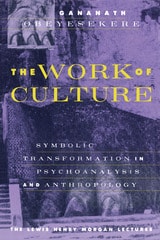
The Work of Culture
Symbolic Transformation in Psychoanalysis and AnthropologyGananath Obeyesekere
University of Chicago Press, 1990
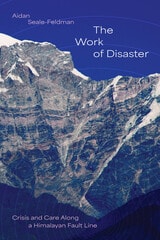
The Work of Disaster
Crisis and Care Along a Himalayan Fault LineAidan Seale-Feldman
University of Chicago Press, 2025
In a world marked by escalating disasters, the forms that care takes are increasingly fraught. In this powerful book, anthropologist Aidan Seale-Feldman focuses on Nepal, where in 2015 a 7.8-magnitude earthquake and equally powerful aftershock struck the country’s central region. The disaster claimed more than nine thousand lives and inspired a surge of humanitarian concern for the mental health of Nepali people. Based on extensive ethnographic fieldwork, The Work of Disaster examines the possibilities generated by disaster, as well as the vexed relationship between crisis and care.
Moving between NGO offices, mountain trails, therapeutic interventions, and affected villages, Seale-Feldman tells the story of an emergent “mental health crisis” and the forms of care that followed in the disaster’s wake. She also analyzes the changes emergency services bring about in the places they seek to assist, the challenges of psychiatric support provided by international organizations, and the place of mental health counseling in a modern biopolitical reality. The Work of Disaster reveals the simultaneous violence and gentleness of humanitarian encounters, engaging along the way with broader debates about world making and the ethics of care.
The Work of Friendship
In Memoriam Alan Bray, Volume 10Jody Greene , ed.
Duke University Press, 0
Contributors to the collection include some of the most prominent scholars in the field of early modern sexualities. They think expansively about Bray’s impact on their own work and, most importantly, test the applicability of his theories (that same-sex desire has a history that can be reconstructed and that the actual object of study is difficult to capture, as its expression varies radically across cultures and societies) in areas where they have not been previously employed. Two essays in this collection explore friendships or intimacies between women or between men and women—topics Bray did not pursue extensively. Others deal with locations outside Bray’s heavily English focus, including France, the Netherlands, Belgium, and Luxembourg, or apply his theories to periods beyond the Renaissance. Additionally, the issue includes a review of Bray’s The Friend, published posthumously, and an assessment of his scholarly career from his earliest writings to this final work.
Contributors. George Chauncey, Carla Freccero, Jonathan Goldberg, Jody Greene, George E. Haggerty, Jeffrey Masten, Jeffrey Merrick, Stephen Orgel, Laurie Shannon, Valerie Traub
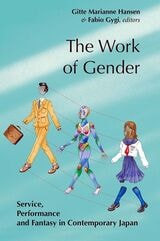
The Work of Gender
Service, Performance and Fantasy in Contemporary JapanEdited by Gitte Marianne Hansen and Fabio Gygi
National University of Singapore Press, 2022
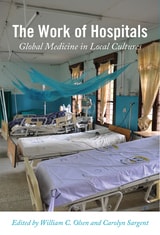
The Work of Hospitals
Global Medicine in Local CulturesWilliam C. Olsen
Rutgers University Press, 2022
The Work of Kings
H. L. Seneviratne
University of Chicago Press, 2000
Beginning with Anagarika Dharmapala's "rationalization" of Buddhism in the early twentieth century, which called for monks to take on a more activist role in the community, Seneviratne shows how the monks have gradually revised their role to include involvement in political and economic spheres. The altruistic, morally pure monks of Dharamapala's dreams have become, Seneviratne trenchantly argues, self-centered and arrogant, concealing self-aggrandizement behind a façade of "social service."
A compelling call for reform and a forceful analysis, The Work of Kings is essential to anthropologists, historians of religion, and those interested in colonialism, nationalism, and postcolonial politics.
The Work of Mothering
Globalization and the Filipino DiasporaHarrod Suarez
University of Illinois Press, 2017
Harrod J. Suarez's innovative readings of this cultural production explores issues of diaspora, gender, and labor. He details the ways literature and cinema play critical roles in encountering, addressing, and problematizing what we think we know about overseas Filipina workers. Though often seen as compliant subjects, the Filipina mother can also destabilize knowledge production that serves the interests of global empire, capitalism, and Philippine nationalism. Suarez examines canonical writers like Nick Joaquín, Carlos Bulosan, and Jessica Hagedorn to explore this disruption and understand the maternal specificity of the construction of overseas Filipina workers. The result is a series of readings that develop new ways of thinking through diasporic maternal labor that engages with the sociological imaginary.

The Work of Mourning
Jacques Derrida
University of Chicago Press, 2001
Gathered here are texts—letters of condolence, memorial essays, eulogies, funeral orations—written after the deaths of well-known figures: Roland Barthes, Paul de Man, Michel Foucault, Louis Althusser, Edmond Jabès, Louis Marin, Sarah Kofman, Gilles Deleuze, Emmanuel Levinas, Jean-François Lyotard, Max Loreau, Jean-Marie Benoist, Joseph Riddel, and Michel Servière.
With his words, Derrida bears witness to the singularity of a friendship and to the absolute uniqueness of each relationship. In each case, he is acutely aware of the questions of tact, taste, and ethical responsibility involved in speaking of the dead—the risks of using the occasion for one's own purposes, political calculation, personal vendetta, and the expiation of guilt. More than a collection of memorial addresses, this volume sheds light not only on Derrida's relation to some of the most prominent French thinkers of the past quarter century but also on some of the most important themes of Derrida's entire oeuvre-mourning, the "gift of death," time, memory, and friendship itself.
"In his rapt attention to his subjects' work and their influence upon him, the book also offers a hesitant and tangential retelling of Derrida's own life in French philosophical history. There are illuminating and playful anecdotes—how Lyotard led Derrida to begin using a word-processor; how Paul de Man talked knowledgeably of jazz with Derrida's son. Anyone who still thinks that Derrida is a facetious punster will find such resentful prejudice unable to survive a reading of this beautiful work."—Steven Poole, Guardian
"Strikingly simpa meditations on friendship, on shared vocations and avocations and on philosophy and history."—Publishers Weekly
The Work of Mourning
Jacques Derrida
University of Chicago Press, 2003
Gathered here are texts—letters of condolence, memorial essays, eulogies, funeral orations—written after the deaths of well-known figures: Roland Barthes, Paul de Man, Michel Foucault, Louis Althusser, Edmond Jabès, Louis Marin, Sarah Kofman, Gilles Deleuze, Emmanuel Levinas, Jean-François Lyotard, Max Loreau, Jean-Marie Benoist, Joseph Riddel, and Michel Servière.
With his words, Derrida bears witness to the singularity of a friendship and to the absolute uniqueness of each relationship. In each case, he is acutely aware of the questions of tact, taste, and ethical responsibility involved in speaking of the dead—the risks of using the occasion for one's own purposes, political calculation, personal vendetta, and the expiation of guilt. More than a collection of memorial addresses, this volume sheds light not only on Derrida's relation to some of the most prominent French thinkers of the past quarter century but also on some of the most important themes of Derrida's entire oeuvre-mourning, the "gift of death," time, memory, and friendship itself.
"In his rapt attention to his subjects' work and their influence upon him, the book also offers a hesitant and tangential retelling of Derrida's own life in French philosophical history. There are illuminating and playful anecdotes—how Lyotard led Derrida to begin using a word-processor; how Paul de Man talked knowledgeably of jazz with Derrida's son. Anyone who still thinks that Derrida is a facetious punster will find such resentful prejudice unable to survive a reading of this beautiful work."—Steven Poole, Guardian
"Strikingly simpa meditations on friendship, on shared vocations and avocations and on philosophy and history."—Publishers Weekly
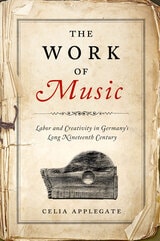
The Work of Music
Labor and Creativity in Germany's Long Nineteenth CenturyCelia Applegate
University of Wisconsin Press, 2025
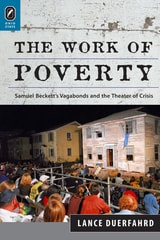
The Work of Poverty
Samuel Beckett's Vagabonds and the Theater of CrisisLance Duerfahrd
The Ohio State University Press, 2013
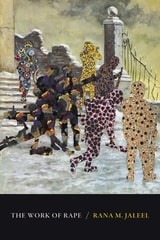
The Work of Rape
Rana M. Jaleel
Duke University Press, 2021
Duke University Press Scholars of Color First Book Award recipient
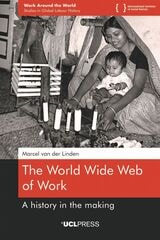
The World Wide Web of Work
A History in the MakingMarcel van der Linden
University College London, 2023
Global labor history is one of the fastest-growing fields of study worldwide today. This volume assembles a group of contributors from around the world to discuss the core concepts “capitalism” and “workers,” and to refine notions such as “coerced labor,” “household strategies,” and “labor markets.” It explores in new ways the connections between laborers in different parts of the world, arguing that both globalization and modern labor management originated in agriculture in the Global South and were only later introduced in Northern industrial settings. It reveals that nineteenth-century chattel slavery was frequently replaced by other forms of coerced labor, and it reconstructs the twentieth-century attempts of the International Labor Organisation to regulate work standards internationally. The book also pays attention to the relational inequality through which workers in wealthy countries benefit from the exploitation of those in poor countries. The final part addresses workers’ resistance and acquiescence: why collective actions often have unanticipated consequences, why and how workers sometimes organize massive flights from exploitation and oppression, and why proletarian revolutions took place in pre-industrial or industrializing countries but never in fully developed capitalist societies.
The Wounded Jung
Effects of Jung's Relationships on His Life and WorkRobert C. Smith
Northwestern University Press, 1997
Smith begins by exploring Jung's formative and transformative life experience, including his relationships with a deeply troubled mother and despairing father, with Sigmund Freud, and with the various women in his life. The relationships to his parents, in particular, have been remarkably unexplored by scholars. Smith then shows how these experiences shaped Jung's thoughts and writing -including his reassessment of religion as inner process - as well as his fascination with gnosticism and alchemy; the attention Jung gives to psychology as myth and the realization of selfhood; and his reinterpretation of evil as a process to be integrated into the proper sphere of human existence.
Smith's findings are based on the unprecedented number of primary sources to which he had access, including archival research, his own interviews with many of Jung's intimates, and personal correspondence with Jung himself, as well as on the synthesis of a wide range of recent scholarship on Jung. The culmination of many years of scholarship and reflection, this book should be read by anyone interested in spiritual healing or the connection between psychology and religion.
They Make Themselves
Work and Play among the Baining of Papua New GuineaJane Fajans
University of Chicago Press, 1997
In a new work sure to evoke considerable repercussions and debate in anthropological theory, Jane Fajans courageously takes on the "Baining Problem," arguing that the Baining define themselves not through intricate cosmologies or social networks, but through the meanings generated by their own productive and reproductive work.
Time, Work, and Culture in the Middle Ages
Jacques Le Goff
University of Chicago Press, 1980

To Make the Earth Bear Fruit
Ethnographic Essays on Fertility, Work and Gender in Highland BoliviaOlivia Harris
University of London Press, 1999
Too Good to Be True
The Life and Work of Leslie FiedlerMark Royden Winchell
University of Missouri Press, 2002

Touching Encounters
Sex, Work, and Male-for-Male Internet EscortingKevin Walby
University of Chicago Press, 2012