Results by title
5550 books match the query 'Biography & Autobiography' and 1006 start with t
The Life and Times of T. H. Gallaudet
Edna Edith Sayers
University Press of New England, 2017
The Life and Writings of Luisa de Carvajal y Mendoza
Luisa de Carvajal y Mendoza, Edited by Anne J. Cruz, Translated by Anne J. Cruz
Iter Press, 2014
The Life of Andrew Jackson
John Reid
University of Alabama Press, 2007
The frontier fighter who rose to the presidency and reshaped a nation.
Original copies of the first, 1817, edition of this work are so rare that even the Library of Congress does not have an undamaged copy. Consequently scholars and students of Jackson have had to rely on later, incomplete or bowdlerized editions. It is therefore all the more valuable to have Owsley’s critical restoration of the original edition, complete with its useful maps.
The work is a straightforward history of Jackson’s military career, begun by John Reid, Jackson’s military aide throughout the War of 1812 and the ensuing Creek War. Reid wrote the first four chapters, and after his death John Eaton completed the work from Reid’s outline, notes, and papers. Owsley, quondam professor of history at Auburn University, has carefully restored the original edition, noted variants between this and successor editions, and included helpful apparatus, including a memoir of John Reid by Helen Reid Roberts, and indexes to the whole.
This is the first paperback edition of this valuable record and includes the original four large-scale foldout maps on an accompanying CD.
The Life of Anthony Wood in His Own Words
Edited by Nicolas K. Kiessling
Bodleian Library Publishing, 2009
Anthony Wood (1632–95) was an English historian and antiquary best known for his books on the history and antiquities of the University of Oxford as well as Athenae Oxonienses: an Exact History of all the Writers and Bishops who have had their Education in the University of Oxford from 1500 to 1690. Some of the revelations in Athenae Oxonienses were considered scandalous at the time, and a copy of the manuscript was famously burned in protest in front of the Bodleian Library in 1693. Wood’s autobiography reflects his life-long devotion to historiography, and consequently it paints a lively picture of many well known figures in seventeenth century England.
Wood made more contributions to biography, bibliography, and the history of the University and city of Oxford than any other writer before that time. As a result, The Autobiography of Anthony Wood is brimming with information of all kinds, from famous people—including Christopher Wren, John Locke, the physician John Lower, the defiant Catholic Ralph Sheldon, the mathematician John Wallis, and a host of Oxford heads of colleges, vice-chancellors and chancellors—to descriptions of significant events—such as skirmishes between parliamentarian and royalist forces in the 1640s, the atmosphere of Oxford during the parliamentarian occupation, the return of King Charles II in 1660, and the anti-Catholic movement of the 1670s. Based directly upon original sources, this critical edition of Wood’s autobiography offers an entertaining and revealing look at one of the most interesting and turbulent periods in Oxford’s past.
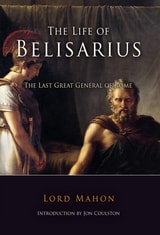
The Life of Belisarius
The Last Great General of RomeLord Mahon
Westholme Publishing, 2005
The Man Who Recaptured the Lost Glory of Rome
Serving the Byzantine Emperor Justinian during the 6th century A.D., Belisarius defeated a superior Persian force that threatened to extinguish Constantinople; his small army next drove the Vandals out of the ancient Roman provinces of North Africa and forced the Visigoths to retreat from Italy, returning Rome to the Emperor for the final time. His ability to achieve victory against overwhelming odds and his fairness to both his own troops and those of his enemies became legendary. Despite his successes, Justinian recalled Belisarius and, swayed by jealous advisers, accused the general of conspiring to overthrow him. Although innocent, he was publicly humiliated and stripped of his rank. But when a massive army of barbarians moved against Constantinople and the citizenry panicked in fear, they turned to their only true hero, Belisarius. The forsaken general donned his armor, called out his trusted veterans, and repulsed the barbarian horde. But instead of showing gratitude, Justinian banished him from the city.
The Life of Jean Jaures
Harvey Goldberg
University of Wisconsin Press, 1962
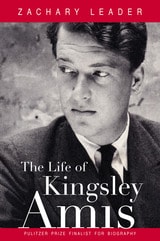
The Life of Kingsley Amis
Zachary Leader
Northwestern University Press, 2011
In The Life of Kingsley Amis, Leader, the acclaimed editor of The Letters of Kingsley Amis, draws not only on published and unpublished works and correspondence, but also on interviews with a wide range of Amis’s friends, relatives, fellow writers, students, and colleagues, many of whom have never spoken publicly before. The result is a compulsively readable account of Amis’s childhood, school days, and life as a student at Oxford, teacher, critic, political and cultural commentator, professional author, husband, father, and lover. Neither evading nor sensationalizing the more salacious aspects of Amis’s life, Leader explores the writer’s phobias, self-doubts, and ambitions; the controversies in which he was embroiled; and the role that drink played in a life bedeviled by erotic entanglements, domestic turbulence, and personal disaster.
Here is the biography that its subject deserves. Like Amis himself, it is incisive and unsentimental, deeply appreciative of aesthetic achievement, and a great source of amusing anecdotes. Dazzling for its thoroughness, psychological acuity, and elegant style, The Life of Kingsley Amis is exemplary: literary biography at its very best.
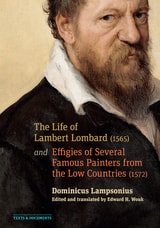
The Life of Lambert Lombard (1565); and Effigies of Several Famous Painters from the Low Countries (1572)
Dominicus Lampsonius
J. Paul Getty Trust, The, 2022
Dominicus Lampsonius’s The Life of Lambert Lombard (1565) is the earliest published biography of a Netherlandish artist. This neo-Latin account of the life of the painter, architect, and draftsman Lambert Lombard of Liège offers a theoretical exposition on the nature and ideal practice of Netherlandish art, emphasizing Lombard’s intellectual curiosity, interest in antiquity, attentive study of the human body, and exemplary generosity as a teacher.
This volume offers the first English edition of The Life of Lambert Lombard, complemented by a new translation of the inscriptions Lampsonius composed to accompany the Effigies of Several Famous Painters from the Low Countries (1572), a cycle of twenty-three engraved portraits of Netherlandish artists developed in collaboration with the print publisher Hieronymus Cock.
Together, The Life of Lambert Lombard and the Effigies established frameworks for a distinctly Netherlandish history of art. Responding to a growing sense of Netherlandish cultural and political identity on the eve of the Dutch Revolt, these texts proposed a critical alternative to Giorgio Vasari’s Lives of the Artists and its Italian model of art historical development, celebrating local ingenuity and skill. They remain the starting point for any history of the northern Renaissance.
The Life of Madie Hall Xuma
Black Women's Global Activism during Jim Crow and ApartheidWanda A. Hendricks
University of Illinois Press, 2022
The Life of Mark Twain
The Early Years, 1835-1871Gary Scharnhorst
University of Missouri Press, 2018
With dozens of Mark Twain biographies available, what is left unsaid? On average, a hundred Clemens letters and a couple of Clemens interviews surface every year. Scharnhorst has located documents relevant to Clemens’s life in Missouri, along the Mississippi River, and in the West, including some which have been presumed lost. Over three volumes, Scharnhorst elucidates the life of arguably the greatest American writer and reveals the alchemy of his gifted imagination.
The Life of Mark Twain
The Final Years, 1891–1910Gary Scharnhorst
University of Missouri Press, 2022
In the final volume of his three-volume biography, Gary Scharnhorst chronicles the life of Samuel Langhorne Clemens from his family’s extended trip to Europe in 1891 to his death in 1910 at age 74. During these years Clemens grapples with bankruptcy, returns to the lecture circuit, and endures the loss of two daughters and his wife. It is also during this time that he writes some of his darkest, most critical works; among these include Pudd’nhead Wilson; Personal Recollections of Joan of Arc; Tom Sawyer Abroad; Tom Sawyer, Detective; Following the Equator; No. 44, the Mysterious Stranger; and portions of his Autobiography.
The Life of Mark Twain
The Middle Years, 1871–1891Gary Scharnhorst
University of Missouri Press, 2019
The second volume of Gary Scharnhorst’s three-volume biography chronicles the life of Samuel Langhorne Clemens between his move with his family from Buffalo to Elmira (and then Hartford) in spring 1871 and their departure from Hartford for Europe in mid-1891.
During this time he wrote and published some of his best-known works, including Roughing It, The Gilded Age, The Adventures of Tom Sawyer, A Tramp Abroad, The Prince and the Pauper, Life on the Mississippi,Adventures of Huckleberry Finn, and A Connecticut Yankee in King Arthur’s Court.
Significant events include his trips to England (1872–73) and Bermuda (1877); the controversy over his Whittier Birthday Speech in December 1877; his 1878–79 Wanderjahr on the continent; his 1882 tour of the Mississippi valley; his 1884–85 reading tour with George Washington Cable; his relationships with his publishers (Elisha Bliss, James R. Osgood, Andrew Chatto, and Charles L. Webster); the death of his son, Langdon, and the births and childhoods of his daughters Susy, Clara, and Jean; as well as the several lawsuits and personal feuds in which he was involved. During these years, too, Clemens expressed his views on racial and gender equality and turned to political mugwumpery; supported the presidential campaigns of Grover Cleveland; advocated for labor rights, international copyright, and revolution in Russia; founded his own publishing firm; and befriended former president Ulysses S. Grant, supervising the publication of Grant’s Memoirs.
The Life of Mark Twain is the first multi-volume biography of Samuel Clemens to appear in more than a century and has already been hailed as the definitive Twain biography.
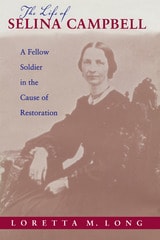
The Life of Selina Campbell
A Fellow Soldier in the Cause of RestorationLoretta M. Long Hunnicutt
University of Alabama Press, 2001
This first biography of Selina Campbell opens a window onto the experience of women in one of the most dynamic religious groups of 19th-century America
Loretta M. Long examines the life and influence of Selina Campbell, one of the most visible women in the 19th-century Disciples of Christ movement. Best known as the wife of Alexander Campbell, founder of the Disciples, Selina Campbell both shaped and exemplified the role of women in this dynamic religious group (also known as the Stone-Campbell movement). Her story demonstrates the importance of faith in the lives of many women during this era and adds a new dimension to the concept of the “separate spheres” of men and women, which women like Campbell interpreted in the context of their religious beliefs.
A household manager, mother, writer, and friend, Campbell held sway primarily in the domestic sphere, but she was not held captive by it. Her relationship with her husband was founded on a deep sense of partnership conditioned by their strong faith in an all-powerful God. Each of them took on complementary roles according to the perceived natural abilities of their genders: Alexander depended on Selina to manage his property and raise the children while he traveled the country preaching. Campbell outlived her husband by 30 years, and during that time published several newspaper articles and supported new causes, such as women in missions.
In the end, as Long amply demonstrates, Selina Campbell was neither her husband’s shadow nor solely a domestic worker. She was, in her husband’s eyes, a full partner and a “fellow soldier” in the cause of Restoration.
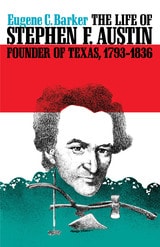
The Life of Stephen F. Austin, Founder of Texas, 1793-1836
A Chapter in the Westward Movement of the Anglo-American PeopleBy Eugene C. Barker
University of Texas Press, 1969
Almost a hundred years after the death of Stephen F. Austin this first full-length biography was published. And for almost a quarter of a century—dividing his time between editing, teaching, textbook writing, and serving in various academic capacities—Eugene C. Barker pursued the study which resulted in The Life of Stephen F. Austin. His accomplishment has long been regarded as a fine example of biography in Texas literature.
The Life of the Admiral Christopher Columbus
by his son FerdinandKeen, Benjamin
Rutgers University Press, 1959
The Light That Endures
Stories of Courage, Compassion, and Resilience at Dana-Farber Cancer InstituteTodd Weissman
University of Massachusetts Press, 2026
Showing that everyday people offer the deepest, most relatable lessons in grace
Offering an intimate glimpse into the lives of individuals connected to one of the world’s foremost centers for cancer care and research, The Light That Endures reveals how ordinary people at Boston’s Dana-Farber Cancer Institute demonstrate extraordinary resilience in the face of life’s most challenging moments. Through eight captivating profiles, readers meet a world-renowned pediatric oncologist who rode on horseback at Eisenhower’s inauguration, delivered a secret message in Soviet-controlled Czechoslovakia, and hosted the future King of England; a florist-turned-nurse-turned-teacher whose life changed drastically after a chance encounter on a train; an administrator who has faced adversity his entire life, from a violent father, to confronting his own identity, to being held up at gunpoint; a teenage patient whose battle with cancer was just one of many challenges he has navigated; and a woman who, despite spending her life bringing comfort to others, wonders whether she’s been enough as she reflects after a terminal diagnosis.
These remarkable people, diverse in their backgrounds, share a common bond through cancer and Dana-Farber, that much is obvious. However, it is their quiet acts of grace and service—woven into both their professional paths and personal journeys—that more deeply unite them. Their stories reveal a deeper truth: despite hardship and loss, the arc of life bends toward goodness. Fractured childhoods, family estrangement, mental health strains, winding career paths, and the ever-present shadow of self-doubt are not just obstacles but catalysts. The individuals profiled have found hope and meaning in community and their work, shaping lives of purpose, service, and gratitude. More than a recounting of lives touched by cancer, The Light That Endures is a celebration of the profound impact of compassion and human connection. It captures the essence of Dana-Farber’s ethos, where a shared mission of care fosters an environment of empathy and hope.
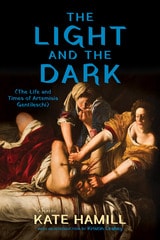
The Light and the Dark
(The Life and Times of Artemisia Gentileschi)Kate Hamill, Kristin Leahey
Northwestern University Press, 2026
A play from the inimitable Kate Hamill, based on the true story of the groundbreaking Italian painter Artemisia Gentileschi
During the seventeenth century, Italian artists strove to reshape the very image of humanity. Artemisia Gentileschi—the daughter of a painter—dreams of making her mark at a time when a woman is not thought capable of being an artist, let alone one of the greats. Just as her career begins to gain unexpected momentum, a series of devastating betrayals crack the foundation of her work—and her life. In electrifying verse and gorgeous artwork, The Light and The Dark depicts the deeply moving true story of a young woman who changed the very image of women in society . . . weaving a magnetic and empowering tapestry of ambition, rage, and resilience across the ages.
The Lincoln Assassination
The EvidenceEdited by William C. Edwards and Edward Steers
University of Illinois Press, 2008
On April 22, 1865, Brevet Colonel H. L. Burnett was assigned to head the investigation into the murder of President Abraham Lincoln and the attempted murder of Secretary of State William H. Seward. Burnett orchestrated the collection of thousands of documents for the Military Commission’s trial of the conspirators. This deep archive of documentary evidence--consisting of letters, depositions, eyewitness accounts, investigative reports, and other documents--provides invaluable insight into the historical, cultural, and judicial context of the investigation. Only a fraction of the information presented in these documents ever made its way into the trial, and most of it has never been readily accessible. By presenting an annotated and indexed transcription of these documents, this volume offers significant new access to information on the events surrounding the assassination and a vast new store of social and political history of the Civil War era.
“With tears in my eyes I think it your duty to hang every rebel caught. I feel as bad as if was my own mother or father & will be one to volunteer to try & shoot every Southern man. May God have mercy on the man’s soul that done such a deed.
With much Respect for our Country,
I remain
Weeping”
--Anonymous letter, New York, April 15, 1865
“I know Booth. He was in the habit of coming to my place to shoot. . . . He shot well, and practiced to shoot with accuracy in every possible position. . . . He was a quick shot; always silent, reticent.”
--Deposition of Benjamin Barker, Pistol Gallery proprietor
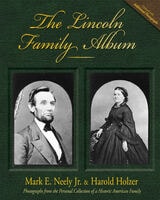
The Lincoln Family Album
Mark E. Neely Jr. and Harold Holzer
Southern Illinois University Press, 2006
Chronicling the private lives of the Lincolns through their personal photographic collection
The Lincoln Family Album offers a rare and revealing glimpse into the private life of Abraham Lincoln and the first family. Showcasing original and previously unpublished photographs collected and preserved by Mary Todd Lincoln and four generations of descendants, the volume includes pictures displayed in a family album when the Lincolns lived in the White House. Chronicled are the lives of the Lincolns’ three sons, including the tragic death of Willie in 1862, the rapid change of Tad during the war, and Robert’s marriage, children, and political career. Soldiers and statesmen of the Civil War, period figures such as Tom Thumb and Henry Ward Beecher, and even the family dog also graced the album that became the nucleus of the Lincolns’ personal collection.
This updated edition, which provides both additional pictures and new introductory materials by renowned Lincoln scholars Mark E. Neely Jr. and Harold Holzer, paints a portrait of the Lincolns’ rise to prominence and the exclusion of poorer relations after the family moved to the nation’s capital. With 150 illustrations and detailed captions, this authoritative and enlightening nineteenth-century history also includes capsule biographies of the Lincolns’ friends and relatives.
In such images as the First Lady in mourning or the assassin John Wilkes Booth, the pictures cannot disguise the painful truth about a family that suffered as many tragedies as triumphs. Willie’s death at the age of eleven abruptly ended Mary and Abraham’s personal collecting, but Lincoln descendants continued the tradition. The last pages of The Lincoln Family Album conclude with the death of Robert Lincoln’s last grandchild, Robert Todd Lincoln Beckwith, in 1985, ending the direct line of Abraham and Mary Lincoln.
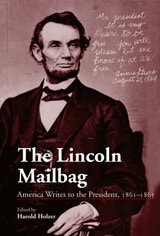
The Lincoln Mailbag
America Writes to the President, 1861-1865Edited by Harold Holzer
Southern Illinois University Press, 2006
As president, Abraham Lincoln received between two hundred and five hundred letters a day—correspondence from public officials, political allies, and military leaders, as well as letters from ordinary Americans of all races who wanted to share their views with him. Here, and in his critically acclaimed volume Dear Mr. Lincoln, editor Harold Holzer has rescued these voices—sometimes eloquent, occasionally angry, at times poetic—from the obscurity of the archives of the Civil War. The Lincoln Mailbag includes letters written by African Americans, which Lincoln never saw, revealing to readers a more accurate representation of the nation’s mood than even the president knew. This first paperback edition of The Lincoln Mailbag includes a new index and fourteen illustrations, and Holzer’s introduction and annotations provide historical context for the events described and the people who wrote so passionately to their president in Lincoln's America.
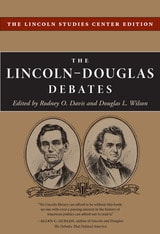
The Lincoln-Douglas Debates
The Lincoln Studies Center EditionEdited by Rodney O. Davis and Douglas L. Wilson
University of Illinois Press, 2014
While the debates between Abraham Lincoln and Stephen A. Douglas are undoubtedly the most celebrated in American history, they may also be the most consequential as well. For the issues so fiercely debated in 1858 were about various interrelated aspects of one momentous, nation-threatening issue: slavery. The contest between Lincoln and Douglas became a testing ground for the viability of conflicting ideals in a nation deeply divided. One of the most colorful and engaging episodes in American history, this series of debates is of enduring interest as an illuminating instance of the ever-recurring dilemma of self-government: what happens when the guiding principle of democracy, "popular sovereignty," confronts a principled stand against a "moral, social, and political evil"? The tragic answer in this case came three years later: civil war.
Important as they are, the Lincoln-Douglas debates have long since ceased to be self-explanatory. This edition is the first to provide a text founded on all known records, rather than following one or another of the partisan and sometimes widely-varying newspaper accounts. Meticulously edited and annotated, it provides numerous aids to help the modern reader understand the debates, including extensive introductory material, commentary, and a glossary. The fullest and most dependable edition of the Lincoln-Douglas debates ever prepared, this edition brings readers as close as possible to the original words of these two remarkable men.
The Lisle Letters
Edited by Muriel St. Clare Byrne
University of Chicago Press, 1981
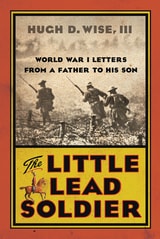
The Little Lead Soldier
Hugh D. Wise III
Westholme Publishing, 2017
Arriving in France in April 1918, Col. Hugh D. Wise, commander of the U.S. 61st Infantry Division, held a precious object. It was a toy soldier given to him by his six-year-old son, Hugh, Jr. The boy had asked the little lead soldier to write him with news of his father. The colonel saw action in two of the most important campaigns the Americans fought, St. Mihiel and Meuse-Argonne, and the little lead soldier dutifully assured a boy thousands of miles away that his father was safe: “The men had been shelled, gassed, and raked by machine guns constantly: and undergone several intense bombardments; and made a difficult though successful attack; and had resisted a fierce counter-attack. They had dug trenches, moved, and dug again. All this time they had been without shelter, exposed to a cold driving rain and without warm food—They were wet, chilled, and tired when called upon for even greater efforts but they responded with the energy and spirit of fresh troops.” A treasured family heirloom, these wartime letters are presented for the first time along with letter from Colonel Wise to his wife, and engrossing historical context provided by his grandson, Hugh D. Wise, III. The Little Lead Soldier: World War I Letters from a Father to His Son is a remarkable story of how a father performed his dangerous duty while keeping a promise to his boy.

The Little Lion of the Southwest
A Life Of Manuel Antonio ChavesMarc Simmons
Ohio University Press, 1974
Manuel Antonio Chaves’ life straddled three eras of New Mexican history: he was born (1818) at the tag end of the Spanish colonial period, he grew to manhood in the rough and heady days of the Santa Fe trade during the quarter century of Mexican rule (1821–1846), and he spent his mature years under the territorial regime established by the United States. Manuel Chaves’ long career (died 1889) was interwoven with almost every major historical event which occurred during his adult life—the Texan-Santa Fe Expedition, the Mexican War, the Civil War, skirmishes with Utes, Navajos, and Apaches. He was called El Leoncito, The Little Lion, having earned the name as an Indian fighter. He lived for two years in St. Louis and was a well-travelled man, doing business in New Orleans, New York, and Cuba.
A hundred years ago when men still gathered around campfires and storytelling was a well-developed art, Chaves’ exploits were known to all New Mexicans. But history has a capricious memory and his name became virtually forgotten. Around the turn of the century, Charles F. Lummis’ flowery pen recalled brief attention to Chaves’ life, and in 1927 he appeared as a minor character in Willa Cather’s Death Comes for the Archbishop—but otherwise was virtually forgotten. Alas. Too few of our Spanish frontiersmen have been studied in depth. Manuel Chaves and his life should not be lost. He was one of the legendary but real men who pioneered and built the 19th century Southwest. Howard R. Lamar laments: “The Spanish-American population of New Mexico still lacks a historian.” Marc Simmons’ biography of Manuel Chaves helps fill that gap.

The Little Man with the Long Shadow
George S. Mills
University of Iowa Press, 1988
Frederick M. Hubbell, railroad financier and builder, real estate investor, public utilities magnate, leading lawyer, and founder of Iowa’s first life insurance company, the Equitable, was at one time the wealthiest Iowan in the state’s history. Based on his diaries from 1855 to 1927, The Little Man with the Long Shadow tells the story of this industrious and imaginative entrepreneur.
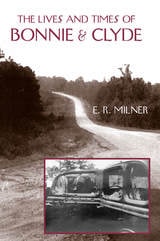
The Lives and Times of Bonnie & Clyde
E. R. Milner
Southern Illinois University Press, 2003
Although the mythology surrounding Bonnie and Clyde is charged with drama and fascination, Milner reveals the truth behind the bloody legend, carefully gleaning materials from obscure locally published accounts, previously untapped court records, and archived but unpublished oral history accounts from some sixty victims, neighbors, relatives, and police who were involved in the exploits of the infamous duo. And the truth proves to be sufficiently exciting. Romance aside, the Barrow gang carved a grisly swath through Texas, Arkansas, Oklahoma, and Missouri. The string of deaths was long— and real: Akota, Oklahoma, sheriff severely wounded, deputy killed; Sherman, Texas, grocery clerk killed; Temple, Texas, man killed as gang attempts to steal his car; Joplin, Missouri, two officers killed; Alma, Arkansas, police officer killed; Crockette, Texas, prison guard killed; Miami, Oklahoma, police officer killed.
Milner traces this violent path until 23 May 1934, when Bonnie and Clyde die in an ambush. Even dead, they draw crowds and are buried in a circus-like atmosphere. In death they continue to intrigue us in ways few criminals had before or have since.
The Lives of Cato the Younger from Ancient Rome to Modern America
Thomas E. Strunk
University of Michigan Press, 2026
The Lives of Dillon Ripley
Natural Scientist, Wartime Spy, and Pioneering Leader of the Smithsonian InstitutionRoger D. Stone
University Press of New England, 2017
The Living Lincoln
Edited by Thomas A. Horrocks, Harold Holzer, and Frank J. Williams
Southern Illinois University Press, 2011
In an opening section focusing largely on Lincoln's formative years, insightful explorations into his early self-education and the era before his presidency come from editors Frank J. Williams and Harold Holzer, respectively. Readers will also glimpse a Lincoln rarely discerned in books: calculating politician, revealed in Matthew Pinsker's illuminating essay, and shrewd military strategist, as demonstrated by Craig L. Symonds. Stimulating discussions from Edna Greene Medford, John Stauffer, and Michael Vorenberg tell of Lincoln's friendship with Frederick Douglass, his gradualism on abolition, and his evolving thoughts on race and the Constitution to round out part two. Part three features reflections on his martyrdom and memory, including a counterfactual history from Gerald J. Prokopowicz that imagines a hypothetical second term for the president, emphasizing the differences between Lincoln and his successor, Andrew Johnson. Barry Schwartz's contribution presents original research that yields fresh insight into Lincoln's evolving legacy in the South, while Richard Wightman Fox dissects Lincoln's 1865 visit to Richmond, and Orville Vernon Burton surveys and analyzes recent Lincoln scholarship.
This thought-provoking new anthology, introduced at a major bicentennial symposium at Harvard University, offers a wide range of ideas and interpretations by some of the best-known and most widely respected historians of our time. The Living Lincoln is essential reading for those seeking a better understanding of this nation's greatest president and how his actions resonate today.
The Living of Charlotte Perkins Gilman
An AutobiographyCharlotte Perkins Gilman
University of Wisconsin Press, 1991
Charlotte Perkins Gilman (1869-1935) was one of the leading intellectuals of the American women's movement in the first two decades of the twentieth century. Moving beyond the struggle for suffrage, Gilman confronted an even larger problem—economic and social discrimination against women. Her book, Women and Economics, published in 1898, was repeatedly printed and translated into seven languages. She was a tireless traveler, lecturer, and writer and is perhaps best known for her dramatic short story, "The Yellow Wallpaper." Gilman's autobiography gives us access to the life of a remarkable and courageous woman.
Originally published in 1935, soon after Gilman's death, The Living of Charlotte Perkins Gilman has been out of print for several years. This edition includes a new introduction by Gilman's noted biographer, Anne J. Lane.
The Lizard Man Speaks
By Eric R. Pianka
University of Texas Press, 1994
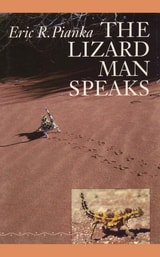
Alone on the endless red-sand desert in the Australian outback, tracking Varanus giganteus, the perentie lizard that grows to be more than six feet long...for desert rat Eric Pianka, such adventures have led to a satisfying, if unusual, way of life, as well as a distinguished career as a field biologist.
In The Lizard Man Speaks, Pianka recounts more than thirty years of adventures in reptile studies. He tells of "lizarding" in the North American deserts, the Kalahari Desert of southern Africa, and the Great Victoria Desert in Western Australia. His vivid imagery draws the reader into a world where lions lurk in the darkness beyond a gecko hunter's lights, where being stranded by car trouble miles from the last outpost is a constant danger, and where the wilderness still deserves to be called wild.
Along the way, Pianka provides much general information about lizard ecology, the fire succession cycle, and the interaction of humans with the landscape. And he reveals the springs of his own determined spirit and love of solitude, describing a near-fatal boyhood accident and its shaping and character-building effect on the life that followed.
The Lonely Veteran's Guide to Companionship
Bronson Lemer
University of Wisconsin Press, 2025
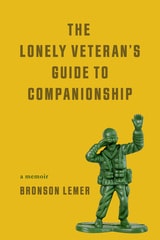
Lemer’s distinct take on the veteran’s story boldly engages the intersection of military narratives and queer culture, including examinations into the role of thirst traps in contemporary dating culture, the fears of long-term health damage caused by military service, and the ways in which intimate relationships can lead to a loss of self. Taken together, his essays illustrate how one queer veteran managed to carve out a path that led him, however awkwardly at times, closer to the person he wanted to be.
The Long Affair
Thomas Jefferson and the French Revolution, 1785-1800Conor Cruise O'Brien
University of Chicago Press, 1996
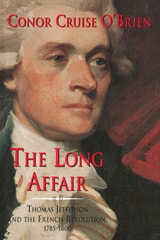
"The book is an attack on America's long affair with Jeffersonian ideology of radical individualism: an ideology that, by confusing Jefferson with a secular prophet, will destroy the United States from within."—David C. Ward, Boston Book Review
"With his background as a politician and a diplomat, O'Brien brings a broad perspective to his effort to define Jefferson's beliefs through the prism of his attitudes toward France. . . . This is an important work that makes an essential contribution to the overall picture of Jefferson."—Booklist
"O'Brien traces the roots of Jefferson's admiration for the revolution in France but notes that Jefferson's enthusiasm for France cooled in the 1790s, when French egalitarian ideals came to threaten the slave-based Southern economy that Jefferson supported."—Library Journal
"In O'Brien's opinion, it's time that Americans face the fact that Jefferson, long seen as a champion of the 'wronged masses,' was a racist who should not be placed on a pedestal in an increasingly multicultural United States."—Boston Phoenix
"O'Brien makes a well-argued revisionist contribution to the literature on Jefferson."—Kirkus Reviews
"O'Brien is right on target . . . determined not to let the evasions and cover-ups continue."—Forrest McDonald, National Review
"The Long Affair should be read by anyone interested in Jefferson—or in a good fight."—Richard Brookhiser, New York Times Book Review
The Long Hallway
Richard Scott Larson
University of Wisconsin Press, 2024
Larson was only nine years old when he recognized something of his own experience in how Michael Myers hid his true face from the world. This spark of recognition ignited his imagination while he searched for clues to what the future might hold for boys like him, all the while being made to understand his nascent sexuality as deviant and punishable. Like in the movies, his superficially safe suburban childhood was in fact filled with threat: a classmate’s murder, his father’s alcoholism and death, and his own sexual assault by a much older man. The figurative mask Larson learned to wear could not contain his yearning to be seen and desired. In the aftermath of this violence, his boyhood self came to believe that fear and desire would be forever intertwined.
This lyrical memoir expresses a boy’s search for identity while navigating the darkness and isolation of a deeply private inner world. With introspection and tenderness, Larson reflects on how little we understand in the moment about the experiences that mark us forever.
The Long Journey of Gracia Mendes
Marianna D. Birnbaum
Central European University Press, 2003
The Long Shadow of Little Rock
A MemoirDaisy Bates
University of Arkansas Press, 2007
The Lost Autobiography of Samuel Steward
Recollections of an Extraordinary Twentieth-Century Gay LifeSamuel Steward
University of Chicago Press, 2018
The story of this life would undoubtedly have been a sensation if it had reached publication. But after finishing a 110,000-word draft in 1979, Steward lost interest in the project and subsequently published only a slim volume of selections from his manuscript.
In The Lost Autobiography of Samuel Steward, Jeremy Mulderig has integrated Steward’s truncated published text with the text of the original manuscript to create the first extended version of Steward’s autobiography to appear in print—the first sensational, fascinating, and ultimately enlightening story of his many lives told in his own words. The product of a rigorous line-by-line comparison of these two sources and a thoughtful editing of their contents, Mulderig’s thoroughly annotated text is more complete and coherent than either source alone while also remaining faithful to Steward’s style and voice, to his engaging self-deprecation and his droll sense of humor. Compellingly readable and often unexpectedly funny, this newly discovered story of a gay life full of wildly improbable—but nonetheless true—events is destined to become a landmark queer autobiography from the twentieth century.
The Lost Black Scholar
Resurrecting Allison Davis in American Social ThoughtDavid A. Varel
University of Chicago Press, 2018
In The Lost Black Scholar, David A. Varel tells Davis’s compelling story, showing how a combination of institutional racism, disciplinary eclecticism, and iconoclastic thinking effectively sidelined him as an intellectual. A close look at Davis’s career sheds light not only on the racial politics of the academy but also the costs of being an innovator outside of the mainstream. Equally important, Varel argues that Davis exemplifies how black scholars led the way in advancing American social thought. Even though he was rarely acknowledged for it, Davis refuted scientific racism and laid bare the environmental roots of human difference more deftly than most of his white peers, by pushing social science in bold new directions. Varel shows how Davis effectively helped to lay the groundwork for the civil rights movement.
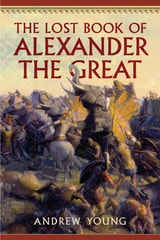
The Lost Book of Alexander the Great
Andrew Young
Westholme Publishing, 2022
Alexander the Great is well known as one of the first great empire builders of the ancient world. Among those fellow Macedonian officers who accompanied Alexander in his epic conquests from Greece to India was Ptolemy Lagides. Ptolemy served alongside Alexander from the Persian defeat at the Battle of Issus in modern-day Turkey and the journey to find the oracle that proclaimed Alexander to be Zeus incarnate, to the Battle of the Hydaspes River in 326 BC that opened India to the West. Following Alexander’s death, Ptolemy gained control of Egypt where he founded the dynasty in his name, created the great library of Alexandria, and was patron of the mathematician Euclid. Sometime during his rule in Egypt, Ptolemy wrote a history of Alexander’s conquests. Although it is probable that Ptolemy enhanced his own importance, sources indicate that it was regarded as an accurate and even-handed account of the campaigns of Alexander. However, Ptolemy’s book was lost—perhaps with the destruction of the library he founded—and not even an original fragment has survived. His book, however, was acknowledged as a primary source of information for later Roman historians.
In The Lost Book of Alexander the Great, Andrew Young explores the world of ancient writings about the Macedonian leader in order to determine whether any of Ptolemy’s writings can be recovered. Inspired by Stephen Greenblatt’s distinguished biography of Shakespeare, Will in the World, and written for the general reader, the author uses literary forensics to suggest which parts of later books about Alexander the Great, most notably the account by Arrian of Nicomedia, might be the words of Ptolemy. In addition to separating later Roman sensibilities from the original Greek of Ptolemy, the author re-creates the famous library of Alexandria, and takes the reader along on Alexander’s conquests as closely as we can to how Ptolemy may have recounted them.
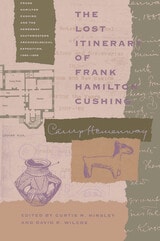
The Lost Itinerary of Frank Hamilton Cushing
Curtis M. Hinsley
University of Arizona Press, 2002
This second installment of a multivolume work on the Hemenway Expedition focuses on a report written by Cushing—at the request of the expedition's board of directors—to serve as vindication for the expedition, the worst personal and professional failure of his life. Reconstructed between 1891 and 1893 by Cushing from field notes, diaries, jottings, and memories, it provides an account of the origins and early months of the expedition. Hidden in several archives for a century, the Itinerary is assembled and presented here for the first time.
A vivid account of the first attempt at scientific excavatons in the Southwest, Cushing's Itinerary is both an exciting tale of travel through the region and an intellectual adventure story that sheds important light on the human past at Hohokam sites in Arizona's Salt River Valley, where Cushing sought to prove his hypothesis concerning the ancestral "Lost Ones" of the Zuñis. It initiates the construction of an ethnological approach to archaeology, which drew upon an unprecedented knowledge of a southwestern Pueblo tribe and use of that knowledge in the interpretation of archaeological sites.
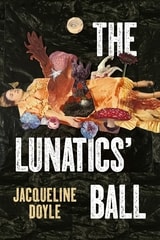
The Lunatics' Ball
Jacqueline Doyle
The Ohio State University Press, 2027
“There must have been more of us, hidden from sight, or slipping off the family tree like leaves in autumn, unnoticed.” Compelled by grief over the suicide of her beloved aunt and by her own bipolar diagnosis, Jacqueline Doyle set out to discover more about their shared disorder and the ways society has punished women it labels “mad.” Her genre-bending collection, The Lunatics’ Ball, grew into something larger than she expected: a collective (auto)biography combining her aunt’s story and her own with those of more than thirty “lunatic” forebears whose histories have been misrepresented or lost. Some are well known, such as Sylvia Plath, Nina Simone, and Zelda Fitzgerald—the latter who died in a locked room in a mental hospital fire. Others are lesser known, such as Lorina Bulwer, who stitched her story into enormous patchwork tapestries; Violet Gibson, incarcerated in an asylum for decades after attempting to assassinate Mussolini; and the writer Janet Frame, who narrowly escaped a lobotomy. In this fearless work that is equal parts imaginative brilliance and exacting historical inquiry, Doyle expands the boundaries of memoir and creates a new community in the face of stigma and repression.
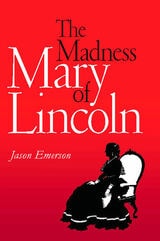
The Madness of Mary Lincoln
Jason Emerson
Southern Illinois University Press, 2007
WINNER, Russell P. Strange Memorial Book of the Year Award from the Illinois State Historical Society, 2007!
University Press Books for Public and Secondary Schools 2013 edition
In 2005, historian Jason Emerson discovered a steamer trunk formerly owned by Robert Todd Lincoln's lawyer and stowed in an attic for forty years. The trunk contained a rare find: twenty-five letters pertaining to Mary Todd Lincoln's life and insanity case, letters assumed long destroyed by the Lincoln family. Mary wrote twenty of the letters herself, more than half from the insane asylum to which her son Robert had her committed, and many in the months and years after.
The Madness of Mary Lincoln is the first examination of Mary Lincoln’s mental illness based on the lost letters, and the first new interpretation of the insanity case in twenty years. This compelling story of the purported insanity of one of America’s most tragic first ladies provides new and previously unpublished materials, including the psychiatric diagnosis of Mary’s mental illness and her lost will.
Emerson charts Mary Lincoln’s mental illness throughout her life and describes how a predisposition to psychiatric illness and a life of mental and emotional trauma led to her commitment to the asylum. The first to state unequivocally that Mary Lincoln suffered from bipolar disorder, Emerson offers a psychiatric perspective on the insanity case based on consultations with psychiatrist experts.
This book reveals Abraham Lincoln’s understanding of his wife’s mental illness and the degree to which he helped keep her stable. It also traces Mary’s life after her husband’s assassination, including her severe depression and physical ailments, the harsh public criticism she endured, the Old Clothes Scandal, and the death of her son Tad.
The Madness of Mary Lincoln is the story not only of Mary, but also of Robert. It details how he dealt with his mother’s increasing irrationality and why it embarrassed his Victorian sensibilities; it explains the reasons he had his mother committed, his response to her suicide attempt, and her plot to murder him. It also shows why and how he ultimately agreed to her release from the asylum eight months early, and what their relationship was like until Mary’s death.
This historical page-turner provides readers for the first time with the lost letters that historians had been in search of for eighty years.
The Magic Kingdom
Walt Disney and the American Way of LifeSteven Watts
University of Missouri Press, 2001
The Magic Lantern
An AutobiographyIngmar Bergman
University of Chicago Press, 1988
“When a film is not a document, it is a dream. . . . At the editing table, when I run the strip of film through, frame by frame, I still feel that dizzy sense of magic of my childhood.” Bergman, who has conveyed this heady sense of wonder and vision to moviegoers for decades, traces his lifelong love affair with film in his breathtakingly visual autobiography, The Magic Lantern.
More grand mosaic than linear account, Bergman’s vignettes trace his life from a rural Swedish childhood through his work in theater to Hollywood’s golden age, and a tumultuous romantic history that includes five wives and more than a few mistresses. Throughout, Bergman recounts his life in a series of deeply personal flashbacks that document some of the most important moments in twentieth-century filmmaking as well as the private obsessions of the man behind them. Ambitious in scope yet sensitively wrought, The Magic Lantern is a window to the mind of one of our era’s great geniuses.
“[Bergman] has found a way to show the soul’s landscape . . . . Many gripping revelations.”—New York Times Book Review
“Joan Tate’s translation of this book has delicacy and true pitch . . . The Magic Lantern is as personal and penetrating as a Bergman film, wry, shadowy, austere.”—New Republic
“[Bergman] keeps returning to his past, reassessing it, distilling its meaning, offering it to his audiences in dazzling new shapes.”—New York Times
“What Bergman does relate, particularly his tangled relationships with his parents, is not only illuminating but quite moving. No ‘tell-all’ book this one, but revealing in ways that much longer and allegedly ‘franker’ books are not.”—Library Journal
The Magic World of Orson Welles
James Naremore
University of Illinois Press, 2015
The Magic of Beverly Sills
Nancy Guy
University of Illinois Press, 2015
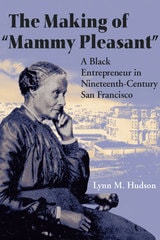
The Making of "Mammy Pleasant"
A Black Entrepreneur in Nineteenth-Century San FranciscoLynn M. Hudson
University of Illinois Press, 2002
Investigating Mary Ellen Pleasant's convoluted legacy
Mary Ellen Pleasant arrived in Gold Rush-era San Francisco a free black woman with abolitionist convictions and a predilection for entrepreneurial success. Behind the convenient and trusted disguise of "Mammy," she transformed domestic labor into enterprise, amassed remarkable real estate, wealth, and power, and gained notoriety for her work in fighting Jim Crow.
Pleasant's legacy is steeped in scandals and lore. Was she a voodoo queen who traded in sexual secrets? A madam? A murderer? In The Making of "Mammy Pleasant," Lynn M. Hudson examines the folklore of Pleasant's real and imagined powers. Emphasizing the significance of her life in the context of how it has been interpreted or ignored in the larger trends of American history, Hudson integrates fact and speculation culled from periodicals, court cases, diaries, letters, Pleasant's interviews with the San Francisco press, and various biographical and fictional accounts.
Addressing the lack of a historical record of black women's lives, the author argues that the silences and mysteries of Pleasant's past, whether never recorded or intentionally omitted, reveal as much about her life as what has been documented. Through Pleasant's life, Hudson also interrogates the constructions of race, gender, and sexuality during the formative years of California's economy and challenges popular mythology about the liberatory sexual culture of the American West.
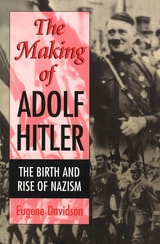
The Making of Adolf Hitler
The Birth and Rise of NazismEugene Davidson
University of Missouri Press, 1997
The harsh Armistice terms of 1918, the short-lived Weimar Republic, Hindenburg's senile vacillations, and behind-the-scene power plays form the backbone of this excellent study covering German history during the first three-and-a-half decades of the century.
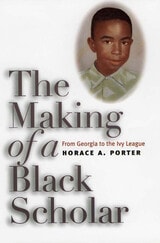
The Making of a Black Scholar
From Georgia to the Ivy LeagueHorace A. Porter
University of Iowa Press, 2003
The Making of a Black Scholar is structured around schools. Porter attends Georgia's segregated black schools until he enters the privileged world of Amherst College. He graduates (spending one semester at Morehouse College) and moves on to graduate study at Yale. He starts his teaching career at Detroit's Wayne State University and spends the 1980s at Dartmouth College and the 1990s at Stanford University.
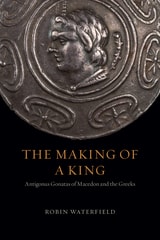
The Making of a King
Antigonus Gonatas of Macedon and the GreeksRobin Waterfield
University of Chicago Press, 2021
In this book, distinguished historian Robin Waterfield draws on his deep understanding of Greek history to bring us into the world of this complicated, splintered empire. He shows how, while Antigonus was confirming his Macedonian rule through constitutional changes, the Greeks were making moves toward independence. Two great confederacies of Greek cities emerged, forming powerful blocs that had the potential to resist the power of Macedon. The Making of a King charts Antigonus’s conflicts with the Greeks and with his perennial enemy, Ptolemy of Egypt. But Antigonus’s diplomatic and military successes were not enough to secure peace, and in his final years he saw his control of Greece whittled away by rebellion and the growing power of the Greek confederacies. Macedon’s lack of firm control over Greece ultimately made it possible for Rome to take its place as the arbiter of the Greeks’ future.
The Making of a King is Waterfield’s third volume about the Greeks in the era after Alexander the Great. Completing the story begun in his previous two books, Dividing the Spoils and Taken at the Flood, it brings Antigonus and his turbulent era to life. With The Making of a King—the first book in more than a century to tell in full the story of Antigonus Gonatas’s reign—this fascinating figure finally receives his due.