Results by title
3369 books match the query 'Cultural & Social' and 577 start with t
The Value of Things
Prehistoric to Contemporary Commodities in the Maya RegionEdited by Jennifer P. Mathews and Thomas H. Guderjan
University of Arizona Press, 2017
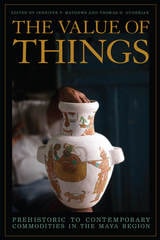
Jade, stone tools, honey and wax, ceramics, rum, land. What gave these commodities value in the Maya world, and how were those values determined? What factors influenced the rise and fall of a commodity’s value? The Value of Things examines the social and ritual value of commodities in Mesoamerica, providing a new and dynamic temporal view of the roles of trade of commodities and elite goods from the prehistoric Maya to the present.
Editors Jennifer P. Mathews and Thomas H. Guderjan begin the volume with a review of the theoretical literature related to the “value of things.” Throughout the volume, well-known scholars offer chapters that examine the value of specific commodities in a broad time frame—from prehistoric, colonial, and historic times to the present. Using cases from the Maya world on both the local level and the macro-regional, contributors look at jade, agricultural products (ancient and contemporary), stone tools, salt, cacao (chocolate), honey and wax, henequen, sugarcane and rum, land, ceramic (ancient and contemporary), and contemporary tourist handicrafts.
Each chapter author looks into what made their specific commodity valuable to ancient, historic, and contemporary peoples in the Maya region. Often a commodity’s worth goes far beyond its financial value; indeed, in some cases, it may not even be viewed as something that can be sold. Other themes include the rise and fall in commodity values based on perceived need, rarity or overproduction, and change in available raw materials; the domestic labor side of commodities, including daily life of the laborers; and relationships between elites and nonelites in production.
Examining, explaining, and theorizing how people ascribe value to what they trade, this scholarly volume provides a rich look at local and regional Maya case studies through centuries of time.
Contributors:
Rani T. Alexander
Dean E. Arnold
Timothy Beach
Briana Bianco
Steven Bozarth
Tiffany C. Cain
Scott L. Fedick
Thomas H. Guderjan
John Gust
Eleanor Harrison-Buck
Brigitte Kovacevich
Samantha Krause
Joshua J. Kwoka
Richard M. Leventhal
Sheryl Luzzadder-Beach
Jennifer P. Mathews
Heather McKillop
Allan D. Meyers
Gary Rayson
Mary Katherine Scott
E. Cory Sills

The Victim and its Masks
An Essay on Sacrifice and Masquerade in the MaghrebAbdellah Hammoudi
University of Chicago Press, 1993
The View from Afar
Claude Lévi-Strauss
University of Chicago Press, 1992
"Hardly a field remains untouched—sociobiology, linguistics, botany, genetics, psychiatry, esthetics, ecology, politics, neuroscience, education, morality, psychology. . . . It's all breathtaking and alarming, some of it wonderful, some of it ridiculous. . . . At times the experience is exhilarating."—Richard A. Shweder, New York Times Book Review
The Village Is Like a Wheel
Rethinking Cargos, Family, and Ethnicity in Highland MexicoRoger Magazine
University of Arizona Press, 2012
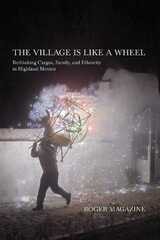
According to Magazine, where Western anthropologists often assume that persons are individuals capable of acting on their own to produce things, rural highland Mexicans see persons as inherently interdependent and in need of others even to act. He utilizes the term “active subjectivity” to denote the fact that what they produce in others is not simply action but also a subjective state or attitude of willingness to perform the action.
The author’s goals are to improve understandings of rural highland Mexicans’ lives and to contribute to a broader disciplinary effort aimed at revealing the cultural specificity or ethnocentricity of our supposedly universally applicable concepts and theories.

The Virgin's Children
Life in an Aztec Village TodayBy William Madsen
University of Texas Press, 1960
An absorbing account of the descendants of the ancient Aztecs and of the survival of their culture into the twentieth century in the Valley of Mexico is presented in this fascinating volume. Focusing on San Francisco Tecospa—a village of some eight hundred Indians who still spoke Nahuatl, whose lives were dominated by supernaturalism, and who observed with only slight modification much of their Aztec heritage—this story bears out the anthropological principle that innovations are most likely to be accepted when they are useful, communicable, and compatible with established tradition.
Nowhere is the Indian genius for combining the old and the new better exemplified than in the story of how the Virgin of Guadalupe came to fulfill the role formerly played by the pagan goddess Tonantzin and of how Christian saints replaced the Aztec gods. At the time of this study, the Tecospans still called the Catholic Virgin Tonantzin, but their concept of the mother goddess had changed profoundly since Aztec times.
Tonantzin the Pagan, a hideous goddess with claws on her hands and feet and with snakes entwining her face, wore a necklace of hearts, hands, and skulls to represent her insatiable appetite for corpses. Tonantzin the Catholic—also called Guadalupe—is a beautiful and benevolent mother deity who repeatedly stays God’s anger against her Mexican children and answers the prayers of the poorest Indian, with no thought of return.
In Tecospa the road to social recognition lay in the performance of religious works, and the neglect of ritual obligation subjected both the individual and the community to the anger of supernaturals who punished with illness or other misfortune. Religion was inextricably a part of every phase of life, and it is the whole life of the Aztecan that is recorded here: fiesta, clothing, food, agricultural practices, courtship, marriage, pregnancy and childbirth, death, witchcraft and its cures, medical practices and attitudes, houses and home life, ethics, and the hot-cold complex that classifies everything in the Tecospan universe from God to Bromo-Seltzer.
With a marked simplicity of style and language William Madsen has produced a profoundly significant anthropological study that is delightful reading from the first sentence to the last. The drawings, the work of a ten-year-old Tecospan lad, are remarkable for their penetrating insight into the culture.

The Visual Afterlife of Abdelkader Bennahar
Robert Desjarlais
Duke University Press, 2025
The Voice of the Rural
Music, Poetry, and Masculinity among Migrant Moroccan Men in UmbriaAlessandra Ciucci
University of Chicago Press, 2022
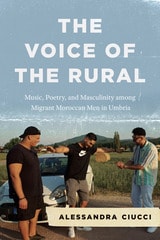
Umbria is known to most Americans for its picturesque rolling hills and medieval villages, but to the many migrant Moroccan men who travel there, Umbria is better known for the tobacco fields, construction sites, small industries, and the outdoor weekly markets where they work. Marginalized and far from their homes, these men turn to Moroccan traditions of music and poetry that evoke the countryside they have left— l-‘arubiya, or the rural. In this book, Alessandra Ciucci takes us inside the lives of Moroccan workers, unpacking the way they share a particular musical style of the rural to create a sense of home and belonging in a foreign and inhospitable nation. Along the way, she uncovers how this culture of belonging is not just the product of the struggles of migration, but also tied to the reclamation of a noble and virtuous masculine identity that is inaccessible to Moroccan migrants in Italy.
The Voice of the Rural allows us to understand the contemporary experiences of migrant Moroccan men by examining their imagined relationship to the rural through sound, shedding new light on the urgent issues of migration and belonging.
The Wanano Indians of the Brazilian Amazon
A Sense of SpaceBy Janet M. Chernela
University of Texas Press, 1996
The Wanano Indians of the northwest Amazon have a social system that differs from those of most tropical forest tribes. Neither stratified by wealth nor strictly egalitarian, Wanano society is "ranked" according to rigidly bound descent groups. In this pioneering ethnographic study, Janet M. Chernela decodes the structure of Wanano society.
In Wanano culture, children can be "grandparents," while elders can be "grandchildren." This apparent contradiction springs from the fact that descent from ranked ancestors, rather than age or accumulated wealth, determines one's standing in Wanano society. But ranking's impulse is muted as senior clans, considered to be succulent (referring to both seniority and resource abundance), must be generous gift-givers. In this way, resources are distributed throughout the society.
In two poignant chapters aptly entitled "Ordinary Dramas," Chernela shows that rank is a site of contest, resulting in exile, feuding, personal shame, and even death. Thus, Chernela's account is dynamic, placing rank in historic as well as personal context.
As the deforestation of the Amazon continues, the Wanano and other indigenous peoples face growing threats of habitat destruction and eventual extinction. If these peoples are to be saved, they must first be known and valued. The Wanano Indians of the Brazilian Amazon is an important step in that direction.

The War Machines
Young Men and Violence in Sierra Leone and LiberiaDanny Hoffman
Duke University Press, 2011
Hoffman argues that in contemporary West Africa, space, sociality, and life itself are organized around making young men available for all manner of dangerous work. Drawing on his ethnographic research over the past nine years, as well as the anthropology of violence, interdisciplinary security studies, and contemporary critical theory, he maintains that the mobilization of West African men exemplifies a global trend in the outsourcing of warfare and security operations. A similar dynamic underlies the political economy of violence in Iraq, Afghanistan, and a growing number of postcolonial spaces. An experienced photojournalist, Hoffman integrates more than fifty of his photographs of young West Africans into The War Machines.
The War for the Heart and Soul of a Highland Maya Town
Revised EditionBy Robert S. Carlsen, with a contribution by Martín Prechtel
University of Texas Press, 2011
This compelling ethnography explores the issue of cultural continuity and change as it has unfolded in the representative Guatemala Mayan town Santiago Atitlán. Drawing on multiple sources, Robert S. Carlsen argues that local Mayan culture survived the Spanish Conquest remarkably intact and continued to play a defining role for much of the following five centuries. He also shows how the twentieth-century consolidation of the Guatemalan state steadily eroded the capacity of the local Mayas to adapt to change and ultimately caused some factions to reject—even demonize—their own history and culture. At the same time, he explains how, after a decade of military occupation known as la violencia, Santiago Atitlán stood up in unity to the Guatemalan Army in 1990 and forced it to leave town.
This new edition looks at how Santiago Atitlán has fared since the expulsion of the army. Carlsen explains that, initially, there was hope that the renewed unity that had served the town so well would continue. He argues that such hopes have been undermined by multiple sources, often with bizarre outcomes. Among the factors he examines are the impact of transnational crime, particularly gangs with ties to Los Angeles; the rise of vigilantism and its relation to renewed religious factionalism; the related brutal murders of followers of the traditional Mayan religion; and the apocalyptic fervor underlying these events.
The War on the Social Factory
The Struggle for Community Safety in the Silicon ValleyAnnie Paradise
Northwestern University Press, 2024
A collective ethnography of grassroots mobilizations for community safety across the Silicon Valley
This is a narrative of struggle and solidarity and a collective toolkit for grassroots opposition to militarization, policing, and ongoing conditions of war in the current conjuncture of racial patriarchal capitalism. Grassroots researcher Annie Paradise presents here a collective ethnography of the mothers and community matriarchs whose children have been murdered by police across the San Francisco Bay Area as they develop and practice autonomous, creative forms of resistance.
The War on the Social Factory: The Struggle for Community Safety in the Silicon Valley maps local families’ struggles to reclaim their households and their communities—to create a social infrastructure of care, justice, and safety outside state- and market-determined modes of “security.” Practices such as sustained vigil, testimony, and the production and circulation of insurgent knowledges are shown here to be part of interconnected justice efforts to demilitarize and decarcerate communities in the face of the multiple forms of violence enacted under late racial patriarchal capitalism. Paradise examines the expanding carceral processes of enclosure, criminalization, dispossession, expropriation, and disposability that mark the neoliberal "security” regime across the Silicon Valley and offers counter-counterinsurgent strategies and practices of co-generative, dynamic resistance.
The Wet and the Dry
Irrigation and Agricultural Intensification in PolynesiaPatrick Vinton Kirch
University of Chicago Press, 1994
Examining research on cultural adaptation and ecology in Western Polynesia and utilizing extensive data from a variety of important South Pacific sites, Kirch not only reveals how particular systems of production developed within the constraints imposed by environmental conditions, but also explores the tension that arises between contrasting productive systems with differential abilities to produce surplus. He shows that the near total neglect of short-fallow dryland cultivation, as well as arboriculture, or tree-cropping, has seriously distorted the picture that archaeologists and anthropologists have of agricultural intensification and its relation to complex social structure.
This work, likely to become a classic, will be central to all future discussions of the ecology and politics of agricultural intensification.
The Wild East
Criminal Political Economies in South AsiaEdited by Barbara Harriss-White and Lucia Michelutti
University College London, 2019
The Will to Improve
Governmentality, Development, and the Practice of PoliticsTania Murray Li
Duke University Press, 2007
Demonstrating that the “will to improve” has a long and troubled history, Li identifies enduring continuities from the colonial period to the present. She explores the tools experts have used to set the conditions for reform—tools that combine the reshaping of desires with applications of force. Attending in detail to the highlands of Sulawesi, she shows how a series of interventions entangled with one another and tracks their results, ranging from wealth to famine, from compliance to political mobilization, and from new solidarities to oppositional identities and violent attack. The Will to Improve is an engaging read—conceptually innovative, empirically rich, and alive with the actions and reflections of the targets of improvement, people with their own critical analyses of the problems that beset them.
The Winged
An Upper Missouri River Ethno-ornithologyKaitlyn Chandler, Wendi Field Murray, María Nieves Zedeño, Samrat Clements, and Robert James
University of Arizona Press, 2017
The Missouri River Basin is home to thousands of bird species that migrate across the Great Plains of North America each year, marking the seasonal cycle and filling the air with their song. In time immemorial, Native inhabitants of this vast region established alliances with birds that helped them to connect with the gods, to learn the workings of nature, and to live well.
This book integrates published and archival sources covering archaeology, ethnohistory, historical ethnography, folklore, and interviews with elders from the Blackfoot, Assiniboine, Mandan, Hidatsa, Arikara, and Crow communities to explore how relationships between people and birds are situated in contemporary practice, and what has fostered its cultural persistence. Native principles of ecological and cosmological knowledge are brought into focus to highlight specific beliefs, practices, and concerns associated with individual bird species, bird parts, bird objects, the natural and cultural landscapes that birds and people cohabit, and the future of this ancient alliance.
Detailed descriptions critical to ethnohistorians and ethnobiologists are accompanied by thirty-four color images. A unique contribution, The Winged expands our understanding of sets of interrelated dependencies or entanglements between bird and human agents, and it steps beyond traditional scientific and anthropological distinctions between humans and animals to reveal the intricate and eminently social character of these interactions.
The Wintu and Their Neighbors
A Very Small World-System in Northern CaliforniaChristopher Chase-Dunn
University of Arizona Press, 1998
Chase-Dunn and Mann argue that Immanuel Wallerstein's world-systems perspective, originally applied only to the study of modern capitalistic societies, can also be applied to the study of the social, economic, and political relationships in small stateless societies. They contend that, despite the fact that the Wintu appear on the surface to have been a household-based society, this indigenous group was in fact involved in a myriad of networks of interaction, which resulted in intermarriage and which extended for many miles around the region. These networks, which were not based on the economic dominance of one society over another—a concept fundamental to Wallerstein's world-systems theory—led to the eventual expansion of the Wintu as a cultural group.
Thus, despite the fact that the Wintu did not behave like a modern society—lacking wealth accumulation, class distinctions, and cultural dominance—Chase-Dunn and Mann insist that the Wintu were involved in a world-system and argue, therefore, that the concept of the "minisystem" should be discarded. They urge other scholars to employ this comparative world-systems perspective in their research on stateless societies.
The Work and the Gift
Scott Cutler Shershow
University of Chicago Press, 2005
Ranging from Marx and Derrida to Friedrich Hayek and Alvin Toffler, Scott Cutler Shershow here explores the predictions of political thinkers on both the left and the right that work is fundamentally changing, or even disappearing; the debates among anthropologists and historians about an archaic gift-economy that preceded capitalism and might reemerge in its wake; contemporary political battles over charity and social welfare; and attempts by modern and postmodern artists to destabilize the work of art as we know it.
Ultimately, Shershow joins other contemporary thinkers in envisioning a community of unworking, grounded neither in ideals of production and progress, nor in an ethic of liberal generosity, but simply in our fundamental being-in-common. What results is a brilliant intervention in critical theory and social thought that will be of enormous value to students of literary criticism, anthropology, and philosophy alike.
The Work of Culture
Symbolic Transformation in Psychoanalysis and AnthropologyGananath Obeyesekere
University of Chicago Press, 1990
The Work of Disaster
Crisis and Care Along a Himalayan Fault LineAidan Seale-Feldman
University of Chicago Press, 2025
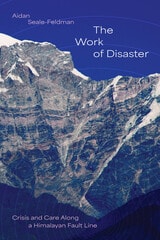
In a world marked by escalating disasters, the forms that care takes are increasingly fraught. In this powerful book, anthropologist Aidan Seale-Feldman focuses on Nepal, where in 2015 a 7.8-magnitude earthquake and equally powerful aftershock struck the country’s central region. The disaster claimed more than nine thousand lives and inspired a surge of humanitarian concern for the mental health of Nepali people. Based on extensive ethnographic fieldwork, The Work of Disaster examines the possibilities generated by disaster, as well as the vexed relationship between crisis and care.
Moving between NGO offices, mountain trails, therapeutic interventions, and affected villages, Seale-Feldman tells the story of an emergent “mental health crisis” and the forms of care that followed in the disaster’s wake. She also analyzes the changes emergency services bring about in the places they seek to assist, the challenges of psychiatric support provided by international organizations, and the place of mental health counseling in a modern biopolitical reality. The Work of Disaster reveals the simultaneous violence and gentleness of humanitarian encounters, engaging along the way with broader debates about world making and the ethics of care.
The Work of Gender
Service, Performance and Fantasy in Contemporary JapanEdited by Gitte Marianne Hansen and Fabio Gygi
National University of Singapore Press, 2022
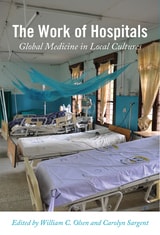
The Work of Hospitals
Global Medicine in Local CulturesWilliam C. Olsen
Rutgers University Press, 2022
The Work of Kings
H. L. Seneviratne
University of Chicago Press, 2000
Beginning with Anagarika Dharmapala's "rationalization" of Buddhism in the early twentieth century, which called for monks to take on a more activist role in the community, Seneviratne shows how the monks have gradually revised their role to include involvement in political and economic spheres. The altruistic, morally pure monks of Dharamapala's dreams have become, Seneviratne trenchantly argues, self-centered and arrogant, concealing self-aggrandizement behind a façade of "social service."
A compelling call for reform and a forceful analysis, The Work of Kings is essential to anthropologists, historians of religion, and those interested in colonialism, nationalism, and postcolonial politics.
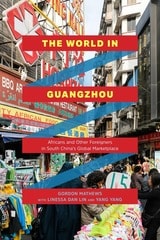
The World in Guangzhou
Africans and Other Foreigners in South China’s Global MarketplaceGordon Mathews, Linessa Dan Lin, and Yang Yang
University of Chicago Press, 2017
Through detailed ethnographic portraits, Mathews reveals a world of globalization based on informality, reputation, and trust rather than on formal contracts. How, he asks, can such informal relationships emerge between two groups—Chinese and sub-Saharan Africans—that don't share a common language, culture, or religion? And what happens when Africans move beyond their status as temporary residents and begin to put down roots and establish families?
Full of unforgettable characters, The World in Guangzhou presents a compelling account of globalization at ground level and offers a look into the future of urban life as transnational connections continue to remake cities around the world.

The World of Lucha Libre
Secrets, Revelations, and Mexican National IdentityHeather Levi
Duke University Press, 2008
Levi considers lucha libre in light of scholarship about sport, modernization, and the formation of the Mexican nation-state, and in connection to professional wrestling in the United States. She examines the role of secrecy in wrestling, the relationship between wrestlers and the characters they embody, and the meanings of the masks worn by luchadors. She discusses male wrestlers who perform masculine roles, those who cross-dress and perform feminine roles, and female wrestlers who wrestle each other. Investigating the relationship between lucha libre and the mass media, she highlights the history of the sport’s engagement with television: it was televised briefly in the early 1950s, but not again until 1991. Finally, Levi traces the circulation of lucha libre symbols in avant-garde artistic movements and its appropriation in left-wing political discourse. The World of Lucha Libre shows how a sport imported from the United States in the 1930s came to be an iconic symbol of Mexican cultural authenticity.
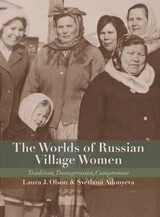
The Worlds of Russian Village Women
Tradition, Transgression, CompromiseLaura J. Olson and Svetlana Adonyeva
University of Wisconsin Press, 2012
Based upon nearly three decades of fieldwork, from 1983 to 2010, The Worlds of Russian Rural Women follows three generations of Russian women and shows how they alternately preserve, discard, and rework the cultural traditions of their forebears to suit changing needs and self-conceptions. In a major contribution to the study of folklore, Laura J. Olson and Svetlana Adonyeva document the ways that women’s tales of traditional practices associated with marriage, childbirth, and death reflect both upholding and transgression of social norms. Their romance songs, satirical ditties, and healing and harmful magic reveal the complexity of power relations in the Russian villages.
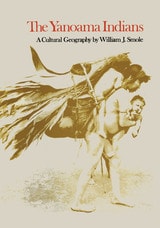
The Yanoama Indians
A Cultural GeographyBy William J. Smole
University of Texas Press, 1976
The Yanoama are one of the most numerous remaining aboriginal populations of the South American tropical forests, and their large territory constitutes a significant culture region. Although other scholars (anthropologists, geneticists, linguists) have studied this contemporary "neolithic" population, this is the first geographic study of the Yanoama. It is also the only book to focus on the Yanoama highland core area—the Parima massif—and it is the first study to analyze Yanoama horticulture as an integral part of their ecosystem.
The author is concerned principally with the spatial dimension as developed in Yanoama culture, with the spatial patterns of functioning systems, and with Yanoama ecology in this highland habitat. The natural environment is viewed, not as a cultural determinant, but as part of the total ecosystem. Livelihood activities constitute a major organizing theme and, among these, gardening receives the most attention. Frequently classified as a nomadic hunter-gatherer group, the Yanoama are found to have a deep-seated horticultural tradition, and many new data on this tradition are presented. As this study reveals, the Yanoama have created and maintained a cultural landscape that bears their distinctive stamp.
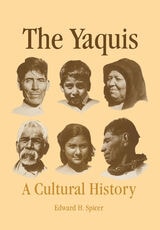
The Yaquis
A Cultural HistoryEdward H. Spicer
University of Arizona Press, 1980

Theatre History Studies 2022, Vol 41
edited by Lisa Jackson-Schebetta
University of Alabama Press, 2023
New perspectives and rigorous scholarship shaping the histories of theatre and performance.
Theatre History Studies 2022, Vol. 41 presents a dynamic collection of peer‑reviewed essays that exemplify current directions in theatre and performance historiography. Edited by Lisa Jackson‑Schebetta, this volume brings together scholars whose work spans diverse periods, geographies, and performance traditions, demonstrating the field’s continued expansion in scope and methodology. As the official journal of the Mid‑America Theatre Conference, Theatre History Studies remains a vital venue for rigorous historical inquiry grounded in archival research, critical theory, and historiographic reflection.
Volume 41 engages pressing questions about how theatre histories are constructed, narrated, and mobilized in relation to social, political, and cultural contexts. Contributors explore performance as a site of embodied knowledge, identity formation, resistance, and memory, with essays that address race, gender, sexuality, labor, migration, and transnational exchange. The volume reflects a historiographic turn toward interdisciplinary approaches, drawing from dance studies, performance studies, critical race theory, and cultural history to reconsider established narratives and recover overlooked voices.
Together, the essays in this volume demonstrate the continued relevance of theatre history as both a scholarly practice and a critical framework for understanding performance’s role in shaping—and being shaped by—broader historical forces. Theatre History Studies 2022, Vol. 41 will be of particular value to scholars, educators, and graduate students in theatre and performance studies, as well as researchers in related fields who are interested in innovative historical methods and the evolving contours of performance scholarship.
CONTRIBUTORS
Angela K. Ahlgren / Samer Al-Saber / Kelly I. Aliano / Gordon Alley-Young / Melissa Blanco Borelli / Trevor Boffone / Jay Buchanan / Matthieu Chapman / Joanna Dee Das / Ryan J. Douglas / Victoria Fortuna / Christiana Molldrem Harkulich / Alani Hicks-Bartlett / Jeanmarie Higgins / Lisa Jackson-Schebetta / Erin Rachel Kaplan / Heather Kelley / Patrick Maley / Karin Maresh / Lisa Milner / Courtney Elkin Mohler / Heather S. Nathans / Heidi L. Nees / Sebastian Samur / Michael Schweikardt / Teresa Simone / Dennis Sloan / Guilia Taddeo / Kyle A. Thomas / Alex Vermillion / Bethany Wood
Theorizing NGOs
States, Feminisms, and NeoliberalismVictoria Bernal and Inderpal Grewal, eds.
Duke University Press, 2014
Contributors. Sonia E. Alvarez, Victoria Bernal, LeeRay M. Costa, Inderpal Grewal, Laura Grünberg, Elissa Helms, Julie Hemment, Saida Hodžic, Lamia Karim, Sabine Lang, Lauren Leve, Kathleen O'Reilly, Aradhana Sharma

Theory from the Trenches
Decolonization and the Horizons of Subaltern MarxismShozab Raza
Duke University Press, 2027

Theory of African Music, Volume I
Gerhard Kubik
University of Chicago Press, 2010
Taken together, these comprehensive volumes offer an authoritative account of the music of Africa. One of the most prominent experts on the subject, Gerhard Kubik draws on his extensive travels and three decades of study in many parts of the continent to compare and contrast a wealth of musical traditions from a range of cultures.
In the first volume, Kubik describes and examines xylophone playing in southern Uganda and harp music from the Central African Republic; compares multi-part singing from across the continent; and explores movement and sound in eastern Angola. And in the second volume, he turns to the cognitive study of African rhythm, Yoruba chantefables, the musical Kachamba family of Malaŵi, and African conceptions of space and time.
Each volume features an extensive number of photographs and is accompanied by a compact disc of Kubik’s own recordings. Erudite and exhaustive, Theory of African Music will be an invaluable reference for years to come.

Theory of African Music, Volume II
Gerhard Kubik
University of Chicago Press, 2010
In this second volume, Kubik explores a variety of topics, including Yoruba chantefables, the musical Kachamba family of Malawˆ i, and the cognitive study of African rhythm. Drawing on his remarkable ability to make cross-cultural comparisons, Kubik illuminates every facet of the African understanding of rhythm, from timing systems to elementary pulsation. His analysis of tusona ideographs in Luchazi culture leads to an exploration of African space/time concepts that synthesizes his theories of art, rhythm, and culture.
Featuring a large number of photographs and accompanied by a compact disc of Kubik’s own recordings, Theory of African Music, Volume II, will be an invaluable reference for years to come.

Therapeutic Nations
Healing in an Age of Indigenous Human RightsDian Million
University of Arizona Press, 2013
Million contends that nation-state relations are influenced by a theory of trauma ascendant with the rise of neoliberalism. Such use of trauma theory regarding human rights corresponds to a therapeutic narrative by Western governments negotiating with Indigenous nations as they seek self-determination.
Focusing on Canada and drawing comparisons with the United States and Australia, Million brings a genealogical understanding of trauma against a historical filter. Illustrating how Indigenous people are positioned differently in Canada, Australia, and the United States in their articulation of trauma, the author particularly addresses the violence against women as a language within a greater politic. The book introduces an Indigenous feminist critique of this violence against the medicalized framework of addressing trauma and looks to the larger goals of decolonization. Noting the influence of humanitarian psychiatry, Million goes on to confront the implications of simply dismissing Indigenous healing and storytelling traditions.
Therapeutic Nations is the first book to demonstrate affect and trauma’s wide-ranging historical origins in an Indigenous setting, offering insights into community healing programs. The author’s theoretical sophistication and original research make the book relevant across a range of disciplines as it challenges key concepts of American Indian and Indigenous studies.

There's a Disco Ball Between Us
A Theory of Black Gay LifeJafari S. Allen
Duke University Press, 2021

These "Thin Partitions"
Bridging the Growing Divide between Cultural Anthropology and ArchaeologyJoshua Englehardt
University Press of Colorado, 2016
In case studies highlighting the benefits of interdisciplinary collaboration, contributors argue that anthropologists and archaeologists are simply not “speaking the same language” and that the division between fields undermines the field of anthropology as a whole. Scholars must bridge this gap and find ways to engage in interdisciplinary collaboration to promote the health of the anthropological discipline. By sharing data, methods, and ideas, archaeology and cultural anthropology can not only engage in more productive debates but also make research accessible to those outside academia.
These “Thin Partitions” gets to the heart of a well-known problem in the field of anthropology and contributes to the ongoing debate by providing concrete examples of how interdisciplinary collaboration can enhance the outcomes of anthropological research.
Contributors: Fredrik Fahlander, Lilia Fernández Souza, Kent Fowler, Donna Goldstein, Joseph R. Hellweg, Derek Johnson, Ashley Kistler, Vincent M. LaMotta, John Monaghan, William A. Parkinson, Paul Shankman, David Small
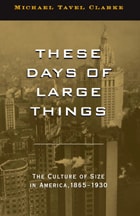
These Days of Large Things
The Culture of Size in America, 1865-1930Michael Tavel Clarke
University of Michigan Press, 2009
The United States at the turn of the twentieth century cultivated a passion for big. It witnessed the emergence of large-scale corporate capitalism; the beginnings of American imperialism on a global stage; record-level immigration; a rapid expansion of cities; and colossal events and structures like world's fairs, amusement parks, department stores, and skyscrapers. Size began to play a key role in American identity. During this period, bigness signaled American progress.
These Days of Large Things explores the centrality of size to American culture and national identity and the preoccupation with physical stature that pervaded American thought. Clarke examines the role that body size played in racial theory and the ways in which economic changes in the nation generated conflicting attitudes toward growth and bigness. Finally, Clarke investigates the relationship between stature and gender.
These Days of Large Things brings together a remarkable range of cultural material including scientific studies, photographs, novels, cartoons, architecture, and film. As a general cultural and intellectual history of the period, this work will be of interest to students and scholars in American studies, U.S. history, American literature, and gender studies.
Michael Tavel Clarke is Assistant Professor of English at the University of Calgary.
Cover photograph: "New York from Its Pinnacles," Alvin Langdon Coburn (1912). Courtesy of the George Eastman House.
"A fascinating study of the American preoccupation with physical size, this book charts new paths in the history of science, culture, and the body. A must-read for anyone puzzling over why Americans today love hulking SUVs, Mcmansions, and outsized masculine bodies."
---Lois Banner, University of Southern California
"From the Gilded Age through the Twenties, Clarke shows a nation-state obsessed with sheer size, ranging from the mammoth labor union to the 'Giant Incorporated Body' of the monopoly trust. These Days of Large Things links the towering Gibson Girl with the skyscraper, the pediatric regimen with stereotypes of the Jew. Spanning anthropology, medicine, architecture, business, and labor history, Clarke provides the full anatomy of imperial America and offers a model of cultural studies at its very best."
---Cecelia Tichi, Vanderbilt University
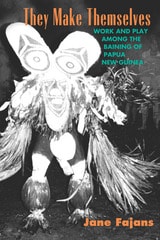
They Make Themselves
Work and Play among the Baining of Papua New GuineaJane Fajans
University of Chicago Press, 1997
In a new work sure to evoke considerable repercussions and debate in anthropological theory, Jane Fajans courageously takes on the "Baining Problem," arguing that the Baining define themselves not through intricate cosmologies or social networks, but through the meanings generated by their own productive and reproductive work.
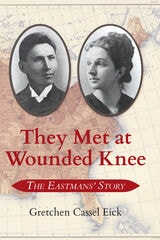
They Met at Wounded Knee
The Eastmans' StoryGretchen Cassel Eick
University of Nevada Press, 2020
Thicker Than Blood
How Racial Statistics LieTukufu Zuberi
University of Minnesota Press, 2003
A hard-hitting investigation of the racist uses of statistics—now in paperback!
Tukufu Zuberi offers a concise account of the historical connections between the development of the idea of race and the birth of social statistics. Zuberi describes how race-differentiated data are misinterpreted in the social sciences and asks searching questions about the ways racial statistics are used. He argues that statistical analysis can and must be deracialized, and that this deracialization is essential to the goal of achieving social justice for all.
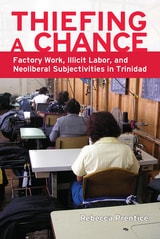
Thiefing a Chance
Factory Work, Illicit Labor, and Neoliberal Subjectivities in TrinidadRebecca Prentice
University Press of Colorado, 2015
When an IMF-backed program of liberalization opened Trinidad’s borders to foreign ready-made apparel, global competition damaged the local industry and unraveled worker entitlements and expectations but also presented new economic opportunities for engaging the “global” market. This fascinating ethnography explores contemporary life in the Signature Fashions garment factory, where the workers attempt to exploit gaps in these new labor configurations through illicit and informal uses of the factory, a practice they colloquially refer to as “thiefing a chance.”
Drawing on fifteen months of fieldwork, author Rebecca Prentice combines a vivid picture of factory life, first-person accounts, and anthropological analysis to explore how economic restructuring has been negotiated, lived, and recounted by women working in the garment industry during Trinidad’s transition to a neoliberal economy. Through careful social coordination, the workers “thief” by copying patterns, taking portions of fabric, teaching themselves how to operate machines, and wearing their work outside the factory. Even so, the workers describe their “thiefing” as a personal, individualistic enterprise rather than a form of collective resistance to workplace authority. By making and taking furtive opportunities, they embrace a vision of themselves as enterprising subjects while actively complying with the competitive demands of a neoliberal economic order.
Prentice presents the factory not as a stable institution but instead as a material and social space in which the projects, plans, and desires of workers and their employers become aligned and misaligned, at some moments in deep harmony and at others in rancorous conflict. Arguing for the productive power of the informal and illicit, Thiefing a Chance contributes to anthropological debates about the very nature of neoliberal capitalism and will be of great interest to undergraduate students, graduate students, and faculty in anthropology, labor studies, Caribbean studies, and development studies.

Things
Edited by Bill Brown
University of Chicago Press, 2004
Based on an award-winning special issue of the journal Critical Inquiry, Things features eighteen thought-evoking essays by contributors including Bill Brown, Matthew L. Jones, Bruno Latour, W. J. T. Mitchell, Jessica Riskin, Jeffrey T. Schnapp, Peter Schwenger, Charity Scribner, and Alan Trachtenberg.
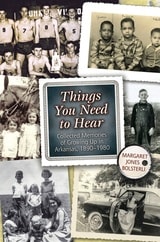
Things You Need to Hear
Collected Memories of Growing Up in Arkansas, 1890–1980Margaret Jones Bolsterli
University of Arkansas Press, 2016
Thinking Like a Climate
Governing a City in Times of Environmental ChangeHannah Knox
Duke University Press, 2020

Thinking Outside the Girl Box
Teaming Up with Resilient Youth in AppalachiaLinda Spatig
Ohio University Press, 2014
Thinking Outside the Girl Box is a true story about a remarkable youth development program in rural West Virginia. Based on years of research with adolescent girls—and adults who devoted their lives to working with them—Thinking Outside the Girl Box reveals what is possible when young people are challenged to build on their strengths, speak and be heard, and engage critically with their world.
Based on twelve years of field research, the book traces the life of the Lincoln County Girls’ Resiliency Program (GRP), a grassroots, community nonprofit aimed at helping girls identify strengths, become active decision makers, and advocate for social change. In the late 1990s and early 2000s, the GRP flourished. Its accomplishments were remarkable: girls recorded their own CDs, published poetry, conducted action research, opened a coffeehouse, performed an original play, and held political rallies at West Virginia’s State Capitol. The organization won national awards, and funding flowed in. Today, in 2013, the programming and organization are virtually nonexistent.
Thinking Outside the Girl Box raises pointed questions about how to define effectiveness and success in community-based programs and provides practical insights for anyone working with youth. Written in an accessible, engaging style and drawing on collaborative ethnographic research that the girls themselves helped conduct, the book tells the story of an innovative program determined to challenge the small, disempowering “boxes” girls and women are so often expected to live in.
Thinking in English, Speaking in Hindi
Translation, Creativity, and Value in Bollywood and BeyondTejaswini Ganti
Duke University Press, 2027

Thinking in Jewish
Jonathan Boyarin
University of Chicago Press, 1996
A fascination with this question prompted Jonathan Boyarin, one of America's most original thinkers in critical theory and Jewish ethnography, to offer the unexpected Jewish perspective on the vexed issue of identity politics presented here. Boyarin's essays explore the ways in which a Jewish—or, more particularly, Yiddish—idiom complicates the question of identity. Ranging from explorations of a Lower East Side synagogue to Fichte's and Derrida's contrasting notions of the relation between the Jews and the idea of Europe, from the Lubavitch Hasidim to accounts of self-making by Judith Butler and Charles Taylor, Thinking in Jewish will be indispensable reading for students of critical theory, cultural studies, and Jewish studies.
Thinking with Ngangas
What Afro-Cuban Ritual Can Tell Us about Scientific Practice and Vice VersaStephan Palmié
University of Chicago Press, 2023
Inspired by the exercises of Father Lafitau, an eighteenth-century Jesuit priest and protoethnographer who compared the lives of the Iroquois to those of the ancient Greeks, Stephan Palmié embarks on a series of unusual comparative investigations of Afro-Cuban ritual and Western science. What do organ transplants have to do with ngangas, a complex assemblage of mineral, animal, and vegetal materials, including human remains, that serve as the embodiment of the spirits of the dead? How do genomics and “ancestry projects” converge with divination and oracular systems? What does it mean that Black Cubans in the United States took advantage of Edisonian technology to project the disembodied voice of a mystical entity named ecué onto the streets of Philadelphia? Can we consider Afro-Cuban spirit possession as a form of historical knowledge production?
By writing about Afro-Cuban ritual in relation to Western scientific practice, and vice versa, Palmié hopes to challenge the rationality of Western expert practices, revealing the logic that brings together enchantment and experiment.
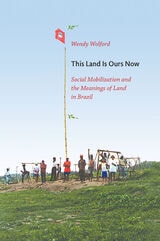
This Land Is Ours Now
Social Mobilization and the Meanings of Land in BrazilWendy Wolford
Duke University Press, 2010
Drawing on extensive ethnographic research, Wolford compares the development of the movement in Brazil’s southern state of Santa Catarina and its northeastern state of Pernambuco. As she explains, in the south, most of the movement’s members were sons and daughters of small peasant farmers; in the northeast, they were almost all former plantation workers, who related awkwardly to the movement’s agenda of accessing “land for those who work it.” The MST became an effective presence in Pernambuco only after the local sugarcane economy had collapsed. Worldwide sugarcane prices dropped throughout the 1990s, and by 1999 the MST was a prominent political organizer in the northeastern plantation region. Yet fewer than four years later, most of the region’s workers had dropped out of the movement. By delving into the northeastern workers’ motivations for joining and then leaving the MST, Wolford adds nuance and depth to accounts of a celebrated grassroots social movement, and she highlights the contingent nature of social movements and political identities more broadly.
Those Who Count
Expert Practicies of Roma ClassificationMihai Surdu
Central European University Press, 2016
Three Centuries of Conflict in East Timor
Kammen, Douglas
Rutgers University Press, 2015
Download open access ebook here.