Results by title
1917 books match the query 'Law' and 526 start with t

The Supreme Court and Patents and Monopolies
Edited by Philip B. Kurland
University of Chicago Press, 1975
The Supreme Court and the Judicial Function
Edited by Philip B. Kurland
University of Chicago Press, 1976
The Supreme Court and the NCAA
The Case for Less Commercialism and More Due Process in College SportsBrian L. Porto
University of Michigan Press, 2013
Two Supreme Court decisions, NCAA v. Board of Regents (1984) and NCAA v. Tarkanian (1988), have shaped college sports by permitting the emergence of a supercharged commercial enterprise with high financial stakes for institutions and individuals, while failing to guarantee adequate procedural protections for persons charged with wrongdoing within that enterprise. Brian L. Porto examines the conditions that led to the cases, the reasoning behind the justices' rulings, and the consequences of those rulings.
Arguing that commercialized college sports should be compatible with the goals of higher education and fair to all participants, Porto suggests that the remedy is a federal statute. His proposed College Sports Legal Reform Act would grant the NCAA a limited "educational exemption" from the antitrust laws, enabling it to enhance academic opportunities for athletes. The Act would also afford greater procedural protections to accused parties in NCAA disciplinary proceedings. Porto's prescription for reform in college sports makes a significant contribution to the debate about how best to address perennial problems in college sports such as cost containment, access to a meaningful education for athletes, and fairness in rule enforcement.
The Supreme Court on Trial
How the American Justice System Sacrifices Innocent DefendantsGeorge C. Thomas III
University of Michigan Press, 2011
The chief mandate of the criminal justice system is not to prosecute the guilty but to safeguard the innocent from wrongful convictions; with this startling assertion, legal scholar George Thomas launches his critique of the U.S. system and its emphasis on procedure at the expense of true justice.
Thomas traces the history of jury trials, an important component of the U.S. justice system, since the American Founding. In the mid-twentieth century, when it became evident that racism and other forms of discrimination were corrupting the system, the Warren Court established procedure as the most important element of criminal justice. As a result, police, prosecutors, and judges have become more concerned about following rules than about ensuring that the defendant is indeed guilty as charged. Recent cases of prisoners convicted of crimes they didn't commit demonstrate that such procedural justice cannot substitute for substantive justice.
American justices, Thomas concludes, should take a lesson from the French, who have instituted, among other measures, the creation of an independent court to review claims of innocence based on new evidence. Similar reforms in the United States would better enable the criminal justice system to fulfill its moral and legal obligation to prevent wrongful convictions.
"Thomas draws on his extensive knowledge of the field to elaborate his elegant and important thesis---that the American system of justice has lost sight of what ought to be its central purpose---protection of the innocent."
—Susan Bandes, Distinguished Research Professor of Law, DePaul University College of Law
"Thomas explores how America's adversary system evolved into one obsessed with procedure for its own sake or in the cause of restraining government power, giving short shrift to getting only the right guy. His stunning, thought-provoking, and unexpected recommendations should be of interest to every citizen who cares about justice."
—Andrew E. Taslitz, Professor of Law, Howard University School of Law
"An unflinching, insightful, and powerful critique of American criminal justice---and its deficiencies. George Thomas demonstrates once again why he is one of the nation's leading criminal procedure scholars. His knowledge of criminal law history and comparative criminal law is most impressive."
—Yale Kamisar, Distinguished Professor of Law, University of San Diego and Clarence Darrow Distinguished University Professor Emeritus of Law, University of Michigan
The Sympathetic State
Disaster Relief and the Origins of the American Welfare StateMichele Landis Dauber
University of Chicago Press, 2012
The Texas Supreme Court
A Narrative History, 1836–1986By James L. Haley
University of Texas Press, 2013
“Few people realize that in the area of law, Texas began its American journey far ahead of most of the rest of the country, far more enlightened on such subjects as women’s rights and the protection of debtors.” Thus James Haley begins this highly readable account of the Texas Supreme Court. The first book-length history of the Court published since 1917, it tells the story of the Texas Supreme Court from its origins in the Republic of Texas to the political and philosophical upheavals of the mid-1980s.
Using a lively narrative style rather than a legalistic approach, Haley describes the twists and turns of an evolving judiciary both empowered and constrained by its dual ties to Spanish civil law and English common law. He focuses on the personalities and judicial philosophies of those who served on the Supreme Court, as well as on the interplay between the Court’s rulings and the state’s unique history in such areas as slavery, women’s rights, land and water rights, the rise of the railroad and oil and gas industries, Prohibition, civil rights, and consumer protection. The book is illustrated with more than fifty historical photos, many from the nineteenth and early twentieth centuries. It concludes with a detailed chronology of milestones in the Supreme Court’s history and a list, with appointment and election dates, of the more than 150 justices who have served on the Court since 1836.
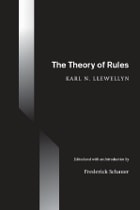
The Theory of Rules
Karl N. Llewellyn
University of Chicago Press, 2011
Karl N. Llewellyn was one of the founders and major figures of legal realism, and his many keen insights have a central place in American law and legal understanding. Key to Llewellyn’s thinking was his conception of rules, put forward in his numerous writings and most famously in his often mischaracterized declaration that they are “pretty playthings.” Previously unpublished, The Theory of Rules is the most cogent presentation of his profound and insightful thinking about the life of rules.
This book frames the development of Llewellyn’s thinking and describes the difference between what rules literally prescribe and what is actually done, with the gap explained by a complex array of practices, conventions, professional skills, and idiosyncrasies, most of which are devoted to achieving a law’s larger purpose rather than merely following the letter of a particular rule. Edited, annotated, and with an extensive analytic introduction by leading contemporary legal scholar Frederick Schauer, this rediscovered work contains material not found elsewhere in Llewellyn’s writings and will prove a valuable contribution to the existing literature on legal realism.
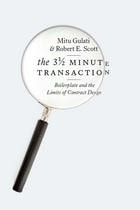
The Three and a Half Minute Transaction
Boilerplate and the Limits of Contract DesignMitu Gulati and Robert E. Scott
University of Chicago Press, 2012
Boilerplate language in contracts tends to stick around long after its origins and purpose have been forgotten. Usually there are no serious repercussions, but sometimes it can cause unexpected problems. Such was the case with the obscure pari passu clause in cross-border sovereign debt contracts, until a novel judicial interpretation rattled international finance by forcing a defaulting sovereign—for one of the first times in the market’s centuries-long history—to repay its foreign creditors. Though neither party wanted this outcome, the vast majority of contracts subsequently issued demonstrate virtually no attempt to clarify the imprecise language of the clause.
The Tidelands Oil Controversy
A Legal and Historical AnalysisBy Ernest R. Bartley
University of Texas Press, 1953
This study is not written from the narrow perspective of “Who gets the oil?” It is a thoughtful probing of an issue—the ownership and control of the submerged soils of the marginal sea—the outcome of which may go far to determine the division of powers between states and nation under the American federal system.
American constitutional law, international law, theory of federalism, American politics, the machinations of pressure groups, use of propaganda techniques, and issues of social and economic policy—all these features of American government and many more are inherent in the controversy.
In 1947, in a precedent-making decision, the Supreme Court enunciated the principle that the federal government, not the states, has “paramount rights in and power over” the marginal seas which border the coastal states, and has “full dominion over the resources under that water area, including oil.”
For more than 150 years the littoral states had exercised uncontested jurisdiction and ownership over the marginal-sea area, subject only to the powers specifically granted to the national government by the Constitution. The states had regulated the fisheries within the three-mile limit, applying state laws to vessels licensed under federal statutes. Long before oil possibilities were thought of, they had granted or leased areas in the marginal seas to private persons and corporations for purposes of land reclamation and harbor development, dredging for sand and gravel, development of oyster beds, and similar projects. These property rights can far exceed in value the wealth to be derived from petroleum.
A just settlement of the issue, says the author, calls for restoration to the states of control of the marginal sea out to their historical boundaries—three miles in most cases; three leagues, or ten and one-half miles, in the case of Texas and the west coast of Florida.
This study is based upon thorough investigation of all literature on the subject and personal interviews and correspondence with leaders on both sides of the controversy.
The Transformation of Family Law
State, Law, and Family in the United States and Western EuropeMary Ann Glendon
University of Chicago Press, 1989
"Glendon is generally acknowledged to be the premier comparative law scholar in the area of family law. This volume, which offers an analytical survey of the changes in family law over the past twenty-five years, will burnish that reputation. Essential reading for anyone interested in evaluating the major changes that occurred in the law of the family. . . . [And] of serious interest to those in the social sciences as well."—James B. Boskey, Law Books in Review
"Poses important questions and supplies rich detail."—Barbara Bennett Woodhouse, Texas Law Review
"An impressive scholarly documentation of the legal changes that comprise the development of a conjugally-centered family system."—Debra Friedman, Contemporary Sociology
"She has painted a portrait of the family in which we recognize not only ourselves but also unremembered ideological forefathers. . . . It sends our thoughts out into unexpected adventures."—Inga Markovits, Michigan Law Review
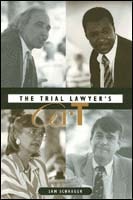
The Trial Lawyer's Art
Sam Schrager
Temple University Press, 2000
Drawn from fieldwork in the Philadelphia courts and at the Smithsonian Institution's American Trial Lawyers program, The Trial Lawyer's Art gives a remarkable, in-depth look at this craft of performance. It examines how lawyers exploit a case's dramatic potential, how they enact mythically potent themes, how they project personal authority, and how they use cultural identity -- their own and their opponents' racial, gender, class, and local affiliations -- all to make themselves and their stories persuasive to a jury. Schrager depicts the performance styles of some of the nation's most artful criminal and civil advocates: in Philadelphia, prosecutor Roger King, defender Robert Mozenter, and the legendary Cecil B. Moore; from around the country, such litigating stars as Roy Barrera, Penny Cooper, Jo Ann Harris, Tony Serra, and Michael Tigar. These lawyers reflect candidly on their courtroom calculations and share revealing "war stories" about their work.
Integrating performance insights with evocative portrayals of unfolding trials, The Trial Lawyer's Art offers a no-holds-barred analysis of the place of skill versus evidence in the American justice system. In doing so, it raises vital questions about the moral challenges that legal and other professions now face and sheds new light on the role of stories in American life.
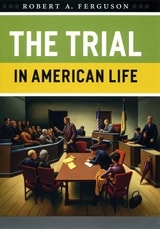
The Trial in American Life
Robert A. Ferguson
University of Chicago Press, 2006
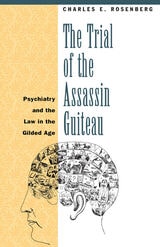
The Trial of the Assassin Guiteau
Psychiatry and the Law in the Gilded AgeCharles E. Rosenberg
University of Chicago Press, 1968
Although the role of genetics in behavior was widely accepted, these psychiatrists fiercely debated whether heredity had predisposed Guiteau to assassinate Garfield. Rosenberg's account allows us to consider one of the opening rounds in the controversy over the criminal responsibility of the insane, a debate that still rages today.
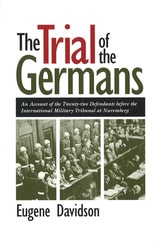
The Trial of the Germans
An Account of the Twenty-two Defendants before the International Military Tribunal at NurembergEugene Davidson
University of Missouri Press, 1997
The "definitive one-volume study of Nuremberg," The Trial of the Germans is now available in paperback. An astute observer of the Nuremberg trial, Eugene Davidson has struggled with the issues it raised: Was it a necessary response to the heinous crimes of the Third Reich? How were Germany and the Germans capable of such extraordinary evil? Was the trial just, given the claims that the defendants were simply serving their country, doing as they had been told to do? And if not just, was it nonetheless necessary as a warning to prevent future crimes against humanity? Davidson's approach to these and other large questions of justice is made through examination of each of the defendants in the trial. His reluctant, but firm, conclusion is: "In a world of mixed human affairs where a rough justice is done that is better than lynching or being shot out of hand, Nuremberg may be defended as a political event if not as a court." Some sentences may have seemed too severe, but none was harsher than the punishments meted out to innocent people by the regime these men served. "In a certain sense," says Davidson, "the trial succeeded in doing what judicial proceedings are supposed to do: it convinced even the guilty that the verdict against them was just."
Faulty as the trial was from the legal point of view, a catharsis of the pent-up emotions of millions of people had to be provided and a record of what had taken place duly preserved for whatever use later generations would make of it.
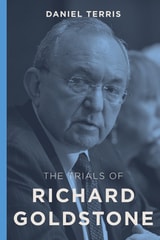
The Trials of Richard Goldstone
Terris, Daniel
Rutgers University Press, 2019
The Trials of Richard Goldstone tells the story of this extraordinary individual and the price he paid for his convictions. It describes how Goldstone, working as a judge in apartheid South Africa, helped to undermine this unjust system and later, at Nelson Mandela’s request, led a commission that investigated cases of racial violence and intimidation. It also considers the international renown he received as the chief United Nations prosecutor for war crimes committed in Rwanda and the former Yugoslavia, the first tribunals to try political and military leaders on charges of genocide. Finally, it explores how Goldstone became a controversial figure in the wake of the Jewish jurist’s powerful, but flawed, investigation of Israel for alleged war crimes in Gaza.
Richard Goldstone’s dramatic life story reveals that even in a world rife with prejudice, nationalism, and contempt for human rights, one courageous man can advance the cause of justice.
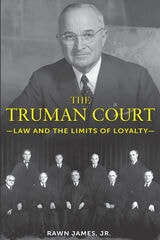
The Truman Court
Law and the Limits of LoyaltyRawn James
University of Missouri Press, 2021
The Truman Court: Law and the Limits of Loyalty argues that the years between FDR’s death in 1945 and Chief Justice Earl Warren’s confirmation in 1953—the dawn of the Cold War—were, contrary to widespread belief, important years in Supreme Court history. Never before or since has a president so quickly and completely changed the ideological and temperamental composition of the Court. With remarkable swiftness and certainty, Truman constructed a Court on which he relied to lend constitutional credence to his political agenda.
The Truth Machines
Policing, Violence, and Scientific Interrogations in IndiaJinee Lokaneeta
University of Michigan Press, 2020
The Truth Machines examines the emergence and use of these three scientific techniques to analyze two primary themes. First, the book questions whether existing theoretical frameworks for understanding state power and legal violence are adequate to explain constant innovations of the state. Second, it explores the workings of law, science, and policing in the everyday context to generate a theory of state power and legal violence, challenging the monolithic frameworks about this relationship, based on a study of both state and non-state actors.
Jinee Lokaneeta argues that the attempt to replace physical torture with truth machines in India fails because it relies on a confessional paradigm that is contiguous with torture. Her work also provides insights into a police institution that is founded and refounded in its everyday interactions between state and non-state actors. Theorizing a concept of Contingent State, this book demonstrates the disaggregated, and decentered nature of state power and legal violence, creating possible sites of critique and intervention.
The United States and International Law
Paradoxes of Support across Contemporary IssuesLucrecia García Iommi and Richard W. Maass
University of Michigan Press, 2022
The United States spearheaded the creation of many international organizations and treaties after World War II and maintains a strong record of compliance across several issue areas, yet it also refuses to ratify major international conventions like the UN Convention on the Law of the Sea and the Convention on the Elimination of All Forms of Discrimination Against Women. Why does the United States often seem to support international law in one way while neglecting or even violating it in another?
The United States and International Law: Paradoxes of Support across Contemporary Issues analyzes the seemingly inconsistent U.S. relationship with international law by identifying five types of state support for international law: leadership, consent, internalization, compliance, and enforcement. Each follows different logics and entails unique costs and incentives. Accordingly, the fact that a state engages in one form of support does not presuppose that it will do so across the board. The contributors to this volume examine how and why the United States has engaged in each form of support across twelve issue areas that are central to twentieth- and twenty-first-century U.S. foreign policy: conquest, world courts, war, nuclear proliferation, trade, human rights, war crimes, torture, targeted killing, maritime law, the environment, and cybersecurity. In addition to offering rich substantive discussions of U.S. foreign policy in each of these areas, their findings reveal patterns across the U.S. relationship with international law that shed light on behavior that often seems paradoxical at best, hypocritical at worst. The results help us understand why the United States engages with international law as it does, the legacies of the Trump administration, and what we should expect from the United States under the Biden administration and beyond.
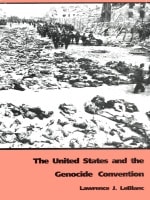
The United States and the Genocide Convention
Lawrence J. LeBlanc
Duke University Press, 1991
Adopted by the United Nations General Assembly in 1948 in response to the atrocities committed by the Nazis before and during World War II, the Genocide Convention was finally made law by the United States Senate in 1988 contingent upon a series of “conditions”—known as the “Lugar-Helms-Hatch Sovereignty Package”—which, LeBlanc suggests, markedly weakened the convention. Through careful analysis of the bitter debates over ratification, LeBlanc demonstrates that much of the opposition to the convention sprang from fears that it would be used domestically as a tool by groups such as blacks and Native Americans who might hold the U.S. accountable for genocide in matters of race relations.

The United States and the Treaty Law of the Sea
Henry Reiff
University of Minnesota Press, 1959
The United States and the Treaty Law of the Sea was first published in 1959. Minnesota Archive Editions uses digital technology to make long-unavailable books once again accessible, and are published unaltered from the original University of Minnesota Press editions.
The entire period of the Republic is covered in this account of United States participation in treaties which seek to regulate peacetime use of the sea, its resources, and the air space over it. Noting a revival of maritime interest in America, Professor Reiff describes current uses and abuses of the sea with respect to transportation, communications, exploitation of products and energy, waste disposal, and recreation. He relates developments in economies, technology, social science, and the natural sciences to the expanding web of treaty law, and reports some of the discussion and actions which took place at the United Nations Conference on Sea Law in the spring of 1958.
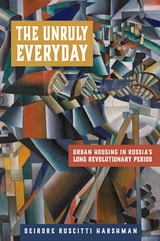
The Unruly Everyday
Urban Housing in Russia’s Long Revolutionary PeriodDeirdre Ruscitti Harshman
University of Wisconsin Press, 2027
As a result of mass urbanization from the late nineteenth century onward, an acute housing shortage in Russia and the associated “housing question” rapidly grew to such a large scale that no single group was able to tackle it in its entirety. Complicated, ideologically fraught negotiations and solutions emerged, failed, and occasionally partially succeeded over time. The Unruly Everyday unearths and detangles the contours of this history, exploring what it tells us not just about Soviet and Russian housing but about the messy process by which society changes.
Beyond tracing contestations about housing in particular, Deirdre Ruscitti Harshman explores how the concept of the “everyday” was used to critique the limitations of the present and to imagine alternatives. She argues that the ways various groups worked, sometimes collaboratively and sometimes contentiously, through these negotiations transcended neat pre- and postrevolutionary binaries, in terms of both chronology and ideology. The issues and local responses remained largely the same no matter what type of central government controlled the Kremlin. Critically, the housing problem was instead addressed by the development of various forms of local power—whose very existence and capacities undermine the perception of both tsarist and Soviet Russia as autocratic, highly centralized states.
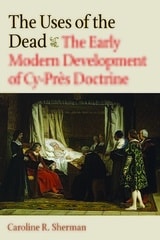
The Uses of the Dead
Caroline R. Sherman
Catholic University of America Press, 2017
Posthumous gifts, which required no sacrifice during life, were in fact broadly understood by canon lawyers and medieval donors themselves to have at best a very limited relationship to salvation. As a consequence, for much of the Middle Ages the preferred method for resolving impossible or impractical gifts was to try to reach a consensus among all of the interested parties to the gift, including the donor's heirs and the recipients, with the mediation of the local bishop.
When cy-près emerged in the seventeenth century, it cut a charitable gift o from return to the donor's estate in the event of failure. It also gave the interested parties to the gift (heirs, beneficiaries, or trustees) little authority over resolutions to problematic gifts, which were now considered primarily in relationship to the donor's intent—even as the intent was ultimately honored only in its breach. The Uses of the Dead shows how cy-près developed out of controversies over church property, particularly monastic property, and whether it might be legally turned over to fund education, poor relief, or national defense.
Renaissance humanists hoped to make better, more prudent uses of property; the Reformation sought to correct superstitious abuses of property and ultimately tended to prevent donors' heirs from recovering secularized ecclesiastical gifts; and the early modern state attempted to centralize poor relief and charitable efforts under a more rational, centralized supervision. These three factors combined to replace an older equitable ideal with a new equitable rule—one whose use has rapidly expanded in the modern era to allow assorted approximations and judicial redistributions of property.

The Violence of Protection
Policing, Immigration Law, and Asian American WomenLee Ann S. Wang
Duke University Press, 2026
The Vulnerable Age Phenomenon
Michael Inbar
Russell Sage Foundation, 1976
The War on Drugs and the Global Colour Line
Edited by Kojo Koram
Pluto Press, 2019
While laws prohibiting the production, sale and use of particular drugs are presented as politically neutral and objective, this collection reveals the racist impact of the War on Drugs across multiple continents and in numerous situations. From racialised drugs policing at festivals in the UK to the necropolitical wars in Juarez, Mexico and from the exchange of drug policing programs between the United States and Israel to the management of black bodies in Brazil, this collection proves that the regulation of drugs and race is an international, and intentional, disaster.
Pushing forward the debate and activism led by groups such as Black Lives Matter and calling for radical changes in drug policy legislation and prison reform, both nationally and internationally, this collection cuts deep and rings true for all people fighting racism today.
The Whole Truth?
A Case of Murder on the Appalachian TrailH. L. Pohlman
University of Massachusetts Press, 1999
On May 13, 1988, Stephen Roy Carr, a so-called mountain man living in Michaux State Forest in south central Pennsylvania, shot two female hikers while they were making love at a campsite near the Appalachian Trail. Rebecca Wight died at the scene. Claudia Brenner, despite five bullet wounds, survived to testify against her attacker.
In this book, H. L. Pohlman reconstructs the dramatic story of this murder case and traces its disposition through the criminal justice system. Drawing on interviews with participants as well as court records, he closely examines competing interpretations of the evidence. Was the attack a hate crime? A sex crime? A class crime? At the same time, he shows how a broad range of substantive and procedural issues—from the rights of the accused to evaluation of potential mitigating circumstances—can influence the assessment of culpability in homicide cases.
The Word and the Law
Milner S. Ball
University of Chicago Press, 1993
Their Time Has Come
Youth with Disabilities on the Cusp of AdulthoodLeiter, Valerie
Rutgers University Press, 2012
In Their Time Has Come, Valerie Leiter argues that there are crucial missing links between federal disability policies and the lives of young people. Youth and their parents struggle to gather information about the resources that disability policies have created, and youth are not typically prepared to use their disability rights effectively. Her argument is based on thorough examination of federal disability policy and interviews with young people with disabilities, their parents, and rehabilitation professionals. Attention is given to the diversity of expectations, the resources available to them, and the impact of federal policy and public and private attitudes on their transition to adulthood.
They Don't Want Her There
Fighting Sexual and Racial Harassment in the American UniversityCarolyn Chalmers
University of Iowa Press, 2022
As Jew gained accolades and advanced through the ranks at Iowa, she was met with increasingly vicious attacks on her character by her white male colleagues—implying that her sexuality had opened doors for her. After years of being subjected to demoralizing sexual, racial, and ethnic discrimination, finding herself without any higher-up departmental support, and noting her professional progression beginning to suffer by the hands of hate, Jean Jew decided to fight back. Carolyn Chalmers was her lawyer.
This book tells the inside story of pioneering litigation unfolding during the eight years of a university investigation, a watershed federal trial, and a state court jury trial. In the face of a university determined to defeat them and maintain the status quo, Jew and Chalmers forged an exceptional relationship between a lawyer and a client, each at the top of their game and part of the first generation of women in their fields. They Don’t Want Her There is a brilliant, original work of legal history that is deeply personal and shows today’s professional women just how recently some of our rights have been won—and at what cost.
Thinking in Cases
Fiction, Law, and the Case HistoryPeter Brooks
University of Chicago Press, 2027
How the form of the case history became an important way of studying the individual as an exemplary case in medicine, psychoanalysis, law, and the novel.
What does it mean when we address ourselves to a specific problem and treat it as a “case” that needs resolution, a resolution that may in turn offer us more general lessons? The “case history” has become a central form of thought and analysis in our culture, but rarely has it been studied on its own. In Thinking in Cases, the distinguished critic Peter Brooks zeroes in on a kind of thinking that we all know—and often use—without understanding its dimensions and its history.
This book ponders what we do and mean when we think in cases—when we take up specific instances with a view to making them exemplary. Brooks brings to this study decades of reflection on the psychoanalytic case history, on the rhetoric of the legal case, and on novels that unfold as cases seeking solutions. Brooks focuses on the case-history’s emergence in the late nineteenth century: first, he examines how Henry James’s uses of narrative parallel case-study methods in law, medicine, and psychoanalysis. Elsewhere, he traces the case history from Hippocratic medicine through Sir Arthur Conan Doyle’s detective fiction to a startling legal case from Victorian England involving shipwreck and cannibalism. Other chapters discuss a tale of madness by Balzac and Freud’s most speculative works, especially Moses and Monotheism. A final chapter examines recent novels—Duras’s The Ravishing of Lol Stein, Coetzee’s Disgrace, Modiano’s Dora Bruder, and Erpenbeck’s Kairos—as case studies.
This Is Not Civil Rights
Discovering Rights Talk in 1939 AmericaGeorge I. Lovell
University of Chicago Press, 2012
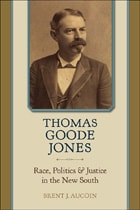
Thomas Goode Jones
Race, Politics, and Justice in the New SouthBrent J. Aucoin
University of Alabama Press, 2016
Thomas Goode Jones of Alabama is the first comprehensive biography of a key Alabama politician and federal jurist whose life and times embody the conflicts and transformations in the Deep South between the Civil War and World War I.
A man who both represented and differed from his class, Thomas Goode Jones offers contemporary readers and scholars an ideal subject of study to understand a period of southern history that still shapes American life today. Often overshadowed by the pharaonic antebellum period, the Civil War, and the luminous heights of the civil rights movement, the deceptively placid decades at the turn of the century were, in fact, a period when southerners fiercely debated the course of the South’s future. In tracing Jones’s career, Brent J. Aucoin offers vivid accounts of the great events and trends of that pivotal period: Reconstruction, the birth of the “Solid South,” the Populist Revolt, and the establishment of racial disenfranchisement and segregation.
Born in 1844, Jones served in the Confederate army and after the war identified as a conservative “Bourbon” Democrat. He served as Alabama's governor from 1890 to 1894 and as a federal judge from 1901 until his death in 1914. As a veteran, politician, and judge, Jones embodied numerous roles in the shifting political landscape of the South.
Jones was not, however, a reflexive conformist and sometimes pursued policies at odds with his party. Jones’s rhetoric and support of African American civil rights were exceptional and earned him truculent criticism from unrepentant racist factions in his party. His support was so fearless that it inspired Booker T. Washington to recommend Jones to Republican president Theodore Roosevelt as a federal judge. On the bench, Jones garnered national attention for his efforts to end peonage and lynching, and yet he also enabled the establishment of legalized segregation in Alabama, confounding attempts easily to categorize him as an odious reactionary or fearless progressive.
Those Who Belong
Identity, Family, Blood, and Citizenship among the White Earth AnishinaabegJill Doerfler
Michigan State University Press, 2015
Three Bullets Sealed His Lips
Bruce A. Rubenstein
Michigan State University Press, 1987
The gangland style slaying if State Senator Warren G. Hooper on January 11, 1945, three days before he was to testify before a grand jury investigating alleged corruption in the Michigan legislature, forced coverage of Allied war triumphs from the state's newspaper headlines. National media representatives flocked to Michigan to join local reporters in following the efforts of grand jury special prosecutor Kim Sigler and the State Police to apprehend the killers. Because no arrests ever were made, a 1951 journalistic prediction has proven true: "The Hooper case will continue to come back to remind the people and politicians of Michigan of the black days of 1945 when almost every official of the state had his price." For this reason, the Hooper murder has endured as one of the most intriguing unsolved mysteries in the annals of Michigan crime.
Utilizing interviews, trial transcripts, State police files, and a collection of grand jury testimony long thought to have been destroyed, Professors Bruce A. Rubenstein and Lawrence E. Ziewacz set forth the reason for Hooper's assassination. Written in a lively style, using dialogue taken from court records and correspondence, Three Bullets Sealed His Lips demonstrates that historical writing need not be dull.

Thus Ruled Emir Abbas
Selected Cases from the Records of the Emir of Kano's Judicial CouncilAllen Christelow
Michigan State University Press, 1994
Thus Ruled Emir Abbas is an important new research tool that reveals much about daily life in Kano, the wealthiest and most populous emirate of the African Sokoto Caliphate. It contains a selection of Kano Judicial Council documents, as well as their English translations, that deal with matters such as land disputes, tax collection disputes, and theft. These documents are invaluable resources that reveal much about Kano social, economic, and political life before the region came under the influence of colonial institutions, law, and language. This selection of records for more than 415 cases, along with their translations, will become essential reading for those interested in Nigeria’s past and will certainly become a standard work in the field of Nigerian history and anthropology.
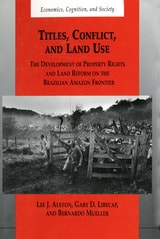
Titles, Conflict, and Land Use
The Development of Property Rights and Land Reform on the Brazilian Amazon FrontierLee J. Alston, Gary D. Libecap, and Bernardo Mueller
University of Michigan Press, 1999

Too Much Free Speech?
Randall P. Bezanson
University of Illinois Press, 2012
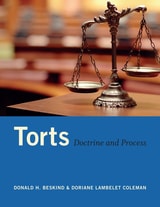
Torts
Doctrine and ProcessDonald H. Beskind and Doriane Lambelet Coleman
Duke University Press, 2018
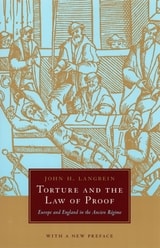
Torture and the Law of Proof
Europe and England in the Ancien RégimeJohn H. Langbein
University of Chicago Press, 2006
The book has recently taken on an eerie relevance as a consequence of controversial American and British interrogation practices in the Iraq and Afghanistan wars. In a new introduction, Langbein contrasts the "new" law of torture with the older European law and offers some pointed lessons about the difficulty of reconciling coercion with accurate investigation. Embellished with fascinating illustrations of torture devices taken from an eighteenth-century criminal code, this crisply written account will engage all those interested in torture's remarkable grip on European legal history.
Total Justice
Lawrence M. Friedman
Russell Sage Foundation, 1985
Tournament of Lawyers
The Transformation of the Big Law FirmMarc Galanter and Thomas Palay
University of Chicago Press, 1991
"Galanter and Palay pose questions and offer some answers which are certain to change the way big firm practice is regarded. To describe their work as challenging is something of an understatement: they at times delight, stimulate, frustrate and even depress the reader, but they never disappoint. Tournament of Lawyers is essential to the understanding of the business of the big law firms."—Jean and Colin Fergus, New York Law Journal
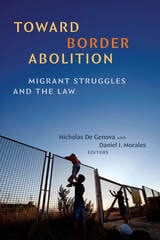
Toward Border Abolition
Migrant Struggles and the LawNicholas De Genova and Daniel I. Morales, editors
Duke University Press, 2026
Toward a Just World
The Critical Years in the Search for International JusticeDorothy V. Jones
University of Chicago Press, 2002
A century ago, there was no such thing as international justice, and until recently, the idea of permanent international courts and formal war crimes tribunals would have been almost unthinkable. Yet now we depend on institutions such as these to air and punish crimes against humanity, as we have seen in the International Criminal Tribunal for Rwanda and the appearance of Serbian leader Slobodan Milosevic before the Tribunal for the Former Yugoslavia.
Toward a Just World tells the remarkable story of the long struggle to craft the concept of international justice that we have today. Dorothy V. Jones focuses on the first half of the twentieth century, the pivotal years in which justice took on expanded meaning in conjunction with ideas like world peace, human rights, and international law. Fashioning both political and legal history into a compelling narrative, Jones recovers little-known events from undeserved obscurity and helps us see with new eyes the pivotal ones that we think we know. Jones also covers many of the milestones in the history of diplomacy, from the Treaty of Versailles and the creation of the League of Nations to the Nuremberg war crimes tribunal and the making of the United Nations.
As newspapers continue to fill their front pages with stories about how to administer justice to al Qaeda and Saddam Hussein, Toward a Just World will serve as a timely reminder of how the twentieth century achieved one of its most enduring triumphs: giving justice an international meaning.
Trade-Offs
An Introduction to Economic Reasoning and Social IssuesHarold Winter
University of Chicago Press, 2005
Harold Winter provides readers with the analytical tools needed to identify and understand the trade-offs associated with these topics. By considering both the costs and benefits of potential policy solutions, Winter stresses that real-world policy decision making is best served by an explicit recognition of as many trade-offs as possible.
Intellectually stimulating yet accessible and entertaining, Trade-Offs will be appreciated by students of economics, public policy, health administration, political science, and law, as well as by anyone who follows current social policy debates.
Trading Democracy for Justice
Criminal Convictions and the Decline of Neighborhood Political ParticipationTraci Burch
University of Chicago Press, 2013
Traditional, National, and International Law and Indigenous Communities
Edited by Marianne O. Nielsen and Karen Jarratt-Snider
University of Arizona Press, 2020
While all of these issues are rooted in colonization, Indigenous peoples are using their own solutions to demonstrate the resilience, persistence, and innovation of their communities. With chapters focusing on the use and misuse of law as it pertains to Indigenous peoples in North America, Latin America, Canada, Australia, and New Zealand, this book offers a wide scope of global injustice. Despite proof of oppressive legal practices concerning Indigenous peoples worldwide, this book also provides hope for amelioration of colonial consequences.
Traditions of Natural Law in Medieval Philosophy
Dominic Farrell
Catholic University of America Press, 2022
These various traditions of medieval reflection on natural law, and their interrelation, merit further study, particularly since they touch upon many current philosophical concerns. They grapple with the problem of ethical and religious pluralism. They consider whether universally valid standards of action and social life are accessible to those who rely on reason rather than divine law. In so doing, they develop sophisticated accounts of many central issues in metaethics, action theory, jurisprudence, and the philosophy of religion. However, do they reach a consensus about natural law, or do they end up defending incommensurable ethical frameworks? Do they confirm the value of arguments based on natural law or do they cast doubt on it?
This collection brings together contributions from various expert scholars to explore these issues and the pluralism that exists within medieval reflection on natural law. It is the first one to study the relation between the natural law theories of these various traditions of medieval philosophy: Jewish, Islamic, Byzantine, and Latin.
Each of the first four essays surveys the ‘natural law theory’ of one of the religious traditions of medieval philosophy—Jewish, Islamic, Byzantine, and Latin—and its relation to the others. The next four essays explore some of the alternative accounts of natural law that arise within the Latin tradition. They range over St. Bonaventure, Peter of Tarentaise, Matthew of Aquasparta, John Duns Scotus, and Marsilius of Padua.
Trafficking in Slavery’s Wake
Law and the Experience of Women and Children in AfricaBenjamin N. Lawrance
Ohio University Press, 2012
Women and children have been bartered, pawned, bought, and sold within and beyond Africa for longer than records have existed. This important collection examines the ways trafficking in women and children has changed from the aftermath of the “end of slavery” in Africa from the late nineteenth century to the present.
The formal abolition of the slave trade and slavery did not end the demand for servile women and children. Contemporary forms of human trafficking are deeply interwoven with their historical precursors, and scholars and activists need to be informed about the long history of trafficking in order to better assess and confront its contemporary forms. This book brings together the perspectives of leading scholars, activists, and other experts, creating a conversation that is essential for understanding the complexity of human trafficking in Africa.
Human trafficking is rapidly emerging as a core human rights issue for the twenty-first century. Trafficking in Slavery’s Wake is excellent reading for the researching, combating, and prosecuting of trafficking in women and children.
Contributors: Margaret Akullo, Jean Allain, Kevin Bales, Liza Stuart Buchbinder, Bernard K. Freamon, Susan Kreston, Benjamin N. Lawrance, Elisabeth McMahon, Carina Ray, Richard L. Roberts, Marie Rodet, Jody Sarich, and Jelmer Vos.
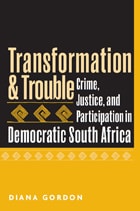
Transformation and Trouble
Crime, Justice and Participation in Democratic South AfricaDiana Gordon
University of Michigan Press, 2006
Crime is one of the major challenges to any new democracy. Violence often increases after the lifting of authoritarian control, or in the aftermath of regime change. But how can a fledgling democracy fight crime without violating the fragile rights of its citizens? In Transformation and Trouble, accomplished theorist and criminal justice scholar Diana Gordon critically examines South Africa's efforts to strike the perilous balance between democratic participation and social control.
South Africa has made great progress in pursuing the Western ideals of participatory justice and due process. Yet Gordon finds that popular concerns about crime have fostered the growth of a punitive criminal justice system that undermines the country's rights-oriented political culture. Transformation and Trouble calls for South Africa to reaffirm its commitment to public empowerment by reforming its criminal justice system-an approach, she argues, that would strengthen the country's new democracy.
"An eloquent, critical, but ultimately optimistic, analysis of the democratization of crime and justice in post-apartheid South Africa."
--Bill Dixon, School of Criminology, Education, Sociology and Social Work, Keele University
"A must read for understanding contemporary South Africa's agonizing dilemmas as it struggles to reconcile crime control with democratic values."
--Jerome H. Skolnick, New York University School of Law
"Gordon's vast experience with criminal justice illuminates her cautionary tale of the search for a new way in south Africa."
--Paul Chevigny, New York University
Diana Gordon is Professor Emerita of Political Science and Senior Research Scholar, City University of New York.
Transformative Justice
Israeli Identity on TrialLeora Bilsky
University of Michigan Press, 2004