Results by title
18284 books match the query 'United States' and 3764 start with t

The Bark River Chronicles
Stories from a Wisconsin WatershedMilton J. Bates
Wisconsin Historical Society Press, 2012
The Bark River valley in southeastern Wisconsin is a microcosm of the state's - indeed, of the Great Lakes region's - natural and human history. "The Bark River Chronicles" reports one couple's journey by canoe from the river's headwaters to its confluence with the Rock River and several miles farther downstream to Lake Koshkonong. Along the way, it tells the stories of Ice Age glaciation, the effigy mound builders, the Black Hawk War, early settlement and the development of waterpower sites, and recent efforts to remove old dams and mitigate the damage done by water pollution and invasive species.
Along with these big stories, the book recounts dozens of little stories associated with sites along the river. The winter ice harvest, grain milling technology, a key supreme court decision regarding toxic waste disposal, a small-town circus, a scheme to link the Great Lakes to the Mississippi River by canal, the murder of a Chicago mobster, controversies over race and social class in Waukesha County's lake country, community efforts to clean up the river and restore a marsh, visits to places associated with the work of important Wisconsin writers - these and many other stories belong to the Bark River chronicles.
For the two voyageurs who paddle the length of the Bark, it is a journey of rediscovery and exploration. As they glide through marshes, woods, farmland, and cities, they acquire not only historical and environmental knowledge but also a renewed sense of the place in which they live. Maps and historical photographs help the reader share their experience.
The Baron in the Grand Canyon
Friedrich Wilhelm von Egloffstein in the WestSteven Rowan
University of Missouri Press, 2012
This revealing account concentrates on Egloffstein’s activity in the American mountain West from 1853 to 1858. The early chapters cover his roots as a member of an imperial baronial family in Franconia, his service in the Prussian army, his arrival in the United States in 1846, and his links to his scandalous gothic-novelist cousin, Baron Ludwig von Reizenstein.
Egloffstein’s work as a cartographer in St. Louis in the 1840s led to his participation in John C. Frémont’s final expedition to the West in 1853 and 1854. He left Frémont for Salt Lake City where he joined the Gunnison Expedition under the leadership of Edward Beckwith. During this time, Egloffstein produced his most outstanding panoramas and views of the expedition, which were published in Pacific Railroad Reports.
Egloffstein also served along with Heinrich Balduin Möllhusen as one of the artists and as the chief cartographer of Joseph Christmas Ives’s expedition up the Colorado River. The two large maps produced by Egloffstein for the expedition report are regarded as classics of American art and cartography in the nineteenth century.
While with the Ives expedition, Egloffstein performed his revolutionary experiments in printing photographic images. He developed a procedure for working from photographs of plaster models of terrain, and that led him to invent “heliography,” a method of creating printing plates directly from photographs. He later went on to launch a company to exploit his photographic printing process, which closed after only a few years of operation.
Among the many images in this engaging narrative are photographs of the Egloffstein castle and of Egloffstein in 1865 and in his later years. Also include are illustrations that were published in the PRR, such as “View Showing the Formation of the Cañon of Grand River [today called the Gunnison River] / near the Mouth of Lake Fork with Indications of the Formidable Side Cañons” and Beckwith Map 1: “From the Valley of Green River to the Great Salt Lake.”
The Bars Are Ours
Histories and Cultures of Gay Bars in America,1960 and AfterLucas Hilderbrand
Duke University Press, 2024
The Baseball Film
A Cultural and Transmedia HistoryAaron Baker
Rutgers University Press, 2022
This study offers an extensive look at nearly one hundred years of baseball-themed movies, documentaries, and TV shows. Film and sports scholar Aaron Baker examines works like A League of their Own (1992) and Sugar (2008), which dramatize the underrepresented contributions of female and immigrant players, alongside classic baseball movies like The Natural that are full of nostalgia for a time when native-born white men could use the game to achieve the American dream. He further explores how biopics have both mythologized and demystified such legendary figures as Ty Cobb, Babe Ruth, Lou Gehrig, Jackie Robinson and Fernando Valenzuela.
The Baseball Film charts the variety of ways that Hollywood presents the game as integral to American life, whether showing little league as a site of parent-child bonding or depicting fans’ lifelong love affairs with their home teams. Covering everything from Bull Durham (1988) to The Bad News Bears (1976), this book offers an essential look at one of the most cinematic of all sports.
The Basic Symbols of the American Political Tradition
Willmoore Kendall
Catholic University of America Press, 1995
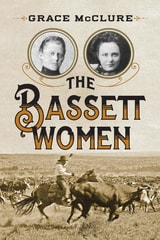
The Bassett Women
Grace McClure
Ohio University Press, 1985
In the late nineteenth century, Brown’s Park, a secluded valley astride the Utah-Colorado border, was a troubled land of deadly conflict among cattle barons, outlaws, rustlers, and small ranchers. Homesteader Elizabeth Bassett gained a tough reputation of her own, and her daughters followed suit, going on to become members of Butch Cassidy and the Wild Bunch’s inner circle. Ann—who counted Cassidy among her lovers—became known as “queen of the cattle rustlers.” Both sisters proved themselves shrewd businesswomen as they fended off hostile takeovers of the family ranch. Through the following decades, the sisters became the stuff of legend, women who embodied the West’s fearsome reputation, yet whose lived experiences were far more nuanced. Ann became a writer. Josie, whose cabin still stands at present-day Dinosaur National Monument, applied her pioneer ethics to a mechanized world and became renowned for her resourcefulness, steadfastness, and audacity.
For The Bassett Women, Grace McClure tracked down and untangled the legends of Brown’s Park, one of the way stations of the fabled “Outlaw Trail,” while creating an evenhanded and indelible portrait of the Bassetts. Based on interviews, written records, newspapers, and archives, The Bassett Women is one of the few credible accounts of early settlers on Colorado’s western slope, one of the last strongholds of the Old West.
The Battered Child
Edited by Mary Edna Helfer, Ruth S. Kempe, and Richard D. Krugman
University of Chicago Press, 1999
The new edition of this classic text continues the legacy. While updating and significantly adding to previous editions, the fifth edition retains the multidisciplinary and comprehensive approach that initially set the work apart. This new edition contains chapters from professionals in such diverse fields as pediatrics, psychiatry, legal studies, and social work that reflect the past decade's extraordinary advances in research and techniques. Twenty of the book's 30 chapters are entirely new, while the remaining material has been extensively revised.
Part I provides a historical overview of child abuse and neglect as well as background material on the cultural, psychiatric, social, economic, and legal contexts of child maltreatment. Part II discusses the processes of assessing cases of physical, emotional, and sexual abuse and neglect from the unique perspectives of all the professionals involved, including teachers, pediatricians, and social workers. Part III describes intervention and treatment, focusing on legal issues, investigative procedures, and therapeutic processes, while Part IV addresses prevention and policy issues.
Previous editions of The Battered Child have earned the labels of "a classic" and a "Bible." With its up-to-date information, unequaled scope, and contributions from experts on every aspect of child abuse, the fifth edition of this cornerstone text is even more essential to the field than its predecessors.
"Comprehensive and up-to-date."—David Cottrell, British Journal of Psychiatry
"A valuable contribution to the field of abuse and neglect"—Prasanna Nair, Journal of the American Medical Association

The Battle for Guadalcanal
Samuel B. Griffith II
University of Illinois Press, 1963
Launched on August 7, 1942, to protect Allied control of the strategic South Pacific islands, the Guadalcanal operation was the most costly American offensive of World War II in the history of the U.S. Navy up to that time. Griffith, who fought with Edson's Raiders on Guadalcanal, describes in gritty detail the vicious close-range fighting, the valiant defense of the Henderson Field airstrip, and the dramatic naval engagements that led, in February 1943, to an American victory.
Drawing on American and Japanese sources, Griffith delineates the strategic decisions that shaped the conflict as well as the determination and endurance of combatants on both sides. A breathtaking narrative of military action anchored by a historian's objectivity, The Battle for Guadalcanal is a story of raw courage, desperate measures, and ultimate triumph.
The Battle for White Male Supremacy
The Hydra Reshaping Right-Wing PoliticsMary McThomas
University of Chicago Press, 2027
Explains how interconnected race and gender ideologies underlie grievance politics on the Right and reveals how both are transforming American politics, policy, and law.
In The Battle for White Male Supremacy, Mary McThomas sheds new light on the entwined racial and gender ideologies that have come to define large segments of the American Right and are roiling American law and politics. Individual chapters trace the development, ideas, and influence of several key groups: incels, alt-right vigilante groups, Christian nationalists, and men’s rights groups at war with the judiciary. While these groups are often treated as discrete phenomena with distinct histories and ostensibly different goals, all share an interconnected belief system of victimhood and embattled white masculinity. By tracking these similarities, McThomas exposes how racial and gendered belief systems are connected both within and across groups.
What is more, McThomas shows that these groups’ beliefs and tactics have moved from the extremist fringes of society to the mainstream of American politics. They’ve gained broad traction in public opinion and political discourse, and they are transforming law and policy at both the state and federal levels.
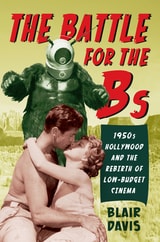
The Battle for the Bs
1950s Hollywood and the Rebirth of Low-Budget CinemaDavis, Blair
Rutgers University Press, 2012
The emergence of the double-bill in the 1930s created a divide between A-pictures and B-pictures as theaters typically screened packages featuring one of each. With the former considered more prestigious because of their larger budgets and more popular actors, the lower-budgeted Bs served largely as a support mechanism to A-films of the major studios—most of which also owned the theater chains in which movies were shown. When a 1948 U.S. Supreme Court antitrust ruling severed ownership of theaters from the studios, the B-movie soon became a different entity in the wake of profound changes to the corporate organization and production methods of the major Hollywood studios.
In The Battle for the Bs, Blair Davis analyzes how B-films were produced, distributed, and exhibited in the 1950s and demonstrates the possibilities that existed for low-budget filmmaking at a time when many in Hollywood had abandoned the Bs. Made by newly formed independent companies, 1950s B-movies took advantage of changing demographic patterns to fashion innovative marketing approaches. They established such genre cycles as science fiction and teen-oriented films (think Destination Moon and I Was a Teenage Werewolf) well before the major studios and also contributed to the emergence of the movement now known as underground cinema. Although frequently proving to be multimillion-dollar box-office draws by the end of the decade, the Bs existed in opposition to the cinematic mainstream in the 1950s and created a legacy that was passed on to independent filmmakers in the decades to come.
The Battle for the Fourteenth Colony
America’s War of Liberation in Canada, 1774–1776Mark R. Anderson
University Press of New England, 2013
The Battle for the Mind
War and Peace in the Era of Mass CommunicationGary S. Messinger
University of Massachusetts Press, 2011
Most people typically think of armed conflict in physical terms, involving guns and bombs, ships and planes, tanks and missiles. But today, because of mass communication, war and the effort to prevent it are increasingly dependent on non-physical factors—the capacity to persuade combatants and citizens to engage in violence or avoid it, and the packaging of the information on which decision making is based. This book explores the many ways that mass communication has revolutionized international relations, whether the aim is to make war effectively or to prevent it.
Gary Messinger shows that over the last 150 years a succession of breakthroughs in the realm of media has reshaped the making of war and peace. Along with mass newspapers, magazines, books, motion pictures, radio, television, computer software, and telecommunication satellites comes an array of strategies for exploiting these media to control popular beliefs and emotions. Images of war now arrive in many forms and reach billions of people simultaneously. Political and military leaders must react to crowd impulses that sweep around the globe. Nation-states and nongovernmental groups, including terrorists, use mass communication to spread their portrayals of reality.
Drawing on a wide range of media products, from books and articles to films and television programs, as well as his own research in the field of propaganda studies, Messinger offers a fresh and comprehensive overview. He skillfully charts the path that has led us to our current situation and suggests where we might go next.
The Battle for the University of Alabama
The Perilous Path of Higher Education in the Reconstruction SouthWilliam Warren Rogers, Jr.
University of Alabama Press, 2025
Traces the little-known story of the bitter contest for the fate of the University of Alabama after the Civil War.
In The Battle for the University of Alabama, William Warren Rogers Jr. gives a fascinating account of the fierce struggle over the nature of the University of Alabama after the Civil War. Union forces reduced the campus to ruins as the war ended, and the university did not reopen until 1869. In the interregnum, powerful forces shifted the trajectory of the school. Alabama Republicans authored an egalitarian state constitution that delivered oversight of the university to the Republican Party. That set the stage for turmoil and confrontation. This book tells the story of that conflict.
In the next few years, Democrats charged Republicans with turning the university into a “radical” institution. They alleged that a handful of unqualified individuals had gained faculty positions because of their political allegiance, which resulted in the university’s academic desecration. Professors were bitterly denounced in the state newspaper press and quite personally in Tuscaloosa. Administration of the university became part of the fratricidal political debate in the state. Political violence and questions concerning race, specifically the possible integration of the university, illuminated the controversies of the Reconstruction years. Many of these questions resonate even today.
This authoritative account sets events at the University of Alabama against the backdrop of what occurred at other state universities in the Reconstruction South. The University of North Carolina experienced controversy similar to Alabama’s. At the University of Georgia, however, calm prevailed. This story of the incendiary events at Alabama’s flagship university charts new ground and provides a revelatory look into the extraordinary partisanship that characterized the South after the Civil War.
The Battle of Beecher Island and the Indian War of 1867-1869
John H. Monnett
University Press of Colorado, 1994
Monnett's compelling study is the first to examine the Beecher Island Battle and its relationship to the overall conflict between American Indians and Euroamericans on the central plains of Colorado and Kansas during the late 1860s. Focusing on the struggle of the Cheyenne Dog Soldiers warrior society to defend the lands between the Republican River valley and the Smoky Hill River valley from Euroamerican encroachment, Monnett presents original reminiscences of American Indian and Euroamerican participants. Unlike many military studies of the Indian Wars, The Battle of Beecher Island also includes in-depth examinations of the viewpoints of homesteaders and the views of western railroad interests of the late nineteenth century.
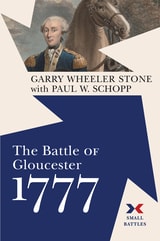
The Battle of Gloucester, 1777
Garry Wheeler Stone
Westholme Publishing, 2022
In The Battle of Gloucester, 1777, archaeological historian Garry Wheeler Stone, with the assistance of historian Paul W. Schopp, recreates this minor but important clash during the Philadelphia campaign. Relying on both primary source documents and the latest archaeological interpretations, the authors have determined the course of this fascinating “battle,” as Benjamin Franklin later proclaimed it to be. As a result of this action, when Washington requested that Lafayette be given a division, Congress agreed. On December 4, 1777, the marquis, promoted to major-general, took command of the brigades of Generals Woodford and Scott to begin what would be a glorious career in American service.
Small Battles: Military History as Local History
Mark Edward Lender and James Kirby Martin, Series Editors
Small Battles offers a fresh and important new perspective on the story of America’s early conflicts. It was the small battles, not the clash of major armies, that truly defined the fighting during the colonial wars, the American Revolution, the War of 1812, and the hostilities on the frontiers. This is dramatic military history as seen through the prism of local history—history with a depth of detail, a feeling for place, people, and the impact of battle and its consequences that the story of major battles often cannot convey. The Small Battles series focuses on America’s military conflicts at their most intimate and revealing level.

The Battle of Harlem Heights, 1776
David Price
Westholme Publishing, 2022
The action began when a contingent of rangers led by Col. Thomas Knowlton of Connecticut encountered British light infantry while conducting a reconnaissance mission on Washington’s orders. What began as a skirmish transformed into a full-fledged battle as both sides reinforced, and a heavy engagement continued for several hours until, with ammunition running low, the British withdrew. Washington decided not to pursue and risk confrontation with a larger force, thereby keeping his army intact. In The Battle of Harlem Heights, 1776, David Price conveys the significance of the Continental Army’s first victory and highlights the role of one of its key participants, the largely forgotten Knowlton—the “father of American military intelligence”—who gave his life during the action while urging his rangers forward. No matter how many times U.S. Army troops have recorded a battlefield success over the past two and a half centuries—whether on American soil, in a European wood, across a Middle Eastern desert, or on a Pacific island—one thing about that history remains indisputable. They did it first at Harlem Heights.
Small Battles: Military History as Local History
Mark Edward Lender and James Kirby Martin, Series Editors
Small Battles offers a fresh and important new perspective on the story of America’s early conflicts. It was the small battles, not the clash of major armies, that truly defined the fighting during the colonial wars, the American Revolution, the War of 1812, and the hostilities on the frontiers. This is dramatic military history as seen through the prism of local history—history with a depth of detail, a feeling for place, people, and the impact of battle and its consequences that the story of major battles often cannot convey. The Small Battles series focuses on America’s military conflicts at their most intimate and revealing level.
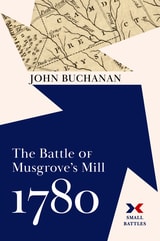
The Battle of Musgrove's Mill, 1780
John Buchanan
Westholme Publishing, 2022
The Battle of Musgrove’s Mill, 1780, by award-winning historian John Buchanan, begins by describing the situation in South Carolina following the British invasion of 1780 before introducing the three colonels: Isaac Shelby, James Williams, and Elijah Clarke. These men led Rebel militia from North Carolina, South Carolina, and Georgia in an effort to disrupt British operations and their Loyalist support. The colonels and other leaders led mounted Rebel militia in a sweeping and bloody guerilla war that played an essential role in opening a path to the eventual British surrender at Yorktown and Britain’s loss of America.
Small Battles: Military History as Local History
Mark Edward Lender and James Kirby Martin, Series Editors
Small Battles offers a fresh and important new perspective on the story of America’s early conflicts. It was the small battles, not the clash of major armies, that truly defined the fighting during the colonial wars, the American Revolution, the War of 1812, and the hostilities on the frontiers. This is dramatic military history as seen through the prism of local history—history with a depth of detail, a feeling for place, people, and the impact of battle and its consequences that the story of major battles often cannot convey. The Small Battles series focuses on America’s military conflicts at their most intimate and revealing level.

The Battle of Upper Sandusky, 1782
Eric Sterner
Westholme Publishing, 2023
In May 1782, Colonel William Crawford led over 450 volunteers across Ohio to attack British-allied Native Americans who had been raiding the frontiers of Pennsylvania and Virginia for years. An experienced yet reluctant commander, Crawford and his men clashed with a similarly sized force of British Rangers and Wyandot, Delaware, and Shawnee Indians on the Sandusky River in early June. After three days, the Americans were routed in one of the worst defeats American arms suffered on the frontier during the American Revolution. During the retreat, Native American warriors captured dozens of men, including Colonel Crawford. Many were horrifically tortured to death in revenge for the Gnadenhutten massacre earlier that spring, when American volunteers bludgeoned nearly one hundred unarmed and unresisting Delaware Indians to death.
The Battle of Upper Sandusky, 1782 places military operations at the forefront of events in the waning months of the American Revolution on the frontier. Importantly, it gives long-deserved credit to Native American leaders, particularly Dunquat of the Wyandot and Hopocan of the Delaware, for their roles and commands on the battlefield. For over two centuries, their victory was attributed to the presence of British Rangers and a few officers, but Dunquat and Hopocan made the critical decisions before and after the battle while Native American warriors constituted the bulk of their army.
The book also reconsiders the effectiveness of American operations. Crawford was an unenthusiastic commander who had to be talked into leading the campaign to help prevent a repeat of the Gnadenhutten massacre. Despite his long service on the frontier and experience in the Continental Army, Crawford failed to unite his ad hoc command, suffered from constant indecision, and could not put his own stamp on the campaign. The unprofessional nature of his army also contributed to its defeat as it lacked organization, experience, leadership, training, and standardization.
The presence of Simon Girty, demonized by Americans on the frontier as a turncoat, and the gruesomeness of Crawford’s execution focused stories about the campaign on those two individuals, rather than the military operations themselves or the Indians who won the victory. Myths were accepted as fact. Afterward, interest in the campaign and the combatants faded. The Battle of Upper Sandusky, 1782 gives Crawford’s campaign its proper place as one of the largest battles between frontier forces and Native Americans during the Revolutionary War.
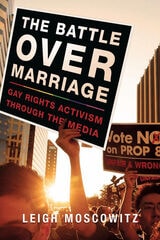
The Battle over Marriage
Gay Rights Activism through the MediaLeigh Moscowitz
University of Illinois Press, 2013
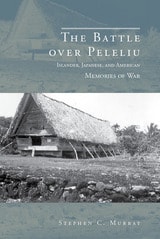
The Battle over Peleliu
Islander, Japanese, and American Memories of WarStephen C. Murray
University of Alabama Press, 2016
The expansionist Japanese empire annexed the inhabited archipelago of Palau in 1914. The airbase built on Peleliu Island became a target for attack by the United States in World War II. The Battle over Peleliu: Islander, Japanese, and American Memories of War offers an ethnographic study of how Palau and Peleliu were transformed by warring great powers and further explores how their conflict is remembered differently by the three peoples who shared that experience.
Author Stephen C. Murray uses oral histories from Peleliu’s elders to reconstruct the island’s prewar way of life, offering a fascinating explanation of the role of land and place in island culture. To Palauans, history is conceived geographically, not chronologically. Land and landmarks are both the substance of history and the mnemonic triggers that recall the past. Murray then offers a detailed account of the 1944 US invasion against entrenched Japanese forces on Peleliu, a seventy-four-day campaign that razed villages, farms, ancestral cemeteries, beaches, and forests, and with them, many of the key nodes of memory and identity.
Murray also explores how Islanders’ memories of the battle as shattering their way of life differ radically from the ways Japanese and Americans remember the engagement in their histories, memoirs, fiction, monuments, and tours of Peleliu. Determination to retrieve the remains of 11,000 Japanese soldiers from the caves of Peleliu has driven high-profile civic groups from across the Japanese political spectrum to the island. Contemporary Japan continues to debate pacifist, right-wing apologist, and other interpretations of its aggression in Asia and the Pacific. These disputes are exported to Peleliu, and subtly frame how Japanese commemoration portrays the battle in stone and ritual. Americans, victors in the battle, return to the archipelago in far fewer numbers. For them, the conflict remains controversial but is most often submerged into the narrative of “the good war.”
The Battle over Peleliu is a study of public memory, and the ways three peoples swept up in conflict struggle to create a common understanding of the tragedy they share.
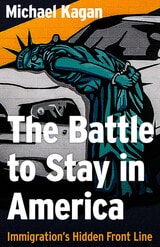
The Battle to Stay in America
Immigration's Hidden Front LineMichael Kagan
University of Nevada Press, 2025
The Battle to Stay in America is the story of a community coming to grips with the federal government’s crackdown on immigrants, and learning how to defend itself. Informative and personal, this is a story about mothers and fathers, lawyers and activists, local police and federal agencies, and a struggle for the identity of a nation. This is the quintessential story of the war on immigrants, as fought and felt on the front lines in the heart of America.
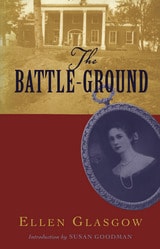
The Battle-Ground
Ellen Glasgow
University of Alabama Press, 2000
Captures the war's human toll and explores its social consequences
The Battle-Ground, Ellen Glasgow's fourth novel, was her first bestseller, with more than 21,000 copies sold in just two weeks. The novel committed her to a project almost unparalleled in American literary history: a novelistic meditation on the South from the decade before the Confederacy to the middle of the 20th century. The Battle-Ground speaks of a South before and during the Civil War in its struggles to become part of a nation still in the making. The overthrow of the aristocratic tradition, the transfer of hereditary power to a rural underclass, the continued disenfranchisement of African Americans, and the evolving status of women--these topics, which came to bind the more than a dozen volumes of Glasgow's self-styled "social history," initially coalesced in The Battle-Ground.
The Battle-Ground conspicuously departs from the tradition of Southern romances popularized by Thomas Nelson Page, and contemporary reviewers praised the book for its historical accuracy. Glasgow, an ardent Anglophile, bragged that military officers in Great Britain studied its descriptions of battle. With her, realism had not only crossed the Atlantic, it had "crossed the Potomac."
But Glasgow never sensationalizes the Civil War, whose bloodiest scenes she flanks with domestic officers, the sharing of rations, the warmth of camp, and reminders of home. Her vision of the war centers less on its corruption or barbarity than on its occasions for small decencies and their power of humanization. Glasgow cannot separate the war from its greater social implications--it is a place, as her title suggests, that tests the soul of a nation as well as individual men and women. The importance of The Battle-Ground in Southern literary history cannot be overemphasized, for Glasgow's reimagining of the Civil War had a profound impact on the next generation of Southern writers, including Allen Tate, Stark Young, and Margaret Mitchell.
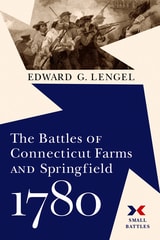
The Battles of Connecticut Farms and Springfield, 1780
Edward G. Lengel
Westholme Publishing, 2020
By the spring of 1780, American fortunes were at a low point. Charleston, South Carolina, fell to British forces on May 12. At Morristown, New Jersey, George Washington’s army struggled to recover from the worst winter of the entire war. The national economy failing, his troops short of supplies and on the verge of mutiny, Washington prepared for an all-out assault on British-occupied New York City with the support of approaching French naval and land forces under General Rochambeau. The planned attack was a gamble born of desperation. Washington felt he had to risk it, or face certain defeat. In New York City, German General Wilhelm von Knyphausen sensed opportunity. Commanding there in the absence of British General Henry Clinton, who was on his way back from Charleston, Knyphausen hoped that a quick strike into New Jersey could deliver a staggering blow to Washington’s weakened army. The June 7–8 Battle of Connecticut Farms, however, found American militia and Continentals—mostly soldiers of General William Maxwell’s New Jersey Brigade—to be shockingly stalwart. In a series of sharp engagements, fought hard on both sides, the Americans convinced Knyphausen to turn back. Clinton, fresh from his victory in the South, tried again on June 23 to end the war. His advance into New Jersey, intended to draw Washington into the open and perhaps capture Morristown, culminated in the Battle of Springfield. Once again, though, Washington’s hardened soldiers, led by men like Colonel Israel Angell, Colonel Elias Dayton, and Major “Light Horse Harry” Lee, fought Clinton’s forces to a standstill.
The Battles for Connecticut Farms and Springfield, 1780, by distinguished historian Edward G. Lengel, chronicles these two important battles that marked a turning of the tide in the Revolutionary War. Drawing on newly available primary sources, the author presents a fresh and engaging interpretation of these events, which exposed King George III’s declining military fortunes in North America even as they revealed the resilience of George Washington’s army.
The Small Battles Series: Military History as Local History
Mark Edward Lender and James Kirby Martin, Series Editors
Small Battles offers a fresh and important new perspective on the story of America’s early conflicts. It was the small battles, not the clash of major armies, that truly defined the fighting during the colonial wars, the American Revolution, the War of 1812, and the hostilities on the frontiers. This is dramatic military history as seen through the prism of local history—history with a depth of detail, a feeling for place, people, and the impact of battle and its consequences that the story of major battles often cannot convey. The Small Battles Series focuses on America’s military conflicts at their most intimate and revealing level.
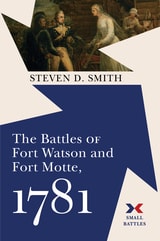
The Battles of Fort Watson and Fort Motte, 1781
Steven D. Smith
Westholme Publishing, 2024

The Battles of Germantown
Effective Public History in AmericaDavid W. Young
Temple University Press, 2019
2020 Philip S. Klein Book Prize Winner, Pennsylvania Historical Association
Known as America’s most historic neighborhood, the Germantown section of Philadelphia (established in 1683) has distinguished itself by using public history initiatives to forge community. Progressive programs about ethnic history, postwar urban planning, and civil rights have helped make historic preservation and public history meaningful. The Battles of Germantown considers what these efforts can tell us about public history’s practice and purpose in the United States.
Author David Young, a neighborhood resident who worked at Germantown historic sites for decades, uses his practitioner’s perspective to give examples of what he calls “effective public history.” The Battles of Germantown shows how the region celebrated “Negro Achievement Week” in 1928 and, for example, how social history research proved that the neighborhood’s Johnson House was a station on the Underground Railroad. These encounters have useful implications for addressing questions of race, history, and memory, as well as issues of urban planning and economic revitalization.
Germantown’s historic sites use public history and provide leadership to motivate residents in an area challenged by job loss, population change, and institutional inertia. The Battles of Germantown illustrates how understanding and engaging with the past can benefit communities today.
The Beaches Are Moving
The Drowning of America's ShorelineWallace Kaufman and Orrin H. Pilkey Jr.
Duke University Press, 1983
Our beaches are eroding, sinking, washing out right under our houses, hotels, bridges; vacation dreamlands become nightmare scenes of futile revetments, fills, groins, what have you—all thrown up in a frantic defense against the natural system. The romantic desire to live on the seashore is in doomed conflict with an age-old pattern of beach migration. Yet it need not be so. Conservationist Wallace Kaufman teams up with marine geologist Orrin H. Pilkey Jr., in an evaluation of America's beaches from coast to coast, giving sound advice on how to judge a safe beach development from a dangerous one and how to live at the shore sensibly and safely.
The Beat Cop
Chicago's Chief O'Neill and the Creation of Irish MusicMichael O'Malley
University of Chicago Press, 2022
The remarkable story of how modern Irish music was shaped and spread through the brash efforts of a Chicago police chief.
Irish music as we know it today was invented not just in the cobbled lanes of Dublin or the green fields of County Kerry, but also in the burgeoning metropolis of early-twentieth-century Chicago. The genre’s history combines a long folk tradition with the curatorial quirks of a single person: Francis O’Neill, a larger-than-life Chicago police chief and an Irish immigrant with a fervent interest in his home country’s music.
Michael O’Malley’s The Beat Cop tells the story of this singular figure, from his birth in Ireland in 1865 to his rough-and-tumble early life in the United States. By 1901, O’Neill had worked his way up to become Chicago’s chief of police, where he developed new methods of tracking criminals and recording their identities. At the same time, he also obsessively tracked and recorded the music he heard from local Irish immigrants, enforcing a strict view of what he felt was and wasn’t authentic. Chief O’Neill’s police work and his musical work were flip sides of the same coin, and O’Malley delves deep into how this brash immigrant harnessed his connections and policing skills to become the foremost shaper of how Americans see, and hear, the music of Ireland.

The Beautiful Generation
Asian Americans and the Cultural Economy of FashionThuy Linh Nguyen Tu
Duke University Press, 2011
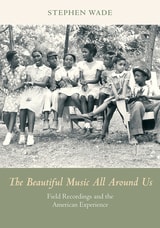
The Beautiful Music All Around Us
Field Recordings and the American ExperienceStephen Wade
University of Illinois Press, 2012
The Beautiful Music All Around Us presents the extraordinarily rich backstories of thirteen performances captured on Library of Congress field recordings between 1934 and 1942 in locations reaching from Southern Appalachia to the Mississippi Delta and the Great Plains. Including the children's play song "Shortenin' Bread," the fiddle tune "Bonaparte's Retreat," the blues "Another Man Done Gone," and the spiritual "Ain't No Grave Can Hold My Body Down," these performances were recorded in kitchens and churches, on porches and in prisons, in hotel rooms and school auditoriums. Documented during the golden age of the Library of Congress recordings, they capture not only the words and tunes of traditional songs but also the sounds of life in which the performances were embedded: children laugh, neighbors comment, trucks pass by.
Musician and researcher Stephen Wade sought out the performers on these recordings, their families, fellow musicians, and others who remembered them. He reconstructs the sights and sounds of the recording sessions themselves and how the music worked in all their lives. Some of these performers developed musical reputations beyond these field recordings, but for many, these tracks represent their only appearances on record: prisoners at the Arkansas State Penitentiary jumping on "the Library's recording machine" in a rendering of "Rock Island Line"; Ora Dell Graham being called away from the schoolyard to sing the jump-rope rhyme "Pullin' the Skiff"; Luther Strong shaking off a hungover night in jail and borrowing a fiddle to rip into "Glory in the Meetinghouse."
Alongside loving and expert profiles of these performers and their locales and communities, Wade also untangles the histories of these iconic songs and tunes, tracing them through slave songs and spirituals, British and homegrown ballads, fiddle contests, gospel quartets, and labor laments. By exploring how these singers and instrumentalists exerted their own creativity on inherited forms, "amplifying tradition's gifts," Wade shows how a single artist can make a difference within a democracy.
Reflecting decades of research and detective work, the profiles and abundant photos in The Beautiful Music All Around Us bring to life largely unheralded individuals--domestics, farm laborers, state prisoners, schoolchildren, cowboys, housewives and mothers, loggers and miners--whose music has become part of the wider American musical soundscape. The hardcover edition also includes an accompanying CD that presents these thirteen performances, songs and sounds of America in the 1930s and '40s.
The Bedquilt and Other Stories
By Dorothy Canfield FisherEdited, Intro, & Afterword by Mark J. Madigan
University of Missouri Press, 1997
Dorothy Canfield Fisher, the prolific author of more than forty books, including translations, juveniles, and nonfiction, as well as novels and short-story collections, was one of the most popular and engaging American writers of the first half of the twentieth century. Although her work has been unduly neglected for several decades, it is currently enjoying a revival of critical attention. This colorful collection ranges in subject from New Englanders to the Basques of France to the struggles of African Americans to gain equal rights. Through her stories, many of which received literary awards, Fisher examined the complexities of modern life in the United States and abroad.
In addition to her writing, Fisher had a lifelong involvement in charitable work and social causes--so much so that Eleanor Roosevelt called her one of the most influential women of her time. As one of the earliest and most assertive members of the Book-of-the-Month Club selection committee, Fisher helped define literary taste in America for more than two decades. Mark J. Madigan discusses Fisher's extraordinary life and work in an Introduction and Afterword.
Because of Fisher's rare ability to distinguish enduring concerns from merely topical issues, her work will provide lasting pleasure for generations of readers to come.
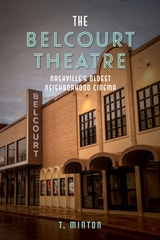
The Belcourt Theatre
Nashville's Oldest Neighborhood CinemaT. Minton
Vanderbilt University Press, 2026
Since opening in 1925 as the Hillsboro Theatre, the Belcourt has stood at the center of Nashville’s changing cultural life. Over the course of a century, it has been a neighborhood movie house, a stage for live performance, a home for community theater, an art-house cinema, a music venue, and a nonprofit film center. Its story is also the story of a city shaped by shifting technologies, urban change, grassroots activism, and evolving ideas about what cultural institutions are for.
The Belcourt Theatre offers the first full history of this enduring landmark, tracing how one cultural center adapted again and again to serve new audiences while remaining a vital place for public gathering, artistic exchange, and shared experience.

The Bell Ringer
Victor Rodriguez
University of North Texas Press, 2002
The Bellwether
Why Ohio Picks the PresidentKyle Kondik
Ohio University Press, 2016
Since 1896, Ohio voters have failed to favor the next president only twice (in 1944 and 1960). Time after time, Ohio has found itself in the thick of the presidential race, and 2016 is shaping up to be no different. What about the Buckeye State makes it so special? In The Bellwether, Kyle Kondik, managing editor for the nonpartisan political forecasting newsletter Sabato’s Crystal Ball, blends data-driven research and historical documentation to explain Ohio’s remarkable record as a predictor of presidential results and why the state is essential to the 2016 election and beyond.
Part history, part journalism, this entertaining and astute guide proposes that Ohio has been the key state in the Electoral College for more than a century and examines what the idea of the swing state has come to mean. In discussing the evidence, Kondik uses the state’s oft-mentioned status as a microcosm of the nation as a case study to trace the evolution of the American electorate, and identifies which places in Ohio have the most influence on the statewide result. Finally, he delves into the answer to the question voting Ohioans consider every four years: Will their state remain a bellwether, or is their ability to pick the president on its way out?
The Bellwomen
The Story of the Landmark AT&T Sex Discrimation CaseStockford, Marjorie A
Rutgers University Press, 2004
In the early 1970s, David Copus, a young, long-haired lawyer, teamed up with his government colleagues to confront the mature and staid executives of AT&T over the company’s treatment of its female and minority employees. Their disagreement resulted in a $38 million settlement that benefited 15,000 employees, more than 13,000 of them women, and changed our perceptions of women’s and men’s roles in the workplace forever.
Copus, who worked for the Equal Employment Opportunity Commission (EEOC), was charged with representing American citizens who suffered from employment discrimination. Time and again he saw young, black women in the South being turned down for available jobs in local phone companies—usually as telephone operators—often for no valid reason at all. He and the EEOC decided to challenge AT&T’s company-wide sex discrimination practices. Eventually, AT&T’s corporate colleagues, witnessing AT&T’s capitulation, began to hire and promote women into better jobs themselves. At the same time, the EEOC started to more aggressively push corporate America to give women better opportunities.
The Bellwomen recounts the history of this case in a novelistic style, illuminating the motivations, strengths, and weaknesses of all the players, from AT&T corporate leaders, to the lawyers of the EEOC, to the female activists fighting for what they believed. Stockford also profiles three beneficiaries of the case, presenting their ambitions and achievements.
Combined with the power of America’s civil rights laws and the influence of the second wave women’s movement, this case provided a catalyst that drove many more women into the paid workforce in non-traditional jobs. By the late twentieth century, when women could be seen working everywhere, from construction sites to corporate offices, it appeared that they belonged there and always had.
The Ben Lilly Legend
By J. Frank Dobie
University of Texas Press, 1981
The Ben Lilly Legend brings back to life a great American hunter—the greatest bear hunter in history after Davy Crockett, by his own account and also by the record. J. Frank Dobie met Lilly and was so struck by this extraordinary man that he collected everything he could find about him.
Lilly was born in Alabama in 1856, followed the bear and the panther westward through Mississippi and Louisiana to Texas, leaving a trail of stories about his prowess as a hunter and his goodness as a man. He was at one time "chief huntsman" to Teddy Roosevelt, hunted in Texas and Mexico, and came to be known as the master sign reader of the Rockies.
Here are all the stories Ben Lilly told and a great many more Frank Dobie heard about him, put together in a fresh and fascinating contribution to American folklore.
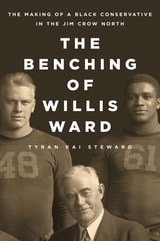
The Benching of Willis Ward
The Making of a Black Conservative in the Jim Crow NorthTyran Kai Steward
University of Illinois Press, 2027
Michigan’s policy of dubious inclusion showed how white institutions admitted Black individuals and then forced them to face discrimination and isolation. Steward connects Ward’s college experience to his subsequent career, where his work as a personnel executive at Ford Motor Company and the Public Services Commission reflected his ambivalence to civil rights and conservative views on race reform. As time passed, Ward advocated for Black Americans to pursue personal success over collective action, a belief that—along with his staunch Republican Party politics—made Ward an example of the Black conservative approach to racial progress.
In-depth and sobering, The Benching of Willis Ward uses one man’s career to shine a light on the workings and legacy of the North’s systems of discrimination.

The Benderly Boys and American Jewish Education
Jonathan B. Krasner
Brandeis University Press, 2011
The Best American Newspaper Narratives of 2012
George Getschow
University of North Texas Press, 2014
The Best American Newspaper Narratives, Volume 10
Gayle Reaves
University of North Texas Press, 2023
The Best American Newspaper Narratives, Volume 2
George Getschow
University of North Texas Press, 2015
The Best American Newspaper Narratives, Volume 3
Gayle Reaves
University of North Texas Press, 2016
The Best American Newspaper Narratives, Volume 4
Gayle Reaves
University of North Texas Press, 2017
The Best American Newspaper Narratives, Volume 5
Gayle Reaves
University of North Texas Press, 2018
The Best American Newspaper Narratives, Volume 6
Gayle Reaves
University of North Texas Press, 2019
The Best American Newspaper Narratives, Volume 7
Gayle Reaves
University of North Texas Press, 2020
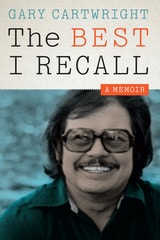
The Best I Recall
A MemoirBy Gary Cartwright
University of Texas Press, 2015
Gary Cartwright is one of Texas’s legendary writers. In a career spanning nearly six decades, he has been a newspaper reporter, Senior Editor of Texas Monthly, and author of several acclaimed books, including Blood Will Tell, Confessions of a Washed-up Sportswriter, and Dirty Dealing. Cartwright was a finalist for a National Magazine Award for reporting excellence, and he has won several awards from the Texas Institute of Letters, including its most prestigious—the Lon Tinkle Award for lifetime achievement. His personal life has been as colorful and occasionally outrageous as any story he reported, and in this vivid, often hilarious, and sometimes deeply moving memoir, Cartwright tells the story of his writing career, tangled like a runaway vine with great friendships, love affairs, four marriages, four or five great dogs . . . looking always to explain, at least to himself, how the pattern probably makes a kind of perverted sense.
Cartwright’s career began at the Fort Worth Star-Telegram and Fort Worth Press, among kindred spirits and fellow pranksters Edwin “Bud” Shrake and Dan Jenkins. He describes how the three rookie writers followed their mentor Blackie Sherrod to the Dallas Times Herald and the Dallas Morning News, becoming the “best staff of sportswriters anywhere, ever” and creating a new kind of sportswriting that “swept the country and became standard.” Cartwright recalls his twenty-five years at Texas Monthly, where he covered everything from true crime to notable Texans to Texas’s cultural oddities. Along the way, he tells lively stories about “rebelling against sobriety” in many forms, with friends and co-conspirators that included Willie Nelson, Ann Richards, Dennis Hopper, Willie Morris, Don Meredith, Jack Ruby, and countless others. A remarkable portrait of the writing life and Austin’s counterculture, The Best I Recall may skirt the line between fact and fiction, but it always tells the truth.
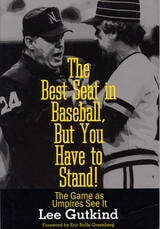
The Best Seat in Baseball, But You Have to Stand
The Game as Umpires See ItLee Gutkind. Foreword by Eric Rolfe Greenburg
Southern Illinois University Press, 1999
To provide this unique—if controversial—look at major league baseball as umpires see it, Lee Gutkind spent the 1974 season traveling with the umpiring crew of Doug Harvey (crew chief), Nick Colosi, Harry Wendelstedt, and Art Williams, the first black umpire in the National League. The result is an honest, realistic, insightful study of the private and professional world of major league umpires: their prejudices and petty biases, their unbending pride in their performance, their inside perspectives on the game, and their bitter criticism of the abuse often directed at their profession and at their conduct. As relevant today as it was in 1974, this illustrated chronicle shows how little has changed in the lives and duties of umpires in the last quarter century.
Guided by his passionate love for the game as he wrote The Best Seat in Baseball, But You Have to Stand!, Gutkind attempted to present the umpires in a positive but realistic light: "I portrayed them as real people, honorable, hard-working and dedicated, but with warts and flaws like the rest of us. But they didn't want to be compared with real people; they wanted to be umpires—on a plateau above most everyone else." Since the publication of this book in 1975, neither Harvey nor Wendelstedt have communicated with Gutkind, with Wendelstedt even denying that Gutkind traveled with the crew.

The Best Specimen of a Tyrant
The Ambitious Dr. Abraham Van Norstrand and the Wisconsin Insane HospitalThomas Doherty
University of Iowa Press, 2012

The Best Station of Them All
The Savannah Squadron, 1861-1865Maurice Melton
University of Alabama Press, 2012
The Confederate Navy’s Savannah Squadron, its relationship with the people of Savannah, Georgia, and its role in the city’s economy
In this well-written and extensively researched narrative, Maurice Melton charts the history of the unit, the sailors (both white and black), the officers, their families, and their activities aboard ship and in port.
The Savannah Squadron worked, patrolled, and fought in the rivers and sounds along the Georgia coast. Though they saw little activity at sea, the unit did engage in naval assault, boarding, capture, and ironclad combat. The sailors finished the war as an infantry unit in Robert E. Lee’s Army of Northern Virginia, fighting at Sayler’s Creek on the road to Appomattox.
Melton concentrates on navy life and the squadron’s place in wartime Savannah. The book reveals who the Confederate sailors were and what their material, social, and working lives were like.
The Best Station of Them All is an essential piece of historical literature for anyone interested in the Civil War, its navies, or Savannah.
The Best Way to Rob a Bank is to Own One
How Corporate Executives and Politicians Looted the S&L IndustryBy William K. Black
University of Texas Press, 2013
In this expert insider’s account of the savings and loan debacle of the 1980s, William Black lays bare the strategies that corrupt CEOs and CFOs—in collusion with those who have regulatory oversight of their industries—use to defraud companies for their personal gain. Recounting the investigations he conducted as Director of Litigation for the Federal Home Loan Bank Board, Black fully reveals how Charles Keating and hundreds of other S&L owners took advantage of a weak regulatory environment to perpetrate accounting fraud on a massive scale. In the new afterword, he also authoritatively links the S&L crash to the business failures of 2008 and beyond, showing how CEOs then and now are using the same tactics to defeat regulatory restraints and commit the same types of destructive fraud.
Black uses the latest advances in criminology and economics to develop a theory of why “control fraud”—looting a company for personal profit—tends to occur in waves that make financial markets deeply inefficient. He also explains how to prevent such waves. Throughout the book, Black drives home the larger point that control fraud is a major, ongoing threat in business that requires active, independent regulators to contain it. His book is a wake-up call for everyone who believes that market forces alone will keep companies and their owners honest.