Results by title
3745 books match the query 'Europe' and 973 start with t
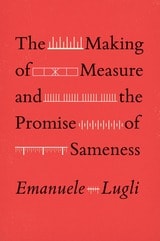
The Making of Measure and the Promise of Sameness
Emanuele Lugli
University of Chicago Press, 2019
Measurement is all around us—from the circumference of a pizza to the square footage of an apartment, from the length of a newborn baby to the number of miles between neighboring towns. Whether inches or miles, centimeters or kilometers, measures of distance stand at the very foundation of everything we do, so much so that we take them for granted. Yet, this has not always been the case.
This book reaches back to medieval Italy to speak of a time when measurements were displayed in the open, showing how such a deceptively simple innovation triggered a chain of cultural transformations whose consequences are visible today on a global scale. Drawing from literary works and frescoes, architectural surveys, and legal compilations, Emanuele Lugli offers a history of material practices widely overlooked by historians. He argues that the public display of measurements in Italy’s newly formed city republics not only laid the foundation for now centuries-old practices of making, but also helped to legitimize local governments and shore up church power, buttressing fantasies of exactitude and certainty that linger to this day.
This ambitious, truly interdisciplinary book explains how measurements, rather than being mere descriptors of the real, themselves work as powerful molds of ideas, affecting our notions of what we consider similar, accurate, and truthful.
The Making of Romantic Love
Longing and Sexuality in Europe, South Asia, and Japan, 900-1200 CEWilliam M. Reddy
University of Chicago Press, 2012
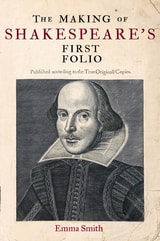
The Making of Shakespeare's First Folio
Emma Smith
Bodleian Library Publishing, 2015
The Making of Shakespeare’s First Folio offers the first comprehensive biography of the earliest collected edition of Shakespeare’s plays. In November 1623, the book arrived in the bookshop of the London publisher Edward Blount at the Black Bear. Long in the making, Master William Shakespeare’s Comedies, Histories, and Tragedies—as the First Folio was then known—appeared seven years after Shakespeare’s death. Nearly one thousand pages in length, the collection comprised thirty-six plays, half of which had never been previously published. Emma Smith tells the story of the First Folio’s origins, locating it within the social and political context of Jacobean London and bringing in the latest scholarship on the seventeenth-century book trade.
Extensively illustrated, The Making of Shakespeare’s First Folio is a landmark addition to the copious literature on Shakespeare. It will shed much-needed light on the birth of the First Folio—of which fewer than 250 copies remain—and the birth of Shakespeare’s towering reputation.
The Making of a Nation in the Balkans
Roumen Daskalov
Central European University Press, 2004
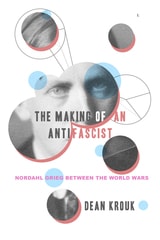
The Making of an Antifascist
Nordahl Grieg between the World WarsDean Krouk
University of Wisconsin Press, 2022
In this comprehensive and accessible book, Dean Krouk examines a significant public figure in Scandinavian literature and a critical period in modern European history through original readings of the political, ethical, and gender issues in Grieg’s works. This volume offers a first-rate analysis of the interwar period’s political and cultural agendas in Scandinavia and Europe leading to the Second World War by examining the rise of fascism, communism, and antifascism. Grieg’s poetry found renewed resonance in Norway following the 2011 far-right domestic terrorist attacks, making insight into his contradictory ideas more crucial than ever. Krouk’s presentation of Grieg’s unexpected ideological tensions will be thought-provoking for many readers in the United States and elsewhere.
The Man Who Believed He Was King of France
A True Medieval TaleTommaso di Carpegna Falconieri
University of Chicago Press, 2008
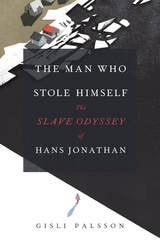
The Man Who Stole Himself
The Slave Odyssey of Hans JonathanGisli Palsson
University of Chicago Press, 2016
The island nation of Iceland is known for many things—majestic landscapes, volcanic eruptions, distinctive seafood—but racial diversity is not one of them. So the little-known story of Hans Jonathan, a free Black man who lived and raised a family in early nineteenth-century Iceland, is improbable and compelling, the stuff of novels.
In The Man Who Stole Himself, Gisli Palsson lays out the story of Hans Jonathan (also known as Hans Jónatan) in stunning detail. Born into slavery in St. Croix in 1784, Hans was taken as a slave to Denmark, where he eventually enlisted in the navy and fought on behalf of the country in the 1801 Battle of Copenhagen. After the war, he declared himself a free man, believing that he was due freedom not only because of his patriotic service, but because while slavery remained legal in the colonies, it was outlawed in Denmark itself. He thus became the subject of one of the most notorious slavery cases in European history, which he lost. Then Hans ran away—never to be heard from in Denmark again, his fate unknown for more than two hundred years. It’s now known that Hans fled to Iceland, where he became a merchant and peasant farmer, married, and raised two children. Today, he has become something of an Icelandic icon, claimed as a proud and daring ancestor both there and among his descendants in America.
The Man Who Stole Himself brilliantly intertwines Hans Jonathan’s adventurous travels with a portrait of the Danish slave trade, legal arguments over slavery, and the state of nineteenth-century race relations in the Northern Atlantic world. Throughout the book, Palsson traces themes of imperial dreams, colonialism, human rights, and globalization, which all come together in the life of a single, remarkable man. Hans literally led a life like no other. His is the story of a man who had the temerity—the courage—to steal himself.
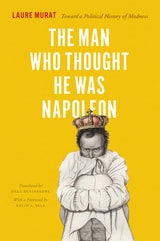
The Man Who Thought He Was Napoleon
Toward a Political History of MadnessLaure Murat
University of Chicago Press, 2014
From those two components, Laure Murat embarks on an exploration of the surprising relationship between history and madness. She uncovers countless stories of patients whose delusions seem to be rooted in the historical or political traumas of their time, like the watchmaker who believed he lived with a new head, his original having been removed at the guillotine. In the troubled wake of the Revolution, meanwhile, French physicians diagnosed a number of mental illnesses tied to current events, from “revolutionary neuroses” and “democratic disease” to the “ambitious monomania” of the Restoration. How, Murat asks, do history and psychiatry, the nation and the individual psyche, interface?
A fascinating history of psychiatry—but of a wholly new sort—The Man Who Thought He Was Napoleon offers the first sustained analysis of the intertwined discourses of madness, psychiatry, history, and political theory.
The Man of Many Devices, Who Wandered Full Many Ways
Festschrift in Honor of János M. BakBalázs Nagy
Central European University Press, 1999
The Manly Masquerade
Masculinity, Paternity, and Castration in the Italian RenaissanceValeria Finucci
Duke University Press, 2003
Highlighting the fissures running through Italian Renaissance ideas of manliness, Finucci describes how, alongside pervasive images of the virile, sexually active man, early modern Italian culture recognized the existence of hermaphrodites and started to experiment with a new kind of sexuality by manufacturing a non-man: the castrato. Following the creation of castrati, the Church forbade the marriage of all non-procreative men, and, in this move, Finucci identifies a powerful legitimation of the view that what makes men is not the possession of male organs or the ability to have sex, but the capability to father. Through analysis, anecdote, and rich cultural description, The Manly Masquerade exposes the "real" early modern man: the paterfamilias.
The Many Names of Anonymity
Portraitists of the Canton TradeWinnie Wong
University of Chicago Press, 2025
Challenging contemporary procedures for establishing attribution, chronology, and authenticity in Chinese art, Winnie Wong explores the means, methods, and stakes of recovering the names of an anonymous community of artists. To examine how Western art history has misconstrued and miscategorized names and identities in Chinese art, she looks to conflicting features of modernity: the European attachment of singular names to individuals and their works, and the Chinese use of socially contingent names that often are not attached to material labor and sometimes operate against it. Wong charts the genealogy of this naming problem by bringing to life the artists of the Qing Empire’s trade with Europeans at the port of Guangzhou, centering on a group of portraitists known by names that were recorded in a pidgin language: Chin Qua, Chit Qua, Spoilum, Lam Qua, and Ting Qua.
Many of these paintings survive today, yet scholars have identified only a handful of the painters’ identities. Pushing against Western norms that have shaped our understanding of authorship, Wong reveals that these artists shared names, created works in multiples, and signed their pieces with different names or none at all. This lavishly illustrated volume explores portraiture across media, including unfired clay, reverse painting on glass, watercolor on paper, oil on canvas, and the daguerreotype, to propose new ways of studying anonymity, copying, and the emergence of author names in the Sino-European visual culture of the long eighteenth century.
The Margins of Late Medieval London, 1430–1540
Charlotte Berry
University of London Press, 2022
The Margins of Late Medieval London seeks to unpack the complexity of urban life in the medieval age, offering a detailed and novel approach to understanding London beyond its grand institutions and social bodies. Using a combination of experimental digital, quantitative, and qualitative methodologies, the volume casts new light on urban life at the level of the neighborhood and considers the differences in economy, society, and sociability which existed in different areas of a vibrant premodern city. This book focuses on the dynamism and mobility that shaped city life, integrating the experiences of London’s poor and migrant communities and how they found their place within urban life. It describes how people found themselves marginalized in the city, and the strategies they would employ to mitigate that precarious position.
The Margins of the Text
D. C. Greetham, Editor
University of Michigan Press, 1997
The Margins of the Text is the first attempt to collect a body of essays concerned with specific aspects of the marginal as they relate to text. The volume is divided into two sections. The first part assembles essays concerned with the margins of textual discourse and explores the function of discourses not previously recognized as significant to scholarly editing, such as those of class, race, gender, and sexual orientation. The second section attends to the textual margins in the bibliographical sense--the margins of the book, in which there has been so much recent interest. The two parts of the collection are clearly interrelated, since both study the effects of margins as a form of cultural discourse.
As a whole, the collection spans several periods (medieval, Renaissance, eighteenth-century to modern), several disciplines (drama, literature, art history, politics, and philosophy), and offers a wide-ranging consideration of a single topic as it is manifested in various genres, formats, and media. The contributors are among the most respected textual/critical theorists in their fields.
The Margins of the Text will become a standard reference in the field, and will be read profitably by culture critics and social historians as well as textual critics and editors.
D. C. Greetham is Professor of English and Medieval Studies, City University of New York Graduate School.
The Marital Knot
Agunot in the Ashkenazi Realm, 1648–1850Noa Shashar
Brandeis University Press, 2024
Noa Shashar sheds light on Jewish family life in the early modern era and on the activity of rabbis whose Jewish legal rulings determined the fate of agunot, literally “chained women,” who were often considered a marginal group. Who were these men and women? How did Jewish society deal with the danger of a woman’s becoming an agunah? What kind of reality was imposed on women who found themselves agunot, and what could they do to extricate themselves from their plight? How did rabbinic decisors discharge their task during this period, and what were the outcomes given the fact that the agunot were dependent on the male rabbinic establishment?
This study describes the lives of agunot, and by reexamining the halakhic activity concerning agunot in this period, proposes a new assessment of the attitude that decisors displayed toward the freeing of agunot.
The Maritime World of the Anglo-Saxons
Stacy S. Klein
Arizona Center for Medieval and Renaissance Studies, 2014
The Mark of Rebels
Indios Fronterizos and Mexican IndependenceBarry M. Robinson
University of Alabama Press, 2016
Explores social and cultural transformations among the indigenous communities of western Mexico, especially the indios fronterizos (Frontier Indians), preceding and during the struggle for independence
In The Mark of Rebels Barry Robinson offers a new look at Mexican Independence from the perspective of an indigenous population caught in the heart of the struggle. During the conquest and settlement of Mexico’s Western Sierra Madre, Spain’s indigenous allies constructed an indio fronterizo identity for their ethnically diverse descendants. These communities used their special status to maintain a measure of autonomy during the colonial era, but the cultural shifts of the late colonial period radically transformed the relationship between these indios fronterizos and their neighbors.
Marshalling an extensive array of archival material from Mexico, the United States, and Spain, Robinson shows that indio fronterizo participation in the Mexican wars of independence grafted into the larger Hidalgo Revolt through alignment with creole commanders. Still, a considerable gulf existed between the aims of indigenous rebels and the creole leadership. Consequently, the privileges that the indios fronterizos sought to preserve continued to diminish, unable to survive either the late colonial reforms of the Spanish regime or creole conceptions of race and property in the formation of the new nation-state.
This story suggests that Mexico’s transition from colony to nation can only be understood by revisiting the origins of the colonial system and by recognizing the role of Spain’s indigenous allies in both its construction and demolition. The study relates events in the region to broader patterns of identity, loyalty, and subversion throughout the Americas, providing insight into the process of mestizaje that is commonly understood to have shaped Latin America. It also foreshadows the popular conservatism of the nineteenth century and identifies the roots of post-colonial social unrest.
This book provides new context for scholars, historians, ethnographers, anthropologists, and anyone interested in the history of Mexico, colonization, Native Americans, and the Age of Revolutions.
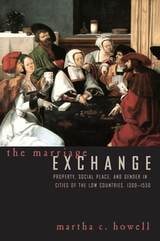
The Marriage Exchange
Property, Social Place, and Gender in Cities of the Low Countries, 1300-1550Martha C. Howell
University of Chicago Press, 1998
Based on extensive research in this archive, this book reveals how these documents were produced in a centuries-long effort to regulate—and ultimately to redefine—property and gender relations. At the center of the transformation was a shift from a marital property regime based on custom to one based on contract. In the former, a widow typically inherited her husband's property; in the latter, she shared it with or simply held it for his family or offspring. Howell asks why the law changed as it did and assesses the law's effects on both social and gender meanings but she insists that the reform did not originate in general dissatisfaction with custom or a desire to disempower widows. Instead, it was born in a complex economic, social and cultural history during which Douaisiens gradually came to think about both property and gender in new ways.
The Masculine Self in Late Medieval England
Derek G. Neal
University of Chicago Press, 2008
Marshalling a wide array of colorful evidence—including legal records, letters, medical sources, and the literature of the period—Derek G. Neal here plumbs the social and cultural significance of masculinity during the generations born between the Black Death and the Protestant Reformation. He discovers that social relations between men, founded on the ideals of honesty and self-restraint, were at least as important as their domination and control of women in defining their identities. By carefully exploring the social, physical, and psychological aspects of masculinity, The Masculine Self in Late Medieval England offers a uniquely comprehensive account of the exterior and interior lives of medieval men.
The Medici Codex of 1518, Volume 1
Historical Introduction and CommentaryEdited by Edward E. Lowinsky
University of Chicago Press, 1968
It is invaluable for transmitting the excellent readings of the repertory of the French Royal Chapel and a number of political motets of great musical and historical interest that reflect events at the French court and are unique to this collection.
Edward E. Lowinsky presents this anthology as part of a series containing critical editions of major sources of fifteenth- and sixteenth-century music in their entirety.
The Medici Codex of 1518, Volume 2
TranscriptionEdited by Edward E. Lowinsky
University of Chicago Press, 1968
It is invaluable for transmitting the excellent readings of the repertory of the French Royal Chapel and a number of political motets of great musical and historical interest that reflect events at the French court and are unique to this collection.
Edward E. Lowinsky presents this anthology as part of a series containing critical editions of major sources of fifteenth- and sixteenth-century music in their entirety.
The Medici Codex of 1518, Volume 3
Facsimile EditionEdited by Edward E. Lowinsky
University of Chicago Press, 1968
It is invaluable for transmitting the excellent readings of the repertory of the French Royal Chapel and a number of political motets of great musical and historical interest that reflect events at the French court and are unique to this collection.
Edward E. Lowinsky presents this anthology as part of a series containing critical editions of major sources of fifteenth- and sixteenth-century music in their entirety.
The Medieval Art of Fear
Ravinder S. Binning
University of Chicago Press, 2026
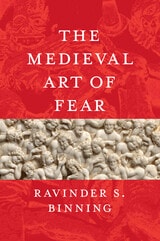
In the medieval world, experiences of fear attained a mystical significance: monks, urban publics, and even emperors pursued horror and grief to explore the limits of fantasy, sensation, and catharsis. In this book, Ravinder S. Binning examines an expansive archive ranging from poetry and scientific treatises to artistic works in ivory and crystal to recover an aesthetic tradition centered on optical tension, spatial suspense, and tactile experience.
Moving between early monastic spaces in Egypt and major urban centers like Constantinople from the fourth through the thirteenth centuries, The Medieval Art of Fear shows how the psychosomatic experience of fear became the deliberate object of mystical practices, meditation, and other embodied techniques across the medieval world. The result is a powerful exploration of the aesthetic effects behind some of the medieval world’s most ambitious works, whose influence extends well beyond the Middle Ages.

The Medieval Castle
Romance and RealityKathryn L. Reyerson and Faye Powe, Editors
University of Minnesota Press, 1991
The Medieval Castle was first published in 1991. Minnesota Archive Editions uses digital technology to make long-unavailable books once again accessible, and are published unaltered from the original University of Minnesota Press editions.
The Medieval Constitution of Liberty
Political Foundations of Liberalism in the WestAlexander William Salter and Andrew T. Young
University of Michigan Press, 2023
Why did enduring traditions of economic and political liberty emerge in Western Europe and not elsewhere? Representative democracy, constitutionalism, and the rule of law are crucial for establishing a just and prosperous society, which we usually treat as the fruits of the Renaissance and Enlightenment, as Western European societies put the Dark Ages behind them.
In The Medieval Constitution of Liberty, Salter and Young point instead to the constitutional order that characterized the High Middle Ages. They provide a historical account of how this constitutional order evolved following the fall of the Western Roman Empire. This account runs from the settlements of militarized Germanic elites within the imperial frontiers, to the host of successor kingdoms in the sixth and seventh centuries, and through the short-lived Carolingian empire of the late eighth and ninth centuries and the so-called “feudal anarchy” that followed its demise. Given this unique historical backdrop, Salter and Young consider the resulting structures of political property rights. They argue that the historical reality approximated a constitutional ideal type, which they term polycentric sovereignty. Salter and Young provide a theoretical analysis of polycentric sovereignty, arguing that bargains between political property rights holders within that sort of constitutional order will lead to improvements in governance.
The Medieval Imagination
Jacques Le Goff
University of Chicago Press, 1988
"Le Goff is one of the most distinguished of the French medieval historians of his generation . . . he has exercised immense influence."—Maurice Keen, New York Review of Books
"The whole book turns on a fascinating blend of the brutally materialistic and the generously imaginative."—Tom Shippey, London Review of Books
"The richness, imaginativeness and sheer learning of Le Goff's work . . . demand to be experienced."—M. T. Clanchy, Times Literary Supplement
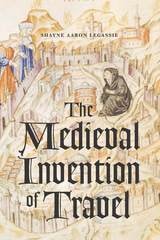
The Medieval Invention of Travel
Shayne Aaron Legassie
University of Chicago Press, 2017
Exploring this phenomenon, The Medieval Invention of Travel draws on an impressive array of sources to develop original readings of canonical figures such as Marco Polo, John Mandeville, and Petrarch, as well as a host of lesser-known travel writers. As Shayne Aaron Legassie demonstrates, the Middle Ages inherited a Greco-Roman model of heroic travel, which viewed the ideal journey as a triumph over temptation and bodily travail. Medieval travel writers revolutionized this ancient paradigm by incorporating practices of reading and writing into the ascetic regime of the heroic voyager, fashioning a bold new conception of travel that would endure into modern times. Engaging methods and insights from a range of disciplines, The Medieval Invention of Travel offers a comprehensive account of how medieval travel writers and their audiences reshaped the intellectual and material culture of Europe for centuries to come.

The Medieval Kitchen
Recipes from France and ItalyOdile Redon, Françoise Sabban, and Silvano Serventi
University of Chicago Press, 1998
"This book is a delight. It is not often that one has the privilege of working from a text this detailed and easy to use. It is living history, able to be practiced by novice and master alike, practical history which can be carried out in our own homes by those of us living in modern times."—Wanda Oram Miles, The Medieval Review
"The Medieval Kitchen, like other classic cookbooks, makes compulsive reading as well as providing a practical collection of recipes."—Heather O'Donoghue, Times Literary Supplement
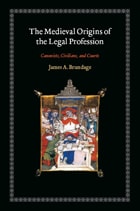
The Medieval Origins of the Legal Profession
Canonists, Civilians, and CourtsJames A. Brundage
University of Chicago Press, 2008
By the end of the eleventh century, Brundage argues, renewed interest in Roman law combined with the rise of canon law of the Western church to trigger a series of consolidations in the profession. New legal procedures emerged, and formal training for proctors and advocates became necessary in order to practice law in the reorganized church courts. Brundage demonstrates that many features that characterize legal advocacy today were already in place by 1250, as lawyers trained in Roman and canon law became professionals in every sense of the term. A sweeping examination of the centuries-long power struggle between local courts and the Christian church, secular rule and religious edict, The Medieval Origins of the Legal Profession will be a resource for the professional and the student alike.
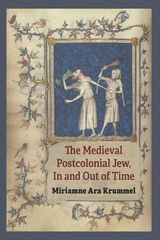
The Medieval Postcolonial Jew, In and Out of Time
Miriamne Ara Krummel
University of Michigan Press, 2022
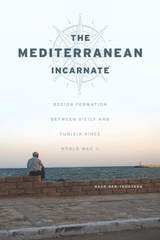
The Mediterranean Incarnate
Region Formation between Sicily and Tunisia since World War IINaor Ben-Yehoyada
University of Chicago Press, 2017
The book centers on the town of Mazara del Vallo, located on the southwestern tip of Sicily some ninety nautical miles northeast of the African shore. Ben-Yehoyada intertwines the town’s recent turbulent history—which has been fraught with conflicts over fishing rights, development projects, and how the Mediterranean should figure in Italian politics at large—with deep accounts of life aboard the Naumacho, linking ethnography with historical anthropology and political-economic analysis. Through this sophisticated approach, he crafts a new viewpoint on the historical processes of transnational region formation, one offered by these moving ships as they weave together new social and political constellations.
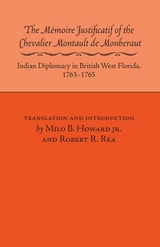
The Memoire Justificatif of Chevalier Monberaut
Indian Diplomacy in British West Florida, 1763-1765Montault Monberaut
University of Alabama Press, 1965
A rare primary-source account of Indigenous diplomacy and imperial transition in British West Florida, 1763–1765.
Historians of the Gulf Coast have long delighted in the romance of Spanish discovery and French settlement. The period of British occupation was relatively brief, fruitless, and prosaic, if we are to believe the older authorities. Today the availability of materials which were closed to an earlier generation enables us to re-create the story of British West Florida in terms more precise, with details more personal, and with no less dramatic coloration than has long been given-with less accuracy-to the earlier epochs.
In The Memoire Justificatif of Chevalier Monberaut, the translators have undertaken the resurrection of one of those gallant Frenchmen of the ancient regime who remained behind to serve the new Anglo-Saxon masters of West Florida. The Chevalier Montault de Monberaut is not unknown to historians of the colonial scene, but he has never enjoyed a full portrayal of his contribution nor a balanced evaluation of his role. By concentrating our attention upon the man as well as his milieu, we have been able to present in greater detail than before the circumstances and procedure of Indian diplomacy on the Gulf Coast at the beginning of the British period. By placing Monberaut against the backdrop of British colonial government and its problems, we have replaced some of the romantic fallacies with historic realities. The resulting clarity adds to the picture's significance and appeal.
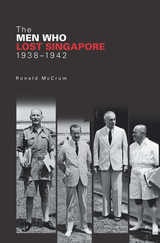
The Men Who Lost Singapore, 1938-1942
Ronald McCrum
National University of Singapore Press, 2017
In The Men Who Lost Singapore, McCrum closely examines the role and responsibilities of the colonial authorities before and during the war. He argues that the poor and occasionally hostile relations that developed between the local government and the British military hierarchy prevented the development and implementation of a strategic and unified plan of defense against the growing threat of the Japanese. Consequently, this indecisive and ineffective leadership led to significant losses and civilian casualties that could have been prevented.

The Men of 1924
Britain’s First Labour GovernmentPeter Clark
Haus Publishing, 2023
In January of 1924, the cabinet of the first Labour government consisted of twenty white, middle-aged men, as it had for generations. But the election also represented a radical departure from government by the ruling class. Most members of the administration had left school by the age of fifteen. Five of them had started work by the time they were twelve years old. Three were working down the mines before they entered their teens. Two were illegitimate, one was abandoned at birth, and three were of Irish immigrant descent. For the first time in Britain’s history, the cabinet could truly be said to represent all of Britain’s social classes. This unheralded revolution in representation is the subject of Peter Clark’s fascinating new book, The Men of 1924. Who were these men? Clark’s vivid portrayal is full of evocative portraits of a new breed of politician, the forerunners of all those who, later in the last century and this one, overcame a system from which they had been excluded for too long.
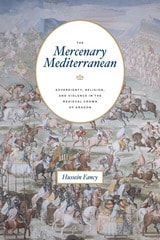
The Mercenary Mediterranean
Sovereignty, Religion, and Violence in the Medieval Crown of AragonHussein Fancy
University of Chicago Press, 2016
They were not the first or only Muslim soldiers to do so. Over the course of the thirteenth and fourteenth centuries, the Christian kings of Aragon recruited thousands of foreign Muslim soldiers to serve in their armies and as members of their royal courts. Based on extensive research in Arabic, Latin, and Romance sources, The Mercenary Mediterranean explores this little-known and misunderstood history. Far from marking the triumph of toleration, Hussein Fancy argues, the alliance of Christian kings and Muslim soldiers depended on and reproduced ideas of religious difference. Their shared history represents a unique opportunity to reconsider the relation of medieval religion to politics, and to demonstrate how modern assumptions about this relationship have impeded our understanding of both past and present.
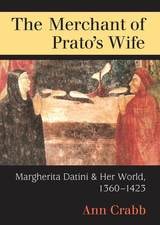
The Merchant of Prato's Wife
Margherita Datini and Her World, 1360-1423Ann Crabb
University of Michigan Press, 2015
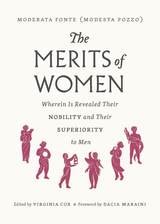
The Merits of Women
Wherein Is Revealed Their Nobility and Their Superiority to MenModerata Fonte
University of Chicago Press, 2018
Without help from their wives, men are just like unlit lamps . . .
Just think of them as an unreliable clock that tells you it’s ten o’clock when it’s in fact barely two . . .
A man without a woman is like a fly without a head . . .
These are but a small selection of the quips bandied about at this lively gathering of women. The broad topic at hand is the relative pros and cons of men, and the cases in point range from pick-up artists to locker-room talk, and from double standards to fragile masculinity.
Yet this dialogue unfolds not among ironically misandrist millenials venting at their local dive bar, but rather among sixteenth-century women—variously married, widowed, single, and betrothed—attending a respectable Venice garden party. Written in the early 1590s by Moderata Fonte, pseudonym of the Renaissance poet and writer Modesta Pozzo, this literary dialogue interrogates men and men’s treatment of women, and explores by contrast the virtues of singledom and female friendship. As the women diverge from their theme—discussing everything from astrology to the curative powers of plants and minerals—a remarkable group portrait of wisdom, wit, and erudition emerges.
A new introduction by translator Virginia Cox and foreword by Dacia Maraini situate The Merits of Women in its historical context, written as it was on the cusp of Shakespeare’s heyday, and straddling the centuries between the feminist works of Christine de Pizan and Mary Wollstonecraft. Elegantly presented for a general audience, this is a must-read for baby feminists and “nasty women” alike, not to mention the perfect subtle gift for any mansplaining friend who needs a refresher on the merits of women . . . and their superiority to men.
The Middle East Remembered
Forged Identities, Competing Narratives, Contested SpacesJacob Lassner
University of Michigan Press, 2000
In the first of the book's three parts, Lassner examines what he calls the stratigraphy of the text--he makes sense of the unusual organization of medieval Islamic narrative. The second section investigates issues such as work on city planning and on the creation of imperial centers. The last portion studies the interplay between Jewish and Muslim memory and the trading of themes and ideas between the cultures.
Shorter studies in the volume have been revised, and the author weaves new and complementary essays around them. Earlier work has been transformed and made more available to the general public. The style is accessible, and technical and arcane usages have been kept to a minimum. Throughout there are flashes of the author's wry humor.
Jacob Lassner is Philip M. and Ethel Klutsnick Professor of Jewish Civilization, Northwestern University, and Professor of Middle East History, Tel Aviv University.
The Mind and Art of Victorian England
Josef L. Altholz, Editor
University of Minnesota Press, 1976
The Mind and Art of Victorian England was first published in 1976. Minnesota Archive Editions uses digital technology to make long-unavailable books once again accessible, and are published unaltered from the original University of Minnesota Press editions.
In a series of ten essays and a generous selection of illustrations, many in color, this volume depicts and assesses the mind and art of Victorian England. Multidisciplinary in approach, the essays deal with a variety of aspects in the history of the Victorian age.
Professor Altholz, the volume editor, writes: "It was an age not of revolution but of reform; political reform which admitted first the middle and then the working classes to the dominant share of the suffrage; economic and social reforms which proclaimed the triumph of laissez-faire while laying the foundations of the welfare state; moral reforms attempted if not achieved through education and religious revival; aesthetic reforms proposed if not achieved and, even in their failure, adding to the richness and diversity of Victorian England. It was an age whose problems cried out for reform; and, despite the prevailing complacency, virtually all the great Victorians were critics of their age. Their criticisms were diverse and often mutually incompatible, with each other -- and their public -- but they shared a high seriousness which gave character and substance to the flowering of their culture. Such was the Victorian age: the high-water mark of English history, the maturation of British culture, and the seedbed of our problems and our discontents."
The illustrations include color reproductions of some of the works discussed by Melvin Waldfogel in his essay "Narrative Painting," and a selection of architectural engravings and photographs.
The Mind of the Middle Ages
An Historical SurveyFrederick B. Artz
University of Chicago Press, 1980
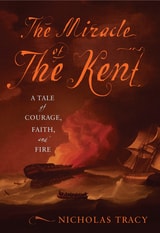
The Miracle of the Kent
A Tale of Courage, Faith, and FireNicholas Tracy
Westholme Publishing, 2008
“A naturally gripping adventure tale.”—Publishers Weekly
“Powerful and intensely focused.”—Booklist
“Tracy's satisfying narrative constitutes the first modern account. A finely detailed maritime history.”—Kirkus Reviews
In 1825, the Kent, an East Indiaman, set sail from England for India with a crew and nearly 600 men, women, and children on board. North of Spain, the ship was slammed by a ferocious gale, and while a sailor was inspecting the hold for damage, his lantern ignited a cask of spirits. A fire quickly erupted, and even with the desperate expedient of opening hatches and flooding the ship, the fire burned out of control. As night wore on, the ship became an inferno, with the flames moving toward stores of gunpowder. At this point, everyone on board knew that they would perish, and they began preparing for their ghastly deaths. Despite the raging tempest a sailor climbed one last time to the top of the Kent’s mainmast and—miraculously—a sail was sighted on the horizon. It was the Cambria, a small brig on its way to Mexico. The Cambriaspied the burning Kentand through determination and dogged seamanship in towering seas, the little brig closed the doomed vessel. Launching their boats, the Kent’s and Cambria’s crews were able to transfer nearly all of the children, women, and men to the brig and pull away before the Kent exploded. Dangerously overloaded, the Cambriamade the Cornish coast three days later.
In The Miracle of the Kent: A Tale of Courage, Faith, and Fire, award-winning historian Nicholas Tracy reconstructs this extraordinary tale through records left by the participants, revealing how those aboard the Kent faced their deaths, and their reactions to being offered a second chance. The story of the Kentis both a page-turning adventure and an inspirational homage to the capacity of the human spirit.

The Miracles of St. John of Capistran
Stanko Andric
Central European University Press, 2000
Religious history and, in particular, the history of the cult of saints and their miracles has recently become one of the most popular fields of historical investigation. Together with continuing interest in the related ecclesiastic motivations and the well organized craft of hagiography, this new interest might be explained by the marvellously rich details of thousands of witness accounts testifying to the miraculous help they received from the saint in times of desparate need. These accounts provide an unparalleled insight into the history of everyday life and into the various hardships, illnesses, hopes dreams and anxieties during the late medieval and early modern period.
Only two records exist on the history of the medieval Hungarian kingdom- the thirteenth century canonization trial of St. Margaret of Hungary and the miracle collections promoting the canonization of St. John of Capistran, the victorious Crusader at Belgrade in 1456, who died thereafter in Ilok (a city located on the periphery of western Christianity in Croatia). Based on a careful study of the widely scattered manuscripts on Capistranean miracles and with the help of a microscopic philological analysis, the author has managed to reconstruct, for the first time, one of the most complex miracle collections in the history of medieval hagiography.
Covering the recording of the first miracle series by the urban notaries of Ilok, the local hagiographer of Ilok Franciscans (John Geszti), the vicar general of the Hungarian province (Stephen Varsányi), and a number of subsequent editions and amplifications of this material recycling into the canonization campaign of St. John of Capistran and the miracles he himself recorded, The Miracles of St. John of Capistran, is an outstanding debut by a representative of a new generation of Central European medievalists.
The Mirror of Spain, 1500-1700
The Formation of a MythJ. N. Hillgarth
University of Michigan Press, 2000
In the first of the volume's four parts, the author discusses the reasons--geographic, political, and religious--why Spain has proved a hard country to understand. Hillgarth looks at travelers to Spain, from pilgrims to diplomats, spies, exiles, and foreign residents. In its second part, special attention is devoted to the interaction between Christians, Jews, and Muslims, including Jewish and Muslim exiles and secret Jews within Spain.
In its third section, The Mirror of Spain explores reactions to Spain by those who saw it from the outside, the Italians, Dutch, French, and English. One chapter deals with the English, Scottish, and Irish Catholics, who, like the Jewish and Muslim exiles, played a double role in that they were at once "insiders" and outsiders. Finally, Hillgarth attempts to show how two crucial centuries have affected the way Spain has been seen down to the present.
The Mirror of Spain draws on a wide range of sources in different languages. It relies on documents in the Public Record Office and the British Library, the Archivo General de Simancas and the collections of the colleges founded by exiles in Spain, and on major libraries in Venice and Jerusalem. The volume will be of interest to a broad spectrum of scholars--to medievalists, historians of Spain, scholars of political and literary thought, and all those interested in notions of national identity.
J. N. Hillgarth has taught for many years at the University of Toronto and the Pontifical Institute of Mediaeval Studies. He is a Fellow of the British Academy and has received awards and honors from a wide variety of distinguished institutions in Europe and North America.

The Missing Link
West European Neutrals and Regional SecurityRichard E. Bissell and Curt Gasteyger, eds.
Duke University Press, 1990
The Mistral
A Windswept History of Modern FranceCatherine Tatiana Dunlop
University of Chicago Press, 2024
Every year, the chilly mistral wind blows through the Rhône valley of southern France, across the Camargue wetlands, and into the Mediterranean Sea. Most forceful when winter turns to spring, the wind knocks over trees, sweeps trains off their tracks, and destroys crops. Yet the mistral turns the sky clear and blue, as it often appears in depictions of Provence. The legendary wind is central to the area’s regional identity and has inspired artists and writers near and far for centuries.
This force of nature is the focus of Catherine Dunlop’s The Mistral, a wonderfully written examination of the power of the mistral wind, and in particular, the ways it challenged central tenets of nineteenth-century European society: order, mastery, and predictability. As Dunlop shows, while the modernizing state sought liberation from environmental realities through scientific advances, land modification, and other technological solutions, the wind blew on, literally crushing attempts at control, and becoming increasingly integral to regional feelings of place and community.
The Modern Woman Revisited
Paris Between the WarsChadwick, Whitney
Rutgers University Press, 2003
The contributions of female artists to the development of literary and artistic modernism in early twentieth century France remain poorly understood. It was during this period that a so-called “modern woman” began occupying urban spaces associated with the development of modern art and modernism’s struggles to define subjectivities and sexualities. Whereas most studies of modernism’s formal innovations and its encouragement of artistic autonomy neglect or omit necessary discussions of gender, race, class, and sexual orientation, the contributors of The Modern Woman Revisited inject these perspectives into the discussion.
Between the two World Wars, Paris served as the setting for unparalleled freedom for expatriate as well as native-born French women, who enjoyed unprecedented access to education and opportunities to participate in public artistic and intellectual life. Many of these women made lasting contributions in art and literature. Some of the artists discussed include Colette, Tamara de Lempicka, Sonia Delaunay, Djuna Barnes, Augusta Savage, and Lee Miller.
Inthis book, an internationally recognized roster of art historians, literary critics, and other scholars offers a nuanced portrait of what it meant to be a modern woman during this decisive period of modernism’s development. Individual essays explore the challenges faced by women in the early decades of the twentieth century, as well as the strategies these women deployed to create their art and to build meaningful lives and careers. The introduction underscores the importance of the contributors’ efforts to engender larger questions about modernity, sexuality, race, and class.
The Modulated Scream
Pain in Late Medieval CultureEsther Cohen
University of Chicago Press, 2010
In the late medieval era, pain could be a symbol of holiness, disease, sin, or truth. It could be encouragement to lead a moral life, a punishment for wrong doing, or a method of healing. Exploring the varied depictions and descriptions of pain—from martyrdom narratives to practices of torture and surgery—The Modulated Scream attempts to decode this culture of suffering in the Middle Ages.
Esther Cohen brings to life the cacophony of howls emerging from the written record of physicians, torturers, theologians, and mystics. In considering how people understood suffering, explained it, and meted it out, Cohen discovers that pain was imbued with multiple meanings. While interpreting pain was the province only of the rarified elite, harnessing pain for religious, moral, legal, and social purposes was a practice that pervaded all classes of Medieval life. In the overlap of these contradicting attitudes about what pain was for—how it was to be understood and who should use it—Cohen reveals the distinct and often conflicting cultural traditions and practices of late medieval Europeans. Ambitious and wide-ranging, The Modulated Scream is intellectual history at its most acute.
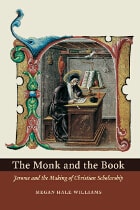
The Monk and the Book
Jerome and the Making of Christian ScholarshipMegan Hale Williams
University of Chicago Press, 2006
In the West, monastic ideals and scholastic pursuits are complementary; monks are popularly imagined copying classics, preserving learning through the Middle Ages, and establishing the first universities. But this dual identity is not without its contradictions. While monasticism emphasizes the virtues of poverty, chastity, and humility, the scholar, by contrast, requires expensive infrastructure—a library, a workplace, and the means of disseminating his work. In The Monk and the Book, Megan Hale Williams argues that Saint Jerome was the first to represent biblical study as a mode of asceticism appropriate for an inhabitant of a Christian monastery, thus pioneering the enduring linkage of monastic identities and institutions with scholarship.
Revisiting Jerome with the analytical tools of recent cultural history—including the work of Bourdieu, Foucault, and Roger Chartier—Williams proposes new interpretations that remove obstacles to understanding the life and legacy of the saint. Examining issues such as the construction of Jerome’s literary persona, the form and contents of his library, and the intellectual framework of his commentaries, Williams shows that Jerome’s textual and exegetical work on the Hebrew scriptures helped to construct a new culture of learning. This fusion of the identities of scholar and monk, Williams shows, continues to reverberate in the culture of the modern university.
"[Williams] has written a fascinating study, which provides a series of striking insights into the career of one of the most colorful and influential figures in Christian antiquity. Jerome's Latin Bible would become the foundational text for the intellectual development of the West, providing words for the deepest aspirations and most intensely held convictions of an entire civilization. Williams's book does much to illumine the circumstances in which that fundamental text was produced, and reminds us that great ideas, like great people, have particular origins, and their own complex settings."—Eamon Duffy, New York Review of Books
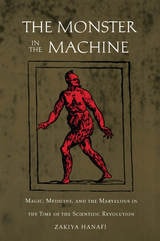
The Monster in the Machine
Magic, Medicine, and the Marvelous in the Time of the Scientific RevolutionZakiya Hanafi
Duke University Press, 2000
Noting that the word “monster” is derived from the Latin for “omen” or “warning,” Hanafi explores the monster’s early identity as a portent or messenger from God. Although monsters have always been considered “whatever we are not,” they gradually were tranformed into mechanical devices when new discoveries in science and medicine revealed the mechanical nature of the human body. In analyzing the historical literature of monstrosity, magic, and museum collections, Hanafi uses contemporary theory and the philosophy of technology to illuminate the timeless significance of the monster theme. She elaborates the association between women and the monstrous in medical literature and sheds new light on the work of Vico—particularly his notion of the conatus—by relating it to Vico’s own health. By explicating obscure and fascinating texts from such disciplines as medicine and poetics, she invites the reader to the piazzas and pulpits of seventeenth-century Naples, where poets, courtiers, and Jesuit preachers used grotesque figures of speech to captivate audiences with their monstrous wit.
Drawing from a variety of texts from medicine, moral philosophy, and poetics, Hanafi’s guided tour through this baroque museum of ideas will interest readers in comparative literature, Italian literature, history of ideas, history of science, art history, poetics, women’s studies, and philosophy.
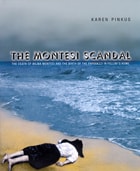
The Montesi Scandal
The Death of Wilma Montesi and the Birth of the Paparazzi in Fellini's RomeKaren Pinkus
University of Chicago Press, 2003
How this news item of everyday life exploded into one of the greatest scandals of a modern democracy is the story Karen Pinkus tells in The Montesi Scandal. Wilma's death brought to the surface every simmering element of Italian culture: bitter aspiring actresses, corrupt politicians, nervous Jesuits in sunglasses, jaded princes. Italians of all types lined up to testify-in court or to journalists of varying legitimacy-about the death of the middle-class carpenter's daughter, in the process creating a media frenzy and the modern culture of celebrity. Witnesses sold their stories to the tabloids, only to retract them. They posed for pictures, pretending to shun the spotlight. And they in turn became celebrities in their own right.
Pinkus takes us through the alleys and entryways of Rome in the 1950s, linking Wilma's death to the beginnings of the dolce vita, now synonymous with modern Roman life. Pinkus follows the first paparazzi on their scooters as they shoot the protagonists and gives us an insider's view of the stories and trials that came to surround this lonely figure that washed up on the shores of Ostia. Full of the magnificent paparazzi photos of the protagonists in the drama and film stills from the era's landmark movies, The Montesi Scandal joins true crime with "high" culture in an original form, one true to both the period and the cinematic conception of life it created. More than a meditation of the intricate ties among movies, paparazzo photography, and Italian culture, The Montesi Scandal narrates Wilma's story and its characters as the notes for an unrealized film, but one that, as the reader discovers, seems impossible to produce.

The Moon in Foil
Zuska Kepplová
Seagull Books, 2023
The Moon in Foil traces the stories of Petra, Natália, Anka, Mika, Juliana, and Jackie as they go out into the world in search of a better life—or maybe just a different one. In post-communist Europe, they have the freedom to study and work in places their parents couldn’t even have visited—Paris, London, Helsinki, and Budapest. But the reality of that “freedom,” they soon discover, is often nothing more than tedious work and poor living conditions. From close looks at the work of a housekeeper at a French hotel, a bartender at an Irish pub, a snowboarding instructor in Slovakia in the winter and an office worker in London in the summer, and a programmer in Helsinki, to explorations of larger topics such as marriage, divorce, and relationships, Zuska Kepplová’s novel is a millennials’ odyssey—a search for the self by the post–Cold War generation.