Results by title
1917 books match the query 'Law' and 526 start with t
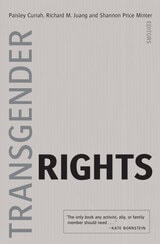
Transgender Rights
Paisley Currah
University of Minnesota Press, 2006
Over the past three decades, the transgender movement has gained visibility and achieved significant victories. Discrimination has been prohibited in several states, dozens of municipalities, and more than two hundred private companies, while hate crime laws in eight states have been amended to include gender identity. Yet prejudice and violence against transgender people remain all too common.
With analysis from legal and policy experts, activists and advocates, Transgender Rights assesses the movement’s achievements, challenges, and opportunities for future action. Examining crucial topics like family law, employment policies, public health, economics, and grassroots organizing, this groundbreaking book is an indispensable resource in the fight for the freedom and equality of those who cross gender boundaries. Moving beyond media representations to grapple with the real lives and issues of transgender people, Transgender Rights will launch a new moment for human rights activism in America.
Contributors: Kylar W. Broadus, Judith Butler, Mauro Cabral, Dallas Denny, Taylor Flynn, Phyllis Randolph Frye, Julie A. Greenberg, Morgan Holmes, Bennett H. Klein, Jennifer L. Levi, Ruthann Robson, Nohemy Solórzano-Thompson, Dean Spade, Kendall Thomas, Paula Viturro, Willy Wilkinson.
Paisley Currah is associate professor of political science at Brooklyn College, executive director of the Center for Lesbian and Gay Studies at the CUNY Graduate Center, and a founding board member of the Transgender Law and Policy Institute.
Richard M. Juang cochairs the advisory board of the National Center for Transgender Equality (NCTE) in Washington, DC. He has taught at Oberlin College and Susquehanna University. He is the lead editor of NCTE's Responding to Hate Crimes: A Community Resource Manual and coeditor of Transgender Justice, which explores models of activism.
Shannon Price Minter is legal director of the National Center for Lesbian Rights and a founding board member of the Transgender Law and Policy Institute.
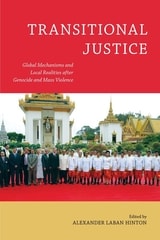
Transitional Justice
Global Mechanisms and Local Realities after Genocide and Mass ViolenceHinton, Alexander Laban
Rutgers University Press, 2011
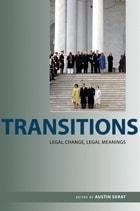
Transitions
Legal Change, Legal MeaningsAustin Sarat
University of Alabama Press, 2012
Transitions: Legal Change, Legal Meanings illustrates the various intersections, crises, and shifts that continually occur within the law, and how these moments of change interact with and comment on contemporary society.
Akhil Reed Amar / William L. Andreen /
Jack M. Beermann / Heather Elliott / Joshua
Alexander Geltzer / David Gray / Paul
Horwitz / Daniel H. Joyner / Nina
Mendelson / Meredith Render / Austin
Sarat / Ruti Teitel / Lindsey Ohlsson Worth
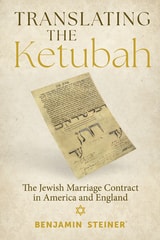
Translating the Ketubah
The Jewish Marriage Contract in America and EnglandBenjamin Steiner
University of Alabama Press, 2025
A groundbreaking exploration of the Jewish marriage contract and its evolution in English translation
Translating the Ketubah offers a fresh perspective on the ketubah, the Jewish marriage contract. Traditionally composed in Aramaic, ketubot have been examined in other books within the frameworks of Jewish law and Jewish art. Here, however, Benjamin Steiner shows how translations of the ketubah into English helped Jews adapt to changing social and economic circumstances across more than two centuries.
Steiner uses ketubot to trace the intricate relationship between religious law and secular law, the changing status of women within and outside Judaism, and the complex desire of Jews to be both authentically Jewish and fully acculturated. Steiner further shows how ketubah translation aided Jews to achieve different cultural goals. It has been used to uphold rabbinic law in communities where religious affiliation was voluntary to ensure women's economic security. It has also facilitated socialization with non-Jews and addressed perceived crises within the Jewish family.
Through a nuanced analysis of ketubah translations from England and various regions of the United States from the late eighteenth century to the present, Steiner offers a detailed look at how Jews have adapted ancient tradition to meet the challenges and opportunities of different historical contexts. His work sheds new light on the rich history of American and British Jewry.
Trapped in a Vice
The Consequences of Confinement for Young PeopleCox, Alexandra
Rutgers University Press, 2018
Trapped in a Vice explores the consequences of a juvenile justice system that is aimed at promoting change in the lives of young people, yet ultimately relies upon tools and strategies that enmesh them in a system that they struggle to move beyond. The system, rather than the crimes themselves, is the vice. Trapped in a Vice explores the lives of the young people and adults in the criminal justice system, revealing the ways that they struggle to manage the expectations of that system; these stories from the ground level of the justice system demonstrate the complex exchange of policy and practice.
Traveling the Beaten Trail
Charles Tait's Charges to Federal Grand Juries, 1822–1825Paul M. Pruitt Jr., David I. Durham, and Sally E. Hadden
University of Alabama Press, 2013
About Occasional Publications of the Bounds Law Library
This collection offers a series of edited documents that contribute to an understanding of the development of legal history, culture, or doctrine. Series editors Paul M. Pruitt Jr. and David I. Durham have selected a variety of materials—a lecture, diaries, letters, speeches, a ledger, commonplace books, a code of ethics, court reports—to illustrate unique examples of legal life and thought.
Treasured Possessions
Indigenous Interventions into Cultural and Intellectual PropertyHaidy Geismar
Duke University Press, 2013
Treatise on Law
The Complete TextThomas Aquinas
St. Augustine's Press, 2009
St. Thomas’s account of law is firmly embedded within a general moral theory that begins with a rich conception of human flourishing, i.e., the good for human beings (Questions 1–5). This good consists, first and foremost, in our ultimate and intimate union with the Persons of the Blessed Trinity – a union that in our present state we can grasp intellectively and pursue affectively only with God’s supernatural assistance. It is within this framework that we order our loves and pursue the more proximate goals they open up to us as human beings in this life. Given the appropriate goals, the next question is how we can get from where we are, in the grips of the consequences of Original Sin, to where we want to be. The answer is: by means of (a) human actions that are good, i.e., rightly ordered toward our ultimate end and (b) the habits that these actions either engender or flow from. In analyzing human actions (Questions 6–21) and their relation to the passions (Questions 22–48), St. Thomas gives a general account of what he calls the ‘intrinsic principles’ of human actions and their associated habits – both virtues (Questions 49–70) and vices (Questions 71–89). It is only then that he turns to what he calls the ‘extrinsic principles’ of good human actions, viz., law (Questions 90–108) and grace (Questions 109–114).
According to St. Thomas, law, far from supplanting virtue as a basic principle of action, serves as an independent principle of action that complements virtue and is itself capable of being factored into practical deliberation. The reason is that all of God’s
precepts, prohibitions, and punishments are aimed at promoting the good of the whole universe and, more particularly, the good for human beings, both individually and within the various forms of social life. Because of this, law serves as both a restraint on bad actions and a spur to good action, i.e., a restraint on actions that take us away from virtue and genuine human flourishing and a spur to actions that promote virtue and flourishing.
There are many benefits of having the whole treatise rather than just the first few questions, as has been the standard practice in previous editions of the Treatise on Law. To mention just a few of these benefits, the question on the moral precepts of the Old Law (question 100) helps to illuminate in many different ways the earlier questions on natural law and human law (questions 94–97). Again, the questions on the ceremonial and judicial precepts of the Old Law (questions 101–105) demon-strate in depth the symbiotic relationship that St. Thomas takes to obtain between the Old Testament and the New Testament. The questions on the New Law provide an introduction to the Christian way of life that will be described in incomparable detail in the Second Part of the Second Part, the bulk of which is structured around the treatment of the three theological virtues and the four cardinal virtues.

Trespassing
An Inquiry into the Private Ownership of LandJohn Hanson Mitchell
University Press of New England, 2015
Trial Courts as Organizations
Brian J Ostrom, Charles W Ostrom, Jr., Roger A Hanson and Matthew Kleiman
Temple University Press, 2007
Court administrators and judges have long acknowledged that culture plays an important role in the function of trial courts. Trial Courts as Organizations provides a comprehensive framework for understanding this organizational culture, along with a set of steps and tools to assess and measure the current and preferred culture.
The authors examine how courts operate, what characteristics they may display, and how they function as a unit to preserve judicial independence, strengthen organizational leadership, and influence court performance. They identify four different types of institutional cultures using a systematic analysis of alternative values on how work is done. Each culture is shown to have its own strengths and weaknesses in achieving values, such as timely case resolution, access to court services, and procedural justice. Accordingly, the authors find judges and administrators prefer a definite pattern of different cultures, called a "mosaic," to guide how their courts operate in the future.
Trial Films on Trial
Law, Justice, and Popular CultureEdited by Austin Sarat, Jessica Silbey, and Martha Merrill Umphrey
University of Alabama Press, 2019
Historically, the emergence of the trial film genre coincided with the development of motion pictures. In fact, one of the very first feature-length films, Falsely Accused!, released in 1908, was a courtroom drama. Since then, this niche genre has produced such critically acclaimed films as Twelve Angry Men, To Kill a Mockingbird, and Anatomy of a Murder. The popularity and success of these films can be attributed to the fundamental similarities of filmic narratives and trial proceedings. Both seek to construct a “reality” through storytelling and representation and in so doing persuade the audience or jury to believe what they see.
Trial Films on Trial: Law, Justice, and Popular Culture is the first book to focus exclusively on the special significance of trial films for both film and legal studies. The contributors to this volume offer a contemporary approach to the trial film genre. Despite the fact that the medium of film is one of the most pervasive means by which many citizens receive come to know the justice system, these trial films are rarely analyzed and critiqued. The chapters cover a variety of topics, such as how and why film audiences adopt the role of the jury, the narrative and visual conventions employed by directors, and the ways mid-to-late-twentieth-century trial films offered insights into the events of that period.
Trial by Treatment
Punishing Illness in an Age of Criminal Legal ReformMary Ellen Stitt
University of Chicago Press, 2025
A troubling account of the unexpected impacts of treatment-based alternatives to criminal punishment.
Every year, courts send hundreds of thousands of people to treatment-based programs as alternatives to traditional punishment. These alternatives—known as ‘diversion programs’—are widely celebrated as reforms that reduce the punishment of the mentally ill. But in Trial by Treatment, Mary Ellen Stitt shows that they have, in fact, expanded the reach of the criminal legal system and its power over the lives of the most vulnerable.
The inner workings of diversion programs are obscure, partially by design, and data on outcomes is hard to come by. Stitt draws on two years of fieldwork in criminal courtrooms and court-mandated treatment sessions, as well as an original national dataset, in-depth interviews, and experimental survey data, to document the hidden impacts of diversion. She shows that placing mental healthcare under the control of the courts has helped to legitimize the criminalization of illness, warped treatment environments, and amplified inequalities in punishment. In vivid and humanizing detail, Trial by Treatment shows how reforms that keep power and discretion in the same hands can entrench the very problems they promised to solve.
Trial by Treatment
Punishing Illness in an Age of Criminal Legal ReformMary Ellen Stitt
University of Chicago Press, 2025
This is an auto-narrated audiobook version of this book.
A troubling account of the unexpected impacts of treatment-based alternatives to criminal punishment.
Every year, courts send hundreds of thousands of people to treatment-based programs as alternatives to traditional punishment. These alternatives—known as ‘diversion programs’—are widely celebrated as reforms that reduce the punishment of the mentally ill. But in Trial by Treatment, Mary Ellen Stitt shows that they have, in fact, expanded the reach of the criminal legal system and its power over the lives of the most vulnerable.
The inner workings of diversion programs are obscure, partially by design, and data on outcomes is hard to come by. Stitt draws on two years of fieldwork in criminal courtrooms and court-mandated treatment sessions, as well as an original national dataset, in-depth interviews, and experimental survey data, to document the hidden impacts of diversion. She shows that placing mental healthcare under the control of the courts has helped to legitimize the criminalization of illness, warped treatment environments, and amplified inequalities in punishment. In vivid and humanizing detail, Trial by Treatment shows how reforms that keep power and discretion in the same hands can entrench the very problems they promised to solve.
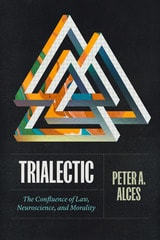
Trialectic
The Confluence of Law, Neuroscience, and MoralityPeter A. Alces
University of Chicago Press, 2023
A thought-provoking examination of how insights from neuroscience challenge deeply held assumptions about morality and law.
As emerging neuroscientific insights change our understanding of what it means to be human, the law must grapple with monumental questions, both metaphysical and practical. Recent advances pose significant philosophical challenges: how do neuroscientific revelations redefine our conception of morality, and how should the law adjust accordingly?
Trialectic takes account of those advances, arguing that they will challenge normative theory most profoundly. If all sentient beings are the coincidence of mechanical forces, as science suggests, then it follows that the time has come to reevaluate laws grounded in theories dependent on the immaterial that distinguish the mental and emotional from the physical. Legal expert Peter A. Alces contends that such theories are misguided—so misguided that they undermine law and, ultimately, human thriving.
Building on the foundation outlined in his previous work, The Moral Conflict of Law and Neuroscience, Alces further investigates the implications for legal doctrine and practice.
Tribal Administration Handbook
A Guide for Native Nations in the United StatesRebecca M. Webster
Michigan State University Press, 2022
Troubling Confessions
Speaking Guilt in Law and LiteraturePeter Brooks
University of Chicago Press, 2000
In Troubling Confessions, Peter Brooks juxtaposes cases from law and literature to explore the kinds of truth we associate with confessions, and why we both rely on them and regard them with suspicion. For centuries the law has considered confession to be "the queen of proofs," yet it has also seen a need to regulate confessions and the circumstances under which they are made, as evidenced in the continuing debate over the Miranda decision. Western culture has made confessional speech a prime measure of authenticity, seeing it as an expression of selfhood that bears witness to personal truth. Yet the urge to confess may be motivated by inextricable layers of shame, guilt, self-loathing, the desire to propitiate figures of authority. Literature has often understood the problematic nature of confession better than the law, as Brooks demonstrates in perceptive readings of legal cases set against works by Rousseau, Dostoevsky, Joyce, and Camus, among others.
Mitya in The Brothers Karamazov captures the trouble with confessional speech eloquently when he offers his confession with the anguished plea: this is a confession; handle with care. By questioning the truths of confession, Peter Brooks challenges us to reconsider how we demand confessions and what we do with them.
True Stories of False Confessions
Rob Warden
Northwestern University Press, 2009
Editors Rob Warden and Steven Drizin—leaders in the field of wrongful convictions—have gathered articles about some of the most critical accounts of false confessions in the U.S. justice system from more than forty authors, including Sydney H. Schanberg, Christine Ellen Young, Alex Kotlowitz, and John Grisham. Many of the pieces originally appeared in leading magazines and newspapers, including the New York Times, The Nation, the New Yorker, and the Los Angeles Times.
By grouping the cases into categories—including brainwashing, fabrication, mental fragility, police force, and unrequited innocence—the editors demonstrate similarities between cases, thereby refuting the perception that false confessions represent individual tragedies rather than a systemic flaw in the justice system. These incidents are not isolated; they are, in fact, related, and more shocking for it. But the authors of the articles excerpted, adapted, and reprinted in this collection want more for their subjects than outrage; they want to fuel change in the practices and standards that illicit false confessions in the first place. To this end, Warden and Drizin include an illuminating introduction to each category and recommendations for policy changes that would reduce false confessions. They also include a postscript for each case, providing legal updates and additional information.

Truman and the Steel Seizure Case
The Limits of Presidential PowerMaeva Marcus
Duke University Press, 1994
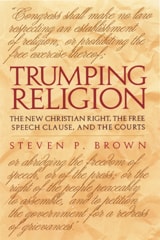
Trumping Religion
The New Christian Right, the Free Speech Clause, and the CourtsSteven P. Brown
University of Alabama Press, 2004
The first scholarly treatment of the strategies employed by the New Christian Right in redefining religious freedom in the courtroom.
Trumping Religion provides a detailed analysis of the five major public-interest law firms that have litigated religion cases in the federal courts between 1980 and 2000. Allied with several highly vocal, evangelical ministries, such as those of Jerry Falwell and Pat Robinson, these legal organizations argue that religious expression is a form of protected speech and thereby gain a greater latitude of interpretation in the courts. The long-term agenda of the New Christian Right as illuminated by this study is to shape church-state jurisprudence in a way that permits free course for the Christian gospel.
Steven P. Brown presents his research and conclusions from a balanced viewpoint. In filling a distinct void in the literature, this book will be of considerable interest to political scientists, legal scholars, law schools and seminaries, and anyone concerned with the intersection of religion and judicial politics.
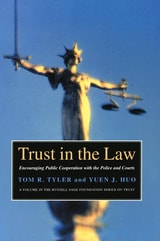
Trust in the Law
Encouraging Public Cooperation with the Police and CourtsTom R. Tyler
Russell Sage Foundation, 2002
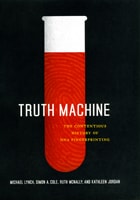
Truth Machine
The Contentious History of DNA FingerprintingMichael Lynch, Simon A. Cole, Ruth McNally, and Kathleen Jordan
University of Chicago Press, 2008
DNA profiling—commonly known as DNA fingerprinting—is often heralded as unassailable criminal evidence, a veritable “truth machine” that can overturn convictions based on eyewitness testimony, confessions, and other forms of forensic evidence. But DNA evidence is far from infallible. Truth Machine traces the controversial history of DNA fingerprinting by looking at court cases in the United States and United Kingdom beginning in the mid-1980s, when the practice was invented, and continuing until the present. Ultimately, Truth Machine presents compelling evidence of the obstacles and opportunities at the intersection of science, technology, sociology, and law.
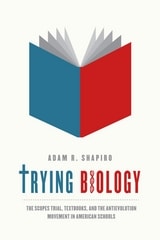
Trying Biology
The Scopes Trial, Textbooks, and the Antievolution Movement in American SchoolsAdam R. Shapiro
University of Chicago Press, 2013
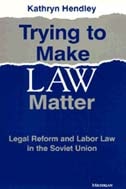
Trying to Make Law Matter
Legal Reform and Labor Law in the Soviet UnionKathryn Hendley
University of Michigan Press, 1996
Trying to Make Law Matter provides unique insight into the possibility of creating the rule of law. It is based on Kathryn Hendley's pathbreaking field research into the actual practices of Russian trial courts, lawyers, factory managers, and labor unions, contrasting the idealistic legal pronouncements of workers' rights during the Gorbachev era with tawdry reality of inadequate courts and dispirited workers.
Hendley frames her study of Russian law in action with a lively theoretical analysis of the fundamental prerequisites of the rule of law not only as a set of ideals but as a legal system that rests on the participation of rights-bearing citizens. This work will appeal to law, political science, and sociology scholars as well as area specialists and those who study transitions to market democracy.
Kathryn Hendley is Professor, Law and Political Science, University of Wisconsin, Madison.
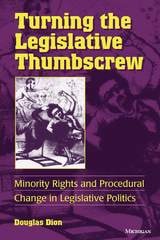
Turning the Legislative Thumbscrew
Minority Rights and Procedural Change in Legislative PoliticsDouglas Dion
University of Michigan Press, 2001
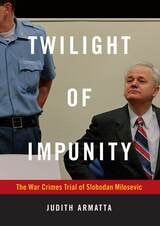
Twilight of Impunity
The War Crimes Trial of Slobodan MilosevicJudith Armatta
Duke University Press, 2010

Twilight of the American State
Pierre Schlag
University of Michigan Press, 2023
Finalist: 2024 Order of the Coif Book Award | March 3, 2025
The sudden emergence of the Trump nation surprised nearly everyone, including journalists, pundits, political consultants, and academics. When Trump won in 2016, his ascendancy was widely viewed as a fluke. Yet time showed it was instead the rise of a movement—angry, militant, revanchist, and unabashedly authoritarian.
How did this happen? Twilight of the American State offers a sweeping exploration of how law and legal institutions helped prepare the grounds for this rebellious movement. The controversial argument is that, viewed as a legal matter, the American state is not just a liberal democracy, as most Americans believe. Rather, the American state is composed of an uneasy and unstable combination of different versions of the state—liberal democratic, administered, neoliberal, and dissociative. Each of these versions arose through its own law and legal institutions. Each emerged at different times historically. Each was prompted by deficits in the prior versions. Each has survived displacement by succeeding versions. All remain active in the contemporary moment—creating the political-legal dysfunction America confronts today.
Pierre Schlag maps out a big picture view of the tribulations of the American state. The book abjures conventional academic frameworks, sets aside prescriptions for quick fixes, dispenses with lamentations about polarization, and bypasses historical celebrations of the American Spirit.