Results by title
8812 books match the query 'Political Science' and 1911 start with t
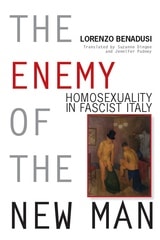
The Enemy of the New Man
Homosexuality in Fascist ItalyLorenzo Benadusi
University of Wisconsin Press, 2012
In this first in-depth historical study of homosexuality in Fascist Italy, Lorenzo Benadusi brings to light immensely important archival documents regarding the sexual politics of the Italian Fascist regime; he adds new insights to the study of the complex relationships of masculinity, sexuality, and Fascism; he explores the connections between new Fascist values and preexisting Italian traditional and Roman Catholic views on morality; he documents both the Fascist regime’s denial of the existence of homosexuality in Italy and its clandestine strategies and motivations for repressing and imprisoning homosexuals; he uncovers the ways that accusations of homosexuality (whether true or false) were used against political and personal enemies; and above all, he shows how homosexuality was deemed the enemy of the Fascist “New Man,” an ideal of a virile warrior and dominating husband vigorously devoted to the “political” function of producing children for the Fascist state.
Benadusi investigates the regulation and regimentation of gender in Fascist Italy, and the extent to which, in uneasy concert with the Catholic Church, the regime engaged in the cultural and legal engineering of masculinity and femininity. He cites a wealth of unpublished documents, official speeches, letters, coerced confessions, private letters and diaries, legal documents, and government memos to reveal and analyze how the orders issued by the regime attempted to protect the “integrity of the Italian race.” For the first time, documents from the Vatican archives illuminate how the Catholic Church dealt with issues related to homosexuality during the Fascist period in Italy.
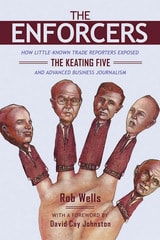
The Enforcers
How Little-Known Trade Reporters Exposed the Keating Five and Advanced Business JournalismRob Wells with a foreword by David Cay Johnston
University of Illinois Press, 2019
The Environmental Politics and Policy of Western Public Lands
Erika Allen Wolters
Oregon State University Press, 2020
While a number of scholars work on the politics and policy of public land management, there has been no central book on the topic since the publication of Charles Davis's Western Public Lands and Environmental Politics (Westview, 2001). In The Environmental Politics and Policy of Western Public Lands, Erika Allen Wolters and Brent Steel have assembled a stellar cast of scholars to consider long-standing issues and topics such as endangered species, land use, and water management while addressing more recent challenges to western public lands like renewable energy siting, fracking, Native American sovereignty, and land use rebellions. Chapters also address the impact of climate change on policy dimensions and scope.
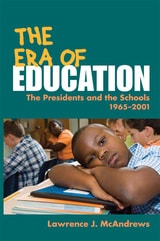
The Era of Education
The Presidents and the Schools, 1965-2001Lawrence J. McAndrews
University of Illinois Press, 2005
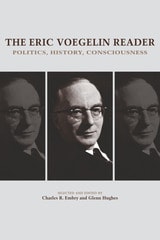
The Eric Voegelin Reader
Politics, History, ConsciousnessCharles R. Embry
University of Missouri Press, 2023
Drawing from the University of Missouri Press’s thirty-four-volume edition of The Collected Works of Eric Voegelin (1990-2009), Charles Embry and Glenn Hughes have assembled a selection of representative works of Voegelin, satisfying a longstanding need for a single volume that can serve as a general introduction to Voegelin’s philosophy. The collection includes writings that demonstrate the range and creativity of Voegelin’s thought as it developed from 1956 until his death in 1985 in his search for the history of order in human society.
The Reader begins with excerpts from Autobiographical Reflections (1973), which include an orienting mixture of biographical information, philosophical motivations, and the scope of Voegelin’s project. It reflects key periods of Voegelin’s philosophical development, pivoting on his flight from the Gestapo.
The next section focuses on Voegelin’s understanding of the contemporary need to re-ground political science in a non-positivistic, post-Weberian outlook and method. It begins with Voegelin’s historical survey of science and scientism, followed by his explanation of what political science now requires in his introduction to The New Science of Politics. Also included are two essays that exemplify the practice of this “new science.” Voegelin started his academic career as a political scientist, and these early essays indicate his wide philosophical vision.
Voegelin recognized that a fully responsible “new science of politics” would require the development of a philosophy of history. This led to the writing of his magnum opus, the five-volume Order and History (1956–1985). This section of the Reader includes his introductions to volumes 1, 2 and 4 and his most essential accounts of the theoretical requirements and historical scope of a philosophy of history adequate to present-day scholarship and historical discoveries.
In the course of his career, Voegelin came to understand that political science, political philosophy, and philosophy of history must have as their theoretical nucleus a sound philosophical anthropology based on an accurate philosophy of human consciousness. The next set of writings consists of one late lecture and four late essays that exemplify how Voegelin recovers the wisdom of classical philosophy and the Western religious tradition while criticizing modern misrepresentations of consciousness. The result is Voegelin’s contemporary accounts of the nature of reason, the challenge of truly rational discussion, and the search for divine origins and the life of the human spirit.
During his philosophical journey, Voegelin addressed the historical situatedness of human existence, explicating the historicity of human consciousness in a manner that gave full due to the challenges of acknowledging both human immersion in the story of history and the ability of consciousness to arrive at philosophically valid truths about existence that are transhistorical. The essays in this final section present the culmination of his philosophical meditation on history, consciousness, and reality.
The Essence of Politics
Cees van der Eijk
Amsterdam University Press, 2018
This book is about the 'essence' of politics, which is introduced by way of key questions and concepts that are indispensable for understanding politics in many different settings.
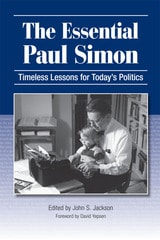
The Essential Paul Simon
Timeless Lessons for Today's PoliticsEdited by John S. Jackson. Foreword by David Yepsen
Southern Illinois University Press, 2012
While Simon covered a broad spectrum of topics in his written works, his mission throughout the years remained the same: to urge his constituents to study and understand issues that affected their daily lives and to make the complexities of politics accessible to the average citizen. An indispensable volume for voters and politicians alike, The Essential Paul Simon compiles some of the most thought-provoking writings from one of the keenest political minds in our nation’s history. Years after their publication, Simon’s eloquent and energetic conversations continue to provide witty, informative guidance through the maze of American politics and inspire the development of spirited public discussion and debate.
Certificate of Excellence from the Illinois State Historical Society, 2013

The Essential Senghor
African Philosophy and Black AestheticsLéopold Sédar Senghor. Edited and Translated by Doyle D. Calhoun, Alioune B. Fall, and Cheikh Thiam.
Duke University Press, 2026
The Ethics of Care
A Feminist Approach to Human SecurityFiona Robinson
Temple University Press, 2011
In The Ethics of Care, Fiona Robinson demonstrates how the responsibilities of sustaining life are central to the struggle for basic human security. She takes a unique approach, using a feminist lens to challenge gender biases in rights-based, individualist approaches.Robinson's thorough and impassioned consideration of care in both ethical and practical terms provides a starting point for understanding and addressing the material, emotional and psychological conditions that create insecurity for people. The Ethics of Careexamines “care ethics” and “security” at the theoretical level and explores the practical implications of care relations for security in a variety of contexts: women's labor in the global economy, humanitarian intervention and peace building, healthcare, and childcare.
Theoretically-innovative and policy-relevant, this critical analysis demonstrates the need to understand the obstacles and inequalities that obstruct the equitable and adequate delivery of care around the world.
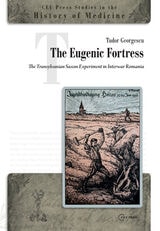
The Eugenic Fortress
The Transylvanian Saxon Experiment in Interwar RomaniaTudor Georgescu
Central European University Press, 2016
The European Identity
Historical and Cultural Realities We Cannot DenyStephen Green
Haus Publishing, 2015
Green points out that Europeans can readily define the differences that separate them from others around the globe, but they have yet to clearly define their own similarities across member states. He argues that Europe has something distinctive and vitally important to offer: the experience of a unique journey through centuries of exploration and conflict, errors and lessons, soul-searching and rebuilding—an evolution of universal significance.
Coming at a time when the divisions in European culture have been laid bare by recent financial crises and calls for independence, The European Identity identifies one of the biggest challenges for all of the member states of the European Union.
The European Radical Left
Movements and Parties since the 1960sGiorgos Charalambous
Pluto Press, 2021
Is today’s left really new? How has the European radical left evolved?
Giorgos Charalambous answers these questions by looking at three moments of rapid political change - the late 1960s to late 1970s; the turn of the millennium; and post-2008. He challenges the conventional understanding of a ‘new left’, drawing out continuities with earlier movements and parties.
Charalambous examines the ‘Long ‘68’, symbolised by the May uprisings in France, which saw the rise of new left forces and the widespread criticism by younger radical activists of traditional communist and socialist parties. He puts this side by side with the turn of the millennium when the Global Justice Movement rose to prominence and changed the face of the international left, and also the period after the financial crash of 2008 and the rise of anti-austerity politics which initiated the most recent wave of new left parties such as Podemos in Spain and Syriza in Greece.
With a unique ‘two-level’ perspective, Charalambous approaches the left through both social movements and party politics, looking at identities, rhetoric and organization, and bringing a fresh new approach to radical history, as well as assessing challenges for both activists and scholars.
The European Union and the Rise of Regionalist Parties
Seth K. Jolly
University of Michigan Press, 2015

The European Union
A Critical GuideSteven P. McGiffen
Pluto Press, 2006
This revised and updated edition offers a well-illustrated analysis of each of the EU¹s major policy areas, and covers arguments both for and against the EU. McGiffen explores subjects including enlargement, internal and external security, the Euro, trade, the environment, employment, transport and regional policy. He explains how and why the debate about membership is frequently and falsely presented as if it were a conflict between 'nationalism' and Œinternationalism', and argues instead that the EU is merely one of a number of possible solutions to the the economic and political problems facing Europe.
Published in association with Spectre.
Steve McGiffen is a writer, author and consultant. Until recently he worked for the United Left Group in the European Parliament and the Socialist Party of the Netherlands. He is editor of Spectre, a radical left website which can be read at www.spectrezine.org, His previous books include Biotechnology (Pluto Press, 2005).
The European Union
From Jean Monnet to the EuroDean Kotlowski
Ohio University Press, 2000
This collection of essays, drawn from the lectures of the 1999 Baker Conference at Ohio University, explores Monnet's vision of an integrated Europe, its gradual implementation, and the social, economic, and international consequences. The scholarship focuses upon Monnet's life, personality, and legacy, the development of social policy within the European Union (EU), the economic and national security implications of the EU, and the continuation of an American presence in Europe through the North Atlantic Treaty Organization.
This significant collection fuses biography with comparative political economy and policy studies to help political scientists, sociologists, economists, international lawyers, and historians on both sides of the Atlantic understand important aspects of Europe's post–1945 development.
The Evangelical Crackup?
The Future of the Evangelical-Republican CoalitionEdited by Paul Djupe and Ryan L. Claassen
Temple University Press, 2019
Why did Donald Trump attract a record number of white evangelical voters without unified support—and despite nontrivial antipathy from evangelical leaders? The editors and leading scholars that contribute to the timely volume The Evangelical Crackup? answer this question and provide a comprehensive assessment of the status of evangelicals and the Christian Right in the Republican coalition.
The expected “crackup” with the Republican Party never happened. Each chapter in this cogent volume includes analyses of the 2016 election to explain why—and why that is critical. Chapters examine policy priorities, legal advocacy, and evangelical loyalty to the Republican Party; rhetoric, social networks, and evangelical elite influence; and the political implications of movements within evangelicalism, such as young evangelicals, Hispanics, and the Emergent Church movement.
Contributors include: Daniel Bennett, Mark Brockway, Ryan P. Burge, Brian R. Calfano, Jeremy Castle, Kimberly Conger, Daniel A. Cox, Kevin den Dulk, Sarah Allen Gershon, Tobin Grant, Robert P. Jones, Geoffrey Layman, Andrew R. Lewis, Ronald J. McGauvran, Joshua Mitchell, Juhem Navarro-Rivera, Jacob R. Neiheisel, Elizabeth Oldmixon, Adrian D. Pantoja, David Searcy, Anand Edward Sokhey, J. Benjamin Taylor, Robert Wuthnow, and the editors.
The Evolution of Agrarian Institutions
A Comparative Study of Post-Socialist Hungary and BulgariaMieke Meurs
University of Michigan Press, 2001
The Evolution of American Legislatures
Colonies, Territories, and States, 1619-2009Peverill Squire
University of Michigan Press, 2014
The institutional development of American legislatures, beginning with the first colonial assembly of 1619, has been marked by continuity as well as change. Peverill Squire draws upon a wealth of primary sources to document this institutional history. Beginning with the ways in which colonial assemblies followed the precedents of British institutions, Squire traces the fundamental ways they evolved to become distinct. He next charts the formation of the first state legislatures and the Constitutional Congress, describes the creation of territorial and new state legislatures, and examines the institutionalization of state legislatures in the nineteenth century and their professionalization since 1900.
With his conclusion, Squire discusses the historical trajectory of American legislatures and suggests how they might further develop over the coming decades. While Squire's approach will appeal to historians, his focus on the evolution of rules, procedures, and standing committee systems, as well as member salaries, legislative sessions, staff, and facilities, will be valuable to political scientists and legislative scholars.

The Evolution of Political Knowledge
THEORY AND INQUIRY IN AMERICAN POLITICSEdited by Edward D. Mansfield and Richard Sisson
The Ohio State University Press, 2003
The Evolution of Retirement
An American Economic History, 1880-1990Dora L. Costa
University of Chicago Press, 1998
The Exhaustion of Difference
The Politics of Latin American Cultural StudiesAlberto Moreiras
Duke University Press, 2001
What, asks Moreiras, is the function of critical reason in the present moment? What is regionalistic knowledge in the face of globalization? Can regionalistic knowledge be an effective tool for a critique of contemporary reason? What is the specificity of Latin Americanist reflection and how is it situated to deal with these questions? Through examinations of critical regionalism, restitutional excess, the historical genealogy of Latin American subalternism, testimonio literature, and the cultural politics of magical realism, Moreiras argues that while cultural studies is increasingly institutionalized and in danger of reproducing the dominant ideologies of late capitalism, it is also ripe for giving way to projects of theoretical reformulation. Ultimately, he claims, critical reason must abandon its allegiance to aesthetic-historicist projects and the destructive binaries upon which all cultural theories of modernity have been constructed.
The Exhaustion of Difference makes a significant contribution to the rethinking of Latin American cultural studies.
The FBI and the Catholic Church, 1935-1962
Steve Rosswurm
University of Massachusetts Press, 2009
Steve Rosswurm explores the history of that relationship from the turbulent 1930s to the 1960s, when growing Catholic opposition to the Vietnam War led Hoover to distance himself from the Church. Drawing on a vast range of sources, including thousands of pages of previously classified FBI files, Rosswurm pursues his investigation along two parallel tracks. First, he looks at the joint war waged by Hoover and the Catholic hierarchy against forces considered threats to their organizations, values, and nation. Second, he examines how each pursued its own institutional interests with the help of the other.
While opposition to communism was a preoccupation of both institutions, it was not the only passion they shared, according to Rosswurm. Even more important, perhaps, was their fervent commitment to upholding traditional gender roles, particularly the prerogatives of patriarchal authority. When women and men carried out their assigned obligations, they believed, society ran smoothly; when they did not, chaos ensued.
Organized topically, The FBI and the Catholic Church, 1935–1962 looks not only at the shared values and interests of the two institutions, but also at the personal relationships between Hoover and his agents and some of the most influential Catholic prelates of the time. Rosswurm discusses the role played by Edward A. Tamm, the FBI's highest-ranking Catholic, in forging the alliance; the story behind Father John Cronin's 1945 report on the dangers of communism; the spying conducted by Father Edward Conway S.J. on behalf of the FBI while treasurer of the National Committee for Atomic Information; and Monsignor Charles Owen Rice's FBI-aided battle against communists within the CIO.
The Face of Peace
Government Pedagogy amid Disinformation in ColombiaGwen Burnyeat
University of Chicago Press, 2022
Colombia’s 2016 peace agreement with the FARC guerrillas sought to end fifty years of war and won President Juan Manuel Santos the Nobel Peace Prize. Yet Colombian society rejected it in a polarizing referendum, amid an emotive disinformation campaign. Gwen Burnyeat joined the Office of the High Commissioner for Peace, the government institution responsible for peace negotiations, to observe and participate in an innovative “peace pedagogy” strategy to explain the agreement to Colombian society. Burnyeat’s multi-scale ethnography reveals the challenges government officials experienced communicating with skeptical audiences and translating the peace process for public opinion. She argues that the fatal flaw in the peace process lay in government-society relations, enmeshed in culturally liberal logics and shaped by the politics of international donors. The Face of Peace offers the Colombian case as a mirror to the global crisis of liberalism, shattering the fantasy of rationality that haunts liberal responses to “post-truth” politics.
The Faces of Authoritarianism and Strategies of Dissent in Contemporary Brazil
Edited by Andreza de Souza Santos and Katerina Hatzikidi
University College London, 2025
Faces of Authoritarianism and Strategies of Dissent in Contemporary Brazil dissects the Bolsonaro era as a critical moment in Brazil’s long history of democratic struggle, outlining how authoritarianism took shape and how it was challenged. Rather than viewing Bolsonaro’s presidency as an anomaly, this volume situates it within broader historical and political continuities and highlights the ways state and non-state actors alike engaged in battles over democracy’s meaning.
Interlacing interdisciplinary perspectives, the book explores key arenas of contestation, from institutions under siege to grassroots resistance, providing theoretical depth and rich ethnographic accounts. With a focus on repression and resistance and the shifting boundaries of democratic governance, Faces of Authoritarianism displays a crucial framework for understanding Brazil’s political landscape and its global implications. Required reading for scholars of authoritarianism, democracy, and Latin American politics, this book offers a nuanced view of how democratic backsliding is met with acts of defiance and negotiation.
The Failure of Capitalist Production
Underlying Causes of the Great RecessionAndrew Kliman
Pluto Press, 2011
The recent financial crisis and Great Recession have been analysed endlessly in the mainstream and academia, but this is the first book to conclude, on the basis of in-depth analyses of official US data, that Marx’s crisis theory can explain these events.
Marx believed that the rate of profit has a tendency to fall, leading to economic crises and recessions. Many economists, Marxists among them, have dismissed this theory out of hand, but Andrew Kliman’s careful data analysis shows that the rate of profit did indeed decline after the post-World War II boom and that free-market policies failed to reverse the decline. The fall in profitability led to sluggish investment and economic growth, mounting debt problems, desperate attempts of governments to fight these problems by piling up even more debt – and ultimately to the Great Recession.
Kliman's conclusion is simple but shocking: short of socialist transformation, the only way to escape the ‘new normal’ of a stagnant, crisis-prone economy is to restore profitability through full-scale destruction of existing wealth, something not seen since the Depression of the 1930s.
The Failure of Corporate Law
Fundamental Flaws and Progressive PossibilitiesKent Greenfield
University of Chicago Press, 2007
When used in conjunction with corporations, the term “public” is misleading. Anyone can purchase shares of stock, but public corporations themselves are uninhibited by a sense of societal obligation or strict public oversight. In fact, managers of most large firms are prohibited by law from taking into account the interests of the public in decision making, if doing so hurts shareholders. But this has not always been the case, as until the beginning of the twentieth century, public corporations were deemed to have important civic responsibilities.
With The Failure of Corporate Law, Kent Greenfield hopes to return corporate law to a system in which the public has a greater say in how firms are governed. Greenfield maintains that the laws controlling firms should be much more protective of the public interest and of the corporation’s various stakeholders, such as employees. Only when the law of corporations is evaluated as a branch of public law—as with constitutional law or environmental law—will it be clear what types of changes can be made in corporate governance to improve the common good. Greenfield proposes changes in corporate governance that would enable corporations to meet the progressive goal of creating wealth for society as a whole rather than merely for shareholders and executives.
The Fair Society
The Science of Human Nature and the Pursuit of Social JusticePeter Corning
University of Chicago Press, 2011
We’ve been told, again and again, that life is unfair. But what if we’re wrong simply to resign ourselves to this situation? What if we have the power—and more, the duty—to change society for the better?
We do. And our very nature inclines us to do so. That’s the provocative argument Peter Corning makes in The Fair Society. Drawing on the evidence from our evolutionary history and the emergent science of human nature, Corning shows that we have an innate sense of fairness. While these impulses can easily be subverted by greed and demagoguery, they can also be harnessed for good. Corning brings together the latest findings from the behavioral and biological sciences to help us understand how to move beyond the Madoffs and Enrons in our midst in order to lay the foundation for a new social contract—a Biosocial Contract built on a deep understanding of human nature and a commitment to fairness. He then proposes a sweeping set of economic and political reforms based on three principles of fairness—equality, equity, and reciprocity—that together could transform our society and our world.
At this crisis point for capitalism, Corning reveals that the proper response to bank bailouts and financial chicanery isn’t to get mad—it’s to get fair.
The Fair Trade Revolution
Edited by John Bowes
Pluto Press, 2011
Fair Trade is now mainstream, with large companies like Cadbury's and supermarkets such as Sainsbury's producing and stocking many Fair Trade products. The authors of this collection, many of whom were responsible for the initial success of Fair Trade, emphasise the importance of ensuring that farmers and other producers remain the main beneficiaries. Punchy chapters, illustrated with many real-world examples, cover all the important issues including the tensions between large and small operators, the impact of recession, environmental policy and the danger of large operators embracing Fair Trade more in word than in practice.
Written by the leading lights of the Fair Trade movement, including Harriet Lamb (Executive Director of the Fairtrade Foundation) and Bruce Crowther (Establisher of the world's first Fair Trade Town) this book will inspire activists and consumers to keep making the right choices.

The Fair Trade Scandal
Marketing Poverty to Benefit the RichNdongo Sylla
Ohio University Press, 2014
This critical account of the fair trade movement explores the vast gap between the rhetoric of fair trade and its practical results for poor countries, particularly those of Africa. In the Global North, fair trade often is described as a revolutionary tool for transforming the lives of millions across the globe. The growth in sales for fair trade products has been dramatic in recent years, but most of the benefit has accrued to the already wealthy merchandisers at the top of the value chain rather than to the poor producers at the bottom.
Ndongo Sylla has worked for Fairtrade International and offers an insider’s view of how fair trade improves—or doesn’t—the lot of the world’s poorest. His methodological framework first describes the hypotheses on which the fair trade movement is grounded before going on to examine critically the claims made by its proponents. By distinguishing local impact from global impact, Sylla exposes the inequity built into the system and the resulting misallocation of the fair trade premium paid by consumers. The Fair Trade Scandal is an empirically based critique of both fair trade and traditional free trade; it is the more important for exploring the problems of both from the perspective of the peoples of the Global South, the ostensible beneficiaries of the fair trade system.

The Fair Trade Scandal
Marketing Poverty to Benefit the RichNdongo Sylla
Ohio University Press, 0
Ndongo Sylla has worked for Fairtrade International and offers an insider’s view of how fair trade improves?—?or doesn’t?—?the lot of the world’s poorest. His methodological framework first describes the hypotheses on which the fair trade movement is grounded before going on to examine critically the claims made by its proponents. By distinguishing local impact from global impact, Sylla exposes the inequity built into the system and the resulting misallocation of the fair trade premium paid by consumers.
The Fair Trade Scandal is an empirically based critique of both fair trade and traditional free trade; it is the more important for exploring the problems of both from the perspective of the peoples of the Global South, the ostensible beneficiaries of the fair trade system.
The Fall of the US Empire
Global Fault-Lines and the Shifting Imperial OrderVassilis K. Fouskas and Bulent Gokay
Pluto Press, 2012
Whither the US empire? Despite Washington's military supremacy, its economic foundations have been weakening since the Vietnam war – accelerated by the great recession and credit-rating downgrade – and its global authority dented by the quagmires in Iraq and Afghanistan.
In this accessible, punchy text, Vassilis K. Fouskas and Bülent Gökay intervene in the debates that surround the US's status as an Empire. They survey the arguments amongst Marxist and critical scholars, from Immanuel Wallerstein and others who argue that the US is in decline, to those who maintain that it remains a robust superpower. By explaining how America's neo-imperial system of governance has been working since WWII, Fouskas and Gökay link the US's domestic and foreign vulnerabilities.
The Fall of the US Empire argues that the time has come to understand the US empire not by its power but by its systemic vulnerabilities of financialisation, resource depletion and environmental degradation. Its informed and accessible style will have wide appeal to students looking for an introduction to these issues.
The Fallacy of Campaign Finance Reform
John Samples
University of Chicago Press, 2006
At first glance, campaign finance reform looks like a good idea. McCain-Feingold, for instance, regulates campaigns by prohibiting national political parties from accepting soft money contributions from corporations, labor unions, and wealthy individuals. But are such measures, or any of the numerous and similarly restrictive proposals that have circulated through Washington in recent years, really good for our democracy?
John Samples says no, and here he takes a penetrating look into the premises and consequences of the long crusade against big money in politics. How many Americans, he asks, know that there is little to no evidence that campaign contributions really influence members of Congress? Or that so-called negative political advertising actually improves the democratic process by increasing voter turnout and knowledge? Or that limits on campaign contributions make it harder to run for office, thereby protecting incumbent representatives from losing their seats of power?
Posing tough questions such as these, Samples uncovers numerous fallacies beneath proposals for campaign finance reform. He argues that our most common concerns about money in politics are misplaced because the ideals implicit in our notion of corruption are incoherent or indefensible. The chance to regulate money in politics allows representatives to serve their own interests at a cost to their constituents. And, ironically, this long crusade against the corruption caused by campaign contributions allows public officials to reduce their vulnerability by suppressing electoral competition.
Defying long-held ssumptions and conventional political wisdom, The Fallacy of Campaign Finance Reform is a provocative and decidedly nonpartisan work that will be essential for anyone concerned about the future of American government.

The Family Jewels
The CIA, Secrecy, and Presidential PowerBy John Prados
University of Texas Press, 2014
In December 1974, a front-page story in the New York Times revealed the explosive details of illegal domestic spying by the Central Intelligence Agency. This included political surveillance, eavesdropping, detention, and interrogation. The revelation of illegal activities over many years shocked the American public and led to investigations of the CIA by a presidential commission and committees in both houses of Congress, which found evidence of more abuse, even CIA plans for assassinations. Investigators and the public soon discovered that the CIA abuses were described in a top-secret document agency insiders dubbed the “Family Jewels.” That document became ground zero for a political firestorm that lasted more than a year. The “Family Jewels” debacle ultimately brought about greater congressional oversight of the CIA, but excesses such as those uncovered in the 1970s continue to come to light.
The Family Jewels probes the deepest secrets of the CIA and its attempts to avoid scrutiny. John Prados recounts the secret operations that constituted “Jewels” and investigators’ pursuit of the truth, plus the strenuous efforts—by the agency, the executive branch, and even presidents—to evade accountability. Prados reveals how Vice President Richard Cheney played a leading role in intelligence abuses and demonstrates that every type of “Jewel” has been replicated since, especially during the post-9/11 war on terror. The Family Jewels masterfully illuminates why these abuses are endemic to spying, shows that proper relationships are vital to control of intelligence, and advocates a system for handling “Family Jewels” crises in a democratic society.
With a new epilogue that discusses former CIA employee Edward Snowden’s revelation of massive covert surveillance by the NSA, this powerful accounting of intelligence abuses committed by the CIA from the Cold War through the war on terror reveals why such abuses and attempts to conceal them are endemic to spying and proposes how a democratic nation can rein in its spymasters.
The Fantasy Economy
Neoliberalism, Inequality, and the Education Reform MovementKraus, Neil
Temple University Press, 2023
The Fantasy Economy challenges the basic assumptions of the education reform movement of the last few decades. Kraus insists that education cannot control the labor market and unreliable corporate narratives fuel this misinformation. Moreover, misguided public policies, such as accountability and school choice, along with an emphasis on workforce development and STEM over broad-based liberal arts education, have only produced greater inequality.
Ultimately, The Fantasy Economy argues that education should be understood as a social necessity, not an engine of the neoliberal agenda. Kraus’ book advocates for a change in conventional thinking about economic opportunity and the purpose of education in a democracy.
The Fascist Revolution
Toward a General Theory of FascismGeorge L. Mosse, with a critical introduction by Roger Griffin
University of Wisconsin Press, 2021
The Fatal Conceit
The Errors of SocialismF. A. Hayek
University of Chicago Press, 1988
"The achievement of The Fatal Conceit is that it freshly shows why socialism must be refuted rather than merely dismissed—then refutes it again."—David R. Henderson, Fortune.
"Fascinating. . . . The energy and precision with which Mr. Hayek sweeps away his opposition is impressive."—Edward H. Crane, Wall Street Journal
F. A. Hayek is considered a pioneer in monetary theory, the preeminent proponent of the libertarian philosophy, and the ideological mentor of the Reagan and Thatcher "revolutions."

The Fatal Embrace
Jews and the StateBenjamin Ginsberg
University of Chicago Press, 1993
The Fate of Law
Austin Sarat and Thomas R. Kearns, Editors
University of Michigan Press, 1993
For law and legal theory the end of the twentieth century is a time of contradiction; while the newly emerging politics of Eastern Europe seek to establish a new rule of law, voices in this country proclaim the "death of law." For the former, law provides hope for stability and fairness. For the latter, the fundamental values that provide a grounding for legality seem no longer secure or satisfying. The Fate of Law is a collection of five original essays, each of which discusses the problems and prospects of law in the late twentieth century. The essays pay particular attention to the impact of broad intellectual and political movements, especially feminism and postmodernism, on law and legal theory.
The Fate of Law investigates what happens under the critical scrutiny of those movements and in an era of growing skepticism about law's central claim to objectivity, neutrality, and reason. It describes the struggles that ensue and the responses that are made. Each of the essays that comprise this books is written in its own style and voice; each makes it own judgments and assessments.

The Fear of Barbarians
Beyond the Clash of CivilizationsTzvetan Todorov
University of Chicago Press, 2010
The relationship between Western democracies and Islam, rarely entirely comfortable, has in recent years become increasingly tense. A growing immigrant population and worries about cultural and political assimilation—exacerbated by terrorist attacks in the United States, Europe, and around the world—have provoked reams of commentary from all parts of the political spectrum, a frustrating majority of it hyperbolic or even hysterical.
In The Fear of Barbarians, the celebrated intellectual Tzvetan Todorov offers a corrective: a reasoned and often highly personal analysis of the problem, rooted in Enlightenment values yet open to the claims of cultural difference. Drawing on history, anthropology, and politics, and bringing to bear examples ranging from the murder of Theo van Gogh to the French ban on headscarves, Todorov argues that the West must overcome its fear of Islam if it is to avoid betraying the values it claims to protect. True freedom, Todorov explains, requires us to strike a delicate balance between protecting and imposing cultural values, acknowledging the primacy of the law, and yet strenuously protecting minority views that do not interfere with its aims. Adding force to Todorov's arguments is his own experience as a native of communist Bulgaria: his admiration of French civic identity—and Western freedom—is vigorous but non-nativist, an inclusive vision whose very flexibility is its core strength.
The record of a penetrating mind grappling with a complicated, multifaceted problem, The Fear of Barbarians is a powerful, important book—a call, not to arms, but to thought.
The Fearful Steelpen
Russian Translations of "Ulysses," 1920–1930sNatalia Kamovnikova
University of Massachusetts Press, 2026
Examining how a single book inspired devotion, dread, and lasting superstition in Russian letters
When James Joyce first published Ulysses in 1922, the book enjoyed a hearty welcome in the Soviet Union. In fact, Russian was the second language into which excerpts were translated. However, the early enthusiasm soon gave way to apprehension, and then to public condemnation. The Russian literary community found itself at the epicenter of the political repression of the 1930s, suffering enormous losses among writers and translators, who died en masse through executions and exile. In the context of Ulysses, the numerous violent deaths of its Soviet translators and editors gave rise to rumors, which then developed into superstitious beliefs that managed to outlive their own time. Russian translation scholar Natalia Kamovnikova examines the struggles faced by those who attempted early translations, including death and imprisonment, and how both this translation work and the text itself became sources of fear.
Alongside important background on these early translation attempts, including information on the translators themselves, The Fearful Steelpen unpacks the literary approaches to rendering Joyce’s aesthetics in Russian and traces the socio-political beliefs behind translation and publishing decisions. Kamovnikova goes further, to examine why Ulysses in particular aroused fears in both in its contemporaries and in subsequent generations of Russian writers, as if the text held a dangerous power that could harm those working on it. This fascinating publishing case study reveals the complicated cultural and political dynamics at work behind a seemingly simple translation from one language to another that still resonates in the contemporary moment.
The Federal Appointments Process
A Constitutional and Historical AnalysisMichael J. Gerhardt
Duke University Press, 2003
Michael J. Gerhardt includes each U.S. president’s performance record regarding appointments, accounts of virtually all the major confirmation contests, as well as discussion of significant legal and constitutional questions raised throughout U.S. history. He also analyzes recess appointments, the Vacancies Act, the function of nominees in the appointment process, and the different treatment received by judicial and nonjudicial nominations. While discussing the important roles played by media and technology in federal appointments, Gerhardt not only puts particular controversies in perspective but also identifies important trends in the process, such as how leaders of different institutions attempt to protect—if not expand—their respective prerogatives by exercising their authority over federal appointments. Employing a newly emerging method of inquiry known as “historical institutionalism”—in which the ultimate goal is to examine the development of an institution in its entirety and not particular personalities or periods, this book concludes with suggestions for reforms in light of recent controversies springing from the longest delays in history that many judicial nominees face in the Senate.
Gerhardt’s intensive treatment of the subject will be of interest to students and scholars of political science, government, history, and legal studies.
The Federal Civil Service System and the Problem of Bureaucracy
The Economics and Politics of Institutional ChangeRonald N. Johnson and Gary D. Libecap
University of Chicago Press, 1994

The Federal Future of Europe
From the European Community to the European UnionDusan Sidjanski
University of Michigan Press, 2000
The author argues that federalism is the best antidote to the reemergence of nationalism in Europe. It is also the best guarantee for a peaceful community that balances the claims of national, regional, and local identity against the need for large-scale economies that springs from the forces of globalization, competition, and technical change. The Union preserves diversity within a flexible and innovating European system.
This major study of the development of the European project, informed by a thorough knowledge of the Community and Union over the years and by deep understanding of the relevant literatures in political science and political economy is important for all who study the European Union or work with it as officials and business people.
Dusan Sidjanski is founder and Professor Emeritus of the Department of Political Science, University of Geneva and Professor Emeritus, European Institute. He has authored numerous publications, most recently, The ECE in the Age of Change (United Nations Economic Commission for Europe, United Nations).

The Federal Impeachment Process
A Constitutional and Historical AnalysisMichael J. Gerhardt
University of Chicago Press, 2000
In this edition, Michael Gerhardt draws on his experience as a commentator and expert witness to examine the likely political and constitutional consequences of President Clinton's impeachment and trial. Placing the President's acquittal in historical perspective, he argues that it fits easily within the impeachment process as it has evolved over the past two centuries. Impeachment, he shows, is an inherently political process designed to expose and remedy political crimes. Subject neither to judicial review nor to presidential veto, it is a unique congressional power that involves both political and constitutional considerations, including the gravity of the offense charged, the harm to the constitutional order, and the link between an official's misconduct and duties.
Significantly updated, this book will be the standard work on the federal impeachment process for years to come.
On the first edition:
"The most comprehensive, analytic study of the federal impeachment process to date."—Choice
"This book is by some margin the most successful . . . analysis of impeachment issues to have been written, and it will be the standard work for years to come."—Constitutional Commentary
The Federal Impeachment Process
A Constitutional and Historical Analysis, Third EditionMichael J. Gerhardt
University of Chicago Press, 2019
For more than twenty years, The Federal Impeachment Process has served as the most complete analysis of the constitutional and legal issues raised in every impeachment proceeding in American history. Impeachment, Michael J. Gerhardt shows, is an inherently political process designed to expose and remedy political crimes—serious breaches of duty or injuries to the Republic. Subject neither to judicial review nor to presidential veto, it is a unique congressional power that involves both political and constitutional considerations, including the gravity of the offense charged, the harm to the constitutional order, and the link between an official’s misconduct and duties. For this third edition, Gerhardt updates the book to cover cases since President Clinton, as well as recent scholarly debates. He discusses the issues arising from the possible impeachment of Donald Trump, including whether a sitting president may be investigated, prosecuted, and convicted for criminal misconduct or whether impeachment and conviction in Congress is the only way to sanction a sitting president; what the “Emoluments Clause” means and whether it might provide the basis for the removal of the president; whether gross incompetence may serve as the basis for impeachment; and the extent to which federal conflicts of interest laws apply to the president and other high ranking officials.
Significantly updated, this book will remain the standard work on the federal impeachment process for years to come.
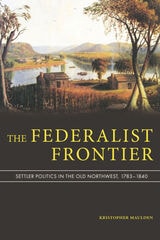
The Federalist Frontier
Settler Politics in the Old Northwest, 1783-1840Kristopher Maulden
University of Missouri Press, 2023
Historians of early American politics will have a chance to read about Federalists in the Northwest, and they will see the early American state in action in fighting Indians, shaping settler understandings of space and social advancement, and influencing political ideals among the citizens. For historians of the early American West, Maulden’s work demonstrates that the origins of state-led expansion reach much further back in time than generally understood.
The Federalist Society
How Conservatives Took the Law Back from LiberalsMichael Avery
Vanderbilt University Press, 2013
Today the Society claims that 45,000 conservative lawyers and law students are involved in its activities. Four Supreme Court Justices--Antonin Scalia, Clarence Thomas, John Roberts, and Samuel Alito--are current or former members. Every single federal judge appointed in the two Bush presidencies was either a Society member or approved by members. During the Bush years, young Federalist Society lawyers dominated the legal staffs of the Justice Department and other important government agencies.
The Society has lawyer chapters in every major city in the United States and student chapters in every accredited law school. Its membership includes economic conservatives, social conservatives, Christian conservatives, and libertarians, who differ with each other on significant issues, but who cooperate in advancing a broad conservative agenda.
How did this happen? How did this group of conservatives succeed in moving their theories into the mainstream of legal thought?
What is the range of positions of those associated with the Federalist Society in areas of legal and political controversy? The authors survey these stances in separate chapters on
• regulation of business and private property
• race and gender discrimination and affirmative action
• personal sexual autonomy, including abortion and gay rights
• American exceptionalism and international law
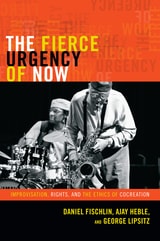
The Fierce Urgency of Now
Improvisation, Rights, and the Ethics of CocreationDaniel Fischlin, Ajay Heble, and George Lipsitz
Duke University Press, 2013
Improvisation is the creation and development of new, unexpected, and productive cocreative relations among people. It cultivates the capacity to discern elements of possibility, potential, hope, and promise where none are readily apparent. Improvisers work with the tools they have in the arenas that are open to them. Proceeding without a written score or script, they collaborate to envision and enact something new, to enrich their experience in the world by acting on it and changing it. By analyzing the dynamics of particular artistic improvisations, mostly by contemporary American jazz musicians, the authors reveal improvisation as a viable and urgently needed model for social change. In the process, they rethink politics, music, and the connections between them.
The Fight Against Platform Capitalism
An Inquiry into the Global Struggles of the Gig EconomyJamie Woodcock
University of Westminster Press, 2021
“The book rewards readers with interesting first-hand accounts of protests and pickets that are typically absent from academic discussions of the digital economy.” - https://blogs.lse.ac.uk/lsereviewofbooks/2021/03/17/book-review-the-fight-against-platform-capitalism-an-inquiry-into-the-global-struggles-of-the-gig-economy-by-jamie-woodcock/
So far, platform work has been an important laboratory for capital. Management techniques, like the use of algorithms, are being tested with a view to exporting across the global economy and it is argued that automation is undermining workers’ agency. Although the contractual trick of self-employment has allowed platforms to grow quickly and keep their costs down, yet it has also been the case also that workers have also found they can strike without following the existing regulations.
This book develops a critique of platforms and platform capitalism from the perspective of workers and contributes to the ongoing debates about the future of work and worker organising. It presents an alternative portrait returning to a focus on workers’ experience, focusing on solidarity, drawing out a global picture of new forms of agency. In particular, the book focuses on three dynamics that are driving struggles in the platform economy: the increasing connections between workers who are no longer isolated; the lack of communication and negotiation from platforms, leading to escalating worker action around shared issues; and the internationalisation of platforms, which has laid the basis for new transnational solidarity.
Focusing on transport and courier workers, online workers and freelancers author Jamie Woodcock concludes by considering how workers build power in different situations. Rather than undermining worker agency, platforms have instead provided the technical basis for the emergence of new global struggles against capitalism.