Results by title
4127 books match the query 'Science' and 980 start with t
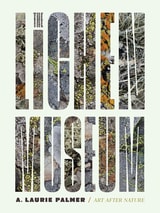
The Lichen Museum
Laurie A. Palmer
University of Minnesota Press, 2023
A radical proposal for how a tiny organism can transform our understanding of human relations
Serving as both a guide and companion publication to the conceptual art project of the same name, The Lichen Museum explores how the physiological characteristics of lichens provide a valuable template for reimagining human relations in an age of ecological and social precarity. Channeling between the personal, the scientific, the philosophical, and the poetic, A. Laurie Palmer employs a cross-disciplinary framework that artfully mirrors the collective relations of lichens, imploring us to envision alternative ways of living based on interdependence rather than individualism and competition.
Lichens are composite organisms made up of a fungus and an alga or cyanobacteria thriving in a mutually beneficial relationship. The Lichen Museum looks to these complex organisms, remarkable for their symbiosis, diversity, longevity, and adaptability, as models for relations rooted in collaboration and nonhierarchical structures. In their resistance to fast-paced growth and commodification, lichens also offer possibilities for humans to reconfigure their relationship to time and attention outside of the accelerated pace of capitalist accumulation.
Drawing together a diverse set of voices, including personal encounters with lichenologists and lichens themselves, Palmer both imagines and embodies a radical new approach to human interconnection. Using this tiny organism as an emblem through which to navigate environmental and social concerns, this work narrows the gap between the human and natural worlds, emphasizing the notion of mutual dependence as a necessary means of survival and prosperity.
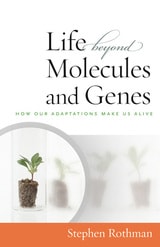
The Life Beyond Molecules and Genes
In Search of Harmony between Life and ScienceStephen Rothman
Templeton Press, 2009
What makes us alive? Is it our DNA? Our genetics? Is it our atomic composition that gives us life? Somehow, all of this feels radically dissonant from our everyday experience. In Life Beyond Molecules and Genes, experimental biologist Stephen Rothman makes the bold case that it is, in fact, our adaptive abilities, hewn by evolution, that make us alive. In making this point, he reveals a hidden harmony between science and life as we live it.
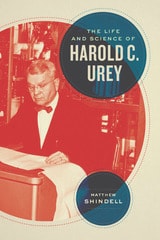
The Life and Science of Harold C. Urey
Matthew Shindell
University of Chicago Press, 2019
From Urey’s orthodox religious upbringing to his death in 1981, Shindell follows the scientist through nearly a century of American history: his discovery of deuterium and heavy water earned him the Nobel Prize in 1934, his work on the Manhattan Project helped usher in the atomic age, he initiated a generation of American scientists into the world of quantum physics and chemistry, and he took on the origin of the Moon in NASA’s lunar exploration program. Despite his success, however, Urey had difficulty navigating the nuclear age. In later years he lived in the shadow of the bomb he helped create, plagued by the uncertainties unleashed by the rise of American science and unable to reconcile the consequences of scientific progress with the morality of religion.
Tracing Urey’s life through two world wars and the Cold War not only conveys the complex historical relationship between science and religion in the twentieth century, but it also illustrates how these complexities spilled over into the early days of space science. More than a life story, this book immerses readers in the trials and triumphs of an extraordinary man and his extraordinary times.
The Life of Plants
E. J. H. Corner
University of Chicago Press, 2003
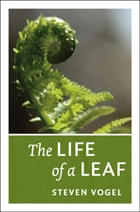
The Life of a Leaf
Steven Vogel
University of Chicago Press, 2012
In Vogel’s account, the leaf serves as a biological everyman, an ordinary and ubiquitous living thing that nonetheless speaks volumes about our environment as well as its own. Thus in exploring the leaf’s world, Vogel simultaneously explores our own.

The Life of a Virus
Tobacco Mosaic Virus as an Experimental Model, 1930-1965Angela N. H. Creager
University of Chicago Press, 2001
Focusing on the tobacco mosaic virus (TMV) research conducted in Nobel laureate Wendell Stanley's lab, Creager argues that TMV served as a model system for virology and molecular biology, much as the fruit fly and laboratory mouse have for genetics and cancer research. She examines how the experimental techniques and instruments Stanley and his colleagues developed for studying TMV were generalized not just to other labs working on TMV, but also to research on other diseases such as poliomyelitis and influenza and to studies of genes and cell organelles. The great success of research on TMV also helped justify increased spending on biomedical research in the postwar years (partly through the National Foundation for Infantile Paralysis's March of Dimes)—a funding priority that has continued to this day.
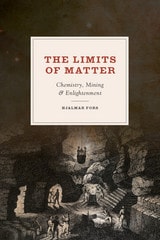
The Limits of Matter
Chemistry, Mining, and EnlightenmentHjalmar Fors
University of Chicago Press, 2014
Fors reveals how, early in the eighteenth century, chemists began to view metals no longer as the ingredients for “chrysopoeia”—or gold making—but as elemental substances, or the basic building blocks of matter. At the center of this emerging idea, argues Fors, was the Bureau of Mines of the Swedish State, which saw the practical and profitable potential of these materials in the economies of mining and smelting.
By studying the chemists at the Swedish Bureau of Mines and their networks, and integrating their practices into the wider European context, Fors illustrates how they and their successors played a significant role in the development of our modern notion of matter and made a significant contribution to the modern European view of reality.

The Limits of Scientific Reasoning
David FaustForeword by Paul E. Meehl
University of Minnesota Press, 1984
The Limits of Scientific Reasoning was first published in 1984. Minnesota Archive Editions uses digital technology to make long-unavailable books once again accessible, and are published unaltered from the original University of Minnesota Press editions.
The study of human judgment and its limitations is essential to an understanding of the processes involved in the acquisition of scientific knowledge. With that end in mind, David Faust has made the first comprehensive attempt to apply recent research on human judgment to the practice of science. Drawing upon the findings of cognitive psychology, Faust maintains that human judgment is far more limited than we have tended to believe and that all individuals - scientists included—have a surprisingly restricted capacity to interpret complex information. Faust's thesis implies that scientists do not perform reasoning tasks, such as theory evaluation, as well as we assume they do, and that there are many judgments the scientist is expected to perform but cannot because of restrictions in cognitive capacity.
"This is a very well-written, timely, and important book. It documents and clarifies, in a very scholarly fashion, what sociologists and psychologists of science have been flirting with for several decades—namely, inherent limitations of scientific judgment," –Michael Mahoney, Pennsylvania State University
David Faust is director of psychology at Rhode Island Hospital and a faculty member of the Brown University Medical School. He is co-author of Teaching Moral Reasoning: Theory and Practice.
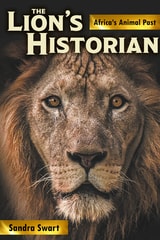
The Lion's Historian
Africa's Animal PastSandra Swart
Ohio University Press, 2025
“Until the lion has a historian of his own, the tale of the hunt will always glorify the hunter.” Sandra Swart takes up the challenge of that African proverb and, with this book, becomes the lion’s historian. As a species, humans are not alone; but our history has been written as though we were. Swart insists on a multispecies retelling of our more-than-human past as she reconstructs a shifting series of significant interspecies relationships, from quirky, idiosyncratic connections to others that triggered major changes. Embracing a radical interdisciplinarity informed by a background in history and environmental studies, Swart combines the natural sciences with the social sciences, oral history, indigenous knowledge, and archival research. She blends current thinking about animal sentience, agency, cognition, and emotion to offer a new way to understand animals’ role in our shared history. The animals in this book—baboons, cows, elephants, hippos, horses, jackals, lions, Nazi cattle, okapi, police dogs, quagga, sheep, and white ants—exemplify different facets of our shared past. With this animal-centric lens, decades of research are brought together in a collection that takes animals seriously. It is a book with claws and fangs, tearing through conventional narratives to ask, Are we prepared to move beyond the convention that “history” is the story of only our own species? The entanglements between humans and other animals have shaped our past, but they suggest something more. The possibility of our shared future pivots on a reckoning with our shared pasts. Swart shows what human-animal history can do, not only to understand our place in the world better but to make our world—however slightly—a better place.
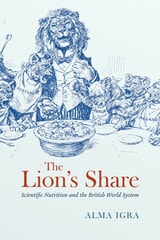
The Lion's Share
Scientific Nutrition and the British World SystemAlma Igra
University of Chicago Press, 2026
Reveals how nutrition science emerged from Britain’s attempts to mold the food chain to its imperial interests.
The Lion’s Share offers a biography of nutrition as a scientific discipline, from its imperial birth, through its rise to fame, to its integration into an environmental and political global order. Even though medical knowledge involved food since ancient times, at the beginning of the twentieth century, nutrition was not yet a scientific discipline in an institutional or practical sense. Nevertheless, by the 1930s, it was one of the most politically influential scientific fields, with nutritionists operating as medical diplomats within national, international, and imperial organizations. As historian Alma Igra explains, it is through the global networks of British power that a decidedly marginal field of technical knowledge concerned with agricultural productivity and animal feeding evolved into an area of expertise governing the human diet and related issues of public health, economic development, and humanitarian aid.
The Lion’s Share visits five pivotal moments that prompted new nutritional research at transnational meetings in Scotland, Iraq, Vienna, Geneva, and the Netherlands. Through the eyes of the experts, Igra tracks how nutrition became an international science, with mobile labs, collaborations among institutions, and a constant clash between local and imperial practices. Standardization of food measurement created new ways for food to be international and allowed politicians to imagine the world as one. Yet tensions remained that shaped international policy in the twentieth century and still affect international land policy today.
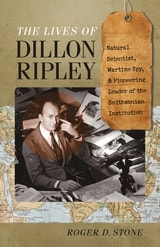
The Lives of Dillon Ripley
Natural Scientist, Wartime Spy, and Pioneering Leader of the Smithsonian InstitutionRoger D. Stone
University Press of New England, 2017

The Lone Wolverine
Tracking Michigan's Most Elusive AnimalElizabeth Philips Shaw and Jeff Ford
University of Michigan Press, 2012
It began in late winter of 2004. Almost 100 years had passed since the last spotting of a wild wolverine in Michigan when coyote hunters caught a glimpse of one of the animals in a frozen farm field in the northern thumb region. For the next six years, Jeff Ford, a local science teacher and amateur naturalist, devoted himself to locating and filming the wolverine that had unexpectedly and inexplicably appeared in the Wolverine State. By the time hikers found the animal dead in early 2010, Ford had taken hundreds of rare live action photos and shot numerous hours of video, with the story of the "Wolverine Guy" attracting national attention through countless newspaper and magazine articles and appearances on Animal Planet and PBS Nature.
This is the tale of Ford's quest as he uncovered answers to mysteries surrounding the animal's territory and movement patterns, while sparking a flurry of controversy surrounding the elusive predator's origin, much of which remains unresolved today. It's an intimate look at research in the raw, from DNA samples stuck on barbed wire to a sophisticated, motion-sensing infrared camera unit strategically placed to observe nocturnal behavior.
The Lone Wolverine brings to vivid life this unforgettable piece of American wildlife lore, using candid interviews, public records, and Ford's own vast storehouse of notes, personal writings, correspondence, and images, offering an extraordinary chronicle of a wild wolverine in its natural habitat, at play and in fierce competition for food and survival. This is a wildlife detective story, recounting years of study and fierce debate as researchers pondered the riddles of Michigan's last wolverine---her origins, habits, and ultimately the cause of her untimely death.
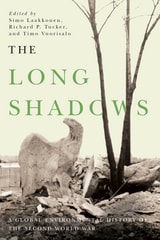
The Long Shadows
A Global Environmental History of the Second World WarSimo Laakkonen
Oregon State University Press, 2017
The Long Shadows is the first book-length work to offer global perspectives on the environmental history of World War II. Based on long-term research, the selected articles represent the best available studies in different fields and countries. With contributions touching on Europe, America, Asia, and Africa, the book has a truly global approach.
While other edited volumes on the environmental history of warfare discuss multiple wars and various time periods, The Long Shadows is devoted exclusively to World War II and its profound and lasting impact on global environments, encompassing polar, temperate and tropical ecological zones. Divided into three main sections, the first offers an introduction to and holistic overview of the War. The second section of the book examines the social and environmental impacts of the conflict, while the third focuses on the history and legacy of resource extraction. A fourth and final section offers conclusions and hypotheses. Numerous themes and topics are explored in these previously unpublished essays, including the new and innovative field of acoustic ecology, the environmental policies of the Third Reich, Japanese imperialism and marine resources, and the control of Typhus fever.
Aimed at researchers and students in the fields of environmental history, military history, and global history, The Long Shadows will also appeal to a general audience interested in the environmental impact of the greatest military conflict in the history of the world.
CONTRIBUTORS
Outi Ampuja
Alla Bolotova
Chris Boyer
Matthew Evenden
Paul Josephson
Simo Laakkonen
Helene Laurent
Carol MacLennan
Gregory Maddox
Ilmo Massa
Evan Mawdsley
Micah Muscolino
William Tsutsui
Richard Tucker
Timo Vuorisalo
Anna-Katharina Wöbse
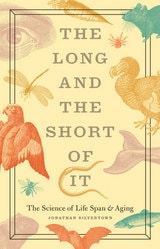
The Long and the Short of It
The Science of Life Span and AgingJonathan Silvertown
University of Chicago Press, 2013
With The Long and the Short of It, biologist and writer Jonathan Silvertown offers readers a witty and fascinating tour through the scientific study of longevity and aging. Dividing his daunting subject by theme—death, life span, aging, heredity, evolution, and more—Silvertown draws on the latest scientific developments to paint a picture of what we know about how life span, senescence, and death vary within and across species. At every turn, he addresses fascinating questions that have far-reaching implications: What causes aging, and what determines the length of an individual life? What changes have caused the average human life span to increase so dramatically—fifteen minutes per hour—in the past two centuries? If evolution favors those who leave the most descendants, why haven’t we evolved to be immortal? The answers to these puzzles and more emerge from close examination of the whole natural history of life span and aging, from fruit flies, nematodes, redwoods, and much more.
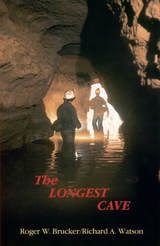
The Longest Cave
Roger W. Brucker and Richard A. Watson
Southern Illinois University Press, 1987
In 1925 the geological connection between Flint Ridge and Mammoth Cave was proved when dye placed in a Flint Ridge spring showed up in Echo River at Mammoth Cave.
That tantalizing swirl of dye confirmed speculations that wereto tempt more than 650cavers over half a century with the thrill of being the first to make human passage of the cave connection. Roger Brucker and Richard Watson tell not only of their own twenty-year effort to complete the link but the stories of many others who worked their way through mud-choked crawlways less than a foot high only to find impenetrable blockages.
Floyd Collins died a grisly death in nearby Sand Cave in1925, after being trapped there for 15 days. The wide press coverage of the rescue efforts stirred the imagination of the public and his body was on macabre display in a glass-topped coffin in Crystal Cave into the 1940s. Agents of a rival cave owner once even stole his corpse, which was recovered and still is in a coffin in the cave. Modern cavers still have a word with Floyd as they start their downward treks.
Brucker and Watson joined the parade of cavers who propelled themselves by wiggling kneecaps, elbows, and toes through quarter-mile long crawlways, clinging by fingertips and boot toes across mud-slick walls, over bottomless pits, into gurgling streams beneath stone ceilings that descend to water level, down crumbling crevices and up mountainous rockfalls, into wondrous domed halls, and straight ahead into a blackness intensified rather than dispelled by the carbide lamps on their helmets.
Over two decades they explored the passages with others who sought the final connection as vigorously as themselves. Pat Crowther, a young mother of two, joined them and because of her thinness became the member of the crew to go first into places no human had ever gone before. In that role, in July 1972, she wiggled her way through the Tight Spot and found the route that would link the Flint Ridge and Mammoth Cave systems into one cave extending 144.4 miles through the Kentucky limestone.
In a new afterword to this edition the authors summarize the subsequent explorations that have more than doubled the established length of the cave system. Based upon geological evidence, the authors predict that new discoveries will add another 200 miles to the length of the world’s longest cave, making it over 500 miles long.
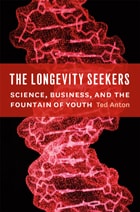
The Longevity Seekers
Science, Business, and the Fountain of YouthTed Anton
University of Chicago Press, 2013
With The Longevity Seekers, science writer Ted Anton takes readers inside this tale that began with worms and branched out to snare innovative minds from California to Crete, investments from big biotech, and endorsements from TV personalities like Oprah and Dr. Oz. Some of the research was remarkable, such as the discovery of an enzyme in humans that stops cells from aging. And some, like an oft-cited study touting the compound resveratrol, found in red wine—proved highly controversial, igniting a science war over truth, credit, and potential profit. As the pace of discovery accelerated, so too did powerful personal rivalries and public fascination, driven by the hope that a longer, healthier life was right around the corner. Anton has spent years interviewing and working with the scientists at the frontier of longevity science, and this book offers a behind-the-scenes look at the state-of-the-art research and the impact it might have on global public health, society, and even our friends and family.
With spectacular science and an unforgettable cast of characters, The Longevity Seekers has all the elements of a great story and sheds light on discoveriesthat could fundamentally reshape human life.
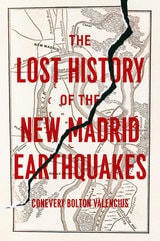
The Lost History of the New Madrid Earthquakes
Conevery Bolton Valencius
University of Chicago Press, 2013
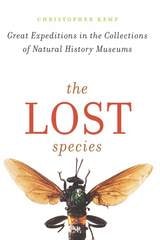
The Lost Species
Great Expeditions in the Collections of Natural History MuseumsChristopher Kemp
University of Chicago Press, 2017
With Kemp as our guide, we go spelunking into museum basements, dig through specimen trays, and inspect the drawers and jars of collections, scientific detectives on the hunt for new species. We discover king crabs from 1906, unidentified tarantulas, mislabeled Himalayan landsnails, an unknown rove beetle originally collected by Darwin, and an overlooked squeaker frog, among other curiosities. In each case, these specimens sat quietly for decades—sometimes longer than a century—within the collections of museums, before sharp-eyed scientists understood they were new. Each year, scientists continue to encounter new species in museum collections—a stark reminder that we have named only a fraction of the world’s biodiversity. Sadly, some specimens have waited so long to be named that they are gone from the wild before they were identified, victims of climate change and habitat loss. As Kemp shows, these stories showcase the enduring importance of these very collections.
The Lost Species vividly tells these stories of discovery—from the latest information on each creature to the people who collected them and the scientists who finally realized what they had unearthed—and will inspire many a museumgoer to want to peek behind the closed doors and rummage through the archives.
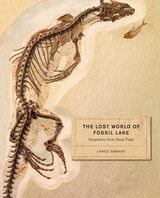
The Lost World of Fossil Lake
Snapshots from Deep TimeLance Grande
University of Chicago Press, 2013
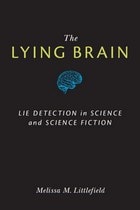
The Lying Brain
Lie Detection in Science and Science FictionMelissa M. Littlefield
University of Michigan Press, 2011
"The Lying Brain is a study to take seriously. Its argument is timely, clear, and of particular importance to the enlargement of our understanding of the relationships among science studies, literary studies, and technology studies."
---Ronald Schleifer, University of Oklahoma
Real and imagined machines, including mental microscopes, thought translators, and polygraphs, have long promised to detect deception in human beings. Now, via fMRI and EEG, neuroscientists seem to have found what scientists, lawyers, and law enforcement officials have sought for over a century: foolproof lie detection. But are these new lie detection technologies any different from their predecessors? The Lying Brain is the first book to explore the cultural history of an array of lie detection technologies: their ideological assumptions, the scientific and fictional literatures that create and market them, and the literacies required for their interpretation.
By examining a rich archive of materials about lie detection---from science to science fiction---The Lying Brain demonstrates the interconnections of science, literature, and popular culture in the development and dissemination of deception detection in the American cultural imagination. As Melissa Littlefield demonstrates, neuroscience is not building a more accurate lie detector; it is simply recycling centuries-old ideologies about deception and its detection.
Cover art: "Human Brain" © Denis Barbulet, courtesy of Shutterstock.com
The Lysenko Affair
David Joravsky
University of Chicago Press, 1970
"A standard source both for Soviet specialists and for sociologists of science."—American Journal of Sociology
"Joravsky has produced . . . the most detailed and authoritative treatment of Lysenko and his view on genetics."—New York Times Book Review
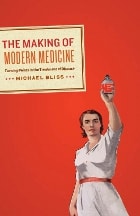
The Making of Modern Medicine
Turning Points in the Treatment of DiseaseMichael Bliss
University of Chicago Press, 2011
At the dawn of the twenty-first century, we have become accustomed to medical breakthroughs and conditioned to assume that, regardless of illnesses, doctors almost certainly will be able to help—not just by diagnosing us and alleviating our pain, but by actually treating or even curing diseases, and significantly improving our lives.
For most of human history, however, that was far from the case, as veteran medical historian Michael Bliss explains in The Making of Modern Medicine. Focusing on a few key moments in the transformation of medical care, Bliss reveals the way that new discoveries and new approaches led doctors and patients alike to discard fatalism and their traditional religious acceptance of suffering in favor of a new faith in health care and in the capacity of doctors to treat disease. He takes readers in his account to three turning points—a devastating smallpox outbreak in Montreal in 1885, the founding of the Johns Hopkins Hospital and Medical School, and the discovery of insulin—and recounts the lives of three crucial figures—researcher Frederick Banting, surgeon Harvey Cushing, and physician William Osler—turning medical history into a fascinating story of dedication and discovery.
Compact and compelling, this searching history vividly depicts and explains the emergence of modern medicine—and, in a provocative epilogue, outlines the paradoxes and confusions underlying our contemporary understanding of disease, death, and life itself.
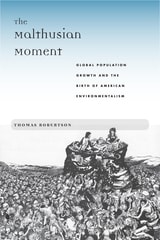
The Malthusian Moment
Global Population Growth and the Birth of American EnvironmentalismRobertson, Thomas
Rutgers University Press, 2012
Weaving together the international and the domestic in creative new ways, The Malthusian Moment charts the explosion of Malthusian thinking in the United States from World War I to Earth Day 1970, then traces the just-as-surprising decline in concern beginning in the mid-1970s. In addition to offering an unconventional look at World War II and the Cold War through a balanced study of the environmental movement’s most contentious theory, the book sheds new light on some of the big stories of postwar American life: the rise of consumption, the growth of the federal government, urban and suburban problems, the civil rights and women’s movements, the role of scientists in a democracy, new attitudes about sex and sexuality, and the emergence of the “New Right.”
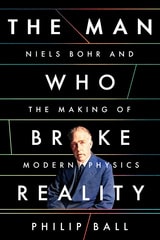
The Man Who Broke Reality
Niels Bohr and the Making of Modern PhysicsPhilip Ball
University of Chicago Press, 2026
From the brilliant Philip Ball, a thrilling biography of Nobel Prize–winning Danish physicist Niels Bohr, the most radical quantum mechanician of all.
In the first half of the twentieth century, the tremendous energy locked up in the nucleus of an atom was discovered and then liberated, bringing both the promise of utopia and the threat of apocalypse. The dawn of the nuclear age is often associated with Albert Einstein, whose iconic equation E = mc2 revealed the staggering energy available from radioactive transformation, or with J. Robert Oppenheimer, who led the project at Los Alamos to build the first nuclear bombs. But the person who arguably did more than any other to shape the Promethean era in which we now live was the Danish physicist Niels Bohr.
In The Man Who Broke Reality, renowned science communicator Philip Ball reveals that it was Bohr who first explained the physics of the nuclear atom, and it was his model of the atom’s dense nucleus that enabled scientists to understand how it could be split apart. Ball also shows how Bohr was the central figure in the development of quantum mechanics, the theory of matter and energy that destabilized centuries of thinking not just about the microscopic nature of the world but about physical reality itself.
Bohr’s story is the story of modern physics and its transformative impact on the world. But The Man Who Broke Reality is not merely an intellectual drama. It chronicles a heroic life lived in turbulent times, across two world wars, the Manhattan Project, and the arms race of the Cold War. And it establishes Bohr as one of the most profound, inventive, and iconoclastic thinkers of the twentieth century.
The Man Who Broke Reality
Niels Bohr and the Making of Modern PhysicsPhilip Ball
University of Chicago Press, 2026
From the brilliant Philip Ball, a thrilling biography of Nobel Prize–winning Danish physicist Niels Bohr, the most radical quantum mechanician of all.
In the first half of the twentieth century, the tremendous energy locked up in the nucleus of an atom was discovered and then liberated, bringing both the promise of utopia and the threat of apocalypse. The dawn of the nuclear age is often associated with Albert Einstein, whose iconic equation E = mc2 revealed the staggering energy available from radioactive transformation, or with J. Robert Oppenheimer, who led the project at Los Alamos to build the first nuclear bombs. But the person who arguably did more than any other to shape the Promethean era in which we now live was the Danish physicist Niels Bohr.
In The Man Who Broke Reality, renowned science communicator Philip Ball reveals that it was Bohr who first explained the physics of the nuclear atom, and it was his model of the atom’s dense nucleus that enabled scientists to understand how it could be split apart. Ball also shows how Bohr was the central figure in the development of quantum mechanics, the theory of matter and energy that destabilized centuries of thinking not just about the microscopic nature of the world but about physical reality itself.
Bohr’s story is the story of modern physics and its transformative impact on the world. But The Man Who Broke Reality is not merely an intellectual drama. It chronicles a heroic life lived in turbulent times, across two world wars, the Manhattan Project, and the arms race of the Cold War. And it establishes Bohr as one of the most profound, inventive, and iconoclastic thinkers of the twentieth century.

The Man Who Flattened the Earth
Maupertuis and the Sciences in the EnlightenmentMary Terrall
University of Chicago Press, 2002
Beginning his scientific career as a mathematician in Paris, Maupertuis entered the public eye with a much-discussed expedition to Lapland, which confirmed Newton's calculation that the earth was flattened at the poles. He also made significant, and often intentionally controversial, contributions to physics, life science, navigation, astronomy, and metaphysics. Called to Berlin by Frederick the Great, Maupertuis moved to Prussia to preside over the Academy of Sciences there. Equally at home in salons, cafés, scientific academies, and royal courts, Maupertuis used his social connections and his printed works to enhance a carefully constructed reputation as both a man of letters and a man of science. His social and institutional affiliations, in turn, affected how Maupertuis formulated his ideas, how he presented them to his contemporaries, and the reactions they provoked.
Terrall not only illuminates the life and work of a colorful and important Enlightenment figure, but also uses his story to delve into many wider issues, including the development of scientific institutions, the impact of print culture on science, and the interactions of science and government. Smart and highly readable, Maupertuis will appeal to anyone interested in eighteenth-century science and culture.
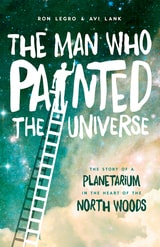
The Man Who Painted the Universe
The Story of a Planetarium in the Heart of the North WoodsRon Legro
Wisconsin Historical Society Press, 2015
The Man Who Painted the Universe: The Story of a Planetarium in the Heart of the North Woods introduces readers to the mild-mannered astronomy enthusiast whose creativity, ingenuity, fervor, and endurance realized a dream of galactic proportions. The story of this stargazer from Wisconsin’s North Woods so inspired two newspapermen, authors Ron Legro and Avi Lank, that they sought to document the story of the Kovac Planetarium for a new generation of stargazers and dreamers.
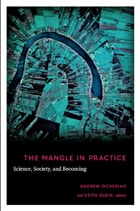
The Mangle in Practice
Science, Society, and BecomingAndrew Pickering and Keith Guzik, eds.
Duke University Press, 2008
The Mangle in Practice opens with a fresh introduction to the mangle by Pickering. Several contributors then present empirical studies that demonstrate the mangle’s applicability to topics as diverse as pig farming, Chinese medicine, economic theory, and domestic-violence policing. Other contributors offer examples of the mangle in action: real-world practices that implement a self-consciously “mangle-ish” stance in environmental management and software development. Further essays discuss the mangle as philosophy and social theory. As Pickering argues in the preface, the mangle points to a shift in interpretive sensibilities that makes visible a world of de-centered becoming. This volume demonstrates the viability, coherence, and promise of such a shift, not only in science and technology studies, but in the social sciences and humanities more generally.
Contributors: Lisa Asplen, Dawn Coppin, Adrian Franklin, Keith Guzik, Casper Bruun Jensen,Yiannis Koutalos, Brian Marick, Randi Markussen, Andrew Pickering, Volker Scheid, Esther-Mirjam Sent, Carol Steiner, Maxim Waldstein
The Mangle of Practice
Time, Agency, and ScienceAndrew Pickering
University of Chicago Press, 1995
Andrew Pickering offers a new approach to the unpredictable nature of change in science, taking into account the extraordinary number of factors—social, technological, conceptual, and natural—that interact to affect the creation of scientific knowledge. In his view, machines, instruments, facts, theories, conceptual and mathematical structures, disciplined practices, and human beings are in constantly shifting relationships with one another—"mangled" together in unforeseeable ways that are shaped by the contingencies of culture, time, and place.
Situating material as well as human agency in their larger cultural context, Pickering uses case studies to show how this picture of the open, changeable nature of science advances a richer understanding of scientific work both past and present. Pickering examines in detail the building of the bubble chamber in particle physics, the search for the quark, the construction of the quarternion system in mathematics, and the introduction of computer-controlled machine tools in industry. He uses these examples to address the most basic elements of scientific practice—the development of experimental apparatus, the production of facts, the development of theory, and the interrelation of machines and social organization.
The Mantle of the Earth
Genealogies of a Geographical MetaphorVeronica della Dora
University of Chicago Press, 2021
The Mapping of New Spain
Indigenous Cartography and the Maps of the Relaciones GeograficasBarbara E. Mundy
University of Chicago Press, 1996
"Its contribution to its specific field is both significant and original. . . . It is a pure pleasure to read." —Sabine MacCormack, Isis
"Mundy has done a fine job of balancing the artistic interpretation of the maps with the larger historical context within which they were drawn. . . . This is an important work." —John F. Schwaller, Sixteenth Century Journal
"This beautiful book opens a Pandora's box in the most positive sense, for it provokes the reconsideration of several long-held opinions about Spanish colonialism and its effects on Native American culture." —Susan Schroeder, American Historical Review
The Mars Project
Wernher Von Braun
University of Illinois Press, 1953
Today von Braun is recognized as the person most responsible for laying the groundwork for public acceptance of America's space program. When President Bush directed NASA in 1989 to prepare plans for an orbiting space station, lunar research bases, and human exploration of Mars, he was largely echoing what von Braun proposed in The Mars Project.

The Marshes of Southwestern Lake Erie
Louis W. Campbell
Ohio University Press, 1994
This book explores both the human and natural history of the marshes between Toledo and Port Clinton, Ohio. The author, Louis Campbell is the acknowledged authority on the birds of the Toledo area. Mr. Campbell began weekly birding trips to the marshes in the 1920’s, carefully recording his observations. His discerning eye and inquiring mind have accumulated a wealth of information, presented here in a style that is comfortably conversational, whether the subject is glacial moraines, nesting eagles, or a drunken meadow mouse.
The book begins with an almanac, a celebration of marsh life throughout the year, enriched by personal experiences. Mr. Campbell’s encounters include a pair of bloodthirsty shrews, a roguish gallery of courting waterfowl, and a rhythm-challenged bittern. He invites the reader to share the risky pleasures of punting and the eerie night sounds of the marsh in May.
Part II describes the history of the low-lying marshes from the Ice Age to the present, as they were transformed into drained, flood-plagued farmland then to drought-and flood-plagued private hunting clubs, and finally to government-protected marshes sealed off by huge dikes from the gift and the threat of Lake Erie. Readers of this book will never again take these wetlands for granted.
The Maternal Imprint
The Contested Science of Maternal-Fetal EffectsSarah S. Richardson
University of Chicago Press, 2021
The idea that a woman may leave a biological trace on her gestating offspring has long been a commonplace folk intuition and a matter of scientific intrigue, but the form of that idea has changed dramatically over time. Beginning with the advent of modern genetics at the turn of the twentieth century, biomedical scientists dismissed any notion that a mother—except in cases of extreme deprivation or injury—could alter her offspring’s traits. Consensus asserted that a child’s fate was set by a combination of its genes and post-birth upbringing.
Over the last fifty years, however, this consensus was dismantled, and today, research on the intrauterine environment and its effects on the fetus is emerging as a robust program of study in medicine, public health, psychology, evolutionary biology, and genomics. Collectively, these sciences argue that a woman’s experiences, behaviors, and physiology can have life-altering effects on offspring development.
Tracing a genealogy of ideas about heredity and maternal-fetal effects, this book offers a critical analysis of conceptual and ethical issues—in particular, the staggering implications for maternal well-being and reproductive autonomy—provoked by the striking rise of epigenetics and fetal origins science in postgenomic biology today.
The Meaning of Evolution
The Morphological Construction and Ideological Reconstruction of Darwin's TheoryRobert J. Richards
University of Chicago Press, 1992
This provocative new reading of Darwin goes directly to the origins of evolutionary theory. Unlike most contemporary biologists or historians and philosophers of science, Richards holds that Darwin did concern himself with the idea of progress, or telos, as he constructed his theory. Richards maintains that Darwin drew on the traditional embryological meanings of the terms "evolution" and "descent with modification." In the 1600s and 1700s, "evolution" referred to the embryological theory of preformation, the idea that the embryo exists as a miniature adult of its own species that simply grows, or evolves, during gestation. By the early 1800s, however, the idea of preformation had become the concept of evolutionary recapitulation, the idea that during its development an embryo passes through a series of stages, each the adult form of an ancestor species.
Richards demonstrates that, for Darwin, embryological recapitulation provided a graphic model of how species evolve. If an embryo could be seen as successively taking the structures and forms of its ancestral species, then one could see the evolution of life itself as a succession of species, each transformed from its ancestor. Richards works with the Origin and other published and archival material to show that these embryological models were much on Darwin's mind as he considered the evidence for descent with modification.
Why do so many modern researchers find these embryological roots of Darwin's theory so problematic? Richards argues that the current tendency to see evolution as a process that is not progressive and not teleological imposes perspectives on Darwin that incorrectly deny the clearly progressive heart of his embryological models and his evolutionary theory.
The Meaning of Fossils
Episodes in the History of PalaeontologyMartin J. S. Rudwick
University of Chicago Press, 1985
"Rudwick has not merely written the first book-length history of palaeontology in the English language; he has written a very intelligent one. . . . His accounts of sources are rounded and organic: he treats the structure of arguments as Cuvier handled fossil bones."—Roy S. Porter, History of Science

The Meaning of Weather
A Media HistoryJohn Durham Peters
University of Chicago Press, 0
A sweeping history of our relationship with weather in art, media, philosophy, religion, and science—and how the climate continually defies demystification.
We moderns tend to take the weather for granted. We know it through hourly timetables and radar maps and otherwise make it the subject of predictable and safe conversation. But weather is not safe or predictable and never has been. People have long used all their ingenuity to imagine and portray its shifty ways. As John Durham Peters argues, a closer look at the history of these efforts, from painting and poetry to cartography and close observation, has the potential to disclose something important about what it means to live in the world.
In The Meaning of Weather, John Durham Peters shows how the long history of understanding the weather has seen dreamers and data-crunchers alike craft remarkable visions of the world around us. From Babylonian astronomy to the Event Horizon Telescope, from illuminated manuscripts to television, and more, Peters explores the kaleidoscopic ways people have sought to understand, tame, or manage the weather—and how the climate resists being bridled. In this magisterial telling, Peters reimagines Western culture as a continuing struggle to know ourselves and each other through an ever-changing environment.
The Meaning of the Body
Aesthetics of Human UnderstandingMark Johnson
University of Chicago Press, 2007
In The Meaning of the Body, Mark Johnson continues his pioneering work on the exciting connections between cognitive science, language, and meaning first begun in the classic Metaphors We Live By. Johnson uses recent research into infant psychology to show how the body generates meaning even before self-consciousness has fully developed. From there he turns to cognitive neuroscience to further explore the bodily origins of meaning, thought, and language and examines the many dimensions of meaning—including images, qualities, emotions, and metaphors—that are all rooted in the body’s physical encounters with the world. Drawing on the psychology of art and pragmatist philosophy, Johnson argues that all of these aspects of meaning-making are fundamentally aesthetic. He concludes that the arts are the culmination of human attempts to find meaning and that studying the aesthetic dimensions of our experience is crucial to unlocking meaning's bodily sources.
The Measure of Times Past
Pre-Newtonian Chronologies and the Rhetoric of Relative TimeDonald J. Wilcox
University of Chicago Press, 1987
The Medicine Wheel
Environmental Decision-Making Process of Indigenous PeoplesMichael E. Marchand
Michigan State University Press, 2020
The Mental and the Physical
The Essay and a PostscriptHerbert Feigl
University of Minnesota Press, 1967
The Mental and the Physical was first published in 1967. Minnesota Archive Editions uses digital technology to make long-unavailable books once again accessible, and are published unaltered from the original University of Minnesota Press editions.
Professor Feigl's essay "The 'Mental' and the 'Physical'" has provoked a great deal of comment, criticism, and discussion since it first appeared as a part of the content of Volume II of the Minnesota Studies in the Philosophy of Science about ten years ago. Now Professor Feigl takes account of the critical discussions and presents his own comments with respect to the most important points raised in the criticisms. The essay itself is presented here in full, along with the postscript. The British Journal for the Philosophy of Science has called the essay "a 'super-colossal' survey of the mind-body problem." In its review of the earlier book containing the essay, Thought said: "This essay deserves careful reading by every philosopher concerned with genuine philosophical dialogue."
The Microbial State
Global Thriving and the Body PoliticStefanie R. Fishel
University of Minnesota Press, 2017
For three centuries, concepts of the state have been animated by one of the most powerful metaphors in politics: the body politic, a claustrophobic and bounded image of sovereignty. Climate change, neoliberalism, mass migration, and other aspects of the late Anthropocene have increasingly revealed the limitations of this metaphor. Just as the human body is not whole and separate from other bodies—comprising microbes, bacteria, water, and radioactive isotopes—Stefanie R. Fishel argues that the body politic of the state exists in dense entanglement with other communities and forms of life.
Drawing on insights from continental philosophy, science and technology studies, and international relations theory, this path-breaking book critiques the concept of the body politic on the grounds of its very materiality. Fishel both redefines and extends the metaphor of the body politic and its role in understanding an increasingly posthuman, globalized world politics. By conceiving of bodies and states as lively vessels, living harmoniously with multiplicity and the biosphere, she argues that a radical shift in metaphors can challenge a politics based on fear to open new forms of global political practice and community.
Reframing the concept of the body politic to accommodate greater levels of complexity, Fishel suggests, will result in new configurations for the political and social organization necessary to build a world in which the planet’s inhabitants do not merely live but actively thrive.
The Microflora of Lakes and Its Geochemical Activity
By S. I. Kuznetsov
University of Texas Press, 1975
The geochemical processes that take place in water bodies do not stem entirely from the activity of bacteria, but are also determined by the biological activity of higher plants and animals. The Microflora of Lakes and Its Geochemical Activity, the first English translation of the work of S. I. Kuznetsov, renowned Soviet microbiologist, is a detailed description of these processes.
The Microflora of Lakes opens with a complete outline of the ecology and physical and chemical properties of water bodies and a discussion of the entire complex of hydrobionts, since these factors exert tremendous influence on the microbial population. The work then focuses on the principles of the morphology and physiology of the living cell, background knowledge essential to the understanding of the role of microorganisms in the chemical cycle. Having laid the groundwork for the discussion, Kuznetsov follows with chapters on the distribution of bacteria and transformations of organic matter in lakes. He then examines the role of bacteria in the oxygen regime, and the cycles of organic matter, nitrogen, sulfur, iron, manganese and phosphorus. The last chapter describes the role of microorganisms in sediments of calcium carbonate waters.
The Microflora of Lakes and Its Geochemical Activity provides a wealth of information on the microbial limnology of fresh-water lakes throughout the world, particularly in the Soviet Union. As a summary of the geochemical activities as related to the geographic, geological, and physical relationships of fresh-water lakes, it is a monumental study.
The Microflora of Lakes was translated for the National Science Foundation, Washington, D.C., by the Israel Program for Scientific Translations in Jerusalem.
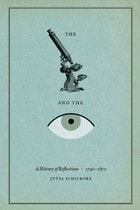
The Microscope and the Eye
A History of Reflections, 1740-1870Jutta Schickore
University of Chicago Press, 2007
Concentrating on Great Britain and the German lands—home to the period’s most significant developments in microscopy—The Microscope and the Eye examines debates about such subjects as the legitimacy of human trespassing on the microcosm and the nature of light. Schickore also explores the microscope’s role in investigations of the finer structure of the eye and the workings of nerve fibers and the microscopists’ reflections on vision, illusion, artifacts, and the merits of instruments. Fully considering the epistemological, metaphysical, and methodological implications of this centuries-old relationship, The Microscope and the Eye will be an important contribution to the history of the life sciences, vision studies, and scientific methodology.
The Middle Path
Avoiding Environmental CatastropheEric Lambin
University of Chicago Press, 2007
In The Middle Path, noted geographer Eric Lambin provides a concise, readable summary of the present state of the environment and considers what must be done if environmental catastrophe is to be avoided. Finding merit in the arguments of both optimists and pessimists, Lambin argues that it is not too late to exploit the inherent tendency toward equilibrium of large-scale systems such as the earth’s environment. By relying upon a combination of remedies as global as international cap-and-trade emission treaties and as local as municipal programs promoting the use of bicycles rather than cars, it may yet be possible to rescue humanity from a potentially fatal crisis of its own making.
Based on rigorous scientific analysis, and strikingly free of ideological prejudice, The Middle Path presents a fresh view of our troubled future, brilliantly balancing tough-minded realism with humanitarian ideals of cooperation and ingenuity.
The Mimetic Brain
Jean-Michel Oughourlian
Michigan State University Press, 2016
Offering up clinical studies and a complete reevaluation of classical psychiatry, Oughourlian explores the interaction among reason, emotions, and imitation and reveals that rivalry—the blind spot in contemporary neuroscientific understandings of imitation—is a misunderstood driving force behind mental illness. Oughourlian’s analyses shake the very foundations of psychiatry as we know it and open up new avenues for both theoretical research and clinical practice.
The Mind of Janus
Intersections of Law and Science on the National ForestsJamison E. Colburn
University of Utah Press, 2026
Trees are the embodiment of existence: abundant, regenerative, irrepressible. Yet as more of the planet undergoes profound and accelerating climate change, deforestation, loss of biotic diversity, and a pitiless spread of pests and pathogens, which trees—if any—will thrive are increasingly urgent questions. Managing healthy forests remains factually uncertain, an uneasy dance between law and science.
How can law facilitate or even accelerate the application of forest ecology on landscapes like our national forests? This book is a thorough exploration of that question from more than a century of intersections of law and science on the national forests. With a focus on law—as distinct from mere policy—as an agent in human relations and as a catalyst of scientific research, it makes the case that we can and must do better to solve intractable land management problems.
The Mind of the Chimpanzee
Ecological and Experimental PerspectivesEdited by Elizabeth V. Lonsdorf, Stephen R. Ross, and Tetsuro Matsuzawa
University of Chicago Press, 2010
Understanding the chimpanzee mind is akin to opening a window onto human consciousness. Many of our complex cognitive processes have origins that can be seen in the way that chimpanzees think, learn, and behave. The Mind of the Chimpanzee brings together scores of prominent scientists from around the world to share the most recent research into what goes on inside the mind of our closest living relative.
Intertwining a range of topics—including imitation, tool use, face recognition, culture, cooperation, and reconciliation—with critical commentaries on conservation and welfare, the collection aims to understand how chimpanzees learn, think, and feel, so that researchers can not only gain insight into the origins of human cognition, but also crystallize collective efforts to protect wild chimpanzee populations and ensure appropriate care in captive settings. With a breadth of material on cognition and culture from the lab and the field, The Mind of the Chimpanzee is a first-rate synthesis of contemporary studies of these fascinating mammals that will appeal to all those interested in animal minds and what we can learn from them.
The Mirage of Health
Utopia, Progress, and Biological ChangeDubos, Jean
Rutgers University Press, 1987
The Mirage of a Space between Nature and Nurture
Evelyn Fox Keller
Duke University Press, 2010