Results by title
22279 books match the query 'Social Science' and 4007 start with t

The Bear and His Sons
Masculinity in Spanish and Mexican FolktalesBy James M. Taggart
University of Texas Press, 1997
All the world over, people tell stories to express their deepest feelings about such things as what makes a "real" man or woman; what true love, courage, or any other virtue is; what the proper relationships are between people. Often groups of people widely separated by space or time will tell the same basic story, but with differences in the details that reveal much about a particular group's worldview.
This book looks at differences in the telling of several common Hispanic folktales. James Taggart contrasts how two men—a Spaniard and an Aztec-speaking Mexican—tell such tales as "The Bear's Son." He explores how their stories present different ways of being a man in their respective cultures.
Taggart's analysis contributes to a revision of Freud's theory of gender, which was heavily grounded in biological determinism. Taggart focuses instead on how fathers reproduce different forms of masculinity in their sons. In particular, he shows how fathers who care for their infant sons teach them a relational masculinity based on a connected view of human relationships. Thus, The Bear and His Sons will be important reading not only in anthropology and folklore, but also in the growing field of men's studies.
The Beautiful Generation
Asian Americans and the Cultural Economy of FashionThuy Linh Nguyen Tu
Duke University Press, 2011
The Bedtrick
Tales of Sex and MasqueradeWendy Doniger
University of Chicago Press, 2000
The Bedtrick brings together hundreds of stories from all over the world, from the earliest recorded Hindu and Hebrew texts to the latest item in the Weekly World News, to show the hilariously convoluted sexual scrapes that people manage to get themselves into and out of. Here you will find wives who accidentally commit adultery with their own husbands. You will read Lincoln's truly terrible poem about a bedtrick. You will learn that in Hong Kong the film The Crying Game was retitled Oh No! My Girlfriend Has a Penis. And that President Clinton was not the first man to be identified by an idiosyncratic organ.
At the bottom of these wonderful stories, ancient myths, and historical anecdotes lie the dynamics of sex and gender, power and identity. Why can't people tell the difference in the dark? Can love always tell the difference between one lover and another? And what kind of truth does sex tell? Funny, sexy, and engaging, The Bedtrick is a masterful work of energetic storytelling and dazzling scholarship. Give it to your spouse and your lover.
The Befana Is Returning
The Story of a Tuscan FestivalSteve Siporin
University of Wisconsin Press, 2022
The Pigitliano Befanata is distinct in its emphasis on song and strong in its richly symbolic use of food, which is not only consumed at each home but is also carried away as a gift. The characters who make up the squad are unique to the Italian practice. They always include the Befana and her husband, the Befano, but other members of the befanotti vary from place to place over time. Siporin combines fieldwork and archival evidence to introduce the Befanata and its historical and social contexts: what it is, what it means, and how it feels. The Befana Is Returning is a deeply researched, deftly insightful presentation of this living tradition that adds a large missing piece to the array of contemporary ethnographic scholarship on mumming.
The Behavioral Ecology of Efe Pygmy Men in the Ituri Forest, Zaire
Robert C. Bailey
University of Michigan Press, 1991
The Bellwomen
The Story of the Landmark AT&T Sex Discrimation CaseStockford, Marjorie A
Rutgers University Press, 2004
In the early 1970s, David Copus, a young, long-haired lawyer, teamed up with his government colleagues to confront the mature and staid executives of AT&T over the company’s treatment of its female and minority employees. Their disagreement resulted in a $38 million settlement that benefited 15,000 employees, more than 13,000 of them women, and changed our perceptions of women’s and men’s roles in the workplace forever.
Copus, who worked for the Equal Employment Opportunity Commission (EEOC), was charged with representing American citizens who suffered from employment discrimination. Time and again he saw young, black women in the South being turned down for available jobs in local phone companies—usually as telephone operators—often for no valid reason at all. He and the EEOC decided to challenge AT&T’s company-wide sex discrimination practices. Eventually, AT&T’s corporate colleagues, witnessing AT&T’s capitulation, began to hire and promote women into better jobs themselves. At the same time, the EEOC started to more aggressively push corporate America to give women better opportunities.
The Bellwomen recounts the history of this case in a novelistic style, illuminating the motivations, strengths, and weaknesses of all the players, from AT&T corporate leaders, to the lawyers of the EEOC, to the female activists fighting for what they believed. Stockford also profiles three beneficiaries of the case, presenting their ambitions and achievements.
Combined with the power of America’s civil rights laws and the influence of the second wave women’s movement, this case provided a catalyst that drove many more women into the paid workforce in non-traditional jobs. By the late twentieth century, when women could be seen working everywhere, from construction sites to corporate offices, it appeared that they belonged there and always had.
The Beloved Border
Humanity and Hope in a Contested LandMiriam Davidson
University of Arizona Press, 2021
The book draws on a variety of sources to explain how border issues intersect and how the current situation, while made worse under the Trump administration, is in fact the result of decades of prohibition, crackdowns, and wall building on the border. Davidson addresses subjects such as violence in Mexico, particularly against the press; cross-border gun smuggling and legal gun sales; the rise in migrant detentions, deportations, and deaths since the crackdown began; controversy over humanitarian aid in the desert; border patrol crimes and abuses; and the legal, ethical, and moral issues raised by increased police presence and militarization on the border. The book also looks at the environmental impact of wall building and construction of a planned copper mine near Tucson, especially on the jaguar and other endangered species.
Davidson shares the history of sanctuary and argues that this social movement and others that have originated on the border are vanguards of larger global movements against the mistreatment of migrant workers and refugees, police brutality, and other abuses of human and natural rights. She gives concrete examples of positive ways in which border people are promoting local culture and cross-border solidarity through health care, commerce, food, art, and music. While death and suffering continue to occur, The Beloved Border shows us how the U.S.-Mexico border could be, and in many ways already is, a model for peaceful coexistence worldwide.
The Benderly Boys and American Jewish Education
Jonathan B. Krasner
Brandeis University Press, 2011
The Benevolent Gaslight
A Technology of Race-MakingLouis M. Maraj
Utah State University Press, 2026
At the intersection of rhetorical studies and critical race/ethnic studies, The Benevolent Gaslight analyzes cultural and political discourses that recharacterize acts of racial violence as teaching moments and learning opportunities. Naming this phenomenon “benevolent gaslighting,” Louis M. Maraj and Pritha Prasad explore its application across academic disciplines/epistemologies, educational history, and university race management, while also diving into how popular culture and political figures use benevolent gaslighting to reinscribe normative operations of race, gender, and sexuality.
Although this rhetoric usually presents as progressive, when used for the purposes of advancing “antiracism,” the benevolent gaslight re-centers the very whiteness it supposedly critiques. It prompts peoples of color to question their histories, memories, and realities by suggesting their pain has been necessary for positive social change and by situating racial trauma as opportunities for public learning. Specific examples include antiracist teaching initiatives and the sudden proliferation of apologies for past acts of racism by public figures. Both trends saw an uptick from 2020 onward as a result of publicity crises and public “reckonings” necessitated by Black Lives Matter protests in response to widely reported, hypervisible anti-Black violences like the murders of George Floyd, Breonna Taylor, and Ahmaud Arbery.
These discourses deflect blame for past or present racial violence by narrating it as an opportunity for “antiracist” growth and intervention. Utilizing conventional academic and creative/narrative methods to examine examples of the benevolent gaslight across US histories of education during the First Reconstruction, the post–Civil Rights management of student activists in the university, and the progressivist discourses of humanities disciplines and popular culture, this book reveals the insidious ways in which peoples of color are routinely (re)traumatized through mechanisms of “pedagogy.”
The Besht
Magician, Mystic, and LeaderImmanuel Etkes
Brandeis University Press, 2012

The Best Place
Addiction, Intervention, and Living and Dying Young in VancouverDanya Fast
Rutgers University Press, 2024
Winner of the CASCA Labrecque-Lee Book Prize
In both local and international imaginations, Vancouver, Canada, is often celebrated as one of the world’s most beautiful, cosmopolitan, and livable cities. Simultaneously, the city continues to be ground zero for successive waves of public health emergency and intervention, including a recent and unprecedented drug overdose crisis driven by the proliferation of illicitly manufactured fentanyl and related analogs in the local drug supply. In The Best Place: Addiction, Intervention, and Living and Dying Young in Vancouver, Danya Fast explores these politics of place from the perspectives of young people who use drugs. Those who are the subject of this book were in many ways relegated to the social, spatial, and economic margins of the city. Yet, they were also often at the very center of city life and state projects, including the project of protecting life in the context of the current overdose crisis.

The Best-Kept Secret
Women Corporate Lobbyists, Policy, and Power in the United StatesBenoit, Denise
Rutgers University Press, 2007
From lobbyists such as Jack Abramoff, to corporate executives, like Enron's Kenneth Lay and Jeffrey Skilling, recent scandals dealing with politics and government have focused only on men at the top. But do these high-profile men accurately represent the gendered make up of corporate-government in the United States?
In this first in-depth look at the changing face of corporate lobbying, Denise Benoit shows how women who have historically worked mostly in policy areas relating to "women's issues" such as welfare, family, and health have become increasingly influential as corporate lobbyists, specializing in what used to be considered "masculine" policy, such as taxes and defense. Benoit finds that this new crop of female lobbyists mobilize both masculinity and femininity in ways that create and maintain trusting, open, and strong relations with those in government, and at the same time help corporations to save and earn billions of dollars.
While the media focuses on the dubious behaviors of men at the top of business and government, this book shows that female corporate lobbyists are indeed one of the best kept secrets in Washington.
The Better Angels of Our Nature
Freemasonry in the American Civil WarMichael A. Halleran
University of Alabama Press, 2010
The first in-depth study of the Freemasons during the Civil War
One of the enduring yet little examined themes in Civil War lore is the widespread belief that on the field of battle and afterward, members of Masonic lodges would give aid and comfort to wounded or captured enemy Masons, often at great personal sacrifice and danger. This work is a deeply researched examination of the recorded, practical effects of Freemasonry among Civil War participants on both sides.
From first-person accounts culled from regimental histories, diaries, and letters, Michael A. Halleran has constructed an overview of 19th-century American freemasonry in general and Masonry in the armies of both North and South in particular, and provided telling examples of how Masonic brotherhood worked in practice. Halleran details the response of the fraternity to the crisis of secession and war, and examines acts of assistance to enemies on the battlefield and in POW camps.
The author examines carefully the major Masonic stories from the Civil War, in particular the myth that Confederate Lewis A. Armistead made the Masonic sign of distress as he lay dying at the high-water mark of Pickett’s charge at Gettysburg.

The Bible in Asian America
Tat-siong Benny Liew
SBL Press, 2002
The Big Data Agenda
Data Ethics and Critical Data StudiesAnnika Richterich
University of Westminster Press, 2018
This book highlights that the capacity for gathering, analysing, and utilising vast amounts of digital (user) data raises significant ethical issues. Annika Richterich provides a systematic contemporary overview of the field of critical data studies that reflects on practices of digital data collection and analysis. The book assesses in detail one big data research area: biomedical studies, focused on epidemiological surveillance. Specific case studies explore how big data have been used in academic work.
The Big Data Agenda concludes that the use of big data in research urgently needs to be considered from the vantage point of ethics and social justice. Drawing upon discourse ethics and critical data studies, Richterich argues that entanglements between big data research and technology/ internet corporations have emerged. In consequence, more opportunities for discussing and negotiating emerging research practices and their implications for societal values are needed.
An electronic version of this book is freely available, thanks to the support of libraries working with Knowledge Unlatched. KU is a collaborative initiative designed to make high quality books Open Access for the public good. More information about the initiative and details about KU's Open Access programme can be found at www.knowledgeunlatched.org.
The Bioarchaeology of Virginia Burial Mounds
Debra L. Gold
University of Alabama Press, 2004
Uncovering the stories of Virginia's ancient peoples through the science of bioarchaeology.
By the 14th century more than a dozen accretional burial mounds—reaching heights of 12 to 15 feet—marked the floodplains of interior Virginia. Today, none of these mounds built by the nearly forgotten Monacan Indians remain on the landscape, having been removed over the centuries by a variety of natural and cultural causes. This study uses what remains of the mounds—excavated from the 1890s to the 1980s— to gain a new understanding of the Monacans and to gauge their importance in the realm of the late prehistoric period in the Eastern Woodlands.
Based on osteological examinations of dozens of complete skeletons and thousands of isolated bones and bone fragments, this work constructs information on Monacan demography, diet, health, and mortuary ritual in the 10th through the 15th centuries. The results show an overall pattern of stability and local autonomy among the Late Woodland village societies of interior Virginia in which a mixture of maize farming and the collection of wild food resources were successful for more than 600 years.
This book—uniting biological and cultural aspects of the data for a holistic understanding of everyday life in the period—will be of interest to ethnohistorians, osteologists, bioarchaeologists, and anyone studying Late Woodland, Mississippian, and contact periods, as well as middle range societies, in the Eastern Woodlands.
The Biological Consequences of Socioeconomic Inequalities
Barbara Wolfe
Russell Sage Foundation, 2013

The Biological Foundations of Organizational Behavior
Edited by Stephen M. Colarelli and Richard D. Arvey
University of Chicago Press, 2014
The Biological Foundations of Organizational Behavior brings together contributors who shed light on the potential that behavioral genetics and evolutionary psychology offer for studies of organizational behavior. In addition to examining the extant literature integrating these disciplines and organizational behavior, the book reconsiders a wide range of topics through the lens of biology within organizational behavior, including decision making, leadership and hierarchy, goals and collective action, and individual difference. Contributions also explore new areas of potential application and provide a critical assessment of the challenges that lie ahead. With accessible insights for scholars and practitioners, The Biological Foundations of Organizational Behavior marks a promising step forward in what is increasingly perceived to be an underdeveloped area of organizational behavior.
The Biological and Social Analyses of a Mississippian Cemetery from Southeast Missouri
The Turner Site, 23BU21AThomas K. Black, III
University of Michigan Press, 1979
The Biopolitics of Breast Cancer
Changing Cultures of Disease and ActivismMaren Klawiter
University of Minnesota Press, 2008
For nearly forty years, feminists and patient activists have argued that medicine is a deeply individualizing and depoliticizing institution. According to this view, medical practices are incidental to people’s transformation from patients to patient activists. The Biopolitics of Breast Cancer turns this understanding upside down.
Maren Klawiter analyzes the evolution of the breast cancer movement to show the broad social impact of how diseases come to be medically managed and publicly administered. Examining surgical procedures, adjuvant therapies, early detection campaigns, and the rise in discourses of risk, Klawiter demonstrates that these practices created a change in the social relations-if not the mortality rate-of breast cancer that initially inhibited, but later enabled, collective action. Her research focuses on the emergence and development of new forms of activism that range from grassroots patient empowerment to environmental activism and corporate-funded breast cancer awareness.
The Biopolitics of Breast Cancer opens a window onto a larger set of changes currently transforming medically advanced societies and ultimately challenges our understanding of the origins, politics, and future of the breast cancer movement.
Maren Klawiter holds a PhD in sociology from the University of California, Berkeley. She is currently pursuing a law degree at Yale University.
The Biopolitics of Disability
Neoliberalism, Ablenationalism, and Peripheral EmbodimentDavid T. Mitchell with Sharon L. Snyder
University of Michigan Press, 2015
The Biopolitics of Feeling
Race, Sex, and Science in the Nineteenth CenturyKyla Schuller
Duke University Press, 2018
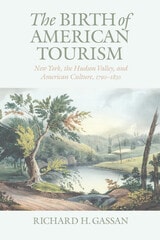
The Birth of American Tourism
New York, the Hudson Valley, and American Culture, 1790-1835Richard H. Gassan
University of Massachusetts Press, 2008
According to Gassan, the origins of American tourism in the Hudson Valley can be traced to a confluence of historical accidents, including the proximity of the region to the most rapidly growing financial and population center in the country, with its expanding middle class, and the remarkable beauty of the valley itself. But other developments also played a role, from the proliferation of hotels to accommodate tourists, to the construction of an efficient transportation network to get them to their destinations, to the creation of a set of cultural attractions that invested their experience with meaning. In the works of Washington Irving and James Fenimore Cooper and the paintings of Thomas Cole and others of the Hudson River School, travelers in the region encountered the nation's first literary and artistic movements. Tourism thus did more than provide an escape from the routines of everyday urban life; it also helped Americans of the early republic shape a sense of national identity.
The Birth of Whiteness
Race and the Emergence of United States CinemaEdited by Daniel Leonard Bernardi
Rutgers University Press, 1996
As indelible components of the history of the United States, race and racism have permeated nearly all aspects of life: cultural, economic, political, and social. In this first anthology on race in early cinema, fourteen scholars examine the origins, dynamics, and ramifications of racism and Eurocentrism and the resistance to both during the early years of American motion pictures. Any discussion of racial themes and practices in any arena inevitably begins with the definition of race. Is race an innate and biologically determined "essence" or is it a culturally constructed category? Is the question irrelevant? Perhaps race exists as an ever-changing historical and social formation that, regardless of any standard definition, involves exploitation, degradation, and struggle. In his introduction, Daniel Bernardi writes that "early cinema has been a clear partner in the hegemonic struggle over the meaning of race" and that it was steadfastly aligned with a Eurocentric world view at the expense of those who didn't count as white.
The contributors to this work tackle these problems and address such subjects as biological determinism, miscegenation, Manifest Destiny, assimilation, and nativism and their impact on early cinema. Analyses of The Birth of a Nation, Romona, Nanook of the North and Madame Butterfly and the directorial styles of D. W. Griffith, Oscar Micheaux, and Edwin Porter are included in the volume.
The Birth of the Penitentiary in Latin America
Essays on Criminology, Prison Reform, and Social Control, 1830-1940Edited by Ricardo D. Salvatore and Carlos Aguirre
University of Texas Press, 1996
Opening a new area in Latin American studies, The Birth of the Penitentiary in Latin America showcases the most recent historical outlooks on prison reform and criminology in the Latin American context. The essays in this collection shed new light on the discourse and practice of prison reform, the interpretive shifts induced by the spread of criminological science, and the links between them and competing discourses about class, race, nation, and gender. The book shows how the seemingly clear redemptive purpose of the penitentiary project was eventually contradicted by conflicting views about imprisonment, the pervasiveness of traditional forms of repression and control, and resistance from the lower classes.
The essays are unified by their attempt to view the penitentiary (as well as the variety of representations conveyed by the different reform movements favoring its adoption) as an interpretive moment, revealing of the ideology, class fractures, and contradictory nature of modernity in Latin America. As such, the book should be of interest not only to scholars concerned with criminal justice history, but also to a wide range of readers interested in modernization, social identities, and the discursive articulation of social conflict. The collection also offers an up-to-date sampling of new historical approaches to the study of criminal justice history, illuminates crucial aspects of the Latin American modernization process, and contrasts the Latin American cases with the better known European and North American experiences with prison reform.
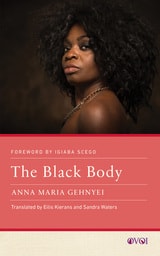
The Black Body
Anna Maria Gehnyei (Karima 2G)
Rutgers University Press, 2025
Best Translation of a Literary Work Published in 2025 from the American Association of Italian Studies
In her memoir, Anna Maria Gehnyei, better known as singer, rapper, and producer Karima 2G, reveals the challenges she faced as the child of Liberian immigrants, born and raised in Rome but perpetually viewed by her fellow Italians as a foreigner.
The daughter of the first Kpelle man to ever leave his native village and emigrate to Europe, Anna is proud of her heritage but only knows Liberia as a mystical, faraway land that appears in her parents’ stories. Though Italy is the only homeland she knows, she is merely classed as a resident, not a permanent citizen. At school and in the streets of Rome, she is treated to a mixture of patronizing condescension and xenophobic hostility. But Anna refuses to be bullied into mute submission, finding her voice as a performer and activist who demands recognition for Italy’s growing immigrant population.
The Black Body in Ecstasy
Reading Race, Reading PornographyJennifer C. Nash
Duke University Press, 2014
The Black Boom
Riley, Jason L.
Templeton Press, 2021
Economic inequality continues to be one of America’s most hotly debated topics. Still, there has been relatively little discussion of the fact that black-white gaps in joblessness, income, poverty and other measures were shrinking before the pandemic. Why was it happening, and why did this phenomenon go unacknowledged by so much media?
In The Black Boom, Jason L. Riley—acclaimed Wall Street Journal columnist and senior fellow at the Manhattan Institute—digs into the data and concludes that the economic lives of black people improved significantly under policies put into place during the Trump administration. To acknowledge as much is not to endorse the 45th president but to champion policies that achieve a clear moral objective shared by most Americans.
Riley argues that before the Covid-19 pandemic of 2020, the economic fortunes of blacks improved under Trump to an extent unseen under Obama and unseen going back several generations. Black unemployment and poverty reached historic lows, and black wages increased faster than white wages.
Less inequality is something that everyone wants, but disapproval of Trump’s personality and methods too often skewed the media’s appraisal of effective policies advocated by his administration. If we're going to make real progress in improving the lives of low-income minorities, says Riley, we must look beyond our partisan differences at what works and keep doing it. Unfortunately, many press outlets were unable or unwilling to do that.
Riley notes that political reporters were not unaware of this data. Instead, they chose to ignore or downplay it because it was inconvenient. In their view, Trump, because he was a Republican and because he was Trump, had it in for blacks, and thus his policy preferences would be harmful to minorities. To highlight that significant racial disparities were narrowing on his watch—that the administration’s tax and regulatory reforms were mainly boosting the working and middle classes rather than ‘the rich’—would have undermined a narrative that the media preferred to advance, regardless of its veracity.”
As with previous books in our New Threats to Freedom series, The Black Boom includes two essays from prominent experts who take issue with the author’s perspective. Juan Williams, a veteran journalist, and Wilfred Reilly, a political scientist, contribute thoughtful responses to Riley and show that it is possible to share a deep concern for disadvantaged groups while disagreeing on how best to help them.
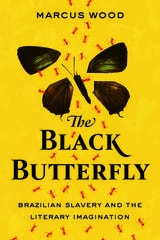
The Black Butterfly
Brazilian Slavery and the Literary ImaginationMarcus Wood
West Virginia University Press, 2019
The Black Butterfly focuses on the slavery writings of three of Brazil’s literary giants—Machado de Assis, Castro Alves, and Euclides da Cunha. These authors wrote in the late nineteenth and early twentieth centuries, as Brazil moved into and then through the 1888 abolition of slavery. Assis was Brazil’s most experimental novelist; Alves was a Romantic poet with passionate liberationist politics, popularly known as “the poet of the slaves”; and da Cunha is known for the masterpiece Os Sertões (The Backlands), a work of genius that remains strangely neglected in the scholarship of transatlantic slavery.
Wood finds that all three writers responded to the memory of slavery in ways that departed from their counterparts in Europe and North America, where emancipation has typically been depicted as a moment of closure. He ends by setting up a wider literary context for his core authors by introducing a comparative study of their great literary abolitionist predecessors Luís Gonzaga Pinto da Gama and Joaquim Nabuco. The Black Butterfly is a revolutionary text that insists Brazilian culture has always refused a clean break between slavery and its aftermath. Brazilian slavery thus emerges as a living legacy subject to continual renegotiation and reinvention.
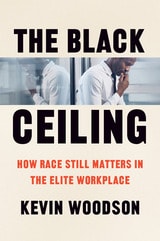
The Black Ceiling
How Race Still Matters in the Elite WorkplaceKevin Woodson
University of Chicago Press, 2023
America’s elite law firms, investment banks, and management consulting firms are known for grueling hours, low odds of promotion, and personnel practices that push out any employees who don’t advance. While most people who begin their careers in these institutions leave within several years, work there is especially difficult for Black professionals, who exit more quickly and receive far fewer promotions than their White counterparts, hitting a “Black ceiling.”
Sociologist and law professor Kevin Woodson knows firsthand what life at a top law firm feels like as a Black man. Examining the experiences of more than one hundred Black professionals at prestigious firms, Woodson discovers that their biggest obstacle in the workplace isn’t explicit bias but racial discomfort, or the unease Black employees feel in workplaces that are steeped in Whiteness. He identifies two types of racial discomfort: social alienation, the isolation stemming from the cultural exclusion Black professionals experience in White spaces, and stigma anxiety, the trepidation they feel over the risk of discriminatory treatment. While racial discomfort is caused by America’s segregated social structures, it can exist even in the absence of racial discrimination, which highlights the inadequacy of the unconscious bias training now prevalent in corporate workplaces. Firms must do more than prevent discrimination, Woodson explains, outlining the steps that firms and Black professionals can take to ease racial discomfort.
Offering a new perspective on a pressing social issue, The Black Ceiling is a vital resource for leaders at preeminent firms, Black professionals and students, managers within mostly White organizations, and anyone committed to cultivating diverse workplaces.
The Black Ceiling
How Race Still Matters in the Elite WorkplaceKevin Woodson
University of Chicago Press, 2023
America’s elite law firms, investment banks, and management consulting firms are known for grueling hours, low odds of promotion, and personnel practices that push out any employees who don’t advance. While most people who begin their careers in these institutions leave within several years, work there is especially difficult for Black professionals, who exit more quickly and receive far fewer promotions than their White counterparts, hitting a “Black ceiling.”
Sociologist and law professor Kevin Woodson knows firsthand what life at a top law firm feels like as a Black man. Examining the experiences of more than one hundred Black professionals at prestigious firms, Woodson discovers that their biggest obstacle in the workplace isn’t explicit bias but racial discomfort, or the unease Black employees feel in workplaces that are steeped in Whiteness. He identifies two types of racial discomfort: social alienation, the isolation stemming from the cultural exclusion Black professionals experience in White spaces, and stigma anxiety, the trepidation they feel over the risk of discriminatory treatment. While racial discomfort is caused by America’s segregated social structures, it can exist even in the absence of racial discrimination, which highlights the inadequacy of the unconscious bias training now prevalent in corporate workplaces. Firms must do more than prevent discrimination, Woodson explains, outlining the steps that firms and Black professionals can take to ease racial discomfort.
Offering a new perspective on a pressing social issue, The Black Ceiling is a vital resource for leaders at preeminent firms, Black professionals and students, managers within mostly White organizations, and anyone committed to cultivating diverse workplaces.
The Black Chicago Renaissance
Edited by Darlene Clark Hine and John McCluskey Jr.
University of Illinois Press, 2012
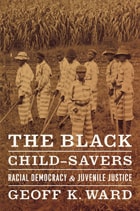
The Black Child-Savers
Racial Democracy and Juvenile JusticeGeoff K. Ward
University of Chicago Press, 2012
At once an inspiring story about the shifting boundaries of race, citizenship, and democracy in America and a crucial look at the nature of racial inequality, The Black Child Savers is a stirring account of the stakes and meaning of social justice.
The Black Church in the African American Experience
C. Eric Lincoln and Lawrence H. Mamiya
Duke University Press, 1990
Drawing on interviews with more than 1,800 black clergy in both urban and rural settings, combined with a comprehensive historical overview of seven mainline black denominations, C. Eric Lincoln and Lawrence H. Mamiya present an analysis of the Black Church as it relates to the history of African Americans and to contemporary black culture. In examining both the internal structure of the Church and the reactions of the Church to external, societal changes, the authors provide important insights into the Church’s relationship to politics, economics, women, youth, and music.
Among other topics, Lincoln and Mamiya discuss the attitude of the clergy toward women pastors, the reaction of the Church to the civil rights movement, the attempts of the Church to involve young people, the impact of the black consciousness movement and Black Liberation Theology and clergy, and trends that will define the Black Church well into the next century.
This study is complete with a comprehensive bibliography of literature on the black experience in religion. Funding for the ten-year survey was made possible by the Lilly Endowment and the Ford Foundation.
The Black Citizen-Soldiers of Kansas, 1864-1901
Roger D. Cunningham
University of Missouri Press, 2008
Roger Cunningham examines a lost history to show that, in addition to black regulars, hundreds of other black militiamen and volunteers from the Sunflower State provided military service from the Civil War until the dawn of the twentieth century. He tells how African Americans initially filled segregated companies hurriedly organized to defend the state from the threat of Confederate invasion, with some units ordered into battle around Kansas City. Then after the state constitution was amended to admit blacks into the Kansas National Guard, but its generals still refused to integrate, blacks served in reserve militia and independent companies and in all-black regiments that were raised for the Spanish-American and Philippine wars.
Cunningham has researched service records, African American newspapers, and official correspondence to give voice to these citizen-soldiers. He shares stories of real people like William D. Matthews, a captain in the First Kansas Colored Infantry who was refused a commission when his regiment was mustered into the Union army; Charles Grinsted, who commanded the first black militia company after the Civil War; and other unsung heroes.
More than a military history, Cunningham’s account records the quest of black men, many of them former slaves, for inclusion in American society. Many came from the bottom of the socioeconomic order and found that as militiamen they could gain respect within their communities. And by marching in public ceremonies and organizing fund-raising activities to compensate for lack of financial support from the state, they also strengthened the ties that bound African American communities together.
The Black Experience in America
Selected EssaysEdited by James C. Curtis and Lewis L. Gould
University of Texas Press, 1970
In the fall of 1968, the University of Texas at Austin sponsored a series of public lectures delivered by outstanding students of the black past in an effort to clarify the role of the African American in America’s history. This volume of essays by eight of the ten participants makes the lectures available to a broader public.
The essays demonstrate that the black experience in America has been integral throughout the nation’s history. Although each contributor deals with a different aspect of this experience, they all share a common commitment to sound historical scholarship. The essays also reflect the intensive research in the field of black history during a time of high racial tension.
Henry Allen Bullock, in an exploration of education in the slave experience, shows that, despite organized attempts to dehumanize the Negro, the black man’s position in the American social order was not static. By training and educating the Negro, the slaveowner was weakening the peculiar institution and preparing the slave for freedom. In the field of cultural anthropology, which had largely ignored blacks in the United States, William S. Willis, Jr., examines the interaction of whites, blacks, and Indians on the Southern colonial frontier. Arthur Zilversmit traces the development of abolitionist attitudes from patience to militance and points out that both those reformers who abandoned action and those who demanded radical violent change were forced into their positions by society’s failure to listen to the arguments of moderate reformers.
William S. McFeely takes a fresh look at the Reconstruction era, one of the only times in American history when white Americans have even come close to wanting for black Americans what black Americans wanted for themselves. In a discussion of protest against segregated streetcars in the South, August Meier and Elliott Rudwick show that the boycotts of the late 1950s had their counterparts in more than twenty-five Southern cities between 1900 and 1906. Thomas R. Cripps attacks the myth of the Southern box office and shows how Hollywood’s own timidity fostered racial stereotyping in American movies. Robert L. Zangrando outlines the role of the NAACP, founded in 1909, in the evolution of civil rights protests during the mid-twentieth century. He argues that the organization’s precarious position in American society prevented it from exercising strong leadership within the black community. Louis R. Harlan concludes the volume by assessing the past and looking toward the future of black history in America.
The Black Extended Family
Elmer P. Martin and Joanne Mitchell Martin
University of Chicago Press, 1980
Through their eight-year study of some thirty extended families, the Martins find that economic pressures, including federal tax and welfare laws, have begun to make the extended family's flexibility into a liability that threatens its future.
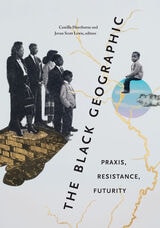
The Black Geographic
Praxis, Resistance, FuturityCamilla Hawthorne and Jovan Scott Lewis, editors
Duke University Press, 2023
Contributors. Anna Livia Brand, C.N.E. Corbin, Lindsey Dillon, Chiyuma Elliott, Ampson Hagan, Camilla Hawthorne, Matthew Jordan-Miller Kenyatta, Jovan Scott Lewis, Judith Madera, Jordanna Matlon, Solange Muñoz, Diana Negrín, Danielle Purifoy, Sharita Towne
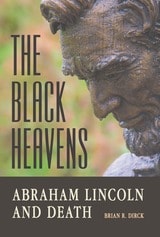
The Black Heavens
Abraham Lincoln and DeathBrian R. Dirck
Southern Illinois University Press, 2019
From multiple personal tragedies to the terrible carnage of the Civil War, death might be alongside emancipation of the slaves and restoration of the Union as one of the great central truths of Abraham Lincoln’s life. Yet what little has been written specifically about Lincoln and death is insufficient, sentimentalized, or devoid of the rich historical literature about death and mourning during the nineteenth century. The Black Heavens: Abraham Lincoln and Death is the first in-depth account of how the sixteenth president responded to the riddles of mortality, undertook personal mourning, and coped with the extraordinary burden of sending hundreds of thousands of soldiers to be killed on battlefields.
Going beyond the characterization of Lincoln as a melancholy, tragic figure, Brian R. Dirck investigates Lincoln’s frequent encounters with bereavement and sets his response to death and mourning within the social, cultural, and political context of his times. At a young age Lincoln saw the grim reality of lives cut short when he lost his mother and sister. Later, he was deeply affected by the deaths of two of his sons, three-year-old Eddy in 1850 and eleven-year-old Willie in 1862, as well as the combat deaths of close friends early in the war. Despite his own losses, Lincoln learned how to approach death in an emotionally detached manner, a survival skill he needed to cope with the reality of his presidency.
Dirck shows how Lincoln gradually turned to his particular understanding of God’s will in his attempts to articulate the meaning of the atrocities of war to the American public, as showcased in his allusions to religious ideas in the Gettysburg Address and the Second Inaugural. Lincoln formed a unique approach to death: both intellectual and emotional, typical and yet atypical of his times. In showing how Lincoln understood and responded to death, both privately and publicly, Dirck paints a compelling portrait of a commander in chief who buried two sons and gave the orders that sent an unprecedented number of Americans to their deaths.
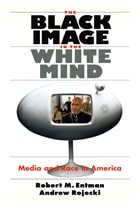
The Black Image in the White Mind
Media and Race in AmericaRobert M. Entman and Andrew Rojecki
University of Chicago Press, 2001
Using the media, and especially television, as barometers of race relations, Robert Entman and Andrew Rojecki explore but then go beyond the treatment of African Americans on network and local news to incisively uncover the messages sent about race by the entertainment industry-from prime-time dramas and sitcoms to commercials and Hollywood movies. While the authors find very little in the media that intentionally promotes racism, they find even less that advances racial harmony. They reveal instead a subtle pattern of images that, while making room for Blacks, implies a racial hierarchy with Whites on top and promotes a sense of difference and conflict. Commercials, for example, feature plenty of Black characters. But unlike Whites, they rarely speak to or touch one another. In prime time, the few Blacks who escape sitcom buffoonery rarely enjoy informal, friendly contact with White colleagues—perhaps reinforcing social distance in real life.
Entman and Rojecki interweave such astute observations with candid interviews of White Americans that make clear how these images of racial difference insinuate themselves into Whites' thinking.
Despite its disturbing readings of television and film, the book's cogent analyses and proposed policy guidelines offer hope that America's powerful mediated racial separation can be successfully bridged.
"Entman and Rojecki look at how television news focuses on black poverty and crime out of proportion to the material reality of black lives, how black 'experts' are only interviewed for 'black-themed' issues and how 'black politics' are distorted in the news, and conclude that, while there are more images of African-Americans on television now than there were years ago, these images often don't reflect a commitment to 'racial comity' or community-building between the races. Thoroughly researched and convincingly argued."—Publishers Weekly
"Drawing on their own research and that of a wide array of other scholars, Entman and Rojecki present a great deal of provocative data showing a general tendency to devalue blacks or force them into stock categories."—Ben Yagoda, New Leader
Winner of the Frank Luther Mott Award for best book in Mass Communication and the Robert E. Lane Award for best book in political psychology.
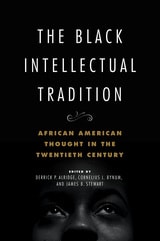
The Black Intellectual Tradition
African American Thought in the Twentieth CenturyEdited by Derrick P. Alridge, Cornelius L. Bynum, and James B. Stewart
University of Illinois Press, 2021
From 1900 to the present, people of African descent living in the United States have drawn on homegrown and diasporic minds to create a Black intellectual tradition engaged with ideas on race, racial oppression, and the world. This volume presents essays on the diverse thought behind the fight for racial justice as developed by African American artists and intellectuals; performers and protest activists; institutions and organizations; and educators and religious leaders. By including both women’s and men’s perspectives from the U.S. and the Diaspora, the essays explore the full landscape of the Black intellectual tradition. Throughout, contributors engage with important ideas ranging from the consideration of gender within the tradition, to intellectual products generated outside the intelligentsia, to the ongoing relationship between thought and concrete effort in the quest for liberation.
Expansive in scope and interdisciplinary in practice, The Black Intellectual Tradition delves into the ideas that animated a people’s striving for full participation in American life.
Contributors: Derrick P. Alridge, Keisha N. Blain, Cornelius L. Bynum, Jeffrey Lamar Coleman, Pero Gaglo Dagbovie, Stephanie Y. Evans, Aaron David Gresson III, Claudrena N. Harold, Leonard Harris, Maurice J. Hobson, La TaSha B. Levy, Layli Maparyan, Zebulon V. Miletsky, R. Baxter Miller, Edward Onaci, Venetria K. Patton, James B. Stewart, and Nikki M. Taylor

The Black Mecca Blueprint
Race, Class, and Place in Atlanta, GeorgiaJonathan P. Grant
Temple University Press, 2027
Black people have been on a continual search for freedom. Since their arrival in the West as exploited sources of labor, through the great migrations out of and back to the U.S. South, to repatriation efforts to Africa and throughout the Diaspora, they have been longing for place and to find or create a Mecca.
The Black Mecca Blueprint examines the current Black Mecca, Atlanta, Georgia. Jonathan Grant explores the dynamism of Black life in a “Black city,” homing in on race, class, and place and all their inherent complexities. He analyzes the ways place and city spaces are negotiated through power and class struggles and how various spaces, such as the Atlanta University Center and its reputation as a beacon, are recreated.
Drawing on in-depth interviews, hip hop music, cultural podcasts, stand-up comedy, archival research, media, autoethnographic data, and historiography, The Black Mecca Blueprint captures the beauty and burden of Atlanta while creating a blueprint that can be used to help devise more democratic cities across the U.S. and around the world.

The Black Model Minority Student
African Immigrants and the Contradictions of Race in AmericaMercy Agyepong
University of Chicago Press, 2027
Explores the contradictory perceptions of African immigrant students in New York City and reveals how anti-Blackness persists even within predominantly Black and Brown schools.
African immigrant students are often celebrated in the United States as academically successful and culturally disciplined. But what happens when praise itself becomes part of a racial hierarchy? In The Black Model Minority Student, sociologist of education Mercy Agyepong traces the complex experiences of West African immigrant students attending public high schools in New York City.
Using ethnographic and interview data from predominantly Black and Brown schools in the Bronx, Agyepong shows that African immigrant students are often viewed through two competing yet coexisting narratives: as intellectually capable and hardworking, yet also as uncivilized or socially inferior. These perceptions are not incidental, but central to how anti-Blackness operates and how racial hierarchies are sustained in the United States. While the model minority stereotype shaped their experiences in Black and Brown high schools, West African immigrant students found that this seemingly favorable stereotype mattered less once they graduated and entered the white spaces of higher education and other social settings. At every step, African students—regardless of their national origins—were disadvantaged by racial stereotypes.
Theoretically grounded yet deeply human, The Black Model Minority Student offers an important new perspective on race, immigration, and education in contemporary America.
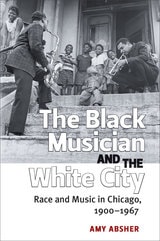
The Black Musician and the White City
Race and Music in Chicago, 1900-1967Amy Absher
University of Michigan Press, 2014
Absher’s work diverges from existing studies in three ways: First, she takes the history beyond the study of jazz and blues by examining the significant role that classically trained black musicians played in building the Chicago South Side community. By acknowledging the presence and importance of classical musicians, Absher argues that black migrants in Chicago had diverse education and economic backgrounds but found common cause in the city’s music community. Second, Absher brings numerous maps to the history, illustrating the relationship between Chicago’s physical lines of segregation and the geography of black music in the city over the years. Third, Absher’s use of archival sources is both extensive and original, drawing on manuscript and oral history collections at the Center for Black Music Research in Chicago, Columbia University, Rutgers’s Institute of Jazz Studies, and Tulane’s Hogan Jazz Archive. By approaching the Chicago black musical community from these previously untapped angles, Absher offers a history that goes beyond the retelling of the achievements of the famous musicians by discussing musicians as a group. In The Black Musician and the White City, black musicians are the leading actors, thinkers, organizers, and critics of their own story.

The Black Outside
Joy Priest
Duke University Press, 2027
The Black Pacific Narrative
Geographic Imaginings of Race and Empire between the World WarsEtsuko Taketani
Dartmouth College Press, 2014
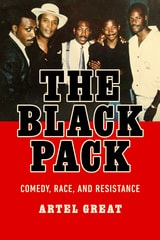
The Black Pack
Comedy, Race, and ResistanceArtel Great
Rutgers University Press, 2025
Working together as writers, directors, producers, actors, and consultants, the Black Pack created some of the most provocative and enduring Black films and television shows of the twentieth century, including classic productions like In Living Color, Coming to America, Hollywood Shuffle, and The Arsenio Hall Show. The Black Pack collective was armed with a signature comedic style which combined politically-Black satire with edgy social humor that entertained millions, shattered box-office records, and slyly critiqued America’s racial condition. Amid escalating social tensions in the 1980s, the Black Pack’s comedic output transformed anger into art, wielding the cloak of humor as a rebellious tool to confront unjust business practices in Hollywood and challenge racial narratives embedded in American culture. Their work empowered unapologetically Black voices and expanded creative possibilities for Black artists in the entertainment industry.
In The Black Pack, Artel Great delivers the most comprehensive analysis of this groundbreaking comedy collective, uncovering how the group’s socially and politically-charged humor defied systemic barriers to achieve unprecedented commercial success and establish a cultural legacy that continues to inspire media creators today and across new generations.

The Black Penguin
Andrew Evans
University of Wisconsin Press, 2018
Ejected from church and shunned by his family as a young man, Evans embarks on an ambitious overland journey halfway across the world. Riding public transportation, he crosses swamps, deserts, mountains, and jungles, slowly approaching his lifelong dream and ultimate goal: Antarctica. With each new mile comes laughter, pain, unexpected friendship, true weirdness, unsettling realities, and some hair-raising moments that eventually lead to a singular discovery on a remote beach at the bottom of the world.
Evans's 12,000-mile voyage becomes a soulful quest to balance faith, family, and self, reminding us that, in the end, our lives are defined by the roads we take, the places we touch, and those we hold nearest.
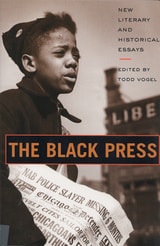
The Black Press
New Literary and Historical EssaysEdited by Todd Vogel
Rutgers University Press, 2001
In a segregated society in which black scholars, writers, and artists could find few ways to reach an audience, journalism was a means of dispersing information to communities throughout the United States. The black press has offered incisive critiques of such issues as racism, identify, class, and economic injustice, but that contribution to public discourse has remained largely unrecognized until now. The original essays in this volume broaden our understanding of the “public sphere” and show how marginalized voices attempted to be heard in the circles of debate and dissent that existed in their day.
The Black Press progresses chronologically from slavery to the impact and implications of the Internet to reveal how the press’s content and its very form changed with evolving historical and cultural conditions in America. The first papers fought for rights for free blacks in the North. The early twentieth-century black press sought to define itself and its community amidst American modernism. Writers in the 1960s took on the task of defining revolution in that decade’s ferment. It was not been until the mid-twentieth century that African American cultural study began to achieve intellectual respectability.
The Black Press addresses the production, distribution, regulation, and reception of black journalism in order to illustrate a more textured public discourse, one that exchanges ideas not just within the black community, but also within the nation at large. The essays demonstrate that the black press redefined class, restaged race and nationhood, and reset the terms of public conversation, providing a fuller understanding of not just African American culture, but also the varied cultural battles fought throughout our country’s history.
The Black Public Sphere
Edited by The Black Public Sphere Collective
University of Chicago Press, 1995
To think about the black public sphere we have to be willing to rethink the relationship between markets and freedom, commodity and identity, property and pleasure. This book provides more sophisticated approaches to matters historically consigned to inadequate rubrics—"the Negro problem," "subcultures," "minorities," "inner city," and "multicultural." While these rubrics constrict and stereotype, the analytic potential of the black public sphere is that it facilitates new ways to discuss democratic values and citizenship.