Results by title
4155 books match the query 'State & Local' and 925 start with t
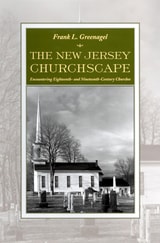
The New Jersey Churchscape
Encountering Eighteenth- and Nineteenth-Century ChurchesFrank L. Greenagel
Rutgers University Press, 2001
Although best known as the Garden State, New Jersey could also be called the Church State. The state boasts thousands of houses of worship, with more than one thousand still standing that were built in the eighteenth and nineteenth centuries. Frank L. Greenagel has photographed more than six hundred. He has selected two hundred of these historic landmarks for an examination of why they are sited where they are and why they look the way they do.
Greenagel has sought out and included images of not only mainstream Christian churches, but also Jewish synagogues as well as the places of worship of religious groups such as the Moravians, the Church of the Brethren, and the Seventh Day Baptists. The photographs are arranged chronologically within sections on three major early settlement regions of the state ¾ the Hudson River, the Delaware River, and the Raritan Valley. For each building, Greenagel details the date of construction, the cultural, historic, and religious influences that shaped it, the architectural details that distinguish it, and what purpose it currently serves.
The New Jersey State Constitution
A Reference GuideWilliams, Robert F
Rutgers University Press, 1997
The year 1997 marks the fiftieth anniversary of New Jerseys wellregarded state constitution. State constitutions, although the highest source of law within a state, are not well understood by citizens, government officials, historians, political scientists, lawyers, or even judges.
This book is the first single volume to combine a detailed review of New Jersey's constitutional history and analysis of each section of the current constitution. It is the standard work on New Jersey constitutional development and law. Divided into two parts, the book first covers the historical development of the constitutions of 1776, 1844, the Constitutional Commission of 1873, and the current constitution written in 1947. It then traces the origins and major judicial interpretations of each section of the present-day constitution. It concludes with an exhaustive bibliographical essay which organizes the most complete listing of primary and secondary sources to date.

The New Star Chamber and Other Essays
Annotated EditionEdgar Lee Masters; edited by Jason Stacy
Southern Illinois University Press, 2023
Coedited by noted Masters scholar, Jason Stacy, and his class, “Editing History,” this annotated edition of Edgar Lee Masters’s The New Star Chamber and Other Essays reappears at a perilous time in US history, when large corporations and overseas conflicts once again threaten the integrity of American rights and liberties, and the United States still finds itself beholden to corporate power and the legacy of imperial hubris. In speaking to his times, Masters also speaks to ours.
These thirteen essays lay bare the political ideology that informed Spoon River Anthology. Masters argues that the dangerous imperialism championed by then-President Theodore Roosevelt was rooted in the Constitution itself. By debating the ethics of the Philippine-American War, criticizing Hamiltonian centralization of government, and extolling the virtues of Jeffersonian individualism, Masters elucidates the ways in which America had strayed from its constitutional morals and from democracy itself. The result is a compelling critique of corporate capitalism and burgeoning American imperialism, as well as an exemplary source for understanding its complicated author in the midst of his transformation from urban lawyer to poet of rural America.
In print again for the first time since 1904, this edition includes an introduction and historical annotations throughout. Edited and annotated by students at Southern Illinois University Edwardsville, and designed and illustrated by students at Southern Illinois University Carbondale, this volume traces economic and political pathologies to the origins of the American republic. The New Star Chamber and Other Essays is as vital now as it was over 100 years ago.
The New Western History
The Territory AheadForrest G. Robinson
University of Arizona Press, 1998
Introduction / Jerome Frisk and Forrest G. Robinson
The Theoretical (Re)Positions of the New Western History / Jerome Frisk
Clio Bereft of Calliope: Literature and the New Western History / Forrest G. Robinson
Literature, Gender Studies, and the New Western History / Krista Comer
Haunting Presences and the New Western History: Reading Repetition, Negotiating Trauma / Carl Gutiérrez Jones
The Problem of the "Popular" in the New Western History / Stephen Tatum
The New Western History: An Essay from the Woods (and Rangelands) / Sally K. Fairfax and Lynn Huntsinger
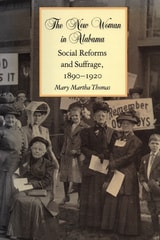
The New Woman in Alabama
Social Reforms and Suffrage, 1890–1920Mary Martha Thomas
University of Alabama Press, 1992
How Alabama women reshaped public life during the Progressive Era.
Between 1890 and 1920, middle-class white and black Alabama women created many clubs and organizations that took them out of the home and provided them with roles in the public sphere. Beginning with the Alabama Woman’s Christian Temperance Union in the 1880s and followed by the Alabama Federation of Women’s Clubs and the Alabama Federation of Colored Women’s Clubs in the 1890s, women spearheaded the drive to eliminate child labor, worked to improve the educational system, upgraded the jails and prisons, and created reform schools for both boys and girls.
Suffrage was also an item on the Progressive agenda. After a brief surge of activity during the 1890s, the suffrage drive lay dormant until 1912, when women created the Alabama Equal Suffrage Association. During their campaigns in the 1915 and 1919 to persuade the legislature to enfranchise women, the leaders learned the art of politics—how to educate, organize, lobby, and count votes. Women seeking validation for their roles as homemakers and mother demanded a hearing in the political arena for issues that affected them and their families. In the process they began to erase the line between the public world of men and the private world of women. These were the New Women who tackled the problems created by the industrialization and urbanization of the New South. By 1920 Alabama women had created new public spaces for themselves in these voluntary associations. As a consequence of their involvement in reform crusades, the women’s club movement, and the campaign for woman suffrage, women were no longer passive and dependent. They were willing and able to be rightful participants.
Thomas’s book is the first of its kind to focus on the reform activities of women during the Progressive Era, and the first to consider the southern woman and all the organizations of middle-class black and white women in the South and particularly in Alabama. It is also the first to explore the drive of Alabama women to obtain the vote. The development of political power among southern women progressed slowly. Demolishing as it did the myth of the “Southern Lady.” Traditionally confined to the domestic sphere, southern women had no experience in public decision making and were discouraged from attaining the skills necessary for participation in public debate. The division of women by race and class further impeded their political education. But through their participation in so-called women’s issues—child labor laws, temperance, and educational reform—women gained experience in influencing political leaders. Black and white women’s clubs provided the framework for state-wide lobbying.
Only in the wake of their success with domestic issues tackled through club organizations and temperance unions did women dare seek the right to vote. They learned how to wield political power through acceptable “ladylike” avenues, and it was this experience that led to their long but eventually successful drive for woman suffrage. The New Woman eventually found a way to replace the Southern Lady.
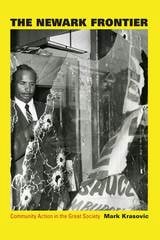
The Newark Frontier
Community Action in the Great SocietyMark Krasovic
University of Chicago Press, 2016
The Newark Frontier shows how, during the Great Society, urban liberalism adapted and grew, defining itself less by centralized programs and ideals than by administrative innovation and the small-scale, personal interactions generated by community action programs, investigative commissions, and police-community relations projects. Paying particular attention to the fine-grained experiences of Newark residents, Krasovic reveals that this liberalism was rooted in an ethic of experimentation and local knowledge. He illustrates this with stories of innovation within government offices, the dynamic encounters between local activists and state agencies, and the unlikely alliances among nominal enemies. Krasovic makes clear that postwar liberalism’s eventual fate had as much to do with the experiments waged in Newark as it did with the violence that rocked the city in the summer of 1967.
The News Untold
Community Journalism and the Failure to Confront Poverty in AppalachiaMichael Clay Carey
West Virginia University Press, 2017
Weatherford Award winner, nonfiction
The News Untold offers an important new perspective on media narratives about poverty in Appalachia. It focuses on how small-town reporters and editors in some of the region’s poorest communities decide what aspects of poverty are news, how their audiences interpret those decisions, and how those two related processes help shape broader understandings of economic need and local social responsibility. Focusing on patterns of both media creation and consumption, The News Untold shows how a lack of constructive news coverage of economic need can make it harder for the poor to voice their concerns.
Critical and inclusive news coverage of poverty at the local level, Michael Clay Carey writes, can help communities start to look past old stereotypes and attitudes and encourage solutions that incorporate broader sets of community voices. Such an effort will require journalists and community leaders to reexamine some of the professional traditions and social views that often shape what news looks like in small towns.
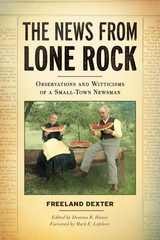
The News from Lone Rock
Observations and Witticisms of a Small-Town NewsmanFreeland Dexter
Wisconsin Historical Society Press, 2016
At the turn of the twentieth century, the bustling railroad town of Lone Rock, Wisconsin, was home to about a thousand residents, and Freeland Dexter seemed to know the business of every single one. Dexter reported all the news from Lone Rock—from the significant to the trivial, the tragic to the comical—for the Weekly Home News of neighboring Spring Green from 1884 to 1912.
This collection of Dexter’s most fascinating, amusing, and poignant stories and observations brings back to life the colorful characters of his time and takes readers on a journey to a world that was both simpler and changing fast. Whether he was reporting who grew the biggest watermelon, teasing the local lovebirds, or taking a side on the ever-controversial question of whether the town should go dry, Dexter wrote with a distinctive wit and an obvious affection for his town and its people. The News from Lone Rock also provides an illuminating window into a time period of rapid technological progress, showing how the introduction of electric light, telephones, and cars changed lives and connected this quaint village more and more to the outside world.
The Newspapers Of Nevada
A History And Bibliography, 1854-1979Richard E. Lingenfelter
University of Nevada Press, 1984
This new bibliography of Nevada's newspapers supersedes and greatly expands on previous works. More than 800 publications are now included: traditional newspapers, penny shoppers, comic and campaign sheets, entertainment and matrimonial guides, and fictitious newspapers that had life only in the columns of other papers. Also included is a brief appendix of early newspapers from boarder states that reported regularly on Nevada. The authors have provided a brief historical sketch of each publication, together with a list and location of known copies of the original papers, plus current microfilm holdings. The bibliography also documents frequency of publication, proprietorship, title changes, printing locations, and political affiliation. This volume will be of value to historians ranging from scholars to genealogy buffs who need access to the information only newspapers can provide.

The Northeast Corridor
The Trains, the People, the History, the RegionDavid Alff
University of Chicago Press, 2024
Traversed by thousands of trains and millions of riders, the Northeast Corridor might be America’s most famous railway, but its influence goes far beyond the right-of-way. David Alff welcomes readers aboard to see how nineteenth-century train tracks did more than connect Boston to Washington, DC. They transformed hundreds of miles of Atlantic shoreline into a political capital, a global financial hub, and home to fifty million people. The Northeast Corridor reveals how freight trains, commuter rail, and Amtrak influenced—and in turn were shaped by—centuries of American industrial expansion, metropolitan growth, downtown decline, and revitalization.
Paying as much attention to Canton, Trenton, New Rochelle, and Providence as to New York City, Philadelphia, and Baltimore, Alff provides narrative thrills for history buffs, train enthusiasts, and adventurers alike. What’s more, he offers a glimpse into the future of the corridor. New infrastructural plans—supported by President Joe Biden, famously Amtrak’s biggest fan—envision ever-faster trains zipping along technologically advanced rails. Yet those tracks will literally sit atop a history that links the life of Frederick Douglass, who fled to freedom by boarding a train in Baltimore, to the Frederick Douglass Tunnel, which is expected to be the newest link in the corridor by 2032.
Trains have long made the places that make America, and they still do.
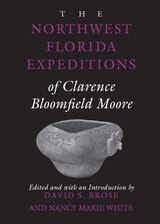
The Northwest Florida Expeditions of Clarence Bloomfield Moore
Clarence Bloomfield Moore
University of Alabama Press, 1999
A Dan Josselyn Memorial Publication
This comprehensive compilation of Moore's archaeological reports on northwest Florida and southern Alabama and Georgia presents the earliest documented investigations of this region.
When Clarence Bloomfield Moore cruised the rivers of Florida in search of prehistoric artifacts a century ago, he laid the groundwork for archaeological investigations to follow. This volume reflects Moore's fieldwork along the northwest Florida coast, the most archaeologically rich area of the state, as well as Southern Alabama and Georgia.
Here readers will share Moore's first look at the area in 1901-1903 and additional observations made in 1918 during what was to be his last field season. Moore's works reveal ceramics, tools, skeletal remains, and exotic artifacts excavated from the earthen mounds and shell middens built by native peoples over the last two millennia.
In the introduction to this edition, David Brose and Nancy Marie White place Moore's investigations within the context of the science, natural history, and antiquarianism of his day. They document what happened to the sites he explored, tell how his findings fit into the body of his research, and explain how those findings should be interpreted in the context of Southeastern culture history and modern archaeological theory.
Moore was the most knowledgeable Southeastern archaeologist of his time; his writings are a benchmark for anyone studying those areas today.
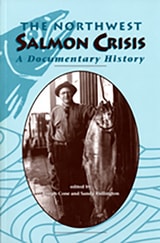
The Northwest Salmon Crisis
A Documentary HistoryJoseph Cone
Oregon State University Press, 1996
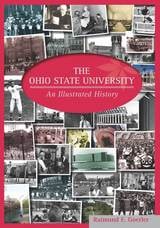
The Ohio State University
An Illustrated HistoryRaimund E. Goerler
The Ohio State University Press, 2011
Raimund E. Goerler, acclaimed archivist and historian, has written the definitive guidebook to the history of The Ohio State University, one of the world's largest universities and a prominent land-grant institution. Using a topical strategy—ranging widely through critical events in OSU's history, vignettes of prominent alumni, and stories of well known campus buildings, historic sites, presidents, student life, traditions, and athletics—The Ohio State University: An Illustrated History is the first one-volume history of the University to appear in more than fifty years.
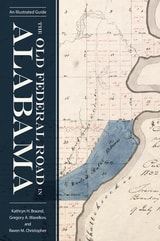
The Old Federal Road in Alabama
An Illustrated GuideKathryn H. Braund, Gregory A. Waselkov, and Raven M. Christopher
University of Alabama Press, 2019
A concise illustrated guidebook for those wishing to explore and know more about the storied gateway that made possible Alabama's development.
Forged through the territory of the Creek Nation by the United States federal government, the Federal Road was developed as a communication artery linking the east coast of the United States with Louisiana. Its creation amplified already tense relationships between the government, settlers, and the Creek Nation, culminating in the devastating Creek War of 1813–1814, and thereafter it became the primary avenue of immigration for thousands of Alabama settlers.
Central to understanding Alabama’s territorial and early statehood years, the Federal Road was both a physical and symbolic thoroughfare that cut a swath of shattering change through the land and cultures it traversed. The road revolutionized Alabama’s expansion, altering the course of its development by playing a significant role in sparking a cataclysmic war, facilitating unprecedented American immigration, and enabling an associated radical transformation of the land itself.
The first half of The Old Federal Road in Alabama: An Illustrated Guide offers a narrative history that includes brief accounts of the construction of the road, the experiences of historic travelers, and descriptions of major changes to the road over time. The authors vividly reconstruct the course of the road in detail and make use of a wealth of well-chosen illustrations. Along the way they give attention to the very terrain it traversed, bringing to life what traveling the road must have been like and illuminating its story in a way few others have ever attempted.
The second half of the volume is divided into three parts—Eastern, Central, and Southern—and serves as a modern traveler’s guide to the Federal Road. This section includes driving tours and maps, highlighting historical sites and surviving portions of the old road and how to visit them.
The Old South Frontier
Cotton Plantations and the Formation of Arkansas Society, 1819–1861Donald P. Mcneilly
University of Arkansas Press, 2000

The Olympics that Never Happened
Denver '76 and the Politics of GrowthAdam Berg
University of Texas Press, 2023
A look back at how powerful politicians, business leaders, and a diverse cast of activists used a thwarted Olympics to shape the state of Colorado and the city of Denver.
If you don’t recall the 1976 Denver Olympic Games, it’s because they never happened. The Mile-High City won the right to host the winter games and then was forced by Colorado citizens to back away from its successful Olympic bid through a statewide ballot initiative. Adam Berg details the powerful Colorado regime that gained the games for Denver and the grassroots activism that brought down its Olympic dreams, and he explores the legacy of this milestone moment for the games and politics in the United States.
The ink was hardly dry on Denver’s host agreement when Mexican American and African American urbanites, white middle-class environmentalists, and fiscally concerned local politicians realized opposition to the Olympics provided them new political openings. The Olympics quickly became a platform for taking stands on a range of issues, from conservation to urban livability to the very idea of growth, which for decades had been unquestioned in Colorado. The Olympics That Never Happened argues that hostility to the Olympics galvanized and empowered diverse citizens in a major US city, with long-term ramifications for Colorado and political activism elsewhere. The Olympics themselves were changed forever, compelling organizers to take seriously competing interests from subgroups within their communities.
The Ongoing Civil War
New Versions of Old StoriesEdited & Intro by Herman Hattaway & Ethan S. Rafuse
University of Missouri Press, 2004
In 1997, John Stanchak, an editor at Cowles Enthusiast Media (now part of Primedia), realized his vision of “a publication that contained the best, most up-to-date scholarship on the [Civil] war, but was edited with the amateur historian in mind,” with the publication of Columbiad: A Quarterly Review of the War between the States. In the four years the journal was published, it strived to lessen the rift between the scholarly world of professional historians and the “popular” history with which the general reader is more familiar. Now, a selection of the essays that best represent the successful balance between “serious scholarship” and a narrative reading style preferred by the educated layman has been collected in The Ongoing Civil War.

The Opium Debate and Chinese Exclusion Laws in the Nineteenth-Century American West
Diana L. Ahmad
University of Nevada Press, 2011
America’s current "war on drugs" is not the nation’s first. In the mid-nineteenth century, opium-smoking was decried as a major social and public health problem, especially in the West. Although China faced its own epidemic of opium addiction, only a very small minority of Chinese immigrants in America were actually involved in the opium business. It was in Anglo communities that the use of opium soon spread and this growing use was deemed a threat to the nation’s entrepreneurial spirit and to its growing mportance as a world economic and military power. The Opium Debate examines how the spread of opium-smoking fueled racism and created demands for the removal of the Chinese from American life. This meticulously researched study of the nineteenth-century drug-abuse crisis reveals the ways moral crusaders linked their antiopium rhetoric to already active demands for Chinese exclusion. Until this time, anti-Chinese propaganda had been dominated by protests against the economic and political impact of Chinese workers and the alleged role of Chinese women as prostitutes. The use of the drug by Anglos added another reason for demonizing Chinese immigrants. Ahmad describes the disparities between Anglo-American perceptions of Chinese immigrants and the somber realities of these people’s lives, especially the role that opium-smoking came to play in the Anglo-American community, mostly among middle- and upper-class women. The book offers a brilliant analysis of the evolution of the Chinese Exclusion Act of 1882, plus important insights into the social history of the nineteenth-century West, the culture of American Victorianism, and the rhetoric of racism in American politics.
The Ordeal of the Jungle
Race and the Chicago Federation of Labor, 1903–1922David Bates
Southern Illinois University Press, 2019
By organizing workers into neighborhood locals, which connected workplace struggles to ethnic and religious identities, the CFL facilitated a surge in the organization’s membership, particularly among African American workers, and afforded the federation the opportunity to aggressively confront employers. The CFL’s innovative structure, however, was ultimately its demise. Linking union locals to neighborhoods proved to be a form of de facto segregation. Over time union structures, rank-and-file conflicts, and employer resistance combined to turn the union’s hopeful calls for solidarity into animosity and estrangement. Tensions were exacerbated by violent shop floor confrontations and exploded in the bloody 1919 Chicago Race Riot. By the early 1920s, the CFL had collapsed.
The Ordeal of the Jungle explores the choices of a variety of people while showing a complex, overarching interplay of black and white workers and their employers. In addition to analyzing union structures and on-the-ground relations between workers, Bates synthesizes and challenges previous scholarship on interracial organizing to explain the failure of progressive unionism in Chicago.

The Origin and Distribution of Birds in Coastal Alaska and British Columbia
The Lost Manuscript of Ornithologist Harry S. SwarthChristopher W. Swarth
Oregon State University Press, 2022
In 2019, Christopher Swarth, Harry’s grandson and a scientist in his own right, discovered the forgotten manuscript. This book includes the original unpublished manuscript, accompanied by contextual essays from contemporary ornithologists who examine the impact and relevance of Swarth’s research on coastal bird diversity, fox sparrow migration, and the systematic puzzle of the timberline sparrow. Expedition maps display field camps and exploration routes, and species checklists illustrate the variety of birds observed at key field sites. To bring additional color and insight, The Origin and Distribution of Birds in Coastal Alaska and British Columbia also includes excerpts from Harry Swarth’s field notes, a comprehensive list of Harry Swarth’s publications, and a glossary with historic and contemporary bird names. Naturalists, ornithologists, birders, and all those who want to learn more about the natural history of the region will delight in the rediscovery of this long-lost treasure.
The Original Rush Limbaugh
Lawyer, Legislator, and Civil LibertarianDennis K. Boman
University of Missouri Press, 2012
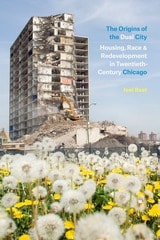
The Origins of the Dual City
Housing, Race, and Redevelopment in Twentieth-Century ChicagoJoel Rast
University of Chicago Press, 2019
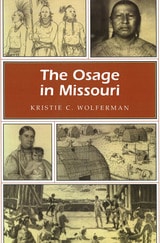
The Osage in Missouri
Kristie C. Wolferman
University of Missouri Press, 1997
On November 10, 1808, the American militia and the chiefs from the Little Osage and Big Osage nations celebrated. Fort Osage, built on a Missouri River bluff 250 miles west of St. Louis, was officially opened on that date, and the Osage Indians signed a treaty with the Americans written by Governor Meriwether Lewis.
Fort Osage, intended as a citadel for the opening of the great American West, was also to function as a trading post for the Osage Nation. It was President Jefferson's hope that Fort Osage and other fort-trading posts would not only keep peace on the frontier but would also begin a new era in relations between Native Americans and the United States. For a short time, the fort did provide the Osage with a place to trade their furs. It also offered them limited protection from the many other tribes who were their enemies. However, the Osage chiefs discovered very quickly that the fort was small consolation for the lands they had given up by signing the treaty.
In this well-written and very readable work, Kristie C. Wolferman traces the history of the Osage Nation from its origins to its forced departure from Missouri. She demonstrates the ways in which the Osage culture changed with each new encounter of the Osage with Europeans. The Osage had already experienced many contacts with the white man before Fort Osage came to be. They had encountered French trader-trappers, explorers, missionaries, Spanish administrators, and early settlers. Their lives had been changed by the influx of white disease, by the use of European trade goods and weapons, and by the political control of Spanish, French, and American governments. As a result, the Fort Osage experiment came too late to establish lasting good relations between the white men and the Indians.
The Osage in Missouri suggests that the white men could never understand the Osage way of life, nor the Osage the white men's way. But Osage culture, greatly altered by Europeans and Americans, would never be the same again. The Osage would be forced to sacrifice most of their traditions and beliefs, as well as their homeland, on the way to becoming "civilized."
The Other Brahmins
Boston's Black Upper Class 1750-1950Adelaide Cromwell
University of Arkansas Press, 1995
Adelaide Cromwell’s pioneering work explores race and the social caste system in an atypical northern environment over a period of two centuries. Based on scholarly sources, interviews, and questionnaires, the study identifies those blacks in Boston who exercised political, economic, and social leadership from the end of the eighteenth century to the middle of the twentieth. The central focus is a comparison of black and white upper-class women in the 1940s.
This rare look at a black social microcosm not located in the South is seminal and timely. Because it concludes at a critical period in American history, The Other Brahmins paints a colorful backdrop for evaluating subsequent changes in urban sociology and stratification. In a groundbreaking study, Cromwell effectively challenges the simplistic notions of hierarchy as they pertain to race.
The Other California
The Great Central Valley In Life And LettersGerald W. Haslam
University of Nevada Press, 1993
Oildale native, Gerald Haslam, doesn’t like it when folks dismiss the Central Valley as boring and flat. In this collection of essays, he argues that it is California’s heartland and economic hub. In addition, the valley has produced a crop of gifted writers. These nineteen essays range from reminiscences of childhood and adolescence to a portrait of Mexican-Americans and their position in the Valley’s society to a moving essay about having the author’s aging father come to live with the family. Even if you have never lived in the Valley, reading this book will give you an entirely new perspective the next time you drive into it.
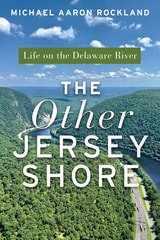
The Other Jersey Shore
Life on the Delaware RiverMichael Aaron Rockland
Rutgers University Press, 2024
The Other Jersey Shore takes readers on a personal tour of the New Jersey portion of the Delaware River and its surroundings. You will learn about the role that the river played in human history, including Washington’s four crossings of the Delaware during the Revolutionary War. And you will also learn about the ecological history of the river itself, once one of the most polluted waterways in the country and now one of the cleanest, providing drinking water for 17 million people. Michael Aaron Rockland, a long-time New Jersey resident, shows readers his very favorite spots along the Delaware, including the pristine waterfalls and wilderness in the Delaware Water Gap recreation area. Along the way, he shares engrossing stories and surprising facts about the river that literally defines western New Jersey.
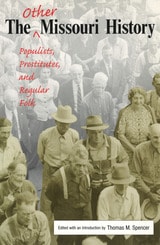
The Other Missouri History
Populists, Prostitutes, and Regular FolkEdited & Intro by Thomas M. Spencer
University of Missouri Press, 2005
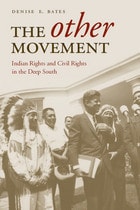
The Other Movement
Indian Rights and Civil Rights in the Deep SouthDenise E. Bates
University of Alabama Press, 2022
Examines the most visible outcome of the Southern Indian Rights Movement: state Indian affairs commissions
In recalling political activism in the post-World War II South, rarely does one consider the political activities of American Indians as they responded to desegregation, the passing of the Civil Rights Acts, and the restructuring of the American political party system. Native leaders and activists across the South created a social and political movement all their own, which drew public attention to the problems of discrimination, poverty, unemployment, low educational attainment, and poor living conditions in tribal communities.
While tribal-state relationships have historically been characterized as tense, most southern tribes—particularly non-federally recognized ones—found that Indian affairs commissions offered them a unique position in which to negotiate power. Although individual tribal leaders experienced isolated victories and generated some support through the 1950s and 1960s, the creation of the inter-tribal state commissions in the 1970s and 1980s elevated the movement to a more prominent political level. Through the formalization of tribal-state relationships, Indian communities forged strong networks with local, state, and national agencies while advocating for cultural preservation and revitalization, economic development, and the implementation of community services.
This book looks specifically at Alabama and Louisiana, places of intensive political activity during the civil rights era and increasing Indian visibility and tribal reorganization in the decades that followed. Between 1960 and 1990, U.S. census records show that Alabama’s Indian population swelled by a factor of twelve and Louisiana’s by a factor of five. Thus, in addition to serving as excellent examples of the national trend of a rising Indian population, the two states make interesting case studies because their Indian commissions brought formerly disconnected groups, each with different goals and needs, together for the first time, creating an assortment of alliances and divisions.
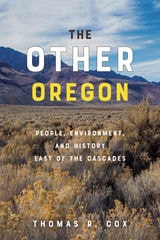
The Other Oregon
People, Environment, and History East of the CascadesThomas R. Cox
Oregon State University Press, 2019
With a staggering variety of landscapes, from high desert to alpine peaks, Oregon east of the Cascades encompasses seventeen counties and two time zones. Although this vast region defies generalization, its history is distinct from the rest of Oregon. The interrelationship between its people and the land has always been central, but that relationship has evolved and changed over time. Regional economies that were once largely exploitive and dedicated to commodity exports have slowly moved toward the husbanding of resources and to broader and deeper appreciations.
Historian Thomas Cox reveals the complexity of interactions between the people of Eastern Oregon, the land, natural resources, and one another, demonstrating how the region’s history speaks to larger American issues. The 2016 occupation of the Malheur National Wildlife Refuge, covered in detail within these pages, further reveals the relevance of Eastern Oregon to the larger world.
Written in clear and engaging prose and informed by extensive research, The Other Oregon will be a valuable resource for anyone interested in the environment, social change, and the relationships among the diverse people who make up Oregon society east of the Cascades. It will appeal to area residents and visitors, students of the American West, environmental historians, biologists, land managers, and anyone with an abiding interest in the region.

The Other Texas Frontier
By Harry Huntt Ransom; edited by Hazel H. Ransom; foreword by John Graves
University of Texas Press, 1984
“One is tempted to say that wherever there was a frontier in America there was a counterfrontier and that the main purpose of this counterfrontier was not only to help man grow or dig or catch or kill his livng but also to put this man in communication with the traditions of his kind and thereby secure to his descendants the benefits of the free mind.” —Harry Huntt Ransom
The reflections of Harry Huntt Ransom (1908–1976) in The Other Texas Frontier present an alternative to the stereotypical picture of the brash, blustery heroes of the Texas frontier. Here, in six highly readable essays, Ransom posits a thesis of the counterfrontier: a quiet settling of the land by thoughtful, undramatic citizens who, he says, were the other Texans—the Texans without guns. Three of the essays are profiles of gifted men from Texas’ nineteenth century: Ashbel Smith, physician, diplomat, and first president of the Board of Regents of the University of Texas; Sherman Goodwin, physician, horticulturalist, bibliophile (and Ransom’s own grandfather); and Swante Palm, Swedish immigrant, bibliographer, and generous patron of the University of Texas libraries.
Harry Huntt Ransom, one of Texas’ most accomplished men of letters and for forty-one years an integral part of the University of Texas System as professor, dean, president, and chancellor, leaves an extraordinary legacy to Texas for both his educational and literary service. Though educated out of state, he returned to his native Texas after completion of his PhD at Yale to teach, research, and write in the fields of copyright law, literary history, and bibliography. As founder of the Humanities Research Center, he was squarely in the tradition of the men he was writing about.
Compiled and edited after Ransom’s death by his wife, Hazel H. Ransom, the literary sketches of The Other Texas Frontier form a book that Ransom himself had outlined but had not completed.
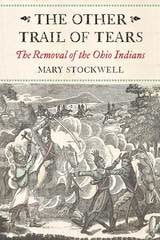
The Other Trail of Tears
The Removal of the Ohio IndiansMary Stockwell
Westholme Publishing, 2015
The Indian Removal Act of 1830 was the culmination of the United States’ policy to force native populations to relocate west of the Mississippi River. The most well-known episode in the eviction of American Indians in the East was the notorious “Trail of Tears” along which Southeastern Indians were driven from their homes in Georgia, Alabama, and Mississippi to reservations in present-day Oklahoma. But the struggle in the South was part of a wider story that reaches back in time to the closing months of the War of 1812, back through many states—most notably Ohio—and into the lives of so many tribes, including the Delaware, Seneca, Shawnee, Ottawa, and Wyandot (Huron). They, too, were forced to depart from their homes in the Ohio Country to Kansas and Oklahoma. The Other Trail of Tears: The Removal of the Ohio Indians by award-winning historian Mary Stockwell tells the story of this region’s historic tribes as they struggled following the death of Tecumseh and the unraveling of his tribal confederacy in 1813. At the peace negotiations in Ghent in 1814, Great Britain was unable to secure a permanent homeland for the tribes in Ohio setting the stage for further treaties with the United States and encroachment by settlers. Over the course of three decades the Ohio Indians were forced to move to the West, with the Wyandot people ceding their last remaining lands in Ohio to the U.S. Government in the early 1850s. The book chronicles the history of Ohio’s Indians and their interactions with settlers and U.S. agents in the years leading up to their official removal, and sheds light on the complexities of the process, with both individual tribes and the United States taking advantage of opportunities at different times. It is also the story of how the native tribes tried to come to terms with the fast pace of change on America’s western frontier and the inevitable loss of their traditional homelands. While the tribes often disagreed with one another, they attempted to move toward the best possible future for all their people against the relentless press of settlers and limited time.
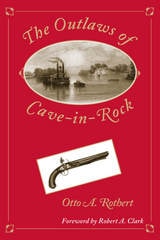
The Outlaws of Cave-in-Rock
Otto A. Rothert. Foreword by Robert Clark
Southern Illinois University Press, 1996
Exceptionally rare and valued by book collectors, Otto A. Rothert’s riveting saga of the outlaws and scoundrels of Cave-in-Rock chronicles the adventures of an audacious cast of river pirates and highwaymen who operated in and around the famous Ohio River cavern from 1795 through 1820 (adventures featured in Disney’s Davy Crockett and the film How the West Was Won). Once sporting the enticing sign "Liquor Vault and House for Entertainment," this beautiful cavern location decoyed the unsuspecting by offering a venue for food, drink, and rest.
Compellingly lively, The Outlaws of Cave-in-Rock is nonetheless the work of a scholar, a historian who documents his findings and leaves a detailed bibliographical trail. Presenting many eyewitness accounts, Rothert supplies the lore and legend of the colorful villains of Cave-in-Rock. Always maintaining the difference between stories he tells with historical authority and those that are pure speculation, Rothert provides both a fascinating narrative and a valuable regional history.
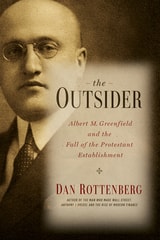
The Outsider
Albert M. Greenfield and the Fall of the Protestant EstablishmentDan Rottenberg
Temple University Press, 2018
In The Outsider, veteran journalist and best-selling author Dan Rottenberg deftly chronicles the astonishing rises, falls, and countless reinventions of this savvy businessman. Greenfield's power allowed him to cross social, religious, and ethnic boundaries with impunity. He alarmed Philadelphia's conservative business and social leaders-Christians and Jews alike-some of whom plotted his downfall.
In this engaging account of Greenfield's fascinating life, Rottenberg demonstrates the extent to which one uniquely brilliant and energetic man pushed the boundaries of society's limitations on individual potential. The Outsider provides a microcosmic look at three twentieth-century upheavals: the rise of Jews as a crucial American business force, the decline of America's Protestant establishment, and the transformation of American cities.
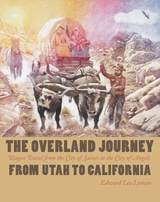
The Overland Journey From Utah To California
Wagon Travel From The City Of Saints To The City Of AngelsEdward Leo Lyman
University of Nevada Press, 2008
The wagon trail between Salt Lake City and Los Angeles is one of the most important and least-known elements of nineteenth-century Western migration. Known as the Southern Route, it included the western half of the Old Spanish Trail and was favored because it could be used for travel and freighting year-round. It was, however, likely the most difficult route that pioneers traveled with any consistency, following not rivers but leading from one--sometimes dubious--desert watering place to the next and offering few havens for the sick, weary, or unfortunate. Historian Edward Leo Lyman has provided the first history of the complete Southern Route and of the people who developed and used it. Based on extensive research in primary sources--including many early travelers’ accounts--and on Lyman’s own investigation of the route and its branches, the book discusses the exploration and development of the Old Spanish Trail, its horse thieves and traders, including Jed Smith and Kit Carson, along with government explorere John C. Frémont. Developing the old pack mule trail as a wagon road between Salt Lake City and Los Angeles, miners heading for the California gold fields first used the route extensively. Mormon missionaries and the colonizers of San Bernardino and other communities also traveled that way, as did a wide array of mail carriers, soldiers and world travelers. Later, a steady stream of Anglo-American emigrants seeking new homes or fortunes in California shared the road with a surprising number of freight wagon operators. The trail passed through the territories of numerous Native American peoples, and contacts with them--both friendly and hostile--played a significant role in the experiences of travelers and in the fates of Native American cultures in this region. Lyman’s discussions of Mormon-Indian relations and of the infamous Mountain Meadows Massacre offer fresh and important analyses of these vital aspects of the westward movement.
The Ozarks in Missouri History
Discoveries in an American RegionEdited by Lynn Morrow
University of Missouri Press, 2013

The Ozarks
Land and LifeMilton D. Rafferty
University of Arkansas Press, 2001

The Pacific Northwest Coast
Living with the Shores of Oregon and WashingtonPaul D. Komar
Duke University Press, 1998
In this guide, Paul D. Komar, one of the nation’s leading coastal oceanographers, examines the lessons taught by ages of geological and cultural history. With explanations of the area’s geological evolution, including natural shoreline erosion and sea-cliff landsliding, Komar details human interaction with the coast: erosion caused by early settlers, the development and destruction of Bayocean Spit, the disastrous effects caused by the 1982–1983 El Niño, and the notorious failure of a construction project on the picturesqueæbut unstableæbluffs at Jump-Off Joe. Emphasizing the actual and potential harm to human projects and to the natural heritage of the coast, Komar provides the knowledge necessary for finding a safe home near the shore while preserving the beauty that draws us to it.
The Packhorseman
Charles Hudson
University of Alabama Press, 2009
The Paleo-Indian Occupation of the Holcombe Beach
James E. Fitting, Jerry DeVisscher and Edward J. Wahla
University of Michigan Press, 1966
The Paleoindian Southwest
Edited by J. David Kilby and Bruce B. Huckell
University of Utah Press, 2025
The North American Southwest looms large in American archaeology, well known for the agricultural societies that dominated its austere landscape in later times. However, the traces of its earliest occupants, Native American ancestors who shared the ancient landscape with mammoth and giant bison toward the end of the last Ice Age, remain more obscure.
The Paleoindian Southwest provides the first comprehensive overview focused on the earliest human occupants of the Southwest, exploring past investigations, the current state of research, and directions for future discovery. Experts in the field examine individual archaeological sites—some classic and some newly discovered—as well as broader patterns of human behavior across varied regions of both the United States and Mexico. Chapter authors present new and unexpected discoveries, ranging from a gomphothere kill to fossil footprints, pushing the boundaries of the Paleoindian period and investigating nontraditional archaeological data. This collection is a critical resource and landmark volume for those interested in Southwest prehistory, Paleoindian archaeology, and Ice Age human ecology.
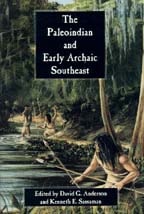
The Paleoindian and Early Archaic Southeast
Edited by David G. Anderson and Kenneth E. Sassaman
University of Alabama Press, 1996
The southeastern United States has one of the richest records of early human settlement of any area of North America. This book provides the first state-by-state summary of Paleoindian and Early Archaic research from the region, together with an appraisal of models developed to interpret the data. It summarizes what we know of the peoples who lived in the Southeast more than 8,000 years ago—when giant ice sheets covered the northern part of the continent, and such mammals as elephants, saber-toothed tigers, and ground sloths roamed the landscape. Extensively illustrated, this benchmark collection of essays on the state of Paleoindian and Early Archaic research in the Southeast will guide future studies on the subject of the region's first inhabitants for years to come.
Divided in three parts, the volume includes:
Part I: Modeling Paleoindian and Early Archaic Lifeways in the Southeast
Environmental and Chronological Considerations, David G. Anderson, Lisa D. O'Steen, and Kenneth E. Sassaman
Modeling Paleoindian and Early Archaic Settlement in the Southeast: A Historical Perspective, David G. Anderson and Kenneth E. Sassaman
Models of Paleoindian and Early Archaic Settlement in the Lower Southeast, David G. Anderson
Early Archaic Settlement in the South Carolina Coastal Plain, Kenneth E. Sassaman
Raw Material Availability and Early Archaic Settlement in the Southeast, I. Randolph Daniel Jr.
Paleoindian and Early Archaic Settlement along the Oconee Drainage, Lisa D. O'Steen
Haw River Revisited: Implications for Modeling Terminal Late Glacial and Early Holocene Hunter-Gatherer Settlement Systems in the Southeast, John S. Cable
Early Archiac Settlement and Technology: Lessons from Tellico, Larry R. Kimball
Paleoindians Near the Edge: A Virginia Perspective, Michael F. Johnson
Part II: The Regional Record
The Need for a Regional Perspective, Kenneth E. Sassaman and David G. Anderson
Paleoindian and Early Archaic Research in the South Carolina Area, David G. Anderson and Kenneth E. Sassaman
The Taylor Site: An Early Occupation in Central South Carolina, James L. Michie
Paleoindian and Early Archaic Research in Tennessee, John B. Boster and Mark R. Norton
A Synopsis of Paleoindian and Early Archaic Research in Alabama, Eugene M. Futato
Statified Late Pleistocene and Early Holocene Deposits at Dust Cave, Northwestern Alabama, Boyce N. Driskell
Bone and Ivory Tools from Submerged Paleoindian Sites in Florida, James S. Dunbar and S. David Webb
Paleoindian and Early Archaic Data from Mississippi, Samuel O. McGahey
Early and Middle Paleoindian Sites in the Northeastern Arkansas Region, J. Christopher Gillam
Part III: Commentary
A Framework for the Paleoindian/Early Archaic Transition, Joel Gunn
Modeling Communities and Other Thankless Tasks, Dena F. Dincauze
An Arkansas View, Dan F. Morse
Comments, Henry T. Wright

The Paradox of Progress
Economic Change, Individual Enterprise, and Politic Culture in Michigan, 1837-1878Martin J. Hershock
Ohio University Press, 2003
Guiding this transformation was the nineteenth-century Republican party. Drawing heavily from both the pro-market commitments of the early Whig party and the anti-capitalist culture of Jackson's Democratic party, the early Republican party found itself torn between these competing values. Nowhere was this contested process more obvious or more absorbing than in Civil War-era Michigan, the birthplace of the Republican party.
In The Paradox of Progress, a fascinating look at the central factors underlying the history of the GOP, Martin Hershock reveals how in their determination to resolve their ideological dilemma, Republicans of the Civil War era struggled to contrive a formula that wo uld enable them to win popular elections and to model America's acceptance of Gilded Age capitalism.

The Paris of Appalachia
Pittsburgh in the Twenty-First CenturyBrian O'Neill
Carnegie Mellon University Press, 2026
Maybe you never wondered if any metro area nearly straddles the borders of three major regions of the country, but The Paris of Appalachia: Pittsburgh in the Twenty-First Century tells us why this city is a place apart. It’s not East Coast, Midwest, or Southern, but the rest of America can fret about how to label Pittsburgh. It’s just fine being a walkable town that plays a big city on TV. Brian O'Neill, who walked its streets for more than three decades as a newspaper columnist, fell in love with the place from the moment he arrived. And when you read what he found, odds are better than even that you will, too. This reissue of the book includes a new introduction.

The Parker Sisters
A Border KidnappingLucy Maddox
Temple University Press, 2016
In The Parker Sisters, Lucy Maddox gives an eloquent, urgent account of the tragic kidnapping of these young women. Using archival news and courtroom reports, Maddox tells the larger story of the disastrous effect of the Fugitive Slave Act on the small farming communities of Chester County and the significant, widening consequences for the state and the nation.
The Parker Sisters is also a story about families whose lives and fates were deeply embedded in both the daily rounds of their community and the madness and violence consuming all of antebellum America. Maddox’s account of this horrific and startling crime reveals the strength and vulnerability of the Parker sisters and the African American population.
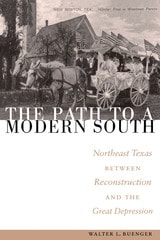
The Path to a Modern South
Northeast Texas between Reconstruction and the Great DepressionBy Walter L. Buenger
University of Texas Press, 2001
The forces that turned Northeast Texas from a poverty-stricken region into a more economically prosperous area.
Winner, Texas State Historical Association Coral H. Tullis Memorial Award for best book on Texas history, 2001
Federal New Deal programs of the 1930s and World War II are often credited for transforming the South, including Texas, from a poverty-stricken region mired in Confederate mythology into a more modern and economically prosperous part of the United States. By contrast, this history of Northeast Texas, one of the most culturally southern areas of the state, offers persuasive evidence that political, economic, and social modernization began long before the 1930s and prepared Texans to take advantage of the opportunities presented by the New Deal and World War II.
Walter L. Buenger draws on extensive primary research to tell the story of change in Northeast Texas from 1887 to 1930. Moving beyond previous, more narrowly focused studies of the South, he traces and interconnects the significant changes that occurred in politics, race relations, business and the economy, and women's roles. He also reveals how altered memories of the past and the emergence of a stronger identification with Texas history affected all facets of life in Northeast Texas.
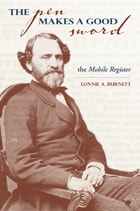
The Pen Makes a Good Sword
John Forsyth of the Mobile RegisterLonnie A. Burnett
University of Alabama Press, 2006
One editor. One era. A pen that cut through history.
This book is a biography of Alabama native John Forsyth Jr. and documents his career as a southern newspaper editor during the antebellum, Civil War, and Reconstruction periods. From 1837 to 1877 Forsyth wrote about many of the most important events of the 19th century. He used his various positions as an editor, Civil War field correspondent, and Reconstruction critic at the MobileRegister to advocate on behalf of both the South and the Democratic Party.
In addition, Forsyth played an active role in the events taking place around him through his political career, as United States Minister to Mexico, state legislator, Confederate Peace Commissioner to the Lincoln administration, staff officer to Braxton Bragg, and twice mayor of the city of Mobile.

The Pennsylvania Associators, 1747–1777
Joseph Seymour
Westholme Publishing, 2024
The First Complete History of the Military Force of Colonial Pennsylvania, a Volunteer Body Created as a Practical Response to the Ideal of Pacifism
Known at various times as the Military Association of Pennsylvania, the Pennsylvania Association, or simply Associators, this long-neglected organization represented a new constituency in Pennsylvania politics and by extension, a new American response to arbitrary rule. Organized on December 7, 1747, at Philadelphia, the Military Association, an all-volunteer military establishment pledged to the defense of Pennsylvania, served as the de facto armed force for Pennsylvania, a colony whose leadership, a loose coalition of Quaker and German pacifists, land barons, and merchants, foreswore military preparedness on religious and ideological grounds. For the Associators, including their most noted supporter, Benjamin Franklin, a defenseless colony was no longer practical. During the War of Austrian Succession and again in the Seven Years’ War, Associators organized defense efforts in defiance of the Pennsylvania colonial leadership. Associators also helped defend American Indian refugees against the infamous Paxton Boys in 1764. By 1775, Associators found themselves as the colony’s only legitimate military leadership and, by capitalizing on electoral gains in the lead up to the American Revolution, Associators assumed offices vacated by former officials. During the critical battles of 1776, the Associators in their distinctive round hats and brown coats proved a decisive asset to the Continental Army.
In The Pennsylvania Associators, 1747–1777, historian Joseph Seymour has painstakingly researched primary source materials in order to write the first comprehensive history of this influential organization. Seymour demonstrates that while the Pennsylvania Associators contributed to success in the campaigns in which they fought, particularly the battles of Trenton and Princeton, a more fascinating and important investigation are the concerns that motivated these men. Associators considered military service in defense of their religious and civil liberties as a natural right. For three decades, Associators demonstrated that belief in and out of uniform. In a colony founded on religious exceptionalism, Associators saw themselves as faithful soldiers and active agents against leadership by entitlement, a principle guiding our government today.
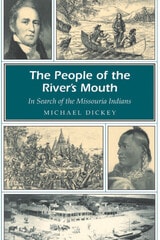
The People of the River's Mouth
In Search of the Missouria IndiansMichael E. Dickey
University of Missouri Press, 2011
The Missouria people were the first American Indians encountered by European explorers venturing up the Pekitanoui River—the waterway we know as the Missouri. This Indian nation called itself the Nyut^achi, which translates to “People of the River Mouth,” and had been a dominant force in the Louisiana Territory of the pre-colonial era. When first described by the Europeans in 1673, they numbered in the thousands. But by 1804, when William Clark referred to them as “once the most powerful nation on the Missouri River,” fewer than 400 Missouria remained. The state and Missouri River are namesakes of these historic Indians, but little of the tribe’s history is known today. Michael Dickey tells the story of these indigenous Americans in The People of the River’s Mouth.
Accessible to general readers, this book recovers the lost history of an important people. The People of the River’s Mouth sheds light on an overlooked aspect of Missouri’s past and pieces together the history of these influential Native Americans in an engaging, readable volume.
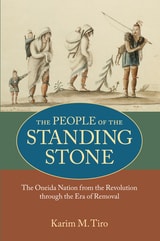
The People of the Standing Stone
The Oneida Nation from the Revolution through the Era of RemovalKarim M. Tiro
University of Massachusetts Press, 2011
The Oneidas' physical, political, and emotional division persists to this day. Even for those who stayed put, their world changed more in cultural, ecological, and demographic terms than at any time before or since. Oneidas of the post-Revolutionary decades were reluctant pioneers, undertaking more of the adaptations to colonized life than any other generation. Amid such wrenching change, maintaining continuity was itself a creative challenge. The story of that extraordinary endurance lies at the heart of this book.

The People's Choice
Congressman Jim Jontz of IndianaRay Boomhower
Indiana Historical Society Press, 2012