Results by title
28167 books match the query 'History' and 6372 start with t
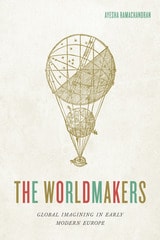
The Worldmakers
Global Imagining in Early Modern EuropeAyesha Ramachandran
University of Chicago Press, 2015
The Worldmakers moves beyond histories of globalization to explore how “the world” itself—variously understood as an object of inquiry, a comprehensive category, and a system of order—was self-consciously shaped by human agents. Gathering an international cast of characters, from Dutch cartographers and French philosophers to Portuguese and English poets, Ramachandran describes a history of firsts: the first world atlas, the first global epic, the first modern attempt to develop a systematic natural philosophy—all part of an effort by early modern thinkers to capture “the world” on the page.
The Worlds between Two Rivers
Perspectives on American Indians in IowaGretchen M. Bataille
University of Iowa Press, 2000
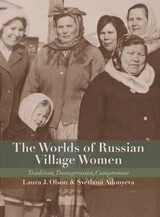
The Worlds of Russian Village Women
Tradition, Transgression, CompromiseLaura J. Olson and Svetlana Adonyeva
University of Wisconsin Press, 2012
Based upon nearly three decades of fieldwork, from 1983 to 2010, The Worlds of Russian Rural Women follows three generations of Russian women and shows how they alternately preserve, discard, and rework the cultural traditions of their forebears to suit changing needs and self-conceptions. In a major contribution to the study of folklore, Laura J. Olson and Svetlana Adonyeva document the ways that women’s tales of traditional practices associated with marriage, childbirth, and death reflect both upholding and transgression of social norms. Their romance songs, satirical ditties, and healing and harmful magic reveal the complexity of power relations in the Russian villages.
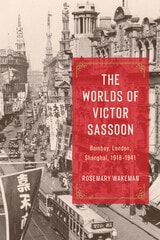
The Worlds of Victor Sassoon
Bombay, London, Shanghai, 1918–1941Rosemary Wakeman
University of Chicago Press, 2024
In this book, historian Rosemary Wakeman brings to life the frenzied, crowded streets, markets, ports, and banks of Bombay, London, and Shanghai. In the early twentieth century, these cities were at the forefront of the sweeping changes taking the world by storm as it entered an era of globalized commerce and the unprecedented circulation of goods, people, and ideas. Wakeman explores these cities and the world they helped transform through the life of Victor Sassoon, who in 1924 gained control of his powerful family’s trading and banking empire. She tracks his movements between these three cities as he grows his family’s fortune and transforms its holdings into a global juggernaut. Using his life as its point of entry, The Worlds of Victor Sassoon paints a broad portrait not just of wealth, cosmopolitanism, and leisure but also of the discrimination, exploitation, and violence wreaked by a world increasingly driven by the demands of capital.
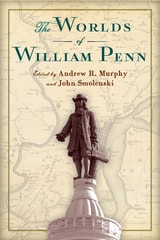
The Worlds of William Penn
Murphy, Andrew R
Rutgers University Press, 2019
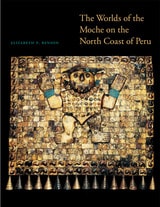
The Worlds of the Moche on the North Coast of Peru
By Elizabeth P. Benson
University of Texas Press, 2012
The Moche, or Mochica, created an extraordinary civilization on the north coast of Peru for most of the first millennium AD. Although they had no written language with which to record their history and beliefs, the Moche built enormous ceremonial edifices and embellished them with mural paintings depicting supernatural figures and rituals. Highly skilled Moche artisans crafted remarkable ceramic vessels, which they painted with figures and scenes or modeled like sculpture, and mastered metallurgy in gold, silver, and copper to make impressive symbolic ornaments. They also wove textiles that were complex in execution and design.
A senior scholar renowned for her discoveries about the Moche, Elizabeth P. Benson published the first English-language monograph on the subject in 1972. Now in this volume, she draws on decades of knowledge, as well as the findings of other researchers, to offer a grand overview of all that is currently known about the Moche. Touching on all significant aspects of Moche culture, she covers such topics as their worldview and ritual life, ceremonial architecture and murals, art and craft, supernatural beings, government and warfare, and burial and the afterlife. She demonstrates that the Moche expressed, with symbolic language in metal and clay, what cultures in other parts of the world presented in writing. Indeed, Benson asserts that the accomplishments of the Moche are comparable to those of their Mesoamerica contemporaries, the Maya, which makes them one of the most advanced civilizations of pre-Columbian America.
The Worm in the Apple
A History of the Conservative Party and Europe from Churchill to CameronChristopher Tugendhat
Haus Publishing, 2022
The Conservative Party has been in power for 47 of the 65 years since the end of World War II. During that time the division within the party over Europe has been the enduring drama of British politics—from Churchill’s decision not to join the original European Coal and Steel Community in 1951 to Cameron’s decision to hold the Brexit referendum in 2016. Other leaders came and went, but the issue was always there—sometimes center-stage, at others behind the scenes—destabilizing foreign policy, corroding the body politic, and destroying several of the party’s leaders. These questions, and how they panned out, created a deep, grumbling discontent—the worm in the apple—that, over time, turned the Conservative Party and, by extension, a significant section of the electorate, against British membership of the EU. By telling the story of the arguments and divisions within the Conservative Party, The Worm in the Apple helps to explain why Britain voted to leave the European Union in 2016.
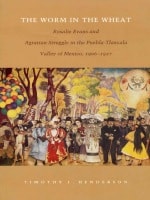
The Worm in the Wheat
Rosalie Evans and Agrarian Struggle in the Puebla-Tlaxcala Valley of Mexico, 1906-1927Timothy J. Henderson
Duke University Press, 1998
In a world where power and wealth are distributed unevenly and where revolutionary ideas aiming to right the balance continue to proliferate, it is essential, Henderson claims, to understand the revolutionary process not as a philosophical abstraction but as intimate human drama. This book, by providing a detailed study of a single case, sheds invaluable light on this process and on the making of modern Mexico. Incorporating extensive primary research, Henderson describes the complexity of international, national, state, and local politics and the corresponding diverse responses to this historic attempt at agrarian reform.
The Worm in the Wheat will be informative reading for those interested in the modern history of Mexico, students of social movements and revolution, Latin Americanists, and scholars of agrarian history.
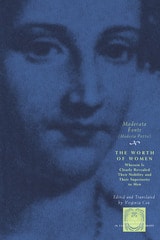
The Worth of Women
Wherein Is Clearly Revealed Their Nobility and Their Superiority to MenModerata Fonte
University of Chicago Press, 1997
Moderata Fonte was the pseudonym of Modesta Pozzo (1555–92), a Venetian woman who was something of an anomaly. Neither cloistered in a convent nor as liberated from prevailing codes of decorum as a courtesan might be, Pozzo was a respectable, married mother who produced literature in genres that were commonly considered "masculine"—the chivalric romance and the literary dialogue. This work takes the form of the latter, with Fonte creating a conversation among seven Venetian noblewomen. The dialogue explores nearly every aspect of women's experience in both theoretical and practical terms. These women, who differ in age and experience, take as their broad theme men's curious hostility toward women and possible cures for it.
Through this witty and ambitious work, Fonte seeks to elevate women's status to that of men, arguing that women have the same innate abilities as men and, when similarly educated, prove their equals. Through this dialogue, Fonte provides a picture of the private and public lives of Renaissance women, ruminating on their roles in the home, in society, and in the arts.
A fine example of Renaissance vernacular literature, this book is also a testament to the enduring issues that women face, including the attempt to reconcile femininity with ambition.
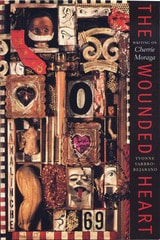
The Wounded Heart
Writing on Cherríe MoragaBy Yvonne Yarbro-Bejarano
University of Texas Press, 2001
In her work as poet, essayist, editor, dramatist, and public intellectual, Chicana lesbian writer Cherríe Moraga has been extremely influential in current debates on culture and identity as an ongoing, open-ended process. Analyzing the "in-between" spaces in Moraga's writing where race, gender, class, and sexuality intermingle, this first book-length study of Moraga's work focuses on her writing of the body and related material practices of sex, desire, and pleasure.
Yvonne Yarbro-Bejarano divides the book into three sections, which analyze Moraga's writing of the body, her dramaturgy in the context of both dominant and alternative Western theatrical traditions, and her writing of identities and racialized desire. Through close textual readings of Loving in the War Years, Giving Up the Ghost, Shadow of a Man, Heroes and Saints, The Last Generation, and Waiting in the Wings, Yarbro-Bejarano contributes to the development of a language to talk about sexuality as potentially empowering, the place of desire within politics, and the intricate workings of racialized desire.
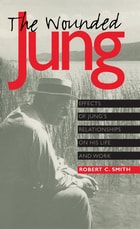
The Wounded Jung
Effects of Jung's Relationships on His Life and WorkRobert C. Smith
Northwestern University Press, 1997
Smith begins by exploring Jung's formative and transformative life experience, including his relationships with a deeply troubled mother and despairing father, with Sigmund Freud, and with the various women in his life. The relationships to his parents, in particular, have been remarkably unexplored by scholars. Smith then shows how these experiences shaped Jung's thoughts and writing -including his reassessment of religion as inner process - as well as his fascination with gnosticism and alchemy; the attention Jung gives to psychology as myth and the realization of selfhood; and his reinterpretation of evil as a process to be integrated into the proper sphere of human existence.
Smith's findings are based on the unprecedented number of primary sources to which he had access, including archival research, his own interviews with many of Jung's intimates, and personal correspondence with Jung himself, as well as on the synthesis of a wide range of recent scholarship on Jung. The culmination of many years of scholarship and reflection, this book should be read by anyone interested in spiritual healing or the connection between psychology and religion.
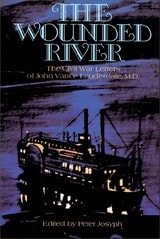
The Wounded River
The Civil War Letters of John Vance Lauderdale, M.D.Peter Josyph
Michigan State University Press, 1993
The Wounded River takes the reader back more than 130 years to reveal a marvelous, first-hand account of nineteenth-century warfare. In the process, the work cuts the legends and mythology that have come to frame and define accounts of America's bloodiest war. Of equal significance, Peter Josyph's editorial work on this superb collection of letters from the Western Americana Division of Yale University's Beinecke Rare Book and Manuscripts Library enhances and clarifies Lauderdale's experinces as a surgeon aboard the U.S. Army hospital ship D. A. January.
The reader looks on while Lauderdale, a New York civilian contract surgeon, operates on hundreds of Confederate and Union wounded. The young doctor's clear writing style and his great compassion for these unfortunate men whose bodies were ripped apart by bullets, shell fragments, and bayonets permits us to catch a disturbiing glimpse of what modern warfare does to humanity. Finally, we learn of Lauderdale's motives for volunteering, his impressions of the "hospital ship" D. A. January, Confederate morale, the Abolitionist cause, and black slavery. The Wounded River is a must read for anyone interested in the real American Civil War.
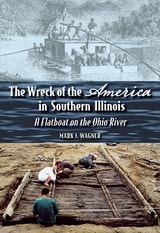
The Wreck of the "America" in Southern Illinois
A Flatboat on the Ohio RiverMark J. Wagner
Southern Illinois University Press, 2015
Winner, Illinois State Historical Society Superior Achievement, 2016
Flatboats were the most prolific type of vessel on the Ohio and Mississippi Rivers during the early 1800s. Thousands of these boats descended the two rivers each year, carrying not only valuable cargo to New Orleans but also western-bound emigrants to newly opened territories. By the late 1800s, flatboats had completely disappeared, and no intact examples were known to exist. Our knowledge of these historic vessels had been limited to illustrations, memoirs, and traveler accounts.
That changed in 2000 after local residents found a wreck on the Ohio River shoreline in Illinois. Archaeologist Mark J. Wagner and his colleagues from Southern Illinois University Carbondale investigated extensively and established that the wreck was a pre–Civil War flatboat, which they named America, after a nearby town.
In The Wreck of the America in Southern Illinois: A Flatboat on the Ohio River, Wagner provides a brief description and general history of flatboats and the various reasons they wrecked—such as poor workmanship and encounters with pirates, storms, rocks, and floating trees. Wagner describes the remains of the America, how it was constructed, the artifacts found nearby and inside—including pewter spoons, utensils with bone handles, metal buttons, and an iron felling axe—and the probable cause of its sinking. Wagner concludes with a history of the America since its discovery in 2000 and a plea that the boat be removed from the riverbank and preserved before the Ohio washes it away.
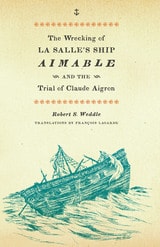
The Wrecking of La Salle's Ship Aimable and the Trial of Claude Aigron
By Robert S. Weddle
University of Texas Press, 2009
When Robert Cavelier, sieur de La Salle, landed on the Texas coast in 1685, bent on founding a French colony, his enterprise was doomed to failure. Not only was he hundreds of miles from his intended landfall—the mouth of the Mississippi—but his supply ship, Aimable, was wrecked at the mouth of Matagorda Bay, leaving the colonists with scant provisions and little protection against local Indian tribes. In anger and disgust, he struck out at the ship's captain, Claude Aigron, accusing him of wrecking the vessel purposely and maliciously.
Captain Aigron and his crew escaped the doomed colony by returning to France on the warship that had escorted the expedition on its ocean crossing. Soon after reaching France, Aigron found himself defendant in a civil suit filed by two of his officers seeking recompense for lost salary and personal effects, and then imprisoned on order of King Louis XIV while La Salle's more serious accusations were being investigated.
In this book, Robert Weddle meticulously recounts, through court documents, the known history of Aigron and the Aimable, and finds that despite La Salle's fervent accusations, the facts of the case offer no clear indictment. The court documents, deftly translated by François Lagarde, reveal Captain Aigron's successful defense and illuminate the circumstances of the wreck with Aigron's testimony. Much is also revealed about the French legal system and how the sea laws of the period were applied through the French government's L'Ordonnance de la Marine.
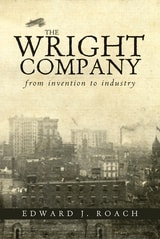
The Wright Company
From Invention to IndustryEdward J. Roach
Ohio University Press, 2014
Fresh from successful flights before royalty in Europe, and soon after thrilling hundreds of thousands of people by flying around the Statue of Liberty, in the fall of 1909 Wilbur and Orville Wright decided the time was right to begin manufacturing their airplanes for sale. Backed by Wall Street tycoons, including August Belmont, Cornelius Vanderbilt III, and Andrew Freedman, the brothers formed the Wright Company. The Wright Company trained hundreds of early aviators at its flight schools, including Roy Brown, the Canadian pilot credited with shooting down Manfred von Richtofen—the “Red Baron”—during the First World War; and Hap Arnold, the commander of the U.S. Army Air Forces during the Second World War. Pilots with the company’s exhibition department thrilled crowds at events from Winnipeg to Boston, Corpus Christi to Colorado Springs. Cal Rodgers flew a Wright Company airplane in pursuit of the $50,000 Hearst Aviation Prize in 1911.
But all was not well in Dayton, a city that hummed with industry, producing cash registers, railroad cars, and many other products. The brothers found it hard to transition from running their own bicycle business to being corporate executives responsible for other people’s money. Their dogged pursuit of enforcement of their 1906 patent—especially against Glenn Curtiss and his company—helped hold back the development of the U.S. aviation industry. When Orville Wright sold the company in 1915, more than three years after his brother’s death, he was a comfortable man—but his company had built only 120 airplanes at its Dayton factory and Wright Company products were not in the U.S. arsenal as war continued in Europe.
Edward Roach provides a fascinating window into the legendary Wright Company, its place in Dayton, its management struggles, and its effects on early U.S. aviation.

The Wright Company
From Invention to IndustryEdward J. Roach
Ohio University Press, 0
But all was not well in Dayton, a city that hummed with industry, producing cash registers, railroad cars, and many other products. The brothers found it hard to transition from running their own bicycle business to being corporate executives responsible for other people’s money. Their dogged pursuit of enforcement of their 1906 patent — especially against Glenn Curtiss and his company — helped hold back the development of the U.S. aviation industry. When Orville Wright sold the company in 1915, more than three years after his brother’s death, he was a comfortable man — but his company had built only 120 airplanes at its Dayton factory and Wright Company products were not in the U.S. arsenal as war continued in Europe.
Edward Roach provides a fascinating window into the legendary Wright Company, its place in Dayton, its management struggles, and its effects on early U.S. aviation.
The Writer in Petrograd and the House of Arts
Martha Weitzel Hickey
Northwestern University Press, 2009
The Writers
A History of American Screenwriters and Their GuildBanks, Miranda J
Rutgers University Press, 2016
The Writing Life of Hugh Kelly
Politics, Journalism, and Theatre in Late-Eighteenth-Century LondonRobert R. Bataille
Southern Illinois University Press, 2000
Robert R. Bataille demonstrates convincingly that between 1767 and 1777, Anglo-Irish writer Hugh Kelly made major contributions in three areas of British culture: politics, journalism, and theater. Bataille shows how all three activities were integrated in Kelly’s life, suggesting that such interrelationships often existed in the rough and ready London culture during the early reign of King George III.
When he discovered several newspaper campaigns that Kelly orchestrated as a paid political propagandist for George III and his ministers, Bataille understood in part how important Kelly was to his era. In his capacity as propagandist, Kelly defended Hanoverian colonial policies on the eve of the American Revolution, served as a key opponent of the radical Wilkites, and promoted the acceptance of the 1774 Quebec Bill, which established, among other things, the right of the recently defeated French citizens of Quebec to maintain the French language.
A belletristic journalist, Kelly published theater reviews and essays that played a major role in shaping the taste of his era. He wrote in defense of the controversial sentimental drama, and whenever he could, he promoted the major theatrical figure of the age, David Garrick. Under his editorship, the newspaper Public Ledger became a leading source of theater information. Seeking to raise the status of the profession of journalism, he wrote essays and articles that provided his middle-class readers with an insider’s view of the operations of the journalist.
Assessing Kelly’s contributions to the novel and drama, Bataille argues that this powerful journalist stands in the vanguard in the larger struggle against traditional attitudes supporting male superiority and aristocratic privilege. Kelly wrote in favor of gender equality and middle-class respectability, striving to inculcate what modern scholars refer to as the values of sensibility. Bataille also argues, however, that Kelly knew his audience. Instrumental in the rise of professional writing and popular culture, he understood that he had to observe the needs of his audience, detecting cultural trends and using the skills of the rhetorician.
The Writings of Salvian, the Presbyter
The Presbyter Salvian, The Presbyter
Catholic University of America Press, 1947
The X Club
Power and Authority in Victorian ScienceRuth Barton
University of Chicago Press, 2018
These six ambitious professionals and three wealthy amateurs—J. D. Hooker, T. H. Huxley, John Tyndall, John Lubbock, William Spottiswoode, Edward Frankland, George Busk, T. A. Hirst, and Herbert Spencer—wanted to guide the development of science and public opinion on issues where science impinged on daily life, religious belief, and politics. They formed a private dining club, which they named the X Club, to discuss and further their plans. As Ruth Barton shows, they had a clear objective: they wanted to promote “scientific habits of mind,” which they sought to do through lectures, journalism, and science education. They devoted enormous effort to the expansion of science education, with real, but mixed, success.
For twenty years, the X Club was the most powerful network in Victorian science—the men succeeded each other in the presidency of the Royal Society for a dozen years. Barton’s group biography traces the roots of their success and the lasting effects of their championing of science against those who attempted to limit or control it, along the way shedding light on the social organization of science, the interactions of science and the state, and the places of science and scientific men in elite culture in the Victorian era.
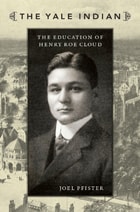
The Yale Indian
The Education of Henry Roe CloudJoel Pfister
Duke University Press, 2009
Roe Cloud’s white-collar activism was entwined with the Progressive Era formation of an Indian professional and managerial class, a Native “talented tenth,” whose members strategically used their contingent entry into arenas of white social, intellectual, and political power on behalf of Indians without such access. His Yale training provided a cross-cultural education in class-structured emotions and individuality. While at Yale, Roe Cloud was informally adopted by a white missionary couple. Through them he was schooled in upper-middle-class sentimentality and incentives. He also learned how interracial romance could jeopardize Indian acceptance into their class. Roe Cloud expanded the range of what modern Indians could aspire to and achieve.
The Years of Blood
Stories from a Reporting Life in Latin AmericaAlma Guillermoprieto
Duke University Press, 2025
The Yellow Journalism
The Press and America's Emergence as a World PowerDavid R. Spencer
Northwestern University Press, 2007
Most notable among Hearst's competitors was New York City's The World, owned and managed by a European Jewish immigrant named Joseph Pulitzer. The Yellow Journalism describes how these two papers and others exploited the scandal, corruption, and crime among the city's most influential citizens, and its most desperate inhabitants--a policy that made this "journalism of action" remarkably effective, not just as a commercial force, but also as an advocate for the city's poor and defenseless. Spencer shows how many of the innovations first introduced during this period--from investigative reporting to the use of color, entertainment news, and cartoons in papers--have had a lasting effect on journalism; and how media in our day reflects the Yellow Press's influence, but also its threatened irrelevance within the broader realities of contemporary society.
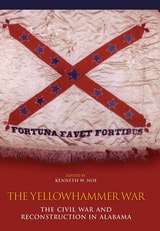
The Yellowhammer War
The Civil War and Reconstruction in AlabamaEdited by Kenneth W. Noe
University of Alabama Press, 2014
During the first winter of the war, Confederate soldiers derided the men of an Alabama Confederate unit for their yellow-trimmed uniforms that allegedly resembled the plumage of the yellow-shafted flicker or “yellowhammer” (now the Northern Flicker, Colaptes auratus, and the state bird of Alabama). The soldiers’ nickname, “Yellowhammers,” came from this epithet. After the war, Alabama veterans proudly wore yellowhammer feathers in their hats or lapels when attending reunions. Celebrations throughout the state have often expanded on that pageantry and glorified the figures, events, and battles of the Civil War with sometimes dubious attention to historical fact and little awareness of those who supported, resisted, or tolerated the war off the battlefield.
Many books about Alabama’s role in the Civil War have focused serious attention on the military and political history of the war. The Yellowhammer War likewise examines the military and political history of Alabama’s Civil War contributions, but it also covers areas of study usually neglected by centennial scholars, such as race, women, the home front, and Reconstruction. From Patricia A. Hoskins’s look at Jews in Alabama during the Civil War and Jennifer Ann Newman Treviño’s examination of white women’s attitudes during secession to Harriet E. Amos Doss’s study of the reaction of Alabamians to Lincoln’s Assassination and Jason J. Battles’s essay on the Freedman’s Bureau, readers are treated to a broader canvas of topics on the Civil War and the state.
CONTRIBUTORS
Jason J. Battles / Lonnie A. Burnett / Harriet E. Amos Doss / Bertis English / Michael W. Fitzgerald / Jennifer Lynn Gross / Patricia A. Hoskins / Kenneth W. Noe / Victoria E. Ott / Terry L. Seip / Ben H. Severance / Kristopher A. Teters / Jennifer Ann Newman Treviño / Sarah Woolfolk Wiggins / Brian Steel Wills
Published in Cooperation with the Frances S. Summersell Center for the Study of the South

The Yemassee
A Romance of CarolinaWilliam Gilmore Simms
University of Arkansas Press, 1994
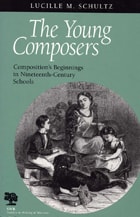
The Young Composers
Composition's Beginnings in Nineteenth-Century SchoolsLucille M. Schultz
Southern Illinois University Press, 1999
Lucille M. Schultz's The Young Composers: Composition's Beginnings in Nineteenth-Century Schools is the first full-length history of school-based writing instruction. Schultz demonstrates that writing instruction in nineteenth-century American schools is much more important in the overall history of writing instruction than we have previously assumed.
Drawing on primary materials that have not been considered in previous histories of writing instruction—little-known textbooks and student writing that includes prize-winning essays, journal entries, letters, and articles written for school newspapers—Schultz shows that in nineteenth-century American schools, the voices of the British rhetoricians that dominated college writing instruction were attenuated by the voice of the Swiss education reformer Johann Heinrich Pestalozzi. Partly through the influence of Pestalozzi's thought, writing instruction for children in schools became child-centered, not just a replica or imitation of writing instruction in the colleges.
It was also in these nineteenth-century American schools that personal or experience-based writing began and where the democratization of writing was institutionalized. These schools prefigured some of our contemporary composition practices: free writing, peer editing, and the use of illustrations as writing prompts. It was in these schools, in fact, where composition instruction as we know it today began, Schultz argues.
This book features a chapter on the agency of textbook iconography, which includes illustrations from nineteenth-century composition books as well as a cultural analysis of those illustrations. Schultz also includes a lengthy bibliography of nineteenth-century composition textbooks and student and school newspapers.
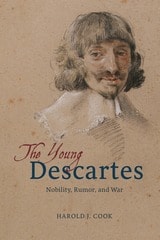
The Young Descartes
Nobility, Rumor, and WarHarold J. Cook
University of Chicago Press, 2018
In The Young Descartes, Harold J. Cook tells the story of a man who did not set out to become an author or philosopher—Descartes began publishing only after the age of forty. Rather, for years he traveled throughout Europe in diplomacy and at war. He was present at the opening events of the Thirty Years' War in Central Europe and Northern Italy, and was also later involved in struggles within France. Enduring exile, scandals, and courtly intrigue, on his journeys Descartes associated with many of the most innovative free thinkers and poets of his day, as well as great noblemen, noblewomen, and charismatic religious reformers. In his personal life, he expressed love for men as well as women and was accused of libertinism by his adversaries.
These early years on the move, in touch with powerful people and great events, and his experiences with military engineering and philosophical materialism all shaped the thinker and philosopher Descartes became in exile, where he would begin to write and publish, with purpose. But though it is these writings that made ultimately made him famous, The Young Descartes shows that this story of his early life and the tumultuous times that molded him is sure to spark a reappraisal of his philosophy and legacy.
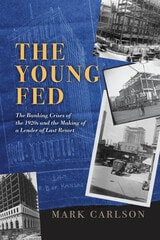
The Young Fed
The Banking Crises of the 1920s and the Making of a Lender of Last ResortMark Carlson
University of Chicago Press, 2025
A new history of crisis responses in the central bank’s formative years.
The long-standing description of the Federal Reserve as a “lender of last resort” refers to the central bank’s emergency liquidity provision for financial entities in periods of crisis. As Mark Carlson shows, this function was foundational to how the Fed was designed but has, at times, proven challenging to implement. The Young Fed examines the origins of the Federal Reserve’s emergency liquidity provision which, along with the setting of monetary policy, has become a critical responsibility.
Focusing on the Fed’s response to the financial crises of the 1920s, Carlson documents the formative deliberations of central bank policymakers regarding how to assist banks experiencing distress; the lessons that were learned; and how those lessons shaped subsequent policies. Carlson depicts an early Fed that experimented with a variety of approaches to crises, ranging from bold spectacles featuring cash-filled armored cars to behind-the-scenes interventions to prevent inducing panics or bank runs. The Young Fed weaves previously unpublished material from the Fed archives into a watershed work in American economic history: a deeply sourced account of how the world’s most important central bank became a lender of last resort.
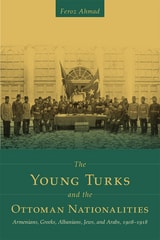
The Young Turks and the Ottoman Nationalities
Armenians, Greeks, Albanians, Jews, and Arabs, 1908–1918Feroz Ahmad
University of Utah Press, 2014
Ahmad holds that nationalism was introduced into the Ottoman Empire during the French Revolution, providing kindling for the struggles that later emerged. Setting the stage with this nineteenth-century background, Ahmad then examines each Ottoman nationality in the wake of the restoration of the Ottoman constitution in 1908. Officially known as the Committee of Union and Progress (CUP), the Young Turks made up a nationalist political party that ruled the Ottoman Empire from 1908 until the end of World War I. Ahmad illuminates the relationships and conflicts between the Young Turks and the Greek, Armenian, Albanian, Jewish, and Arab ethnic groups during this period. Placing these nationalities in their historical context, he shows their relationships not only to the Young Turks but also to one anotherno other single book has attempted to look closely at all of these connections.
Anyone interested in understanding the roots of current-day relations in the Balkans and Middle East will find this book very informative. Clearly organized and written, the book will enlighten both readers and scholars.
The Younge Site
An Archaeological Record from MichiganEmerson F. Greenman
University of Michigan Press, 1937
The Yuma Reclamation Project
Irrigation, Indian Allotment, and Settlement Along the Lower Colorado RiverRobert Sauder
University of Nevada Press, 2009
In the arid American West, settlement was generally contingent on the availability of water to irrigate crops and maintain livestock and human residents. Early irrigation projects were usually the cooperative efforts of pioneer farmers, but by the early twentieth century they largely reflected federal intentions to create new farms out of the western public domain. The Yuma Reclamation Project, authorized in 1904, was one of the earliest federal irrigation projects initiated in the western United States and the first authorized on the Colorado River. Its story exemplifies the range of difficulties associated with settling the nation’s final frontier—the remaining irrigable lands in the arid West, including Indian lands—and illuminates some of the current issues and conflicts concerning the Colorado River. Author Robert Sauder’s detailed, meticulously researched examination of the Yuma Project illustrates the complex multiplicity of problems and challenges associated with the federal government’s attempt to facilitate homesteading in the arid West. He examines the history of settlement along the lower Colorado River from earliest times, including the farming of the local Quechan people and the impact of Spanish colonization, and he reviews the engineering problems that had to be resolved before an industrial irrigation scheme could be accomplished. The study also sheds light on myriad unanticipated environmental, economic, and social challenges that the government had to confront in bringing arid lands under irrigation, including the impact on the Native American population of the region.The Yuma Reclamation Project is an original and significant contribution to our understanding of federal reclamation endeavors in the West. It provides new and fascinating information about the history of the Yuma Valley and, as a case study of irrigation policy, it offers compelling insights into the history and consequences of water manipulation in the arid West.
The Zionist Ideology
Gideon Shimoni
Brandeis University Press, 1997
The Zionist Paradox
Hebrew Literature and Israeli IdentityYigal Schwartz
Brandeis University Press, 2014
The Zoom
Drama at the Touch of a LeverHall, Nick
Rutgers University Press, 2018
The Zoot-Suit Riots
The Psychology of Symbolic AnnihilationBy Mauricio Mazón
University of Texas Press, 1984
The owl in Monument Canyon, and other stories from Indian country
H. Jackson Clark
University of Utah Press, 1993
The third spring
G.K. Chesterton, Graham Greene, Christopher Dawson, and David JonesAdam Schwartz
Catholic University of America Press, 2005
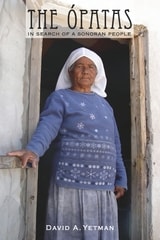
The Ópatas
In Search of a Sonoran PeopleDavid A. Yetman
University of Arizona Press, 2010
David Yetman, a leading ethnobotanist who has traveled extensively in Sonora, consulted more than two hundred archival sources to answer this question. The result is an accessible ethnohistory of the Ópatas, one that embraces historical complexity with an eye toward Opatan strategies of resistance and assimilation. Yetman’s account takes us through the Opatans’ initial encounters with the conquistadors, their resettlement in Jesuit missions, clashes with Apaches, their recruitment as miners, and several failed rebellions, and ultimately arrives at an explanation for their “disappearance.”
Yetman’s account is bolstered by conversations with present-day residents of the Opatería and includes a valuable appendix on the languages of the Opatería by linguistic anthropologist David Shaul. One of the few studies devoted exclusively to this indigenous group, The Ópatas: In Search of a Sonoran People marks a significant contribution to the literature on the history of the greater Southwest.
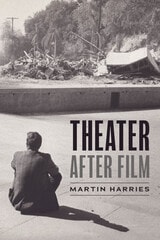
Theater after Film
Martin Harries
University of Chicago Press, 2025
In Theater after Film, Martin Harries argues that after 1945, as cinema became omnipresent in popular culture, theater had to respond to cinema’s hegemony. Theater couldn’t break that hegemony, but it could provide a zone of contestation. Theater made film’s domination of the cultural field visible through hyperbole, refusal, and other strategies, thereby unsettling its power. Postwar theatrical experiment, Harries shows, often channeled and represented film’s mass cultural force, while knowing that it could never possess that force. Throughout the book, Harries brings critical theory into contact with theories of performance. Although Theater after Film treats the theatrical work of many figures, its central focus falls on Tennessee Williams, Samuel Beckett, and Adrienne Kennedy. Discussions of these dramatists consider their ways of addressing spectators, the politics of race between film and theater, and the place of the theatrical apparatus. Readings of these central figures in twentieth-century theater exemplify the book’s historical engagement with the media surround that drama confronted. This confrontation, Harries shows, was central to the development of some of the most continually compelling postwar drama.
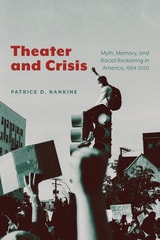
Theater and Crisis
Myth, Memory, and Racial Reckoning in America, 1964-2020Patrice D. Rankine
Lever Press, 2024
Rather than approaching the problem of racial reckoning through history, where periodization and progress are dominant narratives, Theater and Crisis argues that myth and memory allow for better theorization about recurring events from the past, their haunting, and what these apparent ghosts ask of us. Building on the study of myth as active, processual storytelling, Rankine acknowledges that it grounds and orients groups toward significant events. Theater and Crisis aligns narratives about Emmett Till, Trayvon Martin, and George Floyd, among others, with ancient, mythic figures such as Christ, Dionysus, Oedipus, and Moses. As living and verbal visitations, these stories performed on stage encode the past through their epiphanies in the present, urging audiences toward shared meaning.
Rankine traces the cyclical hauntings of race through the refiguring of mythic stories across the past 75 years in the plays of James Baldwin, Ntozake Shange, Antoinette Nwandu, and many more, and in response to flashpoints in US racial history, such as the 1955 lynching of Emmett Till, the upheavals of the 1960s and 1970s, the wars on drugs and crime, and the continued violence against and disenfranchisement of Black people into the twenty-first century. Theater and Crisis explores the appearance of myth on the American stage and showcases the ongoing response by the theatrical establishment to transform the stage into a space for racial reckoning. This timely book is essential reading for scholars of theater studies, classics, and American studies.
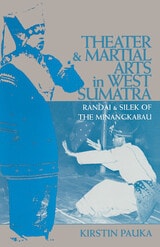
Theater and Martial Arts in West Sumatra
Randai and Silek of the MinangkabauKirstin Pauka
Ohio University Press, 1998
Randai, the popular folk theater tradition of the Minangkabau ethnic group in West Sumatra, has evolved to include influences of martial arts, storytelling, and folk songs. Theater and Martial Arts in West Sumatra describes the origin, development, and cultural background of randai and highlights two recent developments: the emergence of female performers and modern staging techniques.
This book also explores the indigenous martial arts form silek, a vital part of randai today. The strong presence of silek is illustrated in the martial focus of the stories that are told through randai, in its movement repertoire, and even in its costumes and musical accompaniment. As Kirstin Pauka shows, randai, firmly rooted in silek and Minangkabau tradition, is an intriguing mirror of the Minangkabau culture.
Theater and Society in the Classical World
Ruth Scodel, Editor
University of Michigan Press, 1993
Theater of the Mind
Imagination, Aesthetics, and American Radio DramaNeil Verma
University of Chicago Press, 2012
For generations, fans and critics have characterized classic American radio drama as a “theater of the mind.” This book unpacks that characterization by recasting the radio play as an aesthetic object within its unique historical context. In Theater of the Mind, Neil Verma applies an array of critical methods to more than six thousand recordings to produce a vivid new account of radio drama from the Depression to the Cold War.
In this sweeping exploration of dramatic conventions, Verma investigates legendary dramas by the likes of Norman Corwin, Lucille Fletcher, and Wyllis Cooper on key programs ranging from The Columbia Workshop, The Mercury Theater on the Air, and Cavalcade of America to Lights Out!, Suspense, and Dragnet to reveal how these programs promoted and evolved a series of models of the imagination.
With close readings of individual sound effects and charts of broad trends among formats, Verma not only gives us a new account of the most flourishing form of genre fiction in the mid-twentieth century but also presents a powerful case for the central place of the aesthetics of sound in the history of modern experience.
Theater of the People
Spectators and Society in Ancient AthensBy David Kawalko Roselli
University of Texas Press, 2011
Greek drama has been subject to ongoing textual and historical interpretation, but surprisingly little scholarship has examined the people who composed the theater audiences in Athens. Typically, scholars have presupposed an audience of Athenian male citizens viewing dramas created exclusively for themselves—a model that reduces theater to little more than a medium for propaganda. Women's theater attendance remains controversial, and little attention has been paid to the social class and ethnicity of the spectators. Whose theater was it?
Producing the first book-length work on the subject, David Kawalko Roselli draws on archaeological and epigraphic evidence, economic and social history, performance studies, and ancient stories about the theater to offer a wide-ranging study that addresses the contested authority of audiences and their historical constitution. Space, money, the rise of the theater industry, and broader social forces emerge as key factors in this analysis. In repopulating audiences with foreigners, slaves, women, and the poor, this book challenges the basis of orthodox interpretations of Greek drama and places the politically and socially marginal at the heart of the theater. Featuring an analysis of the audiences of Aeschylus, Sophocles, Euripides, Aristophanes, and Menander, Theater of the People brings to life perhaps the most powerful influence on the most prominent dramatic poets of their day.
Theater, War, and Memory in Crisis
Vichy, Algeria, the AftermathJohn Ireland
University of Michigan Press, 2025
Theatermachine
Tadeusz Kantor in ContextEdited by Magda Romanska and Kathleen Cioffi
Northwestern University Press, 2019
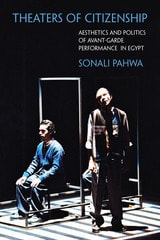
Theaters of Citizenship
Aesthetics and Politics of Avant-Garde Performance in EgyptSonali Pahwa
Northwestern University Press, 2020
In 2004, independent cultural institutions were sites for more democratic forms of youth organization and cultural participation than were Egyptian state theaters. Sonali Pahwa looks at identity formation within this infrastructure for new cultural production: festivals, independent troupes, workshops, and manifesto movements. Bringing institutional changes in dialogue with new performance styles on stages and streets, Pahwa conceptualizes performance culture as a school of citizenship. Independent theater incubated hope in times of despair and pointed to different futures for the nation’s youth than those seen in television and newspapers. Young dramatists countered their generation’s marginalization in the neoliberal economy, media, and political institutions as they performed alternative visions for the nation. An important contribution to the fields of anthropology and performance studies, Pahwa’s analysis will also interest students of sociology and Egyptian history.
Theaters of Madness
Insane Asylums and Nineteenth-Century American CultureBenjamin Reiss
University of Chicago Press, 2008

Theaters of Occupation
Hollywood and the Reeducation of Postwar GermanyJennifer Fay
University of Minnesota Press, 2008
In the aftermath of total war and unconditional surrender, Germans found themselves receiving instruction from their American occupiers. It was not a conventional education. In their effort to transform German national identity and convert a Nazi past into a democratic future, the Americans deployed what they perceived as the most powerful and convincing weapon-movies.
In a rigorous analysis of the American occupation of postwar Germany and the military’s use of “soft power,” Jennifer Fay considers how Hollywood films, including Ninotchka, Gaslight, and Stagecoach, influenced German culture and cinema. In this cinematic pedagogy, dark fantasies of American democracy and its history were unwittingly played out on-screen. Theaters of Occupation reveals how Germans responded to these education efforts and offers new insights about American exceptionalism and virtual democracy at the dawn of the cold war.
Fay’s innovative approach examines the culture of occupation not only as a phase in U.S.–German relations but as a distinct space with its own discrete cultural practices. As the American occupation of Germany has become a paradigm for more recent military operations, Fay argues that we must question its efficacy as a mechanism of cultural and political change.
Jennifer Fay is associate professor and codirector of film studies in the Department of English at Michigan State University.