Results by title
3576 books match the query 'American' and 770 start with t
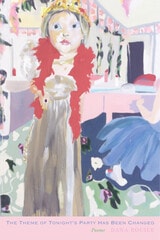
The Theme of Tonight's Party Has Been Changed
PoemsDana Roeser
University of Massachusetts Press, 2014
Sui generis, Dana Roeser's poems are spoken by a stand-up comic having a bad night at the local club. The long extended syntax, spread over her quirky, syncopated short lines, contains (barely) the speaker's anxieties over an aging father with Parkinson's, the maturation of two daughters, friends at twelve-step meetings and their sometimes suicidal urges—acted on or resisted—and her own place in a world that seems about to spin out of control. Bad weather and tiny economy cars speeding down the interstate next to Jurassic semis become the metaphor, or figurative vehicle, for this poet's sense of her own precariousness.
Roeser brings a host of characters into her poems—a Catholic priest raging against the commercialism of Mother's Day, the injured tennis player James Blake, a man struck by lightning, drunk partygoers, an ex-marine, Sylvia Plath's son Nicholas Hughes, a neighbor, travelers encountered in airport terminals, various talk therapists—and lets them speak. She records with high fidelity the nuances of our ordinary exigencies so that the poems become extraordinary arias sung by a husky-voiced diva with coloratura phrasing to die for, “the dark notes” that Lorca famously called the duende. The book is infused with the energy of misfortune, accident, coincidence, luck, grace, panic, hilarity. The characters and narrator, in extremis, speak their truths urgently.
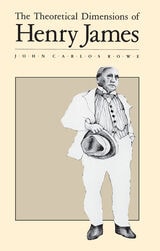
The Theoretical Dimensions of Henry James
John Carlos Rowe
University of Wisconsin Press, 1985
Rowe examines James from the perspectives of the psychology of literary influence, feminism, Marxism, psychoanalysis, literary phenomenology and impressionism, and reader-response criticism, transforming a literary monument into the telling point of intersection for modern critical theories.
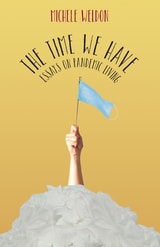
The Time We Have
Essays on Pandemic LivingMichele Weldon
Northwestern University Press, 2024
At a time when so many are dealing with collective and personal grief, award-winning author and journalist Michele Weldon’s new collection of essays navigates the revelatory and upending nature of this extraordinary pandemic era through a lens of love and connection. Weldon explores pain and pleasure alike with emotional texture, empathy, wisdom, vulnerability, and humor. She interrogates moments of joy, despair, and triumph, offering readers the possibility for a richly cathartic experience. With honesty and agility, Weldon creates poignant intersections of her narrative with popular culture, history, media, news, consumerism, family traditions, and healthcare. Employing honest and daring language, Weldon examines the concepts of safety, importance of beloved objects, power of words, shift to remote relationships, concepts of feminism, betrayal of public lies, and more. Ultimately, with grace and heart, Weldon offers in these essays useful pathways toward framing this swath of time so that we might arrive at a sense of understanding, belonging, and peace with our new realities.
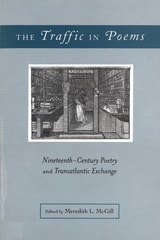
The Traffic In Poems
Nineteenth-Century Poetry and Transatlantic ExchangeMcGill, Meredith L
Rutgers University Press, 2008
Drawing on examples such as Felicia Hemans's elaboration of the foundational American myth of Plymouth Rock, Emma Lazarus's ambivalent welcome of Europe's cast-off populations, black abolitionist Mary Webb's European performances of Hiawatha, and American reprints of Robert Browning and George Meredith, the eleven essays in this book focus on poetic depictions of exile, slavery, immigration, and citizenship and explore the often asymmetrical traffic between British and American poetic cultures.
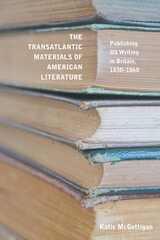
The Transatlantic Materials of American Literature
Publishing US Writing in Britain, 1830–1860Katie McGettigan
University of Massachusetts Press, 2023
Winner, Transatlantic Studies Association and Cambridge University Press Book Prize, 2023
During the antebellum period, British publishers increasingly brought out their own authorized and unauthorized editions of American literary works as the popularity of print exploded and literacy rates grew. Playing a formative role in the shaping of American literature, the industry championed the work of US-based writers, highlighted the cultural value of American literary works, and intervened in debates about the future of American literature, authorship, and print culture.
The Transatlantic Materials of American Literature examines the British editions of American fiction, poetry, essays, and autobiographies from writers like Edgar Allan Poe, Harriet Beecher Stowe, Frederick Douglass, and Hannah Flagg Gould. Putting these publications into historical context, Katie McGettigan considers key issues of the day, including developments in copyright law, changing print technologies, and the financial considerations at play for authors and publishers. This innovative study also uncovers how the transatlantic circulation of these works exposed the racial violence and cultural nationalism at the heart of the American experiment, producing overlapping and competing visions of American nationhood in the process.
The Transformation of Authorship in America
Grantland S. Rice
University of Chicago Press, 1997
Rice shows that the rigorous censorship practiced by Puritan authorities conferred an implicit prestige on texts as civic interventions, helping to foster a vigorous and indigenous tradition of sociopolitical criticism. With special attention to the sudden emergence of the novel in post-revolutionary America, Rice reveals how the emergence of economic liberalism undermined the earlier tradition of political writing by transforming American authorship from an expression of individual civic conscience to a market-oriented profession.
Includes discussions of the writings of Benjamin Franklin, Michel-Guillaume-Jean de Crèvecoeur, and Hugh Henry Brackenridge.
The Transformation of the Avant-Garde
The New York Art World, 1940-1985Diana Crane
University of Chicago Press, 1989
Crane's account is built around discussions of seven styles: Abstract Expressionism in the forties; Pop art and Minimalism in the sixties; Figurative painting, Photorealism, and Pattern painting in the early seventies; and Neo-Expressionism in the early eighties. Demonstrating that the New York art world moved toward increasing acceptance of dominant American cultural trends, Crane offers a fascinating look not only at the intricacies of New York's artistic inner circle but also at the sociology of work and professions, the economics of culture markets such as "dealing art," and the sociology of culture.
The Translations of Nebrija
Language, Culture, and Circulation in the Early Modern WorldByron Ellsworth Hamann
University of Massachusetts Press, 2015
Tracing the global influence of Nebrija's dictionary, Byron Ellsworth Hamann, in this interdisciplinary, deeply researched book, connects pagan Rome, Muslim Spain, Aztec Tenochtitlan, Elizabethan England, the Spanish Philippines, and beyond, revealing new connections in world history. The Translations of Nebrija re-creates the travels of people, books, and ideas throughout the early modern world and reveals the adaptability of Nebrija's text, tracing the ways heirs and pirate printers altered the dictionary in the decades after its first publication. It reveals how entries in various editions were expanded to accommodate new concepts, such as for indigenous languages in the Americas—a process with profound implications for understanding pre-Hispanic art, architecture, and writing. It shows how words written in the margins of surviving dictionaries from the Americas shed light on the writing and researching of dictionaries across the early modern world.
Exploring words and the dictionaries that made sense of them, this book charts new global connections and challenges many assumptions about the early modern world.
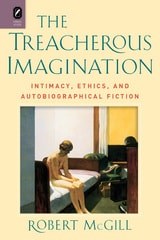
The Treacherous Imagination
Intimacy, Ethics, and Autobiographical FictionRobert McGill
The Ohio State University Press, 2013
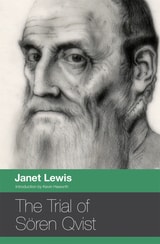
The Trial of Sören Qvist
Janet Lewis
Ohio University Press, 2013
Originally published in 1947, The Trial of Sören Qvist has been praised by a number of critics for its intriguing plot and Janet Lewis’s powerful writing. And in the introduction to this new edition, Swallow Press executive editor and author Kevin Haworth calls attention to the contemporary feeling of the story—despite its having been written more than fifty years ago and set several hundred years in the past. As in Lewis’s best-known novel, The Wife of Martin Guerre, the plot derives from Samuel March Phillips’s nineteenth-century study, Famous Cases of Circumstantial Evidence, in which this British legal historian considered the trial of Pastor Sören Qvist to be the most striking case.
The Tribe of Pyn
Literary Generations in the Postmodern PeriodDavid Cowart
University of Michigan Press, 2015
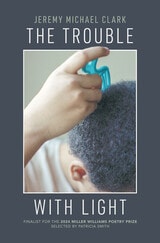
The Trouble with Light
Jeremy Michael Clark
University of Arkansas Press, 2024
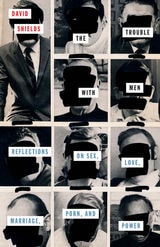
The Trouble with Men
Reflections on Sex, Love, Marriage, Porn, and PowerDavid Shields
The Ohio State University Press, 2019
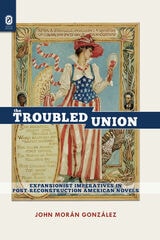
The Troubled Union
Expansionist Imperatives in Post-Reconstruction American NovelsJohn Morán González
The Ohio State University Press, 2010

The True Adventures of Huckleberry Finn
John Seelye
University of Illinois Press, 1987
funnier than the original, and also more moving, since Seelye's Huck Finn is
even less sentimental about life and Tom Sawyer than Twain's Huck Finn. He is
also more perceptive about black people than the original."
-- Hughes Rudd, CBS News
"Seelye has stitched together
a whale of a book. Without reference to Twain's own version, it is almost impossible
to see the seams where 1970 joins 1884."
-- Geoffrey Wolff, Newsweek
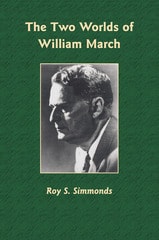
The Two Worlds of William March
Roy S. Simmonds
University of Alabama Press, 1984
In the work of literary resurrection there is always a small act of defiance. The Two Worlds of William March by Roy S. Simmonds restores to view one of the most remarkable and least celebrated American writers of the twentieth century. With intelligence, restraint, and a keen eye for contradiction, Simmonds traces March’s path from Alabama beginnings through war, business success, and literary achievement. The result is more than a biography. It is an inquiry into the making of a writer whose novels continue to unsettle, disturb, and illuminate long after the fashions of his age have passed.
What lingers is the paradox of William March himself. He was a man of outward accomplishment who remained drawn to the hidden regions of experience. He wrote memorably of war without glamorizing it, and of evil without simplifying it. Unlike so many public literary figures, he seemed to cultivate disappearance rather than celebrity. The silence around him became part of the story. Simmonds treats that silence not as a void but as evidence, revealing a complex and deeply observant mind at work beneath an unusually quiet life.
The questions that occupied March remain with us. How well do we know ourselves? What lies beneath ordinary behavior? How does experience become art? For readers of Southern literature, literary biography, American history, war literature, psychology, Alabama culture, and twentieth-century fiction, this book offers both discovery and reconsideration. It will especially appeal to those who suspect that the most revealing stories are often hidden in plain sight.
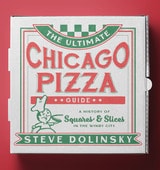
The Ultimate Chicago Pizza Guide
A History of Squares & Slices in the Windy CitySteve Dolinsky
Northwestern University Press, 2021
Enter renowned food journalist Steve Dolinsky. He embarked on a memorable quest for his first book, Pizza City, USA: 101 Reasons Why Chicago Is America’s Greatest Pizza Town, tasting more than 185 pizzas all over the region. For his follow-up, Dolinsky focuses on the city’s pizzerias, while still honoring a few suburban stalwarts.
This user-friendly guide is organized by pizza style—including thin, tavern, artisan, Neapolitan, deep-dish, stuffed, by-the-slice, Roman, and Detroit—so you can find the right recommendation for every family member, visitor, and occasion. Dolinsky highlights his favorites, offers a pizza lover’s glossary so you can order like a pro, and shows you every pie he ate, so you can compare notes and cook up your next pizza night. With recipes, local beer pairings, gluten-free options, and more, The Ultimate Chicago Pizza Guide is an essential resource both for locals and for visitors in search of a serious pizza getaway.
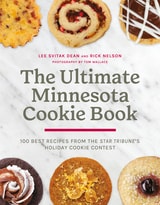
The Ultimate Minnesota Cookie Book
100 Best Recipes from the Star Tribune's Holiday Cookie ContestLee Svitak Dean
University of Minnesota Press, 2024
A fresh batch of deliciously distinctive recipes from the Star Tribune’s beloved annual cookie contest—with even more recipes, enticing photographs, and bakers’ stories
Cold winters call for warm kitchens and cookie baking, especially around the holidays. The Ultimate Minnesota Cookie Book, a compendium of Minnesota’s rich baking traditions and innovative recipes, stirs up winning treats from twenty years of the Star Tribune’s popular holiday cookie contest.
Significantly expanding and updating its 2018 predecessor, The Great Minnesota Cookie Book, this collection features thirty-five new recipes, including Grasshoppers and Dark Chocolate Fig Rolls, Tiramisu Twists and Cardamom Cherry Buttons, Diablo Snowballs, Spumoni Squares, and Maple-Roasted Walnut Delights. This sweet-tooth treasure trove of cookie recipes will inspire bakers to discover how many ways flour, sugar, butter, and eggs (plus several unexpected ingredients) can be combined to create new favorites for the holidays—or any time of year.
The best of the best, these contest-winning cookies are accompanied by beautiful photographs and baking tips, insights, and essays. Indulge in these delightful, mouth-watering recipes while Minnesota’s best bakers share stories of cherished holiday traditions, recall memorable cookie moments, and celebrate how baking brings us together.
The Unbeliever
THE POETRY OF ELIZABETH BISHOPRobert Dale Parker
University of Illinois Press, 1988
literary history and theory to give the poems of Elizabeth Bishop (1911-79)
the serious critical attention they deserve. The Unbeliever shows that
Bishop's poems, already famous for their clear and quiet tone, also struggle
with confusion and wonder about things she can never make quiet or clear.
The Underground Heart
A Return to a Hidden LandscapeRay Gonzalez
University of Arizona Press, 2002
As Gonzalez drives the highways of New Mexico and west Texas, he shows us a border culture rejuvenated by tourist and trade dollars, one that will surprise readers for whom the border means only illegal immigration, NAFTA, and the drug trade. Played out against a soundtrack of the Allman Brothers and The Doors, The Underground Heart takes readers on a trip through a seemingly barren landscape that teems with life and stories. Gonzalez witnesses Minnesotans experiencing culture shock while attending a college football game in El Paso; he finds a proliferation of Pancho Villa death masks housed at different museums; he revisits Carlsbad Caverns, discovering unsuspected beauty beneath the desert's desolation; and he takes us shopping at El Mercado—where tourists can buy everything from black velvet paintings of Elvis (or Jesus, or JFK) to Mexican flag underwear.
From "nuclear tourism" in New Mexico to "heritage tourism" in the restored missions of San Antonio, Gonzalez goes behind the slogans of The Land of Enchantment and The Lone Star State to uncover a totally different Southwest. Here are tourist centers that give a distorted view of southwestern life to outsiders, who leave their dollars in museum gift shops and go home weighed down with pounds of Indian jewelry around their necks. Here border history is the story of one culture overlaid on another, re-forming itself into a whole new civilization on the banks of the Rio Grande.
The Underground Heart is a book brimming with subtle ironies and insights both quiet and complex—one which recognizes that sometimes one must go away and grow older to finally recognize home as a life-giving, spiritually sustaining place. As Gonzalez rediscovers the land of his past, he comes to understand the hyper, bilingual atmosphere of its future. And in the Southwest he describes, readers may catch a glimpse of their own hidden landscapes of home.
The Underground Poetry Metro Transportation System for Souls
Essays on the Cultural Life of PoetryTony Hoagland
University of Michigan Press, 2019

The Undiscovered Island
Darrell Kastin, Introduction by Katherine Vaz
Tagus Press, 2023
Winner of the Independent Publishers Book Awards’ Silver Prize for Multicultural Fiction
Alarmed by her father’s unexplained disappearance, Julia Castro travels from California to her family’s ancestral home in the Azores to find the islands abuzz with tales of ghost ships, seductive sirens, and witchcraft. The mystery deepens when a drowned man’s body is discovered on a mountainside and an unknown island emerges from the sea. While she is on the hunt for her father, Julia succumbs to the bewitching allure of the islands—and to Nicolau, a fellow musician. History, legend, poetry, and myth are seamlessly interwoven as the novel explores relationships between personal and cultural identity, fate and self-determination, reality and illusion. This revised edition of The Undiscovered Island features a new introduction from Katherine Vaz.
The Unfinished Quest of Richard Wright
Michel Fabre
University of Illinois Press, 1993
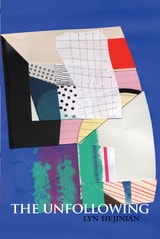
The Unfollowing
Lyn Hejinian
Omnidawn, 2016
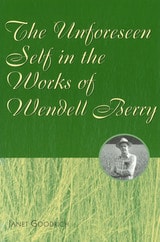
The Unforeseen Self in the Works of Wendell Berry
Janet Goodrich
University of Missouri Press, 2001
In this fresh approach to Wendell Berry's entire literary canon, Janet Goodrich argues that Berry writes primarily as an autobiographer and as such belongs to the tradition of autobiography. Goodrich maintains that whether Berry is writing poetry, fiction, or prose, he is imagining and re- imagining his own life from multiple perspectives—temporal as well as imaginative.
Through the different vocations that compose his being, Berry imaginatively shapes his experience into literary artifice. Goodrich identifies five of these vocations—the autobiographer, the poet, the farmer, the prophet, and the neighbor—and traces them in the body of Berry's work where they are consistently identifiable in the authorial voice and obvious to the imagination in fictive characterizations. Berry's writings express these "personae" as they develop, and it is this complexity of perspective that helps to make Berry vital to such a range of readers as he writes and rewrites his experience.
Goodrich's book is organized thematically into five chapters, each examining one of Berry's imaginative voices. Within each chapter, she has proceeded chronologically through Berry's work in order to trace the development in each point of view. By acknowledging the relationships between these different themes and patterns of language in the texts, Goodrich avoids reducing Berry as she helps the reader appreciate the richness with which he writes his life into art.
Whereas others have categorized Berry according to just one of his many facets, The Unforeseen Self in the Works of Wendell Berry takes account of his work in all its complexity, providing a coherent critical context and method of study. Reconciling the sometimes contradictory labels pinned on Berry, this vital study of his poems, stories, and essays from 1957 to 2000 offers an enriching and much needed new perspective for Berry's growing, diverse readership.
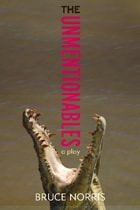
The Unmentionables
A PlayBruce Norris
Northwestern University Press, 2009
The Unruly Voice
Rediscovering Pauline Elizabeth HopkinsEdited by John Cullen Gruesser
University of Illinois Press, 1996
The work and times of the Black writer, editor, and intellectual
John Cullen Gruesser edits essays that explore the literary and journalistic career of Pauline Elizabeth Hopkins. A Black woman writer at the turn of the twentieth century, Hopkins worked as the unacknowledged editor-in-chief of the Colored American Magazine but also wrote short fiction, novels, nonfiction articles, and a play believed to be the first by a Black woman. Versatile and politically committed, she was fired when her strong editorial stands and non-conciliatory politics offended the new owner of Colored American Magazine.
A rare examination of an overlooked figure in Black letters, The Unruly Voice explores Hopkins’s writing and her significance for contemporary readers.
Contributors: Elizabeth Ammons; Kristina Brooks; Lois Lamphere Brown; C. K. Doreski; John Cullen Gruesser; Jennie A. Kassanoff; Kate McCullough; Nelly Y. McKay; and Cynthia D. Schrager
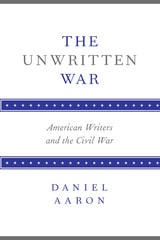
The Unwritten War
American Writers and the Civil WarDaniel Aaron
University of Alabama Press, 2003
In The Unwritten War, Daniel Aaron examines the literary output of American writers—major and minor—who treated the Civil War in their works. He seeks to understand why this devastating and defining military conflict has failed to produce more literature of a notably high and lasting order, why there is still no "masterpiece" of Civil War fiction.
In his portraits and analyses of 19th- and some 20th-century writers, Aaron distinguishes between those who dealt with the war only marginally—Henry Adams, Henry James, William Dean Howells, Mark Twain-and those few who sounded the war's tragic import—Herman Melville, Walt Whitman, and William Faulkner. He explores the extent to which the war changed the direction of American literature and how deeply it entered the consciousness of American writers. Aaron also considers how writers, especially those from the South, discerned the war's moral and historical implications.
The Unwritten War was originally published by Alfred A. Knopf in 1973. The New Republic declared, [This book's] major contribution will no doubt be to American literary history. In this respect it resembles Edmund Wilson's Patriotic Gore and is certain to become an indispensable guide for anyone who wants to explore the letters, diaries, journals, essays, novels, short stories, poems-but apparently no plays-which constitute Civil War literature. The mass of material is presented in a systematic, luminous, and useful way.
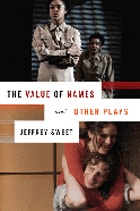
The Value of Names and Other Plays
Jeffrey Sweet
Northwestern University Press, 2008
Spanning a quarter of a century, this collection of plays demonstrates author Jeffrey Sweet’s eye for the drama of human relationships. Sweet works with sensitivity and irony to confront both personal politics and the impact of historical change. These nine works, taken together, present a playwright who extends the struggles of his small circles of characters to his audience and humanity in general.
The title work, first mounted in 1982, is a comedy-drama about the aftermath of the blacklist whose continued relevance makes it a frequently produced play today. The family drama Porch suggests larger social changes through the interaction of a small-town shopkeeper and his defiant daughter. The lauded American Enterprise, set in the Chicago of the robber barons, is a song-filled true story about a millionaire whose stubborn idealism leads to disaster. Stay Till Morning is a rueful comedy about sex and accommodation in the Florida Keys. The three plays that grew out of his fascination with the effects of World War II—Berlin ’45, Court-Martial at Fort Devens, and The Action Against Sol Schumann—dramatize the ways in which that conflict transformed private fates. Each script is accompanied by an extended introduction from the playwright as well as complete performance notes.
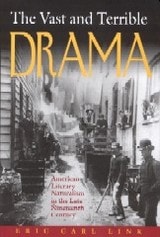
The Vast and Terrible Drama
American Literary Naturalism in the Late Nineteenth CenturyEric Carl Link
University of Alabama Press, 2004
A broad treatment of the cultural, social, political, and literary under-pinnings of an entire period and movement in American letters
The Vast and Terrible Drama is a critical study of the context in which authors such as Oliver Wendell Holmes, Stephen Crane, Frank Norris, Theodore Dreiser, and Jack London created their most significant work. In 1896 Frank Norris wrote: "Terrible things must happen to the characters of the naturalistic tale. They must be twisted from the ordinary . . . and flung into the throes of a vast and terrible drama." There could be "no teacup tragedies here." This volume broadens our understanding of literary naturalism as a response to these and other aesthetic concerns of the 19th century.
Themes addressed include the traditionally close connection between French naturalism and American literary naturalism; relationships between the movement and the romance tradition in American literature, as well as with utopian fictions of the 19th century; narrative strategies employed by the key writers; the dominant naturalist theme of determinism; and textual readings that provide broad examples of the role of the reader. By examining these and other aspects of American literary naturalism, Link counters a century of criticism that has perhaps viewed literary naturalism too narrowly, as a subset of realism, bound by the conventions of realistic narration.
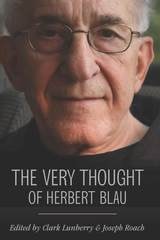
The Very Thought of Herbert Blau
Clark Lunberry and Joseph Roach, Editors
University of Michigan Press, 2018
Herbert Blau (1926–2013) was the most influential theater theorist, practitioner, and educator of his generation. He was the leading American interpreter of the works of Samuel Beckett and as a director was instrumental in introducing works of the European avant-garde to American audiences. He was also one of the most far-reaching and thoughtful American theorists of theater and performance, and author of influential books such as The Dubious Spectacle, The Audience, and Take Up the Bodies: Theater at the Vanishing Point.
In The Very Thought of Herbert Blau, distinguished artists and scholars offer reflections on what made Blau's contributions so visionary, transformative, and unforgettable, and why his ideas endure in both seminar rooms and studios. The contributors, including Lee Breuer, Sue-Ellen Case, Gautam Dasgupta, Elin Diamond, S. E. Gontarski, Linda Gregerson, Martin Harries, Bill Irwin, Julia Jarcho, Anthony Kubiak, Daniel Listoe, Clark Lunberry, Bonnie Marranca, Peggy Phelan, Joseph Roach, Richard Schechner, Morton Subotnick, Julie Taymor, and Gregory Whitehead, respond to Blau's fierce and polymorphous intellect, his relentless drive and determination, and his audacity, his authority, to think, as he frequently insisted, "at the very nerve ends of thought."
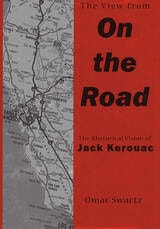
The View From On the Road
The Rhetorical Vision of Jack KerouacOmar Swartz
Southern Illinois University Press, 2000
Through careful analysis of Jack Kerouac’s On the Road, Omar Swartz argues that Kerouac’s influence on American society is largely rhetorical. Kerouac’s significance as a cultural icon can be best understood, Swartz asserts, in terms of traditional rhetorical practices and principles.
To Swartz, Kerouac is a rhetor who symbolically reconstructs his world and offers arguments and encouragements for others to follow. Swartz proposes that On the Road constitutes a “rhetorical vision,” a reality-defining discourse suggesting alternative possibilities for growth and change. Swartz asserts that the reader of Kerouac’s On theRoadbecomes capable of responding to the larger, confusing culture in a strategic manner. Kerouac's rhetorical vision of an alternative social and cultural reality contributes to the identity of localized cultures within the United States.
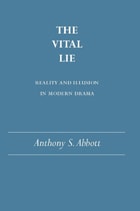
The Vital Lie
Reality and Illusion in Modern DramaAnthony S. Abbott
University of Alabama Press, 1988
The Vital Lie: Reality and Illusion in Modern Drama is a sweeping inquiry into the stories people tell themselves in order to endure, survive, and belong. Moving from Ibsen and Strindberg to Beckett, Pinter, and beyond, Anthony S. Abbott traces the uneasy traffic between actuality and self-invention that animates modern theater. Rather than offering a simple survey, he uncovers a recurring dramatic predicament: the cognitive dissonance that afflict people when the beliefs they hold about themselves collide with reality.
Anthony S. Abbott writes with the erudite observation of a critic and the curiosity of a participant. His book explores illusion, meaning, and human resilience, a perspective that lends unusual urgency to its readings of canonical playwrights. Abbott's scholarship is expansive without becoming academic in the pejorative sense; his arguments remain animated by large questions about purpose, dignity, and the imaginative structures that sustain ordinary lives.
Ideal for theater devotees, literary historians, students of modernism, philosophy-minded readers, directors, dramaturgs, and anyone fascinated by self-deception, mythmaking, and identity. Admirers of intellectual biography, cultural criticism, existential inquiry, and ambitious cross-author interpretation will find this volume especially rewarding. Those who relish fresh angles on familiar classics will discover a study that is probing, elegant, and unexpectedly memorable.
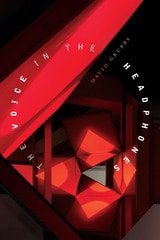
The Voice in the Headphones
David Grubbs
Duke University Press, 2020
The Voice in the Headphones is an experiment in music writing in the form of a long poem centered on the culture of the recording studio. It describes in intricate, prismatic detail one marathon day in a recording studio during which an unnamed musician struggles to complete a film soundtrack. The book extends the form of Grubbs's previous volume Now that the audience is assembled, sharing its goal of musicalizing the language of writing about music. Mulling the insight that “studio is the absence of pushback”—now that no audience is assembled—The Voice in the Headphones details one musician's strategies for applying the requisite pressure to the proceedings, for making it count. The Voice in the Headphones is both a literary work and a meditation on sound recording, delivered at a moment in which the commercial recording studio shades into oblivion. It draws upon Grubbs's own history of several decades as a recording artist, and its location could be described as every studio in which he has set foot.
The Waiting
Johnson, Megan
University of Iowa Press, 2005
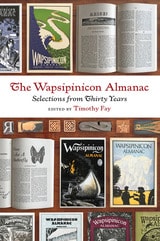
The Wapsipinicon Almanac
Selections from Thirty YearsTimothy Fay
University of Iowa Press, 2023

The War Complex
World War II in Our TimeMarianna Torgovnick
University of Chicago Press, 2005
Marianna Torgovnick argues that we have lived, since the end of World War II, under the power of a war complex—a set of repressed ideas and impulses that stems from our unresolved attitudes toward the technological acceleration of mass death. This complex has led to gaps and hesitations in public discourse about atrocities committed during the war itself. And it remains an enduring wartime consciousness, one most recently animated on September 11.
Showing how different events from World War II became prominent in American cultural memory while others went forgotten or remain hidden in plain sight, The War Complex moves deftly from war films and historical works to television specials and popular magazines to define the image and influence of World War II in our time. Torgovnick also explores the 1961 trial of Adolf Eichmann, the emotional legacy of the Holocaust, and the treatment of World War II's missing history by writers such as W. G. Sebald to reveal the unease we feel at our dependence on those who hold the power of total war. Thinking anew, then, about how we account for war to each other and ourselves, Torgovnick ultimately, and movingly, shows how these anxieties and fears have prepared us to think about September 11 and our current war in Iraq.
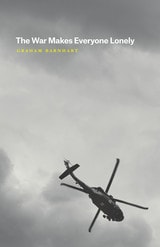
The War Makes Everyone Lonely
Graham Barnhart
University of Chicago Press, 2019
Evoking the landscapes and surroundings of war, as well as its effects on both US military service members and civilians in war-stricken countries, The War Makes Everyone Lonely is a challenging, nuanced look at the ways American violence is exported, enacted, and obscured by a writer poised to take his place in the long tradition of warrior-poets.
The War on Words
Slavery, Race, and Free Speech in American LiteratureMichael T. Gilmore
University of Chicago Press, 2010
How did slavery and race impact American literature in the nineteenth century? In this ambitious book, Michael T. Gilmore argues that they were the carriers of linguistic restriction, and writers from Frederick Douglass to Stephen Crane wrestled with the demands for silence and circumspection that accompanied the antebellum fear of disunion and the postwar reconciliation between the North and South.
Proposing a radical new interpretation of nineteenth-century American literature, The War on Words examines struggles over permissible and impermissible utterance in works ranging from Thoreau’s “Civil Disobedience” to Henry James’s The Bostonians. Combining historical knowledge with groundbreaking readings of some of the classic texts of the American past, The War on Words places Lincoln’s Cooper Union address in the same constellation as Margaret Fuller’s feminism and Thomas Dixon’s defense of lynching. Arguing that slavery and race exerted coercive pressure on freedom of expression, Gilmore offers here a transformative study that alters our understanding of nineteenth-century literary culture and its fraught engagement with the right to speak.
The Weather for Poetry
Essays, Reviews, and Notes on Poetry, 1977-81Donald Hall
University of Michigan Press, 1982
The Weave Room
Michael Chitwood
University of Chicago Press, 1998
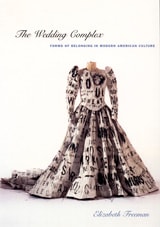
The Wedding Complex
Forms of Belonging in Modern American CultureElizabeth Freeman
Duke University Press, 2002
Freeman draws on queer theory and social history to focus on a range of texts where weddings do not necessarily lead to legal marriage but instead reflect yearnings for intimate arrangements other than long-term, state-sanctioned, domestic couplehood. Beginning with a look at the debates over gay marriage, she proceeds to consider literary works by Nathaniel Hawthorne, William Faulkner, Carson McCullers, Vladimir Nabokov, and Edgar Allan Poe, along with such Hollywood films as Father of the Bride, The Graduate, and The Godfather. She also discusses less well-known texts such as Su Friedrich’s experimental film First Comes Love and the off-Broadway, interactive dinner play Tony ‘n’ Tina’s Wedding.
Offering bold new ways to imagine attachment and belonging, and the public performance and recognition of social intimacy, The Wedding Complex is a major contribution to American studies, queer theory, and cultural studies.
The Welcome
David Joel Friedman
University of Illinois Press, 2006
The Wendys
Allison Benis White
Four Way Books, 2020
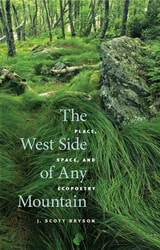
The West Side of Any Mountain
Place, Space, and EcopoetryJ. Scott Bryson
University of Iowa Press, 2005
Informed in general by current thinking in environmental theory and specifically by the work of cultural geographer Yi-Fu Tuan, The West Side of Any Mountain participates in and furthers this scholarly attention by offering an overarching theoretical framework with which to approach the field.
One area that contemporary theorists have found problematic is the dualistic civilization/wilderness binary that focuses on the divisions between culture and nature, thereby increasing the modern sense of alienation. Tuan’s place-space framework offers a succinct vocabulary for describing the attitudes of ecological poets and other nature writers in a way that avoids setting up an adversarial relationship between place and space. Scott Bryson describes the Tuanian framework and employs it to offer fresh readings of the work of four major ecopoets: Wendell Berry, Joy Harjo, Mary Oliver, and W. S. Merwin.
The West Side of Any Mountain will be of great interest to scholars and teachers working in the field of contemporary nature poetry. It is recommended for nature-writing courses as well as classes dealing with 20th-century poetry, contemporary literary criticism, and environmental theory.
The West Virginia Pepperoni Roll
Candace Nelson
West Virginia University Press, 2017
This spicy snack soon found its way out of the mines and into bakeries, bread companies, restaurants, and event venues around the state, often with additional ingredients like cheese, red sauce, or peppers.
As the pepperoni roll’s reputation moves beyond the borders of West Virginia, this food continues to embody the culinary culture of its home state. It is now found at the center of bake-offs, eating contests, festivals, as a gourmet item on local menus, and even on a bill in the state’s legislature.
The West Virginia Pepperoni Roll is a comprehensive history of the unofficial state food of West Virginia. With over 100 photographs and countless recipes and recollections, it tells the story of the immigrants, business owners, laborers, and citizens who have developed and devoured this simple yet practical food since its invention.
The White Negress
Literature, Minstrelsy, and the Black-Jewish ImaginaryHarrison-Kahan, Lori
Rutgers University Press, 2010
Lori Harrison-Kahan examines writings by Edna Ferber, Fannie Hurst, and Zora Neale Hurston, as well as the blackface performances of vaudevillian Sophie Tucker and controversies over the musical and film adaptations of Show Boat and Imitation of Life. Moving between literature and popular culture, she illuminates how the dynamics of interethnic exchange have at once produced and undermined the binary of black and white.

The White Orchard
Selected Interviews, Essays, and PoemsArthur Sze
Museum of New Mexico Press, 2025
A son of Chinese immigrants who was born and raised in New York City and on Long Island, Sze first studied science at MIT. His call to write poetry pulled him away from that academic pursuit, but the sciences would continue to influence his writing. In 2024, Sze received the National Book Foundation Science + Literature Award for The Glass Constellation: New and Collected Poems (Copper Canyon Press). Sze spent over two decades as an educator, teaching creative writing and poetry to Indigenous students from across America at Santa Fe’s Institute of American Indian Arts (IAIA). In this compilation, Sze is interviewed by his former IAIA student, award-winning Diné poet, editor, and visual artist Esther Belin.
Sze’s fluency in his parents’ native tongue, along with study at the University of California at Berkeley, allowed him to delve into Chinese poetry, both as a student and translator of classical and contemporary works. The White Orchard shows his wider connection to Asian American poetry across the United States and how he has drawn inspiration from translating Chinese poetry into English. Arthur Sze is one of our finest poets, and this collection demonstrates how literature can enrich us all.
The White Trash Menace and Hemispheric Fiction
Ramón E. Soto-Crespo
The Ohio State University Press, 2020
The Whitman Revolution
Sex, Poetry, and PoliticsBetsy Erkkila
University of Iowa Press, 2020
The Whitman Revolution brings together a rich collection of Betsy Erkkila’s phenomenally influential essays that have been published over the years, along with two powerful new essays. Erkkila offers a moving account of the inseparable mix of the spiritual-sexual-political in Whitman and the absolute centrality of male-male connection to his work and thinking. Her work has been at the forefront of scholarship positing that Whitman’s songs are songs not only of workers and occupations but of sex and the body, homoeroticism, and liberation. What is more, Erkkila’s writing demonstrates that this sexuality and communal impulse is central to Whitman’s revolutionary poetry and his conception of democracy itself—an insight that was all but suppressed during the mid-twentieth century emergence of American literature as a field of study.
Highlights of this collection include Erkkila’s essays on pairings such as Marx and Whitman, Dickinson and Whitman, and Melville and Whitman. Across the volume, she demonstrates an international vision that highlights the place of Leaves of Grass within a global struggle for democracy. The Whitman Revolution is evidence of Erkkila’s remarkable ability to lead critical discussions, and marks an exciting event in Whitman studies.