Results by title
3390 books match the query 'Fiction' and 1041 start with t
The Many Woods of Grief
PoemsLucas Farrell
University of Massachusetts Press, 2011
In this striking debut volume, Lucas Farrell offers a lyrical and illuminating field guide to the flora and fauna of “worlds just out of reach.” With the precision and detail of an Audubon sketch, he turns his naturalist's eye to the vast landscape of human emotion—all the while affirming “how real this world we live in / must be to live in.”
Journeying ever outward, from the achingly ordinary to the mysterious “land where there is no land,” the narrator of this collection, equal parts pastoralist and surrealist, explores the vivid in-betweens—between love and loss, hilarity and despair, wild and domestic, real and imagined. Hungry, expressive, and original, these poems glean light from even the darkest of fields.
The Marengo Jake Stories
The Tales of Jake Mitchell and Robert Wilton BurtonJake Mitchell and Robert Wilton Burton, collected by Kathryn Sport and Bert Hitchcock
University of Alabama Press, 2007
Between 1885 and 1894 The Montgomery Advertiser, The Birmingham-Age Herald, and The New Orleans Times Democrat featured a series of about 80 humorous black-dialect sketches by Robert Wilton Burton, a bookseller and writer from Auburn, Alabama. According to Burton, these tales were based on various characters in the black community of Auburn, and 36 of them were devoted exclusively to a character called "Marengo Jake." Probably originally from Virginia, Jake Mitchell was brought to the Drake Plantation in Marengo county as a boy in the 1850's. After the Civil War, the Drake family moved to Auburn and many former slaves followed, forming a fairly large expatriate Marengo County community. The theme of the stories, usually related by Jake, centers on the superiority of all things from Marengo County, especially over those in Lee County, in which Auburn is located.
The Martyrdom of Maev and Other Irish Stories
Harold Frederic
Catholic University of America Press, 2015
The Mask of Fiction
Essays on W. D. HowellsJohn W. Crowley
University of Massachusetts Press, 0
The Master
Patrick Rambaud
Seagull Books, 2023
“It was twenty-five centuries ago in the land of Song, between the Yellow River and the River Huai: Zhuang Zhou was born without a cry with his eyes wide open.”
Welcome to China in the fifth century BCE, a colorful, violent, unstable world into which Zhuang is born. Here royals raise huge armies, constantly waging wars against one another. They have slaves, concubines. Gold is everywhere. And so is hunger. Born rich and entitled, Zhuang learns to refuse any official function. His travels bring him closer to ordinary people, from whom he learns how to live a simple and useful life. This is how he will become one of the greatest Chinese philosophers who gave his name to his legendary book, the Zhuangzi, one of the two foundational texts of Taoism—a magnificent procession of lively stories in which we meet dwarfs, virtuous bandits, butchers, powerful lords in their castles, turtles, charming concubines, and false sages. In this remarkable bildungsroman, award-winning French novelist Patrick Rambaud spins out the extraordinary life of Zhuang Zhou—a poetic, cruel, and often humorous tale, halfway between fable and philosophy.
The Master Of Monterey
A NovelLawrence Coates
University of Nevada Press, 2003
The Maze Maker
A NovelMichael Ayrton
University of Chicago Press, 2015
In this fictional autobiography of the father of Icarus, “Apollo’s creature,” a brilliant but flawed man, writer and sculptor Michael Ayrton harnesses the tales of the past to mold a myth for our times. We learn of Daedalus’s increasingly ambitious artifacts and inventions; his fascination with Minoan culture, commerce, and religion, and his efforts to adapt to them; how he comes to design the maze of the horned Minotaur; and how, when he decides that he must flee yet again, he builds two sets of wax wings—wings that will be instruments of his descent into the underworld, a place of both purgatory and rebirth.
A compelling mix of history, fable, lore, and meditations on the enigma of art, The Maze Maker will ensnare classicists, artists, and all lovers of story in its convolutions of life and legend. “I never understood the pattern of my life,” writes Daedalus, “so that I have blundered through it in a maze.”
The Meaning of Daughter
Nader, Alexia
University of Iowa Press, 2026
After immigrating from Lebanon to Haiti as a young girl, Merjan comes of age in an insular, conservative community, where it seems as though her sole escape is marriage. Striking a bargain with a young art dealer, she marries and dreams of becoming a painter, only to discover her husband’s support tethered with expectations.
In the late 1970s, Merjan’s daughter Yvonne is a young woman on the cusp of a marriage of convenience. Though resentful of her mother, Yvonne dreams of establishing a Haitian art gallery in New York with the help of a well-connected older man—but her time there ends disastrously, creating a deep rift between her and her family.
In the present day, Yvonne’s daughter Eva is a student whose art draws inspiration from her grandmother Merjan’s largely undiscovered work. When Eva becomes unexpectedly pregnant, she moves back to her childhood home in Miami to sort out her ambivalent feelings, where she finds her family upended by feuds. An intimate family saga, The Meaning of Daughter explores questions about maternal ambivalence, ambition, artmaking, and how desire resists gendered expectations.
The Meaning of If
Patrick Lawler
Four Way Books, 2014
The Measure of Distance
An Immigrant NovelPauline Kaldas
University of Arkansas Press, 2023
This family saga begins when Salim, the eldest of three brothers, moves to Cairo at the start of the twentieth century with dreams of opening his own bakery. His decision to leave his ancestral village of Kom Ombo despite his parents’ objections reverberates across generations, kicking off a series of migrations that shape the lives of his family and their descendants throughout the decades that follow. These migrations only intensify after the revolution of 1952—with Misha, Salim’s eldest grandchild, being the first to flee to “Amreeka,” his annual phone calls home becoming briefer and briefer with each passing year.
Culminating with the 2011 protests in Tahrir Square, Pauline Kaldas’s The Measure of Distance is a detailed portrait of immigration against the backdrop of an Egypt in constant flux and an America that is always falling short of the fantasy. Alternating between tales of those who migrate and those who stay, this expansive novel follows its characters as they determine the course of their lives, often choosing one uncertainty over another as they migrate to new lands or plant their roots more firmly in their homeland.
The Measure of the World
A NovelDenis Guedj
University of Chicago Press, 2001
The Measure of the World by Denis Guedj tells the story of this strange and wonderful effort. Not a traditional history of science, the book is a novelistic account of the measurement project that relies heavily on archival sources. A more "traditional" history could not possibly describe how a sober scientific enterprise could turn into a journey filled with adventures and experiences so bizarre as to be hardly credible. In the tumultuous days of revolutionary and postrevolutionary France, Méchain and Delambre were objects of suspicion as they traveled through the provinces, climbing steeples and deploying strange instrumentsthey were detained as spies, taken for charlatans or fleeing royalists, and arrested for debt. Their perilous labors lasted until 1799, when the meter was formally established.
Arthur Goldhammer's crisp translation of this wonderful novel retains the flavor of the original, and an appendix explaining Guedj's use of historical materials is included. A vivid re-creation of a fascinating and troubling period in history juxtaposed with the achievement of a complicated scientific undertaking, The Measure of the World is a marvelous book-not science fiction, but fiction about science.
Denis Guedj is the author of La évolution des savants and L'Empire des nombres, among other books. La Mesure du monde was awarded the Prix d'Institut in 1989. Arthur Goldhammer is an award-winning translator who has translated works by Emmanuel Le Roy Ladurie, Jacques Le Goff, and Jean Starobinski.
The Mechanics of Falling and Other Stories
Catherine Brady
University of Nevada Press, 2012
The stories in this collection explore those moments when the seemingly fixed coordinates of our lives abruptly give way—when mother love fractures, a faithful husband abandons his family, a conscientious middle-class life implodes, or loyalty demands an excruciating sacrifice. The characters share a fundamental predicament, the struggle to name and embrace some faith that can break their fall. In equal measure, they hunger for and resist this elusive possibility and what it demands of them.The Mechanics of Falling and Other Stories deals with a range of circumstances and relationships, and with characters who must decide what they are willing to risk for the sake of transformation, or for the right to refuse it. The stories trace the effort to traverse the boundaries between one state and another—between conviction and self-doubt, recklessness and despair, resignation and rebellion. And each story propels the reader to imagine what will happen next, to register the unfinished and always precarious quality of every life.
The Memory of Elephants
A NovelBoman Desai
University of Chicago Press, 2001
The Mercenary
Moinul Ahsan Saber
Seagull Books, 0
A powerful novel of war, history, and the deadly draw of violence, The Mercenary is an unforgettable look into the mind of a man who cannot escape the killing that has become his occupation.
The Meritocracy Quartet
Jeffrey Lewis
Haus Publishing, 2011
The quartet follows Louie, a Yale graduate from a modest background with a gift for forging connections in high and low places. Beginning in the 1960s, as he documents a going-away party for a fellow Yalie on his way to Vietnam, and continuing through his spiritual encounters with a 1970s group of city misfits, his turn to television writing in the 1980s, and a tragic love story between two of his close friends in the 1990s, Louie chronicles not only his own personal struggles—his silent love for his best friend’s girl, his delicate relationship with an at-times absent father—but also the attitudes, events, and people that marked his generation. From the Vietnam War to George W. Bush, from television trends to the divide between the haves and have-nots, The Meritocracy Quartet is a moving witness to everything America had to offer in the latter portion of the twentieth century.
The Military Philosophers
Book 9 of A Dance to the Music of TimeAnthony Powell
University of Chicago Press, 1995
Anthony Powell’s universally acclaimed epic A Dance to the Music of Time offers a matchless panorama of twentieth-century London. Now, for the first time in decades, readers in the United States can read the books of Dance as they were originally published—as twelve individual novels—but with a twenty-first-century twist: they’re available only as e-books.
The ninth volume, The Military Philosophers (1968), takes the series through the end of the war. Nick has found a place, reasonably tolerable by army standards, as an assistant liaison with foreign governments in exile. But like the rest of his countrymen, he is weary of life in uniform and looking ahead to peacetime. Until then, however, the fortunes of war continue to be unpredictable: more names are cruelly added to the bill of mortality, while other old friends and foes prosper. Widmerpool becomes dangerously entranced by the beautiful, fascinating, and vicious Pamela Flitton; and Nick’s old flame Jean Duport makes a surprising reappearance. Elegiac and moving, but never without wit and perception, this volume wraps up Powell’s unsurpassed treatment of England’s finest yet most costly hour.
"Anthony Powell is the best living English novelist by far. His admirers are addicts, let us face it, held in thrall by a magician."--Chicago Tribune
"A book which creates a world and explores it in depth, which ponders changing relationships and values, which creates brilliantly living and diverse characters and then watches them grow and change in their milieu. . . . Powell's world is as large and as complex as Proust's."--Elizabeth Janeway, New York Times
"One of the most important works of fiction since the Second World War. . . . The novel looked, as it began, something like a comedy of manners; then, for a while, like a tragedy of manners; now like a vastly entertaining, deeply melancholy, yet somehow courageous statement about human experience."--Naomi Bliven, New Yorker
“The most brilliant and penetrating novelist we have.”--Kingsley Amis

The Mirror in the Text
Lucien Dällenbach
University of Chicago Press, 1989
In this classic study, Lucien Dällenbach provides the first systematic analysis of this device and its literary and artistic applications from Van Eyck and Velasquez to Gide, Beckett and the French nouveau roman.
Alongside this wealth of examples, Dällenbach constructs his theoretical argument with elegance and clarity, assuming no previous knowledge of arcane and specialized theory, but guiding the reader helpfully through the maze of literary criticism. The result is a new conceptual field, a new grammar of the mise en abyme, and an examination of its function within the work of art and literature.
The highly original study has been acclaimed as one of the most important works of contemporary literary theory. It will be of interest to all students of English and European literature, as well as to students of the visual arts.
The Mirror of the Sea
Joseph Conrad
Northwestern University Press, 1988
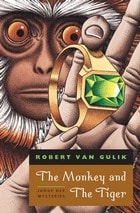
The Monkey and The Tiger
Judge Dee MysteriesRobert van Gulik
University of Chicago Press, 1965
The Monkey and The Tiger includes two detective stories, "The Morning of the Monkey" and "The Night of the Tiger." In the first, a gibbon drops an emerald in the open gallery of Dee's official residence, leading the judge to discover a strangely mutilated body in the woods—and how it got there. In the second, Dee is traveling to the imperial capital to assume a new position when he is separated from his escort by a flood. Marooned in a large country house surrounded by fierce bandits, Dee confronts an apparition that helps him solve a mystery.
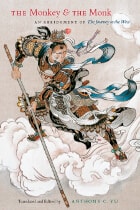
The Monkey and the Monk
An Abridgment of The Journey to the WestTranslated by Anthony C. Yu
University of Chicago Press, 2006
A compact abridgment of the legendary Chinese classic that inspired the hit game Black Myth: Wukong!
Anthony C. Yu’s celebrated translation of The Journey to the West reinvigorated one of Chinese literature’s most beloved classics for English-speaking audiences when it first appeared thirty years ago. Yu’s abridgment of his four-volume translation, The Monkey and the Monk, finally distills the epic novel’s most exciting and meaningful episodes without taking anything away from their true spirit.
These fantastic episodes recount the adventures of Xuanzang, a seventh-century monk who became one of China’s most illustrious religious heroes after traveling for sixteen years in search of Buddhist scriptures. Powerfully combining religious allegory with humor, fantasy, and satire, accounts of Xuanzang’s journey were passed down for a millennium before culminating in the sixteenth century with The Journey to the West. Now, readers of The Monkey and the Monk can experience the full force of his lengthy quest as he travels to India with four animal disciples, most significant among them a guardian-monkey known as “the Great Sage, Equal to Heaven.” Moreover, in its newly streamlined form, this acclaimed translation of a seminal work of world literature is sure to attract an entirely new following of students and fans.
“A new translation of a major literary text which totally supersedes the best existing version. . . . It establishes beyond contention the position of The Journey to the West in world literature, while at the same time throwing open wide the doors to interpretive study on the part of the English audience.”—Modern Language Notes, on the unabridged translation

The Moon in Foil
Zuska Kepplová
Seagull Books, 2023
The Moon in Foil traces the stories of Petra, Natália, Anka, Mika, Juliana, and Jackie as they go out into the world in search of a better life—or maybe just a different one. In post-communist Europe, they have the freedom to study and work in places their parents couldn’t even have visited—Paris, London, Helsinki, and Budapest. But the reality of that “freedom,” they soon discover, is often nothing more than tedious work and poor living conditions. From close looks at the work of a housekeeper at a French hotel, a bartender at an Irish pub, a snowboarding instructor in Slovakia in the winter and an office worker in London in the summer, and a programmer in Helsinki, to explorations of larger topics such as marriage, divorce, and relationships, Zuska Kepplová’s novel is a millennials’ odyssey—a search for the self by the post–Cold War generation.
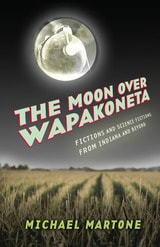
The Moon over Wapakoneta
Fictions and Science Fictions from Indiana and BeyondMichael Martone
University of Alabama Press, 2018
The Moon over Wapakoneta is vintage Michael Martone, the visionary oracle of the American Midwest with the gift for discovering the marvelous in the mundane. In these stories Martone shows us how traveling across time zones from Ohio to Indiana is a form of time travel; how a beer bottle can serve as a kind of telescope, how Amish might power their spaceships with windmills as they travel through space and time. These stories capture the paradox of feeling that one is in the heart of the country while at the same time in the middle of nowhere, of natives who find themselves strangers in their once familiar, but now strange, lands.
On display is a love of obsolete technologies, small-town whimsy, home movies of proms and birthday parties, steam engines and baseball games. If Italo Calvino lived in Indiana rather than Italy, these are the fictions he might have made.
The Mortal Storm
Phyllis Bottome
Northwestern University Press, 1998
The Mosquito Bite Author
Baris Biçakçi, Translated by Matthew Chovanec
University of Texas Press, 2020
Originally published in 2011, The Mosquito Bite Author is the seventh novel by the acclaimed Turkish author Barış Bıçakçı. It follows the daily life of an aspiring novelist, Cemil, in the months after he submits his manuscript to a publisher in Istanbul. Living in an unremarkable apartment complex in the outskirts of Ankara, Cemil spends his days going on walks, cooking for his wife, repairing leaks in his neighbor’s bathroom, and having elaborate imaginary conversations in his head with his potential editor about the meaning of life and art. Uncertain of whether his manuscript will be accepted, Cemil wavers between thoughtful meditations on the origin of the universe and the trajectory of political literature in Turkey, panic over his own worth as a writer, and incredulity toward the objects that make up his quiet world in the Ankara suburbs.

The Most Beautiful Girl in the World
Judy Doenges
University of Michigan Press, 2006
Trapped in a house scarily alive with a rogues gallery of hapless and often hilarious crooks, misfits, and hangers-on, Robin must look elsewhere for stability, befriending the son of the neighborhood's only African American family-a boy whose unimpeachable manners and flawless grades mask his own sexuality-while falling in love with the high school beauty.
Wry, edgy, and smart, The Most Beautiful Girl in the World offers a new kind of young heroine, one who stands fearlessly at the precipice of her family and her town's self-destruction, defiantly fighting to save herself.

The Most Excellent and Lamentable Tragedie of Romeo and Juliet
A Critical editionGeorge Walton Williams, ed.
Duke University Press, 0
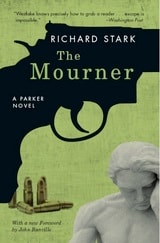
The Mourner
A Parker NovelRichard Stark
University of Chicago Press, 2009
Hard-boiled crime fiction doesn't get any better than this, an unforgettable entry in the classic series starring Parker, the deadliest heister around
Richard Stark's Parker novels are the hardest of hard-boiled, classic crime novels where the heists are huge, the body counts are high, and the bad guys usually win.
The Parker novels have been a huge influence on countless writers and filmmakers, including Quentin Tarantino, Stephen King, George Pelecanos, Colson Whitehead, Lucy Sante, John Banville, and many more. Their stripped-down language and hard-as-nails amorality create an unforgettable world where the next score could be the big one, but your next mistake could also be your last. There's nothing else like them.
The Mourner is a story of convergence—of cultures and of guys with guns. Hot on the trail of a statue stolen from a fifteenth-century French tomb, Parker enters a world of eccentric art collectors, greedy foreign officials, and shady KGB agents. Hired by a shifty dame who has something he needs, Parker will find out just who intends to bury whom—and who he needs to kill to finish the job.
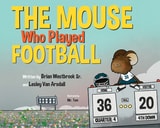
The Mouse Who Played Football
Written by Brian Westbrook Sr. and Lesley Van Arsdall
Temple University Press, 2022
Some folks think Brian the mouse is too small. He may be a tough little fella, but they are not sure Brian has what it takes. The Mouse Who Played Football, by former Philadelphia Eagles running back Brian Westbrook Sr. and sports reporter Lesley Van Arsdall, shows how Brian the mouse proves everyone wrong with unyielding confidence that his small size can be his strength.
This charming children’s book, featuring appealing and dynamic illustrations by Mr. Tom, demonstrates how Brian the mouse overcomes what others see as a “big problem.” His determination—as well as speed and toughness on the gridiron—helps him become a star player in high school, college, and eventually, the MFL, the Mouse Football League.
The Mouse Who Played Football, based on Westbrook’s own experiences,is an inspiring story that encourages young readers to believe in themselves and make their unique differences their strengths.
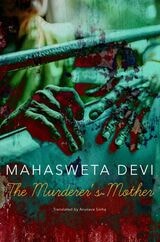
The Murderer’s Mother
Mahasweta Devi
Seagull Books, 2023
The Murderer’s Mother takes readers to the late 1970s in the Indian state of West Bengal, where the Communist Party–led Left Front has just been voted into power. It tells the story of Tapan, who has been installed as a gang leader by the most powerful man in the locality in order to kill “unwanted obstacles,” which he does, one after another. Tapan knows there is no other way he can earn a living, but at the same time, he is desperate to protect his family. He tries to stop petty crime and assaults on women, even as he protects his patron’s interests. Through the dissonance, he becomes both a feared and revered figure, but his patron’s game becomes clear: now the murderer, too, must be eliminated.
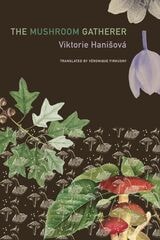
The Mushroom Gatherer
Viktorie Hanišová
Seagull Books, 2025
Nestled deep in the Bohemian Forest, Sára’s world is quiet and bound to the rhythms of nature. She has wandered the same wooded trails for seven years, filling her basket with mushrooms, her pockets with memories, and her thoughts with the past she cannot quite escape. The solitude suits her—until the death of her mother forces her to confront the tangled roots of family and the wounds that never fully healed. As Sára meticulously sorts through chanterelles and boletes, she also sorts through childhood recollections and the uneasy inheritance of trauma. The forest offers refuge, but it also holds secrets, and as the seasons shift, so does Sára’s understanding of herself and the complicated bonds that tether her to the world.
With melodic prose and an acute sensitivity to how landscapes shape lives, Viktorie Hanišová crafts a novel of quiet intensity and deep introspection. The Mushroom Gatherer is a haunting meditation on loss and the delicate balance between isolation and connection, perfect for readers drawn to atmospheric fiction.
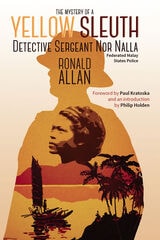
The Mystery of A Yellow Sleuth
Detective Sergeant Nor Nalla, Federated Malay States PoliceRonald Allan
National University of Singapore Press, 2018
Nor Nalla is an anagram for Ron Allan, who spent four years working on a rubber plantation in Malaya shortly before World War I. Like Kipling’s famous colonial spy, Kim, the “yellow sleuth” is a master of undercover operations, and this reissued work explores vast locales, from the forests of Malaya to the ports of Java, from London’s underbelly to the camps of Chinese laborers in WWI Flanders. Throughout, readers are left to differentiate between fiction and fact, and ponder questions of authorship, in this “impossible fantasy of hybridity,” as Phillip Holden calls it in his perceptive introduction.
Contemporary readers will not only savor the book’s tales of adventure and detection, they will also appreciate the ways that the author brings to life— and reveals the contradictions of—late colonial society.
The Myths of Fiction
Studies in the Canonical Greek NovelsEdmund P. Cueva
University of Michigan Press, 2004
The tradition of historical literature begun by Herodotus and Thucydides molded the early Greek novel. As the genre evolved, however, Greek novels moved away from their historical roots to become more heavily influenced by mythological traditions. Edmund Cueva's new book examines the literary uses to which the ancient novelists put their mythological material. His work offers a stimulating discussion of myths and their rise to prominence as the key feature of the fully developed Greek novel. He also takes into account the impact of the Roman conquest on the development of the Greek novel, the last true literary creation of the Greek world. The Myths of Fiction will interest scholars of Greek literarure, imperial history, literary myth, intertextuality, and comparative literature.
Edmund Cueva is Associate Professor and Chair of Classics at Xavier University.
The Nameless Day
Friedrich Ani
Seagull Books, 2018
After years on the job, police detective Jakob Franck has retired. Finally, the dead—with all their mysteries—will no longer have any claim on him.
Or so he thinks. On a cold autumn afternoon, a case he thought he’d long put behind him returns to his life—and turns it upside down. The Nameless Day tells the story of that twenty-year-old case, which began with Franck carrying the news of the suicide of a seventeen-year-old girl to her mother, and holding her for seven hours as, in her grief, she said not a single word. Now her father has appeared, swearing to Franck that his daughter was murdered. Can Franck follow the cold trail of evidence two decades later to see whether he’s telling the truth? Could he live with himself if he didn’t?
A psychological crime novel certain to thrill fans of Henning Mankell and Jo Nesbo, The Nameless Day is a masterpiece, a tightly plotted story of contemporary alienation, loss, and violence.
The Names
N. Scott Momaday
University of Arizona Press, 1996
The Narrows
A NovelAnn Petry, introduction by Keith Clark
Northwestern University Press, 2017
The Nature of Remains
Ginger Eager
New Issues Poetry and Prose, 2020
Set during the 2009 recession, The Nature of Remains rests at the intersection of class, gender, education and place. Through extended geological metaphor, readers witness the orogeny, crystallization, and weathering of the human soul. Doreen’s journey reveals the ways even a woman’s most precious connections—her children, her grandchildren, her lover—operate within larger social structures capable of challenging her sovereignty.
The Nature of Truth
Sergio Troncoso
Northwestern University Press, 2003
Helmut Sanchez is a young researcher in the employ of the renowned scholar Werner Hopfgartner. By chance Sanchez discovers a letter written in the 1950s by Hopfgartner mocking feelings of guilt over the Holocaust. Appalled, he digs into the scholar's life, determined to find the truth and finally uncovering the evidence of Hopfgartner's sordid past. Sure of his conclusions, Helmut decides that only one shocking act is morally correct. When he does, the consequences are immense, and the toll taken on his mind and conscience is amplified when one of his friends is wrongly accused of the crime-and is wrongly left to pay for it.
Intelligent and literate, The Nature of Truth breaks new ground in Latino literature, focusing on how a contemporary man of unique heritage--a Mexican-German who has come to America by way of Germany--navigates a complex moral universe and how his journey reflects the tension between justice and righteousness in American life.
Further information about the author can be found at his web site: <A HREF="http://sergiotroncoso.com">http://sergiotroncoso.com.</A>
The Ndola Muto Salon
A NovelFrieda Ekotto
Bucknell University Press, 2027
At the Ndola Muto Salon Douala, Cameroon, women slip behind closed doors to seek pleasure, refuge, and one another. When young Violette begins work there as a courtesan for women to support her family, she enters a world her mother cannot accept, where desire moves quietly but powerfully. Part sanctuary, part hidden house of pleasure, the salon becomes a mirror of empowerment, longing, and possibility beyond the restrictions of Cameroonian society. Within its walls, Violette encounters a constellation of women who shape her awakening: Lady Budu, the formidable owner; Caroline, who first opens her to joy; and the enigmatic Lady with Sexy Toes, who urges her to imagine a life of her own making. As these lives intertwine in this evocative novel, the salon reveals how tenderness between women can become an act of resistance, defying patriarchy, class, and convention in small but profound revolutions.
Published by Bucknell University Press. Distributed worldwide by Rutgers University Press.
The Neighbors
By Ahmad Mahmoud
University of Texas Press, 2013
Ahmad Mahmoud sets The Neighbors against the backdrop of the oil nationalization crisis that gripped Iran in the early 1950s. His protagonist, Khaled, a young man from a rundown neighborhood in Ahvaz, a city in southern Iran, becomes involved in the struggle to wrest Iran’s oil industry from the British and, as the result of his political activities, comes to realize that there is more to life than the drudgery and poverty his parents and neighbors have experienced.
The Neighbors, published in 1974, cemented Mahmoud’s reputation as a novelist and captured the ethos of a generation—the generation that laid the groundwork for those who continue to struggle for democracy in Iran today. Though the novel received considerable praise and was read widely, its political nature earned the ire of Mohammad Reza Shah’s regime, and the Islamic Republic has objected to its sexually explicit content. This is the first time one of Ahmad Mahmoud’s novels has appeared in English translation.
The New Existence
Michael Collins
University of Iowa Press, 2021
Chicagoan Helen Price, a dying woman, recounts her life while driving toward an oncology appointment. She attempts to take her own life, survives, then dies under tragic circumstances.
In death, Helen bequeaths the family home to her only son, gay playwright Norman Price. Father to an adopted Chinese child, and recently broken up with his partner, Norman’s life is in crisis. Helen also bequeaths a series of tapes to Nate Feldman, a Vietnam draft dodger ensconced in the far reaches of Canada, and the son of Helen’s former boss, Theodore Feldman. Nate’s return to America to claim the tapes occasions confronting a history of animus between father and son, but also the nature of the relationship between Helen Price and Theodore Feldman.
Told from moving cars, the journeys of Norman Price and Nate Feldman converge toward unexpected mysteries and revelations that uncover not so much lies as understandings of life that no longer hold under the scrutiny of the present.
The New Woman
Carmen Laforet
Catholic University of America Press, 2025
The Night I Freed John Brown
John Michael Cummings
West Virginia University Press, 2016
Winner of The Paterson Prize for Books for Young People
Recommended by USA Today for Black History Month as "a blend of history and suspense."
In this novel for young adults, Josh knows there is something about the tall Victorian House on the Harpers Ferry Hill, the one his father grew up in, that he can’t quite put his finger on. And his impossible father won’t give him any clues. He’s hiding something.
And then there’s the famous John Brown. The one who all the tourists come to hear about. The one whose statue looms over Josh’s house. Why does he seem to haunt Josh and his whole family? When the fancy Richmonds come to town and move right next door, their presence forces Josh to find the answers and stand up to the secrets of the House, to his father—and to John Brown, too.
The historic village of Harpers Ferry comes alive in this young boy’s brave search for answers and a place of his own in this brilliant first novel by John Michael Cummings.
The Nightinghouls of Paris
Robert McAlmon. Edited and with an Introduction by Sanford J. Smoller
University of Illinois Press, 2006
The Nightinghouls of Paris is a thinly fictionalized memoir of the darker side of expatriate life in Paris. Beginning in 1928, the story follows the changes undergone by Canadian youths John Glassco and his friend Graeme Taylor during their (mis)adventures in Paris while trying to become writers. There they meet Robert McAlmon, who guides them through the city’s cafes, bistros, and nightclubs, where they find writers and artists including Kay Boyle (with whom Glassco has a fling), Bill Bird, Djuna Barnes, Claude McKay, Hilaire Hiler, Peggy Guggenheim, and Ernest Hemingway.
Fleeing France in late 1940, Robert McAlmon lost his notebook manuscripts and draftedThe Nightinghouls of Paris from memory. Till now, it has existed solely as a typescript held by Yale University. Unlike most memoirs of American expatriates in the ‘20s, The Nightinghouls of Paris centers not only on writers, but also encompasses the racial, national, and social mélange they encountered in everyday life.
The Nightwatches of Bonaventura
Bonaventura
University of Chicago Press, 2014
Since its publication, fans have speculated on the novel’s authorship, and it is now believed to be by theater director August Klingemann, who first staged Goethe’s Faust. Organized into sixteen separate nightwatches, the sordid scenes glimpsed through parted curtains, framed by door chinks, and lit by candles and shadows anticipate the cinematic. A cross between the gothic and the romantic, The Nightwatches of Bonaventura is brilliant in its perverse intensity, presenting an inventory of human despair and disgust through the eyes of a bitter, sardonic watcher who draws laughter from tragedy.
Translated by Gerald Gillespie, who supplies a fresh introduction, The Nightwatches of Bonaventura will be welcomed by a new generation of English-language fans eager to sample the night’s dark offerings.
The Ninth
A NovelFerenc Barnas
Northwestern University Press, 2009
Set in a sleepy village north of Budapest in 1968, this touching, unsettling novel paints a richly wrought portrait of mid-twentieth-century Hungary. The narrator is the ninth child of a family distinguished by its size, poverty, faith, and abundance of physical and psychological disabilities. His confusion is exacerbated by the strict, secretive Catholic household his parents keep in the face of a Communist system. These dual oppressions propel him toward an inevitable realization of his guilt and desire that speaks to his struggle with a fateful, seamless beauty.
The Noise of Time
Selected ProseOsip Mandelstam
Northwestern University Press, 2002
This volume includes Mandelstam's "The Noise of Time," a series of autobiographical sketches; "The Egyptian Stamp," a novella; "Fourth Prose;" and the famous travel memoirs "Theodosia" and "Journey to Armenia."
The Norman Maclean Reader
Norman Maclean
University of Chicago Press, 2008
In his eighty-seven years, Norman Maclean played many parts: fisherman, logger, firefighter, scholar, teacher. But it was a role he took up late in life, that of writer, that won him enduring fame and critical acclaim—as well as the devotion of readers worldwide. Though the 1976 collection A River Runs Through It and Other Stories was the only book Maclean published in his lifetime, it was an unexpected success, and the moving family tragedy of the title novella—based largely on Maclean’s memories of his childhood home in Montana—has proved to be one of the most enduring American stories ever written.
The Norman Maclean Reader is a wonderful addition to Maclean’s celebrated oeuvre. Bringing together previously unpublished materials with incidental writings and selections from his more famous works, the Reader will serve as the perfect introduction for readers new to Maclean, while offering longtime fans new insight into his life and career.
In this evocative collection, Maclean as both a writer and a man becomes evident. Perceptive, intimate essays deal with his career as a teacher and a literary scholar, as well as the wealth of family stories for which Maclean is famous. Complete with a generous selection of letters, as well as excerpts from a 1986 interview, The Norman Maclean Reader provides a fully fleshed-out portrait of this much admired author, showing us a writer fully aware of the nuances of his craft, and a man as at home in the academic environment of the University of Chicago as in the quiet mountains of his beloved Montana.
Various and moving, the works collected in The Norman Maclean Reader serve as both a summation and a celebration, giving readers a chance once again to hear one of American literature’s most distinctive voices.
The Norther
By Emilio Carballido
University of Texas Press, 1968
Recognized in Mexico as one of the country's most important contemporary dramatists, Emilio Carballido has only recently become known in other countries through his plays and short stories. This translation introduces Carballido as a novelist. In The Norther what makes and breaks human relationships is his central interest as he traces the course of a relationship between a widow and a young man. The characters are created as their emotional and psychological outlines are drawn, and it is in the characterization that the hand of the dramatist is revealed. But it is Carballido's novelistic talent that has made The Norther the object of widely divergent interpretations. The critical conflict aroused by this novel is discussed in an Introduction by the translator, Margaret Sayers Peden.

The Northern Stories of Charles W. Chesnutt
Charles W. Chesnutt
Ohio University Press, 2004
The first African American fiction writer to earn a national reputation, Charles W. Chesnutt remains best known for his depictions of Southern life before and after the Civil War. But he also produced a large body of what might best be called his “Northern” writings, and those works, taken together, describe the intriguing ways in which America was reshaping itself at the turn of the last century.
The Northern Stories of Charles W. Chesnutt collects for the first time eighteen Chesnutt stories—several of them first appearing in Northern magazines or newspapers—that portray life in the North in the period between the Civil War and World War I. Living in Ohio from 1883 until his death in 1932, Chesnutt witnessed and wrote about the social, cultural, and racial upheavals taking place in the North during a crucial period of American history. His Northern stories thus reflect his vision of a newly reconstituted America, one recommitted to the ideals of freedom and economic opportunity inherent in our national heritage.
The stories, compiled and edited with critical introductions to each by Professor Charles Duncan, offer a new Chesnutt, one fascinated by the evolution of America into an urban, multiracial, economically driven democracy.
The Northern Stories of Charles W. Chesnutt presents richly imagined characters, both black and white, working to make better lives for themselves in the turbulent and stimulating universe of the turn-of-the-century North. Indeed, Chesnutt stands virtually alone as the first African American chronicler of Northern culture, anticipating such figures as James Weldon Johnson, Langston Hughes, Ralph Ellison, James Baldwin, and Toni Morrison. This critical edition of The Northern Stories of Charles W. Chesnutt is a significant addition to the body of African American literature.
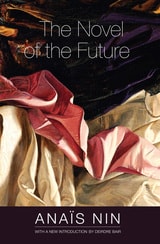
The Novel of the Future
Anaïs Nin
Ohio University Press, 2014
In The Novel of the Future, Anaïs Nin explores the act of creation—in film, art, and dance as well as literature—to chart a new direction for the young artist struggling against what she perceived as the sterility, formlessness, and spiritual bankruptcy afflicting much of mid-twentieth-century fiction. Nin offers, instead, an argument for and synthesis of the poetic novel and discusses her own efforts in this genre as well as its influence on the development of such writers as D. H. Lawrence, Henry Miller, Lawrence Durrell, Marguerite Young, and Djuna Barnes. In chapters devoted to the pursuit of the hidden self, the genesis of fiction, and the relationship between the diary and fiction, she addresses the materials, techniques, and nourishment of the arts, and the functions of art itself.
Originally published in 1968, The Novel of the Future remains a classic among both creative writers and literary scholars. This new Swallow Press edition includes an introduction by Nin biographer Deirdre Bair.