Results by title
4030 books match the query 'Language Arts & Disciplines' and 760 start with t
The Semantics/Pragmatics Distinction
Edited by Claudia Bianchi
CSLI, 2005

The Shark and the Jellyfish
More Stories in Natural HistoryStephen Daubert
Vanderbilt University Press, 2009
Praise for the first collection of stories:
Stephen Daubert's Threads from the Web of Life is written in the tradition of Aldo Leopold and Bernd Heinrich. It teaches by drawing you into the drama, excitement, and beauty of nature.
--Don Glass, host of the NPR-syndicated program "A Moment of Science"
Threads from the Web of Life is a uniquely wide-ranging combination of scientific research and literary imagination that takes the reader on journeys through time and space that even the most elaborate television programs still can't provide. Stephen Daubert's grasp of a variety of botanical, zoological, geological, and climatological disciplines is impressive, and he presents them and their interactions with grace and authority.
--David Rains Wallace, author of The Klamath Knot, The Monkey's Bridge, and Beasts of Eden
Each of these happenings is a thread in the intricate web of life, and Daubert, a molecular scientist at the University of California, Davis, demonstrates that these threads are easily broken by humans. ... Instructive and entertaining.
--Publishers Weekly
Threads from the Web of Life takes readers on a journey around the globe as the author describes unique and unusual ecological processes. It is ideal for casual reading as well as a source of selections to read aloud (!) or to link literature with the study of natural history.
--NSTA Recommends, National Science Teachers Association
Highly recommended. ... The stories are as much enjoyable as they are informative.
--Science Books& Films
In these sixteen stories of the interplay of organisms, weather, and geophysics, many a being succumbs to predation, and many another endures. Evolution happens as species learn the hard way. There is often a tragic element in these fascinating tales. . . . These vivid, poetic tales . . . afford good teaching. Threads from the Web of Life will appeal to any reader whose heart is in the living world.
-- ForeWord
The Silence of the Miskito Prince
How Cultural Dialogue Was ColonizedMatt Cohen
University of Minnesota Press, 2022
Confronting the rifts created by our common conceptual vocabulary for North American colonial studies
How can we tell colonial histories in ways that invite intercultural conversation within humanistic fields that are themselves products of colonial domination? Beginning with a famous episode of failed communication from the narrative of the freed slave Olaudah Equiano, The Silence of the Miskito Prince explores this question by looking critically at five concepts frequently used to imagine solutions to the challenges of cross-cultural communication: understanding, cosmopolitanism, piety, reciprocity, and patience.
Focusing on the first two centuries of North American colonization, Matt Cohen traces how these five concepts of cross-cultural relations emerged from, and continue to evolve within, colonial dynamics. Through a series of revealing archival explorations, he argues the need for a new vocabulary for the analysis of past interactions drawn from the intellectual and spiritual domains of the colonized, and for a historiographical practice oriented less toward the illusion of complete understanding and scholarly authority and more toward the beliefs and experiences of descendant communities.
The Silence of the Miskito Prince argues for new ways of framing scholarly conversations that use past interactions as a site for thinking about intercultural relations today. By investigating the colonial histories of these terms that were assumed to promote inclusion, Cohen offers both a reflection on how we got here and a model of scholarly humility that holds us to our better or worse pasts.
The Six-Step Guide to Library Worker Engagement
Elaina Norlin
American Library Association, 2021
Gallup’s 2019 State of the American Workplace Report found that 70 percent of employees are disengaged at work. Why is worker engagement so important? Engaged workers lead to engaged libraries — vibrant institutions that nurture their workers’ dedication, creativity, and innovation so they can serve their communities most effectively. This guide walks library managers and administrators through concrete steps to change their organization’s culture so that it fosters worker engagement, using first-hand accounts from library staff to illustrate both successes and failures. Readers will discover
- why libraries often fall short at hiring good leadership and ways to develop better recruitment strategies moving forward;
- how lack of trust pushes workplace culture towards incivility, hostility, and lower morale, and what library leaders can do to rebuild it;
- methods for using recognition and praise as tools for sustaining a positive work environment;
- the rationale for eliminating annual performance reviews in favor of less formal one-on-one conversations and “just in time” continuous feedback;
- the secrets behind high performing teams, strategies to support dysfunctional teams, and tips on how to develop remote teamwork; and
- why viewing diversity, equity, and inclusion (DEI) as separate from workplace culture is counterproductive, since it is actually the positive result of a strong foundation, with advice on combating the factors that contribute to low retention rates of BIPOC librarians.

The Small And Rural Academic L Library
Leveraging ResourcesKaetrena Davis Kendrick
Assoc of College & Research Libraries, 2016
The Small to Mid-Size Academic Library
Collaborations and OutreachCamille Abdeljawad
Assoc of College & Research Libraries, 2024
—From the Foreword by Peter Felten and Joan D. Ruelle
Small to mid-size academic libraries often operate with reduced staffing, smaller budgets, and competing priorities. These limitations reduce the resources that can be allocated to programming and outreach efforts.
The Small to Midsize Academic Library: Collaborations and Outreach captures how academic library workers at these institutions are providing engagement and outreach opportunities for students by partnering with other entities across their campuses. In three parts, chapters provide easy-to-implement ideas and strategies for course, campus, and community outreach.
- Part 1: Collaborations
- Cross-Campus Initiatives
- External Collaborations
- Part 2: Academic Success Initiatives
- Writing and Composition
- Orientation and Programming
- Part 3: Evolving Roles of Libraries in Student Success
- Student Wellness
- Emerging Roles for Librarians
The Sociolinguistics of Ethiopian Sign Language
A Study of Language Use and AttitudesEyasu Hailu Tamene
Gallaudet University Press, 2017
Tamene collects data from three principal groups of people: deaf participants, teachers of deaf students, and parents of deaf children. He examines EthSL use within families, in formal and informal settings, and in various community spaces. He documents the awareness among different groups of the services available for deaf people, such as sign language interpreters and Deaf associations. He finds that members of the Deaf community show positive attitudes toward the use of EthSL and investigates the factors that impact those attitudes. His work indicates that there are still critical gaps in recognition and support for the use of EthSL, which can pose a threat to the vitality of the language. The Sociolinguistics of Ethiopian Sign Language will help to advance public understanding of EthSL and contribute to improved educational and social outcomes for the Deaf community in Ethiopia.
The Sound of Leadership
Presidential Communication in the Modern AgeRoderick P. Hart
University of Chicago Press, 1987
The Sound of Leadership answers these questions and many more. Based on analysis of nearly 10,000 presidential speeches delivered between 1945 and 1985, this book is the first comprehensive examination of the ways in which presidents Truman through Reagan have used the powers of communication to advance their political goals. This communication revolution has produced, Roderick P. Hart argues, a new form of governance, one in which public speech has come to be taken as political action. Using a rhetorical appraoch, Hart details the features of this new American presidency by carefully examining when and where presidents spoke in public during the last four decades and what they said. Even though presidents have been speaking more and more, Hart reveals, they have been saying less and less. Rather than leading the nation, the modern president usually offers only the hollow "sound" of leadership. Written with great flair and acuteness, The Sound of Leadership will become a standard guide to the voices of modern presidential politics.

The Sources of Hojeda's La Cristiada
Sister Mary Edgar Meyer, O.S.F.
University of Michigan Press, 1953
The Southern Press
Literary Legacies and the Challenge of ModernityDoug Cumming
Northwestern University Press, 2009
The Spell of Language
Poststructuralism and SpeculationThomas G. Pavel
University of Chicago Press, 2001
In this spirited book, Pavel shows that structuralism's flawed use of linguistic theory has rendered hollow the philosophical core of a whole generation of work in the human sciences.

The Spy Who Loved Us
The Vietnam War and Pham Xuan An's Dangerous GameThomas A. Bass
University of Massachusetts Press, 2018
Only after Saigon fell in 1975 did An's colleagues learn that the affable raconteur in their midst, acclaimed as "dean of the Vietnamese press corps," was actually a general in the North Vietnamese Army. In recognition of his tradecraft and his ability to spin military losses—such as the Têt Offensive of 1968—into psychological gains, An was awarded sixteen military medals.
After the book's original publication, WikiLeaks revealed that Thomas A. Bass's account of An's career was distributed to CIA agents as a primer in espionage. Now available in paper with a new preface, An's story remains one of the most gripping to emerge from the era.
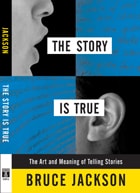
The Story Is True
The Art and Meaning of Telling StoriesBruce Jackson
Temple University Press, 2008
Making and experiencing stories, remembering and retelling them is something we all do. We tell stories over meals, at the water cooler, and to both friends and strangers. But how do stories work? What is it about telling and listening to stories that unites us? And, more importantly, how do we change them-and how do they change us?
In The Story Is True, author, filmmaker, and photographer Bruce Jackson explores the ways we use the stories that become a central part of our public and private lives. He examines, as no one before has, how stories narrate and bring meaning to our lives, by describing and explaining how stories are made and used. The perspectives shared in this engaging book come from the tellers, writers, filmmakers, listeners, and watchers who create and consume stories.
Jackson writes about his family and friends, acquaintances and experiences, focusing on more than a dozen personal stories. From oral histories, such as conversations the author had with poet Steven Spender, to public stories, such as what happened when Bob Dylan "went electric" at the 1965 Newport Folk Festival. Jackson also investigates how "words can kill" showing how diction can be an administrator of death, as in Nazi extermination camps. And finally, he considers the way lies come to resemble truth, showing how the stories we tell, whether true or not, resemble truth to the teller.
Ultimately, The Story Is True is about the place of stories-fiction or real-and the impact they have on the lives of each one of us.

The Story of Swahili
John M. Mugane
Ohio University Press, 2015
Swahili was once an obscure dialect of an East African Bantu language. Today more than one hundred million people use it: Swahili is to eastern and central Africa what English is to the world. From its embrace in the 1960s by the black freedom movement in the United States to its adoption in 2004 as the African Union’s official language, Swahili has become a truly international language. How this came about and why, of all African languages, it happened only to Swahili is the story that John M. Mugane sets out to explore.
The remarkable adaptability of Swahili has allowed Africans and others to tailor the language to their needs, extending its influence far beyond its place of origin. Its symbolic as well as its practical power has evolved from its status as a language of contact among diverse cultures, even as it embodies the history of communities in eastern and central Africa and throughout the Indian Ocean world.
The Story of Swahili calls for a reevaluation of the widespread assumption that cultural superiority, military conquest, and economic dominance determine a language’s prosperity. This sweeping history gives a vibrant, living language its due, highlighting its nimbleness from its beginnings to its place today in the fast-changing world of global communication.
The Straight Line
Writing on Poetry and PoetsRon Padgett
University of Michigan Press, 2000
But along with the playful wit comes Padgett's serious fascination with how words work. Essays discuss such subjects as the otherness of languages; French poets and their relationship to Cubist painters; an afternoon with the poet Edwin Denby; a tribute to Ted Berrigan; twentieth-century modernism; and suggestions for using the computer to write poetry.
The book concludes with pieces that Padgett has written during his thirty years as a teacher of poetry. Essays explore the unexpected relationships between poetry and dance; the practical value of using "gimmicks" to inspire poetry writing; and some radical and entertaining ideas for innovative ways to read creatively.
Ron Padgett is Publications Director, Teachers and Writers Collaborative. His books include Albanian Diary, Creative Reading, and Old Faithful: 18 Writers Present Their Favorite Writing Assignments.
The Structure of Complex Predicates in Urdu
Miriam Butt
CSLI, 1995
This book takes a detailed look at two differing complex predicates in the South Asian language Urdu. The Urdu permissive in particular brings into focus the problem of the syntax-semantics mismatch. An examination of the syntactic properties of this complex predicate shows that it is formed by the combination of two semantic heads, but that this combination is not mirrored in the syntax in terms of any kind of syntactic or lexical incorporation.
The Structure of English
Studies in Form and Function for Language TeachingJeanette S. DeCarrico
University of Michigan Press, 2000
With an emphasis on discourse function throughout, students are never expected to rely on lists of unrelated, constructed example sentences. Rather, when major points of grammar are presented, the structures are illustrated with rich, "real world" contexts excerpted from literature (mostly American), including novels, short stories, poems, essays, and drama. Exercises in the companion workbook are likewise based on naturally occurring stretches of discourse.

The Structure of Scientific Articles
Applications to Citation Indexing and SummarizationSimone Teufel
CSLI, 2010
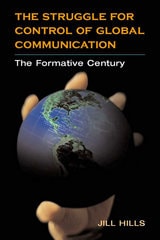
The Struggle for Control of Global Communication
The Formative CenturyJill Hills
University of Illinois Press, 2002
Tracing the development of communication markets and the regulation of international communications from the 1840s through World War I, Jill Hills examines the political, technological, and economic forces at work during the formative century of global communication.
Hills analyzes power relations within the arena of global communications from the inception of the telegraph through the successive technologies of submarine telegraph cables, ship-to-shore wireless, broadcast radio, shortwave wireless, the telephone, and movies with sound. As she shows, global communication began to overtake transportation as an economic, political, and social force after the inception of the telegraph, which shifted communications from national to international. From that point on, information was a commodity and ownership of the communications infrastructure became valuable as the means of distributing information. The struggle for control of that infrastructure occurred in part because British control of communications hindered the growing economic power of the United States.
Hills outlines the technological advancements and regulations that allowed the United States to challenge British hegemony and enter the global communications market. She demonstrates that control of global communication was part of a complex web of relations between and within the government and corporations of Britain and the United States. Detailing the interplay between American federal regulation and economic power, Hills shows how these forces shaped communications technologies and illuminates the contemporary systems of power in global communications.
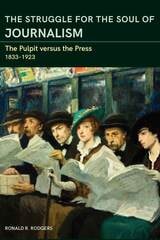
The Struggle for the Soul of Journalism
The Pulpit versus the Press, 1833-1923Ronald R. Rodgers
University of Missouri Press, 2018

The Student's Survival Guide to Research
Monty L. McAdoo
American Library Association, 2015
The Study of Signed Languages
Essays in Honor of William C. StokoeDavid F. Armstrong
Gallaudet University Press, 2002
In 1999, many of today’s notable researchers assembled at a special conference in honor of William C. Stokoe to explore the remarkable research that grew out of his original insights on American Sign Language. The Study of Signed Languages presents the fascinating findings from that conference.
Part 1, Historical Perspectives, begins with a description of the decline of sign language studies in the 1800s. Past research on signed languages and its relationship to language origins theory follows, along with a consideration of modality and conflicting agendas for its study.
In Part 2, Language Origins, the first entry intrigues with the possibility that sign language could answer conundrums posed by Noam Chomsky’s linguistic theories. The next essay considers how to build a better language model by citing continuity, ethology, and Stokoe’s work as key elements. Stokoe’s own research on the gestural theory of language origins is examined in the section’s closing chapter.
Part 3, Diverse Populations, delineates the impact of sign language research on black deaf communities in America, on deaf education, on research into variation in sign language, and even on sign communication and the motor functioning of autistic children and others. In its wide-ranging, brilliant scholarship, The Study of Signed Languages serves as a fitting tribute to William C. Stokoe and his work.
The Stuff of Fiction
Advice on CraftDouglas Bauer
University of Michigan Press, 2010
Bauer’s focus is on the building blocks of successful fiction: dialogue (the intimate relationship between characters talking and the eavesdropping reader), characters (the virtues of creating fictional characters that are both splendidly flawed and sympathetic), and dramatic events (ways to create moments that produce an emotional and psychological impact). There are also chapters on crafting effective openings and memorable closings of stories and on the vital presence of sentiment in fiction versus the ruinous effect of sentimentality. By assuming the point of view of someone at the task, engaged with the work, inside the effort to bring an invented world to life, The Stuff of Fiction speaks to writers of all ages in a pleasurable yet practical voice.

The Subject Liaison's Survival Guide to Technical Services
Krista Schmidt
American Library Association, 2016
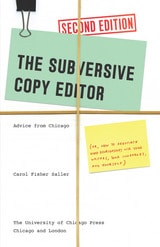
The Subversive Copy Editor, Second Edition
Advice from Chicago (or, How to Negotiate Good Relationships with Your Writers, Your Colleagues, and Yourself)Carol Fisher Saller
University of Chicago Press, 2016
In this second edition, Saller adds new chapters, on the dangers of allegiance to outdated grammar and style rules and on ways to stay current in language and technology. She expands her advice for writers on formatting manuscripts for publication, on self-editing, and on how not to be “difficult.” Saller’s own gaffes provide firsthand (and sometimes humorous) examples of exactly what not to do. The revised content reflects today’s publishing practices while retaining the self-deprecating tone and sharp humor that helped make the first edition so popular. Saller maintains that through carefulness, transparency, and flexibility, editors can build trust and cooperation with writers.
The Subversive Copy Editor brings a refreshingly levelheaded approach to the classic battle between writers and editors. This sage advice will prove useful and entertaining to anyone charged with the sometimes perilous task of improving the writing of others.
The Successful Library Trustee Handbook
Mary Y. Moore
American Library Association, 2010
The Sudden Selector's Guide to Anthropology Resources
Miriam Rigby and John Russell
American Library Association, 2022
Anthropology is arguably one of the most diverse fields in academe. It ranges in focus from archaeology to evolution and primate studies, to linguistics, and to observation of current cultural practices. Methodologically, it may include any combination of lab work, library and archival research, and fieldwork. The materials vary significantly, including visual records such as film and photography, sound recordings, ancient artifacts, dusty notebooks, digital records, and biological materials. In practice it is highly interdisciplinary, intersecting with biology, political science, geography, art history, literature, religion, sociology, history, and more. Collection development for any subject can be a challenging task; anthropology, with its many subfields, may exceed the typical challenge. Whether you are brand new to anthropology, or well-versed in many of its facets, Sudden Selector’s Guide to Anthropology is designed to provide you with an access point to the diverse realms of the field and the resources that will allow you to build and maintain strong collections to serve your community, no matter where their research interests lie.
The Sudden Selector’s series is designed to help library workers become acquainted with the tools, resources, individuals, and organizations that can assist in developing collections in new or unfamiliar subject areas. This guide is designed to facilitate collection development processes in two ways: it is a bibliography of resources and can be used as a mini-course in anthropology librarianship.
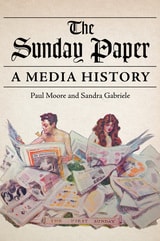
The Sunday Paper
A Media HistoryPaul Moore and Sandra Gabriele
University of Illinois Press, 2022
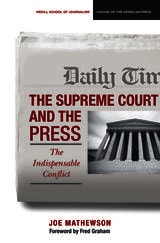
The Supreme Court and the Press
The Indispensable ConflictJoe Mathewson
Northwestern University Press, 2011
The Sustainable Library's Cookbook
Raymond Pun
Assoc of College & Research Libraries, 2019
The Syntactic Phenomena of English
James D. McCawley
University of Chicago Press, 1998
And now available from the author! Answers to Selected Exercises.
Instructors using James D. McCawley's The Syntactic Phenomena of English, Second Edition may request a complimentary copy of Answers to Selected Exercises in The Syntactic Phenomena of English by writing on their department's letterhead to the author, James D. McCawley, Department of Linguistics, 1010 E. 59th Street, Chicago, IL 60637. [Note: This material is available only from the author and is not available from the University of Chicago Press.]
The Syntactic Phenomena of English, Volume 1
James D. McCawley
University of Chicago Press, 1988
And now available from the author! Answers to Selected Exercises.
Instructors using James D. McCawley's The Syntactic Phenomena of English, Second Edition may request a complimentary copy of Answers to Selected Exercises in The Syntactic Phenomena of English by writing on their department's letterhead to the author, James D. McCawley, Department of Linguistics, 1010 E. 59th Street, Chicago, IL 60637. [Note: This material is available only from the author and is not available from the University of Chicago Press.]

The Syntactic Phenomena of English, Volume 2
James D. McCawley
University of Chicago Press, 1988
And now available from the author! Answers to Selected Exercises.
Instructors using James D. McCawley's The Syntactic Phenomena of English, Second Edition may request a complimentary copy of Answers to Selected Exercises in The Syntactic Phenomena of English by writing on their department's letterhead to the author, James D. McCawley, Department of Linguistics, 1010 E. 59th Street, Chicago, IL 60637. [Note: This material is available only from the author and is not available from the University of Chicago Press.]
The Syntax and Semantics of the Verb in Classical Greek
An Introduction: Third EditionAlbert Rijksbaron
University of Chicago Press, 2007
The verb is, in any language, the motor of all communication: no verb, no action. In Greek, verb forms change not only with person, number, tense, and voice, but in four possible moods as well. Available now in a special reprint for the North American market, The Syntax and Semantics of the Verb in Classical Greek is an incomparable resource to students and scholars charged with the considerable task of untangling the Greek language’s many complexities. With clear, concise instruction, Albert Rijksbaron shows how the various verb forms contribute to the richness of the Greek literature as we know it, in this essential guide for both novices and experienced practitioners.
“[This study] belongs in the library of any Hellenist and any linguist interested in ancient Greek.”—Classics Newsletter (Anzeiger für die Altertumswissenschaft)
“Every use is described with concision and clarity.”—Kratylos
“The book offers an example of how the empirical thoroughness of traditional Classical scholarship can be brought into contact with general linguistic theory.”—Language

The Syntax of Spoken Brazilian Portuguese
Earl W. Thomas
Vanderbilt University Press, 1969
Very real differences do exist between what is spoken and what is written in virtually every language. In Brazilian Portuguese, especially, the gulf between the two is wide: In many cases, the most cultured Brazilian is unable to comprehend with ease Brazilian literature written only fifty years ago.
THE SYNTAX OF SPOKEN BRAZILIAN PORTUGUESE is the first thorough analysis of the spoken language of contemporary Brazil, in English, for students and teachers of the language. Useful as a text in advanced language courses, the work is intended primarily for reference and as a research aid to future authors of Portuguese language textbooks.
The Syntax of Sports, Class 1
The Words Under the WordsPatrick Barry
Michigan Publishing Services, 2019
The beginning of a multi-volume series, this initial book recreates the first day of class as it was taught to undergraduates at the University of Michigan. The examples are compelling. The dialogue is fast moving. The stories are ones you’ll want to return to and retell over and over again. There is a reason the actual students who took The Syntax of Sports said the following things about it:
“Every class I learned something new that I know I’ll actually use in my writing for years to come. Couldn’t be happier that I took a chance on Syntax of Sports.”
“Prof. Barry has structured the course so that it’s almost impossible not to learn something valuable to take with you to future classes and future career possibilities.”
“I have learned a ton of techniques for being a better writer in this class. I have also learned many life lessons that will undoubtedly guide how I act in the future.”
“I absolutely loved this course because the teacher was so awesome. I enjoyed sitting through class listening to Professor Barry and falling in love with his brain.”
The Syntax of Sports, Class 2
The Power of the ParticularPatrick Barry
Michigan Publishing Services, 2020
What can we learn from baseball great Ted Williams about how to improve our writing? What can we learn we from the iconic ESPN show SportsCenter about how to manage information? And are you sure you really know what the word “peruse” means?
Explore these and other questions in the second volume of The Syntax of Sports, a series designed to recreate a popular course at the University of Michigan. Here are a few things students have said about the experience of taking it.
-
“Patrick Barry is the best teacher I have ever had. I have never learned so much in a class. I hated English my whole life until I took this course.”
-
“I feel like this is and always will be the most valuable class I've ever taken here.”
-
“I genuinely wanted to show up to this class due to the amount I knew I would learn.”
-
“I'm going to severely SEVERELY miss this course.”
-
“Every student should try to take one of Prof. Barry’s classes if he or she wants to become a better writer.”
-
“My writing is now 113x better.”
The Syntax of Sports, Class 3
The Rule of ThreePatrick Barry
Michigan Publishing Services, 2021
It’s not an accident that hall of fame coaches, Pulitzer Prize-winning writers, and the marketing teams at the most innovative companies in the world often rely on a certain three-part structure when trying to communicate their ideas. This third volume of The Syntax of Sports series explores the mechanics of that structure and shows how it can add a compelling mix of clarity and sophistication to your writing.
Like in the previous volumes, the materials come from a popular course at the University of Michigan. Here are comments from students who have taken it:
“The quality of this course was fantastic!”
“Professor Barry really knows how to keep students engaged.”
“Professor Barry is very passionate about teaching, and his enthusiasm made me want to write and learn.”
“This course not only helps you become a better writer but also sheds light on how you might become a better person.”
The Syntax of Sports, Class 4
Parallel StructurePatrick Barry
Michigan Publishing Services, 2022
“Once you find the right structure, perhaps it will be easier to find the right content.” That’s one of the key insights from this fourth book in the series The Syntax of Sports. Others include:
- The importance of being “radically inclusive”
- The power of defining something by what it is not
- The creative elegance of the word “as”
So join Professor Patrick Barry as he continues to share lessons from the popular writing course at the University of Michigan on which The Syntax of Sports is based. You’ll learn about language. You’ll learn about advocacy. And you’ll get to explore some illuminating connections between everything from the speeches of Winston Churchill, to the paintings of Leonardo da Vinci, to—perhaps most surprisingly—the face of NFL legend (and former University of Michigan quarterback) Tom Brady.
The Syntax of Sports, Class 5
Rhetorical RepetitionPatrick Barry
Michigan Publishing Services, 2024
- "Fantastic"
- "Phenomenal"
- "Very engaging and informative:
- "Incredibly useful
- "Full of practical lessons for both my career and life generally"
The Syntax of Sports, Class 6
Drafting and EditingPatrick Barry
Michigan Publishing Services, 2024
How do you start a piece of writing? How do you edit one? And what can be done to combat those pesky—and paralyzing—feelings of perfectionism that often derail our most important sentences and paragraphs?
This sixth volume of the Syntax of Sports series creatively uses the language of baseball, football, tennis, and many other sports to explore these questions. Based on a popular course at the University of Michigan, it captures the energy, originality, and discipline - crossing insights that make its author, Professor Patrick Barry, such a sought-after teacher and presenter.
The Syntax of Sports, Class 7
Information FlowPatrick Barry
Michigan Publishing Services, 2025

The Syntax of Subjects
Koichi Tateishi
CSLI, 1994

The Tale of Matsura
Fujiwara Teika’s Experiment in FictionTranslated with an Introduction and Notes by Wayne P. Lammers
University of Michigan Press, 1992
The Talk and Texts of Teacher Development
Values, the Practicum, and Programmatic Change in Writing StudiesAdrienne Jankens
Utah State University Press, 2026
Through her multi-site analysis, Jankens examines the ways values are reflected in syllabi, committee meetings, and classroom practices. She demonstrates how values that are often unstated or assumed can be made explicit and linked to programmatic action, thus supporting development and aligning instructional goals with broader institutional objectives. Offering a nuanced framework on practicum courses, Jankens also highlights the importance of local contexts and distinguishes among tacit, implicit, explicit, emergent, and articulated values. This layered understanding helps reveal the often hidden mechanisms by which writing program values are enacted in day-to-day teaching practices.
Teacher development is a crucial site for enacting and understanding programmatic values, and making these values explicit can guide meaningful programmatic change. Providing an institutional ethnography of Jankens’s own writing program and situating those findings within broader conversations in writing studies, The Talk and Texts of Teacher Development adds to scholarship exploring the focus of the practicum course, the positionality and experience of graduate teaching assistants in writing programs, and the perennial work of the field to identify its core values and disciplinary identity.

The Tbilisi Symposium on Logic, Language and Computation
Selected PapersEdited by Jonathan Ginzburg, Zurab Khasidashvili, Carl Vogel, Jean-Jacques Lévy,
CSLI, 1998
The Teaching of English
James R. Squire
University of Chicago Press, 1977
The Teaching with Primary Sources Cookbook
Julie M. Porterfield
Assoc of College & Research Libraries, 2021
The Technology of Journalism
Cultural Agents, Cultural IconsPatricia L. Dooley
Northwestern University Press, 2007
From the printing press to the telegraph to the camera and beyond, technology has always been tied closely to journalism. In The Technology of Journalism, Patricia L. Dooley proposes a history of news that heeds the social and cultural environments in which both technology and the press emerge and exist.
By placing this history solidly in its cultural context, Dooley can explore the effects of shifts in social, economic, and political systems and the impact of war. One such development with far reaching implications was Matthew Brady’s use of photography during the Civil War. Growth or decline in readership can also influence technological changes in journalism; most recently, the shift toward digital and Web-based journalism has reshaped the press.
Finally, Dooley assesses the legacy and future of print, deciding what happens to print journalism—and all forms of reportage—will depend on the willingness of industry leaders to innovate in ways that will help them connect, through their reporting, to Americans of all ages and walks of life.

The Tenth Muse
Victorian Philology and the Genesis of the Poetic Language of Gerard Manley HopkinsBy Cary H. Plotkin
Southern Illinois University Press, 1989
With authority and sensitivity Plotkin traces the close relationship between Hopkins’s poetry and the theories of language suggested in his Journals and expounded by Victorian philologists such as Max Müller and George Marsh.
Plotkin seeks to determine what changed Hopkins’s perception of language between the writing of such early poems as "The Habit of Perfection" and "Nondum" (1866) and his creation of The Wreck of the Deutschland (1875–76). Did the language of the ode, and of Hopkins’s mature poetry generally, arise as spontaneously as it appears to have done, or does it have a traceable genesis in the ways in which language as a whole was conceived and studied in mid-century England? In answer, Plotkin fixes the development of Hopkins’s singular poetic language in the philological context of his time.
If one is to understand Hopkins’s writings and poetic language in the context in which they developed rather than in the terms of a present-day theory of history or textuality, then that movement in all of its complexity must be considered. Hopkins "translates" into the language of poetry patterns and categories common to Victorian language study.