Results by title
22279 books match the query 'Social Science' and 4007 start with t
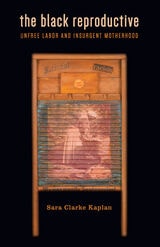
The Black Reproductive
Unfree Labor and Insurgent MotherhoodSara Clarke Kaplan
University of Minnesota Press, 2021
How Black women’s reproduction became integral to white supremacy, capitalism, and heteropatriarchy—and remains key to their dismantling
In the United States, slavery relied on the reproduction and other labors of unfree Black women. Nearly four centuries later, Black reproductivity remains a vital technology for the creation, negotiation, and transformation of sexualized and gendered racial categories. Yet even as Black reproduction has been deployed to resolve the conflicting demands of white supremacy, capitalism, and heteropatriarchy, Sara Clarke Kaplan argues that it also holds the potential to destabilize the oppressive systems it is supposed to maintain.
The Black Reproductive convenes Black literary and cultural studies with feminist and queer theory to read twentieth- and twenty-first-century texts and images alongside their pre-emancipation counterparts. These provocative, unexpected couplings include how Toni Morrison’s depiction of infanticide regenders Orlando Patterson’s theory of social death, and how Mary Prince’s eighteenth-century fugitive slave narrative is resignified through the representational paradoxes of Gayl Jones’s blues novel Corregidora. Throughout, Kaplan offers new perspectives on Black motherhood and gendered labor, from debates over the relationship between President Thomas Jefferson and Sally Hemings, to the demise of racist icon Aunt Jemima, to discussions of Black reproductive freedom and abortion.
The Black Reproductive gives vital insight into the historic and ongoing conditions of Black unfreedom, and points to the possibilities for a Black feminist practice of individual and collective freedom.
The Black Shoals
Offshore Formations of Black and Native StudiesTiffany Lethabo King
Duke University Press, 2019
The Black Struggle for Public Schooling in Nineteenth-Century Illinois
Robert L. McCaul
Southern Illinois University Press, 1987
In the pre-Civil War and Civil War periods the Illinois black code deprived blacks of suffrage and court rights, and the Illinois Free Schools Act kept most black children out of public schooling. But, as McCaul documents, they did not sit idly by. They applied the concepts of “bargaining power” (rewarding, punishing, and dialectical) and the American ideal of “community” to participate in winning two major victories during this era.
By the use of dialectical power, exerted mainly via John Jones’ tract, The Black Laws of Illinois, they helped secure the repeal of the state’s black code; by means of punishing power, mainly through boycotts and ‘‘invasions,’’ they exerted pressures that brought a cancellation of the Chicago public school policy of racial segregation.
McCaul makes clear that the blacks’ struggle for school rights is but one of a number of such struggles waged by disadvantaged groups (women, senior citizens, ethnics, and immigrants). He postulates a “stage’’ pattern for the history of the black struggle—a pattern of efforts by federal and state courts to change laws and constitutions, followed by efforts to entice, force, or persuade local authorities to comply with the laws and constitutional articles and with the decrees of the courts.
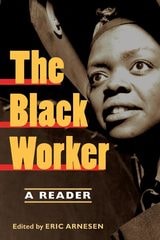
The Black Worker
Race, Labor, and Civil Rights Since EmancipationEdited by Eric Arnesen
University of Illinois Press, 2006
Uniting the latest scholarship on race, labor, and civil rights, The Black Worker aims to establish the richness of the African American working-class experience, and the indisputable role of black workers in shaping the politics and history of labor and race in the United States.
To capture the complexity of African Americans’ experiences in the workplace, this reader examines workers engaged in a wide array of jobs, including sharecropping, coal mining, domestic service, longshoring, automobile manufacturing, tobacco processing, railroading, prostitution, lumbering, and municipal employment. The essays’ subjects include black migration, strikebreaking, black conservatism, gender, and the multiple forms of employment discrimination in the South and North. Other contributions deal explicitly with state policy and black workers during the transition from slavery to freedom, World Wars I and II, and the 1960s.
The variety of challenges made by these workers, both quiet and overt, served as clear reminders to the supporters of white supremacy that, despite their best efforts through violence, fraud, and the law, as long as they insisted on racial inequality, the “race question” would never be fully resolved.
Contributors: Eric Arnesen, Beth Tompkins Bates, Cynthia M. Blair, Tera W. Hunter, William Powell Jones, Brian Kelly, Robert Korstad, Nelson Lichtenstein, Joseph A. McCartin, Steven A. Reich, Leslie A. Schwalm, Nan Elizabeth Woodruff
The Black Youth Employment Crisis
Edited by Richard B. Freeman and Harry J. Holzer
University of Chicago Press, 1986
The contributors identify primary determinants on both the demand and supply sides of the market and provide new information on important aspects of the problem, such as drug use, crime, economic incentives, and attitudes among the unemployed. Their studies reveal that, contrary to popular assumptions, no single factor is the predominant cause of black youth employment problems. They show, among other significant factors, that where female employment is high, black youth employment is low; that even in areas where there are many jobs, black youths get relatively few of them; that the perceived risks and rewards of crime affect decisions to work or to engage in illegal activity; and that churchgoing and aspirations affect the success of black youths in finding employment.
Altogether, these papers illuminate a broad range of economic and social factors which must be understood by policymakers before the black youth employment crisis can be successfully addressed.
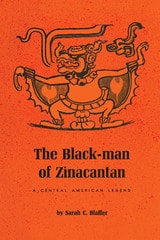
The Black-Man of Zinacantan
A Central American LegendBy Sarah C. Blaffer
University of Texas Press, 1972
The subject of this work is anomalies—those things that are between one state and another, neither dead nor alive, neither animal nor human. In this instance, they are the "spooks" (espantos) that inhabit the Maya area: the charcoal-cruncher, a disembodied head that goes off into the night to eat charcoal; the characotels, men who have turned into animals in order to steal chickens; and others. The victims chosen by spooks are likewise between two states: they are caught while asleep or drunk; or they may be humans who ignore social conventions and behave in "un-human" manner.
The Black-man of Zinacantan focuses on a small, super-sexed demon who possesses a six-foot-long, death-dealing penis and a penchant for mischief-making. This demon is known in Highland Chiapas as h'ik'al, the Black-man. Although h'ik'al's prototype may have been the bat deity, an ancient Maya god of sacrifice, the demon has been adapted to contemporary life. Sarah Blaffer analyzes the position of anomalies in societies and shows h'ik'al as a norm-offending, yet norm-reinforcing, specter, who by his character and actions demonstrates the proper sex roles for Zinacantec men and women.
The data for the study was recorded in Zinacantan, a Tzotzil-speaking Maya community, and in other Maya towns in southern Mexico and Guatemala; the study includes an analysis of tales recorded and translated by Robert M. Laughlin. The drawings that decorate the text were adapted by Virginia Savage and Joseph Barbieri. Besides being a comprehensive treatment of Maya demonology, the book demonstrates the newer approaches in comparative mythology of Claude Lévi-Strauss and others.
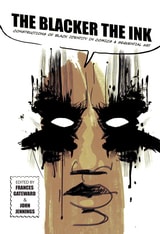
The Blacker the Ink
Constructions of Black Identity in Comics and Sequential ArtGateward, Frances
Rutgers University Press, 2015
Winner of the 2016 Ray and Pat Browne Award for Best Edited Collection in Popular Culture and American Culture by the Popular Culture Association/American Culture Association
Winner of the 2016 PEN Oakland-Josephine Miles Award for Excellence in Literature
When many think of comic books the first thing that comes to mind are caped crusaders and spandex-wearing super-heroes. Perhaps, inevitably, these images are of white men (and more rarely, women). It was not until the 1970s that African American superheroes such as Luke Cage, Blade, and others emerged. But as this exciting new collection reveals, these superhero comics are only one small component in a wealth of representations of black characters within comic strips, comic books, and graphic novels over the past century.
The Blacker the Ink is the first book to explore not only the diverse range of black characters in comics, but also the multitude of ways that black artists, writers, and publishers have made a mark on the industry. Organized thematically into “panels” in tribute to sequential art published in the funny pages of newspapers, the fifteen original essays take us on a journey that reaches from the African American newspaper comics of the 1930s to the Francophone graphic novels of the 2000s. Even as it demonstrates the wide spectrum of images of African Americans in comics and sequential art, the collection also identifies common character types and themes running through everything from the strip The Boondocks to the graphic novel Nat Turner.
Though it does not shy away from examining the legacy of racial stereotypes in comics and racial biases in the industry, The Blacker the Ink also offers inspiring stories of trailblazing African American artists and writers. Whether you are a diehard comic book fan or a casual reader of the funny pages, these essays will give you a new appreciation for how black characters and creators have brought a vibrant splash of color to the world of comics.
The Blind African Slave
Memoirs of Boyrereau Brinch, Nicknamed Jeffrey BraceJeffrey Brace, as told to Benjamin F. Prentiss, Esq.
University of Wisconsin Press, 2005

The Blood Libel Legend
A Casebook in Anti-Semitic FolkloreAlan Dundes
University of Wisconsin Press, 1991
Alan Dundes, in this casebook of an anti-Semitic legend, demonstrates the power of folklore to influence thought and history. According to the blood libel legend, Jews murdered Christian infants to obtain blood to make matzah. Dundes has gathered here the work of leading scholars who examine the varied sources and elaborations of the legend. Collectively, their essays constitute a forceful statement against this false accusation.
The legend is traced from the murder of William of Norwich in 1144, one of the first reported cases of ritualized murder attributed to Jews, through nineteenth-century Egyptian reports, Spanish examples, Catholic periodicals, modern English instances, and twentieth-century American cases. The essays deal not only with historical cases and surveys of blood libel in different locales, but also with literary renditions of the legend, including the ballad “Sir Hugh, or, the Jew’s Daughter” and Chaucer’s “The Prioress’s Tale.”
These case studies provide a comprehensive view of the complex nature of the blood libel legend. The concluding section of the volume includes an analysis of the legend that focuses on Christian misunderstanding of the Jewish feast of Purim and the child abuse component of the legend and that attempts to bring psychoanalytic theory to bear on the content of the blood libel legend. The final essay by Alan Dundes takes a distinctly folkloristic approach, examining the legend as part of the belief system that Christians developed about Jews.
This study of the blood libel legend will interest folklorists, scholars of Catholicism and Judaism, and many general readers, for it is both the literature and the history of anti-Semitism.
The Blood of Guatemala
A History of Race and NationGreg Grandin
Duke University Press, 2000
Focusing on Mayan elites in the community of Quetzaltenango, Grandin shows how their efforts to maintain authority over the indigenous population and secure political power in relation to non-Indians played a crucial role in the formation of the Guatemalan nation. To explore the close connection between nationalism, state power, ethnic identity, and political violence, Grandin draws on sources as diverse as photographs, public rituals, oral testimony, literature, and a collection of previously untapped documents written during the nineteenth century. He explains how the cultural anxiety brought about by Guatemala’s transition to coffee capitalism during this period led Mayan patriarchs to develop understandings of race and nation that were contrary to Ladino notions of assimilation and progress. This alternative national vision, however, could not take hold in a country plagued by class and ethnic divisions. In the years prior to the 1954 coup, class conflict became impossible to contain as the elites violently opposed land claims made by indigenous peasants.
This “history of power” reconsiders the way scholars understand the history of Guatemala and will be relevant to those studying nation building and indigenous communities across Latin America.

The Blue Clerk
Ars Poetica in 59 VersosDionne Brand
Duke University Press, 2018
The Blues Detective
A Study of African American Detective FictionStephen Soitos
University of Massachusetts Press, 1996
This illuminating book makes the case for a tradition of African American detective fiction—novels written by black Americans about black detectives and incorporating distinctly African American tropes and themes. Beginning with Pauline Hopkins in 1901, black authors consciously altered and subverted the formulas of detective fiction in significant ways. Such writers as J. E. Bruce, Rudolph Fisher, Chester Himes, Ishmael Reed, and Clarence Major created a new genre that responded to the social and political concerns of the black community.
Examining the work of these authors, Stephen Soitos frames his analysis in terms of four uniquely African American tropes: altered detective personas, double-consciousness detection, black vernaculars, and hoodoo. He argues that black writers created sleuths who were in fact “blues detectives,” engaged not only in solving crimes, but also in exploring the mysteries of black life and culture.
Soitos grounds his study in African American literary theory, particularly the work of Houston Baker, Bernard Bell, and Henry Louis Gates, Jr. He offers both a new way of conceiving black detective fiction and a series of insightful readings of books in this genre.
The Blues Muse
Race, Gender, and Musical Celebrity in American PoetryEmily Ruth Rutter
University of Alabama Press, 2018
A critical analysis of the poetic representations and legacies of five landmark blues artists
The Blues Muse: Race, Gender, and Musical Celebrity in American Poetry focuses on five key blues musicians and singers—Gertrude “Ma” Rainey, Bessie Smith, Billie Holiday, Robert Johnson, and Lead Belly—and traces the ways in which these artists and their personas have been invoked and developed throughout American poetry. This study spans nearly one hundred years of literary and musical history, from the New Negro Renaissance to the present.
Emily Ruth Rutter not only examines blues musicians as literary touchstones or poetic devices, but also investigates the relationship between poetic constructions of blues icons and shifting discourses of race and gender. Rutter’s nuanced analysis is clear, compelling, and rich in critical assessments of these writers’ portraits of the musical artists, attending to their strategies and oversights.
The Bodies of Others
Drag Dances and Their AfterlivesSelby Wynn Schwartz
University of Michigan Press, 2019
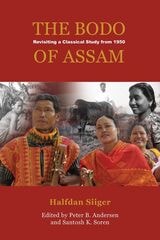
The Bodo of Assam
Revisiting a Classical Study from 1951Halfdan Siiger
National University of Singapore Press, 2015
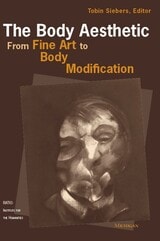
The Body Aesthetic
From Fine Art to Body ModificationTobin Siebers, Editor
University of Michigan Press, 2000
Generously and variously illustrated, this volume gathers together the work of literary critics and artists, classicists, art historians, and specialists on the history of the body, who survey the strangeness and variety with which the body has given human beings form. Richard Leppert traces how the representation of little girls responds directly to the cultural anxieties of modernity. René Girard plots how starvation becomes an art form, while Eric Gans surveys the contemporary phenomenon of body modification. Sander Gilman explores aesthetic surgery as a response to human unhappiness. Simon Goldhill discovers in the Roman empire the initial stirrings of institutions that focus on the spectacle of the body, and Cynthia S. Greig provides a glimpse of what the history of photography would look like if male nudes replaced female ones. Marion Jackson details how the different physical existence of the Inuit guides the way they make art. Joseph Grigely transforms aesthetics as usual by focusing on the disabled body, while Tobin Siebers describes the traumatic appeal in both fine art and the media of wounded flesh, whether human or animal.
The Body Aesthetic is a broad exercise in cultural studies and will address a variety of readers, from those interested in detailed, theoretical accounts of the body, to those interested in belles lettres, to those interested in fine art.
Tobin Siebers is Professor of English, University of Michigan.
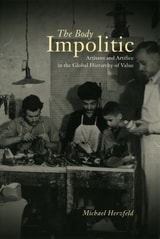
The Body Impolitic
Artisans and Artifice in the Global Hierarchy of ValueMichael Herzfeld
University of Chicago Press, 2003
Michael Herzfeld takes us inside a rich variety of small-town Cretan artisans' workshops to show how apprentices are systematically thwarted into learning by stealth and guile. This harsh training reinforces a stereotype of artisans as rude and uncultured. Moreover, the same stereotypes that marginalize artisans locally also operate to marginalize Cretans within the Greek nation and Greece itself within the international community. What Herzfeld identifies as "the global hierarchy of value" thus frames the nation's ancient monuments and traditional handicrafts as evidence of incurable "backwardness."
Herzfeld's sensitive observations offer an intimately grounded way of understanding the effects of globalization and of one of its most visible offshoots, the heritage industry, on the lives of ordinary people in many parts of the world today.
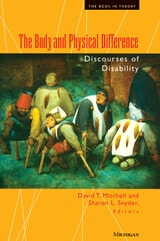
The Body and Physical Difference
Discourses of DisabilityDavid T. Mitchell and Sharon L. Snyder, Editors
University of Michigan Press, 1997
The book provides a provocative range of topics and perspectives: the absence of physical "otherness" in Ancient Greece, the depiction of the female invalid in Victorian literature, the production of tragic innocence in British and American telethons, the reconstruction of Civil War amputees, and disability as the aesthetic basis for definitions of expendable life within the modern eugenics movement. With this new, secure anchoring in the humanities, disability studies now emerges as a significant strain in contemporary theories of identity and social marginality.
Moving beyond the oversimplication that disabled people are marginalized and made invisible by able-ist assumptions and practices, the contributors demonstrate that representation is founded upon the perpetual exhibition of human anomalies. In this sense, all art can be said to migrate toward the "freakish" and the "grotesque." Such a project paradoxically makes disability the exception and the rule of the desire to represent that which has been traditionally out-of-bounds in polite discourse.
The Body and Physical Difference has relevance across a wide range of academic specialties such as cultural studies, the sociology of medicine, history, literature and medicine, the allied health professions, rehabilitation, aesthetics, philosophical discourses of the body, literary and film studies, and narrative theory.
David T. Mitchell is Assistant Professor of English, Northern Michigan University. Sharon L. Snyder teaches film and literature at Northern Michigan University.
The Body in Late-Capitalist USA
Donald M. Lowe
Duke University Press, 1995
Moving beyond studies of representations and images of the body, Lowe focuses on the intersection of body practices, language, and the Social to describe concretely the reality of a lived body. His strongly synthetic work brings together Marxist critique, semiotics, Foucaultian discourse analysis, and systems and communications theory to examine those practices that construct the body under late capitalism: habits of work and consumption, the ways we give birth and raise children, socialization, mental and physical healing, reconstructions and contestations of sexuality and gender. Lowe draws upon a wide range of sources, including government and labor studies and statistics, diagnostic and statistical manuals on mental illness, computer manuals, self-help books, and guides to work-related stress disorders, to illustrate the transformation of the body into a nexus of exchange value in postmodern society.

The Body of War
Media, Ethnicity, and Gender in the Break-up of YugoslaviaDubravka Zarkov
Duke University Press, 2007
Tracing the links between the war and press representations of ethnicity, gender, and sexuality, Žarkov examines the media’s coverage of two major protests by women who explicitly identified themselves as mothers, of sexual violence against women and men during the war, and of women as militants. She draws on contemporary feminist analyses of violence to scrutinize international and local feminist writings on the war in former Yugoslavia. Demonstrating that some of the same essentialist ideas of gender and sexuality used to produce and reinforce the significance of ethnic differences during the war often have been invoked by feminists, she points out the political and theoretical drawbacks to grounding feminist strategies against violence in ideas of female victimhood.
The Body of the People
East German Dance since 1945Jens Richard Giersdorf
University of Wisconsin Press, 2013
Giersdorf looks closely at uniquely East German dance forms—including mass exercise events, national folk dances, Marxist-Leninist visions staged by the dance ensemble of the armed forces, the vast amateur dance culture, East Germany’s version of Tanztheater, and socialist alternatives to rock ‘n’ roll—to demonstrate how dance was used both as a form of corporeal utopia and of embodied socialist propaganda and indoctrination. The Body of the People also explores the artists working in the shadow of official culture who used dance and movement to critique and resist state power, notably Charlotte von Mahlsdorf, Arila Siegert, and Fine Kwiatkowski. Giersdorf considers a myriad of embodied responses to the Communist state even after reunification, analyzing the embodiment of the fall of the Berlin Wall in the works of Jo Fabian and Sasha Waltz, and the diasporic traces of East German culture abroad, exemplified by the Chilean choreographer Patricio Bunster.
The Bohemian Body
Gender and Sexuality in Modern Czech CultureAlfred Thomas
University of Wisconsin Press, 2007
By re-examining the work of key Czech male and female writers and poets from the National Revival to the Velvet Revolution, Alfred Thomas exposes the tendency of Czech literary criticism to separate the political and the personal in modern Czech culture. He points instead to the complex interplay of the political and the personal across ethnic, cultural, and intellectual lines and within the works of such individual writers as Karel Hynek Mácha, Bozena Nemcová, and Rainer Maria Rilke, resulting in the emergence and evolution of a protean modern identity. The product is a seemingly paradoxical yet nuanced understanding of Czech culture (including literature, opera, and film), long overlooked or misunderstood by Western scholars.

The Boiler Room and Other Telephone Sales Scams
Robert J. Stevenson
University of Illinois Press, 1998
The Boiler Room and Other Telephone Sales Scams is grounded in the nine years Robert Stevenson spent working covertly as a "participant-observer" in telephone rooms (the ethical implications of which he discusses in an epilogue). As Stevenson details boiler room hierarchy, you'll learn why all boilers are telephone salesmen but not all telephone salesmen are boilers. You'll read about the "heat" rising in rooms where experienced pitchmen use tried-and-true manipulative techniques to overcome objections to sales. And you'll marvel at Stevenson's insider knowledge of product houses, service shops, and other aspects of a major industry in which both employees and customers are in daily peril—the former of losing their jobs and the latter of losing their money.
The Boiler Room and Other Telephone Sales Scams is required reading for anyone who's ever picked up a telephone and been asked to buy a product or a service. It's also an invaluable study of a widespread form of deviance and occupational crime, essential reading for students of criminology and the sociology of occupations.

The Bonds of War
A Story of Immigrants and Esprit de Corps in Company C, 96th Illinois Volunteer InfantryDiana L. Dretske
Southern Illinois University Press, 2021
When curator Diana L. Dretske discovered that the five long-gone Union soldiers in a treasured photograph in the Bess Bower Dunn Museum were not fully identified, it compelled her into a project of recovery and reinterpretation. Utilizing an impressive array of local and national archives, as well as private papers, the author’s microhistorical approach records events that often go unnoticed, such as a farmer enlisting in the middle of a crop field, a sister searching her brother’s face for signs of war, and an immigrant dying in an effort to become a good American citizen.
This book, the most intensive examination of the 96th Illinois Volunteer Infantry since the regiment’s history was published in 1887 centers on immigrants from the British Isles who wished to be citizens of a country at war with itself. Far removed from their native homelands, they found new promise in rural Illinois. These men, neighbors along the quiet Stateline Road in Lake County, decide to join the fighting at its most dangerous hour. The bonds of war become then the bonds of their new national identity.
The Bonds of War uncovers the common soldier from the cataclysm that is the American Civil War by offering a collective biography of five soldiers of the 96th in the Western Theater. The human drama of their lives unfolds before the reader on battlefields such as Chickamauga and within the high pine stockades of Andersonville. Their lives argue that those who seem to matter least in military history are the very ones who can tell us the most about the experience of war and the reasons for remembering.

The Bonnet
Katari´na Kucbelova´
Seagull Books, 2024
The Bonnet, the first work of prose by Slovak poet Katarína Kucbelová, defies easy pigeonholing: both political and personal, it is a work of literary reportage, a quest for one’s roots, a critical exploration of folk art and, not least, social commentary on the coexistence of the Slovak majority and the Roma minority, offering a nuanced and sympathetic look at the lives of Roma people in Slovakia, and raising important questions about the nature of prejudice and discrimination. Over two years, the author made regular visits to the remote village of Šumiac in Slovakia to learn the dying craft of bonnet making from one of its last practitioners, Il’ka, an elderly local woman who in the process became her mentor in more ways than one. Through the parallel stories of Il’ka and the narrator’s grandmother, The Bonnet also offers a subtly feminist reading of the position of women in rural Europe from the early twentieth century to the present day.
The Book of Cunning and Treachery
Writing, Slavery, and Sovereignty in a Qing Indigenous DomainErik Mueggler
University of Chicago Press, 2027
An ethnographic history of one of the dozens of indigenous domains that occupied China’s border regions during the Qing dynasty and before.
Erik Mueggler’s The Book of Cunning and Treachery is an ethnographic history of a chiefly household that ruled one of the many indigenous domains scattered through upland southwest China during the late Ming and Qing dynasties. The imperial colonization of this region proceeded by way of defeating indigenous polities and absorbing them into a system of indirect governance. In this system, indigenous chieftains inherited power over multiethnic domains, subject to ratification by the imperial court. Mueggler tracks the history of two crucial yet unexamined archives pertaining to this household—a trove of Chinese-language legal, military, and administrative documents, and hundreds of ritual manuals, histories, and morality books written in the indigenous Né script—to show how the chiefly house reproduced itself through these languages, each with its own forms of ritual, recitation, and inscription.
As Mueggler demonstrates, through different forms of access to writing in Chinese and Né, male and female chieftains, domestic slaves, enslaved bondsmen, bonded tenants, chiefly concubines, and more existed in a complex ecology of relations. House and domain were governed through a dynamic process in which residents continuously worked out the status hierarchies that animated their relations with one another as well as the relations between the chiefly house and the local administrative system. This groundbreaking book provides a compelling account of the intertwined problems of writing, slavery, and sovereignty, as well as a vivid portrait of the unique form that indigenous jurisdiction took in this era.
The Book of Dede Korkut
A Turkish EpicTranslated and edited by Faruk Sümer, Ahmet E. Uysal, and Warren S. Walker
University of Texas Press, 1972
One of the oldest surviving pieces of Turkish literature, The Book of Dede Korkut can be traced to tenth-century origins. Now considered the national epic of Turkey, it is the heritage of the ancient Oghuz Turks and was composed as they migrated westward from their homeland in Central Asia to the Middle East, eventually to settle in Anatolia. Who its primary creator was no one knows, the titular bard, Dede Korkut, being more a symbol of Turkish minstrelsy than a verifiable author. The songs and tales of countless minstrels lay behind The Book of Dede Korkut, and in its oral form the epic was undoubtedly subject to frequent improvisation by individual performers. Partly in prose, partly in verse, these legends were sung or chanted in the courts and camps of political and military leaders. Even after they had been recorded in written form, they remained part of an oral tradition.
The present edition is the first complete text in English. The translators provide an excellent introduction to the language and background of the legends as well as a history of Dede Korkut scholarship. These outstanding tales will be of interest to all students of world mythology and folklore.

The Book of Minor Perverts
Sexology, Etiology, and the Emergences of SexualityBenjamin Kahan
University of Chicago Press, 2019
Statue-fondlers, wanderlusters, sex magicians, and nymphomaniacs: the story of these forgotten sexualities—what Michel Foucault deemed “minor perverts”—has never before been told. In The Book of Minor Perverts, Benjamin Kahan sets out to chart the proliferation of sexual classification that arose with the advent of nineteenth-century sexology. The book narrates the shift from Foucault’s “thousand aberrant sexualities” to one: homosexuality. The focus here is less on the effects of queer identity and more on the lines of causation behind a surprising array of minor perverts who refuse to fit neatly into our familiar sexual frameworks. The result stands at the intersection of history, queer studies, and the medical humanities to offer us a new way of feeling our way into the past.
The Book of Once-Mormon Women
Katie Stringham, Sue Johnson
Signature Books, 2026
The Book of Once-Mormon Women compiles the compelling voices of thirty women reflecting on their complex transitions away from Mormonism. Each piece is raw, heart-wrenching, and sublime. A compilation of expressive forms and perspectives, this book explores many issues faced by women in Mormonism: gender, race, agency, sexual orientation, faith, authority, and belonging. The authors add complexity—and answers—to the question: Why do people leave the Church of Jesus Christ of Latter-day Saints? The book also examines the myriad paths taken by the writers on their journey out of the faith—and the hope, peace, and restoration they’ve found beyond it.
Contributors: Tia Levings, Julie de Azevedo, Lindsay Hansen Park, Chelsea Homer, Gina Colvin-Ruwhiu, Celeste Davis, Sue Johnson, Alanna Argudo, Sara Bybee Fisk, Katie Stringham, Saane Siale, Samantha Shelley, Wendy Montgomery, Dee-Dee Darby-Duffin, Stephanie Brinkerhoff, Sarah Newcomb, Lili Ribeira, Mariama Nadworna, Jana Spangler, Megan McOmber, Meredith Peterson, Margaret M. Toscano, Sal Osborne, Lena Osborne, Amanda Scott, Ashmae Hoiland, Amy McPhie Allebest, Laurie Lee Hall, Sandra Violet, Claudine Foudray, Natasha Helfer, and Brittney Hartley
The Book of Politics
China in TheoryMichael Dutton
Duke University Press, 2024
The Book of the Dead
Muriel Rukeyser
West Virginia University Press, 2018
Published for the first time alongside photographs by Nancy Naumburg, who accompanied Rukeyser to Gauley Bridge in 1936, this edition of The Book of the Dead includes an introduction by Catherine Venable Moore, whose writing on the topic has been anthologized in Best American Essays.

The Booker T. Washington Papers Collection
Volumes 1-14Booker T Washington
University of Illinois Press, 2015
The Booker T. Washington Papers, Vol. 14
Cumulative Index. Edited by Louis R. HARLAN and Raymond W. SMOCKBooker T. Washington
University of Illinois Press, 1989
The Boom Economy
Or, Scenes from Clerical LifeBrian Bouldrey
University of Wisconsin Press, 2003
Dennis Bacchus is a man who has outlived himself. HIV-positive and prepared to die at any minute, he finds himself in the late 1990s blessed with life-giving drugs, supportive friends, a boom economy, and an era of never-ending celebration—and he doesn’t know what to do with himself.
For ten years he has traveled and celebrated a curtailed life with the similarly infected Jimmy and, though Dennis was never that close to Jimmy, he decided to let the friendship run its course to the end. Now there’s no end in sight. Stuck with leftover friendships, careers, and commitments, what can a man do but become a priest? The Boom Economy covers what was supposed to be the last decade of Dennis Bacchus’ life, but turns out to be the first decade of the rest of it.
The Boom Economy is a novel about conversion—not just seroconversion or religious conversion, but all of the social, spiritual, and emotional problems of changing from one life to another. At once raucous and serious, pagan and saintly, it’s a look at the way we live now. Again.

The Boom in Contemporary Israeli Fiction
Edited by Alan Mintz
Brandeis University Press, 1997
The Border Crossed Us
Rhetorics of Borders, Citizenship, and Latina/o IdentityJosue David Cisneros
University of Alabama Press, 2013
Explores efforts to restrict and expand notions of US citizenship as they relate specifically to the US-Mexico border and Latina/o identity.
Borders and citizenship go hand in hand. Borders define a nation as a territorial entity and create the parameters for national belonging. But the relationship between borders and citizenship breeds perpetual anxiety over the purported sanctity of the border, the security of a nation, and the integrity of civic identity.
In The Border Crossed Us, Josue David Cisneros addresses these themes as they relate to the US-Mexico border, arguing that issues ranging from the Mexican-American War of 1846–1848 to contemporary debates about Latina/o immigration and border security are negotiated rhetorically through public discourse. He explores these rhetorical battles through case studies of specific Latina/o struggles for civil rights and citizenship, including debates about Mexican American citizenship in the 1849 California Constitutional Convention, 1960s Chicana/o civil rights movements, and modern-day immigrant activism.
Cisneros posits that borders—both geographic and civic—have crossed and recrossed Latina/o communities throughout history (the book’s title derives from the popular activist chant, “We didn’t cross the border; the border crossed us!”) and that Latina/os in the United States have long contributed to, struggled with, and sought to cross or challenge the borders of belonging, including race, culture, language, and gender.
The Border Crossed Us illuminates the enduring significance and evolution of US borders and citizenship, and provides programmatic and theoretical suggestions for the continued study of these critical issues.
The Border Next Door
New York Migraciones, Volume 24Carlos Ulises Decena and Margaret Gray, eds.
Duke University Press, 0
While focusing on Central American and Mexican immigrants in New York state, the contributors to this issue—scholars, activists, artists, and filmmakers—situate their work within a national context and consider the paradox of the experience of Latino/a immigrants, who face increasing repression on the one hand and emerging opportunities on the other. Essays address the experience of transnational mothers who leave their children in the care of extended family to pursue low-wage U.S. jobs; the politics of gender and sexuality in immigrant communities; the social practices of day laborers as they wait for work on street corners; and the unlikely pairing of the Virgen de Guadalupe and New York State attorney general Eliot Spitzer as figures to whom Mexican immigrants appeal in their demands for rights and dignity. Other articles address the upsurge of immigrant mobility, anti-immigrant activities, and immigrant advocacy in non-urban locations.
Contributors. James E. Claffey, Carlos Ulises Decena, Alyshia Gálvez, Margaret Gray, Angela Martínez, Melanie Nicholson, Pilar A. Parra, Max J. Pfeffer, Michele G. Shedlin, Carolyn Pinedo Turnovsky

The Border Reader
Gilberto Rosas and Mireya Loza, editors
Duke University Press, 2023
Contributors. Leisy J. Abrego, Gloria E. Anzaldúa, Martha Balaguera, Lionel Cantú, Leo R. Chavez, Raúl Fernández, Rosa-Linda Fregoso, Roberto G. Gonzales, Gilbert G. González, Ramón Gutiérrez, Kelly Lytle Hernández, José E. Limón, Mireya Loza, Alejandro Lugo, Eithne Luibhéid, Martha Menchaca, Cecilia Menjívar, Natalia Molina, Fiamma Montezemolo, Américo Paredes, Néstor Rodríguez, Renato Rosaldo, Gilberto Rosas, María Josefina Saldaña-Portillo, Sonia Saldívar-Hull, Alicia Schmidt Camacho, Sayak Valencia Triana, Carlos G. Vélez-Ibáñez, Patricia Zavella

The Border Within
The Economics of Immigration in an Age of FearTara Watson and Kalee Thompson
University of Chicago Press, 2021
For decades, immigration has been one of the most divisive, contentious topics in American politics. And for decades, urgent calls for its policy reform have gone mostly unanswered. As the discord surrounding the modern immigration debate has intensified, border enforcement has tightened. Crossing harsher, less porous borders makes unauthorized entry to the United States a permanent, costly undertaking. And the challenges don’t end on the other side.
At once enlightening and devastating, The Border Within examines the costs and ends of America’s interior enforcement—the policies and agencies, including ICE, aimed at removing immigrants already living in the country. Economist Tara Watson and journalist Kalee Thompson pair rigorous analysis with deeply personal stories from immigrants and their families to assess immigration’s effects on every aspect of American life, from the labor force to social welfare programs to tax revenue. What emerges is a critical, utterly complete examination of what non-native Americans bring to the country, including immigration’s tendency to elevate the wages and skills of those who are native-born.
News coverage has prompted many to question the humanity of American immigration policies; The Border Within opens a conversation of whether it is effective. The United States spends billions each year on detention and deportation, all without economic gain and at a great human cost. With depth and discipline, the authors dissect the shock-and-awe policies that make up a broken, often cruel system, while illuminating the lives caught in the chaos. It is an essential work with far-reaching implications for immigrants and non-immigrants alike.
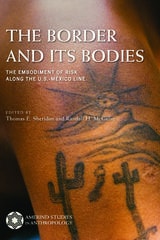
The Border and Its Bodies
The Embodiment of Risk Along the U.S.-México LineEdited by Thomas E. Sheridan and Randall H. McGuire
University of Arizona Press, 2019
The increasingly militarized U.S.-México border is an intensely physical place, affecting the bodies of all who encounter it. The essays in this volume explore how crossing becomes embodied in individuals, how that embodiment transcends the crossing of the line, and how it varies depending on subject positions and identity categories, especially race, class, and citizenship.
Timely and wide-ranging, this book brings into focus the traumatic and real impact the border can have on those who attempt to cross it, and it offers new perspectives on the effects for rural communities and ranchers. An intimate and profoundly human look at migration, The Border and Its Bodies reminds us of the elemental fact that the border touches us all.
Contributors
Bruce E. Anderson
Jared Beatrice
Rebecca Crocker
Jason De León
Linda Green
Randall H. McGuire
Shaylih Muehlmann
Robin Reineke
Olivia T. Ruiz Marrujo
David Seibert
Thomas E. Sheridan
Angela Soler
Ruth M. Van Dyke
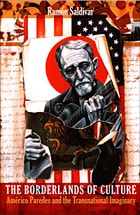
The Borderlands of Culture
Americo Paredes and the Transnational ImaginaryRamón Saldívar
Duke University Press, 2006
Saldívar demonstrates how Paredes’s poetry, prose, and journalism prefigured his later work as a folklorist and ethnographer. In song, story, and poetry, Paredes first developed the themes and issues that would be central to his celebrated later work on the “border studies” or “anthropology of the borderlands.” Saldívar describes how Paredes’s experiences as an American soldier, journalist, and humanitarian aid worker in Asia shaped his understanding of the relations between Anglos and Mexicans in the borderlands of south Texas and of national and ethnic identities more broadly. Saldívar was a friend of Paredes, and part of The Borderlands of Culture is told in Paredes’s own words. By explaining how Paredes’s work engaged with issues central to contemporary scholarship, Saldívar extends Paredes’s intellectual project and shows how it contributes to the remapping of the field of American studies from a transnational perspective.

The Borderlands of Race
Mexican Segregation in a South Texas TownBy Jennifer R. Nájera
University of Texas Press, 2015
Throughout much of the twentieth century, Mexican Americans experienced segregation in many areas of public life, but the structure of Mexican segregation differed from the strict racial divides of the Jim Crow South. Factors such as higher socioeconomic status, lighter skin color, and Anglo cultural fluency allowed some Mexican Americans to gain limited access to the Anglo power structure. Paradoxically, however, this partial assimilation made full desegregation more difficult for the rest of the Mexican American community, which continued to experience informal segregation long after federal and state laws officially ended the practice.
In this historical ethnography, Jennifer R. Nájera offers a layered rendering and analysis of Mexican segregation in a South Texas community in the first half of the twentieth century. Using oral histories and local archives, she brings to life Mexican origin peoples’ experiences with segregation. Through their stories and supporting documentary evidence, Nájera shows how the ambiguous racial status of Mexican origin people allowed some of them to be exceptions to the rule of Anglo racial dominance. She demonstrates that while such exceptionality might suggest the permeability of the color line, in fact the selective and limited incorporation of Mexicans into Anglo society actually reinforced segregation by creating an illusion that the community had been integrated and no further changes were needed. Nájera also reveals how the actions of everyday people ultimately challenged racial/racist ideologies and created meaningful spaces for Mexicans in spheres historically dominated by Anglos.

The Borders of "Europe"
Autonomy of Migration, Tactics of BorderingNicholas De Genova, editor
Duke University Press, 2017
Contributors. Ruben Andersson, Nicholas De Genova, Dace Dzenovska, Evelina Gambino, Glenda Garelli, Charles Heller, Clara Lecadet, Souad Osseiran, Lorenzo Pezzani, Fiorenza Picozza, Stephan Scheel, Maurice Stierl, Laia Soto Bermant, Martina Tazzioli
The Borders of America
Migration, Control, and Resistance Across Latin America and the CaribbeanSoledad Álvarez Velasco, Nicholas De Genova, Gustavo Dias, and Eduardo Domenech, editors
Duke University Press, 2026
Contributors. Soledad Álvarez Velasco, Tanya Basok, Janneth Clavijo, Nicholas De Genova, Gustavo Dias, Eduardo Domenech, Roberto Dufraix-Tapia, Jonathan Echeverri Zuluaga, Valentina Glockner Fagetti, Luin Goldring, Patricia Landolt, Carolina Moulin, Margarita Luz Núñez Chaim, Juan Ordóñez, Daniel Quinteros, Romina Ramos, Martha Rojas-Wiesner, Fabio Santos, Amarela Varela-Huerta, and Laura Velasco Ortiz
The Borders of Dominicanidad
Race, Nation, and Archives of ContradictionLorgia García Peña
Duke University Press, 2016
The Borders of Inequality
Where Wealth and Poverty CollideÍñigo Moré
University of Arizona Press, 2011
In this fascinating book, originally published in Spain to much acclaim, researcher Íñigo Moré looks at the bigger picture. With a professionally trained eye, he examines the world’s “top twenty most unequal borders.” What he finds is that many of these border situations share similar characteristics. There is always illegal immigration from the poor country to the wealthy one. There is always trafficking in illegal substances. And the unequal neighbors usually regard each other with suspicion or even open hostility.
After surveying the “top twenty,” Moré explores in depth the cases of three borders: between Germany and Poland, Spain and Morocco, and the United States and Mexico. The core problem, he concludes, is not drugs or immigration or self-protection. Rather, the problem is inequality itself. Unequal borders result, he writes, from a skewed interaction among markets, people, and states. Using these findings, Moré builds a useful new framework for analyzing border dynamics from a quantitative view based on economic inequality.
The Borders of Inequality illustrates how longstanding “multidirectional misunderstandings” can exacerbate cross-border problems—and consequent public opinion. Perpetuating these misunderstandings can inflame and complicate the situation, but purposeful efforts to reduce inequality can produce promising results.
The Borders of Justice
Etienne Balibar
Temple University Press, 2013
International in scope and featuring a diverse group of contributors, The Borders of Justice investigates the complexities of transitional justice that emerge from its “social embeddedness.” This original and provocative collection of essays, which stem from a collective research program on social justice undertaken by the Calcutta Research Group, confronts the concept and practices of justice. The editors and contributors question the relationship between geography, methodology, and justice—how and why justice is meted out differently in different places.
Expanding on Michael Walzer's idea of the “spheres of justice,” the contributors argue that justice is burdened with our notions of social realities and expectations, in addition to the influence of money, law, and government. Chapters provide close readings of Pascal, Plato and Marx, theories on global justice, the relationship between liberalism and multiculturalism, struggles of social injustice, and how and where we draw the borders of justice.

The Borders of Responsibility
Migration Control in the Mediterranean SeaKiri Olivia Santer
Duke University Press, 2026
The Boston Renaissance
Race, Space, and Economic Change in an American MetropolisBarry Bluestone
Russell Sage Foundation, 2000
The Boswell Thesis
Essays on Christianity, Social Tolerance, and HomosexualityEdited by Mathew Kuefler
University of Chicago Press, 2005
The essays in this magnificent volume examine a variety of aspects of Boswell's interpretation of events in the development of sexuality from Classical Antiquity through the Middle Ages, including a Roman emperor's love letters to another man; suspicions of sodomy among medieval monks, knights, and crusaders; and the gender-bending visions of Christian saints and mystics. Also included are discussions of Boswell's career, including his influence among gay and lesbian Christians and his role in academic debates between essentialists and social constructionists.
Elegant and thought-provoking, this collection provides a fitting twenty-fifth anniversary tribute to the incalculable influence of Christianity, Social Tolerance, and Homosexuality and its author.