Results by title
28250 books match the query 'HISTORY' and 6388 start with t
Translating the Unspeakable
Poetry and the Innovative NecessityKathleen Fraser
University of Alabama Press, 1999
A prominent avant-garde poet charts both her personal artistic development and the difficulties faced by women writers pursuing innovative paths.
An accomplished and influential poet, Kathleen Fraser has been instrumental in drawing attention to other women poets working outside the mainstream. Translating the Unspeakable gathers eighteen of her essays written over nearly twenty years, combining autobiography and criticism to examine what it means for any artist to innovate instead of following an already traveled path.
In autobiographical passages Fraser tells how her generation was influenced by revolutions in art and philosophy during the early 1960s and how she spent years pursuing idiosyncratic means of rediscovering the poem's terms. By the 1970s her evolving poetics were challenged by questions of gender, until immersion in feminist/modernist scholarship led her to initiate greater dialogue among experimentalist poets.
Other essays examine modernist women writers, their contemporary successors, and the visual poetics they have practiced. By exploring the work of such poets as H. D., Mina Loy, Lorine Niedecker, and Barbara Guest, Fraser conveys their struggle to establish a presence within accepted poetic conventions and describes the role experimentation plays in helping women overcome self-imposed silence.
All of Fraser's writings explore how the search to find one's own way of speaking into a very private yet historic space—of translating the unspeakable—drives poetic experimentation for women and men alike. This provocative book provides a glimpse into the thought processes of
the poetic mind, enhancing our understanding of innovative writing.
Translation and Epistemicide
Racialization of Languages in the AmericasJoshua M. Price
University of Arizona Press, 2023
The book gives an account of translation-as-epistemicide in the Americas, drawing on a range of examples from the early colonial period to the War on Terror. The first chapters demonstrate four distinct operations of epistemicide: the commensuration of worlds, the epistemic marginalization of subaltern translators and the knowledge they produce, the criminalization of translators and interpreters, and translation as piracy or extractivism. The second part of the book outlines decolonial translation strategies, including an epistemic posture the author calls “bewilderment.”
Translation and Epistemicide tracks how through the centuries translation practices have enabled colonialism and resulted in epistemicide, or the destruction of Indigenous and subaltern knowledge.
Translation and Subjectivity
On Japan and cultural nationalismNaoki Sakai
University of Minnesota Press, 1997
Translation as Muse
Poetic Translation in Catullus's RomeElizabeth Marie Young
University of Chicago Press, 2015
Catullus has long been admired as a poet, but his efforts as a translator have been largely ignored. Young reveals how essential translation is to his work: many poems by Catullus that we tend to label as lyric originals were in fact shaped by Roman translation practices entirely different from our own. By rereading Catullus through the lens of translation, Young exposes new layers of ingenuity in Latin poetry even as she illuminates the idiosyncrasies of Roman translation practice, reconfigures our understanding of translation history, and questions basic assumptions about lyric poetry itself.
Translation, Resistance, Activism
Maria Tymoczko
University of Massachusetts Press, 2010
From silence to radical manipulation of texts, translation strategies are instrumental in significant historical interventions and cultural change. Translation plays a pivotal role in ideological dialogue and struggle, including resistance to oppression and cultural straitjackets of all types, from sexual puritanism to military dictatorships. Situated in their own space, time, history, and political contexts, translators promote ideological agendas by creating new cultural narratives, pragmatically adjusting tactics so as to maximize the social and political impact.
The essays in this volume explore ways to read translations as records of cultural contestation and ideological struggle; as means of fighting censorship, physical coercion, cultural repression, and political dominance; and as texts that foster a wide variety of goals from cultural nationalism to armed confrontation. Translations are set in relief as central cultural documents rather than derivative, peripheral, or marginalized productions. They are seen as forms of ethical, political, and ideological activity rather than as mere communicative transactions or creative literary exercises.
The contributors demonstrate that engaged and activist translations are performative acts within broader political and ideological contexts. The essays detail the initiative, resourcefulness, and courage of individual translators, whose willingness to put themselves on the line for social change can sometimes move the world.
In addition to Maria Tymoczko, contributors include Pua'ala'okalani D. Aiu, Brian James Baer, Mona Baker, Paul F. Bandia, Georges L. Bastin, Nitsa Ben-Ari, Ãngela Campo, Antonia Carcelen-Estrada, Ãlvaro Echeverri, Denise Merkle, John Milton, and Else R.P. Vieira.
Translocalities/Translocalidades
Feminist Politics of Translation in the Latin/a AméricasSonia E. Alvarez, Claudia de Lima Costa, Verónica Feliu, Rebecca J. Hester, Norma Klahn, and Millie Thayer, eds.
Duke University Press, 2014
Contributors. Sonia E. Alvarez, Kiran Asher, Victoria (Vicky) M. Bañales, Marisa Belausteguigoitia Rius, Maylei Blackwell, Cruz C. Bueno, Pascha Bueno-Hansen, Mirangela Buggs, Teresa Carrillo, Claudia de Lima Costa, Isabel Espinal, Verónica Feliu, Macarena Gómez-Barris, Rebecca J. Hester, Norma Klahn, Agustín Lao-Montes, Suzana Maia, Márgara Millán, Adriana Piscitelli, Ana Rebeca Prada, Ester R. Shapiro, Simone Pereira Schmidt, Millie Thayer
Transmitting Jewish History
Yosef Hayim Yerushalmi in Conversation with Sylvie Anne GoldbergYosef Hayim Yerushalmi and Sylvie Anne Goldberg
Brandeis University Press, 2021
Scholar Yosef Hayim Yerushalmi (1932–2009) possessed a stunning range of erudition in all eras of Jewish history, as well as in world history, classical literature, and European culture. What Yerushalmi also brought to his craft was a brilliant literary style, honed by his own voracious reading from early youth and his formative undergraduate studies. This series of interviews paints a revealing portrait of this giant of history, bringing together exceptional material on Yerushalmi’s personal and intellectual journeys that not only attests to the astonishing breakthrough of the issues of Jewish history into “general history,” but also offers profound insight into being Jewish in today's world.
Transmitting the Past
Historical and Cultural Perspectives on BroadcastingEdited by J. Emmett Winn and Susan L. Brinson
University of Alabama Press, 2005
Original essays exploring important developments in radio and television broadcasting
The essays included in this collection represent some of the best cultural and historical research on broadcasting in the U. S. today. Each one concentrates on a particular event in broadcast history—beginning with Marconi’s introduction of wireless technology in 1899.
Michael Brown examines newspaper reporting in America of Marconi's belief in Martians, stories that effectively rendered Marconi inconsequential to the further development of radio. The widespread installation of radios in automobiles in the 1950s, Matthew Killmeier argues, paralleled the development of television and ubiquitous middle-class suburbia in America. Heather Hundley analyzes depictions of male and female promiscuity as presented in the sitcom Cheers at a time concurrent with media coverage of the AIDS crisis. Fritz Messere examines the Federal Radio Act of 1927 and the clash of competing ideas about what role radio should play in American life. Chad Dell recounts the high-brow programming strategy NBC adopted in 1945 to distinguish itself from other networks. And George Plasketes studies the critical reactions to Cop Rock, an ill-fated combination of police drama and musical, as an example of society's resistance to genre-mixing or departures from formulaic programming.
The result is a collection that represents some of the most recent and innovative scholarship, cultural and historical, on the intersections of broadcasting and American cultural, political, and economic life.
Transnational Black Studies, Volume 2003
Lisa Brock , Robin D. G. Kelley, and Karen Sotiropoulos, eds.
Duke University Press, 0
The essays, interviews, and reviews in this special issue of Radical History Review represent the best of the new of this very old tradition of transnational black studies. One contributor explores how “racial citizenship”—the idea of belonging and solidarity across the black world, developed as a result of knowledge formed out of transnational linkages—is employed by Cubans of color fighting against racial discrimination in public spaces in Havana. Another, by outlining a research agenda for the study of African slavery in the Middle East and South Asia, reminds us that the Africa diaspora is global. In a discussion of a paradigm shift from the national to the global, yet another author makes a singular contribution to this collection by locating new spaces for identity formation “in transit.”
Contributors. Martha Biondi, Anthony Bogues, Ashley Dawson, James Early, Mary F. E. Ebeling, Kevin Gaines, Van Gosse, Frank A. Guridy, Joseph E. Harris, Douglas M. Haynes, Joseph Heathcott, Harvey Neptune, Michelle Stephens

Transnational Capitalism in East Central Europe's Heavy Industry
From Flagship Enterprises to SubsidiariesAleksandra Sznajder Lee
University of Michigan Press, 2016
This book has broad implications for the political economy of reform because it illuminates the political determinants of privatization and the resources used to resist it. In addition, Sznajder Lee sheds new light on why some countries are more likely than others to be subject to external constraints, such as IMF conditionality, and how some allegedly pro-market reformers manage to maintain public ownership over certain industry sectors.
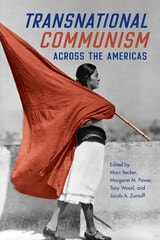
Transnational Communism across the Americas
Edited by Marc Becker, Margaret Power, Tony Wood, and Jacob A. Zumoff
University of Illinois Press, 2023
Contributors: Marc Becker, Jacob Blanc, Tanya Harmer, Patricia Harms, Lazar Jeifets, Victor Jeifets, Adriana Petra, Margaret M. Power, Frances Peace Sullivan, Tony Wood, Kevin A. Young, and Jacob Zumoff
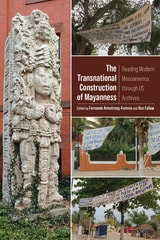
Transnational Construction of Mayanness
Reading Modern Mesoamerica through US ArchivesFernando Armstrong-Fumero
University Press of Colorado, 2023
Contributors tap documentary, ethnographic, and ethnoarchaeological sources from North America to expand established categories of fieldwork and archival research conducted within the national spaces of Mexico and Central America. A particularly rich and diverse set of case studies interrogate the historical processes that remove sources from their place of production in the “field” to the US, challenge the conventional wisdom regarding the geography of data sources that are available for research, and reveal a range of historical relationships that enabled US actors to shape the historical experience of Maya-speaking peoples.
The Transnational Construction of Mayanness offers rich insight into transnational relations and suggests new avenues of research that incorporate an expanded corpus of materials that embody the deep-seated relationship between Maya-speaking peoples and various gringo interlocutors. The work is an important bridge between Mayanist anthropology and historiography and broader literatures in American, Atlantic, and Indigenous studies.
Contributors: David Carey, M. Bianet Castellanos, Matilde Córdoba Azcárate, Lydia Crafts, John Gust, Julio Cesar Hoil Gutierréz, Jennifer Mathews, Matthew Watson
Transnational Desires
Brazilian Erotic Dancers in New YorkSuzana Maia
Vanderbilt University Press, 2012
Their motivation to migrate and to work as erotic dancers can also be understood in the context of a representational system, inaugurated in colonial times, that emphasizes the exoticism of Brazilian womentheir bodies, their skin tone, their sexuality. These stereotypes are the props that Brazilian women use to construct their performances in Manhattan and Queens gentlemen's bars and the language through which they negotiate their relationships to society at large.
Transnational Desires focuses on the lives of nine Brazilian dancers with whom the author, herself a middleclass Brazilian, developed close relationships over the years. Maia examines their social relations both in the bar scene and with family, friends, and lovers outside. She shows that for these women erotic dancing is part of a life trajectory that involves negotiating their social position and life prospects in a fundamentally transnational social universe.

Transnational Korean Cinema
Cultural Politics, Film Genres, and Digital TechnologiesDal Yong Jin
Rutgers University Press, 2020
The book emphasizes the economic and industrial aspects of the story, looking at questions on the interaction of politics and economics, including censorship and public funding, and provides a better view of the big picture by laying bare the relationship between film industries, the global market, and government. Jin also sheds light on the operations and globalization strategies of Korean film industries alongside changing cultural policies in tandem with Hollywood’s continuing influences in order to comprehend the power relations within cultural politics, nationally and globally. This is the first book to offer a full overview of the nascent development of Korean cinema.
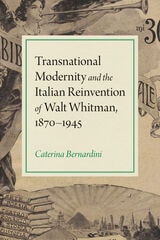
Transnational Modernity and the Italian Reinvention of Walt Whitman, 1870-1945
Caterina Bernardini
University of Iowa Press, 2021
Studying Whitman’s reception from a transnational perspective shows how many countries were simultaneously carving out a new modernity in literature and culture. In this sense, Bernardini not only shows the interconnectedness of various international agents in understanding and contributing to the spread of Whitman’s work, but, more largely, illustrates a constellation of similar pre-modernist and modernist sensibilities. This stands in contrast to the notion of sudden innovation: modernity was not easy to achieve, and it did not imply a complete refusal of tradition. Instead, a continuous and fruitful negotiation between tradition and innovation, not a sudden break with the literary past, is at the very heart of the Italian and transnational reception of Whitman. The book is grounded in archival studies and the examination of primary documents of noteworthy discovery.
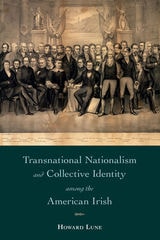
Transnational Nationalism and Collective Identity among the American Irish
Howard Lune
Temple University Press, 2020
In Transnational Nationalism and Collective Identity among the American Irish, Howard Lune considers the development and mobilization of different nationalisms over 125 years of Irish diasporic history (1791–1920) and how these campaigns defined the Irish nation and Irish citizenship.
Lune takes a collective approach to exploring identity, concentrating on social identities in which organizations are the primary creative agent to understand who we are and how we come to define ourselves. As exiled Irishmen moved to the United States, they sought to create a new Irish republic following the American model. Lune traces the construction of Irish American identity through the establishment and development of Irish nationalist organizations in the United States. He looks at how networks—such as societies, clubs, and private organizations—can influence and foster diaspora, nationalism, and nationalist movements.
By separating nationalism from the physical nation, Transnational Nationalism and Collective Identity among the American Irish uniquely captures the processes and mechanisms by which collective identities are constructed, negotiated, and disseminated. Inevitably, this work tackles the question of what it means to be Irish—to have a nationality, a community, or a shared history.
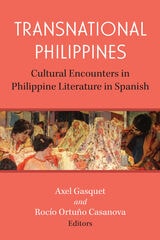
Transnational Philippines
Cultural Encounters in Philippine Literature in SpanishAxel Gasquet and Rocío Ortuño Casanova, Editors
University of Michigan Press, 2024
Yet Transnational Philippines also questions the constraints of traditional literary genres in order to make room for Philippine texts and other colonial and postcolonial texts, so that those texts can be taken into consideration in literary studies. Its chapters elaborate on the problems surrounding the cultural and identity relations of the Philippines with other regions and the literary nature of Philippine texts. By addressing the need for a postnational approach to Spanish-language Philippine literature, the book challenges the Spain/Latin America dichotomy existing in Spanish language literary studies and leans toward a global conception of the Hispanophone.
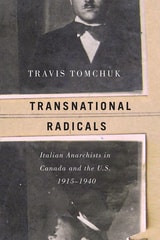
Transnational Radicals
Italian Anarchists in Canada and the U.S., 1915-1940Travis Tomchuk
University of Manitoba Press, 2015
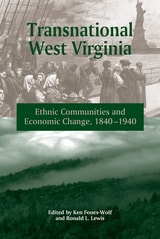
Transnational West Virginia
Ethnic Communities and Economic Change, 1840 - 1940KEN FONES-WOLF
West Virginia University Press, 2002
West Virginia is one of the most homogeneous states in the nation, with among the lowest ratios of foreign-born and minority populations among the states. But as this collection of historical studies demonstrates, this state was built by successive waves of immigrant labors, from the antebellum railroad builders to the twentieth-century coal miners. Transnational West Virginia offers a new understanding of how laborers and their communities shape a region's history. Transnational West Virginia includes essays and studies on immigrant networks, such as Irish workers along the B&O Railroad, Wheeling Germans in the Civil War era, Swiss immigration to West Virginia, and European Jews in Southern West Virginia. This work also covers Belgian glassworkers in West Virginia, black migration to Southern West Virginia, Italians in the Upper Kanawha Valley, Italian immigration to Marion County, Wheeling Iron and the Welsh, West Virginia and immigrant labor to 1920, Monongalia miners between the World Wars, and West Virginia rubber workers in Akron. Transnational West Virginia is the first volume in the West Virginia and Appalachia series, which is under the general editorship of West Virginia University Stuart and Joyce Robbins Chair of History Ronald L. Lewis. Kenneth Fones-Wolf, Associate Professor of History at WVU, also helped edit this collection of essays by ten distinguished scholars.
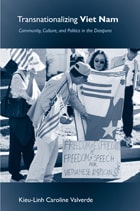
Transnationalizing Viet Nam
Community, Culture, and Politics in the DiasporaKieu-Linh Caroline Valverde
Temple University Press, 2013
Vietnamese diasporic relations affect—and are directly affected by—events in Viet Nam. In Transnationalizing Viet Nam, Kieu-Linh Caroline Valverde explores these connections, providing a nuanced understanding of this globalized community. Valverde draws on 250 interviews and almost two decades of research to show the complex relationship between Vietnamese in the diaspora and those back at the homeland.
Arguing that Vietnamese immigrant lives are inherently transnational, she shows how their acts form virtual communities via the Internet, organize social movements, exchange music and create art, find political representation, and even dissent. Valverde also exposes how generational, gender, class, and political tensions threaten to divide the ethnic community.
Transnationalizing Viet Nam paints a vivid picture of the complex political and personal allegiances that exist within Vietnamese America and shape the relations between this heterogeneous community and its country of origin.
In the series Asian American History and Culture, edited by Sucheng Chan, David Palumbo-Liu, Michael Omi, K. Scott Wong, and Linda Trinh Võ
Transoceanic Blackface
Empire, Race, PerformanceKellen Hoxworth
Northwestern University Press, 2024
A material history of racialized performance throughout the Anglophone imperial world, Transoceanic Blackface: Empire, Race, Performance revises prevailing understandings of blackface and minstrelsy as distinctively US American cultural practices. Tracing intertwined histories of racialized performance from the mid-eighteenth through the early twentieth century across the United States and the British Empire, this study maps the circulations of blackface repertoires in theatrical spectacles, popular songs, visual materials, comic operas, closet dramas, dance forms, and Shakespearean burlesques.
Kellen Hoxworth focuses on overlooked performance histories, such as the early blackface minstrelsy of T. D. Rice’s “Jump Jim Crow” and the widely staged blackface burlesque versions of Othello, as traces of the racial and sexual anxieties of empire. From the nascent theatrical cultures of Australia, Britain, Canada, India, Jamaica, South Africa, and the United States, Transoceanic Blackface offers critical insight into the ways racialized performance animated the imperial “common sense” of white supremacy on a global scale.
Transpacific Cartographies
Narrating the Contemporary Chinese Diaspora in the United StatesMelody Yunzi Li
Rutgers University Press, 2024
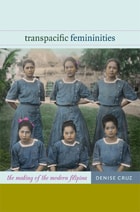
Transpacific Femininities
The Making of the Modern FilipinaDenise Cruz
Duke University Press, 2012
Through a careful study of multiple texts produced by Filipina and Filipino writers in the Philippines and the United States—including novels and short stories, newspaper and magazine articles, conduct manuals, and editorial cartoons—Cruz provides a new archive and fresh perspectives for understanding Philippine literature and culture. She demonstrates that the modern Filipina did not emerge as a simple byproduct of American and Spanish colonial regimes, but rather was the result of political, economic, and cultural interactions among the Philippines, Spain, the United States, and Japan. Cruz shows how the complex interplay of feminism, nationalism, empire, and modernity helped to shape, and were shaped by, conceptions of the transpacific Filipina.
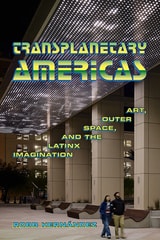
Transplanetary Americas
Art, Outer Space, and the Latinx ImaginationRobb Hernández
Duke University Press, 2026

Transplanting the Great Society
Lyndon Johnson and Food for PeaceKristin L. Ahlberg
University of Missouri Press, 2008
Transport in Transition
The Evolution of Traditional Shipping in ChinaTranslated by Andrew Watson
University of Michigan Press, 1972
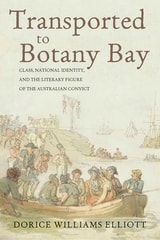
Transported to Botany Bay
Class, National Identity, and the Literary Figure of the Australian ConvictDorice Williams Elliott
Ohio University Press, 2019
Literary representations of British convicts exiled to Australia were the most likely way that the typical English reader would learn about the new colonies there. In Transported to Botany Bay, Dorice Williams Elliott examines how writers—from canonical ones such as Dickens and Trollope to others who were themselves convicts—used the figure of the felon exiled to Australia to construct class, race, and national identity as intertwined.
Even as England’s supposedly ancient social structure was preserved and venerated as the “true” England, the transportation of some 168,000 convicts facilitated the birth of a new nation with more fluid class relations for those who didn’t fit into the prevailing national image. In analyzing novels, broadsides, and first-person accounts, Elliott demonstrates how Britain linked class, race, and national identity at a key historical moment when it was still negotiating its relationship with its empire. The events and incidents depicted as taking place literally on the other side of the world, she argues, deeply affected people’s sense of their place in their own society, with transnational implications that are still relevant today.
Trap with a Green Fence
Survival in TreblinkaRichard Glazar
Northwestern University Press, 1995
Traqueros
Mexican Railroad Workers in the United States, 1870-1930Jeffrey Marcos Garcilazo
University of North Texas Press, 2012
Trask
Don Berry
Oregon State University Press, 2004
Trask is at once a gripping tale of adventure and a portrayal of one man's return to the naked simplicity of life. Inspired by his belief in the transcendent power of nature, his fascination with Eastern philosophy, and the lives of historical men and women, Don Berry created a story that is strongly imagined and powerfully rendered-a landmark work. This new edition of Berry's celebrated first novel includes an introduction by Jeff Baker, book critic for The Oregonian.
Trauma and the Failure of History
Kings, Lamentations, and the Destruction of JerusalemDavid Janzen
SBL Press, 2019
A theoretical and exegetical exploration of trauma in the Hebrew Bible
David Janzen discusses the concepts of history and trauma and contrasts the ways historians and trauma survivors grapple with traumatic events, a contrast embodied in the very different ways the books of Kings and Lamentations react to the destruction of Jerusalem. Janzen’s study warns that explanations in histories will tend to silence the voices of trauma survivors, and it challenges traditional approaches that sometimes portray the explanations of traumatic events in biblical literature as therapeutic for victims.
Features:
- Exploration of history as a narrative explanation that creates a past readers can recognize to be true
- Examination of how trauma results in a failure of victims to fully experience or remember traumatic events.
- A case for why the past is a construction of cultures and historians
Trauma, Taboo, and Truth-Telling
Listening to Silences in Postdictatorship ArgentinaNancy J. Gates-Madsen
University of Wisconsin Press, 2018
Nancy J. Gates-Madsen reads between the lines of Argentine cultural texts (fiction, drama, testimonial narrative, telenovela, documentary film) to explore the fundamental role of silence—the unsaid—in the expression of trauma. Her careful examination of the interplay between textual and contextual silences illuminates public debate about the meaning of memory in Argentina—which stories are being told and, more important, which are being silenced. The imposition of silence is not limited to the military domain or its apologists, she shows; the human rights community also perpetuates and creates taboos.
Trauma
A GenealogyRuth Leys
University of Chicago Press, 2000
In a book that is bound to ignite controversy, Ruth Leys investigates the history of the concept of trauma. She explores the emergence of multiple personality disorder, Freud's approaches to trauma, medical responses to shellshock and combat fatigue, Sándor Ferenczi's revisions of psychoanalysis, and the mutually reinforcing, often problematic work of certain contemporary neurobiological and postmodernist theorists. Leys argues that the concept of trauma has always been fundamentally unstable, oscillating uncontrollably between two competing models, each of which tends at its limit to collapse into the other.
A powerfully argued work of intellectual history, Trauma will rewrite the terms of future discussion of its subject.

Traumatic Encounters in Italian Film
Locating the Cinematic UnconsciousFabio Vighi
Intellect Books, 2006
Always stylistically innovative, thematically defiant and driven by a strong political agenda, Italian cinema lends itself particularly well to a critical investigation aimed at radicalising the impact of psychoanalysis on film. In doing exactly that, the book deliberately avoids the standard cultural and historical approaches to film. Instead, it moves freely amongst some of the most widely celebrated – as well as lesser-known – Italian films of the post-war period, discussing the ways in which they tackle such themes as desire, fantasy, sexuality, violence and the law, to mention but a few. The main focus is on the work of those directors who most effectively engage with the divisive nature of the moving image: Antonioni, Pasolini and Rossellini. In addition, the book provides ample and insightful references to films by Visconti, Bertolucci, Bellocchio, Moretti, Petri, Fellini, Ferreri, and many more.

Traumatic States
Gendered Violence, Suffering, and Care in ChileNia Parson
Vanderbilt University Press, 2013
In Traumatic States, anthropologist Nia Parson explores the development of methods of care and recovery from domestic violence. She interviews and contextualizes the lives of numerous individuals who have confronted these acts, as victims, authorities, and activists. Ultimately, Traumatic States argues that facing the challenges of healing both body and mind, and addressing the fundamental inequalities that make those challenges even more formidable, are part of the same battle.
Travail In An Arab Land
Samuel Romanelli
University of Alabama Press, 1989
During a return voyage to Italy in 1786, he became stranded in Gibraltar for an extended time which depleted his funds, and his economic circumstances forced him to join a merchant travelling to Morocco. Through misadventure in Morocco, he lost his passport and was retained in that country for four years, the story of which forms Travail in an Arab Land, first published in 1792 in Berlin. The book is a firsthand account of the author’s adventures during the four years he was stranded in Sharifan Morocco between 1787 and 1790.
Travel & See
Black Diaspora Art Practices since the 1980sKobena Mercer
Duke University Press, 2016

Travel On Southern Antebellum Railroads, 1828–1860
Eugene Alvarez
University of Alabama Press, 2007
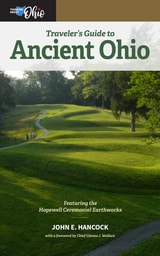
Traveler's Guide to Ancient Ohio
John E. Hancock
Ohio University Press, 2026
Featuring Hopewell Ceremonial Earthworks
Traveler’s Guide to Ancient Ohio is a compact, richly illustrated, and in-depth travel guide to the Indigenous earthwork wonders of southern Ohio—some of the most extraordinary ancient monuments in North America. Featuring the eight newly inscribed UNESCO World Heritage sites, this is the first publication to present these places from a traveler’s perspective, offering deeply informative site descriptions alongside curated routes to historical, scenic, and natural treasures across the region.
Southern Ohio’s landscape is layered with millennia of human history. At its heart are the monumental Adena and Hopewell earthworks—vast ceremonial constructions that reflect the ingenuity and spiritual life of ancient Indigenous cultures. This guide helps readers understand these sites as rewarding architectural experiences, enriched by archaeological, historical, and Indigenous knowledge gathered over three decades of collaborative work.
Organized into eight scenic driving routes—including the World Heritage Route and seven tributary paths—the book connects earthworks with nearby historic towns, nature preserves, waterways, and cultural landmarks. Each route emphasizes two-lane roads and includes road-tested site addresses, with links to local tourism resources for updated travel information.
Introductory sections provide essential context on regional geography, Indigenous cultures, archaeological terminology, and travel logistics. The guide’s focus on on-site appreciation is rare among existing resources, making it invaluable for both pre-visit planning and on-the-ground exploration.
Detailed route and trail descriptions are coordinated with all-new maps, plans, and photographs. The book links to multimedia assets, including animated flyovers that help visualize the earthworks and interview excerpts that deepen interpretive storytelling through Indigenous and interdisciplinary voices.
For first-time visitors and seasoned explorers, Traveler’s Guide to Ancient Ohio offers a fresh, immersive way to experience the region’s ancient wonders and the landscapes that continue to tell their story.
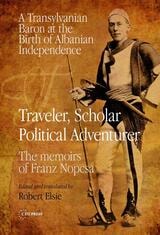
Traveler, Scholar, Political Adventurer
A Transylvanian Baron at the Birth of Albanian Independence: The memoirs of Franz NopcsaFranz Nopcsa
Central European University Press, 2014
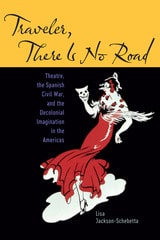
Traveler, There Is No Road
Theatre, the Spanish Civil War, and the Decolonial Imagination in the AmericasLisa Jackson-Schebetta
University of Iowa Press, 2017
This book offers a unique perspective on 1930s theatre and performance, encompassing the theatrical work of the Cuban, Puerto Rican, and Spanish diasporas in the United States, as well as the better-known Anglophone communities. Jackson-Schebetta situates well-known figures, such as Langston Hughes and Clifford Odets, alongside lesser-known ones, such as Erasmo Vando, Franca de Armiño, and Manuel Aparicio. The milicianas, female soldiers of the Spanish Republic, stride on stage alongside the male fighters of the Lincoln Brigade. They and many others used the multiple visions of Spain forged during the civil war to foment decolonial practices across the pasts, presents, and futures of the Americas. Traveler conclusively demonstrates that theatre and performance scholars must position US performances within the Americas writ broadly, and in doing so they must recognize the centrality of the hemisphere’s longest-lived colonial power, Spain.
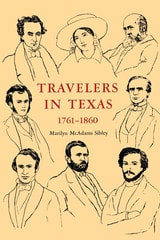
Travelers In Texas, 1761-1860
By Marilyn McAdams Sibley
University of Texas Press, 1967
History passed in review along the highways of Texas in the century 1761–1860. This was the century of exploration and settlement for the big new land, and many thousands of people traveled its trails: traders, revolutionaries, missionaries, warriors, government agents, adventurers, refugees, gold seekers, prospective settlers, land speculators, army wives, and filibusters. Their reasons for coming were many and varied, and the travelers viewed the land and its people with a wide variety of reactions. Political and industrial revolution, famine, and depression drove settlers from many of the countries of Europe and many of the states of the United States. Some were displeased with what they found in Texas, but for many it was a haven, a land of renewed hope. So large was the migration of people to Texas that the land that was virtually unoccupied in 1761 numbered its population at 600,000 a century later.
Several hundred of these travelers left published accounts of their impressions and adventures. Collectively the accounts tell a panoramic story of the land as its boundaries were drawn and its institutions formed. Spain gave way to Mexico, Mexico to the Republic of Texas, the Republic to statehood in the United States, and statehood in the Union was giving way to statehood in the Confederate states by 1860. The travelers’ accounts reflect these changes; but, more important, they tell the story of the receding frontier.
In Travelers in Texas, 1761–1860, the author examines the Texas seen by the traveler-writer. Opening with a chapter about travel conditions in general (roads or trails, accommodations, food), she also presents at some length the travelers’ impressions of the country and its people. She then proceeds to examine particular aspects of Texas life: the Indians, slavery, immigration, law enforcement, and the individualistic character of the people, all as seen through the eyes of the travelers. The discussion concludes with a “Critical Essay on Sources,” containing bibliographic discussions of over two hundred of the more important travel accounts.
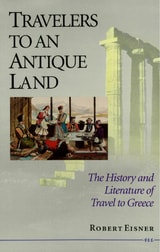
Travelers to an Antique Land
The History and Literature of Travel to GreeceRobert Eisner
University of Michigan Press, 1993
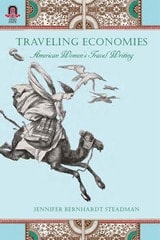
Traveling Economies
American Women's Travel WritingJennifer Bernhardt Steadman
The Ohio State University Press, 2007
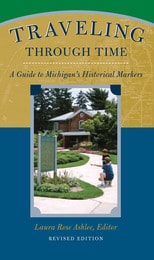
Traveling Through Time
A Guide to Michigan's Historical MarkersLaura Rose Ashlee, Editor
University of Michigan Press, 2005
Since 1955 the state of Michigan has erected historical markers throughout the state. In this revised edition of Traveling Through Time, Laura Rose Ashlee collects the histories that appear on these markers together into one handy guidebook---a great desk reference for researchers and armchair historians alike.
Some of the book's special features include:
o Location and full text of each marker
o Arranged alphabetically within county chapters
o More than 85 historic and color photographs
o Special section on Michigan historical markers placed outside Michigan
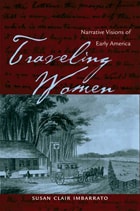
Traveling Women
Narrative Visions of Early AmericaSusan Clair Imbarrato
Ohio University Press, 2006
Susan Clair Imbarrato closely examines women’s accounts of their journeys from 1700 to 1830, including Sarah Kemble Knight’s well-known journal of her trip from Boston to New York in 1704 and many lesser-known accounts, such as Sarah Beavis’s 1779 journal of her travel to Ohio via Kentucky and Susan Edwards Johnson’s account or her 1801–2 journey from Connecticut to North Carolina.
In the women’s keen observations and entertaining wit, readers will find bravado mixed with hesitation, as women set forth on business, to relocate, and for pleasure. These travelers wrote compellingly of crossing rivers and mountains, facing hunger, encountering native Americans, sleeping in taverns, and confronting slavery, expressing themselves in voices that differed in sensibility from male explorers and travelers.
These accounts, as Imbarrato shows, challenge assumptions that such travel was predominately a male enterprise. In addition, Traveling Women provides a more balanced portrait of westward settlement by affirming women’s importance in the settling of early America.
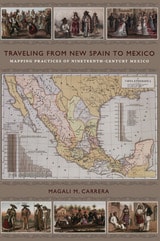
Traveling from New Spain to Mexico
Mapping Practices of Nineteenth-Century MexicoMagali M. Carrera
Duke University Press, 2011
From the sixteenth century until the early nineteenth, Europeans had envisioned New Spain (colonial Mexico) in texts, maps, and other images. In the first decades of the 1800s, ideas about Mexican, rather than Spanish, national character and identity began to cohere in written and illustrated narratives produced by foreign travelers. During the nineteenth century, technologies and processes of visual reproduction expanded to include lithography, daguerreotype, and photography. New methods of display—such as albums, museums, exhibitions, and world fairs—signaled new ideas about spectatorship. García Cubas participated in this emerging visual culture as he reconfigured geographic and cultural imagery culled from previous mapping practices and travel writing. In works such as the Atlas geográfico (1858) and the Atlas pintoresco é historico (1885), he presented independent Mexico to Mexican citizens and the world.
Traveling in Place
A History of Armchair TravelBernd Stiegler
University of Chicago Press, 2013
Organized into twenty-one “legs”—or short chapters—Traveling in Place begins with a consideration of Xavier de Maistre’s 1794 Voyage autour de ma chambre, an account of the forty-two-day “journey around his room” Maistre undertook as a way to entertain himself while under house arrest. Stiegler is fascinated by the notion of exploring the familiar as though it were completely new and strange. He engages writers as diverse as Roussel, Beckett, Perec, Robbe-Grillet, Cortázar, Kierkegaard, and Borges, all of whom show how the everyday can be brilliantly transformed. Like the best guidebooks, Traveling in Place is more interested in the idea of travel as a state of mind than as a physical activity, and Stiegler reflects on the different ways that traveling at home have manifested themselves in the modern era, from literature and film to the virtual possibilities of the Internet, blogs, and contemporary art.
Reminiscent of the pictorial meditations of Sebald, but possessed of the intellectual playfulness of Calvino, Traveling in Place offers an entertaining and creative Baedeker to journeying at home.
Traveling the Beaten Trail
Charles Tait's Charges to Federal Grand Juries, 1822–1825Paul M. Pruitt Jr., David I. Durham, and Sally E. Hadden
University of Alabama Press, 2013
About Occasional Publications of the Bounds Law Library
This collection offers a series of edited documents that contribute to an understanding of the development of legal history, culture, or doctrine. Series editors Paul M. Pruitt Jr. and David I. Durham have selected a variety of materials—a lecture, diaries, letters, speeches, a ledger, commonplace books, a code of ethics, court reports—to illustrate unique examples of legal life and thought.
Traveling the Old Ski Tracks of New England
E. John B. Allen
University of Massachusetts Press, 2022
For over a century New Englanders have taken to the slopes in search of ways to enjoy the coldest months, and skiing has deep roots in the region. In the late nineteenth century Scandinavian immigrants worked to educate snowbound locals on how to ski, make equipment, and prepare trails. Soon thereafter, colleges across the Northeast built world-class ski programs, massive jumps were constructed in Brattleboro and Berlin, and dozens of ski areas—big and small—cropped up from the 1930s through the 1960s.
Traveling the Old Ski Tracks of New England offers a fascinating history of downhill, cross-country, and backcountry skiing across the region and its leading personalities. Moving from popular destinations like Stowe, Cannon, Bromley, and Mount Washington to the less intimidating hills surrounding Boston, Rhode Island, and Connecticut, E. John B. Allen also recovers the forgotten stories of ski areas that have been abandoned in the face of changing tastes and a warming climate.