Results by title
3258 books match the query 'Performing Arts' and 658 start with t
To Dance is Human
A Theory of Nonverbal CommunicationJudith Lynne Hanna
University of Chicago Press, 1987
To Embody the Marvelous
The Making of Illusions in Early Modern SpainEsther Fernández
Vanderbilt University Press, 2021
Winner of the Nancy Staub Award, UNIMA-USA (Union Internationale de la Marionnette), 2023
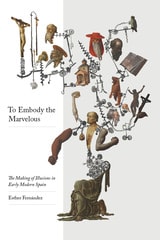
In its exploration of puppetry and animation as the performative media of choice for mastering the art of illusion, To Embody the Marvelous engages with early modern notions of wonder in religious, artistic, and social contexts.
From jointed, wood-carved figures of Christ, saintly marionettes that performed hagiographical dramas, experimental puppets and automata in Cervantes' Don Quixote, and the mechanical sets around which playwright Calderón de la Barca devised secular magic shows to deconstruct superstitions, these historical and fictional artifacts reenvisioned religious, artistic, and social notions that led early modern society to critically wrestle with enchantment and disenchantment.
The use of animated performance objects in Spanish theatrical contexts during the sixteenth and seventeenth centuries became one of the most effective pedagogical means to engage with civil society. Regardless of social strata, readers and spectators alike were caught up in a paradigm shift wherein belief systems were increasingly governed by reason—even though the discursive primacy of supernatural doxa and Christian wonder remained firmly entrenched. Thanks to their potential for motion, religious and profane puppets, automata, and mechanical stage props deployed a rationalized sense of wonder that illustrates the relationship between faith and reason, reevaluates the boundaries of fiction in art and entertainment cultures, acknowledges the rise of science and technology, and questions normative authority.
To Embody the Marvelous
The Making of Illusions in Early Modern SpainEsther Fernández
Vanderbilt University Press, 2022
Winner of the Nancy Staub Award, UNIMA-USA (Union Internationale de la Marionnette), 2023
In its exploration of puppetry and animation as the performative media of choice for mastering the art of illusion, To Embody the Marvelous engages with early modern notions of wonder in religious, artistic, and social contexts.
From jointed, wood-carved figures of Christ, saintly marionettes that performed hagiographical dramas, experimental puppets and automata in Cervantes' Don Quixote, and the mechanical sets around which playwright Calderón de la Barca devised secular magic shows to deconstruct superstitions, these historical and fictional artifacts reenvisioned religious, artistic, and social notions that led early modern society to critically wrestle with enchantment and disenchantment.
The use of animated performance objects in Spanish theatrical contexts during the sixteenth and seventeenth centuries became one of the most effective pedagogical means to engage with civil society. Regardless of social strata, readers and spectators alike were caught up in a paradigm shift wherein belief systems were increasingly governed by reason—even though the discursive primacy of supernatural doxa and Christian wonder remained firmly entrenched. Thanks to their potential for motion, religious and profane puppets, automata, and mechanical stage props deployed a rationalized sense of wonder that illustrates the relationship between faith and reason, reevaluates the boundaries of fiction in art and entertainment cultures, acknowledges the rise of science and technology, and questions normative authority.
To Have and Have Not
Edited by Bruce F. Kawin; Tino T. Balio, Series Editor
University of Wisconsin Press, 1980
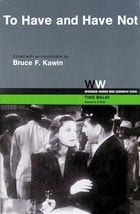
The story of the making of To Have and Have Not (1944) is an exciting and complex one, ranging from the widely reported romance between its stars, Humphrey Bogart and the unknown nineteen-year old Lauren Bacall, to one of the more subtle developments in the wartime alliance between the United States and the Batista regime in Cuba. Bruce F. Kawin's substantial and informed introduction reflects this excitement while explaining the complexities, helping all film scholars, students, and buffs to gain a fuller appreciation of one of Hollywood's most memoriable melodramas.
This is a story also of a collaboration amoung four important writers: Ernest Hemingway, Howard Hawks, Jules Furthman, and William Faulkner.
Todd Haynes
Rob White
University of Illinois Press, 2013
Todd Solondz
Julian Murphet
University of Illinois Press, 2019
Tom Stoppard in Conversation
Paul Delaney, Editor
University of Michigan Press, 1994
This collection of interviews with British playwright Tom Stoppard, author of such well-known comedies as Travesties, Jumpers, and Rosencrantz and Guildenstern Are Dead, brings together for the first time Stoppard's most significant assessments of his own work.
A wide range of discussions are featured, from extensive conversations with the editors of Theatre Quarterly and Gambit to important interviews in lesser-known periodicals. The interviews include the playwright's unguarded comments to the daily press, from those of a dazzled young Stoppard the morning after the triumphant opening of Rosencrantz and Guildenstern to those of a veteran playwright still smarting from caustic reviews 36 hours after the opening of Hapgood. The interviews cover the full range of Stoppard's work, from his adaptations for the stage to his increasing involvement in film, and this volume makes many of them available for the first time. Also appearing for the first time in print are transcripts of radio interviews and an informal lecture by Stoppard called "The Event and the Text."
Tom Stoppard's conversations about his work shed light on questions of authorial intent and the creative process. Debates over interpretations of the plays will be enhanced by this record of Stoppard's own perceptions and insights. The collection also includes the most extensive bibliography and discography ever compiled of Stoppard's print interviews, broadcast interviews, and lectures.
Witty, illuminating, and informative, Tom Stoppard in Conversation will be of interest to scholars, students, directors, actors, and fans of Stoppard's work.
Tomboys, Pretty Boys, and Outspoken Women
The Media Revolution of 1973Edward D. Miller
University of Michigan Press, 2011
“Edward Miller has written a sharply observant, often revelatory, and stimulating book that explores the 1970s with gusto, showing all the intimacy and pleasure and startling richness of observation with which a scholar may sometimes approach a period in which he lived.”
—Martin Harries, New York University
Contemporary American media is awash with reality programs, faux documentaries, and user generated content. When did this fixation on real or feigned nonfictionality begin? Tomboys, Pretty Boys, and Outspoken Women argues that its origins can be found in the early 1970s, when American media discovered the entertainment value of documentaries, news programming, and other nonfiction forms. Edward D. Miller challenges preconceptions of the ’60s and ’70s through close readings of key events and important figures in the early 1970s: John Dean’s performance in front of the Senate during the Watergate Hearings; Billie Jean King popularizing tennis by taking on Bobby Riggs in a prime-time match; David Bowie experiencing “outer space” in his tours across America; An American Family and their gay son facing the public’s consternation; and Alison Steele, a female DJ who invited listeners to fly with her at night. Miller explores the early 1970s as a turning point in American culture, with nonfiction media of the time creating new possibilities for expressions of gender and sexuality, and argues that we are living in its aftermath.
In addition to readers attracted to media studies, this book will be of great interest to those involved in LGBT studies, feminism, and queer studies as well as students of contemporary media culture. The aim of the book is to demystify current media trends by providing an analysis of the recent past. Tomboys, Pretty Boys, and Outspoken Women is written for a large audience that extends beyond academia and embraces readers who have an interest in American pop culture and, in particular, the '70s.
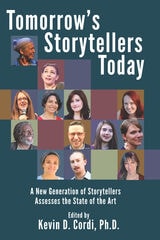
Tomorrow's Storytellers Today
A New Generation of Storytellers Assesses the State of the ArtEdited by Kevin D. Cordi, Ph.D.
Parkhurst Brothers, Inc., 2021
• Charles Parrott on truth claims in storytelling today
• Danielle Bellone on the blending of old forms and new audience concerns
• Alison Bergblom Johnson on the storyteller’s relationship to the story
• Cooper Braun on what works and what doesn’t when telling hard or “dark” stories
• Marie Lupine-Durocher and Petronella van Dijk on what wonder tales teach the next generation of storytellers
• Carolina Quiroga-Stultz on storytelling that starts conversations about frontiers and borders
• And eleven more chapters of stories and examination of the art of storytelling in the current era.
The contributors come from many different storytelling traditions as well as many modern subcultures. Their concerns will be of interest to educators, storytellers, art watchers, and cultural thinkers. There is no other book like Tomorrow’s Storytellers Today.

Tormented Minds
Christine Roberts
Intellect Books, 1995
The plays are very different in style and include the use of physical theatre, naturalistic explorations of human rights abuses, and symbolic structures, puppets and poetry. The plays are supported by an analysis of their processes and themes. All have reached production and the text is supplemented by photographs of these performances.
Torture Porn in the Wake of 9/11
Horror, Exploitation, and the Cinema of SensationAaron Michael Kerner
Rutgers University Press, 2015
Touch of Evil
Orson Welles, DirectorEdited by Terry Comito
Rutgers University Press, 1985
Comito's introduction considers the film's relation to the tradition of film noir and demonstrates how Welles's mastery of cinematic language transforms the materials of a routine thriller into a work that is at once a sardonic examination of the dark side of sexuality, an elegiac rumination on the loss of innocence, and a disquieting assault on the viewer's own moral and ascetic certainties.
Other contextual materials in the book include a biographical sketch of Welles; an important interview with Welles by Andre Bazin, Charles Bitsch, and Jean Domarchi, available here for the first time in English; an interview with Charlton Heston on the making of the film; representative reviews; critical essays by William Johnson, Jean Collett (translated especially for this book), Stephen Heath; an analysis of the relation of the complete film to Welles's recently discovered shooting script; and filmography and bibliography. The continuity script collates the two available versions of Touch of Evil and provides an invaluable, shot-by-shot guide through the visual and audio complexities of Welles's masterpiece.

Touch
Sensuous Theory And Multisensory MediaLaura U. Marks
University of Minnesota Press, 2002
Proposes a revolutionary approach to the interpretation of art, film, and the digital.
In Touch, Laura U. Marks develops a critical approach more tactile than visual, an intensely physical and sensuous engagement with works of media art that enriches our understanding and experience of these works and of art itself.
These critical, theoretical, and personal essays serve as a guide to developments in nonmainstream media art during the past ten years—sexual representation debates, documentary ethics, the shift from analog to digital media, a new social obsession with smell. Marks takes up well-known artists like experimental filmmaker Ken Jacobs and mysterious animators the Brothers Quay, and introduces groundbreaking, lesser-known film, video, and digital artists. From this emerges a materialist theory—an embodied, erotic relationship to art and to the world. Marks’s approach leads to an appreciation of the works’ mortal bodies: film’s volatile emulsion, video’s fragile magnetic base, crash-prone Net art; it also offers a productive alternative to the popular understanding of digital media as "virtual" and immaterial. Weaving a continuous fabric from philosophy, fiction, science, dreams, and intimate experience, Touch opens a new world of art media to readers.
Touched Bodies
The Performative Turn in Latin American ArtMara Polgovsky Ezcurra
Rutgers University Press, 2019
Winner of the 2019 Art Journal Prize from the College Art Association
What is the role of pleasure and pain in the politics of art? In Touched Bodies, Mara Polgovsky Ezcurra approaches this question as she examines the flourishing of live and intermedial performance in Latin America during times of authoritarianism and its significance during transitions to democracy. Based on original documents and innovative readings, her book brings politics and ethics to the discussion of artistic developments during the “long 1980s”. She describes the rise of performance art in the context of feminism, HIV-activism, and human right movements, taking a close look at the work of Diamela Eltit and Raúl Zurita from Chile, León Ferrari and Liliana Maresca from Argentina, and Marcos Kurtycz, the No Grupo art collective, and Proceso Pentágono from Mexico. The comparative study of the work of these artists attests to a performative turn in Latin American art during the 1980s that, like photography and film before, recast the artistic field as a whole, changing the ways in which we perceive art and understand its role in society.
Tough Ain't Enough
New Perspectives on the Films of Clint EastwoodFriedman, Lester D
Rutgers University Press, 2018
Tough as Nails
The Life and Films of Richard BrooksDouglass K. Daniel
University of Wisconsin Press, 2011
Tourist Distractions
Traveling and Feeling in Transnational Hallyu CinemaYoungmin Choe
Duke University Press, 2016

Toward a Feminist Theater
Selected PlaysKate Hamill and Kristin Leahey
Northwestern University Press, 2025
Bringing together seven critically acclaimed feminist adaptations of literary classics and one delightfully original new work, this collection demonstrates why Kate Hamill is one of the most electrifying and widely produced playwrights working today. Whether probing the power of toxic leaders (The Piper), revitalizing Jane Austen for the stage (Sense and Sensibility, Pride and Prejudice, Emma), “cheerfully desecrating” Arthur Conan Doyle through a post-pandemic lens (Ms. Holmes & Ms. Watson—Apt. 2B), reexamining an American classic’s gender roles (Little Women), or dramatizing the nineteenth-century classic of puritanical New England through the lens of an ostracized mother and daughter (The Scarlet Letter), Hamill’s work has transformed the theatrical landscape over the past decade.
An introduction from editor Kristin Leahey and an interview with Hamill frame this landmark anthology, with reflections on the current state of American drama, Hamill’s unique dramaturgical practice, and how the art form may move further and faster toward a feminist theater.
Toward a Theater of the Oppressed
The Dramaturgy of John ArdenJaved Malick
University of Michigan Press, 1995
Malick situates Arden's dramaturgy in the wider context of the radical alternative tradition in Western drama, drawing connections to Brecht, Piscator, the radical playwrights of the 1960s. He then explores the formal structure, ideological implications, and historical significance of Arden's work, treating his stage plays as one dramaturgically coherent opus- from the early Waters of Babylon to his and Margaretta D'Arcy's ambitious trilogy, The Island of the Mighty. Finally, he discusses the last phase of Arden and D'Arcy's political and artistic development, which led them to turn their backs on the professional theater circuit. He argues that Arden's rejection of the institutional stage was the logical outcome of his persistent search for alternative forms of political theater.
Toward a Theater of the Oppressed will be invaluable reading for those interested in modern drama, political theater, and popular performance, as well as students of contemporary British drama.
Javed Malick is Reader in English, Khalsa College, University of Delhi, India.

Traditions in World Cinema
Badley, Linda R
Rutgers University Press, 2006
Traditions in World Cinema brings together a colorful and wide ranging collection of world cinematic traditions—national, regional, and global—all of which are in need of introduction, investigation and, in some cases, critical reassessment. The movements described range from well-known traditions such as German expressionism, Italian neorealism, French, British, and Czech new wave, and new Hollywood cinema to those of emerging significance, such as Danish Dogma, postcommunist cinema, Brazilian post–Cinema Novo, new Argentine cinema, pre-independence African film traditions, Israeli persecution films, new Iranian cinema, Hindi film songs, Chinese wenyi pian melodrama, Japanese horror, and global found-footage cinema.
The essays, all written by recognized experts in the field, are jargon free and accessible to both general readers and students. In addition, each chapter is followed by a list of suggested films and readings, offering readers pathways to further viewing and study.
Bringing fresh insights to those movements that have provided significant and noteworthy alternatives to Hollywood, this book is an essential introduction to the rich diversity of world cinema.
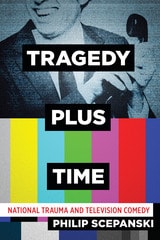
Tragedy Plus Time
National Trauma and Television ComedyBy Philip Scepanski
University of Texas Press, 2021
Following the most solemn moments in recent American history, comedians have tested the limits of how soon is “too soon” to joke about tragedy. Comics confront the horrifying events and shocking moments that capture national attention and probe the acceptable, or “sayable,” boundaries of expression that shape our cultural memory. In Tragedy Plus Time, Philip Scepanski examines the role of humor, particularly televised comedy, in constructing and policing group identity and memory in the wake of large-scale events.
Tragedy Plus Time is the first comprehensive work to investigate tragedy-driven comedy in the aftermaths of such traumas as the JFK assassination and 9/11, as well as during the administration of Donald Trump. Focusing on the mass publicization of television comedy, Scepanski considers issues of censorship and memory construction in the ways comedians negotiate emotions, politics, war, race, and Islamophobia. Amid the media frenzy and conflicting expressions of grief following a public tragedy, comedians provoke or risk controversy to grapple publicly with national traumas that all Americans are trying to understand for themselves.
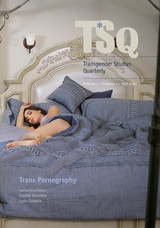
Trans Pornography
Sophie Pezzutto and Lynn Comella, special issue editors
Duke University Press, 2020
Contributors
Skylar Adams, Carolyn Bronstein, Lynn Comella, Korra Del Rio, Sly Fawkes, Aster Gilbert, RL Goldberg, Laura Horak, Valentina Mia, Geoffrey H. Nicholson, Sophie Pezzutto, Matt Richardson, Whitney Strub, Rae Threat
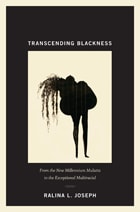
Transcending Blackness
From the New Millennium Mulatta to the Exceptional MultiracialRalina L. Joseph
Duke University Press, 2012
Analyzing emblematic representations of multiracial figures in popular culture—Jennifer Beals's character in the The L Word; the protagonist in Danny Senza's novel Caucasia; the title character in the independent film Mixing Nia; and contestants in a controversial episode of the reality show America's Next Top Model, who had to "switch ethnicities" for a photo shoot—Joseph identifies the persistence of two widespread stereotypes about mixed-race African Americans, those of "new millennium mulattas" and "exceptional multiracials." The former inscribes multiracial African Americans as tragic figures whose blackness predestines them for misfortune; the latter rewards mixed-race African Americans for successfully erasing their blackness. Addressing questions of authenticity, sexuality, and privilege, Transcending Blackness refutes the idea that race no longer matters in American society.
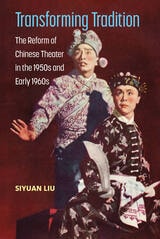
Transforming Tradition
The Reform of Chinese Theater in the 1950s and Early 1960sSiyuan Liu
University of Michigan Press, 2021
Shortly after the establishment of the People’s Republic of China in 1949, the PRC launched a reform campaign that targeted traditional song and dance theater encompassing more than a hundred genres, collectively known as xiqu. Reformers censored or revised xiqu plays and techniques; reorganized star-based private troupes; reassigned the power to create plays from star actors to the newly created functions of playwright, director, and composer; and eliminated market-oriented functionaries such as agents. While the repertoire censorship ended in the 1980s, major reform elements have remained: many traditional scripts (or parts of them) are no longer in performance; actors whose physical memory of repertoire and acting techniques had been the center of play creation, have been superseded by directors, playwrights, and composers. The net result is significantly diminished repertoires and performance techniques, and the absence of star actors capable of creating their own performance styles through new signature plays that had traditionally been one of the hallmarks of a performance school. Transforming Tradition offers a systematic study of the effects of the comprehensive reform of traditional theater conducted in the 1950s and ’60s, and is based on a decade’s worth of exhaustive research of official archival documents, wide-ranging interviews, and contemporaneous publications, most of which have never previously been referenced in scholarly research.
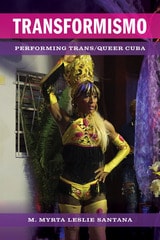
Transformismo
Performing Trans/Queer CubaM. Myrta Leslie Santana
University of Michigan Press, 2025
Transgender Cinema
Rebecca Bell-Metereau
Rutgers University Press, 2019
Transgender Cinema gives readers the big picture of how trans people have been depicted on screen. Beginning with a history of trans tropes in classic Hollywood cinema, from comic drag scenes in Chaplin’s The Masquerader to Garbo’s androgynous Queen Christina, and from psycho killer queers to The Rocky Horror Picture Show’s outrageous queen, it examines a plethora of trans portrayals that subsequently emerged from varied media outlets, including documentary films, television serials, and world cinema. Along the way, it analyzes milestones in trans representation, like The Crying Game, Boys Don’t Cry, Hedwig and the Angry Inch,and A Fantastic Woman.
As it traces the evolution of trans people onscreen, Transgender Cinema also considers the ongoing controversies sparked by these movies and series both within LGBTQ communities and beyond. Ultimately it reveals how film and television have shaped not only how the general public sees trans people, but also how trans people see themselves.
Selected Filmography:
Adventures of Priscilla, Queen of the Desert, All about My Mother, Anak, Austin Unbound, Becoming Chaz, The Blossoming of Maximo Oliveros, Boy I Am, Boy Meets Girl, Boys Don’t Cry, The Brandon Teena Story, A Busy Day, Call Me Malcolm, Carlotta, Change over Time, The Crying Game, Dallas Buyers Club, The Danish Gir, The Devil Is a Woman, Drunktown’s Finest, Facing Mirrors, A Fantastic Woman, 52 Tuesdays, Flesh, Girl Inside, A Girl like Me: The Gwen Araujo Story, Hedwig and the Angry Inch, I Was a Male War Bride,Kate Bornstein Is a Queer and Pleasant Danger, Kumu Hina, La Cage aux Folles, Ma Vie en Rose (My Life in Pink) The Masquerader, Myra Breckinridge, Orlando, Paris Is Burning, Playing with Gender, Psycho, Queen Christina, The Rocky Horror Picture Show, The Saga of Anatahan, She’s a Boy I Knew, Silence of the Lambs, Some Like It Hot, Southern Comfort, Still Black: A Portrait of Black Transmen, Stonewall, The Tenant, Three Generations. Tomboy, Tootsie, Transamerica, Transparent, Trash, Whatever Suits You, A Woman.
Transgenerational Media Industries
Adults, Children, and the Reproduction of CultureDerek Johnson
University of Michigan Press, 2019
Derek Johnson presents an innovative perspective that looks beyond the simple category of “kids’ media” to consider how entertainment industry strategies invite producers and consumers alike to cross boundaries between adulthood and childhood, professional and amateur, new media and old. Revealing the social norms, reproductive ideals, and labor hierarchies on which such transformations depend, he identifies the lines of authority and power around which legacy media institutions like television, comics, and toys imagine their futures in a digital age. Johnson proposes that it is not strategies of media production, but of media reproduction, that are most essential in this context. To understand these critical intersections, he investigates transgenerational industry practice in television co-viewing, recruitment of adult comic readers as youth outreach ambassadors, media professionals’ identification with childhood, the branded management of adult fans of LEGO, and the labor of child YouTube video creators. These dynamic relationships may appear to disrupt generational and industry boundaries alike. However, by considering who media industries empower when generating the future in these reproductive terms and who they leave out, Johnson ultimately demonstrates how their strategies reinforce existing power structures.
This book makes vital contributions to media studies in its fresh approach to the intersections of adulthood and childhood, its attention to the relationship between legacy and digital media industries, and its advancement of dialogue between media production and consumption researchers. It will interest scholars in media industry studies and across media studies more broadly, with particular appeal to those concerned about the current and future reach of media industries into our lives.
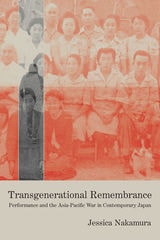
Transgenerational Remembrance
Performance and the Asia-Pacific War in Contemporary JapanJessica Nakamura
Northwestern University Press, 2020
In Transgenerational Remembrance, Jessica Nakamura investigates the role of artistic production in the commemoration and memorialization of the Asia-Pacific War (1931–1945) in Japan since 1989. During this time, survivors of Japanese aggression and imperialism, previously silent about their experiences, have sparked contentious public debates about the form and content of war memories.
The book opens with an analysis of the performance of space at Yasukuni Shinto Shrine, which continues to promote an anachronistic veneration of the war. After identifying the centrality of performance in long-standing dominant narratives, Transgenerational Remembrance offers close readings of artistic performances that tackle subject matter largely obscured before 1989: the kamikaze pilot, Japanese imperialism, comfort women, the Battle of Okinawa, and Japanese American internment. These case studies range from Hirata Oriza’s play series about Japanese colonial settlers in Korea and Shimada Yoshiko’s durational performance about comfort women to Kondo Aisuke’s videos and gallery installations about Japanese American internment.
Working from theoretical frameworks of haunting and ethics, Nakamura develops an analytical lens based on the Noh theater ghost. Noh emphasizes the agency of the ghost and the dialogue between the dead and the living. Integrating her Noh-inflected analysis into ethical and transnational feminist queries, Nakamura shows that performances move remembrance beyond current evidentiary and historiographical debates.
Transglobal Fashion Narratives
Clothing Communication, Style Statements and Brand StorytellingEdited by Anne Peirson-Smith and Joeseph H. Hancock II
Intellect Books, 2018
Translating Time
Cinema, the Fantastic, and Temporal CritiqueBliss Cua Lim
Duke University Press, 2009
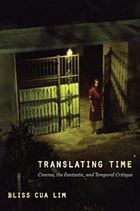
In Translating Time, Bliss Cua Lim argues that fantastic cinema depicts the coexistence of other modes of being alongside and within the modern present, disclosing multiple “immiscible temporalities” that strain against the modern concept of homogeneous time. In this wide-ranging study—encompassing Asian American video (On Cannibalism), ghost films from the New Cinema movements of Hong Kong and the Philippines (Rouge, Itim, Haplos), Hollywood remakes of Asian horror films (Ju-on, The Grudge, A Tale of Two Sisters) and a Filipino horror film cycle on monstrous viscera suckers (Aswang)—Lim conceptualizes the fantastic as a form of temporal translation. The fantastic translates supernatural agency in secular terms while also exposing an untranslatable remainder, thereby undermining the fantasy of a singular national time and emphasizing shifting temporalities of transnational reception.
Lim interweaves scholarship on visuality with postcolonial historiography. She draws on Henri Bergson’s understanding of cinema as both implicated in homogeneous time and central to its critique, as well as on postcolonial thought linking the ideology of progress to imperialist expansion. At stake in this project are more ethical forms of understanding time that refuse to domesticate difference as anachronism. While supernaturalism is often disparaged as a vestige of primitive or superstitious thought, Lim suggests an alternative interpretation of the fantastic as a mode of resistance to the ascendancy of homogeneous time and a starting-point for more ethical temporal imaginings.
Translocas
The Politics of Puerto Rican Drag and Trans PerformanceLawrence La Fountain-Stokes
University of Michigan Press, 2021
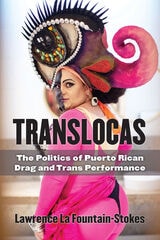
Translocas focuses on drag and transgender performance and activism in Puerto Rico and its diaspora. Arguing for its political potential, Lawrence La Fountain-Stokes explores the social and cultural disruptions caused by Latin American and Latinx “locas” (effeminate men, drag queens, transgender performers, and unruly women) and the various forms of violence to which queer individuals in Puerto Rico and the U.S. are subjected. This interdisciplinary, auto-ethnographic, queer-of-color performance studies book explores the lives and work of contemporary performers and activists including Sylvia Rivera, Nina Flowers, Freddie Mercado, Javier Cardona, Jorge Merced, Erika Lopez, Holly Woodlawn, Monica Beverly Hillz, Lady Catiria, and Barbra Herr; television programs such as RuPaul’s Drag Race; films such as Paris Is Burning, The Salt Mines, and Mala Mala; and literary works by authors such as Mayra Santos-Febres and Manuel Ramos Otero. Lawrence La Fountain-Stokes, a drag performer himself, demonstrates how each destabilizes (and sometimes reifies) dominant notions of gender and sexuality through drag and their embodied transgender expression. These performances provide a means to explore and critique issues of race, class, poverty, national identity, and migratory displacement while they posit a relationship between audiences and performers that has a ritual-like, communal dimension. The book also analyzes the murders of Jorge Steven López Mercado and Kevin Fret in Puerto Rico, and invites readers to challenge, question, and expand their knowledge about queer life, drag, trans performance, and Puerto Rican identity in the Caribbean and the diaspora. The author also pays careful attention to transgender experience, highlighting how trans activists and performers mold their bodies, promote social change, and create community in a context that oscillates between glamour and abjection.
Transmedia Creatures
Frankenstein’s AfterlivesSaggini, Francesca
Bucknell University Press, 2018
Published by Bucknell University Press. Distributed worldwide by Rutgers University Press.
Transmedium
Conceptualism 2.0 and the New Object ArtGarrett Stewart
University of Chicago Press, 2018
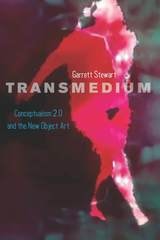
Garrett Stewart in Transmedium dubs this new approach Conceptualism 2.0, an allusion in part to the computer images that are so often addressed by these works. A successor to 1960s Conceptualism, which posited that a material medium was unnecessary to the making of art, Conceptualism 2.0 features artworks that are transmedial, that place the aesthetic experience itself deliberately at the boundary between often incommensurable media. The result, Stewart shows, is art whose forced convergences break open new possibilities that are wholly surprising, intellectually enlightening, and often uncanny.
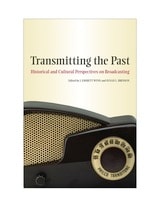
Transmitting the Past
Historical and Cultural Perspectives on BroadcastingEdited by J. Emmett Winn and Susan L. Brinson
University of Alabama Press, 2005
Original essays exploring important developments in radio and television broadcasting
The essays included in this collection represent some of the best cultural and historical research on broadcasting in the U. S. today. Each one concentrates on a particular event in broadcast history—beginning with Marconi’s introduction of wireless technology in 1899.
Michael Brown examines newspaper reporting in America of Marconi's belief in Martians, stories that effectively rendered Marconi inconsequential to the further development of radio. The widespread installation of radios in automobiles in the 1950s, Matthew Killmeier argues, paralleled the development of television and ubiquitous middle-class suburbia in America. Heather Hundley analyzes depictions of male and female promiscuity as presented in the sitcom Cheers at a time concurrent with media coverage of the AIDS crisis. Fritz Messere examines the Federal Radio Act of 1927 and the clash of competing ideas about what role radio should play in American life. Chad Dell recounts the high-brow programming strategy NBC adopted in 1945 to distinguish itself from other networks. And George Plasketes studies the critical reactions to Cop Rock, an ill-fated combination of police drama and musical, as an example of society's resistance to genre-mixing or departures from formulaic programming.
The result is a collection that represents some of the most recent and innovative scholarship, cultural and historical, on the intersections of broadcasting and American cultural, political, and economic life.
Transnational Ecocinema
Film Culture in an Era of Ecological TransformationEdited by Tommy Gustafsson and Pietari Kääpä
Intellect Books, 2013
Transnational Film Culture in New Zealand
Simon Sigley
Intellect Books, 2013
In this innovative work of cultural history, Simon Sigley tells the story of film culture in New Zealand from the establishment of the Auckland Film Society in the 1920s to the present day.
Rather than focusing on the work of individual filmmakers, Sigley approaches cinema as a form of social practice. He examines the reception of international film theories and discourses and shows how these ideas helped to shape distinct cultural practices, including new forms of reviewing; new methods of teaching; and new institutions such as film societies, art house cinemas, and film festivals. He goes on to trace the emergence in New Zealand of the full range of activities and institutions associated with a sophisticated film culture—including independent distribution and exhibition networks, film archives, university courses, a local feature film industry, and liberalized film censorship. In doing so, Sigley makes a significant contribution to our understanding of the myriad ways film can shape our thinking, our icons, our institutions, and our conversations. A fascinating case history of how a culture can develop, Transnational Film Culture in New Zealand will be a welcome addition to the bookshelves of anyone interested in film culture and cultural history.
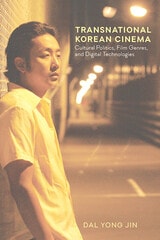
Transnational Korean Cinema
Cultural Politics, Film Genres, and Digital TechnologiesDal Yong Jin
Rutgers University Press, 2020
The book emphasizes the economic and industrial aspects of the story, looking at questions on the interaction of politics and economics, including censorship and public funding, and provides a better view of the big picture by laying bare the relationship between film industries, the global market, and government. Jin also sheds light on the operations and globalization strategies of Korean film industries alongside changing cultural policies in tandem with Hollywood’s continuing influences in order to comprehend the power relations within cultural politics, nationally and globally. This is the first book to offer a full overview of the nascent development of Korean cinema.
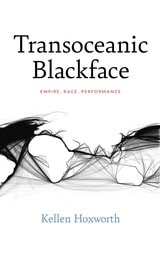
Transoceanic Blackface
Empire, Race, PerformanceKellen Hoxworth
Northwestern University Press, 2024
A material history of racialized performance throughout the Anglophone imperial world, Transoceanic Blackface: Empire, Race, Performance revises prevailing understandings of blackface and minstrelsy as distinctively US American cultural practices. Tracing intertwined histories of racialized performance from the mid-eighteenth through the early twentieth century across the United States and the British Empire, this study maps the circulations of blackface repertoires in theatrical spectacles, popular songs, visual materials, comic operas, closet dramas, dance forms, and Shakespearean burlesques.
Kellen Hoxworth focuses on overlooked performance histories, such as the early blackface minstrelsy of T. D. Rice’s “Jump Jim Crow” and the widely staged blackface burlesque versions of Othello, as traces of the racial and sexual anxieties of empire. From the nascent theatrical cultures of Australia, Britain, Canada, India, Jamaica, South Africa, and the United States, Transoceanic Blackface offers critical insight into the ways racialized performance animated the imperial “common sense” of white supremacy on a global scale.
Traumatic Encounters in Italian Film
Locating the Cinematic UnconsciousFabio Vighi
Intellect Books, 2006
Always stylistically innovative, thematically defiant and driven by a strong political agenda, Italian cinema lends itself particularly well to a critical investigation aimed at radicalising the impact of psychoanalysis on film. In doing exactly that, the book deliberately avoids the standard cultural and historical approaches to film. Instead, it moves freely amongst some of the most widely celebrated – as well as lesser-known – Italian films of the post-war period, discussing the ways in which they tackle such themes as desire, fantasy, sexuality, violence and the law, to mention but a few. The main focus is on the work of those directors who most effectively engage with the divisive nature of the moving image: Antonioni, Pasolini and Rossellini. In addition, the book provides ample and insightful references to films by Visconti, Bertolucci, Bellocchio, Moretti, Petri, Fellini, Ferreri, and many more.
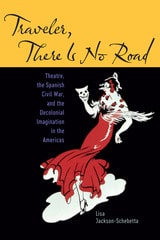
Traveler, There Is No Road
Theatre, the Spanish Civil War, and the Decolonial Imagination in the AmericasLisa Jackson-Schebetta
University of Iowa Press, 2017
This book offers a unique perspective on 1930s theatre and performance, encompassing the theatrical work of the Cuban, Puerto Rican, and Spanish diasporas in the United States, as well as the better-known Anglophone communities. Jackson-Schebetta situates well-known figures, such as Langston Hughes and Clifford Odets, alongside lesser-known ones, such as Erasmo Vando, Franca de Armiño, and Manuel Aparicio. The milicianas, female soldiers of the Spanish Republic, stride on stage alongside the male fighters of the Lincoln Brigade. They and many others used the multiple visions of Spain forged during the civil war to foment decolonial practices across the pasts, presents, and futures of the Americas. Traveler conclusively demonstrates that theatre and performance scholars must position US performances within the Americas writ broadly, and in doing so they must recognize the centrality of the hemisphere’s longest-lived colonial power, Spain.
Travels in Intermediality
ReBlurring the BoundariesEdited by Bernd Herzogenrath
Dartmouth College Press, 2012
Travesty Actors
Self and Theater in Stalinist CultureBoris Wolfson, edited by Simon Morrison
Northwestern University Press, 2026
Talk of Joseph Stalin’s “show trials,” the public prosecutions in Moscow’s Hall of Columns in the late 1930s, is so familiar as to obscure the relationship between actual shows—in the Soviet Union’s major theaters—and politics. Travesty Actors: Self and Theater in Stalinist Culture examines theatrical performance within the context of the Soviet cultural establishment’s fashioning of a “genuine Soviet person.” Boris Wolfson focuses on prominent and controversial plays by artists including Aleksandr Afinogenov, Mikhail Bulgakov, Yuri Olesha, and Natalia Sats and the efforts of theater companies, like the Moscow Arts Theater, the Meyerhold Theater, and the Central Children’s Theater, to adhere to this cultural mandate while grappling with repression, censorship, and conflicting interpretations of its aims. Drawing on archival materials, diaries and memoirs and eyewitness accounts, Wolfson greatly illuminates the achievements of Soviet theater during this harsh period and the cultural significance of artistic theories and practices for articulating and enacting ideological programs.
Trial Films on Trial
Law, Justice, and Popular CultureEdited by Austin Sarat, Jessica Silbey, and Martha Merrill Umphrey
University of Alabama Press, 2019
Historically, the emergence of the trial film genre coincided with the development of motion pictures. In fact, one of the very first feature-length films, Falsely Accused!, released in 1908, was a courtroom drama. Since then, this niche genre has produced such critically acclaimed films as Twelve Angry Men, To Kill a Mockingbird, and Anatomy of a Murder. The popularity and success of these films can be attributed to the fundamental similarities of filmic narratives and trial proceedings. Both seek to construct a “reality” through storytelling and representation and in so doing persuade the audience or jury to believe what they see.
Trial Films on Trial: Law, Justice, and Popular Culture is the first book to focus exclusively on the special significance of trial films for both film and legal studies. The contributors to this volume offer a contemporary approach to the trial film genre. Despite the fact that the medium of film is one of the most pervasive means by which many citizens receive come to know the justice system, these trial films are rarely analyzed and critiqued. The chapters cover a variety of topics, such as how and why film audiences adopt the role of the jury, the narrative and visual conventions employed by directors, and the ways mid-to-late-twentieth-century trial films offered insights into the events of that period.
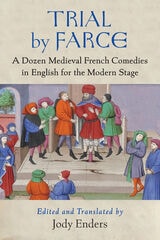
Trial by Farce
A Dozen Medieval French Comedies in English for the Modern StageEdited and Translated by Jody Enders
University of Michigan Press, 2023
Was there more to comedy than Chaucer, the Second Shepherds’ Play, or Shakespeare? Of course! But, for a real taste of medieval and Renaissance humor and in-your-face slapstick, one must cross the Channel to France, where over two hundred extant farces regularly dazzled crowds with blistering satires. Dwarfing all other contemporaneous theatrical repertoires, the boisterous French corpus is populated by lawyers, lawyers everywhere. No surprise there. The lion’s share of mostly anonymous farces was written by barristers, law students, and legal apprentices. Famous for skewering unjust judges and irreligious ecclesiastics, they belonged to a 10,000-member legal society known as the Basoche, which flourished between 1450 and 1550. What is more, their dramatic send-ups of real and fictional court cases were still going strong on the eve of Molière, resilient against those who sought to censor and repress them. The suspenseful wait to see justice done has always made for high drama or, in this case, low drama. But, for centuries, the scripts for these outrageous shows were available only in French editions gathered from scattered print and manuscript sources.
In Trial by Farce, prize-winning theater historian Jody Enders brings twelve of the funniest legal farces to English-speaking audiences in a refreshingly uncensored but philologically faithful vernacular. Newly conceived as much for scholars as for students and theater practitioners, this repertoire and its familiar stock characters come vividly to life as they struggle to negotiate the limits of power, politics, class, gender, and, above all, justice. Through the distinctive blend of wit, social critique, and breathless boisterousness that is farce, we gain a new understanding of comedy itself as form of political correction. In ways presciently modern and even postmodern, farce paints a different cultural picture of the notoriously authoritarian Middle Ages with its own vision of liberty and justice for all. Theater eternally offers ways for new generations to raise their voices and act.
Triumph over Containment
American Film in the 1950sRobert P. Kolker
Rutgers University Press, 2022
Triumph Over Containment offers an uncompromising look at some of the era’s greatest films and directors, from household names like Alfred Hitchcock and Stanley Kubrick to lesser-known iconoclasts like Samuel Fuller and Ida Lupino. Taking in everything from The Thing from Another World (1951) to Dr. Strangelove or: How I Learned to Stop Worrying and Love the Bomb (1964), acclaimed film scholar Robert P. Kolker scours a variety of different genres to find pockets of resistance to the repressive and oppressive norms of Cold War culture. He devotes special attention to two quintessential 1950s genres—the melodrama and the science fiction film—that might seem like polar opposites, but each offered pointed responses to containment culture.
This book takes a fresh look at such directors as Nicholas Ray, John Ford, and Orson Welles, while giving readers a new appreciation for the depth and artistry of 1950s Hollywood films.

Tropical Multiculturalism
A Comparative History of Race in Brazilian Cinema and CultureRobert Stam
Duke University Press, 1997
Stam examines the broad historical and cultural links that connect Brazil and the United States before considering multicultural imagery in Brazilian film as it has changed from the silent era to the present. His analysis moves through the comic chanchadas of the 1930s and 1940s, to the Hollywood-style films from Sao Paulo in the 1950s, and the diverse phases of Cinema Novo beginning in the 1960s. He explores a wealth of subjects, including the submerged "blackness" of Carmen Miranda, the anti-racist agenda of Orson Welles’s never-released Brazilian film It’s All True, the international background behind Black Orpheus, the career of Grande Otelo (Brazil’s greatest black film star), the allegorical "cannibalistic" films like How Tasty Was My Frenchman, and "indigenous media"—the attempt by Brazilian "indians" to use camcorders and VCRs for their own cultural and political purposes. Tropical Multiculturalism is simultaneously a history of Brazilian cinema from the standpoint of race, a history of Brazil itself through its cinematic representations, a comparative study of racial formations in Brazil and the United States, and a theorized analysis of racialized representations.
Tropical Travels
Brazilian Popular Performance, Transnational Encounters, and the Construction of RaceBy Lisa Shaw
University of Texas Press, 2018
Brazilian popular culture, including music, dance, theater, and film, played a key role in transnational performance circuits—inter-American and transatlantic—from the latter nineteenth century to the middle of the twentieth century. Brazilian performers both drew inspiration from and provided models for cultural production in France, Portugal, Argentina, the United States, and elsewhere. These transnational exchanges also helped construct new ideas about, and representations of, “racial” identity in Brazil. Tropical Travels fruitfully examines how perceptions of “race” were negotiated within popular performance in Rio de Janeiro and how these issues engaged with wider transnational trends during the period.
Lisa Shaw analyzes how local cultural forms were shaped by contact with imported performance traditions and transnational vogues in Brazil, as well as by the movement of Brazilian performers overseas. She focuses specifically on samba and the maxixe in Paris between 1910 and 1922, teatro de revista (the Brazilian equivalent of vaudeville) in Rio in the long 1920s, and a popular Brazilian female archetype, the baiana, who moved to and fro across national borders and oceans. Shaw demonstrates that these transnational encounters generated redefinitions of Brazilian identity through the performance of “race” and ethnicity in popular culture. Shifting the traditional focus of Atlantic studies from the northern to the southern hemisphere, Tropical Travels also contributes to a fuller understanding of inter-hemispheric cultural influences within the Americas.
True Faith, True Light
The Devotional Art of Ed StilleyKelly Mulhollan
University of Arkansas Press, 2015
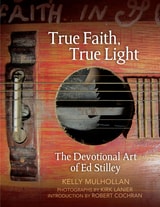
But one day Ed’s life was permanently altered. While plowing his field, he became convinced he was having a heart attack. Ed stopped his work and lay down on the ground. Staring at the sky, he saw himself as a large tortoise struggling to swim across a river. On his back were five small tortoises—his children—clinging to him for survival. And then, as he lay there in the freshly plowed dirt, Ed received a vision from God, telling him that he would be restored to health if he would agree to do one thing: make musical instruments and give them to children.
And so he did. Beginning with a few simple hand tools, Ed worked tirelessly for twenty-five years to create over two hundred instruments, each a crazy quilt of heavy, rough-sawn wood scraps joined with found objects. A rusty door hinge, a steak bone, a stack of dimes, springs, saw blades, pot lids, metal pipes, glass bottles, aerosol cans—Ed used anything he could to build a working guitar, fiddle, or dulcimer. On each instrument Ed inscribed “True Faith, True Light, Have Faith in God.”
True Faith, True Light: The Devotional Art of Ed Stilley documents Ed Stilley’s life and work, giving us a glimpse into a singular life of austere devotion.
Trumpets in the Mountains
Theater and the Politics of National Culture in CubaLaurie A. Frederik
Duke University Press, 2012
Campesinos inhabit some of the island's most isolated areas, including the mountainous regions in central and eastern Cuba where Laurie A. Frederik conducted research among rural communities and professional theater groups. Analyzing the ongoing dialogue of cultural officials, urban and rural artists, and campesinos, Frederik provides an on-the-ground account of how visions of the nation are developed, manipulated, dramatized, and maintained in public consciousness. She shows that cubanía is defined, and redefined, in the interactive movement between intellectual, political, and everyday worlds.
Truth or Dare
Art and DocumentaryEdited by Gail Pearce and Cahal McLaughlin
Intellect Books, 2007