Results by title
3785 books match the query 'Poetry' and 833 start with t
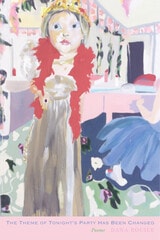
The Theme of Tonight's Party Has Been Changed
PoemsDana Roeser
University of Massachusetts Press, 2014
Sui generis, Dana Roeser's poems are spoken by a stand-up comic having a bad night at the local club. The long extended syntax, spread over her quirky, syncopated short lines, contains (barely) the speaker's anxieties over an aging father with Parkinson's, the maturation of two daughters, friends at twelve-step meetings and their sometimes suicidal urges—acted on or resisted—and her own place in a world that seems about to spin out of control. Bad weather and tiny economy cars speeding down the interstate next to Jurassic semis become the metaphor, or figurative vehicle, for this poet's sense of her own precariousness.
Roeser brings a host of characters into her poems—a Catholic priest raging against the commercialism of Mother's Day, the injured tennis player James Blake, a man struck by lightning, drunk partygoers, an ex-marine, Sylvia Plath's son Nicholas Hughes, a neighbor, travelers encountered in airport terminals, various talk therapists—and lets them speak. She records with high fidelity the nuances of our ordinary exigencies so that the poems become extraordinary arias sung by a husky-voiced diva with coloratura phrasing to die for, “the dark notes” that Lorca famously called the duende. The book is infused with the energy of misfortune, accident, coincidence, luck, grace, panic, hilarity. The characters and narrator, in extremis, speak their truths urgently.
The Three Rimbauds
Dominique Noguez
Seagull Books, 2021
The myth of Arthur Rimbaud (1854–1891) focuses on his early years: how the great enfant terrible tore through the nineteenth-century literary scene with reckless abandon, leaving behind him a trail of enemies, the failed marriage of an ex-lover who shot him, and a body of revolutionary poetry that changed French literature forever. He stopped writing poetry at the age of twenty-one when he left Europe to travel the world. He returned only shortly before his death at the age of thirty-seven.
But what if 1891 marked not the year of his death, but the start of a great new beginning: the poet’s secret return to Paris, which launched the mature phase of his literary career? This slim, experimental volume by Dominique Noguez shows that the imaginary “mature” Rimbaud—the one who returned from Harar in 1891, married Paul Claudel’s sister in 1907, converted to Catholicism in 1925, and went on to produce some of the greatest works in twentieth-century French prose—was already present in the almost forgotten works of his childhood, in style and themes alike. Only by reacquainting ourselves with the three Rimbauds—child, young adult, and imaginary older adult—can we truly gauge the range of the complete writer.
The Throats of Narcissus
Bruce Bond
University of Arkansas Press, 2001
The Tilt Torn Away from the Seasons
PoemsElizabeth Lindsey Rogers
Acre Books, 2020
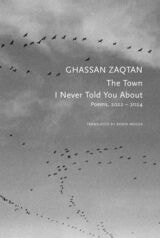
The Town I Never Told You About
Poems, 2022–2024Ghassan Zaqtan
Seagull Books, 2026
The Town I Never Told You About gathers poems written by celebrated Palestinian poet Ghassan Zaqtan between 2022 and 2024, at a time of intensifying conflict ravaging his homeland. Emerging from both memory and imagination, these poems trace the contours of hillscapes and villages, mapping a Palestine that is both historical and mythic, personal and collective. In Zaqtan’s hands, language threads its way through time—winding across landscapes marked by war, displacement, and enduring beauty. Each poem feels like part of a longer thread: a moment lifted from an ongoing inner epic, stitched into being with dreamlike clarity and haunting precision.
Long meditative pieces drift through shadow and sunlight, while other poems strike with the sharpness of remembered incident. This is poetry as pilgrimage—quiet, persistent, and full of echoes. A book that doesn’t so much end as continue resonating long after the last page is turned.
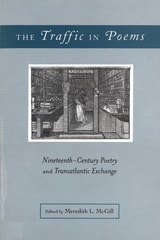
The Traffic In Poems
Nineteenth-Century Poetry and Transatlantic ExchangeMcGill, Meredith L
Rutgers University Press, 2008
Drawing on examples such as Felicia Hemans's elaboration of the foundational American myth of Plymouth Rock, Emma Lazarus's ambivalent welcome of Europe's cast-off populations, black abolitionist Mary Webb's European performances of Hiawatha, and American reprints of Robert Browning and George Meredith, the eleven essays in this book focus on poetic depictions of exile, slavery, immigration, and citizenship and explore the often asymmetrical traffic between British and American poetic cultures.
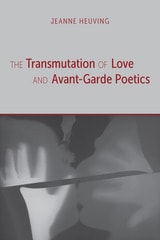
The Transmutation of Love and Avant-Garde Poetics
Jeanne Heuving
University of Alabama Press, 2016
Reimagining love as a force of poetic innovation in modern and avant-garde literature.
The Transmutation of Love and Avant-Garde Poetics is a probing examination of how the writing of sexual love undergoes a radical revision by avant-garde poets in the twentieth and twenty-first centuries. Today, the exploration of love by poets—long a fixture of Western poetic tradition—is thought to be in decline, with love itself understood to be a mere ideological overlay for the more “real” entities of physical sex and desire.
In The Transmutation of Love and Avant-Garde Poetics, Jeanne Heuving claims that a key achievement of poetry by Ezra Pound, H.D., Robert Duncan, Kathleen Fraser, Nathaniel Mackey, and others lies significantly in their engagement with the synergistic relations between being in love and writing love. These poets, she argues, have traded the clichéd lover of yore for impersonal or posthuman poetic speakers that sustain the gloire and mystery of love poetry of prior centuries. As Robert Duncan writes, “There is a love in which we are outcast and vagabond from what we are that we call ‘falling in love.’”
Heuving claims that this writing of love is defining for avant-garde poetics, identifying how such important discoveries as Pound’s and H.D.’s Imagism, Pound’s Cantos, and Duncan’s “open field poetics” are derived through their changed writing of love. She draws attention to how the prevailing concept of language as material is inadequate to the ways these poets also engage language as a medium—as a conduit—enabling them to address love afresh in a time defined through preoccupations with sexuality. They engage love as immanent and change it through a writing that acts on itself.
The Transmutation of Love and Avant-Garde Poetics ascribes the waning of love poetry to its problematic form: a genre in which empowered poetic speakers constitute their speech through the objectification of comparatively disempowered subjects, or beloveds. Refusing this pervasive practice, the poets she highlights reject the delimiting, one-sided tradition of masculine lovers and passive feminine beloveds; instead, they create a more nuanced, dynamic poetics of ecstatic exploration, what Heuving calls “projective love” and “libidinized field poetics,” a formally innovative poetry, in which one perception leads directly to the next and all aspects of a poem are generative of meaning.

The Traps
Louise Mathias
Four Way Books, 2013
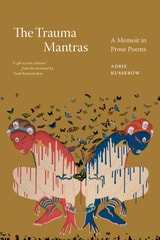
The Trauma Mantras
A Memoir in Prose PoemsAdrie Kusserow
Duke University Press, 2024
The Tribe of John
Ashbery and Contemporary PoetrySusan M. Schultz
University of Alabama Press, 1995
This concentration on Ashbery's influence on contemporary American poetry provides new methods for interpreting and understanding his poetic achievement.

The Trouble with Light
Jeremy Michael Clark
University of Arkansas Press, 2024
The Truth about Small Towns
PoemsDavid Baker
University of Arkansas Press, 1998
Winner of the 1998 Ohioana Poetry Award
Skilled at both extended narratives and intense, intimate lyrics, David Baker combines his talents in his fifth collection of poems. Working in syllabics, sonnets, couplets, and free verse, Baker can write unflinchingly about love, illness, madness, and perseverance.
His small towns are the burgs of the Midwest, where there is a constant tension between a future that’s coming and a past that may never vanish. The grocer on the corner now carries mango chutney, and the city council must decide—Wendy’s or wetlands.
From these rural towns, Baker evokes lovers, mothers and fathers, highway workmen, hospital patients, and the long dead. He spots the inner struggles of everyday living, as in these lines from “The Women”: “there comes a rubbing of hands, and not as in cleaning. / As when something’s put away, but it won’t stay down.”
Regional in the best sense, Baker’s poems capture the universal human commerce of love and conflict enduring under the water towers and storefronts of America’s heartland.
The Two Standards
Heather Winterer
University Press of Colorado, 2012
The Unauthorized Audubon
Anita Skeen and Laura B. DeLind
Michigan State University Press, 2014
The Unbeliever
THE POETRY OF ELIZABETH BISHOPRobert Dale Parker
University of Illinois Press, 1988
literary history and theory to give the poems of Elizabeth Bishop (1911-79)
the serious critical attention they deserve. The Unbeliever shows that
Bishop's poems, already famous for their clear and quiet tone, also struggle
with confusion and wonder about things she can never make quiet or clear.
The Uncommon Tongue
The Poetry and Criticism of Geoffrey HillVincent Sherry
University of Michigan Press, 1987
The Underground Poetry Metro Transportation System for Souls
Essays on the Cultural Life of PoetryTony Hoagland
University of Michigan Press, 2019
The Unfollowing
Lyn Hejinian
Omnidawn, 2016
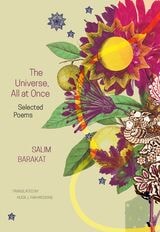
The Universe, All at Once
Selected PoemsSalim Barakat
Seagull Books, 2024
Salim Barakat, the captivating Kurdish-Syrian poet and novelist known for his mastery of Arabic style, is hailed as an enigmatic and intricate figure in contemporary Arabic literature. In The Universe, All at Once, he curates, in collaboration with translator Huda J. Fakhreddine, a selection from his later works, considering them the pinnacle of his poetic career. Drawn from pieces composed between 2021 and 2023, the poems in this collection vary from excerpts of an expansive book-length poem to concise, intense fragments. Fakhreddine expertly renders his writing in English, a courageous and praiseworthy attempt to challenge the barriers of the untranslatable.
This volume not only showcases the prolific author’s poetic evolution but also features a comprehensive interview with Barakat. Conducted by Fakhreddine, the interview delves into Barakat’s early influences, hobbies, talents, reader expectations, and reflections on displacement, childhood, and interpersonal connections. Together, The Universe, All at Once presents the best of Barakat’s latest poetry to his readers and allows invaluable insight into the writing processes and motivations of a visionary modern poet.
The University of Hip-Hop
PoemsMayda Del Valle, foreword by Chris Abani
Northwestern University Press, 2017

The Unknown Rilke
Selected PoemsRainer Maria Rilke
Oberlin College Press, 1990

The Unreal City
Mike Lala
Tupelo Press, 2023
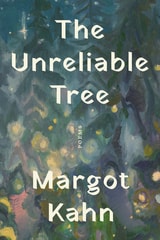
The Unreliable Tree
PoemsMargot Kahn
Northwestern University Press, 2025
Born from a state of fragmented time, the poems in The Unreliable Tree call out the intimate feelings mothers so often fear to share. With a precise and tender eye, Margot Kahn tracks her early years of parenthood alongside the seasons of her family’s orchard. As she chronicles the changes in her marriage, her friendships, and her own shifting identity, Kahn questions the risks we take for devotion and the labors we devote to love. These poems shine a light on the patience and perseverance required to care—for homes, for people, for heritage—and ultimately question the choices we make: to hold on to others around us, and to hold on to ourselves. Compassionate, unflinching, lyric, and raw, The Unreliable Tree portrays the world of early motherhood with humility and complicated beauty.
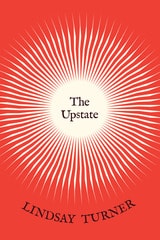
The Upstate
Lindsay Turner
University of Chicago Press, 2023
Set in a landscape of red sunsets and wildfire smoke, Queen Anne’s lace on the roadsides, and toxic chemicals in the watershed, Lindsay Turner’s The Upstate is a book about southern Appalachia in a contemporary moment of change and development. Layering a personal lyric voice with a broader awareness of labor issues and political and ecological crises, The Upstate redefines a regional poetics as one attuned to national and global systems. These poems observe and emote, mourning acts of devastation and raging in their own quiet way against their continuation.
The poems in The Upstate arise from moments of darkness and desperation, mobilizing a critical intelligence against the status quo of place and history, all while fiercely upholding belief in the role of poetry to affect these conditions. Turner’s poems weave spells around beloved places and people, yearning to shield them from destruction and to profess faith in the delicate beauties of the world at hand.
The VITAL SYSTEM
PoemsCM Burroughs
Tupelo Press, 2012
The Verging Cities
Natalie Scenters-Zapico
University Press of Colorado, 2015
The border in Scenters-Zapico’s The Verging Cities exists in a visceral place where the real is (sur)real. In these poems mouths speak suspended from ceilings, numbered metal poles mark the border and lovers’ spines, and cities scream to each other at night through fences that “ooze only silt.” This bold new vision of border life between what has been named the safest city in the United States and the murder capital of the world is in deep conversation with other border poets—Benjamin Alire Saenz, Gloria Anzaldúa, Alberto Ríos, and Luis Alberto Urrea—while establishing itself as a new and haunting interpretation of the border as a verge, the beginning of one thing and the end of another in constant cycle.
The Voice in the Headphones
David Grubbs
Duke University Press, 2020
The Voice in the Headphones is an experiment in music writing in the form of a long poem centered on the culture of the recording studio. It describes in intricate, prismatic detail one marathon day in a recording studio during which an unnamed musician struggles to complete a film soundtrack. The book extends the form of Grubbs's previous volume Now that the audience is assembled, sharing its goal of musicalizing the language of writing about music. Mulling the insight that “studio is the absence of pushback”—now that no audience is assembled—The Voice in the Headphones details one musician's strategies for applying the requisite pressure to the proceedings, for making it count. The Voice in the Headphones is both a literary work and a meditation on sound recording, delivered at a moment in which the commercial recording studio shades into oblivion. It draws upon Grubbs's own history of several decades as a recording artist, and its location could be described as every studio in which he has set foot.
The Voice of That Singing
Juliet Rodeman
Tupelo Press, 2017

The Voice of the Night
Complete Poetry and Prose of Chairil AnwarChairil Anwar
Ohio University Press, 1993
Chairil Anway (1922–1949) was the primary architect of the Indonesian literary revolution in both poetry and prose. In a few intense years he forged almost ingle-handedly a vital, mature literary language in Bahasa Indonesia, a language which formally came to exist in 1928. Anway led the way for the many Indonesian writers who have emerged during the past fifty years.
This volume contains all that has survived of Anwar’s writing. It not longer need the sort of introduction it did soem thirty years ago when Burton Raffel first published English translations of Anwar’s work. Raffel now presents the complete poems and the small amount of surviving prose in new translations with new interpretations.
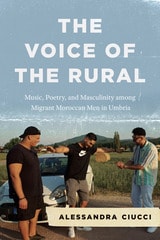
The Voice of the Rural
Music, Poetry, and Masculinity among Migrant Moroccan Men in UmbriaAlessandra Ciucci
University of Chicago Press, 2022
Umbria is known to most Americans for its picturesque rolling hills and medieval villages, but to the many migrant Moroccan men who travel there, Umbria is better known for the tobacco fields, construction sites, small industries, and the outdoor weekly markets where they work. Marginalized and far from their homes, these men turn to Moroccan traditions of music and poetry that evoke the countryside they have left— l-‘arubiya, or the rural. In this book, Alessandra Ciucci takes us inside the lives of Moroccan workers, unpacking the way they share a particular musical style of the rural to create a sense of home and belonging in a foreign and inhospitable nation. Along the way, she uncovers how this culture of belonging is not just the product of the struggles of migration, but also tied to the reclamation of a noble and virtuous masculine identity that is inaccessible to Moroccan migrants in Italy.
The Voice of the Rural allows us to understand the contemporary experiences of migrant Moroccan men by examining their imagined relationship to the rural through sound, shedding new light on the urgent issues of migration and belonging.
The Voices of Hope
Poems, Stories, and Drawings by the Children of La Esperanza, GuatemalaEdited and Translated by Carolyn Alessio. Foreword by Luis Alberto Urrea
Southern Illinois University Press, 2003
Collected and translated by Carolyn Alessio, this bilingual anthology of poems, stories, memories, and philosophies was written and illustrated by the children of La Esperanza, Guatemala. Drawing upon the fortitude of their mothers, who began hand-sewing crafts to sell in the United States in order to survive the hardships of this war-torn impoverished country, Alessio’s students, aged four to sixteen, reveal amazing survival skills, fertile imaginations, and dreams of attaining better lives. The resulting work is a collection of poems and drawings that are terse, funny, sometimes sad, but always humanly, gloriously alive.
As Alessio explains, “At first, I thought I might be imagining the echoes of magical realism, but as I continued to read the students’ writing and study their drawings, I found similar themes. Witches killed children who didn’t respect the spirits; women abused by their husbands sought refuge in trees with magical doors. People who didn’t have money or jobs lived on the road and in forests, where they alternately fought and partied with the animals.”
The volume features a foreword from Luis Alberto Urrea,author of Across the Wire: Life and Hard Times on the Mexican Border and By the Lake of Sleeping Children: The Secret Life of the Mexican Border.
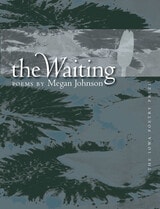
The Waiting
Johnson, Megan
University of Iowa Press, 2005
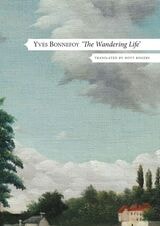
The Wandering Life
Followed by "Another Era of Writing"Yves Bonnefoy
Seagull Books, 2023
The Wandering Life is a poetic culmination of Yves Bonnefoy’s wanderings and characterizes the final twenty-five years of his work. Bonnefoy was an ardent traveler throughout his life, and his journeys in foreign countries left a profound imprint on his work. The time he spent in Italy, translating Shakespeare’s work in England, in universities in the United States, in India with Octavio Paz, and more, affected his poetry in discernible ways and inspired The Wandering Life. Interweaving verse and prose—vignettes that range from a few lines in length to several pages—this volume is a fitting capstone to Bonnefoy’s oeuvre and appears in English translation for the first time to mark the centenary of Yves Bonnefoy’s birth.
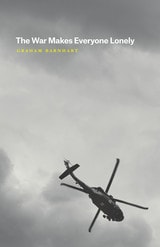
The War Makes Everyone Lonely
Graham Barnhart
University of Chicago Press, 2019
Evoking the landscapes and surroundings of war, as well as its effects on both US military service members and civilians in war-stricken countries, The War Makes Everyone Lonely is a challenging, nuanced look at the ways American violence is exported, enacted, and obscured by a writer poised to take his place in the long tradition of warrior-poets.
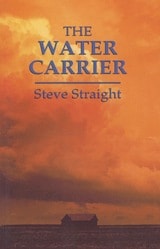
The Water Carrier
Steve Straight
Northwestern University Press, 2002
Steve Straight's skillfully crafted poems cover a wide range of topics—love, marriage, family, work, and class issues. Not since E. A. Robinson has anyone captured the essence of the New England town with such keen observation. What gives this volume its distinctive voice is a Buddhist calm, tinged with irony and humor. Steve Straight touches the ordinary things of life with a magical whimsy and a delightful self-deprecating humor.
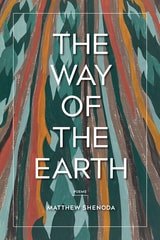
The Way of the Earth
PoemsMatthew Shenoda
Northwestern University Press, 2022
The Way of the Earth is the fourth collection from award-winning poet Matthew Shenoda. In this, his most personal collection to date, he explores the temporal and fleeting nature of human life and the earth we inhabit. Through ruminations on the intersections of culture and ecology, the death of loved ones, and the growing inequities in our midst, Shenoda explores what it means to be a person both grounded to the earth and with a yearning beyond it. Memories of landscapes and histories echo throughout the sensations of the present: the sight of egrets wading in the marshes, the smell of the ocean, a child’s hand nestled in a warm palm. “Time never goes back,” Shenoda writes, “but the imagination must.”
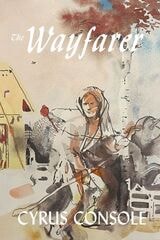
The Wayfarer
Cyrus Console-Soican
Omnidawn, 2024
Taking its name from part of a lost triptych by Dutch painter Hieronymus Bosch, The Wayfarer documents its speaker’s attempt to forge a path through the world—both as a father and as an artist—and to adequately capture the experience of living through poetry. In language that melds the vernacular and the archival, these ballads recall moments of love as they arise in an everyday existence dominated by an awareness of political and ecological collapse. Caught between the terror of wandering and the awe of witnessing new minds as they acquire early words and memories, the poems hold out hope for the tenuous transmission of meaning between generations.
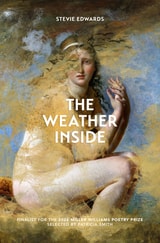
The Weather Inside
Stevie Edwards
University of Arkansas Press, 2026
Finalist, 2026 Miller Williams Poetry Prize
In The Weather Inside, Stevie Edwards measures the emotional atmosphere of a mind navigating bipolar disorder, complex PTSD, generalized anxiety disorder, and alcoholism while forging intimacy and creative resilience in a rapidly declining world.
Both as someone who has struggled with mental health and as a feminist approaching middle age, Edwards interrogates parenthood and marriage: What forms of nurturing survive when traditional roles and certainties do not? Can bringing children into a collapsing world still be an act of hope? When your partner does not want children, where should you divert your surfeit of love? The poet grieves, “I am chanting the name of a daughter / my husband doesn’t want / enough, the child I’ve spent years / not being sure I deserved.”
This fiercely honest and intimate collection offers a vision of adulthood shaped by the capacity to inhabit an embattled inner world. With clarity and dark wit, Edwards probes the uneasy border between solitude and connection, asserting the relationship between caring for oneself and caring for the wider world.
The Weather for Poetry
Essays, Reviews, and Notes on Poetry, 1977-81Donald Hall
University of Michigan Press, 1982
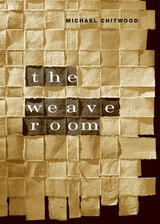
The Weave Room
Michael Chitwood
University of Chicago Press, 1998
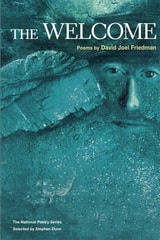
The Welcome
David Joel Friedman
University of Illinois Press, 2006
The Well Speaks of Its Own Poison
Maggie Smith
Tupelo Press, 2015
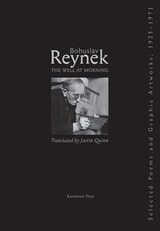
The Well at Morning
Selected Poems, 1925–1971Bohuslav Reynek
Karolinum Press, 2017
A chaffinch in a tree
of cherry sings merrily
spring’s introit.
Its blazing bobble dwells
in leaves, alive, and swells
in scarlet.
The flowers are flares of white.
The chaffinch has gone quiet
and turned sky-gazer.
My eyes close on the day:
an orb revolves in grey
and red and azure.
Poet and artist Bohuslav Reynek spent most of his life in the relative obscurity of the Czech-Moravian Highlands; although he suffered at the hands of the Communist regime, he cannot be numbered among the dissident poets of Eastern Europe who won acclaim for their political poetry in the second half of the twentieth century. Rather, Reynek belongs to an older pastoral-devotional tradition—a kindred spirit to the likes of English-language poets Gerard Manley Hopkins, William Wordsworth, Robert Frost, and Edward Thomas. The Well at Morning presents a selection of poems from across his life and is illustrated with twenty-five of his own color etchings. Also featuring three essays by leading scholars that place Reynek’s life and work alongside those of his better-known peers, this book presents a noted Czech artist to the wider world, reshaping and amplifying our understanding of modern European poetry.

The Well-Tun’d Word
Musical Interpretations of English Poetry, 1597-1651Elise Bickford Jorgens
University of Minnesota Press, 1982
The Well-Tun'd Word was first published in 1982. Minnesota Archive Editions uses digital technology to make long-unavailable books once again accessible, and are published unaltered from the original University of Minnesota Press editions.
The years 1957–1651 marked a period of high achievement in the history of song. In The Well-Tun'd Word Elise Bickford Jorgens studies changing musical conventions of English song in relation to new patterns in poetic taste from the late Elizabethan era through the Jacobean and Caroline years, basing her work on the premise that any musical setting of a poem is an interpretation of the poem itself. Thus by 1625, she contends, solo song in England had undergone a pronounced change in musical style, from the lute song of earlier decades to the monophonic continuo song. The appearance of John Donne and especially Ben Johnson and the Cavalier poets marked the demise of the Elizabethan lyrical mode that had inspired composers like John Downland, Thomas Campion, John Danyel, and Robert Jones.
Jorgen's opening chapters describe and illustrate elements of the craft of poetry and the musical conventions that can represent them. Her presentation is both clear and thorough, and will be especially helpful for students and scholars of English literature who are not necessarily musicians. She then discusses four major categories of song: Measured Music, Dance Songs and Tuneful Airs, English Monody, and Pathetic Airs, and notes that influence upon them of Continental music styles. But her major effort is to distinguish between them by pointing out their several characteristic attitudes towards the musical representation of poetic texts. All four groups show patterns of change during the first half of the seventeenth century.
Jorgens concludes that the celebrated union of the "sister arts" for which Elizabethan song was renowned was increasingly difficult to maintain after about 1610. Poets no longer favored those elements of poetic style that could in turn produce pleasing musical styles. Solo songs became, with continuo composers like Henry and William Lawes, Nicholas Lanier, and John Wilson, either notated recitations of poetry or simple pleasant trifles.
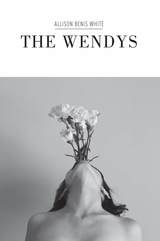
The Wendys
Allison Benis White
Four Way Books, 2020
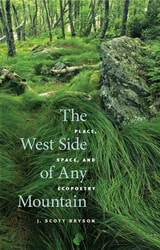
The West Side of Any Mountain
Place, Space, and EcopoetryJ. Scott Bryson
University of Iowa Press, 2005
Informed in general by current thinking in environmental theory and specifically by the work of cultural geographer Yi-Fu Tuan, The West Side of Any Mountain participates in and furthers this scholarly attention by offering an overarching theoretical framework with which to approach the field.
One area that contemporary theorists have found problematic is the dualistic civilization/wilderness binary that focuses on the divisions between culture and nature, thereby increasing the modern sense of alienation. Tuan’s place-space framework offers a succinct vocabulary for describing the attitudes of ecological poets and other nature writers in a way that avoids setting up an adversarial relationship between place and space. Scott Bryson describes the Tuanian framework and employs it to offer fresh readings of the work of four major ecopoets: Wendell Berry, Joy Harjo, Mary Oliver, and W. S. Merwin.
The West Side of Any Mountain will be of great interest to scholars and teachers working in the field of contemporary nature poetry. It is recommended for nature-writing courses as well as classes dealing with 20th-century poetry, contemporary literary criticism, and environmental theory.
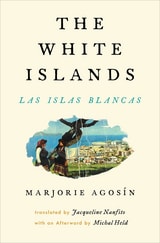
The White Islands / Las Islas Blancas
Marjorie Agosín
Swan Isle Press, 2015
Presented in a beautiful bilingual Spanish-English edition, Agosín’s poems speak to a wandering life of exile on distant shores. We hear the rhythm of the waves and the Ladino-inflected voices of Sephardi women past and present: Paloma, Estrella, and Luna in the fullness of their lives, loves, dreams, and faith. An evocative and sensual voyage to communities mostly lost after the Holocaust, The White Islands offers a lighthouse of remembrance, a lyrical world recovered with language and song, lament and joy, longing and hope.

The White Orchard
Selected Interviews, Essays, and PoemsArthur Sze
Museum of New Mexico Press, 2025
A son of Chinese immigrants who was born and raised in New York City and on Long Island, Sze first studied science at MIT. His call to write poetry pulled him away from that academic pursuit, but the sciences would continue to influence his writing. In 2024, Sze received the National Book Foundation Science + Literature Award for The Glass Constellation: New and Collected Poems (Copper Canyon Press). Sze spent over two decades as an educator, teaching creative writing and poetry to Indigenous students from across America at Santa Fe’s Institute of American Indian Arts (IAIA). In this compilation, Sze is interviewed by his former IAIA student, award-winning Diné poet, editor, and visual artist Esther Belin.
Sze’s fluency in his parents’ native tongue, along with study at the University of California at Berkeley, allowed him to delve into Chinese poetry, both as a student and translator of classical and contemporary works. The White Orchard shows his wider connection to Asian American poetry across the United States and how he has drawn inspiration from translating Chinese poetry into English. Arthur Sze is one of our finest poets, and this collection demonstrates how literature can enrich us all.
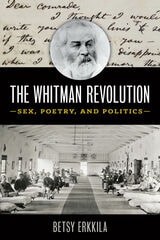
The Whitman Revolution
Sex, Poetry, and PoliticsBetsy Erkkila
University of Iowa Press, 2020
The Whitman Revolution brings together a rich collection of Betsy Erkkila’s phenomenally influential essays that have been published over the years, along with two powerful new essays. Erkkila offers a moving account of the inseparable mix of the spiritual-sexual-political in Whitman and the absolute centrality of male-male connection to his work and thinking. Her work has been at the forefront of scholarship positing that Whitman’s songs are songs not only of workers and occupations but of sex and the body, homoeroticism, and liberation. What is more, Erkkila’s writing demonstrates that this sexuality and communal impulse is central to Whitman’s revolutionary poetry and his conception of democracy itself—an insight that was all but suppressed during the mid-twentieth century emergence of American literature as a field of study.
Highlights of this collection include Erkkila’s essays on pairings such as Marx and Whitman, Dickinson and Whitman, and Melville and Whitman. Across the volume, she demonstrates an international vision that highlights the place of Leaves of Grass within a global struggle for democracy. The Whitman Revolution is evidence of Erkkila’s remarkable ability to lead critical discussions, and marks an exciting event in Whitman studies.
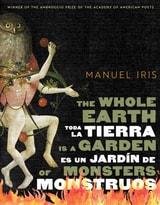
The Whole Earth Is a Garden of Monsters / Toda la tierra es un jardín de monstruos
Manuel Iris; Translated by Manuel Iris and Kevin McHugh
University of Arizona Press, 2026
This award-winning bilingual collection intertwines the lives of a Renaissance painter and a modern migrant worker, offering a fresh perspective on art and migration.
In this highly imaginative work, the lives of the northern Renaissance painter Hieronymus Bosch (1450–1516) and an imagined contemporary migrant worker named Juan Coyoc, later known as Juan Domínguez, run in parallel as they mirror each other across languages, time, and continents.
By comparing and at times intertwining these two poetic narratives, the book explores themes of art, migration, narco-violence, family, spirituality, and the idea that every human being represents all humanity at any moment in history. Both Hieronymus Bosch and Juan Domínguez become relatable and intimate figures, part of our own story.
Written in simple, sharp language, the book employs surprising imagery and a novel structure to blur the boundaries between reality and fiction, while examining the intricacies of the human condition—from the life of Saint Anthony to the violent acts of narcos across Central America and the U.S.-Mexico border. With formal sophistication and philosophical depth, this work enriches the tradition of poetry about both migration and art, contributing to the literary heritage of Mexico and the United States over the past several decades.