Results by title
4743 books match the query 'Religion' and 1168 start with t
The Mysteries of Godliness
A History of Mormon Temple WorshipDavid J. Buerger
Signature Books, 2002
For instance, David Buerger traces the evolution of the initiatory rites, including the New Testament-like foot washings, which originated in the Ohio period of Mormon history; the more elaborate Old Testament-like washings and anointings, which began in Illinois and were performed in large bathtubs, with oil poured over the initiate’s head; and the vestigial contemporary sprinkling and dabbing, which were begun in Utah. He shows why the dramatic portions of the ceremony blend anachronistic events—an innovation foreign to the original drama.
Buerger addresses the abandonment of the adoption sealing, which once linked unrelated families, and the near-disappearance of the second anointing, which is the crowning ordinance of the temple. He notes other recent changes as well. Biblical models, Masonic prototypes, folk beliefs, and frontier resourcefulness all went into the creation of this highest form of Mormon Temple worship. Diary entries and other primary sources document its evolution.
The Mystery of Communion
Giulio Maspero
St. Augustine's Press, 2020
An approach to Trinitarian theology often favors overly technical language, or undue triteness. Maspero succeeds in leading both scholar and student to see how the unfolding of the mystery of the Trinity and its dogmatic development is a discovery of the “mystery from which all true love flows” in history. This discovery is only possible because of God’s self-revelation and immanence––that is, his heart and his “within.” The revelation of his being wholly and eternally Father and Son and the Love between them has made a more complete unity know to humanity through the perfect unity of divine communion. The foundation of all being and reality is this communion of love, personal unity that is given in relation and not in spite of relation. After a career of studying theology and theoretical physics, Maspero is especially keen on emphasizing the radical nature of this concept. It is an extension of Greek philosophy but ripped open and assigned immeasurable new value in communion and relation.
The brevity of this work limits the amount of citations and textual references given, and Maspero instead urges the reader to study the book alongside Scripture. His manner of writing respects the impossibility of speaking of God in his immanence, but he nonetheless carves out a place for the Trinity in the human intellect, a place where the Jewish and Christian God might be encountered. As Maspero observes, truth is found in the personal dimension, but “just as in the use of a map for a journey, the cognitive grasp of the Trinity is to prevent us from getting lost, to keep us from reducing and simplifying the Trinity into something we understand merely on a natural level.” A highlight of this work is Maspero’s reliance on Mary, Theotokos, in his presentation of Trinitarian theology, the person who first opened herself to this manner of thinking.
The Mystery of Death and Beyond
Kenneth Baker, S.J.
St. Augustine's Press, 2016
Man is unlike all other animals, because he has a soul endowed with intelligence and free will. Because man’s soul is spiritual, it is immortal. Death is the separation of that soul from the body; the body decays and returns to the dust from which it was taken, but the soul continues to live and is in the hands of God. But what happens to the soul after death? There are two possibilities—heaven or hell. We know from divine revelation and from the infallible teaching of the Church that the soul after death goes immediately to heaven (perhaps first for a time to purgatory to be totally cleansed and sanctified), or immediately to hell, a state or place of eternal misery.
The next life is a life without time—it is a perpetual now, with no before and after. It has a beginning but not end. It is also unchangeable, that is, souls in heaven are there forever and they cannot lose it; souls in hell are there forever and they can never be freed from it.
This is a very serious and certain reality for each one of us. The most important thing we will ever do is to die, and to die in the state of God’s grace so that we are his friends and will be admitted to his presence, which is what is meant by heaven. Therefore we must prepare ourselves to die in the grace of God, which is our ticket to heaven. We do that by doing God’s will for us, which means to keep his commandments, especially to love God above all things and practice love of neighbor.
This short book will help people think about their death and how important it is for their permanent happiness. It will help them to arrange their life in such a way that they will live it as God wants them to live it and so ultimately obtain eternal life with God because: “no eye has seen, nor ear heard, nor the heart of man conceived, what God has prepared for those who love him” (1 Cor. 2:9).
The Mystery of Union with God
Bernhard Blankenhorn
Catholic University of America Press, 2015
The Mystic Fable, Volume One
The Sixteenth and Seventeenth CenturiesMichel de Certeau
University of Chicago Press, 1992
The Mystic Fable, Volume Two
The Sixteenth And Seventeenth CenturiesMichel de Certeau
University of Chicago Press, 2015
Though the second volume remained in fragments at the time of his death, Michel de Certeau had the foresight to leave his literary executor detailed instructions for its completion, which formed the basis for the present work. Together, both volumes solidify Certeau’s place as a touchstone of twentieth-century literature and philosophy, and continue his exploration of the paradoxes of historiography; the construction of social reality through practice, testimony, and belief; the theorization of speech in angelology and glossolalia; and the interplay of prose and poetry in discourses of the ineffable. This book will be of vital interest to scholars in religious studies, theology, philosophy, history, and literature.
The Mystic of Friendship
Divining the Present in Settler AmazoniaAshley Lebner
University of Chicago Press, 2025
On Brazil’s Amazonian frontier, settlers pursue land and opportunity, but they also gather for prayer and pilgrimage, yearning for a deep relationship with God and one another. In this book, anthropologist Ashley Lebner examines how everyday religious practices and feelings, what she calls a mystic of friendship, shape and sustain colonization in the Amazon.
Lebner invites us to a stretch of highway in Pará, Brazil, where violent colonization coexists with prophetic dreams, Afro-Brazilian prayers, and emerging evangelicalism. She shows how, amid political tensions and physical hardship, settlers believe that the violence they experience and enact derives from the bestial nature of earthly life that must be overcome. In exposing a longing for divinely-infused friendship that animates colonization, Lebner offers a powerful new perspective on the forces driving colonialism as much as religious and political expression.
The Mystical Poems of Rumi 1
Jalal al-Din Rumi
University of Chicago Press, 1974
"An excellent introduction to Rumi, the greatest mystical poet of Islam. . . . Rumi's scope, like that of all great poets, is universal—reaching from sensuous luxuriance to the driest irony."—Sherman Goldman, East-West Journal
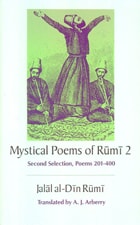
The Mystical Poems of Rumi 2
Second Selection, Poems 201-400Jalal al-Din Rumi
University of Chicago Press, 1991
Rumi, who wrote and preached in Persia during the thirteenth century, is one of history’s most celebrated mystics. His vast body of poetry includes a lengthy epic of religious mysticism, the Mathnavi, and more than three thousand lyrics and odes. A. J. Arberry, who selected four hundred of the lyrics for translation, calls Rumi "one of the world's greatest poets. In profundity of thought, inventiveness of image, and triumphant mastery of language, he stands out as the supreme genius of Islamic mysticism." Arberry’s authoritative translation is one of the few done directly from the original Persian.
A. J. Arberry (1905-69) was professor of Arabic at Cambridge University.
The Myth of Disenchantment
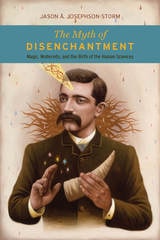
Magic, Modernity, and the Birth of the Human SciencesJason Ananda Josephson Storm
University of Chicago Press, 2017
Josephson-Storm traces the history of the myth of disenchantment in the births of philosophy, anthropology, sociology, folklore, psychoanalysis, and religious studies. Ironically, the myth of mythless modernity formed at the very time that Britain, France, and Germany were in the midst of occult and spiritualist revivals. Indeed, Josephson-Storm argues, these disciplines’ founding figures were not only aware of, but profoundly enmeshed in, the occult milieu; and it was specifically in response to this burgeoning culture of spirits and magic that they produced notions of a disenchanted world.
By providing a novel history of the human sciences and their connection to esotericism, The Myth of Disenchantment dispatches with most widely held accounts of modernity and its break from the premodern past.
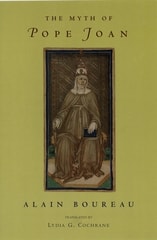
The Myth of Pope Joan
Alain Boureau
University of Chicago Press, 2001
Or so the legend goes—a legend that was fabricated sometime in the thirteenth century, according to Alain Boureau, and which has persisted in one form or another down to the present day. In this fascinating saga of belief and rhetoric, politics and religion, Boureau investigates the historical and ecclesiastical circumstances under which the myth of Pope Joan was constructed and the different uses to which it was put over the centuries. He shows, for instance, how Catholic clerics justified the exclusion of women from the papacy and the priesthood by employing the myth in misogynist moral tales, only to find the popess they had created turned against them in anti-Catholic propaganda during the Reformation.
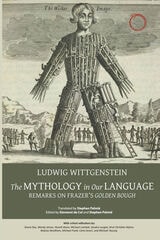
The Mythology in Our Language
Remarks on Frazer's Golden BoughLudwig Wittgenstein
HAU, 2018
In 1931 Ludwig Wittgenstein wrote his famous Remarks on Frazer’s “Golden Bough,” published posthumously in 1967. At that time, anthropology and philosophy were in close contact—continental thinkers drew heavily on anthropology’s theoretical terms, like mana, taboo, and potlatch, in order to help them explore the limits of human belief and imagination. Now the book receives its first translation by an anthropologist, in the hope that it can kick-start a new era of interdisciplinary fertilization.
Wittgenstein’s remarks on ritual, magic, religion, belief, ceremony, and Frazer’s own logical presuppositions are as lucid and thought-provoking now as they were in Wittgenstein’s day. Anthropologists find themselves asking many of the same questions as Wittgenstein—and in a reflection of that, this volume is fleshed out with a series of engagements with Wittgenstein’s ideas by some of the world’s leading anthropologists, including Veena Das, David Graeber, Wendy James, Heonik Kwon, Michael Lambek, Michael Puett, and Carlo Severi.

The Myths of Zionism
John Rose
Pluto Press, 2004
Ancient, medieval and modern, this book is a critical account of the historical, political and cultural roots of Zionism.
Scrutinising the roots of the myths of Zionism and mobilising recent scholarship, John Rose shows how many of these stories, as with other mythologies, have no basis in fact. However, because Zionism is a living political force and these myths have been used to justify very real and political ends - namely, the expulsion and continuing persecution of the Palestinians. John Rose separates fact from fiction presenting a detailed analysis of their origins and development. This includes a challenge to Zionism's biblical claims using very recent and very startling Israeli archaeological conclusions.
This book shows clearly how Zionism makes many false claims on Jewish religion and history.
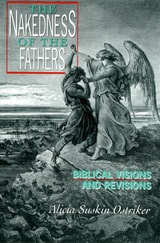
The Nakedness of the Fathers
Biblical Visions and RevisionsOstriker, Alicia Suskin
Rutgers University Press, 1997
In her introduction, "Entering the Tents, " Ostriker defines the need to struggle against a tradition in which women have been silenced and disempowered - and to recover the female power buried beneath the surface of the biblical texts. In "The Garden, " she reinterprets the mythically complex stories of Creation. Then she considers the stories of "The Fathers, " from Abraham and Isaac to Moses, David, and Solomon - and their wives, mothers, and sisters. In "The Return of the Mothers, " she begins with a radical new interpretation of the book of Esther, includes a meditation on the silenced wife of Job and the idea of justice, and concludes with a fable on the death of God and a prayer to the Shekhinah, the feminine aspect of God. Ostriker refuses to dismiss the Bible as meaningless to women. Instead, in this angry, eloquent, visionary book, she attempts to recover what is genuinely sacred in these sacred texts.
The Narcissus and the Pomegranate
An Archaeology of the Homeric Hymn to DemeterAnn Suter
University of Michigan Press, 2002
The author analyzes the traditional language of the hymn and Persephone's retelling of her story to Demeter, arguing that the hymn involves an earlier tale of Demeter and Persephone that predates the seventh century. Suter uses anthropological applications to illustrate that the story of Persephone's abduction does not reflect a female initiation rite into adulthood, as has been argued, but rather an hieros gamos. These methodologies point to the conclusion that Persephone was once a powerful goddess in her own right, independent of Hades and of Demeter as well. To test the accuracy of these possibilities, the book next examines evidence from outside the hymn. Other versions of the two myths in the hymn support the idea that these myths--Persephone's abduction and Demeter's nursing of Demophoön--were once separate and were late combined to create a new story. Evidence from the chief archaeological sites, from vase painting and other artistic forms is provided to enhance the argument. Thus the evidence from outside the hymn supports the conclusions of the textual analyses, giving surprising substantiation that the hymn itself commemorates the early days of the worship of the goddesses as a mother/daughter pair.
This book will be of particular interest to scholars of religious history, art history, archaeology, and literature. It is also accessible to the general reader interested in Greek literature, myths, and religion.
Ann Suter is Associate Professor of Classical Studies, University of Rhode Island.
The Narrative Self in Early Christianity
Essays in Honor of Judith PerkinsJanet E. Spittler
SBL Press, 2019
Essays that explore early Christian texts and the broader world in which they were written
This volume of twelve essays celebrates the contributions of classicist Judith Perkins to the study of early Christianity. Drawing on Perkins's insights related to apocryphal texts, representations of pain and suffering, and the creation of meaning, contributors explore the function of Christian narratives that depict pain and suffering, the motivations of the early Christians who composed these stories, and their continuing value to contemporary people. Contributors also examine how narratives work to create meaning in a religious context. These contributions address these issues from a variety of angles through a wide range of texts.
Features:
- Introductions to and treatments of several largely unknown early Christian texts
- Essays by ten women and two men influenced or mentored by Judith Perkins
- Essays on the Deuterocanon, the New Testament, and early Christian relics
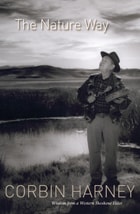
The Nature Way
Writings from a Western Shoshone ElderCorbin Harney
University of Nevada Press, 2009
Corbin Harney’s long life encompassed remarkable changes in the lives of Native Americans and in the technological and political development of the world. Born into an impoverished Western Shoshone family on the Nevada-Idaho border and orphaned as a newborn, he was brought up by grandparents who taught him the traditional ways of their people and the ancient spiritual beliefs that sustained their culture. As an adult, Harney found his calling as a traditional healer and spiritual leader. Soon he became involved in the Shoshone struggle for civil rights, including their efforts to protect and heal their traditional lands in what became the Nevada Test Site. This involvement led Harney to his eventual role as a leader of the international antinuclear movement.The Nature Way is a rich compendium of Corbin Harney’s experience and wisdom. His account of his life incorporates the tragic history of Native Americans in the Great Basin after the arrival of Euro-Americans, his realization of his own identity as a Native American, and his long study of his people’s traditions and spiritual practices. His summary of the Shoshone and Paiute use of indigenous plants for food and healing highlights their understanding that the Earth and her denizens and products must be respected and protected in order to preserve the connection that all creatures have with sacred Mother Earth. Finally, his account of his role as an antinuclear activist expands on his awareness of the human responsibility to protect the Earth, especially from the extreme danger posed by nuclear technology and nuclear weapons of mass destruction. Corbin Harney’s voice is one of the clearest expressions yet of the values, concerns, and spirituality of contemporary Native America. He offers all of us an eloquent plea that we respect and cooperate with Nature to ensure the survival of the planet.
The Nature of Political Philosophy
And Other Studies and CommentariesJames V. Schall
Catholic University of America Press, 2022
The Navajo Hunter Tradition
Karl W. Luckert
University of Arizona Press, 1975
The Neighbor
Three Inquiries in Political TheologySlavoj Žižek, Eric L. Santner, and Kenneth Reinhard
University of Chicago Press, 2005
In The Neighbor, three of the most significant intellectuals working in psychoanalysis and critical theory collaborate to show how this problem of neighbor-love opens questions that are fundamental to ethical inquiry and that suggest a new theological configuration of political theory. Their three extended essays explore today's central historical problem: the persistence of the theological in the political. In "Towards a Political Theology of the Neighbor," Kenneth Reinhard supplements Carl Schmitt's political theology of the enemy and friend with a political theology of the neighbor based in psychoanalysis. In "Miracles Happen," Eric L. Santner extends the book's exploration of neighbor-love through a bracing reassessment of Benjamin and Rosenzweig. And in an impassioned plea for ethical violence, Slavoj Žižek's "Neighbors and Other Monsters" reconsiders the idea of excess to rehabilitate a positive sense of the inhuman and challenge the influence of Levinas on contemporary ethical thought.
A rich and suggestive account of the interplay between love and hate, self and other, personal and political, The Neighbor will prove to be a touchstone across the humanities and a crucial text for understanding the persistence of political theology in secular modernity.
The Neighbor
Three Inquiries in Political Theology, with a new PrefaceSlavoj Žižek, Eric L. Santner, and Kenneth Reinhard
University of Chicago Press, 2013
In The Neighbor, three of the most significant intellectuals working in psychoanalysis and critical theory collaborate to show how this problem of neighbor-love opens questions that are fundamental to ethical inquiry and that suggest a new theological configuration of political theory. Their three extended essays explore today's central historical problem: the persistence of the theological in the political. In “Toward a Political Theology of the Neighbor,” Kenneth Reinhard supplements Carl Schmitt’s political theology of the enemy and friend with a political theology of the neighbor based in psychoanalysis. In “Miracles Happen,” Eric L. Santner extends the book's exploration of neighbor-love through a bracing reassessment of Benjamin and Rosenzweig. And in an impassioned plea for ethical violence, Slavoj Žižek’s “Neighbors and Other Monsters” reconsiders the idea of excess to rehabilitate a positive sense of the inhuman and challenge the influence of Levinas on contemporary ethical thought.
A rich and suggestive account of the interplay between love and hate, self and other, personal and political, The Neighbor has proven to be a touchstone across the humanities and a crucial text for understanding the persistence of political theology in secular modernity. This new edition contains a new preface by the authors.
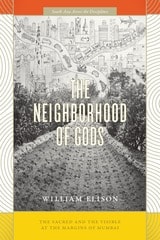
The Neighborhood of Gods
The Sacred and the Visible at the Margins of MumbaiWilliam Elison
University of Chicago Press, 2018
The Neighborhood of Gods explores this question, bringing an ethnographic lens to a range of visual and spatial practices: from the shrine construction that encroaches on downtown streets, to the “tribal art” practices of an indigenous group facing displacement, to the work of image production at two Bollywood film studios. A pioneering ethnography, this book offers a creative intervention in debates on postcolonial citizenship, urban geography, and visuality in the religions of India.
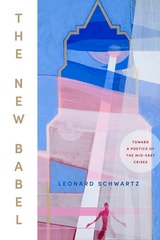
The New Babel
Toward a Poetics of the Mid-East CrisesLeonard Schwartz
University of Arkansas Press, 2016
The New Babel: Toward a Poetics of the Mid-East Crises evokes and investigates—from a Jewish American perspective and in the forms of poetry, essays, and interviews—the Israeli-Palestinian conflict, America’s involvement as both perpetrator and victim of events in the Middle East and Afghanistan, and the multiple ways that poetics can respond to political imperatives.
The poems range from the immediately lyrical to the experimental forms of the “Apple Anyone Sonnets” series, which relies heavily on the Arabic but has Shakespeare as its scaffolding.
In the essays, Schwartz calls on the power of poetry—and of some of the great poets in the Arabic, Jewish, and American traditions—to help rethink the battle lines of the contemporary Mid-East, with the Jewish philosopher Martin Buber looming large.
The interviews provide Schwartz’s discussions with Israeli poet and activist Aharon Shabtai, political philosopher Michael Hardt, and the late, great American poet Amiri Baraka.
In these creative, analytical, and conversational moments, Leonard Schwartz rethinks the battle lines of the contemporary Middle East and calls on the power of language as the essence of our humanity, endlessly fluid, but also the source of an intentional confusion there is a necessity to counter.
The New Crusades, the New Holy Land
Conflict in the Southern Baptist Convention, 1969-1991David T. Morgan
University of Alabama Press, 1996
Examines the conflict between modern-day Southern Baptists and “liberal” Southern Baptists over control of the Southern Baptist Convention
David Morgan captures the essence of the conflict between some modern-day Southern Baptists, who saw themselves as crusaders for truth, as they sought to redeem a new holy land--the Southern Baptist Convention-- from the control of other Southern Baptists they viewed as "liberals." To the so-called liberals, the crusaders were "fundamentalists" on a mission, not to reclaim the SBC in the name of theological truth but to gain control and redirect its activities according to their narrow political, social, and theological perspectives. The New Crusades provides a comprehensive history of the conflict, taking the reader through the bitter and divisive struggles of the late 1980s, that culminated in the 1991 emergence of a moderate faction within the SBC. The fundamentalists had won.
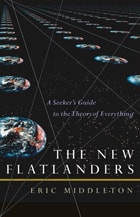
The New Flatlanders
A Seeker's Guide to the Theory of EverythingEric Middleton
Templeton Press, 2007
In The New Flatlanders, teacher, scientist, and chaplain Eric Middleton challenges traditional ways of looking at reality by engaging readers in a "voyage of discovery starting with questions." The book engagingly begins with a discussion group embarking on an exploratory conversation about the nature of the universe and the place of human beings in it. Daunting questions emerge, such as "How can there possibly be a tear or hole in three-dimensional space? And if there is a hole, can something fall through it? Where would it fall to?" In short order, students and teacher are on a quest to develop a "working theory of everything" that takes them from stone circles to quarks, superstrings, quantum theory, the anthropic principle, evolution, consciousness, miracles, chaos, and the spiritual universe.
The key to exploring these questions is finding a language with which to talk about the awe and wonder of today's science alongside the joy of experiencing the spiritual. This is done by interweaving into the discussions the philosophy of "Flatland," a nonreligious entry point to Jesus posited by nineteenth-century clergyman and educator Edwin A. Abbott in his classic parable Flatland: A Romance of Many Dimensions.
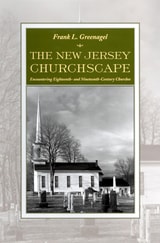
The New Jersey Churchscape
Encountering Eighteenth- and Nineteenth-Century ChurchesFrank L. Greenagel
Rutgers University Press, 2001
Although best known as the Garden State, New Jersey could also be called the Church State. The state boasts thousands of houses of worship, with more than one thousand still standing that were built in the eighteenth and nineteenth centuries. Frank L. Greenagel has photographed more than six hundred. He has selected two hundred of these historic landmarks for an examination of why they are sited where they are and why they look the way they do.
Greenagel has sought out and included images of not only mainstream Christian churches, but also Jewish synagogues as well as the places of worship of religious groups such as the Moravians, the Church of the Brethren, and the Seventh Day Baptists. The photographs are arranged chronologically within sections on three major early settlement regions of the state ¾ the Hudson River, the Delaware River, and the Raritan Valley. For each building, Greenagel details the date of construction, the cultural, historic, and religious influences that shaped it, the architectural details that distinguish it, and what purpose it currently serves.
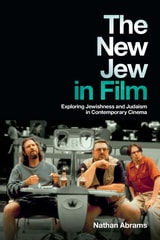
The New Jew in Film
Exploring Jewishness and Judaism in Contemporary CinemaAbrams, Nathan
Rutgers University Press, 2012
The New Jew in Film is grounded in the study of over three hundred films from Hollywood and beyond. Nathan Abrams explores these new and changing depictions of Jews, Jewishness, and Judaism, providing a wider, more representative picture of this transformation. In this compelling, surprising, and provocative book, chapters explore masculinity, femininity, passivity, agency, and religion in addition to a departure into new territory—including bathrooms and food. Abrams’s concern is to reveal how the representation of the Jew is used to convey confidence or anxieties about Jewish identity and history as well as questions of racial, sexual, and gender politics. In doing so, he provides a welcome overview of important Jewish films produced globally over the past twenty years.
The New Jewish Diaspora
Russian-Speaking Immigrants in the United States, Israel, and GermanyGitelman, Zvi
Rutgers University Press, 2016
The New Metaphysicals
Spirituality and the American Religious ImaginationCourtney Bender
University of Chicago Press, 2010
The New Mormon History
Revisionist Essays on the PastD. Michael Quinn
Signature Books, 1992
In this collection, D. Michael Quinn has selected fifteen essays which demonstrate the methods of this new history. Contributors include Thomas G. Alexander, James B. Allen, Leonard J. Arrington, Maureen Ursenbach Beecher, Eugene E. Campbell, Kenneth L. Cannon II, Mario S. DePillis, Robert B. Flanders, Klaus J. Hansen, William G. Hartley, Stanley S. Ivins, Dean L. May, Linda King Newell, B. H. Roberts, Jan Shipps, and Ronald W. Walker. Participants offer new ideas and give readers the opportunity to determine for themselves the relative success of these approaches by presenting examples. The collection demonstrates areas of interpretation that may be considered revisionist as well.
The New Prometheans
Faith, Science, and the Supernatural Mind in the Victorian Fin de SiècleCourtenay Raia
University of Chicago Press, 2019
The New Prometheans traces the evolution of psychical research through the intertwining biographies of four men: chemist Sir William Crookes, depth psychologist Frederic Myers, ether physicist Sir Oliver Lodge, and anthropologist Andrew Lang. All past presidents of the society, these men brought psychical research beyond academic circles and into the public square, making it part of a shared, far-reaching examination of science and society. By layering their papers, textbooks, and lectures with more intimate texts like diaries, letters, and literary compositions, Courtenay Raia returns us to a critical juncture in the history of secularization, the last great gesture of reconciliation between science and sacred truths.
The New Prophecy and "New Visions"
Evidence of Montanism in The Passion of Perpetua and Felicitas (Patristic Monograph Series, Volume 18)Rex D. Butler
Catholic University of America Press, 2006
The New Religious Image of Urban America, Second Edition
The Shopping Mall as Ceremonial CenterIra G. Zepp, Jr.
University Press of Colorado, 1997
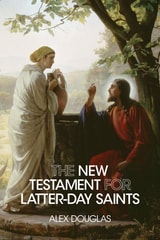
The New Testament for Latter-day Saints
Douglas, Alex
Signature Books, 2026
In The New Testament for Latter-day Saints, Alex Douglas introduces Latter-day Saint readers to the basics of modern New Testament scholarship. Douglas answers the question, “What did the authors of the Bible believe about Jesus?” elucidating the striking diversity in how Jesus is portrayed in the New Testament. It ranges from authors who saw Jesus as teacher and prophet, to those who worshipped him as God incarnate. Douglas shows how the Bible we have today is a product of these competing voices, each shaped by conflicts within early Christianity. The book also examines how key Christian ideas—such as sin, salvation, priesthood authority, and the role of women—developed as part of this conflict. Drawing on modern biblical scholarship, it places these portrayals alongside Latter-day Saint beliefs, helping readers see points of alignment and tension.
Ultimately, the book invites readers to wrestle with what it means to see revelation as a process rather than a one-time event. Readers will walk away seeing the New Testament in an entirely different light, as a record of that process.
The New Testament for Latter-day Saints
Douglas, Alex
Signature Books, 2026
In The New Testament for Latter-day Saints, Alex Douglas introduces Latter-day Saint readers to the basics of modern New Testament scholarship. Douglas answers the question, “What did the authors of the Bible believe about Jesus?” elucidating the striking diversity in how Jesus is portrayed in the New Testament. It ranges from authors who saw Jesus as teacher and prophet, to those who worshipped him as God incarnate. Douglas shows how the Bible we have today is a product of these competing voices, each shaped by conflicts within early Christianity. The book also examines how key Christian ideas—such as sin, salvation, priesthood authority, and the role of women—developed as part of this conflict. Drawing on modern biblical scholarship, it places these portrayals alongside Latter-day Saint beliefs, helping readers see points of alignment and tension.
Ultimately, the book invites readers to wrestle with what it means to see revelation as a process rather than a one-time event. Readers will walk away seeing the New Testament in an entirely different light, as a record of that process.
The Noble Army
The Modern Martyrs of Westminster AbbeyEdited by James Hawkey
Haus Publishing, 2024
In July 1998, ten statues of martyrs of the twentieth century were unveiled surmounting the Great West Door of Westminster Abbey. Ten figures were identified from different continents and different churches: victims of Nazi and Bolshevik oppression, state-sponsored violence, and religious hatred, these images stand as a testimony to the bloodshed of the twentieth century. Some, such as Oscar Romero and Martin Luther King, are famed across the world. Others are less known.
The Noble Army offers reflections on each of these ten lives, explores the questions surrounding their choices, and tells us the stories behind them. These statues were intended to represent those millions of individuals who suffered for their faith in Christ in the twentieth century. These reflections culminate in a chapter on the contemporary reality of Christian marginalization and persecution, written by Archbishop Bashar Warda of Erbil, Iraq.
The Nocturnal Side of Science in David Friedrich Strauss's Life of Jesus Critically Examined
Thomas Fabisiak
SBL Press, 2015
A close look at how Strauss's engagement with popular and scholarly controversies influenced his study of the Gospels
David Friedrich Strauss's Life of Jesus Critically Examined is known as a monumental contribution to the critical, scientific study of religion and Christian origins. It was widely read and influenced literary and historical research on the Bible as well as critical philosophy between Hegel and Nietzsche. Less well-known are Strauss's writings from the same period on "the nocturnal side of nature," paranormal phenomena such as demon possession, animal magnetism, and the ghost-seeing of Frederike Hauffe, the famous "Seeress of Prevorst."
Features:
- Illuminates unfamiliar features of early nineteenth-century theology, philosophy, and medicine showing how spirituality and science blended together in these fields
- Demonstrates the importance of Western esotericism and popular religion in the history of modern biblical studies
- Sheds new light on Strauss’s study of the Gospels as myths, his critique of miracles and his account of the historical Jesus
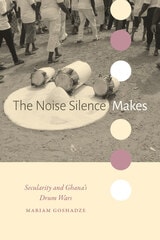
The Noise Silence Makes
Secularity and Ghana's Drum WarsMariam Goshadze
Duke University Press, 2025

The Odyssey of a Syriac Christian
A Life of Faith Between East and WestRev. Emmanuel Pataq Siman
Catholic University of America Press, 2026
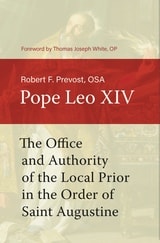
The Office and Authority of the Local Prior in the Order of Saint Augustine
Robert F. Prevost
Catholic University of America Press, 2025
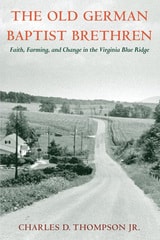
The Old German Baptist Brethren
Faith, Farming, and Change in the Virginia Blue RidgeCharles D. Thompson Jr.
University of Illinois Press, 2006
Charles D. Thompson Jr.'s The Old German Baptist Brethren combines oral history with ethnography and archival research--as well as his own family ties to the Franklin County community--to tell the story of the Brethren's faith on the cusp of impending change. The book traces the transformation of their operations from frontier subsistence farms to cash-based enterprises, connecting this with the wider confluence of agriculture and faith in colonial America. Using extensive interviews, Thompson looks behind the scenes at how individuals interpret their own futures in farming, their hope for their faith, and how the failure of religiously motivated agriculture figures in the larger story of the American farmer.
The Old Greek of Isaiah
An Analysis of Its Pluses and MinusesMirjam van der Vorm-Croughs
SBL Press, 2014
A concise study of a large number of examples of pluses and minus providing insight into translation from Hebrew to Greek
Van der Vorm-Croughs focuses this translation study on the processes leading to pluses and minuses including linguistic and stylistic aspects (i.e., cases in which elements have been added or omitted for the sake of a proper use of the Greek language), literary aspects (additions and omissions meant to embellish the Greek text), translation technical aspects (e.g., the avoidance of redundancy), and contextual and intertextual exegesis and harmonization. This work also covers the relation between the Greek Isaiah and its possible Hebrew Vorlage to try to determine which pluses and minuses may have been the result of the translator’s use of a different Hebrew text.
Features:
- Eleven categories for the pluses and minuses of the Greek Isaiah
- Examination of translation techniques and translator errors
- Use of Joseph Ziegler’s critical edition
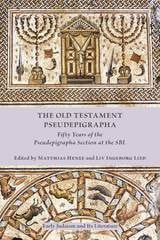
The Old Testament Pseudepigrapha
Fifty Years of the Pseudepigrapha Section at the SBLMatthias Henze
SBL Press, 2019
A history of research that changed scholarly perceptions of early Judaism
This collection of essays by some of the most important scholars in the fields of early Judaism and Christianity celebrates fifty years of the study of the Old Testament Pseudepigrapha at the Society of Biblical Literature and the pioneering scholars who introduced the Pseudepigrapha to the Society. Since its early days as a breakfast meeting in 1969, the Pseudepigrapha Section has provided a forum for a rigorous discussion of these understudied texts and their relevance for Judaism and Christianity. Contributors recount the history of the section's beginnings, critically examine the vivid debates that shaped the discipline, and challenge future generations to expand the field in new interdisciplinary directions.
Features:
- Reflections from early members of the Pseudepigrapha Group
- Essays that examine a methodological shift from capturing and preserving traditions to exploring the intellectual and social world of Jewish antiquity
- Evaluations of past interactions with adjacent fields and the larger academic world
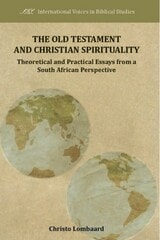
The Old Testament and Christian Spirituality
Theoretical and Practical Essays from a South African PChristo Lombaard
SBL Press, 2012
An engaging anthology that deals with both theory and practice
The emerging discipline of biblical spirituality considers how faith finds expression within the biblical texts and how modern expressions of faith interact with those texts. This volume represents Christo Lombaard’s reflective, analytical, and exegetical contributions to the field in order to explore how biblical texts mediate faith, both ancient and contemporary. It reflects on aspects of the interaction of faith and Scripture, critically approaching both dimensions.
Features:
- Seven previously published papers drawn predominately from South African journals
- Explorations of how biblical texts mediate faith
- Close examination of the discipline of biblical spirituality as part of spirituality studies
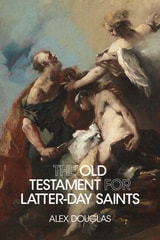
The Old Testament for Latter-day Saints
Douglas, Alex
Signature Books, 2023
This book also explores the intriguing ways in which Latter-day Saints have interpreted and engaged with this ancient text and the author navigates their diverse interpretations of it. He examines how individuals have alternately embraced the Old Testament as myth or history, law or legend, wise counsel or sacred scripture. He shows where many traditional interpretations have come from, and offers many ways to encourage a more nuanced understanding of the text.
Drawing from a wealth of scholarly research and his own unique perspective, Douglas presents a compelling and multidimensional analysis of the Old Testament. However readers approach the text, this book sheds light on the complex nature of the Old Testament and its enduring relevance to the Latter-day Saint tradition.
The Old Testament for Latter-day Saints
Douglas, Alex
Signature Books, 2024
This book also explores the intriguing ways in which Latter-day Saints have interpreted and engaged with this ancient text and the author navigates their diverse interpretations of it. He examines how individuals have alternately embraced the Old Testament as myth or history, law or legend, wise counsel or sacred scripture. He shows where many traditional interpretations have come from, and offers many ways to encourage a more nuanced understanding of the text.
Drawing from a wealth of scholarly research and his own unique perspective, Douglas presents a compelling and multidimensional analysis of the Old Testament. However readers approach the text, this book sheds light on the complex nature of the Old Testament and its enduring relevance to the Latter-day Saint tradition.
The Oldest Legend
Acts of the Canonization Process, and Miracles of Saint Margaret of HungaryBence Péterfi
Central European University Press, 2018
The One Christ
David Vincent Meconi
Catholic University of America Press, 2013
The One Creator God in Thomas Aquinas and Contemporary Theology
Michael J. Dodds, OP
Catholic University of America Press, 2020
The One Thomas More
Travis Curtright
Catholic University of America Press, 2012