Results by title
4155 books match the query 'State & Local' and 925 start with t
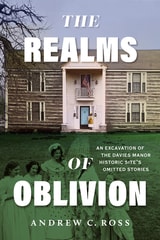
The Realms of Oblivion
An Excavation of the Davies Manor Historic Site's Omitted StoriesAndrew C. Ross
Vanderbilt University Press, 2024
Winner of the Tennessee History Book Award (Tennessee Historical Society and Tennessee Historical Commission), 2024
The Realms of Oblivion explores the complexities involved in reconciling competing versions of history, channeled through Davies Manor, a historic site near Memphis that once centered a wealthy slave-owning family’s sprawling cotton plantation. Interrogating the forces of memorialization that often go unquestioned in the stories we believe about ourselves and our communities, this book simultaneously tells an informative and engrossing bottom-up history—of the Davies family, of the Black families they enslaved and exploited across generations, and of Memphis and Shelby County—while challenging readers to consider just what upholds the survival of that history into the present day.
Written in an engaging and critical style, The Realms of Oblivion is grounded in a rich source base, ranging from nineteenth-century legal records to the personal papers of the Davies family to twentieth-century African American oral histories. Author Andrew C. Ross uses these sources to unearth the stark contrast between the version of Davies Manor’s history that was built out of nostalgia, and the version that records have proven to actually be true. As a result, Ross illuminates the ongoing need for a deep and honest reckoning with the history of the South and of the United States, on the part of both individuals and community institutions such as local historic sites and small museums.
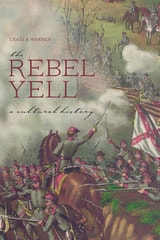
The Rebel Yell
A Cultural HistoryCraig A. Warren
University of Alabama Press, 2014
The first comprehensive history of the fabled Confederate battle cry from its origins and myths through its use in American popular culture.
No aspect of Civil War military lore has received less scholarly attention than the battle cry of the Southern soldier. In The Rebel Yell, Craig A. Warren brings together soldiers' memoirs, little-known articles, and recordings to create a fascinating and exhaustive exploration of the facts and myths about the “Southern screech.”
Through close readings of numerous accounts, Warren demonstrates that the Rebel yell was not a single, unchanging call, but rather it varied from place to place, evolved over time, and expressed nuanced shades of emotion. A multifunctional act, the flexible Rebel yell was immediately recognizable to friends and foes but acquired new forms and purposes as the epic struggle wore on. A Confederate regiment might deliver the yell in harrowing unison to taunt Union troops across the empty spaces of a battlefield. At other times, individual soldiers would call out solo or in call-and-response fashion to communicate with or secure the perimeters of their camps.
The Rebel yell could embody unity and valor, but could also become the voice of racism and hatred. Perhaps most surprising, The Rebel Yell reveals that from Reconstruction through the first half of the twentieth century, the Rebel yell—even more than the Confederate battle flag—served as the most prominent and potent symbol of white Southern defiance of Federal authority. With regard to the late-twentieth and early twenty-first centuries, Warren shows that the yell has served the needs of people the world over: soldiers and civilians, politicians and musicians, re-enactors and humorists, artists and businessmen. Warren dismantles popular assumptions about the Rebel yell as well as the notion that the yell was ever “lost to history.”
Both scholarly and accessible, The Rebel Yell contributes to our knowledge of Civil War history and public memory. It shows the centrality of voice and sound to any reckoning of Southern culture.
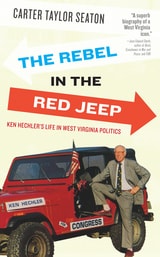
The Rebel in the Red Jeep
Ken Hechler's Life in West Virginia PoliticsCarter Taylor Seaton
West Virginia University Press, 2017
This biography recounts a century of accomplishments, from Hechler’s introduction of innovative teaching methods at major universities, to his work as a speechwriter and researcher for President Harry Truman, and finally to his time representing West Virginia in the US House of Representatives and as the secretary of state.
In West Virginia, where he resisted mainstream political ideology, Hechler was the principal architect behind the Federal Coal Mine Health and Safety Act of 1969 and constantly battled big coal, strip-mining, and fellow politicians alike. He and his signature red jeep remain a fixture in West Virginia. Since 2004, Hechler has campaigned against mountaintop removal mining. He was arrested for trespassing during a protest in 2009 at the age of 94.
The Red Hills of Florida, 1528-1865
Clifton Paisley
University of Alabama Press, 1989
Recent excavation of the Tallahassee area provided anthropological and archaeological evidence showing that the Red Hills of Florida were sought out by agricultural Indians long before European contact
The Red Hills section of northern Florida is composed of Leon County, where Tallahassee is located , and its neighboring counties of Gadsden and Jackson to the west and Jefferson and Madison to the east. The land is distinctive band of rolling red clay hills that extends for 150 miles along the border of Alabama and Georgia. This well-written narrative chronicles the history of the region from the time of first European contact in 1528 through the end of the Civil War, and provides a comprehensive study of this vital section of northern Florida.
Recent excavation of the Tallahassee area provided anthropological and archaeological evidence showing that the Red Hills of Florida were sought out by agricultural Indians long before European contact. DeSoto fed his army of more that 700 during the winter of 1539-40 from corn gathered within a few miles of the principal town of the Apalachee. The Spaniards who settled in the Apalachee area during the mission era depended on the corn for survival and used the Indians of the 14 Apalachee mission in a war of empire building with the English of South Carolina. Raids by these enemies wiped out the Indians of the Apalachee area and its mission in 1704.
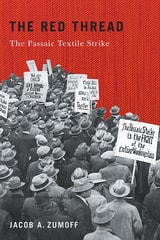
The Red Thread
The Passaic Textile StrikeJacob A. Zumoff
Rutgers University Press, 2021
The Remembered Gate
Memoirs by Alabama WritersJay Lamar
University of Alabama Press, 2002
Nineteen acclaimed writers reflect on the Alabama landscapes, memories, and experiences that shaped their voices.
In The Remembered Gate, nationally prominent fiction writers, essayists, and poets recall how their formative years in Alabama shaped them as people and as writers. The essays range in tone from the pained and sorrowful to the wistful and playful, in class from the privileged to the poverty-stricken, in geography from the rural to the urban, and in time from the first years of the 20th century to the height of the Civil Rights era and beyond.
In all the essays we see how the individual artists came to understand something central about themselves and their art from a changing Alabama landscape. Whether from the perspective of C. Eric Lincoln, beaten for his presumption as a young black man asking for pay for his labors, or of Judith Hillman Paterson, floundering in her unresolved relationship with her troubled family, these personal renderings are intensely realized visions of a writer's sense of being a writer and a human being. Robert Inman tells of exploring his grandmother's attic, and how the artifacts he found there fired his literary imagination. William Cobb profiles the lasting influence of the town bully, the diabolical Cletus Hickey. And in “Growing up in Alabama: A Meal in Four Courses, Beginning with Dessert,” Charles Gaines chronicles his upbringing through the metaphor of southern cooking.
What emerges overall is a complex, richly textured portrait of men and women struggling with, and within, Alabama’s economic and cultural evolution to become major voices of our time.
The Reminiscences of George Strother Gaines
Pioneer and Statesman of Early Alabama and Mississippi, 1805–1843George Strother Gaines
University of Alabama Press, 1998
One man’s remarkable account of nation‑building, Native diplomacy, and the making of the early American South.
The Reminiscences of George Strother Gaines: Pioneer and Statesman of Early Alabama and Mississippi, 1805–1843 offers one of the most vivid, irreplaceable firsthand accounts of the American Southeast during its most transformative decades. Edited and expertly contextualized by historian James P. Pate, this volume gathers Gaines’s dictated memoirs, rare letters, early newspaper publications, oral-history interviews, and extensive editorial notes to illuminate a world on the cusp of monumental change.
George Strother Gaines was no ordinary frontier figure. Trusted by U.S. officials and Choctaw leaders alike, he played central roles as federal factor at the Choctaw Trading House, a key intermediary during treaty negotiations, a primary organizer of the first Choctaw removal, a banker and state senator in newly formed Alabama, and later a driving force behind the Mobile & Ohio Railroad. His reminiscences reveal intimate knowledge of the region’s political development, frontier economy, Native diplomacy, and daily life. They are written in a strikingly elegant “Addisonian” style praised even in his own lifetime.
This edition’s special features—including detailed maps, illustrations, genealogical material, and a robust scholarly introduction—make it the most comprehensive and authoritative presentation of Gaines’s writings ever published. It not only preserves his voice but situates him within the broader historical forces reshaping the Gulf South and Native nations in the nineteenth century.
Ideal readers include:
• Historians of Alabama, Mississippi, and the early American South
• Scholars of Native American and Choctaw/Chickasaw history
• Readers of frontier, antebellum, or political history
• Genealogists and local-history enthusiasts
• Anyone seeking an engaging, elegantly written window into the early Southeast
This is a foundational text for understanding the region’s past—and a compelling story told by one of its most influential witnesses.

The Republic of Football
Legends of the Texas High School GameChad S. Conine
University of Texas Press, 2016
Anywhere football is played, Texas is the force to reckon with. Its powerhouse programs produce the best football players in America. In The Republic of Football, Chad S. Conine vividly captures Texas’s impact on the game with action-filled stories about legendary high school players, coaches, and teams from around the state and across seven decades.
Drawing on dozens of interviews, Conine offers rare glimpses of the early days of some of football’s biggest stars. He reveals that some players took time to achieve greatness—LaDainian Tomlinson wasn’t even the featured running back on his high school team until a breakthrough game in his senior season vaulted him to the highest level of the sport—while others, like Colt McCoy, showed their first flashes of brilliance in middle school. In telling these and many other stories of players and coaches, including Hayden Fry, Spike Dykes, Bob McQueen, Lovie Smith, Art Briles, Lawrence Elkins, Warren McVea, Ray Rhodes, Dat Nguyen, Zach Thomas, Drew Brees, and Adrian Peterson, Conine spotlights the decisive moments when players caught fire and teams such as Celina, Southlake Carroll, and Converse Judson turned into Texas dynasties. Packed with never-before-told anecdotes, as well as fresh takes on the games everyone remembers, The Republic of Football is a must-read for all fans of Friday night lights.
The Republican Party of Texas
A Political HistoryBy Wayne Thorburn
University of Texas Press, 2021
On July 4, 1867, a group of men assembled in Houston to establish the Republican Party of Texas. Combatting entrenched statewide support for the Democratic Party and their own internal divisions, Republicans struggled to gain a foothold in the Lone Star State, which had sided with the Confederacy and aligned with the Democratic platform. In The Republican Party of Texas, Wayne Thorburn, former executive director of the Texas GOP, chronicles over one hundred and fifty years of the defeats and victories of the party that became the dominant political force in Texas in the modern era.
Thorburn documents the organizational structure of the Texas GOP, drawing attention to prominent names, such as Harry Wurzbach and George W. Bush, alongside lesser-known community leaders who bolstered local support. The 1960s and 1970s proved a watershed era for Texas Republicans as they shored up ideological divides and elected the first Republican governor and more state senators and congressional representatives than ever before. From decisions about candidates and shifting allegiances and political stances, to race-based divisions and strategic cooperation with leaders in the Democratic Party, Thorburn unearths the development of the GOP in Texas to understand the unique Texan conservatism that prevails today.
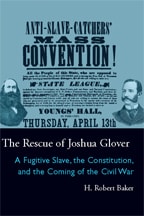
The Rescue of Joshua Glover
A Fugitive Slave, the Constitution, and the Coming of the Civil WarH. Robert Baker
Ohio University Press, 2006
On March 11, 1854, the people of Wisconsin prevented agents of the federal government from carrying away the fugitive slave, Joshua Glover. Assembling in mass outside the Milwaukee courthouse, they demanded that the federal officers respect his civil liberties as they would those of any other citizen of the state. When the officers refused, the crowd took matters into its own hands and rescued Joshua Glover. The federal government brought his rescuers to trial, but the Wisconsin Supreme Court intervened and took the bold step of ruling the Fugitive Slave Act unconstitutional.
The Rescue of Joshua Glover delves into the courtroom trials, political battles, and cultural equivocation precipitated by Joshua Glover’s brief, but enormously important, appearance in Wisconsin on the eve of the Civil War.
H. Robert Baker articulates the many ways in which this case evoked powerful emotions in antebellum America, just as the stage adaptation of Uncle Tom’s Cabin was touring the country and stirring antislavery sentiments. Terribly conflicted about race, Americans struggled mightily with a revolutionary heritage that sanctified liberty but also brooked compromise with slavery. Nevertheless, as The Rescue of Joshua Glover demonstrates, they maintained the principle that the people themselves were the last defenders of constitutional liberty, even as Glover’s rescue raised troubling questions about citizenship and the place of free blacks in America.
The Reverend Jacob Bailey, Maine Loyalist
For God, King, Country, and for SelfJames S. Leamon
University of Massachusetts Press, 2012
Reverend Bailey's persistence in praying for the king and his refusal to publicize the Declaration of Independence from his Pownalborough pulpit aroused hostilities that drove him and his family to the safety of Nova Scotia. There, in exile, Bailey devoted himself to assisting fellow refugees while defending himself from others. During this time, he wrote almost obsessively: poems, dramas, novels, histories. Though few were ever completed, and even fewer published, in one way or another most of his writings depicted the trauma he underwent as a loyalist.
Leamon's study of the Reverend Jacob Bailey depicts the complex nature and burdens of one person's loyalism while revealing much about eighteenth-century American life and culture.
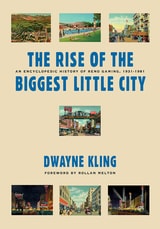
The Rise Of The Biggest Little City
An Encyclopedic History Of Reno Gaming, 1931-1981Dwayne Kling
University of Nevada Press, 2010
The history of Reno during the first half century is to a great degree the history of Reno’s gaming industry. Between 1931 and 1981, the economy, skyline, and lifestyle of “the Biggest Little City in the World” were strongly influenced by the city’s casinos and the people who created and operated them. In The Rise of the Biggest Little City, longtime Reno gaming executive Dwayne Kling records the fruits of his fourteen years of research into the history of Reno’s casinos, from the backroom (and often illegal) dives of the industry’s beginnings to the elegant casino-hotels of today. Arranged in encyclopedic form with historic photographs (many never before published), the book offers the stories of such famous establishments as Harolds Club, the Cal-Neva, the Sands, and Harrah’s, as well as defunct clubs like the Cedars, the Silver Spur, and the Bank Club. We also find the stories of the men and women who created Reno’s gaming industry—such as James McKay and Bill Graham, who came from the rough-and-tumble saloons of boom-town Tonopah and developed a chain of illegal gambling clubs and brothels into Reno’s first major casino, the Bank Club; the Smith family—Raymond I. “Pappy,” Harold Sr., Raymond A., and Harold Jr.—whose Harolds Club was a prime downtown attraction for over fifty years and brought Reno national fame as a destination for fun and gambling; Bill Bailey, an African-American whose Harlem Club—one of the first integrated casinos in Reno—attracted such show-business luminaries as Louis Armstrong and Pearl Bailey (his cousin) for late-night jam sessions; William Harrah, who parleyed a string of small bingo parlors into a major gaming empire; and Jack Douglass, a slot-route operator in the early days of legal gaming who became a major figure in Reno’s modern casino industry. There are more. Kling records the stories of hundreds of gaming establishments, most of them long forgotten, stretching geographically from the Mount Rose Highway to the north end of town, from Verdi to Sparks; and of dozens of men and women who shaped the industry, for better and for worse. We learn from that Reno was the true pioneer of the gambling industry. It was here that big-name entertainment was first offered in a casino setting; that elegant hotel rooms and fine dining were first offered as amenities of the casino experience; that a casino corporation first traded its stock on the New York Stock Exchange; that ethnic minorities first owned and operated casinos, and first integrated them. The Rise of the Biggest Little City will engage readers with its authoritative account of the rise of modern Reno and of the colorful history that lies beneath today’s neon and glitz.
The Rise and Fall of an Urban School System
Detroit, 1907-81, Second EditionJeffrey Mirel
University of Michigan Press, 1999
Detroit's public school system, lauded as a model for the nation in the 1920s and 1930s, has become one of the city's most conspicuous failures. Jeffrey Mirel draws on Detroit's experience to offer a new interpretation of urban educational decline in the twentieth century, suggesting specific answers to what ails America's public schools and how public education can be improved.
Jeffrey Mirel has won two prestigious book awards for The Rise and Fall of an Urban School System. Stanford University and the American Educational Research Association awarded the book the 1994-95 "Outstanding Book Award" stating, "Mirel's documentation and interpretations serve as valuable and refreshing commentary on the current status of urban education, and by extension, all American education and society. . . . The book is admirably written with touches of drama, pathos, and hope." The American Educational Studies Association awarded Mirel the 1994 "Critics' Choice Award" for his outstanding contribution to Educational Studies.
This paperback edition includes a comprehensive epilogue focusing on recent events in Detroit educational reform. Detailing the formation and rapid collapse of a campaign in the late 1980s and early 1990s to radically restructure the Detroit public schools, Mirel's new analysis of this experiment illuminates both the persistence of historical trends in the school district and the possibilities for change.
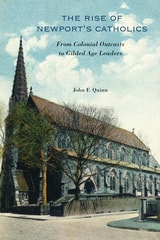
The Rise of Newport’s Catholics
From Colonial Outcasts to Gilded Age LeadersJohn F. Quinn
University of Massachusetts Press, 2024
Honorable Mention, 2025 Catholic Media Association Book Awards
Nineteenth-century New England was a hostile place for Catholics. In Massachusetts a mob torched a convent; in Maine a priest was tarred and feathered; and Rhode Island elected an anti-Catholic Know Nothing governor. “No Irish Need Apply” signs were common.
Newport was different. It was a religiously diverse and tolerant city that welcomed Catholic French troops during the American Revolution. Later, as it became the favored summer retreat for America’s Protestant social elite, Irish Catholics arrived to work in construction jobs, the tourist economy, and the grand Gilded Age cottages. By the end of the century, Newport’s Catholic community was flourishing. Moneyed Catholics acquired their own mansions, an Irish Catholic was mayor, and prominent Protestants were helping Catholic neighbors establish new schools and churches. In this deeply researched study, John F. Quinn delves into this rich Catholic history to discover why nineteenth-century Newport was particularly religiously tolerant and accepting.
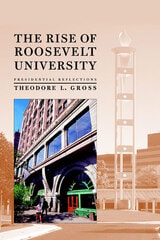
The Rise of Roosevelt University
Presidential ReflectionsTheodore L. Gross
Southern Illinois University Press, 2005
Underscoring professional and educational issues pertinent to higher learning at universities across the country, Theodore L. Gross’s memoir of his years in academia chronicles his successful fourteen-year presidency at Chicago’s Roosevelt University, a period of leadership that resulted in an upsurge of fund-raising, sharp increases in enrollment and endowment, and the transformation of an urban campus into a metropolitan university.
Beginning with a description of his childhood and adolescent education and experiences, Gross recalls his years as a faculty member and academic administrator at the City College of New York from 1958 to 1978, when the college was moving from selective admissions to open enrollment. He also served in administrative positions at Penn State University and SUNY Purchase before accepting the Roosevelt presidency in 1988. Focusing on the tension between the promise of open admissions and aspirations of academic excellence, The Rise of Roosevelt University: Presidential Reflections relates Gross’s perceptions of the failure of open admissions at CCNY and his resolution to learn from those mistakes while at Roosevelt.
Drawing on private correspondence and conversations, essays, university documents, and other archival materials and research, Gross re-creates the highs and lows of his quest to make Roosevelt distinctive. His strategic plan included the appointment of senior executives and deans, the creation of a performing arts conservatory, the development of an educational alliance with other universities, online instruction, an honors program, a Chicago School of Real Estate, an MBA for Chinese students, the Partners in Corporate Education program, and the implementation of a second comprehensive campus. He describes the creation of the Albert A. Robin campus in Schaumburg and the realization of Roosevelt as a metropolitan university, creating a vivid portrait of the suburban culture, the educational context of large community colleges throughout the northwest suburbs, the development of a community advisory board that helped secure funds, and the improved morale of faculty and administration.
Gross’s fund-raising efforts increased the endowment from $3 million to $33 million, and a capital campaign surpassed the goal of $45 million. In this volume, he describes meetings with major donors, the successes and failures of contributions, and the development of greater alumni support in the context of fund-raising throughout Chicago. He also analyzes the highly publicized legal dispute between the Auditorium Theatre Council and Roosevelt University over ownership of the world renowned theatre, pointing out how the case epitomizes issues that all universities confront: the university’s need to control its entities, detrimental publicity, sectional and regional conflicts, and a split in the arts community. Throughout this narrative, Gross juxtaposes his personal life and professional career, dramatizing how the two are related.
More than a retelling of anecdotes and statistics, the volume provides a rare perspective on the intersection of higher education and politics in Chicago. Gross analyzes the different public and private universities in the city and in surrounding Cook County to describe their relationships with ethnicity, religion, class, and with city hall. He also covers the Daley political machine’s influence on higher education, the politics of university governance, the spectacular growth of the western suburbs, and city versus suburban identities.
A personal road map of the development of higher education through the post–World War II decades, The Rise of Roosevelt University: Presidential Reflections mirrors the social climate that affected the country’s universities at large, from the open admissions policies and student rebellions of the ’60s and ’70s, to the urban blight and suburban sprawl of the ’80s, to the strategic planning and expansion of the ’90s and the new century. The result is a captivating account of the issues involved in presidential transition and leadership, the strategic development of metropolitan universities, and the future role of Roosevelt and similar institutions.
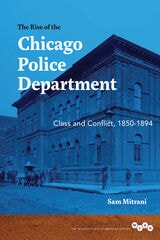
The Rise of the Chicago Police Department
Class and Conflict, 1850-1894Sam Mitrani
University of Illinois Press, 2013
In this book, Sam Mitrani cogently examines the making of the police department in Chicago, which by the late 1800s had grown into the most violent, turbulent city in America. Chicago was roiling with political and economic conflict, much of it rooted in class tensions, and the city's lawmakers and business elite fostered the growth of a professional municipal police force to protect capitalism, its assets, and their own positions in society. Together with city policymakers, the business elite united behind an ideology of order that would simultaneously justify the police force's existence and dictate its functions.
Tracing the Chicago police department's growth through events such as the 1855 Lager Beer riot, the Civil War, the May Day strikes, the 1877 railroad workers strike and riot, and the Haymarket violence in 1886, Mitrani demonstrates that this ideology of order both succeeded and failed in its aims. Recasting late nineteenth-century Chicago in terms of the struggle over order, this insightful history uncovers the modern police department's role in reconciling democracy with industrial capitalism.
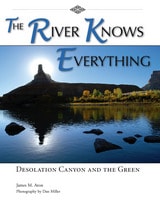
The River Knows Everything
Desolation Canyon and the GreenJames M Aton
Utah State University Press, 2009
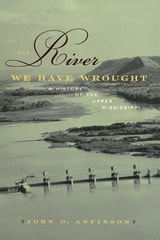
The River We Have Wrought
A History of the Upper MississippiJohn O. Anfinson
University of Minnesota Press, 2005
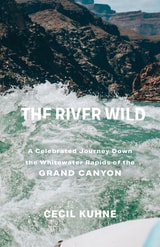
The River Wild
A Celebrated Journey Down the Whitewater Rapids of the Grand CanyonCecil Kuhne
University of Utah Press, 2026
Embark on an unforgettable adventure down the mighty Colorado River in The River Wild: A Celebrated Journey down the Whitewater Rapids of the Grand Canyon. Former professional river guide Cecil Kuhne takes readers through 225 miles of towering canyon walls, surging currents, and legendary rapids that have challenged explorers for over 150 years. From the historic first descent of John Wesley Powell’s expedition to the modern thrill-seekers navigating Lava Falls, Crystal, and Hance, this book captures the heart-pounding excitement of whitewater rafting.
With vivid descriptions of the canyon’s breathtaking geology, lush flora, and abundant wildlife, Kuhne blends history, adventure, and natural beauty into an immersive journey. Whether you’re a seasoned river runner or an armchair explorer, The River Wild offers a front-row seat to one of the world’s most exhilarating river expeditions.
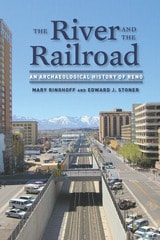
The River and the Railroad
An Archaeological History of RenoMary Ringhoff
University of Nevada Press, 2011
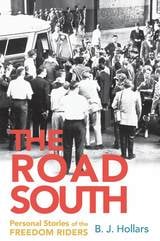
The Road South
Personal Stories of the Freedom RidersB. J. Hollars
University of Alabama Press, 2018
Revisits the inspiring and heroic stories of the Freedom Riders, through their own words.
In May 1961, despite multiple Supreme Court rulings, segregation remained alive and well within the system of interstate travel. All across the American South, interstate buses as well as their travel facilities were divided racially. This blatant disregard for law and morality spurred the Congress of Racial Equality to send thirteen individuals—seven black, six white—on a harrowing bus trip throughout the South as a sign of protest.
These original riders were met with disapproval, arrests and violence along the way, but that did not stop the movement. That summer, more than four hundred Freedom Riders continued their journey—many of them concluding their ride at Mississippi’s notorious Parchman Farm, where they endured further abuses and indignities. As a result of the riders sacrifice, by November of 1961, the Interstate Commerce Commission finally put an end to interstate commerce segregation, and in the process, elevated the riders to become a source of inspiration for other civil rights campaigns such as voter registration rights and school desegregation.
While much has been written on the Freedom Rides, far less has been published about the individual riders. Join award-winning author B. J. Hollars as he sets out on his own journey to meet them, retracing the historic route and learning the stories of as many surviving riders as he could. The Road South: Personal Stories of the Freedom Riders offers an intimate look into the lives and legacies of the riders. Throughout the book these civil rights veterans’ poignant, personal stories offer timely insights into America’s racial past and hopeful future.
Weaving the past with the present, Hollars aims to demystify the legendary journey, while also confronting more modern concerns related to race in America. The Road South is part memoir and part research-based journalism. It transcends the traditional textbook version of this historical journey to highlight the fascinating stories of the many riders—both black and white—who risked their lives to move the country forward.
The Road to Blair Mountain
Saving a Mine Wars Battlefield from King CoalCharles B. Keeney
West Virginia University Press, 2021
In 1921 Blair Mountain in southern West Virginia was the site of the country’s bloodiest armed insurrection since the Civil War, a battle pitting miners led by Frank Keeney against agents of the coal barons intent on quashing organized labor. It was the largest labor uprising in US history. Ninety years later, the site became embroiled in a second struggle, as activists came together to fight the coal industry, state government, and the military- industrial complex in a successful effort to save the battlefield—sometimes dubbed “labor’s Gettysburg”—from destruction by mountaintop removal mining.
The Road to Blair Mountain is the moving and sometimes harrowing story of Charles Keeney’s fight to save this irreplaceable landscape. Beginning in 2011, Keeney—a historian and great-grandson of Frank Keeney—led a nine-year legal battle to secure the site’s placement on the National Register of Historic Places. His book tells a David-and-Goliath tale worthy of its own place in West Virginia history. A success story for historic preservation and environmentalism, it serves as an example of how rural, grassroots organizations can defeat the fossil fuel industry.
The Road to Concord
How Four Stolen Cannon Ignited the Revolutionary WarJ. L. Bell
Westholme Publishing, 2016
In the early spring of 1775, on a farm in Concord, Massachusetts, British army spies located four brass cannon belonging to Boston’s colonial militia that had gone missing months before. British general Thomas Gage had been searching for them, both to stymie New England’s growing rebellion and to erase the embarrassment of having let cannon disappear from armories under redcoat guard. Anxious to regain those weapons, he drew up plans for his troops to march nineteen miles into unfriendly territory. The Massachusetts Patriots, meanwhile, prepared to thwart the general’s mission. There was one goal Gage and his enemies shared: for different reasons, they all wanted to keep the stolen cannon as secret as possible. Both sides succeeded well enough that the full story has never appeared until now.
The Road to Concord: How Four Stolen Cannon Ignited the Revolutionary War by historian J. L. Bell reveals a new dimension to the start of America’s War for Independence by tracing the spark of its first battle back to little-known events beginning in September 1774. The author relates how radical Patriots secured those four cannon and smuggled them out of Boston, and how Gage sent out spies and search parties to track them down. Drawing on archives in the United States, United Kingdom, and Canada, the book creates a lively, original, and deeply documented picture of a society perched on the brink of war.
The Road to Marion Town
The Settlement of Osceola County, State of MichiganJ. August Lithen
Parkhurst Brothers, Inc., 2018
The Road to Mount Lemmon
A Father, A Family, and the Making of SummerhavenMary Ellen Barnes
University of Arizona Press, 2009
The Santa Catalina Mountains first captivated Tony Zimmerman on a 1937 hunting trip. Regard for the alpine beauty must have been in his genes—he was the son of Swiss German immigrants—and by 1940 the Tucson schoolteacher had begun taking his family to Mount Lemmon to spend the summer. Back then, the road up the mountain was a rough two-track dirt road from Oracle, and Summerhaven was nothing but a sleepy cluster of summer cabins. But Tony Zimmerman was to help change all of that.
The Road to Mount Lemmon is a beguiling memoir of the Catalina Mountains told by the daughter of one of the pioneers in the life and development of Mount Lemmon’s communities. Mary Ellen Barnes tells how her father Tony resigned from teaching in 1943 to devote his career to the development of this mountain oasis. He not only sold real estate for long time landowner Randolph Jenks, he even bought the village’s tiny two-room store, installing a sawmill to build a larger store, and built the Mount Lemmon Inn. And as she spins Tony’s personal saga, she also gives readers a glimpse of the Catalinas before Tucson became a boom town, recalling idyllic adventures in wild country and the cowboys, rangers, ranchers, and loggers who worked there.
Barnes tells Tony’s story as if sharing it with family, evoking her father’s personality on every page. The Road to Mount Lemmon is an intimate view of a mountain community over the course of nearly sixty years—a view that few people have shared but one all can appreciate.

The Road to Rebellion
Class Formation and Kansas Populism, 1865-1900Scott G. McNall
University of Chicago Press, 1988
McNall rejects the traditional view that blames the failure of the Alliance on a turn to mass-based electoral politics, but rather sees the move into national politics by the Farmer's Alliance as part of a rational strategy to better wage their fight for economic justice. The Kansas populists failed, he argues, because of their inability to embrace a broad, working-class base, to provide an effective alternative vision, and ultimately to create a distinct class organization. Debates about how classes come into being, or how democracy is to be realized, cannot be settled in the abstract. McNall's recreation of this heroic struggle is a model in the analysis of class formation. At the same time, The Road to Rebellion is dynamic social history, which holds vital lessons for structuring and realizing alternative political agendas today.

The Road to Spindletop
Economic Change in Texas, 1875–1901By John Stricklin Spratt; drawings by Ed Bearden
University of Texas Press, 1955
This book is an economic history of Texas at the end of the nineteenth century. In 1875, Texas was an agrarian state with limited industry. A generation later, agriculture was heavily commercialized, thousands of miles of railroads carried people and goods around the state, and urban populations increased rapidly. Even before the Spindletop gusher that irrevocably changed the state’s future, Texas had already moved far from its days as a Mexican and American frontier.
The Road to Ticonderoga
The Campaign of 1758 in the Champlain ValleyMichael G. Laramie
Westholme Publishing, 2027
Based on journals, letters, and accounts of the participants on both sides, The Road to Ticonderoga: The Campaign of 1758 in the Champlain Valley by Michael G. Laramie recounts this unexpected tale of victory and defeat on the North American frontier. Here we learn how the unexpected death of a dynamic leader, George Howe, elder brother of Richard and William, nearly crushed “the soul of General Abercrombie’s army,” leading to misinterpreted orders and hesitation on the part of the British. At the same time, the French commander perilously underestimated the ability of his own forces while overestimating his enemy’s before his fateful and unexpected decision to make his stand at Ticonderoga. With lessons and repercussions for future warfare in North America, The Road to Ticonderoga shows how a series of small mistakes can cascade into a catastrophe under weak leadership—or be exploited by a strong one.
The Road to Wildcat
A Tale of Mountain AlabamaEleanor Risley
University of Alabama Press, 2004
A remarkable chronicle of southern mountain life in the early 20th century
The Road to Wildcat recounts the travels in North Alabama in the mid-1920s of Eleanor Risley (suffering from diabetes), her asthmatic husband, Pierre, their dog, John, and a Chinese wheelbarrow named Sisyphus that held their travel goods. Advised to make the walking tour for improvement of their health, the group left Fairhope in south Alabama and walked hundreds of miles in the southern Appalachians for months, sleeping out under the stars at night, or in a canvas tent or an abandoned building, cooking their fresh-caught foods over campfires, and accepting the generosity and advice of the mountain people they met, some of them moonshiners and outlaws.
During their sojourn across the rural wilderness, they enjoyed fiddlin’ dances in rickety halls, joined Sacred Harp singers, learned about the grapevine telegraph, saw the dreadful effects of inbreeding, and attended “Snake Night” at Posey Holler (a religious revival that included snake handling). Published in segments in the Atlantic Monthly in 1928 and 1929 and then reorganized into book form, the travelogue is a colorful record of the culture, customs, and dialect of the southern mountaineers of that era.
The Roar and the Silence
A History of Virginia City and the Comstock LodeRonald M. James
University of Nevada Press, 1998
The Romance of Wisconsin Place Names
Robert E. Gard
Wisconsin Historical Society Press, 2015
Fifty years ago, educator and writer Robert E. Gard traveled across Wisconsin, learning the trivial, controversial, and landmark stories behind how cities, counties, and local places got their names. This volume records the fruits of Gard’s labors in an alphabetical listing of places from every corner of Wisconsin, and the stories behind their often-unusual names. Gard’s work provides an important snapshot of how Wisconsin residents of a bygone era came to understand the names of their towns and home places, many of which can no
longer be found on any map.
Celebrated rural historian Jerry Apps introduces this reprint of Gard’s work,
saying that in “some ways The Romance of Wisconsin Place Names is a reference book, a place where you can go to learn a little more about your home town. But in many ways it is much more than that, for it includes the stories of places throughout the state, submitted by the people who knew them. It is a book where story, people, and place all come together.”
The Ruined Anthracite
Historical Trauma in Coal-Mining CommunitiesPaul A. Shackel
University of Illinois Press, 2023
Insightful and dramatic, The Ruined Anthracite combines archaeology, documentary research, and oral history to render the ongoing human cost of environmental devastation and unchecked capitalism.
The Rumble of a Distant Drum
The Quapaws and Old World Newcomers, 1673–1804Morris Arnold
University of Arkansas Press, 2007
Winner of the 2001 Booker Worthen Literary Prize
Winner of the 2002 S. G. Ragsdale Award for Arkansas History
The Rumble of a Distant Drum opens in 1673 when Marquette and Jolliet sailed down the Mississippi River and found the Quapaw living in the area where the Arkansas River flowed into the Mississippi. In 1686 Henri de Tonti would found Arkansas Post in this same location. It was the first European settlement in this part of the country, established thirty years before New Orleans and eighty before St. Louis.
Morris S. Arnold draws on his many years of archival research and writing on colonial Arkansas to produce this elegant account of the cultural intersections of the French and Spanish with the native American peoples. He demonstrates that the Quapaws and Frenchmen created a highly symbiotic society in which the two disparate peoples became connected in complex and subtle ways—through intermarriage, trade, religious practice, and political/military alliances.
The Sacred Cause of Union
Iowa in the Civil WarThomas R. Baker
University of Iowa Press, 2016
To shed light on how individual Iowans experienced the war, the book profiles six state residents. Three were well-known. Annie Wittenmyer, a divorced woman with roots in Virginia, led the state’s efforts to ship clothing and food to the soldiers. Alexander Clark, a Muscatine businessman and the son of former slaves, eloquently championed the rights of African Americans. Cyrus Carpenter, a Pennsylvania-born land surveyor anxious to make his fortune, served in the army and then headed the state’s Radical Republican faction after the war, ultimately being elected governor.
Three never became famous. Ben Stevens, a young, unemployed carpenter, fought in an Iowa regiment at Shiloh, and then transferred to a Louisiana African American regiment so that he could lead the former slaves into battle. Farm boy Abner Dunham defended the Sunken Road at the Battle of Shiloh, before spending seven grim months in Confederate prison camps. The young Charles Musser faced pressure from his neighbors to enlist and from his parents to remain at home to work on the farm. Soon after he signed on to serve the Union, he discovered that his older brother had joined the Confederate Army. Through the letters and lives of these six Iowans, Thomas Baker shows how the Civil War transformed the state at the same time that Iowans transformed the nation.

The Sagebrush Ocean, Tenth Anniversary Edition
A Natural History Of The Great BasinStephen Trimble
University of Nevada Press, 1999
This is the best general introduction to the ecology and spirit of the Great Basin, a place where "the desert almost seems to mirror the sky in size," where mountains hold "ravens, bristlecone pines, winter stillness—and unseen, but satisfying, the possibility of bighorn sheep." Trimble's photographs come from the backcountry of this rugged land, from months of exploring and hiking the Great Basin wilderness in all seasons; and his well-chosen words come from a rare intimacy with the West.
The Sagebrush Ocean
35th Anniversary EditionStephen Trimble
University of Nevada Press, 2026
The Sagebrush Ocean, the essential introduction to the ecology and spirit of the Great Basin Desert, returns in this richly updated 35th anniversary edition. Winner of the Ansel Adams Award for Photography and Conservation, Stephen Trimble’s authoritative voice and evocative photographs illuminate this landscape of sun-struck playas, surprising wetlands, remote canyons, and wind-swept tundra.
Today, the once-vast “sagebrush ocean” is an endangered sea, as environmental changes and human development have diminished it by half. This heartbreaking decline drives Trimble’s updated text, but he blends loss with reverence for what remains—and urgent insight into what’s at stake. Striking color photographs, many newly added, illuminate some of the continent’s most spectacular but little known scenery. For anyone curious about the Great Basin or concerned for its future, this timely edition is indispensable.
The Sagebrush State, 3d Edition
Nevada's History, Government, and PoliticsMichael W. Bowers
University of Nevada Press, 2006
The Sagebrush State, 4th Ed
Nevada’s History, Government, and PoliticsMichael W. Bowers
University of Nevada Press, 2013
The Sagebrush State, 5th Edition
Nevada's History, Government, and PoliticsMichael W. Bowers
University of Nevada Press, 2018
This comprehensive and insightful explanation discusses how Nevada’s history has shaped its political culture, and how its government operates today. The Sagebrush State serves as a highly readable and accessible text for the study of Nevada’s political history and constitution, which is a graduation requirement at the state’s colleges and universities. The fifth edition is updated through 2017 and includes the full text of the state constitution with extensive annotations of all amendments to the original 1864 document.
The Sagebrush State, 6th Edition
Nevada's History, Government, and PoliticsMichael W. Bowers
University of Nevada Press, 2021
The Sagebrush State, 7th Edition
Nevada's History, Government, and PoliticsMichael W. Bowers
University of Nevada Press, 2025
A dynamic study of Nevada’s government and politics from the state’s inception to the present day.
Starting with Michael W. Bowers’s first edition published in 1996, this concise volume explains the unique dynamics of Nevada’s formation and its political and economic development. David F. Damore continues this legacy in the book’s seventh edition by describing how even today, Nevada is unlike the other states in its politics and culture: economically conservative and averse to strong state government, yet socially libertarian and home to widespread gaming anchored by a 24/7 industry. Nevada has the highest percentage of federally owned lands and one of the highest rates of urbanization in the United States, yet it has often been dominated by rural legislators.
This comprehensive and insightful volume examines how Nevada’s history and founding have shaped its political culture and how its government operates today. The Sagebrush State serves as a highly readable and accessible text for the study of Nevada’s political history and constitution. The seventh edition is updated through 2023 and includes the results of the 2022 elections, policies advanced during the 2023 legislative session, and Nevada’s continuing recovery from the impacts of the COVID-19 recession. The full text of the state constitution with extensive annotations of all amendments to the original 1864 document is provided as an appendix.
The Sagebrush Trail
Western Movies and Twentieth-Century AmericaRichard Aquila
University of Arizona Press, 2015
The book is divided into three parts. Part 1 traces the birth and growth of Westerns from 1900 through the end of World War II. Part 2 focuses on a transitional period in Western movie history during the two decades following World War II. Finally, part 3 shows how Western movies reflected the rapid political, social, and cultural changes that transformed America in the 1960s and the last decades of the twentieth century.
The Sagebrush Trail explains how Westerns evolved throughout the twentieth century in response to changing times, and it provides new evidence and fresh interpretations about both Westerns and American history. These films offer perspectives on the past that historians might otherwise miss. They reveal how Americans reacted to political and social movements, war, and cultural change. The result is the definitive story of Western movies, which contributes to our understanding of not just movie history but also the mythic West and American history. Because of its subject matter and unique approach that blends movies and history, The Sagebrush Trail should appeal to anyone interested in Western movies, pop culture, the American West, and recent American history and culture.
The mythic West beckons but eludes. Yet glimpses of its utopian potential can always be found, even if just for a few hours in the realm of Western movies. There on the silver screen, the mythic West continues to ride tall in the saddle along a “sagebrush trail” that reveals valuable clues about American life and thought.
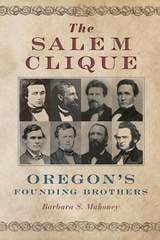
The Salem Clique
Oregon's Founding BrothersBarbara S. Mahoney
Oregon State University Press, 2017
While not in agreement with some of the more extreme contemporary accusations against the Clique, many historians have concluded that its members were vicious men who were able, because of their command of the Democratic party, to impose their hegemony on the Oregon Territory’s inhabitants. Other scholars have seen them as merely another instance of the contentious politics of the period.
Although the Salem Clique has been given considerable prominence in nearly every account of Oregon’s Territorial period, there has not been a detailed study of its role until now. What sort of people were these men? What was their impact on the issues, events, and movements of the period? What role did they play in the years after Oregon became a state? In The Salem Clique, Historian Barbara Mahoney sets out to answer these and many other questions in this comprehensive and deeply researched history.

The Salvager
The Life of Captain Tom Reid on the Great LakesMary Frances Doner
University of Minnesota Press, 2017
First published in 1958, The Salvager is both a narrative history of Great Lakes shipping disasters of 1880–1950 and the life story of Captain Thomas Reid, who operated one of the region’s largest salvaging companies during that era.
The treacherous shoals, unpredictable storms, and sub-zero temperatures of the Great Lakes have always posed special hazards to mariners—particularly before the advent of modern navigational technologies—and offered ample opportunity for an enterprising sailor to build a salvage business up from nothing. Designing much of his equipment himself and honing a keen eye for the risks and rewards of various catastrophes, Captain Reid rose from humble beginnings and developed salvaging into a science. Using the actual records of the Reid Wrecking and Towing Company as well as Reid’s personal logs and letters, Mary Frances Doner deftly tells the stories not only of the maritime disasters and the wrecking adventures that followed, but also of those waiting back on shore for their loved ones to return.
The San Antonio Missions and their System of Land Tenure
By Félix D. Almaráz, Jr.
University of Texas Press, 1989
San Antonio, Texas, is unique among North American cities in having five former Spanish missions: San Antonio de Valero (The Alamo; founded in 1718), San José y San Miguel de Aguayo (1720), Nuestra Señora de la Purísima Concepción de Acuña (1731), San Juan Capistrano (1731), and San Francisco de la Espada (1731). These missions attract a good deal of popular interest but, until this book, they had received surprisingly little scholarly study. The San Antonio Missions and Their System of Land Tenure, a winner in the Presidio La Bahía Award competition, looks at one previously unexamined aspect of mission history—the changes in landownership as the missions passed from sacred to secular owners in the late eighteenth and early nineteenth centuries.
Drawing on exhaustive research in San Antonio and Bexar County archives, Félix Almaráz has reconstructed the land tenure system that began with the Spaniards' jurisprudential right of discovery and progressed through colonial development, culminating with ownership of the mission properties under successive civic jurisdictions (independent Mexico, Republic of Texas, State of Texas, Bexar County, and City of San Antonio). Several broad questions served as focus points for the research. What were the legal bases for the Franciscan missions as instruments of the Spanish Empire? What was the extent of the initial land grants at the time of their establishment in the eighteenth century? How were the missions' agricultural and pastoral lands configured? And, finally, what impact has urbanization had upon the former Franciscan foundations?
The findings in this study will be valuable for scholars of Texas borderlands and Hispanic New World history. Additionally, genealogists and people with roots in the San Antonio missions area may find useful clues to family history in this extensive study of landownership along the banks of the Río San Antonio.
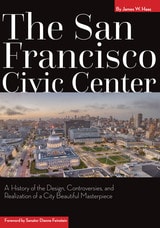
The San Francisco Civic Center
A History of the Design, Controversies, and Realization of a City Beautiful MasterpieceJames Haas
University of Nevada Press, 2019
In The San Francisco Civic Center, James Haas tells the complete story of San Francisco’s Civic Center and how it became one of the most complete developments envisioned by any American city. Originally planned and designed by John Galen Howard in 1912, the San Francisco Civic Center is considered in both design and materials one of the finest achievements of the American reformist City Beautiful movement, an urban design movement that began more than a century ago.
Haas meticulously unravels the Civic Center’s story of perseverance and dysfunction, providing an understanding and appreciation of this local and national treasure. He discusses why the Civic Center was built, how it became central to the urban planning initiatives of San Francisco in the early twentieth century, and how the site held onto its founders’ vision despite heated public debates about its function and achievement. He also delves into the vision for the future and related national trends in city planning and the architectural and art movements that influenced those trends.
Riddled with inspiration and leadership as well as controversy, The San Francisco Civic Center, much like the complex itself, is a stunning manifestation of the confident spirit of one of America’s most dynamic and creative cities.

The Sanchez Family
Mexican American High School and Collegiate Wrestlers from Cheyenne, WyominJorge Iber
University of Wyoming Press, 2025
The first members of this particular Sanchez clan arrived in Wyoming during the early decades of the twentieth century. The first-generation American grandchildren of these families—Gilbert, David, Arthur, and Ray—used wrestling to radically alter their social and economic status by attending college with athletic scholarships, graduating, and moving on to professional, middle-class careers. Subsequent generations of the family followed their fathers and uncles to the mats at various institutions, also going on to earn degrees and enter professional occupations. Indeed, Iber contends that wrestling became the family’s “business,” the mechanism by which the Sanchezes extricated themselves from Cheyenne’s working class.
Revealing a previously unstudied aspect of Mexican American life in the state, The Sanchez Family sheds light on another vehicle for the educational, social, and economic advancement of Latinos in other parts of the United States. The first book to examine the role of wrestling in the lives of Mexican Americans, it serves as a foundational text for Latino studies of sports and constructing racial counterscripts.
The Sandy Ridge and Halstead Paleo-Indian Sites
Unifacial Tool Use and Gainey Phase Definition in South-Central OntarioLawrence J. Jackson with a foreword by Henry T. Wright and phytolith analysis by Anita Buehrle
University of Michigan Press, 1998
The Santa Fe Trail in Missouri
Mary Collins Barile
University of Missouri Press, 2010
The Savannah River Chiefdoms
Political Change in the Late Prehistoric SoutheastDavid G. Anderson
University of Alabama Press, 1994
This volume explores political change in chiefdoms, specifically how complex chiefdoms emerge and collapse, and how this process—called cycling—can be examined using archaeological, ethnohistoric, paleoclimatic, paleosubsistence, and physical anthropological data. The focus for the research is the prehistoric and initial contact-era Mississippian chiefdoms of the Southeastern United States, specifically the societies occupying the Savannah River basin from ca. A.D. 1000 to 1600. This regional focus and the multidisciplinary nature of the investigation provide a solid introduction to the Southeastern Mississippian archaeological record and the study of cultural evolution in general.