Results by title
18284 books match the query 'United States' and 3764 start with t
The Challenge of Regulating Managed Care
John E. Billi and Gail B. Agrawal, Editors
University of Michigan Press, 2001
The Challenger Launch Decision
Risky Technology, Culture, and Deviance at NASADiane Vaughan
University of Chicago Press, 1995
Journalists and investigators have historically cited production problems and managerial wrong-doing as the reasons behind the disaster. The Presidential Commission uncovered a flawed decision-making process at the space agency as well, citing a well-documented history of problems with the O-ring and a dramatic last-minute protest by engineers over the Solid Rocket Boosters as evidence of managerial neglect.
Why did NASA managers, who not only had all the information prior to the launch but also were warned against it, decide to proceed? In retelling how the decision unfolded through the eyes of the managers and the engineers, Vaughan uncovers an incremental descent into poor judgment, supported by a culture of high-risk technology. She reveals how and why NASA insiders, when repeatedly faced with evidence that something was wrong, normalized the deviance so that it became acceptable to them.
No safety rules were broken. No single individual was at fault. Instead, the cause of the disaster is a story not of evil but of the banality of organizational life. This powerful work explains why the Challenger tragedy must be reexamined and offers an unexpected warning about the hidden hazards of living in this technological age.
The Challenger Launch Decision
Risky Technology, Culture, and Deviance at NASA, Enlarged EditionDiane Vaughan
University of Chicago Press, 2015
When the Space Shuttle Challenger exploded on January 28, 1986, millions of Americans became bound together in a single, historic moment. Many still vividly remember exactly where they were and what they were doing when they heard about the tragedy. Diane Vaughan recreates the steps leading up to that fateful decision, contradicting conventional interpretations to prove that what occurred at NASA was not skullduggery or misconduct but a disastrous mistake.
Why did NASA managers, who not only had all the information prior to the launch but also were warned against it, decide to proceed? In retelling how the decision unfolded through the eyes of the managers and the engineers, Vaughan uncovers an incremental descent into poor judgment, supported by a culture of high-risk technology. She reveals how and why NASA insiders, when repeatedly faced with evidence that something was wrong, normalized the deviance so that it became acceptable to them. In a new preface, Vaughan reveals the ramifications for this book and for her when a similar decision-making process brought down NASA's Space Shuttle Columbia in 2003.

The Challenges of Sovereignty
Essays on Israel and ZionismDavid Ellenson
Brandeis University Press, 2026
Key essays by a notable scholar address some of the most pressing questions facing Israel today.
Over the course of his rich career, David Ellenson—one of the most outstanding Jewish scholars, intellectuals, and thinkers of our time—probed the tension between tradition and modernity, especially as reflected in the ceaseless reinterpretation of liturgical and halakhic texts. Alongside that scholarly interest, largely centered on European Jewry, Ellenson produced an impressive body of work on Zionism and Israel.
This volume follows the arc of this body of work from Ellenson’s early articles on the Zionism of American rabbis to his last essay on the struggle between Jewish and democratic impulses in Israeli society. He draws on familiar sources of inquiry—Jewish prayers and legal sources—to chart changes in Israeli religious life and to excavate its theological-political foundation. What emerges is a profound meditation on some of the most important questions that Israel faces today: what does it mean to be Jewish in the state? What role should Halakhah play in a self-defined Jewish state? How should the state treat its non-Jewish minority? How deeply rooted is democracy in the state and its foundational texts? And can the state ever escape seemingly irrepressible internal and external conflict?
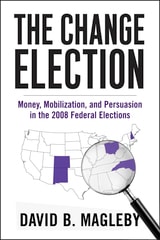
The Change Election
Money, Mobilization, and Persuasion in the 2008 Federal ElectionsEdited by David Magleby
Temple University Press, 2010
The 2008 election was an extraordinary event that represented change at many levels. The candidates’ innovative campaigns changed how funds were raised, how voters were mobilized, and how messages were communicated through advertising and the internet. Parties and interest groups played their own important role in this historic election. In The Change Election, David Magleby assembles a team of accomplished political scientists to provide an in-depth analysis of this groundbreaking presidential election. These scholars through a set of compelling case studies examine the competition for votes in a dozen competitive House and Senate contests and for the White House in five states: Ohio, North Carolina, New Hampshire, Colorado, and New Mexico.
Backed by a wealth of data, and extensive interviews, the contributors offer an up-close look at the interactions of candidates' individual skills and personalities with the larger political forces at work in the election year. The book offers insights into the rapidly evolving organizational and technical aspects of campaigning. The dramatic success Obama and other candidates had in raising money—especially from small donors—is addressed along with how money was raised and spent by the candidates, party committees, and interest groups competing for votes.
Building on a tested methodology, The Change Election explores the interplay of money and electioneering. Magleby builds on more than a decade of prior studies to show the ways participants in our electoral process have adapted to statutory and judicial decisions and how the 2008 election has the potential to transform American electoral politics.
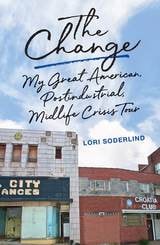
The Change
My Great American, Postindustrial, Midlife Crisis TourLori Soderlind
University of Wisconsin Press, 2020
With humanity and humor, Soderlind's journey introduces quirky folks along the way, including Swannie Jim of Silo City and his fawn pit bull, Champ. She attempts to channel muckraking journalist Ida M. Tarbell and celebrates complicated characters, including Robert De Niro's heartbroken veteran in The Deer Hunter. Ultimately a romance—of Soderlind's love for America, her dog, the long-term partner she left behind, and the childhood crush she remembers with a big, aching pang—The Change offers daring and often hilarious insights into loss and acceptance, especially when it takes a while to get there.

The Changing Academic Library
Operations, Culture, EnvironmentsJohn Budd
Assoc of College & Research Libraries, 2018
The Changing American Mind
How and Why American Public Opinion Changed Between 1960 and 1988William G. Mayer
University of Michigan Press, 1992
Have Americans become more or less tolerant of racial discrimination? More or less supportive of abortion? Is a new tax revolt underway? Did a "new conservative mood" dominate elections and policy discussions in the early 1980s? Popular and academic discussions about the past and future of American politics often turn on the question of whether and how public opinion has changed. Yet for all the talk about such matters, observes political scientist William G. Mayer, there is surprisingly little hard evidence on many of these questions. The Changing American Mind is designed to fill that gap, by presenting a comprehensive history of American public opinion over the last three decades: how it changed, why it changed, and what difference that makes for American politics. The Changing American Mind is important reading for all who are interested in American politics and public opinion. Its appendices, which include the results of more than 250 survey questions that have been asked regularly of national samples over the last three decades, make it an indispensable reference source for everyone who studies or participates in American politics.
The Changing Borders of Juvenile Justice
Transfer of Adolescents to the Criminal CourtEdited by Jeffrey Fagan and Franklin E. Zimring
University of Chicago Press, 2000
Research in this area has not kept pace with these legislative developments. There has never been a detailed, sociolegal analytic book devoted to this topic. In this important collection, researchers discuss policy, substantive procedural and empirical dimensions of waivers, and where the boundaries of the courts lie. Part 1 provides an overview of the origins and development of law and contemporary policy on the jurisdiction of adolescents. Part 2 examines the effects of jurisdictional shifts. Part 3 offers valuable insight into the developmental and psychological aspects of current and future reforms.
Contributors: Donna Bishop, Richard Bonnie, M. A. Bortner, Elizabeth Cauffman, Linda Frost Clausel, Robert O. Dawson, Jeffrey Fagan, Barry Feld, Charles Frazier, Thomas Grisso, Darnell Hawkins, James C. Howell, Akiva Liberman, Richard Redding, Simon Singer, Laurence Steinberg, David Tanenhaus, Marjorie Zatz, and Franklin E. Zimring

The Changing Environment of Northern Michigan
A Century of Science and Nature at the University of Michigan Biological StationKnute J. Nadelhoffer, Alan J. Hogg, Jr., Brian A. Hazlett, editors
University of Michigan Press, 2009
Northern Michigan is undergoing unprecedented changes in land use, climate, resource extraction, and species distributions. For the last hundred years, the University of Michigan Biological Station has monitored these environmental transformations. Stretching 10,000 acres along Burt and Douglas Lakes in the northern Lower Peninsula and 3,200 acres on Sugar Island near Sault Ste. Marie, Michigan, the station has played host to nearly 10,000 students and a steady stream of top scientists in the fields of biology, ecology, geology, archeology, and climatology.
The Changing Environment of Northern Michigan collects essays by some of these scientists, who lead readers on virtual field trips exploring the history of people and science at the station itself, the relations of indigenous people to the land, the geophysical history of the region, characteristics of terrestrial and aquatic ecosystems, key groups of organisms and their relations to local habitats, and perspectives on critical environmental challenges of today and their effects on the region. Accompanying the chapters are color illustrations and photographs that bring the station's pristine setting to life.
Like the station itself, the book provides a solid background for better appreciating the relationships among living and nonliving parts of northern Michigan, for anyone interested in exploring the region's forests, fields, and wetlands; wading or paddling down its rivers; or swimming or floating across its lakes.
Knute J. Nadelhoffer is Director of the University of Michigan Biological Station and Professor of Ecology and Evolutionary Biology at the University of Michigan.
Alan J. Hogg, Jr., teaches science writing at the University of Michigan as a faculty member of the Sweetland Writing Center. His Ph.D. research explored the effects of ozone and nitrogen oxides on University of Michigan Biological Station forests.
Brian A. Hazlett is Professor Emeritus of Zoology at the University of Michigan.

The Changing Face of Home
The Transnational Lives of the Second GenerationPeggy Levitt
Russell Sage Foundation, 2002
The Changing Face of Inequality
Urbanization, Industrial Development, and Immigrants in Detroit, 1880-1920Olivier Zunz
University of Chicago Press, 1983
The Changing Face of Representation
The Gender of U.S. Senators and Constituent CommunicationsKim L. Fridkin and Patrick J. Kenney
University of Michigan Press, 2015
As the number of women in the U.S. Senate grows, so does the number of citizens represented by women senators. At the same time, gender remains a key factor in senators’ communications to constituents as well as in news media portrayals of senators. Focusing on 32 male and female senators during the 2006 congressional election year, Kim L. Fridkin and Patrick J. Kenney examine in detail senators’ official websites, several thousand press releases and local news stories, and surveys of 18,000 citizens to discern constituents’ attitudes about their senators.
The authors conclude that gender role expectations and stereotypes do indeed constrain representational and campaign messages and influence news coverage of both candidates and elected senators. Further, while citizens appear to be less influenced by entrenched stereotypes, they pay more attention to female senators’ messages and become more knowledgeable about them, in comparison to male senators.
The Changing Face of World Cities
Young Adult Children of Immigrants in Europe and the United StatesMaurice Crul
Russell Sage Foundation, 2013

The Changing Hospital Industry
Comparing Not-for-Profit and For-Profit InstitutionsEdited by David M. Cutler
University of Chicago Press, 1999
This timely volume provides a factual basis for discussing for-profit versus not-for-profit ownership of hospitals and gives a first look at the evidence about new and important issues in the hospital industry. The Changing Hospital Industry: Comparing Not-for-Profit and For-Profit Institutions will have significant implications for public-policy reforms in this vital industry and will be of great interest to scholars in the fields of health economics, public finance, hospital organization, and management; and to health services researchers.

The Changing Nature of the Maine Woods
Andrew M. Barton
University of New Hampshire Press, 2012
The Changing Nature of the Maine Woods is both a fascinating introduction to the forests of Maine and a detailed but accessible narrative of the dynamism of these ecosystems. This is natural history with a long view, starting with an overview of the state's geological history, the reemergence of the forest after glacial retreat, and the surprising changes right up to European arrival. The authors create a vivid picture of Maine forests just before the impact of Euro-Americans and trace the profound transformations since settlement.
Ambitious in its geographic range, this book explores how and why Maine forests differ across the state, from the top of Mount Katahdin to the coast. Through groundbreaking research and engaging narratives, the authors assess key ecological forces such as climate change, insects and disease, nonnative organisms, natural disturbance, and changing land use to create a dramatic portrait of Maine forests—past, present, and future.
This book both synthesizes the latest scientific discoveries regarding the changing forest and relates the findings to an educated lay and academic audience.
The Changing Rhythms of American Family Life
Suzanne M. Bianchi
Russell Sage Foundation, 2006
The Changing Roles of Debt and Equity in Financing U.S. Capital Formation
Edited by Benjamin M. Friedman
University of Chicago Press, 1982
This volume, consisting of papers presented at a conference held at Williamsburg, Va., 2-3 April 1981, is a progress report on the National Bureau of Economic Research project, The Changing Roles of Debt and Equity in Financing U.S. Capital Formation. The National Bureau has undertaken this project—including the conference, the research described in this volume, and the publication of the volume itself—with the support of the American Council of Life Insurance.
The Changing Terrain of Race and Ethnicity
Maria Krysan
Russell Sage Foundation, 2004

The Changs Next Door to the Díazes
Remapping Race in Suburban CaliforniaWendy Cheng
University of Minnesota Press, 2013
U.S. suburbs are typically imagined to be predominantly white communities, but this is increasingly untrue in many parts of the country. Examining a multiracial suburb that is decidedly nonwhite, Wendy Cheng unpacks questions of how identity—especially racial identity—is shaped by place. She offers an in-depth portrait, enriched by nearly seventy interviews, of the San Gabriel Valley, not far from downtown Los Angeles, where approximately 60 percent of residents are Asian American and more than 30 percent are Latino. At first glance, the cities of the San Gabriel Valley look like stereotypical suburbs, but almost no one who lives there is white.
The Changs Next Door to the Díazes reveals how a distinct culture is being fashioned in, and simultaneously reshaping, an environment of strip malls, multifamily housing, and faux Mediterranean tract homes. Informed by her interviews as well as extensive analysis of three episodic case studies, Cheng argues that people’s daily experiences—in neighborhoods, schools, civic organizations, and public space—deeply influence their racial consciousness. In the San Gabriel Valley, racial ideologies are being reformulated by these encounters. Cheng views everyday landscapes as crucial terrains through which racial hierarchies are learned, instantiated, and transformed. She terms the process “regional racial formation,” through which locally accepted racial orders and hierarchies complicate and often challenge prevailing notions of race.
There is a place-specific state of mind here, Cheng finds. Understanding the processes of racial formation in the San Gabriel Valley in the contemporary moment is important in itself but also has larger value as a model for considering the spatial dimensions of racial formation and the significant demographic shifts taking place across the national landscape.
The Channels of Student Activism
How the Left and Right Are Winning (and Losing) in Campus Politics TodayAmy J. Binder and Jeffrey L. Kidder
University of Chicago Press, 2022
The past six years have been marked by a contentious political atmosphere that has touched every arena of public life, including higher education. Though most college campuses are considered ideologically progressive, how can it be that the right has been so successful in mobilizing young people even in these environments?
As Amy J. Binder and Jeffrey L. Kidder show in this surprising analysis of the relationship between political activism on college campuses and the broader US political landscape, while liberal students often outnumber conservatives on college campuses, liberal campus organizing remains removed from national institutions that effectively engage students after graduation. And though they are usually in the minority, conservative student groups have strong ties to national right-leaning organizations, which provide funds and expertise, as well as job opportunities and avenues for involvement after graduation. Though the left is more prominent on campus, the right has built a much more effective system for mobilizing ongoing engagement. What’s more, the conservative college ecosystem has worked to increase the number of political provocations on campus and lower the public’s trust in higher education.
In analyzing collegiate activism from the left, right, and center, The Channels of Student Activism shows exactly how politically engaged college students are channeled into two distinct forms of mobilization and why that has profound consequences for the future of American politics.
The Charleston Orphan House
Children's Lives in the First Public Orphanage in AmericaJohn E. Murray
University of Chicago Press, 2012
The Chattanooga Campaign
Steven E. Woodworth and Charles D. Grear
Southern Illinois University Press, 2012
When the Confederates emerged as victors in the Chickamauga Campaign, the Union Army of the Cumberland lay under siege in Chattanooga, with Braxton Bragg’s Army of Tennessee on nearby high ground at Missionary Ridge and Lookout Mountain. A win at Chattanooga was essential for the Confederates, both to capitalize on the victory at Chickamauga and to keep control of the gateway to the lower South. Should the Federal troops wrest control of that linchpin, they would cement their control of eastern Tennessee and gain access to the Deep South. In the fall 1863 Chattanooga Campaign, the new head of the western Union armies, Ulysses S. Grant, sought to break the Confederate siege. His success created the opportunity for the Union to start a campaign to capture Atlanta the following spring.
Woodworth’s introduction sets the stage for ten insightful essays that provide new analysis of this crucial campaign. From the Battle of Wauhatchie to the Battle of Chattanooga, the contributors’ well-researched and vividly written assessments of both Union and Confederate actions offer a balanced discussion of the complex nature of the campaign and its aftermath. Other essays give fascinating examinations of the reactions to the campaign in northern newspapers and by Confederate soldiers from west of the Mississippi River.
Complete with maps and photos, The Chattanooga Campaign contains a wealth of detailed information about the military, social, and political aspects of the campaign and contributes significantly to our understanding of the Civil War’s western theater.
Univeristy Press Books for Public and Secondary Schools 2013 edition
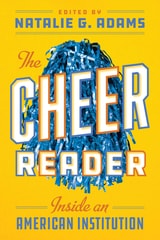
The Cheer Reader
Inside an American InstitutionNatalie G. Adams
University of Texas Press, 2026
Wide-ranging essays on cheerleading, from the pep rally to the NFL sidelines to All-Star competitions, and why it matters.
Cheer is deeply associated with a wholesome, simple Americana. Yet this often clichéd image belies its complex history and current status as a global industry made up of diverse participants and forms. Indeed, cheerleading—its culture, controversies, and evolution—has always offered a revealing lens on race, class, gender, and sexuality in American society..
Cheerleading was born in 1869 as a diversion for Ivy League men. The Cheer Reader collects fourteen wide-ranging essays on what happened next and why it matters: how cheer became feminized, sexualized, professionalized, even radicalized. Contributors examine the role of cheer in the Civil Rights Movement, a landmark student free-speech case, and the emergence of competitive-only and queer cheer teams. Other essays consider cheer’s quest for sport legitimacy, social media “cheerlebrities” and eating disorders, and the working conditions of NFL and NBA cheerleaders. Amid these tensions between empowerment and objectification, cheer is only getting more popular, with some seven million participants worldwide. The Cheer Reader is a nuanced account of the activity they share and what it means today.
The Cherokees of Tuckaleechee Cove
Jon Marcoux
University of Michigan Press, 2012
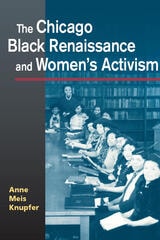
The Chicago Black Renaissance and Women's Activism
Anne Meis Knupfer
University of Illinois Press, 2006
The book examines various groups of black female activists, including writers and actresses, social workers, artists, school teachers, and women's club members to document the impact of social class, gender, nativity, educational attainment, and professional affiliations on their activism. Together, these women worked to sponsor black history and literature, to protest overcrowded schools, and to act as a force for improved South Side housing and employment opportunities. Knupfer also reveals the crucial role these women played in founding and sustaining black cultural institutions, such as the first African American art museum in the country; the first African American library in Chicago; and various African American literary journals and newspapers. As a point of contrast, Knupfer also examines the overlooked activism of working-class and poor women in the Ida B. Wells and Altgeld Gardens housing projects.
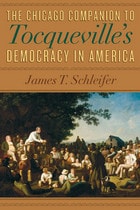
The Chicago Companion to Tocqueville's Democracy in America
James T. Schleifer
University of Chicago Press, 2012
An compact, accessible, authoritative companion to Tocqueville's classic work
One of the greatest books ever to be written on the United States, Democracy in America continues to find new readers who marvel at the lasting insights Alexis de Tocqueville had into our nation and its political culture. The work is, however, as challenging as it is important; its arguments can be complex and subtle, and its sheer length can make it difficult for any reader, especially one coming to it for the first time, to grasp Tocqueville’s meaning. The Chicago Companion to Tocqueville’s “Democracy in America” is the first book written expressly to help general readers and students alike get the most out of this seminal work.
Now James T. Schleifer, an expert on Tocqueville, has provided the background and information readers need in order to understand Tocqueville’s masterwork. In clear and engaging prose, Schleifer explains why Democracy in America is so important, how it came to be written, and how different generations of Americans have interpreted it since its publication. He also presents indispensable insight on who Tocqueville was, his trip to America, and what he meant by equality, democracy, and liberty.
Drawing upon his intimate knowledge of Tocqueville’s papers and manuscripts, Schleifer reveals how Tocqueville’s ideas took shape and changed even in the course of writing the book. At the same time, Schleifer provides a detailed glossary of key terms and key passages, all accompanied by generous citations to the relevant pages in the University of Chicago Press Mansfield/Winthrop translation. The Chicago Companion will serve generations of readers as an essential guide to both the man and his work.

The Chicago Conspiracy Trial
Revised EditionJohn Schultz
University of Chicago Press, 2009
In 1969, the Chicago Seven were charged with intent to "incite, organize, promote, and encourage" antiwar riots during the chaotic 1968 Democratic National Convention in Chicago. The defendants included major figures of the antiwar and racial justice movements: Abbie Hoffman and Jerry Rubin, the madcap founders of the Yippies; Tom Hayden and Rennie Davis, longtime antiwar organizers; David Dellinger, a pacifist and chair of the National Mobilization Committee to End the War in Vietnam; and Bobby Seale, co-founder of the Black Panther Party, who would be bound and gagged in the courtroom before his case was severed from the rest.
The Chicago Conspiracy Trial is an electrifying account of the months-long trial that commanded the attention of a divided nation. John Schultz, on assignment for The Evergreen Review, witnessed the whole trial of the Chicago Seven, from the jury selection to the aftermath of the verdict. In his vivid account, Schultz exposes the raw emotions, surreal testimony, and judicial prejudice that came to define one of the most significant legal events in American history.
In October 2020, Aaron Sorkin's film, The Trial of the Chicago Seven, will bring this iconic trial to the screen.
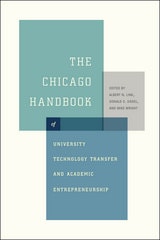
The Chicago Handbook of University Technology Transfer and Academic Entrepreneurship
Edited by Albert N. Link, Donald S. Siegel, and Mike Wright
University of Chicago Press, 2015
The Chicago Handbook of University Technology Transfer and Academic Entrepreneurship is the first definitive source to synthesize state-of-the-art research in this arena. Edited by three of the foremost experts in the field, the handbook presents evidence from entrepreneurs, administrators, regulators, and professors in numerous disciplines. Together they address the key managerial and policy implications through chapters on how to sustain successful research ventures, ways to stimulate academic entrepreneurship, maintain effective open innovation strategies, and improve the performance of university technology transfer offices.
A broad and ambitious work, the handbook offers comprehensive coverage for universities of all types, allowing them to confidently handle technology commercialization and further cultivate innovation.
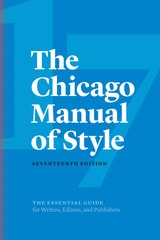
The Chicago Manual of Style, 17th Edition
The University of Chicago Press Editorial Staff
University of Chicago Press, 2017
In the seven years since the previous edition debuted, we have seen an extraordinary evolution in the way we create and share knowledge. This seventeenth edition of The Chicago Manual of Style has been prepared with an eye toward how we find, create, and cite information that readers are as likely to access from their pockets as from a bookshelf. It offers updated guidelines on electronic workflows and publication formats, tools for PDF annotation and citation management, web accessibility standards, and effective use of metadata, abstracts, and keywords. It recognizes the needs of those who are self-publishing or following open access or Creative Commons publishing models. The citation chapters reflect the ever-expanding universe of electronic sources—including social media posts and comments, private messages, and app content—and also offer updated guidelines on such issues as DOIs, time stamps, and e-book locators.
Other improvements are independent of technological change. The chapter on grammar and usage includes an expanded glossary of problematic words and phrases and a new section on syntax as well as updated guidance on gender-neutral pronouns and bias-free language. Key sections on punctuation and basic citation style have been reorganized and clarified. To facilitate navigation, headings and paragraph titles have been revised and clarified throughout. And the bibliography has been updated and expanded to include the latest and best resources available.
This edition continues to reflect expert insights gathered from Chicago’s own staff and from an advisory board of publishing experts from across the profession. It also includes suggestions inspired by emails, calls, and even tweets from readers. No matter how much the means of communication change, The Chicago Manual of Style remains the ultimate resource for those who care about getting the details right.
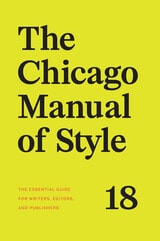
The Chicago Manual of Style, 18th Edition
The University of Chicago Press Editorial Staff
University of Chicago Press, 2024
Much has happened in the years since the publication of the seventeenth edition of The Chicago Manual of Style. The world has transformed, and the Manual has risen to meet the moment. The eighteenth edition of this classic guide for writers, editors, and publishers is the most extensive revision in two decades.
Every chapter has been reexamined with diversity and accessibility in mind, and major changes include updated and expanded coverage of pronoun use and inclusive language, revised guidelines on capitalization, a broader range of examples, new coverage of Indigenous languages, and expanded advice on making publications accessible to people with disabilities. The Manual’s traditional focus on nonfiction has been expanded to include fiction and other creative genres in coverage of topics such as punctuation and dialogue, and the needs of self-published authors receive wider attention.
The citation chapters have been thoroughly reorganized for the benefit of new and experienced users alike, and the key concepts for editing mathematics have been integrated into the chapters where they will be most useful to generalists. Evolving technologies—from open-access publishing models to AI—are covered throughout. And naturally, there are some well-considered updates to familiar rules, including changes intended to align the Manual’s recommendations more closely with real-world usage.
As with every new edition, devotees of the Manual will find much to discover and ponder.

The Chicago Marathon
Andrew Suozzo
University of Illinois Press, 2006
Received the Hal Higdon Journalism Award, recognizing serious journalism about running from the Chicago Area Runners Association (CARA, 2007).
The first book-length study of the city’s great annual contest
In The Chicago Marathon, Andrew Suozzo reveals this citywide ritual as far more than a simple race. Providing a full-spectrum look at the event’s production and participants, Suozzo shows how the elements that comprise the marathon also reflect modern Chicago’s politics, it’s people, and the ways the city engages with the wider world.
The book encompasses all of the forces that come together to make the race the spectacle it has become today. Beginning with a brisk history of the marathon, Suozzo leads readers from its origins in Greek mythology to its modern reality, and also along its rocky road to international prominence. He investigates the roles of sponsorship, small-business support, and the city’s intervention on behalf of the marathon, as well as the alliances the event has forged with the media and charity fundraisers. He also discusses race management and the grassroots support that ultimately make it possible, with a special perspective on the aid station directors and volunteers. Finally, The Chicago Marathon features numerous interviews with the runners themselves, ranging from world-renowned professional athletes to amateurs with diverse backgrounds and abilities.

The Chicago River
A Natural and Unnatural HistoryLibby Hill
Southern Illinois University Press, 2019
This widely acclaimed volume weaves the perspectives of science, engineering, commerce, politics, economics, and the natural world into a chronicle of the river from its earliest geologic history through its repeated adaptations to the city that grew up around it. While explaining the river’s role in massive public works, such as drainage and straightening, designed to address the infrastructure needs of a growing population, Hill focuses on the synergy between the river and the people of greater Chicago, whether they be the tribal cultures that occupied the land after glacial retreat, the first European inhabitants, or more recent residents.
In the first edition, Hill brought together years of original research and the contributions of dozens of experts to tell the Chicago River’s story up until 2000. This revised edition features discussions of disinfection, Asian carp, green strategies, the evolution of the Chicago Riverwalk, and the river’s rejuvenation. It also explores how earlier solutions to problems challenge today’s engineers, architects, environmentalists, and public policy agencies as they address contemporary issues.
Revealing the river to be a microcosm of the uneasy relationship between nature and civilization, The Chicago River offers the tools and knowledge for the city’s residents to be champions on the river’s behalf.

The Chicago River
An Illustrated History and Guide to the River and Its Waterways, Second EditionDavid M. Solzman
University of Chicago Press, 2006
The river is indeed the soul of the city—it runs through the heart of downtown, and it is a vehicle for both pleasure and the industry that keeps Chicago humming. With The Chicago River, Solzman has succeeded in writing an encyclopedic work—at once guidebook and history—that explores the river’s physical character and natural history. Examining the river’s past, contemplating its present, and forecasting its future, Solzman draws on his unparalleled knowledge to point out places of scientific and historic interest—involving everything from infamous murder cases to invasive zebra mussels. The book’s 200 photographs and maps perfectly complement Solzman’s vivid prose, leading readers on a visual journey as sinuous as the river it celebrates—a journey interspersed with plenty of river lore, facts, and literary quotations.
Solzman, a veteran Chicago River tour guide, has also compiled a diverse collection of easy and enjoyable tours for anyone who wants to experience the river by foot, boat, canoe, or car. And he provides an appendix that lists river-related organizations, museums, tours, and riverfront restaurants and clubs.
With practical tips, evocative language, and an astonishing array of anecdotes, TheChicago River is the most comprehensive guide to the river and its waterways, the perfect companion for everyone from the active river enthusiast to the armchair traveler.
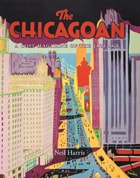
The Chicagoan
A Lost Magazine of the Jazz AgeNeil Harris
University of Chicago Press, 2008
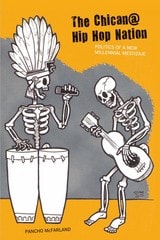
The Chican@ Hip Hop Nation
Politics of a New Millennial MestizajePancho McFarland
Michigan State University Press, 2013
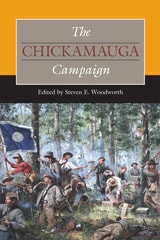
The Chickamauga Campaign
Edited by Steven E. Woodworth
Southern Illinois University Press, 2010
From mid-August to mid-September 1863, Union major general William S. Rosecrans’s Army of the Cumberland maneuvered from Tennessee to north Georgia in a bid to rout Confederate general Braxton Bragg’s Army of Tennessee and blaze the way for further Union advances. Meanwhile, Confederate reinforcements bolstered the numbers of the Army of Tennessee, and by the time the two armies met at the Battle of Chickamauga, in northern Georgia, the Confederates had gained numerical superiority.
Although the Confederacy won its only major victory west of the Appalachians, it failed to achieve the truly decisive results many high-ranking Confederates expected. In The Chickamauga Campaign,Steven E. Woodworth assembles eight thought-provoking new essays from an impressive group of authors to offer new insight into the complex reasons for this substantial, yet ultimately barren, Confederate victory.
This broad collection covers every angle of the campaign, from its prelude to its denouement, from the points of view of key players of all ranks on both sides. In addition to analyzing the actions taken by Union leaders Thomas L. Crittenden, Alexander McCook, and James S. Negley, and Confederate commanders Braxton Bragg, Patrick Cleburne, Daniel Harvey Hill, Thomas C. Hindman, James Longstreet, and Alexander P. Stewart, the book probes the campaign’s impact on morale in the North and South, and concludes with an essay on the campaign’s place in Civil War memory. The final essay pays particular attention to Union veteran Henry Van Ness Boynton, the founder and developer of Chickamauga and Chattanooga State Military Park, whose achievements helped shape how the campaign would be remembered.
This second volume in the Civil War Campaigns in the Heartland seriesprovides a profound understanding of the campaign’s details as well as its significance to Civil War history.
Contributors:
John R. Lundberg
Alexander Mendoza
David Powell
Ethan S. Rafuse
William G. Robertson
Timothy B. Smith
Lee White
Steven E. Woodworth
The Chief Executive In Texas
A Study in Gubernatorial LeadershipBy Fred Gantt, Jr.
University of Texas Press, 1964
"A Texas governor has only two happy days: the day he is inaugurated and the day he retires."
So spoke Joseph D. Sayers at the beginning of the twentieth century. Now, in an analysis of the Texas governorship by Fred Gantt, Jr., the reader learns why Governor Sayers' remark remains true many years after it was uttered: the office has come to be so demanding that the reader may ask why anyone would want it. Price Daniel described a typical day: "The governor's job is a night-and-day job; I usually get up in the morning about seven and start answering the telephone, and then look over the mail that has come in late the day before. I sign mail before going over to the office and then have interviews most of the day. . . . In the evening at the Mansion I take calls and messages until late in the night."
The Chief Executive in Texas is much more than a book full of interesting facts: It is a discerning political commentary built on a broad historical foundation that places events and persons in a perspective perhaps not previously considered by the reader.
The office of chief executive in other states also is explored, as well as the decline and rise of executive power as it has been limited in various constitutions in Texas and as it has developed through custom. The account of the governor's relationship with the Legislature is historically valuable. Especially interesting to many readers will be the discussions of the political roles of individual Texas governors, whose ranks include "Ma" and "Pa" Ferguson and "Pappy" O'Daniel. These studies are personally revealing, and they attest that polities in Texas apparently can never be dull.
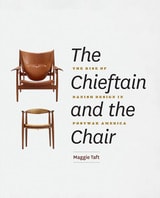
The Chieftain and the Chair
The Rise of Danish Design in Postwar AmericaMaggie Taft
University of Chicago Press, 2023
Today, Danish Modern design is synonymous with clean, midcentury cool. During the 1950s and ‘60s, it flourished as the furniture choice for Americans who hoped to signal they were current and chic. But how did this happen? How did Danish Modern become the design movement of the times? In The Chieftain and the Chair, Maggie Taft tells the tale of our love affair with Danish Modern design. Structured as a biography of two iconic chairs—Finn Juhl’s Chieftain Chair and Hans Wegner’s Round Chair, both designed and first fabricated in 1949—this book follows the chairs from conception and fabrication through marketing, distribution, and use.
Drawing on research in public and private archives, Taft considers how political, economic, and cultural forces in interwar Denmark laid the foundations for the postwar furniture industry, and she tracks the deliberate maneuvering on the part of Danish creatives and manufacturers to cater to an American market. Taft also reveals how American tastemakers and industrialists were eager to harness Danish design to serve American interests and how furniture manufacturers around the world were quick to capitalize on the fad by flooding the market with copies.
Sleek and minimalist, Danish Modern has experienced a resurgence of popularity in the last few decades and remains a sought-after design. This accessible and engaging history offers a unique look at its enduring rise among tastemakers.

The Chigi Codex
Sacred Music from Burgundy and France; Vatican City, Biblioteca Apostolica Vaticana, MS Chigi C VIII 234Edited by Edward F. Houghton
University of Chicago Press, 2027
Compiled between 1500 and 1504, The Chigi Codex contains the complete contents of an extraordinary illuminated manuscript, an anthology of forty polyphonic masses and motets associated with the royal courts of France and Burgundy. This edition includes nearly the complete oeuvre of Johannes Ockeghem, five motets by Johannes Regis, and compositions by Josquin des Prez, Henricus Isaac, Antoine Busnoys, Pierre de la Rue, Jean Mouton, Alexander Agricola, and others. Twelve works are unique to The Chigi Codex; seven motets were added by a Spanish scribe after 1515. The complete contents are presented here with transcriptions of the music accessible to musicians today, with a critical commentary on the music and concordant sources. The Codex transmits works that were copied in manuscripts and prints throughout Europe later in the sixteenth century.
In addition to its monumental repertory, The Chigi Codex includes notable works of visual art in the double-folio openings of thirty-six works with miniature paintings, coats of arms, inhabited capitals, family mottos, bizarre creatures, and colorful borders, all in the famed Ghent-Bruges style. Herbert Kellman discusses these as well as the history of the Codex and its long journey from its original patron, the Burgundian seigneur Philippe Bouton, to the Spanish families Folch de Cardona and Fernández de Córdoba, and finally to Rome and to the library of Fabio Chigi, Pope Alexander VII. The Chigi library is now an important part of the Vatican Library.
Making the manuscript accessible to the public and musicians, this edition of The Chigi Codex supports the study, performance, and understanding of its music and art in the musical, cultural, and historical contexts of its creation.

The Child Cases
How America's Religious Exemption Laws Harm ChildrenAlan Rogers
University of Massachusetts Press, 2014
When a four-year-old California girl died on March 9, 1984, the state charged her mother with involuntary manslaughter because she failed to provide her daughter with medical care, choosing instead to rely on spiritual healing. During the next few years, a half dozen other children of Christian Science parents died under similar circumstances. The children's deaths and the parents' trials drew national attention, highlighting a deeply rooted, legal/political struggle to define religious freedom.
Through close analysis of these seven cases, legal historian Alan Rogers explores the conflict between religious principles and secular laws that seek to protect children from abuse and neglect. Christian Scientists argued—often with the support of mainline religious groups—that the First Amendment's “free exercise” clause protected religious belief and behavior. Insisting that their spiritual care was at least as effective as medical treatment, they thus maintained that parents of seriously ill children had a constitutional right to reject medical care.
Congress and state legislatures confirmed this interpretation by inserting religious exemption provisos into child abuse laws. Yet when parental prayer failed and a child died, prosecutors were able to win manslaughter convictions by arguing—as the U.S. Supreme Court had held for more than a century—that religious belief could not trump a neutral, generally applicable law. Children's advocates then carried this message to state legislatures, eventually winning repeal of religious exemption provisions in a handful of states.
The Child Savers
The Invention of DelinquencyAnthony M. Platt
University of Chicago Press, 1977
In this second, enlarged edition of The Child Savers, the author has added a new introduction and postscript in which he critically reflects upon his original analysis, suggests new ways of thinking about the child-saving movement, and summarizes recent developments in the juvenile justice system.
The Child Savers
The Invention of DelinquencyPlatt, Anthony M
Rutgers University Press, 2009
Focusing on social reformers of the late nineteenth and early twentieth centuries, Platt's principal argument is that the "child savers" movement was not an effort to liberate and dignify youth but, instead, a punitive and intrusive attempt to control the lives of working-class urban adolescents. This expanded edition provides a renewed and distinguished contribution by placing it in historical context through insightful commentaries from cross-disciplinary academics, along with an essay by Miroslava Chávez-García examining how Platt's influential study has impacted many of the central arguments social scientists and historians face today.
The Child before the Court
Judgment, Citizenship, and the ConstitutionTimothy Barouch
University of Alabama Press, 2021
A study that challenges our notions about citizenship and judgment by considering the place of children in historical and contemporary legal discourse.
Many of the most controversial political issues of our time focus on the actions and well-being of children such as Greta Thunberg’s climate movement; youth activists standing up for racial justice, safe schools, and an equitable economy; and the furor over separating migrant children from their families. When do we treat children as competent citizens, when do we treat them as dependents in need of protection, and why?
The Child before the Court: Judgment, Citizenship, and the Constitution provides answers to these foundational questions. It analyzes landmark US Supreme Court cases involving children’s free speech and due process rights and argues that our ideas about civic and legal judgment are deeply contested concepts instead of simple character traits. These cases serve as analytic touchstones for these problems, and the Court’s opinions seemingly articulate clear rules through a pragmatic balancing of interests.
Timothy Barouch shows how these cases continually reshape constitutional thought, breaking from a vocabulary of wardship and recasting the child as a liberal individual. He analyzes these legal opinions as judicial novelizations and focuses on their rhetorical markers: the range of tropes, idioms, figures, and arguments that emerge across nearly two centuries of jurisprudence in this important but oft-neglected area. The careful and subtle readings of these cases demonstrate how judicial representations of the child provide key resources for thinking about the child as citizen and, more broadly, citizenship itself. It serves as a bold call to think through the relationship between the liberal individual and the problem of civic judgment as it manifests in public culture in a wide array of contexts at a time when liberal democracy is under siege.
The Children of Light and the Children of Darkness
A Vindication of Democracy and a Critique of Its Traditional DefenseReinhold Niebuhr
University of Chicago Press, 2011
The Children of Light and the Children of Darkness, first published in 1944, is considered one of the most profound and relevant works by the influential theologian Reinhold Niebuhr, and certainly the fullest statement of his political philosophy. Written and first read during the prolonged, tragic world war between totalitarian and democratic forces, Niebuhr’s book took up the timely question of how democracy as a political system could best be defended.
Most proponents of democracy, Niebuhr claimed, were “children of light,” who had optimistic but naïve ideas about how society could be rid of evil and governed by enlightened reason. They needed, he believed, to absorb some of the wisdom and strength of the “children of darkness,” whose ruthless cynicism and corrupt, anti-democratic politics should otherwise be repudiated. He argued for a prudent, liberal understanding of human society that took the measure of every group’s self-interest and was chastened by a realistic understanding of the limits of power. It is in the foreword to this book that he wrote, “Man’s capacity for justice makes democracy possible; but man’s inclination to injustice makes democracy necessary.”

The China-US Partnership to Prevent Spina Bifida
The Evolution of a Landmark Epidemiological StudyDeborah Kowal
Vanderbilt University Press, 2015
Sixteen thousand staff were involved in running the project, which encountered massive bureaucratic obstacles as well as cultural differences, politicking for study designs and funding, the crisis of Tiananmen Square, and testy debates over research ethics. Nevertheless, the researchers persevered in a collaboration that lasted more than three decades and led to landmark findings on the role of folic acid in preventing spina bifida. Fortifying cereal grain products with folic acid became routine in the United States and a growing number of nations around the world: that intervention was named one of the ten great public health achievements of the last decade.
The Chinese Americans, Revised Edition
Benson Tong
University Press of Colorado, 2003

The Chinese Diaspora on American Screens
Race, Sex, and CinemaGina Marchetti
Temple University Press, 2012
The Chinese Diaspora on American Screens looks at the way in which issues of race and sexuality have become central concerns in cinema generated by and about Chinese communities in America after the mid-1990s. This companion volume to Marchetti's From Tian'anmen to Times Square looks specifically at the Chinese diaspora in relation to ethnic, racial, gender, and sexual identity as depicted in the cinema.
Examining films from the United States and Canada, as well as transnational co-productions, The Chinese Diaspora on American Screens includes analyses of films such as The Wedding Banquet and Double Happiness in addition to interviews with celebrated filmmakers such as Wayne Wang.
Marchetti also reflects on how Chinese identity is presented in a multitude of media forms, including commercial cinema, documentaries, experimental films, and hybrid digital media to offer a textured look at representations of the Chinese diasporic experience after Tian'anmen.
The Chippewa Landscape of Louise Erdrich
Allan Chavkin
University of Alabama Press, 1999
Louise Erdrich is arguably the most prolific and prominent contemporary writer of American Indian descent in North America today. Her novels and short stories have won great critical acclaim and are widely taught in American and world literature courses.
This collection of original ssays focuses on Erdrich's writings rooted in the Chippewa experience. Premier scholars of Native American literature investigate narrative structure, signs of ethnicity, the notions of luck and chance in Erdrich's narrative cosmology, her use of hunting metaphors, her efforts to counter stereotypes of American Indian women, her use of comedy in exploring American Indians' tragic past, her intentions underlying the process of revision in Love Medicine, and other subjects.
Including a variety of theoretical approaches, this book provides a comprehensive examination of Erdrich's work, making it more accessible to new readers and richer to those already familiar with her work.
The Chippewa
Biography of a Wisconsin WaterwayRichard D. Cornell
Wisconsin Historical Society Press, 2017