Results by title
8113 books match the query 'Literary Criticism' and 1818 start with t
The Ivory Tower, Harry Potter, and Beyond
More Essays on the Works of J. K. RowlingEdited with an Introduction by Lana A. Whited
University of Missouri Press, 2024
The Jacqueline Rose Reader
Jacqueline Rose
Duke University Press, 2011

The Janus Face of the German Avant-Garde
From Expressionism Toward PostmodernismRainer Rumold
Northwestern University Press, 2002

The Japan of Pure Invention
Gilbert and Sullivan’s The MikadoJosephine Lee
University of Minnesota Press, 2010
The Jester and the Sages
Mark Twain in Conversation with Nietzsche, Freud, and MarxForrest G. Robinson, Gabriel Noah Brahm, Jr., and Catherine Carlstroem
University of Missouri Press, 2011
During their lifetimes, Twain, Nietzsche, Freud, and Marx witnessed massive upheavals in Western constructions of religion, morality, history, political economy, and human nature. The foundations of reality had been shaken, and one did not need to be a philosopher—nor did one even need to read philosophy—to weigh in on what this all might mean. Drawing on a wide range of primary and secondary materials, the authors show that Twain was well attuned to debates of the time. Unlike his Continental contemporaries, however, he was not as systematic in developing his views.
Brahm and Robinson’s chapter on Nietzsche and Twain reveals their subjects’ common defiance of the moral and religious truisms of their time. Both desired freedom, resented the constraints of Christian civilization, and saw punishing guilt as the disease of modern man. Pervasive moral evasion and bland conformity were the principal end result, they believed.
In addition to a continuing focus on guilt, Robinson discovers in his chapter on Freud and Twain that the two men shared a lifelong fascination with the mysteries of the human mind. From the formative influence of childhood and repression, to dreams and the unconscious, the mind could free people or keep them in perpetual chains. The realm of the unconscious was of special interest to both men as it pertained to the creation of art.
In the final chapter, Carlstroem and Robinson explain that, despite significant differences in their views of human nature, history, and progress, Twain and Marx were both profoundly disturbed by economic and social injustice in the world. Of particular concern was the gulf that industrial capitalism opened between the privileged elite property owners and the vast class of property-less workers. Moralists impatient with conventional morality, Twain and Marx wanted to free ordinary people from the illusions that enslaved them.
Twain did not know the work's of Nietzsche, Freud, and Marx well, yet many of his thoughts cross those of his philosophical contemporaries. By focusing on the deeper aspects of Twain’s intellectual makeup, Robinson, Brahm, and Carlstroem supplement the traditional appreciation of the forces that drove Twain’s creativity and the dynamics of his humor.
The Jew, the Beauty, and the Beast
Gender and Animality in Modernist Hebrew FictionNaama Harel
Rutgers University Press, 2026
The Jew, the Beauty, and the Beast critically explores the tangled interplay between Jewishness, gender, and animality and its manifestation in modernist Hebrew fiction. Through interdiscursive analysis and close readings, the effeminate Jew is examined vis-à-vis the animalized woman. Intertwining cutting-edge theoretical frameworks of posthumanism and animal studies with established scholarship of Hebrew literature, Jewish studies, and gender studies, Naama Harel offers new Hebrew literary historiography and innovative perspectives on canonical works by Shmuel Yosef Agnon, Devorah Baron, Micha Yosef Berdichevsky, Yosef Haim Brenner, Uri Nissan Gnessin, and David Vogel.
The Jewish Decadence
Jews and the Aesthetics of ModernityJonathan Freedman
University of Chicago Press, 2021
The first to tell this sweeping story, Freedman demonstrates the centrality of decadence to the aesthetics of modernity and its inextricability from Jewishness. Freedman recounts a series of diverse and surprising episodes that he insists do not belong solely to the past, but instead reveal that the identification of Jewishness with decadence persists today.
The Jewish Graphic Novel
Critical ApproachesEdited by Samantha Baskind and Ranen Omer-Sherman
Rutgers University Press, 2008
The Jewish Graphic Novel is a lively, interdisciplinary collection of essays that addresses critically acclaimed works in this subgenre of Jewish literary and artistic culture. Featuring insightful discussions of notable figures in the industryùsuch as Will Eisner, Art Spiegelman, and Joann Sfarùthe essays focus on the how graphic novels are increasingly being used in Holocaust memoir and fiction, and to portray Jewish identity in America and abroad
Featuring more than 85 illustrations, this collection is a compelling representation of a major postmodern ethnic and artistic achievement.
The Journals
Volume 1: 1949-1965John Fowles
Northwestern University Press, 2008
The Journals
Volume 2: 1966-1990John Fowles
Northwestern University Press, 2009

The Journey Back
Houston A. Baker Jr.
University of Chicago Press, 1984
The Joyce of Everyday Life
Vicki Mahaffey
Bucknell University Press, 2024
Winner of the American Conference on Irish Studies’ Robert Rhodes Prize for Books on Literature
Part of James Joyce’s genius was his ability to find the poetry in everyday life. For Joyce, even a simple object like a table becomes magical, “a board that was of the birchwood of Finlandy and it was upheld by four dwarfmen of that country but they durst not move more for enchantment.” How might we learn to regain some of the childlike play with language and sense of delight in the ordinary that come so naturally to Joyce?
The Joyce of Everyday Life teaches us how to interpret seemingly mundane objects and encounters with openness and active curiosity in order to attain greater self-understanding and a fuller appreciation of others. Through a close examination of Joyce's joyous, musical prose, this book shows how language provides us with the means to revitalize daily experience and social interactions across a huge, diverse, and everchanging world.
Acclaimed Joyce scholar Vicki Mahaffey demonstrates how his writing might prompt us to engage in a different kind of reading, treating words and fiction as tools for expanding the boundaries of the self with humor and feeling. A book for everyone who loves language, The Joyce of Everyday Life is a lyrical romp through quotidian existence.
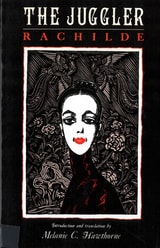
The Juggler
RachildeHawthorne, Melanie C
Rutgers University Press, 1990
The Juggler (La Jongleuse) is a "decadent" novel that was first published in 1900. Its author, Marguerite Vallette-Eymery (1860-1953), who used the pseudonym Rachilde, was a prolific novelist (over sixty works of fiction), playwright, literary critic and reviewer, and a forceful presence in French literary society of her time.
The protagonist of the novel, Eliante Donalger, is in some sense an exaggerated double for her creator--bizarre in appearance, clothing, and interests. Instinctively grasping a medical and psychological truth that the turn-of-the-century scientific world was only beginning to understand, Eliante maintains that there is nothing "natural" about human sexual expression. She claims to be in love with an inanimate (though anthropomorphic and sexually ambiguous) object, a Greek amphora, and the novel traces the rivalry between this faithful partner and an ardent human suitor, a young medical student. It is only through juggling, both literally and metaphorically, that Eliante is able to use her seductive power to maintain desire. The surprise ending challenges the limits of such power in a controversial and surprising twist.
Although Rachilde's work has been neglected in the past, the women's movement and feminist criticism have stimulated renewed interest in her fiction. The Juggler is a major rediscovery.
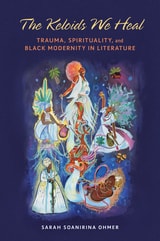
The Keloids We Heal
Trauma, Spirituality, and Black Modernity in LiteratureSarah Soanirina Ohmer
University of Illinois Press, 2025
Women of colors and a literature written in corporeal and spiritual scars
The corporeal and spiritual healing in literature by women of colors can be seen to redefine modern thought and printed text. Sarah Soanirina Ohmer traces the impact of colonization and enslavement on Black women and Black women’s contributions to colonial, nineteenth, and twentieth century literature in the US, Brazil, and the Caribbean.
Drawing on intersectional analysis, Ohmer focuses on portrayals of trauma and spirituality in works by Toni Morrison, Conceição Evaristo, Maryse Condé, Gloria Anzaldúa, the Quilombhoje poets, and María de los Reyes Castillo. Ohmer compares literature from different countries along four thematic pathways: ghosts, mirrors, naming, and motherhood. Her analysis unlocks the literature’s power to heal through gut-wrenching descriptions of wounds and thrilling passages of hope and liberation. Throughout, Ohmer weaves in her life story as a Black woman as she reflects on how colonialism, racism, sexism, and capitalism have impacted her work, traumas, and faith journey.
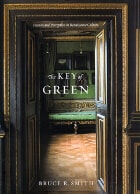
The Key of Green
Passion and Perception in Renaissance CultureBruce R. Smith
University of Chicago Press, 2008
Contending that color is a matter of both sensation and emotion, Bruce R. Smith examines Renaissance material culture—including tapestries, clothing, and stonework, among others—as well as music, theater, philosophy, and nature through the lens of sense perception and aesthetic pleasure. At the same time, Smith offers a highly sophisticated meditation on the nature of consciousness, perception, and emotion that will resonate with students and scholars of the early modern period and beyond. Like the key to a map, The Key of Green provides a guide for looking, listening, reading, and thinking that restores the aesthetic considerations to criticism that have been missing for too long.
The Key to The Name of the Rose
Including Translations of All Non-English PassagesAdele J. Haft, Jane G. White, and Robert J. White
University of Michigan Press, 1999
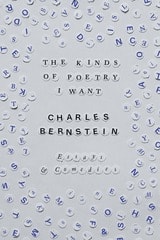
The Kinds of Poetry I Want
Essays & ComediesCharles Bernstein
University of Chicago Press, 2024
For more than four decades, Charles Bernstein has been at the forefront of experimental poetry, ever reaching for a radical poetics that defies schools, periods, and cultural institutions. The Kinds of Poetry I Want is a celebration of invention and includes not only poetry but also essays on aesthetics and literary studies, interviews with other poets, autobiographical sketches, and more.
At once a dialogic novel, long poem, and grand opera, The Kinds of Poetry I Want arrives amid renewed attacks on humanistic expression. In his polemical, humorous style, Bernstein faces these challenges head-on and affirms the enduring vitality and attraction of poetry, poetics, and literary criticism.
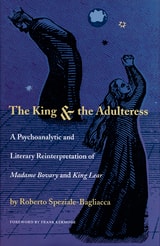
The King and the Adulteress
A Psychoanalytic and Literary Reinterpretation of Madame Bovary and King LearRoberto Speziale-Bagliacca
Duke University Press, 1998
Approaching the characters in Bovary and Lear from both an analytic and a critical viewpoint, Speziale-Bagliacca reinterprets many issues and events that involve archetypal figures of modern literary mythology. In fact, he reverses much of the received opinion about them. Charles Bovary, for example, far from being a victim of his wife’s neurotic restlessness or the epitome of a passive imbecile, is a masochist of the highest order who makes a decisive contribution to Emma’s miserable end. Lear, rather than a tragedy involving the sweet Cordelia, noble Kent, and the Fool as good and loyal supporters of an old king driven to madness by his overbearing evil daughters, is precisely the opposite. The sympathetic understanding of the reader should go, Speziale-Bagliacca suggests, also to Regan, Goneril, and Edmund, while the king, whose crisis is interpreted in the light of psychoanalytic findings on depression, finally becomes the true unbeloved "bastard" of the play.
Roberto Speziale-Bagliacca is a psychoanalyst and Professor of Psychotherapy at the Medical School of the University of Genoa. He is the author of On the Shoulders of Freud and many other works.
The Kingdom of Insignificance
Miron Bialoszewski and the Quotidian, the Queer, and the TraumaticJoanna Nizynska
Northwestern University Press, 2012
In one of the first scholarly book in English on Miron Białoszewski (1922–1983), Joanna Niżyńska illuminates the elusive prose of one of the most compelling and challenging postwar Polish writers. Niżyńska’s study, exemplary in its use of theoretical concepts, introduces English-language readers to a preeminent voice of Polish literature. Niżyńska explores how a fusion of seemingly irreconcilable qualities, such as the traumatic and the everyday, imbues Białoszewski’s writing with its idiosyncratic appeal.
Białoszewski’s A Memoir of the Warsaw Uprising (1977, revised 1991) describes the Poles’ heroic struggle to liberate Warsaw from Nazi occupation in 1944 as harrowing yet ordinary. His later prose represents everyday life permeated by traces of the traumatic. Niżyńska closely examines the topic of autobiography and homosexuality, showing how Białoszewski discloses his homosexuality but, paradoxically, renders it inconspicuous by hiding it in plain sight.
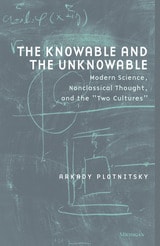
The Knowable and the Unknowable
Modern Science, Nonclassical Thought, and the "Two Cultures"Arkady Plotnitsky
University of Michigan Press, 2002
Plotnitsky highlights those points at which the known gives way to the unknown (and unknowable). These points are significant, he argues, because they push the boundaries of thought and challenge the boundaries of disciplinarity. One of the book's most interesting observations is that key figures in science, in order to push toward a framing of the unknown, actually retreated into a conservative disciplinarity. Plotnitsky's informed, interdisciplinary approach is more productive than the disparaging attacks on postmodernism or scientism that have hitherto characterized this discourse.
Arkady Plotnitsky is Professor of English and Director, Theory and Cultural Studies Program, Purdue University. Trained in both mathematics and literary theory, he is author of several books, including In the Shadow of Hegel: Complementarity, History and the Unconscious and Reconfigurations: Critical Theory and General Economy.
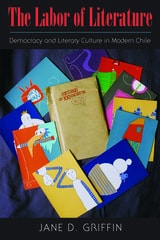
The Labor of Literature
Democracy and Literary Culture in Modern ChileJane D. Griffin
University of Massachusetts Press, 2016
By examining alternative literary publications, Griffin recasts the seventeen-year Pinochet dictatorship as a time of editorial experimentation despite widespread cultural oppression and shows how grassroots cultural activism has challenged government-approved corporate publishing models throughout the postdictatorship period. Griffin's work also points to the growing importance of autogestión, or do-it-yourself cultural production, where individuals combine artisanal forms with new technologies to make and share creative work on a global scale.
The Lady and the Virgin
Image, Attitude, and Experience in Twelfth-Century FrancePenny Schine Gold
University of Chicago Press, 1985
Vividly recreating the rich texture of medieval life, Gold effectively and eloquently goes beyond a simple equation of social context and representation. In the process. she challenges equally simple judgments of historical periods as being either "good" or "bad" for women.
"[The Lady and the Virgin] presents its findings in a form that should attract students as well as their instructors. The careful and controlled use of so many different kinds of sources . . . offers us a valuable medieval case study in the inner-relationship between the segments of society and its ethos or value system."—Joel T. Rosenthal, The History Teacher
"Something of a tour de force in an interdisciplinary approach to history."—Jo Ann McNamara, Speculum
"[A] well-written, extremely well-researched book. . . . The Lady and the Virgin is useful, readable, and well informed."—R. Howard Bloch, Modern Philology
The Lancelot-Grail Cycle
Text and TransformationsEdited by William W. Kibler
University of Texas Press, 1994
Composed in Old French between about 1220 and 1240, the Lancelot-Grail Cycle is a group of five prose romances centered on the love affair between Lancelot and Guenevere. It consists of an immense central core, the Lancelot Proper, introduced by The History of the Holy Grail and The Story of Merlin and concluded by The Quest for the Holy Grail and The Death of Arthur.
This volume brings together thirteen essays by noted scholars from the first symposium ever devoted exclusively to the Lancelot-Grail Cycle. Exploring the cycle's evolution across the literatures of medieval France, Italy, Spain, Catalonia, and England, the authors take a variety of approaches that highlight a broad range of cultural, social, historical, and political concerns and offer a comparative and interdisciplinary vision of this great romance.
The Language Book
Bruce Andrews and Charles Bernstein
Southern Illinois University Press, 1984
“Ok murky in alter all end, unpredictable day, with rainshine any degree night, the sun kin warm and hot. Enough stone or other jugs lineup of whatever is In Through Out That’s light as much as known Differences evanesce Like, where and/or what on the equator might be french or spanish Longitude and latitude, yep yep sure Americana.”—Larry Eigner, commentary on a selection from Gertrude Stein’s Tender Buttons
This selection of essays and poetry from the first three volumes of L=A=N=G=U=A=G=E magazine discusses a “spectrum of writing that places its attention primarily on language and ways of making meaning, that takes for granted neither vocabulary, grammar, process, shape, syntax, program, nor subject matter.” (Bernstein and Andrews) The various writers shun labels, slogans, or catch-phrases; their exploration of the ways that meanings and values are revealed through the written word is intended to open the field of poetic activity, not close it.
The common thread of these essays is the multitude and scope of words’ referential powers—denotative, connotative, and associational; and studying these powers is ultimately a social and political activity as well as an aesthetic one.
The Language of Images
W. J. T. Mitchell
University of Chicago Press, 1980
The Language of Languages
Ngugi wa Thiong’o
Seagull Books, 2023
With clear, conversational prose, this is the first book dedicated entirely to Ngũgĩ wa Thiong’o’s writings on translation.
Through his many critically acclaimed novels, stories, essays, plays, and memoirs, Kenyan writer Ngũgĩ wa Thiong’o has been at the forefront of world literature for decades. He has also been, in his own words, “a language warrior,” fighting for indigenous African languages to find their rightful place in the literary world. Having begun his writing career in English, Ngũgĩ shifted to writing in his native language Gikũyũ in 1977, a stance both creatively and politically significant. For decades now, Ngũgĩ has been translating his Gikũyũ works into English himself, and he has used many platforms to champion the practice and cause of literary translations, which he calls “the language of languages.”
This volume brings together for the first time Ngũgĩ’s essays and lectures about translation, written and delivered over the past two decades. Here we find Ngũgĩ discussing translation as a conversation between cultures, proposing that dialogue among African languages is the way to unify African peoples, reflecting on the complexities of auto-translation or translating one’s own work, exploring the essential task translation performed in the history of the propagation of thought, and pleading for the hierarchy of languages to be torn down. He also shares his many experiences of writing across languages, including his story The Upright Revolution, which has been translated into more than a hundred languages around the globe and is the most widely translated text written by an African author.
At a time when dialogues between cultures and peoples are more essential than ever, The Language of Languages makes an outspoken case for the value of literature without borders.
The Last Amateur
Jonathan Swift, Edward Said, and the Profession of LiteratureHelen Deutsch
University of Chicago Press, 2026
Joining the unfinished conversation between the satirist Jonathan Swift and the critic Edward Said, The Last Amateur argues for the transformative potential of literature.
What does “Swiftian” mean to you? For many, the name is synonymous with ingenious satire and an acid, clarifying mix of decorum and outrage. Jonathan Swift was, of course, the author of not only Gulliver’s Travels but also A Modest Proposal, which the columnist Gene Lyons recently called “perhaps the most penetrating anti-racist essay in the English language.” Small wonder, then, that the Anglo-Irish satirist was a lifelong inspiration to the great Palestinian American critic Edward Said, who for many years worked on an unfinished book about Swift and cultivated a Swiftian voice across his career.
Helen Deutsch’s highly personal book explores what Said’s love of Swift—and hers of both—tells us about not only these authors but also the powers of criticism itself. The Last Amateur is about how one comes to love one writer through another. Deutsch scrutinizes Said in relationship to Swift to raise questions of her own about the profession of literary studies. At a time when many in the field have lost faith in critique, Deutsch shows how passion and a refusal of professional propriety—the hallmarks of the amateur—can enliven critique again.
What, then, does it mean to be a Swiftian? The Swiftian hears Swift’s animus and uses it as an incentive for their own freedom of thought. Said was a Swiftian because the experience of reading Swift freed him to speak out, to have something serious to say. Deutsch’s revelatory book is an exercise in hearing Swift’s voice and speaking in her own.
The Last Fine Time
Verlyn Klinkenborg
University of Chicago Press, 2004

The Last Generation
Work and Life in the Textile Mills of Lowell, Massachusetts, 1910-1960Mary H. Blewett
University of Massachusetts Press, 1990
Oral histories of many of the last generation of Lowell, MA, textile mill workers preceded by two introductory sections. The first presents the historic setting of economic development and subsequent decline of the textile industry in Lowell. The second is a brief explanation of the production process wherein the last generation of mill workers expended so many of their skills and so much of their energy.

The Last Physician
Walker Percy and the Moral Life of MedicineCarl Elliott and John Lantos, eds.
Duke University Press, 1999
The contributors—physicians, philosophers, and literary critics—examine the relevance of Percy’s work to current dilemmas in medical education and health policy. They reflect upon the role doctors and patients play in his novels, his family legacy of depression, how his medical background influenced his writing style, and his philosophy of psychiatry. They contemplate the private ways in which Percy’s work affected their own lives and analyze the author’s tendency to contrast the medical-scientific worldview with a more spiritual one. Assessing Percy’s stature as an author and elucidating the many ways that reading and writing can combine with diagnosing and treating to offer an antidote to despair, they ask what it means to be a doctor, a writer, and a seeker of cures and truths—not just for the body but for the malaise and diseased spirituality of modern times.
This collection will appeal to lovers of literature as well as medical professionals—indeed, anyone concerned with medical ethics and the human side of doctoring.
Contributors. Robert Coles, Brock Eide, Carl Elliott, John D. Lantos, Ross McElwee, Richard Martinez, Martha Montello, David Schiedermayer, Jay Tolson, Bertram Wyatt-Brown, Laurie Zoloth-Dorfman
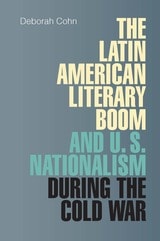
The Latin American Literary Boom and U.S. Nationalism during the Cold War
Deborah Cohn
Vanderbilt University Press, 2012
The high level of interest in Latin America paradoxically led the U.S. government to restrict these authors' physical presence in the United States through the McCarranWalter Act's immigration blacklist, even as cultural organizations cultivated the exchange of ideas with writers and sought to market translations of their work for the U.S. market.

The Latinx Files
Race, Migration, and Space AliensMatthew David Goodwin
Rutgers University Press, 2021
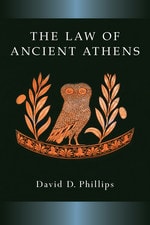
The Law of Ancient Athens
David D. Phillips
University of Michigan Press, 2013
The Law of Ancient Athens contains the principal literary and epigraphical sources, in English, for Athenian law in the Archaic and Classical periods, from the first known historical trial (late seventh century) to the fall of the democracy in 322 BCE.
This accessible and important volume is designed for teachers, students, and general readers interested in the ancient Greek world, the history of law, and the history of democracy, an Athenian invention during this period. Offering a comprehensive treatment of Athenian law, it assumes no prior knowledge of the subject and is organized in user-friendly fashion, progressing from the person to the family to property and obligations to the gods and to the state. David D. Phillips has translated all sources into English, and he has added significant introductory and explanatory material.
Topics covered in the book include homicide and wounding; theft; marriage, children, and inheritance; citizenship; contracts and commerce; impiety; treason and other offenses against the state; and sexual offenses including rape and prostitution. The volume’s unique feature is its presentation of the actual primary sources for Athenian laws, with many key or disputed terms rendered in transliterated Greek. The translated sources, together with the topical introductions, notes, and references, will facilitate both research in the field and the teaching of increasingly popular courses on Athenian law and law in the ancient world.
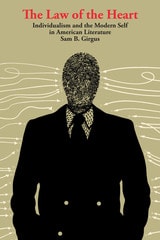
The Law of the Heart
Individualism and the Modern Self in American LiteratureBy Sam B. Girgus
University of Texas Press, 1979
The Law of the Heart is a vigorous challenge to the prevailing concept of the “antidemocratic” image of the self in the American literary and cultural tradition. Sam B. Girgus counters this interpretation and attempts to develop a new understanding of democratic individualism and liberal humanism in American literature under the rubric of literary modernism.
The image of the individual self who retreats inward, conforming to a distorted “law of the heart,” emerges from the works of such writers as Cooper and Poe and composer Charles Ives. Yet, as Girgus shows, other American writers relate the idea of the self to reality and culture in a more complex way: the self confronts and is reconciled to the paradox of history and reality.
In Girgus’ view, the tradition of pragmatic, humanistic individualism provides a foundation for a future where individual liberty is a major priority. He uses literary modernism as a bridge for relating contemporary social conditions to crises of the American self and culture as seen in the works of writers including Emerson, Howells, Whitman, Henry James, William James, Fitzgerald, Bellow, and McLuhan.
The Laws of Cool
Knowledge Work and the Culture of InformationAlan Liu
University of Chicago Press, 2004
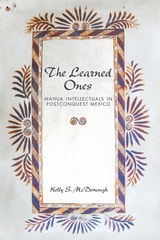
The Learned Ones
Nahua Intellectuals in Postconquest MexicoKelly S. McDonough
University of Arizona Press, 2014
Not so, according to author Kelly S. McDonough, at least not for native speakers of Nahuatl, one of the most widely spoken and best-documented indigenous languages of the Americas. This book focuses on how Nahuas have been deeply engaged with the written word ever since the introduction of the Roman alphabet in the early sixteenth century. Dipping into distinct time periods of the past five hundred years, this broad perspective allows McDonough to show the heterogeneity of Nahua knowledge and writing as Nahuas took up the pen as agents of their own discourses and agendas.
McDonough worked collaboratively with contemporary Nahua researchers and students, reconnecting the theorization of a population with the population itself. The Learned Ones describes the experience of reading historic text with native speakers today, some encountering Nahua intellectuals and their writing for the very first time. It intertwines the written word with oral traditions and embodied knowledge, aiming to retie the strand of alphabetic writing to the dynamic trajectory of Nahua intellectual work.
The Legacy Of Language
A Tribute To Charlton LairdPhillip C. Boardman
University of Nevada Press, 1987
In this tribute to Charlton Laird, ten scholars in the fields of language and linguistics provide ordinary readers with new insight into the workings of the English language. Laird, one of Nevada's treasured authors, was a professor of English at the University of Nevada, Reno.
The Legacy of Boethius in Medieval England
The Consolation and its AfterlivesA. Joseph McMullen
Arizona Center for Medieval and Renaissance Studies, 2018

The Legacy of Christopher Columbus in the Americas
New Nations and a Transatlantic Discourse of EmpireElise Bartosik-Velez
Vanderbilt University Press, 2014
Bartosik-Velez seeks to explain the meaning of Christopher Columbus throughout the so-called New World, first in the British American colonies and the United States, as well as in Spanish America, during the eighteenth and nineteenth centuries. She argues that, during the pre- and post-revolutionary periods, New World societies commonly imagined themselves as legitimate and powerful independent political entities by comparing themselves to the classical empires of Greece and Rome. Columbus, who had been construed as a figure of empire for centuries, fit perfectly into that framework. By adopting him as a national symbol, New World nationalists appeal to Old World notions of empire.
The Legacy of David Foster Wallace
Samuel Cohen and Lee Konstantinou
University of Iowa Press, 2012
Considered by many to be the greatest writer of his generation, David Foster Wallace was at the height of his creative powers when he committed suicide in 2008. In a sweeping portrait of Wallace’s writing and thought and as a measure of his importance in literary history, The Legacy of David Foster Wallace gathers cutting-edge, field-defining scholarship by critics alongside remembrances by many of his writer friends, who include some of the world’s most influential authors.
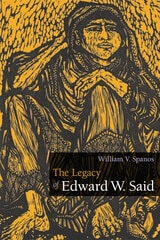
The Legacy of Edward W. Said
William V. Spanos
University of Illinois Press, 2008
With the untimely death of Edward W. Said in 2003, various academic and public intellectuals worldwide have begun to reassess the writings of this powerful oppositional intellectual. Figures on the neoconservative right have already begun to discredit Said’s work as that of a subversive intent on slandering America’s benign global image and undermining its global authority. On the left, a significant number of oppositional intellectuals are eager to counter this neoconservative vilification, proffering a Said who, in marked opposition to the “anti-humanism” of the great poststructuralist thinkers who were his contemporaries--Jacques Derrida, Jean-Francois Lyotard, Jacques Lacan, Louis Althusser, and Michel Foucault--reaffirms humanism and thus rejects poststructuralist theory.
In this provocative assessment of Edward Said’s lifework, William V. Spanos argues that Said’s lifelong anti-imperialist project is actually a fulfillment of the revolutionary possibilities of poststructuralist theory. Spanos examines Said, his legacy, and the various texts he wrote--including Orientalism,Culture and Imperialism, and Humanism and Democratic Criticism--that are now being considered for their lasting political impact.
The Legacy of Kenneth Burke
Herbert W. Simons
University of Wisconsin Press, 1989
Capturing the lively modernist milieu of Kenneth Burke’s early career in Greenwich Village, where Burke arrived in 1915 fresh from high school in Pittsburgh, this book discovers him as an intellectual apprentice conversing with “the moderns.” Burke found himself in the midst of an avant-garde peopled by Malcolm Cowley, Marianne Moore, Jean Toomer, Katherine Anne Porter, William Carlos Williams, Allen Tate, Hart Crane, Alfred Stieglitz, and a host of other fascinating figures.
Burke himself, who died in 1993 at the age of 96, has been hailed as America’s most brilliant and suggestive critic and the most significant theorist of rhetoric since Cicero. Many schools of thought have claimed him as their own, but Burke has defied classification and indeed has often been considered a solitary, eccentric genius immune to intellectual fashions. But Burke’s formative work of the 1920s, when he first defined himself and his work in the context of the modernist conversation, has gone relatively unexamined.
Here we see Burke living and working with the crowd of poets, painters, and dramatists affiliated with Others magazine, Stieglitz’s “291” gallery, and Eugene O’Neill’s Provincetown Players; the leftists associated with the magazines The Masses and Seven Arts; the Dadaists; and the modernist writers working on literary journals like The Dial, where Burke in his capacity as an associate editor saw T. S. Eliot’s “The Wasteland” into print for the first time and provided other editorial services for Thomas Mann, e.e. cummings, Ezra Pound, and many other writers of note. Burke also met the iconoclasts of the older generation represented by Theodore Dreiser and H. L. Mencken, the New Humanists, and the literary nationalists who founded Contact and The New Republic. Jack Selzer shows how Burke’s own early poems, fiction, and essays emerged from and contributed to the modernist conversation in Greenwich Village. He draws on a wonderfully rich array of letters between Burke and his modernist friends and on the memoirs of his associates to create a vibrant portrait of the young Burke’s transformation from aesthete to social critic.
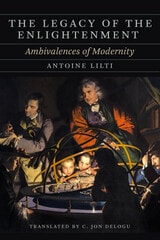
The Legacy of the Enlightenment
Ambivalences of ModernityAntoine Lilti
University of Chicago Press, 2025
The Enlightenment has come under substantial attack over the past several years, with some going so far as to recommend leaving behind its thinkers and their Eurocentric prejudices. In response, the most orthodox defenders of the Enlightenment have insisted that its values are not just foundational but indispensable and that abandoning them would mean opening the door to nihilism and relativism. For Antoine Lilti, one of the leading scholars of the French Enlightenment, both sides are wrong.
In this tactfully argued series of essays, Lilti emphasizes a non-dogmatic, non-ideological view of the Enlightenment—one that sees its legacy as a critical, attentive approach that can and should serve as its own best critic. Along the way, he engages with everyone from Rousseau and Kant to Foucault and Habermas, as well as prominent contemporary voices, such as Jonathan Israel. The result is a remarkable new reading of the Enlightenment that redraws the stakes of old debates and offers an alternative way to engage with both canonical thinkers and later scholarship that is both honest about the past and useful for the future.
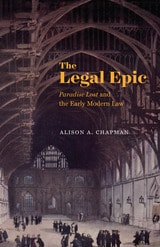
The Legal Epic
"Paradise Lost" and the Early Modern LawAlison A. Chapman
University of Chicago Press, 2017
Alison A. Chapman argues that Milton’s Paradise Lost sits at the apex of the early modern period’s long fascination with law and judicial processes. Milton’s world saw law and religion as linked disciplines and thought therefore that in different ways, both law and religion should reflect the will of God. Throughout Paradise Lost, Milton invites his readers to judge actions using not only reason and conscience but also core principles of early modern jurisprudence. Law thus informs Milton’s attempt to “justify the ways of God to men” and points readers toward the types of legal justice that should prevail on earth.
Adding to the growing interest in the cultural history of law, The Legal Epic shows that England’s preeminent epic poem is also a sustained reflection on the role law plays in human society.
The Legend of the Wandering Jew
George K. Anderson
Brandeis University Press, 1991
The Legendary Detective
The Private Eye in Fact and FictionJohn Walton
University of Chicago Press, 2015
“I’m in a business where people come to me with troubles. Big troubles, little troubles, but always troubles they don’t want to take to the cops.” That’s Raymond Chandler’s Philip Marlowe, succinctly setting out our image of the private eye. A no-nonsense loner, working on the margins of society, working in the darkness to shine a little light.
The reality is a little different—but no less fascinating. In The Legendary Detective, John Walton offers a sweeping history of the American private detective in reality and myth, from the earliest agencies to the hard-boiled heights of the 1930s and ’40s. Drawing on previously untapped archival accounts of actual detective work, Walton traces both the growth of major private detective agencies like Pinkerton, which became powerful bulwarks against social and labor unrest and the motley, unglamorous work of small-time operatives. He then goes on to show us how writers like Dashiell Hammett and editors of sensational pulp magazines like Black Mask embellished on actual experiences and fashioned an image of the PI as a compelling, even admirable, necessary evil, doing society’s dirty work while adhering to a self-imposed moral code. Scandals, public investigations, and regulations brought the boom years of private agencies to an end in the late 1930s, Walton explains, in the process fully cementing the shift from reality to fantasy.
Today, as the private detective has long since given way to security services and armed guards, the myth of the lone PI remains as potent as ever. No fan of crime fiction or American history will want to miss The Legendary Detective.
The Legitimacy of the Middle Ages
On the Unwritten History of TheoryAndrew Cole and D. Vance Smith, eds.
Duke University Press, 2010
In The Legitimacy of the Middle Ages, modernists and medievalists, as well as scholars specializing in eighteenth-, nineteenth-, and twentieth-century comparative literature, offer a new history of theory and philosophy through essays on secularization and periodization, Marx’s (medieval) theory of commodity fetishism, Heidegger’s scholasticism, and Adorno’s nominalist aesthetics. One essay illustrates the workings of medieval mysticism in the writing of Freud’s most famous patient, Daniel Paul Schreber, author of Memoirs of My Nervous Illness (1903). Another looks at Michael Hardt and Antonio Negri’s Empire, a theoretical synthesis whose conscientious medievalism was the subject of much polemic in the post-9/11 era, a time in which premodernity itself was perceived as a threat to western values. The collection concludes with an afterword by Fredric Jameson, a theorist of postmodernism who has engaged with the medieval throughout his career.
Contributors: Charles D. Blanton, Andrew Cole, Kathleen Davis, Michael Hardt, Bruce Holsinger, Fredric Jameson, Ethan Knapp, Erin Labbie, Jed Rasula, D. Vance Smith, Michael Uebel
The Lesbian Menace
Ideology, Identity, and the Representation of Lesbian LifeSherrie A. Inness
University of Massachusetts Press, 1997
Electroshock. Hysterectomy. Lobotomy. These are only three of the many “cures” to which lesbians have been subjected in this century. How does a society develop such a profound aversion to a particular minority? In what ways do images in the popular media perpetuate cultural stereotypes about lesbians, and to what extent have lesbians been able to subvert and revise those images? This book addresses these and other questions by examining how lesbianism has been represented in American popular culture in the twentieth century and how conflicting ideologies have shaped lesbian experiences and identity.
In the first section, “Inventing the Lesbian,” Sherrie A. Inness explores depictions of lesbians in popular texts aimed primarily at heterosexual consumers. She moves from novels of the 1920s to books about life at women's colleges and boarding schools, to such contemporary women's magazines as Cosmopolitan, Glamour, and Vogue.
In the next section, “Forms of Resistance,” Inness probes the ways in which lesbians have refashioned texts intended for a heterosexual audience or created their own narratives. One chapter shows how lesbian readers have reinterpreted the Nancy Drew mysteries, looking at them from a distinctly “queer” perspective. Another chapter addresses the changing portrayal of lesbians in children's books over the past two decades.
The last section, “Writing in the Margins,” scrutinizes the extent to which lesbians, themselves a marginalized group, have created a society that relegates some of its own members to the outskirts. Topics include the geographic politics of lesbianism, the complex issue of "passing," and the meaning of butch identity in twentieth-century lesbian culture.
The Letters and the Law
Legal and Literary Culture in Late Imperial RussiaAnna Schur
Northwestern University Press, 2022
Anna Schur combines historical research and literary analysis to argue that the first generations of Russian trial lawyers shaped their professional identity with an eye to the celebrated figure of the writer and that they considered their own activities to be a form of verbal art. A fuller understanding of writers’ antipathy to the law, Schur contends, must take into account this overlooked cultural backdrop. Laced with the better‑known critique of the lawyer’s legalistic proclivities and lack of moral principle are the writer’s reactions to a whole network of explicit and implicit claims of similarity between the two professions’ goals, methods, and missions that were central to the lawyer’s professional ideal. Viewed in this light, writers’ critiques of the law and lawyers emerge as a concerted effort at protecting literature’s exclusive cultural status in the context of modernization and the rapidly expanding public sphere.
The study draws upon a mix of well-known and rarely studied nineteenth-century authors and texts—with particular attention paid to Fyodor Dostoevsky and Mikhail Saltykov-Shchedrin—and on a wide range of nonliterary sources, including courtroom speeches, guides to forensic oratory, legal treatises, and specialized press.
The Libertine's Friend
Homosexuality and Masculinity in Late Imperial ChinaGiovanni Vitiello
University of Chicago Press, 2011
Delving into three hundred years of Chinese literature, from the mid-sixteenth century to the mid-nineteenth, The Libertine’s Friend uncovers the complex and fascinating history of male homosexual and homosocial relations in the late imperial era. Drawing particularly on overlooked works of pornographic fiction, Giovanni Vitiello offers a frank exploration of the importance of same-sex love and eroticism to the evolution of masculinity in China.
Vitiello’s story unfolds chronologically, beginning with the earliest sources on homoeroticism in pre-imperial China and concluding with a look at developments in the twentieth century. Along the way, he identifies a number of recurring characters—for example, the libertine scholar, the chivalric hero, and the lustful monk—and sheds light on a set of key issues, including the social and legal boundaries that regulated sex between men, the rise of male prostitution, and the aesthetics of male beauty. Drawing on this trove of material, Vitiello presents a historical outline of changing notions of male homosexuality in China, revealing the integral part that same-sex desire has played in its culture.