Results by title
4155 books match the query 'State & Local' and 925 start with t

The Story of Coal and Iron in Alabama
Ethel Armes
University of Alabama Press, 2011
“The principal authority for the general treatment of the history of coal, and of iron and steel, in
Alabama is the work of Miss Ethel Armes. The Story of Coal and Iron in Alabama is a comprehensive
and scholarly work portraying in attractive style the growth of the mineral industries in its
relation to the development of the state and of the South, in preparation of which the author spent
more than five years.”
—Thomas McAdory Owen, History of Alabama and Dictionary of Alabama Biography
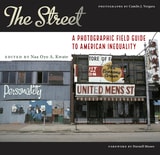
The Street
A Photographic Field Guide to American InequalityNaa Oyo A. Kwate
Rutgers University Press, 2021
Using MacArthur fellow Camilo José Vergara’s intimate street photographs of Camden, New Jersey as reference points, the essays in this collection analyze these images within the context of troubled histories and misguided policies that have exacerbated racial and economic inequalities. Rather than blaming Camden’s residents for the blighted urban landscape, the multidisciplinary array of scholars contributing to this guide reveal the oppressive structures and institutional failures that have led the city to this condition. Tackling topics such as race and law enforcement, gentrification, food deserts, urban aesthetics, credit markets, health care, childcare, and schooling, the contributors challenge conventional thinking about what we should observe when looking at neighborhoods.

The Sun Tunnels Encyclo
Exploring Nancy Holt's Earthwork through Perception and SiteHikmet Sidney Loe
University of Utah Press, 2027
The Sun Tunnels Encyclo: Exploring Nancy Holt’s Earthwork through Perception and Site affords new information on the artist’s iconic work of land art. American artist Nancy Holt (1938-2014) extended her practice into the land, employing light, vision, and perception through photography, film, installations, and poetics. By creating her expansive earthwork Sun Tunnels (1973-76), Holt became a leader within the land art movement. Through her eponymous essay (1977) and film (1978), Holt presents the work through interdisciplinary topics: scientific (astronomical, mathematical, geologic, architectural) and regional (historical, cultural). Land use (Indigenous peoples, migration, military, industrial) joins poetry and philosophy to extend the work’s site-specificity. Through these myriad subjects, The Sun Tunnels Encyclo explores Holt’s pronouncement: “the center of the work becomes the center of the world.”
The Taft Ranch
A Texas PrincipalityBy A. Ray Stephens
University of Texas Press, 1964
For fifty years the progressive Coleman-Fulton Pasture Company, popularly known as the Taft Ranch, led in the development of South Texas, and in the early twentieth century achieved national and international repute for its contributions to agriculture. The story of the ranch reaches its climax as the firm is absorbed into the community growing up around it—the same community the ranch had nurtured to an unprecedented prosperity.
In 1961 A. Ray Stephens visited Taft, Texas, and received permission to use the dust-covered records, which for thirty years had been closed to historians. These records, plus the valuable supplementary material in the Fulton Collection at the University of Texas, have enabled the author to tell the complete story of the ranch from its inception in 1880 to its dissolution in 1930.
In 1880, with a fifty-year charter, the Coleman-Fulton Pasture Company was legally born as a private corporation. For the duration of its history this company aided the advancement of South Texas through effective utilization of the fertile land, through development of agriculture and related industries, and through encouragement of settlers and curious visitors to the Coastal Bend region. Its history is a long, determined fight against severe drought, cattle disease, and financial insolvency. Guided by farsighted men who believed in experimentation in agriculture—and who also promoted the establishment of stores, schools, colleges, churches, and industrial plants—the company not only survived but prospered, and by 1920 its owners could survey their vast properties with well-earned satisfaction. The struggling cattle firm of 1880 had expanded into a multi-interest, profitable corporation that had established and supervised most of the industries in Taft, Texas.
Stephens' well-documented 1964 study had been long needed. During the three decades preceding it, the ranch had been well-nigh forgotten; only the handful of people, then still living, who had worked on the ranch had kept its memory fresh, while the voluminous company records remained inaccessible. The author supplemented his study of company records and newspapers with archival material, government records, and information obtained during hours of interviewing. His book will insure for the Taft Ranch its deservedly prominent position in Texas history.
The lively introduction was written by Joe B. Frantz (1917–1993) who, in his role of Professor of History at the University of Texas, encouraged the study and watched its development.
The Taxi-Dance Hall
A Sociological Study in Commercialized Recreation and City LifePaul Goalby Cressey
University of Chicago Press, 1932
Taxi-dance halls, as the introduction notes, were social centers where men could come and pay to dance with “a bevy of pretty, vivacious, and often mercenary” women. Ten cents per dance was the usual fee, with half the proceeds going to the dancer and the other half to the owner of the taxi-hall. Cressey’s study includes detailed maps of the taxi-dance districts, illuminating interviews with dancers, patrons, and owners, and vivid analyses of local attempts to reform the taxi-dance hall and its attendees.
Cressey’s study reveals these halls to be the distinctive urban consequence of tensions between a young, diverse, and economically independent population at odds with the restrictive regulations of Prohibition America. Thick with sexual vice, ethnic clashes, and powerful undercurrents of class, The Taxi-Dance Hall is a landmark example of Chicago sociology, perfect for scholars and history buffs alike.
The Tennessee Campaign of 1864
Edited by Steven E. Woodworth and Charles D. Grear
Southern Illinois University Press, 2016
Contributors explore the campaign’s battlefield action, including how Major General Andrew J. Smith’s three aggressive divisions of the Army of Tennessee became the most successful Federal unit at Nashville, how vastly outnumbered Union troops held the Allatoona Pass, why Hood failed at Spring Hill and how the event has been perceived, and why so many of the Army of Tennessee’s officer corps died at the Battle of Franklin, where the Confederacy suffered a disastrous blow. An exciting inclusion is the diary of Confederate major general Patrick R. Cleburne, which covers the first phase of the campaign. Essays on the strained relationship between Ulysses S. Grant and George H. Thomas and on Thomas’s approach to warfare reveal much about the personalities involved, and chapters about civilians in the campaign’s path and those miles away show how the war affected people not involved in the fighting. An innovative case study of the fighting at Franklin investigates the emotional and psychological impact of killing on the battlefield, and other implications of the campaign include how the courageous actions of the U.S. Colored Troops at Nashville made a lasting impact on the African American community and how preservation efforts met with differing results at Franklin and Nashville.
Canvassing both military and social history, this well-researched volume offers new, illuminating perspectives while furthering long-running debates on more familiar topics. These in-depth essays provide an expert appraisal of one of the most brutal and notorious campaigns in Civil War history.
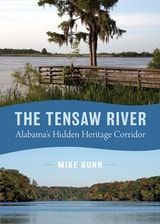
The Tensaw River
Alabama's Hidden Heritage CorridorMike Bunn
University of Alabama Press, 2025
Where nature meets history—explore Alabama’s hidden river legacy.
The Tensaw River introduces one of the American South’s richest and most fertile natural features. Author Mike Bunn is director of Historic Blakeley State Park, which is nestled in a prominent bend of the majestic Tensaw River. Reading Bunn is like sailing with a knowledgeable captain along the river’s natural and cultural byways as he offers a treasury of stories and facts that illuminate the river’s astonishing flora and fauna and the sweep of human history along the river’s ageless, meandering waterways.
Forming the eastern boundary of the expansive Mobile-Tensaw Delta, the Tensaw has had little industrial development. Left largely undisturbed, the river still flows free and bountiful into the grand estuary of Mobile Bay in ways and along vistas that would be recognizable to Native Americans centuries ago and to pioneers who arrived before Alabama became a state.
Bunn’s unforgettable stories in The Tensaw River trace the construction and occupation of the Bottle Creek site, an important mound complex built by Southeastern Native Americans a millennia ago. Nearby Blakeley is a spectral antebellum ghost town whose lost memories also tease the imagination. During the Civil War, the boom of artillery fire in the battle that sealed the fate of the city of Mobile echoed along the bends in the Tensaw.
Located near popular Gulf Coast travel destinations, the Tensaw’s forty-one-mile-long “Forgotten Cultural Heritage Corridor” is a gateway to the enchanting beauty of—and humankind’s enduring relationship to—the landscape of the American South.
The Territory of Michigan (1805-1837)
Alec Gilpin
Michigan State University Press, 1970

The Test
Walter Adams
Michigan State University Press, 2003
World renowned economist and president of Michigan State University, Walter Adams first published The Test in 1971, a year after his tenure as university president ended. Adams recounts the tumultuous nine months of his office: as the first university president to follow the legendary John Hannah, Adams inherited the unease and resentments that had been quietly swelling under seemingly calm administrative waters.
These resentments, coupled with the increased social awareness generated by sixties activism combined in an explosive protest during the fall of 1969. With gripping honesty and clarity, The Test not only chronicles the events, but offers an indictment of those institutional structures that ignored very real social concerns in favor of esoteric academic pursuits. By examining the perspectives of all the participants, Adams presents new directions for the growth and development of university communities. Both a thoughtful analysis and eyewitness account, The Test presents invaluable documentary evidence of one of the most dynamic periods in American history.
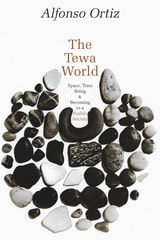
The Tewa World
Space, Time, Being and Becoming in a Pueblo SocietyAlfonso Ortiz
University of Chicago Press, 1972

The Texanist
Fine Advice on Living in TexasBy David Courtney and Jack Unruh
University of Texas Press, 2017
The Texanist, Texas Monthly’s perennially popular back-page column, has become the magazine’s most-read feature. With an inimitable style and an unassailable wholesomeness, columnist David Courtney has counseled many a well-intentioned Texan, native or wannabe, on how to properly conduct him- or herself. Until the July 2016 issue, an original illustration by the late award-winning artist Jack Unruh, depicting the Texanist in a situation described in the column, accompanied the Texanist’s sage wisdom. Unruh’s peerless illustrations displayed a sly wit that paired perfectly with Courtney’s humorous ripostes.
The Texanist gathers several dozen of Unruh’s most unforgettable illustrations, along with the fascinating, perplexing, and even downright weird questions that inspired them. Curing the curious, exorcizing bedevilment, and orienting the disoriented, the Texanist advises on such things as: Is it wrong to wear your football team’s jersey to church? When out at a dancehall, do you need to stick with the one that brung ya? Is it real Tex-Mex if it’s served with a side of black beans? Can one have too many Texas-themed tattoos? The Texanist addresses all of these important subjects and more. Whether you heed the good guidance, or just enjoy the whimsical illustrations, The Texanist will both entertain and educate you.

The Texas Book Two
More Profiles, History, and Reminiscences of the UniversityEdited by David Dettmer
University of Texas Press, 2012
In every corner of the sprawling enterprise that is the University of Texas at Austin, you will find teaching, research, artistic creation, and sports achievement that are among the best in the world. Mandated by the Texas constitution to be “a university of the first class,” UT Austin strives for excellence across the curriculum, from the most traditional of liberal arts disciplines to the cutting edge of science and technology. For Texans interested in progress, whether students of the university or members of the public, there are few pleasures greater than uncovering the intellectual treasures that can be found by exploring the university’s “Forty Acres” and all that they contain.
The Texas Book, edited by Richard A. Holland and published in 2006, offered the first in-depth exploration of UT’s history and traditions through a collection of profiles, histories, and reminiscences. Now The Texas Book Two continues the story, with a variety of contributors recalling particular events and personalities that have helped shape the university and the people whose lives it has touched. Twenty-one essays present personalities such as John A. Lomax, Anna Hiss, J. R. Parten, Harvey Penick, John W. Hargis, and Jorge Luis Borges; accounts of legislative battles and debates over campus architecture; histories of crown jewels such as the McDonald Observatory and Austin City Limits; and the reminiscences of Barbara Smith Conrad, Sam Hurt, and Cat Osterman, among others.
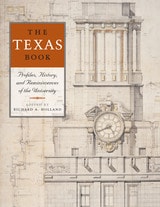
The Texas Book
Profiles, History, and Reminiscences of the UniversityEdited by Richard A. Holland
University of Texas Press, 2006
As the University of Texas at Austin celebrates its 125th anniversary, it can justly claim to be a "university of the first class," as mandated in the Texas Constitution. The university's faculty and student body include winners of the Nobel Prize, the Pulitzer Prize, the MacArthur "genius award," and Rhodes and Marshall Scholarships, as well as members of learned societies all over the world. UT's athletic programs are said to be the best overall in the United States, and its libraries, museums, and archives are lauded in every educated part of the world. Texas alumni have made their marks in law, engineering, geology, business, journalism, and all fields of the sciences, arts, and entertainment.
The Texas Book gathers together personality profiles, historical essays, and first-person reminiscences to create an informal, highly readable history of UT. Many fascinating characters appear in these pages, including visionary president and Ransom Center founder Harry Huntt Ransom, contrarian English professor and Texas folklorist J. Frank Dobie, legendary regent and lightning rod Frank C. Erwin, and founder of the field of Mexican American Studies, Américo Paredes. The historical pieces recall some of the most dramatic and challenging episodes in the university's history, including recurring attacks on the school by politicians and regents, the institution's history of segregation and struggles to become a truly diverse university, the sixties' protest movements, and the Tower sniper shooting. Rounding off the collection are reminiscences by former and current students and faculty, including Walter Prescott Webb, Willie Morris, Betty Sue Flowers, J. M. Coetzee, and Barbara Jordan, who capture the spirit of the campus at moments in time that defined their eras.
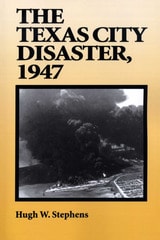
The Texas City Disaster, 1947
By Hugh W. Stephens
University of Texas Press, 1997
On April 16, 1947, a small fire broke out among bags of ammonium nitrate fertilizer in the hold of the ship Grandcamp as it lay docked at Texas City, Texas. Despite immediate attempts to extinguish the fire, it rapidly intensified until the Grandcamp exploded in a blast that caused massive loss of life and property. In the ensuing chaos, no one gave much thought to the ship in the next slip, the High Flyer. It exploded sixteen hours later.
The story of the Texas City explosions—America's worst industrial disaster in terms of casualties—has never been fully told until now. In this book, Hugh W. Stephens draws on official reports, newspaper and magazine articles, personal letters, and interviews with several dozen survivors to provide the first full account of the disaster at Texas City.
Stephens describes the two explosions and the heroic efforts of Southeast Texans to rescue survivors and cope with extensive property damage. At the same time, he explores why the disaster occurred, showing how a chain of indifference and negligence made a serious industrial accident almost inevitable, while a lack of emergency planning allowed it to escalate into a major catastrophe. This gripping, cautionary tale holds important lessons for a wide reading public.
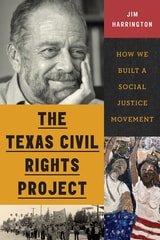
The Texas Civil Rights Project
How We Built a Social Justice MovementJim Harrington
University of Texas Press, 2025
Texas civil rights icon Jim Harrington recounts his lifelong fight for equality, winning major reforms for farmworkers and disabled Texans and helping build a movement for social justice.
Jim Harrington arrived in South Texas in 1973, ready to file class action lawsuits and “save the world.” Over the following fifty years, he built one of Texas’s key civil rights organizations and played an essential role in many of its greatest victories.
Harrington takes readers on his journey from a Midwest seminary to a United Farm Workers office in the Rio Grande Valley and on to founding the Texas Civil Rights Project. He fought for the rights of a wide range of Texans, bringing justice to victims of police brutality, injured farmworkers, silenced students, and people with disabilities excluded from full participation in society, building a movement for social justice, and a family, along the way. These major gains were tempered by heartbreaking losses, and Harrington recounts the difficult work of persevering in the face of injustice.
Framed by a foreword from Judge Lora Livingston and an afterword by Congressman Greg Casar, The Texas Civil Rights Project is at once a history of the struggle for equality over the last fifty years, a celebration of the individuals and grassroots organizations who fought hard to improve the lives of others, and a memoir of a singular force who pushed the Texas justice system to live up to its ideals.

The Texas Land and Development Company
A Panhandle Promotion, 1912-1956By B. R. Brunson
University of Texas Press, 1970
Agricultural and urban development came late to the Texas South Plains, and frontier life lingered well into the twentieth century. In the decade preceding World War I numerous land companies flourished in the area and acted as catalysts for settlement and economic expansion. Prominent among these companies was the Plainview-based Texas Land and Development Company, founded in 1912 as an operating agent for a syndicate of eastern financiers.
Like most land companies, the Texas Land and Development Company operated a large-scale enterprise that broke up ranch holdings into tracts for sale to farmers. Company agents advertised broadly in newspapers and magazines and organized special train trips to bring prospective customers to the area. And, like most entrepreneurs associated with frontier land companies, backers of the Texas Land and Development Company hoped to realize a quick profit from land sales.
The Plainview enterprise was, however, unique in many ways. It promoted relatively high-priced lands and tried to sell fully developed, irrigated farms. The company was an important social and economic force in Plainview and the surrounding counties because its backers put capital into the region instead of taking money out. Especially during the early years, the company realized little profit from sales because of war and depression. The complex and sophisticated fiscal structure of the company is of particular historical significance.
B. R. Brunson traces the history of the influential Texas Land and Development Company from its inception in 1912 to its final dissolution in January 1956. He combines an analysis of the company's role in Panhandle economic growth with lively biographies of the men who organized the operation and descriptions of their achievements in the fields of irrigation, farm planning, company organization, and finance.
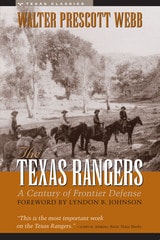
The Texas Rangers
A Century of Frontier DefenseBy Walter Prescott Webb
University of Texas Press, 1996
Webb's classic history of the Texas Rangers has been popular ever since its first publication in 1935. This edition is a reproduction of the original Houghton Mifflin edition.
The Texas Supreme Court
A Narrative History, 1836–1986By James L. Haley
University of Texas Press, 2013
“Few people realize that in the area of law, Texas began its American journey far ahead of most of the rest of the country, far more enlightened on such subjects as women’s rights and the protection of debtors.” Thus James Haley begins this highly readable account of the Texas Supreme Court. The first book-length history of the Court published since 1917, it tells the story of the Texas Supreme Court from its origins in the Republic of Texas to the political and philosophical upheavals of the mid-1980s.
Using a lively narrative style rather than a legalistic approach, Haley describes the twists and turns of an evolving judiciary both empowered and constrained by its dual ties to Spanish civil law and English common law. He focuses on the personalities and judicial philosophies of those who served on the Supreme Court, as well as on the interplay between the Court’s rulings and the state’s unique history in such areas as slavery, women’s rights, land and water rights, the rise of the railroad and oil and gas industries, Prohibition, civil rights, and consumer protection. The book is illustrated with more than fifty historical photos, many from the nineteenth and early twentieth centuries. It concludes with a detailed chronology of milestones in the Supreme Court’s history and a list, with appointment and election dates, of the more than 150 justices who have served on the Court since 1836.
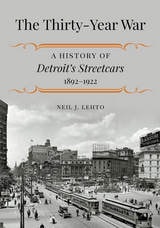
The Thirty-Year War
A History of Detroit's Streetcars, 1892–1922Neil J. Lehto
Michigan State University Press, 2017

The Thoughtbook of F. Scott Fitzgerald
A Secret Boyhood DiaryF. Scott Fitzgerald
University of Minnesota Press, 2013
When F. Scott Fitzgerald was fourteen and living in the Crocus Hill neighborhood of St. Paul, he began keeping a short diary of his exploits among his friends, friendly rivals, and crushes. He gave the journal a title page—Thoughtbook of Francis Scott Key Fitzgerald of St. Paul Minn. U.S.A.—and kept it securely locked in a box under his bed. He would later use The Thoughtbook as the basis for “The Book of Scandal” in his Basil Lee Duke stories, and brief sections were copied over the years for use by scholars and even published in Life magazine.“Are you going to the Ordways’? the Herseys’? the Schultzes’?” Here, for the first time, is a complete transcription of this charming, twenty-seven-page diary highlighting Fitzgerald’s escapades among the children of some of St. Paul’s most influential families—models for the families described in The Great Gatsby. Presented in a simple format for both scholars and general readers alike, The Thoughtbook of F. Scott Fitzgerald includes a new introduction by Dave Page that covers the history and provenance of the diary, its place and meaning in Fitzgerald’s literary development, and its revelations about his life and writing process.
One of the earliest known works by F. Scott Fitzgerald, The Thoughtbook provides a unique glimpse of Fitzgerald as a young boy and his social circle as they played among the grand homes of Summit Avenue, making up games, starting secret societies, competing with rivals, and (at all times) staying up-to-date on who exactly is vying for whose attention.

The Tillamook
A Created Forest Comes of AgeGail Wells
Oregon State University Press, 1999
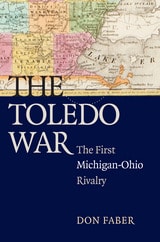
The Toledo War
The First Michigan-Ohio RivalryDon Faber
University of Michigan Press, 2008
Most are familiar with the Michigan-Ohio football rivalry, an intense but usually good-natured contest that stretches back over one hundred years. Yet far fewer may know that in the early nineteenth century Michigan and Ohio were locked in a different kind of battle---one that began before Michigan became a state.
The conflict started with a long-simmering dispute over a narrow wedge of land called the Toledo Strip. Early maps were famously imprecise, adding to the uncertainty of the true boundary between the states. When Ohio claimed to the mouth of the Maumee River, land that according to the Northwest Ordinance of 1787 fell in the territory of Michigan, the "Toledo War" began.
Today the fight may bring a smile to Michiganians and Ohioans because both states benefited: Ohioans won the war and Michigan got the Upper Peninsula. But back then passions about rightful ownership ran high, and it would take many years---and colorful personalities all the way up to presidents---to settle the dispute. The Toledo War: The First Michigan-Ohio Rivalry gives a well-researched and fascinating account of the famous war.
The Tombigbee Watershed in Southeastern Prehistory
Ned J. Jenkins
University of Alabama Press, 1986
Representing the synthesis of approximately ten years of archaeological research along the central Tombigbee River, this book offers new theoretical and interpretive contributions to the study of human activity in the Tombigbee River Valley from 1000 B.C. to A.D. 1450. The authors have devised a new taxonomic approach that allows them to portray cultures as they gathered momentum and peaked in their potential as social, economic, and political structures. The data acquired for this study are from the massive cultural resource management program that accompanied the construction of the Tennessee-Tombigbee Waterway.
The Toughest Kid We Knew
The Old New West: A Personal HistoryFrank Bergon
University of Nevada Press, 2020
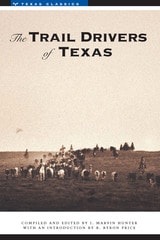
The Trail Drivers of Texas
Interesting Sketches of Early Cowboys...Compiled and edited by J. Marvin Hunter
University of Texas Press, 1993
These are the chronicles of the trail drivers of Texas—those rugged men and, sometimes, women who drove cattle and horses up the trails from Texas to northern markets in the late 1800s. Gleaned from members of the Old Time Trail Drivers' Association, these hundreds of real-life stories—some humorous, some chilling, some rambling, all interesting—form an invaluable cornerstone to the literature, history, and folklore of Texas and the West. First published in the 1920s and reissued by the University of Texas Press in 1985, this classic work is now available in a handsome paperback edition that contains the full text, historical illustrations, and name index of the hardcover edition.
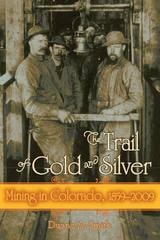
The Trail of Gold and Silver
Mining in Colorado, 1859-2009Duane A. Smith
University Press of Colorado, 2009
Written in a lively manner by one of Colorado's preeminent historians, this book honors the 2009 sesquicentennial of Colorado's gold rush. Smith's narrative will appeal to anybody with an interest in the state's fascinating mining history over the past 150 years.
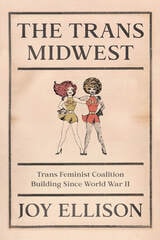
The Trans Midwest
Trans Feminist Coalition Building Since World War IIJoy Ellison
University of Chicago Press, 2027
A revelatory regional history of trans feminist coalition-building between feminist, queer, and Black communities.
In the face of heightened transphobia and rising fascism in the United States, Joy Ellison’s TheTrans Midwest recounts the history of Midwestern trans women and femmes as a force in the larger feminist movement in the United States. Facing repression and geographic isolation, trans feminine Midwesterners built, and continue to build, vibrant coalitions with feminist, queer, and Black organizations.
Drawing on a vast range of archives and oral histories, Ellison shares a detailed and intersectional description of trans life and politics. These historical figures range from the Black trans women who worked in drag shows to the student coalitions that led to the passage of the country’s first trans-inclusive anti-discrimination ordinance and transsexual lesbian feminist activism in the 1990s. Ellison examines community networks and support groups, newsletters and advertisements, and Midwestern cities from Detroit to Kansas City to elucidate how trans regional groups found common interests across different races, classes, abilities, and sexualities, a marked difference from existing historical accounts of similar movements elsewhere.
Contributing to our understanding of trans history and the impact of intersectional organizing, The Trans Midwest presents new possibilities and critical lessons for trans feminist movements today.
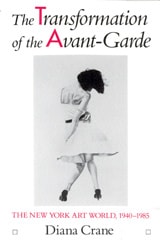
The Transformation of the Avant-Garde
The New York Art World, 1940-1985Diana Crane
University of Chicago Press, 1989
Crane's account is built around discussions of seven styles: Abstract Expressionism in the forties; Pop art and Minimalism in the sixties; Figurative painting, Photorealism, and Pattern painting in the early seventies; and Neo-Expressionism in the early eighties. Demonstrating that the New York art world moved toward increasing acceptance of dominant American cultural trends, Crane offers a fascinating look not only at the intricacies of New York's artistic inner circle but also at the sociology of work and professions, the economics of culture markets such as "dealing art," and the sociology of culture.
The Travels of Increase Joseph
A Historical Novel about a Pioneer PreacherJerry Apps
University of Wisconsin Press, 2010
Link Lake, Wisconsin, 1852: Preacher Increase Link and the Standalone Fellowship settle near a lake that they name in his honor. Increase’s gifted tongue calls people to his mission to protect the land: “Unless we take care of the land we shall all perish.” To finance the fellowship activities, Increase sells his special cure-all tonic—fifty cents per bottle!
Inspired by actual events that took place in upstate New York and Wisconsin in the mid-nineteenth century, The Travels of Increase Joseph is the first in Jerry Apps’s series set in fictional Ames County, Wisconsin. The four novels in the series—which also includes In a Pickle, Blue Shadows Farm, and the forthcoming Cranberry Red—all take place around Link Lake at different points in history. They convey Apps’s deep knowledge of rural life and his own concern for land stewardship.
The Tree That Bends
Discourse, Power, and the Survival of Maskoki PeoplePatricia Riles Wickman
University of Alabama Press, 1999
In her compelling and controversial arguments, Wickman rejects the myths that erase Native Americans from Florida through the agency of Spaniards and diseases and make the area an empty frontier awaiting American expansion. Through research on both sides of the Atlantic and extensive oral history interviews among the Seminoles of Florida and Oklahoma, Wickman shatters current theories about the origins of the people encountered by the Spaniards and presents, for the first time ever, the Native American perspective. She describes the genesis of the groups known today as Creek, Seminole, and Miccosukee—the Maskoki peoples—and traces their common Mississippian heritage, affirming their claims to continuous habitation of the Southeast and Florida. Her work exposes the rhetoric of conquest and replaces it with the rhetoric of survival.
An important cross-disciplinary work, The Tree That Bends reveals the flexibility of the Maskoki people and the sociocultural mechanisms that allowed them to survive the pressures introduced at contact. Their world was capable of incorporating the New without destroying the Old, and their descendants not only survive today but also succeed as a discrete culture as a result.

The Trials of Eroy Brown
The Murder Case That Shook the Texas Prison SystemBy Michael Berryhill
University of Texas Press, 2011
In April 1981, two white Texas prison officials died at the hands of a black inmate at the Ellis prison farm near Huntsville. Warden Wallace Pack and farm manager Billy Moore were the highest-ranking Texas prison officials ever to die in the line of duty. The warden was drowned face down in a ditch. The farm manager was shot once in the head with the warden's gun. The man who admitted to killing them, a burglar and robber named Eroy Brown, surrendered meekly, claiming self-defense.
In any other era of Texas prison history, Brown's fate would have seemed certain: execution. But in 1980, federal judge William Wayne Justice had issued a sweeping civil rights ruling in which he found that prison officials had systematically and often brutally violated the rights of Texas inmates. In the light of that landmark prison civil rights case, Ruiz v. Estelle, Brown had a chance of being believed.
The Trials of Eroy Brown, the first book devoted to Brown's astonishing defense, is based on trial documents, exhibits, and journalistic accounts of Brown's three trials, which ended in his acquittal. Michael Berryhill presents Brown's story in his own words, set against the backdrop of the chilling plantation mentality of Texas prisons. Brown's attorneys—Craig Washington, Bill Habern, and Tim Sloan—undertook heroic strategies to defend him, even when the state refused to pay their fees. The Trials of Eroy Brown tells a landmark story of prison civil rights and the collapse of Jim Crow justice in Texas.
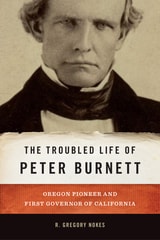
The Troubled Life of Peter Burnett
Oregon Pioneer and First Governor of CaliforniaR. Gregory Nokes
Oregon State University Press, 2018
It was one heck of a resume. Yet with the exception of the wagon road to California, in none of these roles was Burnett considered successful or well remembered. Indeed, he resigned from many of his most important positions, including the governorship, where he was widely perceived a failure.
Burnett’s weakness was that he refused to take advice from others. He insisted on marching to his own drum, even when it led to some terrible decisions. A former slaveholder, he could never seem to get beyond his single-minded goal of banning blacks and other minorities from the West.
The Troubled Life of Peter Burnett is the first full-length biography of this complicated character. Historians, scholars, and general readers with an interest in Western history will welcome R. Gregory Nokes’ accessible and deeply researched account.
The Tunnel under the Lake
The Engineering Marvel That Saved ChicagoBenjamin Sells
Northwestern University Press, 2017
Despite Chicago's location beside the world’s largest source of fresh water, its low elevation at the end of Lake Michigan provided no natural method of carrying away waste. As a result, within a few years of its founding, Chicago began to choke on its own sewage collecting near the shore. The befouled environment, giving rise to outbreaks of sickness and cholera, became so acute that even the ravages and costs of the U.S. Civil War did not distract city leaders from taking action.
Chesbrough's solution was an unprecedented tunnel five feet in diameter lined with brick and dug sixty feet beneath Lake Michigan. Construction began from the shore as well as the tunnel’s terminus in the lake. With workers laboring in shifts and with clay carted away by donkeys, the lake and shore teams met under the lake three years later, just inches out of alignment. When it opened in March 1867, observers, city planners, and grateful citizens hailed the tunnel as the "wonder of America and of the world."
Benjamin Sells narrates in vivid detail the exceptional skill and imagination it took to save this storied city from itself. A wealth of fascinating appendixes round out Sells’s account, which will delight those interested in Chicago history, water resources, and the history of technology and engineering.

The Twenty-First Ballot
A Political Party Struggle in MinnesotaDavid Lebedoff
University of Minnesota Press, 1969
The Twenty-First Ballot was first published in 1969. Minnesota Archive Editions uses digital technology to make long-unavailable books once again accessible, and are published unaltered from the original University of Minnesota Press editions.
This account of a bitter struggle with in the Democratic-Farmer-Labor (DFL) party in Minnesota is an interesting story in its own right, and, viewed from a wider perspective, is a valuable documentary on the American political process.
The author recounts the events leading up to and climaxing in the party's deep split over the nomination of a candidate for the 1966 gubernatorial election. The nomination was accomplished only after twenty ballots were taken at the party's convention. The twenty first ballot of the book's title derives from a campaign slogan which urged that the voters, not the party, would make the final decision.
The intraparty battle was waged between a faction which backed the nomination of the incumbent governor, Karl F. Rolvaag, for a second term and a group favoring the nomination of the incumbent lieutenant governor, A. M. "Sandy" Keith, as the gubernatorial candidate. Basic to the struggle was the conviction among supporters of Mr. Keith that a new "image' was needed to win the election of a party's obligation to an incumbent. Mr. Keith was nominated. However, Mr. Rolvaag challenged the nomination by entering the primary election. He defeated the party nominee and won a place on the general election ballot, only to be defeated, in the end, by his Republican opponent.
The book is illustrated with eight pages of news photographs of the principals and events of the story.
The details of this unusual sequence of events reveal much about the workings of party politics at the important state level. The book will, therefore, be of interest not only to the general readers but to students and teachers in political science courses.

The Un-Natural State
Arkansas and the Queer SouthBrock Thompson
University of Arkansas Press, 2010
The Unforgiving Coast
Maritime Disasters of the Pacific NorthwestDavid Grover
Oregon State University Press, 2002
The United States of Ohio
One American State and Its Impact on the Other Forty-NineDavid E. Rohr
The Ohio State University Press, 2019
The United States of Ohio covers little-known facts about Ohio, such as how the state was the birthplace of both the National Football League and Major League Baseball and how it was Ohioans who led efforts toward racial integration in both sports. Readers will learn what makes the state a manufacturing and agricultural powerhouse—with both the largest tire company, Akron’s Goodyear, and the largest consumer products company, Cincinnati’s Proctor & Gamble, based there. The state grows, processes, and builds on a level that far outpaces the size of its population or expanse of its borders. And it is the birthplace of many prominent US figures—from Thomas Edison to John Glenn to Neil Armstrong. From sports to a century’s worth of entertainment superstars to aviation and space exploration, Ohio’s best have made for America’s greatest stories—all captured here in a look at the Buckeye State and its impact on the other forty-nine.
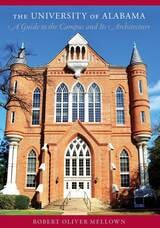
The University of Alabama
A Guide to the Campus and Its ArchitectureRobert Oliver Mellown
University of Alabama Press, 2013
In 1988 the University of Alabama Press published Robert Oliver Mellown’s The University of Alabama: A Guide to the Campus, a culmination of a decade’s worth of research into both the facts and the legends surrounding the architecture, history, and traditions of the Capstone.
Over twenty years later, this new guide brings to light the numerous additions, expansions, and renovations the university has undergone on its spacious grounds in Tuscaloosa. In addition to updated sections devoted to the university’s historic landmarks—such as Foster Auditorium, where “the stand in the schoolhouse door” occurred; Denny Chimes,where the handprints and footprints of famous Tide athletes are memorialized in concrete; and the Gorgas House, which with stood the destruction of Union troops at the end of the Civil War—new sections account for the acquisition of Bryce Hospital’s campus, the expansions at Bryant-Denny Stadium to accommodate the growing Crimson Tide fan base, and the burgeoning student recreation facilities, playing fields, and residential communities.
Chapters are arranged into various campus tours for walking or driving—Antebellum, Victorian, Early Twentieth-Century, East Quad, West Quad, Science and Engineering Corridor, Student Life, Bryce, Medical, Southeast, Athletics, and Off Campus. Alumni, prospective students and their parents, new faculty, out-of-state visitors, and foreign dignitaries will all welcome this useful, compact, and colorful guide to one of the most beautiful campuses in the country.
The University of Arizona
A History in 100 StoriesGregory McNamee
University of Arizona Press, 2024
The University of Arizona: A History in 100 Stories is a celebration of the people, ideas, inventions, teaching, and structures that have been part of the school’s evolution from a small land-grant institution to an internationally renowned research institution. Drawing on half a century of connection with the University of Arizona as a student, staff member, and faculty member, Gregory McNamee presents a history through the lens of a hundred subjects.
That story begins in 1885, with the establishment of the school, which quickly proved itself to be a powerhouse in its foundational “four pillars”: agriculture and earth sciences, followed by astronomy and anthropology. In the years following World War II, those four pillars became ever more important to the University, even as countless other fields of study gained prominence: optical sciences, women’s studies, the humanities, mathematics, and more. This phenomenal institution has as its setting the Sonoran Desert, and, closer to home, to a built environment that is widely considered among the most scenic in the country, from the Historic District with its buildings that are more than a century old to the latest steel-and-glass constructions on the edges of the ever-expanding campus.
McNamee relates this history in an entertaining manner, peppering discussion of serious intellectual and institutional themes with lighter moments—the origins of the university's rivalry with Arizona State, the ghosts that are said to lurk about campus, and more. Wildcats everywhere will delight in McNamee’s celebration of the people, places, learning, books, and pastimes that have distinguished our school.
The University of Chicago
A HistoryJohn W. Boyer
University of Chicago Press, 2015
With The University of Chicago: A History, John W. Boyer, Dean of the College since 1992, presents a deeply researched and comprehensive history of the university. Boyer has mined the archives, exploring the school’s complex and sometimes controversial past to set myth and hearsay apart from fact. The result is a fascinating narrative of a legendary academic community, one that brings to light the nature of its academic culture and curricula, the experience of its students, its engagement with Chicago’s civic community, and the conditions that have enabled the university to survive and sustain itself through decades of change.
Boyer’s extensive research shows that the University of Chicago’s identity is profoundly interwoven with its history, and that history is unique in the annals of American higher education. After a little-known false start in the mid-nineteenth century, it achieved remarkable early successes, yet in the 1950s it faced a collapse of undergraduate enrollment, which proved fiscally debilitating for decades. Throughout, the university retained its fierce commitment to a distinctive, intense academic culture marked by intellectual merit and free debate, allowing it to rise to international acclaim. Today it maintains a strong obligation to serve the larger community through its connections to alumni, to the city of Chicago, and increasingly to its global community.
Published to coincide with the 125th anniversary of the university, this must-have reference will appeal to alumni and anyone interested in the history of higher education of the United States.
The University of Chicago
A HistoryJohn W. Boyer
University of Chicago Press, 2024
One of the most influential institutions of higher learning in the world, the University of Chicago has a powerful and distinct identity, and its name is synonymous with intellectual rigor. With nearly 170,000 alumni living and working in more than one hundred and fifty countries, its impact is far-reaching and long-lasting.
With The University of Chicago: A History, John W. Boyer, Dean of the College from 1992 to 2023, thoroughly engages with the history and the lived politics of the university. Boyer presents a history of a complex academic community, focusing on the nature of its academic culture and curricula, the experience of its students, its engagement with Chicago’s civic community, and the resources and conditions that have enabled the university to sustain itself through decades of change. He has mined the archives, exploring the school’s complex and sometimes controversial past to set myth and hearsay apart from fact.
Boyer’s extensive research shows that the University of Chicago’s identity is profoundly interwoven with its history, and that history is unique in the annals of American higher education. After a little-known false start in the mid-nineteenth century, it achieved remarkable early successes, yet in the 1950s it faced a collapse of undergraduate enrollment, which proved fiscally debilitating for decades. Throughout, the university retained its fierce commitment to a distinctive, intense academic culture marked by intellectual merit and free debate, allowing it to rise to international acclaim. Today it maintains a strong obligation to serve the larger community through its connections to alumni, to the city of Chicago, and increasingly to its global community. Boyer’s tale is filled with larger-than-life characters—John D. Rockefeller, Robert Maynard Hutchins, and many other famous figures among them—and episodes that reveal the establishment and rise of today’s institution.
Newly updated, this edition extends through the presidency of Robert Zimmer, whose long tenure was marked by significant developments and controversies over subjects as varied as free speech, medical inequity, and community relations.

The University of Illinois, 1894-1904
THE SHAPING OF THE UNIVERSITYWinton U. Solberg
University of Illinois Press, 2000
The years 1894 to 1904 mark the stormy tenure of Andrew S. Draper as president of the University of Illinois. Draper, a successful superintendent of schools with no college or university experience and no credentials as a post-secondary administrator, presided over many crucial improvements in the university's physical plant, curricula, and other areas. However, he failed to infuse the university with a spirit of cohesion, and his term as president was fraught with conflict.
From his inauguration on, the autocratic Draper collided with deans and faculty who opposed both the substance of his changes and the manner in which he presented and implemented them.
This volume closely examines the Draper years from the perspectives of faculty, students, and administrators. Solberg outlines the administrative, faculty, staff, and physical infrastructure. He also reveals a vibrant and varied student life, including a whirl of social activities, literary societies, intercollegiate debate and athletics, hazing, religion, and increasingly prominent fraternities.
A sharply delineated and detailed picture of a university in transition, The University of Illinois, 1894-1904 traces the school's shift from an institution known primarily as a training ground for engineers to a full-fledged university poised to compete on the national level.
The University of Illinois
Engine of InnovationEdited by Frederick E. Hoxie
University of Illinois Press, 2017
The University of Iowa Guide to Campus Architecture
John Beldon Scott
University of Iowa Press, 2006

The University of Michigan & China, 1845 – 2017
Neal McKenna
Michigan Publishing Services, 2017
Throughout the last two centuries U.S. administrations from President Lincoln to President Clinton have relied on U-M leaders and faculty to engage China and develop political and cultural relationships. The University of Michigan was one of the first universities in the U.S. to enroll Chinese students and has many prominent Chinese graduates, including a Nobel Laureate and the first female college president in China.
As U-M celebrates its own bicentennial, this book recounts the university's considerable history with Chinese governments, people and culture. The book also updates readers on the current and ongoing partnerships between different U-M departments and schools with Chinese institutions, and provides a list of several prominent Chinese graduates of the University of Michigan.
The University of Nevada, 1874-2024
150 Years of Inspiring ExcellenceJohn Trent
University of Nevada Press, 2024
As both the University’s student body and the state’s population grew, the campus was transferred to Reno in 1885-86 as an effort to secure the fledgling institution’s prospects for survival. Many of the initial class of thirty-five students resided in Morrill Hall, the only building on campus, where they also received instruction and ate their meals. As the University enhanced its academic offerings, enrollment grew to more than 1,000 students by the turn of the century. A strong belief that the University must always be changing and evolving to meet the needs of its students and answer the challenges of a particular era became the guiding forces behind the administration’s decision-making. With an increasingly diverse student body and one of the most productive academic faculties in the country, the little school on the hill expanded during its first 100 years to become a leading public university in the western United States.
Today, the University continues to achieve institutional benchmarks, including a record 5,000 graduates during the 2019–20 academic year. It is exactly this kind of student success that has always been at the heart of the Wolf Pack Family’s mission to help students find the path that is right for them, and beckon others to share in their journey.
The 150th anniversary book is published in honor of this milestone and highlights numerous parts of the University’s history, showcasing why the University of Nevada, Reno has truly been a catalyst for success and change throughout the state’s story.

The Unwritten War
American Writers and the Civil WarDaniel Aaron
University of Alabama Press, 2003
In The Unwritten War, Daniel Aaron examines the literary output of American writers—major and minor—who treated the Civil War in their works. He seeks to understand why this devastating and defining military conflict has failed to produce more literature of a notably high and lasting order, why there is still no "masterpiece" of Civil War fiction.
In his portraits and analyses of 19th- and some 20th-century writers, Aaron distinguishes between those who dealt with the war only marginally—Henry Adams, Henry James, William Dean Howells, Mark Twain-and those few who sounded the war's tragic import—Herman Melville, Walt Whitman, and William Faulkner. He explores the extent to which the war changed the direction of American literature and how deeply it entered the consciousness of American writers. Aaron also considers how writers, especially those from the South, discerned the war's moral and historical implications.
The Unwritten War was originally published by Alfred A. Knopf in 1973. The New Republic declared, [This book's] major contribution will no doubt be to American literary history. In this respect it resembles Edmund Wilson's Patriotic Gore and is certain to become an indispensable guide for anyone who wants to explore the letters, diaries, journals, essays, novels, short stories, poems-but apparently no plays-which constitute Civil War literature. The mass of material is presented in a systematic, luminous, and useful way.
The Valley of Shadows
SANGAMON SKETCHESFrancis Grierson
University of Illinois Press, 1990
undertones. In this her fourth collection she finds Ovid in Provincetown,
a right whale in Iowa, and Cleopatra in the afterworld. Nothing resides
in its proper place, except the place of exile. "Characteristic wit,
irony, and precision." —Publishers Weekly
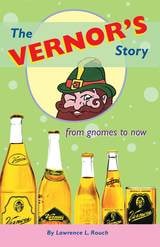
The Vernor's Story
From Gnomes to NowLawrence L. Rouch
University of Michigan Press, 2003
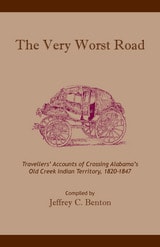
The Very Worst Road
Travellers' Accounts of Crossing Alabama's Old Creek Indian Territory, 1820-1847Jeffrey C. Benton
University of Alabama Press, 2009