Results by title
4917 books match the query 'Philosophy' and 1267 start with t
The Prince
Second EditionNiccolò Machiavelli
University of Chicago Press, 1998
The most famous book on politics ever written, The Prince remains as lively and shocking today as when it was written almost five hundred years ago. Initially denounced as a collection of sinister maxims and a recommendation of tyranny, it has more recently been defended as the first scientific treatment of politics as it is practiced rather than as it ought to be practiced. Harvey C. Mansfield's brilliant translation of this classic work, along with the new materials added for this edition, make it the definitive version of The Prince, indispensable to scholars, students, and those interested in the dark art of politics.
This revised edition of Mansfield's acclaimed translation features an updated bibliography, a substantial glossary, an analytic introduction, a chronology of Machiavelli's life, and a map of Italy in Machiavelli's time.
"Of the other available [translations], that of Harvey C. Mansfield makes the necessary compromises between exactness and readability, as well as providing an excellent introduction and notes."—Clifford Orwin, The Wall Street Journal
"Mansfield's work . . . is worth acquiring as the best combination of accuracy and readability."—Choice
"There is good reason to assert that Machiavelli has met his match in Mansfield. . . . [He] is ready to read Machiavelli as he demands to be read—plainly and boldly, but also cautiously."—John Gueguen, The Sixteenth Century Journal
The Printed Reader
Gender, Quixotism, and Textual Bodies in Eighteenth-Century BritainAmelia Dale
Bucknell University Press, 2019
The Printed Reader explores the transformative power of reading in the eighteenth century, and how this was expressed in the fascination with Don Quixote and in a proliferation of narratives about quixotic readers, readers who attempt to reproduce and embody their readings. Through intersecting readings of quixotic narratives, including work by Charlotte Lennox, Laurence Sterne, George Colman, Richard Graves, and Elizabeth Hamilton, Amelia Dale argues that literature was envisaged as imprinting—most crucially, in gendered terms—the reader’s mind, character, and body. The Printed Reader brings together key debates concerning quixotic narratives, print culture, sensibility, empiricism, book history, and the material text, connecting developments in print technology to gendered conceptualizations of quixotism. Tracing the meanings of quixotic readers’ bodies, The Printed Reader claims the social and political text that is the quixotic reader is structured by the experiential, affective, and sexual resonances of imprinting and impressions.
Published by Bucknell University Press. Distributed worldwide by Rutgers University Press.
The Privatization of Hope
Ernst Bloch and the Future of Utopia, SIC 8Peter Thompson and Slavoj Žižek, eds.
Duke University Press, 2013
Contributors. Roland Boer, Frances Daly, Henk de Berg, Vincent Geoghegan, Wayne Hudson, Ruth Levitas, David Miller, Catherine Moir, Caitríona Ní Dhúill, Welf Schröter, Johan Siebers, Peter Thompson, Francesca Vidal, Rainer Ernst Zimmermann, Slavoj Žižek
The Problem of Genesis in Husserl's Philosophy
Jacques Derrida
University of Chicago Press, 2003
For Derrida, the problem of genesis in Husserl's philosophy is that both temporality and meaning must be generated by prior acts of the transcendental subject, but transcendental subjectivity must itself be constituted by an act of genesis. Hence, the notion of genesis in the phenomenological sense underlies both temporality and atemporality, history and philosophy, resulting in a tension that Derrida sees as ultimately unresolvable yet central to the practice of phenomenology.
Ten years later, Derrida moved away from phenomenology entirely, arguing in his introduction to Husserl's posthumously published Origin of Geometry and his own Speech and Phenomena that the phenomenological project has neither resolved this tension nor expressly worked with it. The Problem of Genesis complements these other works, showing the development of Derrida's approach to phenomenology as well as documenting the state of phenomenological thought in France during a particularly fertile period, when Levinas, Sartre, Merleau-Ponty, Ricoeur, and Tran-Duc-Thao, as well as Derrida, were all working through it. But the book is most important in allowing us to follow Derrida's own development as a philosopher by tracing the roots of his later work in deconstruction to these early critical reflections on Husserl's phenomenology.
"A dissertation is not merely a prerequisite for an academic job. It may set the stage for a scholar's life project. So, the doctoral dissertations of Max Weber and Jacques Derrida, never before available in English, may be of more than passing interest. In June, the University of Chicago Press will publish Mr. Derrida's dissertation, The Problem of Genesis in Husserl's Philosophy, which the French philosopher wrote in 1953-54 as a doctoral student, and which did not appear in French until 1990. From the start, Mr Derrida displayed his inventive linguistic style and flouting of convention."—Danny Postel, Chronicle of Higher Education
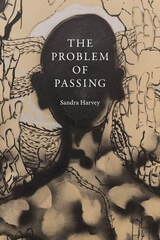
The Problem of Passing
Sandra Harvey
Duke University Press, 2026

The Problem of the Essential Indexical and Other Essays, Expanded Edition
John Perry
CSLI, 2000
John Perry discusses how these kinds of words work, and why they express important philosophical thoughts. He shows that indexicals pose a challenge to traditional assumptions about language and thought. Over the years a number of these papers, now included in this book, have sparked lively debates and have been influential in philosophy, linguistics and other areas of cognitive science.
With seven new papers, including the previously unpublished ``What Are Indexicals?,'' the present volume expands on an earlier version of this book published in the early nineties. Also included are the well-known papers ``Frege on Demonstratives,'' ``Cognitive Significance and New Theories of Reference,'' ``Evading the Slingshot,'' ``The Prince and the Phone booth'' (coauthored with Mark Crimmins), ``Fodor on Psychological Explanations'' (coauthored with David Israel), and related papers on situation semantics, direct reference, and the structure of belief. This book also includes afterwords written by the author that discuss responses to his work by Gareth Evans, Robert Stalnaker, Barbara Partee, Howard Wettstein and others.
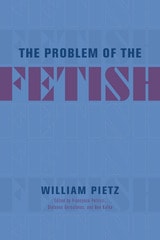
The Problem of the Fetish
William Pietz
University of Chicago Press, 2022
In recent decades, William Pietz’s innovative history of the idea of the fetish has become a cult classic. Gathered here, for the first time, is his complete series of essays on fetishism, supplemented by three texts on Marx, blood sacrifice, and the money value of human life. Tracing the idea of the fetish from its origins in the Portuguese colonization of West Africa to its place in Enlightenment thought and beyond, Pietz reveals the violent emergence of a foundational concept for modern theories of value, belief, desire, and difference. This book cements Pietz’s legacy of engaging questions about material culture, object agency, merchant capitalism, and spiritual power, and introduces a powerful theorist to a new generation of thinkers.
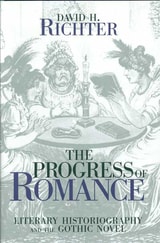
The Progress of Romance
Literary Historiography and the Gothic NovelDavid H. Richter
The Ohio State University Press, 1900

The Promise of Beauty
Mimi Thi Nguyen
Duke University Press, 2024
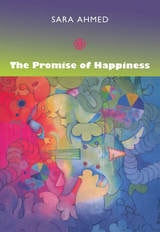
The Promise of Happiness
Sara Ahmed
Duke University Press, 2010
Ahmed draws on the intellectual history of happiness, from classical accounts of ethics as the good life, through seventeenth-century writings on affect and the passions, eighteenth-century debates on virtue and education, and nineteenth-century utilitarianism. She engages with feminist, antiracist, and queer critics who have shown how happiness is used to justify social oppression, and how challenging oppression causes unhappiness. Reading novels and films including Mrs. Dalloway, The Well of Loneliness, Bend It Like Beckham, and Children of Men, Ahmed considers the plight of the figures who challenge and are challenged by the attribution of happiness to particular objects or social ideals: the feminist killjoy, the unhappy queer, the angry black woman, and the melancholic migrant. Through her readings she raises critical questions about the moral order imposed by the injunction to be happy.
The Promise of Pragmatism
Modernism and the Crisis of Knowledge and AuthorityJohn Patrick Diggins
University of Chicago Press, 1994
"Diggins, an eminent historian of American intellectual life, has written a timely and impressive book charting the rich history of American pragmatism and placing William James, Charles Peirce, John Dewey, George Herbert Mead, Sidney Hook, and Richard Rorty in their times and in the light of contemporary concerns. The book also draws on an alternative set of American thinkers to explore the blind spots in the pragmatic temper."—William Connolly, New York Times Book Review
"An extraordinarily ambitious work of both analysis and synthesis. . . . Diggins's book is rewarding in its thoughtfulness and its nuanced presentation of ideas."—Daniel J. Silver, Commentary
"Diggins's superbly informed book comprises a comprehensive history of American pragmatic thought. . . . It contains expert descriptions of James, John Dewey and Charles Sanders Peirce, the first generation of American pragmatists. . . . Diggins is just as good on the revival of pragmatism that's taken place over the last 20 years in America. . . . [A] richly intelligent book."—Mark Edmundson, Washington Post Book World
The Promise of Salvation
A Theory of ReligionMartin Riesebrodt
University of Chicago Press, 2010
Why has religion persisted across the course of human history? Secularists have predicted the end of faith for a long time, but religions continue to attract followers. Meanwhile, scholars of religion have expanded their field to such an extent that we lack a basic framework for making sense of the chaos of religious phenomena. To remedy this state of affairs, Martin Riesebrodt here undertakes a task that is at once simple and monumental: to define, understand, and explain religion as a universal concept.
Instead of propounding abstract theories, Riesebrodt concentrates on the concrete realities of worship, examining religious holidays, conversion stories, prophetic visions, and life-cycle events. In analyzing these practices, his scope is appropriately broad, taking into consideration traditions in Judaism, Christianity, Islam, Buddhism, Daoism, and Shinto. Ultimately, Riesebrodt argues, all religions promise to avert misfortune, help their followers manage crises, and bring both temporary blessings and eternal salvation. And, as The Promise of Salvation makes clear through abundant empirical evidence, religion will not disappear as long as these promises continue to help people cope with life.
The Prophetic Law
Essays in Judaism, Girardianism, Literary Studies, and the EthicalSandor Goodhart
Michigan State University Press, 2014
The Prose of the World
Maurice Merleau-Ponty
Northwestern University Press, 1973

The Pseudoscience Wars
Immanuel Velikovsky and the Birth of the Modern FringeMichael D. Gordin
University of Chicago Press, 2012

The Psychological Mystique
Stewart Justman
Northwestern University Press, 1998

The Pursuit of Happiness in the Founding Era
An Intellectual HistoryCarli N. Conklin
University of Missouri Press, 2020
Scholars have long debated the meaning of the pursuit of happiness, yet have tended to define it narrowly, focusing on a single intellectual tradition, and on the use of the term within a single text, the Declaration of Independence. In this insightful volume, Carli Conklin considers the pursuit of happiness across a variety of intellectual traditions, and explores its usage in two key legal texts of the Founding Era, the Declaration and William Blackstone’s Commentaries on the Laws of England.
For Blackstone, the pursuit of happiness was a science of jurisprudence, by which his students could know, and then rightly apply, the first principles of the Common Law. For the founders, the pursuit of happiness was the individual right to pursue a life lived in harmony with the law of nature and a public duty to govern in accordance with that law. Both applications suggest we consider anew how the phrase, and its underlying legal philosophies, were understood in the founding era. With this work, Conklin makes important contributions to the fields of early American intellectual and legal history.

The Pursuit of Unity and Perfection in History
Klaus Vondung
St. Augustine's Press, 2020
Particular focus in following the thread of unity and perfection in human intellectual and practical ambitions ultimately hones in on the combination of religion and politics. Vondung in these essays unpacks the ways in which this continues to fascinate and disturb us, and in his expertise he uses National Socialism to connect this pursuit of unity and perfection to what he calls one of the signature marks of modernity––namely, secular apocalypticism. This claim stands in opposition to Eric Voegelin’s remark that Gnosticism, rather, is “the nature of modernity.” Vondung, who studied and wrote his dissertation under Voegelin, grapples with the contrast of these positions. Vondung is willing to challenge Voegelin, but ultimately his treatment of the latter bears the quality of tribute to this great scholar.
Vondung also explores the points of contact between apocalypticism and Hermetic speculation. Despite the independence of the religious and philosophical doctrines of Hermeticism, there are parallels to be found. Apocalypticism and Hermeticism originated in antiquity and yet each represents a tradition that still holds footing today. Vondung furthermore leads the reader to see the project of salvation found in both even as each operates with a different scope.
This collection of essays centers itself on a perspective of the human pursuit of unity and perfection, directly or indirectly, as objectives of intellectual endeavors, existential ideals, as social or political outcomes, and in the case of National Socialism even as perverse aberrations that led to the Holocaust. Vondung’s particular treatment of Voegelin’s work likewise establishes what the former identifies as a stand-out question of this study: Does the search for order in history show us the unity of the history of humankind?

The Pãltinis Diary
A Paideic Model in Humanist CultureGabriel Liiceanu
Central European University Press, 2000
The intellectual resistance to totalitarian regimes can take many forms. This remarkable volume portrays one such story of resistance in Romania during the reign of Ceauşescu: that of Constantin Noica, one of the country’s foremost intellectuals.
Noica was an original thinker belonging to the remarkable intellectual generation of important figures such as Mircea Eliade, E. M. Cioran and Eugene Ionescu, but he chose to stay in Romania after the communist takeover when many others fled. Harassed and jailed for six years, Noica retreated to the mountains and gathered around him some brilliant young minds and future talent to challenge and nurture them in a time when communism denied them the materials of true intellectual importance.
This group of students withdrew to Noica’s retreat for intensive philosophical sessions to debate the works of Kant, Plato, Heidegger and discuss humanistic values. The author of this volume Liiceanu, himself a brilliant philosopher, was Noica’s closest disciple and during every meeting he noted every conversation in a diary which came to be known as The Păltiniş Diary. These conversations were secretly published and quickly devoured by intellectuals in Romania who were prepared to sacrifice part of their food provisions to acquire the book. The Păltiniş Diary sold out within a matter of days and because of Secret Police censorship, was not published again in Romania until 1991 by which time Noica had died and the group had disbanded to help with the reconstruction of post-Ceauşescu Romania.
The Păltiniş Diary is a wonderful homage to an intellectual master and to the power of intellect and freedom. The book will be of interest to philosophers, non-philosophers alike, and to anyone who seeks to grasp the true meaning of survival under totalitarian conditions.
The Quest
History and Meaning in ReligionMircea Eliade
University of Chicago Press, 1969
"Each of these essays contains insights which will be fruitful and challenging for professional students of religion, but at the same time they all retain the kind of cultural relevance and clarity of style which makes them accessible to anyone seriously concerned with man and his religious possibilities."—Joseph M. Kitagawa, Religious Education
The Question of God in Heidegger's Phenomenology
George Kovacs
Northwestern University Press, 1990

The Quiet Zone
Caribbean Expressive Cultures and the Feminist Aesthetics of DisturbancePetal Kimberly Samuel
Rutgers University Press, 2026
The Quill and the Scalpel
Nabokov's Art and the Worlds of ScienceStephen H. Blackwell
The Ohio State University Press, 2009
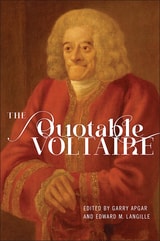
The Quotable Voltaire
Garry Apgar
Bucknell University Press, 2021
Drawing from a wide range of his publications, private letters, and remarks recorded by his contemporaries, The Quotable Voltaire includes material never before gathered in a single volume. English translations appear alongside the original French, and each quote is thoroughly indexed and referenced, with page numbers for both the first known publication edition of each entry and the most recent edition of Voltaire’s works. The book also features over 400 quotes about Voltaire, including commentary by eighteenth-century luminaries like Samuel Johnson, Catherine the Great, Casanova, and John Adams, as well as an eclectic assortment of modern-day personages ranging from Winston Churchill and Jorge Luis Borges to Mae West and Mike Tyson.
Lavishly illustrated with nearly three dozen images of Voltaire-related art, this collection opens with a scholarly essay that recounts the great man’s life and reflects on his outsized influence on Western culture. Whether you are a Voltaire scholar or a neophyte, The Quotable Voltaire is the perfect introduction to a brilliant mind.
The Rabbit Between Us
Victor Menza
Seagull Books, 2021
Through philosophy, history, education, art, and personal musing on everyday uncanny experiences, Menza reveals why people have long found rabbits our special kin and emblems of love. Menza considers human nature and how we are undone by separation—both from each other and from our childhood selves. Surprising allies in these non-traditional philosophical wanderings include Ludwig Wittgenstein, Elizabeth Bowen, Albert Murray, Beatrix Potter, Donald Winnicott, Sterling Stuckey, and Lev Vygotsky.
Menza examines what symbols are and how they work, the value of dialect, and the subversive lesson of animal fables, alongside his thoughts on language learning, memory, and slavery. Only now did he see that he’d taken to Brer Rabbit early on. Just as the Uncle Remus tales displayed the small hero’s virtues in warm dialogues, The Rabbit Between Us shows we abound in talents and moves when we “lean like Socrates did to the Aesop in us.” Gentle and political at once, this unique book will appeal to any intellectually curious reader.
The Real, the True, and the Told
Postmodern Historical Narrative and the Ethics of RepresentationEric L. Berlatsky
The Ohio State University Press, 2011

The Reconstruction of Patriotism
Education for Civic ConsciousnessMorris Janowitz
University of Chicago Press, 1984
"In The Reconstruction of Patriotism, Morris Janowitz . . . places a national-service program on the national agenda. . . . Like William James, Janowitz envisions government enrolling young people to work for a year or two at subsistence pay, doing jobs that benefit society—working with, say, 'conservation, health, or old-age problems.' He believes that we need a service program because since the end of the Second World War our citizens (and, indeed, citizens of almost all the advanced industrial nations) have become more keenly aware of their rights than of their obligations, and generations are growing up with little or no understanding that they are members of a national community and have responsibilities to it—that they must give as well as take. . . . Because it reopens discussion of our wider obligations and how to fulfill them, Mr. Janowitz's thoughtful book is in itself a national service."—Naomi Bliven, The New Yorker
"Morris Janowitz examines an issue that seldom is subject to social and political analysis—patriotism. His thesis is clear: The long-term trend in politics has been to enhance citizen rights without effective articulation of citizen obligations. A meaningful balance between the two, he contends, must be restored. . . . The strength of this study lies in Janowitz's persuasive argument that the durability and vitality of democratic institutions require that a sense of community, or shared values, be preserved. Without civiz consciousness, he rightly observes, social and political fragmentation ensues. . . . A lucid and impressively researched polemic."—W. Wesley McDonald, American Political Science Review
"Janowitz addresses a seminal issue: how to restore the sense of shared civic responsibility that has fallen victim in recent years to our growing preoccupation with individual rights and the rise of special-interest groups. . . . Central to his prescription is the revival of the concept of the citizen soldier, whose importance since pre-Revolutionary War days Janoqitz discusses at length. He concludes, 'There can be no reconstruction of patriotism without a system of national service.' . . . An important book. I highly recommend it."—Washington Monthly
The Reflexive Thesis
Wrighting Sociology of Scientific KnowledgeMalcolm Ashmore
University of Chicago Press, 1989
The Reification of Desire
Toward a Queer MarxismKevin Floyd
University of Minnesota Press, 2009
Kevin Floyd brings queer critique to bear on the Marxian categories of reification and totality and considers the dialectic that frames the work of Georg Lukács, Herbert Marcuse, and Fredric Jameson. Reading the work of these theorists together with influential queer work by such figures as Michel Foucault and Judith Butler, and alongside reconsiderations of such texts as The Sun Also Rises and Midnight Cowboy, Floyd reformulates these two central categories that have been inseparable from a key strand of Marxist thought and have marked both its explanatory power and its limitations. Floyd theorizes a dissociation of sexuality from gender at the beginning of the twentieth century in terms of reification to claim that this dissociation is one aspect of a larger dynamic of social reification enforced by capitalism.
Developing a queer examination of reification and totality, Kevin Floyd ultimately argues that the insights of queer theory require a fundamental rethinking of both.
The Relevance of Philosophy to Life
John Lachs
Vanderbilt University Press, 1995
The Religion of Existence
Asceticism in Philosophy from Kierkegaard to SartreNoreen Khawaja
University of Chicago Press, 2016
At the heart of existentialism, Noreen Khawaja argues, is a story about secular thought experimenting with the traditions of European Christianity. This book explores how a distinctly Protestant asceticism formed the basis for the chief existentialist ideal, personal authenticity, which is reflected in approaches ranging from Kierkegaard’s religious theory of the self to Heidegger’s phenomenology of everyday life to Sartre’s global mission of atheistic humanism. Through these three philosophers, she argues, we observe how ascetic norms have shaped one of the twentieth century’s most powerful ways of thinking about identity and difference—the idea that the “true” self is not simply given but something that each of us is responsible for producing.
Engaging with many central figures in modern European thought, this book will appeal to philosophers and historians of European philosophy, scholars of modern Christianity, and those working on problems at the intersection of religion and modernity.
The Religion of Humanity
The Illusion of Our TimesPierre Manent
St. Augustine's Press, 2022
The Religion of Humanity: The Illusion of Our Time is the first anthology in any language of the writings of the contemporary French political philosopher, Pierre Manent, on “the religion of Humanity.” The striking phrase comes from nineteenth-century French thinker, Auguste Comte (1798–1857). Comte coined the phrase and indeed created an atheistic religion of a self-adoring Humanity. In the aftermath of the Cold War, Manent observed victorious democracy interpreting itself in a similar framework. He took it upon himself to track this development, analyze it, and warn his fellow Europeans of its deleterious political, intellectual, moral, and spiritual effects. With conceptual precision and (most often) a sober tone, many contemporary sacred cows were gored. But in addition to cursing the humanitarian darkness, he also lit many candles of judicious political, philosophical, moral, and spiritual analysis. This anthology is thus almost unique in its subject matter, and certainly unique in its treatment of the subject. It is a rarity and gem: a first-rate work of political philosophy.
The Religion of Reality
Inquiry into the Self, Art, and TranscendenceDidier Maleuvre
Catholic University of America Press, 2006

The Religious Foundations of Francis Bacon's Thought
Stephen A. McKnight
University of Missouri Press, 2006
The Remains of Reason
On Meaning after LacanDominik Finkelde
Northwestern University Press, 2025
Unpacking the central role of the unconscious in the relationship between mind and world
Over a series of careful readings and accessible discussions, prefaced by a foreword from Eric Santner, Dominik Finkelde analyzes the central role of the unconscious in the relationship between mind and world. Moving beyond Freud, Kant, and Hegel and toward the contemporary work of the Ljubljana School, he explores how humans relate to facts and the influence of the unconscious on questions regarding truth, perception, and meaning.
Aspects of recognition and unconscious processes of transference are at stake in these fundamental questions of perception and knowledge, though these have been widely ignored in epistemological and ontological debates in contemporary philosophy. Finkelde draws on both the continental and analytic traditions, ultimately building from the work of current-day interlocutors to interrogate questions concerning the influence of enigmatic signifiers, the role of sublime objects of ideology, the importance of fantasy cultivation and transgression, and the power of jouissance as an ontological factor.
The Renaissance Philosophy of Man
Petrarca, Valla, Ficino, Pico, Pomponazzi, VivesEdited by Ernst Cassirer, Paul Oskar Kristeller, and John Herman Randall Jr.
University of Chicago Press, 1956
The Restless Clock
A History of the Centuries-Long Argument over What Makes Living Things TickJessica Riskin
University of Chicago Press, 2016
The Restless Clock examines the history of this principle, banning agency, in the life sciences. It also tells the story of dissenters embracing the opposite idea: that agency is essential to nature. The story begins with the automata of early modern Europe, as models for the new science of living things, and traces questions of science and agency through Descartes, Leibniz, Lamarck, and Darwin, among many others. Mechanist science, Jessica Riskin shows, had an associated theology: the argument from design, which found evidence for a designer in the mechanisms of nature. Rejecting such appeals to a supernatural God, the dissenters sought to naturalize agency rather than outsourcing it to a “divine engineer.” Their model cast living things not as passive but as active, self-making machines.
The conflict between passive- and active-mechanist approaches maintains a subterranean life in current science, shaping debates in fields such as evolutionary biology, cognitive science, and artificial intelligence. This history promises not only to inform such debates, but also our sense of the possibilities for what it means to engage in science—and even what it means to be alive.
The Retrieval of the Beautiful
Thinking Through Merleau-Ponty’s AestheticsGalen A. Johnson
Northwestern University Press, 2010
In this elegant new study Galen Johnson retrieves the concept of the beautiful through the framework of Merleau-Ponty’s aesthetics. Although Merleau-Ponty seldom spoke directly of beauty, his philosophy is essentially about the beautiful.
In Johnson’s formulation, the ontology of Flesh as element and the ontology of the Beautiful as elemental are folded together, for Desire, Love, and Beauty are part of the fabric of the world’s element, Flesh itself, the term at which Merleau-Ponty arrived to replace Substance, Matter, or Life as the name of Being.
Merleau-Ponty’s Eye and Mind is at the core of the book, so Johnson engages, as Merleau-Ponty did, the writings and visual work of Paul Cézanne, Auguste Rodin, and Paul Klee, as well as Rilke’s commentary on Cézanne and Rodin. From these widely varying aesthetics emerge the fundamental themes of the retrieval of the beautiful: desire, repetition, difference, rhythm, and the sublime. The third part of Johnson’s book takes each of these up in turn, bringing Merleau-Ponty’s aesthetic thinking into dialogue with classical philosophy as well as Sartre, Heidegger, Nietzsche, and Deleuze. Johnson concludes his final chapter with a direct dialogue with Kant and Merleau-Ponty, and also Lyotard, on the subject of the beautiful and the sublime. As we experience with Rodin’s Balzac, beauty and the sublime blend into one another when the beautiful grows powerful, majestic, mysterious, and transcendent.
The Return of Resentment
The Rise and Decline and Rise Again of a Political EmotionRobert A. Schneider
University of Chicago Press, 2023
The term “resentment,” often casually paired with words like “hatred,” “rage,” and “fear,” has dominated US news analysis since November 2016. Despite its increased use, this word seems to defy easy categorization. Does “resentment” describe many interlocking sentiments, or is it just another way of saying “anger”? Does it suggest an irrational grievance, as opposed to a legitimate callout of injustice? Does it imply political leanings, or is it nonpartisan by nature?
In The Return of Resentment, Robert A. Schneider explores these questions and more, moving from eighteenth-century Britain to the aftermath of the French Revolution to social movements throughout the twentieth century. Drawing on a wide range of writers, thinkers, and historical experiences, Schneider illustrates how resentment has morphed across time, coming to express a collective sentiment felt by people and movements across the political spectrum. In this history, we discover resentment’s modernity and its ambiguity—how it can be used to dismiss legitimate critique and explain away violence, but also convey a moral stance that demands recognition. Schneider anatomizes the many ways resentment has been used to label present-day movements, from followers of Trump and supporters of Brexit to radical Islamicists and proponents of identity politics. Addressing our contemporary political situation in a novel way, The Return of Resentment challenges us to think critically about the roles different emotions play in politics.
The Revelation of Imagination
From Homer and the Bible through Virgil and Augustine to DanteWilliam Franke
Northwestern University Press, 2015
In The Revelation of Imagination, William Franke attempts to focus on what is enduring and perennial rather than on what is accommodated to the agenda of the moment. Franke’s book offers re-actualized readings of representative texts from the Bible, Homer, and Virgil to Augustine and Dante. The selections are linked together in such a way as to propose a general interpretation of knowledge. They emphasize, moreover, a way of articulating the connection of humanities knowledge with what may, in various senses, be called divine revelation. This includes the sort of inspiration to which poets since Homer have typically laid claim, as well as that proper to the biblical tradition of revealed religion. The Revelation of Imagination invigorates the ongoing discussion about the value of humanities as a source of enduring knowledge.

The Reveries of the Solitary Walker, Botanical Writings, and Letter to Franquières
Jean-Jacques Rousseau
Dartmouth College Press, 2000
The Revival of Pragmatism
New Essays on Social Thought, Law, and CultureMorris Dickstein, ed.
Duke University Press, 1998
As the twenty-five intellectuals who take part in this discussion show, pragmatism has become a complex terrain on which a rich variety of contemporary debates have been played out. Contributors such as Richard Rorty, Stanley Cavell, Nancy Fraser, Robert Westbrook, Hilary Putnam, and Morris Dickstein trace pragmatism’s cultural and intellectual evolution, consider its connection to democracy, and discuss its complex relationship to the work of Emerson, Nietzsche, and Wittgenstein. They show the influence of pragmatism on black intellectuals such as W. E. B. Du Bois, explore its view of poetic language, and debate its effects on social science, history, and jurisprudence. Also including essays by critics of the revival such as Alan Wolfe and John Patrick Diggins, the volume concludes with a response to the whole collection from Stanley Fish.
Including an extensive bibliography, this interdisciplinary work provides an in-depth and broadly gauged introduction to pragmatism, one that will be crucial for understanding the shape of the transformations taking place in the American social and philosophical scene at the end of the twentieth century.
Contributors. Richard Bernstein, David Bromwich, Ray Carney, Stanley Cavell, Morris Dickstein, John Patrick Diggins, Stanley Fish, Nancy Fraser, Thomas C. Grey, Giles Gunn, Hans Joas, James T. Kloppenberg, David Luban, Louis Menand, Sidney Morgenbesser, Richard Poirier, Richard A. Posner, Ross Posnock, Hilary Putnam, Ruth Anna Putnam, Richard Rorty, Michel Rosenfeld, Richard H. Weisberg, Robert B. Westbrook, Alan Wolfe
The Rhetoric of Cool
Composition Studies and New MediaJeff Rice
Southern Illinois University Press, 2007
The Rhetoric of Cool addresses the disciplinary claim that composition studies underwent a rebirth in 1963. At that time, three writers reviewed technology, cultural studies, and visual writing outside composition studies and independently used the word cool to describe each position. Starting from these three positions, Rice focuses on chora, appropriation, commutation, juxtaposition, nonlinearity, and imagery—rhetorical gestures conducive to new media work-- to construct the rhetoric of cool.
An innovative work that approaches computers and writing issues from historical, critical, theoretical, and practical perspectives, The Rhetoric of Cool challenges current understandings of writing and new media and proposes a rhetorical rather than an instrumental response for teaching writing in new media contexts.
The Rhetoric of Fascism
Edited by Nathan Crick
University of Alabama Press, 2022
Decoding the discourse: Rhetorical foundations of authoritarian power.
Fascism has resurfaced as one of the most pressing problems of our time. The rise of extremist parties and candidates in Europe, the United States, and around the globe has led even mainstream political commentators to begin using the term “fascism” to describe dangerous movements that have revived and repackaged many of the strategies long thought to have been relegated to the margins of political rhetoric. No longer just confined to the state regimes of the past, fascism thrives today as a globally self-augmenting, self-propagating rhetorical phenomenon with a variety of faces and expressions.
The Rhetoric of Fascism defines and interprets the common persuasive devices that characterize fascist discourse to understand the nature of its enduring appeal. By approaching fascism from a rhetorical perspective, this volume complements established political and sociological understandings of fascism as a movement or regime. A rhetorical approach studies fascism less as a party one joins than as a set of persuasive strategies one adopts. Fascism spreads precisely because it is not a coherent entity. Instead, it exists as a loosely bound and often contradictory collection of persuasive trajectories that have attained enough coherence to mobilize and channel the passions of a self-constituted mass of individuals.
Introductory chapters focus on general theories of fascism drawn from twentieth-century history and theory. Contributors investigate specific historical figures and their relationship to contemporary rhetorics, focusing on a specific rhetorical device that is characteristic of fascist rhetoric. A common thread throughout every chapter is that fascist devices are appealing because they speak to us in the familiar language of our culture. As we are seduced by one device at a time, we soon find ourselves part of a movement, a group, or a campaign that makes us act in ways we might never have imagined. This volume reveals that fascism may be closer to home than we think.
CONTRIBUTORS
Patrick D. Anderson / Rya Butterfield / Nathan Crick / Elizabeth R. Earle / Zac Gershberg / Stephen J. Hartnett / Marie-Odile N. Hobeika / Sean Illing / Jacob A. Miller / Fernando Ismael Quiñones Valdivia / Patricia Roberts-Miller / Raquel M. Robvais / Bradley A. Serber / Ryan Skinnell

The Rhetoric of Interpretation and the Interpretation of Rhetoric
Paul Hernadi, ed.
Duke University Press, 1989
The Rhetoric of Morality and Philosophy
Plato's Gorgias and PhaedrusSeth Benardete
University of Chicago Press, 1991
The Rhetoric of Morality and Philosophy, one of the most groundbreaking works of twentieth-century Platonic studies, is now back in print for a new generation of students and scholars to discover. In this volume, distinguished classicist Seth Benardete interprets and pairs two important Platonic dialogues, the Gorgias and the Phaedrus, illuminating Socrates’ notion of rhetoric and Plato’s conception of morality and eros in the human soul.
Following his discussion of the Gorgias as a dialogue about the rhetoric of morality, Benardete turns to the Phaedrus as a discourse about genuine rhetoric, namely the science of eros, or true philosophy. This novel interpretation addresses numerous issues in Plato studies: the relation between the structure of the Gorgias and the image of soul/city in the Republic, the relation between the structure of Phaedrus and the concept of eros, and Socrates’ notion of ignorance, among others.
The Rhetoric of Plato's Republic
Democracy and the Philosophical Problem of PersuasionJames L. Kastely
University of Chicago Press, 2015
As Kastely shows, the Republic begins with two interrelated crises: one rhetorical, one philosophical. In the first, democracy is defended by a discourse of justice, but no one can take this discourse seriously because no one can see—in a world where the powerful dominate the weak—how justice is a value in itself. That value must be found philosophically, but philosophy, as Plato and Socrates understand it, can reach only the very few. In order to reach its larger political audience, it must become rhetoric; it must become a persuasive part of the larger culture—which, at that time, meant epic poetry. Tracing how Plato and Socrates formulate this transformation in the Republic, Kastely isolates a crucial theory of persuasion that is central to how we talk together about justice and organize ourselves according to democratic principles.
The Rhetorical Turn
Invention and Persuasion in the Conduct of InquiryEdited by Herbert W. Simons
University of Chicago Press, 1990
The Rhetorical Turn moves from biology to politics via excursions into the rhetorics of psychoanalysis, decision science, and conversational analysis. Topics explored include how rhetorical invention guides scientific invention, how rhetoric assists political judgment, and how it integrates varying approaches to meta-theory. Concluding with four philosophical essays, this volume of case studies demonstrates how the inventive and persuasive dimensions of scholarly discourse point the way to forms of argument appropriate to our postmodern age.

The Rhythm of Images
Cinema beyond MeasureDomietta Torlasco
University of Minnesota Press, 2021
A rigorous and imaginative inquiry into rhythm’s vital importance for film and the moving image
Focusing attention on a concept much neglected in the study of film, The Rhythm of Images opens new possibilities for thinking about expanded perception and idiosyncratic modes of being. Author Domietta Torlasco engages with both philosophy and cinema to elaborate a notion of rhythm in its pre-Socratic sense as a “manner of flowing”—a fugitive mode that privileges contingency and calls up the forgotten fluidity of forms. In asking what it would mean to take this rhythm as an ontological force in its own right, she creatively draws on thinkers such as Giorgio Agamben, Roland Barthes, Gilles Deleuze, and Luce Irigaray. Rhythm emerges here as a form that eludes measure, a key to redefining the relation between the aesthetic and the political, and thus a pivotal means of resistance to power.
Working with constellations of films and videos by international artists—from Michelangelo Antonioni, Jean-Luc Godard, and David Lynch to Harun Farocki and Victor Burgin, among others—Torlasco brings to bear on them her distinctive concept of rhythm with respect to four interrelated domains: life, labor, memory, and medium. With innovative readings of artworks and critical texts alike, The Rhythm of Images fashions a vibrant, provocative theory of rhythm as the excess or potential of perception.
Ultimately, the book reconceives the relation between rhythm and the world-making power of images. The result is a vision of cinema as a hybrid medium endowed with the capacity not only to reinvent corporeal boundaries but also to find new ways of living together.
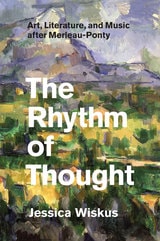
The Rhythm of Thought
Art, Literature, and Music after Merleau-PontyJessica Wiskus
University of Chicago Press, 2013