Results by title
4743 books match the query 'Religion' and 1168 start with t
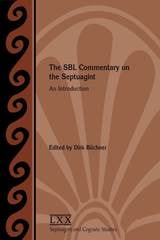
The SBL Commentary on the Septuagint
An IntroductionDirk Büchner
SBL Press, 2017
Explore the groundwork for a new commentary series from SBL Press
This book contains verse by verse commentary on selections from the Greek text of the Hebrew Bible known as the Septuagint. Each chapter is from a different bible book, for which there will eventually be a full commentary published in the Society of Biblical Literature Commentary on the Septuagint. The commentary series focuses on the actual process of translation, so its authors try to describe and explain the kinds of decisions the ancient Alexandrian translators made about how to render Hebrew into Greek.
Features
- Translations from and commentary on Genesis, Exodus, Leviticus, Numbers, Esther, Job, and Psalms Contributions from eight experts on the Septuagint
- Guidelines and procedures used in the production of the translations in the series
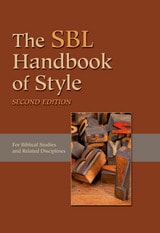
The SBL Handbook of Style
SBL Press, 2014
The definitive source for how to write and publish in the field of biblical studies
The long-awaited second edition of the essential style manual for writing and publishing in biblical studies and related fields includes key style changes, updated and expanded abbreviation and spelling-sample lists, a list of archaeological site names, material on qur’anic sources, detailed information on citing electronic sources, and expanded guidelines for the transliteration and transcription of seventeen ancient languages.
Features:
- Expanded lists of abbreviations for use in ancient Near Eastern, biblical, and early Christian studies
- Information for transliterating seventeen ancient languages
- Exhaustive examples for citing print and electronic sources
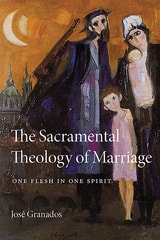
The Sacramental Theology of Marriage
One Flesh in One SpiritJose Granados
Catholic University of America Press, 2026
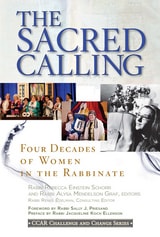
The Sacred Calling
Four Decades of Women in the RabbinateRabbi Rebecca Einstein Schorr and Rabbi Alysa Mendelson Graf
Central Conference of American Rabbis, 2016
Winner of the 2016 National Jewish Book Award in Women's Studies, this pioneering anthology paints an illuminating and necessary picture of the past while laying the groundwork for important work yet to be done.
Women have been rabbis for over forty years. No longer are women rabbis a unique phenomenon, rather they are part of the fabric of Jewish life. In this anthology, rabbis and scholars from across the Jewish world reflect back on the historic significance of women in the rabbinate and explore issues related to both the professional and personal lives of female rabbis. This collection examines the ways in which the reality of women in the rabbinate has impacted all aspects of Jewish life, including congregational culture, liturgical development, life cycle ritual, the Jewish healing movement, spirituality, theology, and more.
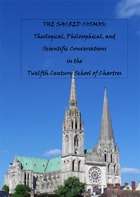
The Sacred Cosmos
Theological, Philosophical, and Scientific Conversations in the Twelfth Century School of ChartresPeter Ellard
University of Scranton Press, 2007
The School of Chartres was a bold intellectual movement of the twelfth century that introduced the World Soul and the Chartrian cosmology to Christendom. In his controversial book, The Sacred Cosmos, theologian Peter Ellard analyzes the most radical aspects of Chartrian thought and traces their relation to classical and late-antique philosophers such as Boethius and Plato. In addition, Ellard investigates the Cathedral of Chartres as an important proof and example of Chartrian theology in this essential volume for anyone interested in the intersection of spirituality and philosophy.
The Sacred Earth
Jewish Perspectives on Our PlanetRabbi Andrue J. Kahn
Central Conference of American Rabbis, 2023
The Torah begins by setting forth the heavens and the Earth as God’s creation, impelling humanity to steward our planet for its own sake and for its ability to nurture our lives. Yet the human-Divine-environment relationship seems to be in perpetual crisis. The Sacred Earth is a contemporary Jewish response to the looming threat of climate change, the widespread desire for experiential spirituality rooted in nature, and the continually changing relationship between humanity, nature, technology, and the Divine. The leading thinkers in this collection reflect on human vulnerability in the face of forces of nature, examine conceptions of our place in cosmology, and grapple with environmental destruction. Ultimately, with hope, they creatively explore ways to redeem this sacred Earth.
The Sacred Encounter
Jewish Perspectives on SexualityRabbi Lisa Grushcow, Dphil
Central Conference of American Rabbis, 2014
This wide-ranging anthology takes a close look at the breadth of human sexuality from a Jewish perspective. The essays begin with a look at biblical and rabbinic views on sexuality and then proceed to explorations of sexuality at different moments in the life cycle, sexuality and the marital model, diverse expressions of sexuality, examples of sexuality education, the nexus of sexuality and theology, and the challenges of contemporary sexual ethics. The Sacred Encounter is a thought-provoking and important Jewish resource. Perfect for personal study or for high school or adult classes.
The Sacred Exchange
Creating a Jewish Money EthicRabbi Mary L. Zamore
Central Conference of American Rabbis, 2019
Part of the CCAR Press Challenge and Change series, this anthology creates a rich and varied discussion about the ethics of money. Our use of and relationship with money must reflect our religious values--this book aims to start a comprehensive conversation about how Judaism can guide us in this multi-faceted relationship.
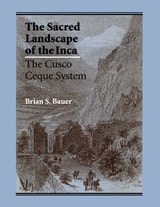
The Sacred Landscape of the Inca
The Cusco Ceque SystemBy Brian S. Bauer
University of Texas Press, 1998
The ceque system of Cusco, the ancient capital of the Inca empire, was perhaps the most complex indigenous ritual system in the pre-Columbian Americas. From a center known as the Coricancha (Golden Enclosure) or the Temple of the Sun, a system of 328 huacas (shrines) arranged along 42 ceques (lines) radiated out toward the mountains surrounding the city. This elaborate network, maintained by ayllus (kin groups) that made offerings to the shrines in their area, organized the city both temporally and spiritually.
From 1990 to 1995, Brian Bauer directed a major project to document the ceque system of Cusco. In this book, he synthesizes extensive archaeological survey work with archival research into the Inca social groups of the Cusco region, their land holdings, and the positions of the shrines to offer a comprehensive, empirical description of the ceque system. Moving well beyond previous interpretations, Bauer constructs a convincing model of the system's physical form and its relation to the social, political, and territorial organization of Cusco.
The Sacred Struggle
Jewish Responses to TraumaRabbi Lindsey Danziger and Rabbi Benjamin David
Central Conference of American Rabbis, 2025
much more.
The Sacred Table
Creating a Jewish Food EthicRabbi Mary L. Zamore
Central Conference of American Rabbis, 2011
The Sacred Table: Creating a Jewish Food Ethic is an anthology of diverse essays on Jewish dietary practices. This volume presents the challenge of navigating through choices about eating, while seeking to create a rich dialogue about the intersection of Judaism and food. The definition of Kashrut, the historic Jewish approach to eating, is explored, broadened and, in some cases, argued with, in these essays. Kashrut is viewed not only as a ritual practice, but also as a multifaceted Jewish relationship with food and its production, integrating values such as ethics, community, and spirituality into our dietary practice.
The questions considered in The Sacred Table are broad reaching. Does Kashrut represent a facade of religiosity, hiding immorality and abuse, or is it, in its purest form, a summons to raise the ethical standards of food production? How does Kashrut enrich spiritual practice by teaching intentionality and gratitude? Can paying attention to our own eating practices raise our awareness of the hungry? Can Kashrut inspire us to eat healthfully? Can these laws draw us around the same table, thus creating community? In exploring the complexities of these questions, this book includes topics such as agricultural workers' rights, animal rights, food production, the environment, personal health, the spirituality of eating and fasting, and the challenges of eating together.
The Sacred Table celebrates the ideology of educated choice. The essays present a diverse range of voices, opinions, and options, highlighting the Jewish values that shape our food ethics. Whether for the individual, family, or community, this book supplies the basic how-tos of creating a meaningful Jewish food ethic and incorporating these choices into our personal and communal religious practices. These resources will be helpful if we are new to these ideas or if we are teaching or counseling others. Picture a beautiful buffet of choices from which you can shape your personal Kashrut. Read, educate yourself, build on those practices that you already follow, and eat well.
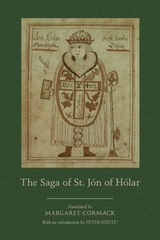
The Saga of St. Jón of Hólar
Translated by Margaret Cormack, With an Introduction byPeter Foote
Arizona Center for Medieval and Renaissance Studies, 2020
This volume contains a translation of the version of the Saga of St. Jón of Hólar that is probably closest to the first Latin vita. It is only the second saga of an Icelandic episcopal saint to appear in a modern translation in the present century. The volume consists of two parts, the first comprising a general introduction and a translation by Margaret Cormack. The second part provides a detailed scholarly analysis of the manuscripts, contents, style, and literary connections of the saga by the late Peter Foote, one of the foremost scholars of Old Norse and Icelandic literature.
The Jóns saga was written in the early thirteenth century, nearly a century after the death of its protagonist, the first bishop of the diocese of Hólar in Northern Iceland. The author of the saga combined Latin learning with native folklore to produce a readable narrative that is contemporary with the earliest family and contemporary sagas. This text provides valuable insight into the religious life of ordinary Icelanders in the thirteenth century, and the introduction corrects common misconceptions about ecclesiastical history and the cult of saints in Iceland. It will be of value to scholars of medieval Icelandic literature, hagiography, and history.
The Saint and the Atheist
Thomas Aquinas and Jean-Paul SartreJoseph S. Catalano
University of Chicago Press, 2021
Compact and open to readers of varying backgrounds, this book represents Catalano’s efforts to bring a lifetime of work on Sartre into an accessible consideration of philosophical questions by placing him in conversation with Aquinas, and it serves as a primer on key ideas of both philosophers. By bringing together these two figures, Catalano offers a fruitful space for thinking through some of the central questions about faith, conscience, freedom, and the meaning of life.
The Saints and the State
The Mormon Troubles in IllinoisJames Simeone
Ohio University Press, 2021
A compelling history of the 1846 Mormon expulsion from Illinois that exemplifies the limits of American democracy and religious tolerance.
When members of the Church of Jesus Christ of Latter-day Saints (known as Mormons) settled in Illinois in 1839, they had been persecuted for their beliefs from Ohio to Missouri. Illinoisans viewed themselves as religiously tolerant egalitarians and initially welcomed the Mormons to their state. However, non-Mormon locals who valued competitive individualism perceived the saints‘ western Illinois settlement, Nauvoo, as a theocracy with too much political power. Amid escalating tensions in 1844, anti-Mormon vigilantes assassinated church founder Joseph Smith and his brother Hyrum. Two years later, the state expelled the saints. Illinois rejected the Mormons not for their religion, but rather for their effort to create a self-governing state in Nauvoo.
Mormons put the essential aspirations of American liberal democracy to the test in Illinois. The saints’ inward group focus and their decision to live together in Nauvoo highlight the challenges strong group consciousness and attachment pose to democratic governance. The Saints and the State narrates this tragic story as an epic failure of governance and shows how the conflicting demands of fairness to the Mormons and accountability to Illinois’s majority became incompatible.
The Samaritan Pentateuch
An Introduction to Its Origin, History, and Significance for Biblical StudiRobert T. Anderson
SBL Press, 2012
The Sanctity of the Leaders
Holy Kings, Princes, Bishops and Abbots from Central Europe (11th to 13th Centuries)Gábor Klaniczay
Central European University Press, 2023
The latest title in the Central European Medieval Texts series contains the lives of saints who were canonized in the eleventh through thirteenth centuries in the newly Christianized countries of Central and Eastern Europe (Bohemia, Poland, Hungary, and Dalmatia). A rejoinder to the earlier volume in the series, the Saints of the Christianization Age of Central Europe (CEMT, Vol. 6), containing hermits, missionaries, and martyrs, this second volume of hagiography is dominated by political or ecclesiastical leaders who became saintly patrons of their region and were highly venerated throughout the Middle Ages.
The legends in the volume present the two Hungarian holy kings Stephen and Ladislas, the holy duke Emeric, the Czech holy abbot Prokop of Sázava, three bishops, the Venetian-Hungarian Gellért of Csanád, the Polish Stanislas of Cracow (both martyrs), and the Dalmatian holy bishop Saint John of Trogir. Each “vita” is published in Latin original with an English translation and with prefaces discussing the textual tradition.
Saints’ lives have been recognized as an invaluable source of information on social and economic history, the history of mentalities and everyday life, cultural history, and, above all, as a special genre with crucial importance and prevalence in medieval literature.

The Saving Remnant
RELIGION AND THE SETTLING OF NEW ENGLANDCedric B. Cowing
University of Illinois Press, 1995
Cedric Cowing demonstrates that there were two Englands, one evangelistic and one rationalistic. In the northwest of the British Isles was a society that was pastoral, westering, otherworldly, and revivalist--in the southeast was another, more established and mercantile. These two strains set the stage and powered the action for the biggest religious event of the eighteenth century--the Great Awakening.
The leaders of the New Light in the Great Awakening were the Saving Remnant, mostly ministers with liberal education who retained their evangelical and seeker religiosity. The clearly identifiable regional religious parallels between old England and New are still discernable today and give a new slant to heretofore unresolved historiographical issues. Cowing shows how regionalism influenced the nature of New England Puritanism and how the presence of a strong and persistent link between regional origins and religious behavior led to the inevitability of the Salem witch trials.
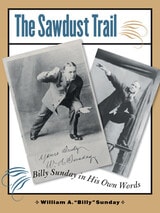
The Sawdust Trail
Billy Sunday in His Own WordsWilliam A. Sunday
University of Iowa Press, 2005
Published serially in the Ladies’ Home Journal in 1932 and 1933 and now in book form for the first time, The Sawdust Trail is the only autobiography that this hugely popular and hugely controversial preacher ever wrote. From his childhood days in Iowa to the early days of his conversion in Illinois, from his baseball career with the National League teams in Chicago, Pittsburgh, and Philadelphia to the challenges of preaching in New York City during his heyday, the sections of Sunday’s autobiography roll out like so many exuberant sermons, yet the sympathetic reader can hear echoes of the loneliness and misery of his early years.
In The Sawdust Trail the sometimes appalling but always appealing Billy Sunday creates a usable past for himself, notable for what he omits as well as for what he includes, which gives us insight not just into his own life and career but also into the peculiar history of evangelism in America.
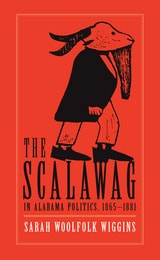
The Scalawag In Alabama Politics, 1865–1881
Sarah Woolfolk Wiggins
University of Alabama Press, 1977
Who was this scalawag? Simply a native, white, Alabama Republican! Scorned by his fellow white Southerners, he suffered, in his desire for socioeconomic reform and political power, more than mere verbal abuse and social ostracism; he lived constantly under the threat of physical violence. When first published in 1977, Wiggin’s treatment of the scalawag was the first book-length study of scalawags in any state, and it remains the most thorough treatment. According to The Journal of American History, this is the “most effective challenge to the scalawag stereotype yet to appear.”

The Science of Religion and the Religion of Scientism
A Neuroscientist's Perspective on Consciousness, Morality, and the New AtheismChristopher Breitmeyer
Catholic University of America Press, 2026
The Scribes of the Torah
The Formation of the Pentateuch in Its Literary and Historical ContextsKonrad Schmid
SBL Press, 2023
A revised view of the Pentateuch with consequences for the broader literary history of the Bible
This collection of thirty-one studies on the Pentateuch represents more than twenty years of Konrad Schmid’s research and publications advocating for a new view of the Pentateuch’s formation. Schmid’s essays present the case for a Persian period Priestly document that provided a basic narrative thread to the Torah, which included separate, pre-Priestly components of narratives in Genesis and the Moses story. Schmid’s open discussion includes evidence from various fields, such as literary history, comparative cultural history, historical linguistics, epigraphy, and archaeology. The essays are divided into eight sections usefully structured around the themes of the Pentateuch in the Enneateuch, the history of scholarship, the formation of the Torah, Genesis, the Moses story, the Priestly document, legal texts, and the Pentateuch in the history of ancient Israel’s religion.
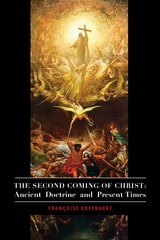
The Second Coming of Christ
Ancient Doctrine and Present TimesFrançoise Breynaert
St. Augustine's Press, 2022
The great mystery of Christ's second coming is part of the core of Christian faith. And at long last, here is a book that explains what this truly means. And in doing so, we come to know the revealed meaning of history, which has nourished the hope of Christians through the ages.
The Secret of the Three Cities
An Introduction to Hindu Sakta TantrismDouglas Renfrew Brooks
University of Chicago Press, 1990
The Seeds of Triumph
Church and State in Gomulka's PolandHannah Diskin
Central European University Press, 2001
The Roman Catholic Church has played a unique role in the history of Poland in the twentieth century: the people and the Church drew closer and closer together during Nazi rule, the Stalinist period and the somewhat milder, though strongly anti-religious and repressive Gomulka regime (1956-1970). The power struggle between the Church and the communist government did in fact play a role in shaping world politics, the Polish Church having been the force behind the opposition movement in Poland. Against this background, a Polish pope appeared and made a major contribution to the collapse of communism.
The Seeds of Triumph, the most comprehensive recent book on the opposition of Church and State in post-war Poland, compares the characteristics and consequences of this relationship during three different periods: the first and second periods of Gomulka's rule, and the Stalinist era between the two Gomulka periods. It examines the balance of power, studying to what degree the Church and other factors in the political environment influenced governmental policy-making. The author disproves the common stereotype, held at the time, that domestic conditions played only a marginal role. In examining the regime's policies, she covers the legal background, the general policy characteristics, the specific policies implemented during the period, and the role of the individual actors, most notably the pivotal role of the two main protagonists, Cardinal Wyszynski and Wladislaw Gomulka.
In her landmark study, Diskin makes a significant contribution to the study of authoritarian systems and greatly enhances our understanding of the centrality of the Church in recent Polish history.
The Selected Letters of Juanita Brooks
Edited by Craig S. Smith
University of Utah Press, 2019
The letters in this volume, written from 1941 to 1978, trace Brooks’s development from fledgling historian to recognized authority. Serving almost as an autobiography of her interactions with her contemporaries, this selection provides a new perspective on Brooks’s personality and growth as a scholar. Richly detailed, chatty, and covering a wide array of subjects, the letters afford an important glimpse into Brooks’s struggles, concerns, and interests.
The Sentences of Sextus
Walter T. Wilson
SBL Press, 2012
The September Six and the Struggle for the Soul of Mormonism
Patterson, Sara M.
Signature Books, 2023
The September Six and the Struggle for the Soul of Mormonism
Patterson, Sara M.
Signature Books, 2024
The Serpent's Gift
Gnostic Reflections on the Study of ReligionJeffrey J. Kripal
University of Chicago Press, 2006
“Because thou hast done this, thou art cursed above all cattle, and above every beast of the field.” With those words in Genesis, God condemns the serpent for tempting Adam and Eve, and the serpent has shouldered the blame ever since. But how would the study of religion change if we looked at the Fall from the snake’s point of view? Would he appear as a bringer of wisdom, more generous than the God who wishes to keep his creation ignorant?
Inspired by the early Gnostics who took that startling view, Jeffrey J. Kripal uses the serpent as a starting point for a groundbreaking reconsideration of religious studies and its methods. In a series of related essays, he moves beyond both rational and faith-based approaches to religion, exploring the erotics of the gospels and the sexualities of Jesus, John, and Mary Magdalene. He considers Feuerbach’s Gnosticism, the untapped mystical potential of comparative religion, and even the modern mythology of the X-Men.
Ultimately, The Serpent’s Gift is a provocative call for a complete reorientation of religious studies, aimed at a larger understanding of the world, the self, and the divine.
The Seven Books of History Against the Pagans
Roy J. Paulus Orosius
Catholic University of America Press, 1964
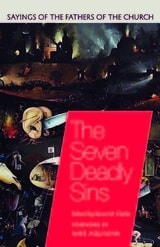
The Seven Deadly Sins
Sayings of the Fathers of the ChurchKevin M. Clarke
Catholic University of America Press, 2018
Sacred Scripture did not neatly list the seven deadly sins, so where did this tradition come from? Unsurprisingly, it can be traced back to the Church Fathers. But were there eight or seven? In a sense, the answer is “both.” The tradition of the capital sins has a rich development in the patristic era, not only in the presentation of the list of vices but in the preaching and teaching of the early shepherds of the Church. So how do the capital sins spawn other vices in the soul? How does one cultivate the virtues that heal the soul from those vices? How are gluttony and lust related? Is sadness really a vice? How is vainglory different from pride? What role does almsgiving have in soothing the passion of anger? The Fathers of the Church answer these questions and more in this volume.
The capital vices are the gateway drugs to countless sins. The path of the book descends through the vices, culminating with their queen ruler, pride. The words of the Fathers will assist the reader in being more realistic about the attacks upon the soul. The text should also be edifying and medicinal. Since each chapter begins with vice and ends with virtue, one’s path through the chapters represents a sort of ascent out of vice and into the freedom of the virtues. The text gives special attention throughout to the thought of Augustine of Hippo, Evagrius of Pontus, John Cassian, Gregory the Great, and Maximus the Confessor.
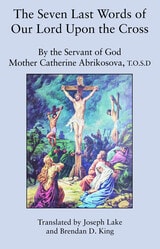
The Seven Last Words of Our Lord Upon the Cross
Mother Catherine Abrikosova, T.O.S.D.
St. Augustine's Press, 2019
The Sexual Politics of Empire
Postcolonial Homophobia in HaitiErin L. Durban
University of Illinois Press, 2023
Evangelical Christians and members of the global LGBTQI human rights movement have vied for influence in Haiti since the 2010 earthquake. Each side accuses the other of serving foreign interests. Yet each proposes future foreign interventions on behalf of their respective causes despite the country’s traumatic past with European colonialism and American imperialism. As Erin L. Durban shows, two discourses dominate discussions of intervention. One maintains imperialist notions of a backward Haiti so riddled with cultural deficiencies that foreign supervision is necessary to overcome Haitians’ resistance to progress. The other sees Haiti as a modern but failed state that exists only through its capacity for violence, including homophobia. In the context of these competing claims, Durban explores the creative ways that same-sex desiring and gender creative Haitians contend with anti-LGBTQI violence and ongoing foreign intervention.
Compelling and thought-provoking, The Sexual Politics of Empire examines LGBTQI life in contemporary Haiti against the backdrop of American imperialism and intervention.
The Shadow of God and the Hidden Imam
Religion, Political Order, and Societal Change in Shi'ite Iran from the Beginning to 1890Said Amir Arjomand
University of Chicago Press, 1984
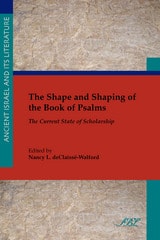
The Shape and Shaping of the Book of Psalms
The Current State of ScholarshipNancy L. deClaissé-Walford
SBL Press, 2014
A new and innovative way to approach the Psalter that moves beyond form and cult-functional criticism
Drawing inspiration from Gerald H. Wilson’s The Editing of the Hebrew Psalter, this volume explores questions of the formation of the Psalter from the perspective of canonical criticism. Though called “canonical criticism,” the study actually employs a number of historically traditional and nontraditional approaches to reading the text including form criticism, historical criticism of individual psalms as well as of the whole Psalter, and redaction criticism.
Features:
- Exploration of collections of psalms, theological viewpoints, sovereignty, and the shape and shaping of Psalms
- Examination of the impact of canonical criticism on the study of the Psalter
- Sixteen essays from the Book of Psalms Consultation group and invited scholars
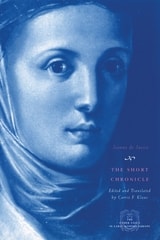
The Short Chronicle
A Poor Clare's Account of the Reformation of GenevaJeanne de Jussie
University of Chicago Press, 2006
First published in French in 1611, Jussie’s Short Chronicle is translated here for an English-speaking audience for the first time, providing a fresh perspective on struggles for religious and political power in sixteenth-century Geneva and a rare glimpse at early modern monastic life.
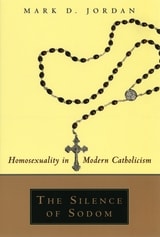
The Silence of Sodom
Homosexuality in Modern CatholicismMark D. Jordan
University of Chicago Press, 2000
"[Jordan] has offered glimpses, anecdotal stories, and scholarly observations that are a whole greater than the sum of its parts. . . . If homosexuality is the guest that refuses to leave the table, Jordan has at least shed light on why that is and in the process made the whole issue, including a conflicted Catholic Church, a little more understandable."—Larry B. Stammer, Los Angeles Times
"[Jordan] knows how to present a case, and with apparently effortless clarity he demonstrates the church's double bind and how it affects Vatican rhetoric, the training of priests, and ecclesiastical protectiveness toward an army of closet cases. . . . [T]his book will interest readers of every faith."—Daniel Blue,
Lambda Book Report
A 2000 Lambda Literary Award Finalist

The Social Gospel
Religion and Reform in Changing AmericaRonald White
Temple University Press, 1975
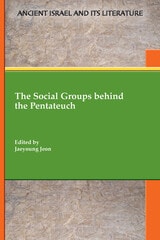
The Social Groups behind the Pentateuch
Jaeyoung Jeon
SBL Press, 2021
A reexamination of the Pentateuch in light of the complex social, religious, and political conflicts of the Persian period
During the last several decades, scholars in pentateuchal studies have suggested new compositional models to replace the Documentary Hypothesis, yet no consensus has emerged. The ten essays in this collection advance the discussion by shifting the focus of pentateuchal studies from the literary stratification of different layers of the texts to the social, economic, religious, and political agendas behind them. Rather than limiting the focus of their studies to scribal and community groups within Persian Yehud, contributors look beyond Yehud to other Judahite communities in the diaspora, including Elephantine and the Samaritan community, establishing a proper academic context for setting the diverse voices of the Pentateuch as we now understand them. Contributors include Olivier Artus, Thomas B. Dozeman, Innocent Himbaza, Jürg Hutzli, Jaeyoung Jeon, Itamar Kislev, Ndikho Mtshiselwa, Dany Noquet, Katharina Pyschny, Thomas Römer, and Konrad Schmid.
The Social Justice Torah Commentary
Rabbi Barry H. Block
Central Conference of American Rabbis, 2021
What does the Torah have to say about social justice? As the contributors to The Social Justice Torah Commentary demonstrate, a great deal. A diverse array of authors delve deeply into each week's parashah, drawing lessons to inspire tikkun olam. Chapters address key contemporary issues such as racism, climate change, mass incarceration, immigration, disability, women's rights, voting rights, and many more. The result is an indispensable resource for weekly Torah study and for anyone committed to repairing the world.
The Social Life of Scriptures
Cross-Cultural Perspectives on BiblicismEdited and with an introduction by James S. Bielo
Rutgers University Press, 2009
Contributors offer a collection of closely analyzed and carefully conducted ethnographic and historical case studies, covering a range of geographic, theological, and cultural territory, including: American evangelicals and charismatics; Jamaican Rastafarians; evangelical and Catholic Mayans; Northern Irish charismatics; Nigerian Anglicans; and Chinese evangelicals in the United States.
The Social Life of Scriptures is the first book to present an eclectic, cross-cultural, and comparative investigation of Bible use. Moreover, it models an important movement to outline a framework for how scriptures are implicated in organizing social structures and meanings, with specific foci on gender, ethnicity, agency, and power.
The Social Life of Spirits
Edited by Ruy Blanes and Diana Espírito Santo
University of Chicago Press, 2013
The contributors tour the spiritual globe—the globe of nonthings—in essays on topics ranging from the Holy Ghost in southern Africa to spirits of the “people of the streets” in Rio de Janeiro to dragons and magic in Britain. Avoiding a reliance on religion and belief systems to explain the significance of spirits, they reimagine spirits in a rich network of social trajectories, ultimately arguing for a new ontological ground upon which to examine the intangible world and its interactions with the tangible one.
The Song of Songs and the Ancient Egyptian Love Songs
Michael V. Fox
University of Wisconsin Press, 1985
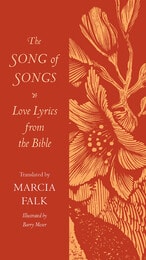
The Song of Songs
Love Lyrics from the BibleMarcia Falk
Brandeis University Press, 2004
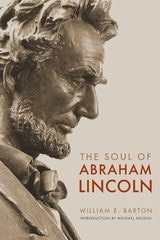
The Soul of Abraham Lincoln
William E. Barton. Introduction by Michael Nelson
University of Illinois Press, 2005
Modern secularists have been reluctant to recognize Abraham Lincoln's deep spirituality, in spite of the fact that he was often known as "Father Abraham" and has been described as one of the most deeply religious presidents the country has ever seen. Yet for all of his familiarity with the Bible, his invocation of Providence, and of the Almighty, he did not actively participate in a church or lend his name and authority to a denomination.
After more than fifty years of hagiographic and contradictory accounts of Abraham Lincoln's life, William Barton stepped boldly into the bedlam of claims and counterclaims about Lincoln's religion. Armed with an enormous collection of Lincoln materials and his own strict evidentiary rules, Barton worked to avoid partisan politicking over Lincoln's legacy and instead to simply "lay bare the facts."
To enable a better examination of the vexed questions surrounding Lincoln's faith and religious principles, Barton gathered Lincoln's most important writing and speeches about religion, and topically and chronologically assembled testimonies by his friends, family, and associates, about the most important and most debated issues. This volume, Barton's first and most important work on Lincoln, is introduced by Michael Nelson who provides a history of the literature on Lincoln's religion, the historical context of Barton's writing, and the details of the method that made Barton's approach to this American icon such a distinctive success.
The Soul of the Helper
Seven Stages to Seeing the Sacred within Yourself So You Can See It in OthersHolly K. Oxhandler
Templeton Press, 2025
In their devotion to the well-being of others, caregivers routinely put their own well-being last and can unintentionally burn themselves out physically, emotionally, and spiritually. Their self-neglect, paired alongside a deep desire to help others, has the potential to stir up feelings of anger and resentment, leading to a sense of guilt and shame. They often believe that if they were to grant themselves any rest or grace, they would be at risk of failing in their duty.
In The Soul of the Helper, Dr. Holly K. Oxhandler shows caregivers and fellow helpers a more self-compassionate way to cope with their overwhelming responsibilities and to attend to their own needs, particularly when it comes to their mental health and spiritual journey. She invites them to pause and realize that if they let their personal resources run dry, they cannot possibly care for others as fully as they wish. In fact, their efforts are likely to cause more harm than good.
With a background in spiritually-integrated mental health, Dr. Oxhandler teaches helpers a seven-step process to slow down and reconnect with the stillness within themselves. It is in this space of stillness that Oxhandler guides helpers to reconnect with the “sacred spark” within their soul. By allowing themselves to enter that stillness, caregivers will recognize that they, too, are worthy of care. And with that realization, they will see anew the sacred spark that dwells inside everyone else, especially within those they’re helping.
As a social worker, researcher, and person of faith, Dr. Oxhandler writes in a warm and welcoming style, shares many relatable stories, and widens her scope to include believers of all faiths and spiritual traditions. Her book is for caregivers everywhere who sense the sacred spark within them saying, in effect: “Come to me, all you who are weary and burdened, and I will give you rest.”
The Soul of the Person
A Contemporary Philosophical PsychologyAdrian J. Reimers
Catholic University of America Press, 2006
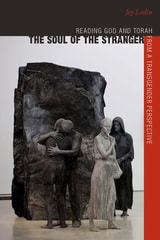
The Soul of the Stranger
Reading God and Torah from a Transgender PerspectiveJoy Ladin
Brandeis University Press, 2018
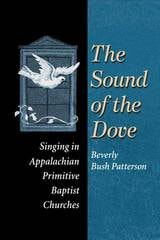
The Sound of Dove
Singing in Appalachian Primitive Baptist ChurchesBeverly Bush Patterson
University of Illinois Press, 1995
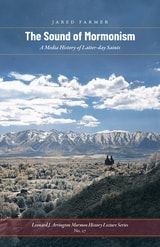
The Sound of Mormonism
A Media History of Latter-day SaintsJared Farmer
Utah State University Press, 2024
The Arrington Lecture series, established in honor of one of the twentieth-century American West’s most distinguished historians, Leonard Arrington, has become a leading forum for prominent scholars to address topics related to Latter-day Saint history. Utah State University hosts the Leonard J. Arrington Mormon History Lecture Series through the Merrill-Cazier Library’s Special Collections and Archives.