Results by title
3390 books match the query 'Fiction' and 1041 start with t
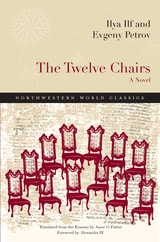
The Twelve Chairs
A NovelIlya Ilf and Evgeny Petrov, Translated from the Russian by Anne O. Fisher with a Foreword by Alexander Ilf
Northwestern University Press, 2011
Winner, 2012 Northern California Book Award for Fiction in Translation
More faithful to the original text and its deeply resonant humor, this new translation of The Twelve Chairs brings Ilf and Petrov’s Russian classic fully to life. The novel’s iconic hero, Ostap Bender, an unemployed con artist living by his wits, joins forces with Ippolit Matveyevich Vorobyaninov, a former nobleman who has returned to his hometown to look for a cache of missing jewels hidden in chairs that have been appropriated by the Soviet authorities. The search for the chairs takes them from the provinces of Moscow to the wilds of the Transcaucasus mountains. On their quest they encounter a variety of characters, from opportunistic Soviet bureaucrats to aging survivors of the old propertied classes, each one more selfish, venal, and bungling than the last. A brilliant satire of the early years of the Soviet Union, as well as the inspiration for a Mel Brooks film, The Twelve Chairs retains its universal appeal.
The Typewriter Satyr
A NovelDwight Allen
University of Wisconsin Press, 2009
Finalist, General Fiction, Midwest Book Awards

The Undiscovered Island
Darrell Kastin, Introduction by Katherine Vaz
Tagus Press, 2023
Winner of the Independent Publishers Book Awards’ Silver Prize for Multicultural Fiction
Alarmed by her father’s unexplained disappearance, Julia Castro travels from California to her family’s ancestral home in the Azores to find the islands abuzz with tales of ghost ships, seductive sirens, and witchcraft. The mystery deepens when a drowned man’s body is discovered on a mountainside and an unknown island emerges from the sea. While she is on the hunt for her father, Julia succumbs to the bewitching allure of the islands—and to Nicolau, a fellow musician. History, legend, poetry, and myth are seamlessly interwoven as the novel explores relationships between personal and cultural identity, fate and self-determination, reality and illusion. This revised edition of The Undiscovered Island features a new introduction from Katherine Vaz.

The Unfinished
Reinhard Jirgl
Seagull Books, 2020
Komotau, the Czech Republic, late summer, 1945. Four women—seventy-year-old Johanna, her two daughters Hanna and Maria, and Hanna’s daughter Anna—are ordered by the new Czech authorities to leave their homes and assemble with other Germans at the local train station. They are given thirty minutes—the “wild expulsions” of Sudeten Germans have begun. But where is Anna?
Witnessing the revenge lynching of SS and suspected collaborators on her walk home, she arrives in Komotau to find her family gone. The trek takes the older women via Munich, then Dresden and Magdeburg, to an outpost in the far northwest of the Soviet zone where they settle as farm laborers. Once united again, their hope of one day returning to the heimat—homeland—is both a source of strength and a burden, choking attachments to new surroundings and neighbors. This conflict will prove to be the story of their lives, as well as both the joy and ruin of Anna’s son.
A tale of four generations told in Reinhard Jirgl’s unique and subversively expressive idiom, The Unfinished plays out between the ruins of Nazi Germany and the rise and fall of communist East Germany, the birth of the Berlin Republic, and the shadow of a new millennium.
The Unknown Quantity
Hermann Broch
Northwestern University Press, 2000
Published in 1933, The Unknown Quantity is Hermann Broch's study of the underlying chaos-and finally the impossibility-of life within a society whose values are in decay. As Richard seeks to reconcile the conflicting demands of love and science, of passion and reason, societal and family values begin to undermine him and those in orbit around him.
The Unloved
From the Diary of Perla S.Arnost Lustig
Northwestern University Press, 1996
Perla S. is a beautiful seventeen-year-old girl who, while interred in the Theresienstadt concentration camp, becomes a prostitute. Capturing Perla's voice through a series of diary entries, Arnost Lustig shows how she maintains her integrity, honesty, and hope amidst lies and horror. This first paperback edition has been extensively revised and expanded by the author.
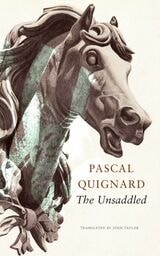
The Unsaddled
Pascal Quignard
Seagull Books, 2023
In Pascal Quignard’s writing, philology hunts for wild game in a dark forest. The Unsaddled, which features horses as its central figure, is no exception. Taking off from puns, multifarious imagery, and metaphorical meanings—“to be baffled,” “to be thrown”—that the book’s title provides, Quignard focuses on life-changing moments. We meet George Sand (whose father died after being thrown from his horse), Saint Paul, Abelard, Agrippa d’Aubigné, and countless other writers, philosophers, theologians, or kings who fell off their horses—not to forget Jean-Jacques Rousseau, who was knocked over by a dog. Being “unsaddled” can also be associated, as Quignard shows in regard to Nietzsche, with an “overturning” of values. Scenes of war, hunting, “fleeing” or sexuality—“When lovers have a horse ride, they gallop in another world”—come before our eyes, each time from those unsettling vantage points that Quignard knows how to find. As ever, he ranges far and wide in his intense quest, taking examples from across human history, from the neolithic age to his own childhood memories of postwar Le Havre in northern France.

The Untidy Pilgrim
Eugene Walter
University of Alabama Press, 2001
Eugene Walter’s first novel, and winner of the 1954 Lippincott Fiction Prize for Young Novelists, is about a young man from a small central Alabama town who goes south of the “salt line” to Mobile to work in a bank and study law. As soon as this unnamed pilgrim arrives, he realizes that—although he is still in Alabama—he has entered a separate physical kingdom of banana trees and palm fronds, subtropical heat and humidity, and old houses and lacy wrought-iron balconies. In Mobile, Alabama, the town that can claim the oldest Mardi Gras in America, there is no Puritan work ethic; the only ruling forces are those of chaos, craziness, and caprice. Such forces overtake the pilgrim, seduce him away from the beaten career path, and set him on a zigzag course through life.
The Untidy Pilgrim celebrates the insularity as well as the eccentricity of southerners—and Mobilians, in particular—in the mid-twentieth century. Cut off from the national mainstream, they are portrayed as devoid of that particularly American angst over what to “do” and accomplish with one’s life, and indulge instead in art, music, cooking, nature, and love. In this novel Walter dispels the gloomy southern literary tradition established by Faulkner, Capote, and McCullers to illuminate the joyous quirkiness of human existence.
The Upside-Down Forest
The Vanished Souls Duology, Book 2Richard Zimler
Tagus Press, 2027
When cruelty is sanctified, betrayal is rewarded as virtue, and the innocent must hide their true identities to survive, seventeen-year-old Isaaque Zarco struggles to preserve the principles he lives by and protect the people he loves in this luminous and deeply moving conclusion to The Vanished Souls duology.
As Isaaque attempts to put his life back together, mysteries and conflicts continue to haunt him, most prominently his father’s inexplicable rejection and the knowledge that his survival depends on concealing his identity and faith.
His world is shaken by a letter saying his grandmother, Flor, has been arrested. Unable to abandon the woman who guided him throughout his childhood, Isaaque crosses into Spain, entering a society ruled by fear and deception, where anonymous accusations carry the force of law and compassion itself has become an act of defiance. Flor has been transferred to a prison in Madrid. She has been physically broken by imprisonment. Isaaque learns that, under torture, she revealed the names of two of his oldest friends as secret Jews. Racing back to his home village, he embarks on a desperate attempt to help them escape before the Inquisition comes for them.
The Upside-Down Forest portrays a society in which slander is revered as truth, mercy is condemned as weakness, and persecution masquerades as justice. Giving voice to victims whose suffering has too often been erased from history, Richard Zimler explores how systems of fear corrupt not only institutions but also the bonds between family, friends, and neighbors. Ultimately, it asks what remains of our humanity when the moral order itself has been turned upside down—and whether a life shaped by love, loyalty, and compassion can still endure when survival itself demands treachery and betrayal.

The Use of Riches
J. I. M. Stewart
University of Chicago Press, 1983
That afternoon she has received a cable from an old acquaintance, an Italian marchesa. It seems that Arnander fathered an illegitimate son whom the archesa has been looking after. She can no longer do so and wants Jill to come and arrange the boy's future. The Crains hasten to Italy, Rupert going along to the preliminary interview with the marchesa, as he is suspicous that there may not really be an Arnander child, that this is a ruse to extract money.
The truth revealed to him by the marchesa is shattering, and the quintessentially civilized Craines find themselves plunged into an increasingly bizarre drama.
The Valet
Thorvald Steen
Seagull Books, 2026
The year is 1204. Stripped of his power and held captive, Massimo Gasparino, once the most trusted aide to the Doge of Venice, pens a desperate secret letter to Pope Innocent III. His confession? He has witnessed the most egregious crime in human history: the deliberate diversion of the Fourth Crusade from Jerusalem to the heart of Christian Europe, Constantinople. As the city is ruthlessly plundered and its treasures shipped to Venice, Gasparino’s letter exposes the Doge’s shocking betrayal, a sin that irrevocably alters the course of history. But with his life and the fate of this explosive truth hanging precariously in the balance, can he get his message to Pope Innocent III before the Doge silences him forever?
The Valet is a tense, intimate drama of ambition, guilt, and the enduring shadows of a war that still resonates in today’s world.
The Valley of Bones
Book 7 of A Dance to the Music of TimeAnthony Powell
University of Chicago Press, 1995
Anthony Powell’s universally acclaimed epic A Dance to the Music of Time offers a matchless panorama of twentieth-century London. Now, for the first time in decades, readers in the United States can read the books of Dance as they were originally published—as twelve individual novels—but with a twenty-first-century twist: they’re available only as e-books.
World War II has finally broken out, and The Valley of Bones (1964) finds Nick Jenkins learning the military arts. A stint at a training academy in Wales introduces him to the many unusual characters the army has thrown together, from the ambitious bank clerk-turned-martinet, Gwatkin, to the hopelessly slovenly yet endearing washout, Bithel. Even during wartime, however, domestic life proceeds, as a pregnant Isobel nears her term and her siblings’ romantic lives take unexpected turns—their affairs of the heart lent additional urgency by the ever-darkening shadow of war.
"Anthony Powell is the best living English novelist by far. His admirers are addicts, let us face it, held in thrall by a magician."--Chicago Tribune
"A book which creates a world and explores it in depth, which ponders changing relationships and values, which creates brilliantly living and diverse characters and then watches them grow and change in their milieu. . . . Powell's world is as large and as complex as Proust's."--Elizabeth Janeway, New York Times
"One of the most important works of fiction since the Second World War. . . . The novel looked, as it began, something like a comedy of manners; then, for a while, like a tragedy of manners; now like a vastly entertaining, deeply melancholy, yet somehow courageous statement about human experience."--Naomi Bliven, New Yorker
“The most brilliant and penetrating novelist we have.”--Kingsley Amis

The Valley of Shadows
SANGAMON SKETCHESFrancis Grierson
University of Illinois Press, 1990
undertones. In this her fourth collection she finds Ovid in Provincetown,
a right whale in Iowa, and Cleopatra in the afterworld. Nothing resides
in its proper place, except the place of exile. "Characteristic wit,
irony, and precision." —Publishers Weekly
The Vampire
A CasebookEdited by Alan Dundes
University of Wisconsin Press, 1998
Vampires are the most fearsome and fascinating of all creatures of folklore. For the first time, detailed accounts of the vampire and how its tradition developed in different cultures are gathered in one volume by eminent folklorist Alan Dundes. Eleven leading scholars from the fields of Slavic studies, history, anthropology, and psychiatry unearth the true nature of the vampire from its birth in graveyard lore to the modern-day psychiatric patient with a penchant for drinking blood.
The Vampire: A Casebook takes this legend out of the realm of literature and film and back to its dark beginnings in folk traditions. The essays examine the history of the word “vampire;” Romanian vampires; Greek vampires; Serbian vampires; the physical attributes of vampires; the killing of vampires; and the possible psychoanalytic underpinnings of vampires. Much more than simply a scary creature of the human imagination, the vampire has been and continues to haunt the lives of all those who encounter it—in reality or in fiction.

The Very Air
A NovelDouglas Bauer
University of Iowa Press, 2014
The Very Air is a compelling exploration of human motives and hidden meanings. It is a detailed picture of America’s myth of the rugged individual in the psychological and narrative tradition of The Great Gatsby and Citizen Kane. With a resonant sense of the period and culture, Douglas Bauer evokes the freewheeling feel of the old Southwest in the charlatans of our own era. The Very Air shows, through storytelling both exhilarating and chilling, that the past is prologue and that our personal histories indeed shape the course of our individual futures.
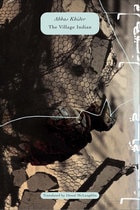
The Village Indian
Abbas Khider
Seagull Books, 2019
From Iraq via Northern Africa through Europe and back again, Abbas Khider deftly blends the tragic with the comic, and the grotesque with the ordinary, in order to tell the story of suffering the real and brutal dangers of life as a refugee—and to remember the haunting faces of those who did not survive the journey. This is a stunning piece of storytelling, a novel of unusual scope that brings to life the endless cycle of illegal entry and deportation that defines life for a vulnerable population living on the margins of legitimate society. Translated by Donal McLaughlin, The Village Indian provides what every good translation should: a literary looking glass between two cultures, between two places, between East and West.
The Village of Vanished Souls
The Vanished Souls Duology, Book 1Richard Zimler
Tagus Press, 2027
Winner of Book of the Year in Portugal, The Village of Vanished Souls is a sweeping historical tale inspired by authentic records of the Portuguese Inquisition and the real lives of villagers whose stories have long been forgotten.
Portugal, 1671—Nine-year-old Isaaque Zarco lives a peaceful life in the remote mountain village of Castelo Rodrigo, where he helps his mother prepare meals, roams the surrounding forests with his spirited best friend Lena, and learns about nature from the village apothecary, Samuel. But his idyllic childhood is shattered when Lena and her family suddenly vanish, followed by a series of brutal murders that plunge the isolated community into fear.
When Isaaque’s formidable Castilian grandmother visits, she says what no one else dares: the Inquisition is hunting descendants of Jews who continue to secretly practice. Then she entrusts Isaaque with an even more dangerous secret—that he, too, belongs to a secret Jewish family. As she introduces him to the forbidden traditions and sacred writings of their ancestors, Isaaque’s understanding of his parents, his village, and himself is transformed forever.
As Isaaque comes of age, he is drawn into a clandestine network that helps persecuted Jews escape Portugal. Every mission carries the risk of imprisonment, torture, and death, yet this dangerous work gives Isaaque a profound sense of purpose while deepening his commitment to his heritage. When he learns that his beloved grandmother is ill, he embarks on a journey that will expose long-buried family secrets and reveal that learning to embrace his heritage is only the beginning of what will soon be asked of him.
Inspired by the names, arrest records, and testimonies preserved in Inquisitional archives, The Village of Vanished Souls recreates a little-known chapter of history with vivid historical detail and emotional depth. At once an unforgettable coming-of-age story and a moving portrait of resilience, identity, faith, and love, it gives voice to people whose courage endured despite centuries of persecution and forced silence.

The Villagers
Jorge Icaza
Southern Illinois University Press, 1973
The Villagers is a story of the ruthless exploitation and extermination of an Indian village of Ecuador by its greedy landlord. First published in 1934, itis here available for the first time in an authorized English translation.
A realistic tale in the best tradition of the novels of social protest of Zola, Dostoevsky, José Eustasio Rivera, and the Mexican novels of the Revolution, The Villagers (Huasipungo) shocked and horrified its readers, and brought its author mingled censure and acclaim, when itwas first published in 1934.
Deeply moving in the dramatic intensity of its relentless evolution and stark human suffering, Icaza’s novel has been translated into eleven foreign languages, including Russian and Chinese, and has gone through numerous editions in Spanish, including a revised and enlarged edition in 1953,on which this translation is based, but ithas never before been authorized for translation into English. His first novel, but not his first published work, The Villagers is still considered by most critics as Icaza’s best, and itis widely acclaimed as one of the most significant works in contemporary Latin American literature.
Thirty years after its original publication in Ecuador, The Villagers still carries a powerful message for the contemporary world and an urgent warning. The conditions here portrayed prevail in these areas, even today. The Villagers is an indictment of the latifundista system and a caustic picture of the native worker who, with little expectation from life, finds himself a victim of an antiquated feudal system aided and abetted by a grasping clergy and an indifferent government.
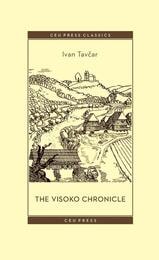
The Visoko Chronicle
Ivan Tavcar
Central European University Press, 2022
This historical novel—Visoška kronika in the Slovene original—is about two generations of the owners of the Visoko estate in the Duchy of Carniola, a predominantly Slovene province of the Habsburg Empire, in the seventeenth century. The events of the estate and the fate of its owners are affected by witchcraft persecutions, the mistreatment of Protestants, and the Thirty Years’ War. These themes are key to the construction of a Slovene national identity, which was going through a decisive phase as Tavčar was writing. By the time the novel was released in 1919, his nation had left the Habsburg Crown for the new Kingdom of Serbs, Croats, and Slovenes.
The work is both romantic and realistic. The deeply romantic motive of crime, repentance, and punishment intertwines the lives of father and son. The very acquisition of the estate is connected to a murder, which casts a long shadow over the next generation. Tavčar insists on the principle of man’s full responsibility for his acts, which can be repaired with action and determination. The author’s bleak realistic description of the farm life at Visoko reflects his polemical view of the Slovene farmer of his time.

The Voice Imitator
Thomas Bernhard
University of Chicago Press, 1997
In this stunning translation of The Voice Imitator, Bernhard gives us one of his most darkly comic works. A series of parable-like anecdotes—some drawn from newspaper reports, some from conversation, some from hearsay—this satire is both subtle and acerbic. What initially appear to be quaint little stories inevitably indict the sterility and callousness of modern life, not just in urban centers but everywhere. Bernhard presents an ordinary world careening into absurdity and disaster. Politicians, professionals, tourists, civil servants—the usual victims of Bernhard's inspired misanthropy—succumb one after another to madness, mishap, or suicide. The shortest piece, titled "Mail," illustrates the anonymity and alienation that have become standard in contemporary society: "For years after our mother's death, the Post Office still delivered letters that were addressed to her. The Post Office had taken no notice of her death."
In his disarming, sometimes hilarious style, Bernhard delivers a lethal punch with every anecdote. George Steiner has connected Bernhard to "the great constellation of Kafka, Musil, and Broch," and John Updike has compared him to Grass, Handke, and Weiss. The Voice Imitator reminds us that Thomas Bernhard remains the most caustic satirist of our age.
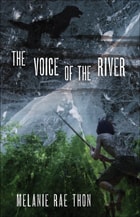
The Voice of the River
A NovelMelanie Rae Thon
University of Alabama Press, 2011

The Vortex
A NovelJosé Eustasio Rivera
Duke University Press, 2018

The Waiting List
An Iraqi Woman's Tales of AlienationBy Daisy Al-Amir
University of Texas Press, 1994
Daisy Al-Amir is one of the more visible figures in women's fiction in the Arab world today. This collection of stories, originally published in Lebanon as Ala La'ihat al-Intizar, is the most recent of her five publications. Her stories intimately reflect women's experiences in the chaotic worlds of the Lebanese civil war and the rise of Saadam Hussain as Iraq's leader. Set in Iraq, Cyprus, and Lebanon, the stories shed light on an unusual Middle East refugee experience—that of a cultural refugee, a divorced woman who is educated, affluent, and alone.
Al-Amir is also a poet and novelist, whose sensual prose grows out of a long tradition of Iraqi poetry. But one also finds existential themes in her works, as Al-Amir tries to balance what seems fated and what seems arbitrary in the turbulent world she inhabits. She deals with time and space in a minimalist, surreal style, while studying the disappointments of life through the subjective lens of memory. Honestly facing the absence of family and the instability of place, Al-Amir gives lifelike qualities to the inanimate objects of her rapidly changing world.
In addition to the stories, two examples of the author's experimental poems are included. In her introduction, Mona Mikhail places these stories and poems in the context of contemporary Islamic literature and gender studies.

The Wake of the General Bliss
A Novel of World War IIEdward Lueders
University of Utah Press, 2008
The ship becomes a complex metaphor for the thousands of men aboard and, by extension, for all of us who exist both as individuals and as parts of the human community. These motifs are developed through the interplay of three men aboard ship, Staff Sgt. LeRoy Warner, Sgt. Mark Reiter, and Sgt. Stanley Norman, who entertain troops as a jazz trio. These GI musicians improvise through solo sections in which each reflects hauntingly on his past and dreams of his future. As they search for meaning beyond subjectivism, beyond suffering and randomness, their music is about the possibilities for harmony.
Although miscues, counterbeats, and dissonance apparently mock our efforts to break out of ourselves, sometimes, however fleetingly, everything falls into place. Then the prose of our lives turns unexpectedly to poetry and we experience an exhilarating unity.

The Wall Jumper
A Berlin StoryPeter Schneider
University of Chicago Press, 1998
When the Berlin Wall was still the most tangible representation of the Cold War, Peter Schneider made this political and ideological symbol into something personal, that could be perceived on a human level, from more than one side. In Schneider's Berlin, real people cross the Wall not to defect but to quarrel with their lovers, see Hollywood movies, and sometimes just because they can't help themselves—the Wall has divided their emotions as much as it has their country. This unforgettable novel, originally published in 1982, takes us back to a time when the Cold War seemed to have no end in sight and the Wall loomed over everyday life on both sides of Berlin.

The Wallpaper Fox
A NovelMorris Philipson
University of Chicago Press, 2000
"Philipson gives us a very believable portrait of a marriage. He also gives us no easy answers . . . and best of all, real storytelling." —Publishers Weekly
"This solid and serious novel emerges as not just an expose of what really goes on behind the well-groomed facades of the affluent, but a thoughtful exploration of character and the efficacy of moral action in forming and reforming it." —Jane Larkin Crain, New York Times Book Review
"A swift, no-fudging narrative by a writer it is always rewarding to rediscover." —Sophie Wilkins, National Review
"An extraordinary novel, fascinating, compelling, and totally disconcerting." —Fort Worth Star-Telegram
"Has the drama, intelligence and moral force of an American Howards End."-Cynthia Ozick
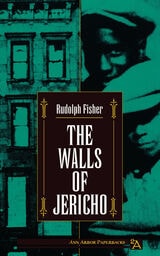
The Walls of Jericho
Rudolph Fisher
University of Michigan Press, 1994

The Walnut Trees of Altenburg
André Malraux
University of Chicago Press, 1992
"The description of the gas attack on the Russian front in 1915 will never be forgotten by anyone who has read it. . . . [Malraux] writes with the precision, the certitude and the authority of an obsessed person who knows that he has found the essence of what he has been looking for."—Conor Cruise O'Brien, from the Foreword
Malraux's greatest novel, Man's Fate, gave a grim, lurid picture of human suffering. [The Walnut Trees of Altenburg], written by a life-long observer of violent upheaval and within the shadows of World War II, gives a calm, thoughtful vision of humanistic endeavor that can transcend the absurdity of existence. Mature readers will find this a rewarding visit to one of the most accomplished writers of our time."—Choice
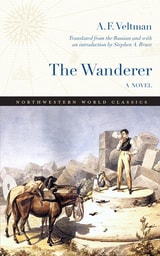
The Wanderer
A NovelAlexander Veltman, Stephen A. Bruce
Northwestern University Press, 2026
An unnamed narrator embarks on a rambling journey across the diverse borderlands of the Russian and Ottoman Empires—all without leaving his divan. Drawing on his own experiences in Bessarabia during the Russo-Turkish War of 1828–29, A. F. Veltman describes our Romantic narrator poring over a map and traversing distant, contested regions—at once imperial backwaters and cosmopolitan crossroads—where Romanians, Ruthenians, Jews, Bulgarians, Germans, and Turks comingle.
Meandering and motley in form and language, this lost classic of the early nineteenth century deploys metafictional innovations that anticipate postmodernist literature. The novel is speckled with dictionary entries, multiplication tables, philosophical digressions, and love poetry as Veltman swings from Gothic horror to antiquarian commentary to burlesque comedy. Past, present, and fantasy blend together, as Alexander the Great, Ovid, and Augustus join the narrator on his daydreamed journey of self-discovery.
Hugely popular in its day, The Wanderer is a remarkable tale that depicts the extraordinary places and peoples that met along the fault lines of once-great empires.
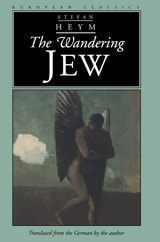
The Wandering Jew
Stefan Heym
Northwestern University Press, 1999
Heym introduces both Ahasverus and Lucifer as angels cast out of heaven for their opinions on God's order. Their respective oppositions continue throughout the rest of time: Ahasverus remains defiant through protest rooted in love and a faith in progress, while Lucifer is rebellious by means of his old, familiar methods. In a funny eternity of run-ins, debates, and meddling with characters such as Christ, a disciple of Luther, and a Marxist professor in East Germany, Ahasverus and Lucifer struggle on, awaiting the Second Coming.

The War of the Fatties and Other Stories from Aztec History
By Salvador Novo
University of Texas Press, 1993
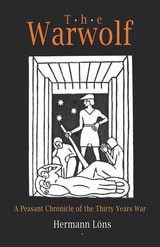
The Warwolf
A Peasant Chronicle of the Thirty Years WarHermann Lons
Westholme Publishing, 2006
The Thirty Years War, fought between 1618 and 1648, was a ruthless struggle for political and religious control of central Europe. Engulfing most of present-day Germany, the war claimed at least ten million lives. The lengthy conflict was particularly hard on the general population, as thousands of undisciplined mercenaries serving Sweden, Spain, France, the Netherlands, and various German principalities, robbed, murdered, and pillaged communities; disease spread out of control and starvation became commonplace. In The Warwolf, Hermann Löns's acclaimed historical novel, the tragedy and horrors of war in general, and these times in particular are revealed. The Warwolf, based on the author's careful research, traces the life of Harm Wulf, a land-owning peasant farmer of the northern German heath who realizes after witnessing the murder of neighbours and family at the hands of marauding troops that he has a choice between compromising his morals or succumbing to inevitable torture and death. Despite his desire for peace, Wulf decides to band with his fellow farmers and live like "wolves," fiercely protecting their isolated communities from all intruders. Löns's brilliant portrayal of the two sides faced by any person in a moral crisis—in Harm Wulf's case, whether to kill or be killed—continues to resonate. Originally published in 1910 and still in print in Germany, The Warwolf is available for first time in English.

The Watchful Gods And Other Stories
Walter Van Tilburg Clark
University of Nevada Press, 2004
Critic John R. Milton once said that Walter Van Tilburg Clark "did perhaps more than anyone else to define (in his fiction) the mode of perception, the acquisition of knowledge, and the style which we tend to call Western." In 1950, Walter Van Tilburg Clark, author of the acclaimed novel The Ox-Bow Incident, published a collection of short stories that had already won distinction in various national magazines. The collection was well received by reviewers, and subsequent critics have noted that these stories reflect both Clark’s literary power and the major concerns of his novels: the interior and intuitive complexities of good and evil, and the fragile, intricate web that connects humankind to the rest of the natural world.
A foreword by Ann Ronald, one of the West’s most astute literary critics, sets the stories into the context of Clark’s oeuvre and illuminates the way they reveal crucial characteristics of this writer’s imagination.
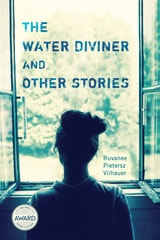
The Water Diviner and Other Stories
Ruvanee Pietersz Vilhauer
University of Iowa Press, 2018
In this thought-provoking collection, Sri Lankan immigrants grapple with events that challenge perspectives and alter lives. A volunteer faces memories of wartime violence when she meets a cantankerous old lady on a Meals on Wheels route. A lonely widow obsessed with an impending apocalypse meets an oddly inspiring man. A maidservant challenges class divisions when she becomes an American professor’s wife. An angry tenant fights suspicion when her landlord is burgled. Hardened inmates challenge a young jail psychiatrist’s competence. A father wonders whether to expose his young son’s bully at a basketball game. A student facing poverty courts a benefactor. And in the depths of an isolated Wyoming winter, a woman tries to resist a con artist. These and other tales explore the immigrant experience with a piercing authenticity.
The Waters of Star Lake
A NovelSara Rath
University of Wisconsin Press, 2012
Newly widowed Natalie Waters expects only nostalgia and solitude at her quiet, rustic cabin. But the wilderness conceals more than one perilous mystery. Where in Wisconsin’s Northwoods did the notorious gangster John Dillinger hide $210,000 following a violent FBI shootout? And why do the local timberwolves incite so much rage among Natalie’s neighbors?
As predators circle and howl in the dark, Ginger, the bartender at the nearby Star Lake Saloon, draws Natalie deep into the secrets not only of Dillinger but of the ecologies of family, forest, and heart. With the reluctant support of her granddaughter and advice from a handsome wolf biologist, Natalie is forced to choose between adversity and adventure.
Sara Rath continues her popular Northwoods saga in this affirming and often humorous tale of romance, betrayal, and danger.

The Wavering Knife
StoriesBrian Evenson
University of Alabama Press, 2004
Where reality fractures and darkness takes shape.
Replete with the brutality, primordial waste, and savage blankness familiar to readers of his earlier works, Evenson's Kafkaesque allegories entice the mind while stubbornly disordering it. In the title story an obsessive consciousness folds back on itself, creating a vertiginous mélange of Poe and Borges, both horrific and metaphysical. Here, as in "Moran's Mexico," and "Greenhouse," the solitary nature of reading and writing leads characters beyond human limits, making the act of putting words to paper a monstrous violation opening onto madness. In "White Square" the representation of humans by dimly colored shapes confirms our feeling that something lies behind these words, while seeming to mock us with the futility of seeking it. Evenson's enigmatic names-Thurm, Bein, Hatcher, Burlun-placeable landscapes, and barren rooms all combine to create a semblance of conceptual abstraction, as though the material universe had come to exist inside someone's head.
Small wonder that Evenson's work has attracted so much attention among philosophers, literary critics, and other speculative intelligences, for it continuously projects a tantalizing absence, as though there were some key or code that, if only we knew it, would illuminate everything. However, the blade of discernment wavers, and we are left to our own groping interpretations.
The Way It Works with Women
Louis Calaferte
Northwestern University Press, 1998
The Way Things Always Happen Here
StoriesEight Stories and a Novella by Kevin C. Stewart
West Virginia University Press, 2007
In his debut short-fiction collection, The Way Things Always Happen Here, Kevin C. Stewart takes his readers to the scene of a heinous murder, to the home of an alcoholic single mother, to the 1960s election campaign of JFK through West Virginia, and off the side of the New River Gorge Bridge. In these eight stories set in fictional Oak County in southern West Virginia, and one novella set in the Arkansas Ozarks, Stewart gives us characters who all love and hate where they’re from.
The Weather Changed, Summer Came and So On
Pedro Carmona-Alvarez
Seagull Books, 2015
The Weather Changed, Summer Came and So On is a haunting novel about love, loss, and identity that focuses on the survival of trauma. Translated beautifully from its original Norwegian by Diane Oatley, it constructs and inhabits a liminal world as the protagonists seek to stay afloat amid grief and estrangement. This is a gripping, heartbreaking story that will move readers with its timelessness and universal relevance.
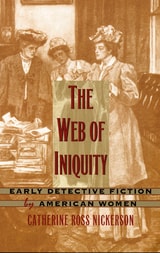
The Web of Iniquity
Early Detective Fiction by American WomenCatherine Ross Nickerson
Duke University Press, 1998
This subgenre allowed women writers to participate in postbellum culture and to critique other aspects of a rapidly changing society. Domestic detective fiction combined elements of sensationalist papers, popular nonfiction crime stories, and the domestic novel. Nickerson shows how it also incorporated the gothic tropes found in the work of Harriet Beecher Stowe, Louisa May Alcott, and Charlotte Brontë and influenced the work of Pauline Hopkins. Mid-nineteenth-century writer Metta Fuller Victor, who represented such important areas of cultural conflict as the role of professions in the formation of class identity and the possibility of women's independence and self-determination, paved the way for the appearance of women detectives in the late-nineteenth-century fiction of Anna Katharine Green. Nickerson credits Mary Roberts Rinehart, in particular, for bringing sophistication to the subgenre by amplifying the humorous, terrifying, and feminist elements inherent in earlier detective novels by women. Throughout the volume, Nickerson focuses on the narrative qualities of the domestic novel tradition and the ways in which it reflected ideologies of domesticity and gender. Also included are a discussion of various rewritings of the Lizzie Borden scandal in this tradition and an afterword on the relation of domestic detective fiction to the hard-boiled style.
The Web of Iniquity places the detective fiction written by women between 1850 and 1940 into ongoing discussions regarding women, culture, and literature and will appeal to scholars and students of women's studies, American studies, and literary history.
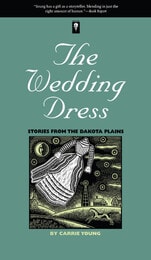
The Wedding Dress
Stories From The Dakota PlainsCarrie Young
University of Iowa Press, 1992
These finely wrought stories unfold in the Dakotas during the struggling pioneer days and bone-dry landscape of the thirties as well as the verdant years that followed, where the nighttime plains are bathed by softly radiant harvest moons shining down from dazzling northern skies. Young's absorbing narratives begin with the pleasant sense of “Once upon a time…” anticipation, but the firmly sketched details, warm humor, and vivid characterizations reveal an unanticipated and satisfying realism.
The haunting title story is about a beautiful and tragic pioneer woman and her wedding dress; her gown takes on a life of its own and turns into an enduring symbol for the grace and compassion of homesteading women on the plains. In “Bank Night,” a hired hand working during the midst of the Depression wins $250 at the movies, careening him into a single night of notoriety that becomes a legend in its time. “The Nights of Ragna Rundhaug” tells the tale of a woman who wants only to be left alone with her white dog, Vittehund, and her crocheting but instead is propelled into a life of midwifery “because there was no one else to do it.” The babies have predilection for arriving during blizzards and always at night, when she must be transported across the dark plains by frantic husbands who have fortified themselves with strong drink and headstrong horses.
All the stories in The Wedding Dress are linked by the enigmatic Nordic characters who people them and by the skill with which Young draws them. Emotions run so deep that they are seldom able to surface; when they do the interaction is extraordinarily luminous, both for the characters themselves and for the fortunate reader. The Wedding Dress is for all readers, young and old.
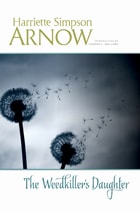
The Weedkiller's Daughter
Harriette Simpson Arnow
Michigan State University Press, 2012
As compelling as it is turbulent, The Weedkiller’s Daughter captures a family at the center of the rapidly changing society of midcentury Detroit. Fifteen-year-old Susie greets this new era with a sense of curiosity, while her father rages against it, approaching anything and everything foreign, unconventional, or unfortunate as he does the weeds he perpetually removes from his garden. As Susie seeks escape from her parents’ increasingly restrictive world of order and monotony, she ventures deeper and deeper into a dangerously new territory. The Weedkiller’s Daughter is a gripping psychological exploration of a generation on the brink of indelible—and irreversible—transformation.
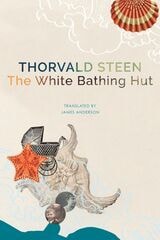
The White Bathing Hut
Thorvald Steen
Seagull Books, 2021
The White Bathing Hut is a genetic detective story. The narrator uses a wheelchair because of an inherited illness that has caused his muscle tissue to degenerate, making him unable to walk. One day, he falls from his wheelchair. His family is away, his cell phone out of reach, and he has no choice but to lie on the floor of his apartment, dissecting his life, until help arrives. He recalls his parents’ reactions of shame and silence when, as a teenager, his illness was first diagnosed. Now in her old age, his mother remains stubbornly secretive. A chance call from a cousin provides the narrator with clues about his grandfather and uncle, whom he never met and who both also had the disease. His search for the truth about his heredity is given new urgency when his mother is diagnosed with cancer. He must persuade her to speak before she dies, for his own sake and for his daughter’s. The White Bathing Hut is an indictment of contemporary Norwegian society, which claims to abhor its history of eugenics, yet still seeks to control the lives of people with disabilities.

The Whole Family
A Novel by Twelve AuthorsWilliam Dean Howells and Others
Duke University Press, 2001
The idea for this collaborative venture originated with Howells in 1906. Under the guidance of Elizabeth Jordan, the energetic editor of Harper’s Bazar (as it was then known), each of the authors was invited to write a successive chapter in a story Howells envisioned as a definitive depiction of American family life. But the original plan underwent a dramatic reversal with a controversial chapter by Freeman. From that point, The Whole Family became a more involved story of family misunderstandings and rivalries that actually mirrored the rivalries of the contributors themselves.
Alfred Bendixen’s lively introduction offers the first accurate and complete account of the creation of this remarkable novel—uncovering new facts and revealing the turmoil out of which it was shaped. June Howard’s foreword provides an additional contextual and critical perspective.
The Whole Family will be enjoyed by admirers of American literature at the start of the twenty-first century as much as it was by those at the beginning of the twentieth. In addition to delightful plot twists and characters, it offers a remarkable view into the ways in which family life has—and has not—changed over the course of a century.
Full list of authors. Mary R. Shipman Andrews, John Kendrick Bangs, Alice Brown, Mary Stewart Cutting, Mary E. Wilkins Freeman, William Dean Howells, Henry James, Elizabeth Jordan, Elizabeth Stuart Phelps, Henry van Dyke, Mary Heaton Vorse, Edith Wyatt
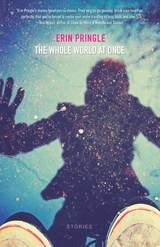
The Whole World at Once
StoriesErin Pringle
West Virginia University Press, 2017
Dark, strange beauties, all of the stories in The Whole World at Once follow the lives of people grappling with what it means to live in a world with death.

The Whole of the Moon
A NovelBrian Rogers
University of Nevada Press, 2017
An actor sits poolside waiting to hear whether he has been cast in a television pilot. Two kids ditch school in 1964 and go for a hike in the woods that turns dangerous. A woman named Dot remembers her husband who spent years working on a musical adaptation of The Great Gatsby. A young woman Felicity deals with the consequences of an unexpected pregnancy. Mike, a former high school star, attends an open tryout for the California Angels baseball team. And a boarding school teacher tells the story of his cousin, a social climber who has disappeared in the wake of a murder. These are the characters that populate The Whole of the Moon. Brian Rogers’ novel is about determination and failure and life in Southern California away from the red carpet.

The Whole of the Moon
A NovelBrian Rogers
University of Nevada Press, 2017
An actor sits poolside waiting to hear whether he has been cast in a television pilot. Two kids ditch school in 1964 and go for a hike in the woods that turns dangerous. A woman named Dot remembers her husband who spent years working on a musical adaptation of The Great Gatsby. A young woman Felicity deals with the consequences of an unexpected pregnancy. Mike, a former high school star, attends an open tryout for the California Angels baseball team. And a boarding school teacher tells the story of his cousin, a social climber who has disappeared in the wake of a murder. These are the characters that populate The Whole of the Moon. Brian Rogers’ novel is about determination and failure and life in Southern California away from the red carpet.
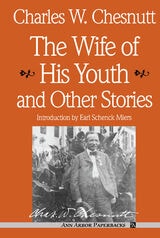
The Wife of His Youth and Other Stories
Charles W. Chesnutt
University of Michigan Press, 1968
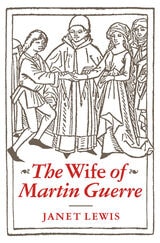
The Wife of Martin Guerre
Janet Lewis
Ohio University Press, 1967
In this new edition of Janet Lewis’s classic short novel, The Wife of Martin Guerre, Swallow Press executive editor Kevin Haworth writes that Lewis’s story is “a short novel of astonishing depth and resonance, a sharply drawn historical tale that asks contemporary questions about identity and belonging, about men and women, and about an individual’s capacity to act within an inflexible system.” Originally published in 1941, The Wife of Martin Guerre has earned the respect and admiration of critics and readers for over sixty years.
Based on a notorious trial in sixteenth-century France, this story of Bertrande de Rols is the first of three novels making up Lewis’s Cases of Circumstantial Evidence suite (the other two are The Trial of Sören Qvist and The Ghost of Monsieur Scarron).
Swallow Press is delighted and honored to offer readers beautiful new editions of all three Cases of Circumstantial Evidence novels, each featuring a new introduction by Kevin Haworth.

The Wife of Martin Guerre
Janet Lewis
Ohio University Press, 2013
In this new edition of Janet Lewis’s classic short novel, The Wife of Martin Guerre, Swallow Press executive editor Kevin Haworth writes that Lewis’s story is “a short novel of astonishing depth and resonance, a sharply drawn historical tale that asks contemporary questions about identity and belonging, about men and women, and about an individual’s capacity to act within an inflexible system.” Originally published in 1941, The Wife of Martin Guerre has earned the respect and admiration of critics and readers for over sixty years.
Based on a notorious trial in sixteenth-century France, this story of Bertrande de Rols is the first of three novels making up Lewis’s Cases of Circumstantial Evidence suite (the other two are The Trial of Sören Qvist and The Ghost of Monsieur Scarron).
Swallow Press is delighted and honored to offer readers beautiful new editions of all three Cases of Circumstantial Evidence novels, each featuring a new introduction by Kevin Haworth.