Results by title
5159 books match the query 'Biography' and 934 start with t
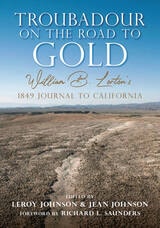
Troubadour on the Road to Gold
William B. Lorton's 1849 Journal to CaliforniaEdited by LeRoy Johnson and Jean Johnson, Foreword by Richard Saunders
University of Utah Press, 2020
Lorton’s work is revealing and entertaining. It captures glimpses of a growing Salt Lake City, the hardships of Death Valley, and the extraordinary and mundane aspects of daily life on the road to gold. With resilience and a droll sense of humor, Lorton shares accounts of life-threatening stampedes, dangerous hailstorms, mysteriously moving rocks, and slithering sidewinders. The inclusion of images, maps, and the editors’ detailed notes make this a volume that will entertain and inform.

Trouping Through Texas
Harley Sadler and His Tent ShowUniversity of Wisconsin Press, 1982
The American tent show, which flourished for over four decades, represents a brief but important phase of theatre. Harley Sadler played a significant role in the history of the "rag opries."
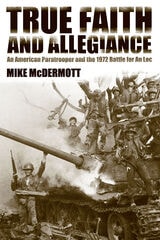
True Faith and Allegiance
An American Paratrooper and the 1972 Battle for An LocMike McDermott
University of Alabama Press, 2012
The battle for An Loc, a key component in the North Vietnamese attempt to overwhelm the South, swept Mike McDermott, then the senior advisor to an elite South Vietnamese paratrooper battalion, into some of the most horrific close-quarters fighting of the war. His in-the-trenches account is augmented by detailed descriptions of a user’s perspective on the parachute resupply, tactical airpower, and B-52 strikes that allowed the An Loc garrison to survive.
True Faith and Allegiance is a riveting recounting of the prism through which a Vietnam veteran views the war as he continues to live with the aftereffects of life-altering experiences in the service of his country.
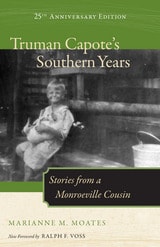
Truman Capote's Southern Years, 25th Anniversary Edition
Stories from a Monroeville CousinMarianne M. Moates, Foreword by Ralph F. Voss
University of Alabama Press, 2014
Readers are well acquainted with Truman Capote’s meteoric rise to fame and his metamorphosis from literary enfant terrible to literary genius, celebrity author, and dispenser of venomously comic witticisms. It is also well-known that he spent his formative years in the south Alabama hamlet of Monroeville, and that he was abandoned there by his mother to be cared for and then to care for elderly relatives. Yet details of those years have remained sketchy and vague.
In Monroeville young Capote formed significant bonds and played childhood games with his cousin, Jennings Faulk Carter, and next door neighbor, Nelle Harper Lee, author of "To Kill a Mockingbird" and "Go Set a Watchman." Through the tales told by Carter and spun into a fascinating and revealing narrative by Marianne M. Moates readers discover in Truman Capote's Southern Years the lively imagination and the early tragedies of a brilliant child.
A new foreword by Ralph F. Voss underscores the enduring relevance of Truman Capote’s work and the influence his Alabama childhood had on his work.
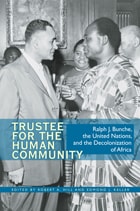
Trustee for the Human Community
Ralph J. Bunche, the United Nations, and the Decolonization of AfricaRobert A. Hill
Ohio University Press, 2010
Ralph J. Bunche (1904–1971), winner of the Nobel Peace Prize in 1950, was a key U.S. diplomat in the planning and creation of the United Nations in 1945. In 1947 he was invited to join the permanent UN Secretariat as director of the new Trusteeship Department. In this position, Bunche played a key role in setting up the trusteeship system that provided important impetus for postwar decolonization ending European control of Africa as well as an international framework for the oversight of the decolonization process after the Second World War.
Trustee for the Human Community is the first volume to examine the totality of Bunche’s unrivalled role in the struggle for African independence both as a key intellectual and an international diplomat and to illuminate it from the broader African American perspective.
These commissioned essays examine the full range of Ralph Bunche’s involvement in Africa. The scholars explore sensitive political issues, such as Bunche’s role in the Congo and his views on the struggle in South Africa. Trustee for the Human Community stands as a monument to the profoundly important role of one of the greatest Americans in one of the greatest political movements in the history of the twentieth century.
Contributors: David Anthony, Ralph A. Austen, Abena P. A. Busia, Neta C. Crawford, Robert R. Edgar, Charles P. Henry, Robert A. Hill, Edmond J. Keller, Martin Kilson, Georges Nzongola-Ntalaja, Jon Olver, Pearl T. Robinson, Elliott P. Skinner, Crawford Young
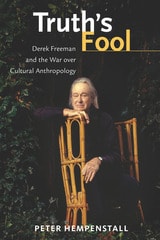
Truth's Fool
Derek Freeman and the War over Cultural AnthropologyPeter Hempenstall
University of Wisconsin Press, 2017
Truth's Fool documents an intellectual journey that was much larger and more encompassing than Freeman's attack on Mead's work. It peels back the prickly layers to reveal the man in all his complexity. Framing this story within anthropology's development in Britain and America, Peter Hempenstall recounts Freeman's mission to turn the discipline from its cultural-determinist leanings toward a view of human culture underpinned by biological and behavioral drivers. Truth's Fool engages the intellectual questions at the center of the Mead–Freeman debate and illuminates the dark spaces of personal, professional, and even national rivalries.
Trying to Say It
Outlooks and Insights on How Poems HappenPhilip Booth
University of Michigan Press, 1996
Gathering together selections from his notebooks, dreamlogs, memoirs, and essays of such poets as Frost, Robert Lowell and George Oppen, Trying to Say It particularly focuses on the ways that the tension between in-formed structures and lineation create poems which--in all senses--move.
Employing the Thoreauvian sense of place for which his poetry is known, Booth probes the nature of poetry itself, as well as the poetry of nature--yielding insights that are rooted in the acute observation that catalyzes imagination. Infused with a restless spirit in search of a moving language commensurate with the complexity of being fully alive, the essays collected in Trying to Say It reveal the pulses of a teacher's mind and a poet's heart.
Philip Booth is the author of nine books of poetry, and has been honored by Guggenheim, Rockefeller, and National Endowment for the Arts fellowships, the National Institute of Arts and Letters, and the Academy of American Poets.
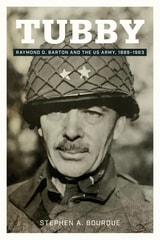
Tubby
Raymond O. Barton and the US Army, 1889-1963Stephen A. Bourque
University of North Texas Press, 2024

Tudor Autobiography
Listening for InwardnessMeredith Anne Skura
University of Chicago Press, 2008
In the past such texts have not been called autobiographies because they do not reveal much of the inwardness of their subject, a requisite of most modern autobiographies. But, according to Meredith Anne Skura, writers reveal themselves not only by what they say but by how they say it. Borrowing methods from affective linguistics, narratology, and psychoanalysis, Skura shows that a writer’s thoughts and feelings can be traced in his or her language. Rejecting the search for “the early modern self” in life writing, Tudor Autobiography instead asks what authors said about themselves, who wrote about themselves, how, and why. The result is a fascinating glimpse into a range of lived and imagined experience that challenges assumptions about life and autobiography in the early modern period.
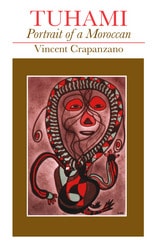
Tuhami
Portrait of a MoroccanVincent Crapanzano
University of Chicago Press, 1980
In a sensitive and bold experiment in interpretive ethnography, Crapanzano presents Tuhami's bizarre account of himself and his world. In so doing, Crapanzano draws on phenomenology, psychoanalysis, and symbolism to reflect upon the nature of reality and truth and to probe the limits of anthropology itself. Tuhami has become one of the most important and widely cited representatives of a new understanding of the whole discipline of anthropology.
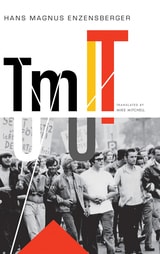
Tumult
Hans Magnus Enzensberger
Seagull Books, 2016
Hans Magnus Enzensberger, widely regarded as Germany’s greatest living poet, was already well known in the 1960s, the tempestuous decade of which Tumult is an autobiographical record. Derived from old papers, notes, jottings, photos, and letters that the poet stumbled upon years later in his attic, the volume is not so much about the man, but rather the many places he visited and people whom he met on his travels through the Soviet Union and Cuba during the 1960s. The book is made up of four long-form pieces written from 1963 to 1970, each episode concluding with a poem and postscript written in 2014. Translated by Mike Mitchell, the book is a lively and deftly written travelogue offering a glimpse into the history of leftist thought. Dedicated to “those who disappeared,” Tumult is a document of that which remains one of humanity’s headiest times.
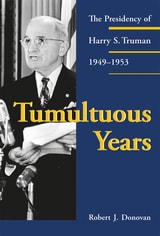
Tumultuous Years
The Presidency of Harry S. Truman, 1949-1953Robert J. Donovan
University of Missouri Press, 1996
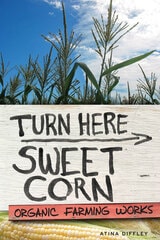
Turn Here Sweet Corn
Organic Farming WorksAtina Diffley
University of Minnesota Press, 2013
When the hail starts to fall, Atina Diffley doesn’t compare it to golf balls. She’s a farmer. It’s “as big as a B-size potato.” As her bombarded land turns white, she and her husband Martin huddle under a blanket and reminisce: the one-hundred-mile-per-hour winds; the eleven-inch rainfall (“that broccoli turned out gorgeous”); the hail disaster of 1977. The romance of farming washed away a long time ago, but the love? Never. In telling her story of working the land, coaxing good food from the fertile soil, Atina Diffley reminds us of an ultimate truth: we live in relationships—with the earth, plants and animals, families and communities.
A memoir of making these essential relationships work in the face of challenges as natural as weather and as unnatural as corporate politics, her book is a firsthand history of getting in at the “ground level” of organic farming. One of the first certified organic produce farms in the Midwest, the Diffleys’ Gardens of Eagan helped to usher in a new kind of green revolution in the heart of America’s farmland, supplying their roadside stand and a growing number of local food co-ops. This is a story of a world transformed—and reclaimed—one square acre at a time.
And yet, after surviving punishing storms and the devastating loss of fifth-generation Diffley family land to suburban development, the Diffleys faced the ultimate challenge: the threat of eminent domain for a crude oil pipeline proposed by one of the largest privately owned companies in the world, notorious polluters Koch Industries. As Atina Diffley tells her David-versus-Goliath tale, she gives readers everything from expert instruction in organic farming to an entrepreneur’s manual on how to grow a business to a legal thriller about battling corporate arrogance to a love story about a single mother falling for a good, big-hearted man.
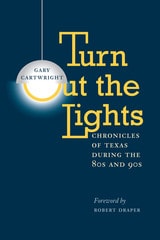
Turn Out the Lights
Chronicles of Texas during the 80s and 90sBy Gary Cartwright
University of Texas Press, 2000
Whether the subject is Jack Ruby, Willie Nelson, or his own leukemia-stricken son Mark, when it comes to looking at the world through another person's eyes, nobody does it better than Gary Cartwright. For over twenty-five years, readers of Texas Monthly have relied on Cartwright to tell the stories behind the headlines with pull-no-punches honesty and wry humor. His reporting has told us not just what's happened over three decades in Texas, but, more importantly, what we've become as a result.
This book collects seventeen of Cartwright's best Texas Monthly articles from the 1980s and 1990s, along with a new essay, "My Most Unforgettable Year," about the lasting legacy of the Kennedy assassination. He ranges widely in these pieces, from the reasons for his return to Texas after a New Mexican exile to profiles of Kris Kristofferson and Willie Nelson. Along the way, he strolls through San Antonio's historic King William District; attends a Dallas Cowboys old-timers reunion and the Holyfield vs. Foreman fight; visits the front lines of Texas' new range wars; gets inside the heads of murderers, gamblers, and revolutionaries; and debunks Viagra miracles, psychic surgery, and Kennedy conspiracy theories. In Cartwright's words, these pieces all record "the renewal of my Texas-ness, a rediscovery of Texas after returning home."
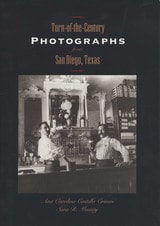
Turn-of-the-Century Photographs from San Diego, Texas
By Ana Carolina Castillo Crimm and Sara R. Massey
University of Texas Press, 2003
Situated in the South Texas borderlands some fifty miles west of Corpus Christi, San Diego was a thriving town already a hundred years old at the turn of the twentieth century. With a population that was 90 percent Mexican or Mexican American and 10 percent Anglo, the bicultural community was the seat of Duval County and a prosperous town of lumberyards, banks, mercantile stores, and cotton gins, which also supplied the needs of area ranchers and farmers. Though Anglos dominated its economic and political life, San Diego was culturally Mexican, and Mexican Americans as well as Anglos built successful businesses and made fortunes.
This collection of nearly one hundred photographs from the estate of amateur photographer William Hoffman captures the cosmopolitan town of San Diego at a vibrant moment in its history between 1898 and 1909. Grouped into the categories women and their jobs, local homes, men and their businesses, children at school and church, families and friends, and entertainment about town, the photos offer an immediate visual understanding of the cultural and economic life of the community, enhanced by detailed captions that identify the subjects and circumstances of the photos. An introductory historical chapter constitutes the first published history of Duval County, which was one of the most important areas of South Texas in the early twentieth century.
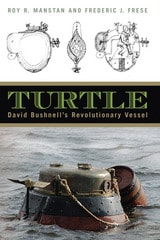
Turtle
David Bushnell's Revolutionary VesselRoy R. Manstan
Westholme Publishing, 2010
The Remarkable History and Reconstruction of the First Operational Submarine
At the onset of the American Revolution, the British expected to quell the rebellion quickly with a show of overwhelming force. In an experiment in asymmetric warfare, David Bushnell created the first submarine vessel designed specifically “for the destruction of vessels of war.” On a quiet September night in 1776, sergeant Ezra Lee maneuvered Bushnell’s strange little craft out from Manhattan and into the midst of the greatest naval fleet ever assembled in the Americas. Lee’s goal was to sink the British flagship HMS Eagle by attaching a powerful explosive to its hull. Although the mission was unsuccessful, Bushnell’s concept of submarine warfare was considered by George Washington to have been “an effort of genius.”
David Bushnell was raised in the town of Saybrook at the mouth of the Connecticut River. More than two centuries later, another Turtle would be launched into the same river within sight of Bushnell’s first forays with his vessel during the summer of 1775. Under the direction of technical arts teacher Frederic J. Frese, students at Old Saybrook High School created a working replica of Bushnell’s submarine, facilitated through an education partnership with the Naval Undersea Warfare Center in Newport, Rhode Island, where Roy R. Manstan was a mechanical engineer and Navy trained diver. With twenty-first century submariners at the helm, the Turtle replica was subjected to a series of operational tests at the Mystic Seaport Museum in Mystic, Connecticut.
In Turtle: David Bushnell’s Revolutionary Vessel, the authors provide new insight into Bushnell’s “engine of devastation,” tracing the history of undersea warfare before Bushnell and the origin of the many innovations Bushnell understood would be necessary for conducting a covert submarine attack. The knowledge gained from testing the Turtle replica enabled the authors to speculate as to what America’s first submariner Ezra Lee experienced that September night and what may have caused the attack to fail.
Twain at Sea
The Maritime Writings of Samuel Langhorne ClemensMark Twain
University Press of New England, 2018
Twain in His Own Time
A Biographical Chronicle of His Life, Drawn from Recollections, Interviews, and Memoirs by Family, Friends, and AssociatesGary Scharnhorst
University of Iowa Press, 2010
Never one to suffer fools gladly, especially if they wore crinolines, Mark Twain lost as many friends as he made, and he targeted them all indiscriminately. The first major American writer born west of the Mississippi River, he enjoys a reputation unrivaled in American literary history, and from the beginning of his career he tried to control that reputation by fiercely protecting his public persona. Not a debunking account of Twain’s life but refreshingly immune from his relentless image making, Gary Scharnhorst’s Twain in His Own Time offers an anecdotal version of Twain’s life over which the master spin-doctor had virtually no control.
The ninety-four recollections gathered in Twain in His Own Time form an unsanitized, collaborative biography designed to provide a multitude of perspectives on the iconic author. Opening with an interview with his mother that has never been reprinted, it includes memoirs by his daughters and by men who knew him when he was roughing it in Nevada and California, an interview with the pilot who taught him to navigate the Mississippi River, reminiscences from his illustrators E. M. Kemble and Dan Beard and two of his so-called adolescent angelfish, contributions from politicians and from such literary figures as Dan De Quille and George Bernard Shaw, and one of the most damning assessments of his character—by the author Frank Harris—ever published.
Each entry is introduced by a brief explanation of its historical and cultural context; explanatory notes provide further information about people and places; and Scharnhorst’s introduction and chronology of Twain’s eventful life are comprehensive and detailed. Dozens of lively primary sources published incrementally over more than eighty years, most recorded after his death, illustrate the complexities of this flamboyant, outspoken personality in a way that no single biographer could.

Twelve Views from the Distance
Mutsuo Takahashi
University of Minnesota Press, 2012
From one of the foremost poets in contemporary Japan comes this entrancing memoir that traces a boy’s childhood and its intersection with the rise of the Japanese empire and World War II. Originally published in 1970, this translation is the first available in English.
In twelve chapters that visit and revisit critical points in his boyhood, Twelve Views from the Distance presents a vanished time and place through the eyes of an accomplished poet. Recounting memories from his youth, Mutsuo Takahashi captures the full range of his internal life as a boy, shifting between his experiences and descriptions of childhood friendships, games, songs, and school. With great candor, he also discusses the budding awareness of his sexual preference for men, providing a rich exploration of one man’s early queer life in a place where modern, Western-influenced models of gay identity were still unknown.
Growing up poor in rural southwestern Japan, far from the urban life that many of his contemporaries have written about, Takahashi experienced a reality rarely portrayed in literature. In addition to his personal remembrances, the book paints a vivid portrait of rural Japan, full of oral tradition, superstition, and remnants of customs that have quickly disappeared in postwar Japan. With profuse local color and detail, he re-creates the lost world that was the setting for his beginnings as a gay man and poet.

Twelve Years
An American Boyhood in East GermanyJoel Agee
University of Chicago Press, 2000
"A wonderfully evocative memoir. . . . Agee evoked for me the atmosphere of postwar Berlin more vividly than the actual experience of it—and I was there." —Christopher Lehmann-Haupt, New York Times
"One of those rare personal memoirs that brings to life a whole country and an epoch." —Christopher Isherwood
"Twelve Years consists of a series of finely honed anecdotes written in a precise, supple prose rich with sensual detail." —David Ghitelman, Newsday
"By turns poetic and picturesque, Agee energetically catalogues his expatriate passage to manhood with a pinpoint eye and a healthy American distaste for pretension. . . . Huckleberry Finn would have . . . welcomed [him] as a soulmate on the raft." —J. D. Reed, Time
"A triumph. . . . Unfettered by petty analysis or quick explanations, a story that is timeless and ageless and vital." —Robert Michael Green, Baltimore Sun
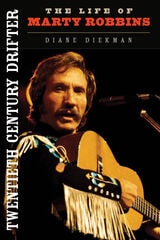
Twentieth Century Drifter
The Life of Marty RobbinsDiane Diekman
University of Illinois Press, 2012
Twentieth Century Drifter: The Life of Marty Robbins is the first biography of this legendary country music artist and NASCAR driver who scored sixteen number-one hits and two Grammy awards. Yet even with fame and fortune, Marty Robbins always yearned for more.
Drawing from personal interviews and in-depth research, biographer Diane Diekman explains how Robbins saw himself as a drifter, a man always searching for self-fulfillment and inner peace. Born Martin David Robinson to a hardworking mother and an abusive alcoholic father, he never fully escaped the insecurities burned into him by a poverty-stricken nomadic childhood in the Arizona desert. In 1947 he got his first gig as a singer and guitar player. Too nervous to talk, the shy young man walked onstage singing. Soon he changed his name to Marty Robbins, cultivated his magnetic stage presence, and established himself as an entertainer, songwriter, and successful NASCAR driver.
For fans of Robbins, NASCAR, and classic country music, Twentieth Century Drifter: The Life of Marty Robbins is a revealing portrait of this well-loved, restless entertainer, a private man who kept those who loved him at a distance.
Twenty Acres
A Seventies Childhood in the WoodsSarah Neidhardt
University of Arkansas Press, 2023
"A memoir infused with both empathy and inquiry."
—Wendy J. Fox, Electric Literature
“Twenty Acres is an engaging, thoughtful memoir of growing up in an off-the-grid cabin as part of the 1970s back-to-the-land movement. Sarah Neidhardt captures her subject beautifully and offers a compelling portrait of a highly specific, historically significant time and place.”
—Kate Daloz, author of We Are As Gods: Back to the Land in the 1970s on the Quest for a New America
Sarah Neidhardt grew up in the woods. When she was an infant, her parents left behind comfortable, urbane lives to take part in the back-to-the-land movement. They moved their young family to an isolated piece of land deep in the Arkansas Ozarks where they built a cabin, grew crops, and strove for eight years to live self-sufficiently.
In this vivid memoir Neidhardt explores her childhood in wider familial and social contexts. Drawing upon a trove of family letters and other archival material, she follows her parents’ journey from privilege to food stamps—from their formative youths, to their embrace of pioneer homemaking and rural poverty, to their sudden and wrenching return to conventional society—and explores the back-to-the-land movement of the 1970s as it was, and as she lived it.
A story of strangers in a strange land, of class, marriage, and family in a changing world, Twenty Acres: A Seventies Childhood in the Woods is part childhood idyll, part cautionary tale. Sarah Neidhardt reveals the treasures and tolls of unconventional, pastoral lives, and her insightful reflections offer a fresh perspective on what it means to aspire to pre-industrial lifestyles in a modern world.
Twenty Miles From A Match
Homesteading In Western NevadaSarah E. Olds
University of Nevada Press, 1978
Twenty Years at Hull-House
Jane Addams, with Autobiographical Notes. Introduction and Notes by James Hurt.
University of Illinois Press, 1990
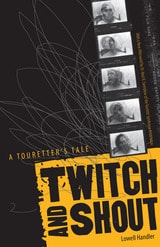
Twitch And Shout
A Touretter’s TaleLowell Handler
University of Minnesota Press, 2004
The remarkable memoir of a Touretter’s journey of self-discovery—now back in print!
Lowell Handler has Tourette’s syndrome, a disorder characterized by exaggerated facial tics, sudden jerking movements of the body and limbs, and explosive public outbursts, usually in the form of expletives and racial epithets. Although he is a successful and acclaimed photojournalist, Handler has often seen himself as an outsider—a social outcast. With courage and candor, he recalls the difficulties he suffered growing up, the confusion he experienced when doctors misdiagnosed his bizarre behavior as a psychological aberration, and finally how, restless and despairing, he embarked on a quest for answers.In Twitch and Shout, Handler sets out, camera in hand, on a journey through less than savory parts of America. From a transvestite bar in Tampa to a flophouse in New Orleans to a community health center in New York, he meets a variety of people who, like himself, don’t conform to the standards of conventional society. With a keen eye for detail and an acute sense of humor, this memoir perfectly captures the unique and unforgettable life of a Touretter.
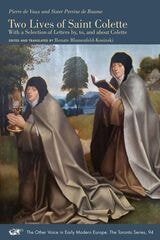
Two Lives of Saint Colette
With a Selection of Letters by, to, and about ColettePierre de Vaux and Sister Perrine de Baume
Iter Press, 2022
Saint Colette of Corbie (1381–1447) was a French reformer of the Franciscan Order and the founder of seventeen convents. Though of humble origin, she attracted the support of powerful patrons and important Church officials. The two biographies translated here were authored by Pierre de Vaux, her confessor and mentor, and Perrine de Baume, a nun who for decades was Colette’s companion and confidant. Both accounts offer fascinating portraits of the saint as a pious ascetic assailed by demons and performing miracles, as well as in her role as skillful administrator and caring mother of her nuns. This is the first English translation of two biographies in Middle French of the most important female figures of the Middle Ages.

Two Lucky People
MemoirsMilton Friedman and Rose D. Friedman
University of Chicago Press, 1998
"The Friedmans come across as the last Enlightenment thinkers in a post-modern world. . . . This is a book that restores your faith in reasoned discourse. . . . There really are people who believe in scholarly exchange as a way to discover truth."—David Brooks, New York Times Book Review
"The Friedmans are a feisty couple, who clearly delight in their lives and each other. And shining through their reticence, and their conservatism, is a decency that even liberals will recognize."—Milton and Judith Viorst, Washington Post Book World
"This engaging book recounts the life and contributions of one of America's most influential writers and economists in the second half of the twentieth century. And her husband's no slouch either. . . . An indispensable guide through the evolution of economic thought."—Stephen Moore, National Review
"A thought-provoking book and one rich in history, the personal history of the Friedmans . . . and the cultural and political history of our country."—Steve Huntley, Chicago Sun-Times Books
"[Two Lucky People] is almost like a letter from a couple of old friends—a couple of old friends who had a long, compelling intellectual journey, came to know some of the great world leaders of this century, and had 60 years of happy, supportive marriage."—N. Gregory Mankiw, Fortune
"A rich autobiographical and historical panorama."—William P. Kucewicz, Wall Street Journal
Two Lucky People
MemoirsMilton Friedman and Rose D. Friedman
University of Chicago Press, 2026
The story of Rose and Milton Friedman’s incredible lives and influential work told in their own words, now with a new foreword by Sebastian Edwards.
In Two Lucky People, Rose and Milton Friedman provide a memorable and lively account of their lives, the people they knew, and the work they shared. Their involvement with world leaders and many of this century's most important public policy issues moves their memoir beyond the merely personal and makes fascinating reading for anyone interested in the history of twentieth-century ideas.
This new edition of the Friedmans’ jointly authored memoir includes a foreword by economist Sebastian Edwards, the Henry Ford II Professor of International Economics at the University of California, Los Angeles.
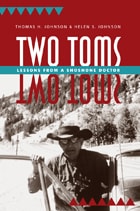
Two Toms
Lessons from a Shoshone DoctorThomas H. Johnson
University of Utah Press, 2011
In 1969, Tom Wesaw was an 83-year-old Shoshone doctor and religious leader on the Wind River Reservation in Wyoming. He could no longer drive, which posed problems in making house calls. The arrival of young anthropologist Tom Johnson changed that. Johnson would drive Wesaw, and cook, pump water, and build fires for sweat lodges. In exchange, the elder Tom would show the younger Tom his work. The two were together so often that the people of Wind River began to refer to them affectionately by one name: Two Toms. By the light of the lamp Wesaw gave him, Johnson would write down what he learned. The Shoshone doctor wanted his student to share everything he saw and heard. Now, in Two Toms: Lessons from a Shoshone Doctor, he has.
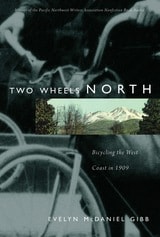
Two Wheels North
Bicycling the West Coast in 1909Evelyn Gibb
Oregon State University Press, 2000
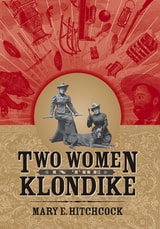
Two Women in the Klondike
Mary Hitchcock
University of Alaska Press, 2025
Two Women in the Klondike created a sensation when it was first published in 1899. The idea that two well-bred socialites could survive the dangers of the north thrilled nineteenth-century readers from San Francisco to New York.
When Mary Hitchcock heard about the discovery of gold in the Klondike in 1898, she left her privileged city life for the wilds of Alaska, planning to stake her own claims. She persuaded her friend Edith Van Buren to accompany her, and the two began preparations for "roughing it." The "necessities" that they brought up the Yukon River to Dawson City, Canada, included a portable bowling alley, an ice cream maker, a Great Dane named Ivan, and a full-size circus tent.
Hitchcock relates the struggles, surprises, and pleasures of traveling in the late nineteenth century in her trademark style. She describes in diary form the people she met and her impressions of rural Alaska and Dawson City. Invaluable for its detailed descriptions of manners, food, and personalities, Hitchcock's account of the Klondike Gold Rush is an outrageous adventure for general readers, armchair travelers, and anyone interested in the lives of American women in the late 1800s.
This new, abridged version includes a map of Hitchcock's northern travels and an introduction by Terrence Cole, professor of history at the University of Alaska Fairbanks.
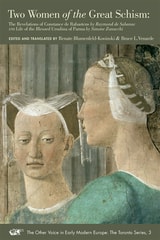
Two Women of the Great Schism
The Revelations of Constance de Rabastens by Raymond de Sabanac and Life of the Blessed Ursulina of Parma by Simone ZanacchiRaymond de Sabanac and Simone Zanacchi
Iter Press, 2010

Two Years Below the Horn
Operation Tabarin, Field Science, and Antarctic SovereigntyAndrew Taylor
University of Manitoba Press, 2017
the lives & times of hrh
Herman Hochstadt
National University of Singapore Press, 2020