Results by title
786 books match the query 'American Government' and 200 start with t
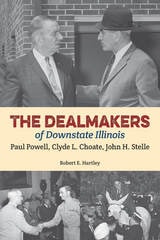
The Dealmakers of Downstate Illinois
Paul Powell, Clyde L. Choate, John H. StelleRobert E. Hartley
Southern Illinois University Press, 2016
Many people are unaware that from 1945 to 1975, downstate lawmakers dominated the Illinois political arena. In The Dealmakers of Downstate Illinois, Robert E. Hartley details the lives and contributions of three influential southern Illinois politicians, Paul Powell, Clyde Choate, and John Stelle. He describes how these “dealmakers” were able to work with Democrats and Republicans throughout the state to bring jobs and facilities to their region. Using a variety of coalitions, they maintained downstate political strength in the face of growing Chicago influence.
Hartley traces the personal histories of Powell, Choate, and Stelle, shows how they teamed up to advance a downstate political agenda, and reviews their challenges and successes. Beginning with an account of early experiences, including the battlefield courage that earned Choate the Medal of Honor as well as Stelle’s World War I experience and later entrepreneurship, the book continues with an exploration of the groundwork for their collaborative legislative agenda and their roles in the growth of Southern Illinois University and the passage of income tax legislation. Hartley reviews the importance of Powell’s relationship with Governor Stratton, Choate’s leadership of the 1972 Democratic National Convention and his relationships with Governor Walker and with Chicago interests.
The Dealmakers of Downstate Illinois is a vivid, straightforward tale of fighting in the legislative chambers, backstabbing behind the scenes, and trading special favors for votes in pursuit of not only personal gain but also the advancement of a regional agenda.
The Difference Women Make
The Policy Impact of Women in CongressMichele L. Swers
University of Chicago Press, 2002
Swers combines quantitative analyses of bills with interviews with legislators and their staff to compare legislative activity on women's issues by male and female members of the House of Representatives during the 103rd (1993-94) and 104th (1995-96) Congresses. Tracking representatives' commitment to women's issues throughout the legislative process, from the introduction of bills through committee consideration to final floor votes, Swers examines how the prevailing political context and members' positions within Congress affect whether and how aggressively they pursue women's issues.
Anyone studying congressional behavior, the role of women, or the representation of social identities in Congress will benefit from Swers's balanced and nuanced analysis.
The Disappearing South?
Studies in Regional Change and ContinuityRobert P. Steed
University of Alabama Press, 1990
There is widespread agreement that the South has changed dramatically since the end of World War II—the essays in The Disappearing South address the ongoing debate
There is widespread agreement that the South has changed dramatically since the end of World War II. Social, demographic, economic, and political changes have altered significantly the region long considered the nation’s most distinctive. There is less agreement, however, about the extent to which the forces of nationalization have eroded the major elements of Southern distinctiveness. Although this volume does not purport to settle the debate on Southern political change, it does present a variety of recent evidence that helps put this important debate into perspective. In the process it helps clarify the contemporary politics of the South for readers ranging from the scholar to the more casual observer.
The essays in The Disappearing South address the ongoing debate. Contributors, in addition to the editors, include E. Lee Bernick, Earl Black, Merle Black, Lewis Bowman, Edward G. Carmines, Patrick Cotter, Thomas Eamon, Douglas G. Feig, John C. Green, James L. Guth, William E. Hulbary, Anne E. Kelley, Lyman A. Kellstedt, David M. Olson, John Shelton Reed, Harold Stanley, James G. Stovall, John Theilmann, Stephen H. Wainscott, and Allen Wilhite.
The Economic Other
Inequality in the American Political ImaginationMeghan Condon and Amber Wichowsky
University of Chicago Press, 2020
Through an astute blend of experiments, surveys, and descriptions people offer in their own words, The Economic Other reveals that when less-advantaged Americans compare with the rich, they become more accurate about their own status and want more from government. But American society is structured to prevent upward comparison. In an increasingly divided, anxious nation, opportunities to interact with the country’s richest are shrinking, and people prefer to compare to those below to feel secure. Even when comparison with the rich does occur, many lose confidence in their power to effect change.
Laying bare how social comparisons drive political attitudes, The Economic Other is an essential look at the stubborn plight of inequality and the measures needed to solve it.
The Electorate, the Campaign, and the Office
A Unified Approach to Senate and House ElectionsPaul Gronke
University of Michigan Press, 2001
The End of Liberalism
Chilton Williamson
St. Augustine's Press, 2022
Williamson observes that this liberalism to nevertheless be collapsing, given the obvious opposition to the idea that it is essential to modernity. Liberalism is ironically a kind of unyielding control, "a relativist persuasion that discourages and resists fixed beliefs and certainties and the idea of truth itself." Williamson offers commentary on the present state of liberal ideas and their crimes against better judgment, and vindicates conservatism from being labeled reactionary. Liberalism is exposed as a faith we cannot accept, for it contains nothing to be believed and what it says about the order of things is pure fiction.
The Evolution of American Legislatures
Colonies, Territories, and States, 1619-2009Peverill Squire
University of Michigan Press, 2014
The institutional development of American legislatures, beginning with the first colonial assembly of 1619, has been marked by continuity as well as change. Peverill Squire draws upon a wealth of primary sources to document this institutional history. Beginning with the ways in which colonial assemblies followed the precedents of British institutions, Squire traces the fundamental ways they evolved to become distinct. He next charts the formation of the first state legislatures and the Constitutional Congress, describes the creation of territorial and new state legislatures, and examines the institutionalization of state legislatures in the nineteenth century and their professionalization since 1900.
With his conclusion, Squire discusses the historical trajectory of American legislatures and suggests how they might further develop over the coming decades. While Squire's approach will appeal to historians, his focus on the evolution of rules, procedures, and standing committee systems, as well as member salaries, legislative sessions, staff, and facilities, will be valuable to political scientists and legislative scholars.
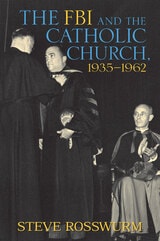
The FBI and the Catholic Church, 1935-1962
Steve Rosswurm
University of Massachusetts Press, 2009
Steve Rosswurm explores the history of that relationship from the turbulent 1930s to the 1960s, when growing Catholic opposition to the Vietnam War led Hoover to distance himself from the Church. Drawing on a vast range of sources, including thousands of pages of previously classified FBI files, Rosswurm pursues his investigation along two parallel tracks. First, he looks at the joint war waged by Hoover and the Catholic hierarchy against forces considered threats to their organizations, values, and nation. Second, he examines how each pursued its own institutional interests with the help of the other.
While opposition to communism was a preoccupation of both institutions, it was not the only passion they shared, according to Rosswurm. Even more important, perhaps, was their fervent commitment to upholding traditional gender roles, particularly the prerogatives of patriarchal authority. When women and men carried out their assigned obligations, they believed, society ran smoothly; when they did not, chaos ensued.
Organized topically, The FBI and the Catholic Church, 1935–1962 looks not only at the shared values and interests of the two institutions, but also at the personal relationships between Hoover and his agents and some of the most influential Catholic prelates of the time. Rosswurm discusses the role played by Edward A. Tamm, the FBI's highest-ranking Catholic, in forging the alliance; the story behind Father John Cronin's 1945 report on the dangers of communism; the spying conducted by Father Edward Conway S.J. on behalf of the FBI while treasurer of the National Committee for Atomic Information; and Monsignor Charles Owen Rice's FBI-aided battle against communists within the CIO.
The Fallacy of Campaign Finance Reform
John Samples
University of Chicago Press, 2006
At first glance, campaign finance reform looks like a good idea. McCain-Feingold, for instance, regulates campaigns by prohibiting national political parties from accepting soft money contributions from corporations, labor unions, and wealthy individuals. But are such measures, or any of the numerous and similarly restrictive proposals that have circulated through Washington in recent years, really good for our democracy?
John Samples says no, and here he takes a penetrating look into the premises and consequences of the long crusade against big money in politics. How many Americans, he asks, know that there is little to no evidence that campaign contributions really influence members of Congress? Or that so-called negative political advertising actually improves the democratic process by increasing voter turnout and knowledge? Or that limits on campaign contributions make it harder to run for office, thereby protecting incumbent representatives from losing their seats of power?
Posing tough questions such as these, Samples uncovers numerous fallacies beneath proposals for campaign finance reform. He argues that our most common concerns about money in politics are misplaced because the ideals implicit in our notion of corruption are incoherent or indefensible. The chance to regulate money in politics allows representatives to serve their own interests at a cost to their constituents. And, ironically, this long crusade against the corruption caused by campaign contributions allows public officials to reduce their vulnerability by suppressing electoral competition.
Defying long-held ssumptions and conventional political wisdom, The Fallacy of Campaign Finance Reform is a provocative and decidedly nonpartisan work that will be essential for anyone concerned about the future of American government.
The Federal Appointments Process
A Constitutional and Historical AnalysisMichael J. Gerhardt
Duke University Press, 2003
Michael J. Gerhardt includes each U.S. president’s performance record regarding appointments, accounts of virtually all the major confirmation contests, as well as discussion of significant legal and constitutional questions raised throughout U.S. history. He also analyzes recess appointments, the Vacancies Act, the function of nominees in the appointment process, and the different treatment received by judicial and nonjudicial nominations. While discussing the important roles played by media and technology in federal appointments, Gerhardt not only puts particular controversies in perspective but also identifies important trends in the process, such as how leaders of different institutions attempt to protect—if not expand—their respective prerogatives by exercising their authority over federal appointments. Employing a newly emerging method of inquiry known as “historical institutionalism”—in which the ultimate goal is to examine the development of an institution in its entirety and not particular personalities or periods, this book concludes with suggestions for reforms in light of recent controversies springing from the longest delays in history that many judicial nominees face in the Senate.
Gerhardt’s intensive treatment of the subject will be of interest to students and scholars of political science, government, history, and legal studies.

The Federal Impeachment Process
A Constitutional and Historical AnalysisMichael J. Gerhardt
University of Chicago Press, 2000
In this edition, Michael Gerhardt draws on his experience as a commentator and expert witness to examine the likely political and constitutional consequences of President Clinton's impeachment and trial. Placing the President's acquittal in historical perspective, he argues that it fits easily within the impeachment process as it has evolved over the past two centuries. Impeachment, he shows, is an inherently political process designed to expose and remedy political crimes. Subject neither to judicial review nor to presidential veto, it is a unique congressional power that involves both political and constitutional considerations, including the gravity of the offense charged, the harm to the constitutional order, and the link between an official's misconduct and duties.
Significantly updated, this book will be the standard work on the federal impeachment process for years to come.
On the first edition:
"The most comprehensive, analytic study of the federal impeachment process to date."—Choice
"This book is by some margin the most successful . . . analysis of impeachment issues to have been written, and it will be the standard work for years to come."—Constitutional Commentary
The Federal Impeachment Process
A Constitutional and Historical Analysis, Third EditionMichael J. Gerhardt
University of Chicago Press, 2019
For more than twenty years, The Federal Impeachment Process has served as the most complete analysis of the constitutional and legal issues raised in every impeachment proceeding in American history. Impeachment, Michael J. Gerhardt shows, is an inherently political process designed to expose and remedy political crimes—serious breaches of duty or injuries to the Republic. Subject neither to judicial review nor to presidential veto, it is a unique congressional power that involves both political and constitutional considerations, including the gravity of the offense charged, the harm to the constitutional order, and the link between an official’s misconduct and duties. For this third edition, Gerhardt updates the book to cover cases since President Clinton, as well as recent scholarly debates. He discusses the issues arising from the possible impeachment of Donald Trump, including whether a sitting president may be investigated, prosecuted, and convicted for criminal misconduct or whether impeachment and conviction in Congress is the only way to sanction a sitting president; what the “Emoluments Clause” means and whether it might provide the basis for the removal of the president; whether gross incompetence may serve as the basis for impeachment; and the extent to which federal conflicts of interest laws apply to the president and other high ranking officials.
Significantly updated, this book will remain the standard work on the federal impeachment process for years to come.
The First Primary
New Hampshire's Outsize Role in Presidential NominationsDavid W. Moore
University of New Hampshire Press, 2015
The Fixers
Devolution, Development, and Civil Society in Newark, 1960-1990Julia Rabig
University of Chicago Press, 2016
Rabig argues that fixers play dual roles. They support resistance, but also mediation; they fight for reform, but also more radical and far-reaching alternatives; they rally others to a collective cause, but sometimes they broker factions. Fixers reflect longer traditions of organizing while responding to the demands of their times. In so doing, they end up fixing (like a fixative) a new and enduring pattern of activist strategies, reforms, and institutional expectations—a pattern we continue to see today.
The Floor in Congressional Life
Andrew J. Taylor
University of Michigan Press, 2013
The House and the Senate floors are the only legislative forums where all members of the U.S. Congress participate and each has a vote. Andrew J. Taylor explores why floor power and floor rights in the House are more restricted than in the Senate and how these restrictions affect the legislative process. After tracing the historical development of floor rules, Taylor assesses how well they facilitate a democratic legislative process---that is, how well they facilitate deliberation, transparency, and widespread participation.
Taylor not only compares floor proceedings between the Senate and the House in recent decades; he also compares recent congressional proceedings with antebellum proceedings. This unique, systematic analysis reveals that the Senate is generally more democratic than the House---a somewhat surprising result, given that the House is usually considered the more representative and responsive of the two. Taylor concludes with recommendations for practical reforms designed to make floor debates more robust and foster representative democracy.
The Fog of Accountability
How Institutions Keep Voters from Holding Their Local Governments AccountableJustin de Benedictis-Kessner
University of Chicago Press, 2026
An astute, data-rich examination of the structural reasons that elections fail to hold US city officials accountable.
In the United States, hundreds of thousands of elected and appointed officials serve more than 50,000 subnational governments, making important decisions about services ranging from education to infrastructure to policing. The provision of critical city services shapes citizens’ everyday lives.
Supposedly, local politicians are the elected representatives closest to the people they serve, but are they actually accountable to their constituents? Justin de Benedictis-Kessner shows that they are not: local elections routinely fail to punish bad politicians or reward strong performers. The Fog of Accountability argues that this is because urban politics is defined by minimally effective competition, complex institutions that confuse voters, and a lack of effective media coverage. These institutional features combine to stymie even well-intentioned voters and make accountability difficult. Fixing these problems is challenging, but, as de Benedictis-Kessner shows, change is possible if we can enable citizens to reclaim and assert their political power.
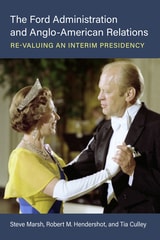
The Ford Administration and Anglo-American Relations
Re-Valuing an Interim PresidencySteve Marsh, Robert M. Hendershot and Tia Culley
University of Michigan Press, 2026
In the shadow of Watergate and the Vietnam War, Gerald Ford’s presidency has long been dismissed as little more than an interim administration. Yet the administration and its British counterparts worked to manage economic crises, Cold War tensions, and international flashpoints, while also harnessing cultural diplomacy to sustain transatlantic partnership. Drawing on newly declassified archival sources and fresh historical analysis, The Ford Administration and Anglo-American Relations shows how Ford’s years in office (1974–77) were pivotal in reshaping the US–UK special relationship at a moment of global turbulence.
Organized thematically rather than chronologically, the authors examine eight dimensions of Anglo-American relations under Ford: the inheritance of transatlantic tensions from the Nixon era; cultural and societal links beyond the state; the significance of Ford’s personal diplomacy; negotiations over defense and security; transformations in international economic relations and the birth of the G6/G7; cooperation through multilateral institutions such as NATO and the UN; joint management of crises in Cyprus and Rhodesia to the sterling currency crisis; and the cultural diplomacy of the 1976 Bicentennial, when Queen Elizabeth II’s state visit symbolized renewed unity between former adversaries. By highlighting both the challenges and the resilience of Anglo-American ties, this book recasts a neglected presidency as a crucial bridge between the crises of the Nixon years and the celebrated Reagan–Thatcher era. Accessible yet deeply researched, it is a work that will appeal to anyone interested in how two nations, facing uncertainty at home and abroad, turned to multilateral cooperation, culture, and public diplomacy to navigate the upheavals of the 1970s.
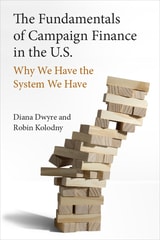
The Fundamentals of Campaign Finance in the U.S.
Why We Have the System We HaveDiana Dwyre and Robin Kolodny
University of Michigan Press, 2024
The Fundamentals of Campaign Finance in the U.S. takes care to situate the campaign finance system in the context of the broader U.S. political and economic system. Dwyre and Kolodny offer readers a brief tour through the development of the campaign finance regulatory structure, highlighting the Supreme Court’s commitment to free speech over political equality from Buckley v. Valeo (1976) through the passage of the Bipartisan Campaign Reform Act (BCRA, 2002). They also examine the driving force behind campaign finance reform—corruption—through historical, transactional, and institutional perspectives. While diving into the insufficiency of the disclosure and enforcement of campaign finance laws and calling attention to multiple federal agencies, including the Securities and Exchange Commission, the Federal Communications Commission, the Internal Revenue Service, and (principally) the Federal Election Commission, the authors show how a narrow view on campaign finance makes change difficult and why reforms often have limited success. By examining the fundamentals, Dwyre and Kolodny show the difficulties of changing a political system whose candidates have always relied on private funding of campaigns to one that guarantees free speech rights while minimizing concerns of corruption.
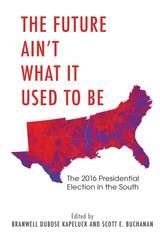
The Future Ain't What It Used to Be
The 2016 Presidential Election in the SouthBranwell DuBose Kapeluck
University of Arkansas Press, 2018
The Future Ain’t What It Used to Be details how the 2016 presidential election developed in the eleven states that make up the South. Preeminent scholars of Southern politics analyze this momentous election, including the issues that drove southern voters, the nomination process in early 2016, and where the region may be headed politically in the Trump era. In addition, each state chapter includes analysis on notable congressional races and important patterns within the states.
This new edited volume will be an important tool for scholars, and also journalists and political enthusiasts seeking a deeper understanding of contemporary southern electoral politics.
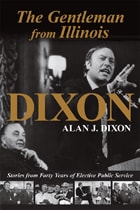
The Gentleman from Illinois
Stories from Forty Years of Elective Public ServiceAlan J. Dixon
Southern Illinois University Press, 2013
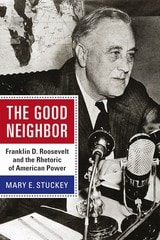
The Good Neighbor
Franklin D. Roosevelt and the Rhetoric of American PowerMary E. Stuckey
Michigan State University Press, 2013
No modern president has had as much influence on American national politics as Franklin D. Roosevelt. During FDR’s administration, power shifted from states and localities to the federal government; within the federal government it shifted from Congress to the president; and internationally, it moved from Europe to the United States. All of these changes required significant effort on the part of the president, who triumphed over fierce opposition and succeeded in remaking the American political system in ways that continue to shape our politics today. Using the metaphor of the good neighbor, Mary E. Stuckey examines the persuasive work that took place to authorize these changes. Through the metaphor, FDR’s administration can be better understood: his emphasis on communal values; the importance of national mobilization in domestic as well as foreign affairs in defense of those values; his use of what he considered a particularly democratic approach to public communication; his treatment of friends and his delineation of enemies; and finally, the ways in which he used this rhetoric to broaden his neighborhood from the limits of the United States to encompass the entire world, laying the groundwork for American ideological dominance in the post–World War II era.
The Government-Citizen Disconnect
Suzanne Mettler
Russell Sage Foundation, 2018
Drawing from original survey data which probed Americans’ experiences of 21 federal social policies -- such as food stamps, Social Security, Medicaid, and the home mortgage interest deduction -- Mettler shows that 96 percent of adults have received benefits from at least one of them, and that the average person has utilized five. Overall usage rates transcend social, economic, and political divisions, and most Americans report positive experiences of their policy experiences. However, the fact that they have benefited from these policies has little positive effect on people’s attitudes toward government. Mettler finds that shared identities and group affiliations, as well as ideological forces, are more powerful and consistent influences. In particular, those who oppose welfare tend to extrapolate their unfavorable views of it to government in general. Deep antipathy toward the government has emerged as the result of a conservative movement that has waged a war on social welfare policies for over forty years, even as economic inequality and benefit use have increased.
Mettler finds that voting patterns exacerbate the government-citizen disconnect, as those holding positive views of federal programs and supporting expanded benefits have lower rates of political participation than those holding more hostile views of the government. As a result, the loudest political voice belongs to those who have benefited from policies but who give government little credit for their economic well-being, seeing their success more as a matter of their own deservingness. This contributes to the election of politicians who advocate cutting federal social programs. According to Mettler, the government-citizen disconnect frays the bonds of representative government and democracy.
The Government-Citizen Disconnect illuminates a paradox that increasingly shapes American politics. Mettler's examination of hostility toward government at a time when most Americans will at some point rely on the social benefits it provides helps us better understand the roots of today's fractious political climate.
The Governors of New Jersey
Biographical EssaysBirkner, Michael J
Rutgers University Press, 2014
Rogues, aristocrats, and a future U.S. president. These and other governors are portrayed in this revised and updated edition of the classic reference work on the chief executives of New Jersey. Editors Michael J. Birkner, Donald Linky, and Peter Mickulas present new essays on the governors of the last three decades—Brendan T. Byrne, Thomas Kean, James Florio, Christine Todd Whitman, Donald DiFrancesco, James McGreevey, Richard Codey, and Jon Corzine. The essays included in the original edition are amended, edited, and corrected as necessary in light of new and relevant scholarship.
The authors of each governor’s life story represent a roster of such notable scholars as Larry Gerlach, Stanley Katz, Arthur Link, and Clement Price, as well as many other experts on New Jersey history and politics. As a result, this revised edition is a thorough and current reference work on the New Jersey governorship—one of the strongest in the nation.
Also of Interest:
New Jersey Politics and Government
The Suburbs Come of Age
Fourth Edition
Barbara G. Salmore with Stephen A. Salmore
978-0-8135-6139-4 paper $34.95
A volume in the Rivergate Regionals Collection
Me, Governor?
My Life in the Rough-and-Tumble World of New Jersey Politics
Richard J. Codey
978-0-8135-5045-9 cloth $24.95
The Life and Times of Richard J. Hughes
The Politics of Civility
John B. Wefing
978-0-8135-4641-4 cloth $32.50
Governor Tom Kean
From the New Jersey Statehouse to the 911 Commission
Alvin S. Felzenberg
978-0-8135-3799-3 cloth $29.95
The Governors' Lobbyists
Federal-State Relations Offices and Governors Associations in WashingtonJennifer M. Jensen
University of Michigan Press, 2016
The Great Broadening
How the Vast Expansion of the Policymaking Agenda Transformed American PoliticsBryan D. Jones, Sean M. Theriault, and Michelle Whyman
University of Chicago Press, 2019
With The Great Broadening, Bryan D. Jones, Sean M. Theriault, and Michelle Whyman examine in detail the causes, internal dynamics, and consequences of this extended burst of activity. They argue that the broadening of government responsibilities into new policy areas such as health care, civil rights, and gender issues and the increasing depth of existing government programs explain many of the changes in America politics since the 1970s. Increasing government attention to particular issues was motivated by activist groups. In turn, the beneficiaries of the government policies that resulted became supporters of the government’s activity, leading to the broad acceptance of its role. This broadening and deepening of government, however, produced a reaction as groups critical of its activities organized to resist and roll back its growth.
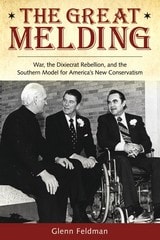
The Great Melding
War, the Dixiecrat Rebellion, and the Southern Model for America's New ConservatismGlenn Feldman
University of Alabama Press, 2015
CHOICE OUTSTANDING ACADEMIC TITLE
Tracing the Southern Origins of Modern American Conservatism.
Audacious in its scope, subtle in its analysis, and persuasive in its arguments, The Great Melding is the second book in Glenn Feldman’s magisterial recounting of the South’s transformation from a Reconstruction-era citadel of Democratic Party inertia to a cauldron of GOP agitation. In this pioneering study, Feldman shows how the transitional years after World War II, the Dixiecrat episode, and the early 1950s formed a pivotal sequence of events that altered America’s political landscape in profound, fundamental, and unexpected ways.
Feldman’s landmark work The Irony of the Solid South dismantled the myth of the New Deal consensus, proving it to be only a fleeting alliance of fissiparous factions; The Great Melding further examines how the South broke away from that consensus. Exploring issues of race and white supremacy, Feldman documents and explains the roles of economics, religion, and emotive appeals to patriotism in southern voting patterns. His probing and original analysis includes a discussion of the limits of southern liberalism and a fresh examination of the Dixiecrat Revolt of 1948.
Feldman convincingly argues that the Dixiecrats—often dismissed as a transitory footnote in American politics—served as a template for the modern conservative movement. Now a predictable Republican stronghold, Alabama at the time was viewed by national political strategists as a battleground and bellwether. Masterfully synthesizing a vast range of sources, Feldman shows that Alabama was then one of the few states where voters made unpredictable choices between the competing ideologies of the Democrats, Republicans, and Dixiecrats.
Writing in his lively and provocative style, Feldman demonstrates that the events he recounts in Alabama between 1942 and Dwight Eisenhower’s 1952 election encapsulate a rare moment of fluidity in American politics, one in which the New Deal consensus shattered and the Democratic and Republican parties fought off a third-party revolt only to find themselves irrevocably altered by their success. The Great Melding will fascinate historians, political scientists, political strategists, and readers of political nonfiction.
The Great Recession
David B. Grusky
Russell Sage Foundation, 2012
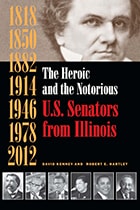
The Heroic and the Notorious
U.S. Senators from IllinoisDavid Kenney and Robert E. Hartley
Southern Illinois University Press, 2012
This sweeping survey constitutes the first comprehensive treatment of the men and women who have been chosen to represent Illinois in the United States Senate from 1818 to the present day. David Kenney and Robert E. Hartley underscore nearly two centuries of Illinois history with these biographical and political portraits, compiling an incomparably rich resource for students, scholars, teachers, journalists, historians, politicians, and any Illinoisan interested in the state’s senatorial heritage.
Originally published as An Uncertain Tradition: U.S. Senators From Illinois 1818–2003, this second edition brings readers up to date with new material on Paul Simon, Richard Durbin, and Peter Fitzgerald, as well as completely new sections on Roland Burris, Barack Obama, and Illinois’s newest senator, Mark Kirk. This fresh and careful study of the shifting set of political issues Illinois’s senators encountered over time is illuminated by the lives of participants in the politics of choice and service in the Senate. Kenney and Hartley offer incisive commentary on the quality of Senate service in each case, as well as timeline graphs relating to the succession of individuals in each of the two sequences of service, the geographical distribution of senators within the state, and the variations in party voting for Senate candidates. Rigorously documented and supremely readable, this convenient reference volume is enhanced by portraits of many of the senators.
The Hidden Face of Local Power
Appointed Boards and the Limits of DemocracyMirya R. Holman
Temple University Press, 2025
The Hidden Face of Local Power explicates the purpose, role, and consequences of appointed boards in U.S. cities. Mirya Holman finds cities create strong boards that generate policy, consolidate power, and defend the interests of businesses and wealthy and white residents. In contrast, weak boards pacify agitation from marginalized groups to give the appearance of inclusivity, democratic deliberation, and redistributional policymaking. Cities preserve this strong board/weak board dichotomy through policymaking power, institutional design, and by controlling who serves on the boards.
The Hidden Face of Local Power examines the role of boards in the development of urban political institutions, the allocation of power in local politics, and the persistence of inequality. Holman enhances our understanding of how political institutions have contributed to racism and their impact on how people use and live in urban spaces. In her shrewd analysis of the creation and use of boards as political institutions, Holman proves that neither weak or strong boards achieves the goal they are advertised to achieve. In doing so, she provides a new view of the failures of local democracy along with ideas for improvement.
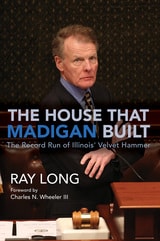
The House That Madigan Built
The Record Run of Illinois' Velvet HammerRay Long. Foreword by Charles N. Wheeler III
University of Illinois Press, 2022
Veteran reporter Ray Long draws on four decades of observing state government to provide the definitive political analysis of Michael Madigan. Secretive, intimidating, shrewd, power-hungry--Madigan mesmerized his admirers and often left his opponents too beaten down to oppose him. Long vividly recreates the battles that defined the Madigan era, from stunning James Thompson with a lightning-strike tax increase, to pressing for a pension overhaul that ultimately failed in the courts, to steering the House toward the Rod Blagojevich impeachment. Long also shines a light on the machinery that kept the Speaker in power. Head of a patronage army, Madigan ruthlessly used his influence and fundraising prowess to reward loyalists and aid his daughter’s electoral fortunes. At the same time, he reshaped bills to guarantee he and his Democratic troops shared in the partisan spoils of his legislative victories. Yet Madigan’s position as the state’s seemingly invulnerable power broker could not survive scandals among his close associates and the widespread belief that his time as Speaker had finally reached its end.
Unsparing and authoritative, The House That Madigan Built is the page-turning account of one the most powerful politicians in Illinois history.

The House Will Come To Order
How the Texas Speaker Became a Power in State and National PoliticsBy Patrick L. Cox and Michael Phillips
University of Texas Press, 2010
In a state assumed to have a constitutionally weak governor, the Speaker of the Texas House wields enormous power, with the ability to almost single-handedly dictate the legislative agenda. The House Will Come to Order charts the evolution of the Speaker's role from a relatively obscure office to one of the most powerful in the state. This fascinating account, drawn from the Briscoe Center's oral history project on the former Speakers, is the story of transition, modernization, and power struggles.
Weaving a compelling story of scandal, service, and opportunity, Patrick Cox and Michael Phillips describe the divisions within the traditional Democratic Party, the ascendance of Republicans, and how Texas business, agriculture, and media shaped perceptions of officeholders. While the governor and lieutenant governor wielded their power, the authors show how the modern Texas House Speaker built an office of equal power as the state became more complex and diverse. The authors also explore how race, class, and gender affected this transition as they explain the importance of the office in Texas and the impact the state's Speakers have had on national politics.
At the apex of its power, the Texas House Speaker's role at last receives the critical consideration it deserves.
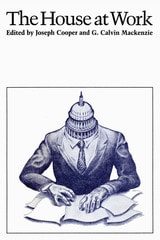
The House at Work
Edited by Joseph Cooper and G. Calvin Mackenzie
University of Texas Press, 1981
There exists a rich literature on the workings of the United States Congress, but The House at Work is the first book to focus on the institutional performance of the House of Representatives. A complete overview of the complex functioning and dynamics of Congress is presented by distinguished contributors, drawing upon both real-life experience and organization theory.
Each essay presents material on activities central to legislative work in the House, including the internal operations of member and committee offices, the administrative support system of the House, the impact of organizational structure and information resources on individual decision making, the expanding application of computer technology, the character of the personnel system, and the processing of constituent casework.
Nearly all contributors were professional staff members of the U.S. House Commission on Administrative Review in 1976 and 1977, whose analysis of the internal operations of the House was acomprehensive investigation. Their academic training, buttressed by significant practical experience on Capitol Hill, makes this book of great value to both students and scholars of the legislative process. In addition to the editors, the contributors include Glenn R. Parker, Thomas E. Cavanagh, Allan J. Katz, John R. Johannes, Thomas J. O'Donnell, David W. Brady, Louis Sandy Maisel, Susan Webb Hammond, Jarold A. Kieffer, James A. Thurber, and Jeffrey A. Goldberg.
The Increasingly United States
How and Why American Political Behavior NationalizedDaniel J. Hopkins
University of Chicago Press, 2018
With The Increasingly United States, Daniel J. Hopkins explores this trend and its implications for the American political system. The change is significant in part because it works against a key rationale of America’s federalist system, which was built on the assumption that citizens would be more strongly attached to their states and localities. It also has profound implications for how voters are represented. If voters are well informed about state politics, for example, the governor has an incentive to deliver what voters—or at least a pivotal segment of them—want. But if voters are likely to back the same party in gubernatorial as in presidential elections irrespective of the governor’s actions in office, governors may instead come to see their ambitions as tethered more closely to their status in the national party.
The Indispensable Minority
Why Congressional Majorities Cannot Govern AloneAndrew Ballard and James M. Curry
University of Chicago Press, 0
A provocative reevaluation of the power that the minority party in Congress wields beyond obstruction.
In The Indispensable Minority, Andrew Ballard and James M. Curry dispel a common assumption about American politics: that congressional majorities govern and congressional minorities merely obstruct. Drawing on four decades of legislative data, an original database of the most consequential lawmaking efforts since 1987, and candid interviews with veteran Capitol Hill staffers, the authors reveal that minority parties shape major legislation far more often than typically thought—both collectively and through the efforts of individual lawmakers.
As Ballard and Curry show, the key to minority influence lies not in procedural tricks like the filibuster, but in the interplay of raw political forces: how constrained the majority party is as it tries to act on its legislative agenda, how well the minority party can hold together as a cohesive bloc, and whether the minority chooses to engage in legislating rather than electoral posturing. When these conditions align, congressional minority parties don't just block bills—they help write them.
Rich with historical cases and sharp new evidence, The Indispensable Minority reshapes how we understand party power, congressional gridlock, and the health of American democracy itself. Far from a symptom of dysfunction, the authors argue, minority party influence is a vital—and indispensable—feature of how the American system is supposed to work.
The Influence of Campaign Contributions in State Legislatures
The Effects of Institutions and PoliticsLynda W. Powell
University of Michigan Press, 2012
Campaign contributions are widely viewed as a corrupting influence but most scholarly research concludes that they have marginal impact on legislative behavior. Lynda W. Powell shows that contributions have considerable influence in some state legislatures but very little in others. Using a national survey of legislators, she develops an innovative measure of influence and delineates the factors that explain this great variation across the 99 U.S. state legislative chambers.
Powell identifies the personal, institutional, and political factors that determine how much time a legislator devotes to personal fundraising and fundraising for the caucus. She shows that the extent of donors' legislative influence varies in ways corresponding to the same variations in the factors that determine fundraising time. She also confirms a link between fundraising and lobbying with evidence supporting the theory that contributors gain access to legislators based on donations, Powell's findings have important implications for the debate over the role of money in the legislative process.

The Intellectual Crisis in American Public Administration
Vincent Ostrom
University of Alabama Press, 2007
Rethinking governance: Where democracy meets administration.
This revised and expanded third edition extends Ostrom’s analysis to account for the most resent developments in American politics, including those of the Clinton and Bush administrations.
First published in 1973, The Intellectual Crisis in American Public Administration remains one of the most influential critiques of the administrative state. Vincent Ostrom examines the intellectual roots of American public administration, questioning whether centralized bureaucratic systems align with the constitutional principles of self-governance. Through a rigorous analysis of institutional design, federalism, and public choice theory, Ostrom advocates for polycentric governance—an approach that empowers citizens and decentralizes authority. This seminal work continues to inspire debates on accountability, legitimacy, and the future of democratic administration.
The Irony of the Solid South
Democrats, Republicans, and Race, 1865–1944Glenn Feldman
University of Alabama Press, 2013
Race, Politics, and the Making of the Modern South.
The Irony of the Solid South examines how the south became the “Solid South” for the Democratic Party and how that solidarity began to crack with the advent of American involvement in World War II. Relying on a sophisticated analysis of secondary research—as well as a wealth of deep research in primary sources such as letters, diaries, interviews, court cases, newspapers, and other archival materials—Glenn Feldman argues in The Irony of the Solid South that the history of the solid Democratic south is actually marked by several ironies that involve a concern with the fundamental nature of southern society and culture and the central place that race and allied types of cultural conservatism have played in ensuring regional distinctiveness and continuity across time and various partisan labels. Along the way, this account has much to say about the quality and nature of the New Deal in Dixie, southern liberalism, and its fatal shortcomings.
Feldman focuses primarily on Alabama and race but also considers at length circumstances in the other southern states as well as insights into the uses of emotional issues other than race that have been used time and again to distract whites from their economic and material interests. Feldman explains how conservative political forces (Bourbon Democrats, Dixiecrats, Wallace, independents, and eventually the modern GOP) ingeniously fused white supremacy with economic conservatism based on the common glue of animus to the federal government. A second great melding is exposed, one that joined economic fundamentalism to the religious kind along the shared axis of antidemocratic impulses.
Feldman’s study has much to say about southern and American conservatism, the enduring power of cultural and emotional issues, and the modern south’s path to becoming solidly Republican.
The Jeffords Switch
Changing Majority Status and Causal Processes in the U.S. SenateChris Den Hartog and Nathan W. Monroe
University of Michigan Press, 2019
Senator Jim Jeffords left the Republican Party in May 2001 and became an independent. Because he agreed to vote with the Democrats on organizational votes, this gave that party a 51–49 majority in the Senate.
Using the “Jeffords switch,” Chris Den Hartog and Nathan W. Monroe examine how power is shared and transferred in the Senate, as well as whether Democratic bills became more successful after the switch. They also use the data after the switch, when the Republican Party still held a majority on many Democratic Party-led committees, to examine the power of the committee chairs to influence decisions. While the authors find that the majority party does influence Senate decisions, Den Hartog and Monroe are more interested in exploring the method and limits of the majority party to achieve its goals.
The Joy of Politics
Surviving Cancer, a Campaign, a Pandemic, an Insurrection, and Life’s Other Unexpected CurveballsAmy Klobuchar
University of Minnesota Press, 2023
An intimate and revelatory memoir on personal challenges, political turmoil, and the state of American democracy―now in paperback with a new preface
During the past few years, as our country has faced unprecedented challenges, Senator Amy Klobuchar has been in the room where it happens―on the Senate floor for critical votes during the pandemic, at the debate podium during one of the most crucial presidential primaries in U.S. history, and in the Capitol on January 6, 2021, when insurrectionists stormed the building, interrupting the certification of the Electoral College. It was well past midnight when Klobuchar stood beside then–Vice President Pence to officially certify President Biden's victory.
In her candid, honest, and at times bitingly funny memoir, the pragmatic senator shares insider stories from these historic moments, while also inviting readers into her personal life. An underdog in the 2020 Democratic presidential primary campaign, she built surprising early momentum, only to suspend her candidacy in order to support Joe Biden. Within weeks of returning to work in the Senate, the sudden onslaught of Covid-19 hit her family directly: her husband was hospitalized for a week and spent a month in isolation. Klobuchar shares her experience facing a cancer diagnosis while her beloved father succumbs to Alzheimer's. She recounts the dramatic narrative of January 6 and how close we came to losing our democracy. And, with her signature humor, she reveals what it's like to work with some of her more . . . well, interesting . . . colleagues.
At the crux of these stories is a narrative of resilience—of personal resilience and the resilience of a nation—and, improbably, joy.
The Judicial Power of the Purse
How Courts Fund National Defense in Times of CrisisNancy Staudt
University of Chicago Press, 2011
Congress and the president are not the only branches that deal with fiscal issues in times of war. In this innovative book, Nancy Staudt focuses on the role of federal courts in fiscal matters during warfare and high-cost national defense emergencies. There is, she argues, a judicial power of the purse that becomes evident upon examining the budgetary effects of judicial decision making. The book provides substantial evidence that judges are willing—maybe even eager—to redirect private monies into government hands when the country is in peril, but when the judges receive convincing cues that ongoing wartime activities undermine the nation’s interests, they are more likely to withhold funds from the government by deciding cases in favor of private individuals and entities who show up in court.
In stark contrast with conventional legal, political, and institutional thought that privileges factors associated with individual preferences, The Judicial Power of the Purse sheds light on environmental factors in judicial decision making and will be an excellent read for students of judicial behavior in political science and law.

The Less Responsive Chamber?
Politics and Development in the Early US SenateJoel Sievert
University of Michigan Press, 2027
Who did members of the early US Senate represent? Many scholarly and popular political accounts of the Antebellum era assume that senators were exclusively representatives of the state governments because pre-reform senators were chosen by state legislatures. However, The Less Responsive Chamber? examines senators’ relationships with three potential targets of representation—the state governments, the state legislature, and the electorate of the state.
Through both empirical analyses and detailed case studies, the book demonstrates that senators cared about the public and did not strictly view their representational role as one of being faithful agents to state governments. While senators’ floor speeches, circulars, and correspondences frequently referenced the state electorate as their primary constituency, they were often directed to represent a variety of interests. Further, senators were aware of and responded to public opinion as well as intrastate political dynamics. By documenting how the interests of political parties, states, and the public influenced the Senate’s behavior during the early years of the United States, this book offers insight into a period whose fraught politics continue to impact our lives today.

The Lex Rex Effect
Stories of a Conservative Pursuing JusticeAsa Hutchinson
University of Arkansas Press, 2027
Lex rex—Latin for “the law is king”—expresses a foundational principle of human liberty: that the law, rather than the will of any individual ruler, is the ultimate governmental authority. This principle was at the heart of the American Revolution and remains essential to the functioning and endurance of America today. For 250 years, the United States has been tested by political conflict, social change, and institutional challenges, yet the rule of law has remained central to the nation’s constitutional order.
Asa Hutchinson’s distinguished career—as a former US attorney, member of the US House of Representatives, administrator of the Drug Enforcement Administration, under secretary of Homeland Security, and governor of Arkansas—offers a unique perspective from which to examine the lasting significance of lex rex in contemporary America.
Drawing on Hutchinson’s work at the intersection of law, politics, and public service, The Lex Rex Effect explores how the principles of law, justice, and constitutional government underpin democracy. Through personal stories and thoughtful analysis, Hutchinson considers the forces that sustain our democracy and argues for the perennial importance of a system in which the law—not an autocrat’s whim—reigns supreme in the land.
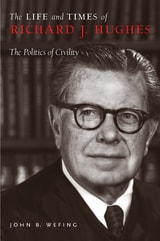
The Life and Times of Richard J. Hughes
The Politics of CivilityWefing, John B
Rutgers University Press, 2009
This biography illuminates the governor's accomplishments between 1962 and 1970, including the creation of the Hackensack Meadowlands Commission, formation of the county college system, establishment of stringent antipollution laws, design of the public defender system, and the adoption of a New Jersey sales tax, as well as his pivotal role during the Newark riots. As chief justice, Hughes faced difficult issuesùschool funding, low and moderate income housing needs, freedom of speech, and his decision in the rightto-die case involving Karen Ann Quinlan. With a career characterized by liberal activism, Hughes also contributed nationally and internationally, from serving as host of the 1964 Democratic National Convention to monitoring elections in South Vietnam.
John B. Wefing's research includes interviews with prominent politicians and leaders who worked with Hughes at various points in his career. The result is a rich story of a public servant who possessed a true ability to work with members of both political parties and played a significant role in shaping modern New Jersey.
The Limits of Legitimacy
Dissenting Opinions, Media Coverage, and Public Responses to Supreme Court DecisionsMichael A. Zilis
University of Michigan Press, 2015
Zilis finds that the media tends not to quote from majority opinions. However, the greater the division over a particular ruling among the justices themselves, the greater the likelihood that the media will criticize that ruling, characterize it as "activist," and employ inflammatory rhetoric. Hethen demonstrates that the media’s portrayal of a decision, as much as the substance of the decision itself, influences citizens’ reactions to and acceptance of it.
This meticulously constructed study and its persuasively argued conclusion advance the understanding of the media, judicial politics, political institutions, and political behavior.
The Limits of Party
Congress and Lawmaking in a Polarized EraJames M. Curry and Frances E. Lee
University of Chicago Press, 2020
In The Limits of Party, James M. Curry and Frances E. Lee challenge this conventional wisdom. By constructing legislative histories of congressional majority parties’ attempts to enact their policy agendas in every congress since the 1980s and by drawing on interviews with Washington insiders, the authors analyze the successes and failures of congressional parties to enact their legislative agendas.
Their conclusions will surprise many congressional observers: Even in our time of intense party polarization, bipartisanship remains the key to legislative success on Capitol Hill. Congressional majority parties today are neither more nor less successful at enacting their partisan agendas. They are not more likely to ram though partisan laws or become mired in stalemate. Rather, the parties continue to build bipartisan coalitions for their legislative priorities and typically compromise on their original visions for legislation in order to achieve legislative success.

The Little Legislatures
Committees of CongressGeorge Goodwin
University of Massachusetts Press, 1970
In this study, Mr. Goodwin deals with decision making in the American Congress. He maintains that competition among political organizations and government institutions plays an extremely important role, but that political parties, both parliamentary and national, are relatively weak participants in the struggles. Mr. Goodwin shows that the bipartisan, specialized standing committees, often acting as surrogates for the whole Congress, are a powerful force in Congress, and are on occasion powerful enough to stand as equals of the President. The author makes clear that any analysis of decision making must appreciate the strength of the committees, and their particular place in the democratic process. The Little Legislatures traces the development of the committee system in both the House and the Senate from the beginning of World War II through the Johnson Administration. It provides a comprehensive analysis of the organization, make-up, and assignment traditions of the standing committees, and presents innovative ideas for reform of the system.

The Little Mans Big Friend
James E. Folsom in Alabama Politics, 1946-1958George E. Sims
University of Alabama Press, 1985
At the end of World War II changing economic and social forces transformed the lives of Alabamians, whose political leaders had built careers on localistic politics shaped by established economic and governmental interests. Into this context strolled “Big Jim”—six feet eight inches tall—with his corn-shuck mop, wooden suds bucket, and a promise to scrub out the Capitol. Ridiculed by his opponents, Folsom advertised his progressive program in every crossroads community.
As governor, Folsom faced a legislature dominated by local politicians whom he had bypassed during the campaign, and although he won approval of some bills, legislative opposition made his administration a four-year filibuster.
Not until 1955, after his election to a second term, did Folsom become an effective leader. Tying programs for expanded services to the local interests of the legislators, he won approval for road construction, “old-age pensions,” industrial development, and reorganization of the state docks. But the lawmakers balked at constitutional reform.
As his reform efforts met defeat during 1956, Folsom was losing his ability to lead. He refused to exploit racial tensions, and the rise of the civil rights movement undermined his popularity among whites. Unwilling to discipline his aides and supporters, his administration became notorious for petty graft. By 1958 aspiring candidates kept their distance from Folsom. “Big Jim” attempted a comeback in the 1962 campaign, but he was never again to hold public office.
The Logic of Delegation
D. Roderick Kiewiet and Mathew D. McCubbins
University of Chicago Press, 1991
In The Logic of Delegation, however, D. Roderick Kiewiet and Mathew D. McCubbins persuasively argue that political scientists have paid far too much attention to what congressional parties can't do. The authors draw on economic and management theory to demonstrate that the effectiveness of delegation is determined not by how much authority is delegated but rather by how well it is delegated.
In the context of the appropriations process, the authors show how congressional parties employ committees, subcommittees, and executive agencies to accomplish policy goals. This innovative study will force a complete rethinking of classic issues in American politics: the "autonomy" of congressional committees; the reality of runaway federal bureaucracy; and the supposed dominance of the presidency in legislative-executive relations.
The Long Red Thread
How Democratic Dominance Gave Way to Republican Advantage in US House ElectionsKyle Kondik
Ohio University Press, 2021
The Man Who Emptied Death Row
Governor George Ryan and the Politics of CrimeJames L. Merriner
Southern Illinois University Press, 2008
George H. Ryan, Illinois governor from 1999 to 2003, became nationally known for two significant and very different reasons. The first governor in the United States to clear out his state’s death row and put a moratorium on the death penalty, he was also convicted and sent to prison on corruption charges. The Man Who Emptied Death Row: Governor George Ryan and the Politics of Crime details the career of a man who both enhanced and tarnished the image of the highest office in Illinois and examines the political history and culture that shaped him.
Author James L. Merriner explores the two very different stories of George Ryan: the brave crusader against the death penalty and the petty crook. An extensive analysis of the official record, exclusive interviews, and previously undisclosed incidents in Ryan’s career expose why the governor pardoned or commuted the sentences of all 171 prisoners on Illinois’s death row before leaving office and how he later was convicted of eighteen counts of official corruption.
This biography traces Ryan’s family history and the Illinois political climate that influenced his development as a politician. Although Ryan championed “good-government” initiatives—organ donations, tougher drunken-driving and lobbyist disclosure laws—he never overcame a reputation as a wheeler-dealer, notes Merriner.
Merriner goes beyond Ryan’s life and career to explore the politics of crime, highlighting the successes and failures of the criminal justice system and suggesting how both white-collar fraud and violent crime shape politics. A fascinating story that reveals much about the way Illinois politics works, The Man Who Emptied Death Row will help determine how history will judge Illinois governor George Ryan.