Results by title
5159 books match the query 'Biography' and 934 start with t

Texas Ranger Captain William L. Wright
Richard B. McCaslin
University of North Texas Press, 2021
Texas Ranger John B. Jones and the Frontier Battalion, 1874-1881
Rick Miller
University of North Texas Press, 2012
Texas Ranger Lee Hall
From the Red River to the Rio GrandeChuck Parsons
University of North Texas Press, 2020
Texas Ranger N. O. Reynolds, the Intrepid
Chuck Parsons
University of North Texas Press, 2014
Texas Rangers
Lives, Legend, and LegacyBob Alexander
University of North Texas Press, 2017
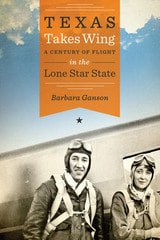
Texas Takes Wing
A Century of Flight in the Lone Star StateBy Barbara Ganson
University of Texas Press, 2014
This book celebrates the aviators, astronauts, airline executives, and other innovators who have made Texas an influential world leader in the aerospace industry over the past century.
Tracing the hundred-year history of aviation in Texas, aviator and historian Barbara Ganson brings to life the colorful personalities that shaped the phenomenally successful development of this industry in the state. Weaving stories and profiles of aviators, designers, manufacturers, and those in related services, Texas Takes Wing covers the major trends that propelled Texas to the forefront of the field. Covering institutions from San Antonio’s Randolph Air Force Base (the West Point of this branch of service) to Brownsville’s airport with its Pan American Airlines instrument flight school (which served as an international gateway to Latin America as early as the 1920s) to Houston’s Johnson Space Center, home of Mission Control for the U.S. space program, the book provides an exhilarating timeline and engaging history of dozens of unsung pioneers as well as their more widely celebrated peers.
Drawn from personal interviews as well as major archives and the collections of several commercial airlines, including American, Southwest, Braniff, Pan American Airways, and Continental, this sweeping history captures the story of powered flight in Texas since 1910. With its generally favorable flying weather, flat terrain, and wide open spaces, Texas has more airports than any other state and is often considered one of America’s most aviation-friendly places. Texas Takes Wing also explores the men and women who made the region pivotal in military training, aircraft manufacturing during wartime, general aviation, and air servicing of the agricultural industry. The result is a soaring history that will delight aviators and passengers alike.
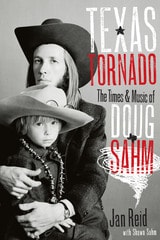
Texas Tornado
The Times and Music of Doug SahmBy Jan Reid, with Shawn Sahm
University of Texas Press, 2010
Doug Sahm was a singer, songwriter, and guitarist of legendary range and reputation. The first American musician to capitalize on the 1960s British invasion, Sahm vaulted to international fame leading a faux-British band called the Sir Douglas Quintet, whose hits included "She's About a Mover," "The Rains Came," and "Mendocino." He made the cover of Rolling Stone magazine in 1968 and 1971 and performed with the Grateful Dead, Dr. John, Willie Nelson, Boz Scaggs, and Bob Dylan.
Texas Tornado is the first biography of this national music legend. Jan Reid traces the whole arc of Sahm's incredibly versatile musical career, as well as the manic energy that drove his sometimes turbulent personal life and loves. Reid follows Sahm from his youth in San Antonio as a prodigy steel guitar player through his breakout success with the Sir Douglas Quintet and his move to California, where, with an inventive take on blues, rock, country, and jazz, he became a star in San Francisco and invented the "cosmic cowboy" vogue. Reid also chronicles Sahm's later return to Texas and to chart success with the Grammy Award–winning Texas Tornados, a rowdy "conjunto rock and roll band" that he modeled on the Beatles and which included Sir Douglas alum Augie Meyers and Tejano icons Freddy Fender and Flaco Jimenez.
With his exceptional talent and a career that bridged five decades, Doug Sahm was a rock and roll innovator whose influence can only be matched among his fellow Texas musicians by Buddy Holly, Roy Orbison, Janis Joplin, and Stevie Ray Vaughan. Texas Tornado vividly captures the energy and intensity of this musician whose life burned out too soon, but whose music continues to rock.

Thabo Mbeki
Adekeye Adebajo
Ohio University Press, 2017
Thad Snow
A Life of Social Reform in the Missouri BootheelBonnie Stepenoff
University of Missouri Press, 2003
Thanksgiving
The Biography of an American HolidayJames W. Baker
University of New Hampshire Press, 2009
In this, the first in-depth study of the most American of holidays, James Baker sweeps away lingering myths and misconceptions to show how this celebration day was born and grew to be an essential part of our national spirit. Thanksgiving: The Biography of an American Holiday opens with an overview of the popular mythos of the holiday before discussing its possible religious and cultural precedents. This classic Yankee holiday is examined in historical and contemporary detail that embraces everything from proclamations, sermons, and local and regional traditions to family reunions, turkey dinners, and recipes. Thanksgiving's evolving face is illustrated with charming and often revealing period prints that chart our changing attitudes: the influence of Victorian sentiment in Thanksgiving's development, Progressive utilitarianism, intellectual “debunking,” patriotic wartime reclamation, and 1960s-era protest. Thanksgiving remains controversial up to the present day, as Mayflower descendants, Native Americans, and commercial exploiters compete for the American public's opinion of the holiday's contemporary significance and its future status. This is an intelligent and illuminating introduction to a beloved holiday and a fascinating cultural history of America and Americana.
Thatcher
Clare Beckett
Haus Publishing, 2006

That’s Gotta Hurt
The Injuries That Changed Sports ForeverDr. David Geier
University Press of New England, 2017
The (Other) American Traditions
Nineteenth-Century Women WritersWarren, Joyce W
Rutgers University Press, 1993
The American literary canon has been the subject of debate and change for at least a decade. As women writers and writers of color are being rediscovered and acclaimed, the question of whether they are worthy of inclusion remains open.
The (Other) American Traditions brings together for the first time in one place, essays on individual writers and traditions that begin to ask the harder questions. How do we talk about these writers once we get beyond the historical issues? How is their work related to their male counterparts? How is it similar: how is it different? Are differences related to gender or race or class? How has the selection of books in the literary canon (Melville, Hawthorne, Emerson, and James) led to a definition of the American tradition that was calculated to exclude women? Do we need a new critical vocabulary to discuss these works? Should we stop talking about a tradition and begin to talk about many traditions? How did black American women writers develop strategies for speaking out when they were doubly in jeopardy of being ignored as blacks and as women? The volume offers irrefutable proof that the writers, the critics who work on their texts, all these questions, and the expansion of the canon matter very much indeed.
Contributors: Nina Baym, Deborah Carlin, Joanne Dobson, Josephine Donovan, Judith Fetterley, Frances Smith Foster, Susan K. Harris, Karla F.C. Holloway, Paul Lauter, Diane Lichtenstein, Carla L. Peterson, Carol J. Singley, Jane Tompkins, Joyce W. Warren and Sandra A. Zagarell.
The 23rd Psalm
A Holocaust MemoirGeorge Lucius Salton, with Anna Salton Eisen
University of Wisconsin Press, 2004

The ANC and the Liberation Struggle
A Critical Political BiographyDale T. McKinley
Pluto Press, 1997
eloquent testimony of the continuing vitality of the South African left' Modern African Studies
The African National Congress, the ANC, negotiated a transition of government and power in South Africa in the early 1990s and gained widespread respect and legitimacy when Nelson Mandela was voted in as President in 1994.
In this controversial and radical critique of the ANC and the struggle for liberation in South Africa, Dale T. McKinley challenges conventional public perceptions of the organisation and its celebrated rise to power. McKinley offers the first detailed analysis of the ANC's leadership, tactics and strategies from the 1920s, through the years of exile, to the 1990s, focusing on its close alliance with the South African Communist Party. he reveals that the organisation, despite historical claims to the contrary, failed to stay in touch with the south African masses. The ANC made fundamental compromises to gain political power, and in so doing has ensured that the economic power-base of the ruling elites in South Africa remains essentially unaltered.
The Accidental Teacher
Life Lessons from My Silent SonAnnie Lubliner Lehmann
University of Michigan Press, 2009
"Jonah Lehmann is an accidental teacher of others, including his family and friends. This personal and touching account of Jonah's life is enlightening, especially to those coming to terms with similar challenges with autism and other cognitive disabilities. It was written with love to support research on autism, and I recommend it to anyone and everyone touched by those of us who are different."
---Patricia E. Kefalas Dudek, Legal Advocate for People with Disabilities
"I have never read a book about a disabled person that caught me from page one. I could not put this one down. Lehmann offers a profound perspective on living with the reality of a severely disabled child. This book will be required reading for students who take my class in Special Education Administration."
---Frances LaPlante-Sosnowsky, Associate Professor of Education at Wayne State University
"A story of the astonishing power of human love and family triumph over hardship. Lehmann's story, engaging and at times both heartbreaking and joyful, offers an intimate view of one mother's journey as she works with professionals and a blur of caregivers to assist the ever-changing needs of her son. I highly recommend it to seasoned professionals in the field of autism and students preparing for careers in special education."
---Janet E. Graetz, Assistant Professor of Human Development and Child Studies at Oakland University
A child teaches without intending to . . .
Having severe autism does not stop Annie Lehmann's son Jonah from teaching her some of life's most valuable lessons. The Accidental Teacher, a heartfelt memoir about self-discovery rather than illness, uses insight and humor to weave a tale rich with kitchen-table wisdom. It explains the realities of life with a largely nonverbal son and explores the frustrations and triumphs of the Lehmann family as Jonah grew into a young adult. This book is a must-read for anyone who has been personally touched by a major life challenge.
Annie Lubliner Lehmann, a freelance writer for more than twenty-five years, has published articles in many newspapers and magazines, including the New York Times and Detroit Free Press. She resides in Michigan with her husband and two of her three children. Her eldest son, who inspired this memoir, is now a young adult with autism who lives in a supervised home.
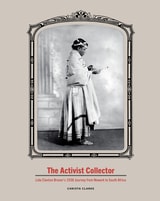
The Activist Collector
Lida Clanton Broner’s 1938 Journey from Newark to South AfricaChrista Clarke
Rutgers University Press, 2023
Published by the Newark Museum. Distributed worldwide by Rutgers University Press.
“After twenty-eight years of desire and determination, I have visited Africa, the land of my forefathers.” So wrote Lida Clanton Broner (1895–1982), an African American housekeeper and hairstylist from Newark, New Jersey, upon her return from an extraordinary nine-month journey to South Africa in 1938. This epic trip was motivated not only by Broner’s sense of ancestral heritage, but also a grassroots resolve to connect the socio-political concerns of African Americans with those of black South Africans under the segregationist policies of the time. During her travels, this woman of modest means circulated among South Africa’s Black intellectual elite, including many leaders of South Africa’s freedom struggle. Her lectures at Black schools on “race consciousness and race pride” had a decidedly political bent, even as she was presented as an “American beauty specialist.”
How did Broner—a working class mother—come to be a globally connected activist? What were her experiences as an African American woman in segregated South Africa and how did she further her work after her return? Broner’s remarkable story is the subject of this book, which draws upon a deep visual and documentary record now held in the collection of the Newark Museum of Art. This extraordinary archive includes more than one hundred and fifty objects, ranging from beadwork and pottery to mission school crafts, acquired by Broner in South Africa, along with her diary, correspondence, scrapbooks, and hundreds of photographs with handwritten notations.
The Addison Gayle Jr. Reader
Edited by Nathaniel Norment Jr.
University of Illinois Press, 2008
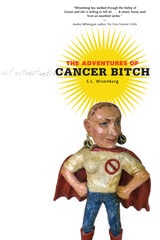
The Adventures of Cancer Bitch
S. L. Wisenberg
University of Iowa Press, 2009
Wisenberg’s writing has been compared to a mix of Leon Wieseltier and Fran Lebowitz, and in this book, she has Wieseltier’s erudition and Lebowitz’s self-deprecating cleverness: “If anybody ever offers you the choice between suffering and depression, take the suffering. And I don't mean physical suffering. I mean emotional suffering. I am hereby endorsing psychic suffering over depression.”
From The Adventures of Cancer Bitch:
I found that when you invite people to a pre-mastectomy party, they show up. Even those with small children. The kids were so young that they didn't notice that most of the food had nipples. . . . I talked to everyone—about what I'm not sure. Probably about my surgery. Everyone told me how well I looked. I felt giddy. I was going to go under, but not yet; I was going to be cut, but not yet; I was going to be bald, but not yet. As my friend who had bladder cancer says: The thing about cancer is you feel great until they start treating you for it.
The Age and Stage of George L. Fox, 1825-1877
1825-1877Laurence Senelick
University of Iowa Press, 1999
The Akhmatova Journals
Volume 1: 1938-1941Lydia Chukovskaya
Northwestern University Press, 2002
The Almanac of American Politics 2014
Michael Barone, Chuck McCutcheon, Sean Trende, and Josh Kraushaar
University of Chicago Press, 2013
Like every edition since the almanac first appeared in 1972, the 2014 edition is helmed by veteran political analyst Michael Barone. Together with Chuck McCutcheon, collaborator since 2012, and two new editors, Sean Trende, senior elections analyst for RealClearPolitics, and Josh Kraushaar, managing editor at National Journal, Barone offers an unparalleled perspective on contemporary politics.
Full of maps, census data, and detailed information about the American political landscape, the 2014 Almanac of American Politics remains the most comprehensive resource for journalists, politicos, business people, and academics.
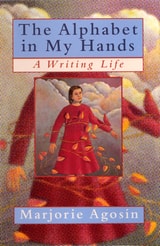
The Alphabet in My Hands
A Writing LifeAgosín, Marjorie
Rutgers University Press, 1999
Marjorie Agosín writes of a beloved childhood nanny: "Since I was Jewish she baptized me with holy water brought forth from the fonts of nearby churches. She told me to stay very still so I wouldn't sprout horns. . . . I was somewhere between taciturn and happy gazing into the mirror as if approaching the edge of a cliff . . . and I watched myself in the deep, transparent veil of this night of all nights." Many of the themes expressed in this vignette—cultural dissonance, family, and community—are poetically intertwined throughout The Alphabet in My Hands. Agosín takes us on a personal journey of discovery that is as much internal reflection as it is an exodus across continents and decades.
Agosín's childhood and early adolescence were spent with her Jewish family in Chile. While her family raised her to regard her Jewish heritage with loving awareness, they also participated in the dominant Catholic culture—an aunt organized Easter egg hunts and her mother admired the beauty of Chile's Catholic churches. The young Agosín became keenly aware of her dual identity in her country, both as a participant and an outsider.
The second half of The Alphabet in My Hands recounts the events that forced her family to emigrate to America: the overthrow of Salvador Allende by General Augusto Pinochet. Agosín writes of her new life in Athens, Georgia, of the sudden loss of all that was familiar. Ostracized as an emigrant—a "non-white" with a strange foreign accent—her high school years were made even more painful by the news from Chile: prisoners taken and classmates disappearing or shot.
Years later, Agosín goes back to Chile and she travels there with her own children. As she stares down at her old homeland from the plane, she writes: "Why do I love this place that forced us into exile, that punished my father for being a Jew?" And in the final chapter of The Alphabet in My Hands, this award-winning poet addresses two important topics: her current residence in New England and the central role of writing and literature in her life.
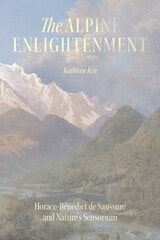
The Alpine Enlightenment
Horace-Bénédict de Saussure and Nature’s SensoriumKathleen Kete
University of Chicago Press, 2024
In The Alpine Enlightenment, historian Kathleen Kete takes us into the world of the Genevan geologist, physicist, inventor, and mountaineer Horace-Bénédict de Saussure. During his prodigious climbs into the upper ranges of the Alps, Saussure focused intensely on the natural phenomena he encountered—glaciers, crevasses, changes in the weather, and shifts in the color of the sky—and he described with great precision what he saw, heard, and touched. Kete uses Saussure’s evocative writings, which emphasized above all physical engagement with the earth, to uncover not just how people during the Enlightenment thought about nature, but how they experienced it. As Kete shows, Saussure thought with and through his body: he harnessed his senses to understand the forces that shaped the world around him. In so doing, he offered a vision of nature as worthy of respect independent of human needs, anticipating present-day concerns about the environment and our shared place within it.
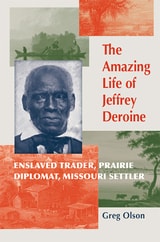
The Amazing Life of Jeffrey Deroine
Enslaved Trader, Prairie Diplomat, and Missouri SettlerGreg Olson
University of Missouri Press, 2026
Though scraps of his life are still present in the historical record, specifics have proven elusive. Still, it is important to tell Deroine’s life story, as it gives us a look both into the life of an enslaved man and the struggles of a free person of color in pre-Civil War Missouri. His life spanned a critical point in the history of the state, and he seems to have spent most of it at the very heart of the action.
Though not well known, the story of Jeffrey Deroine is significant because it illustrates the nuanced intersectionality of lives on the American frontier. Deroine was a man of both French and African descent who lived much of his life among Indigenous people. Born into slavery, he became a free person of color who was a businessman, owned property, and enslaved others. His life defied expectations and stereotypes, and a consideration of it allows us to better understand the history of Missouri and the West.
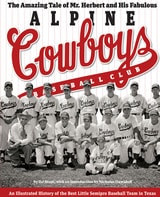
The Amazing Tale of Mr. Herbert and His Fabulous Alpine Cowboys Baseball Club
An Illustrated History of the Best Little Semipro Baseball Team in TexasBy DJ Stout
University of Texas Press, 2010
Back in the 1940s and 1950s, almost every small town in America had a baseball team. Most players were simply local heroes with a local following, but a few teams achieved fame far beyond their region. The Alpine Cowboys—despite being based in Texas's remote, sparsely populated Big Bend country—became a star in the firmament of semi-pro baseball. Lavishly underwritten by a wealthy rancher with a passion not only for baseball but even more for helping young men get a good start in life, the Cowboys played on a "field of dreams" whose facilities rivaled those of professional ballparks. Many Cowboys went on to play in the big leagues, and several pro teams, including the Pittsburgh Pirates, Chicago White Sox, and St. Louis Browns, came to play exhibition games at Kokernot Field.
The story of Herbert Kokernot Jr. and his Alpine Cowboys is a legend among baseball aficionados, but until now it has never been the subject of a book. DJ Stout, son of former Cowboys player Doyle Stout, presents a hall-of-fame-worthy collection of photographs, memorabilia, and reminiscences from Alpine Cowboys players, family members, and fans to capture fifteen years (1946–1961) of baseball at its finest. Nicholas Dawidoff's introduction, originally published in Sports Illustrated, tells the fascinating tale of "Mr. Herbert" and his determination to build a baseball team and ballpark that deserved to carry his ranch's 06 brand.
One of the most heartwarming episodes in the annals of the game, The Amazing Tale of Mr. Herbert and His Fabulous Alpine Cowboys is a fitting tribute to a man, a team, and a ballpark.
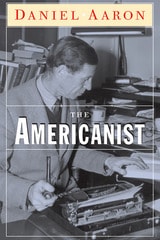
The Americanist
Daniel Aaron
University of Michigan Press, 2009
“I have read all of Daniel Aaron’s books, and admired them, but in The Americanist I believe he has composed an intellectual and social memoir for which he will be remembered. His self-portrait is marked by personal tact and admirable restraint: he is and is not its subject. The Americanist is a vision of otherness: literary and academic friends and acquaintances, here and abroad. Eloquently phrased and free of nostalgia, it catches a lost world that yet engendered much of our own.”
—Harold Bloom
“The Americanist is the absorbing intellectual autobiography of Daniel Aaron, who is the leading proponent and practitioner of American Studies. Written with grace and wit, it skillfully blends Daniel Aaron’s personal story with the history of the field he has done so much to create. This is a first-rate book by a first-rate scholar.”
—David Herbert Donald, Professor Emeritus, Harvard University
The Americanist is author and critic Daniel Aaron’s anthem to nearly a century of public and private life in America and abroad. Aaron, who is widely regarded as one of the founders of American Studies, graduated from the University of Michigan, received his Ph.D. from Harvard, and taught for over three decades each at Smith College and Harvard.
Aaron writes with unsentimental nostalgia about his childhood in Los Angeles and Chicago and his later academic career, which took him around the globe, often in the role of America’s accidental yet impartial critic. When Walt Whitman, whom Aaron frequently cites as a touchstone, wrote, “I am large, I contain multitudes,” he could have been describing Daniel Aaron—the consummate erudite and Renaissance individual whose allegiance to the truth always outweighs mere partisan loyalty.
Not only should Aaron’s book stand as a resplendent and summative work from one of the finest thinkers of the last hundred years, it also succeeds on its own as a first-rate piece of literature, on a par with the writings of any of its subjects. The Americanist is a veritable Who’s Who of twentieth-century writers Aaron interviewed, interacted with, or otherwise encountered throughout his life: Ralph Ellison, Robert Frost, Lillian Hellman, Richard Hofstadter, Alfred Kazin, Sinclair Lewis, Malcolm Muggeridge, John Crowe Ransom, Upton Sinclair, Edmund Wilson, Leonard Woolf, and W. B. Yeats, to name only a few.
Aaron’s frank and personal observations of these literary lights make for lively reading. As well, scattered throughout The Americanist are illuminating portraits of American presidents living and passed—miniature masterworks of astute political observation that offer dazzlingly fresh approaches to well-trod subjects.
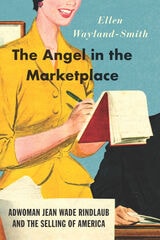
The Angel in the Marketplace
Adwoman Jean Wade Rindlaub and the Selling of AmericaEllen Wayland-Smith
University of Chicago Press, 2020
The Angel in the Marketplace is the story of one of America’s most accomplished advertising executives. It is also the story of how advertisers like Rindlaub sold a postwar American dream of capitalism and a Christian corporate order. Rindlaub was responsible for award-winning, mega sales-generating advertisements for all things domestic, including Oneida silverware, Betty Crocker cake mix, Campbell’s soup, and Chiquita bananas. Her success largely came from embracing, rather than subverting, the cultural expectations of women. She believed her responsibility as an advertiser was not to spring women from their trap, but to make that trap more comfortable.
Rindlaub wasn’t just selling silverware and cakes; she was selling the virtues of free enterprise. By following the arc of Rindlaub’s career from the 1920s through the 1960s, we witness how a range of cultural narratives—advertising chief among them—worked powerfully to shape women’s emotional and economic behavior in support of the free market system. Alongside Rindlaub’s story, Ellen Wayland-Smith provides a riveting history of how women were repeatedly sold the idea that their role as housewives was more powerful, and more patriotic, than any outside the home. And by buying into the image of morality through an unregulated market, many of these women helped fuel backlash against economic regulation and socialization efforts throughout the twentieth century.
The Angel in the Marketplace is a nuanced portrayal of a complex woman, one who both shaped and reflected the complicated cultural, political, and religious forces defining femininity in America at mid-century. This compelling account of one of advertising’s most fervent believers is a tale of a Mad Woman we haven’t been told.

The Answers Are Inside the Mountains
Meditations on the Writing LifeWilliam Stafford, Edited by Paul Merchant & Vincent Wixon
University of Michigan Press, 2003
In this fourth collection of reflections on writing and the writing life, the late William Stafford's lifelong refusal to separate his work from the task of living responsibly -- "What a person is shows up in what a person does" -- rings clear.
The Answers Are Inside the Mountains collects unpublished interviews, poems, articles, aphorisms, and writing exercises from this great American man of letters and hugely prolific author, who kept a journal for nearly half a century and produced over 20,000 poems -- a staggering output by any standard.
The book begins with the words "To overwhelm by rightness," a phrase evoking the two demands Stafford made on himself: to write daily, and to live uprightly. The Answers Are Inside the Mountains lives up to those deceptively simple ethics, and confirms William Stafford's enduringly important voice for our uncertain age.
William Stafford (1914-93) authored more than thirty-five books of poetry and prose, including the highly acclaimed Writing the Australian Crawl, You Must Revise Your Life, Crossing Unmarked Snow: Further Views on the Writer's Vocation, and Traveling Through the Dark, winner of the National Book Award for Poetry.

The Anti-Warrior
A MemoirMilt Felsen
University of Iowa Press, 1989
In 1937 thirty-six nervous young men dressed in ill-fitting blue suits, wearing berets, and carrying identical black valises, were given tickets for an American Export Lines ship. They were told to conduct themselves as ordinary tourists, to be "inconspicuous." They were volunteers for the Abraham Lincoln Brigade, traveling the French underground to join in the fight against Franco. Among them was Milt Felsen, a young New Yorker and radical antiwar activist on the University of Iowa campus who had decided that fascism had to be opposed. Some of these young men never made it to their destination. But Milt Felsen did, beginning a march across the Pyrenees which was only the first of his many battles and adventures.
Told with uncommon wit and verve, this memoir of war and resistance is a stirring account of Felsen's involvement in two decades of battle. Surprisingly, this is a spirited and even funny book, infused with Felsen's unbeatable personality. After the Spanish Civil War, Felsen helped form the O.S.S. in World War II. Taken prisoner of war, he escaped in his inimitable style during a 1,200-mile prisoner-of-war march and drove out of Nazi Germany in a Mercedes-Benz. He returned to the United States more convinced than ever of war's insanity and its extreme human cost.
Most of us are only spectators of the world's larger events. Milt Felsen knew the excitement and despair of being a participant. While most war books abound in details of what happened, this one also delves into why. Felsen's straightforward account is refreshingly frank and doesn't pretend to be more than it is—his own lived version of war and common truths.
The Appalachians
America's First and Last FrontierMari-Lynn Evans
West Virginia University Press, 2013
A beautifully produced companion volume to the public television documentary The Appalachians fills the void in information about the region, offering a rich portrait of its history and its legacy in music, literature, and film. The text includes essays by some of Appalachia’s most respected scholars and journalists; excerpts from never-before-published diaries and journals; firsthand recollections from native Appalachians including Loretta Lynn, Ricky Skaggs, and Ralph Stanley; indigenous song lyrics and poetry; and oral histories from common folk whose roots run strong and deep. The book also includes more than one hundred illustrations, both archival and newly created. Here is a wondrous book celebrating a unique and valuable heritage.
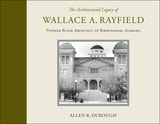
The Architectural Legacy of Wallace A. Rayfield
Pioneer Black Architect of Birmingham, AlabamaAllen R. Durough
University of Alabama Press, 2010
A priceless material legacy documenting Wallace Rayfield’s life and work on two continents.
In the early 1990s, while cleaning out the barn on his property in Bessemer, Alabama, Allen Durough discovered the remnants of the lifework of African American architect Wallace A. Rayfield, including several hundred of Rayfield’s drawings, floor plans, business advertisements, family portraits, and graphic art pieces. This book gathers that priceless material legacy into a cohesive whole, reproducing 159 illustrations that document Rayfield’s life and work on two continents.
Born in Macon, Georgia, in 1873, Rayfield apprenticed as a young man with the noted architectural firm A. B. Mullet and Company in Washington, DC, before attending Howard University, Pratt Polytechnic Institute, and ultimately graduating with a bachelor of architecture degree from Columbia University. He returned south to teach at the Tuskegee Institute and then to establish W. A. Rayfield & Co., Architects, in Birmingham, Alabama. From there he designed buildings for construction across the south (many by mail order) and even in Africa. Rayfield specialized in church architecture, and many of his designs were for black congregations within the state, most notably the Sixteenth Street Baptist Church in Birmingham. But he also designed schools, office buildings, and private homes. After falling into bankruptcy during the Great Depression, he died in obscurity.
Durough includes catalog-style descriptive entries and illustrations of Rayfield’s designs for six types of structures: residences, churches, schools, commercial buildings, fraternal buildings, and barns. These entries contain location, commissioning data, and brief structural notes, providing a useful resource for architectural historians and preservationists. A listing of the 359 known Rayfield structures detail their locations in 19 states, plan date, building type, and name. Also included is a biographical sketch of Rayfield, an overview of his publications, and a survey of his professional artwork and advertisements.
The Arkansas Post of Louisiana
Morris S. Arnold
University of Arkansas Press, 2017
Arkansas Post, the first European settlement in what would become Jefferson’s Louisiana, had an important mission as the only settlement between Natchez and the Illinois Country, a stretch of more than eight hundred miles along the Mississippi River. The Post was a stopping point for shelter and supplies for those travelling by boat or land, and it was of strategic importance as well, as it nurtured and sustained a crucial alliance with the Quapaw Indians, the only tribe that occupied the region.
The Arkansas Post of Louisiana covers the most essential aspects of the Post’s history, including the nature of the European population, their social life, the economy, the architecture, and the political and military events that reflected and shaped the Post’s mission.
Beautifully illustrated with maps, portraits, lithographs, photographs, documents, and superb examples of Quapaw hide paintings, The Arkansas Post of Louisiana is a perfect introduction to this fascinating place at the confluence of the Arkansas and Mississippi Rivers, a place that served as a multicultural gathering spot, and became a seminal part of the history of Arkansas and the nation.
The Art of Being Deaf
A MemoirDonna McDonald
Gallaudet University Press, 2014
Born in 1950s Australia, McDonald was placed in an oral deaf school when she was five. There, she was trained to communicate only in spoken English. Afterwards, she attended mainstream schools where she excelled with speechreading and hard work. Her determination led to achievements that proved her to be “the deaf girl that had made good.” Yet, despite her constant focus on fitting in the hearing world, McDonald soon realized that she missed her deaf schoolmates and desired to explore her closed-off feelings about being deaf.
When she reconnected with her friends, one urged her to write about her experiences to tell all about “the Forgotten Generation, the orally-raised deaf kids that no one wants to talk about.” In writing her memoir, McDonald did learn to reconcile her deaf-self with her “hearing-deaf” persona, and she realized that the art of being deaf is the art of life, the art of love.
The Art of Childbirth
A Seventeenth-Century Midwife’s Epistolary Treatise to Doctor Vallant: A Bilingual EditionMarie Baudoin
Iter Press, 2022
In 1671, Marie Baudoin (1625–1700), head midwife and governor of the Hôtel-Dieu of Clermont-Ferrand, sent a treatise on the art of childbirth to her powerful Parisian patron, Dr. Vallant. The story of how Baudoin’s knowledge and expertise as a midwife came to be expressed, recorded, and archived raises the question: Was Baudoin exceptional because she was herself extraordinary, or because her voice has reached us through Vallant’s careful archival practices? Either way, Baudoin’s treatise invites us to reconsider the limits of what we thought we knew midwives “could be and do” in seventeenth-century France. Grounding Marie Baudoin’s text in a microanalysis of her life, work, and the Jansenist network between Paris and Clermont-Ferrand, this book connects historiographies of midwifery, Jansenism, hospital administration, public health, knowledge and record-keeping, and women’s work, underscoring both Baudoin’s capabilities and the archival accidents and intentions behind the preservation of her treatise in a letter.
The Art of Moral Protest
Culture, Biography, and Creativity in Social MovementsJames M. Jasper
University of Chicago Press, 1997
"A provocative perspective on the cultural implications of political and social protest."—Library Journal
The Art of Trumpet Teaching
The Legacy of Keith JohnsonLeigh Anne Hunsaker
University of North Texas Press, 2022
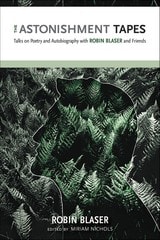
The Astonishment Tapes
Talks on Poetry and Autobiography with Robin Blaser and FriendsRobin Blaser
University of Alabama Press, 2015
Robin Blaser moved from his native Idaho to attend the University of California, Berkeley, in 1944. While there, he developed as a poet, explored his homosexuality, engaged in a lively arts community, and met fellow travelers and poets Robert Duncan and Jack Spicer. The three men became the founding members of the Berkeley core of what is now known as the San Francisco Renaissance in New American Poetry.
In the company of a small group of friends and writers in 1974, Blaser was asked to narrate his personal story and to comment on the Berkeley poetry scene. In twenty autobiographical audiotapes, Blaser talks about his childhood in Idaho, his time in Berkeley, and his participation in the making of a new kind of poetry. The Astonishment Tapes is the expertly edited transcript of these recordings by Miriam Nichols, Blaser’s editor and biographer.
In The Astonishment Tapes Blaser comments extensively on the poetic principles that he, Duncan, and Spicer worked through, as well as the differences and dissonances between the three of them. Nichols has edited the transcripts only minimally, allowing readers to make their own interpretations of Blaser’s intentions.
Sometimes gossipy, sometimes profound, Blaser offers his version on the inside story of one of the most significant moments in mid-twentieth century American poetry. The Astonishment Tapes is of considerable value and interest, not only to readers of Blaser, Duncan, and Spicer, but also to scholars of the early postmodern and twentieth-century American poetry.
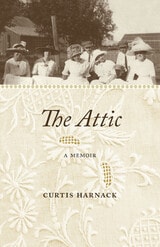
The Attic
A MemoirHarnack, Curtis
University of Iowa Press, 2011
In The Attic, his sequel to the classic We Have All Gone Away, Curtis Harnack returns to his rural Iowa homeplace to sift through an attic full of the trash and treasures left behind by the thirteen children in two generations who grew up in the big farmhouse.
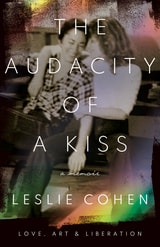
The Audacity of a Kiss
Love, Art, and LiberationLeslie Cohen
Rutgers University Press, 2021
Rendered in bronze, covered in white lacquer, two women sit together on a park bench in Greenwich Village. One of the women touches the thigh of her partner as they gaze into each other’s eyes. The two women are part of George Segal’s iconic sculpture “Gay Liberation,” but these powerful symbols were modeled on real people: Leslie Cohen and her partner (now wife) Beth Suskin.
In this evocative memoir, Cohen tells the story of a love that has lasted for over fifty years. Transporting the reader to the pivotal time when brave gay women and men carved out spaces where they could live and love freely, she recounts both her personal struggles and the accomplishments she achieved as part of New York’s gay and feminist communities. Foremost among these was her 1976 cofounding of the groundbreaking women’s nightclub Sahara, which played host to such luminaries as Betty Friedan, Gloria Steinem, Pat Benatar, Ntozake Shange, Rita Mae Brown, Adrienne Rich, Patti Smith, Bella Abzug, and Jane Fonda. The Audacity of a Kiss is a moving and inspiring tale of how love, art, and solidarity can overcome oppression.
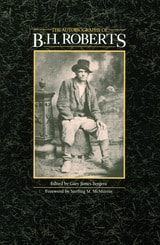
The Autobiography of B. H. Roberts
Gary J. Bergera
Signature Books, 1990
The story-book adventures of Roberts’s life made him a household name during his lifetime. His impassioned speeches incited riots, his reasoned writings defined and codified religious beliefs, and his candid disclosures of Utah history brought him both respect and censure. He is best remembered today as a largely self-educated intellectual. Several of his landmark published works are still in print more than fifty years after his death. His life story, told here in his own words and published for the first time, may well stand as his greatest, most enduring achievement.
For many today, B. H. Roberts is the quintessential Mormon intellectual of the twentieth century. But his theological writings came late in life and his historical views were more subjective than definitive. His autobiography, on the other hand, is a forthright account of the events and acquaintances that contributed to his unique faith and intellectual independence. Troubled by the memory of being abandoned as a child, and of the abusive care of quarrelling and intemperate foster-parents, he survived a stormy youth of poverty and neglect. He describes his nearly ten years as a missionary to the southern United States, his subsequent tenure as an outspoken member of the First Quorum of Seventy, his public opposition to women’s suffrage, and his controversial bid for the U.S. House of Representatives as a Mormon polygamist.
The Autobiography of Daniel Parker, Frontier Universalist
Daniel Parker
Ohio University Press, 2021
A vastly informative and rare early-American pioneer autobiography rescued from obscurity.
In this remarkable memoir, Daniel Parker (1781–1861) recorded both the details of everyday life and the extraordinary historical events he witnessed west of the Appalachian Mountains between 1790 and 1840. Once a humble traveling salesman for a line of newly invented clothes washing machines, he became an outspoken advocate for abolition and education. With his wife and son, he founded Clermont Academy, a racially integrated, coeducational secondary school—the first of its kind in Ohio.
However, Parker’s real vocation was as a self-ordained, itinerant preacher of his own brand of universal salvation. Raised by Presbyterian parents, he experienced a dramatic conversion to the Halcyon Church, an alternative, millenarian religious movement led by the enigmatic prophet Abel Sarjent, in 1803. After parting ways with the Halcyonists, he continued his own biblical and theological studies, arriving at the universalist conclusions that he would eventually preach throughout the Ohio River Valley.
David Torbett has transcribed Parker’s manuscript and publishes it here for the first time, together with an introduction, epilogue, bibliography, and extensive notes that enrich and contextualize this rare pioneer autobiography.
The Autobiography of Harry S. Truman
Edited with a New Introduction by Robert H. Ferrell
University of Missouri Press, 2002
The Autobiography of Maud Gonne
A Servant of the QueenMaud Gonne
University of Chicago Press, 1995
The Autobiography of the Rev. William Stevenson
Ted A. Campbell
Bridwell Press, 2024
The Backwards Hand
A MemoirMatt Lee
Northwestern University Press, 2024
Told in lyric fragments, The Backwards Hand traces Matt Lee’s experience living in the United States for more than thirty years with a rare congenital defect. Weaving in historical research and pop culture references, Lee dissects how the disabled body has been conflated with impurity, worthlessness, and evil. His voice swirls amid those of artists, criminals, activists, and philosophers. With a particular focus on horror films, Lee juxtaposes portrayals of fictitious monsters with the real-life atrocities of the Nazi regime and the American eugenics movement. Through examining his struggles with physical and mental health, Lee confronts his own beliefs about monstrosity and searches for atonement as he awaits the birth of his son.
The Backwards Hand interrogates what it means to be a cripple in a predominantly ableist society, deconstructing how perceptions of disability are—and are not—reflected in art and media.
The Baker Who Pretended to Be King of Portugal
Ruth MacKay
University of Chicago Press, 2012
On August 4, 1578, in an ill-conceived attempt to wrest Morocco back from the hands of the infidel Moors, King Sebastian of Portugal led his troops to slaughter and was himself slain. Sixteen years later, King Sebastian rose again. In one of the most famous of European impostures, Gabriel de Espinosa, an ex-soldier and baker by trade—and most likely under the guidance of a distinguished Portuguese friar—appeared in a Spanish convent town passing himself off as the lost monarch. The principals, along with a large cast of nuns, monks, and servants, were confined and questioned for nearly a year as a crew of judges tried to unravel the story, but the culprits went to their deaths with many questions left unanswered.
The Baron in the Grand Canyon
Friedrich Wilhelm von Egloffstein in the WestSteven Rowan
University of Missouri Press, 2012
This revealing account concentrates on Egloffstein’s activity in the American mountain West from 1853 to 1858. The early chapters cover his roots as a member of an imperial baronial family in Franconia, his service in the Prussian army, his arrival in the United States in 1846, and his links to his scandalous gothic-novelist cousin, Baron Ludwig von Reizenstein.
Egloffstein’s work as a cartographer in St. Louis in the 1840s led to his participation in John C. Frémont’s final expedition to the West in 1853 and 1854. He left Frémont for Salt Lake City where he joined the Gunnison Expedition under the leadership of Edward Beckwith. During this time, Egloffstein produced his most outstanding panoramas and views of the expedition, which were published in Pacific Railroad Reports.
Egloffstein also served along with Heinrich Balduin Möllhusen as one of the artists and as the chief cartographer of Joseph Christmas Ives’s expedition up the Colorado River. The two large maps produced by Egloffstein for the expedition report are regarded as classics of American art and cartography in the nineteenth century.
While with the Ives expedition, Egloffstein performed his revolutionary experiments in printing photographic images. He developed a procedure for working from photographs of plaster models of terrain, and that led him to invent “heliography,” a method of creating printing plates directly from photographs. He later went on to launch a company to exploit his photographic printing process, which closed after only a few years of operation.
Among the many images in this engaging narrative are photographs of the Egloffstein castle and of Egloffstein in 1865 and in his later years. Also include are illustrations that were published in the PRR, such as “View Showing the Formation of the Cañon of Grand River [today called the Gunnison River] / near the Mouth of Lake Fork with Indications of the Formidable Side Cañons” and Beckwith Map 1: “From the Valley of Green River to the Great Salt Lake.”
The Barthes Fantastic
Literature, Criticism, and the Practice of LanguageJohn Lurz
University of Chicago Press, 2025
In The Barthes Fantastic, John Lurz explores the intersection of literature and everyday life—and confronts some habits of literary study—through a reading of the work of Roland Barthes. An influential French theorist, Barthes wrote prolifically on the place of language and the play of signs in the ways we produce cultural and aesthetic meaning. Ranging across the entire sweep of Barthes’s varied career, Lurz shows how Barthes’s insights into signification and literature involve particular intellectual activities that impart significance to the world. Doing so allows him to develop an expanded understanding of the fantastic as a conceptual category—a way of thinking—in which the texts we read come to inform the texture of our real lives. Ultimately, The Barthes Fantastic enlarges our sense of what we learn as students of literature and gives us a new picture of a writer we thought we knew.
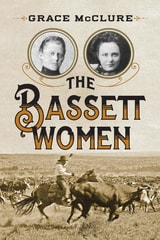
The Bassett Women
Grace McClure
Ohio University Press, 1985
In the late nineteenth century, Brown’s Park, a secluded valley astride the Utah-Colorado border, was a troubled land of deadly conflict among cattle barons, outlaws, rustlers, and small ranchers. Homesteader Elizabeth Bassett gained a tough reputation of her own, and her daughters followed suit, going on to become members of Butch Cassidy and the Wild Bunch’s inner circle. Ann—who counted Cassidy among her lovers—became known as “queen of the cattle rustlers.” Both sisters proved themselves shrewd businesswomen as they fended off hostile takeovers of the family ranch. Through the following decades, the sisters became the stuff of legend, women who embodied the West’s fearsome reputation, yet whose lived experiences were far more nuanced. Ann became a writer. Josie, whose cabin still stands at present-day Dinosaur National Monument, applied her pioneer ethics to a mechanized world and became renowned for her resourcefulness, steadfastness, and audacity.
For The Bassett Women, Grace McClure tracked down and untangled the legends of Brown’s Park, one of the way stations of the fabled “Outlaw Trail,” while creating an evenhanded and indelible portrait of the Bassetts. Based on interviews, written records, newspapers, and archives, The Bassett Women is one of the few credible accounts of early settlers on Colorado’s western slope, one of the last strongholds of the Old West.