Results by title
343 books match the query 'Capitalism' and 79 start with t
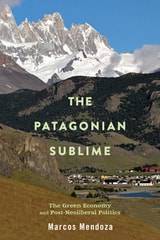
The Patagonian Sublime
The Green Economy and Post-Neoliberal PoliticsMendoza, Marcos
Rutgers University Press, 2019
Mendoza explores the fraught intersection of the green economy with the New Left politics of the Néstor Kirchner and Cristina Fernández de Kirchner governments. Mendoza documents the strategies of capitalist development, national representation, and political rule embedded in the “green productivist” agenda pursued by Kirchner and Fernández. Mendoza shows how Andean Patagonian communities have responded to the challenges of community-based conservation, the fashioning of wilderness zones, and the drive to create place-based monopolies that allow ecotourism destinations to compete in the global consumer economy.
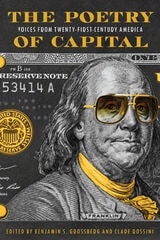
The Poetry of Capital
Voices from Twenty-First-Century AmericaEdited by Benjamin S. Grossberg and Clare Rossini
University of Wisconsin Press, 2021
Editors Benjamin S. Grossberg and Clare Rossini selected poems to reflect broad themes of labor, history and economic forces, social equity, and the environment. In addition, they asked each poet to provide a brief prose comment to introduce their work. Some give broad statements on the nature of wealth in America today; others are intimate, offering insight into how life experiences inform their writing; still others reflect on the art of poetry itself and its unique power to speak to economic pressures of the moment.
Contributors include Mary Jo Bang, Xochiquetzal Candelaria, Alan Chazaro, Mark Doty, Denise Duhamel, Tony Hoagland, Yusef Komunyakaa, Dorianne Laux, Kimiko Hahn, Sharon Olds, George Perreault, Robert Pinsky, Minnie Bruce Pratt, Afaa Michael Weaver, David Wojahn, and others.

The Political Economy of NGOs
State Formation in Sri Lanka and BangladeshJude L. Fernando
Pluto Press, 2011
Jude L. Fernando explores the paradoxical relationship between NGOs and capitalism, showing that supposedly progressive organisations often promote essentially the same policies and ideas as existing governments.
The book examines how a diverse group of NGOs have shaped state formation in Bangladesh and Sri Lanka. It argues that, rather than influencing state formation for the better, NGOs have been integrated into the capitalist system and their language adopted to give traditional exploitative social relations a transformative appearance.
This enlightening study will give pause to those who see NGOs as drivers of true social change and will encourage students of development studies to make a deeper analysis of state formation.
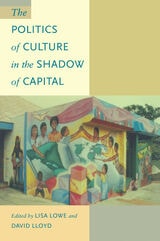
The Politics of Culture in the Shadow of Capital
Lisa Lowe and David Lloyd, eds.
Duke University Press, 1997
Reworking Marxist critique, these essays on Asia, Latin America, the Caribbean, North America, and Europe advance a new understanding of "cultural politics" within the context of transnational neocolonial capitalism. This perspective contributes to an overall critique of traditional approaches to modernity, development, and linear liberal narratives of culture, history, and democratic institutions. It also frames a set of alternative social practices that allows for connections to be made between feminist politics among immigrant women in Britain, women of color in the United States, and Muslim women in Iran, Egypt, Pakistan, and Canada; the work of subaltern studies in India, the Philippines, and Mexico; and antiracist social movements in North and South America, the Caribbean, and Europe. These connections displace modes of opposition traditionally defined in relation to the modern state and enable a rethinking of political practice in the era of global capitalism.
Contributors. Tani E. Barlow, Nandi Bhatia, Dipesh Chakrabarty, Chungmoo Choi, Clara Connolly, Angela Davis, Arturo Escobar, Grant Farred, Homa Hoodfar, Reynaldo C. Ileto, George Lipsitz, David Lloyd, Lisa Lowe, Martin F. Manalansan IV, Aihwa Ong, Pragna Patel, José Rabasa, Maria Josefina Saldaña-Portillo, Jaqueline Urla
The Politics of Money
Towards Sustainability and Economic DemocracyFrances Hutchinson, Mary Mellor, and Wendy Olsen
Pluto Press, 2002
The book opens with a review of the role of money in current society, an overview of the history of money creation and a critique of the main theoretical developments in economic thought. Alternative perspectives on money are then presented through a review of a number of radical perspectives but focusing mainly on the work of Marx, Veblen and the social credit perspective of Douglas and the guild socialists. In the final part of the book contemporary monetary theories and experiments are analysed within the theoretical and historical perspectives provided in the earlier chapters. The main argument of the book is that it is necessary to understand the crucial role of finance in driving the 'free market' economy if a democratic and sustainable economy is to be achieved.
The Politics of Operations
Excavating Contemporary CapitalismSandro Mezzadra and Brett Neilson
Duke University Press, 2019

The Politics of the Minimum Wage
Jerold Waltman
University of Illinois Press, 2000
The minimum wage appears to be a standard economic regulatory measure, yet a politics of symbolism more than anything else defines the political contests that periodically erupt over it. Detractors abhor its corruption of market principles, while supporters see it as a measure of society's symbolic commitment to the poor.
Tracing the history of the minimum wage and exposing its inherent contradictions as a political issue, Jerold Waltman proposes an alternative to the economic arguments that now dominate debates over it. Citing overwhelming public support for the minimum wage as evidence of an enduring civic consciousness and humanitarianism, Waltman advocates recasting the discussion in terms of a political economy of citizenship. Such a perspective would focus on the communal value of work, the need for citizens to have a stake in the community, and the effects of economic inequality on the bonds of common citizenship.
Positioning the minimum wage as a fulcrum for the most basic conflict underlying America's unique combination of democracy and a market economy, The Politics of the Minimum Wage shows how a defense of the minimum wage built on a communal sense of responsibility rests on a strong tradition of civic republicanism and strengthens the hope for a truly democratic society.
The Poverty of Capitalism
Economic Meltdown and the Struggle for What Comes NextJohn Hilary
Pluto Press, 2013
Capitalist growth is widely heralded as the only answer to the crisis still sweeping the global economy. Yet the era of corporate globalisation has been defined by unprecedented levels of inequality and environmental degradation. A return to capitalist growth threatens to exacerbate these problems, not solve them.
In The Poverty of Capitalism, John Hilary reveals the true face of transnational capital in its insatiable drive for expansion and accumulation. He exposes the myth of ‘corporate social responsibility’ (CSR), and highlights key areas of conflict over natural resources, labour rights and food sovereignty.
Hilary also describes the growing popular resistance to corporate power, as well as the new social movements seeking to develop alternatives to capitalism itself. This book will be essential reading for all those concerned with global justice, human rights and equity in the world order.

The Protestant Ethic Revisited
Philip S. Gorski
Temple University Press, 2013
In The Protestant Ethic Revisited, pioneering sociologist Philip Gorski revisits the question raised by Max Weber in The Protestant Ethic and the Spirit of Capitalism about how the Christian West was reshaped by world-changing energies of the Calvinist movement. Gorski not only considers the perennial debate about religion and capitalism, but he also devotes particular attention to the influence of Calvinism on the political development of the West.
The Protestant Ethic Revisited is a masterful new collection of Gorski's essays on religion and comparative historical sociology. Reflecting the aim of much of Gorski's work, this anthology shows how nationalism, secularism, politics, and religion in public life are either older—or less stable—than previously thought.
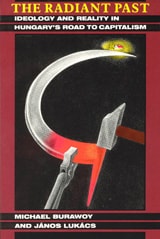
The Radiant Past
Ideology and Reality in Hungary's Road to CapitalismMichael Burawoy and János Lukács
University of Chicago Press, 1992
Michael Burawoy and Janos Lukacs consider this question from the standpoint of the Hungarian working class. Between 1983 and 1990 the authors carried out intensive studies in two core Hungarian industries, machine building and steel production, to produce the first extended participant-observation study of work and politics in state socialism.
"A fascinating and engagingly written eyewitness report on proletarian life in the waning years of goulash communism. . . . A richly rewarding book, one that should interest political scientists in a variety of subfields, from area specialists and comparativists to political economists, as well as those interested in Marxist and post-Marxist theory."—Elizabeth Kiss, American Political Science Review
"A very rich book. . . . It does not merely offer another theory of transition, but also presents a clear interpretive scheme, combined with sociological theory and vivid ethnographic description."—Ireneusz Bialecki, Contemporary Sociology
"Its informed skepticism of post-Communist liberal euphoria, its concern for workers, and its fine ethnographic details make this work valuable."—"àkos Róna-Tas, American Journal of Sociology
The Rise of the Green Left
Inside the Worldwide Ecosocialist MovementDerek Wall
Pluto Press, 2010
Climate change and other ecological ills are driving the creation of a grassroots global movement for change. From Latin America to Europe, Australia and China a militant movement merging red and green is taking shape.
Ecosocialists argue that capitalism threatens the future of humanity and the rest of nature. From indigenous protest in the Peruvian Amazon to the green transition in Cuba to the creation of red-green parties in Europe, ecosocialism is defining the future of left and green politics globally. Latin American leaders such as Morales and Chavez are increasingly calling for an ecosocialist transition.
Drawing on the work of key thinkers such as Joel Kovel and John Bellamy Foster, Derek Wall provides an unique insider view of how ecosocialism has developed and a practical guide to focused ecosocialist action. A great handbook for activists and engaged students of politics.
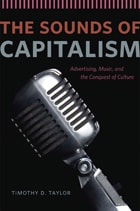
The Sounds of Capitalism
Advertising, Music, and the Conquest of CultureTimothy D. Taylor
University of Chicago Press, 2012
Timothy D. Taylor tracks the use of music in American advertising for nearly a century, from variety shows like The Clicquot Club Eskimos to the rise of the jingle, the postwar upsurge in consumerism, and the more complete fusion of popular music and consumption in the 1980s and after. The Sounds of Capitalism is the first book to tell truly the history of music used in advertising in the United States and is an original contribution to this little-studied part of our cultural history.
The Specter of Global China
Politics, Labor, and Foreign Investment in AfricaChing Kwan Lee
University of Chicago Press, 2017
Offering the clearest look yet at China’s state-driven investment in Africa, this book is rooted in six years of extensive fieldwork in copper mines and construction sites in Zambia, Africa’s copper giant. Lee shadowed Chinese, Indian, and South African managers in underground mines, interviewed Zambian miners and construction workers, and worked with Zambian officials. Distinguishing carefully between Chinese state capital and global private capital in terms of their business objectives, labor practices, managerial ethos, and political engagement with the Zambian state and society, she concludes that Chinese state investment presents unique potential and perils for African development. The Specter of Global China will be a must-read for anyone interested in the future of China, Africa, and capitalism worldwide.
The Squatters' Movement in Europe
Commons and Autonomy as Alternatives to CapitalismEdited by Squatting Europe Kollective
Pluto Press, 2014
The Squatters' Movement in Europe is the first definitive guide to squatting as an alternative to capitalism. It offers a unique insider's view on the movement – its ideals, actions and ways of life. At a time of growing crisis in Europe with high unemployment, dwindling social housing and declining living standards, squatting has become an increasingly popular option.
The book is written by an activist-scholar collective, whose members have direct experience of squatting: many are still squatters today. There are contributions from the Netherlands, Spain, the USA, France, Italy, Germany, Switzerland and the UK.
In an age of austerity and precarity this book shows what has been achieved by this resilient social movement, which holds lessons for policy-makers, activists and academics alike.
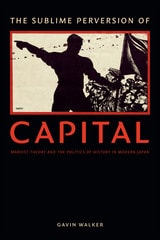
The Sublime Perversion of Capital
Marxist Theory and the Politics of History in Modern JapanGavin Walker
Duke University Press, 2016
The Surprising Design of Market Economies
By Alex Marshall
University of Texas Press, 2012
The “free market” has been a hot topic of debate for decades. Proponents tout it as a cure-all for just about everything that ails modern society, while opponents blame it for the very same ills. But the heated rhetoric obscures one very important, indeed fundamental, fact—markets don’t just run themselves; we create them.
Starting from this surprisingly simple, yet often ignored or misunderstood fact, Alex Marshall takes us on a fascinating tour of the fundamentals that shape markets and, through them, our daily economic lives. He debunks the myth of the “free market,” showing how markets could not exist without governments to create the structures through which we assert ownership of property, real and intellectual, and conduct business of all kinds. Marshall also takes a wide-ranging look at many other structures that make markets possible, including physical infrastructure ranging from roads and railroads to water systems and power lines; mental and cultural structures such as common languages and bodies of knowledge; and the international structures that allow goods, services, cash, bytes, and bits to flow freely around the globe.
Sure to stimulate a lively public conversation about the design of markets, this broadly accessible overview of how a market economy is constructed will help us create markets that are fairer, more prosperous, more creative, and more beautiful.

The Two Churches
Catholicism and Capitalism in the World SystemMichael L. Budde
Duke University Press, 1992
Budde's argument here is twofold. He contends that world Catholicism, led by its Third World majority (most notably in Latin America), will continue to develop in an increasingly anticapitalist direction; and he suggests that once-dominant First World Catholic churches (exemplified by the U.S. Catholic church), are poorly placed to respond in solidarity with their coreligionists from the Third World.
Covering a wide range of theoretical and substantive matters, The Two Churches examines religion as a source of both social legitimation and social rebellion. It demonstrates the importance of ecclesiology, a branch of theology dealing with "theories of the church," and it highlights the effect of capitalism on world Catholicism, as well as the latter's influence on the development of the capitalist order.
In his original, far-reaching analysis of the Catholic church's role in world affairs, Budde revises current views of religious institutions as subordinate social phenomena. By relating developments in the world political economy to material conditions in the Third World and in turn to the practice of Catholicism, he reveals how the Catholic church functions as a worldwide institution. He also shows how core-periphery conflicts within the church affect transnational capitalism.
As the Third World becomes more and more volatile, and as its relations with the First World further complicate the politics of the Catholic church, the questions addressed in The Two Churches demand attention with increasing urgency. Timely, thoughtful, and lucid, this book will inform and enhance our understanding of this complex, pressing issue.
The Undevelopment of Capitalism
Sectors and Markets in Fifteenth-Century TuscanyRebecca Jean Emigh
Temple University Press, 2008
As a lucid explanation of capitalism that turns back the clock even further on its birth, The Undevelopment of Capitalism makes a significant contribution to the studies of capitalism, historical sociology, and theories of markets as economic and cultural institutions.
Theology and the Political
The New Debate, sic vCreston Davis, John Milbank and Slavoj Žižek, eds.
Duke University Press, 2005
Contributors. Anthony Baker, Daniel M. Bell Jr., Phillip Blond, Simon Critchley, Conor Cunningham, Creston Davis, William Desmond, Hent de Vries, Terry Eagleton, Rocco Gangle, Philip Goodchild, Karl Hefty, Eleanor Kaufman, Tom McCarthy, John Milbank, Antonio Negri, Catherine Pickstock, Patrick Aaron Riches, Mary-Jane Rubenstein, Regina Mara Schwartz, Kenneth Surin, Graham Ward, Rowan Williams, Slavoj Žižek
Third Worlds Within
Multiethnic Movements and Transnational SolidarityDaniel Widener
Duke University Press, 2024
This Little Kiddy Went to Market
The Corporate Capture of ChildhoodSharon Beder, Wendy Varney, and Richard Gosden
Pluto Press, 2009
This book investigates the way that corporations are strategically shaping children to be under-aged hyperconsumers as well as the submissive employees and uncritical citizens of the future.
Sharon Beder shows how marketers and advertisers are targeting ever younger children in a relentless campaign, transforming children's play into a commercial opportunity and taking advantage of childish anxieties.
Beder investigates the corporate relations and ideals that infiltrate every aspect of our lives. She presents an alarming picture of how a child's social development -- through education, health care and nutrition -- has become an ordered conveyor belt of consumerist conditioning. Focusing on education in particular, Beder explains how businesses are taking control of more and more aspects of schooling, not only for profit but to erode state schooling and promote business values. Similarly, she shows how 'difficult' children are taught from an early age that pharmaceuticals can be used to discipline them or to make them 'happy'.
Tissue Economies
Blood, Organs, and Cell Lines in Late CapitalismCatherine Waldby and Robert Mitchell
Duke University Press, 2006
Waldby and Mitchell pull together a prodigious amount of research—involving policy reports and scientific papers, operating manuals, legal decisions, interviews, journalism, and Congressional testimony—to offer a series of case studies based on particular forms of tissue exchange. They examine the effect of threats of contamination—from HIV and other pathogens—on blood banks’ understandings of the gift/commodity relationship; the growth of autologous economies, in which individuals bank their tissues for their own use; the creation of the United Kingdom’s Stem Cell bank, which facilitates the donation of embryos for stem cell development; and the legal and financial repercussions of designating some tissues “hospital waste.” They also consider the impact of different models of biotechnology patents on tissue economies and the relationship between experimental therapies to regenerate damaged or degenerated tissues and calls for a legal, for-profit market in organs. Ultimately, Waldby and Mitchell conclude that scientific technologies, the globalization of tissue exchange, and recent anthropological, sociological, and legal thinking have blurred any strict line separating donations from the incursion of market values into tissue economies.
Totalled
Salvaging the Future from the Wreckage of CapitalismColin Cremin
Pluto Press, 2015
Totalled maps the deteriorating socio-economic, political, and ecological conditions in which we live. Yet Cremin asks how a utopian possibility discernable in the power of human creation can be realized even though as a society we are bound up materially, ideologically, libidinally—totally—to the capitalist machine of destruction. Totalled concludes with a politically and economically grounded set of propositions on how we might begin to imagine such a possibility.
Trading Futures
A Theological Critique of Financialized CapitalismFilipe Maia
Duke University Press, 2022
Transgender Marxism
Jules Joanne Gleeson
Pluto Press, 2021
Exploring trans lives and movements, the authors delve into the experience of surviving as transgender under capitalism. They explore the pressures, oppression and state persecution faced by trans people living in capitalist societies, their tenuous positions in the workplace and the home, and give a powerful response to right-wing scaremongering against 'gender ideology'.
Reflecting on the relations between gender and labour, these essays reveal the structure of antagonisms faced by gender non-conforming people within society. Looking at the history of transgender movements, Marxist interventions into developmental theory, psychoanalysis and workplace ethnography, the authors conclude that for trans liberation, capitalism must be abolished.
Transnational Capitalism in East Central Europe's Heavy Industry
From Flagship Enterprises to SubsidiariesAleksandra Sznajder Lee
University of Michigan Press, 2016
This book has broad implications for the political economy of reform because it illuminates the political determinants of privatization and the resources used to resist it. In addition, Sznajder Lee sheds new light on why some countries are more likely than others to be subject to external constraints, such as IMF conditionality, and how some allegedly pro-market reformers manage to maintain public ownership over certain industry sectors.
Trust Matters
Parsi Endowments in Mumbai and the Horoscope of a CityLeilah Vevaina
Duke University Press, 2023
Two Dreams in One Bed
Empire, Social Life, and the Origins of the North Korean Revolution in ManchuriaHyun Ok Park
Duke University Press, 2005
Drawing on a rich archive of Korean, Japanese, and Chinese sources, Park describes how Koreans negotiated the contradictory demands of national and colonial powers. She demonstrates that the dynamics of global capitalism led the Chinese and Japanese to pursue capitalist expansion while competing for sovereignty. Decentering the nation-state as the primary analytic rubric, her emphasis on the role of global capitalism is a major innovation for understanding nationalism, colonialism, and their immanent links in social space.
Through a regional and temporal comparison of Manchuria from the late nineteenth century until 1945, Park details how national and colonial powers enacted their claims to sovereignty through the regulation of access to land, work, and loans. She shows that among Korean migrants, the complex connections among Chinese laws, Japanese colonial policies, and Korean social practices gave rise to a form of nationalism in tension with global revolution—a nationalism that laid the foundation for what came to be regarded as North Korea’s isolationist politics.
Tyranny of the Market
A Critique of Theoretical FoundationsDouglas Vickers
University of Michigan Press, 1995