355 books match the query 'Communism, Post-Communism & Socialism' and 72 start with t

cover of The Russia That We Have Lost

The Russia That We Have Lost

Pavel Khazanov

University of Wisconsin Press, 2023

In 1917, Bolshevik revolutionaries overthrew the tsar of Russia and established a new, communist government, one that viewed the Imperial Russia of old as a righteously vanquished enemy. And yet, as Pavel Khazanov shows, after the collapse of Stalinism, a reconfiguration of Imperial Russia slowly began to emerge, recalling the culture of tsarist Russia not as a disgrace but as a glory, a past to not only remember but to recover, and to deploy against what to many seemed like a discredited socialist project.

Khazanov’s careful untangling of this discourse in the late Soviet period reveals a process that involved figures of all political stripes, from staunch conservatives to avowed intelligentsia liberals. Further, Khazanov shows that this process occurred not outside of or in opposition to Soviet guidance and censorship, but in mainstream Soviet culture that commanded wide audiences, especially among the Soviet middle class. Excavating the cultural logic of this newly foundational, mythic memory of a “lost Russia,” Khazanov reveals why, despite the apparently liberal achievement of the collapse of the Soviet Union in 1991, Boris Yeltsin (and later, Vladamir Putin) successfully steered Russia into oligarchy and increasing autocracy. The anti-Soviet memory of the pre-Soviet past, ironically constructed during the late socialist period, became and remains a politically salient narrative, a point of consensus that surprisingly attracts both contemporary regime loyalists and their would-be liberal opposition.
[more]
cover of The Second World War: A Marxist History

The Second World War

A Marxist History

Chris Bambery

Pluto Press, 2014

The Second World War casts a long shadow, portrayed as a necessary and paradigmatic war that defeated fascism. During recent wars in Iraq, Afghanistan and elsewhere, US presidents and British prime ministers have tried to claim they were following in the footsteps of Winston Churchill by standing up to dictators.

In The Second World War Chris Bambery tests this position in a thorough account of the war and tries to understand why it still dominates TV history channels and school history books.

Bambery argues that the conflict ultimately was about a division of the world between the great powers, as well as a rising of ordinary people against fascism. He offers a complex and radical analysis, that is unique when compared to many modern and conventional histories of the war.
[more]
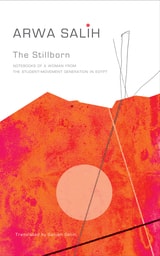
cover of The Stillborn: Notebooks of a Woman from the Student-Movement Generation in Egypt

The Stillborn

Notebooks of a Woman from the Student-Movement Generation in Egypt

Arwa Salih

Seagull Books, 2017

A poignant reckoning with the Marxism of a generation and its militant postcolonial intellectuals.

Arwa Salih was a member of the political bureau of the Egyptian Communist Workers Party, founded in the wake of the Arab–Israeli War and the vibrant Egyptian student movement of the early 1970s. Written more than a decade after Salih quit the party and left political life—and published shortly after she tragically took her own life—The Stillborn offers a devastatingly honest look at the tragic failure of both the national liberation and communist projects in Egypt.

This powerful, unflinching critique speaks not only to and about Salih’s own generation of left-wing activists, but also extends its gaze outward. The Stillborn addresses the broader, still fiercely salient dilemmas of revolutionary politics that continue to echo throughout the developing world in the postcolonial era.

[more]
cover of The Strange Death of Marxism: The European Left in the New Millennium

The Strange Death of Marxism

The European Left in the New Millennium

Paul Edward Gottrfied

University of Missouri Press, 2005

The Strange Death of Marxism seeks to refute certain misconceptions about the current European Left and its relation to Marxist and Marxist-Leninist parties that existed in the recent past. Among the misconceptions that the book treats critically and in detail is that the Post-Marxist Left (a term the book uses to describe this phenomenon) springs from a distinctly Marxist tradition of thought and that it represents an unqualified rejection of American capitalist values and practices.
            Three distinctive features of the book are the attempts to dissociate the present European Left from Marxism, the presentation of this Left as something that developed independently of the fall of the Soviet empire, and the emphasis on the specifically American roots of the European Left. Gottfried examines the multicultural orientation of this Left and concludes that it has little or nothing to do with Marxism as an economic-historical theory. It does, however, owe a great deal to American social engineering and pluralist ideology and to the spread of American thought and political culture to Europe.           
            American culture and American political reform have foreshadowed related developments in Europe by years or even whole decades. Contrary to the impression that the United States has taken antibourgeois attitudes from Europeans, the author argues exactly the opposite. Since the end of World War II, Europe has lived in the shadow of an American empire that has affected the Old World, including its self-described anti-Americans. Gottfried believes that this influence goes back to who reads or watches whom more than to economic and military disparities. It is the awareness of American cultural as well as material dominance that fuels the anti-Americanism that is particularly strong on the European Left. That part of the European spectrum has, however, reproduced in a more extreme form what began as an American leap into multiculturalism. Hostility toward America, however, can be transformed quickly into extreme affection for the United States, which occurred during the Clinton administration and during the international efforts to bring a multicultural society to the Balkans.
            Clearly written and well conceived, The Strange Death of Marxism will be of special interest to political scientists, historians of contemporary Europe, and those critical of multicultural trends, particularly among Euro-American conservatives.
[more]
cover of The Supreme Court and McCarthy-Era Repression: One Hundred Decisions

The Supreme Court and McCarthy-Era Repression

One Hundred Decisions

Robert M. Lichtman

University of Illinois Press, 2015

In this volume, attorney Robert M. Lichtman provides a comprehensive history of the U.S. Supreme Court's decisions in "Communist" cases during the McCarthy era. Lichtman shows the Court's vulnerability to public criticism and attacks by the elected branches during periods of political repression. The book describes every Communist-related decision of the era (none is omitted), placing them in the context of political events and revealing the range and intrusiveness of McCarthy-era repression.
 
In Fred Vinson's term as chief justice (1946-53), the Court largely rubber-stamped government action against accused Communists and "subversives." After Earl Warren replaced Vinson as chief justice in 1953, however, the Court began to rule against the government in "Communist" cases, choosing the narrowest of grounds but nonetheless outraging public opinion and provoking fierce attacks from the press and Congress. Legislation to curb the Court flooded Congress and seemed certain to be enacted. The Court's situation was aggravated by its 1954 school-desegregation decision, Brown v. Board of Education, which led to an anti-Court alliance between southern Democrats and anti-Communists in both parties. Although Lyndon Johnson's remarkable talents as Senate majority leader saved the Court from highly punitive legislation, the attacks caused the Court to retreat, with Felix Frankfurter leading a five-justice majority that decided major constitutional issues for the government and effectively nullified earlier decisions. Only after August 1962, when Frankfurter retired and was replaced by Arthur Goldberg, did the Court again begin to vindicate individual rights in "Communist" cases--its McCarthy era was over.
 
Demonstrating keen insight into the Supreme Court's inner workings and making extensive use of the justices' papers, Lichtman examines the dynamics of the Court's changes in direction and the relationships and rivalries among its justices, including such towering figures as Hugo Black, Felix Frankfurter, Earl Warren, William O. Douglas, and William J. Brennan, Jr. The Supreme Court and McCarthy-Era Repression: One Hundred Decisions tells the entire story of the Supreme Court during this unfortunate period of twentieth-century American history.
[more]
cover of The Technology of Transition: Science and Technology Policies for Transition Countries

The Technology of Transition

Science and Technology Policies for Transition Countries

David A. Dyker

Central European University Press, 1997

This book addresses the crucial question of how countries which have suffered losses in productivity levels and innovatory momentum over perhaps twenty-thirty years can rediscover their dynamism. Because the contributors have the immediate experience of tackling such complex problems and possess first-hand knowledge of a wide range of developmental patterns, each is well-placed to advise on the search for comprehensive solutions. The book not only focuses on the problems of innovation and technology transfer as they are reflected in the experience of the transition period to date, but also develops conceptual and strategic approaches to problems which will take a generation or more to resolve.
[more]
cover of The Transformation of Chinese Socialism

The Transformation of Chinese Socialism

Chun Lin

Duke University Press, 2006

In this significant contribution to both political theory and China studies, Lin Chun provides a critical assessment of the scope and limits of socialist experiments in China, analyzing their development since the victory of the Chinese communist revolution in 1949 and reflecting on the country’s likely paths into the future. Lin suggests that China’s twentieth-century trajectory be grasped in terms of the collective search by its people for a modern alternative to colonial modernity, bureaucratic socialism, and capitalist subordination. Evaluating contending interpretations of the formation and transformation of Chinese socialism in the contemporary conditions of global capitalism, Lin argues that the post-Mao reform model must be remade.
[more]
cover of The Twilight of Politics

The Twilight of Politics

Mario Tronti

Seagull Books, 2024

A classic work of political theory by a major twentieth-century figure of the Italian Left.
 
Italian political thinker Mario Tronti is most famous for being the author of Workers and Capital, which became the central theoretical formulation of Italian operaismo or workerism, a current of political thought emerging in the 1960s that revolutionized the institutional and extra-parliamentary Left in Italy and beyond. In The Twilight of Politics, written originally in 1998, Tronti argues that modern politics, which reached its apogee in the twentieth century, has ended.
 
Realism and Utopia, Tronti explains, were the foundational qualities of modern politics, which it always tried to clasp together. But behind this highwater mark of politics was a history over the longue durée, encompassing the wars of religion, Hobbes’ Leviathan, revolution, great individuals, and popular movements, as well as innovations such as the nation-state and the party-form. Historically, the modern period is also a coming together of the categories of the political and the laws of political economy. At the heart of this book is Tronti’s attempt to hold together a view of the course of political history with a critique of the “dictatorship of the present” to help us escape being “chained to the bars of an eternal present . . . which deprives us both of the freedom to look back and to see ahead.”

[more]
cover of The View from Prague: The Expectations of World Leaders at the Dawn of the 21st Century

The View from Prague

The Expectations of World Leaders at the Dawn of the 21st Century

Jirí Musil

Central European University Press, 2007

This work is the result of the Forum 2000 conferences initiated by Václav Havel and Elie Wiesel. The book is based mainly on the first five conferences which were held in Prague from 1997.  The first essay written by Václav Havel deals with spiritual preconditions of the global survival of humankind, and the second one is the quintessence of Havel's views on the world which we have inherited as well as his views on our hopes for the future. The book closes with Havel's personal reflection on the deeper meaning and aim of the Forum 2000 meetings.  Subsequent chapters analyze and interpret the ideas that were expressed by the speakers and interlocutors of the first five conferences in which they tried to identify and understand the primary issues facing mankind globally. Reflections deal with the main dimensions of globalization and with their synchronicities as well as asynchronicities based on the quintessences of the annual conference reports.
[more]
cover of Theories Of The New Class: Intellectuals And Power

Theories Of The New Class

Intellectuals And Power

Lawrence Peter King

University of Minnesota Press, 2004

Demonstrates the centrality of thinking about intellectual class formation to social theory

Old as the notion of the “New Class” is (the term was coined by anarchist Mikhail Bakunin around 1870), the idea of the ascendancy of an intellectual elite continues to engage, and perplex, social theorists. In Theories of the New Class, Iván Szelényi, one of the most incisive and respected analysts of the intellectual class, and his colleague Lawrence King put New Class theories into a broad historical framework for the first time.

Addressing the intellectual history of Marxism and socialism, theories of the increasing role of the state and technocratic elites in capitalism, and theories of contemporary social change, King and Szelényi’s work clearly links the centrality of thinking about intellectual class formation to a variety of theoretical and political projects that have shaped social theory and influenced political realities over the past century.King and Szelényi show that the idea of the New Class has stubbornly entered and reentered the agenda of critical social theorizing throughout the last century. Indeed, they interpret that the last century as a history of projects by different groups of the highly educated—factions of intellectuals, bureaucrats, technocrats, managers, and the left-wing humanistic intelligentsia—to gain ultimate power. A rare empirical discussion of theory, Theories of the New Class invigorates class theories by grounding them in contemporary issues; at the same time, it uses modern polemics to revitalize historical debates on the origins of capitalism.
[more]
cover of Theorizing Social Movements

Theorizing Social Movements

Joe Foweraker

Pluto Press, 1995
[more]
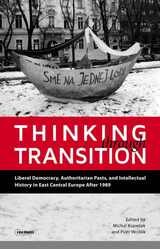
cover of Thinking through Transition: Liberal Democracy, Authoritarian Pasts, and Intellectual History in East Central Europe After 1989

Thinking through Transition

Liberal Democracy, Authoritarian Pasts, and Intellectual History in East Central Europe After 1989

Michal Kopecek

Central European University Press, 2015
Thinking through Transition is the first concentrated effort to explore the most recent chapter of East Central European past from the perspective of intellectual history. Post-communism can be understood as a period of scarcity and preponderance of ideas, the dramatic eclipsing of the dissident legacy (as well as the older political traditions), and the rise of technocratic and post-political governance.  This book, grounded in empirical research sensitive to local contexts, proposes instead a history of adaptations, entanglements, and unintended consequences. In order to enable and invite comparison, the volume is structured around major domains of political thought, some of them generic (liberalism, conservatism, the Left), others (populism and politics of history) deemed typical for post-socialism. However, as shown by the authors, the generic often turns out to be heavily dependent on its immediate setting, and the typical resonates with processes that are anything but vernacular.
[more]
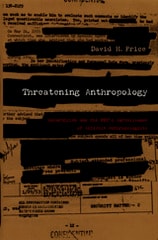
cover of Threatening Anthropology: McCarthyism and the FBI’s Surveillance of Activist Anthropologists

Threatening Anthropology

McCarthyism and the FBI’s Surveillance of Activist Anthropologists

David H. Price

Duke University Press, 2004

A vital reminder of the importance of academic freedom, Threatening Anthropology offers a meticulously detailed account of how U.S. Cold War surveillance damaged the field of anthropology. David H. Price reveals how dozens of activist anthropologists were publicly and privately persecuted during the Red Scares of the 1940s and 1950s. He shows that it was not Communist Party membership or Marxist beliefs that attracted the most intense scrutiny from the fbi and congressional committees but rather social activism, particularly for racial justice. Demonstrating that the fbi’s focus on anthropologists lessened as activist work and Marxist analysis in the field tapered off, Price argues that the impact of McCarthyism on anthropology extended far beyond the lives of those who lost their jobs. Its messages of fear and censorship had a pervasive chilling effect on anthropological investigation. As critiques that might attract government attention were abandoned, scholarship was curtailed.

Price draws on extensive archival research including correspondence, oral histories, published sources, court hearings, and more than 30,000 pages of fbi and government memorandums released to him under the Freedom of Information Act. He describes government monitoring of activism and leftist thought on college campuses, the surveillance of specific anthropologists, and the disturbing failure of the academic community—including the American Anthropological Association—to challenge the witch hunts. Today the “war on terror” is invoked to license the government’s renewed monitoring of academic work, and it is increasingly difficult for researchers to access government documents, as Price reveals in the appendix describing his wrangling with Freedom of Information Act requests. A disquieting chronicle of censorship and its consequences in the past, Threatening Anthropology is an impassioned cautionary tale for the present.

[more]
cover of Tito and His Comrades

Tito and His Comrades

Jože Pirjevec, Foreword by Emily Greble

University of Wisconsin Press, 2018

This landmark biography reveals the life of one of the most powerful figures of the Cold War era. Josip Broz (1892–1980), nicknamed Tito, led Yugoslavia for nearly four decades with charisma, cunning, and an iron fist.

With his Partisans he fought Hitler during World War II, and after the war he shrewdly resisted the Soviet Union's grasp. A leader of the non-aligned nations, he long enjoyed a reputation in the West as "the only good Communist" despite a dubious human rights record at home. Jože Pirjevec employs impressive research from archives in eight languages to offer this illuminating, definitive portrait of a complex man in turbulent times.

Pirjevec recounts how Tito, with little schooling but an astute intellect and driving ambition, rose through Communist Party ranks to shape and rule the Yugoslav federation. Surviving multiple assassination attempts by Nazis, Soviet spies, and others, Tito boldly threatened Stalin in return and may have, Pirjevec reveals, contrived Stalin's death. The narrative follows Tito's personal and political life into old age, as the specter of a Soviet invasion haunted him until his death at age eighty-seven. Available in English for the first time, this edition includes new material from Pirjevec and a foreword by Emily Greble.
[more]
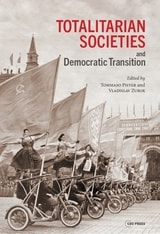
cover of Totalitarian Societies and Democratic Transition: Essays in Memory of Victor Zaslavsky

Totalitarian Societies and Democratic Transition

Essays in Memory of Victor Zaslavsky

Riccardo James Vargiu

Central European University Press, 2017

This book is a tribute to the memory of Victor Zaslavsky (1937–2009), sociologist, émigré from the Soviet Union, Canadian citizen, public intellectual, and keen observer of Eastern Europe. In seventeen essays leading European, American and Russian scholars discuss the theory and the history of totalitarian society with a comparative approach. They revisit and reassess what Zaslavsky considered the most important project in the latter part of his life: the analysis of Eastern European - especially Soviet societies and their difficult “transition” after the fall of communism in 1989–91. The variety of the contributions reflects the diversity of specialists in the volume, but also reveals Zaslavsky's gift: he surrounded himself with talented people from many different fields and disciplines. In line with Zaslavsky's work and scholarly method, the book promotes new theoretical and methodological approaches to the concept of totalitarianism for understanding Soviet and East European societies, and the study of fascist and communist regimes in general.
[more]
cover of Towards a Gay Communism: Elements of a Homosexual Critique

Towards a Gay Communism

Elements of a Homosexual Critique

Mario Mieli

Pluto Press, 2018

First published in Italian in 1977, Mario Mieli's groundbreaking book is an early landmark of revolutionary queer theory - now available for the first time in a complete and unabridged English translation.

Among the most important works ever to address the relationship between homosexuality, homophobia and capitalism, Mieli's essay continues to pose a radical challenge to today's dominant queer theory and politics.

With extraordinary prescience, Mieli exposes the efficiency with which capitalism co-opts 'perversions' which are then 'sold both wholesale and retail'. In his view the liberation of homosexual desire requires the emancipation of sexuality from both patriarchal sex roles and capital.

Drawing heavily upon Marx and psychoanalysis to arrive at a dazzlingly original vision, Towards a Gay Communism is a hitherto neglected classic that will be essential reading for all who seek to understand the true meaning of sexual liberation under capitalism today.
[more]
cover of Transatlantic Central Europe: Contesting Geography and Redifining Culture beyond the Nation

Transatlantic Central Europe

Contesting Geography and Redifining Culture beyond the Nation

Jessie Labov

Central European University Press, 2019

While there are still occasional uses of it today, the term "Central Europe" carries little of the charge that it did in the 1980s and early 1990s, and as a political and intellectual project it has receded from the horizon. Proponents of a distinct cultural profile of these countries—all involved now in the process of Transatlantic integration—used "Central European", as a contestation with the geo-political label of Eastern Europe. This book discusses the transnational set of practices connecting journals with other media in the mid-1980s, disseminating the idea of Central Europe simultaneously in East and West. A range of new methodologies, including GIS-mapping visualization, is used, repositing the political-cultural journal as one central node of a much larger cultural system. What has happened to the liberal humanist philosophy that "Central Europe" once evoked? In the early years of the transition era, the liberal humanist perspective shared by Havel, Konrád, Kundera, and Michnik was quickly replaced by an economic liberalism that evolved into neoliberal policies and practices. The author follows the trajectories of the concept into the present day, reading its material and intellectual traces in the postcommunist landscape. She explores how the current use of transnational, web-based media follows the logic and practice of an earlier, 'dissident' generation of writers.
[more]
cover of Transforming Peasants, Property and Power: The Collectivization of Agriculture in Romania, 1949–1962

Transforming Peasants, Property and Power

The Collectivization of Agriculture in Romania, 1949–1962

Dorin Dobrincu

Central European University Press, 2009

The subject matter of the volume is part of larger research agenda on the process of land collectivization in the former communist camp, focusing on state, identity and property. The main innovation of the volume is to apply recent interdisciplinary approaches to the study of the collectivization process, asking what types of new peasant-state relations it formed and how it transformed notions of self, persons, and things (such as land). The project conceived of changes in the system of ownership as causing changes in the identity and attitude of people; similarly, it regarded the study of personal identities as essential for understanding changes in the system of ownership. This perspective is rare in the area-studies approaches to the topic.
[more]
cover of Transgender Marxism

Transgender Marxism

Jules Joanne Gleeson

Pluto Press, 2021

The first collection of its kind, Transgender Marxism is a provocative and groundbreaking union of transgender studies and Marxist theory.

Exploring trans lives and movements, the authors delve into the experience of surviving as transgender under capitalism. They explore the pressures, oppression and state persecution faced by trans people living in capitalist societies, their tenuous positions in the workplace and the home, and give a powerful response to right-wing scaremongering against 'gender ideology'.

Reflecting on the relations between gender and labour, these essays reveal the structure of antagonisms faced by gender non-conforming people within society. Looking at the history of transgender movements, Marxist interventions into developmental theory, psychoanalysis and workplace ethnography, the authors conclude that for trans liberation, capitalism must be abolished.

[more]
cover of Transnational Capitalism in East Central Europe's Heavy Industry: From Flagship Enterprises to Subsidiaries

Transnational Capitalism in East Central Europe's Heavy Industry

From Flagship Enterprises to Subsidiaries

Aleksandra Sznajder Lee

University of Michigan Press, 2016

Focusing on the steel industry during the post-communist transition from 1989 through 2009, Aleksandra Sznajder Lee traces the transformation of flagship state enterprises in the Czech Republic, Poland, Romania, and Slovakia into the subsidiaries of large, international corporations. By analyzing this transformation at the three levels of enterprise, sector, and national-international nexus, she identifies the players—from international investors and European Union members to national labor unions and local industry managers—in the political economy of reform. Even in the midst of the transition to a capitalist, democratic system, Sznajder Lee finds, the state plays a key role in mediating between domestic vested interests and external pressures from international financial markets and institutions, on the one hand, and regional institutions on the other. Whereas state power may be employed to require domestic firms to operate as capitalists in the international market, it may also be used to shield enterprises from market pressures in order to promote the political and personal preferences of the elite.

This book has broad implications for the political economy of reform because it illuminates the political determinants of privatization and the resources used to resist it. In addition, Sznajder Lee sheds new light on why some countries are more likely than others to be subject to external constraints, such as IMF conditionality, and how some allegedly pro-market reformers manage to maintain public ownership over certain industry sectors.
[more]
cover of Transnational Communism across the Americas

Transnational Communism across the Americas

Edited by Marc Becker, Margaret Power, Tony Wood, and Jacob A. Zumoff

University of Illinois Press, 2023

Transnational Communism across the Americas offers an innovative approach to the study of Latin American communism. It convincingly illustrates that communist parties were both deeply rooted in their own local realities and maintained significant relationships with other communists across the region and around the world. The essays in this collection use a transnational lens to examine the relationships of the region’s communist parties with each other, their international counterparts, and non-communist groups dedicated to anti-imperialism, women’s rights, and other causes. Topics include the shifting relationship between Mexican communists and the Comintern, Black migrant workers in the Caribbean, race relations in Cuba, Latin American communists in the USSR, Luís Carlos Prestes in Brazil, the U.S. and Puerto Rican communist and Nationalist parties, peace activist networks in Latin America, communist women in Guatemala, transnational student groups, and guerrillas in El Salvador.

Contributors: Marc Becker, Jacob Blanc, Tanya Harmer, Patricia Harms, Lazar Jeifets, Victor Jeifets, Adriana Petra, Margaret M. Power, Frances Peace Sullivan, Tony Wood, Kevin A. Young, and Jacob Zumoff

[more]
cover of Turning Prayers into Protests: Religious-based Activism and its Challenge to State Power in Socialist Slovakia and East Germany

Turning Prayers into Protests

Religious-based Activism and its Challenge to State Power in Socialist Slovakia and East Germany

David Doellinger

Central European University Press, 2013

Turning Prayers into Protests is a comparative study of religious-based oppositional activity in Slovakia and East Germany prior to 1989.
[more]