Results by title
476 books match the query 'Criticism' and 119 start with t
The Intimate Critique
Autobiographical Literary CriticismDiane P. Freedman, Olivia Frey, and Frances Murphy Zauhar, eds.
Duke University Press, 1993
Grounded in feminism and connected to the race, class, and gender paradigms in cultural studies, the twenty-six contributors to this volume—including Jane Tompkins, Henry Louis Gates, Jr., Shirley Nelson Garner, and Shirley Goek-Lin Lim—respond in new, refreshing ways to literary subjects ranging from Homer to Freud, Middlemarch to The Woman Warrior, Shiva Naipaul to Frederick Douglass. Revealing the beliefs and formative life experiences that inform their essays, these writers characteristically recount the process by which their opinions took shape--a process as conducive to self-discovery as it is to critical insight. The result—which has been referred to as "personal writing," "experimental critical writing," or "intellectual autobiography"—maps a dramatic change in the direction of literary criticism.
Contributors. Julia Balen, Dana Beckelman, Ellen Brown, Sandra M. Brown, Rosanne Kanhai-Brunton, Suzanne Bunkers, Peter Carlton, Brenda Daly, Victoria Ekanger, Diane P. Freedman, Olivia Frey, Shirley Nelson Garner, Henry Louis Gates, Jr., Melody Graulich, Gail Griffin, Dolan Hubbard, Kendall, Susan Koppelman, Shirley Geok-Lin Lim, Linda Robertson, Carol Taylor, Jane Tompkins, Cheryl Torsney, Trace Yamamoto, Frances Murphy Zauhar
The Judicious Eye
Architecture Against the Other ArtsJoseph Rykwert
University of Chicago Press, 2008
Joseph Rykwert locates the first major shift during the Enlightenment, when key philosophers drew implied and explicit distinctions between the visual arts and architecture. As time progressed, architects came to see themselves as part of an established profession, while visual artists increasingly moved toward society’s margins, deepening the chasm between them. Detailing the eventual attempts to heal this breach, Rykwert concludes in the mid-twentieth century, when the artistic avant-garde turned to architects in its battle against a stagnant society. The Judicious Eye, then, provides a necessary foundation for understanding architecture and visual art in the twenty-first century, as they continue to break new ground by growing closer to their intertwined roots.
The Kinds of Poetry I Want
Essays & ComediesCharles Bernstein
University of Chicago Press, 2024
For more than four decades, Charles Bernstein has been at the forefront of experimental poetry, ever reaching for a radical poetics that defies schools, periods, and cultural institutions. The Kinds of Poetry I Want is a celebration of invention and includes not only poetry but also essays on aesthetics and literary studies, interviews with other poets, autobiographical sketches, and more.
At once a dialogic novel, long poem, and grand opera, The Kinds of Poetry I Want arrives amid renewed attacks on humanistic expression. In his polemical, humorous style, Bernstein faces these challenges head-on and affirms the enduring vitality and attraction of poetry, poetics, and literary criticism.
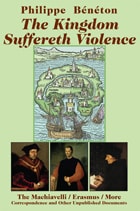
The Kingdom Suffereth Violence
The Machiavelli / Erasmus / More Correspondence and Other Unpublished DocumentsPhilippe Bénéton
St. Augustine's Press, 2012
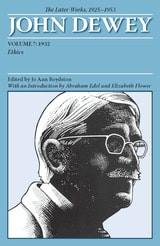
The Later Works of John Dewey, Volume 7, 1925 - 1953
1932, EthicsJohn Dewey. Edited by Jo Ann Boydston
Southern Illinois University Press, 2008
Introduction by Abraham Edel and Elizabeth Flower
This seventh volume provides an authoritative edition of Dewey and James H. Tufts’ 1932 Ethics.
Dewey and Tufts state that the book’s aim is: “To induce a habit of thoughtful consideration, of envisaging the full meaning and consequences of individual conduct and social policies,” insisting throughout that ethics must be constantly concerned with the changing problems of daily life.
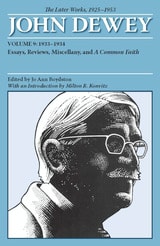
The Later Works of John Dewey, Volume 9, 1925 - 1953
1933-1934, Essays, Reviews, Miscellany, and A Common FaithJohn Dewey. Edited by Jo Ann Boydston
Southern Illinois University Press, 2008
This ninth volume in The Later Works of John Dewey, 1925—1953, brings together sixty items from 1933 and 1934, including Dewey’s Terry Lectures at Yale University, published as A Common Faith.
In his introduction, Milton R. Konvitz concludes that A Common Faith remains a provocative book, an intellectual ‘teaser,’ an essay at religious philosophy which no philosopher can wholly bypass.”
Dewey concentrated much of his writing in 1933 and 1934 on issues arising from the economic crises of the Great Depression. In the early 1930s Communist activity in the New York Teachers Union increased. The Report of the Special Grievance Committee of the Teachers Union is published in this volume, as is Dewey’s impromptu address, “On the Grievance Committee’s Report,” made when he presented that report. Rounding out the volume are eighteen articles from the People’s Lobby Bulletin.
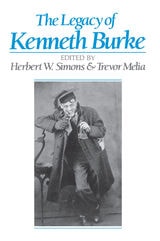
The Legacy of Kenneth Burke
Herbert W. Simons
University of Wisconsin Press, 1989
Capturing the lively modernist milieu of Kenneth Burke’s early career in Greenwich Village, where Burke arrived in 1915 fresh from high school in Pittsburgh, this book discovers him as an intellectual apprentice conversing with “the moderns.” Burke found himself in the midst of an avant-garde peopled by Malcolm Cowley, Marianne Moore, Jean Toomer, Katherine Anne Porter, William Carlos Williams, Allen Tate, Hart Crane, Alfred Stieglitz, and a host of other fascinating figures.
Burke himself, who died in 1993 at the age of 96, has been hailed as America’s most brilliant and suggestive critic and the most significant theorist of rhetoric since Cicero. Many schools of thought have claimed him as their own, but Burke has defied classification and indeed has often been considered a solitary, eccentric genius immune to intellectual fashions. But Burke’s formative work of the 1920s, when he first defined himself and his work in the context of the modernist conversation, has gone relatively unexamined.
Here we see Burke living and working with the crowd of poets, painters, and dramatists affiliated with Others magazine, Stieglitz’s “291” gallery, and Eugene O’Neill’s Provincetown Players; the leftists associated with the magazines The Masses and Seven Arts; the Dadaists; and the modernist writers working on literary journals like The Dial, where Burke in his capacity as an associate editor saw T. S. Eliot’s “The Wasteland” into print for the first time and provided other editorial services for Thomas Mann, e.e. cummings, Ezra Pound, and many other writers of note. Burke also met the iconoclasts of the older generation represented by Theodore Dreiser and H. L. Mencken, the New Humanists, and the literary nationalists who founded Contact and The New Republic. Jack Selzer shows how Burke’s own early poems, fiction, and essays emerged from and contributed to the modernist conversation in Greenwich Village. He draws on a wonderfully rich array of letters between Burke and his modernist friends and on the memoirs of his associates to create a vibrant portrait of the young Burke’s transformation from aesthete to social critic.
The Limits of Critique
Rita Felski
University of Chicago Press, 2015
Why must critics unmask and demystify literary works? Why do they believe that language is always withholding some truth, that the critic’s task is to reveal the unsaid or repressed? In this book, Rita Felski examines critique, the dominant form of interpretation in literary studies, and situates it as but one method among many, a method with strong allure—but also definite limits.
Felski argues that critique is a sensibility best captured by Paul Ricoeur’s phrase “the hermeneutics of suspicion.” She shows how this suspicion toward texts forecloses many potential readings while providing no guarantee of rigorous or radical thought. Instead, she suggests, literary scholars should try what she calls “postcritical reading”: rather than looking behind a text for hidden causes and motives, literary scholars should place themselves in front of it and reflect on what it suggests and makes possible.
By bringing critique down to earth and exploring new modes of interpretation, The Limits of Critique offers a fresh approach to the relationship between artistic works and the social world.
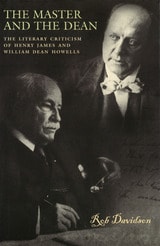
The Master and the Dean
The Literary Criticism of Henry James and William Dean HowellsRob Davidson
University of Missouri Press, 2005
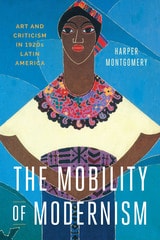
The Mobility of Modernism
Art and Criticism in 1920s Latin AmericaBy Harper Montgomery
University of Texas Press, 2017
Arvey Foundation Book Award, Association for Latin American Art, 2018
Many Latin American artists and critics in the 1920s drew on the values of modernism to question the cultural authority of Europe. Modernism gave them a tool for coping with the mobility of their circumstances, as well as the inspiration for works that questioned the very concepts of the artist and the artwork and opened the realm of art to untrained and self-taught artists, artisans, and women. Writing about the modernist works in newspapers and magazines, critics provided a new vocabulary with which to interpret and assign value to the expanding sets of abstracted forms produced by these artists, whose lives were shaped by mobility.
The Mobility of Modernism examines modernist artworks and criticism that circulated among a network of cities, including Buenos Aires, Mexico City, Havana, and Lima. Harper Montgomery maps the dialogues and relationships among critics who published in avant-gardist magazines such as Amauta and Revista de Avance and artists such as Carlos Mérida, Xul Solar, and Emilio Pettoruti, among others, who championed esoteric forms of abstraction. She makes a convincing case that, for these artists and critics, modernism became an anticolonial stance which raised issues that are still vital today—the tensions between the local and the global, the ability of artists to speak for blighted or unincorporated people, and, above all, how advanced art and its champions can enact a politics of opposition.
The New Hegemony in Literary Studies
Contradictions in TheoryTony Hilfer
Northwestern University Press, 2003
The problem Hilfer identifies is one of logical consistency, but also of moral and psychological implications, and it can be found operating across the whole spectrum of literary Theory. It is, however, as this book makes blindingly clear, not immune from scrutiny. With quiet erudition and consistent incisiveness, Hilfer shows how the various methods, while ostensibly at odds, actually fit together, all sharing the same peculiar structure and logic, and all wearing an identical set of ideological blinders. He offers examples of theorists-and assumptions-hard at work on particular texts, and again and again (often letting these theorists refute themselves) pinpoints the blindspots that have become endemic in the practice of Theory.
Written with great care and a deep commitment to the value and integrity of literary criticism and theory, this tonic work stands as a corrective to the misuse of theory, and a bracing reminder of how a critical approach works when it is well and judiciously applied.
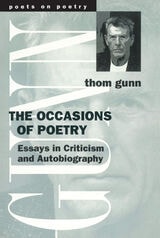
The Occasions of Poetry
Essays in Criticism and AutobiographyThom Gunn
University of Michigan Press, 1999
Thom Gunn is well-known as a poet, and increasingly as a literary critic. The Occasions of Poetry includes insightful critical pieces on writers ranging from William Carlos Williams and Gary Snyder to Thomas Hardy and Robert Duncan. "The occasion in all cases," writes Gunn, "is the starting point, only, of a poem, but it should be a starting point to which the poet must in some sense stay true." The first loyalty of a writer who is "true to his occasions," he writes, must be to the facts of experience.
The book includes five autobiographical essays, which combine to form an engaging account of the author's development as a poet and to chronicle some of the most significant literary currents of recent decades, both in England and America.
Thom Gunn, born in England in 1929, has lived in America since 1954. His books include Shelf Life: Essays, Memoirs, and an Interview; The Man with Night Sweats; Collected Poems; and The Passages of Joy. The Occasions of Poetry was originally published by Faber and Faber.
The Open-Ended City
David Dillon on Texas ArchitectureBy Kathryn E. Holliday; foreword by Robert Decherd
University of Texas Press, 2019
Texas Historical Commission Award of Excellence in Media Achievement, Texas Historical Commission
In 1980, David Dillon launched his career as an architectural critic with a provocative article that asked “Why Is Dallas Architecture So Bad?” Over the next quarter century, he offered readers of the Dallas Morning News a vision of how good architecture and planning could improve quality of life, combatting the negative effects of urban sprawl, civic fragmentation, and rapacious real estate development typical in Texas cities. The Open-Ended City gathers more than sixty key articles that helped establish Dillon’s national reputation as a witty and acerbic critic, showing readers why architecture matters and how it can enrich their lives.Kathryn E. Holliday discusses how Dillon connected culture, commerce, history, and public life in ways that few columnists and reporters ever get the opportunity to do. The articles she includes touch on major themes that animated Dillon’s writing: downtown redevelopment, suburban sprawl, arts and culture, historic preservation, and the necessity of aesthetic quality in architecture as a baseline for thriving communities. While the specifics of these articles will resonate with those who care about Dallas, Fort Worth, and other Texas cities, they are also deeply relevant to all architects, urbanists, and citizens who engage in the public life and planning of cities. As a collection, The Open-Ended City persuasively demonstrates how a discerning critic helped to shape a landmark city by shaping the conversation about its architecture.
The Order of Forms
Realism, Formalism, and Social SpaceAnna Kornbluh
University of Chicago Press, 2019
Kornbluh offers a powerful argument that political formalism, by valuing forms of sociability like the city and the state in and of themselves, provides a better understanding of literary form and its political possibilities than approaches that view form as a constraint. To make this argument, she takes up the case of literary realism, showing how novels by Dickens, Brontë, Hardy, and Carroll engage mathematical formalism as part of their political imagining. Realism, she shows, is best understood as an exercise in social modeling—more like formalist mathematics than social documentation. By modeling society, the realist novel focuses on what it considers the most elementary features of social relations and generates unique political insights. Proposing both this new theory of realism and the idea of political formalism, this inspired, eye-opening book will have far-reaching implications in literary studies.

The Performing Self
Compositions and Decompositions in the Languages of Contemporary LifePoirier, Richard
Rutgers University Press, 1992
.

The Petrine Revolution in Russian Architecture
James Cracraft
University of Chicago Press, 1988
The Planetary Turn
Relationality and Geoaesthetics in the Twenty-First CenturyEdited by Amy J. Elias and Christian Moraru
Northwestern University Press, 2015
A groundbreaking essay collection that pursues the rise of geoculture as an essential framework for arts criticism, The Planetary Turn shows how the planet—as a territory, a sociopolitical arena, a natural space of interaction for all earthly life, and an artistic theme—is increasingly the conceptual and political dimension in which twenty-first-century writers and artists picture themselves and their work. In an introduction that comprehensively defines the planetary model of art, culture, and cultural-aesthetic interpretation, the editors explain how the living planet is emerging as distinct from older concepts of globalization, cosmopolitanism, and environmentalism and is becoming a new ground for exciting work in contemporary literature, visual and media arts, and social humanities. Written by internationally recognized scholars, the twelve essays that follow illustrate the unfolding of a new vision of potential planetary community that retools earlier models based on the nation-state or political “blocs” and reimagines cultural, political, aesthetic, and ethical relationships for the post–Cold War era.
The Point Is To Change It
Poetry and Criticism in the Continuing PresentJerome McGann
University of Alabama Press, 2007
A preeminent critic maps the frontier of contemporary poetry.
In this book, Jerome McGann argues that contemporary language-oriented writing implies a marked change in the way we think about our poetic tradition on one hand and in the future of criticism on the other. He focuses on Walter Benjamin and Gertrude Stein as important intellectual resources because both see the history of poetry as a crisis of the present rather than as a legacy of the past. The crisis appears as a poetic deficit in contemporary culture, where values of politics and morality are judged prima facie more important than aesthetic values. McGann argues for the fundamental relevance of the aesthetic dimension and the contemporary relevance of cultural works of the past.
McGann moves through several broad categories in his examination of contemporary poetry, including the ways in which poetry must be abstract, change, and give pleasure. The author draws on sources ranging from the poetry of Bruce Andrews and Robert Duncan to Looney Tunes cartoons. The experimental move in contemporary poetry, McGann contends, is an emergency signal for readers and critics as much as it is for writers and poets, a signal that calls us to rethink the aesthetics of criticism. The interpretation of literary works has been dominated by enlightenment models—the expository essay and monograph—for almost two hundred years. With the emergence of new media, especially digital culture, the limitations of those models have grown increasingly apparent.
The Point Is To Change It explores alternative critical methods and provides a powerful call to reinvent our modes of investigation in order to escape the limitations of our inherited academic models. The goal of this process is to widen existing cracks or create new ones because, as McGann points out via the lyrics of Leonard Cohen, "That's how the light gets in."
The Politics of Reception
Critical Constructions of Mikhail ZoshchenkoGreg Carleton
Northwestern University Press, 1998
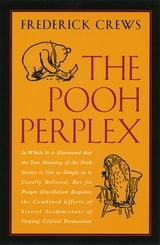
The Pooh Perplex
Frederick Crews
University of Chicago Press, 2003

The Porch
Meditations on the Edge of NatureCharlie Hailey
University of Chicago Press, 2021
Hailey writes from a modest porch on the Homosassa River in Florida. He sleeps there, studies the tides, listens for osprey and manatee, welcomes shipwrecked visitors, watches shadows on its screens, reckons with climate change, and reflects on his own acclimation to his environment. The profound connections he unearths anchor an armchair exploration of past porches and those of the future, moving from ancient Greece to contemporary Sweden, from the White House roof to the Anthropocene home. In his ruminations, he links up with other porch dwellers including environmentalist Rachel Carson, poet Wendell Berry, writers Eudora Welty and Zora Neale Hurston, philosopher John Dewey, architect Louis Kahn, and photographer Paul Strand.
As close as architecture can bring us to nature, the porch is where we can learn to contemplate anew our evolving place in a changing world—a space we need now more than ever. Timeless and timely, Hailey’s book is a dreamy yet deeply passionate meditation on the joy and gravity of sitting on the porch.
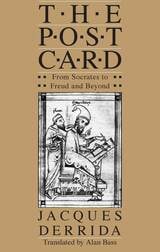
The Post Card
From Socrates to Freud and BeyondJacques Derrida
University of Chicago Press, 1987
You were reading a somewhat retro loveletter, the last in history. But you have not yet received it. Yes, its lack or excess of address prepares it to fall into all hands: a post card, an open letter in which the secret appears, but indecipherably.
What does a post card want to say to you? On what conditions is it possible? Its destination traverses you, you no longer know who you are. At the very instant when from its address it interpellates, you, uniquely you, instead of reaching you it divides you or sets you aside, occasionally overlooks you. And you love and you do not love, it makes of you what you wish, it takes you, it leaves you, it gives you.
On the other side of the card, look, a proposition is made to you, S and p, Socrates and plato. For once the former seems to write, and with his other hand he is even scratching. But what is Plato doing with his outstretched finger in his back? While you occupy yourself with turning it around in every direction, it is the picture that turns you around like a letter, in advance it deciphers you, it preoccupies space, it procures your words and gestures, all the bodies that you believe you invent in order to determine its outline. You find yourself, you, yourself, on its path.
The thick support of the card, a book heavy and light, is also the specter of this scene, the analysis between Socrates and Plato, on the program of several others. Like the soothsayer, a "fortune-telling book" watches over and speculates on that-which-must-happen, on what it indeed might mean to happen, to arrive, to have to happen or arrive, to let or to make happen or arrive, to destine, to address, to send, to legate, to inherit, etc., if it all still signifies, between here and there, the near and the far, da und fort, the one or the other.
You situate the subject of the book: between the posts and the analytic movement, the pleasure principle and the history of telecommunications, the post card and the purloined letter, in a word the transference from Socrates to Freud, and beyond. This satire of epistolary literature had to be farci, stuffed with addresses, postal codes, crypted missives, anonymous letters, all of it confided to so many modes, genres, and tones. In it I also abuse dates, signatures, titles or references, language itself.
J. D.
"With The Post Card, as with Glas, Derrida appears more as writer than as philosopher. Or we could say that here, in what is in part a mock epistolary novel (the long section is called "Envois," roughly, "dispatches" ), he stages his writing more overtly than in the scholarly works. . . . The Post Card also contains a series of self-reflective essays, largely focused on Freud, in which Derrida is beautifully lucid and direct."—Alexander Gelley, Library Journal
The Powers of the False
Reading, Writing, Thinking beyond Truth and FictionDoro Wiese
Northwestern University Press, 2014
The Premodern Condition
Medievalism and the Making of TheoryBruce Holsinger
University of Chicago Press, 2005
Holsinger shows that the preoccupation with medieval cultures and practices among Bataille, Derrida, Lacan, Barthes, Bourdieu, and their cohorts was so wide ranging that it merits recognition as one of the most significant epiphenomena of postwar French thought. Not simply an object of nostalgic longing or an occasional source of literary exempla, the medieval epoch was continually mined by these thinkers for specific philosophical vocabularies, social formations, and systems of thought.
To supplement its master thesis, The Premodern Condition also contains original essays by Bataille and Bourdieu—translated here for the first time into English—that testify in various ways to the strange persistence of medievalisms in French postwar avant-garde writings. What results is an important and original work that will be a touchstone for specialists in medieval studies and critical theory alike.
The Price of Literature
The French Novel's Theoretical TurnPatrick M. Bray
Northwestern University Press, 2019
Literary thought, or the theory produced by the text, can only function by exploring what escapes dominant representations. The Price of Literature analyzes how certain iconic texts from the nineteenth century (by Mme de Staël, Hugo, Balzac, Flaubert, and Proust) perform a theoretical turn to claim the freedom to represent anything in the world, but also literature’s ability to transform the world it represents. The conclusion advances a new way of thinking about literary scholarship—one based on how literature redistributes ways of writing by lending form to thought.
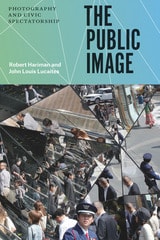
The Public Image
Photography and Civic SpectatorshipRobert Hariman and John Louis Lucaites
University of Chicago Press, 2016
By confronting these conflicted reactions to photography, Robert Hariman and John Louis Lucaites make the case for a fundamental shift in understanding photography and public culture. In place of suspicions about the medium’s capacity for distraction, deception, and manipulation, they suggest how it can provide resources for democratic communication and thoughtful reflection about contemporary social problems.
The key to living well in the image world is to unlock photography from viewing habits that inhibit robust civic spectatorship. Through insightful interpretations of dozens of news images, The Public Image reveals how the artistry of the still image can inform, challenge, and guide reflection regarding endemic violence, environmental degradation, income inequity, and other chronic problems that will define the twenty-first century.
By shifting from conventional suspicions to a renewed encounter with the image, we are challenged to see more deeply on behalf of a richer life for all, and to acknowledge our obligations as spectators who are, crucially, also citizens.
The Rent of Form
Architecture and Labor in the Digital AgePedro Fiori Arantes
University of Minnesota Press, 2019
A critique of prominent architects’ approach to digitally driven design and labor practices over the past two decades
With the advent of revolutionary digital design and production technologies, contemporary architects and their clients developed a taste for dramatic, unconventional forms. Seeking to amaze their audiences and promote their global brands, “starchitects” like Herzog & de Meuron and Frank Gehry have reaped substantial rewards through the pursuit of spectacle enabled by these new technologies. This process reached a climax in projects like Gehry’s Guggenheim Bilbao and the “Bilbao effect,” in which spectacular architectural designs became increasingly sought by municipal and institutional clients for their perceived capacity to enhance property values, which author Pedro Fiori Arantes calls the “rent of form.”
Analyzing many major international architectural projects of the past twenty years, Arantes provides an in-depth account of how this “architecture of exception” has come to dominate today’s industry. Articulating an original, compelling critique of the capital and labor practices that enable many contemporary projects, Arantes explains how circulation (via image culture), consumption (particularly through tourism), the division of labor, and the distribution of wealth came to fix a certain notion of starchitecture at the center of the industry.
Significantly, Arantes’s viewpoint is not that of Euro-American capitalism. Writing from the Global South, this Brazilian theorist offers a fresh perspective that advances ideas less commonly circulated in dominant, English-language academic and popular discourse. Asking key questions about the prevailing logics of finance capital, and revealing inconvenient truths about the changing labor of design and the treatment of construction workers around the world, The Rent of Form delivers a much-needed reevaluation of the astonishing buildings that have increasingly come to define world cities.
The Revelation of Imagination
From Homer and the Bible through Virgil and Augustine to DanteWilliam Franke
Northwestern University Press, 2015
In The Revelation of Imagination, William Franke attempts to focus on what is enduring and perennial rather than on what is accommodated to the agenda of the moment. Franke’s book offers re-actualized readings of representative texts from the Bible, Homer, and Virgil to Augustine and Dante. The selections are linked together in such a way as to propose a general interpretation of knowledge. They emphasize, moreover, a way of articulating the connection of humanities knowledge with what may, in various senses, be called divine revelation. This includes the sort of inspiration to which poets since Homer have typically laid claim, as well as that proper to the biblical tradition of revealed religion. The Revelation of Imagination invigorates the ongoing discussion about the value of humanities as a source of enduring knowledge.

The Rhetoric of Interpretation and the Interpretation of Rhetoric
Paul Hernadi, ed.
Duke University Press, 1989
The Rhythm of Images
Cinema beyond MeasureDomietta Torlasco
University of Minnesota Press, 2021
A rigorous and imaginative inquiry into rhythm’s vital importance for film and the moving image
Focusing attention on a concept much neglected in the study of film, The Rhythm of Images opens new possibilities for thinking about expanded perception and idiosyncratic modes of being. Author Domietta Torlasco engages with both philosophy and cinema to elaborate a notion of rhythm in its pre-Socratic sense as a “manner of flowing”—a fugitive mode that privileges contingency and calls up the forgotten fluidity of forms. In asking what it would mean to take this rhythm as an ontological force in its own right, she creatively draws on thinkers such as Giorgio Agamben, Roland Barthes, Gilles Deleuze, and Luce Irigaray. Rhythm emerges here as a form that eludes measure, a key to redefining the relation between the aesthetic and the political, and thus a pivotal means of resistance to power.
Working with constellations of films and videos by international artists—from Michelangelo Antonioni, Jean-Luc Godard, and David Lynch to Harun Farocki and Victor Burgin, among others—Torlasco brings to bear on them her distinctive concept of rhythm with respect to four interrelated domains: life, labor, memory, and medium. With innovative readings of artworks and critical texts alike, The Rhythm of Images fashions a vibrant, provocative theory of rhythm as the excess or potential of perception.
Ultimately, the book reconceives the relation between rhythm and the world-making power of images. The result is a vision of cinema as a hybrid medium endowed with the capacity not only to reinvent corporeal boundaries but also to find new ways of living together.
The Saving Lie
Harold Bloom and DeconstructionAgata Bielik-Robson
Northwestern University Press, 2011
Bloom is indeed a party of one, a truly strong poet of his own mode of religious-literary criticism, who, in a typically Emersonian manner, makes his own circumstances and sheds influences by incorporating them into his idiosyncratic theory.In this unprecedented full-length study on Harold Bloom, Agata Bielik-Robson explores the many facets of Bloom’s critical writings and career. In his work, she argues, Bloom draws on a variety of disparate traditions—Judaism, gnosis, Romanticism, American pragmatism, and Freudianism, but also, especially recently, Victorian aestheticism—that comprise a dialectical, difficult whole in a constant quarrel with itself. Yet, this is precisely the image of "life-in-antithesis," which constitutes Bloom’s highest speculative achievement, she observes. The Saving Lie brings all these "Blooms" together and, despite their own tendencies toward dissociation, lets them speak unisono: in one almost harmonious voice that will clearly utter the principles of a new speculative position—Bloom’s antithetical vitalism. This study of Bloom and his contributions will not soon be surpassed.
The Scarlet Mob of Scribblers
Rereading Hester PrynneJamie Barlowe
Southern Illinois University Press, 2000
Jamie Barlowe finds it bitterly ironic that in literary criticism of The Scarlet Letter, a major American novel about a woman, the voices of female critics have been virtually excluded.
Barlowe examines the causes and consequences of the continuing disregard for women's scholarship. To that end, she chronicles The Scarlet Letter's critical reception, analyzes the history of Hester Prynne as a cultural icon in literature and film, rereads the canonized criticism of the novel, and offers a new reading of Hawthorne's work by rescuing marginalized interpretations from the alternative canon of women critics.
Despite the fervent protestations of scholars that women and minorities are no longer excluded from the arena of academic debate, Barlowe's investigation reveals that mainstream scholarship on The Scarlet Letter—studied as models by generations of students and teachers—remains male-dominated in its comprising population and in its attitudes and practices, which function as the source of its truth-claims. Rather than celebrating the minimal handouts of the academy to women and minorities—and of the culture that nurtures and supports the academy's continuing discrimination—Barlowe constructs a case study that reveals the "rather pitiful state of affairs at the close of the twentieth century."
By interrogating canonized assumptions, Barlowe charts new directions for Hawthorne studies and American literary studies. Through this exposé of ingrained institutional bias, perpetuated myths, and privileged critics, Barlowe provides a refigured perception of the field and state of contemporary literary scholarship.
The Scholar's Art
Literary Studies in a Managed WorldJerome McGann
University of Chicago Press, 2006
Of particular interest to McGann is the demise of public discourse about poetry. That poetry has become recondite is, to his mind, at once a problem for how scholars do their work and a general cultural emergency. The Scholar’s Art asks what could be gained by reimagining the way scholars have codified the literary and cultural history of the past two hundred years and goes on to provide a series of case studies that illustrate how scholarly method can help bring about such reimaginings. McGann closes with a discussion of technology’s ability to harness the reimagination of cultural memory and concludes with exemplary acts of critical reflection.
Astute observation from one of America’s most bracing and original commentators on the place of literature in twenty-first century culture, The Scholar’s Art proposes new ways—cultural, philological, and technological—to reimagine our literary past and future.
The Sense of the World
Nancy, Jean-Luc
University of Minnesota Press, 1998
Is there a “world” anymore, let alone any “sense” to it? Acknowledging the lack of meaning in our time, and the lack of a world at the center of meanings we try to impose, Jean-Luc Nancy presents a rigorous critique of the many discourses-from philosophy and political science to psychoanalysis and art history-that talk and write their way around these gaping absences in our lives.
In an original style befitting his search for a new mode of thought, Nancy offers fragmentary readings of writers such as Nietzsche, Hegel, Marx, Lévinas, Lacan, Derrida, and Deleuze insofar as their work reflects his concern with sense and the world. Rather than celebrate or bemoan the loss of meaning or attempt to install a new one, his book seeks to reposition both sense and the world between the presence and absence of meaning, between objectivity and subjectivity. Nancy’s project entails a reconception of the field of philosophy itself, a rearticulation of philosophical practice. Neither recondite nor abstract, it is concerned with the existence and experience of freedom-the actuality of existence as experienced by contemporary communities of citizens, readers, and writers.
Combining aesthetic, political, and philosophical considerations to convey a sense of the world between meaning and reality, ideal content and material form, this book offers a new way of understanding-and responding to-“the end of the world.”
Jean-Luc Nancy teaches at the University of Human Sciences in Strasbourg. His books in English include The Literary Absolute (with Philip Lacoue-Labarthe, 1988), The Inoperative Community (Minnesota, 1991), The Birth to Presence (1993), The Experience of Freedom (1993), and The Muses (1996).
Jeffrey S. Librett is associate professor of modern languages and literatures at Loyola University of Chicago.
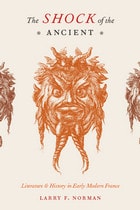
The Shock of the Ancient
Literature and History in Early Modern FranceLarry F. Norman
University of Chicago Press, 2011
The cultural battle known as the Quarrel of the Ancients and Moderns served as a sly cover for more deeply opposed views about the value of literature and the arts. One of the most public controversies of early modern Europe, the Quarrel has most often been depicted as pitting antiquarian conservatives against the insurgent critics of established authority. The Shock of the Ancient turns the canonical vision of those events on its head by demonstrating how the defenders of Greek literature—rather than clinging to an outmoded tradition—celebrated the radically different practices of the ancient world.
At a time when the constraints of decorum and the politics of French absolutism quashed the expression of cultural differences, the ancient world presented a disturbing face of otherness. Larry F. Norman explores how the authoritative status of ancient Greek texts allowed them to justify literary depictions of the scandalous. The Shock of the Ancient surveys the diverse array of aesthetic models presented in these ancient works and considers how they both helped to undermine the rigid codes of neoclassicism and paved the way for the innovative philosophies of the Enlightenment. Broadly appealing to students of European literature, art history, and philosophy, this book is an important contribution to early modern literary and cultural debates.
The Short Novels of John Steinbeck
Critical Essays with a Checklist to Steinbeck CriticismJackson J. Benson, ed.
Duke University Press, 1990
The essays examine the six most popular short novels—Tortilla Flat, The Red Pony, Of Mice and Men, The Moon Is Down, Cannery Row, and The Pearl—in addition to the three usually thought of as less successful—Burning Bright, Sweet Thursday, and The Short Reign of Pippin IV. Because most of Steinbeck’s short novels were adapted and presented as plays or screenplays, many of the essays deal with dramatic or film versions of the short novels as well as with the fiction. The collection concludes with a comprehensive checklist of criticism of the short novels.
Contributors. Richard Astro, Jackson J. Benson, Carroll Britch, John Ditsky, Joseph Fontenrose, Warren French, Robert Gentry, Mimi Reisel Gladstein, William Goldhurst, Tetsumaro Hayashi, Robert S. Hughes Jr., Howard Levant, Clifford Lewis, Peter Lisca, Anne Loftis, Charles R. Metzger, Michael J. Meyer, Robert E. Morsberger, Louis Owens, Roy S. Simmonds, Mark Spilka, John Timmerman
The Singular Objects of Architecture
Jean Baudrillard
University of Minnesota Press, 2005
Among the topics the two speakers take up are the city of tomorrow and the ideal of transparency, the gentrification of New York City and Frank Gehry’s surprising Guggenheim Museum in Bilbao. As Nouvel prompts Baudrillard to reflect on some of his signature concepts (the virtual, transparency, fatal strategies, oblivion, and seduction, among others), the confrontation between such philosophical concerns and the specificity of architecture gives rise to novel and striking formulations—and a new way of establishing and understanding the connections between the practitioner and the philosopher, the object and the idea.
This wide-ranging conversation builds a bridge between the fields of architecture and philosophy. At the same time it offers readers an intimate view of the meeting of objects and ideas in which the imagined, constructed, and inhabited environment is endlessly changing, forever evolving.
Jean Baudrillard is one of the most influential thinkers of his generation and author of The Vital Illusion (2001).
Jean Nouvel has designed buildings throughout the world, including the new Guthrie Theater in Minneapolis, and is a recipient of France’s Grand Prix d’Architecture.
Robert Bononno, a translator and teacher, lives in New York City.
The Social Life of Criticism
Gender, Critical Writing, and the Politics of BelongingKimberly J. Stern
University of Michigan Press, 2016
This engaging study begins by looking at the eighteenth century, when critical writing started to assume the institutional and generic structures we associate with it today, and examines a series of case studies that illuminate how women writers engaged with the forms of intellectual sociability that defined nineteenth-century criticism—including critical dialogue, the club, the salon, and the publishing firm. In doing so, it clarifies the fascinating rhetorical and political debates surrounding the figure of the female critic and charts how women writers worked both within and against professional communities. Ultimately, Stern contends that gender was a formative influence on critical practice from the very beginning, presenting the history of criticism as a history of gender politics.
While firmly grounded in literary studies, The Social Life of Criticism combines an attention to historical context with a deep investment in feminist scholarship, social theory, and print culture. The book promises to be of interest not only to professional academics and graduate students in nineteenth-century literature but also to scholars in a wide range of disciplines, including literature, intellectual history, cultural studies, gender theory, and sociology.
The Social and Political Life of Latin American Infrastructures
Edited by Jonathan Alderman and Geoff Goodwin
University of London Press, 2022
From roads, railways, statues, and bridges, infrastructure provides a unique lens through which to view our own national histories and societies. Serving as an important conduit between individuals and the state, infrastructure can help mediate citizenship, reshape social relations between people both within and across communities, and has the capacity to underpin—or indeed, undermine—nation-building.
Over the last century, infrastructure has transformed Latin America. Roads, railways, and airports have increased connectivity between spaces, peoples, and markets. Cables, switches, and tunnels have connected households to electricity grids, water systems, and digital technology. Public buildings, parks, and monuments have reshaped towns and cities and emerged as sites to construct and contest citizenship. Infrastructure has been welcomed and celebrated in Latin America, but it has also been resisted and destroyed.
Based on recent, original research, the essays in this collection cover a range of pressing infrastructural considerations, including sustainability, water conflict, extractive mining, and public housing in Brazil, Chile, Cuba, Colombia, Ecuador, and Mexico to better understand how infrastructure has reshaped Latin America over the past century.
The Task of Cultural Critique
Teresa L. Ebert
University of Illinois Press, 2008
Through groundbreaking analyses of cultural texts, Ebert questions the contemporary Derridian dogma that asserts "the future belongs to ghosts." Events-to-come are not spectral, she contends, but the material outcome of global class struggles. Not "hauntology" but history produces cultural practices and their conflictive representations--from sexuality, war, and consumption to democracy, torture, globalization, and absolute otherness. With close readings of texts from Proust and Balzac to "Chick Lit," from Lukács, de Man, Deleuze, and Marx to Derrida, Žižek, Butler, Kollontai, and Agamben, the book opens up new directions for cultural critique today.
The Technique of Thought
Nancy, Laruelle, Malabou, and Stiegler after NaturalismIan James
University of Minnesota Press, 2019
Interrogating the work of four contemporary French philosophers to rethink philosophy’s relationship to science and science’s relationship to reality
The Technique of Thought explores the relationship between philosophy and science as articulated in the work of four contemporary French thinkers—Jean-Luc Nancy, François Laruelle, Catherine Malabou, and Bernard Stiegler. Situating their writings within both contemporary scientific debates and the philosophy of science, Ian James elaborates a philosophical naturalism that is notably distinct from the Anglo-American tradition. The naturalism James proposes also diverges decisively from the ways in which continental philosophy has previously engaged with the sciences. He explores the technical procedures and discursive methods used by each of the four thinkers as distinct “techniques of thought” that approach scientific understanding and knowledge experimentally.
Moving beyond debates about the constructed nature of scientific knowledge, The Technique of Thought argues for a strong, variably configured, and entirely novel scientific realism. By bringing together post-phenomenological perspectives concerning individual or collective consciousness and first-person qualitative experience with science’s focus on objective and third-person quantitative knowledge, James tracks the emergence of a new image of the sciences and of scientific practice.
Stripped of aspirations toward total mastery of the universe or a “grand theory of everything,” this renewed scientific worldview, along with the simultaneous reconfiguration of philosophy’s relationship to science, opens up new ways of interrogating immanent reality.
The Test Drive
Avital Ronell
University of Illinois Press, 2004
The Text and Beyond
Essays in Literary LinguisticsCynthia Bernstein
University of Alabama Press, 1997
A groundbreaking collection that bridges linguistics and literature, offering powerful tools to uncover how language shapes meaning, identity, and power in literary texts.
The Text and Beyond: Essays in Literary Linguistics, edited by Cynthia Bernstein, presents a groundbreaking collection of essays that demonstrate how linguistic tools can enrich literary analysis. The volume brings together scholars who explore the intersections of language, literature, and culture—examining how syntax, discourse, gender, power, and regional dialects shape meaning in texts. From Tennessee Williams to Harry Crews, from Dickens to immigrant literature, the essays offer models for integrating linguistic theory with literary interpretation. This book is essential for scholars of stylistics, discourse analysis, and anyone interested in the evolving relationship between language and literature.
The Three Sustainabilities
Energy, Economy, TimeAllan Stoekl
University of Minnesota Press, 2021
Bringing the word sustainability back from the brink of cliché—to a substantive, truly sustainable future
Is sustainability a hopelessly vague word, with meager purpose aside from a feel-good appeal to the consumer? In The Three Sustainabilities, Allan Stoekl seeks to (re)valorize the word, for a simple reason: it is useful. Sustainability designates objects in time, their birth or genesis, their consistency, their survival, their demise. And it raises the question, as no other word does, of the role of humans in the survival of a world that is quickly disappearing—and perhaps in the genesis of another world.
Stoekl considers a range of possibilities for the word, touching upon questions of object ontology, psychoanalysis, urban critique, technocracy, and religion. He argues that there are three varieties of sustainability, seen from philosophical, cultural, and economic perspectives. One involves the self-sustaining world “without us”; another, the world under our control, which can run the political spectrum from corporatism to Marxism to the Green New Deal; and a third that carries a social and communitarian charge, an energy of the “universe” affirmed through, among other things, meditation and gifting. Each of these carves out a different space in the relations between objects, humans, and their survival and degradation. Each is necessary, unavoidable, and intimately bound with, and infinitely distant from, the others.
Along the way, Stoekl cites a wide range of authors, from philosophers to social thinkers, literary theorists to criminologists, anthropologists to novelists. This beautifully written, compelling, and nuanced book is a must for anyone interested in questions of ecology, energy, the environmental humanities, contemporary theories of the object, postmodern and posthuman aesthetics, or religion and the sacred in relation to community.
The Time of Laughter
Comedy and the Media Cultures of JapanDavid Humphrey
University of Michigan Press, 2023
The Truth of Uncertainty
Beyond Ideology in Science and LiteratureEdward L. Galligan
University of Missouri Press, 1998
In the last chapter of Walden, Henry David Thoreau proclaims a simple yet profound conviction: "Any truth is better than make- believe." Edward Galligan shares this conviction. In The Truth of Uncertainty: Beyond Ideology in Science and Literature, he argues that contemporary American critics should embrace literary truths with all of their ardent uncertainties rather than cling to the make-believe certainties of ideologies.
Postmodern critics fail to ask the truth-seeker's essential question, What does the evidence prove? and instead trust the generalizations and slogans of ideologies to guide their interpretations. Attempting to be up-to-date and profound, these critics lose sight of the literature they are supposed to explore.
The Truth of Uncertainty celebrates values commonly associated with modern, not postmodern criticism, applying them to contemporary works in a series of fresh and unusual inquiries. Galligan finds important implications for criticism in work from the physical sciences that are rarely touched on by American intellectuals, such as Gerald M. Edelman's Bright Air, Brilliant Fire: On the Matter of the Mind and Roger Penrose's The Emperor's New Mind: Concerning Computers, Minds, and the Laws of Physics. Likewise, he finds illumination in the works of novelists that American critics have largely ignored—Josef Skvorecky, George V. Higgins, Mary Lee Settle, Robertson Davies.
As a consequence of dealing with these "unusual" texts, Galligan presents a refreshing interpretation of a number of important concepts: language is grounded in talk; all literary criticism is subjective and tentative because reading is a highly subjective enterprise; and, most important, the world is real and any truth is indeed better than make-believe. He moves from a rejection of criticism in the service of ideology to an affirmation of criticism in the service of truthfulness.
The ideas celebrated in The Truth of Uncertainty are timeless and valuable. Galligan returns to the text and provides a penetrating critique of the state of contemporary criticism, which has abandoned truth for ideology. The result is an eloquent salute to literature itself.
The Uncommon Tongue
The Poetry and Criticism of Geoffrey HillVincent Sherry
University of Michigan Press, 1987
The Urban Apparatus
Mediapolitics and the CityReinhold Martin
University of Minnesota Press, 2017
Urbanization is a system of power and knowledge, and today’s city functions through the expansive material infrastructures of the urban order. In The Urban Apparatus, Reinhold Martin analyzes urbanization and the contemporary city in aesthetic, socioeconomic, and mediapolitical terms. He argues that understanding the city as infrastructure reveals urbanization to be a way of imparting functional, aesthetic, and cognitive order to a contradictory, doubly bound neoliberal regime.
Blending critical philosophy, political theory, and media theory, The Urban Apparatus explores how the aesthetics of cities and their political economies overlap. In a series of ten essays, with a detailed theoretical introduction, Martin explores questions related to urban life, drawn from a wide range of global topics—from the fiscal crisis in Detroit to speculative development in Mumbai to the landscape of Mars, from discussions of race and the environment to housing and economic inequality. Each essay proposes a particular “mediator” (or a material complex) that is shaped by imaginative practices, each answering the question “What is a city, today?”
The Urban Apparatus serves as an “urban” bookend to the architectural questions explored by Martin in his earlier book Utopia’s Ghost, and ultimately offers readers a way to think politically about urbanization.

The War Against The Intellect
Episodes Decline Of DiscoursePeter Shaw
University of Iowa Press, 1989
The Wolf Man's Magic Word
A CryptonymyNicolas Abraham
University of Minnesota Press, 2005