Results by title
1882 books match the query 'Criticism and interpretation' and 348 start with t
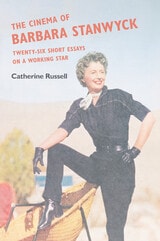
The Cinema of Barbara Stanwyck
Twenty-Six Short Essays on a Working StarCatherine Russell
University of Illinois Press, 2023
Original and rich, The Cinema of Barbara Stanwyck is an essential and entertaining reexamination of an enduring Hollywood star.
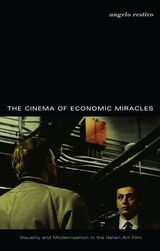
The Cinema of Economic Miracles
Visuality and Modernization in the Italian Art FilmAngelo Restivo
Duke University Press, 2002
Restivo studies numerous films of the period, focusing mainly on the works of Pier Paolo Pasolini and Michelangelo Antonioni. He finds that these auteurs’ films reworked the neorealist aesthetic developed in the 1940s and 1950s, explored issues brought to the fore by the subsequent consumer boom, and presaged developments central to both critical theory and the visual arts in the 1980s and 1990s. Drawing on the theories of Lacan, Zizek, Benjamin, Foucault, Jameson, and Deleuze, he shines new light on such films as Pasolini’s Accattone and Teorema, and Antonioni’s Red Desert and Blow-Up. Restivo’s model for understanding the relationship of the 1960s Italian art film to its cultural contexts also has implications that extend to the developing national cinemas of countries such as Brazil and Taiwan.
The Cinema of Economic Miracles will interest scholars and students in all areas of film studies, especially those studying theories of the image, national cinema theory, and Italian cinema, and to those engaged in poststructuralist theory, philosophy, and comparative literature.

The Cinema of Mika Kaurismäki
Transvergent Cinescapes, Emergent IdentitiesPietari Kääpä
Intellect Books, 2011
A PDF version of this book is available for free in open access via the OAPEN Library platform, www.oapen.org It has been made available under a Creative Commons Attribution 4.0 International Public License and is part of Knowledge Unlatched.
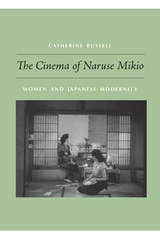
The Cinema of Naruse Mikio
Women and Japanese ModernityCatherine Russell
Duke University Press, 2008
Naruse was a studio-based director, a company man renowned for bringing films in on budget and on time. During his long career, he directed movies in different styles of melodrama while displaying a remarkable continuity of tone. His films were based on a variety of Japanese literary sources and original scripts; almost all of them were set in contemporary Japan. Many were “women’s films.” They had female protagonists, and they depicted women’s passions, disappointments, routines, and living conditions. While neither Naruse or his audiences identified themselves as “feminist,” his films repeatedly foreground, if not challenge, the rigid gender norms of Japanese society. Given the complex historical and critical issues surrounding Naruse’s cinema, a comprehensive study of the director demands an innovative and interdisciplinary approach. Russell draws on the critical reception of Naruse in Japan in addition to the cultural theories of Harry Harootunian, Miriam Hansen, and Walter Benjamin. She shows that Naruse’s movies were key texts of Japanese modernity, both in the ways that they portrayed the changing roles of Japanese women in the public sphere and in their depiction of an urban, industrialized, mass-media-saturated society.
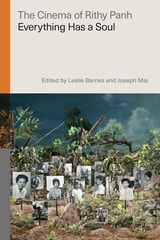
The Cinema of Rithy Panh
Everything Has a SoulLeslie Barnes
Rutgers University Press, 2022
Born in 1964, Cambodian filmmaker Rithy Panh grew up in the midst of the Khmer Rouge’s genocidal reign of terror, which claimed the lives of many of his relatives. After escaping to France, where he attended film school, he returned to his homeland in the late 1980s and began work on the documentaries and fiction films that have made him Cambodia’s most celebrated living director.
The fourteen essays in The Cinema of Rithy Panh explore the filmmaker’s unique aesthetic sensibility, examining the dynamic and sensuous images through which he suggests that “everything has a soul.” They consider how Panh represents Cambodia’s traumatic past, combining forms of individual and collective remembrance, and the implications of this past for Cambodia’s transition into a global present. Covering documentary and feature films, including his literary adaptations of Marguerite Duras and Kenzaburō Ōe, they examine how Panh’s attention to local context leads to a deep understanding of such major themes in global cinema as justice, imperialism, diaspora, gender, and labor.
Offering fresh takes on masterworks like The Missing Picture and S-21 while also shining a light on the director’s lesser-known films, The Cinema of Rithy Panh will give readers a new appreciation for the boundless creativity and ethical sensitivity of one of Southeast Asia’s cinematic visionaries.
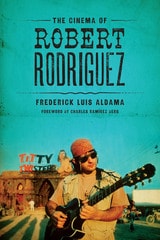
The Cinema of Robert Rodriguez
By Frederick Luis Aldama
University of Texas Press, 2014
Robert Rodriguez stands alone as the most successful U.S. Latino filmmaker today, whose work has single-handedly brought U.S. Latino filmmaking into the mainstream of twenty-first-century global cinema. Rodriguez is a prolific (eighteen films in twenty-one years) and all-encompassing filmmaker who has scripted, directed, shot, edited, and scored nearly all his films since his first breakout success, El Mariachi, in 1992. With new films constantly coming out and the launch of his El Rey Network television channel, he receives unceasing coverage in the entertainment media, but systematic scholarly study of Rodriguez’s films is only just beginning.
The Cinema of Robert Rodriguez offers the first extended investigation of this important filmmaker’s art. Accessibly written for fans as well as scholars, it addresses all of Rodriguez’s feature films through Spy Kids 4 and Machete Kills, and his filmmaking process from initial inspiration, to script, to film (with its myriad visual and auditory elements and choices), to final product, to (usually) critical and commercial success. In addition to his close analysis of Rodriguez’s work, Frederick Luis Aldama presents an original interview with the filmmaker, in which they discuss his career and his relationship to the film industry. This entertaining and much-needed scholarly overview of Rodriguez’s work shines new light on several key topics, including the filmmaker’s creative, low-cost, efficient approach to filmmaking; the acceptance of Latino films and filmmakers in mainstream cinema; and the consumption and reception of film in the twenty-first century.
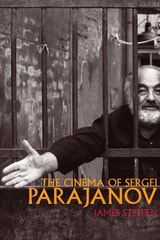
The Cinema of Sergei Parajanov
James Steffen
University of Wisconsin Press, 2013
The Cinema of Sergei Parajanov is the first English-language book on the director's films and the most comprehensive study of his work. James Steffen provides a detailed overview of Parajanov's artistic career: his identity as an Armenian in Georgia and its impact on his aesthetics; his early films in Ukraine; his international breakthrough in 1964 with Shadows of Forgotten Ancestors; his challenging 1969 masterpiece, The Color of Pomegranates, which was reedited against his wishes; his unrealized projects in the 1970s; and his eventual return to international prominence in the mid-to-late 1980s with The Legend of the Surami Fortress and Ashik-Kerib. Steffen also provides a rare, behind-the-scenes view of the Soviet film censorship process and tells the dramatic story of Parajanov's conflicts with the authorities, culminating in his 1973–77 arrest and imprisonment on charges related to homosexuality.
Ultimately, the figure of Parajanov offers a fascinating case study in the complicated dynamics of power, nationality, politics, ethnicity, sexuality, and culture in the republics of the former Soviet Union.
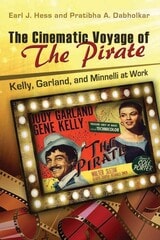
The Cinematic Voyage of THE PIRATE
Kelly, Garland, and Minnelli at WorkEarl J. Hess and Pratibha A. Dabholkar
University of Missouri Press, 2014
During Metro-Goldwyn-Mayer’s glory days, the studio’s famous Arthur Freed Unit made an extraordinary string of dazzling musicals. One of its very best was The Pirate. Based on a successful 1942 Broadway production, the film was directed by Vincente Minnelli and starred Gene Kelly and Judy Garland. It showcased some of the brightest work of these three gifted moviemakers and entranced many critics and viewers with exotic set décor and costumes, brilliant Technicolor application, stunning dance routines, and a clever plot about an actor who pretends to be a famous pirate to win the love of a fanciful island girl.
The Pirate has been studied by film historians, gender studies scholars, and film studies professionals since it was released in 1948. The Cinematic Voyage of The Pirate contributes to a growing literature asserting the importance of single-film production history and the significance of the film musical in the golden age of Hollywood.
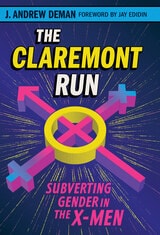
The Claremont Run
Subverting Gender in the X-MenJ. Andrew Deman; Foreword by Jay Edidin
University of Texas Press, 2023
Winner — 2024 Will Eisner Comic Industry Awards in Best Academic/Scholarly Work, announced at San Diego Comic-Con International (2024)
A data-driven deep dive into a legendary comics author’s subversion of gender norms within the bestselling comic of its time.
By the time Chris Claremont’s run as author of Uncanny X-Men ended in 1991, he had changed comic books forever. During his sixteen years writing the series, Claremont revitalized a franchise on the verge of collapse, shaping the X-Men who appear in today’s Hollywood blockbusters. But, more than that, he told a new kind of story, using his growing platform to articulate transgressive ideas about gender nonconformity, toxic masculinity, and female empowerment.
J. Andrew Deman’s investigation pairs close reading and quantitative analysis to examine gender representation, content, characters, and story structure. The Claremont Run compares several hundred issues of Uncanny X-Men with a thousand other Marvel comics to provide a comprehensive account of Claremont’s sophisticated and progressive gender politics. Claremont’s X-Men upended gender norms: where female characters historically served as mere eye candy, Claremont’s had leading roles and complex, evolving personalities. Perhaps more surprisingly, his male superheroes defied and complicated standards of masculinity. Groundbreaking in their time, Claremont’s comics challenged readers to see the real world differently and transformed pop culture in the process.
The Colonel's Dream
Charles W. Chesnutt
West Virginia University Press, 2014
Charles Waddell Chesnutt (1858-1932) was an African American writer, essayist, Civil Rights activist, legal-stenography businessman, and lawyer whose novels and short stories explore race, racism, and the problematic contours of African Americans’ social and cultural identities in post-Civil War South. He was the first African American to be published by a major American publishing house and served as a beacon-point for future African American writers.
The Colonel’s Dream, written in 1905, is a compelling tale of the post-Civil War South’s degeneration into a region awash with virulent racist practices against African Americans: segregation, lynchings, disenfranchisement, convict-labor exploitation, and endemic violent repression. The events in this novel are powerfully depicted from the point of view of a philanthropic but unreliable southern white colonel. Upon his return to the South, the colonel learns to abhor this southern world, as a tale of vicious racism unfolds. Throughout this narrative, Chesnutt confronts the deteriorating position of African Americans in an increasingly hostile South. Upon its publication The Colonel’s Dream was considered too controversial and unpalatable because of its bitter criticisms of southern white prejudice and northern indifference, and so this groundbreaking story failed to gain public attention and acclaim.
This is the first scholarly edition of The Colonel’s Dream. It includes an introduction and notes by R. J. Ellis and works to reestablish this great novel’s reputation.
The Conflagration of Community
Fiction before and after AuschwitzJ. Hillis Miller
University of Chicago Press, 2011
“After Auschwitz to write even a single poem is barbaric.” The Conflagration of Community challenges Theodor Adorno’s famous statement about aesthetic production after the Holocaust, arguing for the possibility of literature to bear witness to extreme collective and personal experiences. J. Hillis Miller masterfully considers how novels about the Holocaust relate to fictions written before and after it, and uses theories of community from Jean-Luc Nancy and Derrida to explore the dissolution of community bonds in its wake.
The Court of Comedy
Wilfred E. Major
The Ohio State University Press, 2013
The Cracks Between What We Are and What We Are Supposed to Be
Essays and InterviewsHarryette Mullen
University of Alabama Press, 2012
The Cracks Between What We Are and What We Are Supposed to Be forms an extended consideration not only of Harryette Mullen’s own work, methods, and interests as a poet, but also of issues of central importance to African American poetry and language, women’s voices, and the future of poetry.
Together, these essays and interviews highlight the impulses and influences that drive Mullen’s work as a poet and thinker, and suggest unique possibilities for the future of poetic language and its role as an instrument of identity and power.
The Craft of History and the Study of the New Testament
Beth M. Sheppard
SBL Press, 2012
The Creative Crone
Aging and the Poetry of May Sarton and Adrienne RichSylvia Henneberg
University of Missouri Press, 2010
The Crime of Jean Genet
Dominique Eddé
Seagull Books, 2016
Dominique Eddé met novelist and playwright Jean Genet in the 1970s. And she never forgot him. “His presence,” she writes, “gave me the sensation of icy fire. Like his words, his gestures were full, calculated, and precise. . . . Genet’s movements mimicked the movement of time, accumulating rather than passing.”
This book is Eddé’s account of that meeting and its ripples through her years of engaging with Genet’s life and work. Rooted in personal reminiscences, it is nonetheless much broader, offering a subtle analysis of Genet’s work and teasing out largely unconsidered themes, like the absence of the father, which becomes a metaphor for Genet’s perpetual attack on the law. Tying Genet to Dostoevsky through their shared fascination with crime, Eddé helps us more clearly understand Genet’s relationship to France and Palestine, Judaism, Christianity, Islam, the theater, and even death. A powerful personal account of the influence of one writer on another, The Crime of Jean Genet is also one of the most penetrating explorations yet of Genet’s work and achievement.
The Cultural Production of Matthew Arnold
Antony H. Harrison
Ohio University Press, 2009
The career of Matthew Arnold as an eminent poet and the preeminent critic of his generation constitutes a remarkable historical spectacle orchestrated by a host of powerful Victorian cultural institutions.
The Cultural Production of Matthew Arnold investigates these constructions by situating Arnold’s poetry in a number of contexts that partially shaped it. Such analysis revises our understanding of the formation of the elite (and elitist) male literary-intellectual subject during the 1840s and 1850s, as Arnold attempts self-definition and strives simultaneously to move toward a position of ideological influence upon intellectual institutions that were contested sites of economic, social, and political power in his era.
Antony H. Harrison reopens discussion of selected works by Arnold in order to make visible some of their crucial sociohistorical, intertextual, and political components. Only by doing so can we ultimately view the cultural work of Arnold “steadily and … whole,” and in a fashion that actually eschews this mystifying premise of all Arnoldian inquiry which, by the early twentieth century, had become wholly naturalized in the academy as ideology.
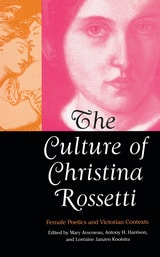
The Culture of Christina Rossetti
Female Poetics and Victorian ContextsMary Arseneau
Ohio University Press, 1999
The Culture of Christina Rossetti explores a “new” Christina Rossetti as she emerges from the scrutiny of the particular historical and cultural context in which she lived and wrote. The essays in this collection demonstrate how the recluse, saint, and renunciatory spinster of former studies was in fact an active participant in her society’s attempt to grapple with new developments in aesthetics, theology, science, economics, and politics.
The volume examines Rossetti’s poetry, fiction, and nonfiction from a variety of theoretical and critical perspectives in order to reevaluate her place in the Victorian world of art, literature, and ideas. The essays offer a radical rethinking of her best-known poems, retrieve neglected works, establish the diversity of her writing, and reposition Rossetti within a canon continually under formation.
Contributing to the ongoing retrieval of the nineteenth-century woman poet, The Culture of Christina Rossetti highlights Rossetti’s responses to both male and female literary traditions and explores her incorporation and revision of literary influences from medieval Italian sources to contemporary writers.
The Dance of the Intellect
Studies in the Poetry of the Pound TraditionMarjorie Perloff
Northwestern University Press, 1996
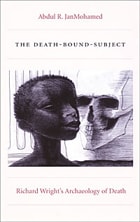
The Death-Bound-Subject
Richard Wright's Archaeology of DeathAbdul R. JanMohamed
Duke University Press, 2005
Drawing on psychoanalytic, Marxist, and phenomenological analyses, and on Orlando Patterson’s notion of social death, JanMohamed develops comprehensive, insightful, and original close readings of Wright’s major publications: his short-story collection Uncle Tom’s Children; his novels Native Son, The Outsider, Savage Holiday, and The Long Dream; and his autobiography Black Boy/American Hunger. The Death-Bound-Subject is a stunning reevaluation of the work of a major twentieth-century American writer, but it is also much more. In demonstrating how deeply the threat of death is involved in the formation of black subjectivity, JanMohamed develops a methodology for understanding the presence of the death-bound-subject in African American literature and culture from the earliest slave narratives forward.
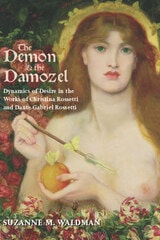
The Demon and the Damozel
Dynamics of Desire in the Works of Christina Rossetti and Dante Gabriel RossettiSuzanne M. Waldman
Ohio University Press, 2008
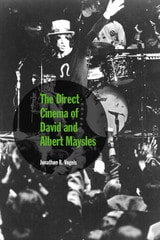
The Direct Cinema of David and Albert Maysles
Jonathan B. Vogels
Southern Illinois University Press, 2005
Boldly signifying the cultural issues of the 1960s and 1970s in groundbreaking pieces such as Grey Gardens, Gimme Shelter, and Showman, filmmakers and brothers David and Albert Maysles used an approach to documentary film that involved spontaneous observation of naturally occurring events. With no rehearsed footage and no preconceived plots, their revolutionary work eschewed the authoritative voice-over narrator, didactic scripts, and the traditional problem-and-solution format used by the majority of their predecessors in the genre and duly influenced subsequent directors in both fiction and nonfiction film. Their collaboration from 1962 until David’s death in 1987 wrought thirteen major works in which the brothers critiqued the concept of celebrity with unglamorous footage of iconic figures, explored how commercialism hinders communication, and questioned the possibility of seeing anything clearly in a world abounding with both real and constructed images.
Jonathan B. Vogels outlines how the Maysles brothers blended a unique amalgam of direct cinema characteristics, a modern humanist aesthetic, and a collaborative working process that included other directors and editors. Looking at the films as both shapers and reflections of American culture, he points out that the works offer insights into a wide range of contemporary topics including materialism, celebrity, modern art, and the American family. In addition to describing the changes in technology that made direct cinema possible, Vogels provides careful, scene-by-scene analyses that allow for a consideration of the Maysles brothers’ films as films, a tactic not frequently employed in nonfiction film studies.
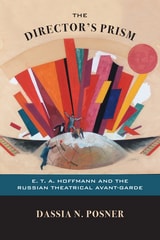
The Director's Prism
E. T. A. Hoffmann and the Russian Theatrical Avant-GardeDassia N. Posner
Northwestern University Press, 2016
Shortlist, 2019 Prague Quadrennial Best Scenography and Design Publication Award
The Director's Prism investigates how and why three of Russia's most innovative directors— Vsevolod Meyerhold, Alexander Tairov, and Sergei Eisenstein—used the fantastical tales of German Romantic writer E. T. A. Hoffmann to reinvent the rules of theatrical practice. Because the rise of the director and the Russian cult of Hoffmann closely coincided, Posner argues, many characteristics we associate with avant-garde theater—subjective perspective, breaking through the fourth wall, activating the spectator as a co-creator—become uniquely legible in the context of this engagement. Posner examines the artistic poetics of Meyerhold's grotesque, Tairov's mime-drama, and Eisenstein's theatrical attraction through production analyses, based on extensive archival research, that challenge the notion of theater as a mirror to life, instead viewing the director as a prism through whom life is refracted. A resource for scholars and practitioners alike, this groundbreaking study provides a fresh, provocative perspective on experimental theater, intercultural borrowings, and the nature of the creative process.
The Disappearance of Sherlock Holmes
Larry Millett
University of Minnesota Press, 2012
SHERLOCK HOLMES DISAPPEARS, POLICE SUSPECT FAMED DETECTIVE IN KIDNAPPING AND MURDER reads a New York headline. So begins the fifth mystery in Larry Millett’s series.
A letter, written in a secret cipher he recognizes all too well, reveals that an old foe of Holmes—a murderer he once captured after an incredible duel of wits—is back, has kidnapped his previous victim’s widow, and is now impersonating Holmes himself. Holmes must once again match wits with a particularly cunning adversary, one whose hatred of Holmes has seemingly become the killer’s single greatest obsession.
Chasing the kidnapper from London to New York to Chicago, Holmes and Watson race to keep up. Every move Holmes makes is expected; every trap proves elusive. Only with the assistance of his American cohort, the saloonkeeper Shadwell Rafferty, can Holmes hope to settle the score once and for all—or be framed for the crime himself.
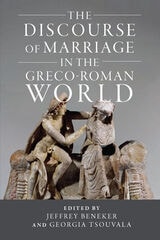
The Discourse of Marriage in the Greco-Roman World
Edited by Jeffrey Beneker and Georgia Tsouvala
University of Wisconsin Press, 2022
Through aesthetically informed and sensitive modes of analysis, these contributors examine a wealth of representations—including violence in weddings and spousal devotion after death. The Discourse of Marriage in the Greco-Roman World demonstrates the varying conceptions of an institution that was central to ancient social and political life—and remains prominent in the modern world. This volume will contribute to scholars' understanding of the era and fascinate anyone interested in historic depictions of marriage and the role and status of women in the late Hellenistic and early Imperial periods.
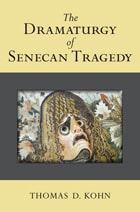
The Dramaturgy of Senecan Tragedy
Thomas D. Kohn
University of Michigan Press, 2013
The first-century Roman tragedies of Seneca, like all ancient drama, do not contain the sort of external stage directions that we are accustomed to today; nevertheless, a careful reading of the plays reveals such stage business as entrances, exits, setting, sound effects, emotions of the characters, etc. The Dramaturgy of Senecan Tragedy teases out these dramaturgical elements in Seneca's work and uses them both to aid in the interpretation of the plays and to show the playwright's artistry.
Thomas D. Kohn provides a detailed overview of the corpus, laying the groundwork for appreciating Seneca's techniques in the individual dramas. Each of the chapters explores an individual tragedy in detail, discussing the dramatis personae and examining how the roles would be distributed among a limited number of actors, as well as the identity of the Chorus. The Dramaturgy of Senecan Tragedymakes a compelling argument for Seneca as an artist and a dramaturg in the true sense of the word: "a maker of drama." Regardless of whether Seneca composed his plays for full-blown theatrical staging, a fictive theater of the mind, or something in between, Kohn demonstrates that he displays a consistency and a careful attentiveness to details of performance. While other scholars have applied this type of performance criticism to individual tragedies or scenes, this is the first comprehensive study of all the plays in twenty-five years, and the first ever to consider not just stagecraft, but also metatheatrical issues such as the significant distribution of roles among a limited number of actors, in addition to the emotional states of the characters. Scholars of classics and theater, along with those looking to stage the plays, will find much of interest in this study.
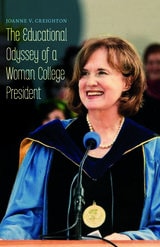
The Educational Odyssey of a Woman College President
Joanne V. Creighton
University of Massachusetts Press, 2018
In her autobiography, The Educational Odyssey of a Woman College President, Creighton situates her tenure at Mount Holyoke within a life and career that have traversed breathtaking changes in higher education and social life. Having held multiple roles in academia spanning undergraduate, professor, and president, Creighton served at small colleges and large public universities and experienced the dramatic changes facing women across the academy. From her girlhood in Wisconsin to the presidency of a storied women's college, she bears witness to the forces that have reshaped higher education for women and continues to advocate for the liberal arts and sciences.
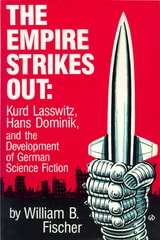
The Empire Strikes Out
Kurd Lasswitz, Hans Dominik, and the Development of German Science FictionWilliam B. Fischer
University of Wisconsin Press, 1984
The Escape
From a Seventeenth-Century Drawing Manual of the Face and Its ExpressionsDavid Schutter
University of Chicago Press, 2021
Collected here, Schutter’s work recreates not the subject matter but the very values of Lebrun’s drawings—light, gesture, scale, and handling of materials. The cross-hatching in the original was used to make classical tone and volume, in Schutter’s hand the technique makes for unstable impressions of strained neck and deeply furrowed brow, or for drawing marks and scribbles unto themselves. As such, these drawings end up denying a neat closure—unlike their academic source material—and render unsettling states of mind that require repeated viewing. Accompanied by essays from art critic Barry Schwabsky and Neubauer Collegium curator Dieter Roelstraete, The Escape will appeal to students, critics, and admirers of seventeenth-century, modern, and contemporary art alike.
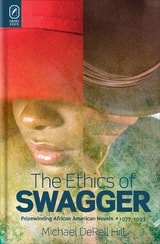
The Ethics of Swagger
Prizewinning African American Novels, 1977–1993Michael DeRell Hill
The Ohio State University Press, 2013
The Ethics of Witnessing
The Holocaust in Polish Writers' Diaries from Warsaw, 1939-1945Rachel Feldhay Brenner
Northwestern University Press, 2014
Winner, 2015 USC Book Award in Literary and Cultural Studies, for outstanding monograph published on Russia, Eastern Europe or Eurasia in the fields of literary and cultural studies
The Ethics of Witnessing investigates the reactions of five important Polish diaristswriters—Jaroslaw Iwaszkiewicz, Maria Dabrowska, Aurelia Wylezynska, Zofia Nalkowska, and Stanislaw Rembek—during the period when the Nazis persecuted and murdered Warsaw’s Jewish population. The responses to the Holocaust of these prominent prewar authors extended from insistence on empathic interaction with victims to resentful detachment from Jewish suffering. Whereas some defied the dehumanization of the Jews and endeavored to maintain intersubjective relationships with the victims they attempted to rescue, others selfdeceptively evaded the Jewish plight. The Ethics of Witnessing examines the extent to which ideologies of humanism and nationalism informed the diarists’ perceptions, proposing that the reality of the Final Solution exposed the limits of both orientations and ultimately destroyed the ethical landscape shaped by the Enlightenment tradition, which promised the equality and fellowship of all human beings.
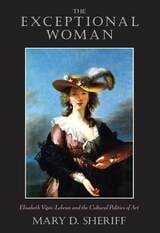
The Exceptional Woman
Elisabeth Vigee-Lebrun and the Cultural Politics of ArtMary D. Sheriff
University of Chicago Press, 1996
In The Exceptional Woman, Mary D. Sheriff uses Vigée-Lebrun's career to explore the contradictory position of "woman-artist" in the moral, philosophical, professional, and medical debates about women in eighteenth-century France. Paying particular attention to painted and textual self-portraits, Sheriff shows how Vigée-Lebrun's images and memoirs undermined the assumptions about "woman" and the strictures imposed on women.
Engaging ancien-régime philosophy, as well as modern feminism, psychoanalysis, literary theory, and art criticism, Sheriff's interpretations of Vigée-Lebrun's paintings challenge us to rethink the work and the world of this controversial woman artist.
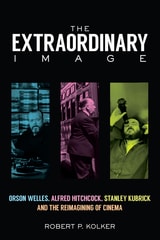
The Extraordinary Image
Orson Welles, Alfred Hitchcock, Stanley Kubrick, and the Reimagining of CinemaKolker, Robert P
Rutgers University Press, 2016
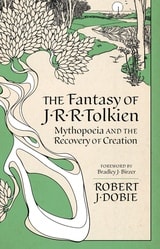
The Fantasy of J.R.R. Tolkien
Mythopeia and the Recovery of CreationRobert J. Dobie, Robert J.
Catholic University of America Press, 2024
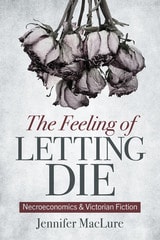
The Feeling of Letting Die
Necroeconomics and Victorian FictionJennifer MacLure
The Ohio State University Press, 2023
In The Feeling of Letting Die, Jennifer MacLure explores how Victorian novels depict the feelings that both fuel and are produced by an economic system that lets some people die in service of the free market. MacLure argues that Victorian authors present capitalism’s death function as a sticking point, a series of contradictions, and a problem to solve as characters grapple with systems that allow, demand, and cause the deaths of their less fortunate fellows.
Utilizing Achille Mbembe’s theorization of necropolitics, MacLure uses the term “necroeconomics,” positioning Victorian authors—even those who were deeply committed to liberal capitalism—as hyperaware of capitalism’s death function. Examining both canonical and lesser-known works by Elizabeth Gaskell, Harriet Martineau, Charles Dickens, William Morris, and George Eliot, The Feeling of Letting Die shows capitalism as not straightforwardly imposed via economic policy but instead as a system functioning through the emotions and desires of the human beings who enact it. In doing so, MacLure reveals how emotion functions as both the legitimating epistemic mode of capitalism and its most salient threat.
The Fictional Christopher Nolan
By Todd McGowan
University of Texas Press, 2012
From Memento and Insomnia to the Batman films, The Prestige, and Inception, lies play a central role in every Christopher Nolan film. Characters in the films constantly find themselves deceived by others and are often caught up in a vast web of deceit that transcends any individual lies. The formal structure of a typical Nolan film deceives spectators about the events that occur and the motivations of the characters. While Nolan’s films do not abandon the idea of truth altogether, they show us how truth must emerge out of the lie if it is not to lead us entirely astray.
The Fictional Christopher Nolan discovers in Nolan’s films an exploration of the role that fiction plays in leading to truth. Through close readings of all the films through Inception, Todd McGowan demonstrates that the fiction or the lie comes before the truth, and this priority forces us to reassess our ways of thinking about the nature of truth. Indeed, McGowan argues that Nolan’s films reveal the ethical and political importance of creating fictions and even of lying. While other filmmakers have tried to discover truth through the cinema, Nolan is the first filmmaker to devote himself entirely to the fictionality of the medium, and McGowan discloses how Nolan uses its tendency to deceive as the basis for a new kind of philosophical filmmaking. He shows how Nolan’s insistence on the priority of the fiction aligns his films with Hegel’s philosophy and understands Nolan as a thoroughly Hegelian filmmaker.
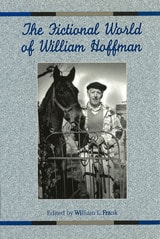
The Fictional World of William Hoffman
Edited by William L. Frank
University of Missouri Press, 2000
Over the past forty-five years, William Hoffman has written eleven novels, including the critically acclaimed Tidewater Blood, winner of the Dashiell Hammett award, and four short-fiction collections, the most recent being Doors—all of which have enjoyed a loyal and appreciative readership. His work has received numerous honors, including the Andrew Nelson Lytle Prize for the best short story published in the Sewanee Review; the Jeanne C. Goodheart Prize for fiction, awarded by Shenandoah; and the Hillsdale Prize for fiction, awarded by the Fellowship of Southern Writers. Yet a critical evaluation of his acclaimed fiction has not previously appeared.
The Fictional World of William Hoffman provides readers with the first vital and informative assessment of Hoffman's work. Including penetrating commentary and analysis from fellow writers—Fred Chappell, George Core, George Garrett, Dabney Stuart—as well as from established and emerging critics—Ron Buchanan, Martha Cook, Jeanne Nostrandt, Gordon Van Ness-this collection of essays aims to deepen the appreciation of those already familiar with Hoffman and to introduce new readers to one of the South's most influential voices.
George Core's opening essay provides an overview of Hoffman's novels to date, with sufficient examples to suggest his range, scope, imagery, and principal themes, including honor, courage, love, self-sacrifice, and the role of religion. The other essays in the collection focus in detail on his most admired work, especially the war novels, the short stories, and the philosophical novels of recent years. All eleven novels are covered briefly throughout the collection, six are treated extensively, and three essays focus on his short fiction.
There is no doubt that William Hoffman is a major contemporary writer. His considerable talent and influence have been felt by generations of readers. The Fictional World of William Hoffman helps to secure this influence for years to come. "As with all gifted and talented writers," Frank concludes, "the themes of Hoffman's fiction are what will endure."
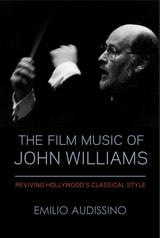
The Film Music of John Williams
Reviving Hollywood's Classical StyleEmilio Audissino
University of Wisconsin Press, 2021

The Films of Bong Joon Ho
Nam Lee
Rutgers University Press, 2020
Bong Joon Ho won the Oscar® for Best Director for Parasite (2019), which also won Best Picture, the first foreign film to do so, and two other Academy Awards. Parasite was the first Korean film to win the Palme d’Or at Cannes. These achievements mark a new career peak for the director, who first achieved wide international acclaim with 2006’s monster movie The Host and whose forays into English-language film with Snowpiercer (2013) and Okja (2017) brought him further recognition.
As this timely book reveals, even as Bong Joon Ho has emerged as an internationally known director, his films still engage with distinctly Korean social and political contexts that may elude many Western viewers. The Films of Bong Joon Ho demonstrates how he hybridizes Hollywood conventions with local realities in order to create a cinema that foregrounds the absurd cultural anomie Koreans have experienced in tandem with their rapid economic development. Film critic and scholar Nam Lee explores how Bong subverts the structures of the genres he works within, from the crime thriller to the sci-fi film, in order to be truthful to Korean realities that often deny the reassurances of the happy Hollywood ending. With detailed readings of Bong’s films from Barking Dogs Never Bite (2000) through Parasite (2019), the book will give readers a new appreciation of this world-class cinematic talent.
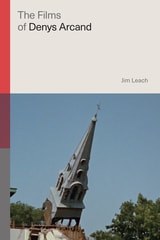
The Films of Denys Arcand
Jim Leach
Rutgers University Press, 2020
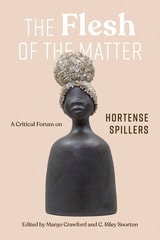
The Flesh of the Matter
A Critical Forum on Hortense SpillersEdited by Margo Natalie Crawford and C. Riley Snorton
Vanderbilt University Press, 2024
Hortense Spillers is one of the most important literary critics and Black feminist scholars of the last fifty years. Her 1987 scholarly article “Mama’s Baby, Papa’s Maybe: An American Grammar Book” is one of the most-cited essays in African American literary studies.
Edited by Margo Natalie Crawford and C. Riley Snorton, The Flesh of the Matter: A Critical Forum on Hortense Spillers is the first collection to take up directly how Spillers’s writing on literature, culture, and theory have been signal posts to the varied and universal threads of Black thought, as well as countless other areas of the academy. Interspersed with archival fragments from Spillers’s papers kept at the Pembroke Center for Feminist Thought at Brown University, the fourteen essays in this collection demonstrate a fidelity to the ways of reading Spillers has taught us, the nomenclature of enslavement keyed into the American lexicon, and the ways that history permeates our cultural boundaries today.
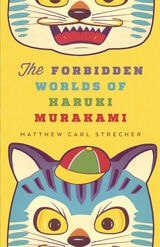
The Forbidden Worlds of Haruki Murakami
Matthew Carl Strecher
University of Minnesota Press, 2014
In an “other world” composed of language—it could be a fathomless Martian well, a labyrinthine hotel or forest—a narrative unfolds, and with it the experiences, memories, and dreams that constitute reality for Haruki Murakami’s characters and readers alike. Memories and dreams in turn conjure their magical counterparts—people without names or pasts, fantastic animals, half-animals, and talking machines that traverse the dark psychic underworld of this writer’s extraordinary fiction.
Fervently acclaimed worldwide, Murakami’s wildly imaginative work in many ways remains a mystery, its worlds within worlds uncharted territory. Finally in this book readers will find a map to the strange realm that grounds virtually every aspect of Murakami’s writing. A journey through the enigmatic and baffling innermost mind, a metaphysical dimension where Murakami’s most bizarre scenes and characters lurk, The Forbidden Worlds of Haruki Murakami exposes the psychological and mythological underpinnings of this other world. Matthew Carl Strecher shows how these considerations color Murakami’s depictions of the individual and collective soul, which constantly shift between the tangible and intangible but in this literary landscape are undeniably real.
Through these otherworldly depths The Forbidden Worlds of Haruki Murakami also charts the writer’s vivid “inner world,” whether unconscious or underworld (what some Japanese critics call achiragawa, or “over there”), and its connectivity to language. Strecher covers all of Murakami’s work—including his efforts as a literary journalist—and concludes with the first full-length close reading of the writer’s newest novel, Colorless Tsukuru Tazaki and His Years of Pilgrimage.
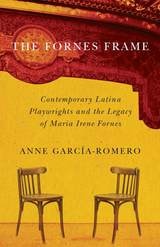
The Fornes Frame
Contemporary Latina Playwrights and the Legacy of Maria Irene FornesAnne García-Romero
University of Arizona Press, 2016
In The Fornes Frame: Contemporary Latina Playwrights and the Legacy of Maria Irene Fornes, Anne García-Romero considers the work of five award-winning Latina playwrights in the early twenty-first century, offering her unique perspective as a theatre studies scholar who is also a professional playwright.
The playwrights in this book include Pulitzer Prize–winner Quiara Alegría Hudes; Obie Award–winner Caridad Svich; Karen Zacarías, resident playwright at Arena Stage in Washington, DC; Elaine Romero, member of the Goodman Theatre Playwrights Unit in Chicago, Illinois; and Cusi Cram, company member of the LAByrinth Theater Company in New York City.
Using four key concepts—cultural multiplicity, supernatural intervention, Latina identity, and theatrical experimentation—García-Romero shows how these playwrights expand past a consideration of a single culture toward broader, simultaneous connections to diverse cultures. The playwrights also experiment with the theatrical form as they redefine what a Latina play can be. Following Fornes’s legacy, these playwrights continue to contest and complicate Latina theatre.

The Fragility of Manhood
Hawthorne, Freud, and the Politics of GenderDavid Greven
The Ohio State University Press, 2012
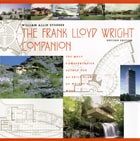
The Frank Lloyd Wright Companion, Revised Edition
William Allin Storrer
University of Chicago Press, 2006
Published to critical acclaim more than a decade ago, The Frank Lloyd Wright Companion brought together in one volume all the essential descriptions, photographs, and plans of everything built by America's most famous architect. Now, for this handsomely produced revised edition, William Allin Storrer brings the history of every Wright structure up to the present.
Storrer treats the full range of Wright's architecture—from vacation cottages in Montana and Michigan, to such monuments of modernism as the Johnson Wax Building and the Guggenheim Museum, to buildings completed after Wright’s death in 1959. Since the first edition, some of Wright’s buildings have been relocated, some have been refurbished, and, sadly, some have even been destroyed by Hurricane Katrina. Storrer documents these changes and includes new information about the extent of Wright’s work on the buildings, the contributions of his associates, and the details of his business arrangements. Wright aficionados will be especially pleased to find comprehensive coverage of the newly discovered Mitchell residence in Racine, Wisconsin.
Organized chronologically, The Frank Lloyd Wright Companion features a description of each building that details the history of its design, construction, and ownership. Floor plans allow readers intimate access to each of Wright’s built works. With nearly 1,000 photographs (many new to this edition), elevations, historical images, and floor plans that show changes in Wright’s preliminary plans, this reference is unmatched in its authority. The indispensable centerpiece of any Wright collection, the newly revised Companion is a must for any serious library of art and architecture.
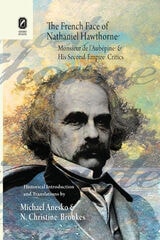
The French Face of Nathaniel Hawthorne
Monsieur de l'Aubépine and His Second Empire CriticsMichael Anesko and N. Christine Brookes
The Ohio State University Press, 2011
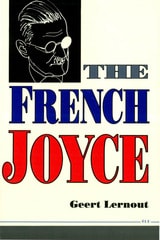
The French Joyce
Geert Lernout
University of Michigan Press, 1992
The Future of Totality
Fredric Jameson and the Prospects of Critical TheoryNicholas Brown, Maria Elisa Cevasco, Fabio Akcelrud Durão, and Robert T. Tally Jr., editors
Duke University Press, 2026
The Gentle Art of Murder
The Detective Fiction of Agatha ChristieEarl F. Bargainnier
University of Wisconsin Press, 1980
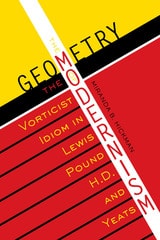
The Geometry of Modernism
The Vorticist Idiom in Lewis, Pound, H.D., and YeatsBy Miranda B. Hickman
University of Texas Press, 2006
Addressing both the literature and the visual arts of Anglo-American modernism, The Geometry of Modernism recovers a crucial development of modernism's early years that until now has received little sustained critical attention: the distinctive idiom composed of geometric forms and metaphors generated within the early modernist movement of Vorticism, formed in London in 1914. Focusing on the work of Wyndham Lewis, leader of the Vorticist movement, as well as Ezra Pound, H.D., and William Butler Yeats, Hickman examines the complex of motives out of which Lewis initially forged the geometric lexicon of Vorticism—and then how Pound, H.D., and Yeats later responded to it and the values that it encoded, enlisting both the geometric vocabulary and its attendant assumptions and ideals, in transmuted form, in their later modernist work.
Placing the genesis and appropriation of the geometric idiom in historical context, Hickman explores how despite its brevity as a movement, Vorticism in fact exerted considerable impact on modernist work of the years between the wars, in that its geometric idiom enabled modernist writers to articulate their responses to both personal and political crises of the 1930s and 1940s. Informed by extensive archival research as well as treatment of several of the least-known texts of the modernist milieu, The Geometry of Modernism clarifies and enriches the legacy of this vital period.