Results by title
429 books match the query 'Development' and 104 start with t
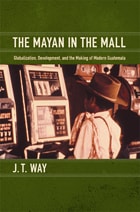
The Mayan in the Mall
Globalization, Development, and the Making of Modern GuatemalaJ. T. Way
Duke University Press, 2012
Using a wide array of historical and contemporary sources, Way explores the multiple intersections of development and individual life, focusing on the construction of social space through successive waves of land reform, urban planning, and economic policy. His explorations move from Guatemala City's poorest neighborhoods and informal economies (run predominantly by women) to a countryside still recovering from civil war and anti-Mayan genocide, and they encompass such artifacts of development as the modernist Pan-American Highway and the postmodern Grand Tikal Futura, a Mayan-themed shopping mall ringed by gated communities and shantytowns. Capitalist development, Way concludes, has dramatically reshaped the country's physical and social landscapes—engendering poverty, ethnic regionalism, and genocidal violence—and positioned Guatemala as a harbinger of globalization's future.

The Mexican Urban Household
Organizing for Self-DefenseBy Henry A. Selby, Arthur D. Murphy, and Stephen A. Lorenzen
University of Texas Press, 1990
The sufferings of “ordinary” people under harsh economic conditions can eventually lead to the fall of governments. Given this fact, it becomes important to know how “ordinary” people live—what privations they suffer and what strategies they use to survive in times of economic crisis. The Mexican Urban Household provides this information for Mexico near the end of the twentieth century.
Mexico is now a predominantly urban nation, and this study is the definitive work on the strategies of self-defense of its urban households. It is based on surveys of nearly 10,000 households, conducted during twenty years of field work in five very different cities, with the help of a staff of more than twenty Mexican social scientists, engineers, architects, and social workers.
Far from being a compilation of undigested statistics, however, The Mexican Urban Household uses its rich data to vividly reveal how Mexican families use their every resource to defend themselves against a political and economic system that overwhelms and exploits them. It describes how families band together, sometimes with three generations in one small house, to minimize expenses and pool resources. It explores the limited range of available jobs, from secure but scarce bureaucratic positions to more common and less reliable jobs in blue-collar industries and the informal economy. And, most important, it traces the high cost to families, particularly to women, of the endless struggle to make ends meet.
These important findings outline the dimensions of the economic crisis for ordinary Mexicans. It will be crucial reading not only for everyone interested in the future of Mexico but also for students of development throughout the Third World.
The Mmpi-2 Content Component Scales
Development, Psychometric Characteristics, and Clinical ApplicationYossef S. Ben-Porath
University of Minnesota Press, 1993

The Myth of Progress
Toward a Sustainable FutureTom Wessels
University Press of New England, 2013
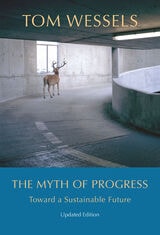
The Myth of Progress
Toward a Sustainable FutureTom Wessels
Brandeis University Press, 2023
In this compelling, cogently argued, and acclaimed book, Tom Wessels demonstrates how our current path toward progress, based on continual economic expansion and inefficient use of resources, runs contrary to three foundational scientific laws that govern all complex natural systems. It is a myth, he contends, that progress depends on a growing economy. Wessels explains his theory with his three laws of sustainability: the law of limits to growth; the second law of thermodynamics, which exposes the dangers of increased energy consumption; and the law of self-organization, which results in the marvelous diversity of such highly evolved systems as the human body and complex ecosystems. Wessels argues that these laws, scientifically proven to sustain life in its myriad forms, have been cast aside since the eighteenth century, first by Western economists, political pragmatists, and governments attracted by the idea of unlimited growth, and more recently by a global economy dominated by large corporations, in which consolidation and oversimplification have created large-scale inefficiencies in both material and energy usage.
Wessels makes scientific theory readily accessible by offering examples of how the laws of sustainability function in the complex systems we can observe in the natural world around us. Demonstrating that all environmental problems have their source in a disregard for the laws of sustainability, he concludes with an impassioned argument for cultural change. This new edition has a new preface wherein the author regards The Myth of Progress as his most important work. It has been in constant demand since it was first published in 2006.
The Nonprofit Sector in the Mixed Economy
Avner Ben-Ner and Benedetto Gui, Editors
University of Michigan Press, 1993

The Origin and Development of Scholarly Historical Periodicals
Margaret F. Stieg
University of Alabama Press, 2005
"This is a pioneering study and represents a major undertaking. . . . Stieg succeeds in making intelligible the diffuse and highly diversified nature of the historical periodical. At minimum, this title should be required reading of all history graduate students in methodology courses. Many senior historians would also benefit from a review of its contents. . . . Information and library science students specializing in scholarly communication should digest the entire study." —Journal of Education for Library and Information Science
The Origin and Development of the Pueblo Katsina Cult
E. Charles Adams
University of Arizona Press, 1991
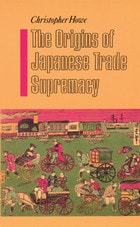
The Origins of Japanese Trade Supremacy
Development and Technology in Asia from 1540 to the Pacific WarChristopher Howe
University of Chicago Press, 1996
"Thoughtful, well-organized, and lucidly written and reflects many years of painstaking research in different literatures."—Business Horizons
"The best analysis yet in English of the role of technology in Japan's emergence as a global economic power."—David J. Jeremy, Technology and Culture
"An important addition to Japanese economic history and the concept of creating relative advantage in trade."—Richard Rice, Journal of Asian Studies
"No other work in English approaches Christopher Howe's combination of a sweeping historical perspective with a comprehensive yet in-depth analysis of factors underlying Japan's pre-1940 economic 'miracle.' . . . [An] illuminating study."—Steven J. Ericson, American Historical Review

The Other Road to Serfdom and the Path to Sustainable Democracy
Eric Zencey
University Press of New England, 2012
The Paradox of Agrarian Change
Food Security and the Politics of Social Protection in IndonesiaEdited by John McCarthy, Andrew McWilliam, and Gerben Nooteboom
National University of Singapore Press, 2023
Economic growth in the middle-income countries of Southeast Asia over the past few decades has been widely praised for reducing poverty in both absolute and relative terms. Indonesia is a prime example. But while poverty has declined in Indonesia, patterns of food poverty persist across Indonesia. What explains this troubling paradox? How does it relate to Indonesia’s enthusiastic embrace of the “entitlements revolution,” the use of direct cash transfers as a tool for reducing poverty and building social inclusion?
This book analyzes the nature and social consequences of economic development and agrarian change processes in rural Indonesia in relation to the scope and effectiveness of Indonesia’s social protection programs. The findings are based on a series of extensive ground-up case studies in Indonesian communities in a variety of eco-agrarian settings that seek to understand the drivers of food insecurity and vulnerability at a household level. The results show that while high-value farming, diversification, and migration may offer a means of economic progress for poor households, opportunities for accumulation are limited. This, the authors show, is due to the way class, gender, and power work in remote local contexts, and the fact that much surplus income is used for enhanced consumption and changing lifestyles. There are few signs of the classical structural transformation of the countryside which has historically been considered the most decisive pathway out of rural poverty. The authors conclude that social assistance is unlikely to counter the persistence of rural poverty, food insecurity, and precarity in the absence of other redistributive strategies that shift the structural drivers of inequality.
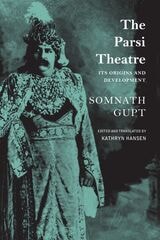
The Parsi Theatre
Its Origins and DevelopmentSomnath Gupt
Seagull Books, 2005
Unrivaled in its long-term impact, Parsi theater remains a crucial component of South Asia’s cultural heritage. Like vaudeville in America, Parsi theater dominated mass entertainment in colonial India in the era before cinema. Drawn by the magic of sight and sound, crowds filled the country’s urban playhouses each night. Marked by extravagant acting, operatic singing, and melodramatic stage effects, this cosmopolitan theater brought an unprecedented level of sophistication to the South Asian stage and transformed commercial drama into a modern industry, paving the way for Indian cinema. This volume presents Somnath Gupt’s classic history of Parsi theater in an English translation enhanced by illustrations, annotations, and appendices, which make it a more comprehensive and accurate reference work.

The Political Economy of Development
The World Bank, Neoliberalism and Development ResearchEdited by Kate Bayliss, Ben Fine, and Elisa Van Waeyenberge
Pluto Press, 2011
Any student, academic or practitioner wanting to succeed in development studies, radical or mainstream, must understand the World Bank's role and the evolution of its thinking and activities. The Political Economy of Development provides tools for gaining this understanding and applies them across a range of topics.
The research, practice and scholarship of development are always set against the backdrop of the World Bank, whose formidable presence shapes both development practice and thinking. This book brings together academics that specialise in different subject areas of development and reviews their findings in the context of the World Bank as knowledge bank, policy-maker and financial institution. The volume offers a compelling contribution to our understanding of development studies and of development itself.
The Political Economy of Development is an invaluable critical resource for students, policy-makers and activists in development studies.
The Political Economy of NGOs
State Formation in Sri Lanka and BangladeshJude L. Fernando
Pluto Press, 2011
Jude L. Fernando explores the paradoxical relationship between NGOs and capitalism, showing that supposedly progressive organisations often promote essentially the same policies and ideas as existing governments.
The book examines how a diverse group of NGOs have shaped state formation in Bangladesh and Sri Lanka. It argues that, rather than influencing state formation for the better, NGOs have been integrated into the capitalist system and their language adopted to give traditional exploitative social relations a transformative appearance.
This enlightening study will give pause to those who see NGOs as drivers of true social change and will encourage students of development studies to make a deeper analysis of state formation.
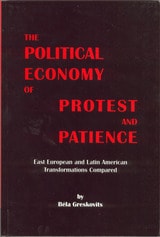
The Political Economy of Protest and Patience
East European and Latin American Trasformations ComparedBéla Greskovits
Central European University Press, 1998
Despite gloomy prophecies, democracy and the market economy seem to be taking root throughout Central and Eastern Europe, although set against a background of a recession deeper and longer than that of the Great Depression. How is this possible? Why did Eastern Europeans protest less about the brutal social consequences of systemic change than the people of Latin America a decade earlier? Why has the region-wide authoritarian or populist turnabout not occurred? Why has democracy in these countries proved to be crisis-proof? In what ways has economic crisis impacted on the politics of the region?
In addressing these questions, Béla Greskovits uses a comparative analysis of the structures, institutions, cultures, and actors shaping both the Eastern European and the Latin American transformations. He argues that structural, institutional, and cultural factors have put a brake on destabilizing collective actions and have paved the way for the emergence of the enduring, low-level equilibrium between incomplete democracy and imperfect market economy which seems set to characterize the Central and Eastern European experience for the foreseeable future.
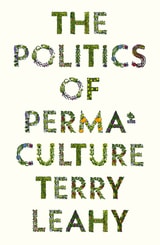
The Politics of Permaculture
Terry Leahy
Pluto Press, 2021
Permaculture is an environmental movement that makes us revaluate what it means to be sustainable. Through innovative agriculture and settlement design, the movement creates new communities that are harmonious with nature. It has grown from humble origins on a farm in 1970s Australia and flourished into a worldwide movement that confronts industrial capitalism.
The Politics of Permaculture is one of the first books to unpack the theory and practice of this social movement that looks to challenge the status quo. Drawing upon the rich seam of publications and online communities from the movement as well as extensive interviews with permaculture practitioners and organizations from around the world, Leahy explains the ways permaculture is understood and practiced in different contexts.
In the face of extreme environmental degradation and catastrophic climate change, we urgently need a new way of living.
The Poverty of Capitalism
Economic Meltdown and the Struggle for What Comes NextJohn Hilary
Pluto Press, 2013
Capitalist growth is widely heralded as the only answer to the crisis still sweeping the global economy. Yet the era of corporate globalisation has been defined by unprecedented levels of inequality and environmental degradation. A return to capitalist growth threatens to exacerbate these problems, not solve them.
In The Poverty of Capitalism, John Hilary reveals the true face of transnational capital in its insatiable drive for expansion and accumulation. He exposes the myth of ‘corporate social responsibility’ (CSR), and highlights key areas of conflict over natural resources, labour rights and food sovereignty.
Hilary also describes the growing popular resistance to corporate power, as well as the new social movements seeking to develop alternatives to capitalism itself. This book will be essential reading for all those concerned with global justice, human rights and equity in the world order.
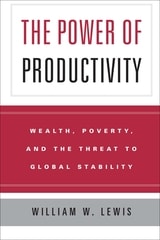
The Power of Productivity
Wealth, Poverty, and the Threat to Global StabilityWilliam W. Lewis
University of Chicago Press, 2004
The Power of Productivity provides powerful and controversial answers to these questions. William W. Lewis, the director emeritus of the McKinsey Global Institute, here draws on extensive microeconomic studies of thirteen nations over twelve years—conducted by the Institute itself—to counter virtually all prevailing wisdom about how best to ameliorate economic disparity. Lewis's research, which included studying everything from state-of-the-art auto makers to black-market street vendors and mom-and-pop stores, conclusively demonstrates that, contrary to popular belief, providing more capital to poor nations is not the best way to help them. Nor is improving levels of education, exchange-rate flexibility, or government solvency enough. Rather, the key to improving economic conditions in poor countries, argues Lewis, is increasing productivity through intense, fair competition and protecting consumer rights.
As The Power of Productivity explains, this sweeping solution affects the economies of poor nations at all levels—from the viability of major industries to how the average consumer thinks about his or her purchases. Policies must be enacted in developing nations that reflect a consumer rather than a producer mindset and an attendant sense of consumer rights. Only one force, Lewis claims, can stand up to producer special privileges—consumer interests.
The Institute's unprecedented research method and Lewis's years of experience with economic policy combine to make The Power of Productivity the most authoritative and compelling view of the global economy today, one that will inform political and economic debate throughout the world for years to come.
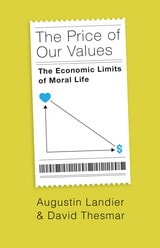
The Price of Our Values
The Economic Limits of Moral LifeAugustin Landier and David Thesmar
University of Chicago Press, 2025
The economic case for self-interest at the outer limits of being morally good.
Modern life is an exercise in discomfort. In the face of endless injustice, how much selfishness is permissible? How do we square suffering elsewhere with our hope to thrive at home? How does one strive for the greater good while guarding one's personal interests? The Price of Our Values argues that the answers to these questions are economic: by weighing our sense of the personal costs associated with the outer limits of our moral beliefs.
These tradeoffs—the want to be good, the personal costs of being good, and the points at which people abandon goodness due to its costs—are somewhat unsettling. But as economists Augustin Landier and David Thesmar show, they are highly predictable, even justified. Our values guide us, but we are also forced to consider economic costs to settle decisions.
The Price of Our Values is an economic reckoning with the universal unease of contemporary moral life. Wielding insights from the philosophical founders of the field, Landier and Thesmar provide frameworks for thinking about the place of values—justice, freedom, beauty— in the decisions of modern life. They do so in terms that seek to be consistent with both our good intentions and their limits.
The Privatization Process in Central Europe
Roman Frydman
Central European University Press, 1993

The Privatization Process in Russia, the Ukraine, and the Baltic States
Roman Frydman
Central European University Press, 1993
The Privilege against Self-Incrimination
Its Origins and DevelopmentR. H. Helmholz, Charles M. Gray, John H. Langbein, Eben Moglen, Henry E. Smith,
University of Chicago Press, 1997
Each chapter of this definitive study uncovers what the privilege meant in practice. The authors trace the privilege from its origins in the medieval period to its first appearance in English common law, and from its translation to the American colonies to its development into an effective protection for criminal defendants in the nineteenth century. The authors show that the modern privilege—the right to remain silent—is far from being a basic civil liberty. Rather, it has evolved through halting and controversial steps. The book also questions how well an expansive notion of the privilege accords with commonly accepted principles of morality.
This book constitutes a major revision of our understanding of an important aspect of both criminal and constitutional law.
The Radiant Past
Ideology and Reality in Hungary's Road to CapitalismMichael Burawoy and János Lukács
University of Chicago Press, 1992
Michael Burawoy and Janos Lukacs consider this question from the standpoint of the Hungarian working class. Between 1983 and 1990 the authors carried out intensive studies in two core Hungarian industries, machine building and steel production, to produce the first extended participant-observation study of work and politics in state socialism.
"A fascinating and engagingly written eyewitness report on proletarian life in the waning years of goulash communism. . . . A richly rewarding book, one that should interest political scientists in a variety of subfields, from area specialists and comparativists to political economists, as well as those interested in Marxist and post-Marxist theory."—Elizabeth Kiss, American Political Science Review
"A very rich book. . . . It does not merely offer another theory of transition, but also presents a clear interpretive scheme, combined with sociological theory and vivid ethnographic description."—Ireneusz Bialecki, Contemporary Sociology
"Its informed skepticism of post-Communist liberal euphoria, its concern for workers, and its fine ethnographic details make this work valuable."—"àkos Róna-Tas, American Journal of Sociology
The Regulated Economy
A Historical Approach to Political EconomyEdited by Claudia Goldin and Gary D. Libecap
University of Chicago Press, 1994
The Regulated Economy examines how constituent groups emerged and demanded government action to solve perceived economic problems, such as exorbitant railroad and utility rates, bank failure, falling agricultural prices, the immigration of low-skilled workers, workplace injury, and the financing of government. The contributors look at how preexisting policies, institutions, and market structures shaped regulatory activity; the origins of regulatory movements at the state and local levels; the effects of consensus-building on the timing and content of legislation; and how well government policies reflect constituency interests.
A wide-ranging historical view of the way interest group demands and political bargaining have influenced the growth of economic regulation in the United States, this book is important reading for economists, political scientists, and public policy experts.

The Revolutionary Imagination in the Americas and the Age of Development
María Josefina Saldaña-Portillo
Duke University Press, 2003
Reading governmental reports, memos, and policies, Saldaña-Portillo traces the arc of development narratives from its beginnings in the 1944 Bretton Woods conference through its apex during Robert S. McNamara's reign at the World Bank (1968–1981). She compares these narratives with models of subjectivity and agency embedded in the autobiographical texts of three revolutionary icons of the 1960s and 1970s—those of Che Guevara, Guatemalan insurgent Mario Payeras, and Malcolm X—and the agricultural policy of the Sandinista National Liberation Front (FSLN). Saldaña-Portillo highlights a shared paradigm of a masculinist transformation of the individual requiring the "transcendence" of ethnic particularity for the good of the nation. While she argues that this model of progress often alienated the very communities targeted by the revolutionaries, she shows how contemporary insurgents such as Rigoberta Menchú, the Zapatista movement, and queer Aztlán have taken up the radicalism of their predecessors to retheorize revolutionary subjectivity for the twenty-first century.
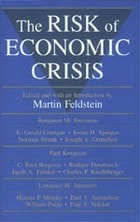
The Risk of Economic Crisis
Edited by Martin Feldstein
University of Chicago Press, 1991
In this accessible and thought-provoking volume, Benjamin M. Friedman investigates the origins of financial crisis in domestic capital markets, Paul Krugman examines the international origins and transmission of financial and economic crises, and Lawrence H. Summers explores the transition from financial crisis to economic collapse. In the introductory essay, Martin Feldstein reviews the major financial problems of the 1980s and discusses lessons to be learned from this experience. The book also contains provocative observations by senior academics and others who have played leading roles in business and government.

The Road to Serfdom
F. A. Hayek
University of Chicago Press, 1994
First published by the University of Chicago Press on September 18, 1944, The Road to Serfdom garnered immediate attention from the public, politicians, and scholars alike. The first printing of 2,000 copies was exhausted instantly, and within six months more than 30,000 were sold. In April of 1945, Reader's Digest published a condensed version of the book, and soon thereafter the Book-of-the-Month Club distributed this condensation to more than 600,000 readers. A perennial best-seller, the book has sold over a quarter of a million copies in the United States, not including the British edition or the nearly twenty translations into such languages as German, French, Dutch, Swedish, and Japanese, and not to mention the many underground editions produced in Eastern Europe before the fall of the iron curtain.
After thirty-two printings in the United States, The Road to Serfdom has established itself alongside the works of Alexis de Tocqueville, John Stuart Mill, and George Orwell for its timeless meditation on the relation between individual liberty and government authority. This fiftieth anniversary edition, with a new introduction by Milton Friedman, commemorates the enduring influence of The Road to Serfdom on the ever-changing political and social climates of the twentieth century, from the rise of socialism after World War II to the Reagan and Thatcher "revolutions" in the 1980s and the transitions in Eastern Europe from communism to capitalism in the 1990s.
F. A. Hayek (1899-1992), recipient of the Medal of Freedom in 1991 and co-winner of the Nobel Memorial Prize in Economics in 1974, was a pioneer in monetary theory and the principal proponent of libertarianism in the twentieth century.
On the first American edition of The Road to Serfdom:
"One of the most important books of our generation. . . . It restates for our time the issue between liberty and authority with the power and rigor of reasoning with which John Stuart Mill stated the issue for his own generation in his great essay On Liberty. . . . It is an arresting call to all well-intentioned planners and socialists, to all those who are sincere democrats and liberals at heart to stop, look and listen."—Henry Hazlitt, New York Times Book Review, September 1944
"In the negative part of Professor Hayek's thesis there is a great deal of truth. It cannot be said too often—at any rate, it is not being said nearly often enough—that collectivism is not inherently democratic, but, on the contrary, gives to a tyrannical minority such powers as the Spanish Inquisitors never dreamt of."—George Orwell, Collected Essays
The Role of Foreign Direct Investment in East Asian Economic Development
Edited by Takatoshi Ito and Anne O. Krueger
University of Chicago Press, 2000
The Role of Government in the History of Economic Thought
2005 Supplement, Volume 37Steven G. Medema and Peter Boettke
Duke University Press, 0
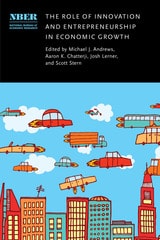
The Role of Innovation and Entrepreneurship in Economic Growth
Edited by Michael J. Andrews, Aaron Chatterji, Josh Lerner, and Scott Stern
University of Chicago Press, 2022
We live in an era in which innovation and entrepreneurship seem ubiquitous, particularly in regions like Silicon Valley, Boston, and the Research Triangle Park. But many metrics of economic growth, such as productivity growth and business dynamism, have been at best modest in recent years. The resolution of this apparent paradox is dramatic heterogeneity across sectors, with some industries seeing robust innovation and entrepreneurship and others seeing stagnation. By construction, the impact of innovation and entrepreneurship on overall economic performance is the cumulative impact of their effects on individual sectors. Understanding the potential for growth in the aggregate economy depends, therefore, on understanding the sector-by-sector potential for growth. This insight motivates the twelve studies of different sectors that are presented in this volume. Each study identifies specific productivity improvements enabled by innovation and entrepreneurship, for example as a result of new production technologies, increased competition, or new organizational forms. These twelve studies, along with three synthetic chapters, provide new insights on the sectoral patterns and concentration of the contributions of innovation and entrepreneurship to economic growth.
The Roles of Immigrants and Foreign Students in US Science, Innovation, and Entrepreneurship
Edited by Ina Ganguli, Shulamit Kahn, and Megan MacGarvie
University of Chicago Press, 2020

The Shape of Life
Genes, Development, and the Evolution of Animal FormRudolf A. Raff
University of Chicago Press, 1996
Raff uses the evolution of animal body plans to exemplify the interplay between developmental mechanisms and evolutionary patterns. Animal body plans emerged half a billion years ago. Evolution within these body plans during this span of time has resulted in the tremendous diversity of living animal forms.
Raff argues for an integrated approach to the study of the intertwined roles of development and evolution involving phylogenetic, comparative, and functional biology. This new synthesis will interest not only scientists working in these areas, but also paleontologists, zoologists, morphologists, molecular biologists, and geneticists.
The Skull, Volume 1
DevelopmentEdited by James Hanken and Brian K. Hall
University of Chicago Press, 1993
The Taxation of Income from Business and Capital in Colombia
Charles E. McLure, Jr., John Mutti, Victor Thuronyi, and George R. Zodrow
Duke University Press, 1990
“[The book’s] most important contribution, however, is undoubtedly with respect to consumption taxes. No one, anywhere, has thought through with such care just how the so-called ‘simplified alternative tax’ (essentially a direct personal consumption tax combined with a cash-flow corporate tax) might work in the real world. Since such taxes are increasingly being considered—if not adopted—all over the world, in developing and developed countries alike, for this reason alone this book should be high on the reading list of all those concerned with the design and implementation of efficient and equitable direct tax systems.”—From the Foreword by Richard M. Bird
The Technology of Transition
Science and Technology Policies for Transition CountriesDavid A. Dyker
Central European University Press, 1997
The Transition in Eastern Europe, Volume 1
Edited by Olivier Jean Blanchard, Kenneth A. Froot, and Jeffrey D. Sachs
University of Chicago Press, 1994
Volume 1, Country Studies, gives an in-depth, country-by-country analysis of various reform experiences, including historical backgrounds and discussions of policies and results to date. The countries analyzed are Poland, Czechoslovakia, Hungary, eastern Germany, Slovenia, and Russia. Written by leading economists, some of whom helped shape local and national reforms, this volume identifies common progress, common difficulties, and tentative solutions to the problems of economic transition.
Volume 2, Restructuring, focuses on specific issues of transition, including how to design labor market institutions, privatization, new fiscal structures, and bankruptcy laws; how to reorganize foreign trade; and how to promote foreign direct investment. The articles, written by experts in the field, will be of direct help to those involved in the transition process.
These volumes provide a standard reference on economic transition in the region for policymakers in Eastern Europe and in western countries, for international agencies concerned with the transition process, and for anyone interested in learning about the dramatic changes that have recently occurred in Eastern Europe.
The Transition in Eastern Europe, Volume 2
RestructuringEdited by Olivier Jean Blanchard, Kenneth A. Froot, and Jeffrey D. Sachs
University of Chicago Press, 1994
Volume 1, Country Studies, gives an in-depth, country-by-country analysis of various reform experiences, including historical backgrounds and discussions of policies and results to date. The countries analyzed are Poland, Czechoslovakia, Hungary, eastern Germany, Slovenia, and Russia. Written by leading economists, some of whom helped shape local and national reforms, this volume identifies common progress, common difficulties, and tentative solutions to the problems of economic transition.
Volume 2, Restructuring, focuses on specific issues of transition, including how to design labor market institutions, privatization, new fiscal structures, and bankruptcy laws; how to reorganize foreign trade; and how to promote foreign direct investment. The articles, written by experts in the field, will be of direct help to those involved in the transition process.
These volumes provide a standard reference on economic transition in the region for policymakers in Eastern Europe and in western countries, for international agencies concerned with the transition process, and for anyone interested in learning about the dramatic changes that have recently occurred in Eastern Europe.

The Use and Development of the Xinkan Languages
By Chris Rogers
University of Texas Press, 2016
Once spoken only in Santa Rosa Department, Guatemala, the Xinkan language family is unique within Mesoamerica, comprising four closely related languages that are unrelated to any of the other language groups used within the region. Descriptions of Xinkan date to 1770 but are typically only sketches or partial word lists. Not even the community of indigenous people who identify as Xinka today—the last speakers—have had access to a reliable descriptive source on their ancestral tongue. Preserving this endangered communication system in accurate, thorough detail, The Use and Development of the Xinkan Languages presents a historical framework, internal classifications, and both synchronic and diachronic descriptions, incorporating all elements of grammar based on extensive unpublished data collected in the 1970s by Lyle Campbell and Terrence Kaufman.
This valuable contribution is enhanced by author Chris Rogers’s emphasis on contextualizing the findings. Introducing the languages, Rogers presents important information regarding the social and cultural milieu of the speakers. He also traces a phonological reconstruction of Proto-Xinkan and reconstructs historical morphology and syntax. These revelations are of particular interest because the development of Xinka and the many aspects of Xinka morphosyntax have not been well understood. A sample text, “Na Mulha Uy,” is included as well. Solving numerous complex, centuries-old linguistic puzzles, The Use and Development of the Xinkan Languages unlocks new potential for the rediscovery of a rich cultural history.
This book is a part of the Recovering Languages and Literacies of the Americas publication initiative, funded by a grant from the Andrew W. Mellon Foundation.
The Voluntary City
Choice, Community, and Civil SocietyDavid T. Beito, Peter Gordon, and Alexander Tabarrok, Editors
University of Michigan Press, 2002
The WTO as an International Organization
Edited by Anne O. Krueger
University of Chicago Press, 1997
"[T]his book is a tour de force, with consistently fine papers by leading experts, and it is worthy of any bookshelf." —Joel P. Trachtman, American Journal of International Law
"This latest conference volume from the National Bureau of Economic Research is likely to be the definitive reference work on the WTO for years to come. . . . Specialists and non-specialists alike will gain a great deal from a careful reading of this impressive volume." —John Ravenhill, Australian Journal of Political Science
"For anyone who is interested in the further development of the rule system for the world economy, this book is a must." —Horst Siebert, Review of World Economics
The Wealth and Poverty of Regions
Why Cities MatterMario Polèse
University of Chicago Press, 2009
As the world becomes more interconnected through travel and electronic communication, many believe that physical places will become less important. But as Mario Polèse argues in The Wealth and Poverty of Regions, geography will matter more than ever before in a world where distance is allegedly dead.
This provocative book surveys the globe, from London and Cape Town to New York and Beijing, contending that regions rise—or fall—due to their location, not only within nations but also on the world map. Polèse reveals how concentrations of industries and populations in specific locales often result in minor advantages that accumulate over time, resulting in reduced prices, improved transportation networks, increased diversity, and not least of all, “buzz”—the excitement and vitality that attracts ambitious people. The Wealth and Poverty of Regions maps out how a heady mix of size, infrastructure, proximity, and cost will determine which urban centers become the thriving metropolises of the future, and which become the deserted cities of the past. Engagingly written, the book provides insight to the past, present, and future of regions.
The Will to Improve
Governmentality, Development, and the Practice of PoliticsTania Murray Li
Duke University Press, 2007
Demonstrating that the “will to improve” has a long and troubled history, Li identifies enduring continuities from the colonial period to the present. She explores the tools experts have used to set the conditions for reform—tools that combine the reshaping of desires with applications of force. Attending in detail to the highlands of Sulawesi, she shows how a series of interventions entangled with one another and tracks their results, ranging from wealth to famine, from compliance to political mobilization, and from new solidarities to oppositional identities and violent attack. The Will to Improve is an engaging read—conceptually innovative, empirically rich, and alive with the actions and reflections of the targets of improvement, people with their own critical analyses of the problems that beset them.
The Wolf Economy Awakens
Mongolia’s Fight for Democracy, and a Green and Digital FutureJohan Nylander
Hong Kong University Press, 2024
Mongolia, a vibrant democracy landlocked between Russia and China, stands on the edge of becoming Asia’s next boom nation—one of the richest countries per capita in the region. Referred to as the “wolf economy” for its vast natural resources (copper, gold, and rare earth metals), it is also home to a growing number of cutting-edge tech startups and international lifestyle brands. Its vast steppe landscape lends itself not only to herding and tourism but also to renewable energy production and filmmaking.
The Wolf Economy Awakens is about the individuals who are fighting to strengthen the country’s democracy and diversify its economy. It is about innovators aiming to realize Mongolia’s promise as a hub for green energy, tech and lifestyle entrepreneurs who are shaking up traditional industries, and go-getters who have left jobs on Wall Street to return to the country they love and help move it forward. Asia correspondent and award-winning author Johan Nylander travels across Mongolia to speak to the country’s leaders and innovators—not to mention a cast of digital nomads, jazz musicians, and ordinary families—and finds a nation ready to grasp a better future. Unlocking a country’s potential is never easy, but Mongolia stands every chance of becoming Asia’s next success story.
The World Bank Unveiled
Inside the revolutionary struggle for transparencyDavid Ian Shaman
Parkhurst Brothers, Inc., 2009
Nobel Prize winning economist and former World Bank Chief Economist, Joseph Stiglitz, has repeatedly discussed the importance of transparency in policymaking at the World Bank and International Monetary Fund. He believes a lack of transparency in the two institutions has lead to bad decisions. Bad decisions at IMF and the World Bank mean real pain for the world’s poor.
There is a perception that “the suits” close the World Bank’s doors to deliberate the fate of earth’s poorest populations and only when the doors are unlocked do people living in poverty learn what has been decided about their future. Meanwhile donations are down. The bank’s critical International Development Association’s funding has dropped dramatically. Managers are discouraged by studies examining the World Bank’s effectiveness. How, they wonder, could such large beneficences have so little impact on poor populations?
Events of the past two years have only increased the stakes. First, rising fuel prices caused a worldwide rise in the price of basic foods. Then the deepest economic downturn since the Great Depression sapped donor nation’s coffers. By the end of the Bush administration in 2009, giving by the USA lagged more than any other wealthy nation.
In 1999, two Bank researchers understood the situation was already on a precipice. World Bank loans had ceased to make significant impact on poverty in many client nations. Certain governments and multi-national corporations were destroying environments and desecrating indigenous cultures, all to achieve short-term gains for a fortunate few.
Demonstrable successes were few, and every World Bank conference became a melee of demonstrators and police. The two researchers asked themselves whether it was possible to open up the institution by increased transparency, improve its accountability, and mute criticism. They decided to launch an internet-based broadcast to disseminate unedited videos of internal discussions and debates. The bank’s culture and bureaucracy, hardened over a half-century, presented them with a formidable foe. Some powerful officials feared the transparency initiative; others withheld public support while standing on the sidelines. The World Bank Unveiled documents this epic struggle. It is the story of a revolution to transform the World Bank and a case study of the power of the Bank to transform people’s lives.

Time, Ignorance, and Uncertainty in Economic Models
Donald W. Katzner
University of Michigan Press, 1998
Donald W. Katzner begins with an extensive investigation of the distinction between potential surprise and probability. He presents a modified version of Shackle's model of decision-making in ignorance and examines in considerable detail its "comparative statics" and operationality properties. The meaning of aggregation and simultaneity under these conditions is also explored, and Shackle's model is applied to the construction of models of the consumer, the firm, microeconomics, and macroeconomics. Katzner concludes with discussions of the roles of history, hysteresis, and empirical investigation in economic inquiry.
Time, Ignorance, and Uncertainty in Economic Models will be of interest to economists and others engaged in the study of uncertainty, probability, aggregation, and simultaneity. Those interested in the microeconomics of consumer and firm behavior, general equilibrium, and macroeconomics will also benefit from this book.
Donald W. Katzner is Professor of Economics, University of Massachusetts.

Time, Trees, and Prehistory
Tree Ring dating and the Development of NA Archaeology 1914 to 1950Stephen E Nash
University of Utah Press, 2006
Dendrochronology, the science of assigning precise calendar dates to annual growth rings in trees, provided accurate dates at a time when North American archaeologists had no absolute dating techniques available to guide their analyses. Time, Trees, and Prehistory examines the growth, development, application, and interpretive implications of North American archaeological tree-ring dating from 1914 to 1950.
The development of dendrochronology forced archaeologists to radically revise their understanding of the prehistoric past, compressing by nearly fifty percent the time scale of the archaeological record. Basketmaker sites, for instance, were once thought to be four thousand years old; tree-ring application demonstrated that these sites dated well into the present millennium. Classic sites in Chaco Canyon and Mesa Verde were believed occupied for nearly a thousand years, but tree-ring dates demonstrated that such sites were often built, occupied, and abandoned in just over a century. Other similar changes in temporal scale forced archaeologists to reconsider their interpretations of the rate of prehistoric cultural change, population growth, and the degree of social and political complexity in the Southwest.
Time, Trees, and Prehistory examines archaeological practices of the 1920s, 30s, and 40s and demonstrates that tree-ring dating set the stage that enabled revolutionary developments in archaeological method and theory in succeeding decades.
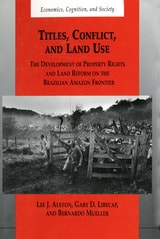
Titles, Conflict, and Land Use
The Development of Property Rights and Land Reform on the Brazilian Amazon FrontierLee J. Alston, Gary D. Libecap, and Bernardo Mueller
University of Michigan Press, 1999
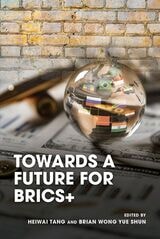
Towards a Future for BRICS+
Edited by Heiwai Tang and Brian Wong Yue Shun
Hong Kong University Press, 2025
As the BRICS bloc expands beyond its original five members to include Egypt, Ethiopia, Iran, Indonesia, and the UAE—with Saudi Arabia invited to join—the influence of BRICS+ in global trade and geopolitics is growing. The question remains: what does this shifting balance of power mean for the world?
Towards a Future for BRICS+, edited by Heiwai Tang and Brian Wong, brings together leading scholars to assess the past, present, and future of this evolving coalition. With rigorous, evidence-based analysis, this work outlines the economic and political complementarities between BRICS+ nations while also addressing internal tensions and the broader implications for the Global South.
As questions linger over the viability of BRICS+ as a counterweight to the G7, this book is a valuable reference for policymakers and scholars seeking to understand the emerging global order.
Trade and Employment in Developing Countries, Volume 2
Factor Supply and SubstitutionEdited by Anne O. Krueger
University of Chicago Press, 1982