Results by title
347 books match the query 'Early works to 1800' and 87 start with t
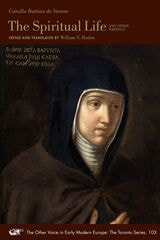
The Spiritual Life and Other Writings
Camilla Battista Da Varano
Iter Press, 2023
Camilla Battista da Varano (1458–1524) was a Franciscan nun and the author of profound spiritual writings in both prose and verse. Raised in the princely household of Camerino in north-central Italy, she put her thorough humanist education to use explaining her own spiritual experience and delivering advice to others. Varano composed ecstatic revelations, prayers, poems, hagiography, spiritual direction, and commentary on convent legislation. She drew on a wide variety of sources, including scripture and Church Fathers, plus popular literature and proverbs. Varano was an erudite woman of considerable complexity, defying many of the commonplace images we associate with religious women of the late fifteenth and early sixteenth centuries.
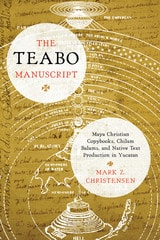
The Teabo Manuscript
Maya Christian Copybooks, Chilam Balams, and Native Text Production in YucatánBy Mark Z. Christensen
University of Texas Press, 2016
Winner, LASA Mexico Humanities Book Prize, 2017
Among the surviving documents from the colonial period in Mexico are rare Maya-authored manuscript compilations of Christian texts, translated and adapted into the Maya language and worldview, which were used to evangelize the local population. The Morely Manuscript is well known to scholars, and now The Teabo Manuscript introduces an additional example of what Mark Z. Christensen terms a Maya Christian copybook. Recently discovered in the archives of Brigham Young University, the Teabo Manuscript represents a Yucatecan Maya recounting of various aspects of Christian doctrine, including the creation of the world, the Fall of Adam and Eve, and the genealogy of Christ.
The Teabo Manuscript presents the first English translation and analysis of this late colonial Maya-language document, a facsimile and transcription of which are also included in the book. Working through the manuscript section by section, Christensen makes a strong case for its native authorship, as well as its connections with other European and Maya religious texts, including the Morely Manuscript and the Books of Chilam Balam. He uses the Teabo Manuscript as a platform to explore various topics, such as the evangelization of the Maya, their literary compositions, and the aspects of Christianity that they deemed important enough to write about and preserve. This pioneering research offers important new insights into how the Maya negotiated their precontact intellectual traditions within a Spanish and Catholic colonial world.
The The Theoretical-Practical Elements of Music, Parts III and IV
Francesco Galeazzi Translated with an Introductin and Commentary by Deborah Burton and Gregory W. Harwood
University of Illinois Press, 2012
This volume offers an unprecedented English translation of the second volume of Elementi teorico-practici di musica, with annotations and commentary. The translation is introduced with a study of Galeazzi's life and milieu, the genesis and sources for the Elementi, and its reception through the present day.
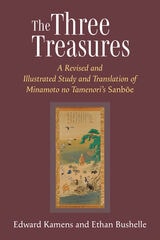
The Three Treasures
A Revised and Illustrated Study and Translation of Minamoto no Tamenori's SanboeEdward Kamens and Ethan Bushelle
University of Michigan Press, 2023
When the young Princess Sonshi became a Buddhist nun in the year 984, a scholar-official of the royal court was commissioned to create a guide to the Buddhist religion that would be accessible for her. He did so in the form of the illustrated works of fiction (monogatari) that appealed to women readers of her time and class. The text has survived in later manuscripts; the illustrations, if they ever existed, have not. This revised translation recreates Sonshi’s experience of receiving this multimedia presentation, with illustrations selected to help contemporary readers visualize its content and essays that provide context on the religious and cultural experience of the author. The Three Jewels is a unique document that opens a window onto the world of Buddhist religious experience—especially for women—in high classical Japan, the time of Sei Shōnagon’s Pillow Book and Murasaki Shikibu’s Tale of Genji.
The Tragedy and Comedy of Life
Plato's PhilebusPlato
University of Chicago Press, 1993
In The Tragedy and Comedy of Life, Seth Benardete focuses on the idea of the good in what is widely regarded as one of Plato's most challenging and complex dialogues, the Philebus. Traditionally the Philebus is interpreted as affirming the doctrine that the good resides in thought and mind rather than in pleasure or the body. Benardete challenges this view, arguing that Socrates vindicates the life of the mind over the life of pleasure not by separating the two and advocating a strict asceticism, but by mixing pleasure and pain with mind in such a way that the philosophic life emerges as the only possible human life.
Benardete combines a probing and challenging commentary that subtly mirrors and illuminates the complexities of this dialogue with the finest English translation of the Philebus yet available. The result is a work that will be of great value to classicists, philosophers, and political theorists alike.
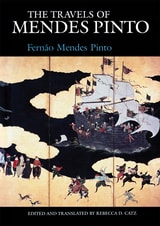
The Travels of Mendes Pinto
Fernão Mendes Pinto
University of Chicago Press, 1989
"[T]here is plenty here for the modern reader. . . . The vivid descriptions of swashbuckling military campaigns and exotic locations make this a great adventure story. . . . Mendes Pinto may have been a sensitive eyewitness, or a great liar, or a brilliant satirist, but he was certainly more than a simple storyteller."—Stuart Schwartz, The New York Times
The Travels of Reverend Olafur Egilsson
Karl Smari Hreinsson
Catholic University of America Press, 2016
The Trinity
Saint Hilary of Poitiers
Catholic University of America Press, 1954
The Trinity; The Spectacle; Jewish Foods; In Praise of Purity; Letters
Catholic University of America Press, 1974
The True Medicine
Oliva Sabuco de Nantes Barrera, Edited by Gianna Pomata, Translated by Gianna Pomata
Iter Press, 2010
This annotated translation allows the reader to locate the Dialogue on the True Medicine in the context of early modern medical and philosophical culture, identifying Sabuco’s ancient and modern sources. The editor’s introduction reviews the contested issue of authorship, offers new documentation for the history of the reception of Sabuco’s ideas in the seventeenth century, and relates Sabuco’s work to the Querelle des femmes, the protofeminist debate which had remarkable echoes in early modern medicine.
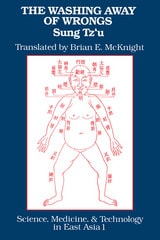
The Washing Away of Wrongs
Forensic Medicine in Thirteenth-Century ChinaSung Tz’u; Translated by Brian E. McKnight
University of Michigan Press, 1981
The Wealth of Wives
A Fifteenth-Century Marriage ManualFrancesco Barbaro
Iter Press, 2015
In 1415, Francesco Barbaro produced a marriage manual intended at once for his friend, a scion of the Florentine Medici family, and for the whole set of his peers, the young nobility of Venice. Countering the trends of the day toward dowry chasing and dowry inflation, Barbaro insisted that the real wealth of wives was their capacity to conceive, birth, and rear children worthy of their heritage. The success of the patriciate depended, ironically, on women: for they alone could ensure the biological, cultural, and spiritual reproduction of their marital lineage. The Wealth of Wives circulated in more than 100 manuscript versions, five Latin editions, and translations into German, Italian, French, and English, far outstripping in its influence Leon Battista Alberti’s On the Family (1434).
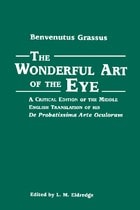
The Wonderful Art of the Eye
A Critical Edition of the Middle English Translation of his De Probatissimo Arte OculorumL. M. Eldredge
Michigan State University Press, 1996
A thirteenth-century treatise on the theory and practice of ophthalmology, this unique work provides a window on what passed for medical knowledge of the eye during the late Middle Ages. Although little is known of the author, Benevenutus Grassus, he seems to have roamed Italy in the early thirteenth century as a medical practitioner specializing in diseases of the eye.
The Works of Saint Cyril of Jerusalem, Volume 1
Saint Cyril of Jerusalem
Catholic University of America Press, 1969
The Works of Saint Cyril of Jerusalem, Volume 2
Saint Cyril of Jerusalem
Catholic University of America Press, 1970
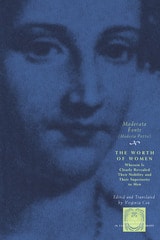
The Worth of Women
Wherein Is Clearly Revealed Their Nobility and Their Superiority to MenModerata Fonte
University of Chicago Press, 1997
Moderata Fonte was the pseudonym of Modesta Pozzo (1555–92), a Venetian woman who was something of an anomaly. Neither cloistered in a convent nor as liberated from prevailing codes of decorum as a courtesan might be, Pozzo was a respectable, married mother who produced literature in genres that were commonly considered "masculine"—the chivalric romance and the literary dialogue. This work takes the form of the latter, with Fonte creating a conversation among seven Venetian noblewomen. The dialogue explores nearly every aspect of women's experience in both theoretical and practical terms. These women, who differ in age and experience, take as their broad theme men's curious hostility toward women and possible cures for it.
Through this witty and ambitious work, Fonte seeks to elevate women's status to that of men, arguing that women have the same innate abilities as men and, when similarly educated, prove their equals. Through this dialogue, Fonte provides a picture of the private and public lives of Renaissance women, ruminating on their roles in the home, in society, and in the arts.
A fine example of Renaissance vernacular literature, this book is also a testament to the enduring issues that women face, including the attempt to reconcile femininity with ambition.
Theodoret of Cyrus
commentary on the Psalms, 73-150Robert C. Theodoret of Cyrus
Catholic University of America Press, 2000
Theological Treatises on the Trinity
Marius Victorinus
Catholic University of America Press, 1981
They Came to Japan
An Anthology of European Reports on Japan, 1543-1640Michael Cooper, Editor
University of Michigan Press, 1995
Three Arabic Treatises on Aristotle’s Rhetoric
The Commentaries of al-Farabi, Avicenna, and AverroesTranslated, with introduction and notes, by Lahcen Elyazghi Ezzaher
Southern Illinois University Press, 2015
Winner, 2018 MLA Aldo and Jeanne Scaglione Prize for a Translation of a Scholarly Study of Literature
It is increasingly well documented that western rhetoric’s journey from pagan Athens to the medieval academies of Christian Europe was significantly influenced by the intellectual thought of the Muslim Near East. Lahcen Elyazghi Ezzaher contributes to the contemporary chronicling of this influence in Three Arabic Treatises on Aristotle’s Rhetoric: The Commentaries of al-Farabi, Avicenna, and Averroes, offering English translations of three landmark medieval Arabic commentaries on Aristotle's famous rhetorical treatise together in one volume for the first time. Elegant and practical, Elyazghi Ezzaher’s translations give English-speaking scholars and students of rhetoric access to key medieval Arabic rhetorical texts while elucidating the unique and important contribution of those texts to the revival of European interest in the rhetoric and logic of Aristotle, which in turn influenced the rise of universities and the shaping of Western intellectual life.
With a focus on Book I of Aristotle’s Rhetoric, the commentaries ofal-Farabi, Avicenna, and Averroes translated by Elyazghi Ezzaher are paramount examples of an extensive Arabic-Muslim tradition of textual commentary while also serving as rich corollaries to the medieval Greek and Latin rhetorical commentaries produced in Europe. Elyazghi Ezzaher’s translations are each accompanied by insightful scholarly introductions and notes that contextualize—both historically and culturally—these immensely significant works while highlighting a comparative, multidisciplinary approach to rhetorical scholarship that offers new perspectives on one of the field’s foundational texts.
A remarkable addition to rhetorical studies, Three Arabic Treatises on Aristotle’s Rhetoric: The Commentaries of al-Farabi, Avicenna, and Averroes not only provides vibrant English translations of essential medieval Arabic rhetorical texts but also challenges scholars and students of rhetoric to consider their own historical, cultural, and linguistic relationships to the texts and objects they study.
Three Cartesian Feminist Treatises
François Poullain de la Barre
University of Chicago Press, 2002
Poullain published three books (anonymously) on this topic in the 1670s, all of which are included in English translation in this volume. In On the Equality of the Two Sexes he argued that the supposedly "natural" inferiority of women was culturally produced. To help women recognize and combat this prejudice, Poullain advocated a modern, enlightened feminine education in On the Education of Ladies. Finally, since his contemporaries largely ignored Poullain's writings, he offered a rebuttal to his own arguments in On the Excellence of Men—a rebuttal that he promptly countered, strengthening his original positions.
A truly modern feminist, Poullain laid the intellectual groundwork for the women's liberation movement centuries before it happened.
Three Christological Treatises
Catholic University of America Press, 2014
Three Discourses
A Critical Modern Edition of Newly Identified Work of the Young HobbesThomas Hobbes
University of Chicago Press, 1995
Saxonhouse and Reynolds present the complete texts of the discourse with full annotations and modernized spellings. These are followed by a lengthy essay analyzing the pieces' significance for Hobbes's intellectual development and modern political thought more generally. The discourses provide the strongest evidence to date for the profound influences of Bacon and Machiavelli on the young Hobbes, and they add a new dimension to the much-debated impact of the scientific method on his thought. The book also contains both introductory and in-depth explanations of statistical "wordprinting."

Town
Prints & Drawings of Britain before 1800Bernard Nurse
Bodleian Library Publishing, 2020
Tractates on the Gospel of John 112–24; Tractates on the First Epistle of John
Saint Augustine
Catholic University of America Press, 1988
Tractates on the Gospel of John 11–27
Saint Augustine
Catholic University of America Press, 1988
Tractates on the Gospel of John 1–10
Saint Augustine
Catholic University of America Press, 1988
Tractates on the Gospel of John 28–54
Saint Augustine
Catholic University of America Press, 1988
Tractates on the Gospel of John 55–111
Saint Augustine
Catholic University of America Press, 1988
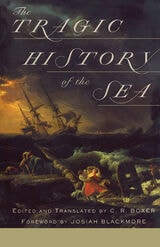
Tragic History Of The Sea
C.R. Boxer
University of Minnesota Press, 2001
Compelling stories of shipwreck, adventure, and death on the high seas, now back in print.
The sixteenth and seventeenth centuries were a time of great colonial expansion, marked by a mercantile frenzy of ships carrying merchants, aristocrats, missionaries, sailors, Inquisitors, botanists, and statesmen pursuing the spoils of empire. Among the narratives that chronicled these voyages, those of the Portuguese are unequaled. C. R. Boxer’s fascinating translations of famous Portuguese shipwreck stories detail the disasters and terrors plaguing the perilous sea trading route between Portugal and India.
In the tradition of Homer, Virgil, Shakespeare, Defoe, and Poe, these dramatic stories of shipwreck—and those who lived to tell about it—represent existence and survival pushed to the limits. They describe disastrous turns of fate and miraculous rescues, heroism and cowardice, and offer the exhilaration and sheer emotive appeal of a tale of adventure well told. Often circulated in pamphlet form, these stories recounting the dangers and terrors of storm-tossed ocean voyages and the fate of castaways in distant lands were a popular genre, rife with compelling and often gory details. This first ever paperback edition includes a new translation of the tragic tale of Captain Manuel de Sousa Sepúlveda, shipwrecked with his family on the sands of Africa in 1552, the previous English versions of which have long been unavailable. Vividly descriptive and engrossing, these tales of selfishness, cruelty, despair, pirates, mayhem, and harrowing storms will captivate readers.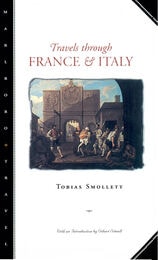
Travels Through France and Italy
Tobias Smollett
Northwestern University Press, 1997
Travels through France and Italy is a landmark work in travel literature. Full of prejudice, grousing, sharp observation, and caustic satire, it is the first travel book in modern literature to go beyond the simple conveyance of information to reflect the writer's state of mind.
Treatise On Laughter
Laurent Joubert, Translated by Gregory David de Rocher
University of Alabama Press, 1980
Laurent Joubert (b. 1529) was an important figure in the medical world of the French Renaissance. His monumental Treatise on Laughter provides categories and examples of the laughable. The work describes laughter, its causes and effects, its types and differences. His subdivisions and categories, along with their examples, furnish today's critic and reader with a Renaissance vision of comic commonplaces. It is this vision that may prove to be of great value in analyzing comic literature of the Renaissance.
Treatises on Marriage and Other Subjects
Saint Augustine
Catholic University of America Press, 1999
Treatises on Noah and David
Brian P. St. Ambrose
Catholic University of America Press, 2020
The first treatise presents Noah as a model just man, as Ambrose pairs the literal and the higher or spiritual meaning of the Genesis flood narrative to address topics ranging from the Genesis narrative to Stoic ethics to the Incarnation. In his defense of David to the emperor Theodosius, Ambrose ties David’s sin and repentance to his own close reading of Psalm 51(50), David’s plea for himself in his famous “Miserere.” While the authenticity of the third treatise included in the volume, the Second Apology of David, has long been challenged, recent scholarship suggests that it transmits Ambrose’s own preaching, which applies the lessons of David’s life to the situation of gentile unbelievers, Jews, and the church; even if it is the work of a later imitator, the Second Apology is a compelling and systematic treatment of the David’s sin and repentance as relevant to Christian morality and doctrine.
The three treatises, previously unavailable in English translation, broaden our understanding of exegesis in the Latin West and our interpretation of Ambrose as preacher and exegete.
Treatises on Various Subjects
Saint Augustine
Catholic University of America Press, 1952
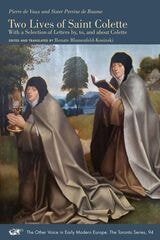
Two Lives of Saint Colette
With a Selection of Letters by, to, and about ColettePierre de Vaux and Sister Perrine de Baume
Iter Press, 2022
Saint Colette of Corbie (1381–1447) was a French reformer of the Franciscan Order and the founder of seventeen convents. Though of humble origin, she attracted the support of powerful patrons and important Church officials. The two biographies translated here were authored by Pierre de Vaux, her confessor and mentor, and Perrine de Baume, a nun who for decades was Colette’s companion and confidant. Both accounts offer fascinating portraits of the saint as a pious ascetic assailed by demons and performing miracles, as well as in her role as skillful administrator and caring mother of her nuns. This is the first English translation of two biographies in Middle French of the most important female figures of the Middle Ages.
Two Twelfth-Century Texts on Chinese Painting
Robert J. Maeda, Translator
University of Michigan Press, 1970