Results by title
728 books match the query 'Economic aspects' and 164 start with t
The Economics of Marine Resources and Conservation Policy
The Pacific Halibut Case Study with CommentaryEdited by James A. Crutchfield and Arnold Zellner
University of Chicago Press, 2002
This book presents a complete reprint of Crutchfield and Zellner's pioneering study, together with a new introduction by the authors and four new papers by other scholars. These new studies cover the history of the Pacific halibut industry as well as the general and specific contributions of the original work—such as price-oriented conservation policy—to the fields of resource economics and management. The resulting volume integrates theory and practice in a clear, well-contextualized case study that will be important not just for environmental and resource economists, but also for leaders of industries dependent on any natural resource.

The Economics of Privacy
Edited by Avi Goldfarb and Catherine E. Tucker
University of Chicago Press, 2024
A foundational new collection examining the mechanics of privacy in the digital age.
The falling costs of collecting, storing, and processing data have allowed firms and governments to improve their products and services, but have also created databases with detailed individual-level data that raise privacy concerns. This volume summarizes the research on the economics of privacy and identifies open questions on the value of privacy, the roles of property rights and markets for privacy and data, the relationship between privacy and inequality, and the political economy of privacy regulation.
Several themes emerge across the chapters. One is that it may not be possible to solve privacy concerns by creating a market for the right to privacy, even if property rights are well-defined and transaction costs are low. Another is that it is difficult to measure and value the benefits of privacy, particularly when individuals have an intrinsic preference for privacy. Most previous attempts at valuation have focused only on quantifiable economic outcomes, such as innovation. Finally, defining privacy through an economic lens is challenging. The broader academic and legal literature includes many distinct definitions of privacy, and different definitions may be appropriate in different contexts. The chapters explore a variety of frameworks for examining these questions and provide a range of new perspectives on the role of economics research in understanding the benefits and costs of privacy and of data flows. As the digital economy continues to expand the scope of economic theory and research, The Economics of Privacy provides the most comprehensive survey to date of this field and its next steps.
The Economics of School Choice
Edited by Caroline M. Hoxby
University of Chicago Press, 2003
Combining the results of empirical research with analyses of the basic economic forces underlying local education markets, The Economics of School Choice presents evidence concerning the impact of school choice on student achievement, school productivity, teachers, and special education. It also tackles difficult questions such as whether school choice affects where people decide to live and how choice can be integrated into a system of school financing that gives children from different backgrounds equal access to resources. Contributors discuss the latest findings on Florida's school choice program as well as voucher programs and charter schools in several other states.
The resulting volume not only reveals the promise of school choice, but examines its pitfalls as well, showing how programs can be designed that exploit the idea's potential but avoid its worst effects. With school choice programs gradually becoming both more possible and more popular, this book stands out as an essential exploration of the effects such programs will have, and a necessary resource for anyone interested in the idea of school choice.
The Economics of Transformative AI
Edited by Ajay Agrawal, Erik Brynjolfsson, and Anton Korinek
University of Chicago Press, 2026
A thought-provoking examination of how AI might either spur or harm human economic progress.
What happens to an economy when machines can think as well as, or even better than, humans? The Economics of Transformative AI tackles this issue, which is one of the most consequential economic questions of our time. This book brings together sixteen research studies from top economists that look closely at how transformative AI reshapes everything from innovation and market structure to employment, inequality, and human purpose. They explore both opportunities, such as personalized algorithmic assistance, accelerated scientific discovery, and new forms of organization, and profound challenges, including potential labor displacement, rising concentration of power, changes in the information ecosystem, and even possible existential risks to humanity.
The studies in this volume develop economic frameworks for understanding the conditions under which AI might enhance or undermine human flourishing. They offer policymakers, researchers, and business leaders the analytical tools needed to prepare for the potential economic transformations ahead.
The Economization of Life
M. Murphy
Duke University Press, 2017
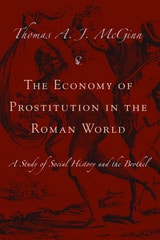
The Economy of Prostitution in the Roman World
A Study of Social History and the BrothelThomas A. J. McGinn
University of Michigan Press, 2004

The Effortless Economy of Science?
Philip Mirowski
Duke University Press, 2004
Mirowski contends that neoclassical economists have persistently presumed and advanced an “effortless economy of science,” a misleading model of a self-sufficient and conceptually self-referential social structure that transcends market operations in pursuit of absolute truth. In the stunning essays collected here, he presents a radical critique of the ways that neoclassical economics is used to support, explain, and legitimate the current social practices underlying the funding and selection of “successful” science projects. He questions a host of theories, including the portraits of science put forth by Karl Popper, Michael Polanyi, and Thomas Kuhn. Among the many topics he examines are the social stabilization of quantitative measurement, the repressed history of econometrics, and the social construction of the laws of supply and demand and their putative opposite, the gift economy. In The Effortless Economy of Science? Mirowski moves beyond grand abstractions about science, truth, and democracy in order to begin to talk about the way science is lived and practiced today.
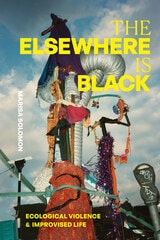
The Elsewhere Is Black
Ecological Violence and Improvised LifeMarisa Solomon
Duke University Press, 2025

The End of Tolerance
Racism in 21st Century BritainArun Kundnani
Pluto Press, 2007
Exacerbated by the attacks of 9/11 and 7/7, Kundnani argues that a new form of racism is emerging that is based on a systematic failure to understand the causes of forced migration, global terrorism and social segregation. The result is a climate of hatred, especially against Muslims and asylum seekers, and the erosion of the human rights of those whose cultures and values are perceived as 'alien'.
Communities are more divided than ever. Yet the government presses ahead with flawed immigration and 'integration' policies and anti-terrorist legislation that creates further resentment, alienation and criminalisation. Behind it all lies a refusal to grasp the ways in which the world has been changed by neoliberal globalisation.
What can be done? This timely and precise analysis is a useful account of why racism is now thriving -- and what can be done to stop it. It will be of interest to anyone who is appalled by the current state of race relations in Britain and it should be required reading for all policy-makers.
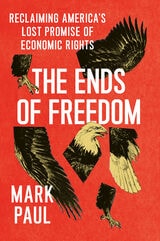
The Ends of Freedom
Reclaiming America's Lost Promise of Economic RightsMark Paul
University of Chicago Press, 2023
Since the Founding, Americans have debated the true meaning of freedom. For some, freedom meant the provision of life’s necessities, those basic conditions for the “pursuit of happiness.” For others, freedom meant the civil and political rights enumerated in the Bill of Rights and unfettered access to the marketplace—nothing more. As Mark Paul explains, the latter interpretation—thanks in large part to a particularly influential cadre of economists—has all but won out among policymakers, with dire repercussions for American society: rampant inequality, endemic poverty, and an economy built to benefit the few at the expense of the many.
In this book, Paul shows how economic rights—rights to necessities like housing, employment, and health care—have been a part of the American conversation since the Revolutionary War and were a cornerstone of both the New Deal and the Civil Rights Movement. Their recuperation, he argues, would at long last make good on the promise of America’s founding documents. By drawing on FDR’s proposed Economic Bill of Rights, Paul outlines a comprehensive policy program to achieve a more capacious and enduring version of American freedom. Among the rights he enumerates are the right to a good job, the right to an education, the right to banking and financial services, and the right to a healthy environment.
Replete with discussions of some of today’s most influential policy ideas—from Medicare for All to a federal job guarantee to the Green New Deal—The Ends of Freedom is a timely and urgent call to reclaim the idea of freedom from its captors on the political right—to ground America’s next era in the country’s progressive history and carve a path toward a more economically dynamic and equitable nation.
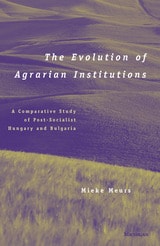
The Evolution of Agrarian Institutions
A Comparative Study of Post-Socialist Hungary and BulgariaMieke Meurs
University of Michigan Press, 2001
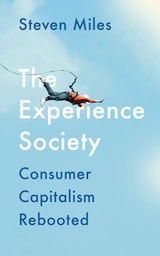
The Experience Society
Consumer Capitalism RebootedSteven Miles
Pluto Press, 2020
The technologically-driven world we live in is no closer to securing the utopian ideal of a leisure society. Instead, the pursuit of leisure is often an attempt to escape our everyday existence. Exploring examples including sport, architecture, travel and social media, Steven Miles investigates how consumer culture has colonised 'experiences', revealing the ideological and psycho-social tensions at the heart of the 'experience society'.
The first critical analysis of the experience economy by a UK sociologist sheds light on capitalism's ever more sophisticated infiltration of the everyday.
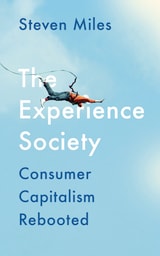
The Experience Society
Consumer Capitalism RebootedSteven Miles
Pluto Press, 2020
The technologically-driven world we live in is no closer to securing the utopian ideal of a leisure society. Instead, the pursuit of leisure is often an attempt to escape our everyday existence. Exploring examples including sport, architecture, travel and social media, Steven Miles investigates how consumer culture has colonized 'experiences', revealing the ideological and psycho-social tensions at the heart of the 'experience society'.
The first critical analysis of the experience economy by a UK sociologist sheds light on capitalism's ever more sophisticated infiltration of the everyday.
The Fantasy Economy
Neoliberalism, Inequality, and the Education Reform MovementKraus, Neil
Temple University Press, 2023
The Fantasy Economy challenges the basic assumptions of the education reform movement of the last few decades. Kraus insists that education cannot control the labor market and unreliable corporate narratives fuel this misinformation. Moreover, misguided public policies, such as accountability and school choice, along with an emphasis on workforce development and STEM over broad-based liberal arts education, have only produced greater inequality.
Ultimately, The Fantasy Economy argues that education should be understood as a social necessity, not an engine of the neoliberal agenda. Kraus’ book advocates for a change in conventional thinking about economic opportunity and the purpose of education in a democracy.
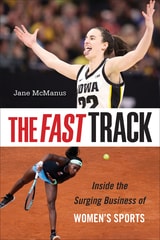
The Fast Track
Inside the Surging Business of Women's SportsJane McManus
Temple University Press, 2025
Veteran sports journalist and academic Jane McManus examines both this upward trend and the forces that have held women’s sports back since the early 1970s when Title IX became law (and Billie Jean King soundly defeated Bobby Riggs). As the fervor for Caitlin Clark during the 2024 NCAA Women’s Basketball championship illustrates, there is big money to be made from broadcasting, merchandising, and investing in women’s sports.
The Fast Track chronicles how pioneering sponsorships, broadcast opportunities, and surges in ratings contradict the myths about disinterest. Interviews counter the resistance toward women’s leagues, reveal how women are covered in the media, and consider the possibilities for further investment. McManus also addresses racial inclusivity, transgender athletes, women’s health issues, and equal pay.
An essential road map to capitalize on untapped potential, The Fast Track provides a snapshot of where women’s sports as an industry and investment stand at this moment in time.
The Fight Against Platform Capitalism
An Inquiry into the Global Struggles of the Gig EconomyJamie Woodcock
University of Westminster Press, 2021
“The book rewards readers with interesting first-hand accounts of protests and pickets that are typically absent from academic discussions of the digital economy.” - https://blogs.lse.ac.uk/lsereviewofbooks/2021/03/17/book-review-the-fight-against-platform-capitalism-an-inquiry-into-the-global-struggles-of-the-gig-economy-by-jamie-woodcock/
So far, platform work has been an important laboratory for capital. Management techniques, like the use of algorithms, are being tested with a view to exporting across the global economy and it is argued that automation is undermining workers’ agency. Although the contractual trick of self-employment has allowed platforms to grow quickly and keep their costs down, yet it has also been the case also that workers have also found they can strike without following the existing regulations.
This book develops a critique of platforms and platform capitalism from the perspective of workers and contributes to the ongoing debates about the future of work and worker organising. It presents an alternative portrait returning to a focus on workers’ experience, focusing on solidarity, drawing out a global picture of new forms of agency. In particular, the book focuses on three dynamics that are driving struggles in the platform economy: the increasing connections between workers who are no longer isolated; the lack of communication and negotiation from platforms, leading to escalating worker action around shared issues; and the internationalisation of platforms, which has laid the basis for new transnational solidarity.
Focusing on transport and courier workers, online workers and freelancers author Jamie Woodcock concludes by considering how workers build power in different situations. Rather than undermining worker agency, platforms have instead provided the technical basis for the emergence of new global struggles against capitalism.
The Five Life Decisions
How Economic Principles and 18 Million Millennials Can Guide Your ThinkingRobert T. Michael
University of Chicago Press, 2016
Economist Robert T. Michael won’t tell you what to choose. Instead, he’ll show you how to make smarter choices. Michael focuses on five critical decisions we all face about college, career, partners, health, and parenting. He uses these to demonstrate how the science of scarcity and choice—concepts used to guide major business decisions and shape national legislation—can offer a solid foundation for our own lives. Employing comparative advantage can have a big payoff when picking a job. Knowing how to work the marketplace can minimize uncertainty when choosing a partner. And understanding externalities—the ripple of results from our actions—can clarify the if and when of having children.
Michael also brings in data from the National Longitudinal Survey of Youth, a scientific sample of 18 million millennials in the United States that tracks more than a decade of young adult choices and consequences. As the survey’s longtime principal investigator and project director, Michael shows that the aggregate decisions can help us understand what might lie ahead along many possible paths—offering readers insights about how their own choices may turn out.
There’s no singular formula for always making the right choice. But the adaptable framework and rich data at the heart of The Five Life Decisions will help you feel confident in whatever you decide.
The Flash of Capital
Film and Geopolitics in JapanEric Cazdyn
Duke University Press, 2002
Cazdyn focuses on three key moments of historical contradiction: colonialism, post-war reconstruction, and globalization. Considering great classics of Japanese film, documentaries, works of science fiction, animation, and pornography, he brings to light cinematic attempts to come to terms with the tensions inherent in each historical moment—tensions between the colonizer and the colonized, between the individual and the collective, and between the national and the transnational. Paying close attention to political context, Cazdyn shows how formal inventions in the realms of acting, film history and theory, thematics, documentary filmmaking, and adaptation articulate a struggle to solve implacable historical problems. This innovative work of cultural history and criticism offers explanations of historical change that challenge conventional distinctions between the aesthetic and the geopolitical.

The Frugal Librarian
Carol American Library Association
American Library Association, 2011
The Gang as an American Enterprise
Felix M Padilla
Rutgers University Press, 1992
Padilla shows us his decision to join the Diamonds. From early childhood, boys develop positive images of the gang. They realize that the dominant culture promises mobility, but that their paths to that mobility are blocked. By joining a gang they can creatively oppose the dominant culture. Padilla does not paint a romanticized picture of the Diamonds. Some members come to understand that when they sell drugs, they benefit the gang's leaders and suppliers more than themselves. Further, they recognize that the gang is also subject to problems of domination and inequality. Padilla shows that though the Diamonds are sometimes violent, they are not psychopaths. While we need not approve of what they do, he urges us to understand it as a rational response to the doors these young men see closed around them.
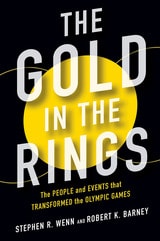
The Gold in the Rings
The People and Events That Transformed the Olympic GamesStephen R. Wenn and Robert K. Barney
University of Illinois Press, 2019
Entertaining and expert, The Gold in the Rings maps the Olympics' course from paragon of purity to billion-dollar profits.
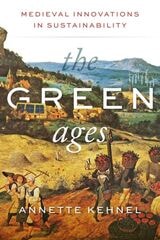
The Green Ages
Medieval Innovations in SustainabilityAnnette Kehnel
Brandeis University Press, 2024
In The Green Ages, historian Annette Kehnel explores sustainability initiatives from the Middle Ages, highlighting communities that operated a barter trade system on the Monte Subiaco in Italy, sustainable fishing at Lake Constance, common lands in the United Kingdom, transient grazing among Alpine shepherds in the south of France, and bridges built by crowdfunding in Avignon. Kehnel takes these medieval examples and applies their practical lessons to the modern world to prove that we can live sustainably—we’ve done it before!
From the garden economy in the mythical-sounding City of Ladies to early microcredit banks, Kehnel uncovers a world at odds with our understanding of the typical medieval existence. Premodern history is full of inspiring examples and concepts ripe for rediscovery, and we urgently need them as today’s challenges—finite resources, the twilight of consumerism, and growing inequality—threaten what we have come to think of as a modern way of living sustainably. This is a stimulating and revelatory look at a past that has the power to change our future.
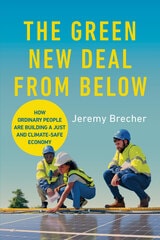
The Green New Deal from Below
How Ordinary People Are Building a Just and Climate-Safe EconomyJeremy Brecher
University of Illinois Press, 2024
A visionary program for national renewal, the Green New Deal aims to protect the earth’s climate while creating good jobs, reducing injustice, and eliminating poverty. Its core principle is to use the necessity for climate protection as a basis for realizing full employment and social justice.
Jeremy Brecher goes beyond the national headlines and introduces readers to the community, municipal, county, state, tribal, and industry efforts advancing the Green New Deal across the United States. Brecher illustrates how such programs from below do the valuable work of building constituencies and providing proofs of concept for new ideas and initiatives. Block by block, these activities have come together to form a Green New Deal built on a strong foundation of small-scale movements and grassroots energy.
A call for hope and a better tomorrow, The Green New Deal from Below offers a blueprint for reconstructing society on new principles to avoid catastrophic climate change.
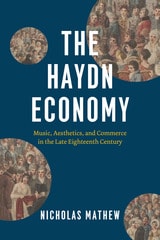
The Haydn Economy
Music, Aesthetics, and Commerce in the Late Eighteenth CenturyNicholas Mathew
University of Chicago Press, 2022
In this far-reaching work of music history and criticism, Nicholas Mathew reimagines the world of Joseph Haydn and his contemporaries, with its catastrophic upheavals and thrilling sense of potential. In the process, Mathew tackles critical questions of particular moment: how we tell the history of the European Enlightenment and Romanticism; the relation of late eighteenth-century culture to incipient capitalism and European colonialism; and how the modern market and modern aesthetic values were—and remain—inextricably entwined.
The Haydn Economy weaves a vibrant material history of Haydn’s career, extending from the sphere of the ancient Esterházy court to his frenetic years as an entrepreneur plying between London and Vienna to his final decade as a venerable musical celebrity, during which he witnessed the transformation of his legacy by a new generation of students and acolytes, Beethoven foremost among them. Ultimately, Mathew asserts, Haydn’s historical trajectory compels us to ask what we might retain from the cultural and political practices of European modernity—whether we can extract and preserve its moral promise from its moral failures. And it demands that we confront the deep histories of capitalism that continue to shape our beliefs about music, sound, and material culture.
The Insatiability of Human Wants
Economics and Aesthetics in Market SocietyRegenia Gagnier
University of Chicago Press, 2000
The Insatiability of Human Wants begins during a key transitional moment in aesthetic and economic theory, 1871, when both disciplines underwent a turn from production to consumption models. In economics, an emphasis on the theory of value and the social relations between land, labor, and capital gave way to more individualistic models of consumerism. Similarly, in aesthetics, theories of artistic production or creativity soon bowed to models of taste, pleasure, and reception.
Using these developments as a point of departure, Gagnier deftly traces the shift in Western thought from models of production to consumption. From its exploration of early market logic and Kantian thought to its look at the aestheticization of homelessness and our own market boom, The Insatiability of Human Wants invites us to contemplate alternative interpretations of economics, aesthetics, and history itself.

The International Movie Industry
Edited by Gorham Kindem
Southern Illinois University Press, 2000
Movies are both art and commerce, creative expressions of national/cultural interests and preoccupations and part of a global entertainment market. The past century has witnessed a transformation of the movies from popular novelties into highly valued cultural icons and commodities that have promoted national identity and specific political agendas, while also affecting international trade.
This comprehensive history of the international movie industry from its inception in 1895 to the present features nineteen original essays by international scholars who examine the film industries of nineteen countries and six continents. Each chapter in The International Movie Industry focuses on a specific national movie industry’s economic and related social, aesthetic, technological, and political/ideological development within an international context during the last century. The result is a global history of the movie industry over the last one hundred years.
The Judicial Power of the Purse
How Courts Fund National Defense in Times of CrisisNancy Staudt
University of Chicago Press, 2011
Congress and the president are not the only branches that deal with fiscal issues in times of war. In this innovative book, Nancy Staudt focuses on the role of federal courts in fiscal matters during warfare and high-cost national defense emergencies. There is, she argues, a judicial power of the purse that becomes evident upon examining the budgetary effects of judicial decision making. The book provides substantial evidence that judges are willing—maybe even eager—to redirect private monies into government hands when the country is in peril, but when the judges receive convincing cues that ongoing wartime activities undermine the nation’s interests, they are more likely to withhold funds from the government by deciding cases in favor of private individuals and entities who show up in court.
In stark contrast with conventional legal, political, and institutional thought that privileges factors associated with individual preferences, The Judicial Power of the Purse sheds light on environmental factors in judicial decision making and will be an excellent read for students of judicial behavior in political science and law.
The Keepers of Water and Earth
Mexican Rural Social Organization and IrrigationBy Kjell I. Enge and Scott Whiteford
University of Texas Press, 1989
Agrarian reforms transformed the Mexican countryside in the late twentieth century but without, in many cases, altering fundamental power relationships. This study of the Tehuacán Valley in the state of Puebla highlights different strategies to manipulate the local implementation of federal government programs. With their very differing successes in the struggle to regain and maintain control of land and water rights, these strategies raise important questions about the meaning of the phrase "locally controlled development."
Because Mexico is dependent on irrigation for 45 percent of its cash crop production, national policy has focused on developing vast government controlled and financed irrigation systems. In the Tehuacán Valley, however, the inhabitants have developed a complex irrigation system without government aid or supervision. Yet, in contrast to most parts of Mexico, water rights can be bought and sold as a commodity, leading to accumulation, stratification, and emergence of a regional elite whose power is based on ownership of land and water. The analysis provides an important contribution to the understanding of local control.
The findings of this study will be important to a wide audience involved in the study of irrigation, local agricultural systems, and the interplay between local power structures and the national government in developing countries. The book also presents unique material on gravity-fed, horizontal wells, known as qanat in the Middle East, which had been unknown in the literature on Latin America before this book.

The Legacy of Hurricane Mitch
Lessons from Post-Disaster Reconstruction in HondurasMarisa O. Ensor
University of Arizona Press, 2009
As it swept across the Honduran landscape, the exceptional size, power and duration of Hurricane Mitch abruptly and brutally altered the already diminished economic, social, and environmental conditions of the population. In the aftermath of the disaster a group of seven socio-environmental scientists set out to investigate the root causes of the heightened vulnerability that characterized pre-Mitch Honduras, the impact of the catastrophe on the local society, and the subsequent recovery efforts. Edited by Marisa O. Ensor, this volume presents the findings of their investigation.
The Legacy of Hurricane Mitch offers a comprehensive analysis of the immediate and long-term consequences of Hurricane Mitch in Honduras. Based on longitudinal ethnographic fieldwork and environmental assessments, this volume illustrates the importance of adopting an approach to disaster research and practice that places “natural” trigger events within their political, cultural, and socio-economic contexts. The contributors make a compelling case against post-disaster recovery efforts that limit themselves to alleviating the symptoms, rather than confronting the root causes of the vulnerability that prefigured the disaster.
The Licit Life of Capitalism
US Oil in Equatorial GuineaHannah Appel
Duke University Press, 2019
The Longevity Seekers
Science, Business, and the Fountain of YouthTed Anton
University of Chicago Press, 2013
With The Longevity Seekers, science writer Ted Anton takes readers inside this tale that began with worms and branched out to snare innovative minds from California to Crete, investments from big biotech, and endorsements from TV personalities like Oprah and Dr. Oz. Some of the research was remarkable, such as the discovery of an enzyme in humans that stops cells from aging. And some, like an oft-cited study touting the compound resveratrol, found in red wine—proved highly controversial, igniting a science war over truth, credit, and potential profit. As the pace of discovery accelerated, so too did powerful personal rivalries and public fascination, driven by the hope that a longer, healthier life was right around the corner. Anton has spent years interviewing and working with the scientists at the frontier of longevity science, and this book offers a behind-the-scenes look at the state-of-the-art research and the impact it might have on global public health, society, and even our friends and family.
With spectacular science and an unforgettable cast of characters, The Longevity Seekers has all the elements of a great story and sheds light on discoveriesthat could fundamentally reshape human life.
The Many Futures of Work
Rethinking Expectations and Breaking MoldsEdited by Peter A. Creticos, Larry Bennett, Laura Owen, Costas Spirou, and Maxine Morphis-Riesbeck
Temple University Press, 2021
What will work eventually look like? This is the question at the heart of this timely collection. The editors and contributors—a mix of policy experts, academics, and advocates—seek to reframe the typical projections of the “future” of work. They examine the impact of structural racism on work, the loss of family‑sustaining jobs, the new role of gig work, growing economic inequality, barriers to rewarding employment such as age, gender, disability, and immigration status, and the business policies driving these ongoing challenges.
Together the essays present varied and practical insights into both U.S. and global trends, discuss the role of labor activism in furthering economic justice, and examine progressive strategies to improve the experience of work, wages, and the lives of workers. The Many Futures of Work offers a range of viable policies and practices that can promote rewarding employment and steer our course away from low-wage, unstable jobs toward jobs that lead to equitable prosperity and economic inclusion.
The Market Structure of Sports
Gerald W. Scully
University of Chicago Press, 1994
This book offers technical insights that will interest business economists and professionals in sports management.
The Mayan in the Mall
Globalization, Development, and the Making of Modern GuatemalaJ. T. Way
Duke University Press, 2012
Using a wide array of historical and contemporary sources, Way explores the multiple intersections of development and individual life, focusing on the construction of social space through successive waves of land reform, urban planning, and economic policy. His explorations move from Guatemala City's poorest neighborhoods and informal economies (run predominantly by women) to a countryside still recovering from civil war and anti-Mayan genocide, and they encompass such artifacts of development as the modernist Pan-American Highway and the postmodern Grand Tikal Futura, a Mayan-themed shopping mall ringed by gated communities and shantytowns. Capitalist development, Way concludes, has dramatically reshaped the country's physical and social landscapes—engendering poverty, ethnic regionalism, and genocidal violence—and positioned Guatemala as a harbinger of globalization's future.
The Medical Delivery Business
Health Reform, Childbirth, and the Economic OrderPerkins, Barbara Bridgman
Rutgers University Press, 2004
Americans at the end of the twentieth century worried that managed care had fundamentally transformed the character of medicine. In The Medical Delivery Business, Barbara Bridgman Perkins uses examples drawn from maternal and infant care to argue that the business approach in medicine is not a new development. Health care reformers throughout the century looked to industrial, corporate, and commercial enterprises as models for the institutions, specialties, and technological strategies that defined modern medicine.
In the case of perinatal care, the business model emphasized specialized over primary care, encouraged the use of surgical and technological procedures, and unnecessarily turned childbirth into an intensive care situation. Active management techniques, for example, encouraged obstetricians to accelerate labor with oxytocin to augment their productivity. Despite the achievements of the childbirth and women’s health movement in the 1970s, aggressive medical intervention has remained the birth experience for millions of American women (and their babies) every year.
The Medical Delivery Business challenges the conventional view that a dose of the market is good for medicine. While Perkins is sympathetic to the goals of progressive and feminist reformers, she questions whether their strategies will succeed in making medicine more equitable and effective. She argues that the medical care system itself needs to be fundamentally "re-formed," and the reforms must be based on democracy, caring, and social justice as well as economics.
The Missing Links
Formation and Decay of Economic NetworksJames E. Rauch
Russell Sage Foundation, 2007
The Money Myth
School Resources, Outcomes, and EquityW. Norton Grubb
Russell Sage Foundation, 2009
The Most Powerful Idea in the World
A Story of Steam, Industry, and InventionWilliam Rosen
University of Chicago Press, 2012
This bracing history uses the earth-shaking development of the steam engine to show how the very idea of intellectual property was essential to the entire Industrial Revolution.
Hardly a week passes without some high-profile court case that features intellectual property at its center. But how did the belief that one could own an idea come about? And how did that belief change the way humankind lives and works?
William Rosen, author of Justinian's Flea, seeks to answer these questions and more with The Most Powerful Idea in the World. A lively and passionate study of the engineering and scientific breakthroughs that led to the steam engine, this book argues that the very notion of intellectual property drove not only the invention of the steam engine but also the entire Industrial Revolution: history’s first sustained era of economic improvement. To do so, Rosen conjures up an eccentric cast of characters, including the legal philosophers who enabled most the inventive society in millennia, and the scientists and inventors—Thomas Newcomen, Robert Boyle, and James Watt—who helped to create and perfect the steam engine over the centuries. With wit and wide-ranging curiosity, Rosen explores the power of creativity, capital, and collaboration in the brilliant engineering of the steam engine and how this power source, which fueled factories, ships, and railroads, changed human history.
Deeply informative and never dull, Rosen's account of one of the most important inventions made by humans is a rollicking ride through history, with careful scholarship and fast-paced prose in equal measure.
The Motherhood Business
Consumption, Communication, and PrivilegeEdited by Anne Teresa Demo, Jennifer L. Borda, and Charlotte Kroløkke
University of Alabama Press, 2015
Examining how motherhood, consumption, and privilege shape identities in contemporary culture.
The Motherhood Business is a piercing collection of ten original essays that reveal the rhetoric of the motherhood industry. Focusing on the consumer life of mothers and the emerging entrepreneurship associated with motherhood, the collection considers how different forms of privilege (class, race, and nationality) inform discourses about mothering, consumption, mobility, and leisure.
The Motherhood Business follows the harried mother’s path into the anxious maelstrom of intelligent toys, healthy foods and meals, and educational choices. It also traces how some enterprising mothers leverage cultural capital and rhetorical vision to create thriving baby- and child-based businesses of their own, as evidenced by the rise of mommy bloggers and “mompreneurs”over the last decade.
Starting with the rapidly expanding global fertility market, The Motherhood Business explores the intersection of motherhood, consumption, and privilege in the context of fertility tourism, international adoption, and transnational surrogacy. The synergy between motherhood and the marketplace demonstrated across the essays affirms the stronghold of “intensive mothering ideology” in decisions over what mothers buy and how they brand their businesses even as that ideology evolves. Across diverse contexts, the volume also identifies how different forms or privilege shape how mothers construct their identities through their consumption and entrepreneurship.
Although social observers have long commented on the link between motherhood and consumerism, little has been written within the field of rhetoric. Penetrating and interdisciplinary, The Motherhood Business illuminates how consumer culture not only shapes contemporary motherhood but also changes in response to mothers who constitute a driving force of the economy.
The National Collegiate Athletic Association
A Study in Cartel BehaviorArthur A. Fleisher III, Brian L. Goff, and Robert D. Tollison
University of Chicago Press, 1992
Probing the history and business practices of the most powerful sports organization of colleges and universities in the United States, the authors present a persuasive case that the NCAA is in fact a cartel, its members engaged in classically defined restrictive practices for the sole purpose of jointly maximizing their profits.
This fresh perspective on the NCAA's institutional structure helps to explain why illicit payments to athletes persist, why non-NCAA organizations have not flourished, and why members have readily agreed on certain suspect rules.
Offering a valuable case study for sports analysts and students of economics and cartel behavior, this book is a revealing glimpse inside the embattled NCAA program.
The Nature of Spectacle
On Images, Money, and Conserving CapitalismJim Igoe
University of Arizona Press, 2017
In The Nature of Spectacle, Jim Igoe embarks on multifaceted explorations of how we imagine nature and how nature shapes our imaginations. The book traces spectacular productions of imagined nature across time and space—from African nature tourism to transnational policy events to green consumer appeals in which the push of a virtual button appears to initiate a chain of events resulting in the protection of polar bears in the Arctic or jaguars in the Amazon rainforest. These explorations illuminate the often surprising intersections of consumerism, entertainment, and environmental policy. They show how these intersections figure in a strengthening and problematic policy consensus in which economic growth and ecosystem health are cast as mutually necessitating conditions. They also take seriously the potential of these intersections and how they may facilitate other alignments and imaginings that may become the basis of alternatives to our current socioecological predicaments.
The Neoliberal Diet
Healthy Profits, Unhealthy PeopleBy Gerardo Otero
University of Texas Press, 2018
Why are people getting fatter in the United States and beyond? Mainstream explanations argue that people simply eat too much “energy-dense” food while exercising too little. By swapping the chips and sodas for fruits and vegetables and exercising more, the problem would be solved. By contrast, The Neoliberal Diet argues that increased obesity does not result merely from individual food and lifestyle choices. Since the 1980s, the neoliberal turn in policy and practice has promoted trade liberalization and retrenchment of the welfare regime, along with continued agricultural subsidies in rich countries. Neoliberal regulation has enabled agribusiness multinationals to thrive by selling highly processed foods loaded with refined flour and sugars—a diet that originated in the United States—as well as meat. Drawing on extensive empirical data, Gerardo Otero identifies the socioeconomic and political forces that created this diet, which has been exported around the globe, often at the expense of people’s health.
Otero shows how state-level actions, particularly subsidies for big farms and agribusiness, have ensured the dominance of processed foods and made healthful fresh foods inaccessible to many. Comparing agrifood performance across several nations, including the NAFTA region, and correlating food access to class inequality, he convincingly demonstrates the structural character of food production and the effect of inequality on individual food choices. Resolving the global obesity crisis, Otero concludes, lies not in blaming individuals but in creating state-level programs to reduce inequality and make healthier food accessible to all.
The Neopopular Bubble
Speculating on "the People" in Late Modern DemocracyPéter Csigó
Central European University Press, 2017

The New American Cinema
Jon Lewis, ed.
Duke University Press, 1998
The essays are divided into three sections: "Movies and Money," "Cinema and Culture," and "Independents and Independence." The first section focuses on the economics of the industry and analyzes the connection between the film business and the finished product. Topics include a look at the economic conditions that made the seventies’ auteur renaissance possible, the distribution of studio and independent films, and the recent spate of mergers and acquisitions that have come to characterize the new Hollywood. The second part of The New American Cinema deals with the political and cultural significance of war and Vietnam films (Platoon, Apocalypse Now, Born on the Fourth of July); "male rampage" films (Rambo, Lethal Weapon, Die Hard); women’s psychothrillers (The Silence of the Lambs); special effects pictures (2001: A Space Odyssey, Star Wars); and historical re-presentations (Oliver Stone’s JFK). The final section casts a keen eye on films produced and exhibited outside the commercial mainstream, examining the financial realities of "indie" films; the influence of independent filmmaker John Cassavetes on Coppola, Altman, and Scorsese; the stereotyping of African Americans in mainstream cinema; and the films of independent women filmmakers.
The New Plagues
Pandemics and Poverty in a Globalized WorldStefan Kaufmann
Haus Publishing, 2009

The Oil Palm Complex
Smallholders, Agribusiness and the State in Indonesia and MalaysiaEdited by Robert Cramb and John F. McCarthy
National University of Singapore Press, 2016
Based on detailed studies of specific communities and plantations and an analysis of the regional political economy of oil palm, this book unpicks the dominant policy narratives, business strategies, models of land acquisition, and labour-processes. It presents the oil palm industry in Malaysia and Indonesia as a complex system in which land, labour and capital are closely interconnected. Understanding this complex is a prerequisite to developing better strategies to harness the oil palm boom for a more equitable and sustainable pattern of rural development.
The Oocyte Economy
The Changing Meaning of Human EggsCatherine Waldby
Duke University Press, 2019
The Organization of Industry
George J. Stigler
University of Chicago Press, 1983
In part one, Stigler examines the nature of competition and monopoly. In part two he discusses the forces that determine the size structure of industry, including barriers to entry, economics of scale, and mergers. Part three contains articles on a wide range of topics, such as profitability, delivered price systems, block booking, the economics of information, and the kinky oligopoly demand curve and rigid price. Part four offers a discussion of antitrust policy and includes Stigler's recommendations for future policy as well as an examination of the effects of past policies.
"Stigler's writings might well be subtitled 'The Joys of Doing Economics.' He, more than any other contemporary American economist, dispels the gloom surrounding economic theory. It is impossible to confront the subject treated with such humor and verve and come away still believing that economics is the dismal science."—Shirley B. Johnson, American Scholar
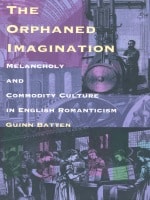
The Orphaned Imagination
Melancholy and Commodity Culture in English RomanticismGuinn Batten
Duke University Press, 1998
Building on the theoretical insights of Slavoj Zizek, Judith Butler, Julia Kristeva, and Eve Kosofsky Sedgwick, Batten interweaves the discourses of psychoanalysis, economics, biography, sexuality, melancholy, value, and exchange to question accepted ideas of how Romantic poetry works. She asserts that poetic labor is in fact paradigmatic of the kinds of production—and the kinds of desire—that capitalist culture renders invisible. If symbolic exchange, in cash or in words, requires the surrender of a beloved object, if healthy mourning requires an orphan to “work through” emotional loss through the consolation of art or a love for the living, then the rebellious Romantic poet, Batten contends, possessed unique insight into the alternative authority of a poetic language that renounced a culture of denial. Batten urges that scholars move beyond critical approaches condemning allegedly regressive forms of pleasure, recognizing that they, too, are haunted by melancholic attachments to dead poets as they conduct their work.
The Orphaned Imagination will interest anyone concerned with the claims of the English Romantic poets to a distinctive, valuable form of knowledge and those who may wonder about the power of contemporary theory to illuminate a traditional field.
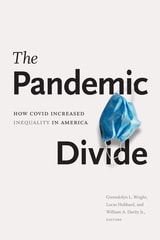
The Pandemic Divide
How COVID Increased Inequality in AmericaGwendolyn L. Wright, Lucas Hubbard, and William A. Darrity, editors
Duke University Press, 2022
Contributors. Fenaba Addo, Steve Amendum, Leslie Babinski, Sandra Barnes, Mary T. Bassett, Keisha Bentley-Edwards, Kisha Daniels, William A. Darity Jr., Melania DiPietro, Jane Dokko, Fiona Greig, Adam Hollowell, Lucas Hubbard, Damon Jones, Steve Knotek, Arvind Krishnamurthy, Henry Clay McKoy Jr., N. Joyce Payne, Erica Phillips, Eugene Richardson, Paul Robbins, Jung Sakong, Marta Sánchez, Melissa Scott, Kristen Stephens, Joe Trotter, Chris Wheat, Gwendolyn L. Wright