Results by title
520 books match the query 'Family' and 95 start with t
The Lengest Neoi
Stephanie Choi
University of Iowa Press, 2024
The Letters of the First Duchess of Ormonde
Elizabeth Butler
Iter Press, 2022
The volume comprises more than three hundred letters written by Ormonde to her husband and family, agents and servants, and friends and clients. Spanning six decades, these letters are meticulously transcribed, edited, and annotated, and the volume includes a substantial scholarly introduction, family trees, a glossary, and other resources.
The Life of Madie Hall Xuma
Black Women's Global Activism during Jim Crow and ApartheidWanda A. Hendricks
University of Illinois Press, 2022
The Lincoln Family Album
Mark E. Neely Jr. and Harold Holzer
Southern Illinois University Press, 2006
Chronicling the private lives of the Lincolns through their personal photographic collection
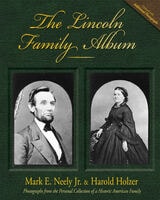
The Lincoln Family Album offers a rare and revealing glimpse into the private life of Abraham Lincoln and the first family. Showcasing original and previously unpublished photographs collected and preserved by Mary Todd Lincoln and four generations of descendants, the volume includes pictures displayed in a family album when the Lincolns lived in the White House. Chronicled are the lives of the Lincolns’ three sons, including the tragic death of Willie in 1862, the rapid change of Tad during the war, and Robert’s marriage, children, and political career. Soldiers and statesmen of the Civil War, period figures such as Tom Thumb and Henry Ward Beecher, and even the family dog also graced the album that became the nucleus of the Lincolns’ personal collection.
This updated edition, which provides both additional pictures and new introductory materials by renowned Lincoln scholars Mark E. Neely Jr. and Harold Holzer, paints a portrait of the Lincolns’ rise to prominence and the exclusion of poorer relations after the family moved to the nation’s capital. With 150 illustrations and detailed captions, this authoritative and enlightening nineteenth-century history also includes capsule biographies of the Lincolns’ friends and relatives.
In such images as the First Lady in mourning or the assassin John Wilkes Booth, the pictures cannot disguise the painful truth about a family that suffered as many tragedies as triumphs. Willie’s death at the age of eleven abruptly ended Mary and Abraham’s personal collecting, but Lincoln descendants continued the tradition. The last pages of The Lincoln Family Album conclude with the death of Robert Lincoln’s last grandchild, Robert Todd Lincoln Beckwith, in 1985, ending the direct line of Abraham and Mary Lincoln.
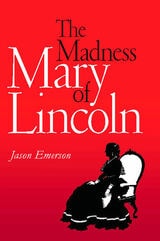
The Madness of Mary Lincoln
Jason Emerson
Southern Illinois University Press, 2007
WINNER, Russell P. Strange Memorial Book of the Year Award from the Illinois State Historical Society, 2007!
University Press Books for Public and Secondary Schools 2013 edition
In 2005, historian Jason Emerson discovered a steamer trunk formerly owned by Robert Todd Lincoln's lawyer and stowed in an attic for forty years. The trunk contained a rare find: twenty-five letters pertaining to Mary Todd Lincoln's life and insanity case, letters assumed long destroyed by the Lincoln family. Mary wrote twenty of the letters herself, more than half from the insane asylum to which her son Robert had her committed, and many in the months and years after.
The Madness of Mary Lincoln is the first examination of Mary Lincoln’s mental illness based on the lost letters, and the first new interpretation of the insanity case in twenty years. This compelling story of the purported insanity of one of America’s most tragic first ladies provides new and previously unpublished materials, including the psychiatric diagnosis of Mary’s mental illness and her lost will.
Emerson charts Mary Lincoln’s mental illness throughout her life and describes how a predisposition to psychiatric illness and a life of mental and emotional trauma led to her commitment to the asylum. The first to state unequivocally that Mary Lincoln suffered from bipolar disorder, Emerson offers a psychiatric perspective on the insanity case based on consultations with psychiatrist experts.
This book reveals Abraham Lincoln’s understanding of his wife’s mental illness and the degree to which he helped keep her stable. It also traces Mary’s life after her husband’s assassination, including her severe depression and physical ailments, the harsh public criticism she endured, the Old Clothes Scandal, and the death of her son Tad.
The Madness of Mary Lincoln is the story not only of Mary, but also of Robert. It details how he dealt with his mother’s increasing irrationality and why it embarrassed his Victorian sensibilities; it explains the reasons he had his mother committed, his response to her suicide attempt, and her plot to murder him. It also shows why and how he ultimately agreed to her release from the asylum eight months early, and what their relationship was like until Mary’s death.
This historical page-turner provides readers for the first time with the lost letters that historians had been in search of for eighty years.
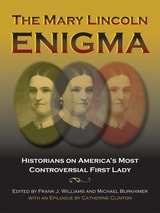
The Mary Lincoln Enigma
Historians on America's Most Controversial First LadyEdited by Frank J. Williams and Michael Burkhimer, with an Epilogue by Catherine Clinton
Southern Illinois University Press, 2012
Mary Lincoln is a lightning rod for controversy. Stories reveal widely different interpretations, and it is impossible to write a definitive version of her life that will suit everyone. The thirteen engaging essays in this collection introduce Mary Lincoln’s complex nature and show how she is viewed today.
The authors’ explanations of her personal and private image stem from a variety of backgrounds, and through these lenses—history, theater, graphic arts, and psychiatry—they present their latest research and assessments. Here they reveal the effects of familial culture and society on her life and give a broader assessment of Mary Lincoln as a woman, wife, and mother. Topics include Mary’s childhood in Kentucky, the early years of her marriage to Abraham, Mary’s love of travel and fashion, the presidential couple’s political partnership, and Mary’s relationship with her son Robert.
The fascinating epilogue meditates on Mary Lincoln’s universal appeal and her enigmatic personality, showcasing the dramatic differences in interpretations. With gripping prose and in-depth documentation, this anthology will capture the imagination of all readers.
University Press Books for Public and Secondary Schools 2013 edition
The Misfit of the Family
Balzac and the Social Forms of SexualityMichael Lucey
Duke University Press, 2003
The Misfit of the Family is a compelling argument that Balzac must be taken seriously as a major inventor and purveyor of new tools for analyzing connections between the sexual and the social. Lucey’s account of the novelist’s deployment of "sexual misfits" to impel a wide range of his most canonical works—Cousin Pons, Cousin Bette, Eugenie Grandet, Lost Illusions, The Girl with the Golden Eyes—demonstrates how even the flexible umbrella term "queer" barely covers the enormous diversity of erotic and social behaviors of his characters. Lucey draws on the thinking of Michel Foucault and Pierre Bourdieu and engages the work of critics of nineteenth-century French fiction, including Naomi Schor, D. A. Miller, Franco Moretti, and others. His reflections on Proust as Balzac’s most cannily attentive reader suggest how the lines of social and erotic force he locates in Balzac’s work continued to manifest themselves in twentieth-century writing and society.

The Nail in the Tree
Essays on Art, Violence, and ChildhoodCarol Ann Davis
Tupelo Press, 2020
The Nude Beach Notebook
Barbara J. Scot
Oregon State University Press, 2014
Scot uses long, meditative walks on the “clothing optional” beach of the idyllic Sauvie Island near Portland, Oregon, to explore family responsibility, time’s passage, and faith. She weaves entries from her notebook—a record of the island’s wildlife, descriptions of the “Odd Ones” she encounters on the beach, and stories about the native people who once lived on the river—with the main narrative, tracing her search for her brother, her close friendship with a fellow writer, and daily life on the houseboat moorage where she lives.
The Nude Beach Notebook highlights the importance of place as a means for exploring and interpreting one’s own story. In the end, Scot’s walks on Sauvie Island lead to her own redemptive journey. She considers the uses of fiction and non-fiction in memory and in writing, the brevity and beauty of human existence, and the inscrutable, enduring mystery of death.
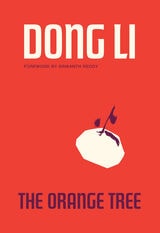
The Orange Tree
Dong Li
University of Chicago Press, 2023
Dong Li’s The Orange Tree is a collection of narrative poems that braids forgotten legends, personal sorrows, and political upheavals into a cinematic account of Chinese history as experienced by one family. Amid chaos and catastrophe, the child narrator examines a yellowed family photo to find resemblances and learns a new language, inventing compound words to conjure and connect family stories. These invented words and the calligraphy of untranslated Chinese characters appear in lists separating the book’s narrative sections.
Li’s lyrical and experimental collection transcends the individual, placing generations of family members and anonymous others together in a single moment that surpasses chronological time. Weaving through stories of people with little means, between wars and celebrations, over bridges and walls, and between trees and gardens, Li’s poems offer intimate perspectives on times that resonate with our own. The result is an unflinching meditation on family history, collective trauma, and imaginative recovery.
The Orange Tree is the recipient of the inaugural Phoenix Emerging Poet Book Prize for 2023.
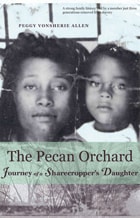
The Pecan Orchard
Journey of a Sharecropper's DaughterPeggy Vonsherie Allen
University of Alabama Press, 2011
This is a true story of the struggle, survival, and ultimate success of a large black family in south Alabama who, in the middle decades of the 20th century, lifted themselves out of poverty to achieve the American dream of property ownership. Descended from slaves and sharecroppers in the Black Belt region, this family of hard-working parents and their thirteen children is mentored by its matriarch, Moa, the author’s beloved great grandmother, who passes on to the family, along with other cultural wealth, her recipe for moonshine.
Without rancor or blame, and even with occasional humor, The Pecan Orchard offers a window into the inequities between blacks and whites in a small southern town still emerging from Jim Crow attitudes.
Told in clean, straightforward prose, the story radiates the suffocating midday heat of summertime cotton fields and the biting winter wind sifting through porous shanty walls. It conveys the implicit shame in “Colored Only” restrooms, drinking fountains, and eating areas; the beaming satisfaction of a job well done recognized by others; the “yessum” manners required of southern society; and the joyful moments, shared memories, and loving bonds that sustain—and even raise—a proud family.
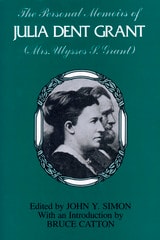
The Personal Memoirs of Julia Dent Grant
(Mrs. Ulysses S. Grant)Edited by John Y. Simon
Southern Illinois University Press, 1975
Written in the early twentieth century for her children and grandchildren and first published in 1975, these eloquent memoirs detail the life of General Ulysses S. Grant’s wife. First Lady Julia Dent Grant wrote her reminiscences with the vivacity and charm she exhibited throughout her life, telling her story in the easy flow of an afternoon conversation with a close friend. She writes fondly of White Haven, a plantation in St. Louis County, Missouri, where she had an idyllic girlhood and later met Ulysses.
In addition to relating the joys she experienced, Grant tells about the difficult and sorrowful times. Her anecdotes give fascinating glimpses into the years of the American Civil War. One recounts the night President Abraham Lincoln was assassinated. Grant insisted she and her husband turn down an invitation to the theater. Her decision saved her husband’s life: like Lincoln, he too had been marked for assassination.
Throughout these memoirs, which she ends with her husband’s death, Grant seeks to introduce her descendants to both her and the man she loved. She also strives to correct misconceptions that were circulated about him. She wanted posterity to share her pride in this man, whom she saw as one of America’s greatest heroes. Her book is a testament to their devoted marriage.
This forty-fifth-anniversary edition includes a new foreword by John F. Marszalek and Frank J. Williams, a new preface by Pamela K. Sanfilippo, the original foreword by Bruce Catton, the original introduction by editor John Y. Simon, recommendations for further reading, and more than twenty photographs of the Grants, their children, and their friends.
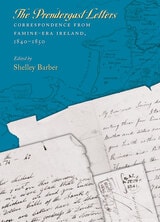
The Prendergast Letters
Correspondence from Famine-Era Ireland, 1840–1850Shelley Barber
University of Massachusetts Press, 2006
Most important, the letters offer a rare contemporary, firsthand account of Ireland's an Gorta Mor, the Great Famine that began with the failure of the potato crop in 1845. Letters written in the months and years following the announcement of the first crop failure provide insight into not only the sufferings of one family but also the response of the community and nation as this crisis transformed Ireland.
James and Elizabeth Prendergast were the parents of six children. Their letters from Milltown, County Kerry, dictated to a scrivener, were posted to sons Thomas and Jeffrey and daughter Julia Riordan and her husband Cornelius, all of whom had emigrated in search of employment to Boston, Massachusetts—a city that would itself be transformed by the famine-era influx of Irish immigrants.
In addition to transcriptions of the forty-eight letters in the collection, this volume includes contextual essays by historian Ruth-Ann Harris and genealogist Marie Daly. The evidence of the letters themselves, along with the contributions of Harris and Daly, demonstrate the ways in which the family of James Prendergast was at once exceptional and typical.
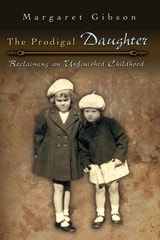
The Prodigal Daughter
Reclaiming an Unfinished ChildhoodMargaret Gibson
University of Missouri Press, 2008
The 1950s and 1960s were years of shifting values and social changes that did not sit well with many citizens of Richmond, Virginia, and in particular with one conservative family, a staunchly southern mother and father and their two daughters. A powerful evocation of time and place, this memoir—a gifted poet's first book of prose—is the story of an inquisitive and sensitive young woman's coming of age and a deeply moving recounting of her reconciliation later in life with the family she left behind.
Returning us to a Cold War world marked by divisions of race, gender, wealth, and class, The Prodigal Daughter is an exploration of difference, the powerful wedge that separates individuals within a social milieu and within a family. Echoing the biblical Prodigal Son, Margaret Gibson's memoir is less concerned with the years of excess away from home than with the seeds of division sown in this family's early years. Hers is the story of a mother proud to be a Lady, a Southerner, and a Christian; of two daughters trapped by their mother's power; and of their father's breakdown under social and family expectations.
Slow to rebel, young Margaret finally flees the world of manners and custom—which she deems poor substitutes for right thought and right action in the face of the Civil Rights movement and the Vietnam War—and abandons her fundamentalist upbringing. In a defiant gesture that proves prophetic, she once signed a postcard home "The Prodigal." After years of being the distant, absent daughter, she finds herself returning home to meet the needs of her stroke-crippled younger sister and her incapacitated parents.
In this tale of homecoming and forgiveness, death and dying, Gibson recounts how she overcame her long indifference to a sister she had thought different from herself, recognizing the strengths of the bonds that both hold us and set us free. Interweaving astute social observations on social pressures, race relations, sibling rivalry, adolescent angst, and more, The Prodigal Daughter is a startlingly honest portrayal of one family in one southern city and the story of all too many families across America.
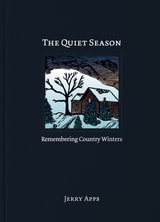
The Quiet Season
Remembering Country WintersJerry Apps
Wisconsin Historical Society Press, 2025
“As I think back to the days of my childhood, the frost-covered windows in my bedroom, the frigid walks to the country school, the excitement of a blizzard, and a hundred other memories, I realize that these experiences left an indelible mark on me and made me who I am today.”—From the Introduction
Jerry Apps recalls winters growing up on a farm in central Wisconsin during the latter years of the Depression and through World War II. Before electricity came to this part of Waushara County, farmers milked cows by hand with the light of a kerosene lantern, woodstoves heated the drafty farm homes, and “making wood” was a major part of every winter’s work. The children in Jerry’s rural community walked to a country school that was heated with a woodstove and had no indoor plumbing. Wisconsin winters then were a time of reflection, of planning for next year, and of families drawing together. Jerry describes how winter influenced farm families and suggests that those of us who grow up with harsh northern winters are profoundly affected in ways we often are not aware.
The River Home
A MemoirDorothy Weil
Ohio University Press, 2001
The death of her father begins Dorothy Weil’s search for what causes the family’s “spinning of in all directions like the pieces of Chaos.” She embarks on a river odyssey, traveling the Ohio, Missouri, and Mississippi Rivers by steamboat, towboat, and even an old-fashioned flatboat. The river brings her family back, as she records the stories of her fellow “river rats”: steamboat veterans, deckhands, captains, and cooks.
The River Home takes the reader into a world few ever glimpse, that of America’s riverboats. In the fast-paced narrative, with incisive characterizations and dialogue, the author introduces us to this vivid milieu and a gallery of fascinating people. We meet her father, a “wild river man from the Kentucky hills,” her mother, “a proper girl from a Cincinnati Dutch clan,” and her brother, a fourth-generation river man, as well as the artists and academics she meets in her adult life.
Weil’s voice is clear and wry, as well as poetic, bringing out both the sadness and joys of a family torn by mismatched backgrounds. Her themes speak to all: the confusion brought by family conflict, the strength of family love no matter how troubled the relationships, the mortality we all face, the importance of where we come from and where we go.
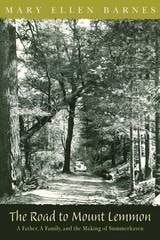
The Road to Mount Lemmon
A Father, A Family, and the Making of SummerhavenMary Ellen Barnes
University of Arizona Press, 2009
The Santa Catalina Mountains first captivated Tony Zimmerman on a 1937 hunting trip. Regard for the alpine beauty must have been in his genes—he was the son of Swiss German immigrants—and by 1940 the Tucson schoolteacher had begun taking his family to Mount Lemmon to spend the summer. Back then, the road up the mountain was a rough two-track dirt road from Oracle, and Summerhaven was nothing but a sleepy cluster of summer cabins. But Tony Zimmerman was to help change all of that.
The Road to Mount Lemmon is a beguiling memoir of the Catalina Mountains told by the daughter of one of the pioneers in the life and development of Mount Lemmon’s communities. Mary Ellen Barnes tells how her father Tony resigned from teaching in 1943 to devote his career to the development of this mountain oasis. He not only sold real estate for long time landowner Randolph Jenks, he even bought the village’s tiny two-room store, installing a sawmill to build a larger store, and built the Mount Lemmon Inn. And as she spins Tony’s personal saga, she also gives readers a glimpse of the Catalinas before Tucson became a boom town, recalling idyllic adventures in wild country and the cowboys, rangers, ranchers, and loggers who worked there.
Barnes tells Tony’s story as if sharing it with family, evoking her father’s personality on every page. The Road to Mount Lemmon is an intimate view of a mountain community over the course of nearly sixty years—a view that few people have shared but one all can appreciate.
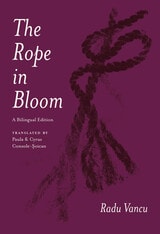
The Rope in Bloom
A Bilingual EditionRadu Vancu
University of Chicago Press, 2026
The first English translation of a Romanian poet’s celebrated and devastating 2012 collection.
In 1997, when he was nineteen, Radu Vancu discovered the body of his father, who had hanged himself in the family home. In the dark years that followed, Vancu turned to literature and self-medication. By 2009, after a decade of “Schopenhauer and vodka” and the publication of seven influential volumes of poetry and essays, Vancu was married, newly sober, and expecting his first child. With these themes in mind—bereavement, love, fatherhood, and poetry—he began writing Frânghia înflorită, or The Rope in Bloom, a poem of Dantesque ambition and scope. Through twenty-four cantos interwoven with prose vignettes, Vancu revisits the scene of the suicide and speaks with the lost soul of his father, who guides and advises him. Each canto begins with the same lines:
What your dead one, what the best-
beloved of your dead loved ones says to you
when you have the heart to dream of him:
Vancu’s verse depicts a nightmare underworld, at once terrible and banal, containing both rivers of blood and family movie nights. Prose vignettes punctuating the book narrate tender years in the early life of a new family. Here, the poet appears in everyday moments, watching cartoons with his son and seeing his wife off to work. Together, the cantos and prose accumulate into a charged collection, where the loss of a father looms over the joy of becoming one.
This volume is the first full-length English translation of Vancu’s work, marking a long-overdue introduction of the poet to anglophone audiences.
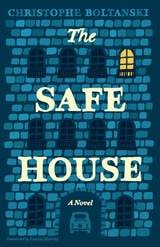
The Safe House
A NovelChristophe Boltanski
University of Chicago Press, 2017
When the Nazis came, Étienne Boltanski divorced his wife and walked out the front door, never to be seen again during the war. So far as the outside world knew, the Jewish doctor had fled. The truth was that he had sneaked back to hide in a secret crawl space at the heart of the house. There he lived for the duration of the war. With the Liberation, Étienne finally emerged, but he and his family were changed forever—anxious, reclusive, yet proudly eccentric. Their lives were spent, amid Bohemian disarray and lingering wartime fears, in the mansion’s recesses or packed comically into the protective cocoon of a Fiat.
That house (and its vehicular appendage) is at the heart of Christophe Boltanski’s ingeniously structured, lightly fictionalized account of his grandparents and their extended family. The novel unfolds room by room—each chapter opening with a floorplan—introducing us to the characters who occupy each room, including the narrator’s grandmother—a woman of “savage appetites”—and his uncle Christian, whose haunted artworks would one day make him famous. “The house was a palace,” Boltanski writes, “and they lived like hobos.” Rejecting convention as they’d rejected the outside world, the family never celebrated birthdays or even marked the passage of time, living instead in permanent stasis, ever more closely bonded to the house itself.
The Safe House was a literary sensation when published in France in 2015 and won the Prix de Prix, France’s most prestigious book prize. A French-language film adaptation, La cache, was released in 2025 from director Lionel Baier. With hints of Oulipian playfulness and an atmosphere of dark humor, The Safe House is an unforgettable portrait of a self-imprisoned family.
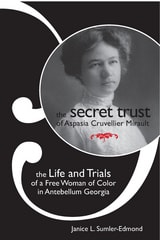
The Secret Trust of Aspasia Cruvellier Mirault
The Life and Trials of a Free Woman of Color in Antebellum GeorgiaJanice L. Sumler-Edmond
University of Arkansas Press, 2008
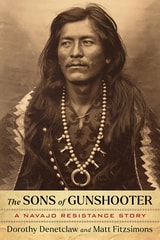
The Sons of Gunshooter
A Navajo Resistance StoryDorothy Denetclaw and Matt Fitzsimons
University of Arizona Press, 2026
In 1919, the brother of one of the West’s most famous Indian traders was shot to death in a remote corner of the Navajo Nation.
Part history, part true crime, The Sons of Gunshooter reexamines the killing and subsequent murder trial, while simultaneously embedding the story in a much larger saga of colonization and resistance. The result is a book that’s sweeping in its scope and surgical in its approach. Rewinding the clock to 1868, the authors follow the intertwining paths of two families to offer a riveting, deeply personal account that has been hailed as “a new way of doing historiography.”
One of the authors is a descendant of participants in the case; the other is an investigative journalist. By merging Diné oral traditions with archival evidence, they succeed in upending one false narrative after another.
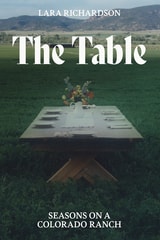
The Table
Seasons on a Colorado RanchLara Richardson
University Press of Colorado, 2024
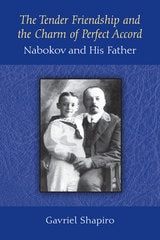
The Tender Friendship and the Charm of Perfect Accord
Nabokov and His FatherGavriel Shapiro
University of Michigan Press, 2014
Vladimir Nabokov (1899–1977), a writer of world renown, grew up in a culturally refined family with diverse interests. Nabokov’s father, Vladimir Dmitrievich (1870–1922), was a distinguished jurist and statesman at the turn of the twentieth century. He was also a great connoisseur and aficionado of literature, painting, theater, and music as well as a passionate butterfly collector, keen chess player, and avid athlete. This book, the first of its kind, examines Vladimir Nabokov’s life and works as impacted by his distinguished father. It demonstrates that V. D. Nabokov exerted the most fundamental influence on his son, making this examination pivotal to understanding the writer’s personality and his world perception, as well as his literary, scholarly, and athletic accomplishments. The book contains never heretofore published archival materials. It is appended with rare articles by Nabokov and his father and is accompanied by old photographs. In addition, the book constitutes a survey of sorts of Russian civilization at the turn of the twentieth century by providing a partial view of the multifaceted picture of Imperial Russia in its twilight hours. The book illumines the historical background, political struggle, juridical battles, and literary and artistic life as well as athletic activities during the epoch, rich in cultural events and fraught with sociopolitical upheavals.
Cover illustration: Vladimir Nabokov and his father, 1906. The Nabokov family photographs. Copyright © The Estate of Vladimir Nabokov, used by permission of The Wylie Agency, LLC; and of The Henry W. and Albert A. Berg Collection of English and American Literature, The New York Public Library, Astor, Lenox and Tilden Foundations.
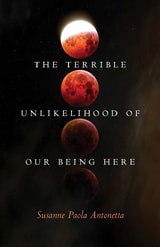
The Terrible Unlikelihood of Our Being Here
Susanne Paola Antonetta
The Ohio State University Press, 2021
Antonetta reflects on a life spent wrestling with bipolar disorder, drug dependency, and the trauma of electroshock treatment—exploring these experiences alongside conversations with some of the world’s leading neuroscientists and physicists, and with psychics. The result is a meditation on the legacy of family, on thought and being, and what we humans can actually ever really know about our world.
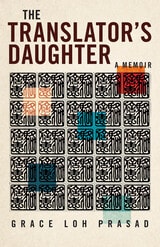
The Translator's Daughter
A MemoirGrace Loh Prasad
The Ohio State University Press, 2024
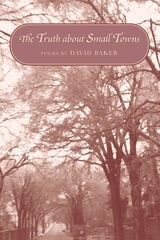
The Truth about Small Towns
PoemsDavid Baker
University of Arkansas Press, 1998
Winner of the 1998 Ohioana Poetry Award
Skilled at both extended narratives and intense, intimate lyrics, David Baker combines his talents in his fifth collection of poems. Working in syllabics, sonnets, couplets, and free verse, Baker can write unflinchingly about love, illness, madness, and perseverance.
His small towns are the burgs of the Midwest, where there is a constant tension between a future that’s coming and a past that may never vanish. The grocer on the corner now carries mango chutney, and the city council must decide—Wendy’s or wetlands.
From these rural towns, Baker evokes lovers, mothers and fathers, highway workmen, hospital patients, and the long dead. He spots the inner struggles of everyday living, as in these lines from “The Women”: “there comes a rubbing of hands, and not as in cleaning. / As when something’s put away, but it won’t stay down.”
Regional in the best sense, Baker’s poems capture the universal human commerce of love and conflict enduring under the water towers and storefronts of America’s heartland.
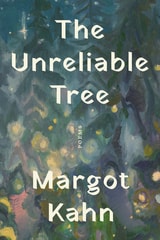
The Unreliable Tree
PoemsMargot Kahn
Northwestern University Press, 2025
Born from a state of fragmented time, the poems in The Unreliable Tree call out the intimate feelings mothers so often fear to share. With a precise and tender eye, Margot Kahn tracks her early years of parenthood alongside the seasons of her family’s orchard. As she chronicles the changes in her marriage, her friendships, and her own shifting identity, Kahn questions the risks we take for devotion and the labors we devote to love. These poems shine a light on the patience and perseverance required to care—for homes, for people, for heritage—and ultimately question the choices we make: to hold on to others around us, and to hold on to ourselves. Compassionate, unflinching, lyric, and raw, The Unreliable Tree portrays the world of early motherhood with humility and complicated beauty.
The Unspoken as Heritage
The Armenian Genocide and Its Unaccounted LivesHarry Harootunian
Duke University Press, 2019
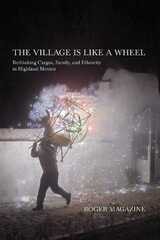
The Village Is Like a Wheel
Rethinking Cargos, Family, and Ethnicity in Highland MexicoRoger Magazine
University of Arizona Press, 2012
According to Magazine, where Western anthropologists often assume that persons are individuals capable of acting on their own to produce things, rural highland Mexicans see persons as inherently interdependent and in need of others even to act. He utilizes the term “active subjectivity” to denote the fact that what they produce in others is not simply action but also a subjective state or attitude of willingness to perform the action.
The author’s goals are to improve understandings of rural highland Mexicans’ lives and to contribute to a broader disciplinary effort aimed at revealing the cultural specificity or ethnocentricity of our supposedly universally applicable concepts and theories.
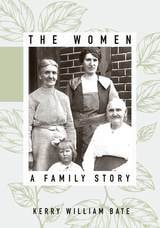
The Women
A Family StoryKerry William Bate
University of Utah Press, 2016
Kerry Bate proceeds on the premise that a story centering on the women of the clan could provide fresh perspective and insight. He portrays real people with well-rounded, flawed characters; builds from deep research; writes with a bit of style; and includes the rich context and detail of these lives. His main subjects are four generations of impressive women: the pioneer Catherine Campbell Steele; her daughter Young Elizabeth, the first Mormon child born in Utah; Kate, an accomplished community leader; and Sarah, a gifted seamstress trapped in an unhappy marriage. To enter their hardscrabble lives in small southern Utah communities is to meet women who pioneered in their own modest but determined ways.
Winner of the Mormon History Association's Best Personal History/Memoir Award.
Interview with Tom Williams on Access Utah
The Wounds That Bind Us
Kelley Shinn
West Virginia University Press, 2023
The improbable and powerful true story of a single mother with prosthetics for both legs who travels the globe with her young daughter in a Land Rover.
“A harrowing memoir. . . . Readers may not want to follow in [Shinn’s] footsteps, but they will never be bored with her as a companion.” —Kirkus Reviews
The Wounds That Bind Us is the improbable true story of Kelley Shinn, an orphan at birth who loses her legs at the age of sixteen to a rare bacterial pathogen. She becomes an avid off-road racer and, as a single mother, attempts to drive around the globe in a Land Rover with her three-year-old daughter in tow to bring light to the plight of land mine survivors. With unflinching honesty, exceptional lyricism, and biting humor, Shinn (“that’s two Ns and no shins”) takes readers on a wild journey—literal and emotional—filled with striking characters and landscapes, heartbreaks, and hard-won insights, ultimately arriving at a place of profound redemption.
Told with the energy and intensity of the adventure story it is, this terrifically rich and nuanced examination of a life is also a careful meditation on renewal—a remapping of the world. Guided by the narrator’s keen introspection and her ability to look resolutely at harrowing sorrows and still find hope, joy, and meaning, The Wounds That Bind Us will resonate deeply, long after the last page.
Third Worlds Within
Multiethnic Movements and Transnational SolidarityDaniel Widener
Duke University Press, 2024
This Is Where I Am
A MemoirZeke Caligiuri
University of Minnesota Press, 2016
Prison is where Zeke Caligiuri is. Powderhorn Park in South Minneapolis, dubbed “Murderapolis” the year he turned eighteen, is where he comes from. It was the same neighborhood his father grew up in but had changed dramatically by the early 1990s. Yet in Zeke’s family, father and mother and grandmother kept things together while all around them the houses decayed and once-safe streets gave way to the crush of poverty and crime.
This Is Where I Am is Zeke Caligiuri’s clear-eyed account of how he got from there to here, how a boy who had every hope went from dreaming of freedom to losing it, along with nearly everything and everyone he loved. Tenderhearted in its reflections on his lost childhood, brutally candid in its description of a life of hanging and hustling, Zeke’s memoir recreates a world of tagging and goofing gone awry, of moving from smoking pot to unsuccessful attempts at dealing crack, of watching his father weep at the funeral of a seventeen-year-old boy, of going to jail: first strike. It is a place where, when asked what he's going to do with his life, a friend can only answer: “What the fuck are you talking about?”
This Is Where I Am is Zeke's own answer: he is going to tell his story, every sharp detail and sobering word, with the natural grace of a gifted writer and the hard-won wisdom of hindsight.
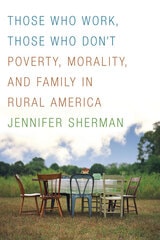
Those Who Work, Those Who Don't
Poverty, Morality, and Family in Rural AmericaJennifer Sherman
University of Minnesota Press, 2009
When the rural poor prioritize issues such as the right to bear arms, and disapprove of welfare despite their economic concerns, they are often dismissed as uneducated and backward by academics and political analysts. In Those Who Work, Those Who Don't, Jennifer Sherman offers a much-needed sympathetic understanding of poor rural Americans, persuasively arguing that the growing cultural significance of moral values is a reasonable and inevitable response to economic collapse and political powerlessness.
Those Who Work, Those Who Don't is based on the intimate interviews and in-depth research Sherman conducted while spending a year living in "Golden Valley," a remote logging town in Northern California. Economically devastated by the 1990 ruling that listed the northern spotted owl as a threatened species, Golden Valley proved to be a rich case study for Sherman. She looks at how the members of the community coped with downward mobility caused by the loss of timber industry jobs and examines a wide range of reactions. She shows how substance abuse, domestic violence, and gender roles fluctuated under the town's economic strain.
Compellingly written, shot through with honesty and empathy, Those Who Work, Those Who Don't is a rare firsthand account that studies the rural poor. As incomes erode and the American dream becomes more and more inaccessible, Sherman reveals that moral values and practices become a way for the poor to gain status and maintain a sense of dignity in the face of economic ruin.
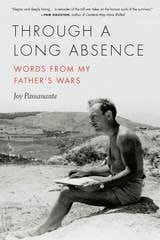
Through a Long Absence
Words from My Father's WarsJoy Passanante
The Ohio State University Press, 2017
Against the backdrop of World War II, Joy Passanante’s touching new book, Through a Long Absence: Words from My Father’s Wars, is the saga of a wartime medical unit, a passionate long-distance love, the making of a surgeon, and two first-generation American families. Told through her father’s eyes—drawing on hundreds of his letters to his beloved wife, his four-volume wartime diary, and his paintings—Passanante masterfully recreates his wartime journey and physically retraces his steps more than sixty years later in an attempt to understand a time in her parents’ lives that they’d spoken about very little.
More than just a World War II story, Through a Long Absence delves into one man’s past to explore his personal wars: a stint as a child bootlegger, a marriage between newlyweds separated by continents and strained by years apart, and his struggle late in life with his own mind. The narrative propels readers to surprising places—from a freight train through North Africa to an underground St. Louis distillery during Prohibition, from a young couple’s forbidden courtship to the chaos of surgical tents under fire in Normandy, from an underground trove of priceless artwork hidden by the Nazis to Jewish New Year services in Paris a week after its liberation. Through a Long Absence is a love story, an honest look into one man’s life, and a daughter’s moving quest to rediscover her father years later through his own words.
Time of Grace
Thoughts on Nature, Family, and the Politics of Crime and PunishmentKen Lamberton
University of Arizona Press, 2007
Time of Grace is a remarkable book, written with great eloquence by a former science teacher who was incarcerated for twelve years for his sexual liaison with a teenage student. Far more than a “prison memoir,” it is an intimate and revealing look at relationships—with fellow humans and with the surprising wildlife of the Sonoran Desert, both inside and beyond prison walls. Throughout, Ken Lamberton reflects on human relations as they mimic and defy those of the natural world, whose rhythms calibrate Lamberton’s days and years behind bars. He writes with candor about his life, while observing desert flora and fauna with the insight and enthusiasm of a professional naturalist.
While he studies a tarantula digging her way out of the packed earth and observes Mexican freetail bats sailing into the evening sky, Lamberton ruminates on his crime and on the wrenching effects it has had on his wife and three daughters. He writes of his connections with his fellow inmates—some of whom he teaches in prison classes—and with the guards who control them, sometimes with inexplicable cruelty. And he unflinchingly describes a prison system that has gone horribly wrong—a system entrapped in a self-created web of secrecy, fear, and lies.
This is the final book of Lamberton’s trilogy about the twelve years he spent in prison. Readers of his earlier books will savor this last volume. Those who are only now discovering Lamberton’s distinctive voice—part poet, part scientist, part teacher, and always deeply, achingly human—will feel as if they are making a new friend.
Gripping, sobering, and beautifully written, Lamberton’s memoir is an unforgettable exploration of crime, punishment, and the power of the human spirit.
Tips to Help You Do Your Best
Mike Carlson
Tupelo Press, 2025
Written over a fifteen-year period, a period in which events and politics seemed to defy reason, the poems collected in Tips to Help You Do Your Best seek an imaginative wisdom on the outskirts of conventional thinking. By writing obsessively about the landscape, the objects that litter it, and the people he finds loitering there, Mike Carlson arrives at the emotional truth of his experience, mapping the distance between irreverence and irony, cowardice, and courage, condolences and pure clear words.
In doing so, he also lays out a theory of poetry, a philosophical, aesthetic, and spiritual treatise that values object matter over subject matter. These poems approach understanding by image and rhythm, by light and shadow, and by means of encountering motorcycles and mushrooms and silos. While these poems often assume the authoritative and axiomatic tone of a guide book or set of instructions, they are at odds with easy explanation and drudgery.
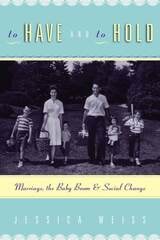
To Have and to Hold
Marriage, the Baby Boom, and Social ChangeJessica Weiss
University of Chicago Press, 2000
Jessica Weiss delves beneath these mythic images and paints a far more complex picture that reveals strong continuities between the baby boomers and their parents. Drawing on interviews with American couples from the 1950s to the 1980s, Weiss creates a dynamic portrait of family and social change in the postwar era. She pairs these firsthand accounts with a deft analysis of movies, television shows, magazines, and advice books from each decade, providing an unprecedented and intimate look at ordinary marriages in a time of sweeping cultural change.
Weiss shows how young couples in the 1950s attempted to combine egalitarian hopes with traditional gender roles. Middle-class women encouraged their husbands to become involved fathers. Midlife wives and mothers reshaped the labor force and the home by returning to work in the 1960s. And couples strove for fulfilling marriages as they dealt with the pressures of childrearing in the midst of the sexual and divorce revolutions of the 1960s and 1970s. By the 1980s, they were far more welcoming to the ideas of the women's movement than has often been assumed. More than simply changing with the times, the parents of the baby boom contributed to changing times themselves.
Weiss's excellent use of family interviews that span three decades, her imaginative examination of popular culture, and her incisive conclusions make her book an invaluable contribution not only to our understanding of the past but also to our understanding of men's and women's roles in today's family.
"Weiss has written an enlightening book that examines the dynamics of American families past and present. . . . Since Weiss is a historian, she provides analyses of her arguments that are factual rather than emotive, and her use of family interviews further contributes to a strong presentation. Overall, this is a unique works because its multidisciplinary approach informs but never preaches on the emotionally charged topic of the American family.—Sheila Devaney, Library Journal
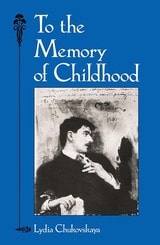
To the Memory of Childhood
Lydia Chukovskaya
Northwestern University Press, 1988
Her father is a household name in Russia because of his tales in verse for children. But his literary accomplishments ranged far beyond bedtime stories. As a critic he wrote controversial articles and lively profiles of cultural figures; as a translator he introduced Whitman, Twain, Kipling, and Wilde to Russian readers. When his children's literature was attacked in the 1920s and 1930s, he turned to editing, scholarship, and articles on translation. A man of boundless energy, he played a vital role in his country's cultural life until his death in 1969. "I am not writing Kornei Ivanovich's biography," Chukovskaya says, "but he was the author of my childhood."

Tokyo Boogie-woogie and D.T. Suzuki
Shoji Yamada
University of Michigan Press, 2022
Against this famous figure, however, is a largely unknown or forgotten shape: Suzuki Alan Masaru. Alan was D.T. Suzuki’s adopted son and, though he remained within his father’s shadow, is mostly known as the lyricist of the iconic pop hit “Tokyo Boogie-woogie.” Perhaps due to his frequent scandals and the fraught nature of the relationship, Alan remains unmentioned and unstudied by scholars and historians. Yet by exploring the nature of the relationship between these two, Shoji Yamada digs into the conflicting memories and experiences of these generations in Japan.
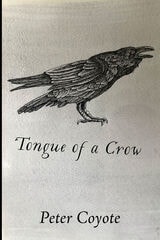
Tongue of a Crow
Peter Coyote
Four Way Books, 2021
Peter Coyote’s first collection of poetry takes us on a whirlwind tour of an eclectic and exciting life as an actor and Zen Buddhist priest, meandering from love affairs to marriage to divorce to the Sixties to psychedelic spirituality and beyond. Written over several decades, these poems read as a collage, each piece distinct and contributing to a cohesive lyric narrative.
Tongue of a Crow
Peter Coyote
Four Way Books, 2021
Peter Coyote’s first collection of poetry takes us on a whirlwind tour of an eclectic and exciting life as an actor and Zen Buddhist priest, meandering from love affairs to marriage to divorce to the Sixties to psychedelic spirituality and beyond. Written over several decades, these poems read as a collage, each piece distinct and contributing to a cohesive lyric narrative.

Tremors
Cammy Thomas
Four Way Books, 2021
Thomas’s short, musical poems make stops in the terrains of childhood, difficult and somewhat violent; middle life, with parents breaking down and children moving away into their own lives; and later life when memory falters but passion does not.
Troubling the Family
The Promise of Personhood and the Rise of MultiracialismHabiba Ibrahim
University of Minnesota Press, 2012
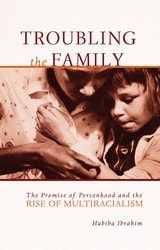
Troubling the Family argues that the emergence of multiracialism during the 1990s was determined by underlying and unacknowledged gender norms. Opening with a germinal moment for multiracialism—the seemingly massive and instantaneous popular appearance of Tiger Woods in 1997—Habiba Ibrahim examines how the shifting status of racial hero for both black and multiracial communities makes sense only by means of an account of masculinity.
Ibrahim looks across historical events and memoirs—beginning with the Loving v. Virginia case in 1967 when miscegenation laws were struck down—to reveal that gender was the starting point of an analytics that made categorical multiracialism, and multiracial politics, possible. Producing a genealogy of multiracialism’s gendered basis allows Ibrahim to focus on a range of stakeholders whose interests often ran against the grain of what the multiracial movement of the 1990s often privileged: the sanctity of the heteronormative family, the labor of child rearing, and more precise forms of racial tabulation—all of which, when taken together, could form the basis for creating so-called neutral personhood.
Ibrahim concludes with a consideration of Barack Obama as a representation of the resurrection of the assurance that multiracialism extended into the 2000s: a version of personhood with no memory of its own gendered legacy, and with no self-account of how it became so masculine that it can at once fill the position of political leader and the promise of the end of politics.
the magic my body becomes
Poems byJess Rizkallah
University of Arkansas Press, 2017
Winner, 2017 Etel Adnan Poetry Prize
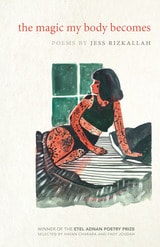
In the magic my body becomes, Jess Rizkallah seeks a vernacular for the inescapable middle ground of being Arab American—a space that she finds, at times, to be too Arab for America and too American for her Lebanese elders.
These poems freely assert gender, sexuality, and religious beliefs while at the same time respecting a generational divide: the younger’s privilege gained by the sacrifice of the older, the impossibility of separating what is wholly hers from what is hers secondhand.
In exploring family history, civil war, trauma, and Lebanon itself, Rizkallah draws from the spirits of canonical Arab and Middle Eastern poets. As a result of her conjuring, the reader feels these spirits begin to exorcise the grief of those who are still alive. Throughout, there is the body, a reclamation and pushback against cultures that simultaneously sexualize and shame women. And there is a softness as inherent as rage, a resisting of stereotypes that too often speak louder than the complexities of a resilient cultural identity.
The magic my body becomes is an exciting new book from an exciting young poet, a love letter to a people as well as a fist in the air.