Results by title
775 books match the query 'Germany' and 174 start with t

The Gestation of German Biology
Philosophy and Physiology from Stahl to SchellingJohn H. Zammito
University of Chicago Press, 2017
In The Gestation of German Biology, historian of ideas John Zammito presents a different version of the emergence of the field, one that takes on both Foucault and Mayr and emphasizes the scientific progress throughout the eighteenth century that led to the recognition of the need for a special science. The embrace of the term biology around 1800, Zammito shows, was the culmination of a convergence between natural history and human physiology that led to the development of comparative physiology and morphology—the foundations of biology. Magisterial in scope, Zammito’s book offers nothing less than a revisionist history of the field, with which anyone interested in the origins of biology will have to contend.
The Ghosts of Berlin
Confronting German History in the Urban LandscapeBrian Ladd
University of Chicago Press, 1997
"Written in a clear and elegant style, The Ghosts of Berlin is not just another colorless architectural history of the German capital. . . . Mr. Ladd's book is a superb guide to this process of urban self-definition, both past and present."—Katharina Thote, Wall Street Journal
"If a book can have the power to change a public debate, then The Ghosts of Berlin is such a book. Among the many new books about Berlin that I have read, Brian Ladd's is certainly the most impressive. . . . Ladd's approach also owes its success to the fact that he is a good storyteller. His history of Berlin's architectural successes and failures reads entertainingly like a detective novel."—Peter Schneider, New Republic
"[Ladd's] well-written and well-illustrated book amounts to a brief history of the city as well as a guide to its landscape."—Anthony Grafton, New York Review of Books
The Ghosts of Berlin
Confronting German History in the Urban LandscapeBrian Ladd
University of Chicago Press, 2018

The Global Debate over Constitutional Property
Lessons for American Takings JurisprudenceGregory S. Alexander
University of Chicago Press, 2006
A society’s traditions and culture, Alexander argues, have a much greater effect on property rights. Laws must aim, then, to change cultural ideas of property, rather than deem whether one has the right to own it. Ultimately, Alexander builds a strong case for improving American takings law by borrowing features from the laws of other countries—particularly those laws based on the idea that owning property not only confers rights, but also entails responsibilities to society as a whole.
The God behind the Marble
The Fate of Art in the German Aesthetic StateAlice Goff
University of Chicago Press, 2024
For German philosophers at the turn of the nineteenth century, beautiful works of art acted as beacons of freedom, instruments of progress that could model and stimulate the moral autonomy of their beholders. Amid the Revolutionary and Napoleonic wars, Germans struggled to uphold these ideals as they contended with the destruction of art collections, looting, and questions about cultural property. As artworks fell prey to the violence they were supposed to transcend, some began to wonder how art could deliver liberation if it could also quickly become a spoil of war. Alice Goff considers a variety of works—including forty porphyry columns from the tomb of Charlemagne, the Quadriga from the Brandenburg Gate in Berlin, the Laocoön group from Rome, a medieval bronze reliquary from Goslar, a Last Judgment from Danzig, and the mummified body of an official from the Rhenish hamlet of Sinzig—following the conflicts over the ownership, interpretation, conservation, and exhibition of German collections during the Napoleonic period and its aftermath.
The Goldsmith's Debt
Conceptions of Property in Early Modern ArtShira Brisman
University of Chicago Press, 2026
In the sixteenth century, German goldsmiths played a unique role in articulating property claims and social values. These artisans shaped precious metals into visible expressions of domination, subordination, and obligation. The objects they crafted played a major role in the practices of exchange and inheritance that were reconfiguring a tumultuous economic landscape. Cities commissioned goldsmiths to transform revenue into goblets that could be given as diplomatic gifts or reconverted into currency in times of war, and courts used serving implements as promises of credit.
With The Goldsmith’s Debt, art historian Shira Brisman offers the first book-length study of the Nuremberg goldsmith Christoph Jamnitzer (1563–1618), who created elaborate gilded silver drinking cups that he crafted into unexpected forms, with designs ranging from racialized heads to mining scenes. Considering how works of art can shape a social order, Brisman explores what Jamnitzer’s etchings and goblets reveal about how goldsmiths shared ideas and how their patrons used commissioned works to legitimize their claims over land and the rights of others. Drawing on a range of textual and material evidence—including commentaries on Roman and customary laws, wills and civic statutes, printed designs, and firsthand study of lidded cups in dozens of major European institutions—this unprecedented study places the goldsmith at the heart of the era’s arguments about how people and lands should be subjugated. Brisman reveals the insidious side of these objects that were often used to advance socially conservative agendas, and she presents radical proposals for addressing inequity in the world of ornament prints.

The Good European
Nietzsche's Work Sites in Word and ImageDavid Farrell Krell and Donald L. Bates
University of Chicago Press, 1997
"A brilliant juxtaposition of life and thought. . . . The sympathy of this pictorial biography is rivaled by few books on Nietzsche."—Charles M. Stang, Boston Book Review
"[A] distinguished addition to the Nietzsche-friendly corpus."—Alain de Botton, Los Angeles Times Book Review
"An odd and oddly endearing record of Nietzsche's travels."—John Banville, New York Review of Books

The Great Transformation
The Contribution of German-Jewish Exiles to British CultureJeremy Adler
University of London Press, 2019

The Habsburg Monarchy, 1809-1918
A History of the Austrian Empire and Austria-HungaryA. J. P. Taylor
University of Chicago Press, 1976
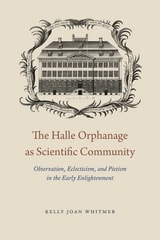
The Halle Orphanage as Scientific Community
Observation, Eclecticism, and Pietism in the Early EnlightenmentKelly Joan Whitmer
University of Chicago Press, 2015
The Halle Orphanage as Scientific Community calls into question a long-standing tendency to view German Pietists as anti-science and anti-Enlightenment, arguing that these tendencies have drawn attention away from what was actually going on inside the orphanage. Whitmer shows how the orphanage’s identity as a scientific community hinged on its promotion of philosophical eclecticism as a tool for assimilating perspectives and observations and working to perfect one’s abilities to observe methodically. Because of the link between eclecticism and observation, Whitmer reveals, those teaching and training in Halle’s Orphanage contributed to the transformation of scientific observation and its related activities in this period.
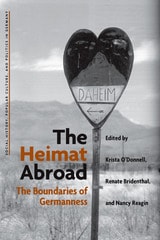
The Heimat Abroad
The Boundaries of GermannessKrista O'Donnell, Renate Bridenthal, and Nancy Reagin, Eds.
University of Michigan Press, 2005
Germans have been one of the most mobile and dispersed populations on earth. Communities of German speakers, scattered around the globe, have long believed they could recreate their Heimat (homeland) wherever they moved, and that their enclaves could remain truly German. Furthermore, the history of Germany is inextricably tied to Germans outside the homeland who formed new communities that often retained their Germanness. Emigrants, including political, economic, and religious exiles such as Jewish Germans, fostered a nostalgia for home, which, along with longstanding mutual ties of family, trade, and culture, bound them to Germany.
The Heimat Abroad is the first book to examine the problem of Germany's long and complex relationship to ethnic Germans outside its national borders. Beyond defining who is German and what makes them so, the book reconceives German identity and history in global terms and challenges the nation state and its borders as the sole basis of German nationalism.
Krista O'Donnell is Associate Professor of History, William Paterson University.
Nancy Reagin is Professor of History, Pace University.
Renete Bridenthal is Emerita Professor of History, Brooklyn College of the City University of New York.
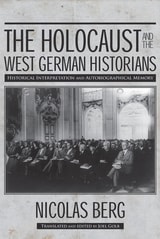
The Holocaust and the West German Historians
Historical Interpretation and Autobiographical MemoryNicolas Berg, Translated and edited by Joel Golb
University of Wisconsin Press, 2015
This English-language translation is also a shortened and reorganized edition, which includes a new introduction by Berg reviewing and commenting on the response to the German editions. Notably, in this American edition, discussion of historian Joseph Wulf and his colleague and fellow Holocaust survivor Léon Poliakov has been united in one chapter. And special care has been taken to make clear to English speakers the questions raised about German historiographical writing. Translator Joel Golb comments, "From 1945 to the present, the way historians have approached the Holocaust has posed deep-reaching problems regarding choice of language. . . . This book is consequently as much about language as it is about facts."
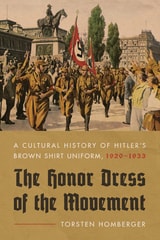
The Honor Dress of the Movement
A Cultural History of Hitler’s Brown Shirt Uniform, 1920–1933Torsten Homberger
University of Massachusetts Press, 2021
In The Honor Dress of the Movement, Torsten Homberger contends that the brown-shirted Stormtrooper uniform was central to Hitler's rise to power. By analyzing its design and marketing, he investigates how Nazi leaders used it to project a distinct political and military persona that was simultaneously violent and orderly, retrograde and modern—a dual image that proved popular with the German people and was key to the Nazis' political success. Based on a wealth of sources that includes literature, films, and newspapers of the era, Homberger exhibits how the Nazis shaped and used material culture to destroy democracy.
The Human Race
Robert Antelme
Northwestern University Press, 1998
The Hunt for Nazi Spies
Fighting Espionage in Vichy FranceSimon Kitson
University of Chicago Press, 2007
Simon Kitson informs this remarkable story with findings from his investigation—the first by any historian—of thousands of Vichy documents seized in turn by the Nazis and the Soviets and returned to France only in the 1990s. His pioneering detective work uncovers a puzzling paradox: a French government that was hunting down left-wing activists and supporters of Charles de Gaulle’s Free French forces was also working to undermine the influence of German spies who were pursuing the same Gaullists and resisters. In light of this apparent contradiction, Kitson does not deny that Vichy France was committed to assisting the Nazi cause, but illuminates the complex agendas that characterized the collaboration and shows how it was possible to be both anti-German and anti-Gaullist.
Combining nuanced conclusions with dramatic accounts of the lives of spies on both sides, The Hunt for Nazi Spies adds an important new dimension to our understanding of the French predicament under German occupation and the shadowy world of World War II espionage.
The Hygienic Apparatus
Weimar Cinema and Environmental DisorderPaul Dobryden
Northwestern University Press, 2022
Framing hygiene within the project of national reconstruction after World War I, The Hygienic Apparatus explores cinema’s material contexts alongside its representations of housework, urban space, traffic, pollution, disability, aging, and labor. Reformers worried about the health risks associated with moviegoing but later used film to popularize hygienic ideas, encouraging viewers to see the world and themselves in relation to public health objectives. Modernist architecture and design fashioned theaters into regenerative environments for fatigued spectators. Filmmakers like F. W. Murnau and Slatan Dudow, meanwhile, explored the aesthetic and political possibilities of dirt, contagion, intoxication, and disorder. Dobryden recovers a set of ecological and biopolitical concerns to show how the problem of environmental disorder fundamentally shaped cinema’s relationship to modernity. As accessible as it is persuasive, the book adds to a growing body of scholarship on biopolitics within German studies and reveals fresh ways of understanding the apparatus of Weimar cinema.
The Icon Curtain
The Cold War's Quiet BorderYuliya Komska
University of Chicago Press, 2015
Yuliya Komska transports readers to the western edge of the Bohemian Forest, one of Europe’s oldest borderlands, where in the 1950s civilians set out to shape the so-called prayer wall. A chain of new and repurposed pilgrimage sites, lookout towers, and monuments, the prayer wall placed two long-standing German obsessions, forest and border, at the heart of the century’s most protracted conflict. Komska illustrates how civilians used the prayer wall to engage with and contribute to the new political and religious landscape. In the process, she relates West Germany’s quiet sylvan periphery to the tragic pitch prevalent along the Iron Curtain’s better-known segments.
Steeped in archival research and rooted in nuanced interpretations of wide-ranging cultural artifacts, from vandalized religious images and tourist snapshots to poems and travelogues, The Icon Curtain pushes disciplinary boundaries and opens new perspectives on the study of borders and the Cold War alike.

The Janus Face of the German Avant-Garde
From Expressionism Toward PostmodernismRainer Rumold
Northwestern University Press, 2002
The Jazz Republic
Music, Race, and American Culture in Weimar GermanyJonathan O. Wipplinger
University of Michigan Press, 2017
The Jewish Kulturbund Theatre Company in Nazi Berlin
Rebecca Rovit
University of Iowa Press, 2012
The Kulturbund’s directors were repeatedly caught between escalating demands from their Nazi overseers and from their own Jewish constituents. By examining why and how an all-Jewish repertory theatre could coexist with the Nazi regime, Rovit raises broader questions about the nature of art in an environment of coercion and isolation, artistic integrity and adaptability, and community and identity.

The Jewish Response to German Culture
From the Enlightenment to the Second World WarJehuda Reinharz
Brandeis University Press, 1991
The Language of Birds
Norbert Scheuer
Haus Publishing, 2018
As visceral horrors and everyday banalities of the war threaten to engulf Paul, he, like his great-great-grandfather, finds his very own refuge in Afghanistan’s natural world. In a diary filled with exquisite drawings of birds and ruminations on the life he left behind, Paul describes his experiences living with two comrades who are fighting their own demons and his befriending of an Afghan man, Nassim, as well as his dreams of escaping the restrictive base camp and visiting the shores of a lake visible from the lookout tower. But when he finally reaches the lake one night, he finds himself in the midst of a chain of events that, with his increasingly fragile state of mind, has dramatic—and ultimately heartbreaking—consequences.
A meditative novel that shows a new side to the conflict in Afghanistan, The Language of Birds takes a moving look at the all-too-human costs of war and questions what it truly means to fight for freedom.
The Last Days of Hitler
Hugh Trevor-Roper
University of Chicago Press, 1992
"From exhaustive research [Trevor-Roper] has put together a carefully documented, irrefutable, and unforgettable reconstruction of the last days in April, 1945."—New Republic
"A book sound in its scholarship, brilliant in its presentation, a delight for historians and laymen alike."—A. J. P. Taylor, New Statesman
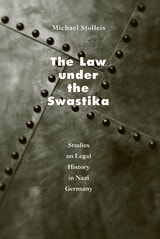
The Law under the Swastika
Studies on Legal History in Nazi GermanyMichael Stolleis
University of Chicago Press, 1997
Stolleis studies a wide range of legal fields—constitutional, judicial, agrarian, administrative, civil, and business—arguing that all types of law were affected by the political realities of National Socialism. Moreover, he shows that legal traditions were not relinquished immediately with the onset of a new regime. For the first time we can see clearly the continuities between the Nazi period and the postwar period. The law under National Socialism did not make a complete break with the law during the Weimar Republic, nor did the law of the Federal Republic nullify all of the laws under National Socialism. Through a rich and subtle investigation, Stolleis shows how the legal profession and the political regime both reacted to the conditions of the period and molded the judicial system accordingly.
Breaking the conspiracy of silence held by the justices in the postwar period, Stolleis stresses the importance of researching Nazi law in order to confront ethical problems in today's legal profession.
The Lesson of Carl Schmitt
Four Chapters on the Distinction between Political Theology and Political PhilosophyHeinrich Meier
University of Chicago Press, 1998
Relating this religious dimension to Schmitt's support for National Socialism and his continuing anti-Semitism, Meier compels the reader to come to terms with the irreconcilable differences between political theology and political philosophy. His book will give pause to those who have tended to gloss over the troubling aspects of some of Schmitt's ideas.
With editions in German, French, Italian, and now English, Meier's two books on Schmitt have dramatically reoriented the international debate about Carl Schmitt and his significance for twentieth-century political thought.
"Standing far above the rest . . . is Heinrich Meier's new study, Die Lehre Carl Schmitts, which covers all of Schmitt's writings. . . . Meier's work has forced everyone to take a second look at the assumptions underlying Schmitt's better-known writings and reconsider some that have been ignored."—Mark Lilla, reviewing the German edition in The New York Review of Books
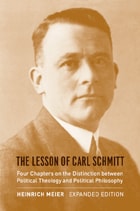
The Lesson of Carl Schmitt
Four Chapters on the Distinction between Political Theology and Political Philosophy, Expanded EditionHeinrich Meier
University of Chicago Press, 2011
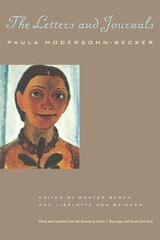
The Letters and Journals
Paula Modersohn-Becker
Northwestern University Press, 1998

The Life and Thought of Hans Jonas
Jewish DimensionsChristian Wiese
University Press of New England, 2010
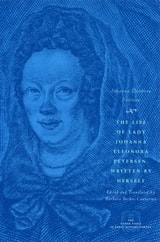
The Life of Lady Johanna Eleonora Petersen, Written by Herself
Pietism and Women's Autobiography in Seventeenth-Century GermanyJohanna Eleonora Petersen
University of Chicago Press, 2005
Collected in The Life of Lady Johanna Eleonora Petersen are Petersen's autobiography and two shorter tracts that would become models of Pietistic devotional writing. A record of the status and contribution of women in the early Protestant church, this collection will be indispensable reading for scholars of seventeenth-century German religious and social history.
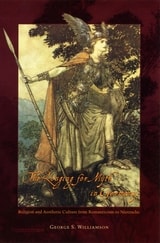
The Longing for Myth in Germany
Religion and Aesthetic Culture from Romanticism to NietzscheGeorge S. Williamson
University of Chicago Press, 2004
Through readings of key intellectuals ranging from Herder and Schelling to Wagner and Nietzsche, Williamson highlights three crucial factors in the emergence of the German engagement with myth: the tradition of Philhellenist neohumanism, a critique of contemporary aesthetic and public life as dominated by private interests, and a rejection of the Bible by many Protestant scholars as the product of a foreign, "Oriental" culture. According to Williamson, the discourse on myth in Germany remained bound up with problems of Protestant theology and confessional conflict through the nineteenth century and beyond.
A compelling adventure in intellectual history, this study uncovers the foundations of Germany's fascination with myth and its enduring cultural legacy.
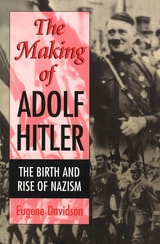
The Making of Adolf Hitler
The Birth and Rise of NazismEugene Davidson
University of Missouri Press, 1997
The harsh Armistice terms of 1918, the short-lived Weimar Republic, Hindenburg's senile vacillations, and behind-the-scene power plays form the backbone of this excellent study covering German history during the first three-and-a-half decades of the century.
The Modern Israeli and Palestinian Diasporas
A Comparative ApproachEdited by Nahum Karlinsky
University of Texas Press, 2024
A comparative study of contemporary Israeli and Palestinian diasporas.
Exilic and diasporic experience have become ubiquitous in recent decades. Jews, lacking a homeland, spread to various parts of the world, making the Jewish diaspora paradigmatic. But after the establishment of Israel in 1948, a different kind of diaspora emerged, as more than a tenth of Israeli citizens have chosen to leave their newly established state and resettle. Meanwhile, about half of all Palestinians, including Palestinian citizens of Israel, now reside in exile, predominantly as a result of the ongoing Palestinian-Israeli conflict.
Recognizing that Israeli-Jewish and Palestinian-Arab societies coexist and are engaged in constant relations, Nahum Karlinsky has assembled an impressive array of contributors to explore these diasporas alongside one another and in dialogue with other diasporic communities. The collected essays cover such topics as Palestinian exiles and diasporas, the demographics of today’s Israeli diaspora, immigrant enterprises, transnationalism and development, the unique place of Israeli Jews in the United States, the literature of Palestinian transnationals, and the emergence of Berlin as a queer Israeli-Jewish immigrant enclave.The Modern Israeli and Palestinian Diasporas challenges and reimagines the very notion of a homeland.
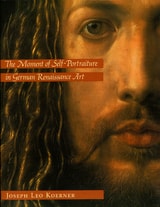
The Moment of Self-Portraiture in German Renaissance Art
Joseph Leo Koerner
University of Chicago Press, 1993
"[A] dazzling book. . . . He has turned out one of the most powerful, as well as one of the most ambitious, art-historical works of the last decade." — Anthony Grafton, New Republic
"Rich and splendid. . . . Joseph Koerner's book is a dazzling display of scholarship, enfolding Durer's artistic achievement within the broader issues of self and salvation, and like [Durer's] great Self-
Portrait it holds up a mirror to the modern fable of identity." — Bruce Boucher, The Times
"Remarkable and densely argued." — Marcia Pointon, British Journal of Aesthetics
"Herculean and brilliant. . . . Will echo in fields beyond the Sixteenth-Century and Art History." — Larry Silver, Sixteenth Century Journal
"May be the most ambitious of recent American reflections on the mysteries of German art. His elegantly written book deals with the fateful period in the history of German art when it reached its highest point. . . . Offers deeper and more disturbing insights into German Renaissance art than most earlier scholarship." — Willibald Sauerlander, New York Review of Books
The Moral Meaning of Nature
Nietzsche’s Darwinian Religion and Its CriticsPeter J. Woodford
University of Chicago Press, 2018
We start with Friedrich Nietzsche, whose writings staged one of the first confrontations with the Christian tradition using the resources of Darwinian thought. The lebensphilosophie, or “life-philosophy,” that arose from his engagement with evolutionary ideas drew responses from other influential thinkers, including Franz Overbeck, Georg Simmel, and Heinrich Rickert. These critics all offered cogent challenges to Nietzsche’s appropriation of the newly transforming biological sciences, his negotiation between science and religion, and his interpretation of the implications of Darwinian thought. They also each proposed alternative ways of making sense of Nietzsche’s unique question concerning the meaning of biological evolution “for life.” At the heart of the discussion were debates about the relation of facts and values, the place of divine purpose in the understanding of nonhuman and human agency, the concept of life, and the question of whether the sciences could offer resources to satisfy the human urge to discover sources of value in biological processes. The Moral Meaning of Nature focuses on the historical background of these questions, exposing the complex ways in which they recur in contemporary philosophical debate.

The Moral Triangle
Germans, Israelis, PalestiniansSa'red Atshan and Katharina Galor
Duke University Press, 2020
The Mortal Storm
Phyllis Bottome
Northwestern University Press, 1998
The Museum in the Cultural Sciences
Collecting, Displaying, and Interpreting Material Culture in the Twentieth CenturyEdited by Peter N. Miller
Bard Graduate Center, 2021
The Museum in the Cultural Sciences offers the first full English translations of these articles, which remain influential in conversations about the implications of art, historical, and ethnographic museums. They show how sophisticated the discussion of museums and museum display was in the early twentieth century and how much could be gained from revisiting these reflections today. Accompanied by short commentaries from museum professionals, these articles offer an intervention into and intensification of the current debate about the function and purpose of museums.
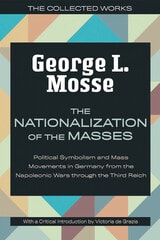
The Nationalization of the Masses
Political Symbolism and Mass Movements in Germany from the Napoleonic Wars Through the Third ReichGeorge L. Mosse
University of Wisconsin Press, 2023
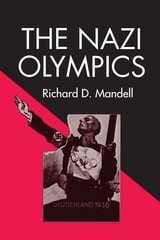
The Nazi Olympics
Richard D. Mandell
University of Illinois Press, 1987

The Nazi Olympics
Sport, Politics, and Appeasement in the 1930sEdited by Arnd Krüger and William Murray
University of Illinois Press, 2003
The 1936 Olympic Games played a key role in the development of both Hitler’s Third Reich and international sporting competition. The Nazi Olympics gathers essays by modern scholars from prominent participating countries and lays out the issues--sporting as well as political--surrounding the involvement of individual nations.
The volume opens with an analysis of Germany’s preparations for the Games and the attempts by the Nazi regime to allay the international concerns about Hitler’s racist ideals and expansionist ambitions. Essays follow on the United States, Great Britain, and France--top-tier Olympian nations with misgivings about participation--as well as Germany's future Axis partners Italy and Japan. Other contributions examine the issues involved for Finland, Sweden, Norway, Denmark, and the Netherlands. Throughout, the authors reveal the high political stakes surrounding the Games and how the Nazi Olympics distilled critical geopolitical issues of the time into a spectacle of sport.
The Nazi Perpetrator
Postwar German Art and the Politics of the RightPaul B. Jaskot
University of Minnesota Press, 2012
Who was responsible for the crimes of the Nazis? Party leaders and members? Rank-and-file soldiers and bureaucrats? Ordinary Germans? This question looms over German disputes about the past like few others. It also looms over the art and architecture of postwar Germany in ways that have been surprisingly neglected. In The Nazi Perpetrator, Paul B. Jaskot fundamentally reevaluates pivotal developments in postwar German art and architecture against the backdrop of contentious contemporary debates over the Nazi past and the difficulty of determining who was or was not a Nazi perpetrator.
Like their fellow Germans, postwar artists and architects grappled with the Nazi past and the problem of defining the Nazi perpetrator—a problem that was thoroughly entangled with contemporary conservative politics and the explosive issue of former Nazis living in postwar Germany. Beginning with the formative connection between Nazi politics and art during the 1930s, The Nazi Perpetrator traces the dilemma of identifying the perpetrator across the entire postwar period. Jaskot examines key works and episodes from West Germany and, after 1989, reunified Germany, showing how the changing perception of the perpetrator deeply impacted art and architecture, even in cases where artworks and buildings seem to have no obvious relation to the Nazi past. The book also reinterprets important periods in the careers of such major figures as Gerhard Richter, Anselm Kiefer, and Daniel Libeskind.
Combining political history with a close analysis of specific works, The Nazi Perpetrator powerfully demonstrates that the ongoing influence of Nazi Germany after 1945 is much more central to understanding a wide range of modern German art and architecture than cultural historians have previously recognized.
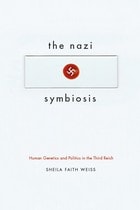
The Nazi Symbiosis
Human Genetics and Politics in the Third ReichSheila Faith Weiss
University of Chicago Press, 2010
The Faustian bargain—in which an individual or group collaborates with an evil entity in order to obtain knowledge, power, or material gain—is perhaps best exemplified by the alliance between world-renowned human geneticists and the Nazi state. Under the swastika, German scientists descended into the moral abyss, perpetrating heinous medical crimes at Auschwitz and at euthanasia hospitals. But why did biomedical researchers accept such a bargain?
The Nazi Symbiosis offers a nuanced account of the myriad ways human heredity and Nazi politics reinforced each other before and during the Third Reich. Exploring the ethical and professional consequences for the scientists involved as well as the political ramifications for Nazi racial policies, Sheila Faith Weiss places genetics and eugenics in their larger international context. In questioning whether the motives that propelled German geneticists were different from the compromises that researchers from other countries and eras face, Weiss extends her argument into our modern moment, as we confront the promises and perils of genomic medicine today.
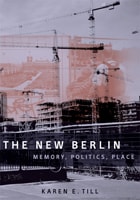
The New Berlin
Memory, Politics, PlaceKaren E. Till
University of Minnesota Press, 2005
“The New Berlin is a notable contribution to human geography and to the interdisciplinary literature on social memory and place making. Till’s methods and scholarship have provided the conceptual groundwork for the exploration and development of place making, social memory, and spatial haunting through the particular practices and politics of the new Berlin. Her readable style is marked by a narrative economy in which every word and sentence serves the larger purposes of the book. I recommend this book to anyone—student, scholar, or practitioner—who is interested in the social dynamics of memory formation and place making.” —The Professional Geographer
“This book is a well-written ‘first-hand’ account, though it also thoroughly covers academic literature, contemporary news accounts, and archival records.” —German Studies Review
“Karen E. Till's The New Berlin describes the modern metropolis and the ghosts of the past that it has to deal with.” —German World
“Well illustrated and copiously footnoted, this is a cutting-edge study of the power of identity-construction/analysis. Highly recommended.” —CHOICE

The New Jewish Diaspora
Russian-Speaking Immigrants in the United States, Israel, and GermanyGitelman, Zvi
Rutgers University Press, 2016
The Night of the Physicists
Operation Epsilon: Heisenberg, Hahn, Weizsäcker and the German BombRichard von Schirach
Haus Publishing, 2015

The Organs of J.S. Bach
A HandbookChristoph Wolff and Markus Zepf
University of Illinois Press, 2012
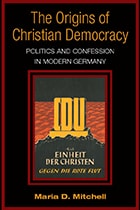
The Origins of Christian Democracy
Politics and Confession in Modern GermanyMaria D. Mitchell
University of Michigan Press, 2012
This book is a pioneering contribution to the history of the founding of the West German political system after the Second World War. The political cooperation between Catholics and Protestants that resulted in the formation of the Christian Democratic Union (CDU) in occupied and early West Germany represented a significant change from a long history of hostility in confessional relations. Given that the CDU went on to dominate politics in West Germany well into the 1960s, Maria D. Mitchell argues that an understanding of what made this interconfessional party possible is crucial to an exploration of German history in the postwar period. She examines the political history of party formation as well as the religious beliefs and motivations that shaped the party's philosophy and positions. She provides an authoritative guide to the complex processes of maneuvering and negotiation that produced the CDU during 1945-46. The full range of political possibilities is discussed, including the suppressed alternatives to the Adenauer/Erhard axis that eventually defined the party's trajectory during the 1950s and the abortive Christian Socialism associated with Jacob Kaiser.

The Origins of the Authoritarian Welfare State in Prussia
Conservatives, Bureaucracy, and the Social Question, 1815-70Hermann Beck
University of Michigan Press, 1997
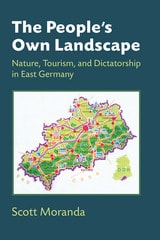
The People's Own Landscape
Nature, Tourism, and Dictatorship in East GermanyScott Moranda
University of Michigan Press, 2014
East Germany’s Socialist Unity Party aimed to placate a public well aware of the higher standards of living enjoyed elsewhere by encouraging them to participate in outdoor activities and take vacations in the countryside. Scott Moranda considers East Germany’s rural landscapes from the perspective of both technical experts (landscape architects, biologists, and physicians) who hoped to dictate how vacationers interacted with nature, and the vacationers themselves, whose outdoor experience shaped their understanding of environmental change. As authorities eliminated traditional tourist and nature conservation organizations, dissident conservationists demanded better protection of natural spaces. At the same time, many East Germans shared their government’s expectations for economic development that had real consequences for the land. By the 1980s, environmentalists saw themselves as outsiders struggling against the state and a public that had embraced mainstream ideas about limitless economic growth and material pleasures.
The Photographic Fix
Memory, Ideology, and the First World War in the Weimar RepublicJustin Court
University of Michigan Press, 2026