Results by title
511 books match the query 'Government policy' and 100 start with t

The Nazi Symbiosis
Human Genetics and Politics in the Third ReichSheila Faith Weiss
University of Chicago Press, 2010
The Faustian bargain—in which an individual or group collaborates with an evil entity in order to obtain knowledge, power, or material gain—is perhaps best exemplified by the alliance between world-renowned human geneticists and the Nazi state. Under the swastika, German scientists descended into the moral abyss, perpetrating heinous medical crimes at Auschwitz and at euthanasia hospitals. But why did biomedical researchers accept such a bargain?
The Nazi Symbiosis offers a nuanced account of the myriad ways human heredity and Nazi politics reinforced each other before and during the Third Reich. Exploring the ethical and professional consequences for the scientists involved as well as the political ramifications for Nazi racial policies, Sheila Faith Weiss places genetics and eugenics in their larger international context. In questioning whether the motives that propelled German geneticists were different from the compromises that researchers from other countries and eras face, Weiss extends her argument into our modern moment, as we confront the promises and perils of genomic medicine today.

The Neoliberal Diet
Healthy Profits, Unhealthy PeopleBy Gerardo Otero
University of Texas Press, 2018
Why are people getting fatter in the United States and beyond? Mainstream explanations argue that people simply eat too much “energy-dense” food while exercising too little. By swapping the chips and sodas for fruits and vegetables and exercising more, the problem would be solved. By contrast, The Neoliberal Diet argues that increased obesity does not result merely from individual food and lifestyle choices. Since the 1980s, the neoliberal turn in policy and practice has promoted trade liberalization and retrenchment of the welfare regime, along with continued agricultural subsidies in rich countries. Neoliberal regulation has enabled agribusiness multinationals to thrive by selling highly processed foods loaded with refined flour and sugars—a diet that originated in the United States—as well as meat. Drawing on extensive empirical data, Gerardo Otero identifies the socioeconomic and political forces that created this diet, which has been exported around the globe, often at the expense of people’s health.
Otero shows how state-level actions, particularly subsidies for big farms and agribusiness, have ensured the dominance of processed foods and made healthful fresh foods inaccessible to many. Comparing agrifood performance across several nations, including the NAFTA region, and correlating food access to class inequality, he convincingly demonstrates the structural character of food production and the effect of inequality on individual food choices. Resolving the global obesity crisis, Otero concludes, lies not in blaming individuals but in creating state-level programs to reduce inequality and make healthier food accessible to all.
The New Chosen People
Immigrants in the United StatesGuillermina Jasso
Russell Sage Foundation, 1990
The Other Public Lands
Preservation, Extraction, and Politics on the Fifty States' Natural Resource LandsSteven Davis
Temple University Press, 2025
The Other Public Lands looks at both differences and common patterns in state land management, including the structure of natural resource agencies. Davis examines the privatization and commercialization of state parks, and the tensions between recreation, revenue and the preservation of biodiversity and natural landscapes. He also raises issues about equity, access, appropriate development, and ecological health. Chapters review state forests, state wildlife management areas, and school trust lands. In addition, the roles of interest groups, the courts, and agency culture and behavior are compared and analyzed both between states and the federal government and between states with differing approaches to specific issues.
As there has been a demand to transfer at least some federal lands to the states, The Other Public Lands concludes with an appraisal of whether states could handle this transfer and goes on to suggest ways to ensure adequate access in an era of increased demand.
The Paradox of Agrarian Change
Food Security and the Politics of Social Protection in IndonesiaEdited by John McCarthy, Andrew McWilliam, and Gerben Nooteboom
National University of Singapore Press, 2023
Economic growth in the middle-income countries of Southeast Asia over the past few decades has been widely praised for reducing poverty in both absolute and relative terms. Indonesia is a prime example. But while poverty has declined in Indonesia, patterns of food poverty persist across Indonesia. What explains this troubling paradox? How does it relate to Indonesia’s enthusiastic embrace of the “entitlements revolution,” the use of direct cash transfers as a tool for reducing poverty and building social inclusion?
This book analyzes the nature and social consequences of economic development and agrarian change processes in rural Indonesia in relation to the scope and effectiveness of Indonesia’s social protection programs. The findings are based on a series of extensive ground-up case studies in Indonesian communities in a variety of eco-agrarian settings that seek to understand the drivers of food insecurity and vulnerability at a household level. The results show that while high-value farming, diversification, and migration may offer a means of economic progress for poor households, opportunities for accumulation are limited. This, the authors show, is due to the way class, gender, and power work in remote local contexts, and the fact that much surplus income is used for enhanced consumption and changing lifestyles. There are few signs of the classical structural transformation of the countryside which has historically been considered the most decisive pathway out of rural poverty. The authors conclude that social assistance is unlikely to counter the persistence of rural poverty, food insecurity, and precarity in the absence of other redistributive strategies that shift the structural drivers of inequality.

The Patent Crisis and How the Courts Can Solve It
Dan L. Burk and Mark A. Lemley
University of Chicago Press, 2009
Patent law is crucial to encourage technological innovation. But as the patent system currently stands, diverse industries from pharmaceuticals to software to semiconductors are all governed by the same rules even though they innovate very differently. The result is a crisis in the patent system, where patents calibrated to the needs of prescription drugs wreak havoc on information technologies and vice versa. According to Dan L. Burk and Mark A. Lemley in The Patent Crisis and How the Courts Can Solve It, courts should use the tools the patent system already gives them to treat patents in different industries differently. Industry tailoring is the only way to provide an appropriate level of incentive for each industry.
Burk and Lemley illustrate the barriers to innovation created by the catch-all standards in the current system. Legal tools already present in the patent statute, they contend, offer a solution—courts can tailor patent law, through interpretations and applications, to suit the needs of various types of businesses. The Patent Crisis and How the Courts Can Solve It will be essential reading for those seeking to understand the nexus of economics, business, and law in the twenty-first century.
The Political Economy of Pipelines
A Century of Comparative Institutional DevelopmentJeff D. Makholm
University of Chicago Press, 2012
The Politics of Belonging
Race, Public Opinion, and ImmigrationNatalie Masuoka and Jane Junn
University of Chicago Press, 2013

The Politics of Denial
Israel and the Palestinian Refugee ProblemNur Masalha
Pluto Press, 2003
The 1948 war ended in the expulsion of hundreds of thousands of Palestinians from their villages and homes. Israeli settlers moved in to occupy their land and the Palestinian refugees found themselves in refugee camps, or in neighbouring Arab countries. Today there are nearly four million Palestinian refugees -- and they want the right to go home. Their problem is the greatest and most enduring refugee problem in the world.
Since 1948 Israeli refugee policy has become a classic case of denial: the denial that Zionist "transfer committees" had operated between 1937 and 1948; denial of any wrong-doing or any historical injustice; denial of the "right of return"; denial of restitution of property and compensation; and indeed denial of any moral responsibility or culpability for the creation of the refugee problem.
The aim of this book is to analyze Israeli policies towards the Palestinian refugees as they evolved from the 1948 catastrophe (or nakba) to the present. It is the first volume to look in detail at Israeli law and policy surrounding the refugee question. Drawing on extensive primary sources and previously classified archive material, Masalha discusses the 1948 exodus; Israeli resettlement schemes since 1948; Israeli approaches to compensation and restitution of property; Israeli refugee policies towards the internally displaced (‘present absentees’); and Israeli refugee policies during the Madrid and Oslo negotiations.
Masalha asks what rights Palestinians possess under international law? How can a refugee population be compensated, and will they ever be able to return to their homes? Masalha questions the official Israeli position that the only solution to the problem is resettlement of the refugees in Arab states or elsewhere. This book is a valuable resource for anyone interested in the subject that lies at the heart of the ongoing conflict in the Middle East.

The Politics of Dialogic Imagination
Power and Popular Culture in Early Modern JapanKatsuya Hirano
University of Chicago Press, 2013

The Politics of Hazardous Waste Management
James P. Lester and Ann O M. Bowman, eds.
Duke University Press, 1983

The Politics of Kinship
Race, Family, GovernanceMark Rifkin
Duke University Press, 2024
The Politics of Necessity
Community Organizing and Democracy in South AfricaElke Zuern
University of Wisconsin Press, 2011
The end of apartheid in South Africa broke down political barriers, extending to all races the formal rights of citizenship, including the right to participate in free elections and parliamentary democracy. But South Africa remains one of the most economically polarized nations in the world. In The Politics of Necessity Elke Zuern forcefully argues that working toward greater socio-economic equality—access to food, housing, land, jobs—is crucial to achieving a successful and sustainable democracy.
Drawing on interviews with local residents and activists in South Africa’s impoverished townships during more than a decade of dramatic political change, Zuern tracks the development of community organizing and reveals the shifting challenges faced by poor citizens. Under apartheid, township residents began organizing to press the government to address the basic material necessities of the poor and expanded their demands to include full civil and political rights. While the movement succeeded in gaining formal political rights, democratization led to a new government that instituted neo-liberal economic reforms and sought to minimize protest. In discouraging dissent and failing to reduce economic inequality, South Africa’s new democracy has continued to disempower the poor.
By comparing movements in South Africa to those in other African and Latin American states, this book identifies profound challenges to democratization. Zuern asserts the fundamental indivisibility of all human rights, showing how protest movements that call attention to socio-economic demands, though often labeled a threat to democracy, offer significant opportunities for modern democracies to evolve into systems of rule that empower all citizens.
The Politics of New Immigrant Destinations
Transatlantic PerspectivesStefanie Chambers
Temple University Press, 2017
Migration to new destinations in Europe and the United States has expanded dramatically over the past few decades. Within these destinations, there is a corresponding greater variety of ethnic, cultural, and/or religious diversity. This timely volume, The Politics of New Immigrant Destinations, considers the challenges posed by this proliferation of diversity for governments, majority populations, and immigrants.
The contributors assess the effectiveness of the policy and political responses that have been spawned by increasing diversity in four types of new immigrant destinations: “intermediate” destination countries—Ireland and Italy; culturally distinct regions experiencing new migration such as Catalonia in Spain or the American South; new destinations within traditional destination countries like the state of Utah and rural towns in England; and “early migration cycle” countries including Latvia and Poland.
The Politics of New Immigrant Destinations examines how these new destinations for immigrants compare to traditional destinations, with respect to their policy responses and success at integrating immigrants, offering perspectives from both immigrants and natives.
Contributors include: Dace Akule, Amado Alarcón, Rhys Andrews, Francesca Campomori, Tiziana Caponio, Scott Decker, Erica Dobbs, Melissa M. Goldsmith, Aleksandra Grzymała-Kazłowska, Claudio A. Holzner, Magdalena Lesińska, Paul Lewis, Helen B. Marrow, Laura Morales, Katia Pilati, Marie Provine, Monica Varsanyi, and the editors.
The Politics of Preference
Democratic Institutions and Affirmative Action in the United States and IndiaSunita Parikh
University of Michigan Press, 1997
The Politics of State Feminism
Innovation in Comparative ResearchAuthored by Dorothy E. McBride and Amy G. Mazur
Temple University Press, 2012
The Politics of State Feminism addresses essential questions of women's movement activism and political change in western democracies. The authors—top gender and politics scholars—provide a comparative analysis of the effectiveness of government agencies and women's movements regarding women’s policy issues—if, how, and why they form a kind of state feminism.
The central research questions are examined across five issue areas in thirteen postindustrial democracies in Europe and North America from the 1960s through the early 2000s. The authors explore a range of topics drawn from contemporary theory, interactions between descriptive and substantive representation, and the place of institutions in democratic change.
Using the innovative qualitative and quantitative methods employed by the Research Network on Gender Politics and the State, the authors have developed a new body of theories about the role of state feminism and how it can help further women’s rights.

The Prescription-to-Prison Pipeline
The Medicalization and Criminalization of PainMichelle Smirnova
Duke University Press, 2023
The Price of Nuclear Power
Uranium Communities and Environmental JusticeMalin, Stephanie A.
Rutgers University Press, 2015
The Real Cyber War
The Political Economy of Internet FreedomShawn M. Powers and Michael Jablonski
University of Illinois Press, 2015
Moving beyond debates on the democratic value of new and emerging information technologies, The Real Cyber War focuses on political, economic, and geopolitical factors driving internet freedom policies, in particular the U.S. State Department's emerging doctrine in support of a universal freedom to connect. They argue that efforts to create a universal internet built upon Western legal, political, and social preferences is driven by economic and geopolitical motivations rather than the humanitarian and democratic ideals that typically accompany related policy discourse. In fact, the freedom-to-connect movement is intertwined with broader efforts to structure global society in ways that favor American and Western cultures, economies, and governments.
Thought-provoking and far-seeing, The Real Cyber War reveals how internet policies and governance have emerged as critical sites of geopolitical contestation, with results certain to shape statecraft, diplomacy, and conflict in the twenty-first century.
The Roles of Immigrants and Foreign Students in US Science, Innovation, and Entrepreneurship
Edited by Ina Ganguli, Shulamit Kahn, and Megan MacGarvie
University of Chicago Press, 2020
The Scandal of the State
Women, Law, and Citizenship in Postcolonial IndiaRajeswari Sunder Rajan
Duke University Press, 2003
The Scandal of the State develops through a series of compelling case studies, each of which centers around an incident exposing the contradictory position of the Indian state vis-à-vis its female citizens and, ultimately, the inadequacy of its commitment to women’s rights. Sunder Rajan focuses on the custody battle over a Muslim child bride, the compulsory sterilization of mentally retarded women in state institutional care, female infanticide in Tamilnadu, prostitution as labor rather than crime, and the surrender of the female outlaw Phoolan Devi. She also looks at the ways the Uniform Civil Code presented many women with a stark choice between allegiance to their religion and community or the secular assertion of individual rights. Rich with theoretical acumen and activist passion, The Scandal of the State is a powerful critique of the mutual dependence of women and the state on one another in the specific context of a postcolonial modernity.
The Secure and the Dispossessed
How the Military and Corporations Are Shaping a Climate-Changed WorldEdited by Nick Buxton and Ben Hayes
Pluto Press, 2015
The Secure and the Dispossessed gathers together essays by high-profile journalists, academics, and activists, including Christian Parenti, Nafeez Ahmed, and policy analyst Oscar Reyes. They offer a close and critical guide to questions about climate change, showing how they converge with questions about international security and global economic power, as new natural resources become available. This book is an essential guide to the key environmental and political debates which will shape future policies and elections: how managing the world’s supply of oil and gas can be squared with the environmental impact of our continued reliance on those very same fossil fuels.

The Sex Education Debates
Nancy Kendall
University of Chicago Press, 2012

The Southern Debate over Slavery
Volume 1: Petitions to Southern Legislatures, 1778-1864Edited by Loren Schweninger
University of Illinois Press, 2001
These petitions, filed by slaveholders and nonslaveholders, slaves and free blacks, women and men, abolitionists and staunch defenders of slavery, constitute a uniquely important primary source. Petitioners were compelled to present the most accurate and fully documented case they could, since their claims would be subject to public scrutiny and legal verification. Unlike the many reminiscences and autobiographies of the period, these petitions record with great immediacy and minute detail the dynamics, common understandings, and legal restrictions and parameters that shaped southern society during this period.
Arranged chronologically, with their original spelling and idiosyncratic phraseology intact, these documents reveal the grim and brutal nature of human bondage, the fears of whites who lived among large concentrations of blacks, and the workings of the complicated legal system designed to control blacks. They tell about the yearning of bondspeople to gain their freedom, the attitudes of freed blacks who were forced to leave the South, and the efforts of African Americans to overcome harsh and restrictive laws. They also underscore the unique situation of free women of color and the reliance of manumitted (formally freed) blacks on their former owners for protection, travel passes, guardianship papers, and reference letters.
Astonishingly intimate and frank,The Southern Debate over Slavery illuminates how slavery penetrated nearly every aspect of southern life and how various groups of southerners responded to the difficulties they confronted as a result of living in a slave society.
The Southern Debate over Slavery
Volume 2: Petitions to Southern County Courts, 1775-1867Edited by Loren Schweninger
University of Illinois Press, 2007
An incomparably rich source of period information, the second volume of The Southern Debate over Slavery offers a representative and extraordinary sampling of the thousands of petitions about issues of race and slavery that southerners submitted to county courts between the American Revolution and Civil War. These petitions, filed by slaveholders and nonslaveholders, slaves and free blacks, women and men, abolitionists and staunch defenders of slavery, constitute a uniquely important primary source. The collection records with great immediacy and minute detail the dynamics and legal restrictions that shaped southern society.
The Struggle for Water
Politics, Rationality, and Identity in the American SouthwestWendy Nelson Espeland
University of Chicago Press, 1998
In the 1970s, the three groups most intimately involved in the Orme Dam—younger Bureau of Reclamation employees committed to "rational choice" decision making, older Bureau engineers committed to the dam, and the Yavapai community—all found themselves and their values transformed by their struggles. Wendy Nelson Espeland lays bare the relations between interests and identities that emerged during the conflict, creating a contemporary tale of power and colonization, bureaucracies and democratic practice, that asks the crucial question of what it means to be "rational."
The Sympathetic State
Disaster Relief and the Origins of the American Welfare StateMichele Landis Dauber
University of Chicago Press, 2012

The Time beneath the Concrete
Palestine between Camp and ColonyNasser Abourahme
Duke University Press, 2025

The Truth Machines
Policing, Violence, and Scientific Interrogations in IndiaJinee Lokaneeta
University of Michigan Press, 2020
The Truth Machines examines the emergence and use of these three scientific techniques to analyze two primary themes. First, the book questions whether existing theoretical frameworks for understanding state power and legal violence are adequate to explain constant innovations of the state. Second, it explores the workings of law, science, and policing in the everyday context to generate a theory of state power and legal violence, challenging the monolithic frameworks about this relationship, based on a study of both state and non-state actors.
Jinee Lokaneeta argues that the attempt to replace physical torture with truth machines in India fails because it relies on a confessional paradigm that is contiguous with torture. Her work also provides insights into a police institution that is founded and refounded in its everyday interactions between state and non-state actors. Theorizing a concept of Contingent State, this book demonstrates the disaggregated, and decentered nature of state power and legal violence, creating possible sites of critique and intervention.
The Underclass Question
Bill Lawson
Temple University Press, 1992
The Undocumented Everyday
Migrant Lives and the Politics of VisibilityRebecca M. Schreiber
University of Minnesota Press, 2018
Examining how undocumented migrants are using film, video, and other documentary media to challenge surveillance, detention, and deportation
As debates over immigration increasingly become flashpoints of political contention in the United States, a variety of advocacy groups, social service organizations, filmmakers, and artists have provided undocumented migrants with the tools and training to document their experiences.
In The Undocumented Everyday, Rebecca M. Schreiber examines the significance of self-representation by undocumented Mexican and Central American migrants, arguing that by centering their own subjectivity and presence through their use of documentary media, these migrants are effectively challenging intensified regimes of state surveillance and liberal strategies that emphasize visibility as a form of empowerment and inclusion. Schreiber explores documentation as both an aesthetic practice based on the visual conventions of social realism and a state-administered means of identification and control.
As Schreiber shows, by visualizing new ways of belonging not necessarily defined by citizenship, these migrants are remaking documentary media, combining formal visual strategies with those of amateur photography and performative elements to create a mixed-genre aesthetic. In doing so, they make political claims and create new forms of protection for migrant communities experiencing increased surveillance, detention, and deportation.

The Unruly Facts of Race
The Politics of Knowledge Production in the Early Twentieth-Century Immigration DebateSunmin Kim
University of Chicago Press, 2026
Unfortunately, we’re all too familiar with the US’s legacy of maligning immigrants. Some Americans see immigrants as inherently threatening, a blank screen onto which the nation’s worst fears are projected. But this phenomenon is neither timeless nor static. Instead, it arose and transformed alongside the unprecedented arrival of immigrants in the early twentieth century—and the federal government’s response. In The Unruly Facts of Race, sociologist Sunmin Kim explains how American ideas about race and ethnicity were transformed in the early twentieth century as an unintended consequence of anti-immigrant mobilization.
Kim presents a wealth of archival evidence, including the proceedings of the 1907 Dillingham Commission, to reconstruct how competing racialized visions of nationhood evolved in the early twentieth-century immigration debate. Immigration restrictionist politicians believed that the United States should be a White, Anglo-Saxon, and Protestant nation. However, when they mobilized researchers—some of whom were women and/or immigrants—to gather data at a massive scale to rationalize their aims, they were met with unruly facts that did not support their racial project. Newer European immigrants, as the data showed, were not much different from descendants of earlier immigrants from northern Europe. When facts failed to support the vilification of immigrants, exclusionist politicians instead turned to race as a marker of ineluctable difference to justify their aims. This led to a new principle of national belonging: the United States transitioned to a country that encompassed various European groups, including Catholics and Jews, but excluded non-White immigrants, as they were deemed too different to become a part of the nation.
Kim’s analysis shows that throughout US history, the opportunity for belonging for some immigrants was predicated on the exclusion of others. His focus on the role of facts in the early twentieth century provides a refreshing take on why the so-called “nation of immigrants” has always demonized some immigrants while cherishing others, highlighting the selection and control of immigrants as the core principles of the American nation-building project. Amid a vitriolic explosion of American immigration discourse, Kim offers a needed corrective to and context for debates around who belongs in the United States.
The Unsteady March
The Rise and Decline of Racial Equality in AmericaPhilip A. Klinkner and Rogers M. Smith
University of Chicago Press, 1999
"[An] unflinching portrait of the leviathan of American race relations. . . . This important book should be read by all who aspire to create a more perfect union."—Publishers Weekly, starred review
"Could it be that our unswerving belief in the power of our core values to produce racial equality is nothing but a comforting myth? That is the main argument put forth by Philip Klinkner and Rogers Smith . . . The Unsteady March is disturbing because it calls into question our cherished national belief and does so convincingly. . . . [It] is beautifully written, and the social history it provides is illuminating and penetrating."—Aldon Morris, American Journal of Sociology
Winner of the Horace Mann Bond Award of the W.E.B. Du Bois Institute for Afro-American Research at Harvard University.
The Violence of Austerity
Edited by David Whyte and Vickie Cooper
Pluto Press, 2017
In The Violence of Austerity, David Whyte and Vickie Cooper bring together the passionate voices of campaigners and academics to show that rather than stimulating economic growth, austerity policies have led to a dismantling of the social systems that operated as a buffer against economic hardship. Chapters from major contributors—including Danny Dorling, Mary O’Hara and Rizwaan Sabir—show how austerity is a form of institutional violence more socially harmful and far-reaching than other more politicized and publicized forms of violence, such as terrorism or gun violence. Contributors expose highly significant cases of this institutional violence driven by public sector cuts: police attacks on the homeless, violent evictions of the rented sector, risks faced by people on workfare, and more. The Violence of Austerity is a devastating, authoritative study of the myriad ways austerity policies harm people in Britain that will resonate with anyone concerned with the increasing power of the political elite and the future of social welfare.
The War on Human Trafficking
U.S. Policy AssessedAnthony M. DeStefano
Rutgers University Press, 2008
The public's understanding of human trafficking is comprised of terrible stories like these, which the media covers in dramatic, but usually short-lived bursts. The more complicated, long-term story of how policy on trafficking has evolved has been largely ignored. In The War on Human Trafficking, Anthony M. DeStefano covers a decade of reporting on the policy battles that have surrounded efforts to abolish such practices, helping readers to understand the forced labor of immigrants as a major global human rights story.
DeStefano details the events leading up to the creation of the Trafficking Victims Protection Act of 2000, the federal law that first addressed the phenomenon of trafficking in persons. He assesses the effectiveness of the 2000 law and its progeny, showing the difficulties encountered by federal prosecutors in building criminal cases against traffickers. The book also describes the tensions created as the Bush Administration tried to use the trafficking laws to attack prostitution and shows how the American response to these criminal activities was impacted by the events of September 11th and the War in Iraq.
Parsing politics from practice, this important book gets beyond sensational stories of sexual servitude to show that human trafficking has a much broader scope and is inextricable from the powerful economic conditions that impel immigrants to put themselves at risk.
The White Welfare State
The Racialization of U.S. Welfare PolicyDeborah E. Ward
University of Michigan Press, 2005
"In The White Welfare State, Deborah Ward assembles a powerful array of documentary and statistical evidence to reveal the mechanisms, centrality, and deep historical continuity of racial exclusion in modern 'welfare' provision in the United States. Bringing unparalleled scrutiny to the provisions and implementation of state-level mothers' pensions, she argues persuasively that racialized patterns of welfare administration were firmly entrenched in this Progressive Era legislation, only to be adopted and reinforced in the New Deal welfare state. With rigorous and clear-eyed analysis, she pushes us to confront the singular role of race in welfare's development, from its early 20th-century origins to its official demise at century's end."
--Alice O'Connor, University of California at Santa Barbara
"This is a richly informative and arresting work. The White Welfare State will force a reevaluation of the role racism has played as a fundamental feature in even the most progressive features of the American welfare state. Written elegantly, this book will provoke a wide-ranging discussion among social scientists, historians, and students of public policy."
--Ira Katznelson, Ruggles Professor of Political Science and History, Columbia University
"This book offers an original and absorbing account of early policies that shaped the course of the American welfare state. It extends yet challenges extant interpretations and expands our understanding of the interconnections of race and class issues in the U.S., and American political development more broadly."
--Rodney Hero, University of Notre Dame
Thinking Like a Climate
Governing a City in Times of Environmental ChangeHannah Knox
Duke University Press, 2020
Thirst for Growth
Water Agencies as Hidden Government in CaliforniaRobert Gottlieb
University of Arizona Press, 1991
Those Who Count
Expert Practicies of Roma ClassificationMihai Surdu
Central European University Press, 2016
Three Ways to Be Alien
Travails and Encounters in the Early Modern WorldSanjay Subrahmanyam
Brandeis University Press, 2011

Titles, Conflict, and Land Use
The Development of Property Rights and Land Reform on the Brazilian Amazon FrontierLee J. Alston, Gary D. Libecap, and Bernardo Mueller
University of Michigan Press, 1999
Tomorrow We're All Going to the Harvest
Temporary Foreign Worker Programs and Neoliberal Political EconomyBy Leigh Binford
University of Texas Press, 2013
From its inception in 1966, the Canadian Seasonal Agricultural Worker Program (SAWP) has grown to employ approximately 20,000 workers annually, the majority from Mexico. The program has been hailed as a model that alleviates human rights concerns because, under contract, SAWP workers travel legally, receive health benefits, contribute to pensions, are represented by Canadian consular officials, and rate the program favorably. Tomorrow We’re All Going to the Harvest takes us behind the ideology and examines the daily lives of SAWP workers from Tlaxcala, Mexico (one of the leading sending states), observing the great personal and family price paid in order to experience a temporary rise in a standard of living. The book also observes the disparities of a gutted Mexican countryside versus the flourishing agriculture in Canada, where farm labor demand remains high.
Drawn from extensive surveys and nearly two hundred interviews, ethnographic work in Ontario (destination of over 77 percent of migrants in the author’s sample), and quantitative data, this is much more than a case study; it situates the Tlaxcala-Canada exchange within the broader issues of migration, economics, and cultural currents. Bringing to light the historical genesis of “complementary” labor markets and the contradictory positioning of Mexican government representatives, Leigh Binford also explores the language barriers and nonexistent worker networks in Canada, as well as the physical realities of the work itself, making this book a complete portrait of a provocative segment of migrant labor.
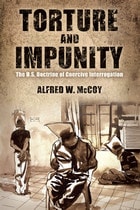
Torture and Impunity
The U.S. Doctrine of Coercive InterrogationAlfred W. McCoy
University of Wisconsin Press, 2012
During the Cold War, McCoy argues, the U.S. Central Intelligence Agency covertly funded psychological experiments designed to weaken a subject’s resistance to interrogation. After the 9/11 terrorist attacks, the CIA revived these harsh methods, while U.S. media was flooded with seductive images that normalized torture for many Americans. Ten years later, the U.S. had failed to punish the perpetrators or the powerful who commanded them, and continued to exploit intelligence extracted under torture by surrogates from Somalia to Afghanistan. Although Washington has publicly distanced itself from torture, disturbing images from the prisons at Abu Ghraib and Guantanamo are seared into human memory, doing lasting damage to America’s moral authority as a world leader.
Torture in the National Security Imagination
Stephanie Athey
University of Minnesota Press, 2023
Reassessing the role of torture in the context of police violence, mass incarceration, and racial capitalism
At the midpoint of a century of imperial expansion, marked on one end by the Philippine–American War of 1899–1902 and on the other by post–9/11 debates over waterboarding, the United States embraced a vision of “national security torture,” one contrived to cut ties with domestic torture and mass racial terror and to promote torture instead as a minimalist interrogation tool. Torture in the National Security Imagination argues that dispelling this vision requires a new set of questions about the everyday work that torture does for U.S. society.
Stephanie Athey describes the role of torture in the proliferation of a U.S. national security stance and imagination: as U.S. domestic tortures were refined in the Philippines at the turn of the twentieth century, then in mid-century counterinsurgency theory and the networks that brought it home in the form of law-and-order policing and mass incarceration.
Drawing on examples from news to military reports, legal writing, and activist media, Athey shows that torture must be seen as a colonial legacy with a corporate future, highlighting the centrality of torture to the American empire—including its role in colonial settlement, American Indian boarding schools, and police violence. She brings to the fore the spectators and commentators, the communal energy of violence, and the teams and target groups necessary to a mass undertaking (equipment suppliers, contractors, bureaucrats, university researchers, and profiteers) to demonstrate that, at base, torture is propelled by local social functions, conducted by networked professional collaborations, and publicly supported by a durable social imaginary.

Training for Catastrophe
Fictions of National Security after 9/11Lindsay Thomas
University of Minnesota Press, 2021
A timely, politically savvy examination of how impossible disasters shape the very real possibilities of our world
Why would the normally buttoned-down national security state imagine lurid future scenarios like a zombie apocalypse? In Training for Catastrophe, author Lindsay Thomas shows how our security regime reimagines plausibility to focus on unlikely and even unreal events rather than probable ones. With an in-depth focus on preparedness (a pivotal, emergent national security paradigm since 9/11) she explores how fiction shapes national security.
Thomas finds fiction at work in unexpected settings, from policy documents and workplace training manuals to comics and video games. Through these texts—as well as plenty of science fiction—she examines the philosophy of preparedness, interrogating the roots of why it asks us to treat explicitly fictional events as real. Thomas connects this philosophical underpinning to how preparedness plays out in contemporary politics, emphasizing how it uses aesthetic elements like realism, genre, character, and plot to train people both to regard some disasters as normal and to ignore others.
Training for Catastrophe makes an important case for how these documents elicit consent and compliance. Thomas draws from a huge archive of texts—including a Centers for Disease Control comic about a zombie apocalypse, the work of Audre Lorde, and the political thrillers of former national security advisor Richard Clarke—to ask difficult questions about the uses and values of fiction. A major statement on how national security intrudes into questions of art and life, Training for Catastrophe is a timely intervention into how we confront disasters.

Transnational Trajectories and Diaspora Policies
The Case of Czechia in Comparison to Poland, Hungary and SlovakiaEdited by Eva Janská
Karolinum Press, 2025
The book examines diaspora policy in Central European countries in the context of changes following their accession to the EU, utilizing the Czech Republic, Slovakia, Poland, and Hungary as case studies. With a focus on the previously underexplored new Czech diaspora (i.e., the emigration of Czechs/Czechoslovaks after 1990), individual case studies provide a comprehensive description of the contemporary Czech diaspora while also elucidating key inquiries directed towards its current character and specific needs.

Tribal Policing
Asserting Sovereignty, Seeking JusticeEileen Luna-Firebaugh
University of Arizona Press, 2007
Author Eileen Luna-Firebaugh answers these and other questions in this well-documented text about tribal government and law enforcement in America. Based on extensive research with tribal police departments conducted over a period of eight years, Tribal Policing reveals the complicated role of police officials in Indian country and the innovative methods they are developing to address crime within their borders and to advance tribal sovereignty in the United States.
Tribal police departments face many challenges, such as heightened crime rates, a lack of resources (working patrol vehicles, 911 systems, access to police radios), and vast patrol areas. Luna-Firebaugh demonstrates that tribal officers see themselves as members of the tribal community and that tribal law enforcement is a complex balance of tribal position and authority within the community. Among other topics, Luna-Firebaugh analyzes the structure of tribal law enforcement and the ways it differs from mainstream policing; the role of women, tribal members, and others who comprise tribal law enforcement personnel; tribal jails and corrections; police training; and the legal, political, cultural, and historical issues that affect American Indian tribal policing.
This informative text addresses the scarcity of published material regarding tribal law enforcement and will be a welcome addition to courses in criminal justice, the administration of justice, law enforcement, and Native American studies.
Trust beyond Borders
Immigration, the Welfare State, and Identity in Modern SocietiesMarkus M.L. Crepaz
University of Michigan Press, 2010
Will immigration undermine the welfare state? Trust beyond Borders draws on public opinion data and case studies of Germany, Sweden, and the United States to document the influence of immigration and diversity on trust, reciprocity, and public support for welfare programs. Markus M. L. Crepaz demonstrates that we are, at least in some cases, capable of trusting beyond borders: of expressing faith in our fellow humans and extending help without regard for political classifications.
In Europe, the welfare state developed under conditions of relative homogeneity that fostered high levels of trust among citizens, while in America anxiety about immigration and diversity predated the emergence of a social safety net. Looking at our new era of global migration, Crepaz traces the renewed debate about "us" versus "them" on both sides of the Atlantic and asks how it will affect the public commitment to social welfare. Drawing on the literatures on immigration, identity, social trust, and the welfare state, Trust beyond Borders presents a novel analysis of immigration's challenge to the welfare state and a persuasive exploration of the policies that may yet preserve it.
"Crepaz contributes much to our knowledge about the link between immigration and social welfare, certainly one of the central issues in current national and international politics."
---Stuart Soroka, Associate Professor of Political Science and William Dawson Scholar, McGill University
"Finally! A book that challenges the growing view that ethnic diversity is the enemy of social solidarity. It addresses an issue of intense debate in Western nations; it takes dead aim at the theoretical issues at the center of the controversy; it deploys an impressive array of empirical evidence; and its conclusions represent a powerful corrective to the current drift of opinion. Trust beyond Borders will rank among the very best books in the field."
---Keith Banting, Queen's Research Chair in Public Policy, Queen's University
"Do mass immigration and ethnic diversity threaten popular support for the welfare state? Trust beyond Borders answers no. Marshaling an impressive array of comparative opinion data, Crepaz shows that countries with high levels of social trust and universal welfare state arrangements can avoid the development of the welfare chauvinism that typically accompanies diversity."
---Gary Freeman, Professor and Department Chair, Department of Government, University of Texas at Austin
Markus M. L. Crepaz is Professor in the Department of International Affairs at the University of Georgia and Associate Director of the Center for the Study of Global Issues (GLOBIS).
Trusteeship in Change
Toward Tribal Autonomy in Resource ManagementRichmond L. Clow
University Press of Colorado, 2001
This book also includes case studies focused on wildlife management, forest preservation, tribal hunting laws, and other specific concerns in management, preservation and utilization of Native American land. An excellent source for scholars in the fields of Native American and environmental studies, Trusteeship in Change is sure to spark debate and to be an important reference book for years to come.