Results by title
366 books match the query 'International' and 94 start with t

The Political Economy of the Public Budget in the Americas
Edited by Diego Sanchez-Ancochea and Iwan Morgan
University of London Press, 2009

The Politics of Annihilation
A Genealogy of GenocideBenjamin Meiches
University of Minnesota Press, 2019
How did a powerful concept in international justice evolve into an inequitable response to mass suffering?
For a term coined just seventy-five years ago, genocide has become a remarkably potent idea. But has it transformed from a truly novel vision for international justice into a conservative, even inaccessible term? The Politics of Annihilation traces how the concept of genocide came to acquire such significance on the global political stage. In doing so, it reveals how the concept has been politically contested and refashioned over time. It explores how these shifts implicitly impact what forms of mass violence are considered genocide and what forms are not.
Benjamin Meiches argues that the limited conception of genocide, often rigidly understood as mass killing rooted in ethno-religious identity, has created legal and political institutions that do not adequately respond to the diversity of mass violence. In his insistence on the concept’s complexity, he does not undermine the need for clear condemnations of such violence. But neither does he allow genocide to become a static or timeless notion. Meiches argues that the discourse on genocide has implicitly excluded many forms of violence from popular attention including cases ranging from contemporary Botswana and the Democratic Republic of Congo, to the legacies of colonial politics in Haiti, Canada, and elsewhere, to the effects of climate change on small island nations.
By mapping the multiplicity of forces that entangle the concept in larger assemblages of power, The Politics of Annihilation gives us a new understanding of how the language of genocide impacts contemporary political life, especially as a means of protesting the social conditions that produce mass violence.
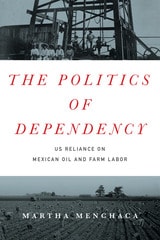
The Politics of Dependency
US Reliance on Mexican Oil and Farm LaborBy Martha Menchaca
University of Texas Press, 2016
The United States and Mexico trade many commodities, the most important of which are indispensable sources of energy—crude oil and agricultural labor. Mexican oil and workers provide cheap and reliable energy for the United States, while US petro dollars and agricultural jobs supply much-needed income for the Mexican economy. Mexico’s economic dependence on the United States is well-known, but The Politics of Dependency makes a compelling case that the United States is also economically dependent on Mexico.
Expanding dependency theory beyond the traditional premise that weak countries are dominated by powerful ones, Martha Menchaca investigates how the United States and Mexico have developed an asymmetrical codependency that disproportionally benefits the United States. In particular, she analyzes how US foreign policy was designed to enable the US government to help shape the development of Mexico’s oil industry, as well as how migration from Mexico to the United States has been regulated by the US Congress to ensure that American farmers have sufficient labor. This unprecedented dual study of energy sectors that are usually examined in isolation reveals the extent to which the United States has become economically dependent on Mexico, even as it remains the dominant partner in the relationship. It also exposes the long-term effects of the agricultural policies of NAFTA, which led to the unemployment of millions of agricultural workers in Mexico, a large percentage of whom relocated to the United States.

The Post-Cold War Trading System
Who's on First?Sylvia Ostry
University of Chicago Press, 1997
With keen historical awareness, Ostry examines the role of key economic power brokers, particularly the United States, in the reconstruction and reconfiguration of an international economy after World War II. She argues that U.S. policy efforts were so successful that they led to an unprecedented renewal of economic growth, living standards, and education levels in postwar Europe and Japan. Ironically, those same policy successes unintentionally fostered the relative decline of U.S. dominance on the world trade scene as the reduction of trade and investment barriers prompted friction and conflict between different kinds of capitalist systems.
Identifying the historical and legal issues key to postwar trade policy, Ostry has commandingly charted our economic course through the last half of this century and, perhaps, into the next.
"Sylvia Ostry knows this subject as few others do, both as a scholar of international trade issues and a major player in the ongoing negotiations that have created the rules of the trade game. The Post-Cold War Trading System is a fine summary of where we've been and where we ought to be going."—Peter Passell, economic scene columnist for The New York Times
The Quality of Government
Corruption, Social Trust, and Inequality in International PerspectiveBo Rothstein
University of Chicago Press, 2011
The Regionalization of the World Economy
Edited by Jeffrey A. Frankel
University of Chicago Press, 1997
Including both empirical and theoretical studies, this volume addresses several important questions: Why do countries adopt FTAs and other regional trading arrangements? To what extent have existing regional arrangements actually affected patterns of trade? What are the welfare effects of such arrangements? Several chapters explore the economic effects of regional arrangements on patterns of trade, either on price differentials or via the gravity model on bilateral trade flows. In addition, this book examines the theoretical foundation of the gravity model. Making extensive use of the gravity model of bilateral trade, several chapters explore the economic effects of regional arrangements. In addition, this book examines the theoretical foundation of the gravity model.

The Rise and Relapse of European Human Rights in Turkey
The AKP Era of 2002–2024Tugba Bayar
Central European University Press, 2026
The Role of the Judge in International Trade Regulation
Experience and Lessons for the WTOThomas Cottier and Petros C. Mavroidis, Editors
University of Michigan Press, 2003
The book develops along three lines: the first a search for cases submitted to the WTO where the judge exceeded its authority; the second a comparison of the WTO with the operations of national judicial systems having different levels of integration, specifically the United States (federal level) and the EC (quasi-federal level); and the third an exploration of directions for the future of dispute settlement in the WTO.
Reflecting the diversity of its contributors, this book addresses questions of economics, political science, and law, bringing an unusual level of multidisciplinarity to this topic and context. It is designed for both academic readers and practitioners, who will find it full of practical insights as well as rich and detailed analysis.
Thomas Cottier is Professor of European and International Economic Law, University of Bern, and Managing Director, World Trade Institute, University of Bern.
Petros C. Mavroidis is Professor of Law, University of Neuchâtel. He formerly worked in the Legal Affairs Division of the World Trade Organization.
Patrick Blatter is Mavroidiss scientific collaborator.
The Rules of the Global Game
A New Look at US International Economic PolicymakingKenneth W. Dam
University of Chicago Press, 2001
In The Rules of the Global Game, Dam first lays out what US international economic policies are and compares them to what they should be based on how they affect US per capita income. With this foundation in place, Dam then develops and applies principles for elucidating the major components of economic policy, such as foreign trade and investment, international monetary and financial systems, and current controversial issues, including intellectual property and immigration. Underlying his explanations is a belief in the importance of worldwide free trade and open markets as well as a crucial understanding of the political forces that shape decision making. Because economic policy is not created in a political vacuum, Dam argues, sound policymaking requires an understanding of "statecraft"-the creation and use of institutions that channel the efforts of interest groups and political forces in directions that encourage good economic outcomes.
Dam's vast experience with the politics and practicalities of economic policy translates into a view of policy that is neither academic nor abstract. Rather, Dam shows us how policy is actually made, who makes it, and why, using examples such as GATT, NAFTA, the US-Japan semiconductor agreement, and the Asian financial crisis. A rare book that can be read with pleasure and profit by layperson and economist alike, The Rules of the Global Game allows readers to understand the policies that shape our economy and our lives.

The Seductions of Quantification
Measuring Human Rights, Gender Violence, and Sex TraffickingSally Engle Merry
University of Chicago Press, 2016
With The Seductions of Quantification, leading legal anthropologist Sally Engle Merry investigates the techniques by which information is gathered and analyzed in the production of global indicators on human rights, gender violence, and sex trafficking. Although such numbers convey an aura of objective truth and scientific validity, Merry argues persuasively that measurement systems constitute a form of power by incorporating theories about social change in their design but rarely explicitly acknowledging them. For instance, the US State Department’s Trafficking in Persons Report, which ranks countries in terms of their compliance with antitrafficking activities, assumes that prosecuting traffickers as criminals is an effective corrective strategy—overlooking cultures where women and children are frequently sold by their own families. As Merry shows, indicators are indeed seductive in their promise of providing concrete knowledge about how the world works, but they are implemented most successfully when paired with context-rich qualitative accounts grounded in local knowledge.
The Specter of Global China
Politics, Labor, and Foreign Investment in AfricaChing Kwan Lee
University of Chicago Press, 2017
Offering the clearest look yet at China’s state-driven investment in Africa, this book is rooted in six years of extensive fieldwork in copper mines and construction sites in Zambia, Africa’s copper giant. Lee shadowed Chinese, Indian, and South African managers in underground mines, interviewed Zambian miners and construction workers, and worked with Zambian officials. Distinguishing carefully between Chinese state capital and global private capital in terms of their business objectives, labor practices, managerial ethos, and political engagement with the Zambian state and society, she concludes that Chinese state investment presents unique potential and perils for African development. The Specter of Global China will be a must-read for anyone interested in the future of China, Africa, and capitalism worldwide.
The State of Europe
Transformation of Statehood from a European PerspectiveEdited by Sonja Puntscher Riekmann, Monika Mokre, and Michael Latzer
Campus Verlag, 2004
The Stolper-Samuelson Theorem
A Golden JubileeAlan V. Deardorff and Robert M. Stern, Editors
University of Michigan Press, 1994
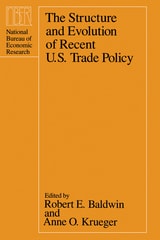
The Structure and Evolution of Recent U.S. Trade Policy
Edited by Robert E. Baldwin and Anne O. Krueger
University of Chicago Press, 1985
The contributors chart the history of U.S. trade policy since World War II, analyze industry-specific trade barriers, and discuss the effects of tariff preferences and export-promoting policies such as export credits and domestic international sales corporations (DISCs). The final section of essays examines the worldwide impact of import policies, pointing out subtleties in industry-specific policies and providing insight into the levels of protection in developing countries. The contributors blend state-of-the-art economics with language that is accessible to the business community, economists, and policymakers. Commentaries accompany each paper.
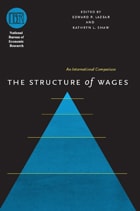
The Structure of Wages
An International ComparisonEdited by Edward P. Lazear and Kathryn L. Shaw
University of Chicago Press, 2009
A distinguished team of contributors reveal how a rising wage variance rewards star employees at a higher rate than ever before, how talent becomes concentrated in a few firms over time, and how outside market conditions affect wages in the twenty-first century. From a comparative perspective that examines wage and income differences within and between countries such as Denmark, Italy, and the Netherlands, this volume will be required reading for economists and those working in industrial organization.
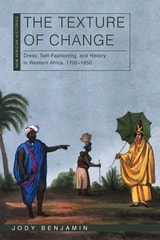
The Texture of Change
Dress, Self-Fashioning, and History in Western Africa, 1700–1850Jody Benjamin
Ohio University Press, 2024
Jody Benjamin analyzes a range of archival, visual, oral, and material sources drawn from three continents to illuminate entanglements between local textile industries and global commerce and between the politics of Islamic reform and encroaching European colonial power. The study highlights the roles of a diverse range of historical actors mentioned only glancingly in core-periphery or Atlantic-centered framings: women indigo dyers, maroon cotton farmers, petty traveling merchants, caravan guides, and African Diaspora settlers. It argues that their combined choices within a set of ecological, political, and economic constraints structured networks connecting the Atlantic and Indian Ocean perimeters.
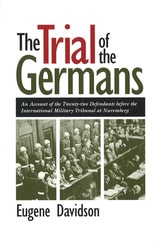
The Trial of the Germans
An Account of the Twenty-two Defendants before the International Military Tribunal at NurembergEugene Davidson
University of Missouri Press, 1997
The "definitive one-volume study of Nuremberg," The Trial of the Germans is now available in paperback. An astute observer of the Nuremberg trial, Eugene Davidson has struggled with the issues it raised: Was it a necessary response to the heinous crimes of the Third Reich? How were Germany and the Germans capable of such extraordinary evil? Was the trial just, given the claims that the defendants were simply serving their country, doing as they had been told to do? And if not just, was it nonetheless necessary as a warning to prevent future crimes against humanity? Davidson's approach to these and other large questions of justice is made through examination of each of the defendants in the trial. His reluctant, but firm, conclusion is: "In a world of mixed human affairs where a rough justice is done that is better than lynching or being shot out of hand, Nuremberg may be defended as a political event if not as a court." Some sentences may have seemed too severe, but none was harsher than the punishments meted out to innocent people by the regime these men served. "In a certain sense," says Davidson, "the trial succeeded in doing what judicial proceedings are supposed to do: it convinced even the guilty that the verdict against them was just."
Faulty as the trial was from the legal point of view, a catharsis of the pent-up emotions of millions of people had to be provided and a record of what had taken place duly preserved for whatever use later generations would make of it.
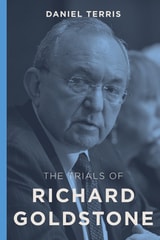
The Trials of Richard Goldstone
Terris, Daniel
Rutgers University Press, 2019
The Trials of Richard Goldstone tells the story of this extraordinary individual and the price he paid for his convictions. It describes how Goldstone, working as a judge in apartheid South Africa, helped to undermine this unjust system and later, at Nelson Mandela’s request, led a commission that investigated cases of racial violence and intimidation. It also considers the international renown he received as the chief United Nations prosecutor for war crimes committed in Rwanda and the former Yugoslavia, the first tribunals to try political and military leaders on charges of genocide. Finally, it explores how Goldstone became a controversial figure in the wake of the Jewish jurist’s powerful, but flawed, investigation of Israel for alleged war crimes in Gaza.
Richard Goldstone’s dramatic life story reveals that even in a world rife with prejudice, nationalism, and contempt for human rights, one courageous man can advance the cause of justice.

The Truth Machines
Policing, Violence, and Scientific Interrogations in IndiaJinee Lokaneeta
University of Michigan Press, 2020
The Truth Machines examines the emergence and use of these three scientific techniques to analyze two primary themes. First, the book questions whether existing theoretical frameworks for understanding state power and legal violence are adequate to explain constant innovations of the state. Second, it explores the workings of law, science, and policing in the everyday context to generate a theory of state power and legal violence, challenging the monolithic frameworks about this relationship, based on a study of both state and non-state actors.
Jinee Lokaneeta argues that the attempt to replace physical torture with truth machines in India fails because it relies on a confessional paradigm that is contiguous with torture. Her work also provides insights into a police institution that is founded and refounded in its everyday interactions between state and non-state actors. Theorizing a concept of Contingent State, this book demonstrates the disaggregated, and decentered nature of state power and legal violence, creating possible sites of critique and intervention.
The United States and International Law
Paradoxes of Support across Contemporary IssuesLucrecia García Iommi and Richard W. Maass
University of Michigan Press, 2022
The United States spearheaded the creation of many international organizations and treaties after World War II and maintains a strong record of compliance across several issue areas, yet it also refuses to ratify major international conventions like the UN Convention on the Law of the Sea and the Convention on the Elimination of All Forms of Discrimination Against Women. Why does the United States often seem to support international law in one way while neglecting or even violating it in another?
The United States and International Law: Paradoxes of Support across Contemporary Issues analyzes the seemingly inconsistent U.S. relationship with international law by identifying five types of state support for international law: leadership, consent, internalization, compliance, and enforcement. Each follows different logics and entails unique costs and incentives. Accordingly, the fact that a state engages in one form of support does not presuppose that it will do so across the board. The contributors to this volume examine how and why the United States has engaged in each form of support across twelve issue areas that are central to twentieth- and twenty-first-century U.S. foreign policy: conquest, world courts, war, nuclear proliferation, trade, human rights, war crimes, torture, targeted killing, maritime law, the environment, and cybersecurity. In addition to offering rich substantive discussions of U.S. foreign policy in each of these areas, their findings reveal patterns across the U.S. relationship with international law that shed light on behavior that often seems paradoxical at best, hypocritical at worst. The results help us understand why the United States engages with international law as it does, the legacies of the Trump administration, and what we should expect from the United States under the Biden administration and beyond.

The United States and the Genocide Convention
Lawrence J. LeBlanc
Duke University Press, 1991
Adopted by the United Nations General Assembly in 1948 in response to the atrocities committed by the Nazis before and during World War II, the Genocide Convention was finally made law by the United States Senate in 1988 contingent upon a series of “conditions”—known as the “Lugar-Helms-Hatch Sovereignty Package”—which, LeBlanc suggests, markedly weakened the convention. Through careful analysis of the bitter debates over ratification, LeBlanc demonstrates that much of the opposition to the convention sprang from fears that it would be used domestically as a tool by groups such as blacks and Native Americans who might hold the U.S. accountable for genocide in matters of race relations.
The United States in the World Economy
Edited by Martin Feldstein
University of Chicago Press, 1988
The WTO as an International Organization
Edited by Anne O. Krueger
University of Chicago Press, 1997
"[T]his book is a tour de force, with consistently fine papers by leading experts, and it is worthy of any bookshelf." —Joel P. Trachtman, American Journal of International Law
"This latest conference volume from the National Bureau of Economic Research is likely to be the definitive reference work on the WTO for years to come. . . . Specialists and non-specialists alike will gain a great deal from a careful reading of this impressive volume." —John Ravenhill, Australian Journal of Political Science
"For anyone who is interested in the further development of the rule system for the world economy, this book is a must." —Horst Siebert, Review of World Economics

The War on Drugs and the Global Colour Line
Edited by Kojo Koram
Pluto Press, 2019
While laws prohibiting the production, sale and use of particular drugs are presented as politically neutral and objective, this collection reveals the racist impact of the War on Drugs across multiple continents and in numerous situations. From racialised drugs policing at festivals in the UK to the necropolitical wars in Juarez, Mexico and from the exchange of drug policing programs between the United States and Israel to the management of black bodies in Brazil, this collection proves that the regulation of drugs and race is an international, and intentional, disaster.
Pushing forward the debate and activism led by groups such as Black Lives Matter and calling for radical changes in drug policy legislation and prison reform, both nationally and internationally, this collection cuts deep and rings true for all people fighting racism today.
The World in Guangzhou
Africans and Other Foreigners in South China’s Global MarketplaceGordon Mathews, Linessa Dan Lin, and Yang Yang
University of Chicago Press, 2017
Through detailed ethnographic portraits, Mathews reveals a world of globalization based on informality, reputation, and trust rather than on formal contracts. How, he asks, can such informal relationships emerge between two groups—Chinese and sub-Saharan Africans—that don't share a common language, culture, or religion? And what happens when Africans move beyond their status as temporary residents and begin to put down roots and establish families?
Full of unforgettable characters, The World in Guangzhou presents a compelling account of globalization at ground level and offers a look into the future of urban life as transnational connections continue to remake cities around the world.
Theorizing Global Order
The International, Culture and GovernanceEdited by Gunther Hellmann
Campus Verlag, 2018

Tony Allen
An Autobiography of the Master Drummer of AfrobeatTony Allen, with Michael E. Veal
Duke University Press, 2013
Allen embraced the drum set, rather than African handheld drums, early in his career, when drum kits were relatively rare in Africa. His story conveys a love of his craft along with the specifics of his practice. It also provides invaluable firsthand accounts of the explosive creativity in postcolonial African music, and the personal and artistic dynamics in Fela's Koola Lobitos and Africa 70, two of the greatest bands to ever play African music.
Topics in Empirical International Economics
A Festschrift in Honor of Robert E. LipseyEdited by Magnus Blomström and Linda S. Goldberg
University of Chicago Press, 2001
Toward a Just World
The Critical Years in the Search for International JusticeDorothy V. Jones
University of Chicago Press, 2002
A century ago, there was no such thing as international justice, and until recently, the idea of permanent international courts and formal war crimes tribunals would have been almost unthinkable. Yet now we depend on institutions such as these to air and punish crimes against humanity, as we have seen in the International Criminal Tribunal for Rwanda and the appearance of Serbian leader Slobodan Milosevic before the Tribunal for the Former Yugoslavia.
Toward a Just World tells the remarkable story of the long struggle to craft the concept of international justice that we have today. Dorothy V. Jones focuses on the first half of the twentieth century, the pivotal years in which justice took on expanded meaning in conjunction with ideas like world peace, human rights, and international law. Fashioning both political and legal history into a compelling narrative, Jones recovers little-known events from undeserved obscurity and helps us see with new eyes the pivotal ones that we think we know. Jones also covers many of the milestones in the history of diplomacy, from the Treaty of Versailles and the creation of the League of Nations to the Nuremberg war crimes tribunal and the making of the United Nations.
As newspapers continue to fill their front pages with stories about how to administer justice to al Qaeda and Saddam Hussein, Toward a Just World will serve as a timely reminder of how the twentieth century achieved one of its most enduring triumphs: giving justice an international meaning.
Trade Policies for International Competitiveness
Edited by Robert C. Feenstra
University of Chicago Press, 1989
In Trade Policies for International Competitiveness, Robert C. Feenstra collects seven papers from the conference, each accompanied by discussants' comments, and adds a helpful introduction. Some of the issues considered by contributors are effects of macroeconomic and strategic foreign policies on competitiveness; the recent influx of foreign direct investment in the United States, primarily from Japan; the extent to which Japanese trade patterns are a reflection of underlying factor and endowments rather than trade barriers; and the market structure of Canadian industries, including applications for ongoing U.S.-Canadian free trade negotiations. Topical and provocative, these papers will be of value to economists, policymakers, and those in the business world.
Trade Policy Issues and Empirical Analysis
Edited by Robert E. Baldwin
University of Chicago Press, 1988
The volume is divided into four parts. The papers in part 1 consider the problem of imperfect competition, empirically assessing the economic effect of various trade policies introduced in industries in which the "new" trade theory seems to apply. Those in part 2 isolate the effects of protection from the influences of the many economic changes that accompany actual periods of protection and also examine how the effects from exogenous changes in economic conditions vary with the form of protection. Part 3 provides new empirical evidence on the effect of foreign production by a country's firms on the home country's exports. Finally, in part 4, two key bilateral issues are analyzed: recent U.S.-Japanese trade tensions and the incident involving the threat of the imposition of countervailing duties by the United States on Canadian softwood lumber.

Trade Policy in a Changing World Economy
Robert E. Baldwin
University of Chicago Press, 1989
Trade Policy in a Changing World Economy provides a clear introduction to complex trade issues, covering theoretical issues of trade policy, the changing nature of American trade policy, the changing nature of American trade policy since World War II, multilateral trade negotiations, and trade strategies. The volume is particularly timely as the world's nations enter a new round of GATT negotiations for the reduction of trade barriers.
Trade Threats, Trade Wars
Bargaining, Retaliation, and American Coercive DiplomacyKa Zeng
University of Michigan Press, 2004
Trade and Investment Relations among the United States, Canada, and Japan
Edited by Robert M. Stern
University of Chicago Press, 1989
The papers in this volume were developed from a conference that addressed the need to discover which structural determinants and policies shape the close economic ties among these nations. Leading experts on trade and macroeconomics from all three countries examine disproportionate saving rates, exchange rate volatility, varying industrial policies and levels of financial innovation, the effects of present tax policies and proposed reforms, and the dynamism of major Pacific nations and the leadership role Japan may play in U.S. relations with that region. Several important conclusions are reached by the contributors. They assert that Japan's trade barriers are relatively low overall and are comparable to those maintained by the United States and Canada, and that divergent fiscal policies have been the major source of macroeconomic imbalances between the United States and other major countries in the 1980s. They also conclude that current trade imbalances may persist for some time. The analyses offered here are likely to prove influential in future policymaking and will be of interest to a wide audience, including academic economists, government officials, and students of theoretical and policy issues of international trade, investment, and finance.
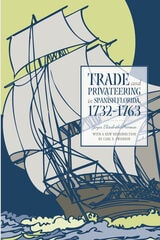
Trade and Privateering in Spanish Florida, 1732–1763
Joyce Elizabeth Harman, With a New Introduction by Carl E. Swanson
University of Alabama Press, 2004
A groundbreaking study of commerce, conflict, and survival in colonial Spanish Florida.
Trade and Privateering examines the illegal yet highly profitable and mutually beneficial trade between Spanish Florida and the English colonies on the eastern seaboard in the mid-18th century. In St. Augustine, the arrival of subsidies from Spain was erratic, causing shortages of food and supplies, so authorities ignored the restrictions on trade with foreign colonies and welcomed British goods. Likewise, the British colonists sought Spanish products from Florida, especially oranges.
But when England and Spain became declared enemies in the War of Jenkins’ Ear and the French and Indian Wars, this tacit trade arrangement was threatened, and the result was a rise of privateering in the region. Rather than do without Spanish goods, the English began to attack and capture Spanish vessels with their cargoes at sea. Likewise, the Spaniards resorted to privateering as a means of steadily supplying the Florida colony. Harman concludes that, both willingly and unwillingly, the English colonies helped their Spanish neighbor to sustain its position in the Southeast.
Trade and Protectionism
Edited by Takatoshi Ito and Anne O. Krueger
University of Chicago Press, 1993
The authors look at the current global trading system and at the potential threats to East Asian economies from possible regional arrangements, such as separate trading blocks in the Western Hemisphere and Europe. They cover trade between the United States and Japan, Korea and Japan, and Japanese-East Asian trade policies; trade in agriculture and semiconductors and the frictions that have jeopardized this trade; and direct foreign investment. The contributors round out the work with discussions of the political economy of protection in Korea and Taiwan and political economy considerations as they affect trade policy in general.
This is the second volume of the National Bureau of Economic Research-East Asia Seminar on Economics. The first volume, The Political Economy of Tax Reform, also edited by Takatoshi Ito and Anne O. Krueger, addresses tax reform in the global economy.
Trade and Structural Change in Pacific Asia
Edited by Colin I. Bradford Jr. and William H. Branson
University of Chicago Press, 1987
Themes in the research reported here includes the sectoral composition of output and trade; rates of structural change in production and exports and their relation to economic growth; the effect of abundant resource endowments on industrialization and manufactured exports; the nature of the mix between active government policies and market forces; and the balance between demand-determined and supply-determined industrialization and exports. Many of the issues explored have important implications for United States foreign economic policy, and the volume includes a look at the basic economic and political forces influencing shifts in United States trade policy in the postwar period.
A timely and informative analysis, the volume probes the causes and consequences of economic growth in Pacific Asia, focusing on the interaction of exports of manufactured goods and the developmental process. The results reported contribute to ongoing research in structural change and economic policy and will be important to economists working on empirical patters in international trade and the process of economic development.
Trade in Services in the Asia-Pacific Region
Edited by Takatoshi Ito and Anne O. Krueger
University of Chicago Press, 2002
This volume is the first book-length attempt to analyze trade in services in the Asia-Pacific region. Contributors provide overviews of basic issues involved in studying the service sector; investigate the impact of increasing trade in services on the economies of Taiwan, Korea, and Hong Kong; present detailed analyses of specific service sectors (telecommunications, financial services, international tourism, and accounting); and extend our understanding of trade in services beyond the usual concept (measured in balance of payment statistics) to include indirect services and services undertaken abroad by subsidiaries and affiliates.

Trade with Japan
Has the Door Opened Wider?Edited by Paul Krugman
University of Chicago Press, 1991
Traders in a Brave New World
The Uruguay Round and the Future of the International Trading SystemErnest H. Preeg
University of Chicago Press, 1995
Preeg places the Uruguay Round in the broader context of global politics and economics, showing how changes in the world order—from the collapse of communism to dramatic economic reforms in developing countries—influenced both the topics of negotiations and their outcome. He then assesses the final GATT agreement as a case study in international negotiations and evaluates its probable effects on income and trade.
Finally, Preeg looks to the short- and long-term issues confronting future trade-policy negotiators. He shows that the international trade agenda will consist of three evolving types of agreement—further multilateral commitments, regional free-trade agreements, and selective bilateral accords. Going to the heart of current debates on the "new world order," an important final chapter evaluates the political and economic relationships that will result from the international trading system.
Trading Blocs
States, Firms, and Regions in the World EconomyKerry A. Chase
University of Michigan Press, 2005
Trading Blocs is the first book to systematically demonstrate the theoretical significance of economies of scale in domestic pressure for trading blocs, and thereby build on a growing research agenda in areas of political economy and domestic politics.
"Chase has written a superb book that provides us with an innovative and compelling explanation for the development of trading blocs."
--Vinod Aggarwal, Director, Berkeley APEC Study Center, University of California, Berkeley
Kerry A. Chase is Assistant Professor of Political Science at Tufts University.
Transition Scenarios
China and the United States in the Twenty-First CenturyDavid P. Rapkin and William R. Thompson
University of Chicago Press, 2013

Translation in a Global Market, Volume 13
Emily Apter, ed.
Duke University Press, 0
Translation in a Global Market assembles contributors from several academic disciplines as well as visual artists for a closer look at the formation of an international canon and at the kinds of texts that gain international visibility. The essays urge a shift in emphasis from global literacy—which implies the use of a standard language and a preference for translatability in texts—to transnational literacy, which places minority and diaspora literatures in direct conversation with each other rather than with Paris, London, or New York.
Contributors. Dina Al-Kassim, Emily Apter, Timothy Brennan, Elena Climent, Maryse Condé, Michael Eng, Renée Green, Rainer Ganahl, Sarah M. Hudgins, Michael North, Gayatri Chakravorty Spivak

Twilight of Impunity
The War Crimes Trial of Slobodan MilosevicJudith Armatta
Duke University Press, 2010