Results by title
1488 books match the query 'Media Studies' and 260 start with t
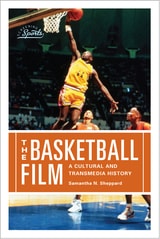
The Basketball Film
A Cultural and Transmedia HistorySamantha N. Sheppard
Rutgers University Press, 2027
The Basketball Film: A Cultural and Transmedia History reveals how stories about the game extend far beyond the court. From classic Hollywood dramas to independent documentaries, basketball films capture the rhythms of play while reflecting deeper struggles over race, identity, community, and aspiration. This groundbreaking study examines the basketball court as both a stage and a mirror for American life—where questions of belonging, opportunity, and cultural power are played out on and off the court. Moving across film, television, and video games, the book traces how basketball’s visual culture has evolved alongside the sport’s rise to global prominence. Through close readings of both celebrated and overlooked works, The Basketball Film offers an expansive and engaging portrait of how basketball has been imagined, represented, and mythologized across popular culture, revealing what the game continues to mean to audiences and players alike.
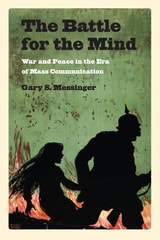
The Battle for the Mind
War and Peace in the Era of Mass CommunicationGary S. Messinger
University of Massachusetts Press, 2011
Most people typically think of armed conflict in physical terms, involving guns and bombs, ships and planes, tanks and missiles. But today, because of mass communication, war and the effort to prevent it are increasingly dependent on non-physical factors—the capacity to persuade combatants and citizens to engage in violence or avoid it, and the packaging of the information on which decision making is based. This book explores the many ways that mass communication has revolutionized international relations, whether the aim is to make war effectively or to prevent it.
Gary Messinger shows that over the last 150 years a succession of breakthroughs in the realm of media has reshaped the making of war and peace. Along with mass newspapers, magazines, books, motion pictures, radio, television, computer software, and telecommunication satellites comes an array of strategies for exploiting these media to control popular beliefs and emotions. Images of war now arrive in many forms and reach billions of people simultaneously. Political and military leaders must react to crowd impulses that sweep around the globe. Nation-states and nongovernmental groups, including terrorists, use mass communication to spread their portrayals of reality.
Drawing on a wide range of media products, from books and articles to films and television programs, as well as his own research in the field of propaganda studies, Messinger offers a fresh and comprehensive overview. He skillfully charts the path that has led us to our current situation and suggests where we might go next.

The Battle over Marriage
Gay Rights Activism through the MediaLeigh Moscowitz
University of Illinois Press, 2013
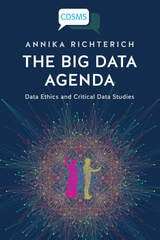
The Big Data Agenda
Data Ethics and Critical Data StudiesAnnika Richterich
University of Westminster Press, 2018
This book highlights that the capacity for gathering, analysing, and utilising vast amounts of digital (user) data raises significant ethical issues. Annika Richterich provides a systematic contemporary overview of the field of critical data studies that reflects on practices of digital data collection and analysis. The book assesses in detail one big data research area: biomedical studies, focused on epidemiological surveillance. Specific case studies explore how big data have been used in academic work.
The Big Data Agenda concludes that the use of big data in research urgently needs to be considered from the vantage point of ethics and social justice. Drawing upon discourse ethics and critical data studies, Richterich argues that entanglements between big data research and technology/ internet corporations have emerged. In consequence, more opportunities for discussing and negotiating emerging research practices and their implications for societal values are needed.
An electronic version of this book is freely available, thanks to the support of libraries working with Knowledge Unlatched. KU is a collaborative initiative designed to make high quality books Open Access for the public good. More information about the initiative and details about KU's Open Access programme can be found at www.knowledgeunlatched.org.
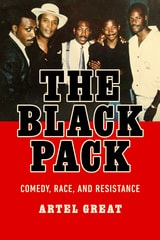
The Black Pack
Comedy, Race, and ResistanceArtel Great
Rutgers University Press, 2025
Working together as writers, directors, producers, actors, and consultants, the Black Pack created some of the most provocative and enduring Black films and television shows of the twentieth century, including classic productions like In Living Color, Coming to America, Hollywood Shuffle, and The Arsenio Hall Show. The Black Pack collective was armed with a signature comedic style which combined politically-Black satire with edgy social humor that entertained millions, shattered box-office records, and slyly critiqued America’s racial condition. Amid escalating social tensions in the 1980s, the Black Pack’s comedic output transformed anger into art, wielding the cloak of humor as a rebellious tool to confront unjust business practices in Hollywood and challenge racial narratives embedded in American culture. Their work empowered unapologetically Black voices and expanded creative possibilities for Black artists in the entertainment industry.
In The Black Pack, Artel Great delivers the most comprehensive analysis of this groundbreaking comedy collective, uncovering how the group’s socially and politically-charged humor defied systemic barriers to achieve unprecedented commercial success and establish a cultural legacy that continues to inspire media creators today and across new generations.

The British Media and Bloody Sunday
Greg McLaughlin and Stephen Baker
Intellect Books, 2015

The Burden of Choice
Recommendations, Subversion, and Algorithmic CultureJonathan Cohn
Rutgers University Press, 2019
The Capitalist Imaginaries of Popular Music
Charles Fairchild
Intellect Books, 2027
Traditionally, popular music has long been said to intrinsically contest, resist, and defy the powers that be. This new book challenges this long-standing orthodoxy, arguing that popular music is not so much a form of resistance to authority, but it often perpetuates the very power it is supposed to be raging against: neoliberal capitalism.
This misconception of popular music came to dominance in the mid-1980s and persists today, even when the vast majority of people have been disempowered, impoverished, and marginalized at home, at work, and in politics. This book explains why such a robust, pervasive, and persistent set of ideas about popular music has taken such a tenacious hold despite substantive evidence to the contrary.

The Castaways
How Producers Lost Their Independence and Conjured Up the Outsider SitcomLarry Durst
Rutgers University Press, 2027
In the early 1960s a new style of situation comedy took over primetime as Bewitched, Gilligan’s Island, Gomer Pyle, U.S.M.C., I Dream of Jeannie, My Favorite Martian, and other “Outsider Sitcoms” featuring alien characters disrupting their TV environments shot to the top of the ratings. Departing from a critical approach that understands these series as reflections of the decade’s many social disruptions, The Castaways reveals the programs as emotional responses by their creators to a more personal upheaval: their loss of influence in the broadcast industry. As network executives turned increasingly to audience research, independent producers felt the ability that had been most crucial to their success in broadcasting was being devalued: gut creative intuition. Drawing on memoirs, show treatments, and other original documents, The Castaways uncovers how leading characters on the programs served as emotional proxies for their creators’ fears of industry irrelevance as they were cast out from the corporate halls of power where their series’—and personal—fates were decided.

The Celebrity Persona Pandemic
P. David Marshall
University of Minnesota Press, 2017
The Celebrity Persona Pandemic explores how the construction of a public persona is fetishized in contemporary culture. As social media has progressively led to a greater focus on the production of the self, so this book looks at the most visible versions of persona through figures such as Stephen Colbert, Cate Blachett, and Justin Bieber, as well as fictional characters like Spock and Harry Potter. Ultimately, P. David Marshall closely studies how persona culture shapes our notions of value and significance, and dramatically shifts cultural politics.
Forerunners is a thought-in-process series of breakthrough digital works. Written between fresh ideas and finished books, Forerunners draws on scholarly work initiated in notable blogs, social media, conference plenaries, journal articles, and the synergy of academic exchange. This is gray literature publishing: where intense thinking, change, and speculation take place in scholarship.
The Chain Gang
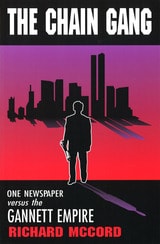
One Newspaper versus the Gannett EmpireRichard McCord
University of Missouri Press, 2001
"They're closing in on me, Dick, and I'm afraid they're going to get me," said Frank Wood, publisher of the Green Bay News-Chronicle, in a phone call to his friend and colleague, Richard McCord. Drained of cash and spirit, Wood could not hold out much longer against a devouring giant, the Gannett Company. As editor and publisher of the nationally distinguished weekly Santa Fe Reporter, McCord had successfully fended off Gannett's "Operation Demolition" when it moved into town. Now Wood was seeking the help of a survivor.
Startling case histories of the dubious tactics practiced by Gannett, unsparing insights into the newspaper industry, and harsh conclusions all come together in the dramatic story of these two men's efforts to save the small Green Bay daily from being obliterated at the hands of the nation's largest newspaper chain. Their success is a metaphor for one of the oldest triumphs of the world: that of David over Goliath.
"McCord has done something marvelous with this. He's taken a deeply disturbing nationwide trend and put it on a small midwestern stage with real characters. The Chain Gang's message needs to be heard by as many Americans as read newspapers. Already Gannett's monopoly tactics have impoverished communities across the country. McCord is one man fighting back, coolly, rationally, creatively, and stubbornly. Let's join him."—Michael Shnayerson, Contributing Editor, Vanity Fair
"More graphically than almost any other available record of the era, the Gannett piracy is what has happened to this country, tolled where the price is truly paid, in the lives of communities and people."—Roger Morris, winner of the Investigative Reporters and Editors' National Award for Distinguished Investigative Journalism
"Richard McCord's The Chain Gang takes the losing battle for the soul of American newspapers from the euphoric accounts on financial pages to show what corporate news chains can mean in human terms to the people and the vitality of the victimized cities and towns. His is a unique account of the power and depredations of the Gannett Chain under its glib empire builder, Allen Neuharth. It goes behind the facade of slick public relations and financial killings for investors to show what happens when a ruthless and ambitious wheeler-dealer gets control of our news."—Ben H. Bagdikian, media critic and Pulitzer Prize winner
The Cinematic Footprint
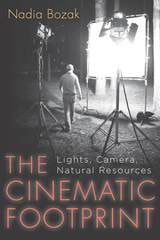
Lights, Camera, Natural ResourcesBozak, Nadia
Rutgers University Press, 2011
Film is often used to represent the natural landscape and, increasingly, to communicate environmentalist messages. Yet behind even today’s “green” movies are ecologically unsustainable production, distribution, and consumption processes. Noting how seemingly immaterial moving images are supported by highly durable resource-dependent infrastructures, The Cinematic Footprint traces the history of how the “hydrocarbon imagination” has been central to the development of film as a medium.
Nadia Bozak’s innovative fusion of film studies and environmental studies makes provocative connections between the disappearance of material resources and the emergence of digital media—with examples ranging from early cinema to Dziga Vertov’s prescient eye, from Chris Marker’s analog experiments to the digital work of Agnès Varda, James Benning, and Zacharias Kunuk. Combining an analysis of cinema technology with a sensitive consideration of film aesthetics, The Cinematic Footprint offers a new perspective on moving images and the natural resources that sustain them.
The Condition of the Working Class in Turkey
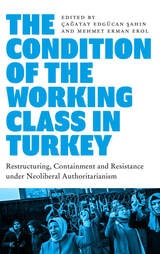
Labour under Neoliberal AuthoritarianismÇagatay Edgücan Sahin
Pluto Press, 2021
Decades of neoliberal authoritarianism have propelled Turkey into crisis. Regime change, economic disaster and Erdogan’s ambition to impose ‘one-man rule’ have shaken the foundations of Turkish political life, but what does this mean for workers?
Moving beyond the headlines and personalities, this book uncovers the real condition of the working class in modern Turkey. Combining field research and in-depth interviews, it offers cutting-edge analyses of workplace struggles, trade unionism, the AKP’s relationship with neoliberalism, migration, gender, agrarian change and precarity, as well as the Covid-19 pandemic and its impact on workers.
Bringing together Turkish activists and scholars, this book is an inside look at the dynamics and contradictions of working-class resistance against Turkey’s neoliberal authoritarian regime; from worker self-management to organized labor and rural struggles.
The Cosmic Zoom
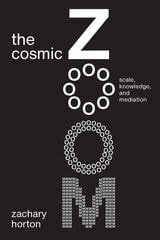
Scale, Knowledge, and MediationZachary Horton
University of Chicago Press, 2021
Horton uses the cosmic zoom as a starting point to develop a cross-disciplinary theory of scale as mediated difference. He considers the origins of our notions of scale, how scalar mediation functions differently in analog and digital modes, and how cosmic zoom media has influenced scientific and popular views of the world. Analyzing literature, film, digital media, and database history, Horton establishes a much-needed framework for thinking about scale across multiple domains and disciplines.
The Counterfeit Coin
Videogames and Fantasies of EmpowermentChristopher Goetz
Rutgers University Press, 2023

The Cultural Logic of Contemporary Capitalism
Nico Baumbach, Damon R. Young, and Genevieve Yue, special issue editors
Duke University Press, 0
In 1984 Fredric Jameson wrote that “everything in our social life—from economic value and state power to practices and to the very structure of the psyche itself—can be said to have become ‘cultural’ in some original and yet untheorized sense.” The essays in this special issue track the status of this claim some thirty years later, inquiring into the relationship of art, aesthetics, and cultural production to political economy today. At a moment when interpretation (including “ideology critique” and “symptomatic reading”) has been variously supplanted by descriptivism, empiricism, and the return of metaphysics, contributors here pursue the possibilities for an engaged cultural criticism that is attentive to form while rejecting a depoliticized formalism. Spanning a wide range of cultural sites—from recent Hollywood cinema to post-broadcast television, manufactured landscape photography, contemporary West African art, and “new materialism” in philosophy—they ask what the “formal tendencies” of contemporary cultural production (including theory itself) can tell us about the cultural logic of contemporary capitalism. The collection includes a new interview with Jameson conducted by the editors.
Contributors: Jennifer Bajorek, Nico Baumbach, Jonathan Beller, Alexander R. Galloway, Fredric Jameson, Sulgi Lie, Alberto Toscano, Amy Villarejo, Damon R. Young, Genevieve Yue
The Cultural Production of Intellectual Property Rights
Law, Labor, and the Persistence of Primitive AccumulationSean Johnson Andrews
Temple University Press, 2019
The protection and accumulation of intellectual property rights—like property rights in general—is one of the most important contemporary American values. In his cogent book, The Cultural Production of Intellectual Property Rights, Sean Johnson Andrews shows that the meaning, power, and value of intellectual properties are the consequence of an extended process of cultural production.
Johnson Andrews argues that it is deeper ideological and historical roots which demand that, in the contemporary global, digital economy, all property rights be held sacrosanct and all value must flow back to the legal owner.
Johnson Andrews explains that if we want to rebalance the protection of copyrights and trademarks, we should focus on undermining the reified culture of property that underpins capitalism as a whole. He outlines a framework for analyzing culture; situates intellectual property rights in the history of capitalist property relations; synthesizes key theories of media, politics, and law; and ultimately provides scholars and activists a path to imagining a different future where we prioritize our collective production of value in the commons.
The Culture and Commerce of Texts
Scribal Publication in Seventeenth-Century EnglandHarold Love
University of Massachusetts Press, 1998
Long after the establishment of printing in England, many writers and composers still preferred to publish their work through handwritten copies. Texts so transmitted included some of the most distinguished poetry and music of the seventeenth century, along with a rich variety of political, scientific, antiquarian, and philosophical writings. While censorship was one reason for this persistence of the older practice, scribal publication remained the norm for texts that were required only in small numbers, or whose authors wished to avoid the “stigma” of print.
This is the first book to consider the trade in manuscripts as an important supplement to that in printed books, and to describe the agencies that met the need for rapid duplication of key texts.
The Digital Black Atlantic
Roopika Risam
University of Minnesota Press, 2021
Exploring the intersections of digital humanities and African diaspora studies
How can scholars use digital tools to better understand the African diaspora across time, space, and disciplines? And how can African diaspora studies inform the practices of digital humanities? These questions are at the heart of this timely collection of essays about the relationship between digital humanities and Black Atlantic studies, offering critical insights into race, migration, media, and scholarly knowledge production.
The Digital Black Atlantic spans the African diaspora’s range—from Africa to North America, Europe, and the Caribbean—while its essayists span academic fields—from history and literary studies to musicology, game studies, and library and information studies. This transnational and interdisciplinary breadth is complemented by essays that focus on specific sites and digital humanities projects throughout the Black Atlantic. Covering key debates, The Digital Black Atlantic asks theoretical and practical questions about the ways that researchers and teachers of the African diaspora negotiate digital methods to explore a broad range of cultural forms including social media, open access libraries, digital music production, and video games. The volume further highlights contributions of African diaspora studies to digital humanities, such as politics and representation, power and authorship, the ephemerality of memory, and the vestiges of colonialist ideologies.
Grounded in contemporary theory and praxis, The Digital Black Atlantic puts the digital humanities into conversation with African diaspora studies in crucial ways that advance both.
Contributors: Alexandrina Agloro, Arizona State U; Abdul Alkalimat; Suzan Alteri, U of Florida; Paul Barrett, U of Guelph; Sayan Bhattacharyya, Singapore U of Technology and Design; Agata Błoch, Institute of History of Polish Academy of Sciences; Michał Bojanowski, Kozminski U; Sonya Donaldson, New Jersey City U; Anne Donlon; Laurent Dubois, Duke U; Amy E. Earhart, Texas A&M U; Schuyler Esprit, U of the West Indies; Demival Vasques Filho, U of Auckland, New Zealand; David Kirkland Garner; Alex Gil, Columbia U; Kaiama L. Glover, Barnard College, Columbia U; D. Fox Harrell, MIT; Hélène Huet, U of Florida; Mary Caton Lingold, Virginia Commonwealth U; Angel David Nieves, San Diego State U; Danielle Olson, MIT; Tunde Opeibi (Ope-Davies), U of Lagos, Nigeria; Jamila Moore Pewu, California State U, Fullerton; Anne Rice, Lehman College, CUNY; Sercan Şengün, Northeastern U; Janneken Smucker, West Chester U; Laurie N.Taylor, U of Florida; Toniesha L. Taylor, Texas Southern U.
The Digital Factory
The Human Labor of AutomationMoritz Altenried
University of Chicago Press, 2022
The workers of today’s digital factory include those in Amazon warehouses, delivery drivers, Chinese gaming workers, Filipino content moderators, and rural American search engine optimizers. Repetitive yet stressful, boring yet often emotionally demanding, these jobs require little formal qualification, but can demand a large degree of skills and knowledge. This work is often hidden behind the supposed magic of algorithms and thought to be automated, but it is in fact highly dependent on human labor.
The workers of today’s digital factory are not as far removed from a typical auto assembly line as we might think. Moritz Altenried takes us inside today’s digital factories, showing that they take very different forms, including gig economy platforms, video games, and Amazon warehouses. As Altenried shows, these digital factories often share surprising similarities with factories from the industrial age. As globalized capitalism and digital technology continue to transform labor around the world, Altenried offers a timely and poignant exploration of how these changes are restructuring the social division of labor and its geographies as well as the stratifications and lines of struggle.
The Digital Factory
The Human Labor of AutomationMoritz Altenried
University of Chicago Press, 2022
This is an auto-narrated audiobook edition of this book.
The Digital Factory reveals the hidden human labor that supports today’s digital capitalism.
The workers of today’s digital factory include those in Amazon warehouses, delivery drivers, Chinese gaming workers, Filipino content moderators, and rural American search engine optimizers. Repetitive yet stressful, boring yet often emotionally demanding, these jobs require little formal qualification, but can demand a large degree of skills and knowledge. This work is often hidden behind the supposed magic of algorithms and thought to be automated, but it is in fact highly dependent on human labor.
The workers of today’s digital factory are not as far removed from a typical auto assembly line as we might think. Moritz Altenried takes us inside today’s digital factories, showing that they take very different forms, including gig economy platforms, video games, and Amazon warehouses. As Altenried shows, these digital factories often share surprising similarities with factories from the industrial age. As globalized capitalism and digital technology continue to transform labor around the world, Altenried offers a timely and poignant exploration of how these changes are restructuring the social division of labor and its geographies as well as the stratifications and lines of struggle.
The Digital Is Kid Stuff
Making Creative Laborers for a Precarious EconomyJosef Nguyen
University of Minnesota Press, 2021
How popular debates about the so-called digital generation mediate anxieties about labor and life in twenty-first-century America
“The children are our future” goes the adage, a proclamation that simultaneously declares both anxiety as well as hope about youth as the next generation. In The Digital Is Kid Stuff, Josef Nguyen interrogates this ambivalence within discussions about today’s “digital generation” and the future of creativity, an ambivalence that toggles between the techno-pessimism that warns against the harm to children of too much screen time and a techno-utopianism that foresees these “digital natives” leading the way to innovation, economic growth, increased democratization, and national prosperity.
Nguyen engages cultural histories of childhood, youth, and creativity through chapters that are each anchored to a particular digital media object or practice. Nguyen narrates the developmental arc of a future creative laborer: from a young kid playing the island fictions of Minecraft, to an older child learning do-it-yourself skills while reading Make magazine, to a teenager posting selfies on Instagram, to a young adult creative laborer imagining technological innovations using design fiction.
Focusing on the constructions and valorizations of creativity, entrepreneurialism, and technological savvy, Nguyen argues that contemporary culture operates to assuage profound anxieties about—and to defuse valid critiques of—both emerging digital technologies and the precarity of employment for “creative laborers” in twenty-first-century neoliberal America.
The Digital NBA
How the World's Savviest League Brings the Court to Our CouchSteven Secular
University of Illinois Press, 2023
A timely look at a dynamic media landscape, The Digital NBA shows how the games we love became content first and sport a distant second.
The Digital Party
Political Organisation and Online DemocracyPaolo Gerbaudo
Pluto Press, 2018
These new political formations tap into the potential of social media to gain consensus, and use online participatory platforms to include the rank-and-file. Paolo Gerbaudo looks at the restructuring of political parties and campaigns in the time of Facebook, Twitter, Instagram, and big data. Drawing on interviews with key political leaders and digital organizers, he argues that the digital party is very different from the class-based “mass party” of the industrial era, and offers promising new solutions to social polarization and the failures of liberal democracy today.

The Digital and Its Discontents
Aden Evens
University of Minnesota Press, 2024
A groundbreaking critique of the digital world that analyzes its universal technological foundations
Whence that nagging sense that something in the digital is amiss—that, as wonderful as our devices are, time spent on smartphones and computers leaves us sour, enervated, alienated? The Digital and Its Discontents uniquely explains that worry and points us toward a more satisfying relationship between our digital lives and our nondigital selves, one that requires a radical change in the way we incorporate technology into our lives.
Aden Evens analyzes universal technological principles—in particular, the binary logic—to show that they encourage certain ways of thinking while making others more challenging or impossible. What is out of reach for any digital machine is contingency, the ontological principle that refuses every rule. As humans engage ourselves and our world ever more through digital machines, we are losing touch with contingency and so banishing from our lives the accidental and unexpected that fuel our most creative and novel possibilities for living.
Taking cues from philosophy rather than cultural or media theory, Evens argues that the consequences of this erosion of contingency are significant yet often overlooked because the same values that make the digital seem so desirable also make contingency seem unimportant—without contingency the digital is confined to what has already been thought, and yet the digital’s ubiquity has allowed it to disguise this inherent sterility. Responsive only to desires that meet the demands of its narrow logic, the digital requires its users to practice those same ideological dictates, instituting a hegemony of thought and value sustained by the pervasive presence of digital mechanisms. Interweaving technical and philosophical concepts, The Digital and Its Discontents advances a powerful and urgent argument about the digital and its impact on our lives.
Retail e-book files for this title are screen-reader friendly.
The Digitally Disposed
Racial Capitalism and the Informatics of ValueSeb Franklin
University of Minnesota Press, 2021
Locates the deep history of digitality in the development of racial capitalism
Seb Franklin sets out a media theory of racial capitalism to examine digitality’s racial-capitalist foundations. The Digitally Disposed shows how the promises of boundless connection, flexibility, and prosperity that are often associated with digital technologies are grounded in racialized histories of dispossession and exploitation. Reading archival and published material from the cybernetic sciences alongside nineteenth-century accounts of intellectual labor, twentieth-century sociometric experiments, and a range of literary and visual works, The Digitally Disposed locates the deep history of digitality in the development of racial capitalism.
Franklin makes the groundbreaking argument that capital’s apparently spontaneous synthesis of so-called free individuals into productive circuits represents an “informatics of value.” On the one hand, understanding value as an informatic relation helps to explain why capital was able to graft so seamlessly with digitality at a moment in which it required more granular and distributed control over labor—the moment that is often glossed as the age of logistics. On the other hand, because the informatics of value sort populations into positions of higher and lower capacity, value, and status, understanding their relationship to digitality requires that we see the digital as racialized and gendered in pervasive ways.
Ultimately, The Digitally Disposed questions the universalizing assumptions that are maintained, remade, and intensified by today’s dominant digital technologies. Vital and far-reaching, The Digitally Disposed reshapes such fundamental concepts as cybernetics, informatics, and digitality.
The Dressing Room
Backstage Lives and American FilmDesirée J. Garcia
Rutgers University Press, 2025
A recurrent and popular setting in American cinema, the dressing room has captured the imaginations of filmmakers and audiences for over a century. In The Dressing Room: Backstage Lives and American Film, the only book-length study of the space, author Desirée J. Garcia explores how dressing rooms are dynamic realms in which a diverse cast of performers are made and exposed. Garcia analyzes the backstage film, which spans film history, modes, and genre, to show how dressing rooms have been a useful space for filmmakers to examine the performativity of American life. From the Black maid to the wife and mother to the leading man, dressing rooms navigate, shape, and challenge society’s norms. The stakes are high in dressing rooms, Garcia argues, because they rehearse larger questions about identity and its performance, negotiating who can succeed and who cannot and on what terms.
The Educated Eye
Visual Culture and Pedagogy in the Life SciencesEdited by Nancy Anderson
Dartmouth College Press, 2012
The End of Japanese Cinema
Industrial Genres, National Times, and Media EcologiesAlexander Zahlten
Duke University Press, 2017
A Study of the Weatherhead East Asian Institute, Columbia University

The End of Man
A Feminist CounterapocalypseJoanna Zylinska
University of Minnesota Press, 2018
Debugging the Anthropocene’s insistence on apocalyptic tropes
Where the Anthropocene has become linked to an apocalyptic narrative, and where this narrative carries a widespread escapist belief that salvation will come from a supernatural elsewhere, Joanna Zylinska has a different take. The End of Man rethinks the prophecy of the end of humans, interrogating the rise in populism around the world and offering an ethical vision of a “feminist counterapocalypse,” which challenges many of the masculinist and technicist solutions to our planetary crises. The book is accompanied by a short photo-film, Exit Man, which ultimately asks: If unbridled progress is no longer an option, what kinds of coexistences and collaborations do we create in its aftermath?
Forerunners: Ideas First is a thought-in-process series of breakthrough digital publications. Written between fresh ideas and finished books, Forerunners draws on scholarly work initiated in notable blogs, social media, conference plenaries, journal articles, and the synergy of academic exchange. This is gray literature publishing: where intense thinking, change, and speculation take place in scholarship.

The End of Normal
Identity in a Biocultural EraLennard J. Davis
University of Michigan Press, 2014
In an era when human lives are increasingly measured and weighed in relation to the medical and scientific, notions of what is “normal” have changed drastically. While it is no longer useful to think of a person’s particular race, gender, sexual orientation, or choice as “normal,” the concept continues to haunt us in other ways. In The End of Normal, Lennard J. Davis explores changing perceptions of body and mind in social, cultural, and political life as the twenty-first century unfolds. The book’s provocative essays mine the worlds of advertising, film, literature, and the visual arts as they consider issues of disability, depression, physician-assisted suicide, medical diagnosis, transgender, and other identities.
Using contemporary discussions of biopower and biopolitics, Davis focuses on social and cultural production—particularly on issues around the different body and mind. The End of Normal seeks an analysis that works comfortably in the intersection between science, medicine, technology, and culture, and will appeal to those interested in cultural studies, bodily practices, disability, science and medical studies, feminist materialism, psychiatry, and psychology.
The End of Victory Culture
Cold War America and the Disillusioning of a GenerationThomas M. Engelhardt
University of Massachusetts Press, 2007
In a substantial new afterword to his classic account of the collapse of American triumphalism in the wake of World War II, Tom Engelhardt carries that story into the twenty-first century. He explores how, in the aftermath of September 11, 2001, the younger George Bush headed for the Wild West (Osama bin Laden, “Wanted, Dead or Alive”); how his administration brought “victory culture” roaring back as part of its Global War on Terror and its rush to invade Saddam Husseins's Iraq; and how, from its “Mission Accomplished” moment on, its various stories of triumph crashed and burned in that land.
The Environment and the Press
From Adventure Writing to AdvocacyMark Neuzil
Northwestern University Press, 2008
This history of environmental journalism looks at how the practice now defines issues and sets the public agenda evolving from a tradition that includes the works of authors such as Pliny the Elder, John Muir, and Rachel Carson. It makes the case that the relationship between the media and its audience is an ongoing conversation between society and the media on what matters and what should matter.

The Environmental Beat
Inside the Struggle to Legitimize the Environment as NewsSuzannah Evans Comfort
University of Missouri Press, 2026
Environmental degradation has been part of American life for centuries, and yet environmental journalism as a specialized reporting beat has only existed since the 1960s. In the ensuing decades, the environment has fallen in and out of favor as a priority for news organizations. Moreover, journalists who pursue environmental stories have long been dogged by a reputation that they are activists, a charge that delegitimizes their labor and further undermines the potential for news organizations to commit to reporting on environmental issues.
In The Environmental Beat: Inside the Struggle to Legitimize the Environment as News, Suzannah Evans Comfort examines the circumstances under which news organizations chose to invest in environmental journalism since the early 20th century, demonstrating that a combination of external social factors and internal newsroom dynamics must occur for the environment to appear as a newsworthy topic. Comfort also examines actors on the margins of journalistic legitimacy, such as newspaper outdoor columnists who wrote on the sports pages, and environmental advocacy presses that provided a far more consistent source of environmental news making than their peers in the newsroom. These low-status actors in the journalistic field embraced advocacy and rejected both-siderism in their reporting on issues of the environment. Their consistency and longevity, even as more traditionally produced news attention waxed and waned, may provide an explanation for the perception of environmental news making as fundamentally activist.
The Environmental Beat will be of interest to working journalists as well as scholars of journalism.
The Evolution of American Investigative Journalism
James L. Aucoin
University of Missouri Press, 2007
The Exile of Britney Spears
A Tale of 21st-Century ConsumptionChristopher R. Smit
Intellect Books, 2011
As sustainability and eco-responsibility become a part of our everyday cultural conversation, we’re finally being forced to acknowledge that what we consume matters. What we fail to realize is that we unconsciously, continually, and at times violently consume much more than just food—including celebrities. The Exile of Britney Spears takes the ubiquitous pop star of its title as its primary example, explaining that we have consumed, digested, and eliminated Britney Spears in a process uniquely characteristic of American popular culture. In Christopher Smit’s provocative account of the sociological, aesthetic, and political outcomes of this new mediated cannibalism, he offers the idea of exile as a new metaphor for the outcome of popular consumption. By investigating the psychological, personal, and social matrix of Britney’s rise and fall, he outlines the process of her inevitable exile from global taste and favor.
The Fan Fiction Studies Reader
Karen Hellekson and Kristina Busse
University of Iowa Press, 2014
Organized into four thematic sections, the essays address fan-created works as literary artifacts; the relationship between fandom, identity, and feminism; fandom and affect; and the role of creativity and performance in fan activities. Considered as literary artifacts, fan works pose important questions about the nature of authorship, the meaning of “originality,” and modes of transmission. Sociologically, fan fiction is and long has been a mostly female enterprise, from the fanzines of the 1960s to online forums today, and this fact has shaped its themes and its standing among fans. The questions of how and why people become fans, and what the difference is between liking something and being a fan of it, have also drawn considerable scholarly attention, as has the question of how fans perform their fannish identities for diverse audiences.
Thanks to the overlap between fan studies and other disciplines related to popular and cultural studies—including social, digital, and transmedia studies—an increasing number of scholars are turning to fan studies to engage their students. Fan fiction is the most extensively explored aspect of fan works and fan engagement, and so studies of it can often serve as a basis for addressing other aspects of fandom. These classic essays introduce the field’s key questions and some of its major figures. Those new to the field or in search of context for their own research will find this reader an invaluable resource.

The Fast Track
Inside the Surging Business of Women's SportsJane McManus
Temple University Press, 2025
Veteran sports journalist and academic Jane McManus examines both this upward trend and the forces that have held women’s sports back since the early 1970s when Title IX became law (and Billie Jean King soundly defeated Bobby Riggs). As the fervor for Caitlin Clark during the 2024 NCAA Women’s Basketball championship illustrates, there is big money to be made from broadcasting, merchandising, and investing in women’s sports.
The Fast Track chronicles how pioneering sponsorships, broadcast opportunities, and surges in ratings contradict the myths about disinterest. Interviews counter the resistance toward women’s leagues, reveal how women are covered in the media, and consider the possibilities for further investment. McManus also addresses racial inclusivity, transgender athletes, women’s health issues, and equal pay.
An essential road map to capitalize on untapped potential, The Fast Track provides a snapshot of where women’s sports as an industry and investment stand at this moment in time.
The Femme Fatale
Julie Grossman
Rutgers University Press, 2020
This book offers readers a concise look at over a century of femmes fatales on both the silver screen and the TV screen. Starting with ethnically exoticized silent film vamps like Theda Bara and Pola Negri, it examines classic film noir femmes fatales like Barbara Stanwyck in Double Indemnity, as well as postmodern revisions of the archetype in films like Basic Instinct and Memento. Finally, it explores how contemporary film and television creators like Fleabag and Killing Eve’s Phoebe Waller-Bridge have appropriated the femme fatale in sympathetic and surprising ways.
Analyzing not only the films themselves, but also studio press kits and reviews, The Femme Fatale considers how discourses about the pleasures and dangers of female performance are projected onto the figure of the femme fatale. Ultimately, it is a celebration of how “bad girl” roles have provided some of Hollywood’s most talented actresses opportunities to fully express their on-screen charisma.

The Films of Bong Joon Ho
Nam Lee
Rutgers University Press, 2020
Bong Joon Ho won the Oscar® for Best Director for Parasite (2019), which also won Best Picture, the first foreign film to do so, and two other Academy Awards. Parasite was the first Korean film to win the Palme d’Or at Cannes. These achievements mark a new career peak for the director, who first achieved wide international acclaim with 2006’s monster movie The Host and whose forays into English-language film with Snowpiercer (2013) and Okja (2017) brought him further recognition.
As this timely book reveals, even as Bong Joon Ho has emerged as an internationally known director, his films still engage with distinctly Korean social and political contexts that may elude many Western viewers. The Films of Bong Joon Ho demonstrates how he hybridizes Hollywood conventions with local realities in order to create a cinema that foregrounds the absurd cultural anomie Koreans have experienced in tandem with their rapid economic development. Film critic and scholar Nam Lee explores how Bong subverts the structures of the genres he works within, from the crime thriller to the sci-fi film, in order to be truthful to Korean realities that often deny the reassurances of the happy Hollywood ending. With detailed readings of Bong’s films from Barking Dogs Never Bite (2000) through Parasite (2019), the book will give readers a new appreciation of this world-class cinematic talent.

The Films of Denys Arcand
Jim Leach
Rutgers University Press, 2020
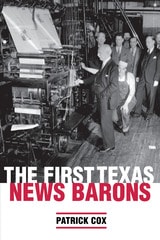
The First Texas News Barons
By Patrick Cox
University of Texas Press, 2005
Newspaper publishers played a crucial role in transforming Texas into a modern state. By promoting expanded industrialization and urbanization, as well as a more modern image of Texas as a southwestern, rather than southern, state, news barons in the early decades of the twentieth century laid the groundwork for the enormous economic growth and social changes that followed World War II. Yet their contribution to the modernization of Texas is largely unrecognized.
This book investigates how newspaper owners such as A. H. Belo and George B. Dealey of the Dallas Morning News, Edwin Kiest of the Dallas Times Herald, William P. Hobby and Oveta Culp Hobby of the Houston Post, Jesse H. Jones and Marcellus Foster of the Houston Chronicle, and Amon G. Carter Sr. of the Fort Worth Star-Telegram paved the way for the modern state of Texas. Patrick Cox explores how these news barons identified the needs of the state and set out to attract the private investors and public funding that would boost the state's civic and military infrastructure, oil and gas industries, real estate market, and agricultural production. He shows how newspaper owners used events such as the Texas Centennial to promote tourism and create a uniquely Texan identity for the state. To balance the record, Cox also demonstrates that the news barons downplayed the interests of significant groups of Texans, including minorities, the poor and underemployed, union members, and a majority of women.
The Fold
From Your Body to the CosmosLaura U. Marks
Duke University Press, 2024
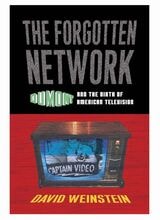
The Forgotten Network
DuMont and the Birth of American TelevisionDavid Weinstein
Temple University Press, 2006
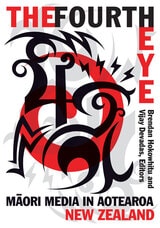
The Fourth Eye
Maori Media in Aotearoa New ZealandBrendan Hokowhitu
University of Minnesota Press, 2013
From the signing of the Treaty of Waitangi between Indigenous and settler cultures to the emergence of the first-ever state-funded Māori television network, New Zealand has been a hotbed of Indigenous concerns. Given its history of colonization, coping with biculturalism is central to New Zealand life. Much of this “bicultural drama” plays out in the media and is molded by an anxiety surrounding the ongoing struggle over citizenship rights that is seated within the politics of recognition. The Fourth Eye brings together Indigenous and non-Indigenous scholars to provide a critical and comprehensive account of the intricate and complex relationship between the media and Māori culture.
Examining the Indigenous mediascape, The Fourth Eye shows how Māori filmmakers, actors, and media producers have depicted conflicts over citizenship rights and negotiated the representation of Indigenous people. From nineteenth-century Māori-language newspapers to contemporary Māori film and television, the contributors explore a variety of media forms including magazine cover stories, print advertisements, commercial images, and current Māori-language newspapers to illustrate the construction, expression, and production of indigeneity through media.
Focusing on New Zealand as a case study, the authors address the broader question: what is Indigenous media? While engaging with distinct themes such as the misrepresentation of Māori people in the media, access of Indigenous communities to media technologies, and the use of media for activism, the essays in this much-needed new collection articulate an Indigenous media landscape that converses with issues that reach far beyond New Zealand.
Contributors: Sue Abel, U of Auckland; Joost de Bruin, Victoria U of Wellington; Suzanne Duncan, U of Otago; Kevin Fisher, U of Otago; Allen Meek, Massey U; Lachy Paterson, U of Otago; Chris Prentice, U of Otago; Jay Scherer, U of Alberta; Jo Smith, Victoria U of Wellington; April Strickland; Stephen Turner, U of Auckland.
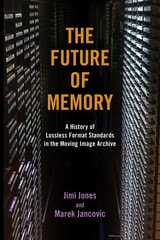
The Future of Memory
A History of Lossless Format Standards in the Moving Image ArchiveJimi Jones and Marek Jancovic
University of Illinois Press, 2025
Drawing on interviews with archivists and developers, Jones and Jancovic reveal the archive as a dynamic space where deeply entrenched social practices produce disagreements but also resourceful collaborations. They contrast the unprecedented rise of archivist-driven standardization and controversies around non-standard technology with the historical dominance of the film and broadcast industries. Throughout, the authors clarify the role of tech companies, software developers, film pirates, hackers, and other players with poorly understood roles in the process.
A timely look at the state of audiovisual preservation, The Future of Memory provides a history of recent innovations alongside a snapshot of a field in the midst of profound technological change.

The Geek's Chihuahua
Living with AppleIan Bogost
University of Minnesota Press, 2015
At dinnertime: check. At a traffic light: check. In bed at the end of the day: check. In line at the coffee shop: check. In The Geek’s Chihuahua, Ian Bogost addresses the modern love affair of “living with Apple” during the height of the company’s market influence and technology dominance.
The ubiquitous iPhone and its kin saturate our lives, changing everything from our communication to our posture. Bogost contrasts the values of Apple’s massive success in the twenty-first century with those of its rise in the twentieth. And he connects living with Apple with the phenomenon of “hyperemployment”—the constant overwork of today’s technological life that all of us now experience. Bogost also reflects on the new potential function—as well as anxiety and anguish—of devices like the Apple Watch. We are tethered to our devices, and, as Bogost says: that’s just life—anxious, overworked, and utterly networked life.
Forerunners: Ideas First is a thought-in-process series of breakthrough digital publications. Written between fresh ideas and finished books, Forerunners draws on scholarly work initiated in notable blogs, social media, conference plenaries, journal articles, and the synergy of academic exchange. This is gray literature publishing: where intense thinking, change, and speculation take place in scholarship.
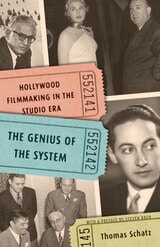
The Genius of the System
Hollywood Filmmaking in the Studio EraThomas Schatz
University of Minnesota Press, 2010
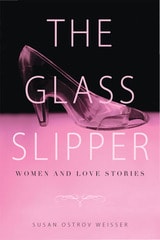
The Glass Slipper
Women and Love StoriesSusan Ostrov Weisser
Rutgers University Press, 2013
Why is the story of romance in books, magazines, and films still aimed at women rather than at men? Even after decades of feminism, traditional ideas and messages about romantic love still hold sway and, in our “postfeminist” age, are more popular than ever. Increasingly, we have become a culture of romance: stories of all kinds shape the terms of love. Women, in particular, love a love story.
The Glass Slipper is about the persistence of a familiar Anglo-American love story into the digital age. Comparing influential classics to their current counterparts, Susan Ostrov Weisser relates in highly amusing prose how these stories are shaped and defined by and for women, the main consumers of romantic texts. Following a trajectory that begins with Jane Austen and concludes with Internet dating sites, Weisser shows the many ways in which nineteenth-century views of women’s nature and the Victorian idea of romance have survived the feminist critique of the 1970s and continue in new and more ambiguous forms in today’s media, with profound implications for women.
More than a book about romance in fiction and media, The Glass Slipper illustrates how traditional stories about women’s sexuality, femininity, and romantic love have survived as seemingly protective elements in a more modern, feminist, sexually open society, confusing the picture for women themselves. Weisser compares diverse narratives—historical and contemporary from high literature and “low” genres—discussing novels by Jane Austen and Charlotte Brontë, Victorian women’s magazines, and D. H. Lawrence’s Lady Chatterley’s Lover; Disney movies; popular Harlequin romance novels; masochistic love in films; pornography and its relationship to romance; and reality TV and Internet ads as romantic stories.
Ultimately, Weisser shows that the narrative versions of the Glass Slipper should be taken as seriously as the Glass Ceiling as we see how these representations of romantic love are meant to inform women’s beliefs and goals. In this book, Weisser’s goal is not to shatter the Glass Slipper, but to see through it.
The Global Road Movie
Alternative Journeys around the WorldEdited by José Duarte and Timothy Corrigan
Intellect Books, 2018