Results by title
491 books match the query 'Moral and ethical aspects' and 98 start with t
The Limits of Heroism
Homer and the Ethics of ReadingMark Buchan
University of Michigan Press, 2005
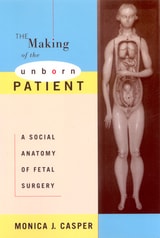
The Making of the Unborn Patient
A Social Anatomy of Fetal SurgeryCasper, Monica J
Rutgers University Press, 1998
It is now possible for physicians to recognize that a pregnant woman's fetus is facing life-threatening problems, perform surgery on the fetus, and if it survives, return it to the woman's uterus to finish gestation. Although fetal surgery has existed in various forms for three decades, it is only just beginning to capture the public's imagination. These still largely experimental procedures raise all types of medical, political and ethical questions. Who is the patient? What are the technical difficulties involved in fetal surgery? How do reproductive politics seep into the operating room, and how do medical definitions and meanings flow out of medicine and into other social spheres? How are ethical issues defined in this practice and who defines them? Is fetal surgery the kind of medicine we want? What is involved in reframing fetal surgery as a women's health issue, rather than simply a pediatric concern? In this ethnographic study of the social, cultural and historical aspects of fetal surgery, Monica Casper addresses these questions. The Making of the Unborn Patient examines two important and connected events of the second half of the 20th century: the emergence of fetal surgery as a new medical specialty and the debut of the unborn patient.
The Moral Austerity of Environmental Decision Making
Sustainability, Democracy, and Normative Argument in Policy and LawJohn Martin Gillroy and Joe Bowersox, eds.
Duke University Press, 2002
The contributors search for these assumptions and principles in short arguments and debates over the role of science, social justice, instrumental value, and intrinsic value in contemporary environmental policy. In their discussion of moral alternatives to enrich environmental decision making and in their search for a less austere and more robust role for normative discourse in practical policy making, they analyze a series of original case studies that deal with environmental sustainability and natural resources policy including pollution, land use, environmental law, globalism, and public lands. The unique structure of the book—which features the core contributors responding in a discourse format to the central chapters’ essays and debates—helps to highlight the role personal and public values play in democratic decision making generally and in the field of environmental politics specifically.
Contributors. Joe Bowersox, David Brower, Susan Buck, Celia Campbell-Mohn, John Martin Gillroy, Joel Kassiola, Jan Laitos, William Lowry, Bryan Norton, Robert Paehlke, Barry G. Rabe, Mark Sagoff, Anna K. Schwab, Bob Pepperman Taylor, Jonathan Wiener
The Moral Authority of Nature
Edited by Lorraine Daston and Fernando Vidal
University of Chicago Press, 2003
The Moral Authority of Nature offers a wide-ranging account of how people have used nature to think about what counts as good, beautiful, just, or valuable. The eighteen essays cover a diverse array of topics, including the connection of cosmic and human orders in ancient Greece, medieval notions of sexual disorder, early modern contexts for categorizing individuals and judging acts as "against nature," race and the origin of humans, ecological economics, and radical feminism. The essays also range widely in time and place, from archaic Greece to early twentieth-century China, medieval Europe to contemporary America.
Scholars from a wide variety of fields will welcome The Moral Authority of Nature, which provides the first sustained historical survey of its topic.
Contributors:
Danielle Allen, Joan Cadden, Lorraine Daston, Fa-ti Fan, Eckhardt Fuchs, Valentin Groebner, Abigail J. Lustig, Gregg Mitman, Michelle Murphy, Katharine Park, Matt Price, Robert N. Proctor, Helmut Puff, Robert J. Richards, Londa Schiebinger, Laura Slatkin, Julia Adeney Thomas, Fernando Vidal
The Moral Meaning of Nature
Nietzsche’s Darwinian Religion and Its CriticsPeter J. Woodford
University of Chicago Press, 2018
We start with Friedrich Nietzsche, whose writings staged one of the first confrontations with the Christian tradition using the resources of Darwinian thought. The lebensphilosophie, or “life-philosophy,” that arose from his engagement with evolutionary ideas drew responses from other influential thinkers, including Franz Overbeck, Georg Simmel, and Heinrich Rickert. These critics all offered cogent challenges to Nietzsche’s appropriation of the newly transforming biological sciences, his negotiation between science and religion, and his interpretation of the implications of Darwinian thought. They also each proposed alternative ways of making sense of Nietzsche’s unique question concerning the meaning of biological evolution “for life.” At the heart of the discussion were debates about the relation of facts and values, the place of divine purpose in the understanding of nonhuman and human agency, the concept of life, and the question of whether the sciences could offer resources to satisfy the human urge to discover sources of value in biological processes. The Moral Meaning of Nature focuses on the historical background of these questions, exposing the complex ways in which they recur in contemporary philosophical debate.

The Moral Tradition of American Constitutionalism
A Theological InterpretationH. Jefferson Powell
Duke University Press, 1993
Powell locates the origins of constitutional law in the Enlightenment attempt to control the violence of the state by subjecting power to reason. He then traces constitutionalism's rapid evolution into a tradition of rational inquiry centered in the practice of adjudication and embodied in a community of lawyers and judges. Finally, Powell shows how the tradition's nineteenth-century presuppositions about the autonomy and rationality of constitutional argument have been undermined in the twentieth century, within the constitutional community itself, by the acceptance of a positivist and "democratic" understanding of law. Powell shows how the continued willingness of the courts to resolve moral questions by invoking "the Constitution" has thrown the constitutional tradition into an epistemological crisis. He critiques the work of many major theorists—John Hart Ely, Bruce Ackerman, Frank Michaelman, Rogers Smith, Michael Perry, Mark Tushnet, Robert Bork, Sanford Levinson—who, he claims, persist in attempting to resolve the crisis by redefining constitutionalism as American social morality.
With reference to Alasdair MacIntyre's concepts of moral tradition and social practice and John Howard Yoder's theological account of the state, Powell places his analysis of current constitutionalism within a contemporary Christian theological critique of Western liberalism. With certain exceptions, Powell concludes, there are theological grounds in the United States to prefer decision making by elected officials to decision by constitutional courts. Despite the controversial implications for judicial practice and legal argument, Powell ultimately argues that the liberal tradition of rational inquiry--American constitutionalism--be renounced by the Christian community in favor of the majoritarian political process.
The Morality of Laughter
F. H. Buckley
University of Michigan Press, 2005
superior piece of work.”
—P. J. O’Rourke
“F. H. Buckley’s The Morality of Laughter is at once
a humorous look at serious matters and a serious
book about humor.”
—Crisis Magazine
“Buckley has written a . ne and funny book that will
be read with pleasure and instruction.”
—First Things
“. . . written elegantly and often wittily. . . .”
—National Post
“. . . a fascinating philosophical exposition of
laughter. . . .”
—National Review
“. . . at once a wise and highly amusing book.”
—Wall Street Journal Online
“. . . a useful reminder that a cheery society is a
healthy one.”
—Weekly Standard

The Nazi Symbiosis
Human Genetics and Politics in the Third ReichSheila Faith Weiss
University of Chicago Press, 2010
The Faustian bargain—in which an individual or group collaborates with an evil entity in order to obtain knowledge, power, or material gain—is perhaps best exemplified by the alliance between world-renowned human geneticists and the Nazi state. Under the swastika, German scientists descended into the moral abyss, perpetrating heinous medical crimes at Auschwitz and at euthanasia hospitals. But why did biomedical researchers accept such a bargain?
The Nazi Symbiosis offers a nuanced account of the myriad ways human heredity and Nazi politics reinforced each other before and during the Third Reich. Exploring the ethical and professional consequences for the scientists involved as well as the political ramifications for Nazi racial policies, Sheila Faith Weiss places genetics and eugenics in their larger international context. In questioning whether the motives that propelled German geneticists were different from the compromises that researchers from other countries and eras face, Weiss extends her argument into our modern moment, as we confront the promises and perils of genomic medicine today.
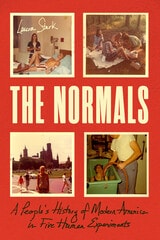
The Normals
A People’s History of Modern America in Five Human ExperimentsLaura Stark
University of Chicago Press, 2027
How healthy control subjects in clinical research transformed the practice and labor of science, as told by the Normals themselves.
In the 1950s, the National Institutes of Health were in search of a large, replenishing stream of healthy people to participate in clinical studies. To establish legal sources of test subjects, the NIH signed unprecedented contracts with American colleges, church organizations, and other government agencies, and in the process gave rise to a new type of test subject: the “normal patient.” Thousands of them eventually moved into the NIH Clinical Center to live in hospital rooms, eat food prepared in a metabolic kitchen, and follow—or flout—the rules.
The Normals is a groundbreaking account of the NIH Normal Volunteer Patient Program, which has lasted into the twenty-first century. This program harnessed outside organizations in all areas of postwar American life—colleges and universities, labor unions, civic groups, federal prisons, and churches—to recruit research subjects for human experiments. Drawing on thousands of pages of unearthed government documents, oral histories, and personal materials shared by the patients themselves (collected in a new archive), Laura Stark follows five experiments and the people involved, delving into their biographies, their time at the Clinical Center, and the thorny problem of determining who counts as “normal.” The “Normals” were not passive objects of study, Stark shows, but active research participants who collaborated with scientists, maintained the laboratories where they served, informed official ethics policies, and bargained to meet their needs.
By taking seriously the pillow fights and the first kisses, the bible clubs and the movie nights that animated the Clinical Center as much as the medical experiments, The Normals brings to life a surprising true story of the origins of our present-day system of human experiment, one that at once explores what it means to work, to serve, to volunteer.
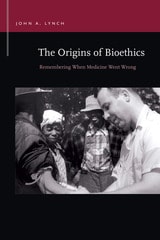
The Origins of Bioethics
Remembering When Medicine Went WrongJohn A. Lynch
Michigan State University Press, 2019
The Political Life of Sensation
Davide Panagia
Duke University Press, 2009
Panagia claims that the rule of narrative governs our inherited notions of political subjectivity and agency, such that reading and writing are the established modes of political deliberation. Yet the contemporary citizen-subject is a viewing subject, influenced by film, photos, and other perceptual stimuli as much as by text. Challenging the rule of narrative, Panagia analyzes diverse sites of cultural engagement including the visual dynamics portrayed in the film The Ring, the growth of festival culture in late-fifteenth-century Florence, the practices of convivium espoused by the Slow Food movement, and the architectural design of public newsstands. He then ties these occasions for sensation to notable moments in the history of political thought and shows the political potential of a dislocated subjectivity therein. Democratic politics, Panagia concludes, involves a taking part in those everyday practices that interrupt our common modes of sensing and afford us an awareness of what had previously been insensible.
The Politics of Collecting
Race and the Aestheticization of PropertyEunsong Kim
Duke University Press, 2024
The Politics of Virtue
Is Abortion Debatable?Elizabeth Mensch and Alan Freeman
Duke University Press, 1993
Returning to the years leading up to Roe v. Wade, Mensch and Freeman detail the role of religion and its relationship to the emerging politics of abortion. Discussing primarily the natural law tradition associated with Catholicism and the Protestant ethical tradition, the authors focus most sharply on the 1960s in which the present terms of the abortion debate were set. In a skillful analysis, they identify a variety of factors that directed and shaped the debate--including, among others, the haunting legacy of Nazism, the moral challenge of the civil rights movement, the "God is dead" discourse, school prayer and Bible reading, Harvey Cox's The Secular City, the Berrigans and Vietnam, the animal rights movement, and the movement of the church-going population away from mainstream Protestant tradition toward evangelical fundamentalism. By criticizing the rhetoric employed by both the "pro-choice" and "pro-life" camps, Mensch and Freeman reveal the extent to which forces on either side of the issue have failed to respond to relevant concerns. Since Roe v. Wade, the authors charge, public debate has seemed to concede the moral high ground to the "pro-life" position, while the "pro-choice" rhetoric has appeared to defend an individual's legal right to do moral wrong. Originally published as a special issue of The Georgia Law Review (Spring 1991), this revised and expanded edition will be welcomed by all those frustrated by the impasse of debates so central to our nation's moral life.
The Postgenomic Condition
Ethics, Justice, and Knowledge after the GenomeJenny Reardon
University of Chicago Press, 2017
Drawing on more than a decade of research—in molecular biology labs, commercial startups, governmental agencies, and civic spaces—Reardon demonstrates how the extensive efforts to transform genomics from high tech informatics practiced by a few to meaningful knowledge beneficial to all exposed the limits of long-cherished liberal modes of knowing and governing life. Those in the American South challenged the value of being included in genomics when no hospital served their community. Ethicists and lawyers charged with overseeing Scottish DNA and data questioned how to develop a system of ownership for these resources when their capacity to create things of value—new personalized treatments—remained largely unrealized. Molecular biologists who pioneered genomics asked whether their practices of thinking could survive the deluge of data produced by the growing power of sequencing machines. While the media is filled with grand visions of precision medicine, The Postgenomic Condition shares these actual challenges of the scientists, entrepreneurs, policy makers, bioethicists, lawyers, and patient advocates who sought to leverage liberal democratic practices to render genomic data a new source of meaning and value for interpreting and caring for life. It brings into rich empirical focus the resulting hard on-the-ground questions about how to know and live on a depleted but data-rich, interconnected yet fractured planet, where technoscience garners significant resources, but deeper questions of knowledge and justice urgently demand attention.
The Power at the End of the Economy
Brian Massumi
Duke University Press, 2015
The Price of Misfortune
Rights and Wrongs in Indebted AmericaDaniel Platt
University of Chicago Press, 2023
What can be taken from someone who has borrowed money and cannot repay? What do the victims of misfortune owe to their lenders, and what can they keep for themselves? The answers to those questions, immensely important for debtors, creditors, and society at large, have changed over time. The Price of Misfortune examines the cause of debtors’ rights in the modern United States and the struggles of reformers who fought to establish financial freedoms in law.
Daniel Platt shows how, in the wake of the Civil War, a range of advocates drew potent analogies between slavery, imprisonment for debt, and the experiences of wage garnishment and property foreclosure. He traces the ways those analogies were used to campaign for bold new protections for debtors, keeping them secure in their labor, property, and personhood. Yet, as Platt demonstrates, those reforms tended to assume as their ideal borrower someone who was white, propertied, and male. In subsequent decades, the emancipatory promise of debtors’ rights would be tested as women, wage earners, and African Americans seized on their language to challenge other structural inequalities: the dependency of marriage, the exploitation of industrial capitalism, and the oppression of Jim Crow. By reconstructing these forgotten developments—and recovering the experiences of indebted farmwives, sharecroppers, and wage workers—The Price of Misfortune narrates a new history of inequality, coercion, and law amid the early financialization of American capitalism.
The Price of Our Values
The Economic Limits of Moral LifeAugustin Landier and David Thesmar
University of Chicago Press, 2025
The economic case for self-interest at the outer limits of being morally good.
Modern life is an exercise in discomfort. In the face of endless injustice, how much selfishness is permissible? How do we square suffering elsewhere with our hope to thrive at home? How does one strive for the greater good while guarding one's personal interests? The Price of Our Values argues that the answers to these questions are economic: by weighing our sense of the personal costs associated with the outer limits of our moral beliefs.
These tradeoffs—the want to be good, the personal costs of being good, and the points at which people abandon goodness due to its costs—are somewhat unsettling. But as economists Augustin Landier and David Thesmar show, they are highly predictable, even justified. Our values guide us, but we are also forced to consider economic costs to settle decisions.
The Price of Our Values is an economic reckoning with the universal unease of contemporary moral life. Wielding insights from the philosophical founders of the field, Landier and Thesmar provide frameworks for thinking about the place of values—justice, freedom, beauty— in the decisions of modern life. They do so in terms that seek to be consistent with both our good intentions and their limits.
The Problem of Evil
Slavery, Freedom and the Ambiguities of American ReformSteven Mintz
University of Massachusetts Press, 2007
Divided into four parts, with introductions to each section by editors Steven Mintz and John Stauffer, the essays provide succinct guides to the evolution of American slavery, the origins of antislavery thought, the challenges of emancipation, and the post-emancipation legacy of slavery. They also offer fresh perspectives on key individuals, from Benjamin Franklin and Frederick Douglass to Harriet Jacobs and John Brown, and shed new light on the differences between female and male critiques of slavery, the defense of slavery by the South's intellectual elite, and Catholic attitudes toward slavery and abolition.
Above all, The Problem of Evil helps us understand the circumstances that allow social evils to happen, how intelligent and ostensibly moral people can participate in the most horrendous crimes, and how, at certain historical moments, some individuals are able to rise above their circumstances, address evil in fundamental ways, and expand our moral consciousness.

The Promise of Multispecies Justice
Sophie Chao, Karin Bolender, and Eben Kirksey, editors
Duke University Press, 2022
Contributors. Karin Bolender, Sophie Chao, M. L. Clark, Radhika Govindrajan, Zsuzsanna Dominika Ihar, Noriko Ishiyama, Eben Kirksey, Elizabeth Lara, Jia Hui Lee, Kristina Lyons, Michael Marder, Alyssa Paredes, Craig Santos Perez, Kim TallBear

The Public Trust and the First Americans
Ruthann Knudson
Oregon State University Press, 1995

The Right to Die with Dignity
An Argument in Ethics, Medicine, and LawCohen-Almagor, Raphael
Rutgers University Press, 2001
There are few issues more divisive than what has become known as “the right to die.” One camp upholds “death with dignity,” regarding the terminally ill as autonomous beings capable of forming their own judgment on the timing and process of dying. The other camp advocates “sanctity of life,” regarding life as intrinsically valuable, and that should be sustained as long as possible. Is there a right answer?
Raphael Cohen-Almagor takes a balanced approach in analyzing this emotionally charged debate, viewing the dispute from public policy and international perspectives. He offers an interdisciplinary, compelling study in medicine, law, religion, and ethics. It is a comprehensive look at the troubling question of whether physician-assisted suicide should be allowed. Cohen-Almagor delineates a distinction between active and passive euthanasia and discusses legal measures that have been invoked in the United States and abroad. He outlines reasons non-blood relatives should be given a role in deciding a patient’s last wishes. As he examines euthanasia policies in the Netherlands and the 1994 Oregon Death with Dignity Act, the author suggests amendments and finally makes a circumscribed plea for voluntary physician-assisted suicide.
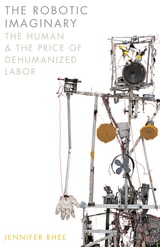
The Robotic Imaginary
The Human and the Price of Dehumanized LaborJennifer Rhee
University of Minnesota Press, 2018
Tracing the connections between human-like robots and AI at the site of dehumanization and exploited labor
The word robot—introduced in Karel Čapek’s 1920 play R.U.R.—derives from rabota, the Czech word for servitude or forced labor. A century later, the play’s dystopian themes of dehumanization and exploited labor are being played out in factories, workplaces, and battlefields. In The Robotic Imaginary, Jennifer Rhee traces the provocative and productive connections of contemporary robots in technology, film, art, and literature. Centered around the twinned processes of anthropomorphization and dehumanization, she analyzes the coevolution of cultural and technological robots and artificial intelligence, arguing that it is through the conceptualization of the human and, more important, the dehumanized that these multiple spheres affect and transform each other.
Drawing on the writings of Alan Turing, Sara Ahmed, and Arlie Russell Hochschild; such films and novels as Her and The Stepford Wives; technologies like Kismet (the pioneering “emotional robot”); and contemporary drone art, this book explores anthropomorphic paradigms in robot design and imagery in ways that often challenge the very grounds on which those paradigms operate in robotics labs and industry. From disembodied, conversational AI and its entanglement with care labor; embodied mobile robots as they intersect with domestic labor; emotional robots impacting affective labor; and armed military drones and artistic responses to drone warfare, The Robotic Imaginary ultimately reveals how the human is made knowable through the design of and discourse on humanoid robots that are, paradoxically, dehumanized.

The Scientific Life
A Moral History of a Late Modern VocationSteven Shapin
University of Chicago Press, 2008
Conventional wisdom has long held that scientists are neither better nor worse than anyone else, that personal virtue does not necessarily accompany technical expertise, and that scientific practice is profoundly impersonal. Shapin, however, here shows how the uncertainties attending scientific research make the virtues of individual researchers intrinsic to scientific work. From the early twentieth-century origins of corporate research laboratories to the high-flying scientific entrepreneurship of the present, Shapin argues that the radical uncertainties of much contemporary science have made personal virtues more central to its practice than ever before, and he also reveals how radically novel aspects of late modern science have unexpectedly deep historical roots. His elegantly conceived history of the scientific career and character ultimately encourages us to reconsider the very nature of the technical and moral worlds in which we now live.
Building on the insights of Shapin’s last three influential books, featuring an utterly fascinating cast of characters, and brimming with bold and original claims, The Scientific Life is essential reading for anyone wanting to reflect on late modern American culture and how it has been shaped.
The Sound of Feathers
Attentive Living in a World Beyond OurselvesKathryn Gillespie
Duke University Press, 2026
The Spirit of This Place
How Music Illuminates the Human SpiritPatrick Summers
University of Chicago Press, 2018
In this soul-searching collection of vignettes, Patrick Summers gives us an adamant, impassioned affirmative. Art, he argues, nurtures freedom of thought, and is more necessary now than ever before.
As artistic director of the Houston Grand Opera, Summers is well positioned to take stock of the limitations of the professional arts world—a world where the conversation revolves almost entirely around financial questions and whose reputation tends toward elitism—and to remind us of art’s fundamental relationship to joy and meaning. Offering a vehement defense of long-form arts in a world with a short attention span, Summers argues that art is spiritual, and that music in particular has the ability to ask spiritual questions, to inspire cathartic pathos, and to express spiritual truths. Summers guides us through his personal encounters with art and music in disparate places, from Houston’s Rothko Chapel to a music classroom in rural China, and reflects on musical works he has conducted all over the world. Assessing the growing canon of new operas performed in American opera houses today, he calls for musical artists to be innovative and brave as opera continues to reinvent itself.
This book is a moving credo elucidating Summers’s belief that the arts, especially music, help us to understand our own humanity as intellectual, aesthetic, and ultimately spiritual.
The State You See
How Government Visibility Creates Political Distrust and Racial InequalityAaron J. Rosenthal
University of Michigan Press, 2023
The State You See uncovers a racial gap in the way the American government appears in people’s lives. It makes it clear that public policy changes over the last fifty years have driven all Americans to distrust the government that they see in their lives, even though Americans of different races are not seeing the same kind of government.
For white people, these policy changes have involved a rising number of generous benefits submerged within America’s tax code, which taken together cost the government more than Social Security and Medicare combined. Political attention focused on this has helped make welfare and taxes more visible representations of government for white Americans. As a result, white people are left with the misperception that government does nothing for them, apart from take their tax money to spend on welfare. Distrust of government is the result. For people of color, distrust is also rampant but for different reasons. Over the last fifty years, America has witnessed increasingly overbearing policing and swelling incarceration numbers. These changes have disproportionately impacted communities of color, helping to make the criminal legal system a unique visible manifestation of government in these communities.
While distrust of government emerges in both cases, these different roots lead to different consequences. White people are mobilized into politics by their distrust, feeling that they must speak up in order to reclaim their misspent tax dollars. In contrast, people of color are pushed away from government due to a belief that engaging in American elections will yield the same kind of unresponsiveness and violence that comes from interactions with the police. The result is a perpetuation of the same kind of racial inequality that has always been present in American democracy. The State You See is essential reading for anyone interested in understanding how the American government engages in subtle forms of discrimination and how it continues to uphold racial inequality in the present day.

The Suppression of Guilt
The Israeli Media and the Reoccupation of the West BankDaniel Dor
Pluto Press, 2005
In the three years that have passed since Operation Defensive Shield – three years marked by denial, deceit, rage and resentment – one fact remains uncontroversial: never, until the operation, had there been such a wide breach between the Israeli collective consciousness and international public opinion. Israeli scholar Daniel Dor measures this gap and concludes that Israeli society has withdrawn into an unprecedented sense of isolation and victimization – largely because of the role played by the Israeli media.
Different media outlets provided their readers and viewers with significantly different perspectives on the operation, but they all shared a certain emotional attitude, not vis-à-vis the operation itself, but in relations to the global discourse of blame against Israel: they all projected an urgent, desperate, almost obsessive urge to suppress, to dismiss, to fend off guilt.
Dor shows how analysing this type of reporting as an attempt to manufacture consent with the government and the military fails to capture its essential nature. He argues that, at its core, the coverage proposed alternatives for the construction of an Israeli identity. During the operation, all the different media converged around one assertion: being Israeli at this point in time feels like being accused by the entire world of something we are not guilty of. Basing his arguments on detailed analyses of media reports, Dor explores how the Israeli media work within the context of the global media and world opinion, rather than within the classic context of the nation-state -- and what it means for the future of the country.

The Surprising Effects of Sympathy
Marivaux, Diderot, Rousseau, and Mary ShelleyDavid Marshall
University of Chicago Press, 1988
Placing novels in the context of eighteenth-century writing about theater, fiction, and painting, Marshall argues that an unusual variety of authors and texts were concerned with the possibility of entering into someone else's thoughts and feelings. He shows how key eighteenth-century works reflect on the problem of how to move, touch, and secure the sympathy of readers and beholders in the realm of both "art" and "life." Marshall discusses the demands placed upon novels to achieve certain effects, the ambivalence of writers and readers about those effects, and the ways in which these texts can be read as philosophical meditations on the differences and analogies between the experiences of reading a novel, watching a play, beholding a painting, and witnessing the spectacle of someone suffering. The Surprising Effects of Sympathy traces the interaction of sympathy and theater and the artistic and philosophical problems that these terms represent in dialogues about aesthetics, moral philosophy, epistemology, psychology, autobiography, the novel, and society.
The Tragic Science
How Economists Cause Harm (Even as They Aspire to Do Good)George F. DeMartino
University of Chicago Press, 2022
The practice of economics, as economists will tell you, is a powerful force for good. Economists are the guardians of the world’s economies and financial systems. The applications of economic theory can alleviate poverty, reduce disease, and promote sustainability.
While this narrative has been successfully propagated by economists, it belies a more challenging truth: economic interventions, including those economists deem successful, also cause harm. Sometimes the harm is manageable and short-lived. But just as often the harm is deep, enduring, and even irreparable. And too often the harm falls on those least able to survive it.
In The Tragic Science, George F. DeMartino says what economists have too long repressed: that economists do great harm even as they aspire to do good. Economist-induced harm, DeMartino shows, results in part from economists’ “irreparable ignorance”—from the fact that they know far less than they tend to believe they know—and from disciplinary training that treats the human tolls of economic policies and interventions as simply the costs of promoting social betterment. DeMartino details the complicated nature of economic harm, explores economists’ frequent failure to recognize it, and makes a sobering case for professional humility and for genuine respect for those who stand to be harmed by economists’ practice.
At a moment in history when the economics profession holds enormous power, DeMartino’s work demonstrates the downside of its influence and the responsibility facing those who practice the tragic science.
The Universal Declaration of Human Rights and the Challenge of Religion
Johannes Morsink
University of Missouri Press, 2017
Repulsed by evil Nazi practices and desiring to create a better world after the devastation of World War II, in 1948 the UN General Assembly adopted the Universal Declaration of Human Rights (UDHR). Because of the secular imprint of this text, it has faced a series of challenges from the world’s religions, both when it was crafted and in subsequent political and legal struggles.
The book mixes philosophical, legal, and archival arguments to make the point that the language of human rights is a valid one to address the world’s disputes. It updates the rationale used by the early UN visionaries and makes it available to twenty-first-century believers and unbelievers alike. The book shows how the debates that informed the adoption of this pivotal normative international text can be used by scholars to make broad and important policy points.
The Virtues
John H. Garvey
Catholic University of America Press, 2022
The Wages of Sin
Sex and Disease, Past and PresentPeter Lewis Allen
University of Chicago Press, 2000
Throughout history, Western society has often viewed sickness as a punishment for sin. It has failed to prevent and cure diseases—especially diseases tied to sex—that were seen as the retribution of a wrathful God. The Wages of Sin, the remarkable history of these diseases, shows how society's views of particular afflictions often heightened the suffering of the sick and substituted condemnation for care. Peter Allen moves from the medieval diseases of lovesickness and leprosy through syphilis and bubonic plague, described by one writer as "a broom in the hands of the Almighty, with which He sweepeth the most nasty and uncomely corners of the universe." More recently, medical and social responses to masturbation in the eighteenth and nineteenth centuries and AIDS in the twentieth round out Allen's timely and erudite study of the intersection of private morality and public health. The Wages of Sin tells the fascinating story of how ancient views on sex and sin have shaped, and continue to shape, religious life, medical practice, and private habits.

The Work of Disaster
Crisis and Care Along a Himalayan Fault LineAidan Seale-Feldman
University of Chicago Press, 2025
In a world marked by escalating disasters, the forms that care takes are increasingly fraught. In this powerful book, anthropologist Aidan Seale-Feldman focuses on Nepal, where in 2015 a 7.8-magnitude earthquake and equally powerful aftershock struck the country’s central region. The disaster claimed more than nine thousand lives and inspired a surge of humanitarian concern for the mental health of Nepali people. Based on extensive ethnographic fieldwork, The Work of Disaster examines the possibilities generated by disaster, as well as the vexed relationship between crisis and care.
Moving between NGO offices, mountain trails, therapeutic interventions, and affected villages, Seale-Feldman tells the story of an emergent “mental health crisis” and the forms of care that followed in the disaster’s wake. She also analyzes the changes emergency services bring about in the places they seek to assist, the challenges of psychiatric support provided by international organizations, and the place of mental health counseling in a modern biopolitical reality. The Work of Disaster reveals the simultaneous violence and gentleness of humanitarian encounters, engaging along the way with broader debates about world making and the ethics of care.
Theater and Integrity
Emptying Selves in Drama, Ethics, and ReligionLarry D Bouchard
Northwestern University Press, 2011
It locates ambiguities in our discourse about integrity, and it delves into conceptions of identity, morality, selfhood, and otherness. Its explorations ask if integrity is less a quality we might possess than a contingent gift that may appear, disappear, and perhaps reappear. Not only does he chart anew the ethical and religious dimensions of integrity, but he also reads closely across the history of theater, from Greek and Shakespearean drama to the likes of Seamus Heaney, T. S. Eliot, Caryl Churchill, Wole Soyinka, Tony Kushner, and Suzan-Lori Parks. His is an approach of juxtaposition and reflection, starting from the perennial observation that theater both criticizes and acknowledges dimensions of drama and theatricality in life.

These Survivals
Autobiography of an ExtinctionLynne Huffer
Duke University Press, 2025
Thick Moralities, Thin Politics
Social Integration Across Communities of BeliefBenjamin Gregg
Duke University Press, 2003
Thick Moralities, Thin Politics grapples with the work of theorists from both sides of the Atlantic, including Jürgen Habermas, Anthony Giddens, and Niklas Luhmann, as well as George Herbert Mead, Erving Goffman, and Harold Garfinkel. Gregg develops a model of validity for arguments made in the public sphere, for understanding among competing worldviews, and for adjudicating disputes generated by normative differences. He applies his theory of politics to specific issues of contemporary social life, including those relating to the place of women, minorities, and multiculturalism in American and European society today. He also addresses the scientific study of religion, issues of legal interpretation, and the critique of ideology, in each case illuminating how different epistemic systems, as well as competing value systems, can achieve some understanding of one another. Gregg demonstrates, ultimately, that thin politics actually further, rather than reduce, citizens' engagement in the political process.
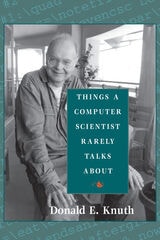
Things a Computer Scientist Rarely Talks About
Donald E. Knuth
CSLI, 2003
Perhaps no one is more qualified to address these questions than Donald E. Knuth, whose massive contributions to computing have led others to nickname him "The Father of Computer Science"—and whose religious faith led him to understand a fascinating analysis of the Bible called the 3:16 project. In this series of six spirited, informal lectures, Knuth explores the relationships between his vocation and his faith, revealing the unique perspective that his work with computing has lent to his understanding of God.
His starting point is the 3:16 project, an application of mathematical "random sampling" to the books of the Bible. The first lectures tell the story of the project's conception and execution, exploring its many dimensions of language translation, aesthetics, and theological history. Along the way, Knuth explains the many insights he gained from such interdisciplinary work. These theological musings culminate in a surprising final lecture tackling the ideas of infinity, free will, and some of the other big questions that lie at the juncture of theology and computation.
Things a Computer Scientist Rarely Talks About, with its charming and user-friendly format—each lecture ends with a question and answer exchange, and the book itself contains more than 100 illustrations—is a readable and intriguing approach to a crucial topic, certain to edify both those who are serious and curious about their faiths and those who look at the science of computation and wonder what it might teach them about their spiritual world.
Includes "Creativity, Spirituality, and Computer Science," a panel discussion featuring Harry Lewis, Guy L. Steele, Jr., Manuela Veloso, Donald E. Knuth, and Mitch Kapor.

Those Who Work, Those Who Don't
Poverty, Morality, and Family in Rural AmericaJennifer Sherman
University of Minnesota Press, 2009
When the rural poor prioritize issues such as the right to bear arms, and disapprove of welfare despite their economic concerns, they are often dismissed as uneducated and backward by academics and political analysts. In Those Who Work, Those Who Don't, Jennifer Sherman offers a much-needed sympathetic understanding of poor rural Americans, persuasively arguing that the growing cultural significance of moral values is a reasonable and inevitable response to economic collapse and political powerlessness.
Those Who Work, Those Who Don't is based on the intimate interviews and in-depth research Sherman conducted while spending a year living in "Golden Valley," a remote logging town in Northern California. Economically devastated by the 1990 ruling that listed the northern spotted owl as a threatened species, Golden Valley proved to be a rich case study for Sherman. She looks at how the members of the community coped with downward mobility caused by the loss of timber industry jobs and examines a wide range of reactions. She shows how substance abuse, domestic violence, and gender roles fluctuated under the town's economic strain.
Compellingly written, shot through with honesty and empathy, Those Who Work, Those Who Don't is a rare firsthand account that studies the rural poor. As incomes erode and the American dream becomes more and more inaccessible, Sherman reveals that moral values and practices become a way for the poor to gain status and maintain a sense of dignity in the face of economic ruin.
Tissue Economies
Blood, Organs, and Cell Lines in Late CapitalismCatherine Waldby and Robert Mitchell
Duke University Press, 2006
Waldby and Mitchell pull together a prodigious amount of research—involving policy reports and scientific papers, operating manuals, legal decisions, interviews, journalism, and Congressional testimony—to offer a series of case studies based on particular forms of tissue exchange. They examine the effect of threats of contamination—from HIV and other pathogens—on blood banks’ understandings of the gift/commodity relationship; the growth of autologous economies, in which individuals bank their tissues for their own use; the creation of the United Kingdom’s Stem Cell bank, which facilitates the donation of embryos for stem cell development; and the legal and financial repercussions of designating some tissues “hospital waste.” They also consider the impact of different models of biotechnology patents on tissue economies and the relationship between experimental therapies to regenerate damaged or degenerated tissues and calls for a legal, for-profit market in organs. Ultimately, Waldby and Mitchell conclude that scientific technologies, the globalization of tissue exchange, and recent anthropological, sociological, and legal thinking have blurred any strict line separating donations from the incursion of market values into tissue economies.

Tomorrow Will Be Better
Surviving Nazi GermanyWalter Meyer with the assistance of Matt Valentine
University of Missouri Press, 1999
How does a young German who has been a member of the Hitler Youth and has competed in Nazi-organized athletic competitions become, over the span of two years, an eighty-pound, tuberculosis-stricken concentration camp escapee?
In this larger-than-life memoir, Walter Meyer leads readers from one harrowing moment to the next as he recounts his experiences during and after Hitler's reign. As a teenager, Meyer refused to conform to institutional rules. While serving in the Hitler Youth, he rebelled by joining a subversive group that focused its efforts on pranks against the youth organization. During World War II, Meyer was arrested, interrogated, and beaten for stealing shoes, but he received a sentence of one to four years, as opposed to the standard penalty for looting—death.
The sixteen-year-old Meyer's refusal to conform to prison regulations and his foiled escape attempts resulted in solitary confinement on several occasions. His fiery spirit eventually landed him in a Nazi work camp. Unbeknownst to his family, Meyer became a concentration camp prisoner. Transported to Ravensbrueck, he was forced to work under grueling conditions in a quarry. He struggled to reach his daily work quota so he could dine on watery broth and bits of bread. In these subhuman conditions, Meyer developed tuberculosis. Knowing he would soon die in the camp, he again plotted his escape. This time he succeeded.
Upon returning home to Duesseldorf, Meyer despaired at the destruction of his hometown. He lamented the pallor that had spread throughout the town and the country itself. After recovering his health, he regained his youthful lust for adventure. His postwar travels began with his infiltration of the Russian-occupied zone of Germany to retrieve his family's possessions. Meyer then began a whirlwind odyssey, ducking into train cars and stowing away on ships, occasionally landing in jail for traveling without a passport—from France to Spain, Belgium to Holland, and finally to South America--in pursuit of something other than the aftermath of war.
Meyer's memoir gives insight into the climate in Germany during World War II and in the defeated nation after the war. His experience as a non-Jewish survivor of the Nazi concentration camps provides an enlightening and varied perspective to the Holocaust dialogue.
Torture and Dignity
An Essay on Moral InjuryJ. M. Bernstein
University of Chicago Press, 2015
Beginning with the attempts to abolish torture in the eighteenth century, and then sensitively examining what is suffered in torture and related transgressions, such as rape, Bernstein elaborates a powerful new conception of moral injury. Crucially, he shows, moral injury always involves an injury to the status of an individual as a person—it is a violent assault against his or her dignity. Elaborating on this critical element of moral injury, he demonstrates that the mutual recognitions of trust form the invisible substance of our moral lives, that dignity is a fragile social possession, and that the perspective of ourselves as potential victims is an ineliminable feature of everyday moral experience.

Torture and the War on Terror
Tzvetan Todorov
Seagull Books, 2009
One of the world's leading intellectuals dismantles the political and ethical justifications for institutional torture.
In the aftermath of 9/11, the US government approved interrogation tactics for enemy combatant detainees that could be defined as torture, which was outlawed in Europe in the eighteenth century and forbidden by the Geneva Conventions and the United Nations Convention Against Torture. In conjunction with these policies, the Bush administration vocally defended torture as a necessary tool in its Global War on Terror. Though the election of Barack Obama and his signing of the executive order to close the prison at Guantanamo Bay signaled a considerable shift away from the policies of the Bush era, the lessons to be learned from the Global War on Terror will remain relevant and necessary for many years to come.
In Torture and the War on Terror, Tzvetan Todorov argues that the use of the terms “war” and “terror” dehumanizes the enemy and permits treatment that would otherwise be impermissible. He examines the implications and corrupting impact of the attempt to impose “good” through violence and spread democratic values by unethical means. Todorov asks: Can violence overcome violence? Does the need to protect one’s own country justify violating human rights? Challenging one by one the political and ethical arguments in favor of torture, Todorov likens institutional torture to a cancer that is eroding our society and undermining the very fundamental democratic ideas of justice and right.
Total Market American
Race, Data, and AdvertisingMarcel Rosa-Salas
Duke University Press, 2025
Toward a Philosophy of the Act
By M. M. Bakhtin
University of Texas Press, 1993
Rescued in 1972 from a storeroom in which rats and seeping water had severely damaged the fifty-year-old manuscript, this text is the earliest major work (1919-1921) of the great Russian philosopher M. M. Bakhtin. Toward a Philosophy of the Act contains the first occurrences of themes that occupied Bakhtin throughout his long career. The topics of authoring, responsibility, self and other, the moral significance of "outsideness," participatory thinking, the implications for the individual subject of having "no-alibi in existence," the difference between the world as experienced in actions and the world as represented in discourse—all are broached here in the heat of discovery. This is the "heart of the heart" of Bakhtin, the center of the dialogue between being and language, the world and mind, "the given" and "the created" that forms the core of Bakhtin's distinctive dialogism.
A special feature of this work is Bakhtin's struggle with the philosophy of Immanuel Kant. Put very simply, this text is an attempt to go beyond Kant's formulation of the ethical imperative. mci will be important for scholars across the humanities as they grapple with the increasingly vexed relationship between aesthetics and ethics.
Training the Body for China
Sports in the Moral Order of the People's RepublicSusan Brownell
University of Chicago Press, 1995
Training the Body for China is the first book on Chinese sports based on extended fieldwork by a Westerner. Brownell introduces the notion of "body culture" to analyze Olympic sports as one element in a whole set of Chinese body practices: the "old people's disco dancing" craze, the new popularity of bodybuilding (following reluctant official acceptance of the bikini), mass calisthenics, martial arts, military discipline, and more.
Translating official and dissident materials into English for the first time and drawing on performance theory and histories of the body, Brownell uses the culture of the body as a focal point to explore the tensions between local and global organizations, the traditional and the modern, men and women. Her intimate knowledge of Chinese social and cultural life and her wide range of historic examples make Training the Body for China a unique illustration of how gender, the body, and the nation are interlinked in Chinese culture.

Tributary Voices
Literary and Rhetorical Exploration of the Colorado RiverPaul A. Formisano
University of Nevada Press, 2022
Through literary, rhetorical, and historical analysis of some of the Colorado River’s lesser-known stakeholders, Tributary Voices considers a more comprehensive approach to river management on the eve of the one-hundredth anniversary of the signing of the Colorado River Compact, which governs the allocation of water rights to the seven states in the region. Ranging from the early twentieth century to the present, Tributary Voices examines nature writing, women’s narratives, critiques of dam development, the Latina/o communities’ appeals for river restoration, American Indian authors’ and tribal nations’ claims of water sovereignty, and teachings about environmental stewardship and provident living. This innovative study models an interdisciplinary approach to water governance and reinvigorates our imagination in achieving a more sustainable water ethic.
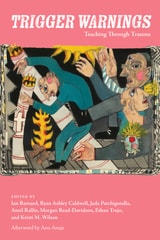
Trigger Warnings
Teaching Through TraumaEdited by Ian Barnard, Ryan Ashley Caldwell, Jada Patchigondla, Aneil Rallin, Morgan Read-Davidson, Ethan Trejo, and Kristi Wilson
Lever Press, 2026
Trigger Warnings: Teaching Through Trauma brings theory and praxis to examine the ideological underpinnings and pedagogy around trigger warnings and trauma, offering multiple heuristics for classroom implementation. The ongoing interest in trigger warnings is partly a result of trigger warnings and trauma becoming more inextricably interwoven in the past few years in the wake of COVID-19, mental health crises, right-wing attacks on educational institutions, climate change, and attempts at political redress and educational equity. Critiques of trigger warnings come from all sides of the political and pedagogical spectra, and even scholars and practitioners who offer a trauma-informed approach to the topic are not unified in their view of the benefits or drawbacks of trigger warnings.
Trigger Warnings: Teaching Through Trauma provides insights through a range of forms: research articles, personal essays, long and short teaching narratives, student perspectives, memoirs, vignettes, autoethnographies, reflections, case studies, manifesto, theory, and history. Not only does this collection create a more varied engagement experience for readers, but, in line with recent scholarship in “counterstory,” it also allows for a wider variety of voices to be heard and for the articulation of experiences that might not be well accommodated by traditional scholarly essays.
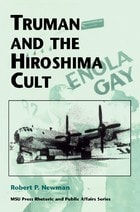
Truman and the Hiroshima Cult
Robert P. Newman
Michigan State University Press, 1995
The United States dropped atomic bombs on Japan in 1945 to end World War II as quickly and with as few casualties as possible. That is the compelling and elegantly simple argument Newman puts forward in his new study of World War II's end, Truman and the Hiroshima Cult. According to Newman: (1) The U.S. Strategic Bombing Survey conclusions that Japan was ready to surrender without "the Bomb" are fraudulent; (2) America’s "unconditional surrender" doctrine did not significantly prolong the war; and (3) President Harry S. Truman’s decision to use atomic weapons on Japanese cities was not a "racist act," nor was it a calculated political maneuver to threaten Joseph Stalin’s Eastern hegemony. Simply stated, Newman argues that Truman made a sensible military decision. As commander in chief, he was concerned with ending a devastating and costly war as quickly as possible and with saving millions of lives.
Yet, Newman goes further in his discussion, seeking the reasons why so much hostility has been generated by what happened in the skies over Hiroshima and Nagasaki in early August, 1945. The source of discontent, he concludes, is a "cult" that has grown up in the United States since the 1960s. It was weaned on the disillusionment spawned by concerns about a military industrial complex, American duplicity and failure in the Vietnam War, and a mistrust of government following Watergate. The cult has a shrine, a holy day, a distinctive rhetoric of victimization, various items of scripture, and, in Japan, support from a powerful Marxist constituency. "As with other cults, it is ahistorical," Newman declares. "Its devotees elevate fugitive and unrepresentative events to cosmic status. And most of all, they believe." Newman’s analysis goes to the heart of the process by which scholars interpret historical events and raises disturbing issues about the way historians select and distort evidence about the past to suit special political agendas.