Results by title
209 books match the query 'Mystery & Detective' and 72 start with t
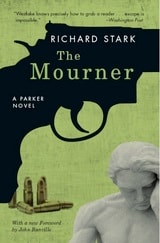
The Mourner
A Parker NovelRichard Stark
University of Chicago Press, 2009
Hard-boiled crime fiction doesn't get any better than this, an unforgettable entry in the classic series starring Parker, the deadliest heister around
Richard Stark's Parker novels are the hardest of hard-boiled, classic crime novels where the heists are huge, the body counts are high, and the bad guys usually win.
The Parker novels have been a huge influence on countless writers and filmmakers, including Quentin Tarantino, Stephen King, George Pelecanos, Colson Whitehead, Lucy Sante, John Banville, and many more. Their stripped-down language and hard-as-nails amorality create an unforgettable world where the next score could be the big one, but your next mistake could also be your last. There's nothing else like them.
The Mourner is a story of convergence—of cultures and of guys with guns. Hot on the trail of a statue stolen from a fifteenth-century French tomb, Parker enters a world of eccentric art collectors, greedy foreign officials, and shady KGB agents. Hired by a shifty dame who has something he needs, Parker will find out just who intends to bury whom—and who he needs to kill to finish the job.
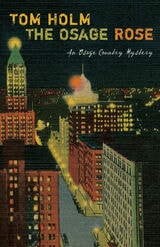
The Osage Rose
Tom Holm
University of Arizona Press, 2008
Life is looking easy for J. D. Daugherty, a crusty ex-cop who has set up his own PI firm in Tulsa, Oklahoma, just after World War I. J. D. expects to make a straightforward living off the intrigues of the city’s wealthy socialites, but then Rose Chichester, a privileged young white woman, runs off with Tommy Ruffle, a young Indian who is heir to Osage oil. Hired by Rose’s father to track down the young pair, J. D. and his associate, a Cherokee named Hoolie Smith, find themselves caught in the cross fire of a deadly scheme. When Tommy turns up murdered and with Rose still missing, J. D. and Hoolie must navigate a twisting maze of deception, race riots, and gun battles in their unrelenting search for the truth—a search that ultimately leads to an intimate secret no one suspected.
Tom Holm writes a true private-eye mystery, yet he entwines the story’s layers of conspiracy and deceit with the realities of prejudice and hatred that existed during the early years of Oklahoma statehood. Rooted firmly in its time, Holm’s well-researched novel tells a complex and compelling story of individuals struggling to find justice at any cost in a world still caught between modernity and its Wild West legacy.
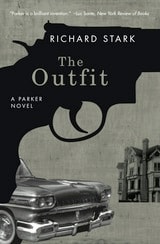
The Outfit
A Parker NovelRichard Stark
University of Chicago Press, 1963
In The Outfit, Parker goes toe-to-toe with the mob, hellbent on taking him down. The notorious lone wolf has some extra tricks up his sleeve, and the entire underworld will learn an unforgettable lesson: whatever Parker does, he does deadly. This third novel in the series, which was the basis for the classic 1973 film The Outfit, with Robert Duvall in the lead, is chock full of astonishing heists and violent battles of will.
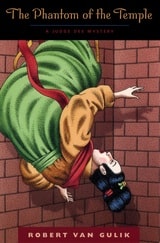
The Phantom of the Temple
A Judge Dee MysteryRobert van Gulik
University of Chicago Press, 1966
Judge Dee presided over his imperial Chinese court with a unique brand of Confucian justice. A near mythic figure in China, he distinguished himself as a tribunal magistrate, inquisitor, and public avenger. Long after his death, accounts of his exploits were celebrated in Chinese folklore, and later immortalized by Robert van Gulik in his electrifying mysteries.
In The Phantom of the Temple, three separate puzzles—the disappearance of a wealthy merchant's daughter, twenty missing bars of gold, and a decapitated corpse—are pieced together by the clever judge to solve three murders and one complex, gruesome plot.
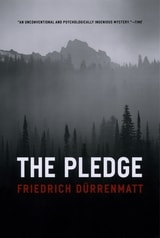
The Pledge
Friedrich Dürrenmatt
University of Chicago Press, 2000
One of Dürrenmatt’s most diabolically imagined and constructed novels, The Pledge was adapted for the screen in 2000 in a film directed by Sean Penn and starring Jack Nicholson.
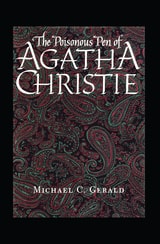
The Poisonous Pen of Agatha Christie
By Michael C. Gerald
University of Texas Press, 1993
Poisoning occurs in over half of Agatha Christie's many novels and stories. In fact, she used a larger number and broader selection of poisons and medicines, for a wider variety of purposes, with greater frequency, ingenuity, and scientific accuracy than any other detective fiction writer. Yet very little has been written on the use of drugs, poisons, and chemicals in Christie's fiction.
The Poisonous Pen of Agatha Christie entertainingly and authoritatively fills this gap. Michael Gerald explores the use of poisons and drugs in Christie's fiction not only to commit murder and suicide but also to incapacitate a victim, alter behavior, treat disease, or support addiction. He also analyzes her views, as expressed in her fiction and autobiography, on drug addiction, the health professions, the value of medicines, and scientific discoveries.
Especially valuable is Gerald's exhaustive listing of all drugs, poisons, and chemicals mentioned in Christie's novels and stories, with references to the work(s) in which each appears and the ways in which each is used. Other tables list all the novels and short stories and the chemicals that are used in each. Throughout, the properties of all drugs are clearly explained so that the reader needs no special scientific or medical knowledge.
The Poisonous Pen of Agatha Christie illuminates the fictional uses Christie made of her real-life experiences as a hospital drug dispenser and as a provider of nursing care. It will be of interest to fans and scholars alike.

The Police Procedural
George N. Dove
University of Wisconsin Press, 1982
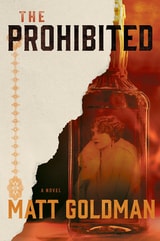
The Prohibited
A NovelMatt Goldman
University of Minnesota Press, 2026
A family, their liquor store, and the clash of the Eighteenth and Nineteenth Amendments in 1920s St. Paul
The Kaner brothers were getting by well enough running Kaner’s Fine Wine and Spirits in St. Paul, Minnesota, until Prohibition took effect in January 1920. With their liquor store shuttered, Red, Isaac, and Lewis are left to forge new livelihoods, their paths taking turns distinct as their personalities. All of the Kaners have secrets of their own—from a clandestine lover to a joyless marriage to an entanglement with the mob—but when it comes down to it, the family will do just about anything for each other, and they’re going to have to prove it.
The Prohibited follows the Kaner family in the wake of the Eighteenth Amendment. Isaac finds unlikely means to stay close to the family trade, becoming a rabbi (or someone the Feds believe is a rabbi, anyway) to exploit a loophole that allows men of the cloth to sell sacramental wine. Lewis takes the opportunity to pursue his lifelong dream of being a playwright, managing to secure the funds to produce a staged reading of his new play, albeit from an unlikely source. And Red is secretly happy to find himself working in a haberdashery, though he resents his wife’s suffragist allegiance and resulting support of Prohibition. Meanwhile, Red’s children bring challenges of their own: tough, quick-thinking Rose is working odd jobs to send herself to medical school and trying to fix her brother’s mess with the mob, something carefree Willie can’t seem to grasp is deadly serious. Tangled up in the Kaners’ story is Pearl Holgerson. After a tragic event up north, she has finally found community in the Rondo neighborhood in St. Paul, but she has a score to settle with Willie and just might get to him before the mob does.
Based loosely on Matt Goldman’s family history, The Prohibited brings to life 1920s St. Paul, a haven for bootleggers, gangsters, and bank robbers, but also home to many ordinary folks navigating a remarkable new social order. With his signature wry wit, Goldman presents an engrossing character study of a family testing their bonds, leaving their lives irrevocably changed.
Retail e-book files for this title are screen-reader friendly.
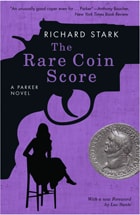
The Rare Coin Score
A Parker NovelRichard Stark
University of Chicago Press, 2009
Parker breaks nearly all his personal rules in this surprising, fast-paced entry in the classic hard-boiled series
Richard Stark's Parker novels are the hardest of hard-boiled, classic crime novels where the heists are huge, the body counts are high, and the bad guys usually win.
The Parker novels have been a huge influence on countless writers and filmmakers, including Quentin Tarantino, Stephen King, George Pelecanos, Colson Whitehead, Lucy Sante, John Banville, and many more. Their stripped-down language and hard-as-nails amorality create an unforgettable world where the next score could be the big one, but your next mistake could also be your last. There's nothing else like them.
When it comes to heists, Parker believes in some cardinal rules. On this job, he breaks two of them: never bring a dame along—especially not one you like—and never, ever, work with amateurs. Nevertheless, with the help of a creepy coin collector named Billy, and the lure of a classy widow, he agrees to set up a heist of a coin convention. But Billy’s a rookie with no idea how to pull off a score, and the lady soon becomes a major distraction. The Rare Coin Score marks the first appearance of Claire, who pulls off her own heist on Parker's heart—while together they steal two million dollars worth of coins.
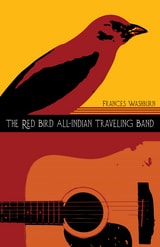
The Red Bird All-Indian Traveling Band
Frances Washburn
University of Arizona Press, 2014
The Red Bird All-Indian Traveling Band is part mystery, part community chronicle. Shaped by a cast of skillfully drawn characters, all of whom at one time or another are potential suspects, at the core of the story is smart and compassionate Sissy. Four years past high school, Sissy’s wry humor punctuates descriptions of reservation life as she learns more about Ames’s potential killer, and as she embarks on a personal search for ways to buck expectations and leave rural South Dakota to attend college.
Ames’s death is just an example of the undercurrents of violence and passions that run through this fast-moving novel of singing, loving, and fighting. Following Sissy as she unravels the mystery of both Buffalo Ames’s death and her own future, The Red Bird All-Indian Traveling Band is the story of Indian Country on the verge of historic change and a woman unwilling to let change pass her by.
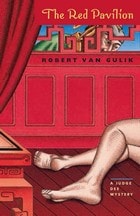
The Red Pavilion
A Judge Dee MysteryRobert van Gulik
University of Chicago Press, 1961
A chance encounter with Autumn Moon, the most powerful courtesan on Paradise Island, leads Judge Dee to investigate three deaths. Although he finally teases the true story from a tangled history of passion and betrayal, Dee is saddened by the perversion, corruption, and waste of the world "of flowers and willows" that thrives on prostitution.
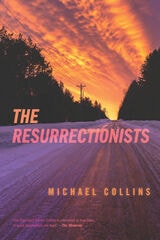
The Resurrectionists
Collins, Michael
University of Iowa Press, 2021
Haunted by the deaths of his parents and uncle, Frank Cassidy journeys north to dispute a cousin's claim to the family farm, where he meets a stranger who might resolve mysteries about Frank's past.
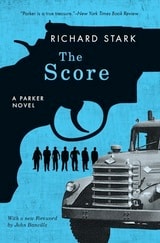
The Score
A Parker NovelRichard Stark
University of Chicago Press, 2009
The absolute wildest of all the novels in the classic hard-boiled crime series starring Parker, the deadliest heister of all!
Richard Stark's Parker novels are the hardest of hard-boiled, classic crime novels where the heists are huge, the body counts are high, and the bad guys usually win.
The Parker novels have been a huge influence on countless writers and filmmakers, including Quentin Tarantino, Stephen King, George Pelecanos, Colson Whitehead, Lucy Sante, John Banville, and many more. Their stripped-down language and hard-as-nails amorality create an unforgettable world where the next score could be the big one, but your next mistake could also be your last. There's nothing else like them.
It was an impossible crime: knock off an entire town—a huge plant payroll, all the banks, and all the stores—in one night. But there was one thief good enough to try—Parker. In The Score, Parker takes on his biggest job yet. All he needs are the right men, the right plan, and the right kind of help from Lady Luck. But as everyone knows, you can never count on that last one. This chilling caper could either be the perfect crime . . . or a set-up that would land him in jail—for life.
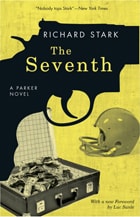
The Seventh
A Parker NovelRichard Stark
University of Chicago Press, 2009
An action-packed entry in the classic hard-boiled crime series starring Parker, the heister you don't want to cross!
Richard Stark's Parker novels are the hardest of hard-boiled, classic crime novels where the heists are huge, the body counts are high, and the bad guys usually win.
The Parker novels have been a huge influence on countless writers and filmmakers, including Quentin Tarantino, Stephen King, George Pelecanos, Colson Whitehead, Lucy Sante, John Banville, and many more. Their stripped-down language and hard-as-nails amorality create an unforgettable world where the next score could be the big one, but your next mistake could also be your last. There's nothing else like them.
The robbery was a piece of cake. The getaway was clean. The only thing left to do is split the cash—then it all goes wrong. In The Seventh, the heist of a college football game turns sour and the take is stolen from right under Parker’s nose. With the cops on his tail, Parker must figure out who crossed him—and how he can pay the culprit back.
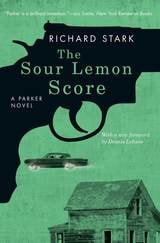
The Sour Lemon Score
A Parker NovelRichard Stark
University of Chicago Press, 2010
Richard Stark's Parker novels are the hardest of hard-boiled, classic crime novels where the heists are huge, the body counts are high, and the bad guys usually win.
The Parker novels have been a huge influence on countless writers and filmmakers, including Quentin Tarantino, Stephen King, George Pelecanos, Colson Whitehead, Lucy Sante, John Banville, and many more. Their stripped-down language and hard-as-nails amorality create an unforgettable world where the next score could be the big one, but your next mistake could also be your last. There's nothing else like them.
Bank robberies should run like clockwork, right? If your name’s Parker, you expect nothing less. The Sour Lemon Score finds Parker wrapping up a heist where everything has gone right. But then one of his partners gets too greedy for his own good. The four-way split following a job leaves too small a take for George Uhl, who begins to pick off his fellow heisters, one by one. The first mistake? That he doesn’t begin things by putting a bullet in Parker. That means he won’t get the chance to make a second. One of the darkest novels in the series, this caper proves the adage that no one crosses Parker and lives.
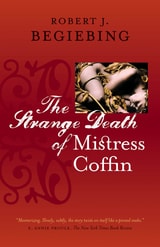
The Strange Death of Mistress Coffin
Robert J. Begiebing
University Press of New England, 2012
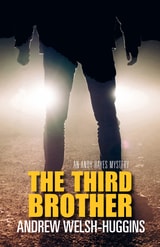
The Third Brother
An Andy Hayes MysteryAndrew Welsh-Huggins
Ohio University Press, 2018
It’s a violent encounter that private investigator Andy Hayes could have done without. One minute he’s finishing up some grocery shopping ahead of a custody visit with his sons. The next, he must come to the rescue of a Somali American mother and her young children as anti-immigrant bullies torment them.
Grateful for his intervention, the Somali community hires Andy to find a missing teenager who vanished without a trace and is now accused of plotting a terror attack in his adopted hometown of Columbus, Ohio. The government is certain that nineteen-year-old Abdi Mohamed followed in the footsteps of his brother, who died in Syria a few months earlier in a jihadi assault. But Mohamed’s family isn’t convinced, describing a soccer-loving American kid who renounced his brother’s actions and planned to attend college in the fall and become a diplomat someday.
Soon Andy is fending off fed-up FBI agents and dueling with a mysterious foe with links to the white supremacist movement. As he draws ever closer to the truth behind Mohamed’s disappearance, Hayes stumbles onto a conspiracy that could put hundreds of lives in danger, including his own two boys.
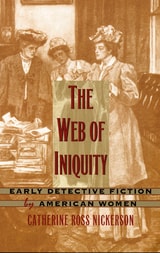
The Web of Iniquity
Early Detective Fiction by American WomenCatherine Ross Nickerson
Duke University Press, 1998
This subgenre allowed women writers to participate in postbellum culture and to critique other aspects of a rapidly changing society. Domestic detective fiction combined elements of sensationalist papers, popular nonfiction crime stories, and the domestic novel. Nickerson shows how it also incorporated the gothic tropes found in the work of Harriet Beecher Stowe, Louisa May Alcott, and Charlotte Brontë and influenced the work of Pauline Hopkins. Mid-nineteenth-century writer Metta Fuller Victor, who represented such important areas of cultural conflict as the role of professions in the formation of class identity and the possibility of women's independence and self-determination, paved the way for the appearance of women detectives in the late-nineteenth-century fiction of Anna Katharine Green. Nickerson credits Mary Roberts Rinehart, in particular, for bringing sophistication to the subgenre by amplifying the humorous, terrifying, and feminist elements inherent in earlier detective novels by women. Throughout the volume, Nickerson focuses on the narrative qualities of the domestic novel tradition and the ways in which it reflected ideologies of domesticity and gender. Also included are a discussion of various rewritings of the Lizzie Borden scandal in this tradition and an afterword on the relation of domestic detective fiction to the hard-boiled style.
The Web of Iniquity places the detective fiction written by women between 1850 and 1940 into ongoing discussions regarding women, culture, and literature and will appeal to scholars and students of women's studies, American studies, and literary history.
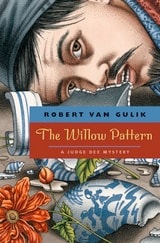
The Willow Pattern
A Judge Dee MysteryRobert van Gulik
University of Chicago Press, 1965
An exceptionally clever, cozy mystery that will thrill all fans of Judge Dee, whom the Los Angeles Times ranked with Sherlock Holmes
Judge Dee has been appointed emergency governor of the plague- and drought-ridden Imperial City. As his guards help the city fend off a popular uprising, an aristocrat from one of the oldest families in China suffers an "accident" in a deserted mansion.
In The Willow Pattern, the illustrious judge uses his trademark expertise to unravel the mysteries of the nobleman, a shattered vase, and a dead bondmaid. Along the way he encounters a woman who fights with loaded sleeves, a nearly drowned courtesan, and an elaborate trap set for a murderer. Packed with suspense, violence, and romance, The Willow Pattern won’t disappoint Judge Dee’s legions of loyal fans.
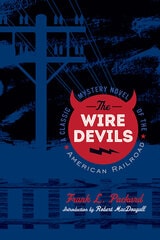
The Wire Devils
Frank L. Packard
University of Minnesota Press, 2013
Best known for his Jimmie Dale series of books, which have sold more than 3 million copies worldwide, Frank L. Packard first published The Wire Devils in 1918. A “wire thriller” that uses the booming railroads and telegraph lines of the old West as its backdrop for fast-paced adventure, The Wire Devils follows a criminal gang of the same name who hijack a railroad’s telegraph lines to glean information about profitable shipments. But foiling them again and again is the Hawk, the outlaw hero who robs from the robbers and is ultimately on the side of law and order.
Combining elements from dime-store novels and Packard’s own experience on the rails, The Wire Devils is at once a hybrid western and a thriller still worth reading nearly a century after it was written.
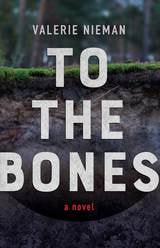
To the Bones
VALERIE NIEMAN
West Virginia University Press, 2019
2020 Killer Nashville Silver Falchion Award finalist
Darrick MacBrehon, a government auditor, wakes among the dead. Bloodied and disoriented from a gaping head wound, the man who staggers out of the mine crack in Redbird, West Virginia, is much more powerful—and dangerous—than the one thrown in. An orphan with an unknown past, he must now figure out how to have a future.
Hard-as-nails Lourana Taylor works as a sweepstakes operator and spends her time searching for any clues that might lead to Dreama, her missing daughter. Could this stranger’s tale of a pit of bones be connected? With help from disgraced deputy Marco DeLucca and Zadie Person, a local journalist investigating an acid mine spill, Darrick and Lourana push against everyone who tries to block the truth. Along the way, the bonds of love and friendship are tested, and bodies pile up on both sides.
In a town where the river flows orange and the founding—and controlling—family is rumored to “strip a man to the bones,” the conspiracy that bleeds Redbird runs as deep as the coal veins that feed it.
Twelve Englishmen of Mystery
Edited by Earl F. Bargainnier
University of Wisconsin Press, 1984
This volume is designed to correct that fault in a dozen of those unjustifiably neglected British authors: Wilkie Collins, A.E.W. Mason, G.K. Chesterton, H.C. Bailey, Anthony Berkeley Cox, Nicholas Blake, Michael Gilbert, Julian Symons, Dick Francis, Edmund Crispin, H.R.F. Keating, and Simon Brett.