Results by title
3258 books match the query 'Performing Arts' and 658 start with t
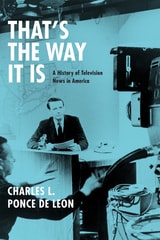
That's the Way It Is
A History of Television News in AmericaCharles L. Ponce de Leon
University of Chicago Press, 2015
The critics may be right. But, as Charles L. Ponce de Leon explains in That’s the Way It Is, TV news has always walked a fine line between hard news and fluff. The familiar story of decline fails to acknowledge real changes in the media and Americans’ news-consuming habits, while also harking back to a golden age that, on closer examination, is revealed to be not so golden after all. Ponce de Leon traces the entire history of televised news, from the household names of the late 1940s and early ’50s, like Eric Sevareid, Edward R. Murrow, and Walter Cronkite, through the rise of cable, the political power of Fox News, and the satirical punch of Colbert and Stewart. He shows us an industry forever in transition, where newsmagazines and celebrity profiles vie with political news and serious investigations. The need for ratings success—and the lighter, human interest stories that can help bring it—Ponce de Leon makes clear, has always sat uneasily alongside a real desire to report hard news.
Highlighting the contradictions and paradoxes at the heart of TV news, and telling a story rich in familiar figures and fascinating anecdotes, That’s the Way It Is will be the definitive account of how television has showed us our history as it happens.
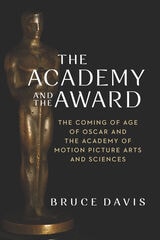
The Academy and the Award
The Coming of Age of Oscar and the Academy of Motion Picture Arts and SciencesBruce Davis
Brandeis University Press, 2026
For all the near-fanatic attention brought each year to the Academy Awards, the organization that dispenses those awards—the Academy of Motion Picture Arts and Sciences—has yet to be understood. To date, no one has ever produced a thorough account of the Academy’s birth and its awkward adolescence, and the few reports on those periods from outside the organization have always had a glancing, cursory quality. Yet the story of the Academy’s creation and development is a critical piece of Hollywood’s history.
Now that story is finally being told. Bruce Davis, executive director of the Academy for over twenty years, was given unprecedented access to its archives, and the result is a revealing and compelling story of the men and women, famous and infamous, who shaped one of the best-known organizations in the world. Davis writes about the Academy with an intimate view of its workings, its awards, and its world-famous membership. Thorough and long overdue, The Academy and the Award fills a crucial gap in Hollywood history. Available now for the first time in paperback.
The Actor's Art
Conversations with Contemporary American Stage PerformersDavison, Richard A
Rutgers University Press, 2001
The Actor's Instrument
Body, Theory, StageHollis Huston
University of Michigan Press, 1993
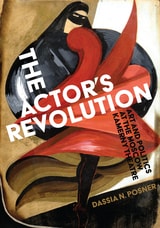
The Actor’s Revolution
Art and Politics at the Moscow Kamerny TheatreDassia N. Posner
Northwestern University Press, 2027
Reclaims the lost history of one of the twentieth century’s most innovative theaters
The Moscow Kamerny Theatre created stage worlds of movement, color, and light. Cofounded in 1914 by Alexander Tairov, a Jewish director from Ukraine, and Alisa Koonen, a Moscow-born actress from an immigrant family, the company celebrated the actor’s virtuosic inventiveness during an era when most theaters imitated daily life or prioritized the autocratic director’s vision. By the 1920s, it had become the most famous Soviet theater in the world, renowned for its actors’ acrobatic grace, its bold collaborations with avant-garde artists, and its revolutionary redefinition of what theater can be. But the accusations of Soviet disloyalty that were used to destroy the Kamerny during Stalin’s post–World War II antisemitic purge have rendered it little known outside Russia today and frequently misunderstood even there.
The Actor’s Revolution vividly reclaims this lost history by reconstructing the theater’s most illustrious premieres, analyzing them within the turbulent artistic and political context of the early Soviet era. Drawing on a decade of archival research, Dassia N. Posner restores Tairov’s legacy as one of history’s most significant directors and celebrates Koonen’s liberatory creative expressiveness as a vital alternative to Konstantin Stanislavsky’s better-known acting system. Building on rich archival sources, from unpublished memoirs to vibrant scenic and costume designs, this timely volume grapples with the entangled histories of art, politics, and erasure and celebrates the radical power of human creativity under—and in spite of—totalitarianism.
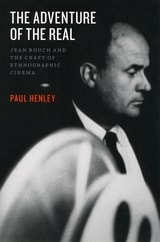
The Adventure of the Real
Jean Rouch and the Craft of Ethnographic CinemaPaul Henley
University of Chicago Press, 2009
Though relatively unsung in the English-speaking world, Jean Rouch (1917–2004) was a towering figure of ethnographic cinema. Over the course of a fifty-year career, he completed over one hundred films, both documentary and fiction, and exerted an influence far beyond academia. Exhaustively researched yet elegantly written, The Adventure of the Real is the first comprehensive analysis of his practical filmmaking methods.
Rouch developed these methods while conducting anthropological research in West Africa in the 1940s–1950s. His innovative use of unscripted improvisation by his subjects had a profound impact on the French New Wave, Paul Henley reveals, while his documentary work launched the genre of cinema-vérité. In addition to tracking Rouch’s pioneering career, Henley examines the technical strategies, aesthetic considerations, and ethical positions that contribute to Rouch’s cinematographic legacy. Featuring over one hundred and fifty images, The Adventure of the Real is an essential introduction to Rouch’s work.
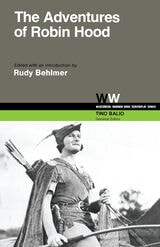
The Adventures of Robin Hood
Edited, with an introduction by Rudy Behlmer; Tino T. Balio, Series Editor
University of Wisconsin Press, 1979
For sheer screen entertainment, few motion pictures have ever matched the 1938 Warner Brothers production of The Adventures of Robin Hood. Even today, after more than four decades. Errol Flynn's dashing performance places this picture high in any list of all-time favorites.
It is one of the most studied of motion pictures, not only because of its popularity but also because of the extremely high level of talent brought to bear in its creation and the sharply honed production and editing techniques that allow an incredible amount of action and movement in the 102 minutes of the film.
Includes the complete screenplay.
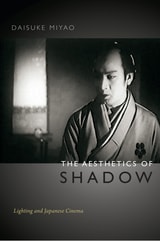
The Aesthetics of Shadow
Lighting and Japanese CinemaDaisuke Miyao
Duke University Press, 2013
The Alexander Medvedkin Reader
Alexander Medvedkin
University of Chicago Press, 2016
Although he was a dedicated Communist, Medvedkin’s satirical approach and social critiques ultimately led to his suppression by the Soviet regime. State institutions held back or marginalized his work, and for many years, his films were assumed to have been lost or destroyed. These texts, many assembled for this volume by Medvedkin himself, document for the first time his considerable achievements, experiments in film and theater, and attempts to develop satire as a major Soviet film genre. Through scripts, letters, autobiographical writings, and more, we see a Medvedkin supported and admired by figures like Eisenstein, Dovzhenko, and Maxim Gorky.
The American Dance Festival
Jack Anderson
Duke University Press, 1987
The American Film Industry
Edited by Tino T. Balio
University of Wisconsin Press, 1985
Upon its original publication in 1976, The American Film Industry was welcomed by film students, scholars, and fans as the first systematic and unified history of the American movie industry. Now this indispensible anthology has been expanded and revised to include a fresh introductory overview by editor Tino Balio and ten new chapters that explore such topics as the growth of exhibition as big business, the mode of production for feature films, the star as market strategy, and the changing economics and structure of contemporary entertainment companies. The result is a unique collection of essays, more comprehensive and current than ever, that reveals how the American movie industry really worked in a century of constant change-from kinetoscopes and the coming of sound to the star system, 1950s blacklisting, and today's corporate empires.
The American Girl Goes to War
Women and National Identity in U.S. Silent FilmLiz Clarke
Rutgers University Press, 2022
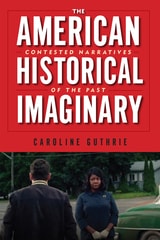
The American Historical Imaginary
Contested Narratives of the PastCaroline Guthrie
Rutgers University Press, 2023
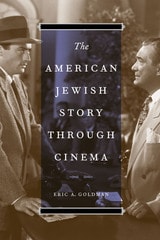
The American Jewish Story through Cinema
By Eric A. Goldman
University of Texas Press, 2013
Like the haggadah, the traditional “telling” of the story of the Israelites’ exodus from Egypt that is read at the Passover seder, cinema offers a valuable text from which to gain an understanding of the social, political, and cultural realities of Jews in America. In an industry strongly influenced by Jewish filmmakers who made and continue to make the decisions as to which films are produced, the complex and evolving nature of the American Jewish condition has had considerable impact on American cinema and, in particular, on how Jews are reflected on the screen. This groundbreaking study analyzes select mainstream films from the beginning of the sound era to today to provide an understanding of the American Jewish experience over the last century.
In the first half of the twentieth century, Hollywood’s movie moguls, most of whom were Jewish, shied away from asserting a Jewish image on the screen for fear that they might be too closely identified with that representation. Over the next two decades, Jewish moviemakers became more comfortable with the concept of a Jewish hero and with an overpowered, yet heroic, Israel. In time, the Holocaust assumed center stage as the single event with the greatest effect on American Jewish identity. Recently, as American Jewish screenwriters, directors, and producers have become increasingly comfortable with their heritage, we are seeing an unprecedented number of movies that spotlight Jewish protagonists, experiences, and challenges.
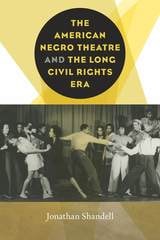
The American Negro Theatre and the Long Civil RIghts Era
Jonathan Shandell
University of Iowa Press, 2018
Jonathan Shandell provides the first in-depth study of the historic American Negro Theatre (ANT) and its lasting influence on American popular culture. Founded in 1940 in Harlem, the ANT successfully balanced expressions of African American consciousness with efforts to gain white support for the burgeoning civil rights movement. The theatre company featured innovative productions with emerging artists—Sidney Poitier, Harry Belafonte, Ruby Dee, and many others—who would become giants of stage, film, and television. In 1944, the ANT made theatrical history by creating the smash hit Anna Lucasta, the most popular play with an African American cast ever to perform on Broadway. Starting from a shoestring budget, the ANT grew into one of the most important companies in the history of African American theatre. Though the group folded in 1949, it continued to shape American popular culture through the creative work of its many talented artists.
Examining oral histories, playbills, scripts, production stills, and journalistic accounts, Shandell gives us the most complete picture to date of the theatre company by analyzing well-known productions alongside groundbreaking and now-forgotten efforts. Shedding light on this often-overlooked chapter of African American history, which fell between the New Negro Renaissance and the Black Arts Movement, Shandell reveals how the ANT became a valued community institution for Harlem—an important platform for African American artists to speak to racial issues—and a trailblazer in promoting integration and interracial artistic collaboration in the U.S. In doing so, Shandell also demonstrates how a small amateur ensemble of the 1940s succeeded in challenging, expanding, and transforming how African Americans were portrayed in the ensuing decades. The result is a fascinating and entertaining examination that will be of interest to scholars and students of African American and American studies and theatre history, as well as popular culture enthusiasts.
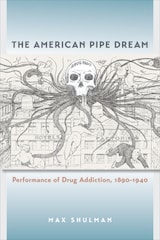
The American Pipe Dream
Performance of Drug Addiction, 1890-1940Max Shulman
University of Iowa Press, 2022
Chapters look at how theatre, film, and popular culture linked the Chinese immigrant and opium smoking; the early attacks on doctors for their part in the creation of addicts; the legislation of addiction as a criminal condition; the comic portrayals of addiction; the intersection of Black, jazz, and drug cultures through cabaret performance; and the linkage between narcotic inebriation and artistic inspiration. The American Pipe Dream creates active connections between these case studies, demonstrating how this history has influenced our contemporary understanding, treatment, and legislation of drug use and addiction.
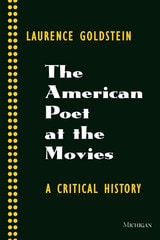
The American Poet at the Movies
A Critical HistoryLaurence Goldstein
University of Michigan Press, 1995
As an increasingly popular genre of modern poetry, and one that permits a unique view of this century's dominant art form, the movie poem has needed an explanatory book like this one. As cinema and television continue to wield extraordinary influence over the lives of all Americans, the efforts of poets to understand the visual culture will come to be appreciated as central to the task of modern and postmodern literature. This critical history is an important and timely contribution to the study of American literature and American institutions.
"One of the impressive things about the book is that while pursuing the seemingly narrow category of poems-about-movies, Goldstein is able to raise and illuminate virtually all the key issues surrounding the poetry of the period." - Roger Gilbert, Cornell University
". . . a discerning book, combining criticism and social history. It satisfies scholarly standards while appealing to general readers." - Philip French, coeditor of the Faber Book of Movie Verse
"In this work, [Goldstein] provides a new way of looking at American poets, both familiar and neglected. The approach is chronological and thematic, and films are seen from black, gay, Jewish, and feminist as well as middle-class white perspectives." Library Journal
Laurence Goldstein is editor of the Michigan Quarterly Review and Professor of English, University of Michigan.
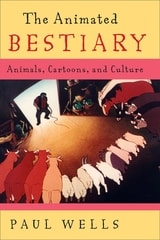
The Animated Bestiary
Animals, Cartoons, and CultureWells, Paul
Rutgers University Press, 2008
The Animated Bestiary critically evaluates the depiction of animals in cartoons and animation more generally. Paul Wells argues that artists use animals to engage with issues that would be more difficult to address directly because of political, religious, or social taboos. Consequently, and principally through anthropomorphism, animation uses animals to play out a performance of gender, sex and sexuality, racial and national traits, and shifting identity, often challenging how we think about ourselves.
Wells draws on a wide range of examples, from the original King Kongto Nick Park's Chicken Run to Disney cartoonsùsuch as Tarzan, The Jungle Book, and Brother Bearùto reflect on people by looking at the ways in which they respond to animals in cartoons and films.
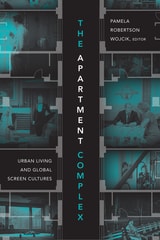
The Apartment Complex
Urban Living and Global Screen CulturesPamela Robertson Wojcik
Duke University Press, 2018
Contributors. Steven Cohan, Michael DeAngelis, Veronica Fitzpatrick, Annamarie Jagose, Paula J. Massood, Joe McElhaney, Merrill Schleier, Lee Wallace, Pamela Robertson Wojcik
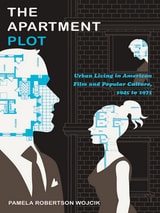
The Apartment Plot
Urban Living in American Film and Popular Culture, 1945 to 1975Pamela Robertson Wojcik
Duke University Press, 2010

The Apocalyptic Century, Volume 29
Elinor Fuchs
Duke University Press, 0
Featuring previously unpublished texts and translations by Karl Kraus, Tennessee Williams, Heiner Müller, and David Cole, this collection shows that twentieth-century theater transformed many of the traditional elements of classical apocalyptic literature for modern ends. The volume’s contributors consider playwrights, theories, and movement spanning the past one hundred years, providing a startling new perspective on modern drama from Ibsen and Jarry to Adrienne Kennedy and Tony Kushner.
Contributors. Gabrielle Cody, Linda Dorff, Michael Evenden, Elinor Fuchs, Daniel Gerould, Sylvére Lotringer, Matthew Wilson Smith, Kirk Williams
The Architecture of Story
A Technical Guide for the Dramatic WriterWill Dunne
University of Chicago Press, 2016
Through his workshops and book The Dramatic Writer’s Companion, Will Dunne has helped thousands of writers develop successful scripts. Now, in The Architecture of Story, he helps writers master the building blocks of dramatic storytelling by analyzing a trio of award-winning contemporary American plays: Doubt: A Parable by John Patrick Shanley, Topdog/Underdog by Suzan-Lori Parks, and The Clean House by Sarah Ruhl. Dismantling the stories and examining key components from a technical perspective enables writers to approach their own work with an informed understanding of dramatic architecture.
Each self-contained chapter focuses on one storytelling component, ranging from “Title” and “Main Event” to “Emotional Environment” and “Crisis Decision.” Dunne explores each component in detail, demonstrating how it has been successfully handled in each play and comparing and contrasting techniques. The chapters conclude with questions to help writers evaluate and improve their own scripts. The result is a nonlinear reference guide that lets writers work at their own pace and choose the topics that interest them as they develop new scripts. This flexible, interactive structure is designed to meet the needs of writers at all stages of writing and at all levels of experience.
The Architecture of Vision
Writings and Interviews on CinemaMichelangelo Antonioni
University of Chicago Press, 2007
Through autobiographical sketches, theoretical essays, interviews, and conversations with such luminaries as Jean-Luc Godard and Alberto Moravia, this compelling volume explores the director’s unique brand of narrative-defying cinema as well as the motivations and anxieties of the man behind the camera.
“The Architecture of Vision provides a filmmaker’s absorbing reflections and insights on his career. . . . Antonioni’s comments . . . deepen and humanize a sometimes cerebral book.”—Publishers Weekly
“[Antonioni’s] erudition is astonishing . . . few of his peers can match his verbal articulateness.”—Film Quarterly
“This valuable resource offers entrée to material difficult to gain access to under other circumstances.”—Library Journal

The Architecture of the Screen
Essays in Cinematographic SpaceGraham Cairns
Intellect Books, 2013
The Archival Afterlives of Philippine Cinema
Bliss Cua Lim
Duke University Press, 2024
The Archive and the Repertoire
Performing Cultural Memory in the AmericasDiana Taylor
Duke University Press, 2003
Examining various genres of performance including demonstrations by the children of the disappeared in Argentina, the Peruvian theatre group Yuyachkani, and televised astrological readings by Univision personality Walter Mercado, Taylor explores how the archive and the repertoire work together to make political claims, transmit traumatic memory, and forge a new sense of cultural identity. Through her consideration of performances such as Coco Fusco and Guillermo Gómez-Peña’s show Two Undiscovered Amerindians Visit . . . , Taylor illuminates how scenarios of discovery and conquest haunt the Americas, trapping even those who attempt to dismantle them. Meditating on events like those of September 11, 2001 and media representations of them, she examines both the crucial role of performance in contemporary culture and her own role as witness to and participant in hemispheric dramas. The Archive and the Repertoire is a compelling demonstration of the many ways that the study of performance enables a deeper understanding of the past and present, of ourselves and others.
The Art and Science of Screenwriting
Second EditionPhilip Parker
Intellect Books, 2006
This second edition contains:
• the different layouts for film, television, documentary and corporate screenplays
• a detailed analysis of what is required from a premise, an outline, a step outline, a treatment and a first draft
• a simple stage by stage guide to the inevitable re-write
• tips on finding an agent.
This new approach to writing for film and television covers everything from finding an idea to writing a finished screenplay. The author's framework, 'A Creative Matrix', brings together all the elements of screenplay writing - from story, character, theme, and dramatic structure to plot, genre, tone and style in an understandable way that is easy to follow. His analysis includes illustrating what comprises a good thriller, identifying the different types of sit-com, and showing the qualities of a screen romance that both works and convinces.
The author uses examples from across European, American and World Cinema, as well as television, and this revised edition now contains a comprehensive index.
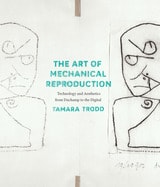
The Art of Mechanical Reproduction
Technology and Aesthetics from Duchamp to the DigitalTamara Trodd
University of Chicago Press, 2015
The Art of Mechanical Reproduction weaves a rich history of the experimental networks in which artists as diverse as Paul Klee, Hans Bellmer, Ellsworth Kelly, Robert Smithson, Gerhard Richter, Chris Marker, and Tacita Dean have worked, and it shows for the first time how extensively technological innovations of the moment have affected their work. Original and broad-ranging, The Art of Mechanical Reproduction challenges some of the most respected and entrenched criticism of the past several decades—and allows us to think about these artists anew.
The Art of Witnessing
Documentary Literature, Film and Theater in Eastern Europe and the BalticsJohanna Lindbladh
Central European University Press, 2026
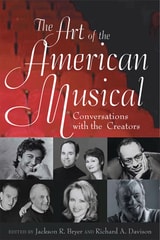
The Art of the American Musical
Conversations With the CreatorsBryer, Jackson R
Rutgers University Press, 2019
Musical theater has captivated American audiences from its early roots in burlesque stage productions and minstrel shows to the million-dollar industry it has become on Broadway today. What is it about this truly indigenous American art form that has made it so enduringly popular? How has it survived, even thrived, alongside the technology of film and the glitz and glamour of Hollywood? Will it continue to evolve and leave its mark on the twenty-first century?
Bringing together exclusive and previously unpublished interviews with nineteen leading composers, lyricists, librettists, directors, choreographers, and producers from the mid-1900s to the present, this book details the careers of the individuals who shaped this popular performance art during its most prolific period. The interviewees discuss their roles in productions ranging from On the Town (1944) and Finian's Rainbow (1947) to The Producers (2001) and Bounce (2003).
Readers are taken onto the stage, into the rehearsals, and behind the scenes. The nuts and bolts, the alchemy, and the occasional agonies of the collaborative process are all explored. In their discussions, the artists detail their engagements with other creative forces, including such major talents as Leonard Bernstein, Jerome Robbins, Bob Fosse, Liza Minnelli, Judy Garland, Barbra Streisand, Jule Styne, Richard Rodgers and Oscar Hammerstein, Alan Jay Lerner, Zero Mostel, and Gwen Verdon. They speak candidly about their own work and that of their peers, their successes and failures, the creative process, and how a show progresses from its conception through rehearsals and tryouts to opening night.
Taken together, these interviews give fresh insight into what Oscar Hammerstein called "a nightly miracle"—the creation of the American musical.
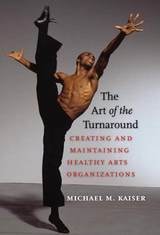
The Art of the Turnaround
Creating and Maintaining Healthy Arts OrganizationsMichael M. Kaiser
Brandeis University Press, 2008
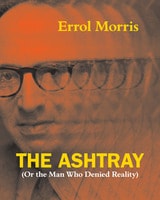
The Ashtray
(Or the Man Who Denied Reality)Errol Morris
University of Chicago Press, 2018
In 1972, philosopher of science Thomas Kuhn threw an ashtray at Errol Morris. This book is the result.
At the time, Morris was a graduate student. Now we know him as one of the most celebrated and restlessly probing filmmakers of our time, the creator of such classics of documentary investigation as The Thin Blue Line and The Fog of War. Kuhn, meanwhile, was—and, posthumously, remains—a star in his field, the author of The Structure of Scientific Revolutions, a landmark book that has sold well over a million copies and introduced the concept of “paradigm shifts” to the larger culture. And Morris thought the idea was bunk.
The Ashtray tells why—and in doing so, it makes a powerful case for Morris’s way of viewing the world, and the centrality to that view of a fundamental conception of the necessity of truth. “For me,” Morris writes, “truth is about the relationship between language and the world: a correspondence idea of truth.” He has no patience for philosophical systems that aim for internal coherence and disdain the world itself. Morris is after bigger game: he wants to establish as clearly as possible what we know and can say about the world, reality, history, our actions and interactions. It’s the fundamental desire that animates his filmmaking, whether he’s probing Robert McNamara about Vietnam or the oddball owner of a pet cemetery. Truth may be slippery, but that doesn’t mean we have to grease its path of escape through philosophical evasions. Rather, Morris argues powerfully, it is our duty to do everything we can to establish and support it.
In a time when truth feels ever more embattled, under siege from political lies and virtual lives alike, The Ashtray is a bracing reminder of its value, delivered by a figure who has, over decades, uniquely earned our trust through his commitment to truth. No Morris fan should miss it.
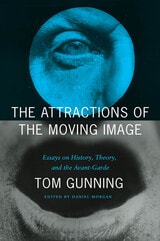
The Attractions of the Moving Image
Essays on History, Theory, and the Avant-GardeTom Gunning
University of Chicago Press, 2025
Tom Gunning is the author of multiple books and nearly two hundred essays that have defined the field of cinema and media studies. His works have transformed our understanding of early cinema and the American avant-garde and reset the terms of many central debates in film and media history and theory. His 1986 essay “The Cinema of Attractions” is among the most cited essays on film ever published. Gunning’s writings articulate a distinctive and powerful model for thinking about cinema’s history and likely future, addressing the full range of moving-image media, from film to still photography to digital media. His discussions draw on stage melodrama and magic lantern shows, as well as criminology, world’s fairs, and Spiritualism, surveying the medium as a cultural phenomenon informed by the industrial and information ages, psychiatry, urban experience, discourses on art and aesthetics, and more.
This collection brings together twenty-six essays that showcase the depth and range of Gunning’s scholarship, including four that have never before been published. Together, they solidify Gunning’s place as a scholar who has transformed the way generations of scholars, archivists, critics, and artists think about cinema.
The Audience Experience
A Critical Analysis of Audiences in the Performing ArtsEdited by Jennifer Radbourne, Hilary Glow, and Katya Johanson
Intellect Books, 2013
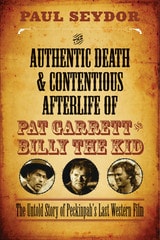
The Authentic Death and Contentious Afterlife of Pat Garrett and Billy the Kid
The Untold Story of Peckinpah's Last Western FilmPaul Seydor
Northwestern University Press, 2015
Long before Sam Peckinpah finished shooting his 1973 Western, Pat Garrett and Billy the Kid, there was open warfare between him and the studio. In this scrupulously researched new book Paul Seydor reconstructs the riveting history of a brilliant director fighting to preserve an artistic vision while wrestling with his own self‑destructive demons. Meticulously comparing the film five extant versions, Seydor documents why none is definitive, including the 2005 Special Edition, for which he served as consultant. Viewing Peckinpah’s last Western from a variety of fresh perspectives, Seydor establishes a nearly direct line from the book Garrett wrote after he killed Billy the Kid to Peckinpah’s film ninety-one years later and shows how, even with directors as singular as this one, filmmaking is a collaborative medium. Art, business, history, genius, and ego all collide in this story of a great director navigating the treacherous waters of collaboration, compromise, and commerce to create a flawed but enduringly powerful masterpiece.
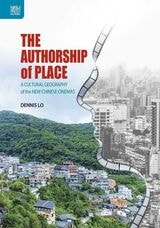
The Authorship of Place
A Cultural Geography of the New Chinese CinemasDennis Lo
Hong Kong University Press, 2020
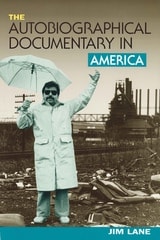
The Autobiographical Documentary in America
Jim Lane
University of Wisconsin Press, 2002
Since the late 1960s, American film and video makers of all genres have been fascinated with themes of self and identity. Though the documentary form is most often used to capture the lives of others, Jim Lane turns his lens on those media makers who document their own lives and identities. He looks at the ways in which autobiographical documentaries—including Roger and Me, Sherman’s March, and Silverlake Life—raise weighty questions about American cultural life. What is the role of women in society? What does it mean to die from AIDS? How do race and class play out in our personal lives? What does it mean to be a member of a family? Examining the history, diversity, and theoretical underpinnings of this increasingly popular documentary form, Lane tracks a fundamental transformation of notions of both autobiography and documentary.
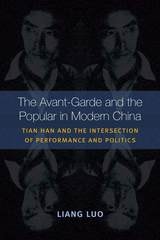
The Avant-Garde and the Popular in Modern China
Tian Han and the Intersection of Performance and PoliticsLiang Luo
University of Michigan Press, 2014
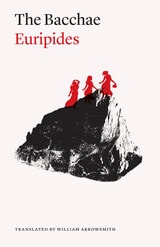
The Bacchae
Euripides
University of Chicago Press, 2013
A stand-alone edition of Euripides’s The Bacchae taken from Chicago’s renowned translations of the Greek tragedies.
Dionysus, son of Zeus, has journeyed to the land of his birth expecting to be received as a god. After being rejected by his kin, he turns to the women of Thebes, driving them into a delirious frenzy. Dressed in animal skins and crowned with leaves, they roam wild in the hills as the king tries to restore order—with horrifying results.
Written in the final years of Euripides’s life and first staged posthumously, The Bacchae is presented here in William Arrowsmith’s energetic translation, drawn from the authoritative third edition of the University of Chicago Press’s Complete Greek Tragedies series. An introduction by Mark Griffith and Glenn W. Most provides essential information about The Bacchae’s first production, plot, and reception in antiquity, and an appendix presents Arrowsmith’s hypothetical reconstruction of fifty lines missing from the denouement of the play.
The Baroque Night
Spencer Golub
Northwestern University Press, 2018
The Baroque Night draws upon materials that have not previously been included in studies of either the baroque or film noir, while offering new perspectives on other, more familiar sources. Leibniz's concepts of the monad and compossibility provide organizing thought models, and death, fear, and mental illness cast their anamorphic images across surfaces that are deeper and closer than they at first appear. Key characters and situations in the book derive from the works of Alfred Hitchcock, Henri-Georges Clozot, Jean-Pierre Melville, Oscar Wilde, Georges Perec, Patricia Highsmith, William Shakespeare, Jean Racine, Pierre Corneille, and Arthur Conan Doyle, among many others.
This is virtuality and reality for the phobic, making it a fascinating and viable document of and episteme for the anxious age in which we (always) find ourselves living, though not yet fully alive. This performance of suspect evidence speaks to and in the ways we are organically inauthentic, the cause of our own causality and our own worst eyewitnesses to all that appears and disappears in space and time.
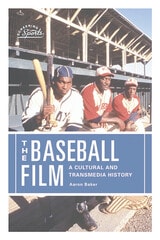
The Baseball Film
A Cultural and Transmedia HistoryAaron Baker
Rutgers University Press, 2022
This study offers an extensive look at nearly one hundred years of baseball-themed movies, documentaries, and TV shows. Film and sports scholar Aaron Baker examines works like A League of their Own (1992) and Sugar (2008), which dramatize the underrepresented contributions of female and immigrant players, alongside classic baseball movies like The Natural that are full of nostalgia for a time when native-born white men could use the game to achieve the American dream. He further explores how biopics have both mythologized and demystified such legendary figures as Ty Cobb, Babe Ruth, Lou Gehrig, Jackie Robinson and Fernando Valenzuela.
The Baseball Film charts the variety of ways that Hollywood presents the game as integral to American life, whether showing little league as a site of parent-child bonding or depicting fans’ lifelong love affairs with their home teams. Covering everything from Bull Durham (1988) to The Bad News Bears (1976), this book offers an essential look at one of the most cinematic of all sports.
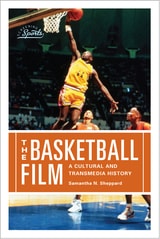
The Basketball Film
A Cultural and Transmedia HistorySamantha N. Sheppard
Rutgers University Press, 2027
The Basketball Film: A Cultural and Transmedia History reveals how stories about the game extend far beyond the court. From classic Hollywood dramas to independent documentaries, basketball films capture the rhythms of play while reflecting deeper struggles over race, identity, community, and aspiration. This groundbreaking study examines the basketball court as both a stage and a mirror for American life—where questions of belonging, opportunity, and cultural power are played out on and off the court. Moving across film, television, and video games, the book traces how basketball’s visual culture has evolved alongside the sport’s rise to global prominence. Through close readings of both celebrated and overlooked works, The Basketball Film offers an expansive and engaging portrait of how basketball has been imagined, represented, and mythologized across popular culture, revealing what the game continues to mean to audiences and players alike.
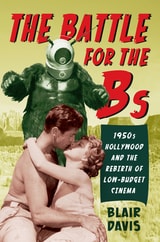
The Battle for the Bs
1950s Hollywood and the Rebirth of Low-Budget CinemaDavis, Blair
Rutgers University Press, 2012
The emergence of the double-bill in the 1930s created a divide between A-pictures and B-pictures as theaters typically screened packages featuring one of each. With the former considered more prestigious because of their larger budgets and more popular actors, the lower-budgeted Bs served largely as a support mechanism to A-films of the major studios—most of which also owned the theater chains in which movies were shown. When a 1948 U.S. Supreme Court antitrust ruling severed ownership of theaters from the studios, the B-movie soon became a different entity in the wake of profound changes to the corporate organization and production methods of the major Hollywood studios.
In The Battle for the Bs, Blair Davis analyzes how B-films were produced, distributed, and exhibited in the 1950s and demonstrates the possibilities that existed for low-budget filmmaking at a time when many in Hollywood had abandoned the Bs. Made by newly formed independent companies, 1950s B-movies took advantage of changing demographic patterns to fashion innovative marketing approaches. They established such genre cycles as science fiction and teen-oriented films (think Destination Moon and I Was a Teenage Werewolf) well before the major studios and also contributed to the emergence of the movement now known as underground cinema. Although frequently proving to be multimillion-dollar box-office draws by the end of the decade, the Bs existed in opposition to the cinematic mainstream in the 1950s and created a legacy that was passed on to independent filmmakers in the decades to come.
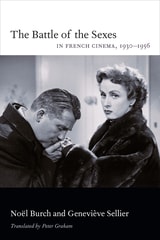
The Battle of the Sexes in French Cinema, 1930–1956
Noël Burch and Geneviève Sellier
Duke University Press, 2013
Citing more than 300 films and providing many in-depth interpretations, Burch and Sellier argue that films made in France between 1930 and 1956 created a national imaginary that equated masculinity with French identity. They track the changing representations of masculinity, explaining how the strong patriarch who saved fallen or troubled women from themselves in prewar films gave way to the impotent, unworthy, or incapable father figure of the Occupation. After the Liberation, the patriarch reemerged as protector and provider alongside assertive women who figured as threats not only to themselves but to society as a whole.
The Beautiful Skin
Football, Fantasy, and Cinematic Bodies in AfricaVlad Dima
Michigan State University Press, 2020
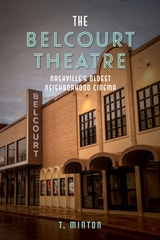
The Belcourt Theatre
Nashville's Oldest Neighborhood CinemaT. Minton
Vanderbilt University Press, 2026
Since opening in 1925 as the Hillsboro Theatre, the Belcourt has stood at the center of Nashville’s changing cultural life. Over the course of a century, it has been a neighborhood movie house, a stage for live performance, a home for community theater, an art-house cinema, a music venue, and a nonprofit film center. Its story is also the story of a city shaped by shifting technologies, urban change, grassroots activism, and evolving ideas about what cultural institutions are for.
The Belcourt Theatre offers the first full history of this enduring landmark, tracing how one cultural center adapted again and again to serve new audiences while remaining a vital place for public gathering, artistic exchange, and shared experience.
The Big Story
The Oral History of Philadelphia TV NewsDavid Grzybowski
Temple University Press, 2025
“We were the only station that stayed on the air continuously. We even pre-empted the CBS evening news.”—Larry Kane, anchor at WCAU, about covering the MOVE bombing
“The highs of working during the pandemic were keeping people informed of this deadly virus and what they had to do to take care of themselves and each other.”—Ukee Washington, KYW anchor, on the pandemic
The Big Story is David Grzybowski’s engrossing oral history of Philadelphia TV news from the perspective of reporters, photographers, producers, and news directors. Covering all the big stories from the late 1970s through the present, this fast-paced running commentary reflects on the uncertainty of the Three Mile Island disaster, the thrill of the Live Aid concert, the “Storm of the Century” (that wasn’t), and the championship victories of the Phillies and the Eagles, among other notable events, local, national, and global.
The Big Story features more than 200 interviews, including anecdotes from seasoned Philadelphia anchors Jim Gardner, Larry Kane, Lisa Thomas-Laury, Mike Jerrick, Vai Sikahema, Tamala Edwards, Pat Ciarrocchi, and Cecily Tynan, among others, about their experience on and off the job. Decision makers reflect on how to cover hot news stories such as Pennsylvania State Treasure R. Budd Dwyer’s on-air suicide. (“It was a big bloody horrifying mess,” according to Chris Wagner, WPVI anchor.)
Grzybowski highlights the Mummers, the launch of Good Day Philadelphia, off-the-air scandals, and how the Action News style secured a loyal following with Philadelphians while the Eyewitness News format competed hard to gain ratings. But the Big Story is how The Big Story provides compelling stories about Philadelphia’s news breakers and newsmakers.
The Big Tomorrow
Hollywood and the Politics of the American WayLary May
University of Chicago Press, 2000
"The most exhilarating work of revisionist film history since Pauline Kael's Citizen Kane. . . . May's take on what movies once were (energizing, as opposed to enervating), and hence can become again, is enough to get you believing in them again as one of the regenerative forces America so sorely needs."—Jay Carr, Boston Globe
"A startling, revisionist history of Hollywood's impact on politics and American culture. . . . A convincing and important addition to American cultural criticism."—Publishers Weekly
"A controversial overview of 30 years of American film history; must reading for any serious student of the subject."—Choice
"A provocative social history of Hollywood's influence in American life from the 1930s to the 1950s. May argues persuasively that movies in the period offered a good deal of tough criticism of economic and social conditions in U.S. society. . . . May challenges us to engage in some serious rethinking about Hollywood's impact on American society in the middle of the twentieth century."—Robert Brent Toplin, American Historical Review
The Biology of Horror
Gothic Literature and FilmJack Morgan
Southern Illinois University Press, 2002
Unearthing the fearful flesh and sinful skins at the heart of gothic horror, Jack Morgan rends the genre’s biological core from its oft-discussed psychological elements and argues for a more transhistorical conception of the gothic, one negatively related to comedy. The Biology of Horror: Gothic Literature and Film dissects popular examples from the gothic literary and cinematic canon, exposing the inverted comic paradigm within each text.
Morgan’s study begins with an extensive treatment of comedy as theoretically conceived by Suzanne Langer, C. L. Barber, and Mikhail Bakhtin. Then, Morgan analyzes the physical and mythological nature of horror in inverted comic terms, identifying a biologically grounded mythos of horror. Motifs such as sinister loci, languishment, masquerade, and subversion of sensual perception are contextualized here as embedded in an organic reality, resonating with biological motives and consequences. Morgan also devotes a chapter to the migration of the gothic tradition into American horror, emphasizing the body as horror’s essential place in American gothic.
The bulk of Morgan’s study is applied to popular gothic literature and films ranging from high gothic classics like Matthew Lewis’s The Monk, Ann Radcliffe’s The Mysteries of Udolpho, Charles Maturin’s Melmoth the Wanderer, and Mary Shelley’s Frankenstein, to later literary works such as Poe’s macabre tales, Melville’s “Benito Cereno,” J.S. Le Fanu’s Uncle Silas, H.P. Lovecraft’s “The Shadow over Innsmouth,” Shirley Jackson’s The Haunting of Hillhouse, Stephen King’s Salem’s Lot, and Clive Barker’s The Damnation Game. Considered films include Nosferatu, Invasion of the Body Snatchers, Friday the 13th, Halloween, Night of the Living Dead, Angel Heart, The Stand, and The Shining.
Morganconcludes his physical examination of the Gothic reality with a consideration born of Julia Kristeva’s theoretical rubric which addresses horror’s existential and cultural significance, its lasting fascination, and its uncanny positive—and often therapeutic—direction in literature and film.
The Birth of Theater from the Spirit of Philosophy
Nietzsche and the Modern DramaDavid Kornhaber
Northwestern University Press, 2016