Results by title
4917 books match the query 'Philosophy' and 1267 start with t
The Agamben Effect, Volume 107
Alison Ross, special issue editor
Duke University Press, 0
Infused with the spirit of Agamben’s critical self-reflection, this special issue of SAQ examines his seminal works Homo Sacer (1995), The Open (2002), and State of Exception (2003). Some contributors use Agamben’s work to examine the history of abortion law in the West, the history of slavery, and women’s rights. Others analyze the connections between Agamben’s work and that of his contemporaries, including Jacques Derrida, Slavoj Žižek, and Jean-Luc Nancy. Still other essays identify new points of interdisciplinary communication between some of Agamben’s most provocative ideas and popular twentieth-century writing.
Contributors. Andrew Benjamin, Claire Colebrook, Jean-Philippe Deranty, Penelope Deutscher, Eleanor Kaufman, Adrian Mackenzie, Catherine Mills, Alison Ross, Lee Spinks, Ewa Płonowska Ziarek, Krzysztof Ziarek
The Age of Immunology
Conceiving a Future in an Alienating WorldA. David Napier
University of Chicago Press, 2003
To illustrate these destructive consequences, Napier likens the current craze for embracing diversity and the use of politically correct speech to a cultural potluck to which we each bring different dishes, but at which no one can eat unless they abide by the same rules. Similarly, loaning money to developing nations serves as a tool both to make the peoples in those nations more like us and to maintain them in the nonthreatening status of distant dependents. To break free of the resulting downward spiral of homogenization and self-focus, Napier suggests that we instead adopt a new defining concept based on embryology, in which development and self-growth take place through a process of incorporation and transformation. In this effort he suggests that we have much to learn from non-Western peoples, such as the Balinese, whose ritual practices require them to take on the considerable risk of injecting into their selves the potential dangers of otherness—and in so doing ultimately strengthen themselves as well as their society.
The Age of Immunology, with its combination of philosophy, history, and cultural inquiry, will be seen as a manifesto for a new age and a new way of thinking about the world and our place in it.

The Age of the World Target
Self-Referentiality in War, Theory, and Comparative WorkRey Chow
Duke University Press, 2006

The Agrarian Roots of Pragmatism
Paul B. Thompson
Vanderbilt University Press, 2000
Today, most historians, philosophers, political theorists, and scholars of rural America take a dim view of the agrarian ideal that farmers and farming occupy a special moral and political status in society. Agrarian rhetoric is generally seen as special pleading on the part of farmers seeking protection from labor reform and environmental regulation while continuing to receive direct payments and subsidies from the public till.
Agrarianism should not be viewed as a set of immutable claims about farming and political order, but as a tradition of moral and political philosophy that has evolved and deepened over the centuries. Agrarian naturalism--the belief that culture and conduct are conditioned by nature because they are of a piece with nature--becomes pragmatic naturalism, giving way to a new set of puzzles about how we are to understand the rural landscape and our responsibilities for its use. The agrarian idea that personality and sociability are integrated with the material transformation of the landscape can serve as the basis for a new, pragmatically grounded ethic of natural resources and rural development.
The essays in this volume critically analyze and revitalize agrarian philosophy by tracing its evolution in the classical American philosophy of key figures such as Franklin, Jefferson, Emerson, Thoreau, Dewey, and Royce. Three chapters address the belief that farming peoples develop moral virtue and a taste for democracy as it evolved in the American context, and four examine how a reconstitution of agrarian themes might invigorate our nation's thinking on environment, food, and rural development policy.
The Agrarian Roots of Pragmatism will be of broad interest to scholars of American philosophy, rural history, history of ideas, geography, and agricultural or natural resource policy.
The Aims of Higher Education
Problems of Morality and JusticeEdited by Harry Brighouse and Michael McPherson
University of Chicago Press, 2015
The contributors tackle the biggest questions in higher education: What are the proper aims of the university? What role do the liberal arts play in fulfilling those aims? What is the justification for the humanities? How should we conceive of critical reflection, and how should we teach it to our students? How should professors approach their intellectual relationship with students, both in social interaction and through curriculum? What obligations do elite institutions have to correct for their historical role in racial and social inequality? And, perhaps most important of all: How can the university serve as a model of justice? The result is a refreshingly thoughtful approach to higher education and what it can, and should, be doing.
The Alienated Subject
On the Capacity to HurtJames A. Tyner
University of Minnesota Press, 2022
A timely and provocative discussion of alienation as an intersectional category of life under racial capitalism and white supremacy
From the divisiveness of the Trump era to the Covid-19 pandemic, alienation has become an all-too-familiar contemporary concept. In this groundbreaking book, James A. Tyner offers a novel framework for understanding the alienated subject, situating it within racial capitalism and white supremacy. Directly addressing current economic trends and their rhetoric of xenophobia, discrimination, and violence, The Alienated Subject exposes the universal whitewashing of alienation.
Drawing insight from a variety of sources, including Marxism, feminism, existentialism, and critical race theory, Tyner develops a critique of both the liberal subject and the alienated subject. Through an engagement with the recent pandemic and the Black Lives Matter movement, he demonstrates how the alienated subject is capable of both compassion and cruelty; it is a sadomasochist. Tyner goes on to emphasize the importance of the particular places we find the alienated subject and how the revolutionary transformation of alienation is inherently a spatial struggle. Returning to key interlocutors from Sartre to Fromm, he examines political notions of distance and the spatial practices of everyday life as well as the capitalist conditions that give rise to the alienated subject.
For Tyner, the alienated subject is not the iconic, romanticized image of Marx’s proletariat. Here he calls for an affirmation of love as a revolutionary concept, necessary for the transformation of a society marred by capitalism into an emancipated, caring society conditioned by socially just relations.
The Alpine Enlightenment
Horace-Bénédict de Saussure and Nature’s SensoriumKathleen Kete
University of Chicago Press, 2024
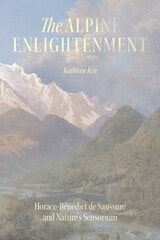
In The Alpine Enlightenment, historian Kathleen Kete takes us into the world of the Genevan geologist, physicist, inventor, and mountaineer Horace-Bénédict de Saussure. During his prodigious climbs into the upper ranges of the Alps, Saussure focused intensely on the natural phenomena he encountered—glaciers, crevasses, changes in the weather, and shifts in the color of the sky—and he described with great precision what he saw, heard, and touched. Kete uses Saussure’s evocative writings, which emphasized above all physical engagement with the earth, to uncover not just how people during the Enlightenment thought about nature, but how they experienced it. As Kete shows, Saussure thought with and through his body: he harnessed his senses to understand the forces that shaped the world around him. In so doing, he offered a vision of nature as worthy of respect independent of human needs, anticipating present-day concerns about the environment and our shared place within it.
The Already Dead
The New Time of Politics, Culture, and IllnessEric Cazdyn
Duke University Press, 2012
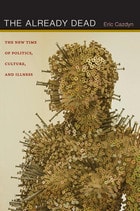
To resist the exploitative crisis state, which Cazdyn terms "the global abyss," he posits the concept of "the already dead," a condition in which the subject (medical, political, psychological) has been killed but has yet to die. Embracing this condition, he argues, allows for a revolutionary consciousness open to a utopian future. Woven into Cazdyn's analysis are personal anecdotes about his battle with leukemia and his struggle to obtain Canadian citizenship during his illness. These narratives help to illustrate his systemic critique, one that reconfigures the relationship between politics, capitalism, revolution, and the body.
The Altruism Reader
Selections from Writings on Love, Religion, and ScienceThomas Oord
Templeton Press, 2007
This anthology brings together, for the first time, leading essays and book chapters from theologians, philosophers, and scientists on their research on ethics, altruism, and love. Because the general consensus today is that scholarship in moral theory requires empirical research, the arguments of the leading scholars presented in this book will be fundamental to those examining issues in love, ethics, religion, and science.
The first half of The Altruism Reader offers essential selections from religious texts, leading contemporary scholars, and cutting-edge ethicists. Buddhism, Christianity, Hinduism, Islam, and Judaism are represented. Among the highly respected writers are Thomas Aquinas, the Dalai Lama, Thich Nhat Hanh, John Polkinghorne, Stephen Pope, Louis Fischer, Amira Shamma Abdin, Katharine Doob Sakenfeld, and Daniel Day Williams.
The book’s second half features primary readings on love and altruism from the sciences. Here the focus is on anthropology, psychology, sociology, biology, and neurology, with material written by Daniel C. Batson, David Sloan Wilson, Robert Wright, Stephen G. Post, Robert Axelrod, Richard Dawkins, Holmes Rolston III, and other renowned scientists and philosophers.
“Virtually all people act—and often talk—as if they have some clue about love. We speak about loving food, falling in love, loving God, feeling loved, and loving a type of music. We say that love hurts, love waits, love stinks, and love means never having to say you’re sorry. We use the word and its derivatives in a wide variety of ways . . . . My definition of love is this: To love is to act intentionally, in sympathetic response to others (including God), to promote well-being.” —Thomas Jay Oord
The Altruistic Species
Scientific, Philosophical, and Religious Perspectives of Human BenevolenceAndrew Michael Flescher
Templeton Press, 2008
What motivates altruism? How essential is the phenomenon of altruism to the human experience? Is altruism readily accessible to the ordinary person? In The Altruistic Species, Andrew Michael Flescher and Daniel L. Worthen explore these questions through the lenses of four disciplinary perspectives—biology, psychology, philosophy, and religion. In their investigation, they make an extended argument for the existence of altruism against competing theories that construe all ostensible cases of benevolence as self-interest in disguise. The authors consider theories of egoism; the role of genetics and evolutionary biology; the psychological that induce altruistic behavior; philosophical theories of altruism in normative ethics such as Kantian, utilitarian, and Aristotelian models of moral action; and accounts of love of the neighbor in Christianity and Buddhism. Additionally, they offer a new, comprehensive definition of altruism that includes the insights of each of these perspectives.
The Altruistic Species reinvigorates the debate over the prevalence of selfless motivation in human behavior—whether it is a rare or ubiquitous phenomenon—something considered exceptional or a capacity that members of any community could potentially develop. This noteworthy interdisciplinary examination of altruism balances science, virtue theory, and theology. It is ideal for ethics, human behavior, and evolutionary biology courses as an educational resource for other multidisciplinary studies and interested lay readers.
The Ambivalence of Scarcity and Other Essays
Paul Dumouchel
Michigan State University Press, 2014
The Ambuiguity of Being
Lonergan and the Problems of the SupernaturalJonathan R. Heaps
Catholic University of America Press, 2024
The American Constitution and Religion
Richard J. Regan
Catholic University of America Press, 2013
The American Evasion of Philosophy
A Genealogy of PragmatismCornel West
University of Wisconsin Press, 1989
Taking Emerson as his starting point, Cornel West’s basic task in this ambitious enterprise is to chart the emergence, development, decline, and recent resurgence of American pragmatism. John Dewey is the central figure in West’s pantheon of pragmatists, but he treats as well such varied mid-century representatives of the tradition as Sidney Hook, C. Wright Mills, W. E. B. Du Bois, Reinhold Niebuhr, and Lionel Trilling. West’s "genealogy" is, ultimately, a very personal work, for it is imbued throughout with the author’s conviction that a thorough reexamination of American pragmatism may help inspire and instruct contemporary efforts to remake and reform American society and culture.
"West . . . may well be the pre-eminent African American intellectual of our generation."—The Nation
"The American Evasion of Philosophy is a highly intelligent and provocative book. Cornel West gives us illuminating readings of the political thought of Emerson and James; provides a penetrating critical assessment of Dewey, his central figure; and offers a brilliant interpretation—appreciative yet far from uncritical—of the contemporary philosopher and neo-pragmatist Richard Rorty. . . . What shines through, throughout the work, is West's firm commitment to a radical vision of a philosophic discourse as inextricably linked to cultural criticism and political engagement."—Paul S. Boyer, professor emeritus of history, University of Wisconsin–Madison.
Wisconsin Project on American Writers
Frank Lentricchia, General Editor

The American Moralist
On Law, Ethics, And GovernmentGeorge Anastaplo
Ohio University Press, 1994
The American Philosopher
Conversations with Quine, Davidson, Putnam, Nozick, Danto, Rorty, Cavell, MacIntyre, KuhnGiovanna Borradori
University of Chicago Press, 1993
Giovanna Borradori, in her substantial introduction, explains the history of the analytic movement in America and the home-grown reaction against it. In the late nineteenth and early twentieth centuries, American philosophy was a socially engaged interdisciplinary enterprise. In transcendentalism and pragmatism, then the dominant currents in American thought, philosophy was connected to history, psychology, and public issues. But in the 1930s, the imported European movement of logical positivism redefined philosophical discourse in terms of mathematical logic and theory of language. Under the influence of this analytic view, American philosophy became a professionalized discipline, divorced from public debate and intellectual history and antagonistic to the other, more humanistic tradition of continental thought.
The American Philosopher explores the opposition between analytic and continental thought and shows how recent American work has begun to bridge the gap between the two traditions. Through a reexamination of pragmatism, and through an attempt to understand philosophy in a more hermeneutical way, the participants narrow the distance between America's distinctly scientific philosophy and Europe's more literary approach.
Moving beyond classical analytic philosophy, the participants confront each other on a number of topics. The logico-linguistic orientations of Quine and Davidson come up against the more discursive, interdisciplinary agendas of Rorty, Putnam, and Cavell. Nozick's theory of pluralist anarchism goes face-to-face with the aesthetic neo-foundationalism of Danto. And Kuhn's hypothesis of paradigm shifts is measured against MacIntyre's ethics of "virtues."
Borradori's conversations offer an unconventional portrait of the way philosophers think about their work; scholars and students will not be its only beneficiaries, so will everyone who wonders about the current state of American philosophy.
The American Way of Peace
An InterpretationJan S. Prybyla
University of Missouri Press, 2005

The Analysis of Ideology
Raymond Boudon
University of Chicago Press, 1989
Boudon begins by providing an exhaustive and subtle critique of sociological explanations of ideology from early conceptions to its current usage in the works of Barthes, Foucault, Habermas, Sartre, and others. He then offers his own interpretation of the origins and emergence of ideological beliefs. In opposition to those views which associate ideology with irrationalism, Boudon shows that ideologies are a natural ingredient of social life; he develops a rationalist theory that helps to explain why certain ideas are believed by individuals and thereby effective in the social world. Finally, he examines case studies of two modern-day ideologies—developmentalism and Third Worldism.
Moving easily across disciplinary boundaries, Boudon's provocative contribution to a subject of growing significance will be of great interest to scholars in sociology and social theory, as well as philosophy, political science, and development studies.
The Anarchy of Black Religion
A Mystic SongJ. Kameron Carter
Duke University Press, 2023
The Anatomy of Disillusion
Martin Heidegger's Notion of TruthW. B. Macomber
Northwestern University Press, 1967
The Ancient City
Numa Denis Fustel de Coulanges
St. Augustine's Press, 2022
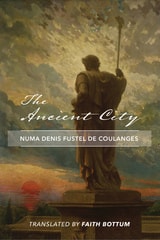
Fustel de Coulanges plunged deep into the world and language of the ancient Greeks and Romans. His presentation of religion as a factor in civilization equates to a vision of how and why the ancient city-state died. This is a non-partisan and spiritually unmotivated work of political-philosophical merit, in which from a perspective of Cartesian doubt Coulanges strips away layers of cultural façade until the most foundational and hidden stratospheres of Greek and Roman institutions are laid bare.
The Ancient City places ancient Greek and Roman cities in relation to each other, and the daily life in both are illustrated in detail. Morality and custom are rendered as living and breathing entities, and the dynamics of social life are displayed in a way that the tragic influence of Christianity is rendered obvious, yet not heartbreaking.
This new translation is an essential component to a well-rounded understanding of where the notion of the city and political ordering come from, the role of religion in politics, the development of law, and its reliance on custom and the eternal fabric of the family.
The Ancient Greek Roots of Human Rights
By Rachel Hall Sternberg
University of Texas Press, 2021
2022 PROSE Award Finalist in Classics
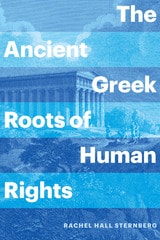
Although the era of the Enlightenment witnessed the rise of philosophical debates around benevolent social practice, the origins of European humane discourse date further back, to Classical Athens. The Ancient Greek Roots of Human Rights analyzes the parallel confluences of cultural factors facing ancient Greeks and eighteenth-century Europeans that facilitated the creation and transmission of humane values across history. Rachel Hall Sternberg argues that precursors to the concept of human rights exist in the ancient articulation of emotion, though the ancient Greeks, much like eighteenth-century European societies, often failed to live up to those values.
Merging the history of ideas with cultural history, Sternberg examines literary themes upholding empathy and human dignity from Thucydides’s and Xenophon’s histories to Voltaire’s Candide, and from Greek tragic drama to the eighteenth-century novel. She describes shared impacts of the trauma of war, the appeal to reason, and the public acceptance of emotion that encouraged the birth and rebirth of humane values.
The Animal Claim
Sensibility and the Creaturely VoiceTobias Menely
University of Chicago Press, 2015
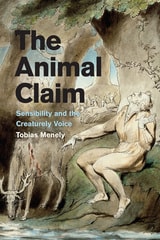
In the Restoration and eighteenth century, philosophers emphasized the role of sympathy in collective life and began regarding the passionate expression humans share with animals, rather than the spoken or written word, as the elemental medium of community. Menely shows how poetry came to represent this creaturely voice and, by virtue of this advocacy, facilitated the development of a viable discourse of animal rights in the emerging public sphere. Placing sensibility in dialogue with classical and early-modern antecedents as well as contemporary animal studies, The Animal Claim uncovers crucial connections between eighteenth-century poetry; theories of communication; and post-absolutist, rights-based politics.

The Annihilation of Inertia
Dostoevsky and MetaphysicsLiza Knapp
Northwestern University Press, 1996
The Anomie of the Earth
Philosophy, Politics, and Autonomy in Europe and the AmericasFederico Luisetti, John Pickles, and Wilson Kaiser, eds.
Duke University Press, 2015
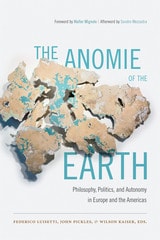
Contributors. Joost de Bloois, Jodi A. Byrd, Gustavo Esteva, Silvia Federici, Wilson Kaiser, Mara Kaufman, Frans-Willem Korsten, Federico Luisetti, Sandro Mezzadra, Walter D. Mignolo, Benjamin Noys, John Pickles, Alvaro Reyes, Catherine Walsh, Gareth Williams, Zac Zimmer
The Anthrobscene
Jussi Parikka
University of Minnesota Press, 2014
Forerunners: Ideas First is a thought-in-process series of breakthrough digital publications. Written between fresh ideas and finished books, Forerunners draws on scholarly work initiated in notable blogs, social media, conference plenaries, journal articles, and the synergy of academic exchange. This is gray literature publishing: where intense thinking, change, and speculation take place in scholarship.
The Anthropology of Experience
Edited by Victor W. Turner and Edward M. Bruner
University of Illinois Press, 1986
explore how people actually experience their culture and how those experiences are expressed in forms as varied as narrative, literary work, theater, carnival, ritual, reminiscence, and life review. Their studies will be
of special interest for anyone working in anthropological theory, symbolic
anthropology, and contemporary social and cultural anthropology, and useful as well for other social scientists, folklorists, literary theorists, and philosophers.
The Anzaldúan Theory Handbook
AnaLouise Keating
Duke University Press, 2022

The Apocalypse in Germany
Klaus Vondung & Translated by Stephen D. Ricks
University of Missouri Press, 2001
Originally published in German in 1988, The Apocalypse in Germany is now available for the first time in English. A fitting subject for the dawn of the new millennium, the apocalypse has intrigued humanity for the last two thousand years, serving as both a fascinating vision of redemption and a profound threat.
A cross-disciplinary study, The Apocalypse in Germany analyzes fundamental aspects of the apocalypse as a religious, political, and aesthetic phenomenon. Author Klaus Vondung draws from religious, philosophical, and political texts, as well as works of art and literature. Using classic Jewish and Christian apocalyptic texts as symbolic and historical paradigms, Vondung determines the structural characteristics and the typical images of the apocalyptic worldview. He clarifies the relationship between apocalyptic visions and utopian speculations and explores the question of whether modern apocalypses can be viewed as secularizations of the Judeo-Christian models.
Examining sources from the eighteenth century to the present, Vondung considers the origins of German nationalism, World War I, National Socialism, and the apocalyptic tendencies in Marxism as well as German literature—from the fin de siècle to postmodernism. His analysis of the existential dimension of the apocalypse explores the circumstances under which particular individuals become apocalyptic visionaries and explains why the apocalyptic tradition is so prevalent in Germany.
The Apocalypse in Germany offers an interdisciplinary perspective that will appeal to a broad audience. This book will also be of value to readers with an interest in German studies, as it clarifies the riddles of Germany's turbulent history and examines the profile of German culture, particularly in the past century.
The Apocalyptic Complex
Perspectives, Histories, PersistenceMatthias Riedl
Central European University Press, 2018
The Arab Christ
Towards an Arab Christian Theology of ConvivialityMouchir Basile Aoun
Gingko, 2022
This work explores the Christian faith in the current intercultural context of Arab societies. It argues that Arab Christianity seeks to express the Christian faith through openness to Muslim otherness, existential conviviality, and fraternal solidarity. In order to safeguard not only the physical existence of these communities but also and above all the relevance and richness of their message of life, the theological reflection presented here takes on a three-part task. First, it faithfully describes the sociopolitical and sociocultural reality of the historical integration of Arab Christian communities. Second, it reinterprets the content of the Christ event with reference to the challenge of Muslim otherness. And finally, it offers a path for conversion that involves a form not only of evangelical practice, designed to foster bonds of fraternal solidarity between the inhabitants of the Arab world but also of shared spiritual quest for moral and political commitment.
The Arachnean and Other Texts
Fernand Deligny
University of Minnesota Press, 2013
The network as a mode of being
In 1968, Fernand Deligny established a “network” for informally taking care of children with autism that was more than a mere site of living; it was a milieu created out of a reflection on the mode of being autistic. What is a space perceived outside of language? What is the form of a movement without perspective or goal? How do we engage with a world that is not our own, a world turned upside down yet truly common, where acting cohabitates with our actions and the unknown with our forms of knowledge? Such is the mythical web of the “Arachnean,” made of lines, holes, traces, enigmas, and questions without answers that demand to see that which cannot be seen. The Arachnean and Other Texts is a collection of Deligny’s writings from the second half of the 1970s. Long before the digital age of social networks, meshworks, and digital webs, Deligny speaks to us in his own autobiographical and aphoristic manner. For him, life was always experienced in the form of “the network as a mode of being.”g.”

The Arc of Love
How Our Romantic Lives Change over TimeAaron Ben-Ze'ev
University of Chicago Press, 2019
Aaron Ben-Ze’ev takes these experiences seriously, but he’s also here to remind us of the benefits of profound love—an emotion that can only develop with time. In The Arc of Love, he provides an in-depth, philosophical account of the experiences that arise in early, intense love—sexual passion, novelty, change—as well as the benefits of cultivating long-term, profound love—stability, development, calmness. Ben-Ze’ev analyzes the core of emotions many experience in early love and the challenges they encounter, and he offers pointers for weathering these challenges. Deploying the rigorous analysis of a philosopher, but writing clearly and in an often humorous style with an eye to lived experience, he takes on topics like compromise, commitment, polyamory, choosing a partner, online dating, and when to say “I love you.” Ultimately, Ben-Ze’ev assures us, while love is indeed best when fresh, if we tend to it carefully, it can become more delicious and nourishing even as time marches on.

The Architect's Dream
Form and Philosophy in Architectural ImaginationSean Pickersgill
Intellect Books, 2024
The Architect’s Dream demonstrates that the goal of creating meaningful architecture can take a variety of critical and philosophical paths. Sean Pickersgill draws on a broad range of subject areas, including film, philosophy, anthropology, mathematics, and economics, to show that the path to meaningful creative practice is always based on an understanding of the principal drivers for change in society. The Architect’s Dream is not a recipe book for others to reproduce; rather, it requires the engaged reader to use their own creative abilities to find the potential in each proposition, and it will encourage the scholastic architect to continue to mine the rich veins of intellectual culture to demonstrate the hidden purposiveness inherent in all meaningful architecture.
The Architectonics of Meaning
Foundations of the New PluralismWalter Watson
University of Chicago Press, 1993
The Architecture of Disability
Buildings, Cities, and Landscapes beyond AccessDavid Gissen
University of Minnesota Press, 2022
A radical critique of architecture that places disability at the heart of the built environment
Disability critiques of architecture usually emphasize the need for modification and increased access, but The Architecture of Disability calls for a radical reorientation of this perspective by situating experiences of impairment as a new foundation for the built environment. With its provocative proposal for “the construction of disability,” this book fundamentally reconsiders how we conceive of and experience disability in our world.
Stressing the connection between architectural form and the capacities of the human body, David Gissen demonstrates how disability haunts the history and practice of architecture. Examining various historic sites, landscape designs, and urban spaces, he deconstructs the prevailing functionalist approach to accommodating disabled people in architecture and instead asserts that physical capacity is essential to the conception of all designed space.
By recontextualizing the history of architecture through the discourse of disability, The Architecture of Disability presents a unique challenge to current modes of architectural practice, theory, and education. Envisioning an architectural design that fully integrates disabled persons into its production, it advocates for looking beyond traditional notions of accessibility and shows how certain incapacities can offer us the means to positively reimagine the roots of architecture.
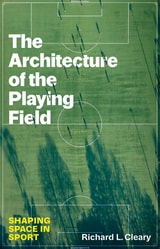
The Architecture of the Playing Field
Shaping Space in SportRichard L. Cleary
University of Texas Press, 2025
A novel exploration of playing fields as aesthetic and architectural spaces that frame athletes’ creativity and spectators’ evolving experiences of sport.
The playing field is a laboratory of invention, where athletes and coaches create new uses for the human body in response to the constraints and affordance of space. The Architecture of the Playing Field explores the aesthetic and physical experiences of the grounds on which we compete, from translucent squash courts to the NBA three-point line to the city streets adopted by skateboarders.
Richard Cleary digs into the perspectives of spectators, athletes, coaches, and umpires, which have changed along with the shifting configuration of the playing surface and the mediation of the action, from early sports coverage to today’s high-tech TV broadcasts. He shows how rules governing the size, shape, and divisions of the field reflect sports’ entwinement with societies at large, in particular the politics of race and gender. Mindful as well that some sports resist containment, he analyzes the disruptive use of space by snowboarders and parkour athletes. The Architecture of the Playing Field sensitizes us to the interplay of settings and bodies in motion fundamental to the power of sport.
The Argument and the Action of Plato's Laws
Leo Strauss
University of Chicago Press, 1977
"Strauss's The Argument and the Action of Plato's 'Laws' reflects his interest in political thought, his dogged method of following the argument of the Laws step by step, and his vigorous defense of this dialogue's integrity in respect to the ideals of the Republic."—Cross Currents
"The unique characteristics of this commentary on the Laws reflect the care and precision which were the marks of Professor Strauss's efforts to understand the complex thoughts of other men."—Allan D. Nelson, Canadian Journal of Political Science
"Thorough and provocative, an important addition to Plato scholarship."—Library Journal
"The major purpose of the commentary is to provide a reading of the dialogue which displays its structural arrangement and the continuity of the argument."—J. W. Dy, Bibliographical Bulletin of Philosophy
"The reader of Strauss's book is indeed guided closely through the whole text."— M. J. Silverthorne, The Humanities Association Review
Leo Strauss (1899-1973) was the Robert Maynard Hutchins Distinguished Service Professor Emeritus of political science at the University of Chicago.
The Argument of the Action
Essays on Greek Poetry and PhilosophySeth Benardete
University of Chicago Press, 2000
This volume brings together Seth Benardete’s studies of Hesiod, Homer, and Greek tragedy, eleven Platonic dialogues, and Aristotle’s Metaphysics.
The Argument of the Action spans four decades of Seth Benardete’s work, documenting its impressive range. Benardete’s philosophic reading of the poets and his poetic reading of the philosophers share a common ground, guided by the key he found in the Platonic dialogue: probing the meaning of speeches embedded in deeds, he uncovers the unifying intention of the work by tracing the way it unfolds through a movement of its own. Benardete’s original interpretations of the classics are the fruit of this discovery of the “argument of the action.”
The Aristotelian Tradition of Natural Kinds and Its Demise
Stewart Umphrey
Catholic University of America Press, 2018
The Art of Authorial Presence
Hawthorne's Provincial TalesG. R. Thompson
Duke University Press, 1993
By focusing on the provincial tales as they were originally conceived--as a narrative cycle--Thompson is able to recover intertextual references that reveal Hawthorne's preoccupation with framing strategies and variations on authorial presence. The author shows how Hawthorne deliberately constructs sentimental narratives, only to deconstruct them. Thompson's analysis provides a new aesthetic context for understanding the whole shape of Hawthorne's career as well as the narrative, ethical, and historical issues within individual works.
Revisionary in its view of one of America's greatest authors, The Art of Authorial Presence also offers invaluable insight into the problems of narratology and historiography, ethics and psychology, romanticism and idealism, and the cultural myths of America.
The Art of Conjecture
Nicholas of Cusa on KnowledgeClyde Lee Miller
Catholic University of America Press, 2021
The Art of Distances
Ethical Thinking in Twentieth-Century LiteratureCorina Stan
Northwestern University Press, 2018
In The Art of Distances, Corina Stan identifies an insistent preoccupation with interpersonal distance in a strand of twentieth-century European and Anglophone literature that includes the work of George Orwell, Paul Morand, Elias Canetti, Iris Murdoch, Walter Benjamin, Annie Ernaux, Günter Grass, and Damon Galgut. Specifically, Stan shows that these authors all engage in philosophical meditations, in the realm of literary writing, on the ethical question of how to live with others and how to find an ideal interpersonal distance at historical moments when there are no obviously agreed-upon social norms for ethical behavior.
Bringing these authors into dialogue with philosophers such as Michel de Montaigne, Ralph Waldo Emerson, Friedrich Nietzsche, Sigmund Freud, Helmuth Plessner, Martin Heidegger, Jean-Luc Nancy, Emmanuel Levinas, Peter Sloterdijk, Guillaume le Blanc, and Pierre Zaoui, Stan shows how the question of the right interpersonal distance became a fundamental one for the literary authors under consideration and explores what forms and genres they proposed in order to convey the complexity of this question. Albeit unknowingly, she suggests, they are engaged in fleshing out what Roland Barthes called “a science, or perhaps an art, of distances.”
The Art of Time
Levinas, Ethics, and the Contemporary Peninsular NovelNina L. Molinaro
Bucknell University Press, 2019
Academicians and journalists in Spain and abroad have recently fastened on an emerging cluster of peninsular writers who, they argue, pertain to a discernible literary generation, provisionally referred to as Generación X. These writers are distinct from their predecessors; they and their literary texts are closely related to the specific socio-political and historical circumstances in Spain and their novels relate stories of more and less proximity, more and less responsibility, and more and less temporality. In short, they trace the temporal movement of alterity through narrative.
Published by Bucknell University Press. Distributed worldwide by Rutgers University Press.
The Arts, Education, and Aesthetic Knowing
Edited by Bennett Reimer and Ralph A. Smith
University of Chicago Press, 1992
The Ascetic Imperative in Culture and Criticism
Geoffrey Galt Harpham
University of Chicago Press, 1988
The Ashtray
(Or the Man Who Denied Reality)Errol Morris
University of Chicago Press, 2018
In 1972, philosopher of science Thomas Kuhn threw an ashtray at Errol Morris. This book is the result.
At the time, Morris was a graduate student. Now we know him as one of the most celebrated and restlessly probing filmmakers of our time, the creator of such classics of documentary investigation as The Thin Blue Line and The Fog of War. Kuhn, meanwhile, was—and, posthumously, remains—a star in his field, the author of The Structure of Scientific Revolutions, a landmark book that has sold well over a million copies and introduced the concept of “paradigm shifts” to the larger culture. And Morris thought the idea was bunk.
The Ashtray tells why—and in doing so, it makes a powerful case for Morris’s way of viewing the world, and the centrality to that view of a fundamental conception of the necessity of truth. “For me,” Morris writes, “truth is about the relationship between language and the world: a correspondence idea of truth.” He has no patience for philosophical systems that aim for internal coherence and disdain the world itself. Morris is after bigger game: he wants to establish as clearly as possible what we know and can say about the world, reality, history, our actions and interactions. It’s the fundamental desire that animates his filmmaking, whether he’s probing Robert McNamara about Vietnam or the oddball owner of a pet cemetery. Truth may be slippery, but that doesn’t mean we have to grease its path of escape through philosophical evasions. Rather, Morris argues powerfully, it is our duty to do everything we can to establish and support it.
In a time when truth feels ever more embattled, under siege from political lies and virtual lives alike, The Ashtray is a bracing reminder of its value, delivered by a figure who has, over decades, uniquely earned our trust through his commitment to truth. No Morris fan should miss it.
The Assemblage Brain
Sense Making in NeurocultureTony D. Sampson
University of Minnesota Press, 2016
Once upon a time, neuroscience was born. A dazzling array of neurotechnologies emerged that, according to popular belief, have finally begun to unlock the secrets of the brain. But as the brain sciences now extend into all corners of cultural, social, political, and economic life, a yet newer world has taken shape: “neuroculture,” which goes further than ever before to tackle the profound ethical implications we face in consequence.
The Assemblage Brain unveils a major new concept of sense making, one that challenges conventional scientific and philosophical understandings of the brain. Drawing on Deleuze and Guattari, Tony D. Sampson calls for a radical critical theory that operates in the interferences between philosophy, science, art, and politics. From this novel perspective the book is structured around two questions: “What can be done to a brain?” and “What can a brain do?” Sampson examines the rise of neuroeconomics in informing significant developments in computer work, marketing, and the neuropharmaceutical control of inattentiveness in the classroom. Moving beyond the neurocapitalist framework, he then reestablishes a place for proto-subjectivity in which biological and cultural distinctions are reintegrated in an understanding of the brain as an assemblage.
The Assemblage Brain unravels the conventional image of thought that underpins many scientific and philosophical accounts of how sense is produced, providing a new view of our current time in which capitalism and the neurosciences endeavor to colonize the brain.

The Attack of the Blob
Hannah Arendt's Concept of the SocialHanna Fenichel Pitkin
University of Chicago Press, 1998
"[O]ne leaves this book feeling enriched and challenged. Pitkin prompts us to rethink our understanding of Arendt and to demythologize the pervasive sense of political helplessness Arendt herself sought so hard to articulate. . . . [A] cause for celebration."—Peter Baehr, Times Literary Supplement
"[Arendt] is certainly among the most original and outstanding political theorists of the twentieth century. . . . It is difficult to imagine a hostile critic examining more effectively than Pitkin . . . Arendt's concept of the social, for hostility would inhibit the acquisition of the mastery of Arendt's texts that Pitkin displays at every turn."—Peter Berkowitz, New Republic
The Authoritarian State (CW4)
An Essay on the Problem of the Austrian StateEric Voegelin, Edited & Intro by Gilbert Weiss, Translated by Ruth Hein, & Historical Commentary by Erika Weinzierl
University of Missouri Press, 1999
Published in Vienna in 1936, The Authoritarian State by Eric Voegelin has remained virtually unknown to the public until now. Sales of the German edition were halted following the Nazi invasion of Austria in 1938, and the entire printing was later destroyed by wartime bombing. In this volume, Voegelin offers a critical examination of the most prominent European theories of state and constitutional law of the period while providing a political and historical analysis of the Austrian situation. He discusses the dismissal of Parliament in 1933, the civil war, the murder of Federal Chancellor Dollfuss, the adoption of the "Authoritarian Constitution" of 1934, and the predicament of being sandwiched between Hitler and Mussolini.
A radical critique of Hans Kelsen's pure theory of law lies at the heart of this work, marking Voegelin's definitive departure from Neo-Kantian epistemology. For the first time, Voegelin elaborates on the important distinction between theoretical concepts and political symbols as a basis for explaining the nontheoretical and speculative character of ideologies, both left and right. He shows that total and authoritarian are symbols of ideological self-interpretation that have no theoretical value, a distinction basic to his later work in The New Science of Politics.
Available for the first time in English, The Authoritarian State is a valuable addition to the Voegelin canon and to the field of intellectual history in general.