336 books match the query 'Political Economy' and 69 start with t

cover of The Political Economy of the Public Budget in the Americas

The Political Economy of the Public Budget in the Americas

Edited by Diego Sanchez-Ancochea and Iwan Morgan

University of London Press, 2009
This volume provides a multidisciplinary comparison of fiscal and tax policies in Latin America and the United States by political economy specialists from Latin America, the U.S., and Europe. The contributors identify the common budgetary problems of the nations of the Americas in terms of their status as "small fiscal states" --ones that have failed to generate adequate tax resources to fund the responsibilities of modern government. They also consider the differing effect of capital inflows on the autonomy of the public sector in the U.S. and Latin America. While the former has been able to operate large budgetary and trade deficits without adverse reaction from global financial markets, the latter has experienced the disciplining effect of these external forces to maintain low public deficits. The book offers a timely assessment of hemispheric fiscal developments on the eve of the greatest crisis for the world economy since the depression of the 1930s. Contributors includeWerner Baer (University of Illinois), Dennis S. Ippolito (Southern Methodist University), Colin M. Lewis (London School of Economics & Political Science and ISA), Roberto Machado (ECLAC), Andrew H. Mitchell (UCLA Center for Economic History), Iwan Morgan (ISA), Diego Sanchez-Ancochea (University of Oxford), Aaron Schneider (Tulane University), Carlos E. Schonerwald (Universidade do Vale do Rio dos Sinos and ECLAC), and Matias Vernengo (University of Utah).
[more]
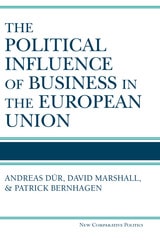
cover of The Political Influence of Business in the European Union

The Political Influence of Business in the European Union

Andreas Dür, David Marshall, and Patrick Bernhagen

University of Michigan Press, 2019
Many citizens, politicians, and political activists voice concern about the political influence of business in the European Union. But do business interests really pull the strings in Brussels? Contrary to expectations, this book shows that business interests are no more influential than other interests in shaping contemporary EU policies. Andreas Dür, David Marshall, and Patrick Bernhagen present an original argument that stresses the role of public actors in facilitating or impeding interest groups’ lobbying success. Novel data on a large number of legislative proposals on the EU’s agenda and three case studies present strong support for this argument. The Political Influence of Business in the European Union offers new insights into how lobbying success depends on the demand and supply of information, as well as new ideas on how to measure lobbying success. The book advances a fresh perspective on the question of business power and shows why business interests often lose in the policy struggle.
[more]
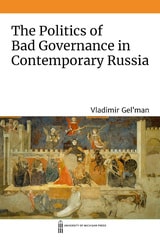
cover of The Politics of Bad Governance in Contemporary Russia

The Politics of Bad Governance in Contemporary Russia

Vladimir Gel'man

University of Michigan Press, 2022

In this book, Vladimir Gel’man considers bad governance as a distinctive politico-economic order that is based on a set of formal and informal rules, norms, and practices quite different from those of good governance. Some countries are governed badly intentionally because the political leaders of these countries establish and maintain rules, norms, and practices that serve their own self-interests. Gel’man considers bad governance as a primarily agency-driven rather than structure-induced phenomenon. He addresses the issue of causes and mechanisms of bad governance in Russia and beyond from a different scholarly optics, which is based on a more general rationale of state-building, political regime dynamics, and policy-making. He argues that although these days, bad governance is almost universally perceived as an anomaly, at least in developed countries, in fact human history is largely a history of ineffective and corrupt governments, while the rule of law and decent state regulatory quality are relatively recent matters of modern history, when they emerged as side effects of state-building. Indeed, the picture is quite the opposite: bad governance is the norm, while good governance is an exception. The problem is that most rulers, especially if their time horizons are short and the external constraints on their behavior are not especially binding, tend to govern their domains in a predatory way because of the prevalence of short-term over long-term incentives. Contemporary Russia may be considered as a prime example of this phenomenon. Using an analysis of case studies of political and policy changes in Russia after the Soviet collapse, Gel’man discusses the logic of building and maintaining the politico-economic order of bad governance in Russia and paths of its possible transformation in a theoretical and comparative perspective.
 
[more]
cover of The Politics of the Minimum Wage

The Politics of the Minimum Wage

Jerold Waltman

University of Illinois Press, 2000

The minimum wage as a value of civic republicanism

The minimum wage appears to be a standard economic regulatory measure, yet a politics of symbolism more than anything else defines the political contests that periodically erupt over it. Detractors abhor its corruption of market principles, while supporters see it as a measure of society's symbolic commitment to the poor.

Tracing the history of the minimum wage and exposing its inherent contradictions as a political issue, Jerold Waltman proposes an alternative to the economic arguments that now dominate debates over it. Citing overwhelming public support for the minimum wage as evidence of an enduring civic consciousness and humanitarianism, Waltman advocates recasting the discussion in terms of a political economy of citizenship. Such a perspective would focus on the communal value of work, the need for citizens to have a stake in the community, and the effects of economic inequality on the bonds of common citizenship.

Positioning the minimum wage as a fulcrum for the most basic conflict underlying America's unique combination of democracy and a market economy, The Politics of the Minimum Wage shows how a defense of the minimum wage built on a communal sense of responsibility rests on a strong tradition of civic republicanism and strengthens the hope for a truly democratic society.
[more]
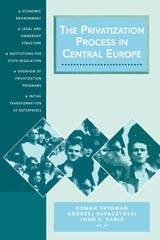
cover of The Privatization Process in Central Europe

The Privatization Process in Central Europe

Roman Frydman

Central European University Press, 1993
In this work, comprehensive comparative information on five Central European countries has been collected by teams of researchers from both within the region and from the West. Following an introduction to the economic environment in each country, it provides an overview of the privatization process, including an account of the legal framework of ownership, institutions for state regulation, an overview of privatization programmes and the initial transformation of enterprises. A key feature of the book is the authors' access to hitherto unavailable information and their ability to present a vast amount of material in an easily available format. Aimed at policy makers and business people, the work should provide a strong foundation for future research.
[more]
cover of The Privatization Process in Russia, the Ukraine, and the Baltic States

The Privatization Process in Russia, the Ukraine, and the Baltic States

Roman Frydman

Central European University Press, 1993
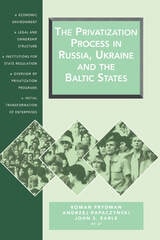
In this work, comprehensive comparative information on five former Soviet republics has been collected by teams of researchers from both within the region and from the West. Following an introduction to the economic environment in each country, it provides an overview of the privatization process, including an account of the legal framework of ownership, institutions for state regulation, an overview of privatization programmes and the initial transformation of enterprises. A key feature of the book is the authors' access to hitherto unavailable information and their ability to present a vast amount of material in an easily available format. Aimed at policy makers and business people, the work should provide a strong foundation for future research.
[more]
cover of The Real Cyber War: The Political Economy of Internet Freedom

The Real Cyber War

The Political Economy of Internet Freedom

Shawn M. Powers and Michael Jablonski

University of Illinois Press, 2015

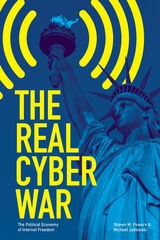
Contemporary discussion surrounding the role of the internet in society is dominated by words like: internet freedom, surveillance, cybersecurity, Edward Snowden and, most prolifically, cyber war. Behind the rhetoric of cyber war is an on-going state-centered battle for control of information resources. Shawn Powers and Michael Jablonski conceptualize this real cyber war as the utilization of digital networks for geopolitical purposes, including covert attacks against another state's electronic systems, but also, and more importantly, the variety of ways the internet is used to further a state’s economic and military agendas.
 
Moving beyond debates on the democratic value of new and emerging information technologies, The Real Cyber War focuses on political, economic, and geopolitical factors driving internet freedom policies, in particular the U.S. State Department's emerging doctrine in support of a universal freedom to connect. They argue that efforts to create a universal internet built upon Western legal, political, and social preferences is driven by economic and geopolitical motivations rather than the humanitarian and democratic ideals that typically accompany related policy discourse. In fact, the freedom-to-connect movement is intertwined with broader efforts to structure global society in ways that favor American and Western cultures, economies, and governments.
 
Thought-provoking and far-seeing, The Real Cyber War reveals how internet policies and governance have emerged as critical sites of geopolitical contestation, with results certain to shape statecraft, diplomacy, and conflict in the twenty-first century.
[more]
cover of The Regulated Economy: A Historical Approach to Political Economy

The Regulated Economy

A Historical Approach to Political Economy

Edited by Claudia Goldin and Gary D. Libecap

University of Chicago Press, 1994

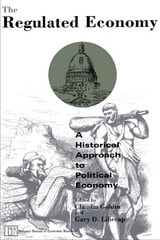
How has the United States government grown? What political and economic factors have given rise to its regulation of the economy? These eight case studies explore the late-nineteenth- and early twentieth-century origins of government intervention in the United States economy, focusing on the political influence of special interest groups in the development of economic regulation.

The Regulated Economy examines how constituent groups emerged and demanded government action to solve perceived economic problems, such as exorbitant railroad and utility rates, bank failure, falling agricultural prices, the immigration of low-skilled workers, workplace injury, and the financing of government. The contributors look at how preexisting policies, institutions, and market structures shaped regulatory activity; the origins of regulatory movements at the state and local levels; the effects of consensus-building on the timing and content of legislation; and how well government policies reflect constituency interests.

A wide-ranging historical view of the way interest group demands and political bargaining have influenced the growth of economic regulation in the United States, this book is important reading for economists, political scientists, and public policy experts.
[more]
cover of The Repoliticization of the Welfare State

The Repoliticization of the Welfare State

Ian P. McManus

University of Michigan Press, 2022

The Repoliticization of the Welfare State grapples with the evolving nature of political conflict over social spending after the Great Recession. While the severity of the economic crisis encouraged strong social spending responses to protect millions of individuals, governments have faced growing pressure to reduce budgets and make deep cuts to the welfare state. Whereas conservative parties have embraced fiscal discipline and welfare state cuts, left-wing parties have turned away from austerity in favor of higher social spending. These political differences represent a return of traditional left-right beliefs over social spending and economic governance. 

This book is one of the first to systematically compare welfare state politics before and after the Great Recession, arguing that a new and lasting post-crisis dynamic has emerged where political parties once again matter for social spending. At the heart of this repoliticization are intense ideological debates over market regulation, social inequality, redistribution, and the role of the state. The book analyzes social spending dynamics for 28 countries before and after the crisis. It also includes in-depth country case studies representing five distinct welfare state types: Germany, the United Kingdom, Sweden, Spain, and the Czech Republic.
[more]
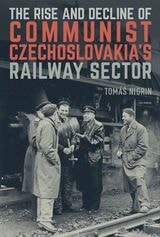
cover of The Rise and Decline of Communist Czechoslovakia´s Railway Sector

The Rise and Decline of Communist Czechoslovakia´s Railway Sector

Tomáš Nigrin

Central European University Press, 2022

Once the pride of interwar Czechoslovakia, and key during the forced industrialization of the Stalinist period, during the 1970s and 1980s the Czechoslovak railway sector showed the symptoms of the political tiredness and economic exhaustion of the Soviet Bloc. This book examines the failure of central economic planning through the lens of this national transport system.

Based on the presentation of its history and on the detailed scrutiny of the actors, institutions, internal mechanisms, and conditions of the railway sector, the analysis reveals the identities of the real stakeholders in the state administration. This case shows how the country was governed by Communist Party institutions and government ministries, and how developments in the transportation sector—like in every sector—reflected their priorities. Numerous tables with selected statistics underscore the economic analysis and black and white photos offer a glimpse on the technical base of the railway sector.

The book is filled with enlightening comparisons of the Czechoslovak transportation industry with its counterparts in the whole Eastern Bloc. Integration into the Council for Mutual Economic Assistance (Comecon) of the Bloc could have been an asset, yet the records have more to say about conflicts than cooperation.
[more]
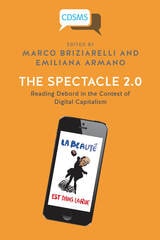
cover of The Spectacle 2.0: Reading Debord in the Context of Digital Capitalism

The Spectacle 2.0

Reading Debord in the Context of Digital Capitalism

Marco Briziarelli and Emiliana Armano

University of Westminster Press, 2017

“Necessary reading for scholars interested in theorising the spectacle's relation to the labour theory of value, commodity fetishism and subjectivity under post-Fordism.” - https://www.triple-c.at/index.php/tripleC/article/view/1015/1176

Spectacle 2.0 recasts Debord's theory of spectacle within the frame of 21st century digital capitalism. It offers a reassessment of Debord’s original notion of Spectacle from the late 1960s, of its posterior revisitation in the 1990s, and it presents a reinterpretation of the concept within the scenario of contemporary informational capitalism and more specifically of digital and media labour. It is argued that the Spectacle 2.0 form operates as the interactive network that links through one singular (but contradictory) language and various imaginaries, uniting diverse productive contexts such as logistics, finance, new media and urbanism. Spectacle 2.0 thus colonizes most spheres of social life by processes of commodification, exploitation and reification. Diverse contributors consider the topic within the book’s two main sections: Part I conceptualizes and historicizes the Spectacle in the context of informational capitalism; contributions in Part II offer empirical cases that historicise the Spectacle in relation to the present (and recent past) showing how a Spectacle 2.0 approach can illuminate and deconstruct specific aspects of contemporary social reality. All contributions included in this book rework the category of the Spectacle to present a stimulating compendium of theoretical critical literature in the fields of media and labour studies. In the era of the gig-economy, highly mediated content and President Trump, Debord’s concept is arguably more relevant than ever.
[more]
cover of The Struggle for Hegemony in Pakistan: Fear, Desire and Revolutionary Horizons

The Struggle for Hegemony in Pakistan

Fear, Desire and Revolutionary Horizons

Aasim Sajjad-Akhtar

Pluto Press, 2022

'A major analysis of our world's political crisis' - Joel Wainwright

The collapse of neoliberal hegemony in the western world following the financial crash of 2007-8 and subsequent rise of right-wing authoritarian personalities has been described as a crisis of 'the political' in western societies. But the crisis must be seen as global, rather than focusing on the west alone.

Pakistan is experiencing rapid financialization and rapacious capture of natural resources, overseen by the country's military establishment and state bureaucracy. Under their watch, trading and manufacturing interests, property developers and a plethora of mafias have monopolized the provision of basic needs like housing, water and food, whilst also feeding conspicuous consumption by a captive middle-class.

Aasim Sajjad-Akhtar explores neoliberal Pakistan, looking at digital technology in enhancing mass surveillance, commodification and atomization, as well as resistance to the state and capital. Presenting a new interpretation of our global political-economic moment, he argues for an emancipatory political horizon embodied by the 'classless' subject.
[more]
cover of The Technology of Transition: Science and Technology Policies for Transition Countries

The Technology of Transition

Science and Technology Policies for Transition Countries

David A. Dyker

Central European University Press, 1997

This book addresses the crucial question of how countries which have suffered losses in productivity levels and innovatory momentum over perhaps twenty-thirty years can rediscover their dynamism. Because the contributors have the immediate experience of tackling such complex problems and possess first-hand knowledge of a wide range of developmental patterns, each is well-placed to advise on the search for comprehensive solutions. The book not only focuses on the problems of innovation and technology transfer as they are reflected in the experience of the transition period to date, but also develops conceptual and strategic approaches to problems which will take a generation or more to resolve.
[more]
cover of The Washington Connection and Third World Fascism: The Political Economy of Human Rights: Volume I

The Washington Connection and Third World Fascism

The Political Economy of Human Rights: Volume I

Noam Chomsky

Pluto Press, 2015

[more]
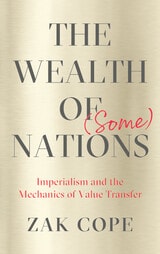
cover of The Wealth of (Some) Nations: Imperialism and the Mechanics of Value Transfer

The Wealth of (Some) Nations

Imperialism and the Mechanics of Value Transfer

Zak Cope

Pluto Press, 2019

In this provocative new study, Zak Cope makes the case that capitalism is empirically inseparable from imperialism, historically and today. Using a rigorous political economic framework, he lays bare the vast ongoing transfer of wealth from the poorest to the richest countries through the mechanisms of monopoly rent, unequal exchange, and colonial tribute. The result is a polarized international class structure with a relatively rich Global North and an impoverished, exploited Global South.
            Cope makes the controversial claim that it is because of these conditions that workers in rich countries benefit from higher incomes and welfare systems with public health, education, pensions, and social security. As a result, the internationalism of populations in the Global North is weakened and transnational solidarity is compromised. The only way forward, Cope argues is through a renewed anti-imperialist politics rooted in a firm commitment to a radical labor internationalism.
 
[more]
cover of They Say Cutback, We Say Fight Back!: Welfare Activism in an Era of Retrenchment

They Say Cutback, We Say Fight Back!

Welfare Activism in an Era of Retrenchment

Ellen Reese

Russell Sage Foundation, 2012

In 1996, President Bill Clinton hailed the "end of welfare as we know it" when he signed the Personal Responsibility and Work Opportunity Act. The law effectively transformed the nation's welfare system from an entitlement to a work-based one, instituting new time limits on welfare payments and restrictions on public assistance for legal immigrants. In They Say Cutback, We Say Fight Back, Ellen Reese offers a timely review of welfare reform and its controversial design, now sorely tested in the aftermath of the Great Recession. The book also chronicles the largely untold story of a new grassroots coalition that opposed the law and continues to challenge and reshape its legacy. While most accounts of welfare policy highlight themes of race, class and gender, They Say Cutback examines how welfare recipients and their allies contested welfare reform from the bottom-up. Using in-depth case studies of campaigns in Wisconsin and California, Reese argues that a crucial phase in policymaking unfolded after the bill's passage. As counties and states set out to redesign their welfare programs, activists scored significant victories by lobbying officials at different levels of American government through media outreach, protests and organizing. Such efforts tended to enjoy more success when based on broad coalitions that cut across race and class, drawing together a shifting alliance of immigrants, public sector unions, feminists, and the poor. The book tracks the tensions and strategies of this unwieldy group brought together inadvertently by their opposition to four major aspects of welfare reform: immigrants' benefits, welfare-to-work policies, privatization of welfare agencies, and child care services. Success in scoring reversals was uneven and subject to local demographic, political and institutional factors. In California, for example, workfare policies created a large and concentrated pool of new workers that public sector unions could organize in campaigns to change policies. In Wisconsin, by contrast, such workers were scattered and largely placed in private sector jobs, leaving unions at a disadvantage. Large Latino and Asian immigrant populations in California successfully lobbied to restore access to public assistance programs, while mobilization in Wisconsin remained more limited. On the other hand, the unionization of child care providers succeeded in Wisconsin – but failed in California – because of contrasting gubernatorial politics. With vivid descriptions of the new players and alliances in each of these campaigns, Reese paints a nuanced and complex portrait of the modern American welfare state. At a time when more than 40 million Americans live in poverty, They Say Cutback offers a sobering assessment of the nation's safety net. As policymakers confront budget deficits and a new era of austerity, this book provides an authoritative guide for both scholars and activists looking for lessons to direct future efforts to change welfare policy. A Volume in the American Sociological Association's Rose Series in Sociology
[more]
cover of Toxic and Intoxicating Oil: Discovery, Resistance, and Justice in Aotearoa New Zealand

Toxic and Intoxicating Oil

Discovery, Resistance, and Justice in Aotearoa New Zealand

Patricia Widener

Rutgers University Press, 2021
When oil and gas exploration was expanding across Aotearoa New Zealand, Patricia Widener was there interviewing affected residents and environmental and climate activists, and attending community meetings and anti-drilling rallies. Exploration was occurring on an unprecedented scale when oil disasters dwelled in recent memory, socioecological worries were high, campaigns for climate action were becoming global, and transitioning toward a low carbon society seemed possible. Yet unlike other communities who have experienced either an oil spill, or hydraulic fracturing, or offshore exploration, or climate fears, or disputes over unresolved Indigenous claims, New Zealanders were facing each one almost simultaneously. Collectively, these grievances created the foundation for an organized civil society to construct and then magnify a comprehensive critical oil narrative--in dialogue, practice, and aspiration. Community advocates and socioecological activists mobilized for their health and well-being, for their neighborhoods and beaches, for Planet Earth and Planet Ocean, and for terrestrial and aquatic species and ecosystems. They rallied against toxic, climate-altering pollution; the extraction of fossil fuels; a myriad of historic and contemporary inequities; and for local, just, and sustainable communities, ecologies, economies, and/or energy sources. In this allied ethnography, quotes are used extensively to convey the tenor of some of the country’s most passionate and committed people. By analyzing the intersections of a social movement and the political economy of oil, Widener reveals a nuanced story of oil resistance and promotion at a time when many anti-drilling activists believed themselves to be on the front lines of the industry’s inevitable decline.
[more]
cover of Transnational Capitalism in East Central Europe's Heavy Industry: From Flagship Enterprises to Subsidiaries

Transnational Capitalism in East Central Europe's Heavy Industry

From Flagship Enterprises to Subsidiaries

Aleksandra Sznajder Lee

University of Michigan Press, 2016

Focusing on the steel industry during the post-communist transition from 1989 through 2009, Aleksandra Sznajder Lee traces the transformation of flagship state enterprises in the Czech Republic, Poland, Romania, and Slovakia into the subsidiaries of large, international corporations. By analyzing this transformation at the three levels of enterprise, sector, and national-international nexus, she identifies the players—from international investors and European Union members to national labor unions and local industry managers—in the political economy of reform. Even in the midst of the transition to a capitalist, democratic system, Sznajder Lee finds, the state plays a key role in mediating between domestic vested interests and external pressures from international financial markets and institutions, on the one hand, and regional institutions on the other. Whereas state power may be employed to require domestic firms to operate as capitalists in the international market, it may also be used to shield enterprises from market pressures in order to promote the political and personal preferences of the elite.

This book has broad implications for the political economy of reform because it illuminates the political determinants of privatization and the resources used to resist it. In addition, Sznajder Lee sheds new light on why some countries are more likely than others to be subject to external constraints, such as IMF conditionality, and how some allegedly pro-market reformers manage to maintain public ownership over certain industry sectors.
[more]
cover of Trimming the Sails: The Comparative Political Economy of Expansionary Fiscal Consolidations

Trimming the Sails

The Comparative Political Economy of Expansionary Fiscal Consolidations

Istvan Benczes

Central European University Press, 2008

The book provides a clear, multidisciplinary and systematic analysis of the relatively new concept of the so-called expansionary fiscal consolidations. This concept suggests that fiscal adjustment should not be in trade-off with economic growth if certain conditions are met. But why do only a few countries and only at certain times experience the expansionary effects, while others not at all? The necessary institutional conditions and circumstances have been totally neglected in the literature, or analyzed only partially at best.
[more]