Results by title
376 books match the query 'Racism' and 90 start with t
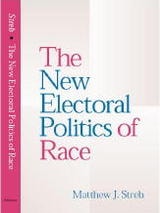
The New Electoral Politics of Race
Matthew Justin Streb
University of Alabama Press, 2002
Historically, race has always been at the heart of American politics, and southern politics more specifically. Southern elections revolved almost entirely around racial issues during the 1950s and 1960s as debates raged over integration of schools, voting rights, and busing patterns. The election of George Wallace as governor of Alabama in 1962 underscored the electoral power of ruthless racial rhetoric, not only in Alabama, but throughout the South and the entire country. Almost 40 years later, segregation is no longer legal, tensions between blacks and whites have lessened, and the influx of large numbers of African Americans into the electorate has forced politicians to court black voters.
Matthew Streb finds, however, that although extreme racial rhetoric has disappeared from the modern campaign trail, voters are still polarized along racial lines. By comparing gubernatorial campaigns in four southern and three northern states-Alabama, Georgia, Arkansas, Virginia, Ohio, Iowa, and Massachusetts-the author examines how candidates use, or fail to use, race in their campaign strategies. He demonstrates that race indeed remains a significant factor in American elections, couched in alternative issues, such as affirmative action, profiling, and social welfare.
Streb's analysis of the appeal by politicians for the elite vote and the public vote reveals that class has replaced race as a definitive issue in American politics. This book will, therefore, be important not only to academic libraries and students and scholars of political science, southern history, and civil rights, but also to pollsters, campaign strategists, and state political party officials.
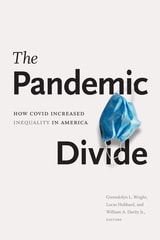
The Pandemic Divide
How COVID Increased Inequality in AmericaGwendolyn L. Wright, Lucas Hubbard, and William A. Darrity, editors
Duke University Press, 2022
Contributors. Fenaba Addo, Steve Amendum, Leslie Babinski, Sandra Barnes, Mary T. Bassett, Keisha Bentley-Edwards, Kisha Daniels, William A. Darity Jr., Melania DiPietro, Jane Dokko, Fiona Greig, Adam Hollowell, Lucas Hubbard, Damon Jones, Steve Knotek, Arvind Krishnamurthy, Henry Clay McKoy Jr., N. Joyce Payne, Erica Phillips, Eugene Richardson, Paul Robbins, Jung Sakong, Marta Sánchez, Melissa Scott, Kristen Stephens, Joe Trotter, Chris Wheat, Gwendolyn L. Wright
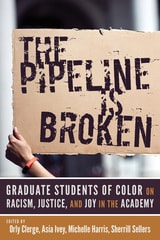
The Pipeline Is Broken
Graduate Students of Color on Racism, Justice, and Joy in the AcademyOrly Clerge
Utah State University Press, 2026
The Pipeline Is Broken explores the reality of racial exclusion and bias in graduate student education, arguing that the insidious effects of structural and institutional racism substantially chip away at the very pipeline of future BIPOC academics—already limited for other racialized reasons.
A series of letters written by graduate students of color, this collection offers a multifaceted account of the challenges, oppositions, microaggressions, and outright discrimination that these students face in higher education settings. Graduate students describe navigating hostile mentoring relationships and unwelcoming campus cultures and peers and laboring for poverty wages to earn their degrees. Yet these letters celebrate joy, community, and agency, offering a more complete and affirming view of graduate student life. Through these brave personal stories, The Pipeline Is Broken asks readers to interrogate what it means to navigate higher education as a person of color and to understand that the reality of faculty of color’s numerical-minority status is a complicated phenomenon whose genesis rests not at the moment of job interview. Rather, these letters show, this status is an intricate manifestation of a process that begins in elementary schools, is reinforced in high schools and colleges, and is part and parcel of the minefield that is graduate education in America.
Essential reading for anyone who cares about racial equity in education, mentorship, leadership development, or student well-being, The Pipeline Is Broken is a guide, a mirror, and a call to action all in one, challenging graduate programs, faculty, and administrators to examine their complicity in maintaining inequitable systems and offering suggestions for building cultures of care.
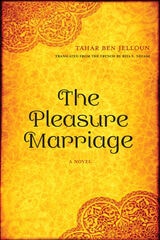
The Pleasure Marriage
A NovelTahar Ben Jelloun; Translated from the French by Rita S. Nezami
Northwestern University Press, 2021
Nabou returns to Fez as Amir’s second wife, weathering the jealous cruelty of Lalla Fatma, his first partner. Isolated within her new home, Nabou gives birth to twin sons, one black and one white, who come of age on the opposite sides of racial, social, and political chasms and who chart vastly different courses. The Pleasure Marriage showcases Ben Jelloun’s mastery of metaphor and lyrical narrative as he continues to take us into the worlds of Moroccan culture through his exquisite language and literary genius.

The Politics of Decolonial Investigations
Walter D. Mignolo
Duke University Press, 2021
The Possessive Investment in Whiteness
How White People Profit from Identity PoliticsGeorge Lipsitz
Temple University Press, 2018
George Lipsitz’s classic book The Possessive Investment in Whiteness argues that public policy and private prejudice work together to create a possessive investment in whiteness that is responsible for the racialized hierarchies of our society. Whiteness has a cash value: it accounts for advantages that come to individuals through profits made from housing secured in discriminatory markets, through the unequal educational opportunities available to children of different races, through insider networks that channel employment opportunities to the friends and relatives of those who have profited most from past and present discrimination, and especially through intergenerational transfers of inherited wealth that pass on the spoils of discrimination to succeeding generations. White Americans are encouraged to invest in whiteness, to remain true to an identity that provides them with structured advantages.
In this twentieth anniversary edition, Lipsitz provides a new introduction and updated statistics; as well as analyses of the enduring importance of Hurricane Katrina; the nature of anti-immigrant mobilizations; police assaults on Black women, the killings of Trayvon Martin, Michael Brown, and Freddie Gray; the legacy of Obama and the emergence of Trump; the Charleston Massacre and other hate crimes; and the ways in which white fear, white fragility, and white failure have become drivers of a new ethno-nationalism.
As vital as it was upon its original publication, the twentieth anniversary edition of The Possessive Investment in Whiteness is an unflinching but necessary look at white supremacy.
The Possessive Investment in Whiteness
How White People Profit from Identity Politics, Revised and Expanded EditionGeorge Lipsitz
Temple University Press, 2006
The Price of Racial Reconciliation
Ronald W. Walters
University of Michigan Press, 2008
“In The Price of Racial Reconciliation, Ronald Walters offers an abundance of riches. This book provides an extraordinarily comprehensive and persuasive set of arguments for reparations, and will be the lens through which meaningful opportunities for reconciliation are viewed in the future. If this book does not lead to the success of the reparations movement, nothing will.”
—Charles J. Ogletree, Jesse Climenko Professor of Law, Harvard Law School
“The Price of Racial Reconciliation is a seminal study of comparative histories and race(ism) in the formation of state structures that prefigure(d) socioeconomic positions of Black peoples in South Africa and the United States. The scholarship is meticulous in brilliantly constructed analysis of the politics of memory, reparations as an immutable principle of justice, imperative for nonracial(ist) democracy, and a regime of racial reconciliation.”
—James Turner, Professor of African and African American Studies and Founder, Africana Studies and Research Center, Cornell University
“A fascinating and pathbreaking analysis of the attempt at racial reconciliation in South Africa which asks if that model is relevant to the contemporary American racial dilemma. An engaging multidisciplinary approach relevant to philosophy, sociology, history, and political science.”
—William Strickland, Associate Professor of Political Science, W.E.B. Du Bois Department of Afro-American Studies, University of Massachusetts Amherst
The issue of reparations in America provokes a lot of interest, but the public debate usually occurs at the level of historical accounting: “Who owes what for slavery?” This book attempts to get past that question to address racial restitution within the framework of larger societal interests. For example, the answer to the “why reparations?” question is more than the moral of payment for an injustice done in the past. Ronald Walters suggests that, insofar as the impact of slavery is still very much with us today and has been reinforced by forms of postslavery oppression, the objective of racial harmony will be disrupted unless it is recognized with the solemnity and amelioration it deserves. The author concludes that the grand narrative of black oppression in the United States—which contains the past and present summary of the black experience—prevents racial reconciliation as long as some substantial form of racial restitution is not seriously considered. This is “the price” of reconciliation.
The method for achieving this finding is grounded in comparative politics, where the analyses of institutions and political behaviors are standard approaches. The author presents the conceptual difficulties involved in the project of racial reconciliation by comparing South African Truth and Reconciliation and the demand for reparations in the United States.
Ronald Walters is Distinguished Leadership Scholar and Director, African American Leadership Program and Professor of Government and Politics, University of Maryland.
The Problem of Passing
Sandra Harvey
Duke University Press, 2026
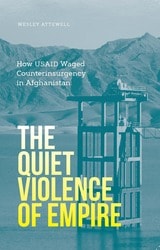
The Quiet Violence of Empire
How USAID Waged Counterinsurgency in AfghanistanWesley Attewell
University of Minnesota Press, 2023
How the U.S. empire-state transformed post-1945 Afghanistan into a key site for reimagining development
Established in 1961 by President Kennedy, the United States Agency for International Development (USAID) is often viewed as an extension of the security state, playing a constant role on the ground in Afghanistan since the early sixties. The Quiet Violence of Empire traces USAID’s long and bloody history of development work in the region, revealing an empirically rich account of the transnational entanglements of imperialism and racial capitalism.
Wesley Attewell carefully analyzes three chronological moments of development as counterinsurgency in action: the Helmand Valley Project, the Soviet–Afghan conflict, and the post-9/11 occupation in Afghanistan. These case studies expose how USAID’s very public commitment to bringing seemingly inclusionary forms of self-help, technical assistance, and market development to Afghanistan has been undergirded by longer-standing infrastructures of race war and racial management. Attewell exposes how one of the net effects of USAID’s development mission to Afghanistan has been to constrain the life chances of Afghan beneficiaries while simultaneously diverting development capital back to U.S. contractors, deftly underscoring the notion of development as a form of slow violence.
The Quiet Violence of Empire asks the critical question: how might we refuse the ruse of USAID and its endlessly deferred promise of development? Thinking relationally across the fields of human geography, global studies, and critical ethnic studies, it uncovers the explicitly racial underpinnings of international development theory and praxis.
The Racial Logic of Politics
Asian Americans and Party CompetitionThomas P. Kim
Temple University Press, 2006
The Racial Order Of Things
Cultural Imaginaries Of The Post-Soul EraRoopali Mukherjee
University of Minnesota Press, 2006
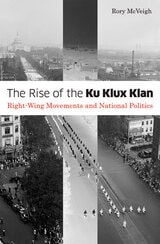
The Rise of the Ku Klux Klan
Right-Wing Movements and National PoliticsRory McVeigh
University of Minnesota Press, 2009
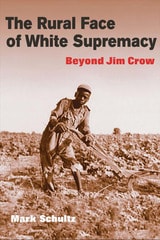
The Rural Face of White Supremacy
BEYOND JIM CROWMark Schultz
University of Illinois Press, 2007

The Science and Politics of Racial Research
William H. Tucker
University of Illinois Press, 1994

The Small Book of Hip Checks
On Queer Gender, Race, and WritingErica Rand
Duke University Press, 2021
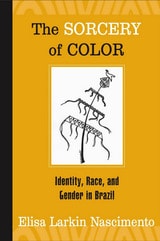
The Sorcery of Color
Identity, Race, and Gender in BrazilElisa Larkin Nascimento
Temple University Press, 2009
Originally published in 2003 in Portuguese, The Sorcery of Color argues that there are longstanding and deeply-rooted relationships between racial and gender inequalities in Brazil. In this pioneering book, Elisa Larkin Nascimento examines the social and cultural movements that have attempted, since the early twentieth century, to challenge and eradicate these conjoined inequalities.
The book's title describes the social sleight-of-hand that disguises the realities of Brazilian racial inequity. According to Nascimento, anyone who speaks of racism—or merely refers to another person as black—traditionally is seen as racist. The only acceptably non-racist attitude is silence. At the same time, Afro-Brazilian culture and history have been so overshadowed by the idea of a general "Brazilian identity" that to call attention to them is also to risk being labeled racist.
Incorporating leading international scholarship on Pan Africanism and Afrocentric philosophy with the writing of Brazilian scholars, Nascimento presents a compelling feminist argument against the prevailing policy that denies the importance of race in favor of a purposefully vague concept of ethnicity confused with color.
The State You See
How Government Visibility Creates Political Distrust and Racial InequalityAaron J. Rosenthal
University of Michigan Press, 2023
The State You See uncovers a racial gap in the way the American government appears in people’s lives. It makes it clear that public policy changes over the last fifty years have driven all Americans to distrust the government that they see in their lives, even though Americans of different races are not seeing the same kind of government.
For white people, these policy changes have involved a rising number of generous benefits submerged within America’s tax code, which taken together cost the government more than Social Security and Medicare combined. Political attention focused on this has helped make welfare and taxes more visible representations of government for white Americans. As a result, white people are left with the misperception that government does nothing for them, apart from take their tax money to spend on welfare. Distrust of government is the result. For people of color, distrust is also rampant but for different reasons. Over the last fifty years, America has witnessed increasingly overbearing policing and swelling incarceration numbers. These changes have disproportionately impacted communities of color, helping to make the criminal legal system a unique visible manifestation of government in these communities.
While distrust of government emerges in both cases, these different roots lead to different consequences. White people are mobilized into politics by their distrust, feeling that they must speak up in order to reclaim their misspent tax dollars. In contrast, people of color are pushed away from government due to a belief that engaging in American elections will yield the same kind of unresponsiveness and violence that comes from interactions with the police. The result is a perpetuation of the same kind of racial inequality that has always been present in American democracy. The State You See is essential reading for anyone interested in understanding how the American government engages in subtle forms of discrimination and how it continues to uphold racial inequality in the present day.

The Stories Whiteness Tells Itself
Racial Myths and Our American NarrativesDavid Mura
University of Minnesota Press, 2022
Uncovering the pernicious narratives white people create to justify white supremacy and sustain racist oppression
The police murders of two Black men, Philando Castile and George Floyd, frame this searing exploration of the historical and fictional narratives that white America tells itself to justify and maintain white supremacy. From the country’s founding through the summer of Black Lives Matter in 2020, David Mura unmasks how white stories about race attempt to erase the brutality of the past and underpin systemic racism in the present.
Intertwining history, literature, ethics, and the deeply personal, Mura looks back to foundational narratives of white supremacy (Jefferson’s defense of slavery, Lincoln’s frequently minimized racism, and the establishment of Jim Crow) to show how white identity is based on shared belief in the pernicious myths, false histories, and racially segregated fictions that allow whites to deny their culpability in past atrocities and current inequities. White supremacy always insists white knowledge is superior to Black knowledge, Mura argues, and this belief dismisses the truths embodied in Black narratives.
Mura turns to literature, comparing the white savior portrayal of the film Amistad to the novelization of its script by the Black novelist Alexs Pate, which focuses on its African protagonists; depictions of slavery in Faulkner and Morrison; and race’s absence in the fiction of Jonathan Franzen and its inescapable presence in works by ZZ Packer, tracing the construction of Whiteness to willfully distorted portraits of race in America. In James Baldwin’s essays, Mura finds a response to this racial distortion and a way for Blacks and other BIPOC people to heal from the wounds of racism.
Taking readers beyond apology, contrition, or sadness, Mura attends to the persistent trauma racism has exacted and lays bare how deeply we need to change our racial narratives—what white people must do—to dissolve the myth of Whiteness and fully acknowledge the stories and experiences of Black Americans.
The Transit of Empire
Indigenous Critiques of ColonialismJodi A. Byrd
University of Minnesota Press, 2011
In 1761 and again in 1768, European scientists raced around the world to observe the transit of Venus, a rare astronomical event in which the planet Venus passes in front of the sun. In The Transit of Empire, Jodi A. Byrd explores how indigeneity functions as transit, a trajectory of movement that serves as precedent within U.S. imperial history. Byrd argues that contemporary U.S. empire expands itself through a transferable “Indianness” that facilitates acquisitions of lands, territories, and resources.
Examining an array of literary texts, historical moments, and pending legislations—from the Cherokee Nation of Oklahoma’s vote in 2007 to expel Cherokee Freedmen to the Native Hawaiian Government Reorganization bill—Byrd demonstrates that inclusion into the multicultural cosmopole does not end colonialism as it is purported to do. Rather, that inclusion is the very site of the colonization that feeds U.S. empire.
Byrd contends that the colonization of American Indian and indigenous nations is the necessary ground from which to reimagine a future where the losses of indigenous peoples are not only visible and, in turn, grieveable, but where indigenous peoples have agency to transform life on their own lands and on their own terms.
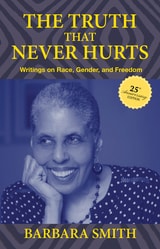
The Truth That Never Hurts 25th anniversary edition
Writings on Race, Gender, and FreedomBarbara Smith
Rutgers University Press, 2024
Barbara Smith has been doing groundbreaking work since the early 1970s, describing a Black feminism for Black women. Her work in Black women's literary traditions; in examining the sexual politics of the lives of women of color; in representing the lives of Black lesbians and gay men; and in making connections between race, class, sexuality and gender is gathered in The Truth That Never Hurts. This collection contains some of her major essays on Black women's literature, Black lesbian writing, racism in the women's movement, Black-Jewish relations, and homophobia in the Black community. Her forays into these areas ignited dialogue about topics that few other writers were addressing at the time, and which, sadly, remain pertinent to this day. This twenty-fifth anniversary edition, in a beautiful new package, also contains the essays from the original about the 1968 Chicago convention demonstrations; attacks on the NEA; the Anita Hill-Clarence Thomas Senate hearings; and police brutality against Rodney King and Abner Louima, which, after twenty-five years, still have the urgency they did when they were first written.
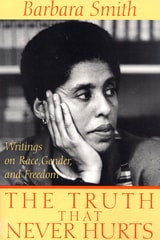
The Truth That Never Hurts
Writings on Race, Gender, and FreedomSmith, Barbara
Rutgers University Press, 2000
Smith’s essay “Toward a Black Feminist Criticism,” is often cited as a major catalyst in opening the field of black women’s literature. Pieces about racism in the women’s movement, black and Jewish relations, and homophobia in the Black community have ignited dialogue about topics that few other writers address. The collection also brings together topical political commentaries on the 1968 Chicago convention demonstrations; attacks on the NEA; the Anita Hill–Clarence Thomas Senate hearings; and police brutality against Rodney King and Abner Louima. It also includes a never-before-published personal essay on racial violence and the bonds between black women that make it possible to survive.
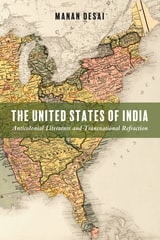
The United States of India
Anticolonial Literature and Transnational RefractionManan Desai
Temple University Press, 2020
The United States of India shows how Indian and American writers in the United States played a key role in the development of anticolonial thought in the years during and immediately following the First World War. For Indians Lajpat Rai and Dhan Gopal Mukerji, and Americans Agnes Smedley, W.E.B. Du Bois, and Katherine Mayo, the social and historical landscape of America and India acted as a reflective surface. Manan Desai considers how their interactions provided a “transnational refraction”—a political optic and discursive strategy that offered ways to imagine how American history could shed light on an anticolonial Indian future.
Desai traces how various expatriate and immigrant Indians formed political movements that rallied for American support for the cause of Indian independence. These intellectuals also developed new forms of writing about subjugation in the U.S. and India. Providing an examination of race, caste, nationhood, and empire, Desai astutely examines this network of Indian and American writers and the genres and social questions that fomented solidarity across borders.
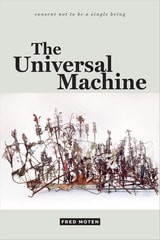
The Universal Machine
Fred Moten
Duke University Press, 2018
In The Universal Machine—the concluding volume to his landmark trilogy consent not to be a single being—Fred Moten presents a suite of three essays on Emmanuel Levinas, Hannah Arendt, and Frantz Fanon, in which he explores questions of freedom, capture, and selfhood. In trademark style, Moten considers these thinkers alongside artists and musicians such as William Kentridge and Curtis Mayfield while interrogating the relation between blackness and phenomenology. Whether using Levinas's idea of escape in unintended ways, examining Arendt's antiblackness through Mayfield's virtuosic falsetto and Anthony Braxton's musical language, or showing how Fanon's form of phenomenology enables black social life, Moten formulates blackness as a way of being in the world that evades regulation. Throughout The Universal Machine—and the trilogy as a whole—Moten's theorizations of blackness will have a lasting and profound impact.
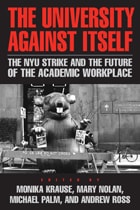
The University Against Itself
The NYU Strike and the Future of the Academic Workplaceedited by Monika Krause, Mary Nolan, Michael Palm and Andrew Ross
Temple University Press, 2008
All of the contributors were either participants in the NYU strike -- graduate students, faculty, and organizers -- or are nationally recognized as writers on academic labor. They are deeply troubled by the ramifications of corporatizing universities. Here they spell out their concerns, offering lessons from one historic strike as well as cautions about the future of all universities.
Contributors include: Stanley Aronowitz, Barbara Bowen, Andrew Cornell, Ashley Dawson, Stephen Duncombe, Steve Fletcher, Greg Grandin, Adam Green, Kitty Krupat, Gordon Lafer, Micki McGee, Sarah Nash, Cary Nelson, Matthew Osypowski, Ed Ott, Ellen Schrecker, Susan Valentine, and the editors.
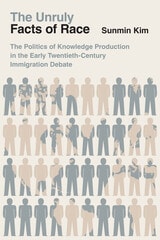
The Unruly Facts of Race
The Politics of Knowledge Production in the Early Twentieth-Century Immigration DebateSunmin Kim
University of Chicago Press, 2026
Unfortunately, we’re all too familiar with the US’s legacy of maligning immigrants. Some Americans see immigrants as inherently threatening, a blank screen onto which the nation’s worst fears are projected. But this phenomenon is neither timeless nor static. Instead, it arose and transformed alongside the unprecedented arrival of immigrants in the early twentieth century—and the federal government’s response. In The Unruly Facts of Race, sociologist Sunmin Kim explains how American ideas about race and ethnicity were transformed in the early twentieth century as an unintended consequence of anti-immigrant mobilization.
Kim presents a wealth of archival evidence, including the proceedings of the 1907 Dillingham Commission, to reconstruct how competing racialized visions of nationhood evolved in the early twentieth-century immigration debate. Immigration restrictionist politicians believed that the United States should be a White, Anglo-Saxon, and Protestant nation. However, when they mobilized researchers—some of whom were women and/or immigrants—to gather data at a massive scale to rationalize their aims, they were met with unruly facts that did not support their racial project. Newer European immigrants, as the data showed, were not much different from descendants of earlier immigrants from northern Europe. When facts failed to support the vilification of immigrants, exclusionist politicians instead turned to race as a marker of ineluctable difference to justify their aims. This led to a new principle of national belonging: the United States transitioned to a country that encompassed various European groups, including Catholics and Jews, but excluded non-White immigrants, as they were deemed too different to become a part of the nation.
Kim’s analysis shows that throughout US history, the opportunity for belonging for some immigrants was predicated on the exclusion of others. His focus on the role of facts in the early twentieth century provides a refreshing take on why the so-called “nation of immigrants” has always demonized some immigrants while cherishing others, highlighting the selection and control of immigrants as the core principles of the American nation-building project. Amid a vitriolic explosion of American immigration discourse, Kim offers a needed corrective to and context for debates around who belongs in the United States.

The Visual Afterlife of Abdelkader Bennahar
Robert Desjarlais
Duke University Press, 2025
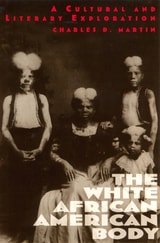
The White African American Body
Martin, Charles D.
Rutgers University Press, 2002
Blacks with white skin. Since colonial times, showmen have exhibited the bodies of African Americans with white or gradually whitening skin in taverns, dime museums, and circus sideshows. The term "white Negro" has served to describe an individual born with albinism as well as those who have vitiligo, a disorder that robs the skin of its pigment in ever-growing patches. In The White African American Body, Charles D. Martin examines the proliferation of the image of the white Negro in American popular culture, from the late eighteenth century to the present day.
This enigmatic figure highlights the folly of the belief in immutable racial differences. If skin is a race marker, what does it mean for blacks literally to be white? What does this say not only about blacks but also about whites? Scientists have probed this mystery, philosophers have pondered its meaning, and artists have profited from the sale of images of these puzzling figures.
Lavishly illustratedwith many rarely seen photographsThe White African American Body shows how the white Negro occupied, and still occupies, the precarious position between white and black, and how this figure remains resilient in American culture.
The White Welfare State
The Racialization of U.S. Welfare PolicyDeborah E. Ward
University of Michigan Press, 2005
"In The White Welfare State, Deborah Ward assembles a powerful array of documentary and statistical evidence to reveal the mechanisms, centrality, and deep historical continuity of racial exclusion in modern 'welfare' provision in the United States. Bringing unparalleled scrutiny to the provisions and implementation of state-level mothers' pensions, she argues persuasively that racialized patterns of welfare administration were firmly entrenched in this Progressive Era legislation, only to be adopted and reinforced in the New Deal welfare state. With rigorous and clear-eyed analysis, she pushes us to confront the singular role of race in welfare's development, from its early 20th-century origins to its official demise at century's end."
--Alice O'Connor, University of California at Santa Barbara
"This is a richly informative and arresting work. The White Welfare State will force a reevaluation of the role racism has played as a fundamental feature in even the most progressive features of the American welfare state. Written elegantly, this book will provoke a wide-ranging discussion among social scientists, historians, and students of public policy."
--Ira Katznelson, Ruggles Professor of Political Science and History, Columbia University
"This book offers an original and absorbing account of early policies that shaped the course of the American welfare state. It extends yet challenges extant interpretations and expands our understanding of the interconnections of race and class issues in the U.S., and American political development more broadly."
--Rodney Hero, University of Notre Dame
The Women of Katrina
How Gender, Race, and Class Matter in an American DisasterEmmanuel David
Vanderbilt University Press, 2012
Theorizing Discrimination in an Era of Contested Prejudice
Discrimination in the United StatesSamuel Roundfield Lucas
Temple University Press, 2009
Despite several decades of attention, there is still no consensus on the effects of racial or sexual discrimination in the United States. In this landmark work, the well-known sociologist Samuel Lucas shows how discrimination is not simply an action that one person performs in relation to another individual, but something far more insidious: a pervasive dynamic that permeates the environment in which we live and work.
Challenging existing literature on the subject, Lucas makes a clear distinction between prejudice and discrimination. He maintains that when an era of “condoned exploitation” ended, the era of “contested prejudice,” as he terms it, began. He argues that the great strides made in the 1950s and 1960s repudiated prejudice, but not discrimination. Drawing on critical race theory, feminist theory, and a critique of dominant perspectives in the social sciences and law, Lucas offers a new understanding of racial and sexual discrimination that can guide our actions and laws into a more just future.
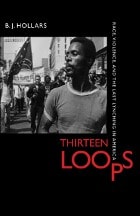
Thirteen Loops
Race, Violence, and the Last Lynching in AmericaB. J. Hollars
University of Alabama Press, 2011
The death of Vaudine Maddox—and the lynchings that followed—serves as a cautionary tale about the violence that occurred in the same region nearly fifty-years later, highlighting the cowardice, ignorance, and happenstance that sustained a culture of racial intolerance far into the future.Nearly half a century later, after a black bank robber was acquitted for the murder of police Sergeant Gene Ballard, two Klansmen took it upon themselves to exact revenge on an innocent victim--nineteen-year-old African American Michael Donald. Donald's murder--deemed the last lynching in America--reignited the race debate in America and culminated in a courtroom drama in which the United Klans of America were at long last put on trial.
While tracing the relationships among these murders, B. J. Hollars's research led him deep into the heart of Alabama’s racial, political, and legal landscapes. A work of literary journalism, Thirteen Loops draws upon rarely examined primary sources, court documents, newspaper reports, and first-hand accounts in an effort to unravel the twisted tale of a pair of interconnected murders that forever altered United States' race relations.
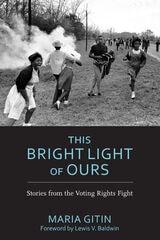
This Bright Light of Ours
Stories from the Voting Rights FightMaria Gitin
University of Alabama Press, 2014
Combining memoir with oral history, creates a vivid and searing portrait of the Freedom Summer of 1965.
This Bright Light of Ours offers a tightly focused insider’s view of the community-based activism that was the heart of the civil rights movement. A celebration of grassroots heroes, this book details through first-person accounts the contributions of ordinary people who formed the nonviolent army that won the fight for voting rights.
Combining memoir and oral history, Maria Gitin fills a vital gap in civil rights history by focusing on the neglected Freedom Summer of 1965 when hundreds of college students joined forces with local black leaders to register thousands of new black voters in the rural South. Gitin was an idealistic nineteen-year-old college freshman from a small farming community north of San Francisco who felt called to action when she saw televised images of brutal attacks on peaceful demonstrators during Bloody Sunday, in Selma, Alabama.
Atypical among white civil rights volunteers, Gitin came from a rural low-income family. She raised funds to attend an intensive orientation in Atlanta featuring now-legendary civil rights leaders. Her detailed letters include the first narrative account of this orientation and the only in-depth field report from a teenage Summer Community Organization and Political Education (SCOPE) project participant.
Gitin details the dangerous life of civil rights activists in Wilcox County, Alabama, where she was assigned. She tells of threats and arrests, but also of forming deep friendships and of falling in love. More than four decades later, Gitin returned to Wilcox County to revisit the people and places that she could never forget and to discover their views of the “outside agitators” who had come to their community. Through conversational interviews with more than fifty Wilcox County residents and former civil rights workers, she has created a channel for the voices of these unheralded heroes who formed the backbone of the civil rights movement.

This Is Not Dixie
Racist Violence in Kansas, 1861-1927Brent M.S. Campney
University of Illinois Press, 2018
Through Our Eyes
African American Men's Experiences of Race, Gender, and ViolenceGarfield, Gail
Rutgers University Press, 2010
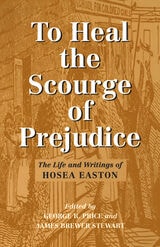
To Heal the Scourge of Prejudice
The Life and Writings of Hosea EastonHosea Easton
University of Massachusetts Press, 1999
How did racial prejudice originate and why has it been so deeply rooted in American culture? What have been the long-term effects of prejudice on the intellectual, communal, and psychological resources of African Americans? How might the nightmare of racial domination be truly brought to an end? Still pertinent today, these were among the key questions addressed more than a century and a half ago by Hosea Easton (1799–1837), an important yet long neglected activist and intellectual.
A black minister from New England, Easton rose to prominence during the 1820s and 1830s by joining in the struggle of free African Americans to resist southern slavery and secure racial equality. From this experience he developed a deep understanding of the problem of "race" in the United States and became a trenchant critic of white supremacy and its devastating consequences. This volume brings back into print the only extended writings of Easton that have survived into our time: his insightful, almost prescient A Treatise on the Intellectual Character, and the Civil and Political Condition of the Colored People of the U. States, first published in 1837; and his passionate 1828 Thanksgiving Day “Address.” The book also provides a biographical portrait of Easton and his family, drawn from primary documents as well as secondary sources in the areas of biography, genealogy, and social history.
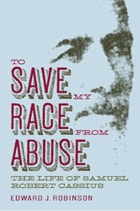
To Save My Race from Abuse
The Life of Samuel Robert CassiusEdward J. Robinson
University of Alabama Press, 2009
Samuel Robert Cassius was born to a slave mother and a white father in Virginia in 1853 and became a member of the Restorationist Movement (Disciples of Christ) while a coal miner in Indiana. For the rest of his long life (he died in 1931 at age 78), Cassius was an active evangelist, prolific publicist, dedicated leader of black Disciples, and an outspoken and uncompromising opponent of racism in religion and society.
An indefatigable preacher, Cassius ranged throughout the Midwest, California, and the southwestern states, founding and encouraging black Stone-Campbell Restorationist congregations. After entering the Oklahoma Territory in 1891, he worked for three decades as an educator, newspaper editor, social activist, postmaster, and Justice of the Peace. Because he consistently incorporated social and racial issues into his religious writings, Cassius often found himself at odds with whites in the Stone-Campbell Movement, the very people he relied on for monetary support. He advocated a Booker T. Washington-style self-help ethos while at the same time firmly resisting racism wherever he encountered it. Largely invisible in a world dominated by such towering figures as Washington, Frederick Douglass, Ida B. Wells, and W. E. B. DuBois, Cassius lived a life of virtual obscurity beyond the circle of the Stone-Campbell Movement. His story is important because, as a racial militant and separatist, he presaged the schism that would engulf and fracture the Churches of Christ in the 1960s, when blacks and whites went their separate ways and formed two distinct groups in one religious fellowship.
By combing through a plethora of primary sources that Cassius left behind in both religious and nonreligious journals, Edward J. Robinson has successfully reconstructed and recaptured the essence of Cassius’ complex and extraordinary life. This book offers the first full-length study of a man of remarkable attainment despite daily obstacles and resistance.
Total Market American
Race, Data, and AdvertisingMarcel Rosa-Salas
Duke University Press, 2025
Toward the Final Solution
A History of European RacismGeorge L. Mosse, With a critical introduction by Christopher R. Browning
University of Wisconsin Press, 2020
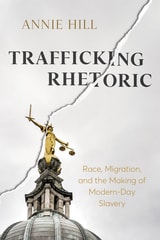
Trafficking Rhetoric
Race, Migration, and the Making of Modern-Day SlaveryAnnie Hill
The Ohio State University Press, 2024
Honorable Mention, 2025 NCA Public Address Division’s Marie Hochmuth Nichols Award
Human trafficking has generated intense global concern, with stories of sex slavery and images of women forced into prostitution so persuasive that states have raced to respond ahead of empirical data and clear definitions of the crime. In Trafficking Rhetoric, Annie Hill analyzes the entanglement of state veneration and state violence by tracking how the United Kingdom points to the alleged crimes of others in order to celebrate itself and conceal its own aggression. Hill compares the UK’s acclaimed rescue approach to human trafficking with its hostile approach to migration, arguing that they are two sides of the same coin—one that relies on rhetorical constructions of “trafficked women” and “illegal migrants” to materialize the UK as an Anglo-white space.
Drawing from official estimates, policy papers, NGO reports, news stories, and awareness campaigns and situating them in the broader EU context, Hill accounts for why the UK’s antitrafficking agenda emerged with such rhetorical force in the early twenty-first century. Trafficking Rhetoric reframes controversies over labor, citizenship, and migration while challenging the continued traction of race-baiting and gender bias in determining who has the right to live, work, and belong in the nation.